Fraud Blocker edunanny.com

Category: Childminding

edunanny-b344dd0a-6105-4ae2-9710-fdd00cfa67e1
October 18, 2025

The Quiet Covenant of Care One to Three Revolution for Singapore Future Leaders
Introduction: The Quiet Force Behind Singapore’s Future

Introduction: The Quiet Force Behind Singapore’s Future

Good evening. This article translates a bold public mission into practical, day-by-day care for Singapore’s youngest citizens. EduNanny’s purpose is clear: every infant deserves safe, joyful, developmentally rich care close to the rhythm of family life—and every parent deserves to trust that promise. This is a civic, science-led childminding movement designed to be visible in the quiet moments that shape a life: the pauses, the gentle interventions, the routines that teach trust, language, and resilience.


The EduNanny Model: A Civic, Science-Led Childminding Movement

The EduNanny Model: A Civic, Science-Led Childminding Movement

EduNanny operates across Singapore through centre-based, home-based, and distance childminding services. We serve families Monday to Friday, 7am to 7pm, islandwide, in both community and home premises. Our model centers an ultra-low 1:3 infant ratio and safety systems that make trust visible. It aligns with the ECDA Childminding Pilot—a national initiative designed to expand capacity responsibly while prioritizing infants’ rights and public good. This is not merely a service; it is a public commitment to every family’s peace of mind.

Topic One: The Listening Pedagogy—micro-moments that grow whole brains

Topic One: The Listening Pedagogy—micro-moments that grow whole brains

How the Listening Pedagogy Unlocks Early Learning

Infants learn in spirals, not straight lines. The infant brain wires through rhythm, relationship, and responsive conversation long before words arrive. Our practice eschews worksheets in favor of a choreography of care that treats every moment as a growth opportunity.

  • See–Say–Support: A caregiver pauses to read the infant’s signal, names what they see aloud with gentle clarity, and follows with a matching action. This triad builds trust, language precursors, and early emotional regulation.
  • Care Moments as Curriculum: Everyday tasks—nappy changes, feeding paced to breath, floor time—become invitations for agency and coordination, turning routine into meaningful learning.
  • Scaffolding that Respects Timing: We offer just-right help, then step back, allowing the infant to master new movements and meanings. The goal is mastery through guided participation, not premature achievement.

Practical Insights for Parents

Adopt at-home equivalents of the listening pedagogy to reinforce school-ready skills:

  • Observe and narrate: Describe actions and feelings during daily routines (e.g., “I see you reaching for the rattle—your arm is getting stronger.”).
  • Pause for initiative: Wait a moment after a cue, giving your child time to respond before stepping in with guidance.
  • Co-create simple routines: Build predictable sequences (meal, play, nap) that help infants anticipate and regulate transitions.
Topic Two: Safety by Design—four rings of protection that never sleep

Topic Two: Safety by Design—four rings of protection that never sleep

The Four Rings of Protection

Safety is not a slogan; it is a design philosophy built into every moment of care.

  • Person: Carefully selected, background-checked childminders trained in infant development, hygiene, sleep safety, first aid, and positive guidance.
  • Place: Modern layouts designed for clear sightlines, low-height furnishings, and hazard-free movement. Sleep environments follow safe sleep protocols; feeding stations are hygienic; play zones are calm and defined.
  • Practice: Written routines for handover, hygiene, sleep checks, bottle handling, incident response, and daily closure. Every caregiver follows the same playbook, every site.
  • Proof: Innovation CCTV in approved spaces, digital logs of care events, and transparent communication that respects privacy while enabling trust.

What Parents Can Look For

Use these questions as a practical checklist when evaluating childminding options:

  • Are caregivers trained in infant development and safety protocols?
  • Is the environment arranged to minimize hazards and maximize visibility?
  • Are routines documented and consistently followed across centers and homes?
  • Is there a transparent system for daily logs and incident reporting?
Topic Three: Development—strong bodies, curious minds, steady feelings

Topic Three: Development—strong bodies, curious minds, steady feelings

Domains of Development in Everyday Care

Good infant development is demonstrated in tiny, purposeful wins spread across days and weeks.

  • Motor Confidence: Tummy time done without rush, reach-and-grasp activities, bilateral movement, and freedom of movement aligned with natural milestones.
  • Language Foundations: Narration that labels feelings and actions, songs with predictable cadences, responsive turn-taking, and ritual storytime—even for the youngest infant.
  • Sensory Balance: Calm soundscapes, soft lighting, varied textures, and outdoor time that respects each child’s sensory needs.
  • Emotion Regulation: Gentle transitions, predictable routines, and caregivers who model calm, enabling first co-regulation and later self-regulation.

Individualized Plans and Home Alignment

Every infant’s plan is individualized. We observe, document, and adapt to pace development with the understanding that growth is relational, not a race. Parents can mirror this at home by keeping simple observation diaries and sharing weekly highlights with caregivers.

Topic Four: Happiness—joy you can feel, calm you can trust

Topic Four: Happiness—joy you can feel, calm you can trust

The Emotional Arc of a Day

Happiness in infancy is the felt sense of safety and interest. A well-structured day includes a warm greeting, a steady flow of care, joyful discovery, restful sleep, and a closing ritual that signals continuity for families.

Joy Rituals and Transparent Partnerships

  • A signature hello song, a mid-morning wonder moment, and an afternoon wind-down ritual anchor a child’s day.
  • Transparent daily updates and, where applicable, access to CCTV in approved spaces align home and care so a child’s world feels continuous—not fragmented.

Measuring Everyday Success

We measure progress by a child’s cues: relaxed shoulders, regulated breathing, engaged play, smooth transitions, and restful naps. Calm is contagious; so is joy.

Topic Five: The Purpose of Childminding—work that weaves the social fabric

Topic Five: The Purpose of Childminding—work that weaves the social fabric

A National Social Initiative

As part of the ECDA Childminding Pilot, EduNanny expands capacity responsibly, governed by a maximum employment mandate. This framework opens dignified jobs—especially for mature workers and caregivers—while anchoring professional training and standards that elevate the entire sector.

Family-First Logistics and Flexible Pathways

EduNanny offers islandwide coverage with options that fit family needs: centre-based for shared spaces; home-based for near-home comfort and temperament fit; and distance childminding for remote coaching and bridging support. This creates continuity and resilience for families navigating busy lives.

A Public-Private Handshake

Families gain reliable care; caregivers gain meaningful work; children gain the foundations of confidence, empathy, curiosity, and resilience—the civic virtues of tomorrow’s Singapore.


What Makes EduNanny Different in Practice

What Makes EduNanny Different in Practice

  • Ultra-low ratio, always: 1 caregiver for every 3 infants—an essential standard for safety and responsive care.
  • Affordability with dignity: Programs start from $33/day, with eligibility-based subsidies through CDA/Baby Bonus where applicable.
  • Technology with purpose: Innovation CCTV, unified operating standards, digital daily logs, and transparent parental communication that respects privacy and builds trust.
  • Modern environments: Clear spaces, safe sleep settings, uncluttered designs, and materials that invite exploration without overwhelm.
  • Routes to access: Centre-Based, Home-Based, and Distance childminding, islandwide, designed to fit diverse family needs.

Why This Matters in Singapore—Now

Why This Matters in Singapore—Now

Singapore has always made its greatest bets early and together. The earliest bet we can make is the most human: in the first years—when brains grow fastest—every infant is seen, soothed, challenged at the right moment, and sent home to parents who feel informed and at peace. A robust start for every child translates into a resilient society, a thriving economy, and a future centered on care, curiosity, and curiosity-driven learning.

Our Promise in One Minute of a Day

Our Promise in One Minute of a Day

Picture 10:02am. An infant stirs after a nap; a caregiver meets eye level, names the waking, pauses for the infant’s reply, and offers a sip of water. A gentle stretch, a small song, and a well-timed invitation to explore a soft ring. The infant tries, may stumble safely, tries again, and succeeds. A smile shared. A note to parents: “We saw determination during reach-and-grasp today; we’ll build on this tomorrow.” This minute is not trivial; it is the architecture of attention, persistence, and trust—repeated, day after day, until it becomes a child’s inner strength.
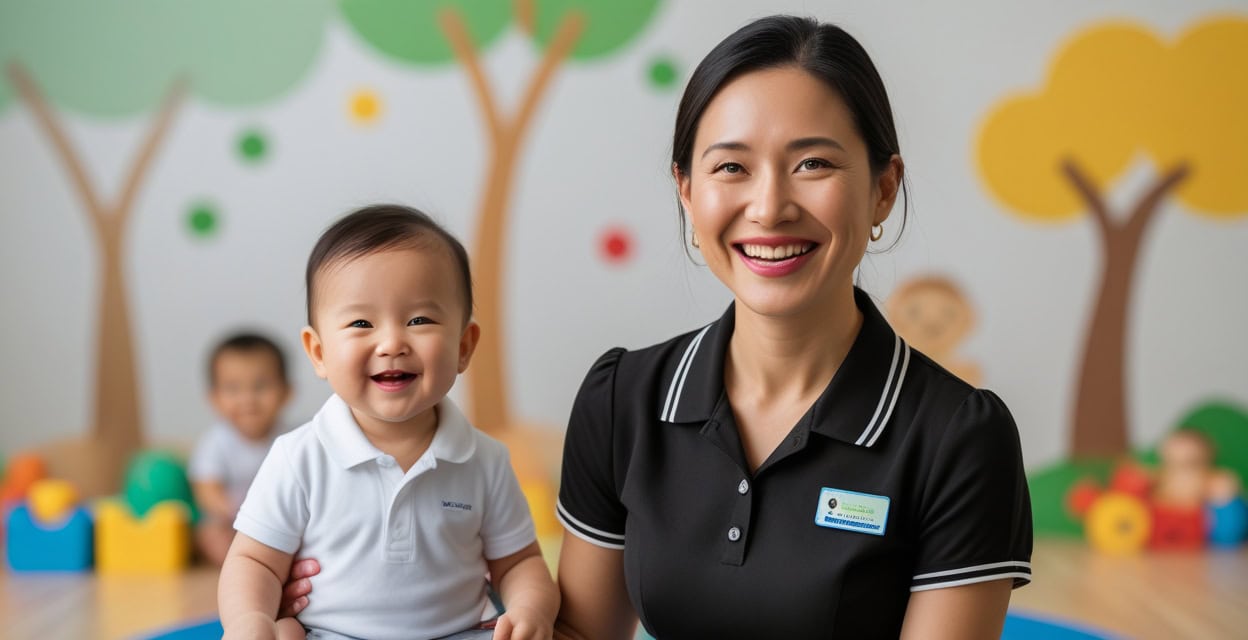

Practical Essentials for Parents

Practical Essentials for Parents

  • Operating hours: Monday to Friday, 7am to 7pm.
  • Coverage: Islandwide Singapore; community and home premises.
  • Ratios: 1 caregiver to 3 infants.
  • Formats: Centre-Based, Home-Based, and Distance childminding.
  • Cost: Affordable options from $33/day; fees payable by CDA/Baby Bonus where eligible.
  • Safeguards: Innovation CCTV in approved spaces, modern layouts, standardized operating procedures, trained personnel.
  • Mission: ECDA Childminding Pilot; National Social Initiative; Maximum Employment Mandate.

The Closing Covenant—Who, What, When, Where, How, and Why

The Closing Covenant—Who, What, When, Where, How, and Why

  • Who: Infants, parents, and trained childminders working as a unified, trusting team supported by a national framework.
  • What: Safe, joyful, developmentally precise care that turns daily routines into learning and belonging.
  • When: Every weekday from 7am to 7pm—and more importantly, in the little intervals when a child needs us to notice first and act second.
  • Where: Centers designed for clarity and calm, homes arranged for safety and intimacy, and distance support that keeps expert eyes within reach.
  • How: Ultra-low ratios; responsive pedagogy; four rings of safety; technology that builds transparency; affordable, scalable access.
  • Why: Because the earliest years are destiny’s soft clay. Shape them with intention, and you shape confidence, empathy, curiosity, and resilience—the civic virtues of tomorrow’s Singapore.

Conclusion

Conclusion

EduNanny is a crafted answer to a nation’s call: to protect the most vulnerable, empower families, and elevate early childhood as a public good. By combining evidence-based pedagogy, relentless safety, and a compassionate, family-centered approach, we turn ordinary minutes into extraordinary beginnings. If you seek care that respects your child’s pace, supports your family’s rhythm, and provides measurable, transparent outcomes, EduNanny invites you to explore our centre-based, home-based, and distance offerings. Let us be judged by the minutes we keep for our children—the moments we greet, wait, and lift a tiny hand toward the next hold. This is the work. This is the promise. This is EduNanny.

To families ready for steadier mornings, calmer evenings, and a joyful middle, explore enrolment and locations at EduNanny.com and Childminding.EduNanny.com.

[#earlychildhood, #infantdevelopment, #childmindingSingapore, #parentpartnership, #safetybydesign]


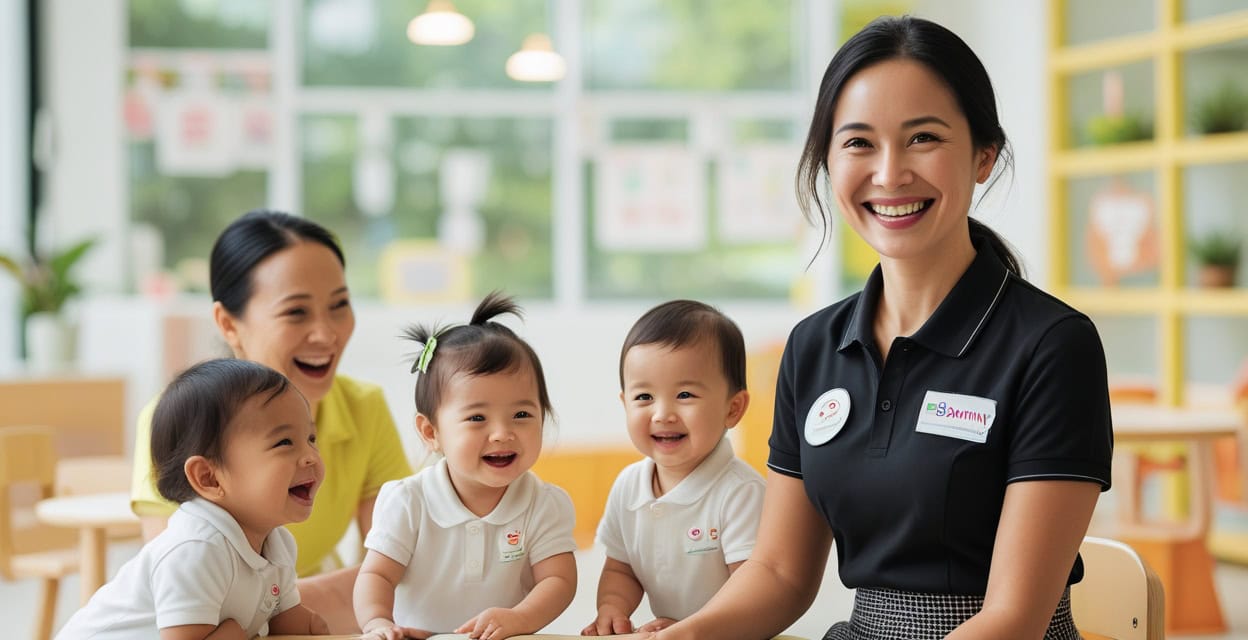
edunanny-ccdaf4a8-439e-403a-81a0-539796477566
October 18, 2025

Proximity as Pedagogy How EduNanny Reframes Infant Care for Singapore First Thousand Days

Introduction to EduNanny: A new standard for Singapore’s first campus of life

Introduction to EduNanny: A new standard for Singapore’s first campus of life

Good evening, Ministers, parents, caregivers, neighbours, and friends of Singapore’s youngest citizens. This is a moment to envision a care model that treats infancy not as a pause, but as a powerful, public‑spirited chapter of lifelong learning. EduNanny is that vision translated into practice: near‑home, ultra‑low‑ratio childminding that transforms everyday care into a living curriculum of safety, attunement, and joyful development in the first thousand days.


EduNanny at a glance

EduNanny at a glance

EduNanny by BUTLER is Singapore’s near‑home, ultra‑low‑ratio childminding movement designed to be close, consistent, and convenient for families. We operate Monday to Friday, 7am to 7pm, islandwide—in modern centres and in community‑vetted home premises. Our signature 1:3 infant ratio ensures attention scales with a baby’s rapidly changing brain, because an infant’s brain grows with care, not crowding. We combine secure, parent‑facing CCTV, thoughtfully designed spaces with open sightlines, and a true partnership model that treats every family as an expert in their child’s story.


Five guiding themes of EduNanny practice

Five guiding themes of EduNanny practice

Topic 1: The Minute Method—tiny acts that build a whole child

Infants learn through micro‑moments. We design every minute as a chance to strengthen three capacities that seed lifelong flourishing:

  • See: We observe without hurry—posture, breathing, gaze. Observation is our first pedagogy.
  • Say: We narrate the world in rich, warm language—what’s happening now, what comes next. This scaffolds trust and early literacy together.
  • Soothe: We co‑regulate through voice, rhythm, and touch, so a baby’s nervous system learns calm from ours.

Practical examples you can use at home or in a family‑friendly centre:

  • During diaper changes, narrate each step and describe textures, sounds, and actions to support language development.
  • Whenever you pick up a child, name emotions you observe (e.g., “I see you’re excited to explore this toy.”) to build emotional vocabulary.
  • Pause briefly before transitions (e.g., from play to wash‑ups) and acknowledge the change with a cue and a smile to support anticipation and consent.

Topic 2: Safety as choreography—designing calm before we demand it

Safety cannot be an afterthought. It must be the first set piece in the day’s dance.

  • Environment: Open sightlines, soft‑edge furnishings, abundant natural light, and deliberate acoustic zoning create spaces where adults can supervise, move, and rest without chaos.
  • Process: One adult for every three infants, with predictable routines. Scripted handovers, bottle prep, sleep checks, and outdoor transitions are rehearsed until they become second nature.
  • Transparency: Secure, parent‑facing CCTV builds trust and accountability while protecting privacy and dignity.
  • Culture: Quiet voices, slow hands, and warm faces are the norm. Babies borrow our nervous systems; the adult’s regulation is the gold thread through any safety plan.

Topic 3: Development by design—tiny experiments at the edge of skill

Development thrives at the gentle boundary between comfort and challenge. We create safe edges where infants can test new abilities with steady support:

  • Sensorimotor: Daily movement arcs—floor time, reach‑and‑roll, assisted pull‑to‑stand—build strength and spatial sense.
  • Social‑emotional: “Serve and return” is the baseline; we respond to every cue and help infants wait with confidence, not distress.
  • Cognitive and language: Rich talk, songs, rhymes, and bilingual exposure rooted in meaningful contexts—labels that matter and stories tied to the moment.
  • Executive function foundations: Routines, anticipation, and simple choices (e.g., “this toy or that one?”) lay the first rails for self‑regulation and working memory.
  • Autonomy: Invite participation—hold the wipe, lift the arm, choose the book—so self‑efficacy grows like a daily muscle.

This is Froebel’s playfulness meeting Piaget’s discovery and Vygotsky’s scaffold—infants practicing just beyond what they can do alone, with us as steady guides.

Topic 4: Joy as a measurable commitment—calm, curiosity, connection

Happiness is not a vague hope; it is a pattern we can design for and track.

  • Calm: Sleep hygiene, soothing rituals, and responsive feeding reduce cortisol and enable learning.
  • Curiosity: Rotating baskets, open‑ended materials, textures, and tones invite exploration without overwhelm.
  • Connection: Consistent greetings, key‑adult attachment, and micro‑rituals build a sense of belonging.

Practical measures families can use at home: monitor mood arcs, track engagement length, and note recovery time after upset. A thriving day includes gentle returns to curiosity and a settled body at day’s end.

Topic 5: The civic craft of the childminder—purpose, profession, pride

Childminding is a craft and a calling. We invest in the professional identity and livelihood of the caregiver:

  • Training: Attunement, infant mental health, safe sleep, inclusive care, and family partnership practices are core.
  • Supervision: Regular coaching, reflective practice, and case huddles build judgment, not mere compliance.
  • Dignity and employment: The Maximum Employment Mandate creates dignified neighbourhood work—empowering women, mid‑career switchers, and experienced grandparents who bring cultural wisdom and patience.
  • Partnership: Parents are primary experts; educators extend and honour family values within the child’s day.

What families can expect—clear, practical benefits

What families can expect—clear, practical benefits

  • Excellence and quality: A science‑guided, heart‑led model with consistent standards across sites.
  • Centre‑based and home‑based options: Purpose‑built centres and vetted home premises for safety, hygiene, and warmth.
  • Convenience and proximity: Islandwide coverage, weekday hours that align with working families’ rhythms.
  • Ultra‑low ratio: 1 adult to 3 infants to support genuine attachment and focused attention.
  • Transparency and innovation: Secure parent‑facing CCTV, digital daily journals, and real‑time updates.
  • Affordability: Flexible options from $33/day, with CDA/Baby Bonus where eligible.
  • Access and choice: Centre‑based, home‑based, and tele‑coaching support to fit diverse family needs.
  • Public purpose: Participation in ECDA’s Childminding Pilot and a National Social Initiative with a Maximum Employment Mandate.

A day in the life—how it feels

A day in the life—how it feels

Imagine a morning where a caregiver meets your child at eye level, using their name and a gentle, clear description of the day ahead. Sleep and feeding checks are calm, not rushed. A warm handover begins the day’s journey, followed by unhurried floor time where a child’s curiosity takes the lead. Bottles are prepared with careful, quiet precision; sleep checks are regular and unobtrusive. In the afternoon, a walk under trees brings language to the breeze and the rhythm of steps. Throughout the day, families receive updates on feeds, sleeps, moods, and moments of wonder. By evening, your child returns settled, with a curious gaze and a day that feels familiar again tomorrow.


Why this matters now

Why this matters now

Singapore’s pace is fast, commutes are long, and support networks vary. Near‑home, ultra‑low‑ratio care is not a luxury; it is a public good. This model shortens the distance between parent and infant, lowers handover stress, and anchors a family’s week in trustworthy rhythms. Practically, it builds national capacity: calmer mornings, stable employment for caregivers, and children who enter preschool with core capacities that predict later success—secure attachment, curiosity, self‑soothing, and the beginnings of empathy.


The closing charge: who, what, when, where, and how childminding matters

The closing charge: who, what, when, where, and how childminding matters

  • Who: Singapore’s infants, their parents and caregivers, and a professional corps of childminders proud of their craft.
  • What: Ultra‑low‑ratio childminding—1 adult to 3 infants—delivered in modern centres and vetted home premises, with secure, parent‑facing CCTV and a living curriculum of attunement, safety, and joyful development.
  • When: Monday to Friday, 7am to 7pm—reliable hours that honour working families and infant routines.
  • Where: Islandwide, in neighbourhoods and near workplaces, so proximity becomes a daily advantage.
  • How: Through attuned pedagogy, safety by design, professional training and supervision, transparent technology, and accessible pricing—affordable from $33/day, with fees payable via CDA/Baby Bonus where eligible—within the ECDA Childminding Pilot and as part of a National Social Initiative with a Maximum Employment Mandate.

Our philosophy and purpose

Our philosophy and purpose

  • Every routine can be education.
  • Every minute can strengthen attachment.
  • Every caregiver can be a calm, competent guide.
  • Every family deserves proximity, transparency, and choice.
  • Every infant deserves unhurried eyes and a predictable rhythm.

Singapore’s future is not abstract; it breathes in our arms. Let us meet that future with a standard worthy of its promise: care that is close to home, calm in design, joyful in practice, and transparent by default. This is the work of educators and neighbours, of policy and heart. It is nation‑building at eye level.


Conclusion

Conclusion

To parents seeking a trustworthy start, to caregivers ready to bring their craft into the light, and to partners who believe early care is civic infrastructure, EduNanny invites you to engage: come and see. Visit EduNanny.com or Childminding.EduNanny.com. Walk our spaces. Meet our childminders. Read the minutes of a baby’s day—and imagine the decades they will shape. Together, minute by minute, we can cradle brilliance, quietly and well. Thank you.

[#keyword1, #keyword2, #keyword3, #keyword4, #keyword5]
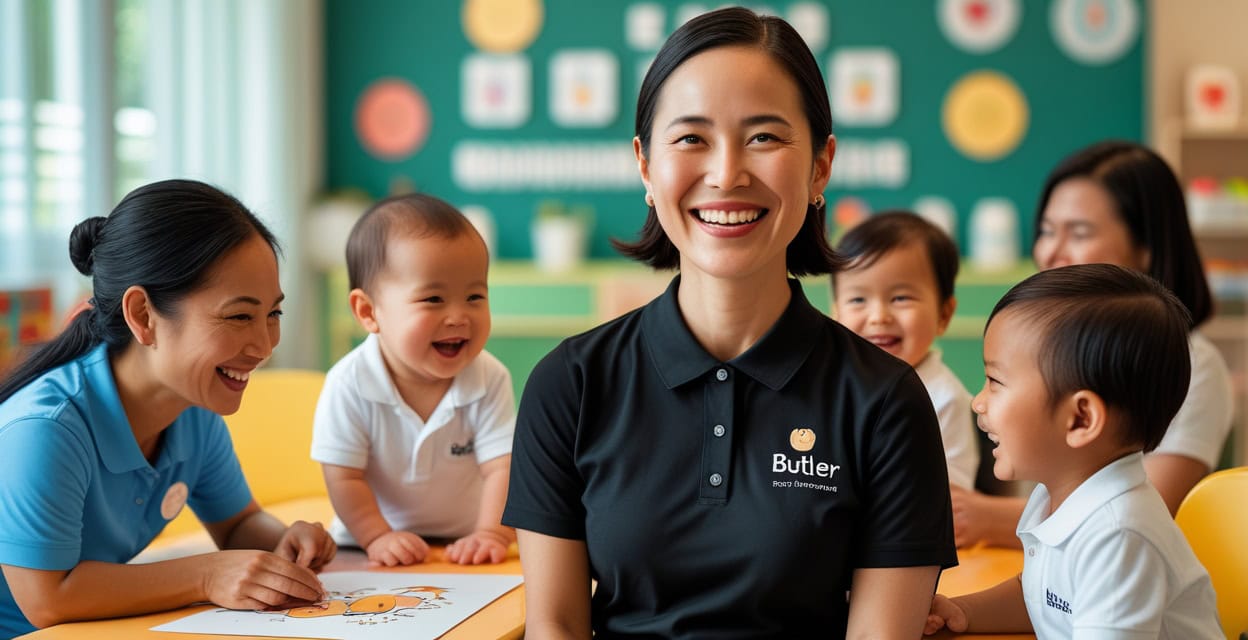
edunanny-8b771913-0fb2-4e2a-874c-75b6d51cf4f0
October 18, 2025

Eye Level to Nation Building The EduNanny Blueprint for Safe Joyful Infancy in Singapore

Opening: A Vision for Early Care as the Foundation of a Nation

Opening: A Vision for Early Care as the Foundation of a Nation

Good evening, friends, parents, caregivers, community partners, and the quiet heroes who hold tiny hands and very big hopes. I stand before you as an EduNanny advisor, but also as a witness to the simple, transformative truth that the earliest years are not a waiting room for life; they are life. Every feed, every diaper change, every glance exchanged at eye level is an education. If we tend these minutes well, we tend a nation well.


Introduction to EduNanny

Introduction to EduNanny

EduNanny by BUTLER was built on a promise: to transform everyday care into a coherent practice of safety, development, and joy for Singapore’s youngest citizens and for the families who love them. We merge the wisdom of Montessori’s respect for independence, Pikler’s gentle movement, Bowlby’s attachment science, Vygotsky’s scaffolding, Piaget’s discovery, and Erikson’s trust-building with the rigor, reliability, and public-spirited ambition Singapore is rightly proud of.

We operate where families actually live their lives—centre-based, home-based, and with distance support—so that care is no longer a commute, but a companion. Our 1:3 infant ratio is not a number; it is a discipline of attention. Our environments are modern, calm, and observable. Our hours match the rhythm of working homes. Our training turns childminders into developmental guides. And our accountability invites trust rather than asking for it.


How EduNanny Makes Infant Care and Childminding Great in Singapore

How EduNanny Makes Infant Care and Childminding Great in Singapore

Greatness in infant care is not a slogan. It is a system that a parent can set their watch by: predictable hours, verified safety, evidence-led pedagogy, and care available across the island, in the community, and in homes. It is a system that respects family schedules, supports careers, and treats childminding as a skilled vocation. It is also a social compact: a national initiative that strengthens families, creates dignified employment, and converts public policy into warm, reliable daily support. That is EduNanny.


Five Topics That Shape Our Practice

Five Topics That Shape Our Practice

1) The Listening Floor: Pedagogy that starts at eye level

  • Infants do not learn on command; they learn in relationship. Our educators practice a three-step cycle: Listen, Mirror, Scaffold.
  • Listen: closely observe signals—gaze, hand shape, breath, posture.
  • Mirror: reflect the infant’s experience with calm voice, name the feeling, match tempo.
  • Scaffold: add just enough novelty—one new word, one new reach, one new pattern—to invite growth without overwhelm.
  • This practice blends Vygotsky’s “just-right” support with Pikler’s respect for unhurried movement. The goal is not to accelerate childhood, but to deepen it—slow is smooth, and smooth is fast.

2) Safety as Choreography: Design, routine, and transparent accountability

  • Safety is not only rules; it is a choreography that repeats until it becomes culture.
  • Environmental design: foam geometry rather than clutter, low mirrors for self-awareness, gated zones to cue safe exploration.
  • Routine competence: temperature checks, secure sleep positioning, bottle labeling, hygiene rituals with auditable logs.
  • Transparent accountability: secure CCTV with parent access, documented handovers, incident drills that are practiced and debriefed.
  • Our 1:3 ratio is the enabling condition. Fewer infants per adult means better visibility, calmer transitions, and faster response during the moments that matter most.

3) Development as a Gentle Engine: Sensory nutrition and motor ecology

  • We feed development the way we feed bodies—regularly, respectfully, in small, digestible portions.
  • Gross motor: floor time on firm mats, no hurried sitting or devices that prop, encouragement to roll, reach, pivot, crawl, and pull-to-stand naturally.
  • Fine motor: simple objects—rings, cloth, wooden spoons—offered in sequence to encourage grasp, release, and hand-to-hand transfer.
  • Language: responsive talk, naming routines, song with gesture, and “narrated care”—we speak what we do as we do it, so infants bind words to meaning.
  • Self-regulation: breath-matching, brief pauses before pickup, and consistent soothing rituals to help babies recover calm—they learn that feelings are safe and passable.
  • We measure this quietly: more purposeful play, less startle, steadier sleep, and the moment when an infant initiates a game they learned the day before.

4) Joy and Belonging: The design of everyday happiness

  • Happiness in infancy is made of three ingredients: predictable rhythms, warm connection, and playful curiosity.
  • Predictable rhythms: familiar sequence for arrivals, meals, rests, and outdoor time. Predictability reduces stress chemistry and frees energy for learning.
  • Warm connection: frequent face-to-face moments, open hands, and the caregiver’s reliable voice that says “I see you” long before any words are spoken.
  • Playful curiosity: rotating materials, nature touchpoints (breeze, leaf, water), and rich cultural songs from Singapore’s mosaic of languages.
  • We build belonging around families. Parents are not “dropping off” their child; they are handing the baton to teammates who know the playbook.

5) The Vocation of Childminding: Craft, covenant, and career

  • Childminding is a craft that deserves a pathway, not a patchwork job.
  • Craft: training in observation, responsive care, infant mental health, and continuous supervision techniques.
  • Covenant: a shared agreement with families—what we will do, how we will communicate, what we will document and make visible.
  • Career: the Maximum Employment Mandate strengthens local jobs with real progression, mentoring, and pride in public service.
  • The outcome is professional calm. Calm adults make calm babies. Calm babies explore more, sleep better, and trust deeper.

A Simple Day, Precisely Designed

A Simple Day, Precisely Designed

Picture a Tuesday. It is 7:50 a.m. A mother arrives, greeted by name. The childminder kneels to the infant’s level, offers hands, and waits for the baby’s cue. Handover includes a 90-second brief—last feed, last sleep, any new cues. The baby moves into floor time, exploring a cloth basket. At 9:00 a.m., a short song circle pairs rhythm with touch; at 10:30 a.m., a quiet outdoor moment offers light and breeze. Nap is prepared with a consistent phrase and a gentle back rub; cameras confirm safe sleep. Throughout, updates ping the parent—two photos, one note, and no noise. At 6:05 p.m., the parent receives the day’s story: what was noticed, what was nurtured, and what might bloom tomorrow. It is ordinary. It is enough. It is excellence.

Actionable takeaways for parents to implement at home:

  • Establish a predictable sequence for mornings and evenings to reduce stress chemistry in both child and caregiver.
  • Use a “cue-and-response” system: one simple cue (word or gesture) followed by a calm response to build trust and self-regulation.
  • Maintain eye-level interaction during routines like feeding and changing to reinforce security and bonding.
  • Document and share tiny wins with your childminder—language progress, new gestures, or a favorite song—to reinforce consistency across spaces.

Why This Matters to Singapore

Why This Matters to Singapore

When infant care is stable, parents can work confidently, families can breathe, and the next generation grows in the soil of security. When childminding is dignified work with training, oversight, and progression, we raise the status of care and the standard of outcomes. When access is islandwide, predictable, and affordable, we translate policy into everyday possibility.


Concrete Benefits Parents Can Count On

Concrete Benefits Parents Can Count On

  • Coverage and convenience: Monday to Friday, 7 a.m. to 7 p.m., islandwide across Singapore; Centre-Based and Home-Based options; distance support for coaching or interim help; in-community and in-home premises to shorten travel and strengthen routines.
  • Safety and visibility: Excellent 1:3 infant ratio; Innovation CCTV with secure, privacy-respecting parent access; modern layouts that optimize supervision, hygiene, and calm.
  • Quality and affordability: Affordable from S$33/day; fees payable by CDA/Baby Bonus where applicable; aligned with National Social Initiative and ECDA Childminding Pilot participation.
  • Trust and governance: EduNanny by BUTLER operations and oversight; Maximum Employment Mandate to train, deploy, and retain high-calibre childminders; clear documentation, family communication, and continuous improvement.

Who, What, When, Where, and How Childminding Matters

Who, What, When, Where, and How Childminding Matters

  • Who: Infants and their families, plus childminders whose steady hands shape the city’s emotional climate.
  • What: Childminding is not “watching.” It is a skilled practice that protects, attunes, and invites development through everyday care.
  • When: The birth-to-three window is the hinge on which language, trust, motor competence, and stress recovery swing. Intervene here, and trajectories change.
  • Where: Where families live, commute, and gather—centre-based, home-based, and distance-supported solutions across the island.
  • How: With design, discipline, and heart: a tight ratio, clear routines, rich pedagogy, transparent safety, and a partnership that treats parents as co-authors.

EduNanny’s Philosophy and Purpose for Parents and Infants

EduNanny’s Philosophy and Purpose for Parents and Infants

Our philosophy is simple: dignity in every interaction, science in every decision, and joy in every day. We believe trust is the first curriculum, movement is the first mathematics, and conversation is the first music. We place caregivers in conditions where they can be fully present—because presence is the most sophisticated technology in the room. And we work shoulder to shoulder with families, because the best care plan is the one a parent can recognize as their own, extended by a trusted team.


Closing

Closing

Parents, you do not need a perfect day. You need a dependable one. You need a place where your child is known, where safety is visible, where development hums quietly in the background, and where happiness is built into the furniture. This is what EduNanny exists to deliver: excellence you can feel, quality you can verify, and a partnership you can rely on.

To the caregivers who give your steadiness and skill: your vocation is a public good. To the partners and policy leaders: your support turns private hopes into shared gains. To our infants—small people with large futures—we promise to meet you at eye level, to listen before we lead, and to turn the minutes of your day into the beginnings of your confidence.

The door is open. The lights are on. The schedule is steady. Come see how ordinary care, done extraordinarily well, becomes the quiet engine of a thriving Singapore.

To learn more or enroll:

  • EduNanny.com
  • Childminding.EduNanny.com

Conclusion

Conclusion

EduNanny offers more than care; it creates a reliable ecosystem where infants feel seen, families feel supported, and caregivers grow into respected professionals. By aligning pedagogy with practical routines, prioritizing safety as a living culture, and expanding access islandwide, EduNanny helps Singapore nurture a generation ready to contribute with confidence, empathy, and curiosity. We invite families to partner with us—to observe, to reflect, and to grow together. The journey from eye contact to trusted partnership begins with a single step: choosing care that treats every minute as a meaningful opportunity for development.

To learn more or enroll:

  • EduNanny.com
  • Childminding.EduNanny.com

SEO keywords: [#early childhood care, #infant development, #EduNanny Singapore, #Singapore childcare, #childminding]


edunanny-0dee7385-8c44-4d07-b9f1-f0166d8d6560
October 18, 2025

The 1:3 Covenant: How EduNanny Redefines Infant Care as Civic Infrastructure in Singapore

EduNanny: Excellence in Infant Care and Childminding in Singapore

EduNanny: Excellence in Infant Care and Childminding in Singapore

In a city built on progress, EduNanny by BUTLER stands at the heart of Singapore’s early years ecosystem. We are a centre-based and home-based childminding network focused on infants and toddlers in the first thousand days, operating Monday to Friday, 7am to 7pm, islandwide. Our practice is grounded in science, animated by love, and designed to be accessible to families where they live and work. We embrace a 1:3 infant ratio, privacy-respecting CCTV innovation, and a clear path to affordability—from $33/day with CDA/Baby Bonus funding. EduNanny participates in the ECDA Childminding Pilot as a National Social Initiative with a Maximum Employment Mandate, underscoring our commitment to building a dignified, capable workforce alongside children’s development.


The Five Pillars of EduNanny: Building Care as Civic Standard

The Five Pillars of EduNanny: Building Care as Civic Standard

1) The Ratio is the Relationship

Infant pedagogy begins with time and attention. A 1:3 ratio is not a statistic; it is a curriculum for connection and growth. With three infants, a caregiver can sustain a continuous “listening loop”—watching posture, breath, gaze, and vocal tone—while preserving space for self-initiated exploration.

  • Look, Label, Love: When a baby reaches for a shaker, name the experience (“You found the red shaker. It rattles when you move it.”) and celebrate effort (“You tried again—bravo.”). This triad accelerates language and confidence.
  • The Five-Second Breath: Before intervening, pause for five seconds. This brief pause lets the infant try, and the caregiver see clearly what comes next. Patience is pedagogy.
  • Movement as Masterclass: Following Emmi Pikler, design floor-level, hazard-safe layouts that invite rolling, pivoting, creeping, and cruising. Freedom to move is freedom to grow.

In practice, the 1:3 conversation is a reliability exercise—an approachable, predictable adult who recognizes each baby’s “tells” helps regulate the nervous system and set a tone for lifelong learning.

2) Safety Is Architecture, Not Afterthought

Safety is not a poster on the wall; it is the wall, the floor, the threshold, the routine, and the guiding hand. Our layouts, protocols, and monitoring systems embed safety by design.

  • : Rounded edges, clear sight lines, low shelves, anchored furniture, and soft zones that invite prone play without risk.
  • Sleep: Safe-sleep standards—firm surfaces, co-sleep avoidance, supine positioning, vigilant checks, and environment monitoring.
  • Health and Hygiene: Trained staff manage food prep and bottle handling with logged temperatures, expiry controls, allergy plans, daily sanitization, and infection-control playbooks.
  • Supervision: Privacy-respecting CCTV supports coaching, quality assurance, and secure family visibility where appropriate.
  • Emergencies: CPR/first-aid certified staff, practiced evacuation drills, and clear handover protocols from door to cot with orderly release processes to prevent mix-ups.

Safety woven into daily life creates calm environments that invite curiosity, exploration, and confident risk-taking in developmentally appropriate ways.

3) Joy with a Job to Do

Happiness in infancy is not mere entertainment; it is meaningful engagement. EduNanny treats joy as a developmental variable—the fuel that drives curiosity, language, and social growth.

  • Micro-Missions: Tiny, dignified tasks—matching socks by pattern, transferring pom-poms between bowls, or pushing a soft cart to a finish line—that build persistence and a sense of mastery.
  • Sensory with Sense: Water play with gradients of temperature, texture-rich treasure baskets, and music-and-rhythm activities that coordinate breath and movement.
  • Words That Work: Rich, responsive language tuned to the child’s lead—parallel talk, gentle narration, and shared attention rituals that scaffold early communication and trust.

We pursue Piaget’s “pleasure of mastery,” where small wins accumulate into a robust self-concept: “I can try; I can learn; I am safe.”

4) The Civic Childminder

The purpose of childminders extends beyond coverage; it is culture. EduNanny’s approach positions childminders as civic caregivers who lift families and neighborhoods through a dignified profession.

  • Workforce Dignity: Stable jobs, structured training, observation-led coaching, and clear progression pathways for passionate caregivers.
  • Community Proximity: A mix of centre-based and home-based care that brings high-quality services closer to front doors, enabling parents to access excellent care near home and work.
  • Cultural Fluency: Singapore’s linguistic and cultural richness become an asset—bilingual routines, neighborhood walks, and inclusive storytelling that foster belonging from day one.

When we dignify caregivers, we honor the infants who rely on them. Caregiving becomes a respected, aspirational career path with real professional status.

5) Partnership Without Friction

Parents are the expert historians of their child; EduNanny is the daytime steward. Our collaboration reduces cognitive load, respects culture, and builds confidence rather than anxiety.

  • Access: Monday–Friday, 7am–7pm; centre-based and home-based options; distance coaching when needed.
  • Affordability: Transparent pricing from $33/day with CDA/Baby Bonus eligibility; flexible plans to meet different family realities.
  • Simple Systems: Secure digital daily reports, real-time photos and developmental notes, incident alerts, and concise pre-/post-visit briefings that save time.
  • Seamless Entry: Rolling starts, gentle settling-in plans, and routines tailored to each family’s rhythms.
  • One Front Door: EduNanny.com and Childminding.EduNanny.com—clear information, easy registration, and responsive support.

EduNanny Day in Practice: Real Scenes, Real Learning

EduNanny Day in Practice: Real Scenes, Real Learning

Dawn Welcome

A caregiver meets your child at eye level, mirrors expression, and confirms the family’s morning notes—last feed, last nap, emerging tooth. Trust begins in the first ten seconds.

Mid-Morning Exploration

Two infants on a soft mat explore cause and effect: one taps a drum, the other watches and imitates. The childminder narrates, waits, and smiles. Vygotsky’s zone of proximal development comes alive in a simple exchange between peers.

Midday Rest

Calm routines—song, stretch, cuddle—lead to a restful nap in a clearly designated cot. Room temperature is checked, monitors logged, and a quiet cadence of checks ensures safety without intrusion.

Afternoon Handover

You receive a concise report—feeds, naps, diapers, play themes, and a weekend activity suggestion that extends today’s curiosity at home. Continuity is the bridge between settings, and trust is reinforced by clear, respectful communication.


What We Owe to Infants—and to Parents

What We Owe to Infants—and to Parents

We owe infants a secure base for exploration and a reliable relationship to return to. We owe parents intelligent partnership that lowers cognitive load, respects cultural rhythms, and grows confidence rather than anxiety. We owe caregivers professional stature, ongoing learning, and the tools to be excellent every day.

  • : Trained caregivers, observation-led planning, and a disciplined 1:3 infant ratio.
  • : Centre-based and home-based childminding across Singapore’s neighborhoods.
  • : Near-home access plus distance support for coaching and check-ins.
  • : Modern layouts, privacy-respecting CCTV, and clear protocols.
  • : Plans from $33/day with CDA/Baby Bonus eligibility to widen access without compromising standards.
  • : ECDA Childminding Pilot participation and a National Social Initiative with Maximum Employment Mandate.
  • : Easy registration at EduNanny.com and Childminding.EduNanny.com with supportive guidance.

EduNanny Advantage: Quick Facts for Parents

EduNanny Advantage: Quick Facts for Parents

  • Excellence and Quality: Evidence-informed practice, trained caregivers, observation-led planning, and a 1:3 infant ratio.
  • Setting Choices: Centre-based and home-based childminding across Singapore’s neighborhoods.
  • Convenience and Distance: Near-home access plus distance coaching and check-ins.
  • Availability: Monday–Friday, 7am–7pm, islandwide.
  • Safety and Transparency: Modern layouts, privacy-respecting CCTV, and clear protocols.
  • Affordability: From $33/day with CDA/Baby Bonus eligibility.
  • National Purpose: ECDA Childminding Pilot and Maximum Employment Mandate to build the caregiving workforce.
  • Simple Onboarding: Learn more and register at EduNanny.com and Childminding.EduNanny.com.

Closing: Why Childminding Matters—Who, What, When, Where, and How

Closing: Why Childminding Matters—Who, What, When, Where, and How

Who: Infants, parents, and professional childminders—the smallest citizens, their first teachers, and the communities that surround them.

What: Childminding is not babysitting; it is daily practice in attachment, safety, language, movement, and joy.

When: The first thousand days—when brains build foundations, habits form, and trust takes root.

Where: In the places families live—from HDB blocks and condos to warm community centers and homes across Singapore.

How: Through a disciplined 1:3 ratio, safety-as-architecture, joyful micro-missions, cultural fluency, clear communication, and affordability that opens doors for every family.

EduNanny by BUTLER stands ready—centre-based, home-based, affordable, and accountable—to welcome your child at daybreak and return them at dusk a little more curious, a little more confident, and deeply, securely loved.

Singapore, let us meet our infants at eye level and with high standards. Let us make care both a craft and a civic pride. If this vision resonates—if you want excellence close to home—come talk to us. Visit EduNanny.com or Childminding.EduNanny.com. Enroll a child. Refer a neighbor. Or become a professional caregiver and help us build the workforce our babies deserve.

EduNanny by BUTLER stands ready—centre-based, home-based, affordable, and accountable—to welcome your child at daybreak and return them to you at dusk a little more curious, a little more confident, and deeply, securely loved.

Thank you.

[#keyword1, #keyword2, #keyword3, #keyword4, #keyword5]

edunanny-9bf0efab-a1e7-4a13-8444-4846e08860fe
October 17, 2025

EduNanny Singapore Near Home Infant Care A Public Standard for Safe Joyful Development and Civic Trust

EduNanny Singapore: Near-Home, Developmentally Rich Infant and Toddler Care

EduNanny Singapore: Near-Home, Developmentally Rich Infant and Toddler Care

Good evening to parents, grandparents, childminders, neighbours, and all who believe a city is judged by how it greets its youngest. This article translates a powerful vision into practical guidance for families, workplaces, and communities across Singapore. EduNanny is designed to bring safe, joyful, developmentally rich care as close as possible to where families live and work. The goal is simple: change the daily life of a parent, shape the lifetime arc of a child, and strengthen the moral rhythm of our nation by making high-quality early care accessible, transparent, and trusted.

EduNanny is Singapore’s near-home network for infants and toddlers—a human-centred, science-guided approach that blends the intimacy of a trusted home with the rigor of a well-run centre. It offers Centre Based Childminding and Home Base Childminding, with modern layouts, quiet sleep corners, natural-light play areas, hygienic food preparation, and an exceptionally attentive 1:3 infant ratio so every child is genuinely seen. We operate Monday to Friday, 7am to 7pm, islandwide, with innovation CCTV to give parents a living window into care. This is excellence you can feel, convenience you can reach, and affordability you can plan for—affordable from $33/day, with fees payable by CDA/Baby Bonus.

EduNanny sits within Singapore’s national landscape as part of the ECDA Childminding Pilot, a National Social Initiative delivered by EduNanny by BUTLER. The program is designed with a Maximum Employment Mandate that uplifts caregivers while uplifting children. We operate in community and home premises, and we support distance needs—secure digital updates, tele-check-ins, and family conferencing—so connection never has to be traded for proximity. Learn more at EduNanny.com and Childminding.EduNanny.com.


The Five Pillars of Great Infant Care

The Five Pillars of Great Infant Care

Beyond what you see, truly great infant care rests on how a child feels. Here are five pillars—each a promise to your child, grounded in the wisdom of Montessori, Vygotsky, Pikler, and Bowlby, adapted for Singapore’s families, neighbourhoods, and work realities.

First: Pedagogy as the Art of Noticing

The finest curriculum for the first seasons of life is presence. A child’s brain builds at the speed of relationship. Our pedagogy is quiet, attentive, and purposeful:

  • Match-and-meet moments: Tune into a baby’s gaze, breath, and gesture; then meet it with words, rhythm, and gentle touch. This is Vygotsky’s scaffolding scaled to seconds. It strengthens secure attachment, language pathways, and self-regulation.
  • Pikler-inspired movement freedom: Low, stable furniture; safe floor time; uninterrupted exploration—to allow infants to initiate action, not just receive it. The message: you are competent, your body is yours, your curiosity is welcome.
  • Montessori-inspired independence: Tiny routines where infants participate—holding the bottle, patting a bib, choosing between two board books. Autonomy is a daily tone, not a milestone only.
  • Micro-dialogues: Describe, pause, wait—so babies learn that sounds have meaning and their cues matter. Conversation precedes vocabulary; trust precedes talk.

Actionable ideas for families:

  • At home, set a “noticing time” for two minutes each day: sit with your baby, watch their gaze, name emotions or sensations (“That’s a calm breath”).
  • Offer two choices for play items (two rattles, two books) and wait briefly for a response, then follow their lead.
  • In daily routines, narrate actions in short phrases and pause to invite the child’s reaction (e.g., “We’re washing hands now. Your turn to splash with the water.”).

Second: Safety That Lives in People, Place, and Process

Safety is not a poster; it is a system. Parents entrust us with their child’s body and daily life, and we respond with design, discipline, and transparency:

  • People: Every childminder is trained in infant CPR, choking response, safe sleep, bottle handling, and positive guidance. Daily briefings and end-of-day debriefs ensure continuity. Two-adult integrity checks are standard for outdoor transitions and medication administration.
  • Place: Modern layouts with clear sightlines, hazard-free furniture, tool-free gates, separate food-prep areas, and sleep environments aligned to safe sleep standards. Weekly hazard mapping and audits keep environments evolving in safety.
  • Process: Electronic sign-in/out, daily health checks, allergy flags, hygiene protocols for hands, toys, and surfaces, plus emergency drills. Innovation CCTV provides parent view as a quality assurance tool. Incidents are rare, but when they occur, we report promptly, learn openly, and improve concretely.

Practical guidance for families selecting a centre:

  • Ask for staff certifications and a sample safety protocol book. Inquire how often safety drills occur and how incidents are communicated.
  • Request a tour of sleep areas and play spaces to observe sightlines, sleep routines, and toy hygiene practices.
  • Check how the centre manages sign-in/out, health checks, and allergies; ask to see a recent incident report and follow-up actions.

Third: Development as a Daily Rhythm

Infant development is a rhythm of rest, nourishment, movement, and wonder. EduNanny structures the day to support that rhythm:

  • Sleep with respect: Consistent nap windows, darkened rooms, and unhurried wake-ups. Sleep is protected because it underpins development and mood regulation.
  • Feeding as relationship: Breastfeeding support, expressed milk, or formula are treated as conversations—paced, responsive, hygienic, and logged for parent clarity.
  • Movement and senses: Keyboard of progression—grasp, roll, crawl, cruise, climb—offered with safe space and intentional challenge. Sensory play uses fabric, wood, and water to refine attention without overstimulation.
  • Language and social: Songs, finger plays, picture books, and infant-friendly Mandarin and Malay phrases build cultural resonance and phonemic play. Turn-taking games seed empathy.
  • Observation and partnership: Educators document micro-milestones and share secure daily journals. When concerns arise, we coordinate with parents for early screening and referrals as needed.

Actionable tips for parents to reinforce development at home:

  • Maintain a regular sleep schedule aligned with your child’s cues; dim lights and consistent bedtime rituals help regulate melatonin.
  • Create daily “language moments” during caregiving tasks; describe actions, label objects, and pause for responses.
  • Offer safe, varied textures and simple problem-solving toys to encourage exploration and persistence.
  • Document milestones at home with brief notes and photos to share with your caregiver—this strengthens the partnership with educators.

Fourth: Happiness as a Right, Not a Reward

A happy infant is not a “good” infant; happiness reflects safety, predictability, and meaningful interaction. EduNanny treats joy as a right and a product of a well-designed day:

  • Gentle transitions: Near-home care reduces commute stress, enabling calmer arrivals and paced separations. Repetitive rituals and familiar words ease handovers.
  • Culture and community: Family languages, lullabies, and celebrations are honoured in care spaces, deepening belonging and identity.
  • Outdoors and nature: Daily fresh air, courtyard play, and nature-inspired exploration calm cortisol and spark curiosity. Singapore’s green spaces become an extension of learning.
  • Caregiver wellbeing: Joy is contagious, burnout is real. A Maximum Employment Mandate ensures fair schedules, robust training, and supportive supervision. Healthy caregivers deliver consistent warmth and boundaries.

How to assess happiness in a care setting:

  • Observe caregiver interactions—are they responsive, patient, and smiling? Do they notice and name feelings?
  • Look for pace and predictability in daily routines; are transitions smooth or chaotic?
  • Ask about rest periods and quiet times; does the day include space for self-regulation and quiet play?

Fifth: The Civic Purpose of Childminding

Great childminding is not babysitting—it is a civic practice of welcoming new citizens. In Singapore, where family, work, and community intersect, childminders hold a public trust:

  • Work-family harmony: Hours from 7am to 7pm align with real jobs, reducing travel time and enabling more time for family life.
  • Employment with dignity: The National Social Initiative and the Maximum Employment Mandate elevate caregivers as skilled professionals. A career lattice—mentorship, competency pathways, leadership opportunities—ensures quality scales with pride, not turnover.
  • Equity and access: Options for Centre Based and Home Base Childminding with affordable pricing widen access while maintaining standards. Quality becomes a shared baseline, not a luxury.
  • Transparency and trust: Parent-view CCTV, daily digital updates, and open communication foster genuine partnerships. Trust grows when information flows.

Practical implications for families and communities:

  • Advocate for near-home options in your neighbourhood that balance proximity with rigorous safety and active educator support.
  • Encourage employers to support flexible childcare policies that align with 7am–7pm coverage and allow parents to participate in handovers and daily routines.
  • Join or form parent groups to share best practices for at-home routines that complement centre-based learning and development.

How EduNanny Makes Infant Care and Childminding Great in Singapore

How EduNanny Makes Infant Care and Childminding Great in Singapore

  • Proximity with purpose: Islandwide coverage designed to fit blocks, schedules, and cultural contexts, bringing care within reach and reducing travel stress.
  • Ratios that respect childhood: An excellent 1:3 infant ratio and small groups ensure meaningful interaction, floor time, and individual attention.
  • Design that defends safety: Modern layouts, hazard mapping, and disciplined processes turn safety into muscle memory.
  • Technology that humanises: Innovation CCTV, secure e-journals, and distance check-ins maintain connection without replacing warmth.
  • Economics that include: Affordable pricing from $33/day with CDA/Baby Bonus support reduces financial stress while sustaining high standards.
  • Hours that match life: Monday–Friday, 7am–7pm, enabling realistic work-life integration.
  • A public mission: As part of the ECDA Childminding Pilot, EduNanny by BUTLER aims to raise standards through evidence-based practices and community feedback, aligning with national goals.

A Day in the Life: What Parents Can Expect

A Day in the Life: What Parents Can Expect

Imagine arriving to a familiar greeting, with your child welcomed by name and their comfort object respected. A caregiver reviews overnight sleep and morning mood, then co-plans the day with you in under two minutes—clear, specific, useful. Throughout the day, your child explores on safe floors, is narrated through discoveries, naps in a quiet, regulated space, and plays with peers in open-ended, low-stress activities. Meals are paced; diapers are changed hygienically; bottles are logged; and temperatures are checked as needed. You receive photos and notes that show what your child did and learned, not merely what happened. At pick-up, your child is calm, curious, and happy to go home. You might even watch a CCTV highlight clip of a tummy time moment or a first roll, smile, and share with loved ones. Near-home care becomes near-heart family life.


Training and Quality Assurance

Training and Quality Assurance

EduNanny trains childminders to balance three core disciplines: protection (safety and hygiene), connection (attachment and communication), and progression (developmental invitation). Training modules include:

  • Responsive caregiving: Reading cues, timing pauses, modelling calm behavior.
  • Safe sleep and safe feeding: Evidence-based protocols, room setups, daily checks.
  • Developmental observation: Noticing patterns, documenting concisely, sharing clearly.
  • Positive guidance: Designing environments to prevent challenging behavior; guiding with empathy and clarity when it appears.
  • Professional ethics: Confidentiality, escalation pathways, and duty of care.

Supervisors conduct routine observations and quarterly audits. Quality is a daily practice, not a single inspection moment. The system learns together so every home and centre rises in tandem.


Practical Guidance for Parents: How to Engage with EduNanny and Childminding

Practical Guidance for Parents: How to Engage with EduNanny and Childminding

  • Before you enroll: Ask for a formal safety plan, a sample daily schedule, and a staff roster with qualifications.
  • During enrollment: Request a parent orientation that explains routines, communication channels, and how milestones are tracked.
  • Ongoing engagement: Maintain short daily updates, share your child’s cues, and participate in quarterly developmental conversations.
  • Partnership practices: Co-plan daily plans with educators, note any concerns in a timely manner, and seek referrals for early screening if needed.
  • Home reinforcement: Mirror home routines when possible (naptime rituals, language exposure, and safe sensory play) to reinforce trust and continuity.

Conclusion: Why This Matters—and How to Get Involved

Conclusion: Why This Matters—and How to Get Involved

The rhythm of a nation is set by the way it greets its youngest citizens. If we make every handover humane, every routine respectful, and every play invitation purposeful, we raise children who carry Singapore’s strengths—resilience, harmony, and curiosity—without the hidden costs of hurry or fear.

Parents deserve days that are both safe and full of song. Childminders deserve a profession with esteem, training, and community support. Employers deserve childcare that meets real hours and life demands. Neighbours and policymakers deserve a city that invests in early care as a public good. EduNanny’s philosophy is to put excellence within reach, trust within sight, and joy within the ordinary minute—so infants thrive, parents breathe, and Singapore’s future enters the world already welcomed.

If this vision speaks to you, consider enrolling or partnering with us at EduNanny.com and Childminding.EduNanny.com. Let’s build the care our children will remember—in their bodies, in their confidence, and in their kindness.

The first seasons of life do not last long. Their effects do. Let us make them count—together, near home, with heart, with science, with Singaporean pride. Thank you.


Conclusion Summary and Call to Action

Conclusion Summary and Call to Action

EduNanny reframes infant and toddler care as a civic, community-centered practice grounded in research, professional preparation, and near-home accessibility. By embracing the five pillars—pedagogy as noticing, safety as a system, development as a rhythm, happiness as a right, and care as civic duty—families can experience calmer mornings, more engaged caregiving, and a stronger foundation for their children’s lifelong growth. If you are a parent, employer, neighbour, or policymaker seeking a rigorous, compassionate, and practical approach to early childhood care in Singapore, explore EduNanny’s Centre Based and Home Base options, ask informed questions, and join a movement that treats early care as a public good and a personal trust.

Enrol or partner with EduNanny today at EduNanny.com and Childminding.EduNanny.com.

[#keyword1, #keyword2, #keyword3, #keyword4, #keyword5]

edunanny-89464f06-259e-4ead-be1c-dd26e2bf3ed3
October 17, 2025

Attunement in the Cradle and EduNanny Near Home Path to Safe Joyful Infancy in Singapore

EduNanny by BUTLER: A Civic Initiative for Singapore’s Next Chapter in Infant Care

EduNanny by BUTLER: A Civic Initiative for Singapore’s Next Chapter in Infant Care

In a city that models excellence across every domain, EduNanny by BUTLER presents a simple, civic-minded idea done exceptionally well: bringing high-quality, near-home infant care and childminding to every neighborhood in Singapore. From Monday to Friday, 7am to 7pm, through both home-based and centre-based options, EduNanny anchors safety, dignity, and joy in the first thousand days—the quiet, formative period when a child’s worldview begins to form.


What EduNanny Is: A Living Standard for Early Care

What EduNanny Is: A Living Standard for Early Care

EduNanny is not a slogan; it’s daily practice grounded in trust. It is a modern layout that calms the senses. It is an attuned voice that names a child’s feeling. It is CCTV used responsibly as a partnership tool, not as surveillance theatre. It is an affordable path (from $33/day, with fees payable by CDA/Baby Bonus) that reconciles aspiration with reality. It offers centre-based or home-based care—whichever makes family life work with grace. Islandwide, EduNanny is near home, because proximity is pedagogy: when care is close, parents exhale, routines stabilize, and infants feel that the world is safe.


The Micro-Moments Method: Pedagogy You Can Feel in 10 Seconds

The Micro-Moments Method: Pedagogy You Can Feel in 10 Seconds

EduNanny foregrounds tiny teachable interactions as the core of learning. Here’s how to apply it at home and in any EduNanny setting:

  • What it is: Treat each 10–30 second interaction as a teachable, attachable unit. Three steps: Notice the cue. Name the feeling/action. Nurture the next step.
  • Why it matters: Infants learn in brief pulses—shared gaze, a labeled feeling, a gentle pause. These micro-lessons build language, self-regulation, and motor planning.
  • How we do it:
    • Floor-level caregiving and safe movement zones inspired by Emmi Pikler—no hurry, no forced positions.
    • Responsive talk routines—describing, not directing—so diapering becomes language-rich and dignified.
    • Montessori-inspired play schemas: simple, real materials; repetition honored; independence invited.

Safety as a System, Not a Sign

Safety as a System, Not a Sign

Safety is woven into every decision, from layout to staffing. Practical guidance for families and educators includes:

  • Design and environment: Modern layouts with clear sightlines, soft edges, slip-resistant surfaces, and high-contrast organization that makes hazards stand out.
  • Ratios and readiness: Always 1:3 for infants; planned relief coverage; careful handovers; and quiet corners for regulated sensory input before dysregulation begins.
  • Technology used thoughtfully: Encrypted, purpose-driven CCTV in selected rooms or homes for coaching, quality assurance, and parent partnership—never a substitute for presence.
  • Near-home advantage: Shorter commutes reduce fatigue, late-day distress, and logistical risks; care in the community lowers daily stress for families.

Whole-Child, Whole-Week Development

Whole-Child, Whole-Week Development

EduNanny embraces a holistic view of development across the week. Key practices include:

  • Attachment and trust: Each infant has a primary and secondary childminder; predictable greeting rituals; and end-of-day bridge notes to sync home and care rhythms.
  • Language and thought: Parallel talk, rich naming, and responsive turn-taking; songs, finger plays, and scaffolds for object permanence and early problem solving.
  • Movement and coordination: Freedom of movement with low shelves, reachable materials, supervised tummy time, and safe climbing progressions.
  • Self-soothing and regulation: Quiet, restorative nap environments; paced feeding; rhythm-based calming; and co-regulation first before redirection.
  • Practical observation: Track feeding, sleep, mood, engagement, and exploration to tailor plans to the child, not the clock.

Joy as a Vital Sign

Joy as a Vital Sign

Joy is foundational, not optional. It signals that learning and safety conditions are in place.

  • Joy-mapping: Document moments that light up a child, places they seek, and sounds that soothe; let the next day revolve around this map.
  • Play to belonging: Gentle peer circles, mirror play, soft puppets, water exploration, and outdoor stroller circuits when possible.
  • Restorative endings: The final 15 minutes are calm by design—soft voices and unhurried goodbyes that carry home in a positive mood.

Childminders as Civic Weavers

Childminders as Civic Weavers

EduNanny elevates childminders as the professional stewards of trust and social fabric. Practical implications include:

  • Training and coaching: Evidence-based induction, micro-coaching with video exemplars, reflective circles, child-safe first aid, and ethics anchored in dignity.
  • Maximum employment mandate: Quality care paired with dignified, well-supported roles islandwide, near where families live and work.
  • Career pathways: From home-based to centre-based to distance-support roles, with progression into lead, mentor, and specialist tracks.
  • Community mesh: Clusters of near-home care sharing relief coverage, professional learning, and resources so no family or educator stands alone.

Why EduNanny Fits Singapore Now

Why EduNanny Fits Singapore Now

The model aligns with Singapore’s priorities of proximity, reliability, and quality. Why families, educators, and policymakers should consider EduNanny now:

  • Proximity and reliability: Centre-based and home-based options with islandwide coverage, Monday–Friday, 7am–7pm.
  • Quality and affordability: Excellence backed by transparent standards; fees from $33/day, payable by CDA/Baby Bonus.
  • Design and transparency: Modern layouts and responsible CCTV to build trust and collaboration between caregivers and families.
  • Choice and convenience: Social, centre-based settings or familiar, home-based environments—each tailored to family needs.
  • Distance partnership: Secure parent communication, brief video consults, and developmental check-ins to keep families informed.

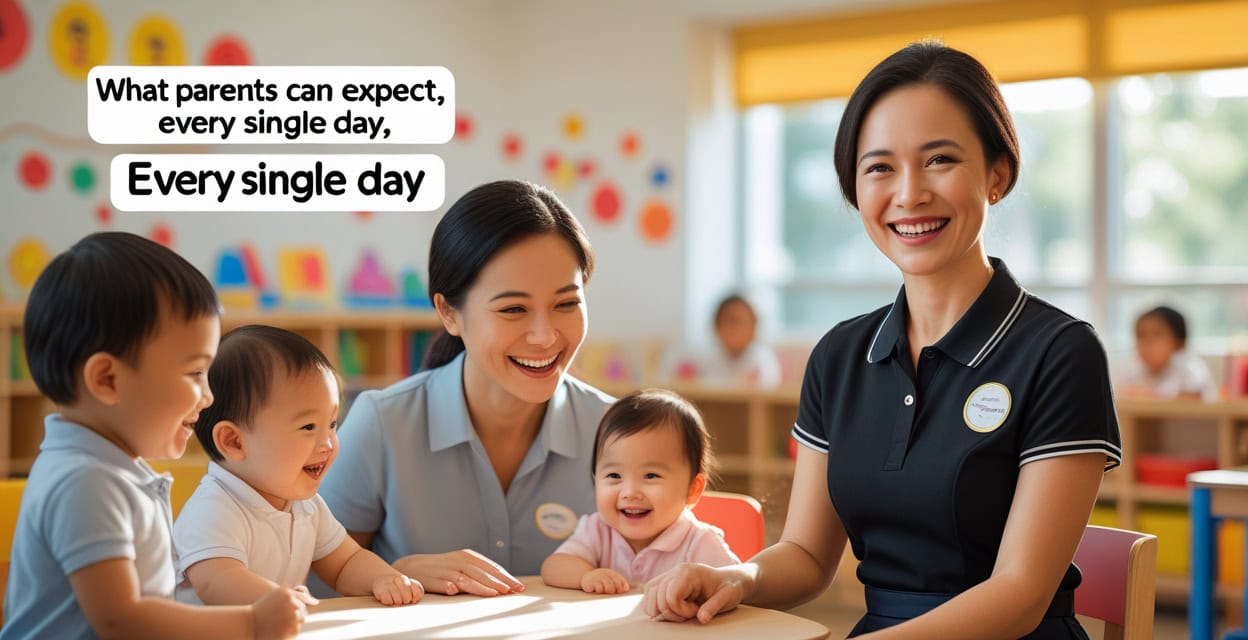
What Parents Can Expect, Every Single Day

What Parents Can Expect, Every Single Day

EduNanny commitments are explicit, daily promises to families:

  • 1:3 infant ratio: A non-negotiable standard to ensure close attention and safety.
  • Primary caregiver attachment and clear backups: Names, faces, and rhythms your child knows and can rely on.
  • Written welcome plan and safety checklists: Morning and evening checklists plus a pickup note with a brief developmental update.
  • Consistent, calming environment: Unhurried routines, sensory-friendly spaces, and play that invites discovery rather than performance.
  • Respect for culture and language: Care that honours your family’s traditions, language, hopes, and quiet wisdom about your child.

EduNanny Benefits at a Glance

EduNanny Benefits at a Glance

  • Excellence and quality: Strong standards across centre-based and home-based settings.
  • Distance supports and responsible innovation CCTV: Transparent, purpose-driven use for coaching and accountability.
  • Near-home convenience: Islandwide availability, Monday–Friday, 7am–7pm.
  • Affordability: From $33/day, with CDA/Baby Bonus support.
  • ECDA Childminding Pilot and national initiative: A scalable model that aligns with public policy and workforce development.
  • Modern layouts and secure environments: Designs that support safety, learning, and caregiver well-being.
  • Clear enrolment pathways: EduNanny.com and Childminding.EduNanny.com as entry points for families and educators.

Four Everyday Promises That Anchor Our Practice

Four Everyday Promises That Anchor Our Practice

  • Safety before schedule: Every decision starts with safety considerations for the child and caregiver.
  • Follow the child first: Observe, listen, and respond to the child’s cues before rigidly enforcing a plan.
  • Partner with families: Collaboration and transparency guide every intervention or suggestion.
  • Choose dignity over speed: Deliberate, respectful care that honours each child’s pace and personality.

Closing: What EduNanny Stands For

Closing: What EduNanny Stands For

EduNanny is built for parents who carry a nation’s hopes, for infants whose earliest memories shape their future, and for childminders who hold trust with two hands and a steady heart. It is professional, evidence-based care that treats care as a civic duty—never a stopgap, always a standard. A 1:3 covenant keeps eyes soft and attention real. A nation that holds its infants with skill and tenderness is a nation being built right now—quietly, competently, near home.


Call to Action: Join the EduNanny Community

Call to Action: Join the EduNanny Community

If this is the beginning you want for your family, we welcome you. Learn more: EduNanny.com. Explore childminding options: Childminding.EduNanny.com. Together, we will turn ordinary minutes into lifelong confidence—safely, joyfully, and near home.


Conclusion

Conclusion

EduNanny offers a defensible, practical blueprint for Singapore’s early childhood landscape: proximity, quality, safety, and dignity woven into every day. By elevating childminders as civic Weavers and grounding care in micro-moments, EduNanny provides families with reliable pathways to nurture development, language, self-regulation, and joyful discovery. If you are a parent seeking a near-home option that respects your child’s pace and your family’s routines, consider EduNanny as a tested, scalable solution that aligns with national priorities and everyday realities.

Keywords and practical next steps:

  • Next steps for parents: Schedule a tour of a centre-based EduNanny site or discuss home-based arrangements with a trained EduNanny caregiver; request a sample welcome plan and safety checklist; ask about 1:3 ratios and handover routines; explore how CCTV is used for coaching and transparency.
  • Guidance for new childminders: Engage in the EduNanny training pathway, complete first aid and safety certification, participate in reflective circles, and build a local cluster for mutual relief coverage.
  • Practical home adjustments: Create a dedicated, safe play zone, maintain a predictable daily rhythm, and implement “micro-moments” language-rich interactions during diapering, feeding, and quiet play.
  • Development notes to track: Feeding schedules, sleep rhythms, mood states, engagement with materials, and social interactions with peers.
  • Policy and community impact: Support or participate in pilot programs and discussions around safe, near-home care that aligns with ECDA guidelines and national workforce strategies.
[#EduNannySingapore, #InfantCareSG, #ChildmindingSingapore, #EarlyChildhoodDevelopment, #NearHomeCare]

edunanny-cf01247a-3625-4407-be6a-ca650a2664f9
October 17, 2025

Presence as Pedagogy, Near Home Childminding and the Singapore First Thousand Days

Intro: A Handover of Trust—EduNanny's Vision for Singapore

Intro: A Handover of Trust—EduNanny’s Vision for Singapore

Good evening, Singapore. At 7:02 a.m., a lift door opens in a familiar HDB corridor. A parent kneels, kisses a tiny forehead, and whispers, “You’re safe. I’ll be back.” In that moment, trust changes hands. EduNanny exists for that handover—the small transfer that shapes a lifetime. We stand with a team of educators, nurses, child development specialists, and neighbourhood childminders who share a simple, public‑spirited conviction: in the first thousand days, presence is pedagogy, safety is dignity, and joy is a child’s right. EduNanny by BUTLER brings that conviction to life through a national childminding pilot across Singapore—centre‑based, home‑based, and near‑home—to make excellent infant care available Monday to Friday, 7 a.m. to 7 p.m., islandwide.

Below you’ll find a detailed, practical, and action‑oriented blueprint: how EduNanny works, why it matters, and how families, caregivers, and communities can participate and benefit.


Chapter 1: Our Model—Simple, Ambitious, and Real‑World Practical

Chapter 1: Our Model—Simple, Ambitious, and Real‑World Practical

  • 1:3 infant ratio—deep attunement, fewer interruptions, and time for individualized care.
  • Centre‑based and home‑based options—modern, calming layouts that fit into neighbourhoods and daily life.
  • Innovative CCTV—secure, consent‑based visibility that fosters transparency while safeguarding privacy.
  • Affordability from $33/day—fees payable by CDA/Baby Bonus to reduce financial barriers.
  • Blended support—near‑home care with distance updates so parents stay in the loop.
  • National social initiative—part of a broader effort to professionalise caregiving roles across communities.

Chapter 2: The Educational Foundations We Honour

Chapter 2: The Educational Foundations We Honour

We draw on timeless principles to guide everyday care in a modern setting:

  • Montessori and Froebel: prepared environments that invite independent exploration and purposeful play.
  • Piaget and Vygotsky: social interaction as a driver of cognitive growth and learning.
  • Malaguzzi: the hundred languages of the child—expressive, social, and creative ways to learn.
  • Erikson, Bowlby, Pikler: trust, attachment, respectful handling, and the primacy of relationship.
  • Approach informed by contemporary child health science and a non‑judgmental, family‑centered ethos.

Practical takeaway for families: when you visit EduNanny, look for calm routines, respectful interactions, and environments that invite safe exploration and language development.


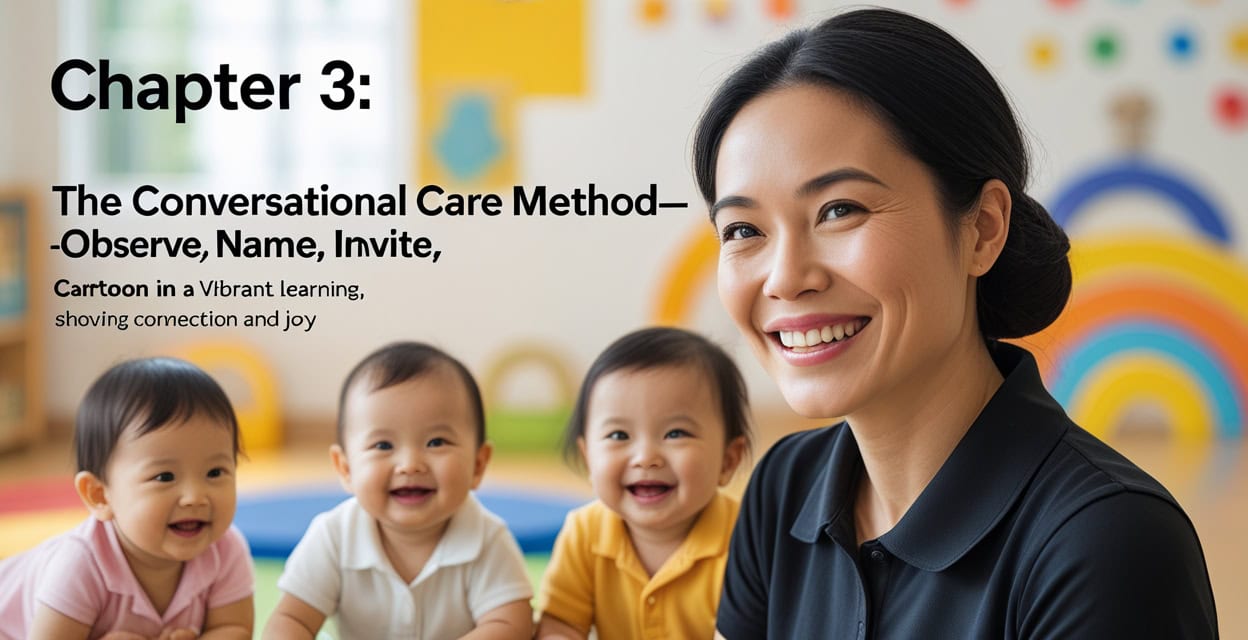
Chapter 3: The Conversational Care Method—Observe, Name, Invite

Chapter 3: The Conversational Care Method—Observe, Name, Invite

Infant learning is a dialogue long before it becomes a curriculum. Our caregivers use a simple, replicable technique:

  • Observe: Watch gaze, breath, and body tone for cues before intervening.
  • Name: Label what the child is doing or feeling in a gentle, non‑intrusive way: “You’re looking at the bright window.”
  • Invite: Extend the next step without forcing it: “Would you like to reach for the scarf?”

Why this matters: it builds security and language skills, supports early self‑regulation, and grounds care in a two‑way conversation. This approach aligns with Vygotsky’s zone of proximal development and Pikler’s respectful care. With a 1:3 ratio, caregivers have time to attune and respond to subtle cues, forming a reliable, predictable daily rhythm.


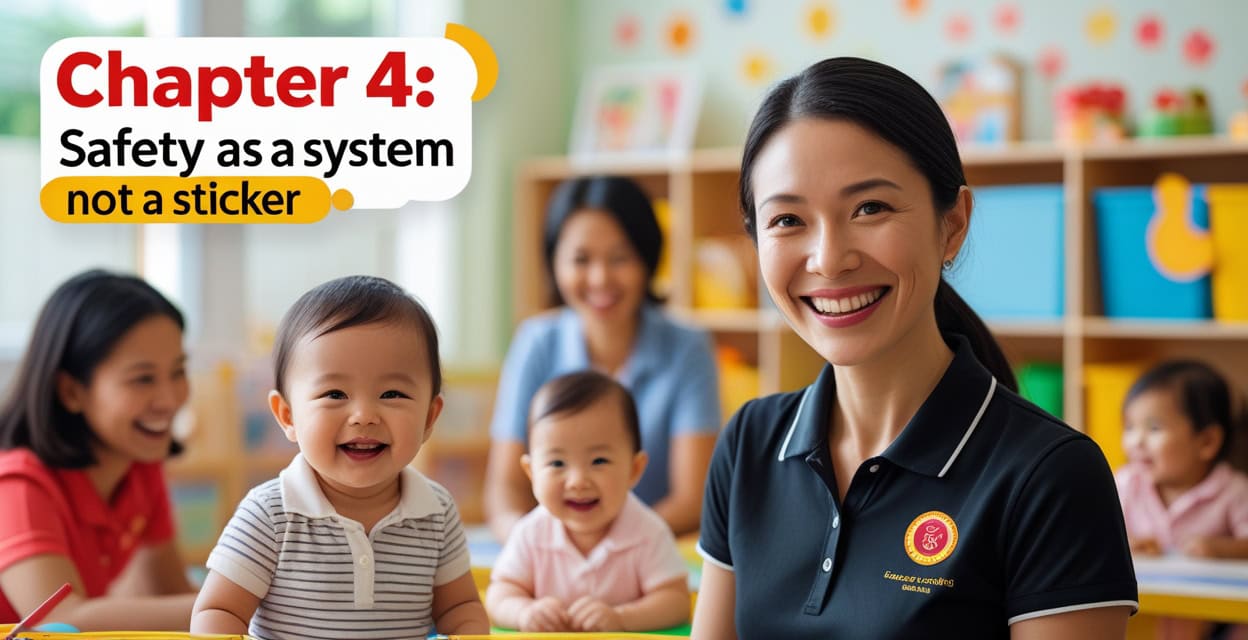
Chapter 4: Safety as a System, Not a Sticker

Chapter 4: Safety as a System, Not a Sticker

Safe Design and Environment

  • Open sightlines, clearly separated clean and dirty zones, and color‑coded sanitation stations to minimize cross‑contamination.
  • Cot‑to‑floor transitions and ergonomic furniture to reduce lifting strain and fall risks.

Evidence‑Based Sleep Practices

  • Infant sleep positioning (supine), firm mattress, and a clutter‑free cot with no soft toys; supervise awake tummy time to build core strength.
  • Nap checklists and documented sleep windows to support predictable routines for babies and parents alike.

Hygiene, Health, and Health‑Data Integrity

  • Medical‑grade disinfection protocols; hand‑to‑surface hygiene practices; clear guidelines for illness exclusion and return to care.
  • Digital logs with time stamps for meals, naps, sleep cues, and health observations—shared securely with parents.

Supervision, Transparency, and Privacy

  • Secure, consent‑based CCTV access for parents; robust data privacy safeguards; prompt incident reporting with compassionate follow‑through.

Practice Under Pressure

  • Monthly evacuation drills and quarterly scenario‑based simulations to strengthen judgment, not just compliance.
  • Regular safety audits and reflective practice sessions for caregivers to continually raise standards.

Chapter 5: Micro‑Milestones and the Three Lenses of Development

Chapter 5: Micro‑Milestones and the Three Lenses of Development

EduNanny tracks development through three integrated lenses—Movement, Meaning, and Mutuality:

  • Movement (gross and fine motor): head control → rolling; palmar grasp → pincer grip; floor‑based play to prevent overreliance on seating devices.
  • Meaning (language and cognition): multilingual narration of routines; turn‑taking in proto‑conversations; exposure to languages common in Singapore homes.
  • Mutuality (attachment and self‑regulation): five‑second attunement pauses to read infant state and respond with calm, predictable signals.

Micro‑observations are recorded daily, shared with parents, and translated into a weekly intention for each child—one achievable goal that personalises growth and avoids generic milestones.


Chapter 6: Joy by Design—Rhythm, Safety, and Curiosity

Chapter 6: Joy by Design—Rhythm, Safety, and Curiosity

True happiness in infancy comes from rhythm and respectful engagement, not mere entertainment. Our day is designed to lower cortisol and lift curiosity through:

  • Warm arrival handover and sensory‑soft welcome.
  • Purposeful play windows aligned with sleep pressures—reaching, rolling, social smiles, singing, and cause‑and‑effect exploration.
  • Rest periods protected by sound dampening and thoughtful lighting; transitions narrated and unhurried to reduce stress responses.
  • Micro‑outdoor moments (when safe): breeze on the skin, visual scanning of the sky, gentle nature stimuli.

Joy is measured in concrete indicators: settled sleep, steady feeding, engaged gaze, coo‑back rates, and easier separations at goodbye. When joy is engineered as rhythm, learning becomes natural and meaningful.


Chapter 7: The Civic Craft of Childminding—Profession, Purpose, and Pride

Chapter 7: The Civic Craft of Childminding—Profession, Purpose, and Pride

  • Maximum Employment Mandate—commitment to training, certification, and retention of caregivers as dignified professionals.
  • Coaching and career ladders that convert talent into vocation, supported by ongoing observation and reflective practice.
  • Near‑home placements strengthen neighbourhoods, reduce commute stress for families, and embed care within local communities.
  • Parent partnership as a core value—co‑designing routines, cultural practices, and feeding preferences with respect and clarity.

In this civic frame, childminding becomes public infrastructure: it enables participation, strengthens families, and shapes the future by investing in our youngest citizens.


Chapter 8: How EduNanny Makes It Simple and Strong for Families

Chapter 8: How EduNanny Makes It Simple and Strong for Families

  • Excellence with a 1:3 infant ratio and evidence‑based practices.
  • Centre‑based, home‑based, and near‑home options islandwide.
  • Mon–Fri, 7 a.m.–7 p.m. for predictable scheduling around work and family life.
  • Transparent technology: secure CCTV access, real‑time updates, and clear communication channels.
  • Affordable from $33/day with CDA/Baby Bonus support to ease family budgets.
  • Distance support: secure check‑ins, video updates, and timely messages that keep parents connected.
  • Aligned with a national pilot framework—compliance, safety, and quality guided by ECDA standards.
  • Explore locations, enrolment, and careers at EduNanny.com and Childminding.EduNanny.com.

A Day in the Life, Briefly

A Day in the Life, Briefly

A baby arrives and is named by a familiar caregiver. Morning feed, sleep window, and mood are reviewed. Eye contact is prioritized, followed by a narrated nappy change. Floor time begins with a scarf trail, a rattling toy, and a song in English and Malay. When fatigue signals, a consistent nap ritual begins. After rest, a quiet corner for a bottle; tummy time follows with a gentle challenge, just within reach. A parent checks the live update, smiles, and returns to work with lighter shoulders. At pickup, two micro‑milestones and tomorrow’s intention are shared. Small, humane, repeatable care that compounds into lasting trust.


Chapter 9: Why This Matters—Who, What, When, Where, and How

Chapter 9: Why This Matters—Who, What, When, Where, and How

  • Who: Infants aged 0–36 months, families seeking dignified, development‑oriented care, and employers valuing stable teams.
  • What: Trust‑anchored childminding that turns everyday care into a living curriculum of attachment, safety, and learning.
  • When: Now—within Singapore’s national pilot window through December 2027 and beyond as the first thousand days become foundational for long‑term outcomes.
  • Where: Islandwide, near home—with centre‑based rooms and licensed home environments designed for visibility, calm, and safety.
  • How: 1:3 ratio, trained supervision, transparent technology, rigorous safety systems, and a parent partnership that is honest, kind, and practical.

Chapter 10: Our Philosophy in One Breath

Chapter 10: Our Philosophy in One Breath

Presence before program. Safety before speed. Relationship before routine. And yet—when those are right—the routine sings, the program hums, and development unfolds precisely as nature intended. This is the core ethos we bring to every EduNanny room.


Chapter 11: Messages to Stakeholders

Chapter 11: Messages to Stakeholders

To Parents

Your child deserves care that is not only safe, but deeply seen. Visit our rooms, meet our people, test our systems, and feel the calm that comes from care aligned with science. We operate Monday to Friday, 7 a.m. to 7 p.m.—designed to support you as you work, rest, and return to a child who has spent a day in dignity.

To Caregivers

Your craft is nation‑building. EduNanny commits to training, coaching, and celebrating your work. This is a career with purpose, a community that supports you, and the daily reward of contributing to a child’s wellbeing and development.

To Singapore

Early care is public infrastructure. By investing in the first thousand days, we enable greater workforce participation, strengthen families, and sculpt a more resilient, compassionate society for decades to come. The future begins with each attentive minute today.


Chapter 12: Closing—the Quiet Rehearsal of Tomorrow

Chapter 12: Closing—the Quiet Rehearsal of Tomorrow

In the quiet cradle, tomorrow is rehearsed. In every five‑second pause to attune, a child learns the world will meet them with care. In every transparent system, a parent learns they can trust again. This is the work of EduNanny by BUTLER—simple in the moment, mighty in its compounding effect. Let us make it possible for every goodbye at daybreak to be confident, and every reunion at dusk to be easy. Let us place excellence within reach, near home, at a price that honours families and a profession that honours caregivers. Let us hold Singapore’s future gently and deliberately—one attentive minute at a time.


Conclusion

Conclusion

EduNanny’s approach translates strong theory into everyday practice: a reliable, human‑centred care system that supports families, elevates caregivers, and strengthens communities. By prioritising presence, safety, and joyful, development‑oriented routines, we can redefine what early care looks like in Singapore—and lay a durable foundation for lifelong learning and wellbeing. We invite parents, caregivers, employers, and community partners to engage with EduNanny, explore enrolment and career opportunities, and join the pilot to help build a trusted, near‑home childcare ecosystem for all Singaporeans.

Visit EduNanny.com or Childminding.EduNanny.com to book a tour, join the pilot, or begin a career in the civic craft of childminding.

[#EduNannySingapore, #First1000Days, #InfantCare, #ChildmindingSingapore, #EarlyChildhoodDevelopment]


edunanny-07b57eac-65b9-4744-b193-5801f4f729ae
October 17, 2025

Trust at Daybreak EduNanny Grounding Vision for Singaporean Infants and Future Leaders

Trust at the Start: EduNanny’s Grounding Vision for Singaporean Families

Trust at the Start: EduNanny’s Grounding Vision for Singaporean Families

Good evenings to all parents, caregivers, and friends who believe in the power of the very first days of life. At EduNanny by BUTLER, we hold a simple conviction: trust formed at the outset creates a steady platform for health, learning, resilience, and joy. This isn’t abstract philosophy; it is the daily craft of infant care. EduNanny is part of Singapore’s Childminding movement and the ECDA Childminding Pilot—a national social initiative designed to bring excellence in infant care closer to home, closer to work, and closer to the everyday rhythms that shape a family’s life.

What you get with EduNanny is an evidence-led, heart-forward approach to infant care and childminding, available islandwide Monday to Friday, 7am to 7pm, with a proud 1:3 infant ratio. We partner with families in centres, in community settings, in licensed home premises, and through distance support for parents who need expert guidance wherever they are. Our pedagogy is modern and humane; safety is a daily craft; and success is measured not only by milestones but by calm moments earned and wonder sustained.


What is EduNanny?

What is EduNanny?

Evidence-Led, Heart-Forward Infant Care

EduNanny is designed to translate science and dignity into everyday care. Our practice blends attachment theory with practical routines, informed by Montessori, Pikler, Bowlby, Vygotsky, and contemporary developmental science. We value the infant’s pace, agency, and curiosity, while providing a consistently supportive environment.

What We Offer

  • Centre-based, home-based, community childminding options islandwide
  • Distance support for families needing expert guidance remotely
  • Transparent, safety-forward design: modern layouts, attuned routines, and accountable practices
  • Ultra-low infant ratios (1:3) to ensure genuine attunement and individual warmth
  • Innovative CCTV for live accountability and parent peace of mind
  • Affordability options, including CDA/Baby Bonus where eligible

How EduNanny Makes Infant Care Thrive in Singapore

How EduNanny Makes Infant Care Thrive in Singapore

Singapore’s promise has always been forward thinking brought to practical life. EduNanny embodies that promise by putting science, design, and dignity into everyday care. Our layouts are intentional, our training blends attachment theory with real-world routines, and our transparency is reinforced by CCTV for accountability and reassurance. We keep groups small, hire for heart and skill, and design spaces where safety is tangible and learning is visible in everyday moments.


The Four Fresh Topics at the Heart of Our Work

The Four Fresh Topics at the Heart of Our Work

Weaves of pedagogy, safety, development, and happiness run through every childminder’s day. Below are four core topics, each with practical insight you can apply at home and in partnerships with EduNanny.

1) Pedagogy of the Everyday: See, Say, Scaffold

Infant pedagogy is not about rushing childhood; it’s about revealing it. Our approach is simple, elegant, and rooted in the best of established theories and science.

  • See: Observe first. Watch cues, timing, and temperament. What looks like aversion might be self-regulation in action; a baby’s gaze or a small stretch can reveal a request for space. Attentive noticing prevents overwhelm and invites discovery.
  • Say: Narrate experience in clear, warm language. Examples: “Your fingers are finding the soft cloth; you are gripping and letting go.” Short phrases, attuned tone, and gentle cadence help neural connections and early literacy without flashcards or noise.
  • Scaffold: Add just enough support to keep effort enjoyable. Examples: a rolled towel under the chest for tummy time; a reachable object placed slightly out of range to encourage a gentle stretch. Calibrate the challenge so success feels earned, not engineered.

This pedagogy respects the infant’s pace, honors participation, and dignifies routine moments—feeding, changing, settling—as the curriculum. It turns ordinary minutes into meaningful moments of learning and connection.

2) Safety as an Architecture of Calm: Six Rings that Hold the Day

Safety is not a checklist; it is an ecosystem. We interlock six rings to create predictable calm.

  • People: Carefully selected childminders trained in infant development, safe sleep, attuned settling, and emergency readiness.
  • Place: Modern layouts with purposeful sightlines, low-to-floor sleep solutions, and clear zones for quiet, movement, and care.
  • Protocols: Daily opening-to-closing safety rituals—sanitisation, equipment checks, sleep audits, bottle handling standards, and incident drills.
  • Practice: Slow hands, soft voices, stable routines. A calm caregiver is a “first safety device.”
  • Partnership: Transparent communication with families, secure CCTV for accountability, and collaborative care plans for allergies, routines, and sleep preferences.
  • Proof: Documentation that is human and useful—brief logs of feeds, naps, moods; patterns shared weekly to fine-tune home routines.

Safety becomes culture when it is practiced minute to minute, not merely displayed. When infants experience reliable calm, they grow braver and more curious about the world.

3) Development You Can Feel: Four Streams, One River

Development is a river fed by four streams we cultivate every day.

  • Body Mastery: From reflexes to intentional movement, we support rolling, reaching, grasping, and core strength through floor time, varied textures, and gentle challenges.
  • Language Bath: A daily immersion in warm talk, songs with true melody, and book-sharing built on rhythm and repetition. Silence has a purpose, too; the brain wires with space to process.
  • Emotional Regulation: We co-regulate—matching affect, slowing breath, and offering predictable routines. Babies borrow our nervous systems before they learn to steady their own.
  • Early Executive Function: Even in infancy, seeds of focus, working memory, and impulse control are planted through simple, predictable sequences—hands clean, bodies calm, signals clear, simple choices offered.

When these streams run together, confidence emerges: a curious infant explores farther, returns faster, and rests deeper.

4) The Joy Loop: Predictability, Curiosity, Success, Confidence

Happiness in infancy is not about entertainment; it is the quiet satisfaction of mastery. We cultivate a Joy Loop that sustains long-term well-being.

  • Predictability: A stable rhythm of feed, play, rest that children can anticipate.
  • Curiosity: Real objects, simple materials, sensory invitations, and spaces that invite exploration without being overwhelming.
  • Success: Tasks matched to readiness—turning a page, lifting a scarf, pushing up on forearms, offering a smile and receiving one back.
  • Confidence: The inner sense of “I can,” which grows social warmth and future learning drive.

Joy in our settings is often seen in soft shoulders, steady gaze, and a ready smile that signals “I’m ready to try again.”


The Purpose of Childminders: Guardians of Beginnings

The Purpose of Childminders: Guardians of Beginnings

Childminders are not stand-ins; they are specialists in belonging. Their purpose is to hold the bridge between home and the wider world—offering infants a secure base and parents a trustworthy partner. In Singapore, our role is civic. Through the ECDA Childminding Pilot and a Maximum Employment Mandate, we invest in dignified work for caregivers across estates. We grow skills, careers, and community capacity while serving the smallest citizens with the highest standards.


What Families Receive with EduNanny

What Families Receive with EduNanny

  • Excellence and quality you can visit, feel, and measure
  • Centre-based, home-based, and community childminding options islandwide
  • Distance support for families who need expert guidance wherever they are
  • Convenience: Monday to Friday, 7am–7pm
  • An excellent 1:3 infant ratio for true individual attention
  • Innovative CCTV for transparency and partnership
  • Modern, safety-forward layouts that promote visibility and calm
  • Affordability: options from $33/day, with CDA/Baby Bonus where eligible
  • A national social initiative under the ECDA Childminding Pilot, aligned with Singapore standards and aspirations

Visit EduNanny.com and Childminding.EduNanny.com to find the nearest centre, licensed home setting, or to speak with our team.


A Brief Explainer for Singapore

A Brief Explainer for Singapore

Why near-home childminding matters now: long commutes, demanding schedules, and the emotional cost of distant care strain families. By placing small, high-quality pods of care in neighbourhoods and homes, we give parents time back and infants stability forward. Attentive care is not a luxury—it is essential infrastructure for a future-ready nation. When we ease the day for a parent and enrich the hour for a child, we compound national well-being across years.


How We Keep the Promise Daily

How We Keep the Promise Daily

  • We open each morning with safety rituals and a calm welcome
  • We keep groups ultra-low in ratio for real attunement
  • We turn care routines into learning: feeding with eye contact, changing with language, settling with rhythm
  • We share patterns with families—sleep arcs, feeding cues, emerging interests—to keep home and care aligned
  • We coach gently, honour culture, and build consistency without judgement

A Word on Technology and Trust

A Word on Technology and Trust

CCTV is not a substitute for character; it is a window into it. We use technology as transparency, training as assurance, and supervision as culture. Standards matter. People matter more. We commit to both.


Closing: Who, What, When, Where, and How Childminding Matters

Closing: Who, What, When, Where, and How Childminding Matters

  • Who: Every infant who deserves a gentle start, every parent who deserves peace of mind, and every caregiver whose craft builds a nation’s future.
  • What: Childminding that unites safety, science, and soul—where the curriculum is care and the outcome is confident, securely attached children.
  • When: The first thousand days, when experience writes the brain’s most enduring lines—and every workday from 7am to 7pm, when families most need us.
  • Where: Near your block, in your community, in centres and licensed homes across Singapore, with distance support wherever families are.
  • How: Through ultra-low ratios, rigorous training, modern design, innovative transparency, and a partnership mindset that treats parents as co-authors of care.

EduNanny’s Philosophy and Purpose

EduNanny’s Philosophy and Purpose

Our philosophy is simple: presence before program, relationship before routine, safety before speed. Our purpose is to make excellence ordinary and closeness convenient, so families can thrive without compromise. We believe calm is teachable, curiosity is contagious, and dignity is the right of every child and every caregiver.


Conclusion: A Beginning with Purpose

Conclusion: A Beginning with Purpose

In the quiet of an attentive minute, futures are set in motion. In the steadiness of a well-held day, confidence takes root. This is the work of EduNanny—small hands, big horizon. We invite you to walk this beginning with us. If you are a parent seeking peace of mind and a caregiver seeking meaning, explore EduNanny as a partner in your daily life and in your child’s bright, early years.

SEO keywords: #earlychildhoodcareSingapore, #infantcareSingapore, #nearhomechildminding, #ECDAChildmindingPilot, #EduNannySingapore


edunanny-781eef22-f159-4bb3-99e7-68e381765df2
October 17, 2025

Near Home Ultra Low Ratio Pods and the Responsive Triangle A Bold New Standard for Singapore First Thousand Days with EduNanny

EduNanny Singapore: A New Standard in Early Care

EduNanny Singapore: A New Standard in Early Care

Good care in the first three years sets the stage for a confident, curious, and capable child. EduNanny was born in Singapore to make that stage steady, safe, and deeply human. This article expands the core vision into practical insights for parents, caregivers, and communities, translating policy and philosophy into everyday decisions that shape a child’s life and a city’s future.


Theme One: The Responsive Triangle

Theme One: The Responsive Triangle

The heartbeat of EduNanny is the Responsive Triangle: child, caregiver, and parent aligned through consistent, compassionate interaction. This section translates theory into actionable steps you can apply at home, in transit, and during a day at an EduNanny partner centre.

Key Concepts

  • Bowlby’s secure base: predictable, warm relationships that invite exploration and reduce fear.
  • Pikler’s respectful handling: unrushed caregiving that honors the infant’s pace and autonomy.
  • Vygotsky’s scaffolded learning: providing just enough support to stretch abilities without overguiding.
  • Montessori’s prepared environment: spaces arranged for safe discovery and self-directed interaction.
  • Piaget’s sensorimotor mastery: learning through touch, movement, and repetition.
  • Erikson’s trust versus mistrust: consistency builds confidence and a sense of safety.

Practical Applications for Families

  • Read cues before reacting: notice a light fist to the mouth, a twisting torso, or shifted gaze—each signals a need or preference.
  • Respond with presence: meet the child at eye level, use a soft voice, and provide clear, loving touch.
  • Narrate the world: “I see you reaching for the blue cup. Your hand is strong.” Turning moments into meaning supports language and social connection.
  • Daily parent-caregiver briefings: share observations, milestones, and any concerns to keep the triangle intact across settings.
  • Secure digital updates: convenient updates and notes that maintain continuity between home and care.

Theme Two: Safety as a System, Not a Slogan

Theme Two: Safety as a System, Not a Slogan

Safety is a system you can verify, not a tagline. EduNanny structures safety across five interlocking layers to create a culture of continuous protection and accountability.

The Five Layers of Safety

  • People: rigorous vetting, comprehensive certifications (sleep safety, infant first aid), ongoing practice audits, and continuous training.
  • Places: sightlines, safe sleep rooms, hygienic feeding stations, non-toxic materials, circadian-friendly lighting.
  • Practices: safe sleep protocols (ABC), bottle-prep logs, allergy management, illness screening, hand hygiene choreography, and secure handovers.
  • Proof: opt-in secure CCTV livestreams, digital checklists, transparent incident reporting, and regular safety drills.
  • Partnership: family safety briefings, home-proofing guidance, and coordinated care plans for medical needs.

What to Ask When Choosing Care

  • What is your 1:3 infant ratio, and how is it maintained across shifts?
  • How do you implement safe sleep, nutrition, and illness protocols in practice?
  • Can you show a recent safety drill log and a sample incident-report workflow?
  • What authentication and access controls exist for parent-visible CCTV or digital updates?
  • How do you train and support caregivers to maintain consistent safety practices?

Theme Three: Developmental Choreography—Growing With Rhythm

Theme Three: Developmental Choreography—Growing With Rhythm

Early learning is a choreography: routines anchored in rhythm, with gentle adaptations as a child grows. EduNanny designs a steady cadence for each child, weaving development into daily care rather than forcing separate moments of learning.

Core Rhythm Modules

  • Nourish: calm feeding with paced bottle techniques, sustained eye contact, and signals respected during burp breaks.
  • Rest: aligned sleep windows, white noise or soft hum, and self-soothing strategies that prioritize safety.
  • Move: tummy time evolving into rolling, scooting, crawling; prioritizing floor time and device-free play.
  • Explore: heuristic play baskets, texture walks, light-and-shadow play, and outdoor excursions for changing horizons.
  • Communicate: responsive talk, baby signing to reduce frustration, early bilingual exposure through songs and labels, joint attention games.
  • Create: rhythm shakers, finger paints, and scarves that invite curiosity without intimidation.

Developmental Monitoring with Purpose

  • Guides document milestones with humility, interpreting cues and offering support as needed.
  • Developmental screens are conversation starters, not labels—used to coordinate referrals when necessary.
  • Education partners provide timely feedback to families, helping bridge at-home and centre-based learning.

Theme Four: Joy as a Learning State

Theme Four: Joy as a Learning State

Joy is not an indulgence; it is a developmental engine. A joyful child experiences enhanced brain growth, emotional regulation, and social connection. EduNanny protects joy through thoughtful routines, sensory balance, and caregiver well-being.

Joy-Protecting Practices

  • Gentle greetings and predictable rituals: arrivals feel calm, not rushed.
  • Sensory diets: carefully calibrated stimulation that matches a child’s needs rather than overwhelming them.
  • Micro-successes: celebrate small wins like a first stable sit or a successful peekaboo.
  • Shared laughter: joy fosters co-regulation and social bonding.
  • Quiet corners: safe spaces for rest and self-regulation when the world feels loud.
  • Caregiver well-being: trained, supported caregivers transmit calm and confidence to children.

Practical Joy-Enhancers for Families

  • Establish a short, soothing arrival routine at home that mirrors the centre’s quiet rituals.
  • Use a weekly “joy journal” to note small moments of curiosity or laughter and share them with caregivers.
  • Incorporate daily language-rich interactions—narrate activities, describe feelings, and celebrate attempts.

Theme Five: Childminders With Public Purpose

Theme Five: Childminders With Public Purpose

Childminding is a professional vocation with civic weight. EduNanny frames this work as both a craft and a public good, anchored by local communities and national policy. Our care model blends local reach with a national social mission.

Professionalism and Local Anchoring

  • Skilled: training in responsive caregiving, observation, safety, and emergency readiness.
  • Anchored locally: neighbourhood centres and licensed homes to reduce commutes and strengthen community ties.
  • Technology-enabled: secure CCTV, digital logs, and real-time parent communication for transparency.
  • Publicly purposeful: part of ECDA’s Childminding Pilot to expand access, create meaningful jobs, and support families with affordability.
  • Dignity-first: every baby is treated as a person; every family is met with respect, not judgment.

Practical Guidance for Families: Making the Most of EduNanny

Practical Guidance for Families: Making the Most of EduNanny

Choosing care is a pivotal decision. Use these practical steps to evaluate options and maximize outcomes for your child.

Centre-Based vs Home-Based: Pros and Considerations

  • Centre-based: structured routines, access to diversified play environments, and predictable schedules. Ask about group sizes, staff turnover, and safety audits.
  • Home-based: intimate care and flexible arrangements, often closer to family routines. Inquire about caregiver qualifications, home safety checks, and regular visits or virtual updates.

Questions to Ask on Tours

  • How is the 1:3 ratio maintained during peak times and staff breaks?
  • What does your daily schedule look like for different ages?
  • How do you handle illness and brief illness exclusion policies?
  • What kind of parent updates do you provide (CCTV access, daily notes, developmental reports)?
  • Can you show sample safety and accident logs, as well as staff training records?

Home Preparation: Extending the EduNanny Rhythm at Home

  • Establish a consistent daily routine that mirrors the centre’s rhythm: predictable nap times, meals, play, and quiet time.
  • Practice “pause and narrate” language at home—point to objects and label actions to support early communication.
  • Provide safe, supervised floor play for cognitive and motor development; limit screen time for infants and toddlers.
  • Share your child’s cues with caregivers—what signals distress, hunger, or tiredness—and keep communications transparent.

A Day in EduNanny: A Narrative of Shared Rhythm

A Day in EduNanny: A Narrative of Shared Rhythm

Arrival begins with a calm handover and quick health check, aligning today’s plan with the child’s cues. Morning rhythm weaves feeding, rest, movement, and exploration, all documented and adjusted by cues. Midday brings secure naps, gentle wake-ups, floor play, and early language games. Afternoon emphasizes outdoor movement when possible, music, and sensory play, followed by wind-down rituals. Departure includes a thoughtful debrief, tomorrow’s notes, and a celebration of small wins. This cadence respects the child’s pace while delivering high-quality, consistent care.


Why This Matters Now

Why This Matters Now

Singaporean families bear immense responsibility in balancing work, family, and development needs. Reliable, high-quality care is not a luxury; it is foundational to daily life and long-term well-being. By bringing ultra-low-ratio, science-led childminding into neighbourhoods and homes, EduNanny strengthens visibility, affordability, and partnership—so families can lead with confidence and children can flourish with dignity.


How to Enrol and Next Steps

How to Enrol and Next Steps

Ready to explore EduNanny? Visit EduNanny.com and Childminding.EduNanny.com for information, tours, and enrolment. We offer centre-based and home-based options, plus distance coaching to support transitions and at-home practices. Use your CDA/Baby Bonus to unlock a high-quality start at a price designed for real families. Contact us to schedule a tour, meet a childminder, or try a trial day.


Conclusion

Conclusion

EduNanny stands for a simple, powerful promise: reliable, dignified, science-led care that grows with your child. By embracing the Responsive Triangle, building safety as a system, choreographing early development, safeguarding joy, and holding public purpose at the core of every caregiver’s work, we lay the groundwork for a city that values its youngest citizens. A calm, secure beginning becomes a curious toddler, a confident child, and a resilient adult. Let’s commit to a steadier daily rhythm, a safer beginning, and a kinder future—together. Visit EduNanny.com or Childminding.EduNanny.com to begin your tour, meet a childminder, or start a trial day.

SEO keywords: [#earlyyearsSingapore, #infantcareSingapore, #childcareSingapore, #EduNanny, #parentpartnership]


edunanny-194b3313-7ad6-4776-9f4b-378be4b3e4a5
October 6, 2025

EduNanny by BUTLER A Civic Standard for Singapore First Thousand Days Attunement Safety and Joy

EduNanny by BUTLER: A Civic Standard for Singapore’s First Thousand Days

EduNanny by BUTLER: A Civic Standard for Singapore’s First Thousand Days

Good evening, Singapore. This is a call to align care with the promise of our nation: that the earliest days shape able minds, sturdy hearts, and resilient communities. EduNanny by BUTLER presents not just a service, but a standard—a quiet, dependable architecture for the first thousand days of life. An approach that blends care, pedagogy, and civic purpose into one coherent practice that families can trust, workplaces can rely on, and communities can celebrate.


The EduNanny Model: Care, Pedagogy, Civic Purpose

The EduNanny Model: Care, Pedagogy, Civic Purpose

EduNanny is designed to meet families where they live and work—across home-based and centre-based settings, Monday to Friday, 7am to 7pm, throughout Singapore. We operate at an intentional 1:3 infant ratio, with affordability, transparency, and safety woven into every day. This section unpacks the core elements that define EduNanny as a standard rather than a single offering.

Microrhythm Method: learning paced to the infant, not the clock

Infants develop best when their learning tempo follows their own micro-cycles of curiosity, fatigue, and recovery. The Microrhythm Method makes that tempo visible and actionable for caregivers and parents alike. Practical guidance includes:

  • Anticipate: Before distress arises, learn each child’s cues—hunger signals, overstimulation signs, social cravings. Train staff to record and share patterns so support arrives preemptively.
  • Anchor: Establish a predictable sequence—warm greeting, gentle caregiving, small invitation to explore—so the infant’s nervous system trusts the day and anticipates a safe rhythm.
  • Allow: Create space for uninterrupted exploration—reaching, rolling, babbling, or gazing—without rush, so the brain wires initiative and curiosity.

Actionable considerations for families and centres:

  • Provide a simple daily cue sheet for parents that highlights the child’s microrhythm signals (sleepiness, hunger, social needs) and typical response times.
  • Train caregivers to pause briefly after a cue to allow the infant to complete the micro-cycle before offering new prompts.
  • Schedule flexible activities aligned to the microrhythm, avoiding heavy transitions during peak vulnerability times (e.g., post-feeding fatigue).
  • Share short, concrete progress notes with parents, focusing on what the infant did, what it signaled, and what the next gentle invitation might be.

In practice, a 1:3 ratio makes microrhythms possible. One caregiver can notice the flicker of a yawn, the soft arch of a back, or the hopeful hand offered to a peer. This is where Montessori’s respect, Pikler’s patience, and Vygotsky’s scaffolding converge—without strain, without overstimulation, just skilful attunement that turns ordinary minutes into brain-building hours.

Safety as a Visible Welcome: design that calms, protocols that protect

Safety at EduNanny is not a hidden checklist; it is a visible welcome that reassures parent and child alike. The practices below are designed to be understood at a glance and enacted with calm efficiency.

  • Open-Hand Protocol: Every transition begins at infant eye-level, with an open palm and a named invitation. This communicates non-threat and respect to the child.
  • Two-Step Secure: Identity checks, health screenings, and bag sweeps are performed with dignity and pace that do not alarm children.
  • Red-Line Sweep: Every hour, a quick two-minute environmental scan eliminates hazards before curiosity leads to risk.
  • Clear Sightlines, Soft Edges: Layouts prioritize line-of-sight to multiple infants; rounded furniture and low shelving support safe, independent exploration.
  • Innovative CCTV: A transparent, secure system protects dignity while enabling reflective practice and safety oversight.
  • Calm by Design: Natural light, neutral tones, and quiet corners reduce sensory load and help infants settle into calm states.

Key takeaway for families: safety is not fear; safety is the quiet confidence that lets curiosity bloom. A well-designed space and predictable protocols enable parents to entrust care without second-guessing and allow children to explore with confidence.

Gentle Challenges, Great Growth: development through small, right-sized invitations

A growth-forward approach treats development as a sequence of small, manageable challenges that invite rather than compel. Practical focus areas include:

  • Motor: Low risers, soft ramps, cloth tunnels encourage rolling, pulling, cruising, and climbing with adult spotting that builds self-reliance.
  • Language: Short, musical narration of the day—naming gestures, facial expressions, and feelings—paired with exposure to mother tongues and Singaporean speech rhythms.
  • Social-Emotional: “Wait and wonder” moments that teach signaling needs and tolerating brief frustrations with gentle adult support.
  • Culture: Family photos at infant height, familiar songs, local textures—rattan, batik, wooden scoops—creating belonging from the ground up.
  • Rest: Treat naps as essential curriculum for the nervous system. Maintain soft white noise, warm lighting, and wake windows respectful of each child’s rhythm.

The result is a child who tries, a child who trusts, and a child who returns to a secure base after exploration—an embodiment of Bowlby’s attachment theory in daily practice.

The Joy and Belonging Index: measuring what matters most

Happiness in infancy comes from felt safety, agency, and connection—not a simple smile count. EduNanny operationalises joy through observable signals:

  • Approach and Return: Does the child venture out and return with ease?
  • Shared Attention: Do eyes, hands, and voices meet around the same object or idea?
  • Self-Soothing Arcs: With support, can a child move from upset to calm?
  • Peer Curiosity: Do infants observe and mirror others without distress?
  • Care Partnership: Are arrival and departure rituals smooth for child and parent alike?

These signals become patterns, and patterns become reports. Parents receive updates that are concise, meaningful, and actionable—free of noise and designed to support ongoing conversations about development and wellbeing.

The Purpose of the Childminder: Profession, vocation, and civic bridge

Childminders are not stopgaps; they are skilled practitioners, attachment figures, community anchors, and economic enablers. EduNanny recognises three dignities that guide the professional journey:

  • Professional dignity: Ongoing training in attunement, safety, and development; clear ratios; thoughtful supervision; and fair scheduling from 7am to 7pm, Monday to Friday.
  • Relational dignity: The right to focus on three children with the time to observe, respond, and celebrate small wins.
  • Civic dignity: Childminding as a National Social Initiative contributing to the Maximum Employment Mandate—bringing good jobs closer to home, lifting families, and strengthening neighbourhood resilience.

With these dignities, EduNanny empowers childminders to practice excellence without rush, while parents benefit from stable, high-quality relationships with caregivers who know their child well.


A Day in the Life: What Parents Feel, What Infants Learn

A Day in the Life: What Parents Feel, What Infants Learn

Imagine a day that begins with a caregiver kneeling to the child’s eye level, extending an open hand, and naming the child. A short parent check-in confirms sleep, feeding, and temperament. The environment is calm, predictable, and warm. Exploration follows: a soft ramp, a texture basket, a song with a familiar rhythm. Bottles and naps align with the child’s microrhythm rather than a clipboard. Two peers play side-by-side; one watches the other reach. A caregiver narrates the moment, then steps back to allow independent experimentation. Curiosity grows, then a quiet outdoor stroll or fresh-air window time anchors the afternoon. The day closes with a ritual that mirrors the morning welcome—unhurried, respectful, and complete.

Practical tips for parents to align with this approach at home:

  • Keep predictable routines tied to the child’s cues (feeling of fullness after feeding, sign of fatigue, or readiness for social interaction).
  • Offer short, clear verbal cues alongside gestures to invite engagement without overpowering the moment.
  • Design safe, simple spaces at home with low shelves and soft edges where babies can explore with minimal supervision noise.
  • Maintain a “pause and observe” moment during transitions—give the child time to respond before stepping in.

The Singapore Promise: Who, What, When, Where, and How Childminding Matters

The Singapore Promise: Who, What, When, Where, and How Childminding Matters

EduNanny positions itself as a national framework designed to support families, support childminders, and strengthen communities. The practical aspects of implementation include:

  • Who: Infants and families needing care that is close, consistent, and kind; childminders who deserve professional dignity; employers who value reliable, humane schedules; neighbourhoods that thrive with local care.
  • What: A 1:3, science-led, attachment-first model across home and centre settings, made transparent by CCTV and gentle by design.
  • When: Monday to Friday, 7am to 7pm—the reliable spine of family life and work-life balance.
  • Where: Islandwide, near public transport, in community premises and vetted homes—care that reduces commute, increases contact, and deepens trust.
  • How: Through the Microrhythm Method, safety as a visible welcome, gentle challenges for growth, and a Joy and Belonging Index that measures what matters; supported by affordable fees, CDA/Baby Bonus enablement, and the ECDA Childminding Pilot as part of a national agenda for employment and family wellbeing.

Guidance for families considering this model: map your commute, ask about ratios and caregiver rotation, request a sample day plan, and review how progress updates are shared. Request a tour and observe how staff respond to a calm, predictable day that prioritises your child’s cues.


The Philosophy and Purpose: A Covenant with Parents and Infants

The Philosophy and Purpose: A Covenant with Parents and Infants

EduNanny rests on three essential beliefs that shape daily practice and long-term outcomes:

  • First belief: Every infant deserves a caregiver who sees them before they cry and answers them before they fear.
  • Second belief: Every parent deserves care that is proximate, transparent, and affordable enough to protect both livelihood and peace of mind.
  • Third belief: Every childminder deserves time, training, and trust to practice excellence without rush.

These beliefs translate into attunement as daily habit, safety as a visible welcome, and joy as a measurable outcome. They underpin conversations between parents and caregivers, and they anchor a broader civic mission: to keep Singapore’s smallest citizens thriving while supporting families and communities to flourish.


A Practical Pathway: How to Engage with EduNanny

A Practical Pathway: How to Engage with EduNanny

For families ready to explore EduNanny, here are practical steps to take today. These are designed to help you evaluate quality, plan around the Microrhythm Method, and connect with the local network of caregivers and spaces.

  • Visit the centres or homes in your neighbourhood to observe the environment, layout, and staff interactions with infants. Look for calm routines, clear sightlines, and respectful transitions.
  • Ask for a sample day plan and a walkthrough of the CCTV policy and data-use protections to understand how information is shared with families.
  • Request a briefing on the 1:3 ratio in practice—how caregivers balance attention across three children, and how supervision is structured during peak hours.
  • Discuss the enrolment process, CDA/Baby Bonus eligibility, and how the ECDA pilot supports local employment and family resilience.
  • Describe your child’s microrhythm patterns (sleep cycles, feeding times, social cues) and work with the caregiver to align routines with home life for continuity.

Enrolment with EduNanny is designed to be straightforward and transparent. Families can begin with an inquiry, tour, and a tailored plan that demonstrates how the Microrhythm Method will work for their child.


A Day in the Life: What to Expect from EduNanny Spaces

A Day in the Life: What to Expect from EduNanny Spaces

What you will experience is a sustained sense of calm, purposeful activity, and adult attunement to a child’s pace. A typical day includes:

  • A morning welcome that acknowledges each child at eye level with a named invitation.
  • A predictable sequence of care activities that balances feeding, exploration, rest, and social interaction.
  • Quiet, engaging spaces with textures that invite tactile exploration and language-rich interactions.
  • Documentation that focuses on meaningful signals and progress rather than volume of notes.
  • Afternoon outdoor time or window-time for fresh air and gentle physical activity, integrated into the microrhythm.

Key benefits for families include reduced stress around drop-offs, clearer communication about a child’s day, and a sense of belonging within a local care community. For infants, the benefits are measurable: stable attachments, safer exploration, and a growing sense of confidence in trying new things.


Practical Insights for Parents: Supporting Early Development at Home

Practical Insights for Parents: Supporting Early Development at Home

EduNanny’s approach offers concrete, age-appropriate strategies that parents can implement daily. These do not require special equipment—only mindful routines and confident communication with caregivers.

  • Active listening at the child’s pace: pause after you ask a question and wait for a response; acknowledge any non-verbal cues with a warm, calm tone.
  • Structured but flexible routines: build a predictable daily rhythm (feeding, play, rest), but remain adaptable to the child’s cues and interests.
  • Language enrichment: narrate ongoing activities in short phrases, model gestures, and introduce a variety of sounds and rhythms from multiple languages to support bilingual development.
  • Safe, child-friendly spaces at home: keep low, open shelving, provide reachable toys at the child’s height, and ensure edges are soft and secure.
  • Care collaboration: share the child’s microrhythm cues with the caregiver and ask for feedback on how to align home routines with care routines.

Islandwide Access, Transparent Safety, and a National Pilot

Islandwide Access, Transparent Safety, and a National Pilot

EduNanny is designed to be scalable and transparent. Our commitments include:

  • Islandwide availability across home-based and centre-based settings.
  • Affordable pricing starting at $33 per day, with fees payable via CDA/Baby Bonus.
  • 7am to 7pm, Monday to Friday hours to support working families without imposing extra stress on schedules.
  • Ultra-low 1:3 infant ratio to enable real attunement and responsive care.
  • Transparent safety measures, including Innovative CCTV and modern, calm design that respects dignity.
  • Participation in the ECDA Childminding Pilot as a national social initiative that aligns with the Maximum Employment Mandate.

What families should do next: if you’re curious, visit EduNanny.com and the dedicated Childminding section (Childminding.EduNanny.com) to learn more, arrange a tour, and ask about islandwide availability and onboarding timelines.


The National Promise: A Call to Action for a Kinder, Stronger Tomorrow

The National Promise: A Call to Action for a Kinder, Stronger Tomorrow

The first thousand days are not simply a personal journey; they are a public commitment. EduNanny invites you to be part of a national effort that makes care near home, accessible to all, and anchored in scientific understanding of early development. By aligning care settings with evidence-informed practices—like the Microrhythm Method, visible safety, and the Joy and Belonging Index—we strengthen families, empower caregivers, and support Singapore’s social and economic resilience.


Conclusion: Excellence You Can See, Safety You Can Feel, Joy You Can Measure

Conclusion: Excellence You Can See, Safety You Can Feel, Joy You Can Measure

EduNanny by BUTLER stands as a civic standard for Singapore’s youngest citizens. It is a carefully designed blend of expert care, developmental pedagogy, and community-minded purpose. It asks not for miracles, but for attunement—between caregiver and infant, between home and centre, between policy and practice. It invites parents to experience a more confident handover, to feel the calm in a well-designed space, and to trust that their child’s earliest days are in capable, caring hands. The journey from cradle to confidence begins here—with a dependable architecture for care that respects each child’s pace, honours every family’s rhythms, and strengthens the fabric of Singaporean life.

Visit EduNanny.com and Childminding.EduNanny.com to learn more, tour spaces near you, and explore how CDA/Baby Bonus support can enable your family’s path toward a smoother, more hopeful daily routine. Let us walk this path together—from the first thousand days to a kinder, stronger tomorrow.

Would you like a quick plan to start exploring EduNanny for your family? Begin with a guided tour, ask about the Microrhythm Method in practice, and request a sample day plan. Your child’s pace, your family’s needs, and Singapore’s shared future all deserve nothing less than careful, compassionate, and well-designed care.

Thank you for considering a path that honours infancy as a civic project—and invites every neighbour to participate in a care system worth believing in.

[#EduNannySingapore, #FirstThousandDays, #InfantCareSingapore, #TransparentSafety, #SingaporeChildmindingPilot]