Proximity as Pedagogy How EduNanny Reframes Infant Care for Singapore First Thousand Days

Introduction to EduNanny: A new standard for Singapore’s first campus of life
Good evening, Ministers, parents, caregivers, neighbours, and friends of Singapore’s youngest citizens. This is a moment to envision a care model that treats infancy not as a pause, but as a powerful, public‑spirited chapter of lifelong learning. EduNanny is that vision translated into practice: near‑home, ultra‑low‑ratio childminding that transforms everyday care into a living curriculum of safety, attunement, and joyful development in the first thousand days.
EduNanny at a glance
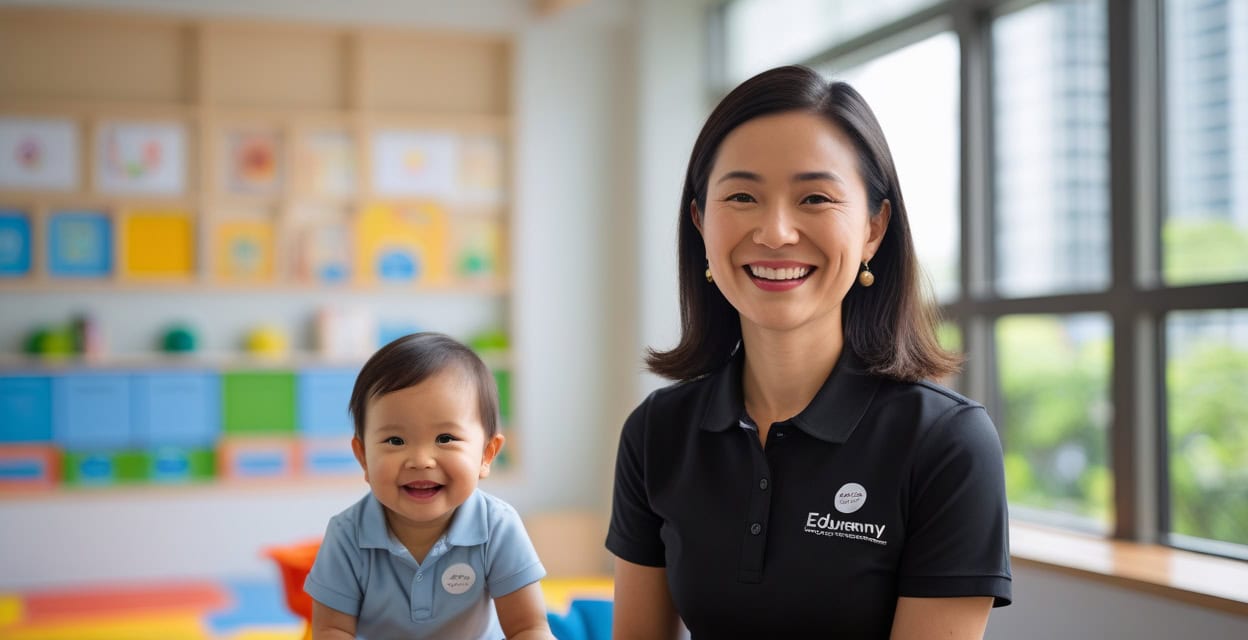
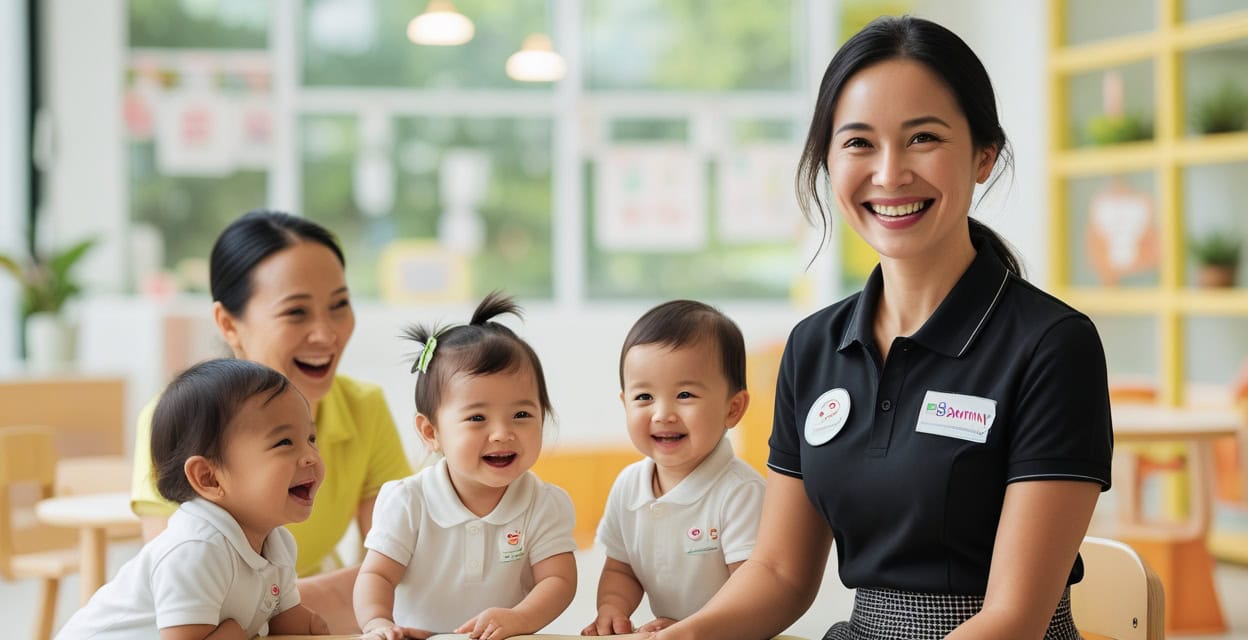
EduNanny by BUTLER is Singapore’s near‑home, ultra‑low‑ratio childminding movement designed to be close, consistent, and convenient for families. We operate Monday to Friday, 7am to 7pm, islandwide—in modern centres and in community‑vetted home premises. Our signature 1:3 infant ratio ensures attention scales with a baby’s rapidly changing brain, because an infant’s brain grows with care, not crowding. We combine secure, parent‑facing CCTV, thoughtfully designed spaces with open sightlines, and a true partnership model that treats every family as an expert in their child’s story.
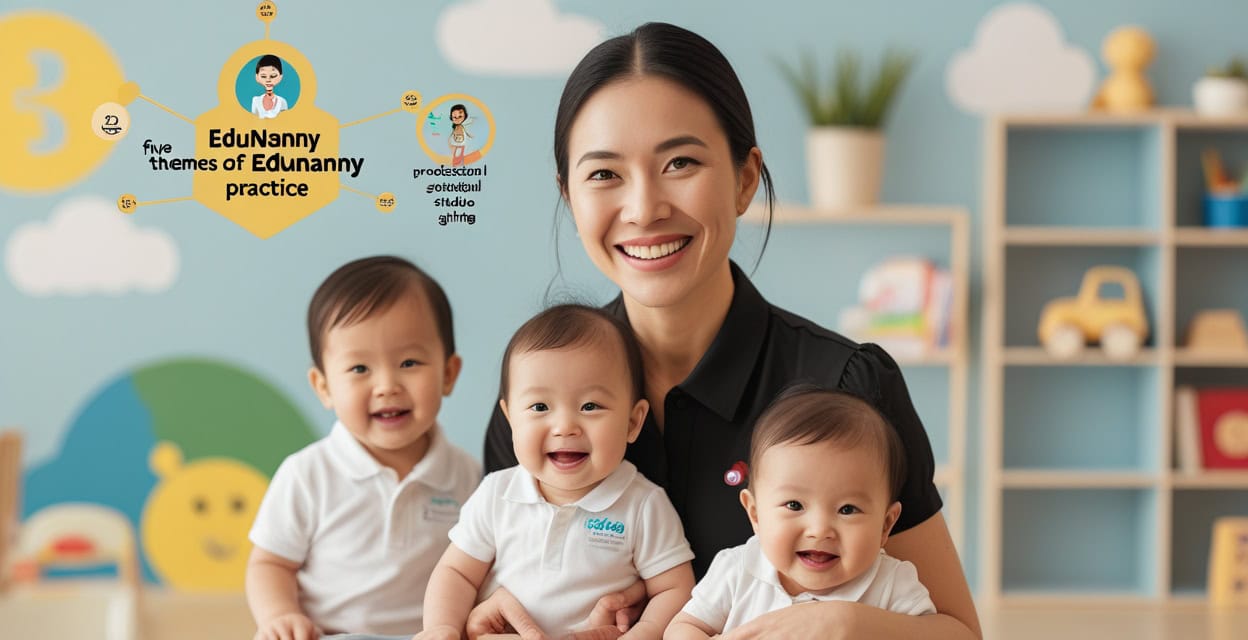
Five guiding themes of EduNanny practice
Topic 1: The Minute Method—tiny acts that build a whole child
Infants learn through micro‑moments. We design every minute as a chance to strengthen three capacities that seed lifelong flourishing:
- See: We observe without hurry—posture, breathing, gaze. Observation is our first pedagogy.
- Say: We narrate the world in rich, warm language—what’s happening now, what comes next. This scaffolds trust and early literacy together.
- Soothe: We co‑regulate through voice, rhythm, and touch, so a baby’s nervous system learns calm from ours.
Practical examples you can use at home or in a family‑friendly centre:
- During diaper changes, narrate each step and describe textures, sounds, and actions to support language development.
- Whenever you pick up a child, name emotions you observe (e.g., “I see you’re excited to explore this toy.”) to build emotional vocabulary.
- Pause briefly before transitions (e.g., from play to wash‑ups) and acknowledge the change with a cue and a smile to support anticipation and consent.
Topic 2: Safety as choreography—designing calm before we demand it
Safety cannot be an afterthought. It must be the first set piece in the day’s dance.
- Environment: Open sightlines, soft‑edge furnishings, abundant natural light, and deliberate acoustic zoning create spaces where adults can supervise, move, and rest without chaos.
- Process: One adult for every three infants, with predictable routines. Scripted handovers, bottle prep, sleep checks, and outdoor transitions are rehearsed until they become second nature.
- Transparency: Secure, parent‑facing CCTV builds trust and accountability while protecting privacy and dignity.
- Culture: Quiet voices, slow hands, and warm faces are the norm. Babies borrow our nervous systems; the adult’s regulation is the gold thread through any safety plan.
Topic 3: Development by design—tiny experiments at the edge of skill
Development thrives at the gentle boundary between comfort and challenge. We create safe edges where infants can test new abilities with steady support:
- Sensorimotor: Daily movement arcs—floor time, reach‑and‑roll, assisted pull‑to‑stand—build strength and spatial sense.
- Social‑emotional: “Serve and return” is the baseline; we respond to every cue and help infants wait with confidence, not distress.
- Cognitive and language: Rich talk, songs, rhymes, and bilingual exposure rooted in meaningful contexts—labels that matter and stories tied to the moment.
- Executive function foundations: Routines, anticipation, and simple choices (e.g., “this toy or that one?”) lay the first rails for self‑regulation and working memory.
- Autonomy: Invite participation—hold the wipe, lift the arm, choose the book—so self‑efficacy grows like a daily muscle.
This is Froebel’s playfulness meeting Piaget’s discovery and Vygotsky’s scaffold—infants practicing just beyond what they can do alone, with us as steady guides.
Topic 4: Joy as a measurable commitment—calm, curiosity, connection
Happiness is not a vague hope; it is a pattern we can design for and track.
- Calm: Sleep hygiene, soothing rituals, and responsive feeding reduce cortisol and enable learning.
- Curiosity: Rotating baskets, open‑ended materials, textures, and tones invite exploration without overwhelm.
- Connection: Consistent greetings, key‑adult attachment, and micro‑rituals build a sense of belonging.
Practical measures families can use at home: monitor mood arcs, track engagement length, and note recovery time after upset. A thriving day includes gentle returns to curiosity and a settled body at day’s end.
Topic 5: The civic craft of the childminder—purpose, profession, pride
Childminding is a craft and a calling. We invest in the professional identity and livelihood of the caregiver:
- Training: Attunement, infant mental health, safe sleep, inclusive care, and family partnership practices are core.
- Supervision: Regular coaching, reflective practice, and case huddles build judgment, not mere compliance.
- Dignity and employment: The Maximum Employment Mandate creates dignified neighbourhood work—empowering women, mid‑career switchers, and experienced grandparents who bring cultural wisdom and patience.
- Partnership: Parents are primary experts; educators extend and honour family values within the child’s day.
What families can expect—clear, practical benefits
- Excellence and quality: A science‑guided, heart‑led model with consistent standards across sites.
- Centre‑based and home‑based options: Purpose‑built centres and vetted home premises for safety, hygiene, and warmth.
- Convenience and proximity: Islandwide coverage, weekday hours that align with working families’ rhythms.
- Ultra‑low ratio: 1 adult to 3 infants to support genuine attachment and focused attention.
- Transparency and innovation: Secure parent‑facing CCTV, digital daily journals, and real‑time updates.
- Affordability: Flexible options from $33/day, with CDA/Baby Bonus where eligible.
- Access and choice: Centre‑based, home‑based, and tele‑coaching support to fit diverse family needs.
- Public purpose: Participation in ECDA’s Childminding Pilot and a National Social Initiative with a Maximum Employment Mandate.
A day in the life—how it feels
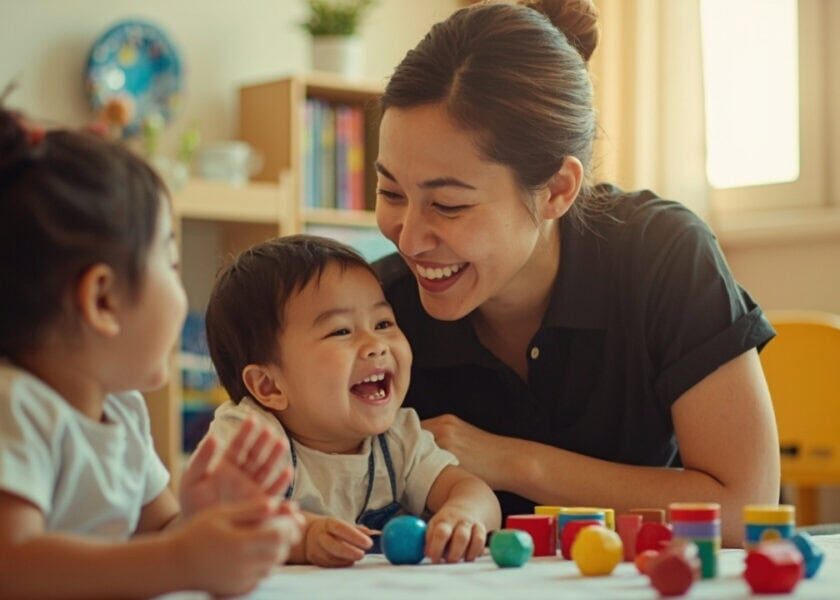
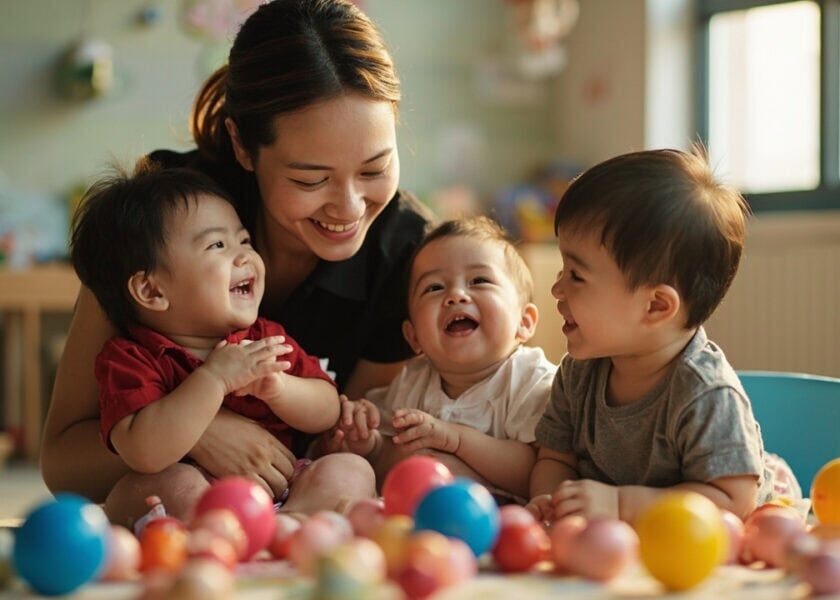
Imagine a morning where a caregiver meets your child at eye level, using their name and a gentle, clear description of the day ahead. Sleep and feeding checks are calm, not rushed. A warm handover begins the day’s journey, followed by unhurried floor time where a child’s curiosity takes the lead. Bottles are prepared with careful, quiet precision; sleep checks are regular and unobtrusive. In the afternoon, a walk under trees brings language to the breeze and the rhythm of steps. Throughout the day, families receive updates on feeds, sleeps, moods, and moments of wonder. By evening, your child returns settled, with a curious gaze and a day that feels familiar again tomorrow.
Why this matters now
Singapore’s pace is fast, commutes are long, and support networks vary. Near‑home, ultra‑low‑ratio care is not a luxury; it is a public good. This model shortens the distance between parent and infant, lowers handover stress, and anchors a family’s week in trustworthy rhythms. Practically, it builds national capacity: calmer mornings, stable employment for caregivers, and children who enter preschool with core capacities that predict later success—secure attachment, curiosity, self‑soothing, and the beginnings of empathy.
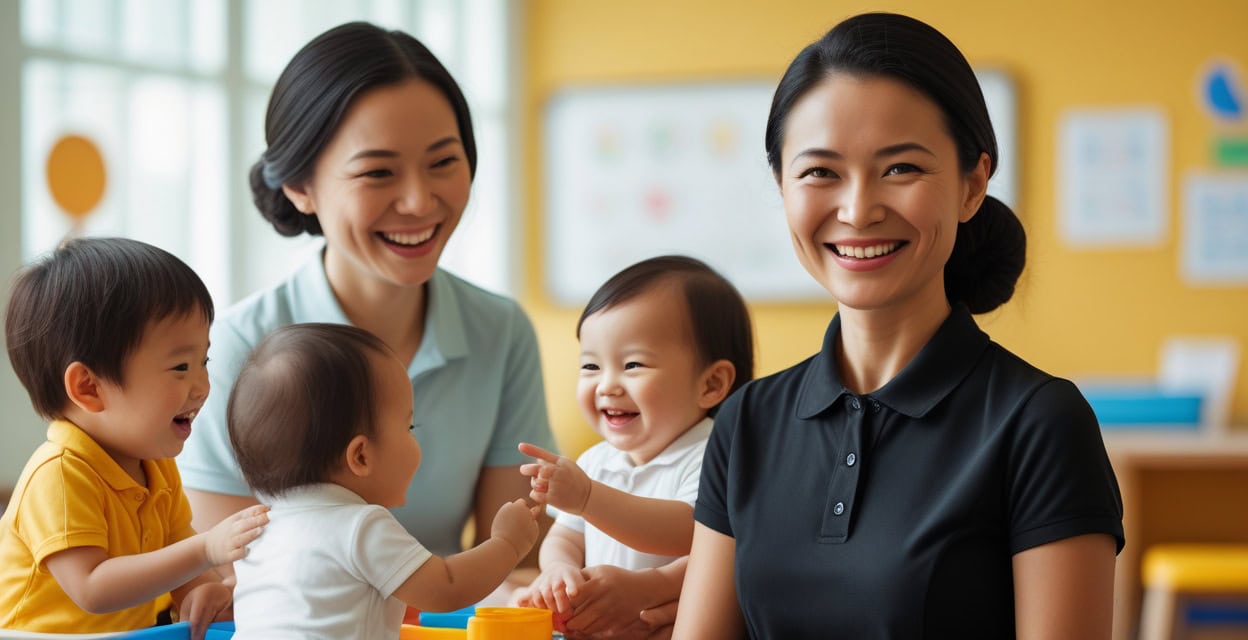
The closing charge: who, what, when, where, and how childminding matters
- Who: Singapore’s infants, their parents and caregivers, and a professional corps of childminders proud of their craft.
- What: Ultra‑low‑ratio childminding—1 adult to 3 infants—delivered in modern centres and vetted home premises, with secure, parent‑facing CCTV and a living curriculum of attunement, safety, and joyful development.
- When: Monday to Friday, 7am to 7pm—reliable hours that honour working families and infant routines.
- Where: Islandwide, in neighbourhoods and near workplaces, so proximity becomes a daily advantage.
- How: Through attuned pedagogy, safety by design, professional training and supervision, transparent technology, and accessible pricing—affordable from $33/day, with fees payable via CDA/Baby Bonus where eligible—within the ECDA Childminding Pilot and as part of a National Social Initiative with a Maximum Employment Mandate.
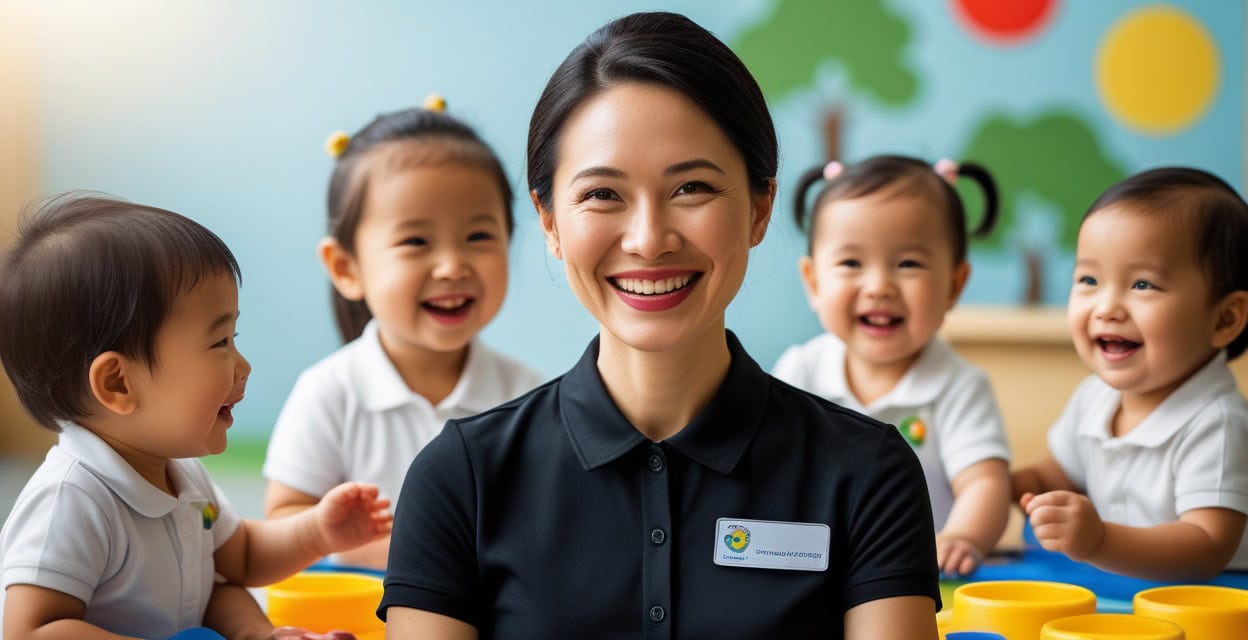
Our philosophy and purpose
- Every routine can be education.
- Every minute can strengthen attachment.
- Every caregiver can be a calm, competent guide.
- Every family deserves proximity, transparency, and choice.
- Every infant deserves unhurried eyes and a predictable rhythm.
Singapore’s future is not abstract; it breathes in our arms. Let us meet that future with a standard worthy of its promise: care that is close to home, calm in design, joyful in practice, and transparent by default. This is the work of educators and neighbours, of policy and heart. It is nation‑building at eye level.
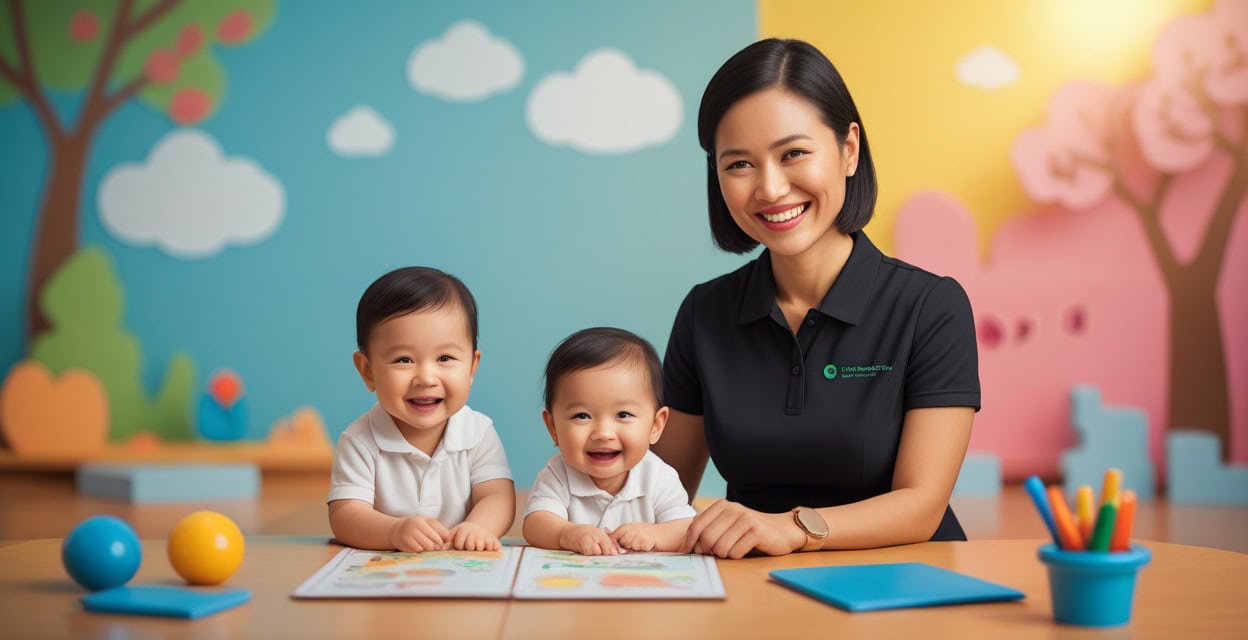
Conclusion
To parents seeking a trustworthy start, to caregivers ready to bring their craft into the light, and to partners who believe early care is civic infrastructure, EduNanny invites you to engage: come and see. Visit EduNanny.com or Childminding.EduNanny.com. Walk our spaces. Meet our childminders. Read the minutes of a baby’s day—and imagine the decades they will shape. Together, minute by minute, we can cradle brilliance, quietly and well. Thank you.
[#keyword1, #keyword2, #keyword3, #keyword4, #keyword5]