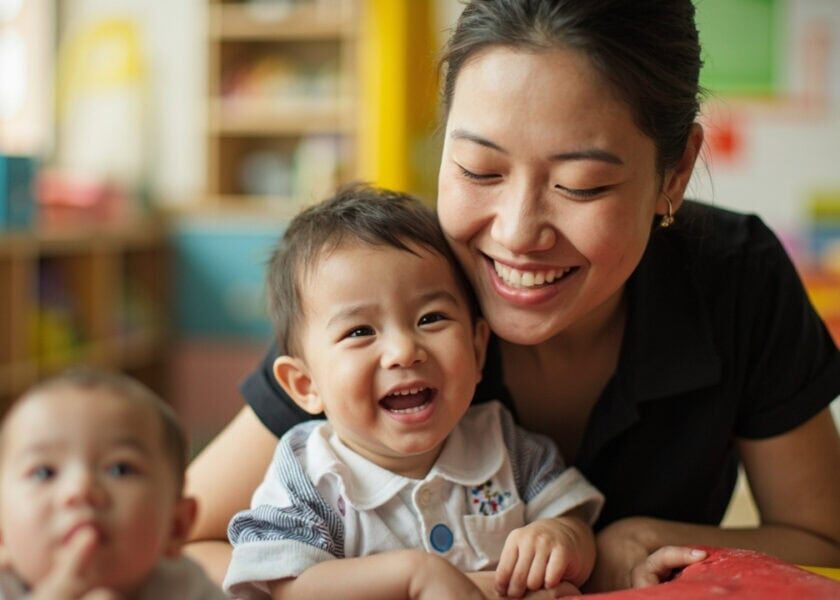
EduNanny by BUTLER A Civic Standard for Singapore First Thousand Days Attunement Safety and Joy

EduNanny by BUTLER: A Civic Standard for Singapore’s First Thousand Days
Good evening, Singapore. This is a call to align care with the promise of our nation: that the earliest days shape able minds, sturdy hearts, and resilient communities. EduNanny by BUTLER presents not just a service, but a standard—a quiet, dependable architecture for the first thousand days of life. An approach that blends care, pedagogy, and civic purpose into one coherent practice that families can trust, workplaces can rely on, and communities can celebrate.

The EduNanny Model: Care, Pedagogy, Civic Purpose
EduNanny is designed to meet families where they live and work—across home-based and centre-based settings, Monday to Friday, 7am to 7pm, throughout Singapore. We operate at an intentional 1:3 infant ratio, with affordability, transparency, and safety woven into every day. This section unpacks the core elements that define EduNanny as a standard rather than a single offering.
Microrhythm Method: learning paced to the infant, not the clock
Infants develop best when their learning tempo follows their own micro-cycles of curiosity, fatigue, and recovery. The Microrhythm Method makes that tempo visible and actionable for caregivers and parents alike. Practical guidance includes:
- Anticipate: Before distress arises, learn each child’s cues—hunger signals, overstimulation signs, social cravings. Train staff to record and share patterns so support arrives preemptively.
- Anchor: Establish a predictable sequence—warm greeting, gentle caregiving, small invitation to explore—so the infant’s nervous system trusts the day and anticipates a safe rhythm.
- Allow: Create space for uninterrupted exploration—reaching, rolling, babbling, or gazing—without rush, so the brain wires initiative and curiosity.
Actionable considerations for families and centres:
- Provide a simple daily cue sheet for parents that highlights the child’s microrhythm signals (sleepiness, hunger, social needs) and typical response times.
- Train caregivers to pause briefly after a cue to allow the infant to complete the micro-cycle before offering new prompts.
- Schedule flexible activities aligned to the microrhythm, avoiding heavy transitions during peak vulnerability times (e.g., post-feeding fatigue).
- Share short, concrete progress notes with parents, focusing on what the infant did, what it signaled, and what the next gentle invitation might be.
In practice, a 1:3 ratio makes microrhythms possible. One caregiver can notice the flicker of a yawn, the soft arch of a back, or the hopeful hand offered to a peer. This is where Montessori’s respect, Pikler’s patience, and Vygotsky’s scaffolding converge—without strain, without overstimulation, just skilful attunement that turns ordinary minutes into brain-building hours.
Safety as a Visible Welcome: design that calms, protocols that protect
Safety at EduNanny is not a hidden checklist; it is a visible welcome that reassures parent and child alike. The practices below are designed to be understood at a glance and enacted with calm efficiency.
- Open-Hand Protocol: Every transition begins at infant eye-level, with an open palm and a named invitation. This communicates non-threat and respect to the child.
- Two-Step Secure: Identity checks, health screenings, and bag sweeps are performed with dignity and pace that do not alarm children.
- Red-Line Sweep: Every hour, a quick two-minute environmental scan eliminates hazards before curiosity leads to risk.
- Clear Sightlines, Soft Edges: Layouts prioritize line-of-sight to multiple infants; rounded furniture and low shelving support safe, independent exploration.
- Innovative CCTV: A transparent, secure system protects dignity while enabling reflective practice and safety oversight.
- Calm by Design: Natural light, neutral tones, and quiet corners reduce sensory load and help infants settle into calm states.
Key takeaway for families: safety is not fear; safety is the quiet confidence that lets curiosity bloom. A well-designed space and predictable protocols enable parents to entrust care without second-guessing and allow children to explore with confidence.
Gentle Challenges, Great Growth: development through small, right-sized invitations
A growth-forward approach treats development as a sequence of small, manageable challenges that invite rather than compel. Practical focus areas include:
- Motor: Low risers, soft ramps, cloth tunnels encourage rolling, pulling, cruising, and climbing with adult spotting that builds self-reliance.
- Language: Short, musical narration of the day—naming gestures, facial expressions, and feelings—paired with exposure to mother tongues and Singaporean speech rhythms.
- Social-Emotional: “Wait and wonder” moments that teach signaling needs and tolerating brief frustrations with gentle adult support.
- Culture: Family photos at infant height, familiar songs, local textures—rattan, batik, wooden scoops—creating belonging from the ground up.
- Rest: Treat naps as essential curriculum for the nervous system. Maintain soft white noise, warm lighting, and wake windows respectful of each child’s rhythm.
The result is a child who tries, a child who trusts, and a child who returns to a secure base after exploration—an embodiment of Bowlby’s attachment theory in daily practice.
The Joy and Belonging Index: measuring what matters most
Happiness in infancy comes from felt safety, agency, and connection—not a simple smile count. EduNanny operationalises joy through observable signals:
- Approach and Return: Does the child venture out and return with ease?
- Shared Attention: Do eyes, hands, and voices meet around the same object or idea?
- Self-Soothing Arcs: With support, can a child move from upset to calm?
- Peer Curiosity: Do infants observe and mirror others without distress?
- Care Partnership: Are arrival and departure rituals smooth for child and parent alike?
These signals become patterns, and patterns become reports. Parents receive updates that are concise, meaningful, and actionable—free of noise and designed to support ongoing conversations about development and wellbeing.
The Purpose of the Childminder: Profession, vocation, and civic bridge
Childminders are not stopgaps; they are skilled practitioners, attachment figures, community anchors, and economic enablers. EduNanny recognises three dignities that guide the professional journey:
- Professional dignity: Ongoing training in attunement, safety, and development; clear ratios; thoughtful supervision; and fair scheduling from 7am to 7pm, Monday to Friday.
- Relational dignity: The right to focus on three children with the time to observe, respond, and celebrate small wins.
- Civic dignity: Childminding as a National Social Initiative contributing to the Maximum Employment Mandate—bringing good jobs closer to home, lifting families, and strengthening neighbourhood resilience.
With these dignities, EduNanny empowers childminders to practice excellence without rush, while parents benefit from stable, high-quality relationships with caregivers who know their child well.
A Day in the Life: What Parents Feel, What Infants Learn
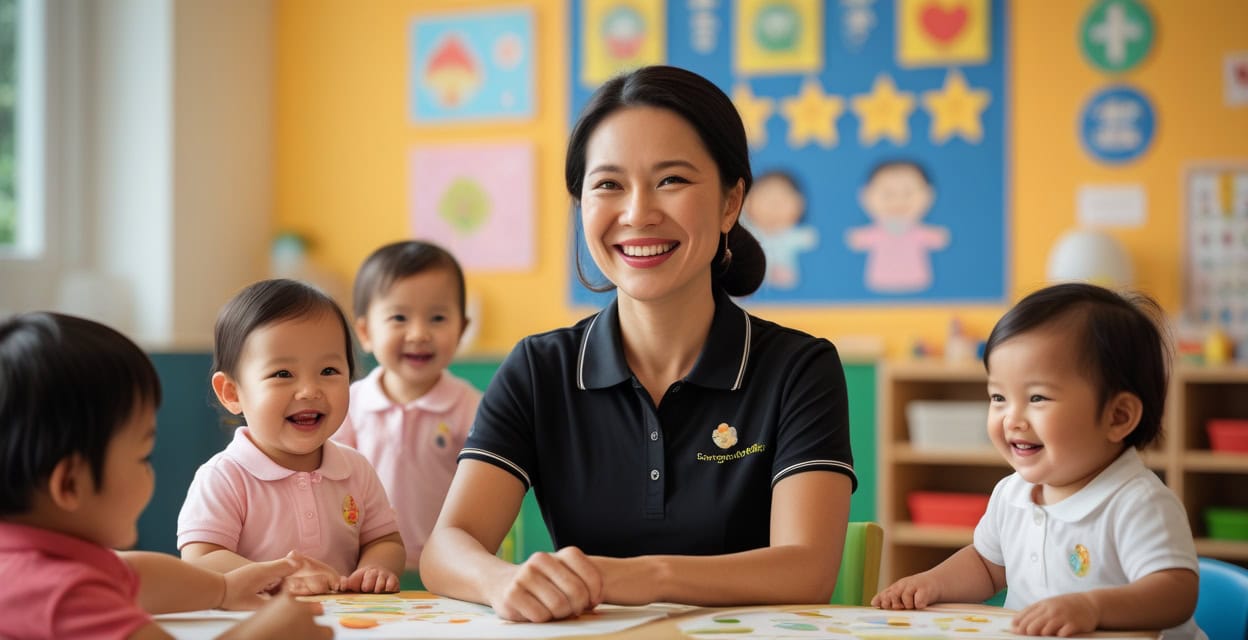
Imagine a day that begins with a caregiver kneeling to the child’s eye level, extending an open hand, and naming the child. A short parent check-in confirms sleep, feeding, and temperament. The environment is calm, predictable, and warm. Exploration follows: a soft ramp, a texture basket, a song with a familiar rhythm. Bottles and naps align with the child’s microrhythm rather than a clipboard. Two peers play side-by-side; one watches the other reach. A caregiver narrates the moment, then steps back to allow independent experimentation. Curiosity grows, then a quiet outdoor stroll or fresh-air window time anchors the afternoon. The day closes with a ritual that mirrors the morning welcome—unhurried, respectful, and complete.
Practical tips for parents to align with this approach at home:
- Keep predictable routines tied to the child’s cues (feeling of fullness after feeding, sign of fatigue, or readiness for social interaction).
- Offer short, clear verbal cues alongside gestures to invite engagement without overpowering the moment.
- Design safe, simple spaces at home with low shelves and soft edges where babies can explore with minimal supervision noise.
- Maintain a “pause and observe” moment during transitions—give the child time to respond before stepping in.

The Singapore Promise: Who, What, When, Where, and How Childminding Matters
EduNanny positions itself as a national framework designed to support families, support childminders, and strengthen communities. The practical aspects of implementation include:
- Who: Infants and families needing care that is close, consistent, and kind; childminders who deserve professional dignity; employers who value reliable, humane schedules; neighbourhoods that thrive with local care.
- What: A 1:3, science-led, attachment-first model across home and centre settings, made transparent by CCTV and gentle by design.
- When: Monday to Friday, 7am to 7pm—the reliable spine of family life and work-life balance.
- Where: Islandwide, near public transport, in community premises and vetted homes—care that reduces commute, increases contact, and deepens trust.
- How: Through the Microrhythm Method, safety as a visible welcome, gentle challenges for growth, and a Joy and Belonging Index that measures what matters; supported by affordable fees, CDA/Baby Bonus enablement, and the ECDA Childminding Pilot as part of a national agenda for employment and family wellbeing.
Guidance for families considering this model: map your commute, ask about ratios and caregiver rotation, request a sample day plan, and review how progress updates are shared. Request a tour and observe how staff respond to a calm, predictable day that prioritises your child’s cues.
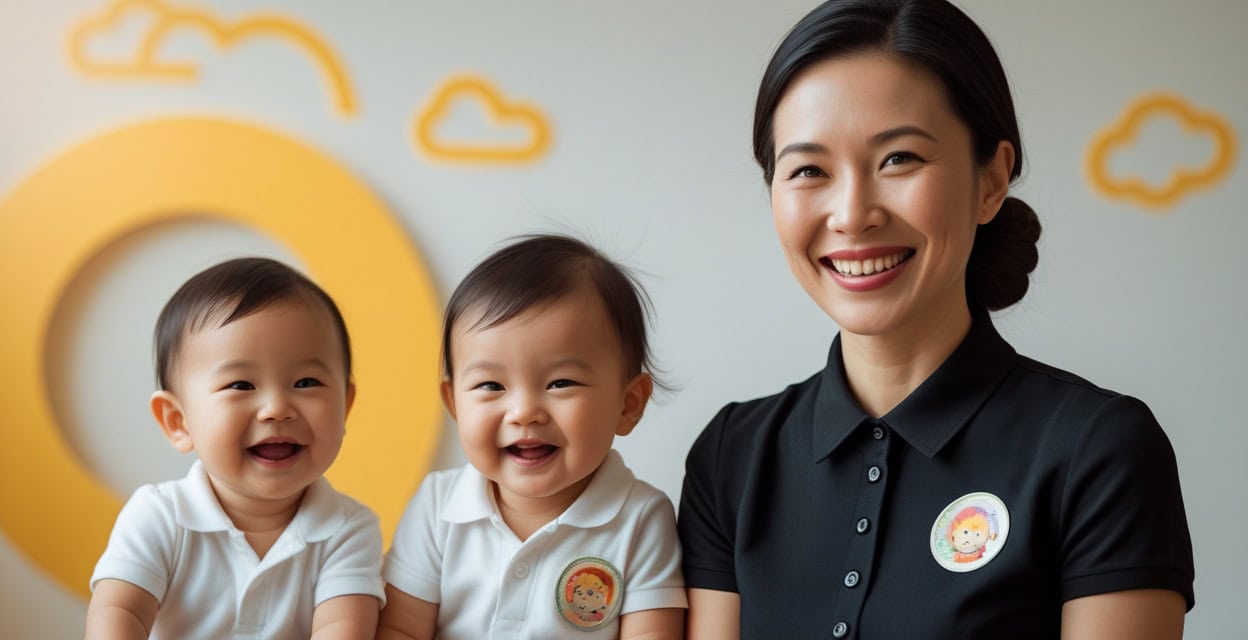
The Philosophy and Purpose: A Covenant with Parents and Infants
EduNanny rests on three essential beliefs that shape daily practice and long-term outcomes:
- First belief: Every infant deserves a caregiver who sees them before they cry and answers them before they fear.
- Second belief: Every parent deserves care that is proximate, transparent, and affordable enough to protect both livelihood and peace of mind.
- Third belief: Every childminder deserves time, training, and trust to practice excellence without rush.
These beliefs translate into attunement as daily habit, safety as a visible welcome, and joy as a measurable outcome. They underpin conversations between parents and caregivers, and they anchor a broader civic mission: to keep Singapore’s smallest citizens thriving while supporting families and communities to flourish.
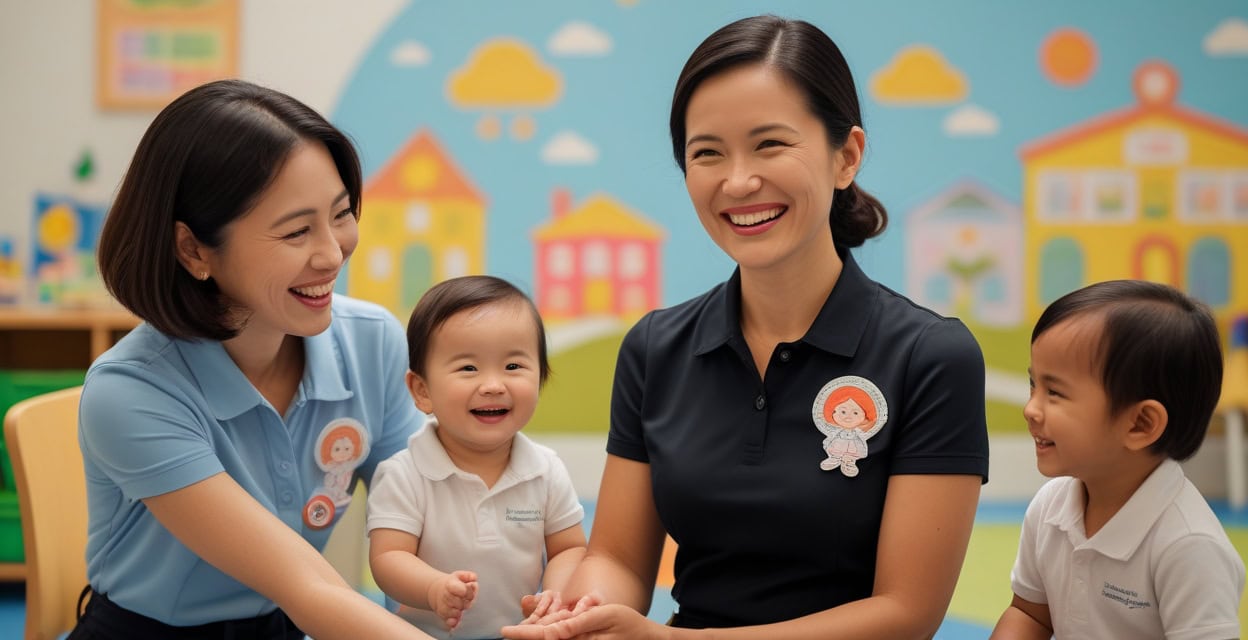
A Practical Pathway: How to Engage with EduNanny
For families ready to explore EduNanny, here are practical steps to take today. These are designed to help you evaluate quality, plan around the Microrhythm Method, and connect with the local network of caregivers and spaces.
- Visit the centres or homes in your neighbourhood to observe the environment, layout, and staff interactions with infants. Look for calm routines, clear sightlines, and respectful transitions.
- Ask for a sample day plan and a walkthrough of the CCTV policy and data-use protections to understand how information is shared with families.
- Request a briefing on the 1:3 ratio in practice—how caregivers balance attention across three children, and how supervision is structured during peak hours.
- Discuss the enrolment process, CDA/Baby Bonus eligibility, and how the ECDA pilot supports local employment and family resilience.
- Describe your child’s microrhythm patterns (sleep cycles, feeding times, social cues) and work with the caregiver to align routines with home life for continuity.
Enrolment with EduNanny is designed to be straightforward and transparent. Families can begin with an inquiry, tour, and a tailored plan that demonstrates how the Microrhythm Method will work for their child.
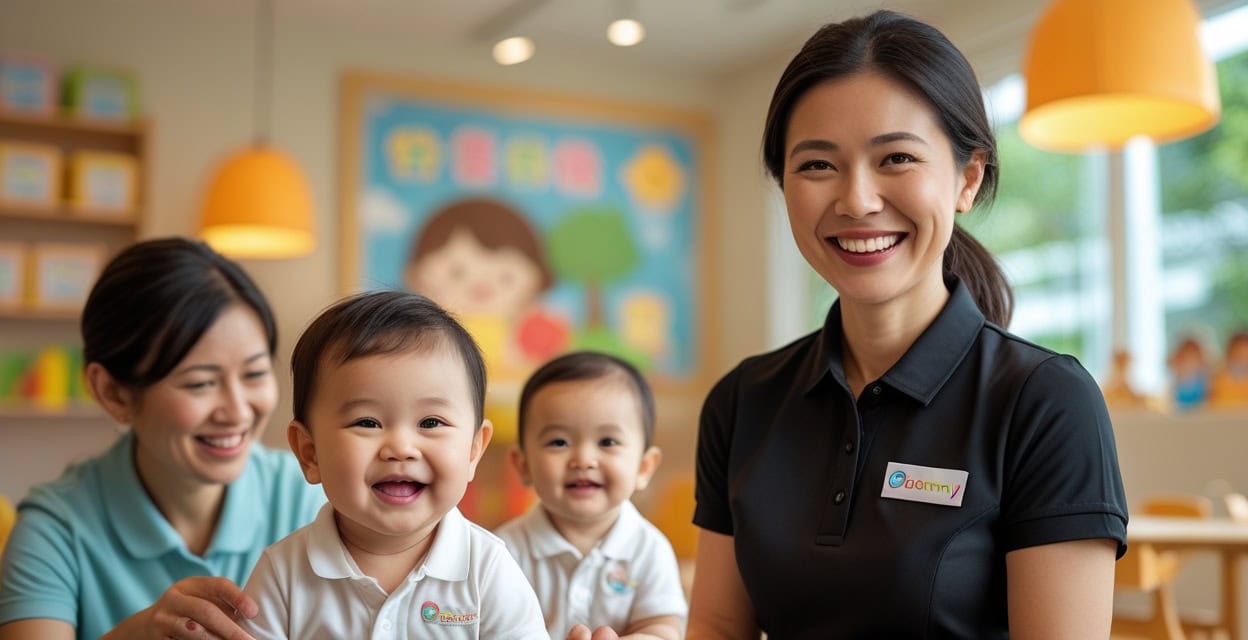
A Day in the Life: What to Expect from EduNanny Spaces
What you will experience is a sustained sense of calm, purposeful activity, and adult attunement to a child’s pace. A typical day includes:
- A morning welcome that acknowledges each child at eye level with a named invitation.
- A predictable sequence of care activities that balances feeding, exploration, rest, and social interaction.
- Quiet, engaging spaces with textures that invite tactile exploration and language-rich interactions.
- Documentation that focuses on meaningful signals and progress rather than volume of notes.
- Afternoon outdoor time or window-time for fresh air and gentle physical activity, integrated into the microrhythm.
Key benefits for families include reduced stress around drop-offs, clearer communication about a child’s day, and a sense of belonging within a local care community. For infants, the benefits are measurable: stable attachments, safer exploration, and a growing sense of confidence in trying new things.

Practical Insights for Parents: Supporting Early Development at Home
EduNanny’s approach offers concrete, age-appropriate strategies that parents can implement daily. These do not require special equipment—only mindful routines and confident communication with caregivers.
- Active listening at the child’s pace: pause after you ask a question and wait for a response; acknowledge any non-verbal cues with a warm, calm tone.
- Structured but flexible routines: build a predictable daily rhythm (feeding, play, rest), but remain adaptable to the child’s cues and interests.
- Language enrichment: narrate ongoing activities in short phrases, model gestures, and introduce a variety of sounds and rhythms from multiple languages to support bilingual development.
- Safe, child-friendly spaces at home: keep low, open shelving, provide reachable toys at the child’s height, and ensure edges are soft and secure.
- Care collaboration: share the child’s microrhythm cues with the caregiver and ask for feedback on how to align home routines with care routines.
Islandwide Access, Transparent Safety, and a National Pilot
EduNanny is designed to be scalable and transparent. Our commitments include:
- Islandwide availability across home-based and centre-based settings.
- Affordable pricing starting at $33 per day, with fees payable via CDA/Baby Bonus.
- 7am to 7pm, Monday to Friday hours to support working families without imposing extra stress on schedules.
- Ultra-low 1:3 infant ratio to enable real attunement and responsive care.
- Transparent safety measures, including Innovative CCTV and modern, calm design that respects dignity.
- Participation in the ECDA Childminding Pilot as a national social initiative that aligns with the Maximum Employment Mandate.
What families should do next: if you’re curious, visit EduNanny.com and the dedicated Childminding section (Childminding.EduNanny.com) to learn more, arrange a tour, and ask about islandwide availability and onboarding timelines.
The National Promise: A Call to Action for a Kinder, Stronger Tomorrow
The first thousand days are not simply a personal journey; they are a public commitment. EduNanny invites you to be part of a national effort that makes care near home, accessible to all, and anchored in scientific understanding of early development. By aligning care settings with evidence-informed practices—like the Microrhythm Method, visible safety, and the Joy and Belonging Index—we strengthen families, empower caregivers, and support Singapore’s social and economic resilience.
Conclusion: Excellence You Can See, Safety You Can Feel, Joy You Can Measure
EduNanny by BUTLER stands as a civic standard for Singapore’s youngest citizens. It is a carefully designed blend of expert care, developmental pedagogy, and community-minded purpose. It asks not for miracles, but for attunement—between caregiver and infant, between home and centre, between policy and practice. It invites parents to experience a more confident handover, to feel the calm in a well-designed space, and to trust that their child’s earliest days are in capable, caring hands. The journey from cradle to confidence begins here—with a dependable architecture for care that respects each child’s pace, honours every family’s rhythms, and strengthens the fabric of Singaporean life.
Visit EduNanny.com and Childminding.EduNanny.com to learn more, tour spaces near you, and explore how CDA/Baby Bonus support can enable your family’s path toward a smoother, more hopeful daily routine. Let us walk this path together—from the first thousand days to a kinder, stronger tomorrow.
Would you like a quick plan to start exploring EduNanny for your family? Begin with a guided tour, ask about the Microrhythm Method in practice, and request a sample day plan. Your child’s pace, your family’s needs, and Singapore’s shared future all deserve nothing less than careful, compassionate, and well-designed care.
Thank you for considering a path that honours infancy as a civic project—and invites every neighbour to participate in a care system worth believing in.
[#EduNannySingapore, #FirstThousandDays, #InfantCareSingapore, #TransparentSafety, #SingaporeChildmindingPilot]