Fraud Blocker edunanny.com

Category: Childminding

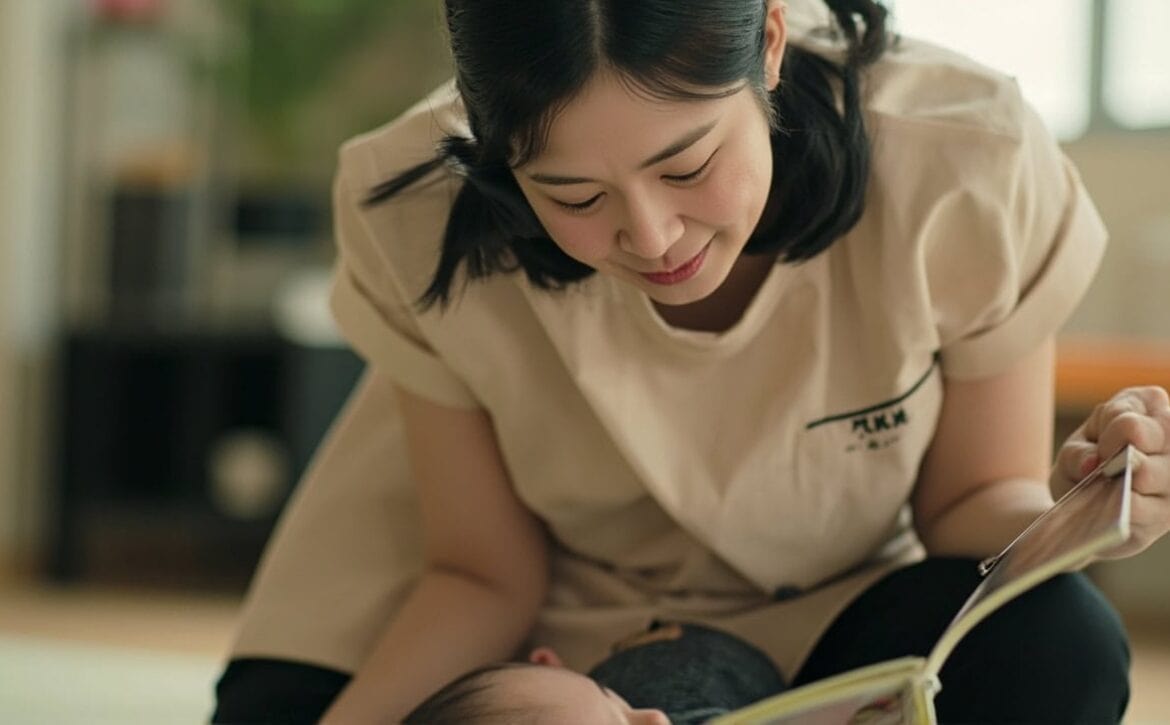
A childminder follows an infant’s gaze towards a cloth picture book in a bright playroom.
October 1, 2026

What Individual Attention Can—and Cannot—Promise for Early Development

Responsive attention can create more back-and-forth learning opportunities when an adult notices an infant’s cues. A low ratio may widen that opportunity, but it cannot by itself prove earlier milestones, higher intelligence or measured pilot gains.

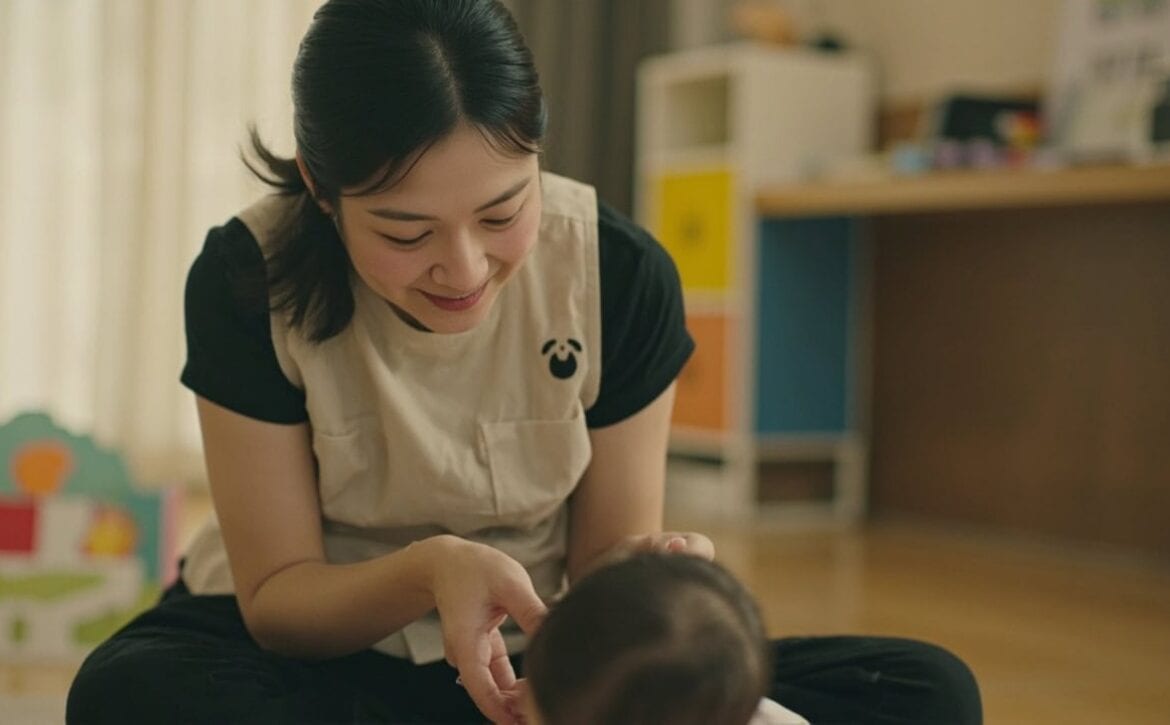
A staged photograph shows a caregiver responding to an infant during floor play in a generic childminding room
October 1, 2026

A Low Ratio Is a Starting Point, Not a Developmental Promise

A low ratio of adults to children can describe a staffing arrangement, but it cannot prove better care or a developmental advantage. Here is how Singapore parents can verify the number and examine responsive care in practice.

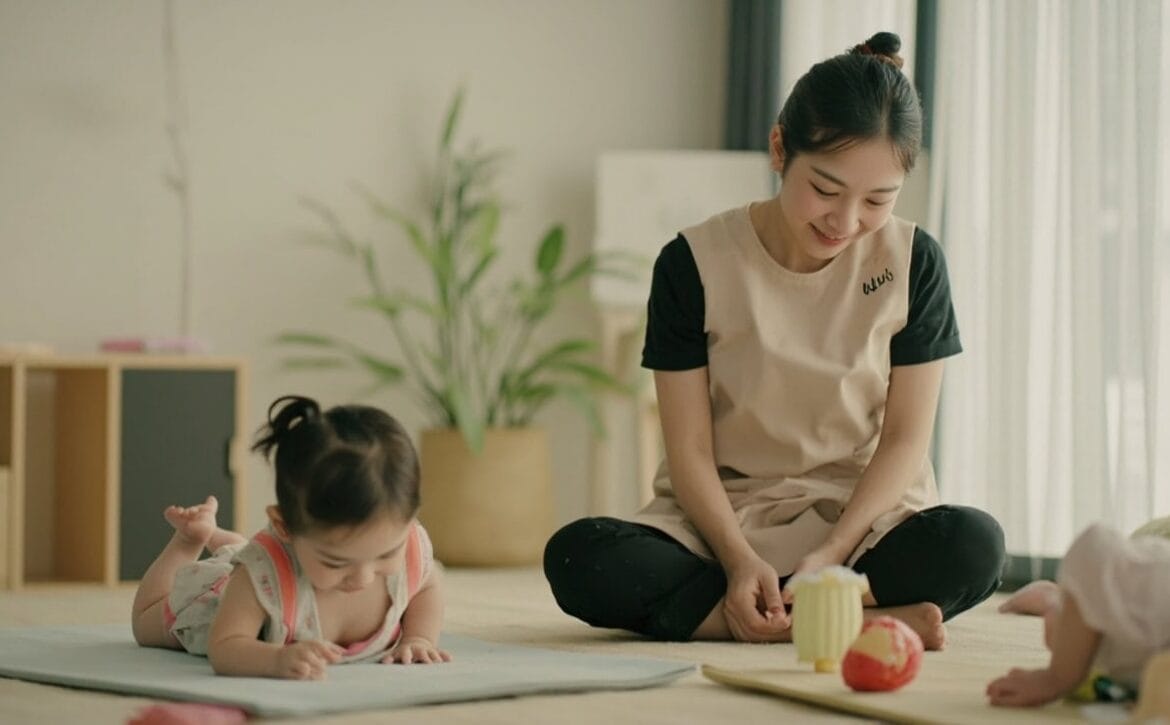
Childminder observes two infants during an open-ended floor-play moment.
October 1, 2026

Who Owns the Next Turn in Infant Care?

Responsive infant interaction is not a special activity or a guaranteed outcome. It is a way of designing care so an adult notices a baby’s contribution, responds and leaves the next turn open to the infant.

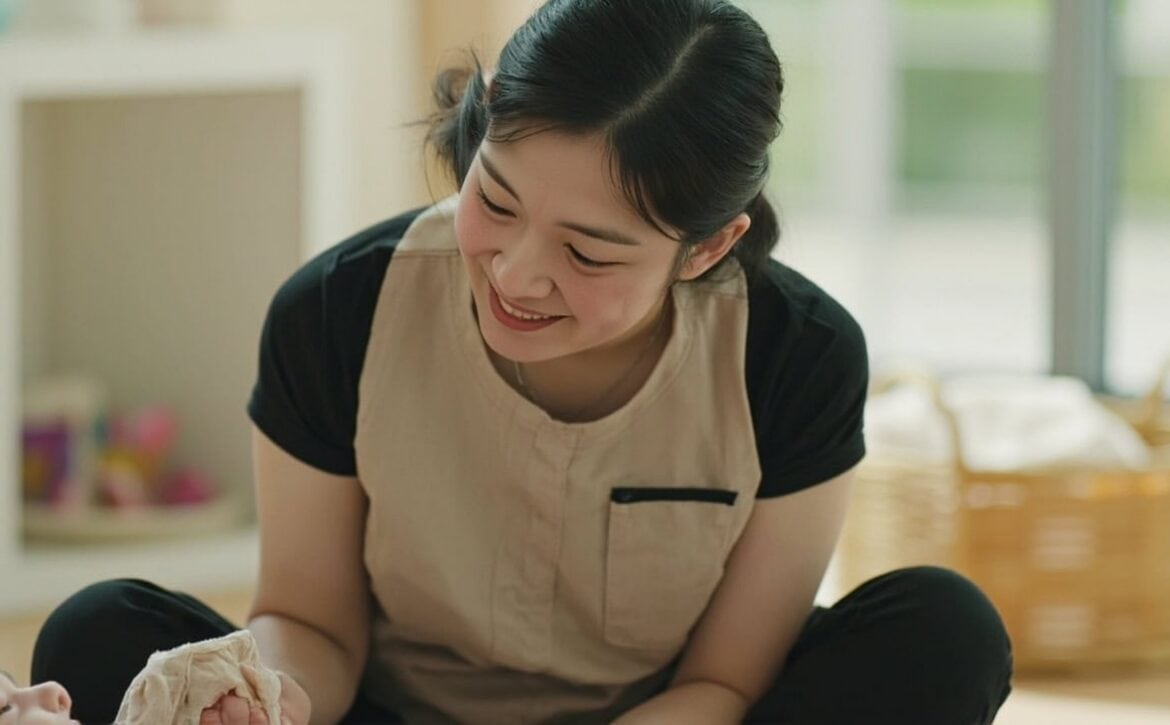
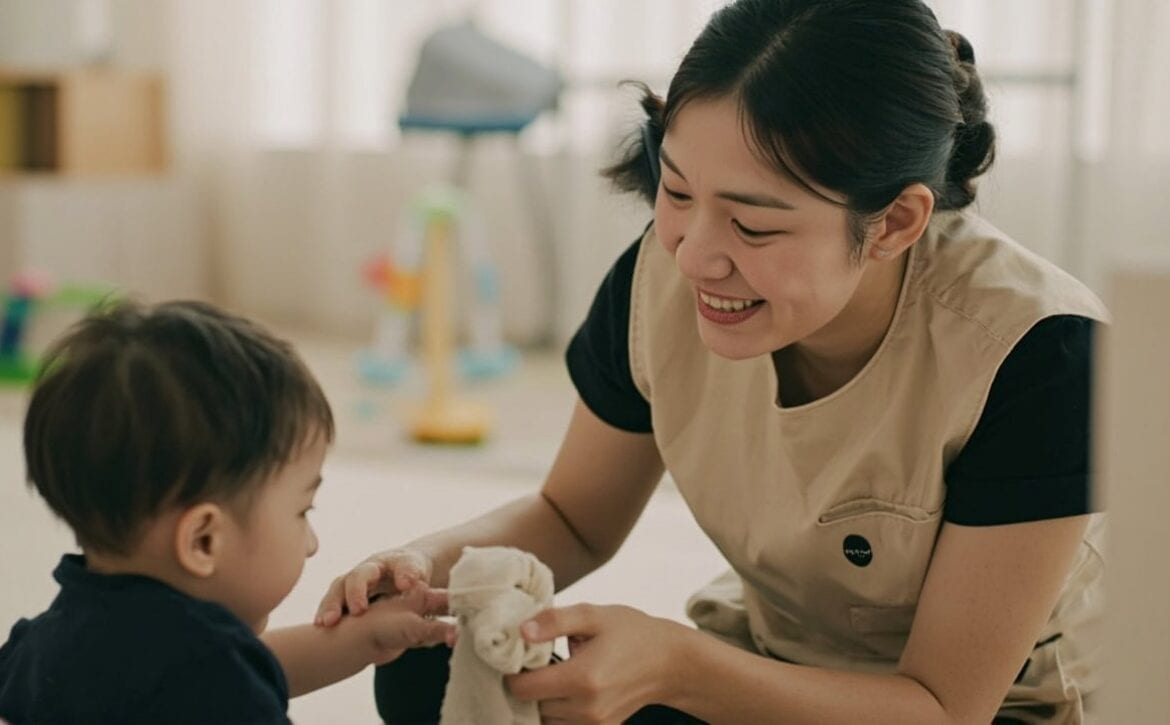
Childminder pauses with an infant before tidying a soft play cloth.
October 1, 2026

The In-Between Moments: Low-Ratio Care for an Infant’s Daily Transitions

An infant’s move from play to rest, care or another caregiver is a small but meaningful everyday transition. Low-ratio care can make more room for a responsive pause, a practical response and shared context, without turning the moment into a milestone test.

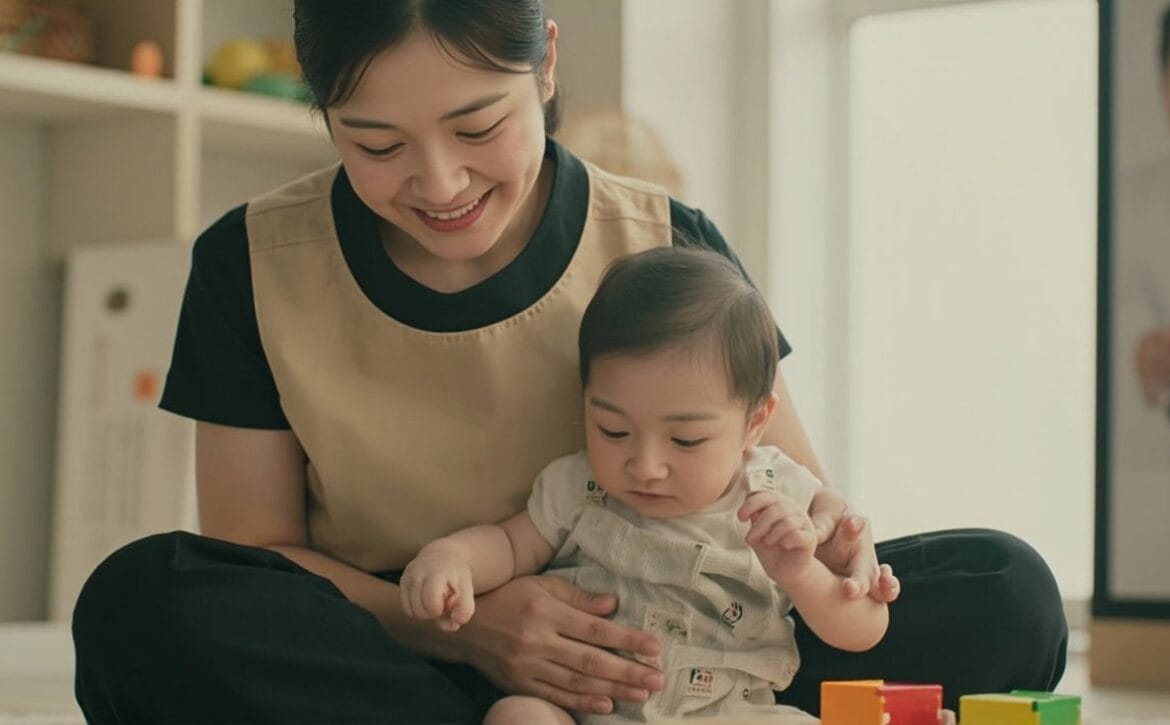
Professional caregiver and infant in gentle morning interaction during pre-care routine alignment
September 30, 2026

The First Conversation Every Singapore Parent Should Have With Their Childminder

Most parents feel a quiet flutter of worry at the drop-off gate. What exactly happens during the day? Who feeds them, how do they sleep, who holds them when they cry? This guide reframes the pre-care conversation as professional alignment rather than micromanagement, walking through four practical pillars and offering a simple checklist to use this week.

A caregiver and infant sharing a quiet moment of visual connection over a colourful object in warm morning light
September 30, 2026

Before Words, Before Labels: What Your Baby Is Learning When They Truly Look

When your baby tracks a familiar cup across the room, they are doing cognitive work. Learn how visual attention grows through peek-a-boo, shared books and responsive care.

Caregiver and infant playing peek-a-boo with a cloth on the floor
September 30, 2026

Still There, Even When Hidden: The Tiny Magic Trick Your Childminder Practises All Day

Peek-a-boo thrills your baby one morning and falls flat by afternoon. That’s not a setback — it’s the work itself. Discover how object permanence develops through everyday hide-and-seek games and why repetition matters more than results.

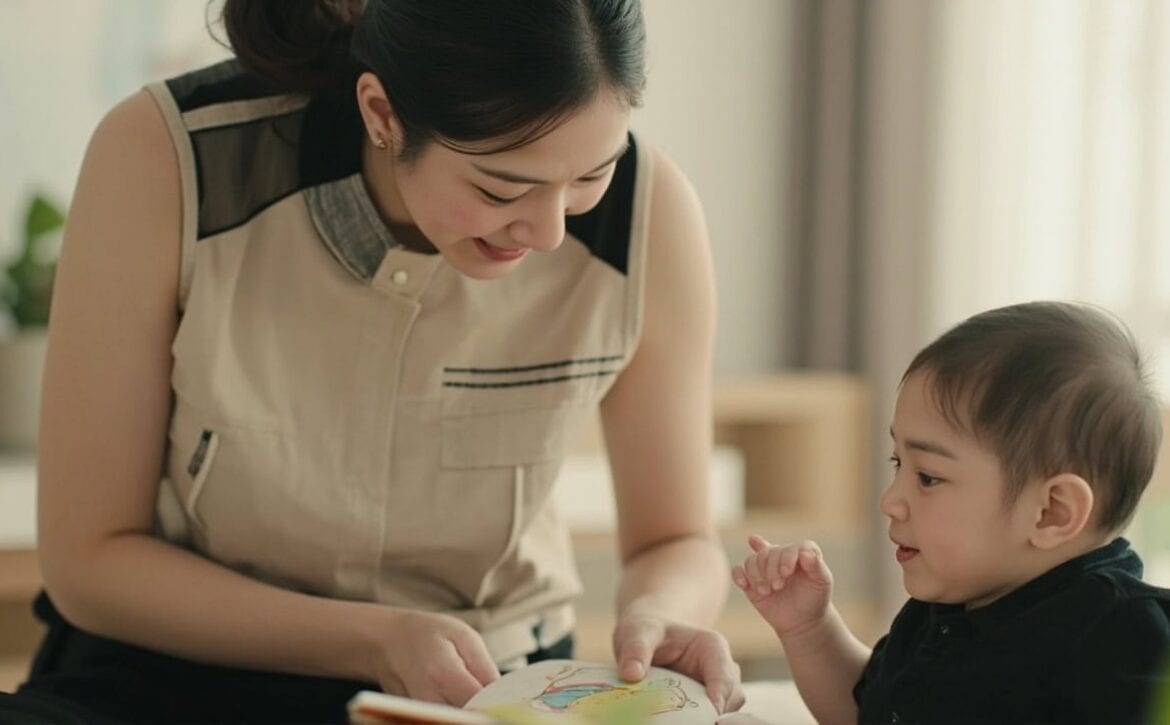
A childminder shares a board book with an infant, following the baby's reach toward a picture on the page.
September 30, 2026

Before She Knows It’s a Picture: How Shared Book Play Begins With Following a Baby’s Eyes

Many parents wonder whether picture books are worth the effort before a baby can talk. The answer lies not in the book itself, but in a childminder’s ability to follow the baby’s gaze, pause on what she notices, and wait — turning quiet looking into the first real step of learning.

Why Personalised Infant Care Matters More Than Ever | A Better Start for Your Baby
August 4, 2026

Why Personalised Infant Care Matters More Than Ever

Why Personalised Infant Care Matters More Than Ever | A Better Start for Your BabyEvery parent quickly discovers one important truth after bringing home a newborn:

No two babies are exactly alike.

Some babies happily nap for two hours at a time, while others wake after thirty minutes. Some feed every three hours like clockwork, while others have their own unpredictable rhythm. One infant may smile at everyone they meet, while another needs time before feeling comfortable with unfamiliar faces.

These differences aren’t unusual—they’re completely normal.

Every baby develops at their own pace, with their own personality, preferences and routines. That’s why personalised infant care has become increasingly important for modern families. Rather than following a one-size-fits-all approach, personalised care recognises that every child deserves individual attention, responsive caregiving and routines tailored to their unique needs.

At EduNanny, personalised care sits at the heart of both its home-based and centre-based childminding models. Instead of focusing only on supervision, the goal is to provide nurturing, consistent and responsive care that helps every infant feel secure while supporting healthy development.

So what exactly makes personalised infant care so valuable?


Every Baby Develops Differently

The first eighteen months of life are filled with incredible growth.

Within a relatively short period, babies learn to smile, roll over, sit independently, crawl, stand and eventually take their first steps. They also begin recognising familiar faces, expressing emotions, responding to voices and exploring the world around them.

However, these milestones do not happen according to a fixed timetable.

Some babies become confident crawlers before eight months, while others take a little longer. Some enjoy exploring independently, while others prefer staying close to familiar caregivers.

These differences are entirely natural.

Personalised infant care allows caregivers to respond to each baby’s individual pace instead of expecting every child to fit the same routine.

Rather than comparing children, experienced childminders observe each infant carefully, learning what helps them feel comfortable, engaged and secure throughout the day.


Why Smaller Care Ratios Make a Difference

One of the greatest advantages of childminding is the opportunity for more personalised attention.

When caregivers look after fewer infants at a time, they are better able to notice subtle changes in behaviour, recognise individual preferences and respond promptly to each child’s needs.

Instead of managing large groups, childminders can spend meaningful time with each infant throughout the day.

This might include:

  • Comforting a baby who needs extra reassurance.
  • Recognising early signs of tiredness.
  • Adjusting feeding times based on the child’s routine.
  • Encouraging developmental play suited to the infant’s age.
  • Celebrating small developmental milestones.

At EduNanny, personalised care remains a key focus across both home-based and centre-based childminding services. The programme is designed to preserve individual attention while supporting infants in safe and nurturing environments.


Every Feeding Routine Is Unique

Ask any experienced parent, and they’ll tell you that feeding is rarely identical from one baby to another.

Some infants prefer smaller, more frequent feeds.

Others naturally settle into longer feeding intervals.

Some babies require extra time to finish a bottle, while others drink quickly before happily returning to play.

Parents also develop their own feeding preferences, schedules and techniques that work best for their child.

One of the strengths of personalised childminding is the ability to continue these familiar routines.

Rather than expecting every infant to follow exactly the same schedule, childminders work closely with parents to understand how each baby feeds at home.

This continuity helps infants feel more comfortable while making the transition between home and childcare much smoother.

For parents, knowing that familiar routines are being respected provides tremendous reassurance.


A Real-Life Example

Imagine six-month-old Emma.

At home, Emma normally drinks her milk around 10.30 a.m. before taking a short nap. She prefers to be held upright for a few minutes after feeding and enjoys listening to soft music before falling asleep.

Instead of replacing this routine with a completely new schedule, a personalised childminder learns Emma’s preferences from her parents and incorporates them into her daily care.

Over time, Emma begins recognising familiar patterns wherever she is.

The result?

A happier baby, smoother transitions and less stress for everyone involved.


Better Sleep Begins with Familiar Routines

Sleep is one of the most important parts of an infant’s development.

A well-rested baby is often more settled, more engaged during play and better able to regulate emotions throughout the day.

However, getting babies to sleep isn’t always straightforward.

Every infant has their own sleep cues.

Some rub their eyes.

Some become unusually quiet.

Others become more active just before they are ready to sleep.

Experienced childminders learn to recognise these signals.

Rather than waiting until an infant becomes overtired, personalised care allows caregivers to respond early and help maintain healthy sleep routines.

Maintaining familiar sleep habits can also reduce unnecessary stress for infants who are adjusting to a new caregiving environment.


Another Everyday Example

Eight-month-old Noah usually falls asleep after his lunch.

His parents know he settles best with his favourite comfort blanket and a few quiet minutes before being placed in his cot.

Because his childminder understands this routine, Noah’s transition into nap time feels familiar rather than overwhelming.

Small details like these may seem simple, but they make a meaningful difference to a baby’s sense of comfort and security.


Strong Relationships Help Babies Feel Secure

Infants learn about the world through relationships.

Before they understand language, they learn through smiles, eye contact, gentle voices, familiar faces and responsive caregiving.

Over time, these repeated interactions help babies develop trust.

This is why consistent caregivers are so important.

When infants see the same familiar faces each day, they begin to feel safe.

They learn that someone will respond when they cry, comfort them when they’re upset and celebrate their milestones with them.

At EduNanny, matching is not simply about availability. The organisation prioritises creating compatible, sustainable relationships between families, infants and childminders because these relationships form the foundation of quality care.


Daily Communication Builds Trust

Personalised care extends beyond the infant—it includes parents too.

When families leave their baby with a childminder, they naturally want to know how the day has gone.

Did my baby finish their milk?

How long did they nap?

Were they cheerful today?

Did anything unusual happen?

Regular communication helps answer these questions.

Daily updates allow parents to remain connected to their child’s routine even while they are at work.

This ongoing communication also strengthens the partnership between parents and childminders.

Instead of working separately, both adults become part of the same caregiving team, sharing observations and helping maintain consistency between home and childcare.

For many parents, these conversations become one of the most valued parts of the childminding experience.


Personalised Care Supports Emotional Wellbeing

The first years of life are about much more than physical growth.

Babies are also developing emotionally.

Feeling safe, loved and understood helps infants build confidence to explore their surroundings.

Responsive caregiving teaches babies that their needs matter.

When caregivers consistently respond to hunger, tiredness, discomfort or the need for comfort, infants gradually develop a sense of security that supports healthy emotional development.

Personalised care makes this easier because childminders have the opportunity to truly know each child’s personality rather than applying identical approaches to every infant.


Technology Can Support Personalised Care

While relationships remain at the centre of childminding, technology can also enhance parents’ confidence.

For example, EduNanny provides nap-monitoring cameras for home-based childminding arrangements. These cameras improve visibility during infants’ rest periods while providing parents with additional reassurance about the care environment.

Technology is not intended to replace personal interaction.

Instead, it complements professional caregiving by increasing transparency and supporting quality assurance.


Why Personalised Care Matters Even More Today

Today’s families often juggle demanding careers, changing work arrangements and busy schedules.

Parents understandably want childcare that feels like an extension of home rather than simply a place where their child spends the day.

Personalised infant care offers exactly that.

By respecting each baby’s routines, understanding their unique personality and maintaining close communication with parents, childminders help create continuity between home and childcare.

This consistency benefits everyone.

Babies feel more secure.

Parents feel more confident.

Childminders gain a deeper understanding of the children they care for.


Every Little Detail Matters

To an adult, small routines may seem insignificant.

To a baby, they mean everything.

The way they are comforted before a nap.

The song they hear before feeding.

The smile that greets them each morning.

The familiar voice that reassures them when they wake.

These everyday moments gradually shape a child’s sense of safety, trust and belonging.

That’s why personalised infant care isn’t simply about providing individual attention.

It’s about recognising that every baby is wonderfully unique—and deserves care that respects who they are.

At EduNanny, personalised care remains central to every childminding journey. Through careful matching, professional training and a commitment to understanding each infant’s individual needs, the goal is to provide families with safe, nurturing and responsive care that supports every child’s early years.

Because when care is personal, every moment becomes an opportunity for a child to feel safe, valued and ready to grow.

Home-Based vs Centre-Based Childminding: Which One Is Right For Your Family?
August 4, 2026

Home-Based vs Centre-Based Childminding: Which One Is Right For Your Family?

Home-Based vs Centre-Based Childminding: Which One Is Right For Your Family? Choosing infant care is one of the biggest decisions new parents will make. Beyond finding someone trustworthy to care for your child, parents also need to decide what type of care environment will best support their infant’s growth and fit their family’s lifestyle.

In Singapore, families now have more choices than ever before. Alongside traditional infant care centres, childminding has emerged as another professional care option that offers personalised attention in both home-based and centre-based settings.

At first glance, parents often ask a simple question:

“Which one is better?”

The answer, however, is not quite that straightforward.

Neither home-based nor centre-based childminding is universally better than the other. Instead, each offers different strengths, and the right choice depends on your child’s personality, your family’s routine and the type of caregiving experience you value most.

At EduNanny, both home-based and centre-based childminding are designed around the same commitment to safety, professional training and quality care. While the settings may differ, both models aim to provide infants with nurturing environments where they can feel secure, supported and cared for.

Let’s explore the differences so you can make the decision that’s right for your family.


Understanding Home-Based Childminding

Home-based childminding takes place in an approved childminder’s home.

Rather than attending a large childcare centre, infants spend the day in a carefully prepared home environment that closely resembles their own daily surroundings.

This setting naturally creates a quieter atmosphere with fewer children and a greater emphasis on personalised routines.

Many parents are drawn to home-based childminding because it feels familiar.

For young infants who are still adjusting to being away from their parents, this home-like environment can make the transition gentler and more reassuring.

EduNanny’s own programme data reflects this preference. Between November 2024 and July 2026, nearly 80% of families who enquired about childminding expressed a preference for the home-based model.


Benefits of Home-Based Childminding

One of the biggest advantages is personalised attention.

With fewer infants in the environment, childminders are able to understand each child’s unique personality, routines and developmental needs more closely.

Parents often appreciate that their baby’s familiar routines can be maintained more easily, including:

  • Feeding schedules
  • Nap routines
  • Comfort preferences
  • Daily habits
  • Communication styles

Home-based care also offers greater continuity.

The same caregiver interacts with the infant throughout the day, allowing trusting relationships to develop over time.

Many families also value the convenience of choosing a childminder located close to home, making daily drop-offs and pickups easier.


Understanding Centre-Based Childminding

Centre-based childminding combines personalised infant care with the benefits of a professionally managed childcare environment.

Instead of operating in a residential home, care takes place within a dedicated childminding centre.

EduNanny currently operates its centre-based childminding service at Tampines East Community Club, where infants are cared for by trained childminders working as a collaborative team.

Although the environment differs from a home setting, the philosophy remains the same: providing responsive, attentive and high-quality care for every infant.


Benefits of Centre-Based Childminding

Parents often appreciate the additional support that comes from a team-based environment.

Rather than relying on one caregiver alone, centre-based childminders work together according to planned shift rosters that support daily operations.

This collaborative approach provides:

  • Additional adult supervision
  • Peer support among caregivers
  • Greater operational resilience
  • Continuity of care

According to EduNanny, the presence of multiple trained adults creates opportunities for greater collaboration while still allowing childminders to remain attentive to the infants under their care.

Parents who prefer structured environments may find this setting particularly reassuring.


Comparing Both Models

While both options provide professional childminding, the day-to-day experience differs slightly.

Home-Based ChildmindingCentre-Based Childminding
Home environmentDedicated childcare centre
Familiar household settingPurpose-designed care setting
Highly personalised routinesTeam-supported caregiving
Direct relationship with one primary caregiverCollaborative caregiving environment
Convenient neighbourhood locationsStructured centre operations
Quiet home atmosphereMore dynamic childcare environment

Importantly, both models share the same commitment to infant wellbeing and professional caregiving.


Safety Standards Remain the Same

One misconception is that home-based care involves fewer safeguards than centre-based care.

In reality, EduNanny applies comprehensive preparation requirements before any childminder begins caring for infants.

These include:

  • Background screening
  • First-aid training
  • Infant-care training
  • Practical assessments
  • Health checks
  • Suitability assessments
  • Ongoing learning
  • Home assessments for home-based childminders

Home-based childminders also undergo assessments of their caregiving environment before they begin operations, while approved homes receive essential equipment to support safe infant care.

Regardless of whether care takes place in a home or a centre, the focus remains on maintaining consistent standards of safety and quality.


Which Families Prefer Home-Based Childminding?

Home-based childminding may be particularly suitable for families who:

  • Prefer a quieter environment.
  • Value close relationships with one caregiver.
  • Want to maintain familiar home routines.
  • Appreciate neighbourhood convenience.
  • Have infants who benefit from gradual transitions.

Many first-time parents also appreciate the direct communication that naturally develops between themselves and the childminder.


Which Families Prefer Centre-Based Childminding?

Centre-based childminding may appeal to families who:

  • Prefer a structured childcare setting.
  • Appreciate team-based caregiving.
  • Value additional operational support.
  • Like dedicated childcare facilities.
  • Enjoy having multiple trained caregivers available.

The centre-based model also continues to attract strong interest. EduNanny reports that its current centre operates at full subscription capacity, demonstrating encouraging demand from families.


It’s About Compatibility, Not Competition

One important point often overlooked is that choosing between home-based and centre-based childminding isn’t about deciding which model is superior.

Instead, it’s about understanding what best suits your family’s circumstances.

Factors such as:

  • Location
  • Working hours
  • Infant temperament
  • Family routines
  • Care expectations
  • Travel convenience

all influence which option may be the better fit.

This is why EduNanny places significant emphasis on careful family-childminder matching rather than simply assigning the first available place. A successful placement depends on compatibility between the family’s needs and the childminder’s availability, location and caregiving arrangements.


Questions to Ask Yourself Before Deciding

If you’re still unsure which option is right, consider asking yourself these questions:

  • Does my baby adapt easily to new environments?
  • How important is travelling convenience?
  • Do I prefer a home-like atmosphere or a childcare centre?
  • How much do I value one-to-one relationships with caregivers?
  • What daily routine would be easiest for our family?

There are no right or wrong answers.

Every family’s priorities are different.


One Goal, Two Different Paths

Although home-based and centre-based childminding offer different experiences, they ultimately share the same purpose: providing infants with safe, nurturing and developmentally appropriate care while giving parents confidence and peace of mind.

Whether your child spends the day in a welcoming home environment or a professionally managed childminding centre, what matters most is the quality of care, the strength of the relationship with the caregiver and the confidence you have in the people looking after your child.

At EduNanny, both models are built on professional training, structured safeguarding, thoughtful matching and a commitment to personalised infant care. Rather than asking which option is better, parents may find it more helpful to ask which environment will help their child feel the safest, happiest and most supported.

Because the best childminding choice isn’t the same for every family—it is the one that fits yours.