
The First Conversation Every Singapore Parent Should Have With Their Childminder
That Quiet Worry at the Drop-Off Gate

You hand over your baby and watch someone else carry them through the door. For a moment, your mind races: Will they know how she likes to be held? What if she refuses the bottle? What if she cries and no one understands why?
This is not weakness or overprotectiveness. It is the entirely rational tension of entrusting someone else with your infant’s most vulnerable hours. And it is, quietly, the most important conversation you have not yet had.
The good news is that this conversation does not need to be long, formal or awkward. It needs to be specific, respectful and two-way. When parents and childminders take thirty minutes before care begins to align on four practical pillars, something shifts: anxiety becomes agreement, and agreement becomes the quiet infrastructure of trust.
Under Singapore’s ECDA Childminding Pilot, running from 1 December 2024 to 31 December 2027 for Singapore Citizen infants aged 2 to 18 months, this kind of alignment is built into the programme’s philosophy. EduNanny by Butler is one of three appointed operators, and every childminder under the pilot is screened, first-aid certified and trained in food and hygiene safety. That preparation creates a natural opening for exactly this kind of conversation.
Professional Alignment, Not Micromanagement
One of the most common hesitations parents share is the worry that raising routine questions will make them seem anxious, demanding or like they do not trust their childminder. This concern is understandable, but it reflects a false choice.
Think of this first conversation as a professional alignment meeting, not a test. You are not auditing the childminder. You are sharing the specific knowledge that makes you the expert on your own child, and inviting the childminder to do the same. The result is a shared language that benefits everyone: your baby receives consistent care, and the childminder has the clarity they need to work confidently.
Because EduNanny childminders are trained, screened and held to a defined professional standard, you are speaking with someone who expects these questions and has the competence to answer them thoughtfully. Framing the conversation as mutual alignment, rather than parental instruction, also sets a tone the childminder can build on for the months ahead.
The Four Pillars Worth Discussing Before Care Begins
Most routine questions fall naturally into four areas. You do not need to resolve every detail — consistency and openness matter more than perfection.
Feeding
Singapore’s HealthHub recommends that breastfed infants feed every 2–3 hours on demand, with breastmilk as the recommended first choice. KK Women’s and Children’s Hospital, a Baby Friendly Hospital Initiative (BFHI) certified facility, also recommends breastfeeding as the best choice for babies. The World Health Organization provides age-banded meal frequency guidance as infants grow: roughly 2–3 meals per day for infants 6–8 months, and 3–4 meals plus 1–2 snacks for those 9–23 months.
These guidelines give you a useful baseline. The specific conversation with your childminder should cover:
- Whether your baby is breastfed, formula-fed or combination-fed, and how bottles are prepared and stored
- Current feeding cues, such as rooting, hand-to-mouth movements or turning away, so the childminder can read your baby’s signals
- Any ongoing weaning or food introduction, and your preferences around texture and pace
- How you handle feeding resistance, and what calming approaches have worked at home
KKH’s national feeding guidelines recognise that structured feeding conversations matter for good outcomes — a finding that applies just as much in a childminding setting as in a clinic.
Sleep
Safe sleep is one of the most evidence-rich areas of infant care, and Singapore’s HealthHub and SingHealth both provide clear, consistent guidance. HealthHub recommends room-sharing without bed-sharing, with your baby sleeping in their own cot for at least the first six months, ideally the first year.
The key points to align on with your childminder include:
- Preferred sleep position — SingHealth recommends supine (back) sleeping for every sleep on a firm surface
- Crib setup — no blankets, pillows, cot bumpers or soft toys for babies under 6 months, as HealthHub’s safe sleep guidance advises, because loose items increase the risk of sudden infant death
- Sleep duration expectations by age — the WHO notes that infants 0–3 months typically need 14–17 hours of sleep per day, while those 4–11 months need 12–16 hours
- Your baby’s sleep cues, preferred settling method and any comfort objects in use
These specifics matter because safe sleep is not a vague aspiration — it is a set of practices that reduce risk. Discussing them openly is a sign of thoughtful care, not anxiety.
Soothing
Every infant has a soothing style. Some settle with gentle rocking; others prefer a quiet voice, a specific blanket or simply being held upright against a warm chest. Your childminder will be far more effective at calming your baby if they understand what works.
This part of the conversation need not be lengthy. Share two or three approaches that reliably calm your baby, and mention anything that does not work or that you prefer to avoid. Ask the childminder what their natural approach is. Most trained caregivers develop a flexible soothing toolkit — the goal is to overlap those toolkits as much as possible.
This is also the moment to discuss communication preferences: how would you like to be contacted if your baby is particularly unsettled, and what level of detail about their mood at the end of the day would be useful.
Hygiene and Safety
Under the ECDA Childminding Pilot, EduNanny childminders are trained in food and hygiene safety, which provides a strong baseline. But your family may have additional preferences or practices worth sharing.
Matters worth touching on include:
- Skin care products, moisturisers or barrier creams you use and prefer
- Nappy change frequency and any sensitive-skin considerations
- What to do if your baby shows signs of illness — under EduNanny’s No Sick Child Policy, infants with fever (37.5°C and above), diarrhoea, vomiting, persistent cough, runny nose with green or yellow mucus, or active contagious conditions must remain at home; parents will be contacted for prompt pick-up if a child becomes unwell during care hours
- Medication administration — for safety reasons, childminders do not administer any medication, including oral medication (such as paracetamol or antibiotics), topical creams or medicated ointments, or supplements and traditional remedies; if your baby requires medication during the day, they must remain at home until recovery
Understanding the childminder’s boundaries around medication is not about questioning their competence — it is about having a shared plan before an actual situation arises.
Why This Conversation Actually Deepens Trust

There is a natural concern that talking through routines might feel like imposing rigid rules. In practice, the opposite tends to happen.
When you share your baby’s patterns — their feeding cues, their sleep signals, the specific shush that usually works — you are handing the childminder a key. That knowledge makes their job easier and more rewarding. Most trained childminders find these details genuinely useful, and they respond with greater confidence and care.
The conversation also opens a door for the childminder to share their own observations and preferences. Professional alignment means both parties contribute. Perhaps the childminder has found that a particular white noise track works well during afternoon naps, or that your baby responds particularly well to a certain type of feeding hold. These are not corrections to your parenting — they are collaborative refinements that improve the care experience for everyone.
In a childminding setting, where care takes place in a smaller, more intimate environment than a large infant care centre, this kind of mutual respect and exchange is especially valuable. The 1:3 childminder-to-infant ratio means there is time and space for this kind of individualised attention to develop naturally.
Making It Easy: Your First Conversation Checklist
You do not need a long agenda. The goal is clarity, not comprehensiveness. Use this checklist to guide a conversation of about thirty minutes — you can cover everything in one sitting, or spread it across two shorter conversations if that feels more comfortable.
Feeding
- Current feeding method (breast, formula, combination) and any plans for transition
- Bottle preparation and storage preferences
- Baby’s feeding cues and typical feeding frequency
- Weaning progress and food preferences, if applicable
Sleep
- Preferred sleep position and crib setup (no loose bedding, bumpers or soft toys for infants under 6 months)
- Typical sleep schedule and nap duration
- Settling cues and preferred calming approaches
Soothing
- Two or three reliable calming strategies
- Any approaches or movements you prefer to avoid
- Preferred communication if baby is unusually unsettled
Hygiene and Safety
- Skin care and nappy change preferences
- Illness policy — what symptoms require staying home, and how pick-up works if baby becomes unwell during the day
- Medication boundaries — no oral or topical medication will be administered during care hours
Starting This Week
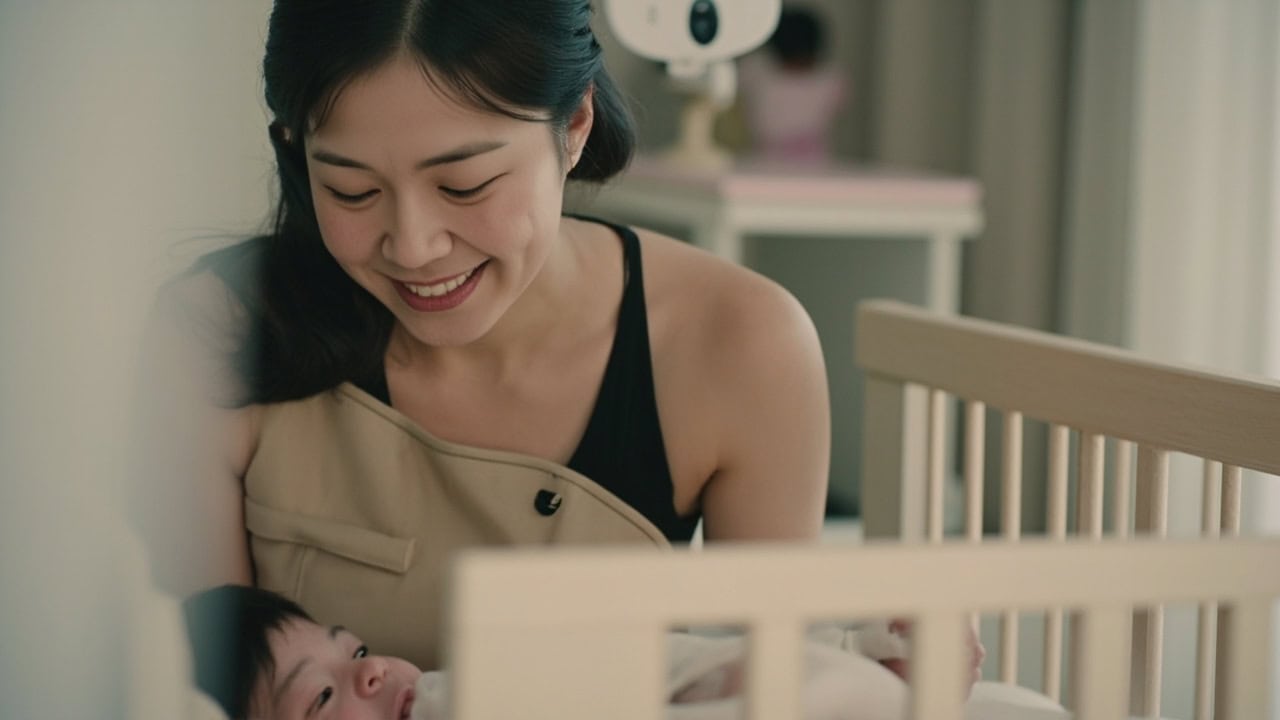
The first conversation with your childminder does not need to wait for the perfect moment. If care begins next week, begin this week. A brief message or phone call before the first session is entirely reasonable — and under the ECDA Childminding Pilot, every EduNanny childminder is trained to expect and welcome these discussions.
If you are considering childminding through the EduNanny programme, you can meet the childminder, visit the home or centre environment, and arrange a five-day trial period before committing to the full contract. These steps are not obstacles — they are natural entry points for exactly the kind of open, specific conversation described here.
The goal is simple: you hand over your baby knowing that the person receiving them understands your child. Not perfectly, not completely — but specifically, respectfully and with genuine professional care. That understanding is not a luxury. Under Singapore’s ECDA Childminding Pilot, it is the quiet foundation on which safe, trusting infant care is built.
Sources and further reading
- Childminding Pilot for Infants · ECDA (Early Childhood Development Agency), Singapore
- ECDA Appoints Three Operators for New Childminding Pilot for Infants · Ministry of Social and Family Development (MSF), Singapore
- Parent Hub: 0-2 Years – Baby Sleep · HealthHub Singapore (HPB / MOH)
- Q&A: How Can I Get My Baby to Sleep Well and Safely? · HealthHub Singapore (HPB / MOH)
- Sleep · SingHealth
- Making sure newborns and children under 5 years sleep safely · World Health Organization
- Parent Hub: 0-2 Years – Healthy Diet · HealthHub Singapore (HPB / MOH)
- Breastfeeding Give Your Child a Headstart · KK Women's and Children's Hospital (KKH) via SingHealth
- Singapore's first set of Guidelines for Eating and Feeding in Infants and Young Children up to Two Years · KK Women's and Children's Hospital (KKH)
- Infant and young child feeding · World Health Organization
- EduNanny® ECDA Childminding Pilot Programme · EduNanny (first-party brand context)
- FAQ · EduNanny (first-party brand context)
The images in this article were generated with AI for illustration. They do not show actual EduNanny staff, children or facilities.
Every family has different care needs. Speak with EduNanny to discuss care that is right for your child.