Before Words, Before Labels: What Your Baby Is Learning When They Truly Look
Everyday looking, reaching and shared play help babies make sense of their world. Discover what attentive, responsive care can bring to these small learning moments.
In this guide
The quiet intensity of a baby’s gaze
You notice it one morning at breakfast: your baby, still in the high chair, tracks a familiar red cup as you slide it slowly across the table. Their eyes follow it, pause, then follow it again as you move it back. It lasts only a few seconds. You smile, pass the cup, and move on.
But something important just happened. That slow, deliberate tracking is not passive staring. It is the earliest form of cognitive work your baby does to make sense of the physical world.
Peer-reviewed research on infant visual attention and object recognition frames looking as a foundational skill rather than a quiet pause between more exciting activities. When a baby watches an object move, they are building the mental picture that lets them recognise it again later, in a different light, from a different angle.
What visual attention actually does for your baby
In the first months of life, a baby’s vision develops rapidly. By around two months, babies begin to track people and objects with their eyes, and they pay close attention to faces. By four months, they see objects most clearly at a distance of roughly twenty to thirty centimetres, which is about the space between a parent’s face and a baby held in arms.
This is not just about seeing. It is about building a lasting representation of the world. Visual short-term memory develops quickly between six and twelve months, allowing infants to store information about where objects are and what they look like. This capacity is the invisible foundation for everything that comes later: recognising a favourite toy in the pram, finding a cup under a cloth, or knowing that the book on the shelf is the same one you read yesterday.
Research on coordinated gaze between infants and caregivers during play shows that responsive adults shape what babies look at and learn from. When an adult follows a baby’s attention rather than directing it, the baby has more time to process what they are seeing. This responsive dynamic is where real learning moments take root.
Three everyday moments where looking becomes learning
You do not need flashcards, screens or organised lessons to support this development. The most powerful moments are ordinary ones, and they happen several times a day in any home or care setting.
Peek-a-boo and the magic of the hidden cup
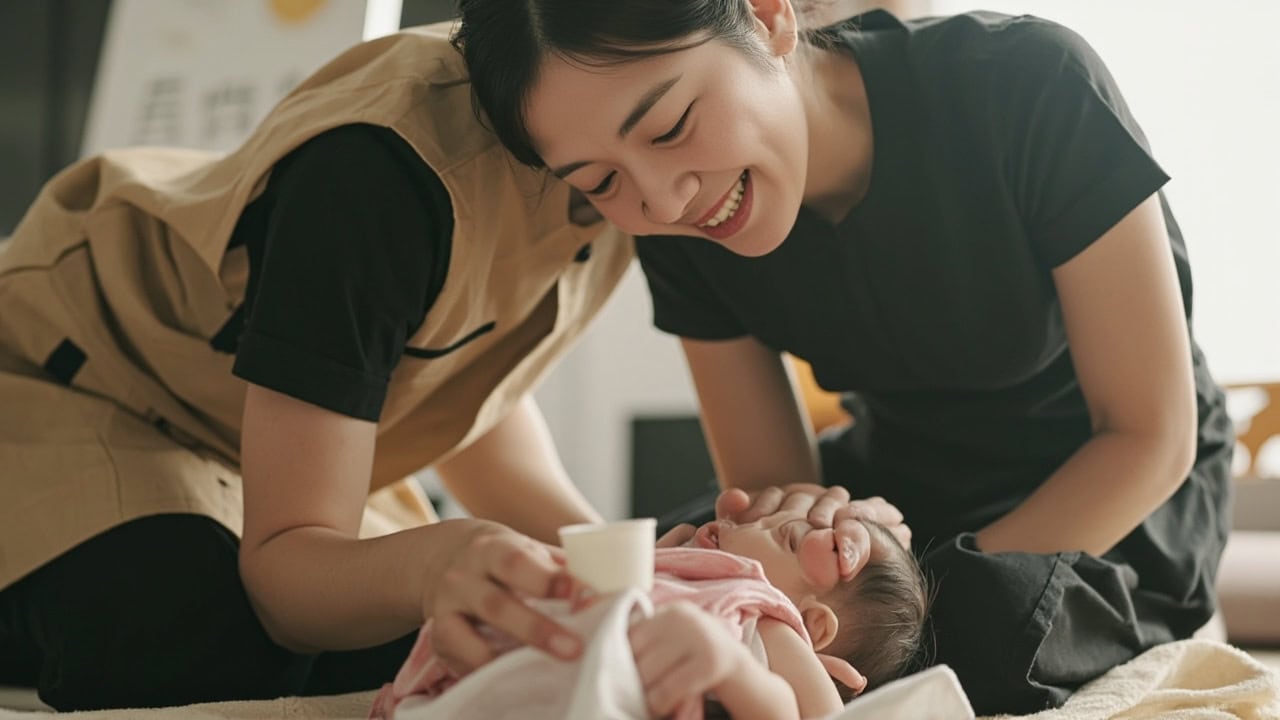
You place a small plastic cup on the mat and let your baby look at it. Then you gently drape a soft towel over it. Your baby stares at the towel. A moment passes. You lift the towel and say, “There it is!” Your baby laughs, reaches, or pulses with excitement.
This is not just a game. Peer-reviewed research on peek-a-boo notes that the game reinforces the principle of object permanence, which is the understanding that things still exist even when they cannot be seen. The shared joy that comes with revealing the hidden object adds a social and emotional layer to the learning, making the moment memorable and meaningful.
UNICEF’s early childhood development guidance for this age describes the same activity: a baby looking for a cup or toy hidden under a towel and responding with recognition, often through smiling or clapping. These small celebrations of rediscovery are genuine cognitive milestones, not just cute reactions.
Following interest during picture books
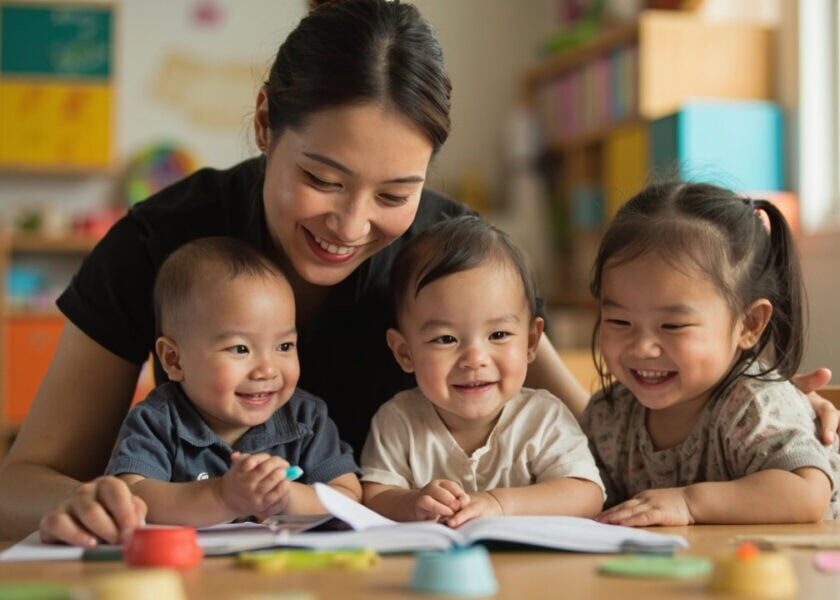
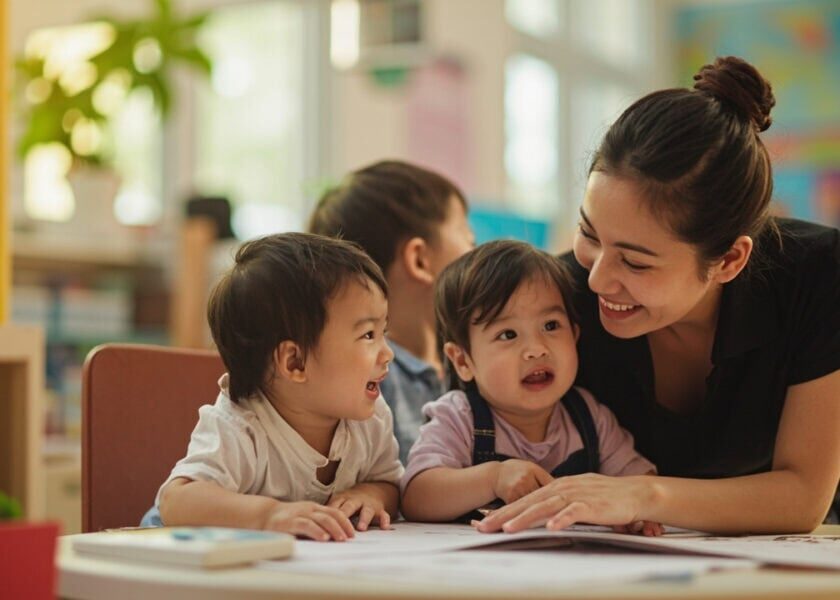
You open a simple board book and your baby leans forward, fixing on a clear, colourful illustration. Perhaps it is a picture of a ball, a cat or a tree. You do not rush to name it. You let the gaze settle. You may say a soft, “Yes, that one,” or simply smile.
Around nine months, babies begin to notice and engage with pictures in books. One UNICEF milestone guide suggests cutting out simple pictures from magazines and letting a baby identify what they are drawn to. This is exploration before labels. Your baby is learning what a picture represents, how flat images connect to real objects, and that looking at something together with another person is rewarding.
When a caregiver follows the baby’s gaze and responds in the moment, the baby stays engaged longer. Research on infant-caregiver social looking confirms that this back-and-forth builds the scaffolding for later learning. Naming can come later, once the visual connection is firmly established.
Tracking and reaching for colours
You place a bright yellow stacking cup just out of your baby’s reach and slowly move it from side to side, then up and down. Your baby tracks it, stretches, and tries to reach. Even if the grasp is not yet coordinated, the act of watching and then moving toward a coloured object is active learning in progress.
Watching colours and pictures at this stage is about exploration, not identification. Your baby is discovering that objects have surfaces, that those surfaces have qualities, and that those qualities can be consistent. A yellow cup is yellow every time, whether it is on the table or in the pram. This constancy is one of the building blocks of object recognition.
UNICEF’s learning-through-play guidance, developed in partnership with the LEGO Foundation, frames caregiver scaffolding during object play as central to early development. The key is not instructing but accompanying: being present, responsive, and allowing the baby to lead.
Why individual attention changes what your baby can learn
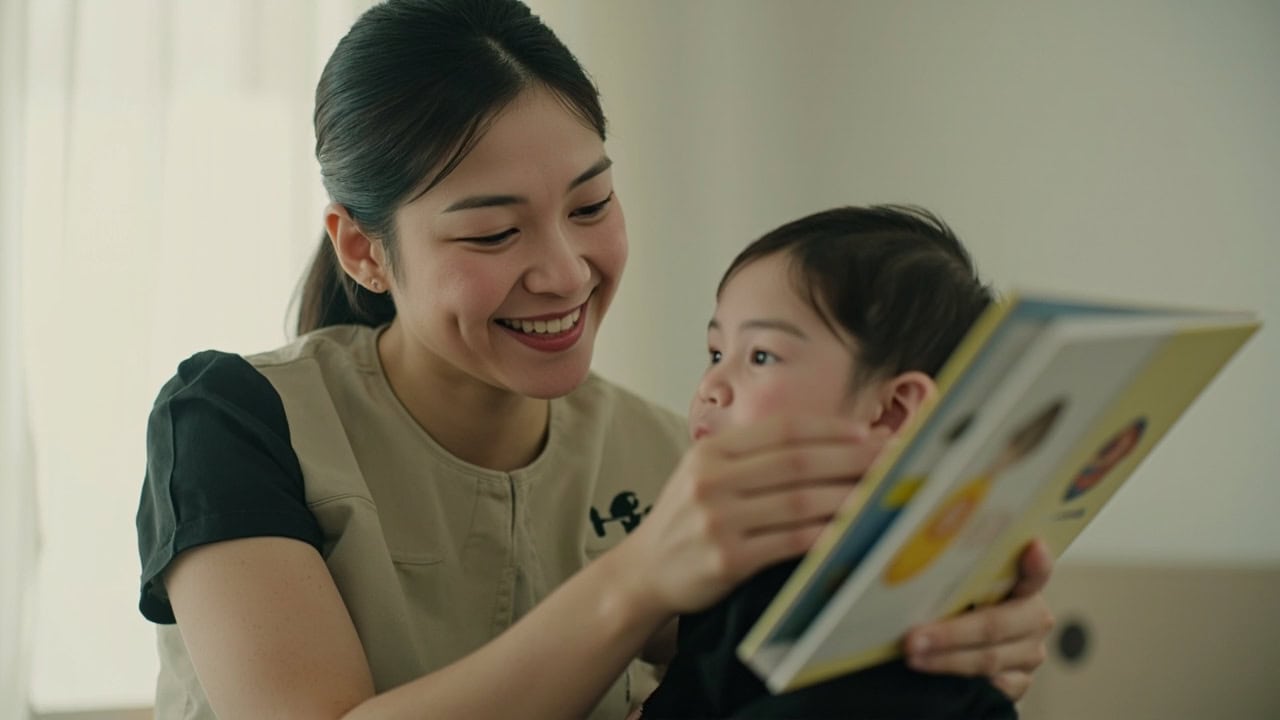
In a setting where one childminder cares for a small group of infants, there is more space to notice. A childminder who sees a baby track a cup across a mat can pause, place the cup back, and let it happen again. A childminder who notices a baby’s gaze fix on a picture in a book can slow down and give that moment room to breathe.
Research on visual short-term memory in infancy documents rapid development between six and twelve months, including the ability to store and compare information about objects. These are narrow windows of opportunity, and they pass quickly. A caregiver who is attentive to a baby’s shifting interest can extend these moments rather than interrupt them.
The EduNanny approach to childminding is built around small-group care, where a childminder works with a limited number of infants. This lower ratio creates conditions where a childminder can observe individual babies closely, notice what captures their attention, and respond in ways that match the baby’s pace and interest.
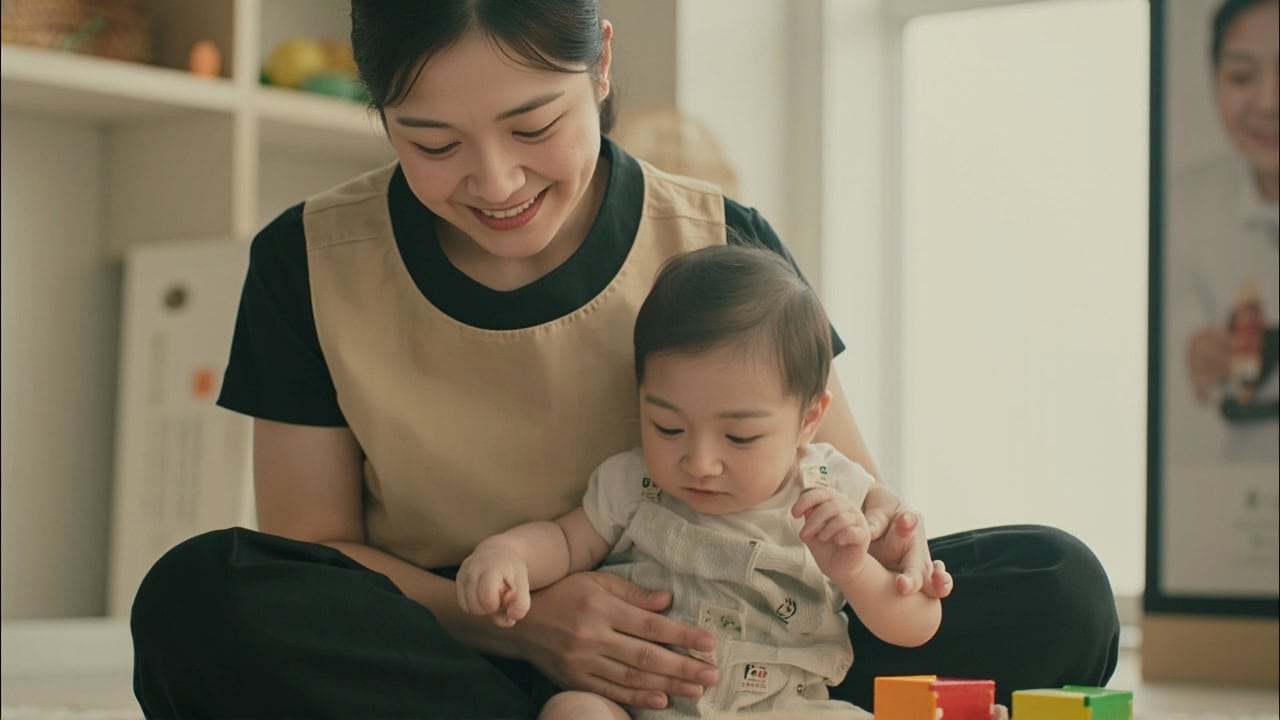
When you visit a childminding setting, you may notice a caregiver sitting on the floor, watching a baby explore a few simple objects. The caregiver is not constantly directing or narrating. They are noticing: watching when the baby reaches, noting where the gaze goes, and being ready to respond when the baby looks up for confirmation or connection.
Everyday play over drills and flashcards
You might wonder whether structured activities would accelerate your baby’s visual development. The evidence points in a different direction. Studies on how infants learn from objects show that hands-on exploration, combined with responsive caregiver interaction, builds recognition more effectively than passive exposure or flashcard drills.
A simple cardboard tube, a wooden spoon, a soft cloth and a plastic bowl offer more learning potential than most commercial infant toys, because they invite looking, touching, comparing and repeating. Your baby learns the most when they can handle an object, see it from different angles, and return to it across several sessions.
The UNICEF guidance on learning activities for babies and toddlers advises responding when a baby points to or looks at an object by naming it and talking about it. This is the model: ordinary conversation, ordinary objects, responsive attention. No special kit required.
What you might notice at pick-up
When you collect your baby at the end of the day, resist the urge to ask only for milestone checkboxes. Instead, look for the small moments. Did your baby seem interested in anything during the day? Was there a particular object or picture that drew attention? How did your baby respond when something disappeared and then reappeared?
These micro-moments, accumulated over weeks and months, represent genuine cognitive work. Each time a baby tracks an object, each time a baby searches for a hidden toy, each time a baby gazes at a picture and then at a caregiver’s face, the foundation for object recognition grows a little stronger.
Individual babies develop at their own pace, and variation in when these abilities emerge is completely normal. One baby may show strong tracking at three months while another focuses more on faces. Both are learning, and both benefit from attentive, responsive care that follows their lead.
Looking is learning
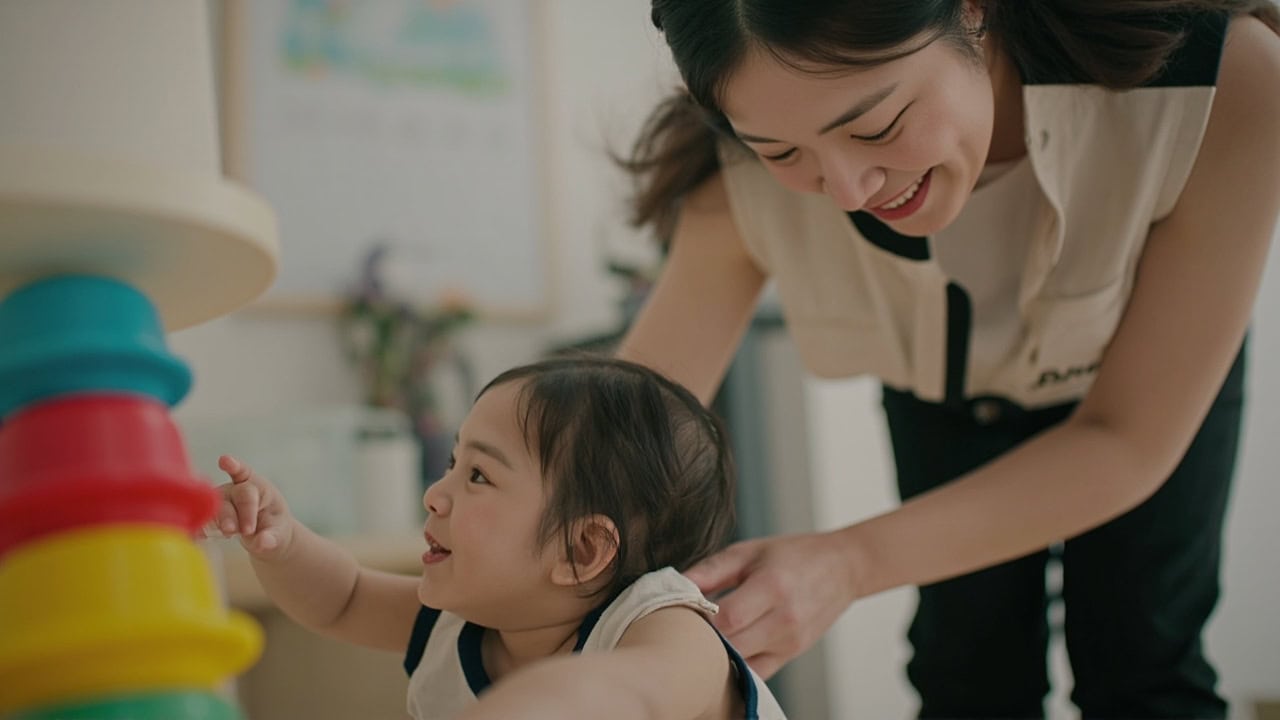
Your baby’s gaze is not a pause before the real learning begins. It is the learning. The next time you see your baby fix on a cup, a cloth, a page or your face, you are watching cognition in action.
When that watching is noticed and extended by a responsive adult, it becomes a learning moment that your baby can build on. This is what thoughtful, individualised care makes possible: not a race to the next milestone, but a steady accumulation of understanding, one look at a time.
Sources and further reading
- Infant Visual Attention and Object Recognition · PubMed Central (NIH)
- Your baby's developmental milestones at 2 months · UNICEF Parenting
- Your baby's developmental milestones at 4 months · UNICEF Parenting
- Your baby's developmental milestones at 9 months · UNICEF Parenting
- GO, BABY (UNICEF Gulf early childhood development resource) · UNICEF
- 21 learning activities for babies and toddlers · UNICEF Parenting
- Learning through play (UNICEF–LEGO Foundation) · UNICEF / LEGO Foundation
- 10 Facts about Early Childhood Development · UNICEF Türkiye
- Child Development Stages · UNICEF Uzbekistan
- Peek-A-Boo, I See You! · PubMed
- Top-down Contextual Knowledge Guides Visual Attention In Infancy · PubMed Central (NIH)
- See and be seen: Infant-caregiver social looking during play · PubMed Central (NIH)
- The Relation Between Infants' Activity with Objects and … · PubMed Central (NIH)
The images in this article were generated with AI for illustration. They do not show actual EduNanny staff, children or facilities.
Thoughtful care for your child’s everyday discoveries.
Every family has different care needs. Speak with EduNanny to discuss care that is right for your child.