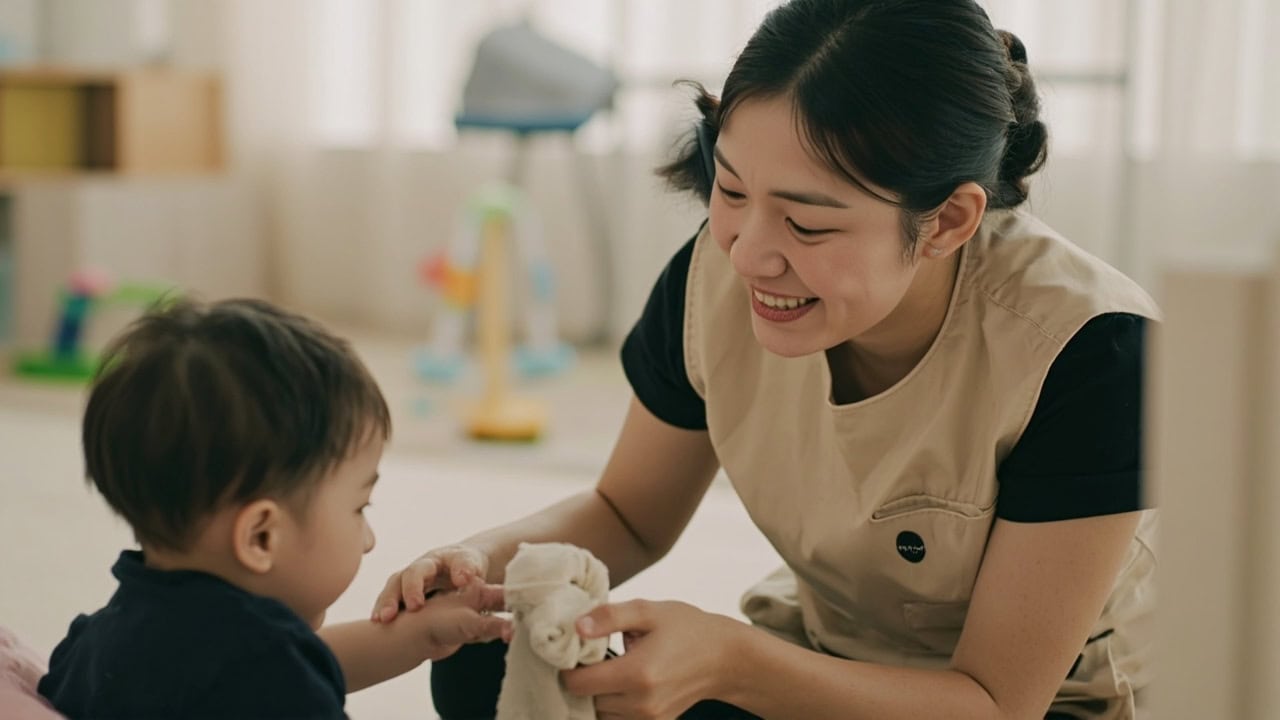
Still There, Even When Hidden: The Tiny Magic Trick Your Childminder Practises All Day
That Moment When Peek-a-Boo Stops Working
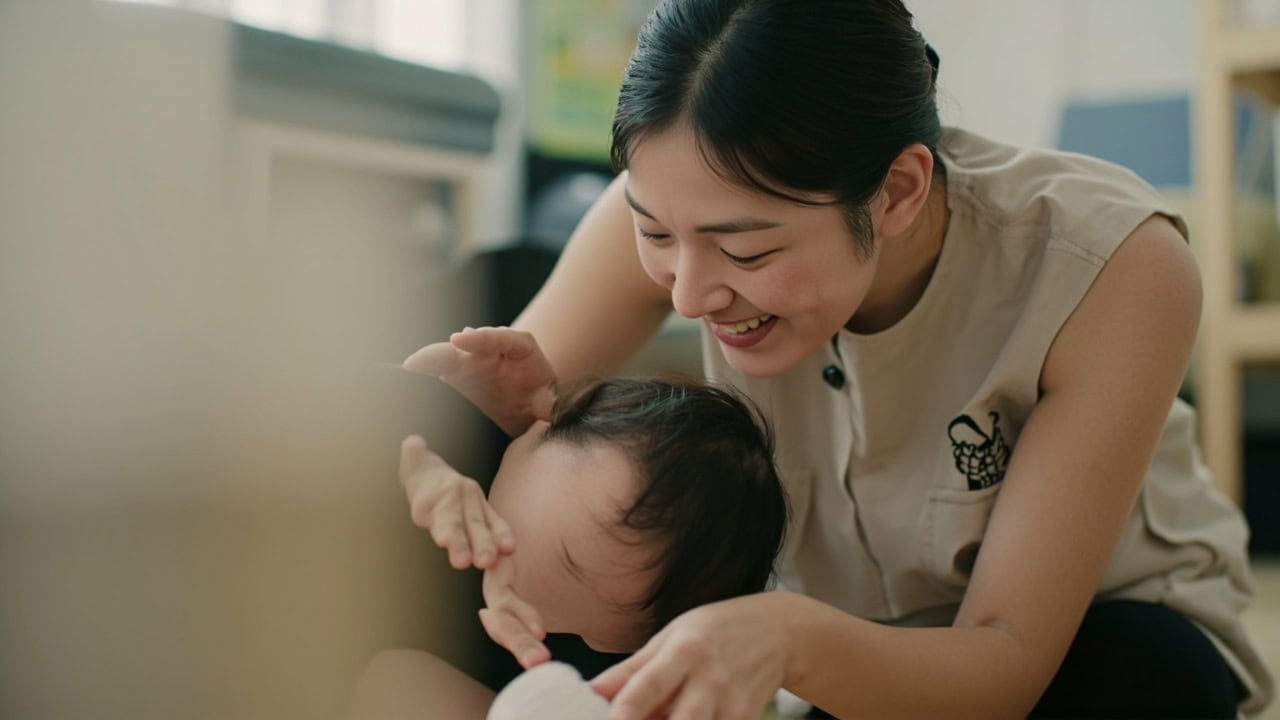
You lift the cloth. Your baby laughs. You do it again. Then again. By the third repetition, she looks away. You try again at snack time and she watches with a puzzled expression, as if to ask: why are you doing this again?
This is not a setback. It is, in fact, a sign that something important is shifting inside her mind.
Around the nine-month mark, infants begin to understand that objects continue to exist even when they cannot see them. Caregiving guides describe this as object permanence — the simple idea that something is still there, even when it is hidden. Parents might simply notice it as the beginning of hide-and-seek: the moment your baby starts to look for things instead of just watching them disappear.
What Object Permanence Actually Means
Before this milestone, a hidden toy is simply gone from your baby’s world. After it develops, your baby begins to reason that the toy exists somewhere — perhaps under the cloth or behind the cushion — and can act on that understanding.
UNICEF’s developmental guidance for nine-month-olds frames hiding objects and encouraging babies to find them as ordinary caregiver activity. Their GO, BABY resource specifically flags looking for a cup or toy a baby has seen hidden under a towel as a behaviour to look for during this window.
Understanding that something exists even when it is out of sight is a foundational cognitive skill. It connects to later problem-solving, spatial reasoning, and the ability to hold someone in mind when they are not physically present.
Why Repetition Is the Point, Not the Performance
Peer-reviewed research on peekaboo shows that infants engage in the game from around four months of age and begin increasing their turn-taking participation around six months. The game is not a trick to perform. It is a scaffolded exchange where babies learn the rhythm of expectation, surprise, and resolution.
This means that the apparent inconsistency — interest one moment, disinterest the next — is part of how learning consolidates. Your baby is not failing. She is processing. Each repetition builds familiarity that supports the next stage of understanding.
UNICEF’s joint learning guidance with the LEGO Foundation reinforces this. Playful repetition, scaffolded by a responsive adult, is a core mechanism for early cognitive development. The key word is responsive — following the baby’s cue, pausing when she looks away, resuming when she shows interest again.
The Difference a Small Setting Makes
In a small childminding environment, a caregiver can follow these cues naturally throughout the day. With only a handful of infants to attend to, there is space to notice when a baby reaches for the cloth, to pause and wait for her to look, and to repeat the game as many times as the moment allows.
EduNanny’s childminding programme maintains a maximum of three infants per childminder, creating conditions where these everyday learning moments can happen without rushing. A nappy change becomes an opportunity. Snack tidy-up becomes a game. Bath-time toys become instruments of discovery.
The caregiver does not need to carve out special lesson time. Object permanence games fit naturally into the rhythm of a morning or afternoon.
Everyday Hiding Games for Nine-Month-Olds
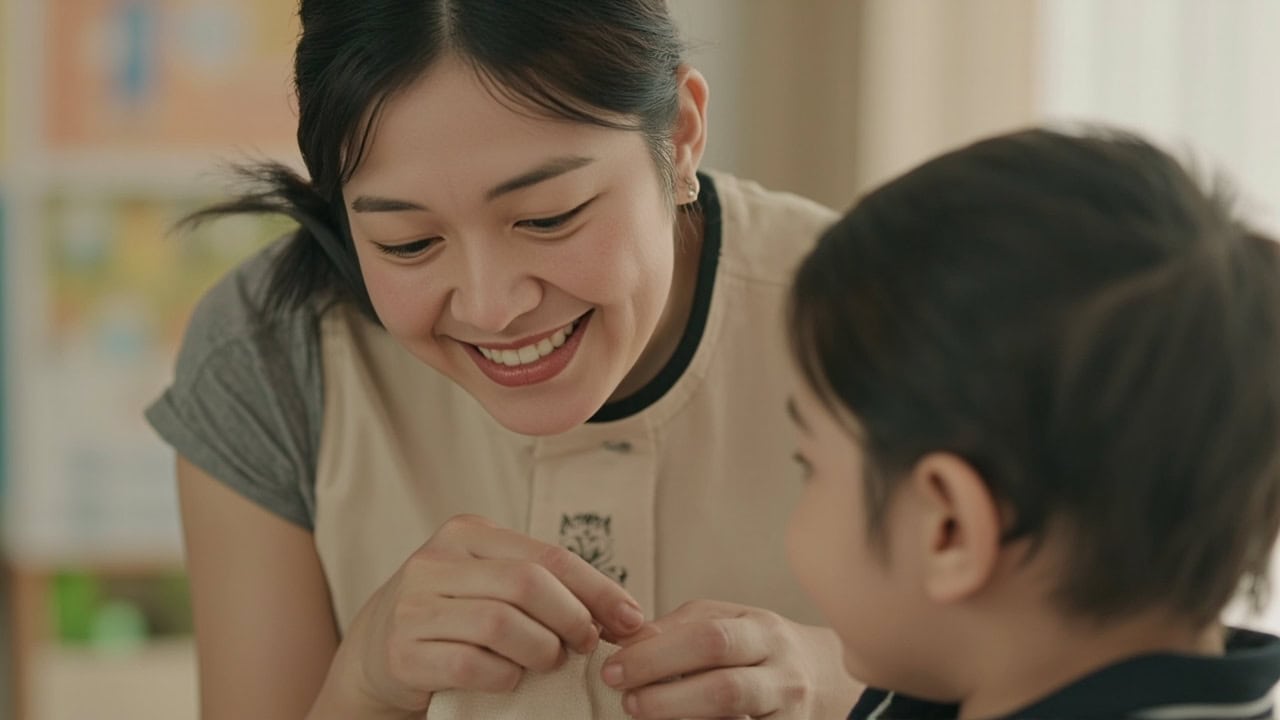
You do not need special equipment. A clean cloth, a small cup, a soft toy, or a basket all work well. The games below draw directly from the guidance that UNICEF offers for this age group.
- Cloth peek-a-boo: Cover a small toy or your face with a lightweight cloth. Pause before lifting it. Repeat several times, letting your baby reach for the cloth herself.
- Cup hiding: Show your baby a favourite toy, then place it under an overturned cup. Wait for her to look at the cup or reach for it before lifting it together.
- Basket and box discovery: Place a few safe objects in a low basket or box. Let your baby pull objects out and, when ready, show her how to look inside.
- Towel hiding: Drape a thin towel loosely over a toy your baby has been watching. Give her time to reach or look before revealing the object.
These are not curriculum activities. They are ordinary moments of playful exchange — the kind of back-and-forth that builds cognitive foundations without turning a morning into a lesson plan.
Watching Is Not Yet Searching
It is worth noting that visual attention and active searching are different skills. An infant may watch a toy being hidden and appear unconcerned. This does not mean the lesson has failed. It may simply mean the baby is still in the watching phase, gathering what she will need before she begins to reach or look intentionally.
Research on infant visual attention and object recognition describes this progression: first the ability to track, then the ability to anticipate, then the ability to act on that anticipation. Each stage prepares for the next.
Some babies will actively search for hidden objects earlier than others. Individual variation in the timing of this milestone is normal and does not indicate future ability. UNICEF’s two-year milestones guidance shows that hide-and-seek games continue to evolve well into toddlerhood, so there is no rush and no single expected age for mastery.
A Short Script You Can Borrow at Home
You do not need to replicate a childminding environment to bring these games into your day. A simple script works well:
- Sit on the floor with your baby and one small, familiar toy.
- Show her the toy and let her hold it briefly.
- Place a thin cloth partially over the toy, leaving part of it visible.
- Say: Where did it go? and wait. Give her ten to fifteen seconds to look or reach.
- Lift the cloth together, smile, and repeat.
You can do this once or ten times. The repetition is the work. If your baby looks away, that is information. Follow her gaze, try again later, or simply move on. There is no minimum and no maximum.
What This Means for Your Family
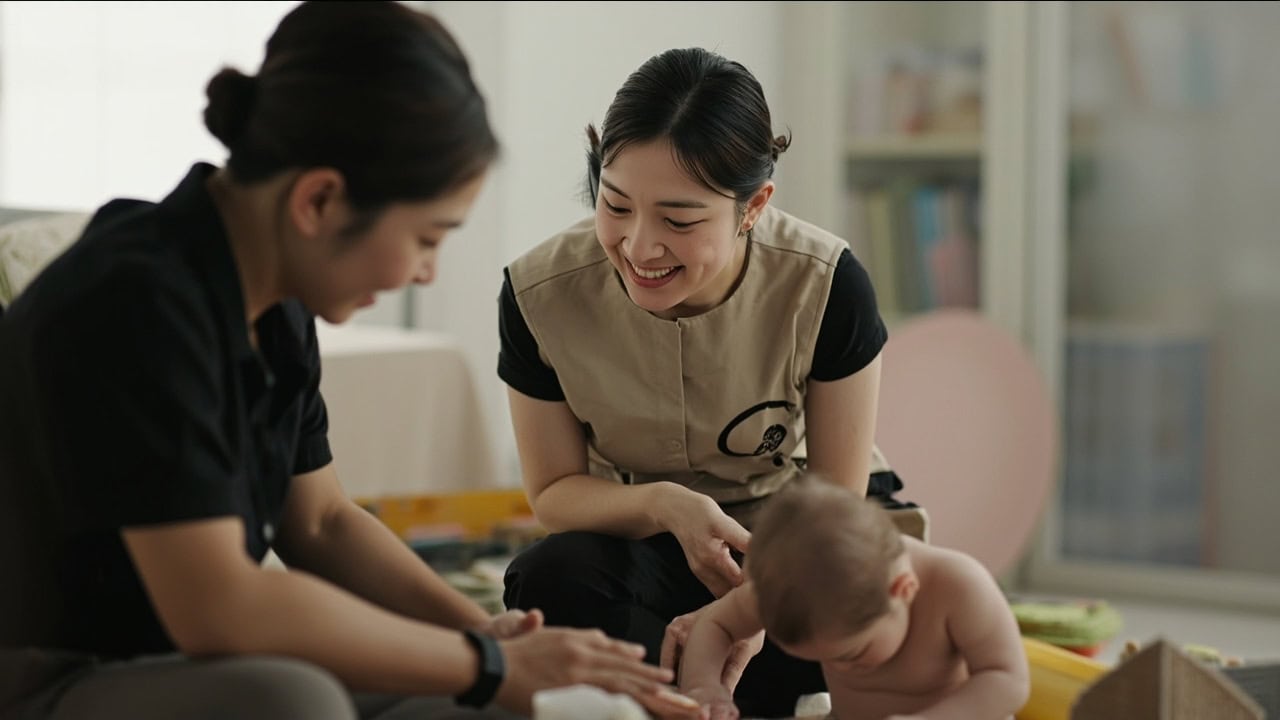
Object permanence is not a test your baby passes or fails. It is a quiet, ongoing process that happens best when there is patient attention, repeated opportunity, and responsive interaction.
A small care setting gives a childminder the time and space to notice your baby’s signals, to wait when she needs waiting, and to try again when the moment passes. For families in Singapore, the ECDA childminding pilot makes this kind of individual attention available for infants from two to eighteen months, with screening, training, and oversight through established standards.
If you have ever wondered whether peek-a-boo is actually doing something, the answer is yes — every single time you play it with care and attention. Not because it is a shortcut to milestones, but because it is genuine, responsive interaction. That, in the end, is what early learning looks like.
Sources and further reading
- Your baby's developmental milestones at 9 months · UNICEF
- GO, BABY · UNICEF
- Learning through play · UNICEF / LEGO Foundation
- Taking Up an Active Role: Emerging Participation in Early Parent-Infant Interaction During Peekaboo · PMC (NIH)
- Infant Visual Attention and Object Recognition · PMC (NIH)
- Your toddler's developmental milestones at 2 years · UNICEF
- 21 learning activities for babies and toddlers · UNICEF
The images in this article were generated with AI for illustration. They do not show actual EduNanny staff, children or facilities.
Every family has different care needs. Speak with EduNanny to discuss care that is right for your child.