Fraud Blocker edunanny.com

Category: Childminding

edunanny-30834f0c-cd5a-4683-8b86-95b7d3608681
August 21, 2025

Cradling the First Thousand Days EduNanny Ultra Low Ratio Infant Care Pilot in Singapore Dec 2024 to Dec 2027

Introduction

Introduction

Good evening, parents, grandparents, caregivers, and friends of Singapore’s youngest citizens. This article shares a comprehensive, editor‑level deep dive into EduNanny’s approach to infant care and childminding in Singapore. Built on the belief that the first thousand days are not a luxury to get right but the blueprint of a life, EduNanny harmonizes attachment science, developmental pedagogy, and professional care into a near‑home service model. By weaving insights from Bowlby, Montessori, Pikler, Vygotsky, and Erikson into practical routines, we translate theory into daily practice that supports both infants’ thriving and parents’ peace of mind.


EduNanny Infant Childminding: A National Partner

EduNanny Infant Childminding: A National Partner

EduNanny by BUTLER is proud to be appointed by ECDA for the national Childminding Pilot for Infants (1 December 2024 to 31 December 2027). Our promise is clear: ultra‑low ratio care, near home, with the science of development and the heart of family. We operate in childminders’ homes and community spaces across Singapore, Monday to Friday, 7am–7pm, in 5‑hour or 10‑hour blocks—so families can work, rest, and thrive, knowing their infants are safe, seen, and steadily growing.


How EduNanny Makes Infant Care Great in Singapore

How EduNanny Makes Infant Care Great in Singapore

  • Proximity: We place micro‑pods close to where families live and work. Short commutes preserve family energy, protect routines, and reduce stress on infants during transition times.
  • Professionalism: Our childminders are certified, background checked, trained in infant first aid and basic infant care, and coached by EduNanny mentors who observe, support, and refine practice.
  • Partnership: We listen. Parents co‑design routines with us. We share transparent updates daily and embrace CCTV in community spaces with opt‑in CCTV for home care areas to build trust.

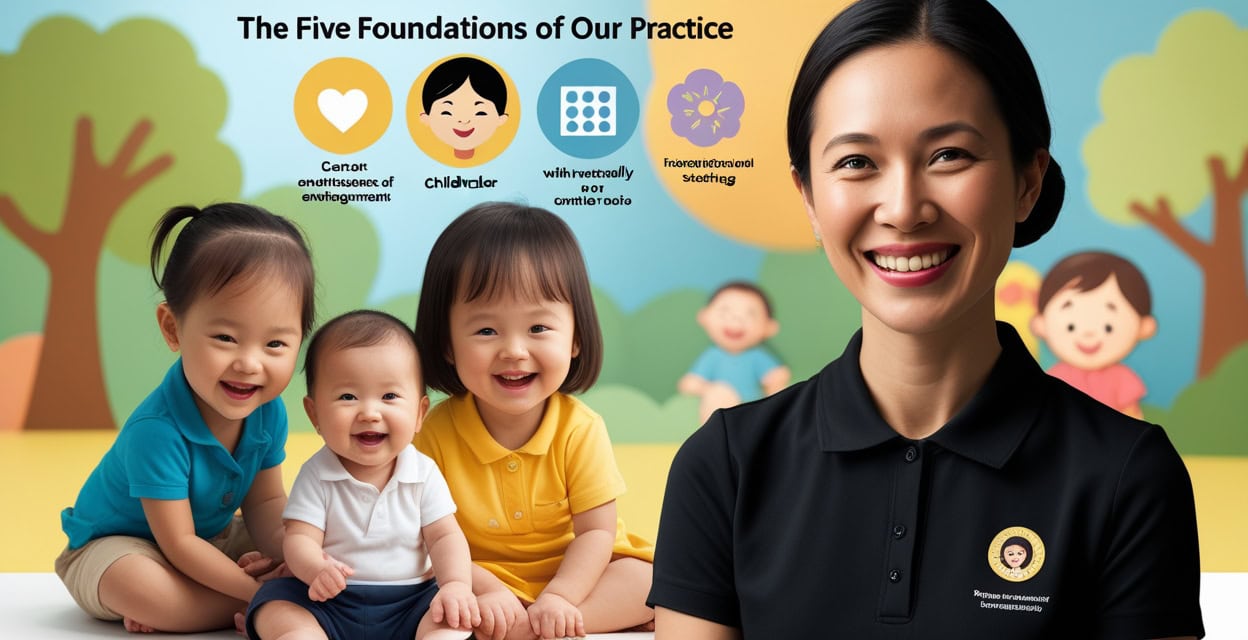
Five Unique Pillars of Our Practice

Five Unique Pillars of Our Practice

1) Attachment by Design: The 1:3 Covenant

What it means: Each childminder cares for a maximum of three infants at any one time. This ultra‑low ratio is the quiet superpower of the pilot.

Why it matters: With 1:3, we never rush the moments that build a brain—responsive feeding, unhurried diapering, face‑to‑face babble, eye contact that says, “I see you.” Bowlby would call it the architecture of security; Erikson would call it a foundation of trust.

How it looks daily: A tiny “circle of care”—one adult, three infants, steady rhythms. We keep a simple, predictable flow: nourishment, sleep, sensory play, outdoor air where feasible, and quiet observation. Continuity of caregiver is protected; the same trusted adult welcomes your child each day.

2) Safety as a Daily Culture, Not a Checklist

Environment: All EduNanny settings—home‑based and community‑based—are designed to be clean, infant‑proofed, and calm. We honor ECDA standards and our own safeguards: safe sleep (firm, flat surfaces; no loose items), temperature checks, hazard scans each morning, and meticulous hygiene routines.

People: Childminders undergo comprehensive background checks; in home settings, checks extend to regular access personnel. Our team is certified in infant first aid and food safety and receives ongoing micro‑trainings.

Technology: CCTV is installed in community spaces as required. For home‑based settings, EduNanny encourages and offers CCTV in caregiving areas during care hours, with appropriate consent—balancing transparency and home privacy. Parents can opt for CCTV‑enabled placements.

Health: We practice a No Sick Child Policy to protect group well‑being. If an infant shows fever or contagious symptoms, we collaborate with families on care alternatives and return‑to‑care timelines aligned with health guidance.

Incident response: Clear protocols, clear documentation, prompt communication. If something happens, you hear it from us first—what occurred, what we did, and how we prevent recurrence.

3) The Prepared Micro‑Pod: Montessori Calm, Pikler Respect, Modern Design

The space: Modern layouts with a “less is more” aesthetic—low open shelves, washable textures, stable furniture for pulling up, and curated objects inviting grasping, mouthing, and cause‑and‑effect discovery. Nothing overstimulates; everything has a purpose.

The rhythm: We treat care moments as learning moments. Pikler teaches us to slow down and narrate—“I’m lifting you gently now; I will wipe your face”—so infants feel respected, not handled. This fosters cooperation and self‑regulation.

The experience: Short outdoor pram walks where feasible, natural light, soft music, and tactile play. Froebel’s spirit of play informs gentle exploration. Milestones and observations are captured to inform the next day’s practice, not for comparison.

4) Joy as a Learning Strategy: Scaffolding the Small Triumphs

Vygotsky’s principle: Every infant has a zone of proximal development—the sweet spot of “nearly possible.” Our caregivers scaffold with just‑right support: a steady hand as a baby shifts weight, a smile that invites another attempt, a pause that lets the infant solve a puzzle.

Play to learn: Peekaboo builds object permanence; finger foods build pincer grasp; babbling and turn‑taking build language circuitry. We celebrate micro‑wins—the moment a child rolls with intention, reaches with accuracy, or self‑soothes to the caregiver’s calm voice.

Emotional literacy: In line with Malaguzzi’s hundred languages, infants communicate with gaze, gesture, rhythm, and breath. We respond early to these languages to validate signals and nurture joy.

5) The Purpose of Childminders: A Profession of Care and Consequence

Identity: EduNanny childminders are early childhood professionals carrying Singapore’s future—one hug, one hand‑washing motion, one gentle lull at a time.

Formation: We recruit for character, certify for competence, and mentor for wisdom. Reflective practice—brief debriefs, case consults, and peer circles—keeps care thoughtful and evolving, not routine.

Community and work: As a national initiative, the pilot expands access and creates dignified jobs. EduNanny’s Maximum Employment Mandate supports flexible, meaningful work pathways for caregivers while upholding quality care.


Why EduNanny Works for Singaporean Families

Why EduNanny Works for Singaporean Families

  • Ultra Low Density, Ultra Low Ratio: 1:3 infant ratio for presence, not pressure.
  • CCTV Provided: Required in community spaces; CCTV‑enabled options for home‑based caregiving areas during care hours are available and encouraged.
  • Certified EduNanny Childminders: Background checked, trained, and supervised.
  • No Sick Child Policy: Protecting the health of every pod; clear return‑to‑care guidance.
  • National Initiative: Part of ECDA’s three‑year Childminding Pilot for Infants (Dec 2024–Dec 2027).
  • Excellence and Quality: Ongoing audits, responsive incident protocols, and reflective practice engines.
  • Centre‑Based and Home‑Based Options: Micro‑pods in homes and micro‑centres in communities, sized like small hubs while remaining distinct from ECDA‑licensed infant care centres.
  • Distance and Convenience: Islandwide availability near home and work.
  • Affordability: From $33/day for full‑day (10 hours) and $16.50 for half‑day (5 hours) before GST; payable with CDA/Baby Bonus during subsidised hours.
  • Schedule: Monday–Friday, 7am–7pm; consistent coverage aligned with workdays.
  • Modern Layouts and Innovative CCTV: Spaces designed to soothe and systems that assure.
  • National Social Initiative: Scaling safe, dignified care while uplifting employment.

What the Pilot Offers—Clear, Simple, Supportive

What the Pilot Offers—Clear, Simple, Supportive

  • Eligibility: Singapore Citizen infants 2 to 18 months, not concurrently enrolled in ECDA‑licensed infant care centres.
  • Hours and Fees: Half‑day (5 hours) at $16.50; full‑day (10 hours) at $33.00 before GST, Monday–Friday between 7am and 7pm, excluding public holidays. Parents may tap CDA funds for subsidised hours.
  • Flexibility: Choose the number of days per week and the block (half or full day) that fits your family.

A Day in an EduNanny Micro‑Pod

A Day in an EduNanny Micro‑Pod

Morning welcomes are slow and warm. We align on your child’s sleep, feeds, and any new cues. A short window of exploration follows—soft blocks, floor‑level mirrors, and songs that set a welcoming rhythm. Feeds are responsive and unhurried. Sleep is protected in a calm, dim corner with safe sleep practices. In the afternoon, infants enjoy tactile trays, tummy time, or gentle outdoor air when suitable. Every transition is narrated, and every goodbye is unrushed. You receive a daily summary that reads like a story of your child’s day, not a cold checklist. Practical tips for parents include keeping a consistent nap window, bringing a familiar comfort item, and communicating any routine changes in advance to support seamless continuity of care.


Our Promise to Parents

Our Promise to Parents

  • Transparency: You will know how your infant is doing, what we noticed, and what we’re trying next.
  • Partnership: We align on routines, allergies, comfort objects, cultural preferences, and language use.
  • Respect: Your family’s values matter; your infant’s signals lead the way.
Conclusion: Who, What, When, Where, and How Childminding Matters

Conclusion: Who, What, When, Where, and How Childminding Matters

Who: Singapore’s infants, 2–18 months—the future citizens—deserving security, curiosity, and delight. And the childminders—professionals whose steady care makes that future possible.

What: Childminding that is intimate in scale, rigorous in safety, and profound in impact. Not babysitting—brain‑building.

When: Now—during the first thousand days when neural connections spark by the millions each second; the Pilot runs Dec 2024 to Dec 2027.

Where: In home‑based micro‑pods and community‑based settings near you—close enough to reduce stress, close enough to keep bonds strong.

How: Through ultra‑low ratios, prepared environments, certified caregivers, clear health and safety protocols, CCTV transparency, and family partnership—paid affordably, supported nationally, and delivered with quiet excellence.

The Philosophy and Purpose of EduNanny

The Philosophy and Purpose of EduNanny

EduNanny exists to give every infant a reliable circle of care, and every parent the calm that comes from trust. We believe safety is love made visible. We believe joy is the engine of development. We believe purpose grows when professionals feel respected and supported. Our covenant is simple: attachment, autonomy, and inquiry, nurtured from the very beginning. This is not merely a service; it is a national commitment to early childhood excellence that honors families, caregivers, and the growing child.

How to Sign Up

How to Sign Up

  1. Visit the EduNanny sign‑up page: https://edunanny.com/edunanny-ecda-childminding-service/ and fill the short form.
  2. Enquire via WhatsApp on the same page to connect with EduNanny Concierge Team.
  3. Receive a match with suitable micro‑pods and childminders near you.
  4. Confirm your appointment for a site visit—home‑based or community‑based—to meet the childminder, see the space, and ask questions.
  5. Enrol. We align on routines, health notes, and start date. Your infant’s circle of care begins.
For More Information

For More Information

Visit EduNanny.com and Childminding.EduNanny.com for additional details, FAQs, and pilot updates.


Closing

Closing

In closing, greatness does not begin at graduation; it begins in the cradle—with an adult who is present, a space that is prepared, and a nation that chooses to invest in both. EduNanny is honored to carry this work with you. Together, we will cradle safety, spark joy, and build a public good worthy of Singapore’s future.

[#keyword1, #keyword2, #keyword3, #keyword4, #keyword5]
edunanny-a9b17505-2c57-4e7d-87a6-aa8b92a80120
August 20, 2025

Near Home Attachment First EduNanny One to Three Infant Care Pilot in Singapore 2024 to 2027

EduNanny: A National, Attachment-First Approach to Infant Care in Singapore

EduNanny: A National, Attachment-First Approach to Infant Care in Singapore

In the cradle of a city that thinks far ahead, the first thousand days are not a race; they are an embrace. EduNanny by BUTLER is an ECDA-appointed operator in Singapore’s national Childminding Pilot, built to make those days safer, gentler, and closer to home for every family that needs them. Our simple promise is delivered with world-class discipline: tiny groups, steady hands, and care within reach. This article expands on how EduNanny works, what families can expect, and practical steps to maximize the benefits of near-home infant care.


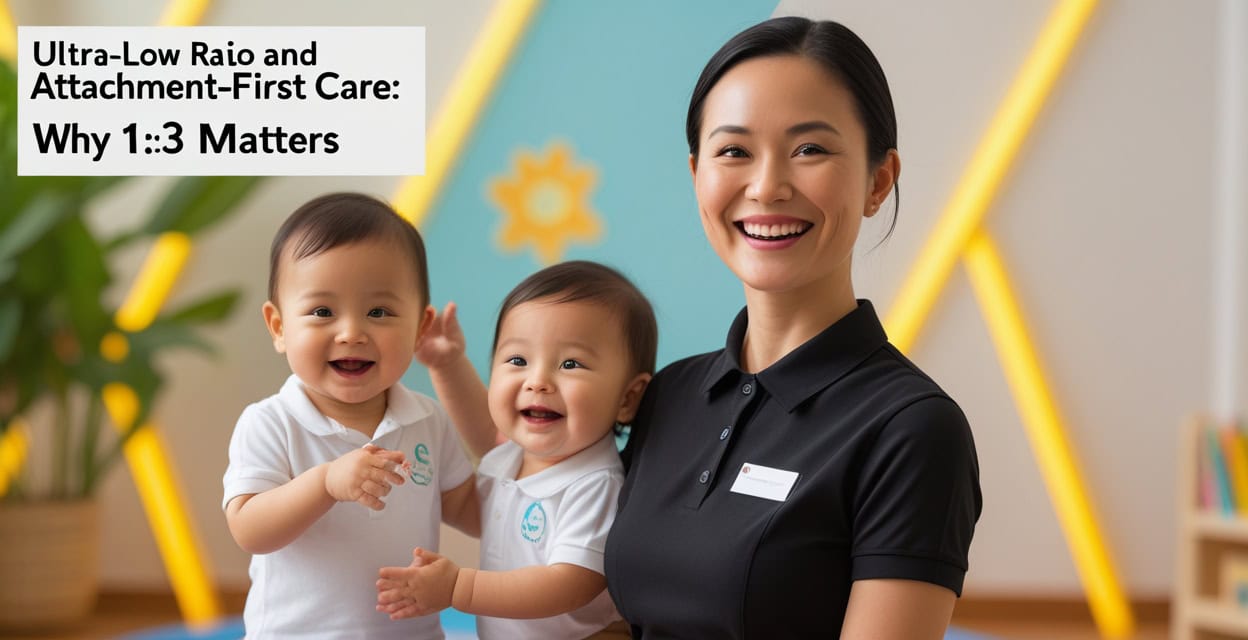
Ultra-low ratio and attachment-first care: why 1:3 matters

Ultra-low ratio and attachment-first care: why 1:3 matters

At the heart of EduNanny is an attachment-first model designed to support infants’ secure bases and early social development. A maximum of three infants per childminder allows deep attunement, while small, calm environments reduce overwhelm and promote sustained curiosity.

  • Deep attunement: With 1:3 ratios, childminders can respond to cues quickly, support feeding routines with sensitivity, and foster eye-to-eye interaction that builds trust.
  • Peer learning in safe settings: Small pods encourage peer exploration without sacrificing individualized attention or safety.
  • Observations that guide growth: Daily notes capture gaze shifts, reach patterns, and early communicative cues to tailor invitations for the next day’s learning experiences.

Five pillars that shape every EduNanny day

Five pillars that shape every EduNanny day

1) Attachment-first pedagogy in micro-pods

One secure relationship can transform an infant’s world. Within micro-pods, we emphasize:

  • Slow, respectful care: Unhurried feeds, eye-to-eye diapering, and narrated routines that help infants feel seen and safe.
  • Structured observation: Educators document cues (gaze, grasp, turn-taking) and translate them into developmentally appropriate invitations, aligned with Montessori and Vygotsky’s zones of proximal development.
  • Language in context: Responsive, bilingual-friendly talk, songs, and shared reading woven into daily routines to strengthen vocabulary and social connection.

2) Safety by design, not by chance

Safety is a design principle, not an afterthought. Our approach includes:

  • Environments: Risk-assessed homes and community spaces with childproofed layouts, safe sleep practices, and hygienic food handling.
  • Training: Mandatory infant first aid, food safety, and ongoing coaching for best practices; clear incident protocols for transparency with parents.
  • Monitoring: CCTV is installed in community spaces as required, with opt-in CCTV in home caregiving areas during care hours and informed consent to balance transparency and privacy.
  • Health policy: No Sick Child policy to protect the pod; medications administered only with written instructions and parental oversight.

3) The developmental arc: from reflexes to relationships

EduNanny supports essential developmental milestones through daily, research-informed practice:

  • Sensory-motor scaffolding: Daily floor time, tummy time, and safe exploration with rotating, simple materials to sustain interest without overstimulation.
  • Language-rich routines: Responsive talk, songs, finger plays, and book sharing embedded into feeding, changing, and settling moments.
  • Rest and rhythm: Predictable schedules aligned with individual sleep cues and evidence-based safe sleep guidelines.
  • Gentle assessment: Milestone tracking via observation notes, with early, compassionate partnership with parents when extra support is needed.

4) Happiness, dignity, and the joy of being tiny

Happiness is seen as deep, quiet contentment, not constant bustle. We emphasize:

  • Calm responsiveness: Reading body signals, preserving quiet when needed, and introducing novelty when curiosity arises.
  • Dignity in care: Narrating actions, seeking infant cooperation, and slowing movements to build trust and confidence.
  • Gentle transitions: Familiar objects, consistent caregivers, and transparent goodbyes reduce separation stress and ease adjustments for families and infants alike.

5) A public purpose for childminding

Near-home care is social infrastructure that supports families and the workforce, while fostering community networks. EduNanny’s approach includes:

  • Maximum Employment Mandate: Recognizing childminding as dignified professional work that creates stable, well-trained jobs.
  • Affordability and accessibility: Subsidised hours under ECDA Pilot, with CDA and Baby Bonus support enabling more families to access high-quality care during typical work hours.

What you can expect from EduNanny

What you can expect from EduNanny

  • Ultra-low ratio: 1:3 infant-to-childminder ratio.
  • Certified, background-checked childminders: ECDA background checks for all staff; Home settings involve regular access compliance.
  • Transparency and privacy: CCTV in community spaces; opt-in CCTV for home caregiving areas with consent.
  • No Sick Child policy: Clear illness exclusion and re-entry guidance to protect the pod.
  • Evidence-based practice: Infant first aid, safe sleep, food safety, and ongoing professional coaching.
  • Choice of setting: Centre-based and home-based options with modern, calm layouts near home.
  • Islandwide availability: Monday to Friday, 7am–7pm, excluding public holidays.
  • Affordability: From $33 per full day (10 hours) or $16.50 per half day (5 hours) before GST under the ECDA Pilot; CDA/Baby Bonus can subsidise hours.
  • Flexibility: Choose the days per week and care blocks that fit your family schedule.
  • National initiative: ECDA Childminding Pilot (1 Dec 2024–31 Dec 2027) for Singapore Citizen infants aged 2–18 months, not concurrently enrolled in ECDA-licensed infant care centres.
  • Innovation and quality: Thoughtful layouts, simple, purposeful materials, meticulous hygiene, clear incident protocols, and EduNanny Concierge support for families.

Who, what, when, where, and how childminding matters

Who, what, when, where, and how childminding matters

Who

  • Infants aged 2 to 18 months who benefit from small, attentive circles of care.
  • Parents balancing work, family, and logistics who deserve reliable, near-home support.
  • Childminders whose vocation is notice, soothing, and sparking early curiosity.

What

  • A national, standards-based, community-rooted service under ECDA’s Pilot blending home-like intimacy with professional rigor.
  • A 1:3 micro‑pod model that makes attachment and safety possible across care hours.

When

  • The Pilot runs 1 December 2024 to 31 December 2027; care is available Monday–Friday, 7am–7pm (public holidays excluded).
  • The first thousand days remain the window of greatest impact for lifelong development.

Where

  • In community spaces with full layout considerations for infants and; in approved childminders’ homes for near-home convenience.
  • Islandwide coverage to support families across Singapore’s neighbourhoods.

How

  • Certified, background-checked childminders; safety protocols; opt-in home CCTV with consent; ultra-low ratio; respectful caregiving; and CDA-payable fees for subsidised hours.
  • Daily notes, open communication, and a Concierge team dedicated to addressing questions and tailoring onboarding.

Why it matters: impact for families and Singapore’s future

Why it matters: impact for families and Singapore’s future

EduNanny positions infant care as a public good—accessible, high-quality, evidence-informed, and rooted in community. By prioritising attachment, autonomy, and early inquiry, EduNanny helps children build a foundation for lifelong learning, while empowering parents to participate fully in work and family life. Near-home care also strengthens neighbourhood networks, supports local economies, and expands the spectrum of childminding as a respected profession.


Eligibility and fees at a glance

Eligibility and fees at a glance

  • Eligibility: Singapore Citizen infants aged 2–18 months, not concurrently enrolled in ECDA-licensed infant care centres.
  • Hours and blocks: Weekdays 7am–7pm; choose half-day (5 hours) or full-day (10 hours) blocks, plus the number of days per week you need.
  • Fees (before GST): $16.50 per half day; $33.00 per full day. CDA/Baby Bonus can be used for subsidised hours.

How to sign up

How to sign up

  • 1. Visit the EduNanny sign-up page: edunanny.com/edunanny-ecda-childminding-service and complete the form, or inquire via WhatsApp on the same page.
  • 2. A dedicated EduNanny Concierge will respond to clarify needs, location, schedule, and any special considerations.
  • 3. Schedule a site visit for either a community-space pod or a home setting to meet the childminder and view the environment.
  • 4. Enrol and begin a gentle onboarding plan tailored to your infant’s routine and temperament.
  • 5. You can also learn more at EduNanny.com and Childminding.EduNanny.com for detailed program materials and policy documents.

Practical guidance for parents: turning theory into practice

Practical guidance for parents: turning theory into practice

Below are actionable tips, checklists, and sample routines to help families prepare for EduNanny and make the most of the program.

Sample daily routine in a micro-pod

  • 07:00–07:30 Arrival and settling-in: caregiver greets infant with a gentle face, reduced stimulation, and a warm routine.
  • 07:30–09:00 Feeding and floor-time play: age-appropriate exploration with safe, easily washable toys; track cues for hunger and fullness.
  • 09:00–10:30 Sensory-led activity: tummy time, supported sitting, and simple language-rich interactions; substitute with quiet, comforting moments as needed.
  • 10:30–11:30 Nap or rest period: individualized sleep cues respected; safe sleep position reminders followed.
  • 11:30–12:30 Lunch/solids introduction (as appropriate): supervise feeding, model self-feeding, maintain hygiene practices.
  • 12:30–14:00 Afternoon exploration: music, sensory bottles, and movement; language development activities continue.
  • 14:00–15:30 Nap or quiet time; caregiver documents observations for next day planning.
  • 15:30–17:00 Transitions and farewell: preparing for pick-up with a short handover, sharing key cues and milestones observed.
  • 17:00–19:00 Evening routines and flexible blocks: ready-to-go packing list, familiar items from home, and a calm wind-down before pick-up.

Observation notes: how EduNanny supports learning

  • Daily cue logs: gaze, reach, babbling, and early signs of social interaction are documented to guide invitations for next-day experiences.
  • Milestone snapshots: periodic notes highlight emerging motor skills, language growth, and social engagement, shared with parents during handover.
  • Parent collaboration: weekly updates can be tailored (brief notes, voice messages, photo highlights) to match each family’s preferred communication style.

Onboarding: a gentle start for every infant

  • Childminder introduction: meet-and-greet session to establish trust with infant, caregiver, and family.
  • Home-object familiarization: bring a familiar toy or blanket to the pod to ease transitions and reduce separation anxiety.
  • Medical and dietary plans: clear instructions for medications, allergies, and feeding schedules documented and accessible to caregivers.

Partnering with EduNanny: tips for families

  • Communicate early and often: share your infant’s routine, dislikes, and comfort signals on day one; provide a simple contact protocol for updates during the day.
  • Establish a consistent handover ritual: a brief, positive goodbye helps infants feel secure and reduces distress at drop-off and pick-up.
  • Use the learning framework at home: mirror EduNanny’s gentle, responsive approaches (narration of daily actions, language-rich interactions) to extend learning beyond the pod.
  • Prepare for change: gradually increase time in the pod during the first weeks to allow infants to adapt to the new environment and caregiver team.

Safety and health: clear policies that protect your infant

Safety and health: clear policies that protect your infant

EduNanny’s safety framework integrates design, training, and transparent policies:

  • No Sick Child policy: children with contagious symptoms do not attend; clear return-to-care criteria guide re-entry.
  • Safe sleep and hygiene: evidence-based guidelines, regular sleep environment checks, and food handling practices upheld by trained staff.
  • Incident protocols: predefined steps for any safety concerns, with transparent reporting to parents and continuous improvement cycles.
  • Privacy and transparency: opt-in CCTV for home caregiving areas, with careful consent processes and privacy protections.

Sign-up and enrollment: what to expect next

Sign-up and enrollment: what to expect next

  • Step 1: Review eligibility and plan your care hours, including the number of days and length of blocks you need.
  • Step 2: Submit inquiry through the EduNanny site or WhatsApp for immediate assistance and scheduling options.
  • Step 3: Attend a site visit (community space or home setting) to meet the childminder and see the care environment.
  • Step 4: Complete enrollment, finalize your onboarding schedule, and sign expectations for care, safety, and reporting.
  • Step 5: Begin care with ongoing support from a dedicated EduNanny Concierge for family questions, scheduling tweaks, and milestone updates.

Conclusion: a future cradled close to home

Conclusion: a future cradled close to home

Singapore’s promise to its children is measured not only in academic accolades but in the quiet steadiness of early care, the proximity of support to families, and the dignity we extend to caregiving. EduNanny stands for that promise: ultra-low ratios, transparent safety, thoughtful pedagogy, and affordable access through a national pilot. Tiny pods create lasting bonds and a strong foundation for lifelong learning. The next gentle step toward safer, nearer, more human infant care is within reach—join EduNanny and help shape a future where every child begins with a secure base and every family carries a reliable partner in early childhood.

Tiny pods. Lasting bonds. A future cradled close to home. On behalf of every EduNanny childminder and the families we serve, I invite you to take this next gentle step with us.

Thank you.

SEO keywords: [#earlychildhood, #infantcareSingapore, #EduNannyPilot, #ECDAChildminding, #familycare]


edunanny-e307ec80-5867-4a4c-82c3-889a47870eda
August 20, 2025

Tiny Pods, Lasting Bonds: EduNanny’s Near-Home Blueprint for Singapore’s Early Minds

EduNanny Singapore: A Blueprint for the First Thousand Days

EduNanny Singapore: A Blueprint for the First Thousand Days

Ladies and gentlemen, parents, grandparents, caregivers, neighbors and friends—good evening. EduNanny Infant Childminding Service was created for one simple, monumental reason: a baby’s first thousand days are not merely the beginning of life; they are the blueprint of life. In these days, trust is formed, language awakens, movement maps the mind, and joy teaches courage. When care is small, steady, and near home, that blueprint becomes stronger. This article expands that vision into practical, actionable guidance for parents and caregivers, grounded in the science of development and the art of compassionate caregiving.


Our Model: Ultra-Low Density Micro-Pods

Our Model: Ultra-Low Density Micro-Pods

Why 1:3 matters

EduNanny by BUTLER operates in home-based and community-based “micro-pods” with an ultra-low infant ratio of 1:3. This is more than a statistic; it is a lived promise that every cry has an answer, every cue is noticed, and every caregiver has time to be truly present. A smaller group allows caregivers to tailor interactions, observe subtleties, and respond with attuned timing—crucial for healthy attachment and early learning.

Islandwide access and near-home care

Care is available Monday to Friday, 7am to 7pm, islandwide, in spaces that feel near home and near work. For families, proximity reduces travel fatigue and preserves infant sleep routines. For caregivers, it fosters consistent, relationship-rich environments where infants can explore with confidence.

Affordability and subsidies

EduNanny offers transparent pricing designed to be accessible during subsidised hours: from $33/day (10 hours) or $16.50 for half-day blocks. CDA (Baby Bonus) funds may be used to defray costs. This approach balances high-quality care with the realities of family budgets, ensuring every family has a path to reliable infant care.

Environment and safety design

Care is provided in home-based pods and centre-inspired community premises with modern layouts that support infants’ needs. Safety features include CCTV in community spaces and optional monitoring in home-based pods, balanced with privacy safeguards and clear parent-operator agreements. The physical design—low mirrors, natural light, safe sleep zones, hazard mapping, and easily navigable spaces—supports exploration while maintaining safety.


The Five Pillars: A Deep Dive into Practice

The Five Pillars: A Deep Dive into Practice

1) The Pedagogy of Presence: attachment shapes intelligence

Presence is not a slogan; it is the curriculum. In a 1:3 setting, caregivers deliver serve-and-return interactions that wire the brain for learning and resilience. Practical strategies include:

  • Care routines as learning moments: during diapering, narrate actions and acknowledge feelings; during feeding, respond to hunger cues with paced, unhurried guidance; during sleep, establish rituals and rhythms that cue security.
  • Follow the child, scaffold with safety: infants lead with curiosity; caregivers provide gentle scaffolding that invites exploration within secure boundaries.
  • Floor-based play in the Pikler tradition: encourage freedom of movement with age-appropriate, open-ended toys to build body awareness and coordination.

Practical examples for parents: set a daily rhythm that respects your child’s cues, place a small mat on the floor for tummy time, narrate daily routines (e.g., “We’re going to stretch and roll now”).

2) Safety as a culture, not a checklist

Safety is embedded in every decision, not a single poster. Actions include:

  • Certification and ongoing training: infant first aid, food safety, and periodic refreshers for all EduNanny caregivers.
  • Layered oversight: ECDA background checks, regular supervision, and documented incident protocols.
  • Environment design: CCTV in community spaces, optional monitoring in home-based pods with clear boundaries and privacy controls, hazard-mapped spaces, safe sleep practices, and secured storage for substances.
  • No Sick Child Policy: symptomatic infants stay at home; when illness arises, caregivers implement a compassionate, clear plan with families.

Practical action for families: agree on a clear “illness and fever” plan with your caregiver, including how to handle medications, rest periods, and communication timelines during a child’s illness.

3) Development at every diaper change: a micro-curriculum for the first thousand days

The early years are a period of rapid development. EduNanny’s micro-curriculum emphasizes:

  • Sensorimotor mastery: open floor play with age-appropriate tools; encourage purposeful grasping; support cause-and-effect exploration.
  • Language and music: full-sentence talk, name feelings, bilingual exposure where appropriate, and daily book rituals with rhythm and rhyme.
  • Social-emotional security: attachment-focused care that reinforces reliable caregivers and consistent routines, fostering trust and exploration.
  • The environment as the third teacher: Reggio-inspired spaces with natural light, mirrors, soft textures, and rotating invitations to explore, designed for infants’ developmental stages.
  • Documentation for continuity: observations, routine patterns, and milestones shared with families to connect care at home and in the pod.

Practical at-home tips: create a consistent daily routine, read aloud with gestures, and provide a variety of textures for sensory exploration to support sensorimotor development.

4) Happiness by design: the three harmonies

Infant happiness arises from harmony among rhythm, relationship, and partnership.

  • Rhythm: predictable days with flexibility; respond to hunger, sleep, and curiosity cues to minimize stress.
  • Relationship: a primary caregiver model—one familiar adult anchors each child’s day, offering a secure base for exploration.
  • Partnership: parents as co-authors—align soothing styles, sleep notes, feeding practices, and cultural traditions; invite family narratives and songs to enrich routines.

Measuring happiness is best done through quiet indicators: settled feeding, restful sleep, relaxed bodies, and positive handovers. When joy is present, learning follows.

5) The vocation of childminding: dignified work, national value

Childminders are nation-builders who protect the most formative hours of a child’s life. EduNanny emphasizes:

  • Professional identity: certification, reflective practice groups, coaching, and leadership development to foster calm, observant caregiving.
  • Career pathways: pathways that place Singaporeans in meaningful neighborhood roles, elevating standards and livelihoods.
  • Community infrastructure: a network of near-home pods and community spaces that build trust, reduce travel, and strengthen social bonds.

Key Benefits and Practical Details for Families

Key Benefits and Practical Details for Families

  • Ultra Low Density, Ultra Low Ratio: 1 caregiver to a maximum of 3 infants
  • Affordability: from $33/day (10 hours) or $16.50 (5 hours) during subsidised hours; CDA funds accepted
  • Hours: Monday to Friday, 7am to 7pm; public holidays excluded
  • Locations: Islandwide home-based childminding and centre-inspired community premises
  • Safety: Certified EduNanny caregivers; ECDA background checks; infant first aid and food safety training
  • Visibility: CCTV in community spaces; optional monitoring in home-based pods with privacy safeguards
  • Health: No Sick Child Policy with clear action steps; hygiene and incident protocols
  • Convenience: Near-home pods reduce travel, protect infant sleep, and reinforce daily rhythms
  • Trust: National initiative under the ECDA Childminding Pilot; excellence and quality charter

Practical Guidelines for Parents: How to Engage with EduNanny

Practical Guidelines for Parents: How to Engage with EduNanny

To maximize the benefits of EduNanny’s approach, parents can actively engage in the following:

  • Prepare a child profile: favorite comforts, soothing styles, and any cultural practices that ease transitions for the child.
  • Establish a consistent settling-in plan: a gentle, gradual introduction to the pod with a preferred caregiver, including a brief daily log for the first two weeks.
  • Maintain open channels: daily updates and milestone notes should be viewed as a bridge from care to home, not surveillance.
  • Collaborate on routines: align feeding cues, nap times, and sleep rituals; share any changes in family circumstances that may affect the child’s routine.
  • Observe and reflect: use simple prompts to your child’s caregivers about progress in language, movement, and social interactions.

Enrollment and Sign-Up: A Step-by-Step Path

Enrollment and Sign-Up: A Step-by-Step Path

  1. Visit https://edunanny.com/edunanny-ecda-childminding-service/ or Childminding.EduNanny.com and fill out the form, or inquire via WhatsApp.
  2. EduNanny Concierge Team responds with questions and nearest pod options.
  3. Schedule a site visit to a home-based or community-based pod.
  4. Finalize care blocks (half-day or full-day), complete enrollment, and plan a settling-in schedule.
  5. Begin care, receive daily updates, and enjoy peace of mind.

Why Childminding Matters: Who, What, When, Where, and How

Why Childminding Matters: Who, What, When, Where, and How

Who: Infants deserve time-rich care; parents deserve trustworthy support; childminders deserve professional respect.

What: A 1:3 micro-pod model that translates everyday routines into attachment, language, movement, and joy.

When: In the crucial first thousand days—when brains are most plastic and relationships most powerful.

Where: In Singapore’s heartlands—home-based and community-based spaces near lifts, MRTs, and workplaces.

How: By combining rigorous safety, thoughtful design, trained caregivers, visibility tools, and a patient, evidence-informed pedagogy.


EduNanny’s Philosophy and Purpose

EduNanny’s Philosophy and Purpose

We believe infants are competent from birth, worthy of respect in every touch and word. We believe parents are experts on their child and partners in practice. We believe childminders are nation-builders whose calm, skilled presence shapes the character of future citizens. We believe community matters—that raising a child should feel close, kind, and coordinated.

Our commitments are simple but powerful: keep groups tiny, care near home, maintain visibility, keep costs within reach, and braid science with heart. We offer a steady rhythm from Monday through Friday, 7 to 7, across an island that names every child with care.


Conclusion: Trust, Growth, and a Future That Cares

Conclusion: Trust, Growth, and a Future That Cares

EduNanny is more than a service; it is a proven approach to nurturing curious, secure, and kind children. By prioritizing attachment, safety, development, happiness, and professional dignity for caregivers, we lay a foundation for lifelong learning and resilience. If this vision resonates, take the next step today: explore the spaces, meet the childminders, and enroll to begin a settling-in plan that respects your child’s tempo and your family’s needs.

In the end, what do we offer? A quiet room, a steady pair of hands, a song at the right moment, and the courage to go slow when slow is right. In that space, trust takes root. In that trust, learning begins. And from that learning, Singapore’s future grows—curious, secure, and kind.

EduNanny by BUTLER. Small groups. Great care. Near home. For the first thousand days that shape a lifetime.

SEO keywords: [#keyword1, #keyword2, #keyword3, #keyword4, #keyword5]

edunanny-f7d8081c-540d-485d-8a62-701694c03173
August 20, 2025

A Public Covenant for Infants EduNanny 1 to 3 Pilot December 2024 to December 2027 Singapore

Introduction: A Covenant for Singapore’s Tomorrow

Introduction: A Covenant for Singapore’s Tomorrow

Good evening, parents, grandparents, caregivers, and partners in the making of Singapore’s tomorrow. Thank you for gathering to consider something both simple and profound: how we cradle the first thousand days of life. In those days, a gentle voice, a predictable rhythm, and a vigilant pair of eyes are not luxuries; they are the architecture of trust. Tonight, EduNanny presents a bold, practical vision for infant care that recognises families’ real-world needs while elevating national standards. Welcome to EduNanny Infant Childminding Service—an ECDA-appointed operator under Singapore’s three‑year Childminding Pilot (1 December 2024 to 31 December 2027)—designed to deliver safe, joyful, and deeply human care for infants aged 2 to 18 months, near home and heart.


What is EduNanny, in one sentence?

What is EduNanny, in one sentence?

We are a national social initiative—EduNanny by BUTLER—that brings professional, ultra‑low‑ratio childminding to community micro‑pods and carefully prepared home settings islandwide, Monday to Friday, 7am to 7pm, so that Singaporean families can count on care that is as trustworthy as it is affordable.


How EduNanny makes infant care and childminding work—beautifully—in Singapore

How EduNanny makes infant care and childminding work—beautifully—in Singapore

1) Ultra Low Density, Ultra Low Ratio: 1 childminder to 3 infants (1:3)

Fewer infants per adult means more eye contact, more language, and more responsive moments—the raw material of secure attachment and healthy brain development. Actionable implications for families include clearer daily logs, tailored cueing, and timely intervention for each child. Practical example: a daily observation log that captures feeding cues, vocalisations, and early signs of fatigue, shared with parents in real time via the EduNanny Concierge portal.

2) Care closer to families: centre‑based micro‑pods and home‑based settings

Reducing travel time preserves family routines and eases logistics for siblings. Practical steps for parents include planning a trial week in a nearby micro‑pod and mapping a back‑up site for emergencies. For caregivers, this proximity means stronger neighbourhood networks, easier collaboration with parents, and better continuity of care when schedules shift.

3) Transparency into the walls: CCTV and privacy‑respecting monitoring

Live or recorded viewing in community spaces (required) and privacy‑respecting CCTV in home‑based settings by agreement during hours of care create calm, not guesswork. Practical guidance for families: request a short orientation on what is recorded, who can access footage, and how incidents are documented. For carers: establish clear handover rituals and privacy boundaries to protect everyone’s dignity.

4) Recruits who care; certified for competence; supervised for excellence

EduNanny prioritises character alongside competence. Childminders complete mandatory training (infant first aid, basic infant care, food safety) before deployment, and ECDA conducts background checks on home occupants who regularly access the space. Ongoing observations, uplift coaching, and incident‑ready protocols ensure consistency. Actionable tip for families: ask to review a sample training checklist and supervision schedule during your site visit.

5) Health‑first governance: No Sick Child Policy

To safeguard infants and staff, unwell infants rest at home, with guidance from our team. When needed, we help families find alternative arrangements. Practical outcome: a healthier community where common illnesses don’t derail a child’s development or a family’s work commitments.

6) Design that teaches: rooms built for gentle growth

Modern layouts foster safe exploration: floor‑level movement spaces, calm sleep zones with evidence‑based routines, open shelving for purposeful play, and infant‑friendly materials. Practical action—parents can request a room‑ready checklist for small spaces and ask about routines that support self‑soothing and safe mobility.

7) Time and budget respect: predictable, affordable care

Monday–Friday, 7am–7pm, islandwide; half‑day (5 hours) or full‑day (10 hours) blocks. Affordable from $33/day (before GST) for full‑day subsidised care; $16.50 (before GST) for half‑day subsidised care. Subsidies may be applied via CDA (Baby Bonus) for subsidised hours. Actionable tip: bring a projected three‑month calendar to the site visit to compare blocks, costs, and potential government assistance.

8) Layered safety: people, place, and process

Safety isn’t luck; it’s a practice. Trained adults, hazard‑controlled environments, and clear routines—plus optional home‑site CCTV and required CCTV in community spaces—create resilient routines. Parents can observe handover procedures, while care teams maintain daily checklists for hazards, hygiene, and emergency drills.

9) Dignity in caregiving: the value of skilled, respected work

The pilot activates skilled, background‑checked childminders across the heartlands, creating meaningful, regulated jobs while raising national standards of infant care. For families, this translates to reliable, professional partners in their child’s growth journey—and for communities, stronger employment pipelines in a crucial early‑years sector.

10) Accessibility and ease: the EduNanny Concierge

An EduNanny Concierge team coordinates matching, site visits, onboarding, and ongoing support. The goal is that questions never wait and every family feels heard from first hello to first drop‑off.


Five cornerstones of our infant pedagogy and practice

Five cornerstones of our infant pedagogy and practice

1) Attachment Architecture: a secure base for exploration

With a 1:3 ratio, a childminder can truly notice each infant’s cues—feeding signals, babble, facial expressions—and offer steady, comforting touch. This is where autonomy begins: first you attach, then you venture. Practical strategies include ritualized transitions (e.g., a hand‑over song), consistent greeting gestures, and a daily “feelings map” shared with parents to track emotional climate and build trust across days.

2) The Prepared Micro‑Environment: movement before milestones

Infants learn through space that invites movement rather than tasks that push milestones. Practical design tips: assign floor‑level movement spaces, designate a calm sleep zone with a stable routine, and stock open shelves with safe, varied textures. Educators model safe handling during floor time, encourage tummy time with age‑appropriate tummy‑time mats, and rotate stimuli to sustain curiosity without overstimulation.

3) Rhythm and Responsive Care: brains love predictability

Predictable cycles—eat, play, sleep—anchor infant regulation. Implement safe sleep practices (firm mattresses, no loose bedding, face visible, back to sleep), calm feeding rituals, and unhurried nappy changes that double as language moments. A consistent routine reduces cortisol, freeing energy for growth, language, and social connection.

4) Safety by Design: layers that catch what eyes might miss

Safety rests on three pillars: People (certified, trained caregivers), Place (gated zones, outlet covers, non‑toxic materials, sanitisation protocols), and Process (headcounts, handovers, health screens, incident documentation). CCTV is a transparent safety feature in community spaces and may be arranged in homes by agreement. The aim is to embed safety into daily habits rather than rely on luck or sporadic checks.

5) Joy as a Learning Metric: happiness drives development

We measure success through soft indicators that predict hard outcomes: relaxed drop‑offs, longer engaged play, blossoming social curiosity, and the confident first attempts at new skills. Joy is not a nicety—it is fuel for attention, memory, and language; it turns routine into meaningful opportunities for learning and trust.


Why childminders matter—and the purpose behind our craft

Why childminders matter—and the purpose behind our craft

A childminder is not “help.” A childminder is a steady adult who co‑authors the infant’s first stories about the world: Is it safe? Do people come back? Does my voice matter? In our model, childminders:

  • Hold the emotional climate of the day, so infants can do the work of growing.
  • Partner with parents as equals—sharing observations, aligning routines, and co‑creating plans for feeding, sleep, and play.
  • Keep culture alive—songs from a grandparent’s childhood, greetings in a family’s home language, small rituals that tell a baby: you belong here.

Benefits at a glance

Benefits at a glance

  • Ultra Low Density, Ultra Low Ratio: 1:3 infant‑to‑childminder
  • CCTV Provided: required in community spaces; available in caregiving areas of home settings by agreement
  • Certified, background‑checked childminders; ECDA background checks extend to regular home occupants
  • Mandatory training: infant first aid, basic infant care, food safety
  • No Sick Child Policy to protect community health
  • National initiative under the ECDA Childminding Pilot (Dec 2024–Dec 2027)
  • Centre‑based (community micro‑pods) and Home‑based options
  • Islandwide availability, Monday–Friday, 7am–7pm
  • Flexible half‑day (5 hours) and full‑day (10 hours) blocks
  • Affordable from $33/day (before GST) for full‑day subsidised care; $16.50 (before GST) for half‑day
  • Fees payable using CDA (Baby Bonus) for subsidised hours
  • Modern layouts and materials curated for infant development
  • EduNanny Concierge support and incident‑ready protocols
  • A national social commitment to quality, employment, and community trust

Who is eligible, and how the pilot works

Who is eligible, and how the pilot works

  • Infants must be Singapore Citizens aged 2 to 18 months
  • Infants must not be concurrently enrolled in ECDA‑licensed infant care centres
  • Parents choose the number of days per week and the care blocks (half‑day or full‑day) needed between 7am and 7pm, Mondays to Fridays, excluding public holidays
  • Services are delivered in childminders’ homes or community spaces, with a maximum of three infants per childminder at any time

A day with EduNanny: what it feels like

A day with EduNanny: what it feels like

You arrive at a nearby micro‑pod or approved home setting. The room is calm; light is soft. Your childminder greets your baby by name, mirrors their expression, and checks your notes for the day. A predictable rhythm unfolds: an unhurried feed, floor‑time exploration, songs and fingerplay, rest in a safe sleep zone, then outdoor air if weather permits. A photo arrives showing your baby tracking a mobile, reaching for a rattle, or giggling at a peekaboo scarf. At pick‑up, you get a clear handover: feeds, sleeps, nappies, moods, and small wonders. Tomorrow has a shape. Your child is learning to trust it.


How to sign up

How to sign up

  • Visit https://edunanny.com/edunanny-ecda-childminding-service/ and complete the form, or enquire via WhatsApp from the same page.
  • Our EduNanny Concierge Team will respond, understand your needs, and propose a match—home‑based or community micro‑pod—near you.
  • Confirm your appointment for a site visit. Meet the childminder, see the environment, discuss routines, health policies, and optional home‑site CCTV arrangements.
  • Enrol, schedule your preferred blocks, and begin. We will walk with you from first hello to first drop‑off.

Why, where, when, who, and how childminding matters now

Why, where, when, who, and how childminding matters now

Why: Because the first thousand days write the prologue to every life. Consistent, loving care builds the scaffolds of attention, language, self‑regulation, and resilience. Where: Near home, in our heartland communities and approved home settings—so families spend time bonding, not commuting. When: Monday to Friday, 7am to 7pm—the working hours that shape family rhythms. Who: Certified, background‑checked EduNanny childminders under ECDA’s national pilot; infants aged 2 to 18 months; parents who deserve both peace of mind and partnership. How: With ultra‑low ratios, transparent environments, safety layered by design, responsive pedagogy, and affordability supported by national subsidies and CDA.


The EduNanny philosophy and promise

The EduNanny philosophy and promise

We believe the measure of a society is how it greets its youngest. Our promise is simple: presence you can feel, pedagogy you can trust, and processes that never leave safety to chance. We are here to make working life possible without compromising a child’s right to steady love—and to do so as a public good, not a private luxury.


Practical guidance for families: making the most of EduNanny

Practical guidance for families: making the most of EduNanny

  • Before the first visit: prepare a three‑month calendar noting work patterns, key events, and any special routines at home (language spoken, bedtime ritual, dietary considerations). Share this with your EduNanny Concierge and the prospective childminder during the site visit.
  • During the site visit: observe how a childminder builds warmth without rushing the infant, how they respond to cues, and how they structure the day. Ask to see example daily logs and a sample safety routine (handovers, feed times, and sleep checks).
  • Partnering with your childminder: establish a short, shared “communication plan” for daily notes, weekly observations, and monthly growth highlights. Create a simple template your family will read and your childminder will update.
  • Safety routines you can expect: a clearly defined no‑touch handover, visible sleep zones, and a one‑step process for reporting concerns. Validate CCTV arrangements and ensure you understand privacy policies and data handling.
  • Supporting infant development at home: extend learning through age‑appropriate activities such as daily picture‑book sessions, language games, and safe, guided exploration of textures and objects. Consistency between home and EduNanny routines reinforces secure attachment.

A practical site‑visit checklist for families

A practical site‑visit checklist for families

  • Is the space clean, well lit, and organized with safe, age‑appropriate furnishings?
  • Are the infants’ spaces clearly separated from adults’ areas to reduce noise and distractions?
  • Is there a calm, predictable daily routine visible or explainable—mealtimes, nap times, play, and caregiver transitions?
  • Is there documented safety equipment: outlet covers, secure storage for hazardous items, and accessible first‑aid materials?
  • Are there clear processes for handovers, health checks, and incident reporting?
  • What is the policy on CCTV usage, privacy, and data access?
  • How is dietary and feeding safety handled, including storage and preparation of infant foods?
  • What training and background checks do the childminders hold, and how is ongoing coaching delivered?

Conclusion: A future where every baby’s beginning is seen and supported

Conclusion: A future where every baby’s beginning is seen and supported

This vision is more than a service; it is a covenant with families: that Singapore’s infants will be seen, soothed, secure, and ready to explore; that parents will be partners, not bystanders; and that care will be both excellent and accessible. If EduNanny’s approach resonates with your family’s values and needs, we invite you to engage—book a site visit, meet a caregiver, and begin a journey of trust and growth for your child.


How to sign up conveniently

How to sign up conveniently

  • Visit the EduNanny page and complete the inquiry form or use the WhatsApp option from the same page.
  • Speak with a Concierge who will outline a proposed match—home‑based or community micro‑pod—near you.
  • Schedule and attend a site visit to meet the childminder, review the environment, and discuss routines and policies.
  • Enroll, select your care blocks, and begin your EduNanny journey with ongoing support.

From first cries to first confidence, let’s build a Singapore where every baby’s beginning is safe, joyful, and deeply human. Thank you.

SEO keywords: [#EduNannySingapore, #InfantCareSingapore, #ECDAPilot, #UltraLowRatio, #HomeBasedChildcareSingapore]


edunanny-9e2e9365-6f86-4b19-86d2-cfedb427db9e
August 20, 2025

EduNanny Singapore, Nurturing the First Thousand Days Through the ECDA Pilot December 2024 to December 2027 with Science Heart and Community

EduNanny Singapore: Nurturing the First Thousand Days with Science, Heart, and Community

EduNanny Singapore: Nurturing the First Thousand Days with Science, Heart, and Community

In a nation that places babies at the center of its future, caregiving must be deliberate, evidence-based, and deeply human. EduNanny Infant Childminding Service, built to support Singapore Citizens from 2 to 18 months, embodies this conviction. Appointed under ECDA’s Childminding Pilot (1 December 2024 to 31 December 2027), EduNanny by BUTLER expands affordable, safe, reliable caregiving options that are near home, scientifically grounded, and delivered with heart. Our mission is simple: make high-quality infant care accessible where families live, so every minute saved on commuting becomes more time for relationship and growth.

The EduNanny model is not a single feature but a cohesive system crafted to meet the infant’s needs and the family’s realities. We deliver care in ultra low-density micro-settings—one childminder to a maximum of three infants—across islandwide options, Monday to Friday, 7am to 7pm, in both community premises and carefully assessed home settings. We emphasize near-home matching, continuity of care, and a transparent, partner-based approach to early childhood development.


The Five Pillars of EduNanny’s Approach

The Five Pillars of EduNanny’s Approach

The Architecture of Attachment: small numbers, steady hands

Attachment is biology, not a trend. Building on John Bowlby’s insights, our model prioritizes continuity and presence. A primary childminder who deeply understands your child’s rhythms and cues shapes a secure base for exploration. Our practices reflect Emmi Pikler’s emphasis on unhurried care and respectful routines, including:

  • Warm, unhurried arrivals with thorough handovers, ensuring the child feels seen from the first moment.
  • Care moments that become language-rich exchanges—feeding, bathing, and dressing framed as social interaction.
  • Floor-time and open-ended play that support motor, social, and cognitive development without overstimulation.
  • Rest and safe sleep as sacred, with consistent routines and evidence-based sleep practices.

Continuity builds confidence; confidence fuels curiosity. Curiosity then becomes the earliest curriculum, guiding every day’s experiences.

The Safety Stack: layers that leave nothing to chance

Trust is earned in the details. Our Safety Stack is layered, visible, and accountable across people, places, practices, and policies:

  • People: EduNanny childminders are certified, background checked (including household members with access in home-based care), and trained in infant first aid, basic infant care, food safety, and safe sleep. Ongoing supervision, coaching, and incident-ready drills keep quality consistently high.
  • Place: Environments are assessed for child-safe design, hazard minimization, cleanliness, ventilation, and secure sleep spaces, with layouts that provide clear sightlines and controlled movement zones.
  • Practice: Hygiene, bottle preparation, feeding supervision, choking prevention, medication procedures (only with written parent instructions), hand hygiene, and toy sanitation cycles align with Industry Standards and internal protocols.
  • Visibility: CCTV is provided in community spaces (required under the Pilot). For home-based settings, CCTV is offered as an opt-in option in caregiving areas during care hours, with consent and pre-arranged privacy boundaries.
  • Health: A No Sick Child Policy protects vulnerable infants; symptomatic children rest at home, with clear return-to-care criteria and collaborative care planning with families.
  • Communication: Clear incident protocols, written handovers, and rapid parent updates ensure no surprises—only partnership in infant care.

Safety is a habit woven into every minute of care, not a policy moment reserved for audit days.

The Science of the Small: why ultra low ratio matters

Quality infant care is the product of dedicated attention. A 1:3 ratio allows educators to:

  • Provide language-rich caregiving through frequent serve-and-return interactions that strengthen early language and social circuitry.
  • Respect individual pacing, letting infants lead the tempo for motor and self-help milestones.
  • Offer emotion coaching—prompt soothing and attuned responses foster self-regulation and resilience.
  • Engage in observation-led pedagogy—document micro-milestones and design next-step experiences without overwhelming the child.

Montessori’s wisdom to “follow the child” becomes practical, daily, and measurable in a low-density setting that honors each infant’s unique trajectory.

Joy as a Vital Sign: measuring what matters

Joy is not a luxury; it is a signal that the environment fits the child. We treat happiness as data to guide care decisions:

  • Settling-in indicators: faster calm after separation, steady feeding, and consistent sleep quality.
  • Micro-engagements: frequency of eye contact, babbling responses, and exploration initiation.
  • Recovery time after distress: predictable, short recoveries indicate secure co-regulation.
  • Caregiver attunement: accuracy in reading cues—hunger, tiredness, overstimulation—improves with experience.

Our Three H’s framework keeps joy actionable: Held (physical and emotional security), Heard (responsive communication), Horizon (new, manageable challenges).

The Modern Childminder’s Purpose: guardian, educator, neighbour

Childminders in EduNanny’s network are not just caregivers; they are guardians of safety, co-educators, culture keepers, and partners to families. Their roles include:

  • Guardians of safety: uncompromising on hygiene, safe sleep, and vigilant supervision.
  • Co-educators: designing mini-invitations to play, narrating routines, and fostering early autonomy with dignity.
  • Culture keepers: integrating local songs, rhymes, languages, and family traditions to reinforce identity.
  • Partners to parents: daily insights, tracking feeds/sleeps/diapers, sharing photos within privacy norms, and aligning routines across home and care settings.

EduNanny supports childminders through ongoing training, reflective practice circles, and a strong professional community—recognizing that excellent care is a team sport.


EduNanny on the Ground: What It Looks Like

EduNanny on the Ground: What It Looks Like

We combine near-home matching with reliable, flexible scheduling and a clear pathway to quality care:

  • Families can choose home-based or community-based care close to home or work, reducing travel time and stress while enhancing continuity with family life.
  • Monday to Friday coverage with subsidised half-day (5 hours) or full-day (10 hours) blocks, aligned to typical working hours.
  • Fees start from $16.50 for half-day and $33.00 for full-day before GST during subsidised hours under the ECDA Childminding Pilot. Parents may use CDA/Baby Bonus monies for these hours. Extended care outside subsidised hours can be discussed with our EduNanny Concierge at regular rates.
  • Singapore Citizen infants aged 2 to 18 months, not concurrently enrolled in ECDA-licensed infant care centres.
  • CCTV in community spaces; opt-in CCTV in home-based caregiving areas during care hours with prior consent.
  • Certified EduNanny Childminders, regular training, and ongoing quality checks to maintain high standards islandwide.
  • Centre-based and home-based childminding that respects family routines while ensuring consistent, quality care.

Our commitment is to bring care near homes, making it simpler for families to access high-quality infant care without sacrificing safety or warmth.


Safety, Quality, and Compliance: What Parents Should Know

Safety, Quality, and Compliance: What Parents Should Know

Transparency and rigor sit at the heart of EduNanny’s operations. Here are practical considerations for families evaluating infant care options:

  • Ask about the 1:3 ratio in daily routines and the primary caregiver model—how continuity is preserved when staff changes occur.
  • Request documentation of certifications (infant first aid, early childhood education, background checks) for all caregivers and household members with access in home-based settings.
  • Inquire about safe sleep practices and how the program ensures consistent adherence across settings.
  • Understand the No Sick Child Policy and the criteria for return-to-care, including required symptoms and guidance on illness management.
  • Review privacy and CCTV policies—where cameras are placed, how footage is stored, who has access, and how families opt in or out.
  • Explore communication protocols for daily updates, incident reporting, and photos, with clearly defined privacy norms and consent processes.
  • Clarify costs and subsidies—what portions are subsidised, eligibility for CDA/Baby Bonus, and the process for extending beyond subsidised hours if needed.
  • Ask for a sample dailies and routines template to understand how your child’s day will flow, including feeding times, nap windows, and play activities.

Parents should feel empowered to choose a network that respects family values, supports early learning, and upholds safety as a non-negotiable standard.


How to Sign Up with EduNanny

How to Sign Up with EduNanny

  1. Visit the official EduNanny page for ECDA pilot details: https://edunanny.com/edunanny-ecda-childminding-service/ and complete the form.
  2. EduNanny Concierge will reach out to understand your needs, preferred locations, and care requirements.
  3. Schedule a site visit for either home-based or community premises to meet your prospective childminder and discuss routines, CCTV options, and privacy preferences.
  4. Enroll and align routines, including care preferences, sleep and feeding plans, and start date, with ongoing support from the Concierge team.

We emphasize collaborative planning to ensure your baby’s daily life at EduNanny mirrors your family’s values and routines, while staying compliant with pilot guidelines and safety standards.


A Final Word to Parents

A Final Word to Parents

You are your child’s first and most important teacher. EduNanny is designed to support your invaluable role by extending your love with professional steadiness, so your baby is held, heard, and given a horizon to reach for every day. With ECDA’s stewardship, a clear 1:3 standard, and a network of trained, caring childminders, EduNanny offers a dependable path to safety, development, and joy—close to home and close to heart.

Let us cradle these early days with the wisdom of science, the tenderness of family, and the reliability of a service designed for Singapore’s way of life. The future is arriving in tiny fingers and wide eyes. Together, we will meet it—one steady, loving day at a time.


Practical Guidance for Parents: Early Care and Development Tips

Practical Guidance for Parents: Early Care and Development Tips

To support families beyond the program, here are practical, actionable strategies drawn from EduNanny’s approach and early childhood best practices:

  • Consistent hands-on routines (greeting, feeding, nap, play) help infants predict what comes next, reducing stress and supporting secure attachment.
  • Even simple commentary about cues and actions (e.g., “You’re sleepy; a nap is coming”) strengthens language development and caregiver bonding when shared with caregivers at EduNanny.
  • Prioritize serve-and-return interactions—eye contact, turn-taking vocalizations, and timely responses to distress to foster language and social skills.
  • Use consistent sleep cues, comfortable swaddling or clothing, and a safe sleep surface to promote restful naps and nighttime sleep patterns.
  • Provide age-appropriate textures, sounds, and mobility opportunities. Rotate toys to sustain interest and avoid overstimulation.
  • Track moments of calm, smiles, and engagement to gauge the fit of routines and relationships; adjust environments to maximize comfort and learning.
  • Maintain open channels of communication with EduNanny caregivers; share updates, concerns, and milestones to align home and care settings.
  • Prepare for caregiver changes with gradual introductions, familiar routines, and shared information to ease the child through the shift.
  • Maintain clean surfaces, proper bottle handling, and safe sleep practices to extend the safety learnings from EduNanny into home life.
  • Explore CDA/Baby Bonus opportunities to maximise affordability while preserving high-quality care.

By aligning your home practices with EduNanny’s principles, you extend the continuum of care that supports your child’s health, development, and joy from the earliest days.


Conclusion: A Call to Action for Singapore Families

Conclusion: A Call to Action for Singapore Families

EduNanny represents a national-scale commitment to early childhood care that is intimate, scientifically informed, and community-driven. The first thousand days are a critical window; the decisions you make now shape lifelong health, learning, and resilience. Together—with families, childminders, and the ECDA pilot—we can build a reliable, near-home care system that respects family values, protects every infant’s safety, and nurtures the curiosity that will define Singapore’s future.

Explore the EduNanny path today, share this model with fellow families, and consider enrolling in the ECDA Pilot to experience near-home, low-density infant care that blends dignity, science, and heart in every day.

Visit: https://edunanny.com/edunanny-ecda-childminding-service/

Keywords and calls to action can help you discover more about why ultra low density care matters, how to access subsidies, and how EduNanny can partner with you to cradle your child’s earliest days.

For ongoing updates, insights, and practical guidance on early childhood care, follow EduNanny’s blog and subscribe to notifications of upcoming pilots, caregiver training sessions, and community events.

[#EduNannySingapore, #InfantCare, #EarlyChildhoodDevelopment, #1to3Ratio, #ECDAChildminding]

edunanny-737a6ffd-b3ef-4bd5-999f-5bc257f0b621
August 20, 2025

Cradling the Future of Singapore Through EduNanny Ultra Low Density One to Three Infant Care Pilot December 2024 to December 2027

Introduction: EduNanny and Singapore’s Shared Future for Infants

Introduction: EduNanny and Singapore’s Shared Future for Infants

Good evening to families, caregivers, and partners in Singapore’s shared future. I stand before you not only as an EduNanny infant-care advisor but as a believer that a nation’s long horizon is drawn in the first thousand days of life. Every coo, every cuddle, every safe nap is not a small thing—it is infrastructure for tomorrow. EduNanny Infant Childminding Service exists to make that infrastructure tangible, trustworthy, and close to home. This long-form piece offers practical guidance, insights from EduNanny practice, and actionable steps for parents and guardians navigating early childhood care in Singapore today.


EduNanny Infant Childminding Service: A National Pilot

EduNanny Infant Childminding Service: A National Pilot

EduNanny by BUTLER is appointed under ECDA’s Childminding Pilot (1 December 2024 to 31 December 2027) to offer near-home, ultra low-density infant care across Singapore. Our aim is to give parents an affordable, safe, and reliable option for infants aged 2 to 18 months, Monday to Friday, 7am to 7pm. Here’s what that means in practice:

Ultra low ratio: One childminder for up to three infants

  • 1:3 model prioritises attachment, safety, and calm; infants experience consistent, responsive care even in a shared setting.
  • Primary caregiver continuity within a pod helps infants form secure bonds and reduces stress during transitions.

Near-home convenience

  • Care occurs in childminders’ homes or thoughtfully designed community spaces across the island, reducing long commutes for busy families.
  • Community pods are designed for easy access from housing estates and workplaces, supporting smoother daily rhythms.

Affordability with transparency

  • Half-day (5 hours) subsidised at $16.50 and full-day (10 hours) at $33.00 before GST. Parents can tap their Child Development Account (CDA) during subsidised hours.
  • Flexible scheduling by day and by block to suit family routines and varying work patterns.

Professionalism and safety

  • Every EduNanny childminder is trained, background-checked, and supported with ongoing coaching.
  • ECDA conducts background checks on childminders and, where relevant, household members with regular access to the home.

Visibility and trust

  • Closed-circuit television (CCTV) is provided in community spaces as required.
  • In-home CCTV is available upon mutual agreement for caregiving zones and hours of care, balancing transparency with household privacy.

Four Themes That Define Our Practice

Four Themes That Define Our Practice

1) Attachment-first pedagogy: The quiet science of secure beginnings

Infants learn through relationships. Our 1:3 ratio ensures every baby experiences consistent, responsive “serve-and-return” interactions—eye contact, warm voice, gentle touch, and timely care. This is where the theories of Bowlby, Pikler, Erikson, Vygotsky, and Montessori come alive in daily routines:

  • Primary caregiver model: Each pod anchors on one childminder who knows your child’s cues—hunger, tiredness, overstimulation—and responds with precision and warmth.
  • Respectful caregiving: Diapering, feeding, bathing, and sleep are moments of connection, language, and trust—not chores.
  • Scaffolding early exploration: Safe, unobtrusive guidance invites babies to roll, reach, babble, and master movement at their own pace.
  • Individual rhythms: We honour family routines and cultural practices—breastmilk handling, responsive feeding, mother-tongue lullabies—so infants feel continuity between home and care.

2) Safety and dignity by design: Systems that protect, environments that soothe

Safety is a culture, not a checklist. We prioritise environments and practices that preserve dignity and trust:

  • Environment and equipment: Hazard mapping, anchored furniture, cord control, gated zones, and safe sleep practices (firm mattress, no loose bedding, back-to-sleep).
  • Health protocols: Daily health checks at drop-off; a No Sick Child attendance policy during care hours to protect ultra-low-density pods and vulnerable infants. For medical needs or exceptions, families discuss arrangements with our team following ECDA guidance.
  • Training and readiness: Infant first aid, food safety, and basic infant care are prerequisites before deployment; drills and incident protocols are practiced.
  • Background checks and assurance: ECDA conducts checks on childminders and, where applicable, household members with access to the premises.
  • Right-sized visibility: CCTV in community spaces; optional CCTV in home settings for caregiving areas and hours with informed consent to balance peace of mind and privacy.
  • Medication and special care: Clear written instructions for medicines—dosage, timing, method, and potential side effects—are required.

3) Development and happiness: Joy is the pedagogy

A happy infant is an engaged learner. We structure each day around secure rhythm and purposeful play:

  • A calm, predictable flow: Careful pacing of feeds, naps, movement, and face-to-face time reduces cortisol and supports brain development.
  • Sensory nutrition: Gentle light, natural materials, soft language, and curated textures—enough stimulation to invite curiosity without overwhelm.
  • Movement matters: Pikler-informed floor time builds core strength and coordination; babies progress from observation to rolling to crawling with safe, inviting spaces.
  • Early language: Songs, stories, and responsive chatter, including mother tongue, nurture communication and social bonding.
  • Outdoor moments when possible: Fresh air and neighborhood walks expand horizons and soothe the nervous system.
  • Observation and communication: We observe, document, and share meaningful notes—your infant’s cues, new skills, and comfort routines—because parent–caregiver partnership is essential.

4) The purpose and profession of childminding: Elevating a calling

Childminders are not “spare hands.” They are trained co-regulators, culture bearers, and first teachers:

  • Certified, coached, and connected: Ongoing professional development, reflective supervision, and a standards-based playbook aligned with ECDA’s industry standards.
  • Micro-pod excellence: Ultra-low density and 1:3 ratios ensure composure, focus, and safe supervision—hallmarks of dignified infancy.
  • Community uplift: The Pilot supports meaningful employment and professional pathways while expanding caregiving capacity across Singapore’s heartlands.
  • Shared purpose with parents: Families are partners, not customers. We listen, adapt, and co-create care plans for secure attachment and continuity.

A Brief Tour of EduNanny’s Advantages

A Brief Tour of EduNanny’s Advantages

  • Ultra Low Density with an excellent 1:3 infant ratio
  • Certified EduNanny Childminders trained in infant first aid and basic infant care
  • ECDA-conducted background checks; for home-based care, checks extend to household members with regular access
  • Clean, child-safe environments in homes and community spaces
  • CCTV provided in community premises; optional CCTV in home caregiving areas with consent
  • No Sick Child attendance policy to protect pods and infant well-being
  • Affordable, Government-subsidised fees: Half-day (5 hours) $16.50; Full-day (10 hours) $33.00 before GST; CDA/Baby Bonus CDA monies accepted during subsidised hours
  • Flexible blocks between 7am and 7pm, Monday to Friday (excluding public holidays), near-home islandwide
  • Modern layouts and calm spaces designed for infant development
  • Centre-like community pods and home-based options for distance and convenience
  • A national ECDA Childminding Pilot—purpose-built for excellence, access, and accountability
  • EduNanny by BUTLER service assurance; dedicated Concierge for matching and support
  • Learn more: EduNanny.com and childminding.edunanny.com

Who, What, When, Where, and How Childminding Matters—and Why EduNanny

Who, What, When, Where, and How Childminding Matters—and Why EduNanny

  • Who: Singapore Citizen infants aged 2–18 months who are not concurrently enrolled in ECDA-licensed infant care centres—and their families, who deserve trust and time back.
  • What: A national, three-year ECDA Childminding Pilot delivered by appointed operators, including EduNanny by BUTLER. One childminder, up to three infants, with standards, training, and oversight.
  • When: Monday to Friday, 7am–7pm, in half-day or full-day subsidised blocks, from 1 December 2024 to 31 December 2027.
  • Where: In childminders’ homes and in community-based caregiving spaces islandwide—near where families live and work.
  • How: By marrying an ultra low ratio with rigorous safety, respectful pedagogy, and public accountability—supported by affordable fees and the ability to use CDA during subsidised hours.

Our Philosophy and Purpose

Our Philosophy and Purpose

EduNanny is built on a simple covenant:

  • Attachment is infrastructure—strong bonds are not soft; they are structural.
  • Safety is dignity—no infant should have to compete for attention or comfort.
  • Joy is the pedagogy—happiness is fertile soil for development, not a luxury.
  • Community is capacity—trusted care, near home, strengthens families and neighbourhoods.
  • Accountability is love at scale—training, checks, and standards keep promises and protect infants.

Practical Guidance for Parents: How to Engage with EduNanny

Practical Guidance for Parents: How to Engage with EduNanny

Beyond the policy and pedagogy, here are actionable steps you can take to maximize your EduNanny experience:

  • : Include your infant’s routine, cues, feeding preferences (especially breastmilk handling), nap times, comfort items, and any cultural practices you want respected.
  • : Work with your Concierge to identify a pod where a single childminder will be the anchor. Create a one-page cue sheet your childminder can reference daily.
  • : For families new to in-home or community pods, plan a gradual onboarding: 30 minutes of initial visitation, then 2–3 hours, then full day with contingency for oversleep or fussiness.
  • : Agree on daily/weekly notes, photo updates, and urgent alerts. Discuss preferred language for captions and notes (including mother tongue considerations).
  • : Review the No Sick Child policy, how to handle fever or contagious symptoms, and what constitutes safe sleep in the pod or home setting.
  • : Share expected development milestones and daily play plans—so caregivers can scaffold tasks consistent with home routines.
  • : Understand how CDA monies are applied during subsidised hours and how to track statements for budgeting and tax purposes.
  • : Ensure consent for CCTV (where applicable) and keep a personal log of routines and notable cues to discuss at weekly check-ins.
  • : Schedule quarterly reviews with the Concierge and pod lead to refine routines, address concerns, and celebrate progress.

How to Sign Up

How to Sign Up

Embarking on EduNanny is a straightforward process designed to connect families with trusted care quickly and transparently:

  • Visit: https://edunanny.com/edunanny-ecda-childminding-service/
  • Submit the enquiry form or message via WhatsApp from the page.
  • EduNanny Concierge Team responds to understand your needs and recommends nearby home- or community-based pods.
  • Book a site visit, meet your prospective childminder, review safety provisions and daily rhythm.
  • Confirm your schedule and enrol—then begin the onboarding process with your pod.

Enrollment and Onboarding: Practical Paths to Family–Childminder Alignment

Enrollment and Onboarding: Practical Paths to Family–Childminder Alignment

To ensure a smooth start, consider these onboarding practices:

  • Bring a short family routine overview—wake-up times, feeding patterns, nap windows, and preferred soothing strategies.
  • Discuss nutrition needs and any allergies or medications with clear dosage and timing instructions.
  • Agree on a communication plan: how often updates, who to contact for urgent issues, and preferred channels.
  • Set expectations around privacy and CCTV use; review what is recorded and where.
  • Plan a trial period with a flexible end date to recalibrate pod composition if needed.

Final Word: Cradling the Future, One Infant at a Time

Final Word: Cradling the Future, One Infant at a Time

In the quiet of a well-timed nap, in the sparkle of a first clap, and in the steady cadence of a day that feels just right, EduNanny builds something profound: secure, curious, and joyful beginnings. This is Singapore’s public commitment to families, a national Pilot designed to deliver trusted, near-home care that respects both infant development and parental needs. When parents entrust us with their child, they are not outsourcing love—they are expanding the circle of it. That is childminding at its best: a public good made personal, a personal care made professional.


Conclusion

Conclusion

EduNanny represents a thoughtful integration of attachment science, safety-first design, and professional caregiving within a national framework. By combining ultra-low density pods, transparent governance, and affordable subsidies, we aim to make high-quality infant care accessible to families across Singapore’s heartlands. If you are seeking a near-home care option that respects your infant’s rhythms, honors your family’s cultural practices, and partners with you in growth and learning, EduNanny offers a carefully designed pathway to that future. Explore, inquire, and consider joining a pod that aligns with your values and daily life.

SEO keywords: [#keyword1, #keyword2, #keyword3, #keyword4, #keyword5]


edunanny-e5aa548f-01b6-46a2-aa6c-c1a2aec0a6c1
August 20, 2025

Near Home and Heart EduNanny Redefines the National Promise for Infant Care and Community Childminding in Singapore

EduNanny Infant Childminding Service: A National Promise Made Local in Singapore

EduNanny Infant Childminding Service: A National Promise Made Local in Singapore

Good morning, parents, grandparents, caregivers, educators, and partners in Singapore’s future. This is a vision born from the quiet, luminous first months of life—the moment when relationships begin to wire the brain for learning, resilience, and belonging. I am EduNanny by BUTLER, here to introduce an infant childminding service appointed by ECDA and designed to be safer, closer, more personal, and more affordable for every Singaporean family. This is not merely care; it is a carefully designed system of attachment, development, and dignity that starts at the neighbourhood level.


How EduNanny Makes Infant Care and Childminding Great in Singapore

How EduNanny Makes Infant Care and Childminding Great in Singapore

We began with a simple question: what do infants truly need to thrive? The answer shaped our model—close to home, deeply relational, and built on rigorous safety and clear communication. Here is how we translate that into daily practice.

  • Near home and in the community: Care is brought to families where they live and work, in professionally vetted home settings and modern community micro‑hubs, islandwide (subject to availability).
  • Relationship over rotation: Consistency matters. Micro‑pods ensure a primary caregiver builds deep familiarity and stable routines, supporting secure attachment.
  • Safety you can see: Rigorous training and background checks, intelligent environmental design, and transparent communication. In community spaces, CCTV is installed; in home settings, CCTV is offered and encouraged with consent during care hours and in caregiving zones.
  • Affordability with dignity: Under the ECDA Childminding Pilot (1 Dec 2024–31 Dec 2027), full‑day (10‑hour) care starts at $33 before GST; half‑day (5‑hour) starts at $16.50 before GST. Parents can use CDA/Baby Bonus for subsidised hours.
  • Flexibility that respects real life: Monday to Friday, 7am–7pm, with days and blocks chosen to fit work and family rhythms.

Five lenses that shape our practice

The Architecture of Attachment: A Secure Base for Life

  • We organize care around a primary childminder who truly knows each infant—their cues, cycles, and comfort.
  • Transition rituals (warm handovers, familiar songs, gentle greetings) lower cortisol and raise trust.
  • Responsive caregiving—attuned eye contact, gentle narration, paced feeding—builds co‑regulation. Security today becomes curiosity tomorrow.

Safety by Design, Safety by Habit

  • Premises: Baby‑proofed environments with clear zones for sleep, play, feeding, and diapering. Surfaces sanitised on schedule; choking hazards eliminated; sleep spaces firm and clear; cords and hot liquids out of reach.
  • People: All childminders are background‑checked, ECDA‑screened, and trained in infant first aid, safe sleep, food hygiene, and emergency response.
  • Protocols: Daily health checks at drop‑off; incident reporting; emergency drills; safe sleep audits; bottle‑labelling and prep logs; diapering and hand‑hygiene standards rigorously maintained.
  • Transparency: CCTV in community hubs; optional CCTV in home settings with consent and placement. Parents are partners, not bystanders.

Developmental Rhythms: Learning in the Everyday

  • We honour natural infant cycles—eat, activity, sleep, your time—with unhurried care moments inspired by Emmi Pikler and Montessori.
  • Micro‑experiences foster growth:
    • Language: Rich, face‑to‑face talk, songs, and stories.
    • Motor: Safe floor time, tummy time, grasping, cruising.
    • Sensory: Natural materials, soft light, gentle textures.
    • Social: Parallel play and early turn‑taking within tiny pods.
  • Observation informs action: We document small milestones and share them simply with parents, catching needs early and celebrating progress.

Happiness as a Daily Practice

  • Joy is secure contentment. We measure happiness by calm engagement, smooth feeding, deep sleep, and playful curiosity.
  • We weave tiny delights: familiar lullabies, sunlight by a window, safe outdoor strolls when feasible, and simple games that elicit giggles and connection.
  • We honour Singapore’s cultural roots—Malay pantun, Mandarin nursery rhymes, Tamil rhymes, English fingerplays—so children grow inside Singapore’s shared story.

The Purpose and Professionalism of Childminders

  • Childminders are early educators and community anchors, not substitutes.
  • We coach reflective practice: what did the infant signal, how did I respond, what will I refine tomorrow?
  • We create dignified career paths for caregivers across neighbourhoods, advancing skills, wages, and pride in the profession. This is a public‑facing mandate for meaningful work, better livelihoods, and stronger communities.

What Parents Can Expect, Concretely

What Parents Can Expect, Concretely

  • Ultra‑low density micro‑pods: never more than 1 childminder to 3 infants.
  • Modern, centre‑grade layouts in community hubs; calm, prepared environments in home settings.
  • No‑Sick‑Child Policy during care blocks to protect all infants and childminders; clear return‑to‑care guidance; individual needs discussed with our team in advance.
  • Clear communication: daily summaries, photos where permitted, prompt incident notification, and open two‑way feedback.
  • Flexibility: choose 5‑hour or 10‑hour blocks within 7am–7pm, Monday to Friday (excluding public holidays); number of days per week as needed.

Benefits at a glance

  • Ultra Low Density 1:3 infant ratio
  • Certified EduNanny Childminders; background checked
  • CCTV provided in community spaces; optional CCTV in home settings with consent; progressive monitoring practices
  • No Sick Child Policy for contagious conditions during care hours
  • ECDA Childminding Pilot (National Initiative), 1 Dec 2024–31 Dec 2027
  • Quality assurance aligned with industry standards
  • Home‑based and community‑based “mini‑centre” settings
  • Islandwide access near home and work, subject to availability
  • Affordability from $33/day (full day, 10 hours, before GST); half day $16.50 (before GST)
  • Monday–Friday, 7am–7pm
  • Fees eligible for CDA/Baby Bonus subsidies
  • EduNanny by BUTLER with concierge support
  • National social initiative with dignified jobs for local caregivers
  • Modern layouts, calm design, attachment‑centred routines
  • EduNanny.com and Childminding.EduNanny.com for transparency

Eligibility and Fees Under the ECDA Pilot

Eligibility and Fees Under the ECDA Pilot

Who: Singapore Citizen infants aged 2 to 18 months, not concurrently enrolled in ECDA‑licensed infant care centres.

When: Care available in half‑day (5 hours) or full‑day (10 hours) blocks within 7am–7pm, Mon–Fri, excluding public holidays.

Fees (before GST): Half‑day $16.50; Full‑day $33.00. CDA/Baby Bonus subsidies apply for eligible hours.

Where: Vetted childminders’ homes and approved community spaces across Singapore.

How: Each childminder cares for 1–3 infants at a time. All childminders complete mandatory training; ECDA conducts background checks; operators uphold safety and service standards.


How to Sign Up Today

How to Sign Up Today

  • Visit https://edunanny.com/edunanny-ecda-childminding-service/ and fill the form, or enquire via WhatsApp (link on the page).
  • Receive a response from our EduNanny Concierge Team.
  • Schedule and enjoy a site visit (home‑based or community‑based).
  • Enrol, select your care blocks (half‑day or full‑day), and get started.

Answers to the Essential Questions: Who, What, When, Where, How—and Why It Matters

Answers to the Essential Questions: Who, What, When, Where, How—and Why It Matters

Who

Infants aged 2–18 months; parents seeking safety, intimacy, and convenience; certified childminders committed to excellence; ECDA‑appointed operators including EduNanny by BUTLER.

What

Attachment‑rich, ultra‑low‑ratio infant childminding in micro‑pods of up to three infants, with professional standards, transparent safety, and joyful learning woven into daily care.

When

Monday to Friday, 7am–7pm; choose 5‑hour or 10‑hour blocks during the infant years.

Where

In childminders’ homes and in community micro‑hubs across Singapore—selected for proximity to where families live and work.

How

Through rigorous training, background checks, safe design, clear health policies, CCTV in community spaces (and optional CCTV in homes with consent), close observation, parent partnership, and a simple, transparent fee structure with CDA/Baby Bonus support.

Why

Because the first relationships wire the brain for life. Secure, responsive care in the earliest months predicts better learning, resilience, empathy, and wellbeing. Childminding, done well, is public infrastructure for attachment and belonging.


Closing: Building a City Where Every Baby Is Known, Every Parent Is Supported

Closing: Building a City Where Every Baby Is Known, Every Parent Is Supported

Singapore has always built boldly when it mattered most. Today, what matters most is small: the infant hand curling around a caregiver’s finger, the steady face a baby searches for in a new room, the unhurried voice narrating a bottle feed, the soft place to land for a nap after a small adventure. EduNanny’s Infant Childminding Service is a national promise kept at neighbourhood scale: safe, reliable, affordable care that honours the science of development and the heart of family life. Together—with parents, childminders, community partners, and ECDA—we are making it possible for every Singaporean infant to begin with safety, joy, and dignity, and for every parent to work and rest with confidence.

If this sounds like the start you want for your child, we are ready to welcome you.

Learn more: EduNanny.com and Childminding.EduNanny.com

Enrol now: https://edunanny.com/edunanny-ecda-childminding-service/

Let’s build a city where every baby is known, every parent is supported, and the smallest pods grow the strongest futures. Thank you.

SEO keywords: [#EduNannySingapore, #InfantCareSingapore, #ECDAChildminding, #UltraLowDensityCare, #SingaporeFamilySupport]


edunanny-1416c6f2-50b0-45f4-854c-64490d08b720
August 20, 2025

Cradling the First Thousand Days EduNanny Building a Public Infrastructure of Attachment Learning and Joy Across Singapore

Introduction

Introduction

In this long-form exploration, we channel the voice of a world-class EduNanny editor—grounded in the rigor of developmental science and inspired by Singapore’s communal spirit. This article expands on a powerful vision for infant care: not merely a service, but a national infrastructure that nurtures secure attachment, steady learning, and joyful growth in the first thousand days. It translates a speech into practical guidance for parents, caregivers, and educators who share the mission of cradle-to-career excellence.


Introduction to EduNanny

Introduction to EduNanny

EduNanny is a simple yet transformative idea: take the best of developmental science and the best of Singapore’s community spirit, then deliver infant care that is safe, joyful, and deeply human. We operate centre-based studios and home-based micro-settings across the island so that care is not only excellent, but also near, familiar, and dependable for families. We keep an ultra-low ratio—one caring adult to three infants—because secure attachment isn’t an afterthought; it’s the foundation.

We open when working families open their laptops—Monday to Friday, 7am to 7pm—and we’re present where families actually live and commute. We design modern layouts that are calm, observable, and purpose-built for infant safety. We lean on innovation, including CCTV in care spaces, not as a substitute for trust but as a window into it. We keep fees accessible—affordable from $33/day—with payments eligible through CDA/Baby Bonus. We are EduNanny by BUTLER, participating in the ECDA Childminding Pilot as a National Social Initiative with a Maximum Employment Mandate, because when we invest in infants, we invest in caregivers, neighborhoods, and social mobility.


How EduNanny makes infant care and childminding great in Singapore

How EduNanny makes infant care and childminding great in Singapore

  • Quality you can see: purpose-built spaces, respectful routines, and evidence-informed practice.
  • Convenience with dignity: centre-based and home-based options, and distance support for parents who need guidance between visits.
  • Safety with transparency: modern layouts, rigorous protocols, and innovation like CCTV for partnership and peace of mind.
  • A real village: islandwide presence, near-home community premises, and caregivers trained to be anchors of attachment, language, and culture.

Five ideas at the heart of our practice

Five ideas at the heart of our practice

1) Attachment is the engine of intelligence

Before words, infants learn “the rules of the world” through relationship: “When I cry, someone comes. When I reach, someone notices.” This continuity of care is the soil from which curiosity, self-regulation, and resilience grow. We draw from Bowlby’s attachment science, Pikler’s respectful caregiving, and Erikson’s stages of trust and autonomy to structure days around warm, predictable touchpoints:

  • Greet, narrate, pause: Every caregiving moment—diapering, feeding, settling—is unhurried, described in simple language, and full of eye contact.
  • One adult, three tiny learners: Our 1:3 ratio is not a marketing line; it’s the margin a caregiver needs to notice cues, build attunement, and respond with consistency.
  • Continuity matters: As far as possible, infants see the same familiar faces; security is built in repetition, not novelty.

Practical tips for parents: request a consistent caregiver schedule, observe how staff narrate daily routines to babies, and watch how caregivers respond to early cues of distress or curiosity. For caregivers, build daily check-ins with families, share a simple “today I noticed…” message, and maintain a predictable routine that babies can anticipate.

2) Safety is invisible architecture

Safety isn’t only rules—it is design, choreography, and culture.

  • Design: Clear sightlines, grounded electrical outlets, separate zones for sleep, play, and feeding; floor-level exploration with soft edges; modern layouts that are visually open and calm. CCTV provides a transparent layer of assurance and continuous improvement.
  • Practice: Safe sleep on a firm, clear surface; routine checks; correct bottle preparation and labeling; hand hygiene that is modeled and taught; daily sanitation. We practice preventive thinking and ritualized checklists so that safety is a habit, not an exception.
  • Culture: A speak-up climate where any caregiver—new or senior—has both duty and permission to halt a practice that feels unsafe; parent partnership with open dialogue about routines and preferences; regular drills and reviews.

Practical tip for families: inquire about how safety drills are conducted, how incidents are logged, and how families are updated after any safety review. For educators, implement daily safety briefings, rotate responsibilities to prevent drift, and involve families in routine reviews.

3) Learning is what happens while we are living

Infants don’t need “extra”; they need everyday life done beautifully. Montessori showed us the dignity of independence; Piaget mapped the sensorimotor world; Vygotsky reminded us that growth happens in the space between child and guide. At EduNanny, we translate that into daily micro-rituals:

  • Care as curriculum: Mealtimes for language, diaper changes for body awareness and turn-taking, washing hands for cause-and-effect and sequence.
  • Play as serious work: Treasure baskets for sensory exploration; peekaboo for object permanence; simple cause-and-effect toys; soft books for pre-literacy; songs for pattern and memory.
  • Outdoors as a second classroom: Pram walks to local parks when weather permits; noticing light, wind, and birds; narrating the neighborhood in multiple languages, depending on context and family preference.
  • Scaffolding, not speeding: We follow the infant’s lead, offer one next challenge, and allow mastery to take root before moving on.

Practical tips for parents: document and share daily routines that support learning through everyday activities at home; request guidance on language exposure, music and rhythm, and age-appropriate problem-solving challenges. For caregivers, design environments that invite exploration, provide materials that align with the child’s current stage, and reflect family language preferences.

4) Joy is a metric we measure

Well-being is not a vibe; it is observable. We keep a calm, predictable day while reading each infant’s individual rhythm. Among our indicators:

  • Engagement moments: track minutes of purposeful floor time, rich face-to-face interaction, and shared attention.
  • Co-regulation in action: monitor how quickly distress is acknowledged and soothed; note “coo-to-cry” ratios over time as a proxy for secure communication.
  • Sleep and feed quality: observe patterns, not just quantities; protect nap environments; respect family preferences and medical guidance.
  • Sunlight and sensory balance: prioritize natural light; rotate textures and sounds; ensure daily movement for vestibular development.
  • Smile lines and soft shoulders: caregivers who sing, narrate, and smile—and infants who mirror those expressions—are the clearest signal of a wholesome climate.

Practical tip for parents: keep a simple daily mood log for your baby, noting moments of calm alertness, joy during interaction, and periods of distress. Share this with your EduNanny team to fine-tune routines. For staff, implement a weekly “joy audit” to review engagement, comfort, and emotional safety across spaces.

5) Childminders are civic infrastructure

A great childminder is both artisan and public servant. They hold the nation’s future in their arms while enabling today’s workforce to thrive.

  • Social purpose: By operating islandwide and near-home, we reduce commute stress, increase parent-child time, and strengthen neighborhood bonds.
  • Economic dignity: The Maximum Employment Mandate grows meaningful, skilled jobs—especially for locals who bring cultural fluency and community pride.
  • Inclusion and access: Centre-Based Childminding and Home Base Childminding options meet families where they are; fees payable by CDA/Baby Bonus lower barriers so opportunity begins early and fairly.

Practical tip for families: look for providers that demonstrate local hiring, community partnerships, and inclusive access policies. For educators, advocate for sustainable funding models, pathways to professional certification, and recognition of caregiving as a valued vocation.


A day in the life: near-home, near-heart

A day in the life: near-home, near-heart

Imagine a Tuesday in Jurong. Mei arrives at 7:30am with her eight-month-old, Kai. She hands him to the same caregiver who has greeted him for weeks. They share a quick update; preferences noted, schedule aligned. The room is bright but serene. On the floor is a safe, inviting space arranged at infant height—mirrors low enough to discover a face, small baskets of safe everyday objects for touch and sound.

Kai explores a wooden ring, then gazes to check if his caregiver is noticing. She is. They exchange a smile; a conversation of glances unfolds. Later, it’s diapering time—slow, narrated, respectful. After a warm feed, Kai drowses in a quiet sleep area, with a caregiver nearby and CCTV providing visibility. In the afternoon, a pram walk under shade trees: describe the wind, name the colors, listen to birds. Back inside, soft singing and finger play. By early evening, Mei returns. She sees her child’s calm alertness, receives a brief, clear update, and heads home with the feeling every parent deserves: my child was known today.

This vignette illustrates a day designed around attachment, safety, learning, and joy—delivered near where families live and work, with the support of trained caregivers who treat each child as a unique individual worth knowing deeply.


What sets EduNanny apart

What sets EduNanny apart

  • Excellence and Quality: Evidence-led pedagogy, reflective supervision, and compassionate practice.
  • Centre-Based and Home-Based: Choose the environment that fits your family; both meet the same standards of safety and dignity.
  • Distance Support: Guidance, check-ins, and transition coaching for families between sessions.
  • Convenience: Monday to Friday, 7am to 7pm, islandwide Singapore, in community and home premises.
  • Ultra-Low Ratio: 1 caregiver to 3 infants—enough time to notice, respond, and bond.
  • Innovation and Safety: CCTV for transparency, modern layouts for supervision and serenity, robust safety protocols.
  • Affordability with Access: From $33/day; fees payable by CDA/Baby Bonus; part of a National Social Initiative under the ECDA Childminding Pilot.
  • Purpose and Jobs: EduNanny by BUTLER, advancing a Maximum Employment Mandate to grow skilled caregiving as a respected profession.

Four promises we make to every family

Four promises we make to every family

  • Presence: Your baby will be seen, heard, and held by someone who knows them.
  • Predictability: Routines will be stable, warm, and respectful—never rushed when it matters most.
  • Partnership: You are the expert on your child; we listen, align, and communicate clearly.
  • Progress: We observe, document, and celebrate growth—not to hurry it, but to honor it.

Concluding call: who, what, when, where, and how childminding matters

Concluding call: who, what, when, where, and how childminding matters

Who: Infants who need secure attachment to flourish; Parents who need trusted partners to work, to rest, and to thrive; Childminders whose craft and character knit the social fabric.

What: Childminding is not minding time; it is minding development. It is attachment, health, safety, and early learning delivered through everyday care done beautifully.

When: Now, in the first thousand days—when neural pathways are most plastic, when trust is easiest to build and hardest to replace.

Where: In center studios designed for visibility and calm; in home-based settings that feel like a grandparent’s living room done right; across Singapore, near MRT lines and void decks, in the heart of our communities.

How: With an ultra-low 1:3 ratio and continuity of caregivers; with safety designed into every corner and culture; with play, language, and caregiving woven seamlessly; with affordability and access—CDA/Baby Bonus accepted—so no family stands at the threshold and turns away; with transparency—CCTV, open communication, and respectful documentation; with purpose—creating dignified jobs while cultivating secure, curious, compassionate children.


The philosophy and purpose of EduNanny Childminding

The philosophy and purpose of EduNanny Childminding

Our philosophy is simple: the human relationship is the curriculum. Safety preserves dignity. Joy unlocks learning. Predictability builds courage. And community gives families the net beneath every leap.

Our purpose is public: to help Singapore raise a generation that is grounded, gracious, and ready—children who will become adults that can listen before they speak, collaborate without losing themselves, and lead without forgetting the smallest voice in the room.

To parents deciding where to place your most precious trust: you deserve excellence without compromise and care without pretence. To caregivers contemplating this vocation: your work is not a job on the way to something else; it is the work upon which everything else depends.

If this vision resonates, come see it with your own eyes. Visit EduNanny.com or Childminding.EduNanny.com. Speak with our team. Tour a centre. Meet a home-based childminder. Ask about the ECDA Childminding Pilot, islandwide availability Monday to Friday, 7am to 7pm, affordable options from $33/day, and paying fees via CDA/Baby Bonus.

Let us cradle the first thousand days together—with presence, pedagogy, and purpose—so that when our children take their first confident steps into Singapore’s future, they are not stepping alone, but carried by the quiet excellence that shaped their earliest mornings.


Conclusion

Conclusion

EduNanny invites families to imagine infant care as a durable public good: near-home, near-heart, and anchored in attachment, safety, learning, and joy. By combining ultra-low caregiver ratios, transparent safety practices, and a learning-forward daily rhythm, EduNanny aims to turn the first thousand days into a foundation for lifelong curiosity, resilience, and empathy. This is a call to parents, caregivers, educators, and communities to partner in stewarding a generation that will lead with listening, collaboration, and grace. Explore EduNanny, participate in the ECDA pilot, and consider how your family can benefit from care that treats the child as a central citizen of the community.

Visit EduNanny.com or Childminding.EduNanny.com to learn more, schedule a tour, or speak with a team member about islandwide availability, 7am–7pm hours, and affordable options.

[#keyword1, #keyword2, #keyword3, #keyword4, #keyword5]

edunanny-5fc0d941-5d42-483a-a6a6-6564331d2ce0
August 20, 2025

EduNanny and the First Thousand Days Blueprint A Micro Pod Revolution for Singapore 2024 2027

Introduction: A Blueprint for Singapore’s First Thousand Days

Introduction: A Blueprint for Singapore’s First Thousand Days

Ladies and gentlemen, parents, grandparents, and neighbours who carry the future in your arms, thank you for gathering with us. I speak to you as an educator and caregiver who believes that the first thousand days are not simply a phase of life—they are the blueprint. Tonight, I introduce EduNanny Infant Childminding Service: a human-centred, evidence-led, and community-rooted way of caring for Singapore’s youngest citizens that honours both science and soul.

EduNanny by BUTLER is appointed by ECDA to deliver infant childminding under Singapore’s three-year Childminding Pilot (1 December 2024–31 December 2027). This pilot is designed for Singapore Citizen infants aged 2 to 18 months who are not concurrently enrolled in ECDA-licensed infant care centres. It brings affordable, safe, and reliable care close to home—either in carefully prepared home settings or in community spaces—using a micro‑pod model where each certified childminder cares for one to three infants at any time.


What is EduNanny Infant Childminding?

What is EduNanny Infant Childminding?

EduNanny is a thoughtful, purpose-built service that aligns developmental science with real-life parenting needs. It combines careful staffing, well-designed spaces, and transparent practices to create a calm, predictable, and enriching early care experience. The aim is simple: nurture secure attachment, support early learning, and provide families with time, dignity, and peace of mind.


How EduNanny Makes Infant Care Work for Singaporean Families

How EduNanny Makes Infant Care Work for Singaporean Families

  • Ultra-low ratio and density: an excellent 1:3 infant ratio—one mindful adult for up to three infants—so every feed, nap, and cuddle is unhurried and responsive.
  • Near-home convenience: home-based and community-based care islandwide, Monday to Friday, 7am–7pm, giving families precious time back.
  • Affordability with dignity: subsidised half-day (5 hours) from $16.50 before GST, full-day (10 hours) from $33.00 before GST; CDA/Baby Bonus monies may be used during subsidised hours.
  • Safety by design: ECDA background checks, mandatory training (including infant first aid and basic infant care), and industry standards applied across every setting.
  • Transparency with respect: CCTV is provided in community spaces (required), and for home-based care we support optional caregiving-area CCTV during hours of care by mutual consent—balancing privacy and peace of mind.

The Five Foundations of Our Practice

The Five Foundations of Our Practice

1) Attachment as Architecture

The infant’s first curriculum is relationship. Our caregivers practise slow, attuned caregiving—observing before intervening; narrating routines; holding predictable rhythms for feeding, sleep, and play. Each infant is assigned a primary childminder to provide continuity, emotional safety, and secure attachment. We favour “serve-and-return” interactions that build language, trust, and brain architecture; we honour each child’s pace for autonomy with respectful care inspired by Pikler’s and Montessori’s insights into capable infancy.

2) The 1:3 Craft: Microscale, Major Impact

A maximum of three infants per childminder allows for:

  • Individualised routines: responsive feeding and sleep aligned with family preferences.
  • Rich floor time: supervised tummy time, sensorimotor play, grasping and reaching, early cause-and-effect exploration.
  • Consistent cues: the same pair of hands for the bottle, the burp, the lullaby—because consistency consolidates learning and reduces stress.

Small groups also reduce overstimulation and lower illness transmission—gentle on growing bodies, ideal for developing brains.

3) Safety as a Lived Culture, Not a Checklist

We design for prevention and readiness:

  • Environment: firm sleep surfaces; back-sleeping; guarded edges; age-appropriate toys; meticulous hygiene.
  • Practice: hand hygiene between tasks; safe bottle preparation; safe handling and storage of expressed milk; careful transition notes between parent and childminder.
  • Systems: incident reporting, escalation pathways, and parent communications are standardised and time-bound.
  • Health: we maintain a No Sick Child policy to protect infants in our micro-pods. Re-entry follows clear, family-friendly guidelines (e.g., fever-free for 24 hours without medication or as advised by a doctor).
  • Visibility: CCTV in community spaces (required by ECDA) and optional, consent-based cameras in designated caregiving areas for home-based care during service hours.

4) Development and Happiness Are Inseparable

Joy is not an extra—it is a prerequisite for learning. We weave development into the day through:

  • Warm talk and song: frequent back-and-forth conversation; lullabies and rhyme to seed language and rhythm.
  • Movement and sensory play: safe floor time; safe outdoor pram walks where suitable; textures and high-contrast visuals for younger infants.
  • Comforting routines: eat‑play‑sleep cycles that honour biological rhythms and reduce cortisol.
  • Respectful care: slow, explained caregiving that invites cooperation and builds early autonomy.
  • Observation and sharing: childminders document milestones and cues; parents receive clear, kind updates to harmonise home and care.

5) The Public Purpose of Childminding

Childminding is both intimate and civic. Near-home care supports broader society by:

  • Strengthening families: less commute, more connection, steadier workdays.
  • Building community: neighbours know and support families; caregivers become trusted anchors.
  • Creating meaningful jobs: a “maximum employment mandate” commits us to good, dignified work for trained caregivers, raising sector standards.
  • Advancing a national initiative: as an ECDA-appointed operator, we contribute to a high-trust system that puts infants first and strengthens Singapore’s social fabric.

What You Can Expect from EduNanny Day to Day

What You Can Expect from EduNanny Day to Day

  • 1:3 infant ratio at all times; ultra-low density environments.
  • Certified EduNanny childminders: mandatory training and ECDA background checks; adoption of food safety and safe sleep best practices.
  • Well-designed spaces: modern community spaces and thoughtfully arranged home environments for infant safety, calm, and exploratory play.
  • Clear communication: agreed care plans; routine updates; prompt incident management.
  • Consistency: Monday to Friday availability, 7am–7pm, with 5-hour or 10-hour subsidised blocks; flexible days to fit families.
  • Accessibility and affordability: fees from $16.50 half-day and $33.00 full-day before GST, with CDA/Baby Bonus accepted during subsidised hours.

Why Singapore’s Infants Thrive in Micro-Pods

Why Singapore’s Infants Thrive in Micro-Pods

Because infants learn with their whole bodies, in relation, and in rhythm. A 1:3 setting lets a childminder truly see a baby’s signals—the fluttering eyelids that say “sleep now,” the turning away that says “I’m full,” the brightening face that says “again!” In these micro‑moments, trust and neural pathways grow. Scaled across neighbourhoods, this is not just care; it is nation-building, one quiet interaction at a time.


Eligibility at a Glance

Eligibility at a Glance

  • Who: Singapore Citizen infants aged 2–18 months.
  • What: Not concurrently enrolled in ECDA‑licensed infant care centres.
  • Where: Services delivered in childminders’ homes or in community spaces, islandwide.

The EduNanny Promise

The EduNanny Promise

  • Ultra Low Ratio | Ultra Low Density
  • CCTV Provided in community spaces; optional, consent-based CCTV in caregiving areas for home-based care
  • Certified & background-checked childminders
  • No Sick Child Policy with clear re‑entry guidance
  • National initiative under ECDA’s Childminding Pilot (2024–2027)
  • Excellence, quality, and dignity in every routine
  • Centre-based and home-based options near you
  • Convenience and affordability (from $33/day for full-day care before GST; CDA/Baby Bonus accepted during subsidised hours)
  • Islandwide availability, Monday–Friday, 7am–7pm
  • A social mission that creates good jobs while elevating infant care standards

How to Sign Up

How to Sign Up

  1. Visit https://edunanny.com/edunanny-ecda-childminding-service/ and fill up the form, or enquire via WhatsApp.
  2. Receive a response from our EduNanny Concierge Team.
  3. Confirm your appointment for a site visit (home-based or community space).
  4. Enrol and begin your tailored care plan.

Why Childminding Matters Now

Why Childminding Matters Now

  • Who: Singapore Citizen infants and the families who love them; certified childminders who choose caregiving as a profession of care and competence.
  • What: Tiny, reliable circles of care—one adult, up to three infants—where safety, attachment, and early learning are woven into each day.
  • When: Monday to Friday, 7am–7pm; the window when routines are forming and brains are blossoming.
  • Where: In thoughtfully prepared homes and modern community spaces across Singapore, close to where families live and work.
  • How: Through ECDA oversight, rigorous training, background checks, infant‑first environments, clear health protocols, and respectful transparency with CCTV where appropriate.
  • Why: The first thousand days shape a lifetime—and a nation that protects its smallest citizens secures its largest hopes.

A Closing Invitation

A Closing Invitation

Parents, your infant’s needs are beautifully simple and wonderfully profound: to be safe, to be seen, and to be soothed. EduNanny was built to make those needs non‑negotiable. We bring the science of development into the art of daily care, and we offer it near your doorstep, at a cost that honours families, within a national initiative that honours Singapore.

Come and see a micro‑pod in action. Stand in the doorway and feel the calm. Watch a childminder pause, meet a baby’s gaze, and wait for the tiny nod that says, “I’m ready.” That is how confidence is born. That is how a future is cradled.

To begin, visit EduNanny.com or Childminding.EduNanny.com. Enquire, tour, and join us. Together, let’s give Singapore’s infants the gentlest start—and the strongest foundation—we can.


Conclusion

Conclusion

The EduNanny approach blends attachment theory, careful microscale caregiving, and a civic-minded mission to raise infants with security, joy, and curiosity. By choosing a 1:3 microsystem near home, families gain predictable routines, better bonding opportunities, and a clearer path to healthy development. We invite you to explore, participate, and partner with EduNanny asSingapore builds a future where every child begins life with dignity, attention, and boundless potential.

[#keyword1, #keyword2, #keyword3, #keyword4, #keyword5]

edunanny-ca4582b5-10fe-4ef9-9cef-37da998136b8
August 20, 2025

Cradling the Future with EduNanny The One to Three Covenant for Singapore First Thousand Days

Opening: A covenant for our littlest citizens

Opening: A covenant for our littlest citizens

Good evening, parents, grandparents, godparents, neighbours, and every champion of a little life. This is not merely a service announcement; it is a call to nurture the nation’s earliest bonds. EduNanny Infant Childminding Service is an ECDA-appointed operator in Singapore’s three-year Childminding Pilot for Infants (1 December 2024 to 31 December 2027). We exist to make the first thousand days safe, joyful, and meaningful—through ultra low-ratio care, near-home environments, and transparent, trusted practice. This article builds on that vision, offering practical guidance, real EduNanny insight, and actionable steps for families choosing infant care.


How EduNanny makes infant care and childminding work for Singapore

How EduNanny makes infant care and childminding work for Singapore

Ultra low ratio and density

We commit to a 1:3 caregiver-to-infant ratio, ensuring calm spaces that reduce overstimulation and illness transmission. Practical implications for families include predictable caregiver attention, fewer transitions, and deeper attunement to each infant’s cues. Actionable tips:

  • Ask potential providers about caregiver rotation and how they maintain consistency in daily contact with your child.
  • Observe whether the environment allows long, uninterrupted periods of exploration and meaningful play.
  • Inquire about routines that minimize exposure to crowded spaces, especially during peak illness seasons.

Close to home

Care is offered in community premises or a childminder’s home, reducing travel time and stress for families. Practical strategies for families:

  • Map out two or three near-home options and compare walking distances, safety features, and parking access.
  • Discuss how small-group care can fit your family’s daily rhythm and the logistics of drop-off and pick-up.
  • Evaluate environmental layout: safe, uncluttered spaces with clear zones for rest, play, feeding, and caregiving.

Transparent and trustworthy

We emphasise certified, background-checked childminders; modern layouts; and CCTV in community sites. For home-based care, optional, consent-based caregiving-area CCTV aligns with ECDA guidance. Practical steps for parents:

  • Request copies of caregiver certifications and recent professional development records.
  • Visit sites with a checklist: safety features, hygiene practices, and opportunities to observe caregiver–infant interactions.
  • Ask how daily updates are shared and what constitutes a health or safety alert requiring immediate notice.

Affordable and flexible

Subsidised half-day (5 hours) or full-day (10 hours) blocks are available, Monday–Friday, 7am to 7pm, excluding public holidays; CDA payment is accepted for subsidised hours. Practical considerations for families:

  • Estimate your monthly needs by creating a simple care calendar and pricing comparison across providers.
  • Ask about additional options for hours beyond subsidised time and associated costs.
  • Review how subsidies integrate with Baby Bonus and CDA schemes, and document required eligibility.

Designed for health

A clear No Sick Child Policy protects all infants, complemented by hygiene protocols and daily health checks. Practical actions you can take:

  • Discuss with the caregiver how illness symptoms are monitored and what constitutes a return-to-care criterion.
  • Share your infant’s health plan, allergy information, and emergency contacts in writing.
  • Ask for a simple weekly health log that tracks sleep, feeding, and any health concerns observed by the caregiver.

This is not simply a service. It is a covenant.

EduNanny aims to be a trustworthy partner: one caregiver who truly knows your child, one small community that becomes yours, and a national effort to give every infant a gentle, steady beginning.


Four pillars of our practice

Four pillars of our practice

1) Relationship-first pedagogy: the ratio that becomes a relationship

The best curriculum for infants is a sensitive adult who notices, names, and nurtures. Our approach draws from attachment science, respectful caregiving, prepared environments, guided participation, play, and trust-building. Practical implementations:

  • Consistent caregiver: establish a predictable caregiver–infant pairing to reduce cortisol and foster curiosity.
  • Serve-and-return interactions: track how often a caregiver responds to a child’s signals (coos, gazes, gestures) to support language and thinking.
  • Prepared environment: ensure safe floor-time, low shelving, open-ended materials, and freedom of movement.
  • Routines as learning: treat diaper changes, feeding, and sleep as intimate language-learning moments and co-regulation opportunities.
  • Observation as practice: daily notes on cues, sleep windows, feeding patterns, and emerging skills with micro-goals tailored to each infant.
  • Sound and story: integrate songs and reading to seed phonological awareness and a love of words.

2) Safety by design: four layers of protection

Safety is an ecosystem—people, place, process, and proof. Four layers:

  • People: Certified EduNanny childminders, background-checked per ECDA requirements, with infant first aid and ongoing professional development.
  • Place: Homes and community sites assessed for safety—gated stairs, outlet covers, anchor points, non-slip mats, safe sleep surfaces, and clear evacuation routes.
  • Process: Daily health screening; No Sick Child Policy; safe-sleep checks; medication protocols; and clear incident reporting with transparent family communication.
  • Proof: CCTV in community premises; optional caregiving-area CCTV for home-based care with consent; and digital daily updates on naps, feeds, moods, and milestones.

3) Development and wellbeing: what the first thousand days really need

The brain wires for trust, movement, and meaning in the sensory-motor months. Our program emphasizes:

  • Movement integrity: ample floor time, supervised tummy time, and developmentally appropriate materials; avoid devices that disrupt alignment.
  • Self-regulation and co-regulation: responsive soothing, paced feeding, and cues-based soothing to prevent over-tiredness.
  • Early communication: naming feelings and actions, turn-taking babble, rhythmic songs, and gestures to bridge intention and understanding.
  • Exploration: safe cause-and-effect play, object permanence, treasure baskets, and gentle sensory experiences.
  • Sleep hygiene: consistent nap routines and wake windows; sleep environments that are cool, dark, and distraction-free.
  • Family partnership: continuity between home and care routines, allergy plans, soothing strategies, and respecting cultural practices.

4) Joy and belonging: happiness as a safety signal

Infant happiness reflects a safe, attuned environment. We cultivate joy through:

  • Slowing down: fewer transitions, deeper engagement in each moment.
  • Singing and storytelling: shared rhythms that regulate heart rate and breath.
  • Outdoor moments: safe, supervised time in gentle light and fresh air when feasible.
  • Respectful boundaries: warm, consistent limits without punitive measures for infants.
  • Micro-communities: small groups where infants, caregivers, and parents greet each other by name, day after day.

The purpose and dignity of childminders

The purpose and dignity of childminders

Childminding is a civic craft. Our childminders are trained professionals who shoulder a public good: protecting the nation’s earliest years while enabling parents to work, study, and care for families. EduNanny invests in a sustainable, dignified care workforce through:

  • A clear code of ethics: respect, confidentiality, equity, cultural sensitivity.
  • Mentorship and supervision: reflective practice, case discussions, and skills refreshers.
  • Career pathways: opportunities in home-based and community-based roles, lead childminder tracks, and specialist development.
  • Community of practice: cross-site learning, safety drills, and shared resources.
  • Jobs with purpose: a commitment to dignified employment in the care economy to meet rising family needs without compromising quality.

What parents receive, every single day

What parents receive, every single day

  • Ultra low ratio: 1:3, always.
  • Predictable hours: Monday–Friday, 7am–7pm, with subsidised half-day or full-day blocks.
  • islandwide near-home options: home-based or community premises.
  • Clean, modern, child-safe environments.
  • CCTV in community premises; optional caregiving-area CCTV for home-based care with consent.
  • Certified, background-checked EduNanny childminders trained in infant first aid and basic care.
  • No Sick Child Policy to safeguard everyone.
  • Digital daily updates and open communication.
  • Affordability: from $33/day for full-day subsidised hours; CDA/Baby Bonus accepted for subsidised hours.

Eligibility and flexibility

Eligibility and flexibility

  • Singapore Citizen infants aged 2–18 months, not concurrently enrolled in ECDA-licensed infant care centres, may participate in the Pilot.
  • Parents can choose the number of days per week and half-day or full-day blocks to suit their needs within Monday–Friday, 7am–7pm (excluding public holidays).
  • Families who need care beyond subsidised hours can discuss options with our team at regular rates.

Who, what, when, where, how—why childminding matters

Who, what, when, where, how—why childminding matters

  • Who: Infants deserve consistent, loving attention; parents deserve trustworthy nearby care; childminders deserve recognition as skilled professionals.
  • What: Small-group, attachment-centred infant care at 1:3 ratios that respects developmental science and family life.
  • When: Now—during the critical window when brain architecture, immunity, and identity take shape.
  • Where: Close to home—community premises and childminders’ homes across Singapore to reduce travel and increase connection.
  • How: By aligning heart and evidence—safety protocols, prepared environments, trained caregivers, transparent practices, and family partnership.

Our philosophy and purpose

Our philosophy and purpose

EduNanny exists to make early care deeply human and reliably excellent. We honour the infant’s right to a secure base, the parent’s right to peace of mind, and the caregiver’s right to professional dignity. We believe empathy, curiosity, and resilience are built through steady hands, soft voices, and well-designed days. In a world that can feel hurried, we hold space for slowness. In a world that can feel complex, we make the essentials simple: safety, love, language, movement, sleep, and play.


The EduNanny advantages at a glance

The EduNanny advantages at a glance

  • Ultra low density, ultra low ratio: 1:3 infant care
  • CCTV provided in community premises; optional caregiving-area CCTV for home-based, with consent
  • Certified, background-checked EduNanny childminders
  • No Sick Child Policy and daily health checks
  • National initiative: ECDA Childminding Pilot (Dec 2024–Dec 2027)
  • Centre-style community sites and home-based options with modern layouts
  • Islandwide, near-home convenience; flexible half-day and full-day blocks, Monday–Friday, 7am–7pm
  • Affordable from $33/day before GST for full-day subsidised hours; CDA/Baby Bonus accepted for subsidised hours
  • Quality assurance, incident protocols, and family-first communication
  • A mission that blends excellence, public purpose, and meaningful employment

How to enrol

How to enrol

  • Visit https://edunanny.com/edunanny-ecda-childminding-service/ and fill up the form, or enquire via WhatsApp.
  • Receive a response from our EduNanny Concierge Team.
  • Confirm your appointment for a site visit—home-based or community premises.
  • Enrol and begin a gentle, confident start for your infant.

Where to learn more

Where to learn more

  • EduNanny.com
  • Childminding.EduNanny.com

Closing

Closing

Parents, your child’s earliest days are not a rehearsal; they are the beginning. Choose small, choose steady, choose near—choose a caregiver who has the time and training to study your child like a book they love. At EduNanny, we promise an environment where safety is certain, learning is quiet and constant, and happiness is the daily measure of our work. From first whispers to first words, from first rolls to first steps, we will be there—one caregiver, three infants, and a nation that believes the future is cradled, not rushed. Thank you, and we look forward to welcoming you and your little one.

[#keyword1, #keyword2, #keyword3, #keyword4, #keyword5]