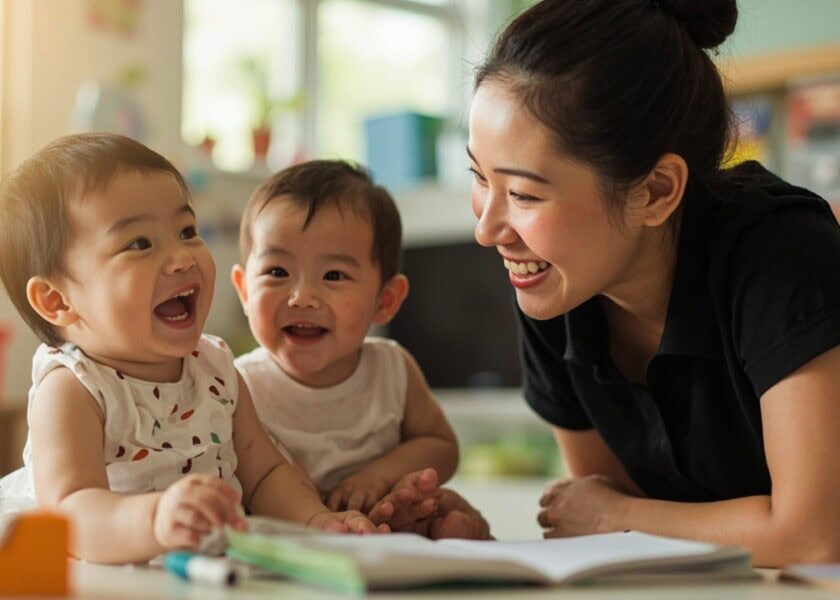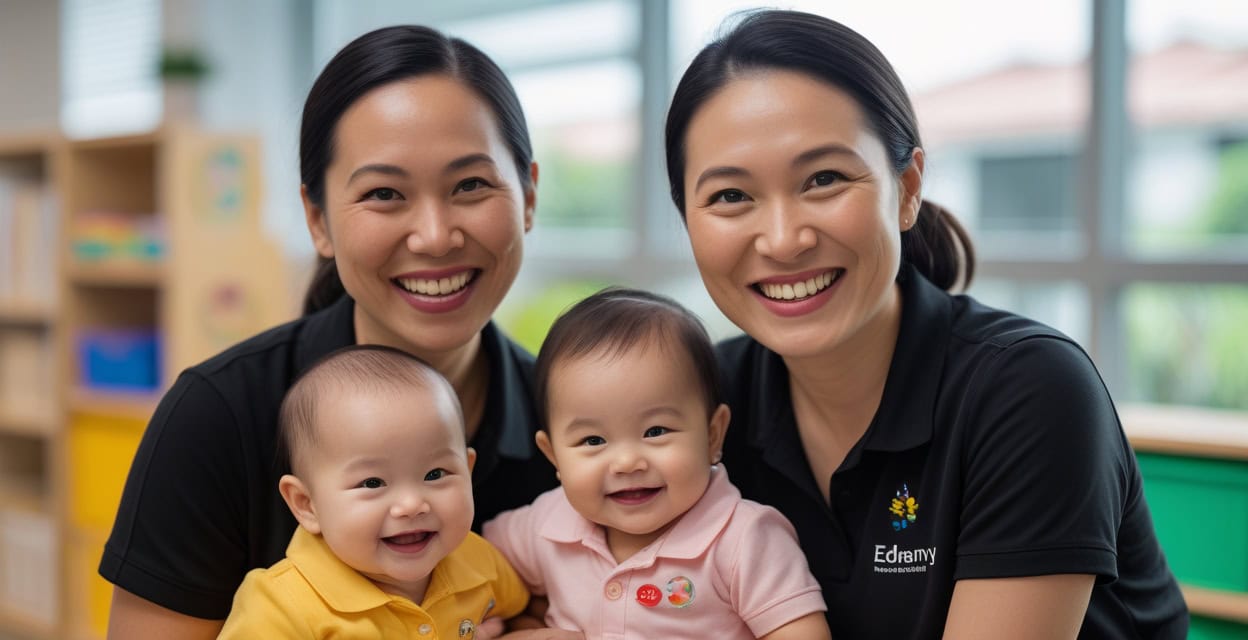
Cradling the First Thousand Days EduNanny Building a Public Infrastructure of Attachment Learning and Joy Across Singapore

Introduction
In this long-form exploration, we channel the voice of a world-class EduNanny editor—grounded in the rigor of developmental science and inspired by Singapore’s communal spirit. This article expands on a powerful vision for infant care: not merely a service, but a national infrastructure that nurtures secure attachment, steady learning, and joyful growth in the first thousand days. It translates a speech into practical guidance for parents, caregivers, and educators who share the mission of cradle-to-career excellence.

Introduction to EduNanny
EduNanny is a simple yet transformative idea: take the best of developmental science and the best of Singapore’s community spirit, then deliver infant care that is safe, joyful, and deeply human. We operate centre-based studios and home-based micro-settings across the island so that care is not only excellent, but also near, familiar, and dependable for families. We keep an ultra-low ratio—one caring adult to three infants—because secure attachment isn’t an afterthought; it’s the foundation.
We open when working families open their laptops—Monday to Friday, 7am to 7pm—and we’re present where families actually live and commute. We design modern layouts that are calm, observable, and purpose-built for infant safety. We lean on innovation, including CCTV in care spaces, not as a substitute for trust but as a window into it. We keep fees accessible—affordable from $33/day—with payments eligible through CDA/Baby Bonus. We are EduNanny by BUTLER, participating in the ECDA Childminding Pilot as a National Social Initiative with a Maximum Employment Mandate, because when we invest in infants, we invest in caregivers, neighborhoods, and social mobility.
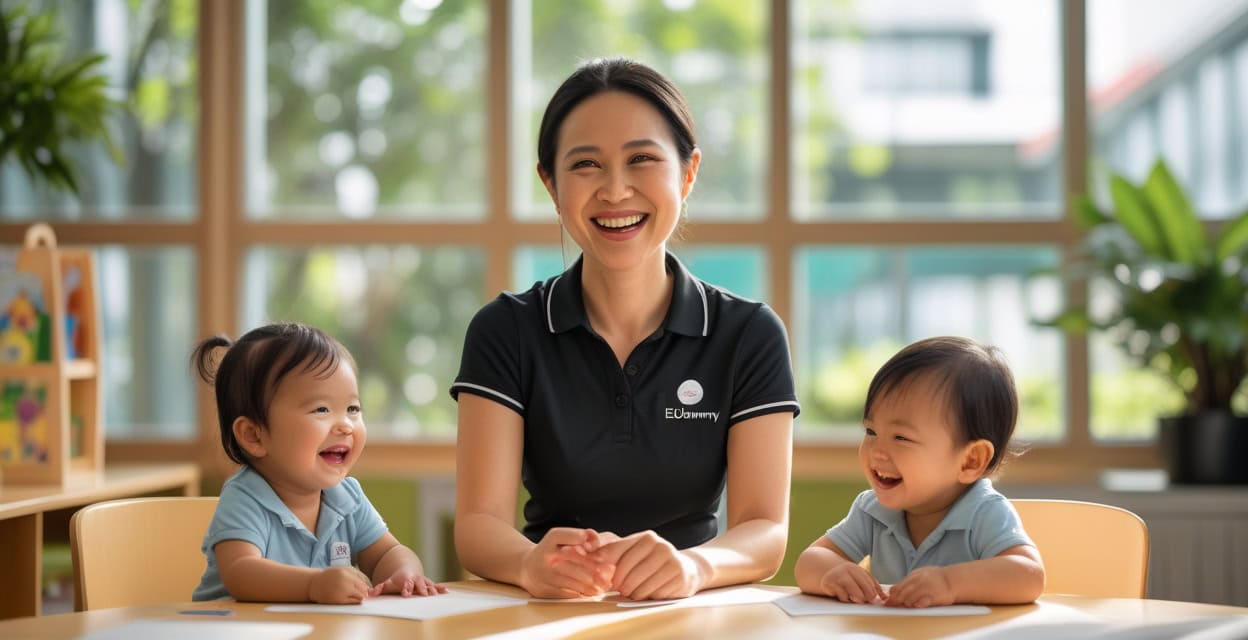
How EduNanny makes infant care and childminding great in Singapore
- Quality you can see: purpose-built spaces, respectful routines, and evidence-informed practice.
- Convenience with dignity: centre-based and home-based options, and distance support for parents who need guidance between visits.
- Safety with transparency: modern layouts, rigorous protocols, and innovation like CCTV for partnership and peace of mind.
- A real village: islandwide presence, near-home community premises, and caregivers trained to be anchors of attachment, language, and culture.

Five ideas at the heart of our practice
1) Attachment is the engine of intelligence
Before words, infants learn “the rules of the world” through relationship: “When I cry, someone comes. When I reach, someone notices.” This continuity of care is the soil from which curiosity, self-regulation, and resilience grow. We draw from Bowlby’s attachment science, Pikler’s respectful caregiving, and Erikson’s stages of trust and autonomy to structure days around warm, predictable touchpoints:
- Greet, narrate, pause: Every caregiving moment—diapering, feeding, settling—is unhurried, described in simple language, and full of eye contact.
- One adult, three tiny learners: Our 1:3 ratio is not a marketing line; it’s the margin a caregiver needs to notice cues, build attunement, and respond with consistency.
- Continuity matters: As far as possible, infants see the same familiar faces; security is built in repetition, not novelty.
Practical tips for parents: request a consistent caregiver schedule, observe how staff narrate daily routines to babies, and watch how caregivers respond to early cues of distress or curiosity. For caregivers, build daily check-ins with families, share a simple “today I noticed…” message, and maintain a predictable routine that babies can anticipate.
2) Safety is invisible architecture
Safety isn’t only rules—it is design, choreography, and culture.
- Design: Clear sightlines, grounded electrical outlets, separate zones for sleep, play, and feeding; floor-level exploration with soft edges; modern layouts that are visually open and calm. CCTV provides a transparent layer of assurance and continuous improvement.
- Practice: Safe sleep on a firm, clear surface; routine checks; correct bottle preparation and labeling; hand hygiene that is modeled and taught; daily sanitation. We practice preventive thinking and ritualized checklists so that safety is a habit, not an exception.
- Culture: A speak-up climate where any caregiver—new or senior—has both duty and permission to halt a practice that feels unsafe; parent partnership with open dialogue about routines and preferences; regular drills and reviews.
Practical tip for families: inquire about how safety drills are conducted, how incidents are logged, and how families are updated after any safety review. For educators, implement daily safety briefings, rotate responsibilities to prevent drift, and involve families in routine reviews.
3) Learning is what happens while we are living
Infants don’t need “extra”; they need everyday life done beautifully. Montessori showed us the dignity of independence; Piaget mapped the sensorimotor world; Vygotsky reminded us that growth happens in the space between child and guide. At EduNanny, we translate that into daily micro-rituals:
- Care as curriculum: Mealtimes for language, diaper changes for body awareness and turn-taking, washing hands for cause-and-effect and sequence.
- Play as serious work: Treasure baskets for sensory exploration; peekaboo for object permanence; simple cause-and-effect toys; soft books for pre-literacy; songs for pattern and memory.
- Outdoors as a second classroom: Pram walks to local parks when weather permits; noticing light, wind, and birds; narrating the neighborhood in multiple languages, depending on context and family preference.
- Scaffolding, not speeding: We follow the infant’s lead, offer one next challenge, and allow mastery to take root before moving on.
Practical tips for parents: document and share daily routines that support learning through everyday activities at home; request guidance on language exposure, music and rhythm, and age-appropriate problem-solving challenges. For caregivers, design environments that invite exploration, provide materials that align with the child’s current stage, and reflect family language preferences.
4) Joy is a metric we measure
Well-being is not a vibe; it is observable. We keep a calm, predictable day while reading each infant’s individual rhythm. Among our indicators:
- Engagement moments: track minutes of purposeful floor time, rich face-to-face interaction, and shared attention.
- Co-regulation in action: monitor how quickly distress is acknowledged and soothed; note “coo-to-cry” ratios over time as a proxy for secure communication.
- Sleep and feed quality: observe patterns, not just quantities; protect nap environments; respect family preferences and medical guidance.
- Sunlight and sensory balance: prioritize natural light; rotate textures and sounds; ensure daily movement for vestibular development.
- Smile lines and soft shoulders: caregivers who sing, narrate, and smile—and infants who mirror those expressions—are the clearest signal of a wholesome climate.
Practical tip for parents: keep a simple daily mood log for your baby, noting moments of calm alertness, joy during interaction, and periods of distress. Share this with your EduNanny team to fine-tune routines. For staff, implement a weekly “joy audit” to review engagement, comfort, and emotional safety across spaces.
5) Childminders are civic infrastructure
A great childminder is both artisan and public servant. They hold the nation’s future in their arms while enabling today’s workforce to thrive.
- Social purpose: By operating islandwide and near-home, we reduce commute stress, increase parent-child time, and strengthen neighborhood bonds.
- Economic dignity: The Maximum Employment Mandate grows meaningful, skilled jobs—especially for locals who bring cultural fluency and community pride.
- Inclusion and access: Centre-Based Childminding and Home Base Childminding options meet families where they are; fees payable by CDA/Baby Bonus lower barriers so opportunity begins early and fairly.
Practical tip for families: look for providers that demonstrate local hiring, community partnerships, and inclusive access policies. For educators, advocate for sustainable funding models, pathways to professional certification, and recognition of caregiving as a valued vocation.
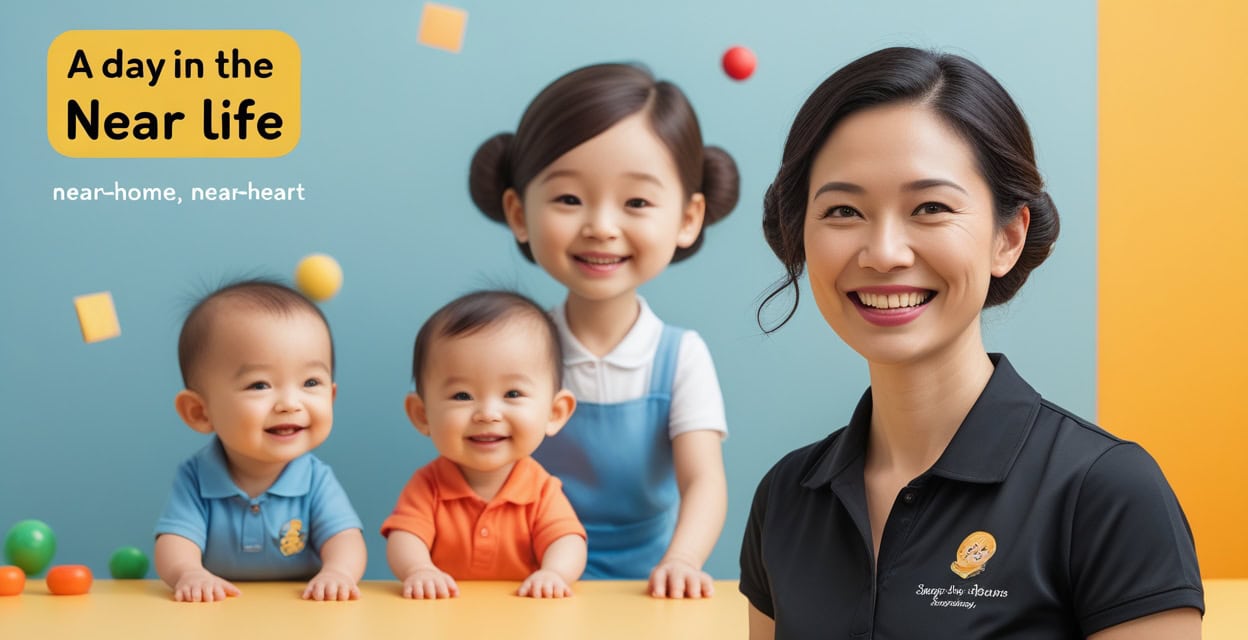
A day in the life: near-home, near-heart
Imagine a Tuesday in Jurong. Mei arrives at 7:30am with her eight-month-old, Kai. She hands him to the same caregiver who has greeted him for weeks. They share a quick update; preferences noted, schedule aligned. The room is bright but serene. On the floor is a safe, inviting space arranged at infant height—mirrors low enough to discover a face, small baskets of safe everyday objects for touch and sound.
Kai explores a wooden ring, then gazes to check if his caregiver is noticing. She is. They exchange a smile; a conversation of glances unfolds. Later, it’s diapering time—slow, narrated, respectful. After a warm feed, Kai drowses in a quiet sleep area, with a caregiver nearby and CCTV providing visibility. In the afternoon, a pram walk under shade trees: describe the wind, name the colors, listen to birds. Back inside, soft singing and finger play. By early evening, Mei returns. She sees her child’s calm alertness, receives a brief, clear update, and heads home with the feeling every parent deserves: my child was known today.
This vignette illustrates a day designed around attachment, safety, learning, and joy—delivered near where families live and work, with the support of trained caregivers who treat each child as a unique individual worth knowing deeply.
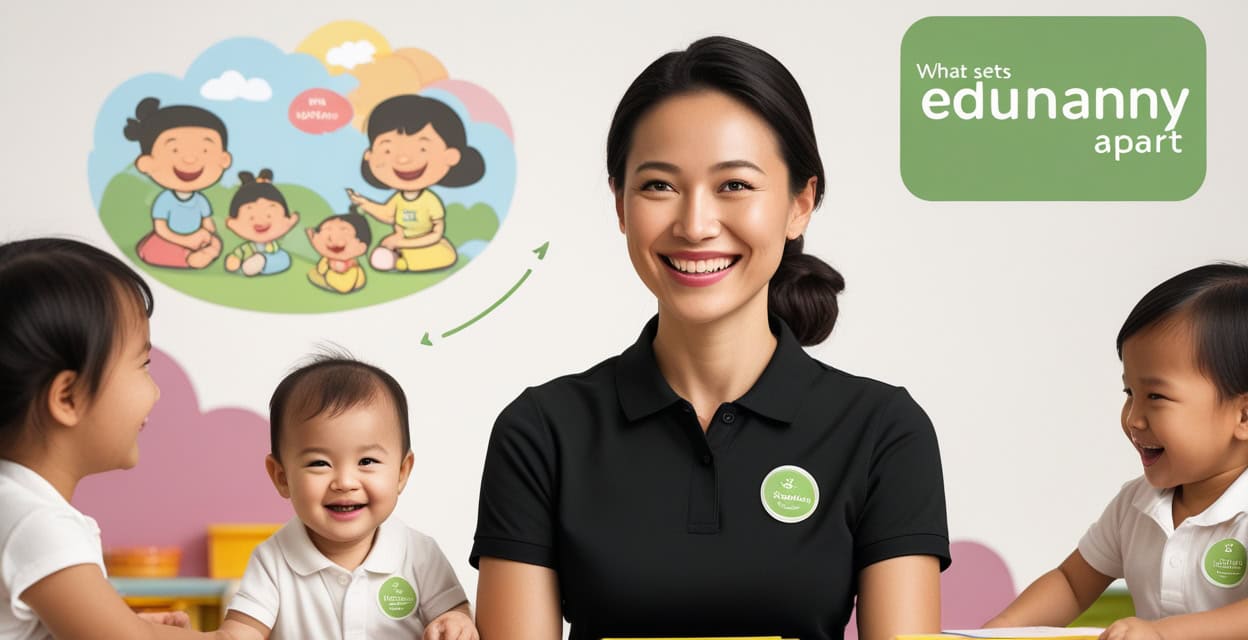
What sets EduNanny apart
- Excellence and Quality: Evidence-led pedagogy, reflective supervision, and compassionate practice.
- Centre-Based and Home-Based: Choose the environment that fits your family; both meet the same standards of safety and dignity.
- Distance Support: Guidance, check-ins, and transition coaching for families between sessions.
- Convenience: Monday to Friday, 7am to 7pm, islandwide Singapore, in community and home premises.
- Ultra-Low Ratio: 1 caregiver to 3 infants—enough time to notice, respond, and bond.
- Innovation and Safety: CCTV for transparency, modern layouts for supervision and serenity, robust safety protocols.
- Affordability with Access: From $33/day; fees payable by CDA/Baby Bonus; part of a National Social Initiative under the ECDA Childminding Pilot.
- Purpose and Jobs: EduNanny by BUTLER, advancing a Maximum Employment Mandate to grow skilled caregiving as a respected profession.
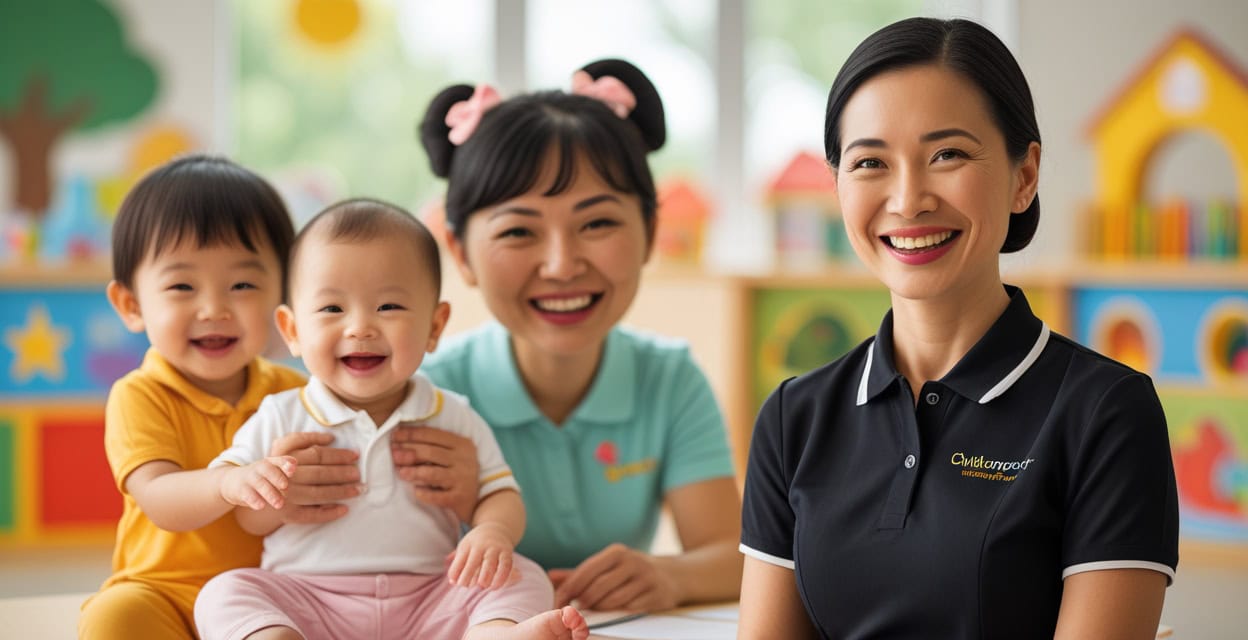
Four promises we make to every family
- Presence: Your baby will be seen, heard, and held by someone who knows them.
- Predictability: Routines will be stable, warm, and respectful—never rushed when it matters most.
- Partnership: You are the expert on your child; we listen, align, and communicate clearly.
- Progress: We observe, document, and celebrate growth—not to hurry it, but to honor it.

Concluding call: who, what, when, where, and how childminding matters
Who: Infants who need secure attachment to flourish; Parents who need trusted partners to work, to rest, and to thrive; Childminders whose craft and character knit the social fabric.
What: Childminding is not minding time; it is minding development. It is attachment, health, safety, and early learning delivered through everyday care done beautifully.
When: Now, in the first thousand days—when neural pathways are most plastic, when trust is easiest to build and hardest to replace.
Where: In center studios designed for visibility and calm; in home-based settings that feel like a grandparent’s living room done right; across Singapore, near MRT lines and void decks, in the heart of our communities.
How: With an ultra-low 1:3 ratio and continuity of caregivers; with safety designed into every corner and culture; with play, language, and caregiving woven seamlessly; with affordability and access—CDA/Baby Bonus accepted—so no family stands at the threshold and turns away; with transparency—CCTV, open communication, and respectful documentation; with purpose—creating dignified jobs while cultivating secure, curious, compassionate children.

The philosophy and purpose of EduNanny Childminding
Our philosophy is simple: the human relationship is the curriculum. Safety preserves dignity. Joy unlocks learning. Predictability builds courage. And community gives families the net beneath every leap.
Our purpose is public: to help Singapore raise a generation that is grounded, gracious, and ready—children who will become adults that can listen before they speak, collaborate without losing themselves, and lead without forgetting the smallest voice in the room.
To parents deciding where to place your most precious trust: you deserve excellence without compromise and care without pretence. To caregivers contemplating this vocation: your work is not a job on the way to something else; it is the work upon which everything else depends.
If this vision resonates, come see it with your own eyes. Visit EduNanny.com or Childminding.EduNanny.com. Speak with our team. Tour a centre. Meet a home-based childminder. Ask about the ECDA Childminding Pilot, islandwide availability Monday to Friday, 7am to 7pm, affordable options from $33/day, and paying fees via CDA/Baby Bonus.
Let us cradle the first thousand days together—with presence, pedagogy, and purpose—so that when our children take their first confident steps into Singapore’s future, they are not stepping alone, but carried by the quiet excellence that shaped their earliest mornings.

Conclusion
EduNanny invites families to imagine infant care as a durable public good: near-home, near-heart, and anchored in attachment, safety, learning, and joy. By combining ultra-low caregiver ratios, transparent safety practices, and a learning-forward daily rhythm, EduNanny aims to turn the first thousand days into a foundation for lifelong curiosity, resilience, and empathy. This is a call to parents, caregivers, educators, and communities to partner in stewarding a generation that will lead with listening, collaboration, and grace. Explore EduNanny, participate in the ECDA pilot, and consider how your family can benefit from care that treats the child as a central citizen of the community.
Visit EduNanny.com or Childminding.EduNanny.com to learn more, schedule a tour, or speak with a team member about islandwide availability, 7am–7pm hours, and affordable options.
[#keyword1, #keyword2, #keyword3, #keyword4, #keyword5]