
A Public Covenant for Infants EduNanny 1 to 3 Pilot December 2024 to December 2027 Singapore

Introduction: A Covenant for Singapore’s Tomorrow
Good evening, parents, grandparents, caregivers, and partners in the making of Singapore’s tomorrow. Thank you for gathering to consider something both simple and profound: how we cradle the first thousand days of life. In those days, a gentle voice, a predictable rhythm, and a vigilant pair of eyes are not luxuries; they are the architecture of trust. Tonight, EduNanny presents a bold, practical vision for infant care that recognises families’ real-world needs while elevating national standards. Welcome to EduNanny Infant Childminding Service—an ECDA-appointed operator under Singapore’s three‑year Childminding Pilot (1 December 2024 to 31 December 2027)—designed to deliver safe, joyful, and deeply human care for infants aged 2 to 18 months, near home and heart.

What is EduNanny, in one sentence?
We are a national social initiative—EduNanny by BUTLER—that brings professional, ultra‑low‑ratio childminding to community micro‑pods and carefully prepared home settings islandwide, Monday to Friday, 7am to 7pm, so that Singaporean families can count on care that is as trustworthy as it is affordable.

How EduNanny makes infant care and childminding work—beautifully—in Singapore
1) Ultra Low Density, Ultra Low Ratio: 1 childminder to 3 infants (1:3)
Fewer infants per adult means more eye contact, more language, and more responsive moments—the raw material of secure attachment and healthy brain development. Actionable implications for families include clearer daily logs, tailored cueing, and timely intervention for each child. Practical example: a daily observation log that captures feeding cues, vocalisations, and early signs of fatigue, shared with parents in real time via the EduNanny Concierge portal.
2) Care closer to families: centre‑based micro‑pods and home‑based settings
Reducing travel time preserves family routines and eases logistics for siblings. Practical steps for parents include planning a trial week in a nearby micro‑pod and mapping a back‑up site for emergencies. For caregivers, this proximity means stronger neighbourhood networks, easier collaboration with parents, and better continuity of care when schedules shift.
3) Transparency into the walls: CCTV and privacy‑respecting monitoring
Live or recorded viewing in community spaces (required) and privacy‑respecting CCTV in home‑based settings by agreement during hours of care create calm, not guesswork. Practical guidance for families: request a short orientation on what is recorded, who can access footage, and how incidents are documented. For carers: establish clear handover rituals and privacy boundaries to protect everyone’s dignity.
4) Recruits who care; certified for competence; supervised for excellence
EduNanny prioritises character alongside competence. Childminders complete mandatory training (infant first aid, basic infant care, food safety) before deployment, and ECDA conducts background checks on home occupants who regularly access the space. Ongoing observations, uplift coaching, and incident‑ready protocols ensure consistency. Actionable tip for families: ask to review a sample training checklist and supervision schedule during your site visit.
5) Health‑first governance: No Sick Child Policy
To safeguard infants and staff, unwell infants rest at home, with guidance from our team. When needed, we help families find alternative arrangements. Practical outcome: a healthier community where common illnesses don’t derail a child’s development or a family’s work commitments.
6) Design that teaches: rooms built for gentle growth
Modern layouts foster safe exploration: floor‑level movement spaces, calm sleep zones with evidence‑based routines, open shelving for purposeful play, and infant‑friendly materials. Practical action—parents can request a room‑ready checklist for small spaces and ask about routines that support self‑soothing and safe mobility.
7) Time and budget respect: predictable, affordable care
Monday–Friday, 7am–7pm, islandwide; half‑day (5 hours) or full‑day (10 hours) blocks. Affordable from $33/day (before GST) for full‑day subsidised care; $16.50 (before GST) for half‑day subsidised care. Subsidies may be applied via CDA (Baby Bonus) for subsidised hours. Actionable tip: bring a projected three‑month calendar to the site visit to compare blocks, costs, and potential government assistance.
8) Layered safety: people, place, and process
Safety isn’t luck; it’s a practice. Trained adults, hazard‑controlled environments, and clear routines—plus optional home‑site CCTV and required CCTV in community spaces—create resilient routines. Parents can observe handover procedures, while care teams maintain daily checklists for hazards, hygiene, and emergency drills.
9) Dignity in caregiving: the value of skilled, respected work
The pilot activates skilled, background‑checked childminders across the heartlands, creating meaningful, regulated jobs while raising national standards of infant care. For families, this translates to reliable, professional partners in their child’s growth journey—and for communities, stronger employment pipelines in a crucial early‑years sector.
10) Accessibility and ease: the EduNanny Concierge
An EduNanny Concierge team coordinates matching, site visits, onboarding, and ongoing support. The goal is that questions never wait and every family feels heard from first hello to first drop‑off.
Five cornerstones of our infant pedagogy and practice
1) Attachment Architecture: a secure base for exploration
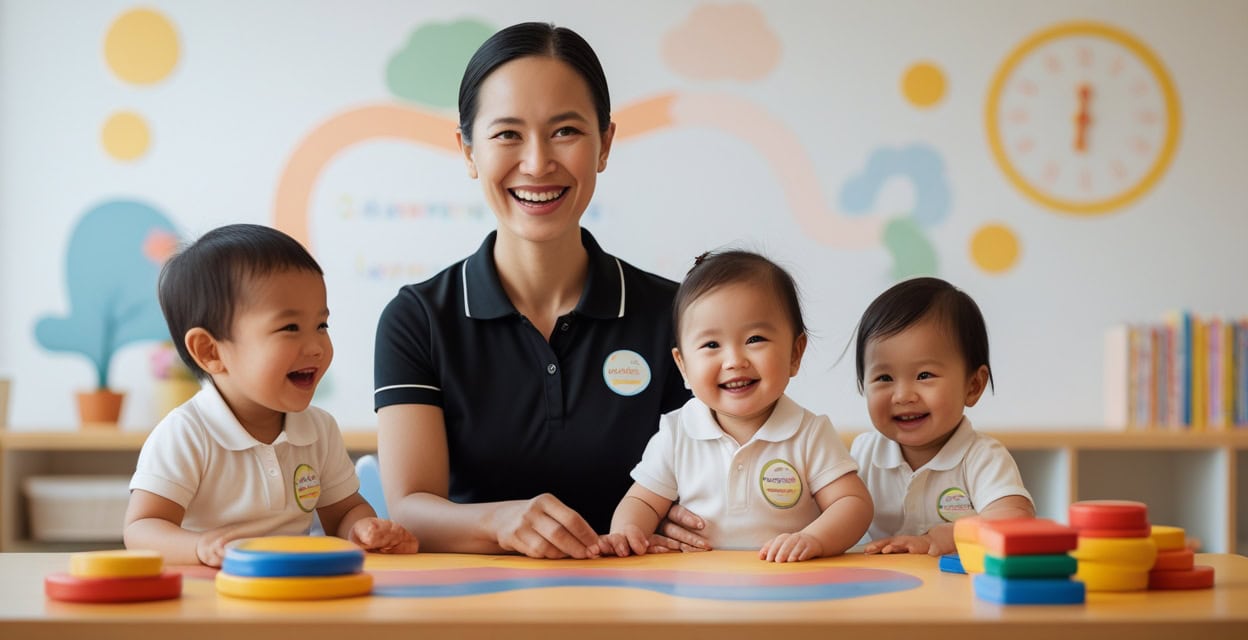
With a 1:3 ratio, a childminder can truly notice each infant’s cues—feeding signals, babble, facial expressions—and offer steady, comforting touch. This is where autonomy begins: first you attach, then you venture. Practical strategies include ritualized transitions (e.g., a hand‑over song), consistent greeting gestures, and a daily “feelings map” shared with parents to track emotional climate and build trust across days.
2) The Prepared Micro‑Environment: movement before milestones
Infants learn through space that invites movement rather than tasks that push milestones. Practical design tips: assign floor‑level movement spaces, designate a calm sleep zone with a stable routine, and stock open shelves with safe, varied textures. Educators model safe handling during floor time, encourage tummy time with age‑appropriate tummy‑time mats, and rotate stimuli to sustain curiosity without overstimulation.
3) Rhythm and Responsive Care: brains love predictability
Predictable cycles—eat, play, sleep—anchor infant regulation. Implement safe sleep practices (firm mattresses, no loose bedding, face visible, back to sleep), calm feeding rituals, and unhurried nappy changes that double as language moments. A consistent routine reduces cortisol, freeing energy for growth, language, and social connection.
4) Safety by Design: layers that catch what eyes might miss
Safety rests on three pillars: People (certified, trained caregivers), Place (gated zones, outlet covers, non‑toxic materials, sanitisation protocols), and Process (headcounts, handovers, health screens, incident documentation). CCTV is a transparent safety feature in community spaces and may be arranged in homes by agreement. The aim is to embed safety into daily habits rather than rely on luck or sporadic checks.
5) Joy as a Learning Metric: happiness drives development
We measure success through soft indicators that predict hard outcomes: relaxed drop‑offs, longer engaged play, blossoming social curiosity, and the confident first attempts at new skills. Joy is not a nicety—it is fuel for attention, memory, and language; it turns routine into meaningful opportunities for learning and trust.

Why childminders matter—and the purpose behind our craft
A childminder is not “help.” A childminder is a steady adult who co‑authors the infant’s first stories about the world: Is it safe? Do people come back? Does my voice matter? In our model, childminders:
- Hold the emotional climate of the day, so infants can do the work of growing.
- Partner with parents as equals—sharing observations, aligning routines, and co‑creating plans for feeding, sleep, and play.
- Keep culture alive—songs from a grandparent’s childhood, greetings in a family’s home language, small rituals that tell a baby: you belong here.

Benefits at a glance
- Ultra Low Density, Ultra Low Ratio: 1:3 infant‑to‑childminder
- CCTV Provided: required in community spaces; available in caregiving areas of home settings by agreement
- Certified, background‑checked childminders; ECDA background checks extend to regular home occupants
- Mandatory training: infant first aid, basic infant care, food safety
- No Sick Child Policy to protect community health
- National initiative under the ECDA Childminding Pilot (Dec 2024–Dec 2027)
- Centre‑based (community micro‑pods) and Home‑based options
- Islandwide availability, Monday–Friday, 7am–7pm
- Flexible half‑day (5 hours) and full‑day (10 hours) blocks
- Affordable from $33/day (before GST) for full‑day subsidised care; $16.50 (before GST) for half‑day
- Fees payable using CDA (Baby Bonus) for subsidised hours
- Modern layouts and materials curated for infant development
- EduNanny Concierge support and incident‑ready protocols
- A national social commitment to quality, employment, and community trust

Who is eligible, and how the pilot works
- Infants must be Singapore Citizens aged 2 to 18 months
- Infants must not be concurrently enrolled in ECDA‑licensed infant care centres
- Parents choose the number of days per week and the care blocks (half‑day or full‑day) needed between 7am and 7pm, Mondays to Fridays, excluding public holidays
- Services are delivered in childminders’ homes or community spaces, with a maximum of three infants per childminder at any time

A day with EduNanny: what it feels like
You arrive at a nearby micro‑pod or approved home setting. The room is calm; light is soft. Your childminder greets your baby by name, mirrors their expression, and checks your notes for the day. A predictable rhythm unfolds: an unhurried feed, floor‑time exploration, songs and fingerplay, rest in a safe sleep zone, then outdoor air if weather permits. A photo arrives showing your baby tracking a mobile, reaching for a rattle, or giggling at a peekaboo scarf. At pick‑up, you get a clear handover: feeds, sleeps, nappies, moods, and small wonders. Tomorrow has a shape. Your child is learning to trust it.
How to sign up
- Visit https://edunanny.com/edunanny-ecda-childminding-service/ and complete the form, or enquire via WhatsApp from the same page.
- Our EduNanny Concierge Team will respond, understand your needs, and propose a match—home‑based or community micro‑pod—near you.
- Confirm your appointment for a site visit. Meet the childminder, see the environment, discuss routines, health policies, and optional home‑site CCTV arrangements.
- Enrol, schedule your preferred blocks, and begin. We will walk with you from first hello to first drop‑off.

Why, where, when, who, and how childminding matters now
Why: Because the first thousand days write the prologue to every life. Consistent, loving care builds the scaffolds of attention, language, self‑regulation, and resilience. Where: Near home, in our heartland communities and approved home settings—so families spend time bonding, not commuting. When: Monday to Friday, 7am to 7pm—the working hours that shape family rhythms. Who: Certified, background‑checked EduNanny childminders under ECDA’s national pilot; infants aged 2 to 18 months; parents who deserve both peace of mind and partnership. How: With ultra‑low ratios, transparent environments, safety layered by design, responsive pedagogy, and affordability supported by national subsidies and CDA.

The EduNanny philosophy and promise
We believe the measure of a society is how it greets its youngest. Our promise is simple: presence you can feel, pedagogy you can trust, and processes that never leave safety to chance. We are here to make working life possible without compromising a child’s right to steady love—and to do so as a public good, not a private luxury.
Practical guidance for families: making the most of EduNanny
- Before the first visit: prepare a three‑month calendar noting work patterns, key events, and any special routines at home (language spoken, bedtime ritual, dietary considerations). Share this with your EduNanny Concierge and the prospective childminder during the site visit.
- During the site visit: observe how a childminder builds warmth without rushing the infant, how they respond to cues, and how they structure the day. Ask to see example daily logs and a sample safety routine (handovers, feed times, and sleep checks).
- Partnering with your childminder: establish a short, shared “communication plan” for daily notes, weekly observations, and monthly growth highlights. Create a simple template your family will read and your childminder will update.
- Safety routines you can expect: a clearly defined no‑touch handover, visible sleep zones, and a one‑step process for reporting concerns. Validate CCTV arrangements and ensure you understand privacy policies and data handling.
- Supporting infant development at home: extend learning through age‑appropriate activities such as daily picture‑book sessions, language games, and safe, guided exploration of textures and objects. Consistency between home and EduNanny routines reinforces secure attachment.
A practical site‑visit checklist for families
- Is the space clean, well lit, and organized with safe, age‑appropriate furnishings?
- Are the infants’ spaces clearly separated from adults’ areas to reduce noise and distractions?
- Is there a calm, predictable daily routine visible or explainable—mealtimes, nap times, play, and caregiver transitions?
- Is there documented safety equipment: outlet covers, secure storage for hazardous items, and accessible first‑aid materials?
- Are there clear processes for handovers, health checks, and incident reporting?
- What is the policy on CCTV usage, privacy, and data access?
- How is dietary and feeding safety handled, including storage and preparation of infant foods?
- What training and background checks do the childminders hold, and how is ongoing coaching delivered?

Conclusion: A future where every baby’s beginning is seen and supported
This vision is more than a service; it is a covenant with families: that Singapore’s infants will be seen, soothed, secure, and ready to explore; that parents will be partners, not bystanders; and that care will be both excellent and accessible. If EduNanny’s approach resonates with your family’s values and needs, we invite you to engage—book a site visit, meet a caregiver, and begin a journey of trust and growth for your child.
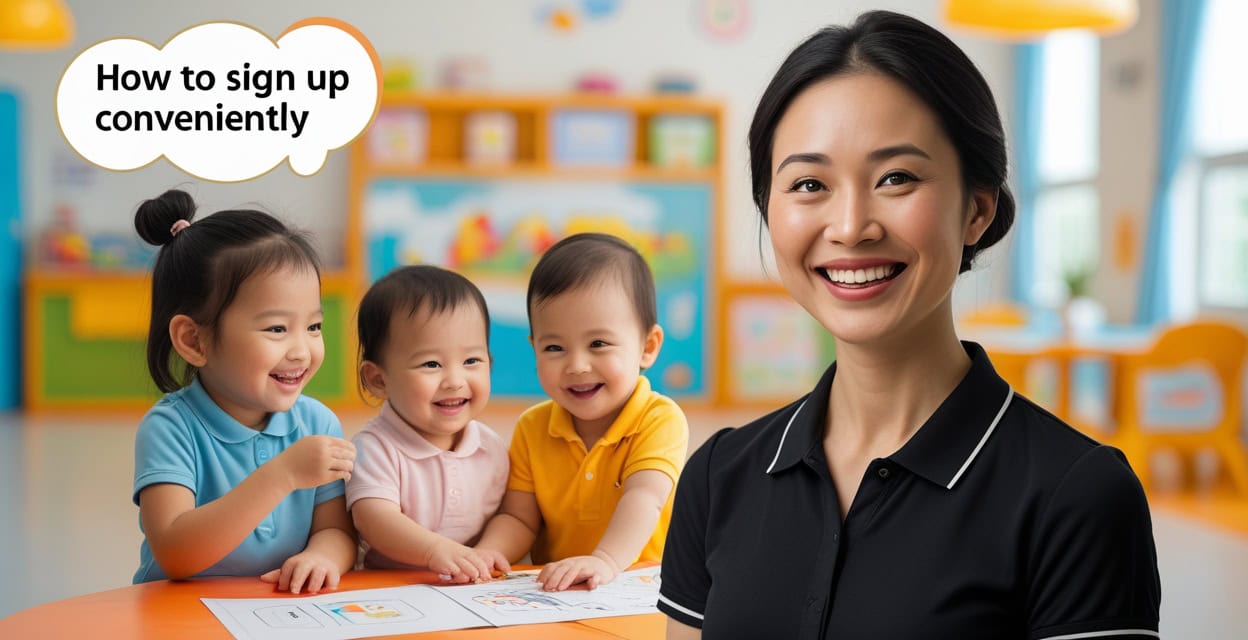
How to sign up conveniently
- Visit the EduNanny page and complete the inquiry form or use the WhatsApp option from the same page.
- Speak with a Concierge who will outline a proposed match—home‑based or community micro‑pod—near you.
- Schedule and attend a site visit to meet the childminder, review the environment, and discuss routines and policies.
- Enroll, select your care blocks, and begin your EduNanny journey with ongoing support.
From first cries to first confidence, let’s build a Singapore where every baby’s beginning is safe, joyful, and deeply human. Thank you.
SEO keywords: [#EduNannySingapore, #InfantCareSingapore, #ECDAPilot, #UltraLowRatio, #HomeBasedChildcareSingapore]