Song and Picture Book Play for a Baby Around 9 Months
EDUNANNY® BY BUTLER · PLAY AND LEARNING
For a short shared activity with your baby around nine months, pair one familiar song phrase with one picture. Sing, show the picture and leave room for a look, sound or reach.
You can stay with the same page, repeat the phrase or finish when interest changes. The activity gives you a simple way to share a book and a song, with your baby’s contribution shaping what comes next.
Choose a pair that is easy for you to share
A familiar family song and a clear picture are enough to prepare. You might choose a sheep picture for a phrase from a familiar nursery rhyme, or a picture of an everyday object you can name. Use words and a melody you are comfortable with.
Keep the choice simple: one page, one visible object and a short phrase. The example below connects a song about a sheep with a sheep picture. You can make your own pairing without buying a special book or turning the activity into a lesson.
UNICEF’s nine-month play guidance suggests sharing board books, naming objects a baby notices and following the baby’s signals. Those ideas inform this activity; the song-and-picture sequence is our own practical example.
Choose a durable book that suits your baby’s age and check it before use. Avoid loose pieces or damaged pages that can come away. Keep your baby comfortably supported according to their needs, with an adult close throughout, and hold the book where you can share the page.
For interactive or toy books, follow the age recommendations and product instructions. The Consumer Product Safety Office advises checking for damage and loose parts and keeping unsuitable older children’s toys away from younger children.
Try one phrase, one picture and a pause
Begin when your baby is comfortable and interested in sharing the moment. Keep your face visible alongside the book. Use a comfortable voice; you do not need a performance voice or an exact waiting time.
UNICEF’s baby-talk master class describes using ordinary language with repetition, slower speech and expressive faces. It also suggests describing book pictures during everyday interaction. You can bring that simplicity to the words around your song.
For an illustrative example, open a board book to a sheep picture and sing the familiar phrase “Baa, baa, black sheep”. Then pause before pointing to the picture and naming the sheep. The following choices help you connect the sound and picture without asking for a correct answer.
| Your turn | Try | Leave room for |
|---|---|---|
| Sing | TryOffer the short familiar phrase at a comfortable pace. | Leave room forYour baby listening, making a sound or choosing something else. |
| Pause | TryStop singing and notice what happens before adding more words. | Leave room forA response without a set number of seconds. |
| Show and name | TryKeep the page steady, point to the sheep and say its name. | Leave room forA look or reach, without expecting your baby to point or name it. |
| Reply or finish | TryAnswer a sound, acknowledge a look or let the exchange end. | Leave room forYour baby’s contribution changing the plan. |
The table offers adult choices. Your baby does not need to complete a sequence, remember the link or recognise the pictured object. Quiet watching can be part of the shared moment too.
Let the next contribution change your next turn
If your baby looks towards the sheep, you might say its name again and wait. If they make a sound, answer with a similar sound or a few warm words. If they reach, keep the page steady while you watch the contact with the book.
You can return to the familiar phrase when it still interests them. Repetition is an option, with room to stay quiet, turn to another page or put the book down. There is no required second round.
If your baby turns towards something else, lower the book and notice that interest. If they become unsettled, tired or uncomfortable, finish and attend to what they need. A change of focus does not tell you that the song or book has failed.
A nanny or another family member can use the same familiar pairing if it suits the moment. Share the book and song choice as a starting point, while leaving that caregiver free to follow the baby’s response.
Finish with room for ordinary care
A simple closing phrase, such as “All done”, can accompany putting the book away. You can finish after a short exchange rather than reaching the end of the book or waiting for another response.
If a note would help another caregiver, keep it factual. An illustrative note might say: “During the sheep song, baby looked towards the page and reached. We stopped when interest moved to another toy.” It records one moment without claiming new vocabulary or a developmental result.
One song-and-book exchange cannot assess hearing, communication or development. The CDC’s current nine-month guidance advises speaking with your child’s doctor if a milestone is missing, a skill has been lost or you have another concern. Ask about developmental screening rather than repeating this activity to settle the question.
Our developmental milestones guide explains the wider age-specific checklists and healthcare conversations. For an older child, the copy-and-echo game for toddlers around 13–18 months uses a familiar gesture as a different starting point.
Bring the familiar pair to the next comfortable moment
Keep a suitable book nearby and choose a phrase you already know. When you share it again, begin with your baby’s current interest rather than the response you remember from last time.
That is the practical payoff: one familiar sound, one picture and enough space to enjoy the exchange together. A look, sound, reach or comfortable ending can each shape a complete shared moment.
Sources and image credit
- UNICEF: Your baby’s developmental milestones at 9 months — board books, naming noticed objects and following play signals.
- UNICEF: Baby talk — ordinary repeated words, slower speech and expressive faces.
- CPSO: Safety Tips on Children Toys — age instructions and condition checks for interactive or toy books.
- CDC: Milestones by 9 Months — acting early on developmental concerns.
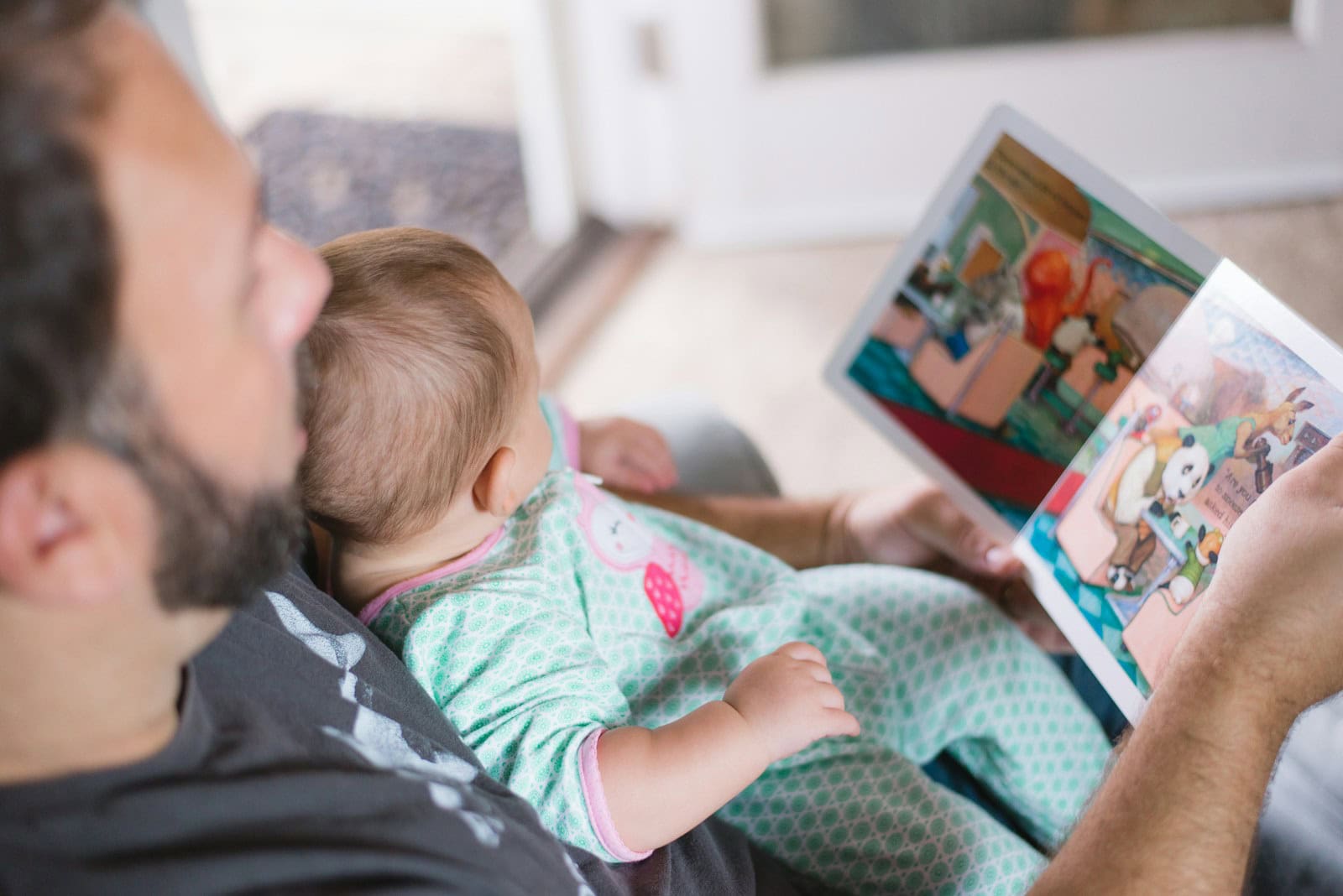
Stock photograph by Picsea on Unsplash, used under the Unsplash licence. An illustrative shared-book moment, not EduNanny staff or clients. The photograph does not establish the baby’s age or show the sheep-song example.