Baby Developmental Milestones: Birth to 24 Months
EDUNANNY® BY BUTLER · PARENT GUIDES
Notice the small steps. Celebrate the new ones. Ask for support when something concerns you.
A smile, a reaching hand or a first word can feel like a big moment. Developmental milestones help you notice how your baby moves, communicates, learns and connects. They also help you explain concerns to a healthcare professional.
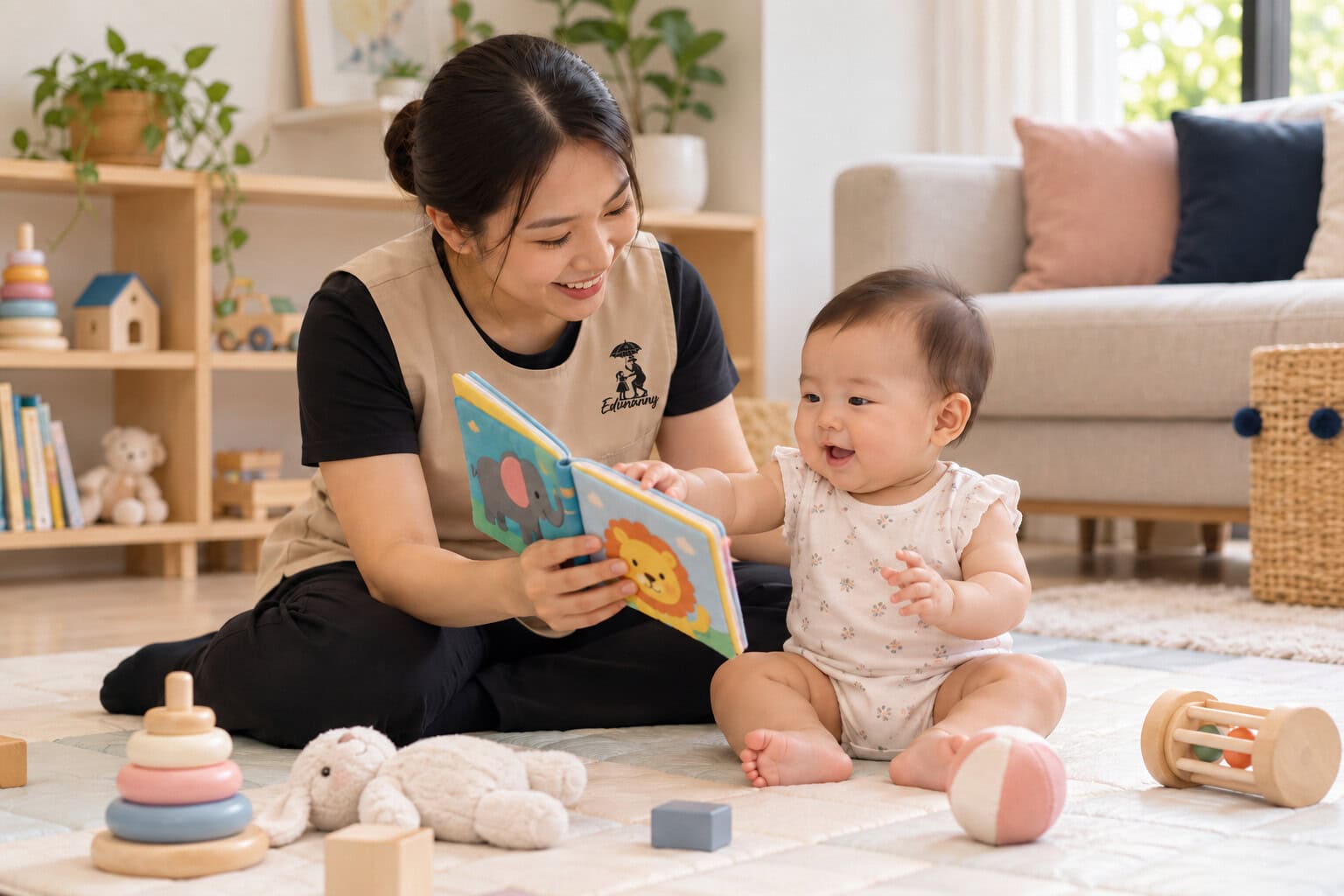
Featured image: an illustrative EduNanny service scene.
How to use developmental milestones
The CDC milestone checklists describe skills that at least 75% of children can do by a particular age. They support observation and conversations with a doctor; they do not replace a validated developmental screening or assessment.
Children develop at different rates, but that should not become a reason to dismiss a concern. If your child is missing a milestone, has lost a skill or something worries you, speak with their doctor. You do not need to wait for the next age on a chart.
The newborn weeks
In the first weeks, get to know your baby’s feeding, comfort and alert periods. Use the Singapore Child Health Booklet and your healthcare team’s advice to record observations and prepare for checks. The CDC age-based checklist series starts at two months.
If your baby was born prematurely
Ask the healthcare team how to use corrected age. The American Academy of Pediatrics advises using adjusted age when tracking development until about two years for a preterm baby. It accounts for the weeks your baby was born early; it does not remove the need to discuss concerns.
Selected milestones from 2 to 24 months
These examples are paraphrased from the CDC’s current age checklists. Select an age to read the complete checklist and activity suggestions. A short table cannot cover every developmental skill.
| By age | Movement and exploration | Communication and connection |
|---|---|---|
| 2 months | Lifts the head during tummy time and moves both arms and legs. | Smiles in response to you and makes sounds besides crying. |
| 4 months | Holds the head steady when carried; pushes onto forearms during tummy time. | Makes cooing sounds, responds with sounds and turns towards your voice. |
| 6 months | Rolls from tummy to back, reaches for a toy and supports sitting with the hands. | Recognises familiar people, laughs and takes turns making sounds. |
| 9 months | Sits without support, gets into sitting and transfers objects between hands. | Looks when their name is called, babbles repeated syllables and lifts arms to be picked up. |
| 12 months | Pulls up to stand, moves along furniture and picks up items with thumb and forefinger. | Waves goodbye, uses a special name for a parent and looks for a toy they saw you hide. |
| 15 months | Takes a few independent steps and stacks at least two small objects. | Attempts one or two words beyond parent names and points to request help. |
| 18 months | Walks independently, scribbles and tries to use a spoon. | Attempts three or more words beyond parent names, points to share interest and follows a one-step direction without a gesture. |
| 24 months | Runs, kicks a ball and walks up a few stairs with or without help. | Combines at least two words, points to two body parts when asked and notices when someone is upset. |
Support development through everyday care
Simple interactions can fit naturally between feeding, rest and comfort. Follow your baby’s interest and pause when they turn away, become tired or need a break.
- Talk and wait: Respond to a coo or gesture, then give your child time to respond again.
- Share a book: Name a picture, follow the child’s gaze and repeat familiar words.
- Make room to move: Offer safe floor play appropriate to your baby’s current ability.
- Try tummy time safely: Practise while your baby is awake and directly supervised. Place them on their back for sleep in a safe sleep space.
- Build on a familiar activity: Offer a safe toy to reach for, play a simple turn-taking game or name an object your child notices.
- Protect rest and connection: More activity is not always more useful. Notice when the child needs reassurance or a quieter moment.
For age-specific examples, use the linked CDC checklists and HealthHub’s play ideas for 6–12 months. Avoid small loose objects that could become choking hazards.
When to speak with a healthcare professional
Arrange a discussion if your child is missing a milestone on the relevant checklist or you are concerned about movement, response to sound, social connection, communication or feeding. A loss of a previously acquired skill deserves prompt attention. The CDC recommends acting early when concerns arise.
For example, discuss a child who is not sitting without support by nine months, not walking independently by 18 months or not combining two words by 24 months. These observations are reasons to seek guidance, not diagnoses. For a premature baby, ask how corrected age affects the assessment.
- Write down the skill or behaviour that concerns you and when you first noticed it.
- Bring the Child Health Booklet and any previous assessment information.
- Ask your nanny or childminder for specific observations from care.
- Ask whether a developmental screen, hearing check or specialist referral is appropriate.
Keep photos or short videos private and share them with your clinician when useful. Caregivers can describe observations; diagnosis and treatment planning belong with healthcare professionals.
Developmental checks in Singapore
Singapore’s Child Health Booklet sets out seven recommended Childhood Developmental Screening touchpoints: 4 weeks; 3 or 4 months; 6 months; 12 months; 18 months; 30 months; and 48 months. The second touchpoint depends on the vaccination schedule. See the official screening schedule and download the latest Child Health Booklet.
Check with your polyclinic or participating GP about appointments and applicable subsidies. CHAS information confirms subsidy eligibility for Singaporean children attending screening at the recommended touchpoints. Additional consultations or specialist services may have different charges.
If a concern remains after screening, ask the doctor about further assessment and suitable support. A routine appointment schedule should not delay a concern you have now.
Questions parents often ask
Must every baby crawl by a fixed age?
Crawling is not listed as a required item in the current CDC nine-month checklist. Look at the full pattern of movement and progress, and raise concerns with your doctor rather than deciding from crawling alone.
Can a childminder assess developmental delay?
A childminder can notice and share how your infant plays, moves and communicates. A developmental assessment requires an appropriate healthcare professional. Childminding does not replace medical screening or early intervention.
Can care guarantee earlier milestones?
No. Thoughtful care creates opportunities for practice and connection. It cannot guarantee when an individual child will walk or speak.
Care that notices your child.
EduNanny® by BUTLER plans everyday play around each child’s interests, routines and readiness, with parents as partners. Our pilot childminding service is for eligible Singapore Citizen infants aged 2–18 months.
Sources and further reading
References include the age-specific CDC checklists linked in the table, the AAP’s guidance on corrected age, HealthHub’s Child Health Booklet and CHAS screening information. This is general parent information; ask your child’s healthcare professional for individual advice.
Read our Singapore childcare options guide, learn about care close to home or browse all Parent Guides.