A Simple Copy and Echo Game for Toddlers
EDUNANNY® BY BUTLER · PLAY AND LEARNING
What can you do when your toddler watches a clap or a wave but does not copy it? Leave a little space, notice their response and make the next turn fit what they offer.
A copy-and-echo game needs no new toy. For toddlers around 13 to 18 months, one familiar gesture can be enough to begin a brief exchange. Watching, a partial movement or a sound can all be part of your shared play.
Choose an action already in your day
A wave at the door or a clap during a familiar song gives you a starting point. Choose a gentle action your toddler can see from a comfortable position, with you close by and the surrounding space clear. You can sit together; this game does not require standing, walking or a new physical skill.
HealthHub’s guide for toddlers aged 13 to 18 months includes imitating everyday adult activities and responding to music through clapping, dancing or singing. These are ideas for choosing a familiar action, rather than instructions to make a child perform on cue.
Keep your own movement small and easy to repeat. A slow wave may be more inviting than a string of gestures. If your toddler is occupied with something else, let that activity continue; you do not need to redirect their attention to start a game.
Show, pause and echo what happens
The following pattern is an editorial play suggestion. It is not a validated developmental assessment, and your toddler does not need to complete every step.
- Choose one action. Start with a familiar clap, wave or small hand movement.
- Show it once. Make the movement visible without moving your toddler’s hands for them. A short word such as “Wave” is enough if you want to name it.
- Pause. Leave room for a response instead of repeating the instruction immediately. There is no set waiting time.
- Echo a contribution. If your toddler makes a comfortable movement or sound, respond with a similar one. You can also acknowledge their attention with a smile or a few gentle words.
- Decide together what comes next. Repeat, make one small change or let the exchange end, according to what is happening now.
For example, you clap once during a song and then pause. Your toddler touches their hands together once. You return one gentle clap, then leave another pause. If they instead make a sound, you can return that sound. These are illustrative possibilities, not responses you should expect.
“Echo” means offering a connected reply, rather than correcting the movement. You do not need to say “Try again”, speed up the sequence or insist on two hands meeting. If your toddler simply watches, leave the moment open instead of supplying a series of prompts.
Harvard’s serve-and-return handout describes noticing a child’s focus, responding and allowing time for their next contribution. That general guidance informs the pauses here; the copy-and-echo pattern above is our own practical example, not Harvard’s five-step programme.
Let the response guide the next turn
A new gesture is an option, not a progression your toddler must achieve. If the familiar action still interests them, repeat it. If you both want a variation, change one detail, such as offering one wave instead of several. Avoid adding a faster rhythm and a new movement together.
| What happens | An optional reply | Leave room for |
|---|---|---|
| A partial clap | Return one gentle clap or a similar small movement. | Your toddler’s version of the action, without correction. |
| A sound instead | Echo the sound once and pause. | The exchange becoming a sound game. |
| Quiet watching | Acknowledge the shared moment without another instruction. | Watching or choosing something else. |
| Turning away or fussing | End the gesture game and attend to what needs attention. | A different activity, comfort or ordinary care. |
The table describes choices an adult can make. It does not translate one gesture into a definite feeling or need. Looking away can have different meanings; notice the wider context rather than assigning it a score.
Keep safety with the adult. Do not copy an unsafe action or introduce climbing, quick spins or balance challenges to make the game more exciting. A new movement is unnecessary when a comfortable hand gesture already works.
End without a score or a required second round
Harvard’s handout includes noticing when a child changes focus, lets go of an object, fusses or moves on. You can finish calmly when interest changes. There is no need to bring your toddler back to complete the pattern.
You do not need to write a report after play. If another caregiver would find a note useful, record what actually happened: “During the song, I waved once. Toddler made a sound; I echoed it. We stopped when they returned to the book.” This is an illustrative note, not a milestone result.
One play moment cannot assess development. If you have a concern about your toddler’s movement, hearing, communication or development more broadly, speak with their doctor. HealthHub’s guide explains when to seek professional advice; repeating this game is not a substitute for that conversation.
For a different setting, our short toddler sensory walk offers ways to follow shared interest outdoors. For younger babies, our baby turn-taking guide focuses on sounds, shared attention and naming an object.
One familiar gesture is enough
At the next natural play moment, offer a wave or clap, then pause. Let your toddler’s contribution shape the reply, including the choice to finish.
Sources and image credit
- HealthHub: caring for toddlers aged 13 to 18 months — everyday imitation, movement ideas and professional advice.
- Harvard: serve and return — noticing, responding, waiting and ending an exchange.
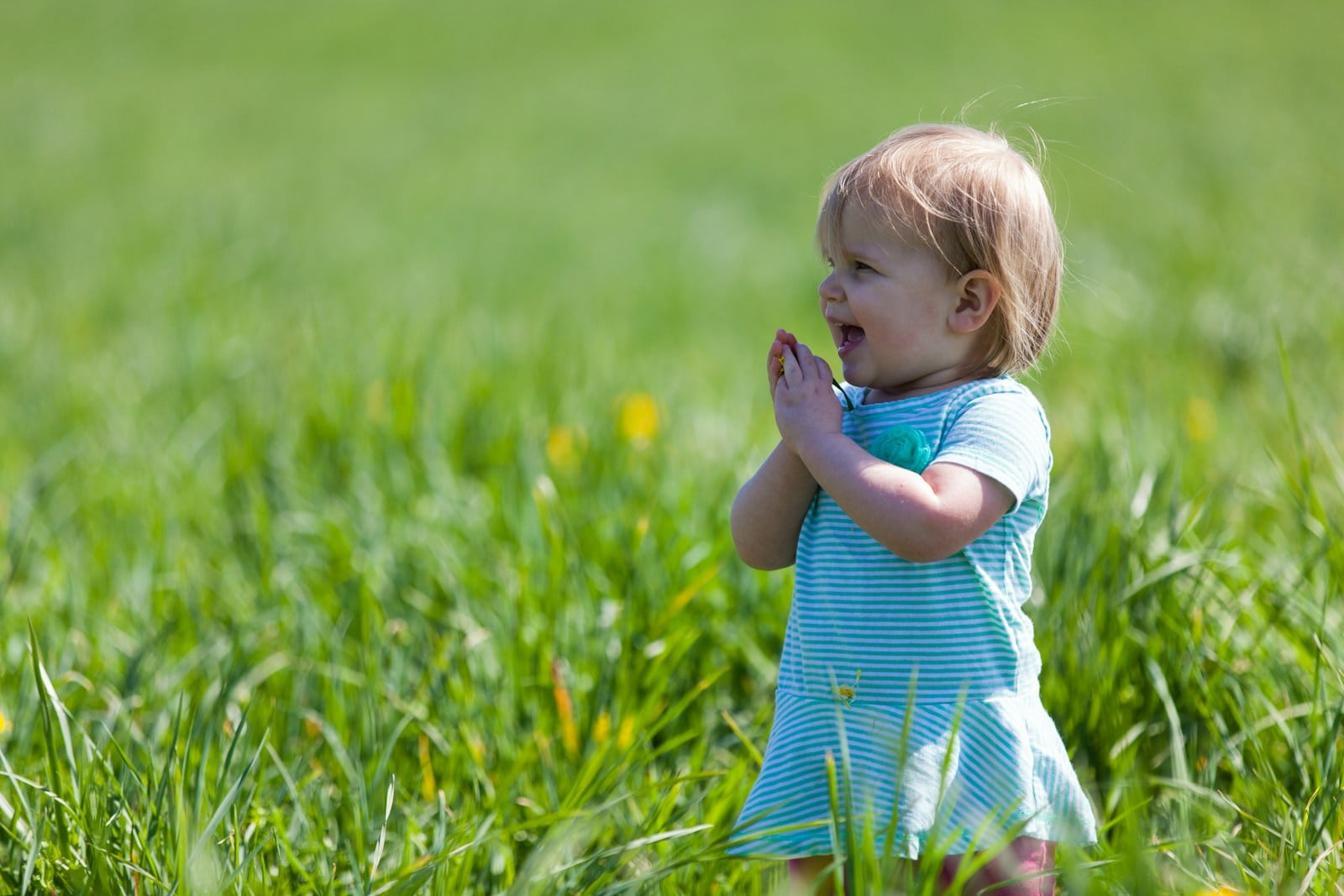
Featured stock photograph by Patrick Fore on Unsplash, used under the Unsplash licence. It illustrates a child bringing their hands together; it does not show EduNanny staff or clients, establish the child’s age or endorse the pictured setting as a play arrangement.