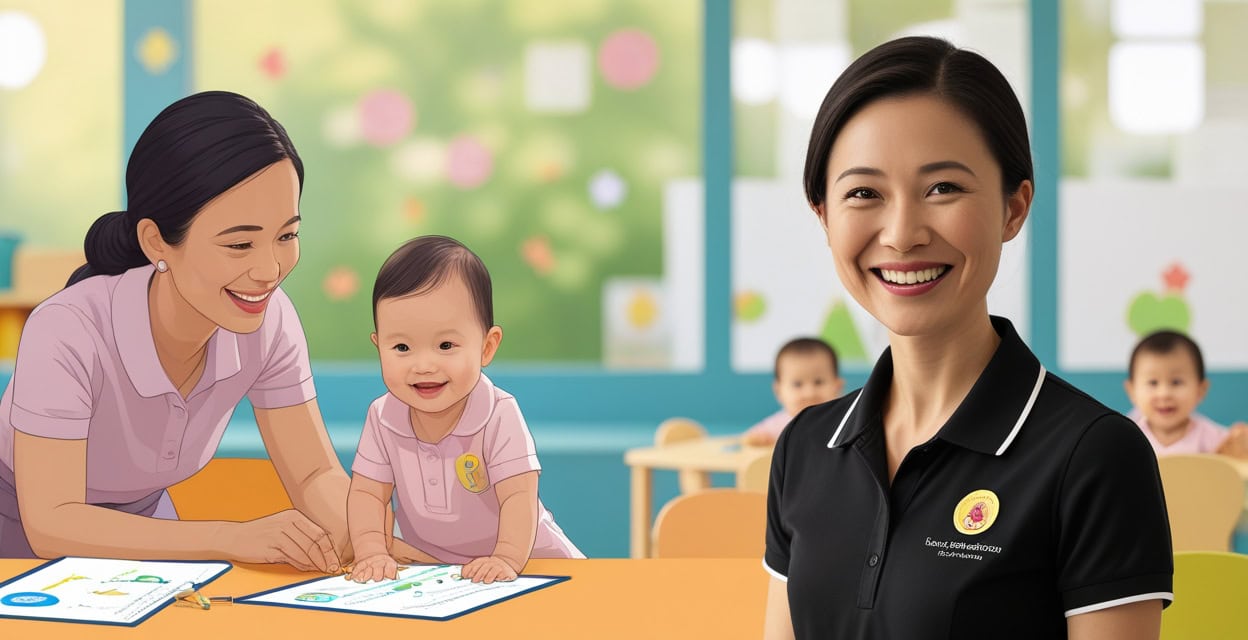
Fraud Blocker edunanny.com

Category: Childminding

edunanny-d892e484-f96d-434b-9682-66992620f198
August 21, 2025

EduNanny Singapore The Movement for the First Thousand Days in Near Home 1 to 3 Infant Pods

EduNanny Singapore: A Movement for the First Thousand Days

EduNanny Singapore: A Movement for the First Thousand Days

Ladies and gentlemen, parents and grandparents, caregivers and community partners—good evening. EduNanny Infant Childminding is more than a service; it is a movement toward a gentler, smarter beginning for every child. We are Singapore’s near‑home promise for the first thousand days—where safety is uncompromising, learning is intentional, and joy is the daily language of care. Our islandwide network of tiny, near‑home “micro‑pods” brings attachment‑focused care into communities, thoughtfully designed for infants aged 2 to 18 months who are not concurrently enrolled in ECDA‑licensed infant care centres. With the ECDA three‑year Childminding Pilot (1 December 2024 to 31 December 2027), EduNanny commits to a high standard of care, accessibility, and transparency that families can trust.


EduNanny: A Near-Home Promise for the First Thousand Days

EduNanny: A Near-Home Promise for the First Thousand Days

EduNanny operates small, near‑home pods—within community spaces and carefully assessed home settings—each pod capped at a maximum of one childminder to three infants (1:3). Services run Monday to Friday, from 7am to 7pm, with half‑day (5 hours) or full‑day (10 hours) blocks. Fees are intentionally affordable under the Pilot: from $16.50 per half day and $33.00 per full day (before GST), with the convenience of paying subsidised hours via CDA/Baby Bonus. This model reduces commute stress for families, supports deep attachment, and keeps adults present for longer, more meaningful interactions with each infant.

What makes EduNanny different is not merely location or density, but the fusion of attachment science, child‑development pedagogy, and thoughtful design in settings you know and trust—your home, your street, your community. Our certified childminders become familiar names in your child’s world, spoken with warmth, spoken through consistent routines, and guided by a shared belief that trust and joy are the foundations of early learning.


Five Pillars Guiding Our Work

Five Pillars Guiding Our Work

1) The Architecture of Attachment: presence before progress

From Bowlby we inherit the truth that a secure bond is the launchpad for every developmental leap. In our 1:3 pods, a single steady adult becomes the child’s reliable “secure base.” Practical daily practices include:

  • Unhurried handovers: greet the child first, then follow the schedule, allowing a moment for eye contact and a calm transition.
  • Serve‑and‑return interactions: when a baby coos, we pause, mirror, and respond; when a baby looks away, we wait respectfully to honor autonomy.
  • Montessori‑inspired respect for autonomy: invitations to self‑initiated movement and exploration within safe boundaries.
  • Consistent routines with flexibility: predictable rhythms that still honor the child’s moment‑to‑moment cues.

Result: trust, lower stress hormones, and a mind ready to learn when opportunities arise.

2) Safety by Design: prevention, clarity, and calm

Safety at EduNanny is both environment and culture. We combine physical design with clear policies to reduce risk and confusion:

  • ECDA‑aligned screening: background checks on childminders; home‑based care includes checks on regular household access.
  • Mandatory training: infant first aid and basic infant care, with additional refreshers in food safety, sleep safety, and hygiene.
  • Environment that thinks ahead: finger‑safe thresholds, anchored furnishings, visual sightlines, and clutter‑controlled layouts to support safe exploration.
  • No Sick Child Policy: unwell infants rest at home; clear medication discussions and consent processes with families.
  • Transparent monitoring: CCTV in community spaces; opt‑in, privacy‑respectful CCTV in home‑based caregiving areas during service hours, with consent from childminders and parents.
  • Incident protocols: prompt reporting, documentation, and proactive parent communication—no surprises, no silences.

3) Pedagogy in Tiny Movements: the curriculum you can’t miss, but never feels forced

Infants learn best through meaningful, unhurried experiences. Our micro‑curriculum is designed to align with developmental windows and natural curiosity:

  • Sensorimotor invitations: safe mouthing objects, textured materials, grasping rings, high‑contrast images, and gentle water play.
  • Language, song, and rhythm: bilingual narration, nursery rhymes, lullabies, and shared reading; we narrate care routines and celebrate every vocalization.
  • Gross‑motor freedom: daily tummy time, ample floor time on firm mats, short local strolls where feasible, with no rush to devices or containers.
  • Scaffolding for curiosity: just‑right challenges—lifting a soft block, tracking a rattle, exploring cause‑and‑effect—to turn effort into mastery.
  • Rest as a right: responsive, calm sleep routines with consistent, safe practices.

4) The Happiness Ecology: rhythms that help babies thrive and parents exhale

Joy and emotional well‑being are not accidents; they are cultivated through daily rhythms and partnership with families:

  • Predictable cycles: feeding, play, and rest aligned with the child’s cues, not rigid timers.
  • Early emotional literacy: naming feelings gently to help children feel understood long before they can articulate them.
  • Caregiver presence as pedagogy: consistent, familiar faces build trust and unlock playful learning.
  • Parent partnership: daily notes, photos, and honest feedback loops; your insights shape our rhythms and routines.

5) The Calling of Childminders: a profession that shapes a nation quietly and profoundly

EduNanny honors the craft of caregiving. Our childminders are certified, coached, and continually developed. We:

  • Pair new childminders with mentors; create practice circles for reflective learning.
  • Affirm dignity in compensation and offer clear career pathways within a national initiative.
  • Operate within ECDA’s Pilot framework to ensure quality assurance and consistent standards across the network.
  • Provide opportunities for Singaporeans, including mid‑career professionals, to contribute maturity, judgment, and heart to early years work.

How EduNanny Makes Infant Care Great in Singapore

How EduNanny Makes Infant Care Great in Singapore

Our approach translates the science of early development into everyday practice for families:

  • Near‑home convenience with islandwide reach: community spaces and home‑based pods designed to reduce commute stress and keep infants close to their environments.
  • Ultra‑low density, ultra‑low ratio: a true 1:3 care model fosters safety, calm, and meaningful attention for every infant.
  • Evidence‑guided care in action: we integrate insights from Montessori, Piaget, Vygotsky, Froebel, Malaguzzi, Bowlby, Pikler, Spock, and Erikson into daily routines.
  • Design that serves development: modern, well‑lit spaces with free movement zones and secure storage support exploration and independence.
  • Radical transparency: ECDA‑aligned background checks, mandatory training, opt‑in CCTV in home settings, and explicit health and incident protocols.
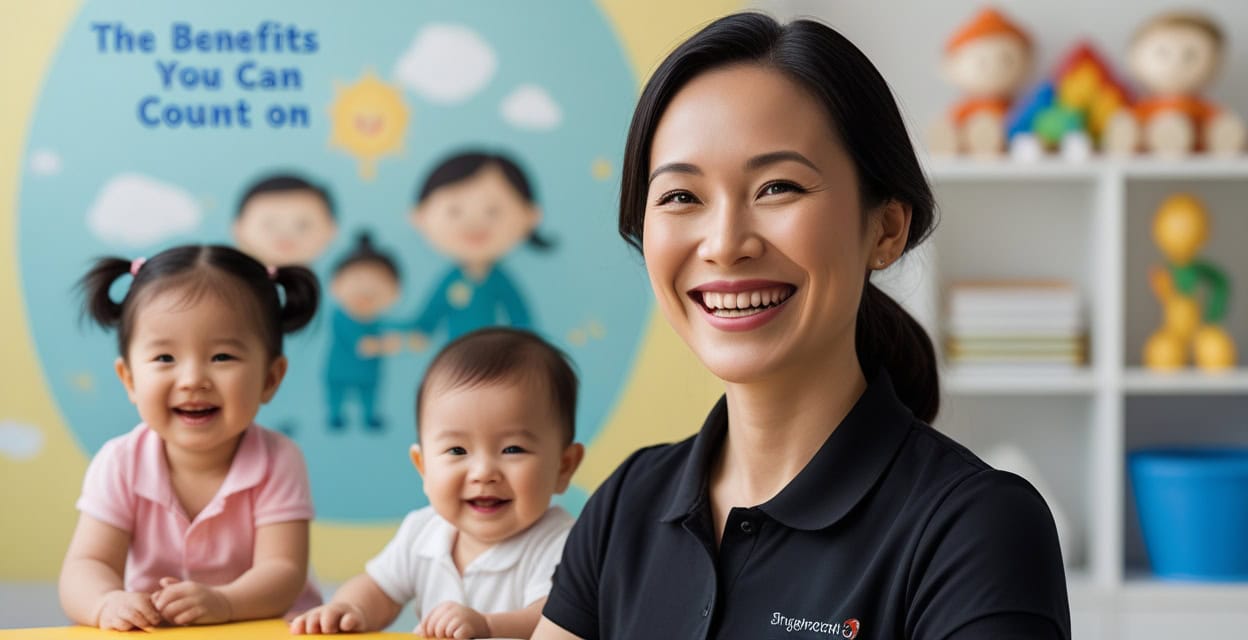
At a Glance: The Benefits You Can Count On

At a Glance: The Benefits You Can Count On

  • Ultra Low Density; Ultra Low Ratio (1:3)
  • Centre‑based (community spaces) and Home‑based options near you
  • CCTV provided in community spaces; opt‑in CCTV in home‑based care with consent
  • Certified EduNanny Childminders; Mandatory Infant First Aid and Basic Infant Care Training
  • ECDA‑appointed under a National Childminding Pilot (Dec 2024–Dec 2027)
  • Background checks by ECDA; suitability assessed by operator
  • No Sick Child Policy; clear health, hygiene, and incident protocols
  • Affordable from $33/day full‑day and $16.50/half‑day, before GST
  • Fees payable via CDA/Baby Bonus for subsidised hours
  • Monday–Friday, 7am–7pm, islandwide availability
  • Two formats: near‑home community pods and carefully managed home‑based pods
  • Learn more at EduNanny.com and Childminding.EduNanny.com

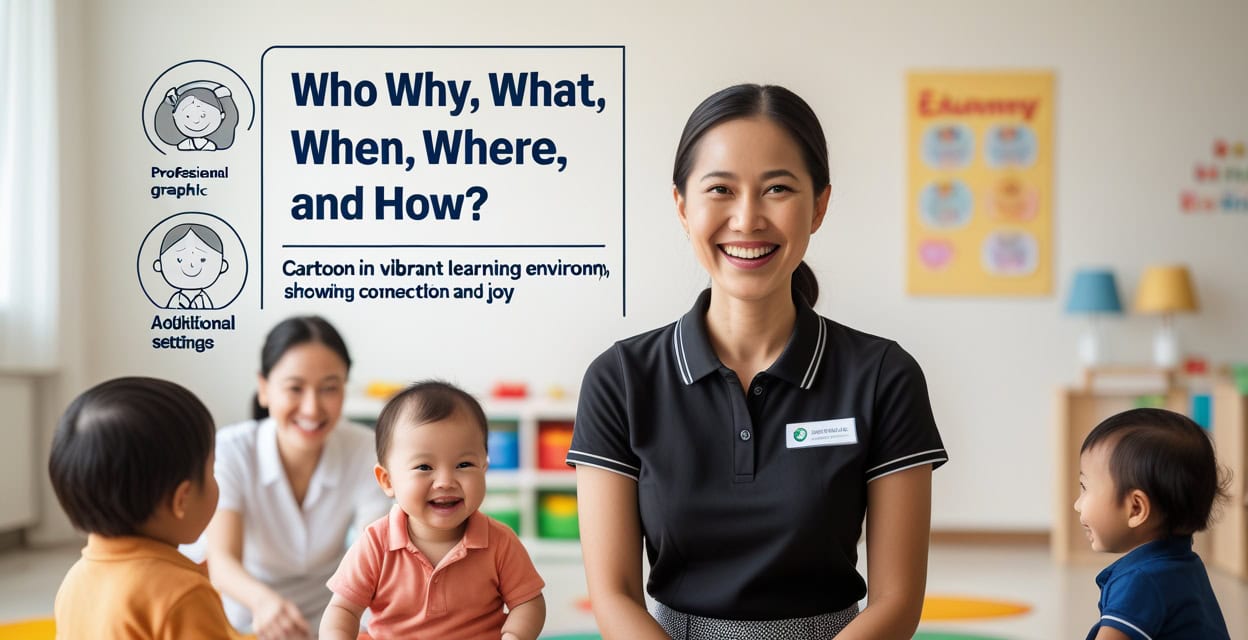
Who, What, When, Where, and How Childminding Matters

Who, What, When, Where, and How Childminding Matters

  • Who: Infants aged 2–18 months and the dedicated adults who shape their days.
  • What: Trustworthy, small‑group caregiving that protects health, grows minds, and nourishes attachment.
  • When: At the very start—when brain architecture is being wired and habits of safety and joy form.
  • Where: Near home, in community spaces and approved home premises across Singapore.
  • How: Through trained, background‑checked childminders; safety‑mocused environments; and a culture of transparency, partnership, and grace.

The Philosophy and Purpose of EduNanny

The Philosophy and Purpose of EduNanny

We believe dignity is the first curriculum. When adults are calm and present, children learn that the world is trustworthy. When groups are tiny and environments are intentional, children reveal how quickly they can connect, explore, and flourish. When families are partners—not clients—confidence replaces anxiety. Our purpose is to cradle the beginnings so that tomorrow’s independence does not need to be rushed, forced, or feared.

Singapore’s future is quietly forged in these early rooms—on clean mats, with a familiar caregiver at hand, and in the steady rhythm of unremarkable Tuesdays. Childminding, done well, is nation‑building in soft focus: attachment today, resilience tomorrow; curiosity today, contribution tomorrow; safety today, character tomorrow.


Sign‑Up Process: How to Join EduNanny

Sign‑Up Process: How to Join EduNanny

  1. Visit https://edunanny.com/edunanny-ecda-childminding-service/ and fill out the inquiry form or reach us via WhatsApp using the contact options on the page.
  2. Our EduNanny Concierge Team will respond, understand your family’s needs, and propose nearby community or home‑based pods.
  3. Schedule and attend a site visit to meet the childminder, view the environment, and review care rhythms.
  4. Enrol—select half‑day or full‑day blocks (7am–7pm, Monday to Friday), set your start date, and complete CDA/Baby Bonus arrangements for subsidised hours.

Conclusion

Conclusion

We promise presence before progress, safety before speed, and joy before jargon. In the first thousand days, the smallest circles—a single caring adult with three cherished infants—can create the largest horizons. If you seek a caregiver partnership built on trust, research‑informed practice, and a community‑rooted approach, EduNanny invites you to join the movement that shapes tomorrow through the quiet power of today’s earliest moments.

SEO Keywords: [#keyword1, #keyword2, #keyword3, #keyword4, #keyword5]

edunanny-fcce1d21-ec07-4348-ac2f-2baa3d6db0fb
August 21, 2025

Tiny Pods Bold Hearts How EduNanny Builds Safe Joyful Early Learning for Singapore December 2024 to December 2027

EduNanny Infant Childminding Service: A Public Covenant for Singapore’s Infants

EduNanny Infant Childminding Service: A Public Covenant for Singapore’s Infants

Good evening, parents, caregivers, and friends of Singapore’s youngest citizens. This article expands on the vision shared at the dawn of a gentle revolution in infant care. EduNanny by BUTLER stands not merely as a service, but as a public promise: every infant in Singapore deserves care that is safe, joyful, and deeply human—a care that honours development science, the art of attachment, and the dignity of childminders. This piece provides practical, actionable guidance for families, caregivers, and communities who are partnering with EduNanny as part of ECDA’s national Childminding Pilot for Infants (1 December 2024 to 31 December 2027).


Designing Care That Supports Development

Designing Care That Supports Development

Infants learn in secure, meaningful relationships. Our model translates that timeless insight into daily practice through five deliberate design choices that families can observe, participate in, and benefit from.

1. Ultra Low Ratio: A macro impact through micro care

  • 1:3 ratio means one childminder to three infants, enabling continuous, responsive “serve-and-return” interactions, unhurried caregiving, and the consistency essential for secure attachment.
  • Practical implications for families:
    • During arrival and handover, expect a calm, filmed-free transition with a dedicated caregiver who knows your infant’s cues.
    • Caregivers can notice subtle signals—a shift in gaze, a yawn, or a tiny grunt—that indicate needs before fussiness escalates.

2. Near‑Home Convenience with Two Trusted Settings

  • Home‑Based Childminding: warm, familiar micro‑environments where everyday life becomes part of the curriculum.
  • Centre‑Style Community Pods: modern layouts with open sightlines, soft flooring, cleanable surfaces, and carefully designed spaces for infant exploration.
  • Practical guidance for families:
    • Plan a short trial week to observe how routines adapt to your infant’s rhythms.
    • Note how caregivers structure play areas—are shelves low, accessible, and safe? Is there quiet space for naps?

3. Safety as a System, Not a Slogan

  • ECDA background checks for EduNanny staff, with regular access considerations in home settings.
  • Infant first aid, basic care, and food safety training for all EduNanny Childminders.
  • Clear incident management, hygiene protocols, and environmental risk assessments.
  • No Sick Child Policy aligned to public health guidance to protect pods and sustain consistent care; individualized plans with parents ensure safe returns.

4. Care as Curriculum

  • Daily caregiving routines—feeding, settling, diapering, and floor time—are intentionally designed to be learning moments rather than interruptions.
  • Age‑appropriate materials and simple tools encourage exploration without overstimulation.
  • Documentation of milestones and micro‑observations keeps families informed and engaged in decision‑making.

5. Radical Transparency and Partnership

  • Community pods provide CCTV in line with ECDA requirements; in‑home CCTV is available by mutual agreement for caregiving areas during care hours.
  • An EduNanny Concierge Team supports families from matching to enrolment to ongoing feedback.
  • Daily updates cover sleep, feeds, nappies, and play, ensuring calm, clear handovers between day and evening.

The Four Foundations of EduNanny Pedagogy

The Four Foundations of EduNanny Pedagogy

Our infant pedagogy rests on a robust framework drawn from respected theorists and practical teaching into daily routine.

1. Attachment Architecture: The science of feeling safe first

  • Consistent pairing of infants with a primary caregiver who learns each baby’s cues—holding, feeding, soothing preferences.
  • Predictable routines build psychological safety; safety frees attention; attention fuels learning.
  • The 1:3 promise ensures every cry is noticed and every curiosity is answered.

2. The Prepared Micro‑Environment: The world at infant scale

  • Incorporates Montessori-inspired prepared environments with Reggio‑inspired respect for the child’s voice.
  • Low shelves, soft zones, natural light, deliberate quiet; uncluttered spaces invite discovery.
  • Sensorimotor play (Piaget) and scaffolding (Vygotsky) occur through everyday activities—rolling a ball, mouthing safe objects, tracking a caregiver’s face, reaching for a rattle, or listening to a caregiver sing.

3. The Daily Rhythm: Caregiving as a symphony

  • Nourish: responsive, paced, and attuned feeding.
  • Rest: respect for individual sleep cues, soothing routines, and safe sleep practices.
  • Move: supervised tummy time, gentle stretches, floor exploration for gross and fine motor development.
  • Relate: naming, reading, singing, and turn-taking to nurture language and trust.

4. Joy as a Developmental Nutrient

  • Joy signals safety and invites exploration; the environment is designed to favor delight and steady presence.
  • Practices that foster joy include gentle humor, baby-safe textures, and responsive interactions that celebrate tiny victories—longer gaze, new syllable, or a calm transition.

Safety, Quality, and Dignity: Our Non‑Negotiables

Safety, Quality, and Dignity: Our Non‑Negotiables

  • : Every EduNanny childminder is vetted; ECDA extends checks to regular household access in home settings.
  • : Installed in community pods; in‑home CCTV available by mutual agreement for caregiving areas during care hours, balancing transparency with privacy.
  • : Contagious illnesses are managed per public health guidance; clear communication with parents for safe returns.
  • Modern layouts and materials: wipe-clean surfaces, soft flooring, secure gates, and sightlines that support safety and supervision.
  • Incident readiness: infant first aid, clear escalation pathways, and timely, fair reporting.
  • Quality assurance: ongoing coaching, spot-checks, and family feedback loops managed by the EduNanny Concierge.

Access, Affordability, and National Purpose

Access, Affordability, and National Purpose

  • : Part of ECDA’s Childminding Pilot (Dec 2024–Dec 2027), islandwide coverage.
  • : Monday–Friday, 7am–7pm (excluding public holidays).
  • :
    • Half‑day (5 hours) at $16.50 before GST
    • Full‑day (10 hours) at $33.00 before GST
  • Fees payable via the Child Development Account (CDA) or Baby Bonus during subsidised hours.
  • : Singapore Citizen infants, 2–18 months, not concurrently enrolled in ECDA‑licensed infant care centres.
  • Settings: Home‑Based and Community‑Based options to fit each family’s needs and distance preferences.
  • : Building a near‑home network creates dignified jobs for certified childminders while preserving family convenience.

Who EduNanny Serves: The Why, What, When, Where, and How

Who EduNanny Serves: The Why, What, When, Where, and How

  • : Infants needing steady hands and warm eyes; parents needing trust and flexibility; childminders deserving professional recognition and support.
  • : Intimate 1:3 pods delivering attachment‑first, safety‑led, development‑rich care.
  • : The first 1,000 days—the period when brain architecture is most malleable and responsive to secure relationships.
  • : In your community—home-based settings or community pods designed for infant safety and learning.
  • : Through certified people, safe places, and clear processes—operating under ECDA Pilot standards with EduNanny’s care culture.

What Parents Ask Most: At a Glance

What Parents Ask Most: At a Glance

  • Ultra Low Ratio (1:3) for focused, responsive care
  • Certified EduNanny Childminders; ECDA background checks
  • CCTV Provided in community pods; in‑home CCTV available by agreement
  • No Sick Child Policy to protect pod health
  • Modern, clean, centre‑quality community layouts; warm home‑based settings
  • Affordability from $33/day; CDA/Baby Bonus payable
  • Flexible half‑day or full‑day blocks, Mon–Fri, 7am–7pm, islandwide
  • National Initiative under the ECDA Childminding Pilot
  • Excellence, quality assurance, and an EduNanny Concierge

How to Sign Up: A Practical Path to Enrollment

How to Sign Up: A Practical Path to Enrollment

  1. Visit https://edunanny.com/edunanny-ecda-childminding-service/ and complete the short form, or inquire via WhatsApp from the same page.
  2. Receive a response from the EduNanny Concierge Team to discuss your preferred location, schedule, and your infant’s routines.
  3. Attend a site visit—home‑based or community pod—and observe how the space supports your infant’s needs.
  4. Enrol, meet your childminder, and begin a gentle, supported transition.

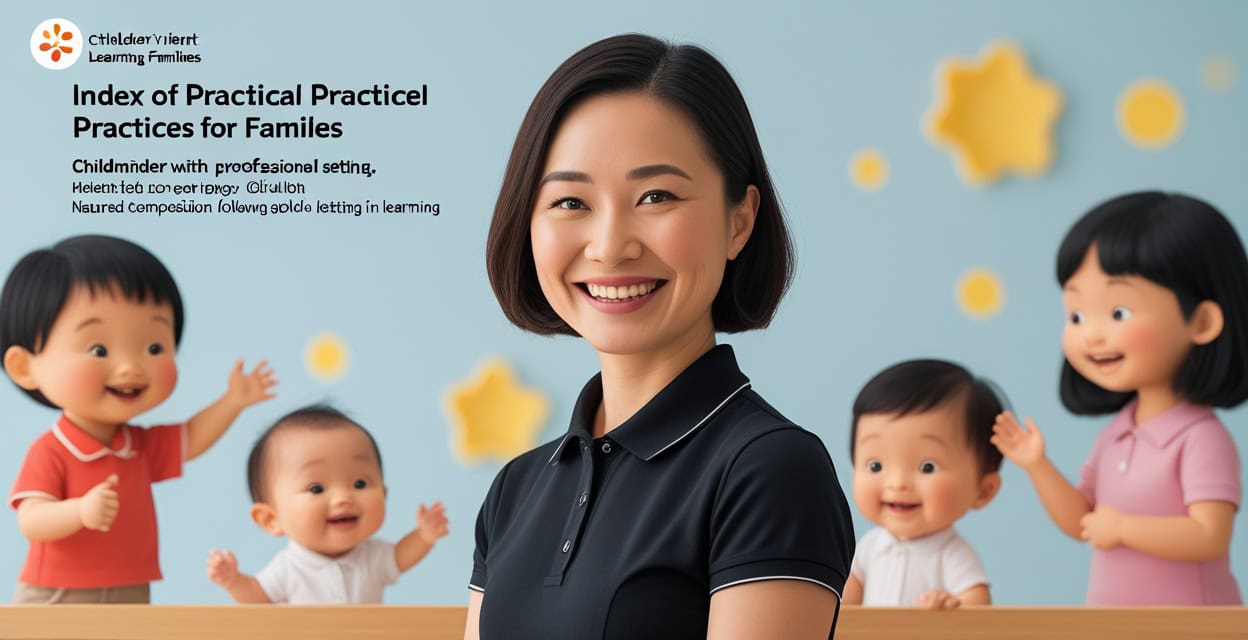
Index of Practical Practices for Families

Index of Practical Practices for Families

  • sleep duration, last feeding, diapers, mood, and notable cues to watch for.
  • expect daily updates, weekly summaries, and milestone notes to track development visually and audibly.
  • gentle sensorimotor play, language-rich routines, and eye‑level interaction in a calm home setting.
  • keep a small, infant‑friendly first‑aid kit and have a clear plan with your childminder for urgent scenarios.

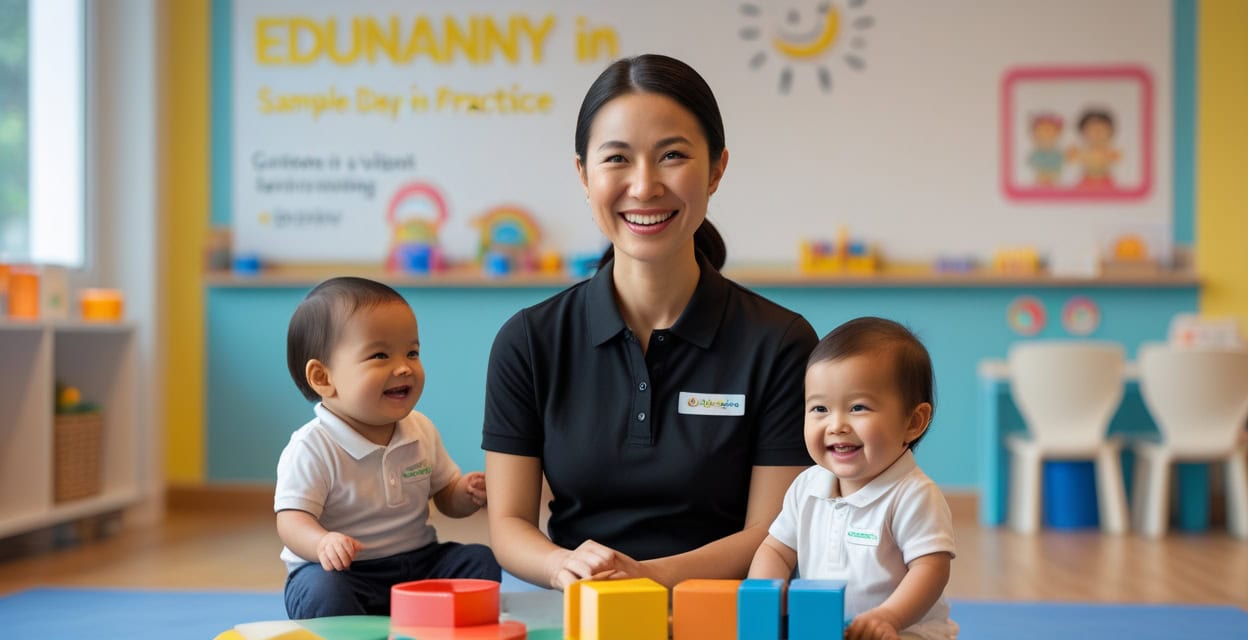
EduNanny in Practice: Sample Day in a 1:3 Pod

EduNanny in Practice: Sample Day in a 1:3 Pod

7:00am – Arrival and warm handover: the caregiver greets each infant with consistent eye contact and a familiar routine signal.

8:30am – Feeding and gentle social interaction: paced feeding with language cues and responsive pauses.

9:15am – Tummy time and sensorimotor play: soft mats, safe toys, and caregiver‑led, child‑driven exploration.

11:00am – Nap routine: individualized sleep cues respected, with a soothing transition ritual.

2:00pm – Outdoor time and exploration: age‑appropriate play with supervision and safe, readable play spaces.

4:30pm – Diapering, reflection, and transition: naming and storytelling to prepare for handover to parents.

6:00pm – Day wrap: brief update to parents, notes on development milestones, and planning for the next day.


Educating Everyday: At‑Home Activities Inspired by EduNanny

Educating Everyday: At‑Home Activities Inspired by EduNanny

  • talk through everyday routines; name objects; describe actions; sing simple songs with rhythm to support language development.
  • short, consistent routines (bath, feed, book) that occur in the same order to foster predictability and security.
  • use simple, natural materials (soft fabrics, wooden toys) to support sensorimotor learning and safe mouthing exploration.
  • observe your infant’s sleep cues and respond gently; create a soothing pre‑sleep routine to facilitate smoother transitions.
  • photograph or video milestone moments with parental consent and store in a shared, secure portal for reflection and celebration.

A Call to Parents, Caregivers, and Community Partners

A Call to Parents, Caregivers, and Community Partners

EduNanny by BUTLER, in concert with ECDA’s Childminding Pilot, offers more than a service—it invites families to participate in a national project of care, science, and dignity. This Pilot is a public covenant: we will not ask infants to fit the world of adults; we will shape the world around the needs of infants. We will not trade safety for convenience or joy for efficiency. We will stand with families so that work and love need not be competing loyalties.

To every parent weighing options, to every grandparent who remembers the wisdom of unhurried care, and to every caregiver seeking professional recognition, EduNanny is ready to partner with you. Together—with science, with heart, and with the quiet confidence of excellent practice—we will cradle the earliest days so that Singapore’s tomorrows stand taller.


Conclusion

Conclusion

EduNanny represents a careful synthesis of attachment theory, developmental science, and practical, scalable care. Through ultra-low ratios, near‑home settings, robust safety systems, care-as-curriculum, and transparent partnerships, EduNanny aims to redefine infant care in Singapore—honoring infants, empowering families, and dignifying childminders. If you are seeking a care model that centers the earliest relationships and builds a secure foundation for lifelong learning, EduNanny offers a compelling path forward.

Take the next step: visit the sign‑up page, connect with the EduNanny Concierge, and begin a journey toward near‑home, attachment‑first infant care that fits your family’s rhythm and values.

Welcome to a simpler truth: small pods, steady bonds, strong beginnings.

SEO keywords: [#InfantCareSingapore, #EarlyChildDevelopment, #SingaporeChildminding, #EduNanny, #SingaporeECDA]


edunanny-3eeb58f7-5fc4-435f-9475-96fbfe41dbbc
August 21, 2025

From Handover to Bond: EduNanny’s Near-Home 1:3 Infant Pods Redefining Safety and Joy in Singapore

EduNanny: A Promise in Every Cradle

EduNanny: A Promise in Every Cradle

There is a moment every family remembers—the first handover. Your child’s small body resting in another’s arms, your heart pausing to ask, is my baby safe, seen, soothed, and supported? EduNanny was created to answer that question with a resounding yes, every single day. EduNanny by BUTLER is honoured to be appointed by the Early Childhood Development Agency (ECDA) as one of three operators in Singapore’s Childminding Pilot for Infants—from 1 December 2024 to 31 December 2027—serving Singapore Citizen infants aged 2 to 18 months who are not concurrently enrolled in ECDA-licensed infant care centres. We exist for one clear purpose: to bring safe, joyful, deeply human infant care closer to home—affordable, reliable, and grounded in the best of science and heart.


The Three Truths Guiding EduNanny

The Three Truths Guiding EduNanny

1) Safety is not a feature; it is an ecosystem

We design safety into every layer: spaces that minimize risk, people who are thoroughly trained and background-checked, and protocols that prevent illness and accidents before they happen. Safety is not bolted on; it is woven through every decision—from materials chosen for play to how we communicate during handover.

2) Joyful learning begins with secure attachment

Secure, warm relationships form the foundation for exploration. In a 1:3 pod, infants experience consistent, responsive caregiving, which supports brain development and early communication. We connect presence with prompts for curiosity, not pressure, so learning unfolds naturally.

3) Convenience frees families to thrive

Affordability, proximity, and predictable schedules unlock the ability to work, study, and contribute to community life. By bringing high-quality infant care near home and aligning with your family’s rhythms, EduNanny helps families thrive without compromise.


Five Pillars for Infants, Families, and Singapore

Five Pillars for Infants, Families, and Singapore

1) Attachment-first pedagogy: from regulation to exploration

What infants need most is presence. In a 1:3 environment, your child experiences responsive caregiving that mirrors Bowlby, Pikler, and Ainsworth: co-regulation before self-regulation; relationship before routine; routine in service of curiosity. Micro-moments matter: trained childminders read cues—eye gaze, hand tension, vocal tone—and respond with consistency. Play with purpose is inspired by Montessori and Vygotsky, using simple, open-ended materials to scaffold turn-taking, early language, and motor planning.

2) Safety by design: layers, not luck

Environment: hazard-free zones with soft flooring, gated areas, secured storage, and sleep spaces aligned with safe sleep guidelines. Community micro-hubs include CCTV as required; home-based care offers optional CCTV in caregiving areas with consent during care hours. People: every EduNanny childminder is background-checked (including regular access household members), trained in infant first aid and basic care, and food safety. Protocols: No Sick Child Policy, clear exclusion criteria, fever-free protocols, and well-defined incident reporting and emergency escalation aligned to Industry Standards.

3) The rhythm of a good day: routine that dignifies every infant

Routines are individualized, not industrialized. Feeding, sleeping, and play are paced to your child’s cues and your family’s preferences. Environments are calm and sensory-light to reduce overstimulation. Outdoor time and nature-based moments are incorporated when appropriate. Transitions are narrated and prepared for, reinforcing predictability and trust.

4) Happiness as a measurable outcome

Happiness is cultivated intentionally. We track indicators such as relaxed body tone, social smiles, weight gain, restful naps, babble and gesture, and emerging independence. We partner with families through honest updates at pick-up—feeds, diapers, naps, mood, and milestones—to align on goals and celebrate progress.

5) Dignifying the profession of childminding

Purpose-led careers: EduNanny’s commitment to maximum employment invests in training, mentorship, and stable opportunities for Singaporeans—especially women re-entering the workforce. This Pilot is a National Social Initiative that elevates the caregiving profession, strengthens communities, and invests in the first thousand days—the most plastic period of human development.


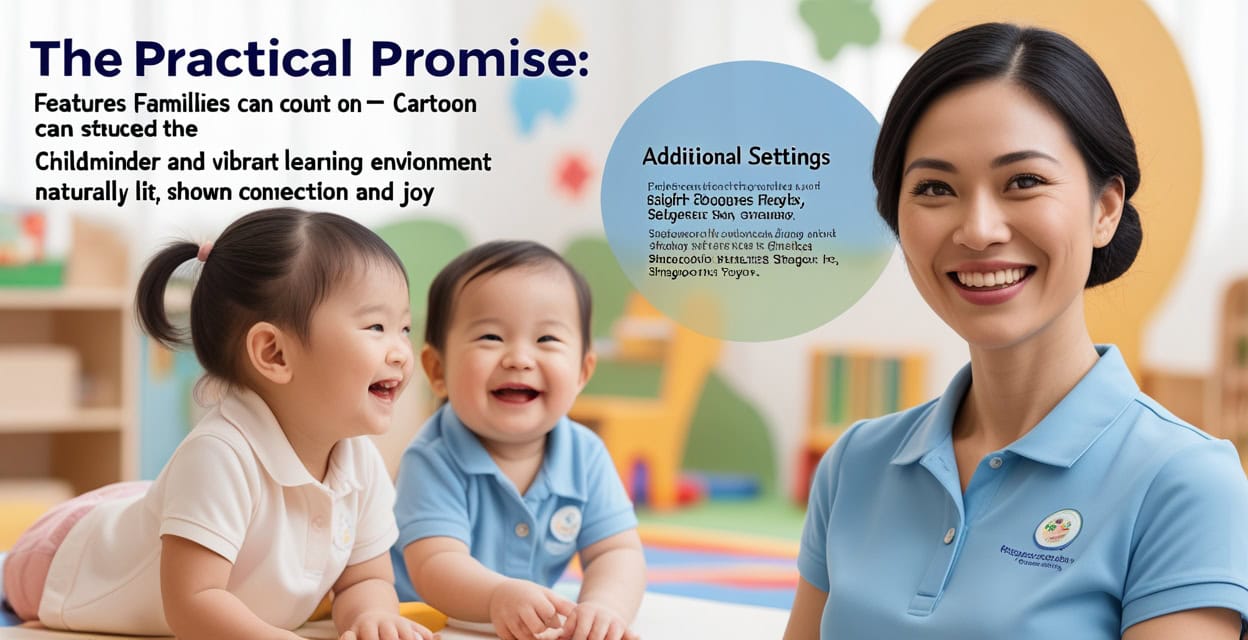
The Practical Promise: Features Families Can Count On

The Practical Promise: Features Families Can Count On

  • Ultra Low Ratio, Ultra Low Density: A 1:3 infant-to-childminder ratio ensures every baby is seen and known.
  • Safe, Modern Spaces Near Home: Home-based pods and community micro-hubs with modern, uncluttered layouts designed for safety and learning.
  • CCTV and Transparency: CCTV in community spaces; optional home-based CCTV in caregiving areas during care hours with caregiver consent, balancing transparency and privacy.
  • Certified, Background-Checked Childminders: Trained in infant first aid, basic infant care, and food safety; ECDA conducts independent checks before deployment.
  • Health-First Care: No Sick Child Policy, rigorous hygiene, and clear protocols to protect all infants.
  • Affordable, Islandwide, 7 to 7: Monday to Friday, 7am–7pm, islandwide; half-day (5 hours) or full-day (10 hours) blocks.
  • Fees You Can Plan For: Under the ECDA Pilot: Half-day $16.50; Full-day $33.00 (before GST). Subsidies apply during subsidised hours; extended hours available at regular rates by arrangement.
  • Flexible Scheduling: Choose days per week and blocks; discuss extended hours directly with EduNanny at regular rates.
  • Centre-Inspired, Community-Based Convenience: Care happens at home or community spaces with centre-like safety standards, not ECDA-licensed centres.
  • Built for Trust: Innovation CCTV, transparent incident management, and a professional concierge team to support families.

How the ECDA Childminding Pilot Supports Your Family

How the ECDA Childminding Pilot Supports Your Family

  • Who: Singapore Citizen infants aged 2–18 months, not concurrently enrolled in ECDA-licensed infant care centres.
  • What: Subsidised infant childminding in 5- or 10-hour blocks, Monday to Friday, 7am–7pm (excluding public holidays).
  • Where: At the childminder’s home or in nearby community spaces—ultra-low-ratio pods designed for calm, attentive care.
  • When: 1 December 2024 to 31 December 2027.
  • How much: $16.50 (5 hours) or $33.00 (10 hours), before GST; CDA can be used during subsidised hours. Extended hours available by arrangement.
  • How safety is ensured: ECDA background checks, mandatory training, industry standards, and operator oversight; EduNanny adds layered safety design, transparency with CCTV, and a No Sick Child Policy.

A Day in the Life with EduNanny

A Day in the Life with EduNanny

A calm greeting at drop-off; a familiar space with a small circle of three infants and one attentive childminder; tummy time by a low mirror with soft music; a finger rhyme naming body parts and emotions; milk offered when the child cues; a pram walk to feel the wind with gentle narration; safe sleep in a supervised, supine position; wakeful play with treasure baskets inviting discovery; a clean diaper, a warm cuddle, and a predictable rhythm that respects the child’s pace. This is not complicated; it is conscientious—and it is how confidence is built—for both families and children.


Why Childminding Matters Now

Why Childminding Matters Now

  • Because the first thousand days are uniquely sensitive to love and stress. Micro-pods reduce overstimulation and allow infants to be held, seen, and responded to.
  • Because families deserve quality near home. Shorter commutes, fewer morning tears, and a growing village support.
  • Because affordability should not mean compromise. The ECDA Pilot pairs quality and safety with accessible fees.
  • Because work and caregiving can coexist. With 7am–7pm hours across the island, families can plan with dignity.
  • Because a nation is strongest when its smallest citizens are cherished. Strong early bonds build resilient communities and long-term social wellbeing.

The Philosophy and Purpose Behind EduNanny

The Philosophy and Purpose Behind EduNanny

We are guided by three promises that shape every action, every training moment, and every family handshake:

The Attachment Promise

Every infant is assigned a primary childminder within the 1:3 pod to anchor secure relationships. Trust is a developmental nutrient that accelerates language, social skills, and emotional regulation.

The Autonomy Promise

We follow the child—respectful handling, free movement, and play that invites mastery. Independence is practiced in small, safe steps, with caregivers serving as guides rather than directors.

The Inquiry Promise

Curiosity is our curriculum. Through sights, sounds, textures, and talk, we seed language development, motor skill, and social connection—true learning that happens through exploration and meaningful interactions.


How to Enrol with EduNanny

How to Enrol with EduNanny

  1. Step 1: Visit https://edunanny.com/edunanny-ecda-childminding-service/ and fill the enquiry form, or reach us via WhatsApp on the same page.
  2. Step 2: Receive a response from our EduNanny Concierge Team. We’ll understand your infant’s needs, preferred location, and schedule.
  3. Step 3: Schedule a site visit to a home-based pod or community micro-hub near you.
  4. Step 4: Enrol—complete registration, select half-day or full-day blocks, set a start date, and receive your child’s personalised care plan.

You can also learn more at EduNanny.com and Childminding.EduNanny.com.


A Closing Note from the Heart

A Closing Note from the Heart

When a nation tends its cradles well, it secures its future quietly and powerfully. Childminding is not a stopgap; it is a cornerstone. In the hands of trained, trusted adults working in ultra-low-ratio pods, infants bond, explore, and belong, while parents work with peace of mind and return to children who are content, rested, and ready for home. This is for every Singaporean family who seeks quality within reach. This is about building a dependable, dignified ecosystem of early care. This is why it matters now—the brain does not wait.

EduNanny by BUTLER is proud to serve under the ECDA Childminding Pilot. We invite you to visit, to ask questions, and to witness the quiet competence of a well-held infant day. In each careful handover, in each small pod, we keep a simple faith: every child is a promise, and every promise deserves to be kept.

Thank you. We look forward to welcoming your family.


What This Means for You: Quick Takeaways

What This Means for You: Quick Takeaways

  • 1:3 caregiver ratio ensures intimate, responsive care.
  • Safe, near-home spaces with transparent safety practices.
  • Structured, flexible scheduling designed to fit family life.
  • Subsidised, predictable fees under the ECDA Pilot with clear extension options.
  • A professional path for childminders that uplifts families and communities.
[#EduNannySingapore, #InfantCareSingapore, #ECDApilot, #1to3Ratio, #Childminding]

edunanny-35eac8e3-2ff8-40c6-9965-4e2036f768cc
August 21, 2025

EduNanny Singapore 1 to 3 Infant Care Revolution A Safe Joyful Development Under ECDA Pilot Dec 2024 to Dec 2027

Introduction: EduNanny Singapore—a new standard in infant care

Introduction: EduNanny Singapore—a new standard in infant care

EduNanny by BUTLER stands at the intersection of science, heart, and public purpose. Grounded in a simple conviction — presence is pedagogy, safety is love made visible, and trust is the curriculum — EduNanny introduces a national standard for infant minding in Singapore. As part of ECDA’s national Childminding Pilot (1 December 2024 to 31 December 2027), we invite families, caregivers, and partners to imagine mornings where calm, care, and curiosity shape every day. This article expands the themes of presence, safety, and development into practical, actionable guidance for parents navigating early childhood care.


The Pedagogy of Presence—what a 1:3 ratio unlocks

The Pedagogy of Presence—what a 1:3 ratio unlocks

Key principles behind a 1:3 pod

  • Attachment first: Drawing on Bowlby and Ainsworth, EduNanny models primary caregiving and consistent key person routines so infants develop a secure base.
  • Freedom to move, freedom to grow: Inspired by Pikler and Montessori, infants experience unhurried motor development with floor-time play, low furnishings, and safe reachables to master movement.
  • Language-rich minutes: Vocabulary-rich interactions, social turn-taking, and storytelling transform daily events into linguistic practice.
  • Observation cycles: Daily micro-notes on cues, sleep patterns, feeding, and emerging skills guide tomorrow’s plan.
  • Gentle routines: Predictable sequences—arrive, settle, play, feed, rest—tailored to each child’s signals and family preferences.

Practical daily schedule (example)

7:00–7:30 a.m. | Arrival and eye-level check-ins; settle with a calm routine.

7:30–8:30 a.m. | Sensorial exploration: soft textures, mirrors, and simple objects; floor-time play.

8:30–9:15 a.m. | Breakfast and language activities: naming foods, connecting actions to words, and gentle songs.

9:15–10:00 a.m. | Outdoor time or sensory-rich indoor play; caregiver narrates actions.

10:00–11:30 a.m. | Nap/quiet rest with individual sleep cues respected.

11:30 a.m.–12:30 p.m. | Solids or breastfeeding/formula feeding; social interaction and simple self-help tasks.

12:30–2:00 p.m. | Structured play: problem-solving, basic music, and reciprocal play with peers (where appropriate).

2:00–3:30 p.m. | Snack, language games, and reflective conversations about feelings and transitions.

3:30–5:00 p.m. | Free exploration, art, or movement activities; two‑way handovers begin.

5:00–7:00 p.m. | Settling routines, light meals, and departure preparations.

Tips for parents

  • Observe how the caregiver responds to a child’s signals during transitions; note whether routines are flexible yet predictable.
  • Ask to see example micro-notes and how plans adapt when a child shows new skills or changing sleep patterns.
  • Bring a simple family routine card to align daily rhythms between home and pod (feeding windows, sleep cues, and preferred comfort items).
  • Encourage childminders to narrate the child’s day to you in plain language during handovers.

Safety as a system—an architecture you can trust

Safety as a system—an architecture you can trust

Safety architecture that is visible, verifiable, and humane

  • Ultra low density and vigilance: Maximum three infants per childminder to ensure constant supervision and infection control.
  • Certified caregivers: Mandatory infant first aid, basic infant care, and food hygiene training; ECDA background checks plus ongoing competency assessments.
  • Environment by design: Child-safe layouts, hazard mapping, safe-sleep spaces, daily sanitation checklists, and strict milk-handling protocols.
  • Privacy-preserving CCTV with transparency: CCTV in community spaces; opt‑in, caregiving-area‑only CCTV in home pods with secure access and consent.
  • Health protection: No Sick Child Policy during care hours; guidance on exclusion periods and return-to-care aligned with public health advice; clear medicine administration protocols when needed.
  • Incident clarity: Clear agreements, escalation paths, and prompt reporting to address concerns quickly and fairly.

Home-based vs centre-based safety considerations

  • Centre-based pods offer standardized layouts, professional supervision, and built-in safeguards; convenient for families seeking predictable hours and formalised settings.
  • Home-based pods provide intimate care in a familiar environment with opt-in privacy features; ensure a well-defined safety plan, clear household access controls, and regular safety drills.

What to expect during visits

  • Observe the cleanliness of the space, availability of safe sleep areas, and how the caregiver communicates with children.
  • Ask about daily health checks, food hygiene practices, and how fever or illness is managed in the pod.
  • Request a sample daily log to understand how information is captured and shared with families.

Development and happiness—how we know infants are thriving

Development and happiness—how we know infants are thriving

Measurable joy and development indicators

  • Developmental touchpoints: Gentle tracking across motor, language, social, and self-regulation domains—used to inform supportive interventions, not labels.
  • Content and connected index: Cue reading, affect balance, smoother transitions, and quicker recovery after upset signal positive momentum.
  • Sensory diet, not overload: Balanced exposure to light, textures, and sound; outdoor time where feasible; protection of deep sleep windows.
  • Two-way handovers: Morning intentions and evening reflections ensure alignment between home and pod care; practical tips for parents to try at home.
  • Respectful care rituals: Slow diaper changes, unhurried feeds, and eye contact that reinforce trust and bonding.

Practical examples for parents

  • Keep a simple “today I noticed” journal for your child’s caregiver to reference, noting new words, favorite activities, or signals of readiness for another challenge (e.g., standing with support, a new food texture).
  • Use home-pod handovers to discuss any changes in routines (e.g., a later nap or a new word the child is learning) so the day remains seamless for the child.
  • Encourage caregivers to model self-regulation techniques during upset moments (breathing cues, brief quiet times) and share these strategies with you.

The purpose and profession of the childminder

The purpose and profession of the childminder

High-quality childminding as public mission

  • CertifiedEduNanny professionals: Vetted, trained, coached, and recognized for their critical role in early development.
  • A national social initiative: The ECDA Pilot expands access to quality infant care while creating dignified, flexible work for caregivers. The Maximum Employment Mandate underlines a commitment to training and deploying more qualified childminders without compromising standards.
  • Career pathways: Progression from childminder to lead childminder, mentor, or trainer—ensuring expertise is retained and valued.
  • Community of practice: Regular reflective circles, safety drills, and pedagogy refreshers keep skills sharp and spirits high.

Practical implications for families

  • Ask about the childminder’s training plan and ongoing professional development schedule when touring a centre or pod.
  • Inquire how mentors or lead carers support new staff and how feedback is shared with families.
  • Look for a demonstrated culture of continuous improvement—records of safety drills, updates to routines, and updated care plans.

Family partnership, proximity, and price—care that fits real life

Family partnership, proximity, and price—care that fits real life

Location, accessibility, and community

  • Near to home: Choose pods thoughtfully located for distance, convenience, and social proximity to your community.
  • Centre-based and home-based options: A mix that suits family preferences, from a structured environment to a more intimate home setting.

Flexible scheduling and affordability

  • 7am–7pm Monday–Friday with half-day (5 hours) or full-day (10 hours) blocks.
  • Fees subsidised under the ECDA Pilot: $16.50 half-day; $33.00 full-day (before GST), payable via CDA Baby Bonus during subsidised hours.
  • Transparent pricing and straightforward billing to help families plan monthly budgets.

Transparency and technology

  • Digital daily logs with clear, parent-friendly language; real-time reminders and updates.
  • Concierge team accessibility: A single point of contact who can answer questions and troubleshoot scheduling issues by phone or message.

The EduNanny advantage—plainly stated

The EduNanny advantage—plainly stated

  • Ultra Low Ratio 1:3 and ultra low density pods for vigilant, individualized care.
  • CCTV provided in community premises; opt-in CCTV in home pods with consent and secure access.
  • Certified and background-checked childminders, trained before deployment and supported by ongoing coaching.
  • No Sick Child Policy to protect pods and routine integrity.
  • National initiative under the ECDA Childminding Pilot (Dec 2024–Dec 2027).
  • Centre-based and home-based options with island-wide coverage near-home.
  • Affordable fees (before GST): $16.50 half-day; $33.00 full-day; subsidies via CDA Baby Bonus during subsidised hours.
  • Monday–Friday, 7am–7pm with flexible blocks to fit real working lives.
  • Modern layouts designed for infants and soothing caregiving zones.
  • EduNanny by BUTLER—find us at EduNanny.com and Childminding.EduNanny.com.
  • Maximum Employment Mandate to grow a capable, caring workforce.
  • Commitment to safe, joyful, and dignified care for Singapore’s youngest citizens.

Who, what, when, where, and how childminding matters

Who, what, when, where, and how childminding matters

  • Who: Singapore Citizen infants aged 2–18 months and the families who nurture them.
  • What: A 1:3 childminding model combining attachment-first caregiving with rigorous safety and evidence-based routines.
  • When: Weekdays, 7am to 7pm, with flexible blocks to fit working life and family needs.
  • Where: Calm, modern centre-based spaces and carefully prepared home-based settings across Singapore.
  • How: Certified caregivers, ECDA oversight, background checks, training, opt‑in CCTV, and routines that turn everyday moments into developmental opportunities.

Why does it matter?

Why does it matter?

Because early relationships shape trust, exploration, and leadership. Safety enables curiosity. Proximity and affordability ensure families participate in the promise of a nation that values its youngest citizens.


Our philosophy and purpose

Our philosophy and purpose

EduNanny cradle beginnings and strengthens families. We gift parents time and peace of mind, offer infants steady hands and attentive eyes, and help Singapore build an infrastructure of care that is humane, science-informed, and publicly accountable.


How to sign up

How to sign up

  1. Visit https://edunanny.com/edunanny-ecda-childminding-service/ and fill out the form, or enquire via WhatsApp.
  2. Receive a response from our EduNanny Concierge Team.
  3. Schedule a site visit (centre-based or home-based).
  4. Enrol and begin care on your chosen schedule.

In closing

In closing

If you believe, as we do, that small circles of care carry a nation’s hopes, join us. Let us build mornings that begin with calm, days that unfold with discovery, and evenings that end with confident goodbyes. For in the quiet of a well-held infant lies the loudest proof that a society keeps its promises.


Call to action

Call to action

Join EduNanny today to experience the 1:3 care model, rigorous safety, and development-focused routines designed for Singapore’s youngest citizens. Sign up, schedule a tour, and begin a journey of peaceful mornings and thriving afternoons for your child.

Educational notes for parents: Remember to verify caregiver qualifications, request a sample day plan, review safety policies, and discuss how your family’s routines will be integrated into the EduNanny pod. Each family’s needs are unique; collaboration with your EduNanny team is essential to tailor care that respects your child’s pace and family values.

[#InfantCareSingapore, #1to3CareModel, #ECDAPilot, #CCTVinChildminding, #EarlyChildhoodDevelopment]
SEO Keywords

SEO Keywords

[#EduNannySingapore, #InfantCareQuality, #ECDAChildmindingPilot, #SafetyInCare, #EarlyDevelopmentPolices]

edunanny-7a9e2ea5-fddb-4f2a-8157-65023d47de6b
August 21, 2025

Cradle to Confidence EduNanny Singapore and the Public Promise of the First Thousand Days

EduNanny Singapore: A Vision for the First Thousand Days

EduNanny Singapore: A Vision for the First Thousand Days

Thank you for gathering in the spirit of something quietly powerful: the way we cradle our youngest citizens and the people who care for them. This is a moment to speak not only about childcare, but about culture—how a nation shows love, science, and foresight in the first thousand days of life. EduNanny by BUTLER is a human-centered, science-informed childminding movement built for Singapore. We believe the early years are not a service to be outsourced, but a public promise to be fulfilled—through trust, proximity, and excellence. EduNanny blends centre-based, home-based, and near-home micro-pod care so parents never have to choose between safety and warmth, quality and convenience, or work and wonder.

The EduNanny difference is simple to say and profound to live: tiny groups for big bonds, near-home access, flexible formats, radical transparency, affordable access, and a national alignment with ECDA’s quality initiatives. This is not a brochure; it is a practice guide—rooted in the wisdom of Montessori, Piaget, Vygotsky, Froebel, Malaguzzi, Bowlby, Pikler, Spock, Erikson—and tuned to Singapore’s families in 2025 and beyond.


Topic I: Attachment as Public Infrastructure

Topic I: Attachment as Public Infrastructure

Attachment isn’t a soft extra; it is the invisible architecture of resilience. Drawing on Bowlby’s work, EduNanny operationalizes secure bonds as a measurable asset in public life. Here’s how to translate this into everyday practice and policy:

Attachment as a Moral Framework

  • Ratio as a moral choice: Our 1:3 infant grouping ensures caregivers can know each child deeply—reading cues, rhythms, and curiosity without rushing or overlooking needs.
  • Continuity of presence: Maintain consistent carers and gentle key-person handovers so relationships compound over time, not reset with every shift change.
  • Proximity by design: Near-home placements minimize commute stress for babies and parents, enabling calmer handovers and more time for meaningful interaction.

Practical tips for families: request a caregiver introduction plan showing who will cover each day of the week, and ask for a short, child-friendly handover routine you can mirror at home. For educators, build a mini-portfolio per child—cues, routines, and preferences—and share it with families during weekly updates.


Topic II: Safety by Design, Not by Chance

Topic II: Safety by Design, Not by Chance

Safety is a culture and a system. EduNanny creates environments that are “safe enough to explore,” balancing freedom with mindful guardrails. Below are actionable steps you can adopt in any setting:

Safety-By-Design Principles

  • Prepared Spaces: Use low platforms, floor-time mats with gentle boundaries, secure storage, and clear sightlines to supervise without hovering.
  • Transparent Operations: Implement innovation CCTV with strict privacy controls to empower trust, coach practice, and inform quality improvement—never replace human presence.
  • Professional Habits: Daily risk scans, hand hygiene rituals, sleep safety audits, food preparation protocols, evacuation drills, and post-incident reflection cycles.
  • Modern Layouts: Soft zones for rest, movement, and sensory play; daylight-forward lighting; careful acoustics; and materials that are natural, non-toxic, and easy to sanitize.

Practical recommendations: create a childminding safety checklist for home or centre-based care, including a weekly drill schedule, simple cleaning routines, and a system to record safety observations. Parents can request a tour and ask to see the CCTV policy and consent forms in plain language before enrollment.


Topic III: The Pedagogy of Everyday Moments

Topic III: The Pedagogy of Everyday Moments

Learning hides in the ordinary. The EduNanny approach treats caregiving routines as curriculum, drawing from Montessori autonomy and Vygotsky’s zone of proximal development. Here is how to make everyday moments educational and joyful:

Everyday Routines as Curriculum

  • Feeding as conversation: Pause-and-wait responsiveness, naming tastes and textures, eye contact that signals “I see you,” and infant-guided pacing.
  • Diapering as connection: Narrate steps, invite participation, and treat the child as a partner, not a task.
  • Movement as agency: Respect the child’s timeline; provide environments that invite self-initiated movement rather than rushing milestones.
  • Play as inquiry: Use open-ended materials—fabric squares, safe mirrors, stacking cups, treasure baskets—to nurture curiosity, fine motor control, and problem-solving.

Practical tools: adopt a weekly “learning moments log” at home—note a new word, an emerging motor skill, or a notable social gesture. Share it with your caregiver to align on next steps. In classrooms, rotate materials to sustain novelty and challenge at the child’s pace.


Topic IV: Joy as a Serious State

Topic IV: Joy as a Serious State

Joy is not entertainment; it is the neurochemical signature of successful learning and secure attachment. EduNanny cultivates joy through thoughtful pacing and emotional co-regulation:

Joyful Practice in Everyday Care

  • Honoring tempo: Each child has a personal tempo for transitions, feeds, and rest. Follow the child, not the clock.
  • Unhurried time: Longer stretches of focused engagement foster mastery with fewer interruptions.
  • Co-regulation: Caregivers model calm, label feelings, and maintain steadiness during fuss to teach self-regulation.
  • Micro-victories: Celebrate tiny achievements—a new reach, a shared gaze, a first crawl—as evidence of growth, not merely milestones.

How to embed joy at home or in a centre: create predictable rhythms that balance active exploration with quiet moments. Use soothing sounds, gentle transitions, and opportunities for choice to empower the child’s sense of control.


Topic V: The Purpose and Dignity of the Childminder

Topic V: The Purpose and Dignity of the Childminder

Elevating infants requires elevating the adults who care for them. EduNanny centers the professional identity of the childminder with training, coaching, and fair work policies that acknowledge care as essential work.

Building a Dignified Care Profession

  • Training that blends science and soul: Infant development, attachment science, safe sleep, responsive caregiving, observational documentation, and family partnership.
  • Coaching in the flow of work: Video-enabled feedback (with consent) and reflective practice sessions to improve technique, confidence, and excellence.
  • Fair work as policy: A national approach that recognizes care as essential employment, investing in skills, career pathways, and pride in the profession.

Practical steps for policymakers and employers: establish standardized care pathways, ensure transparent wage scales and benefits, and fund ongoing professional development that aligns with ECDA standards and the Max Employment Mandate. For families, support caregivers’ growth with joint training sessions and accessible development portfolios.


How EduNanny Makes Infant Care Exceptional in Singapore

How EduNanny Makes Infant Care Exceptional in Singapore

Near matters: reducing commute time means more cuddles and deeper bonding. Choice matters: centre-based, home-based, and distance-enabled care keep quality consistent while fitting family life. Clarity matters: open daily updates, CCTV visibility with privacy safeguards, and ongoing conversations build trust. Cost matters: affordable options from $33/day, with CDA/Baby Bonus eligibility. Time matters: 7am–7pm, Monday–Friday, islandwide, to harmonize work and family routines. We use modern, child-led layouts in both community and home premises to deliver consistent quality.

Actionable guidance for families evaluating EduNanny options: request a sample daily log, a teacher/child plan for the first 90 days, and a family partnership meeting schedule. If you are a caregiver, seek mentorship and access to reflective practice sessions that help translate theory into daily care with real families.


A Day in the Life: What Parents Can Expect

A Day in the Life: What Parents Can Expect

EduNanny’s daily rhythm is designed to feel calm, predictable, and nourishing. Here is a practical snapshot you can use to prepare your family when joining or visiting a centre or pod:

  • Gentle Arrivals: Unrushed handover, brief sleep and feeding cues check-in, and a short “goodbye ritual” to support smooth separations.
  • Exploration Blocks: Soft gym time, songs and rhymes, object permanence play, and sensory baskets that nurture attention, coordination, and language.
  • Nourish and Rest: Responsive feeding and sleep in safe, calming spaces with consistent soothing routines and vigilant monitoring.
  • Outdoor and Nature Touchpoints: When feasible, micro-outings or fresh-air windows to balance sensory input and grounding.
  • Documentation and Dialogue: Daily summaries, photos, and developmental snapshots so parents stay informed and involved.

Tip for parents: request a 2-week trial period with a clear handover plan and a simple home caregiver guide you can adapt to your routines. This reduces anxiety and reinforces consistency for your child.


Our Public Promise: Quality You Can Visit, Confidence You Can Feel

Our Public Promise: Quality You Can Visit, Confidence You Can Feel

  • Excellence and Quality as standard across all EduNanny spaces
  • Centre-Based, Home-Based, and distance-enabled support
  • Near-home access islandwide, 7am–7pm, Monday–Friday
  • 1:3 infant ratio with continuity across care teams
  • Innovation CCTV for transparency and coaching
  • Part of the ECDA Childminding Pilot (Dec 2024–Dec 2027)
  • National Social Initiative with a Maximum Employment Mandate for dignified care jobs
  • Fees payable by CDA/Baby Bonus where eligible
  • Learn more: EduNanny.com and Childminding.EduNanny.com

Key Benefits at a Glance

Key Benefits at a Glance

  • Excellence and Quality as standard
  • Centre-Based, Home-Based, and distance-enabled support
  • Near-home access across Singapore
  • Affordable options from $33/day
  • Monday–Friday, 7am–7pm islandwide
  • In community and home premises with modern, child-led layouts
  • Excellent 1:3 infant ratio
  • Innovation CCTV for transparency and coaching
  • EduNanny by BUTLER: hospitality-level standards in service delivery
  • Aligned with ECDA Pilot and national quality initiatives
  • Flexible payments via CDA/Baby Bonus where eligible

Closing: Why Childminding Matters—Who, What, When, Where, and How

Closing: Why Childminding Matters—Who, What, When, Where, and How

Who: Every infant in Singapore, every parent building a life here, and every caregiver who chooses to dedicate their craft to our youngest. This is a reflection of a community’s character.

What: Childminding is not “watching.” It is attachment-building, safety-creating, language-seeding, motor-skill-sparking, and joy-protecting work. It is pedagogy tucked inside everyday care.

When: The first thousand days—brains are building at a dazzling pace and relationships are writing the first chapters of identity.

Where: Near home, in homes, and in centers woven into neighborhood life—so the village is a map, not a metaphor.

How: Ratios that respect the child, environments that invite competence, training that dignifies the caregiver, technology that clarifies rather than replaces trust, and affordability that includes—not excludes—families.

The philosophy and purpose of EduNanny childminding are clear: to treat infancy as a national treasure and childcare as a profession of consequence; to replace anxiety with assurance; to turn routines into relationship; and to give parents a partner who is present, prepared, and proud to stand beside them. Singapore has always believed that excellence is a habit, not a headline. EduNanny carries that habit into the cradle—patiently, precisely, and with heart. To every parent seeking safety without sterility, learning without haste, and joy without noise; to every caregiver seeking a craft worthy of devotion; to every policymaker invested in a resilient, compassionate future: come and see.

Walk into an EduNanny space and you will feel the difference before you read it on a wall. The room is calm. The rhythm is humane. The care is personal. The learning is alive. And in that atmosphere, a small hand reaches, a face brightens, and a future begins to believe in itself.

This is how a nation grows tall—with tiny steps taken in trust.


Conclusion: A Path Forward for Singapore Families

Conclusion: A Path Forward for Singapore Families

EduNanny offers a practical, scalable model for delivering high-quality infant care that respects families, dignifies caregivers, and strengthens the social fabric. By embracing attachment as public infrastructure, safety as a design principle, everyday moments as pedagogy, joy as a core outcome, and a professional path for childminders, Singapore can expand access to trusted, capable care while honoring the earliest chapters of a child’s life. Families, caregivers, and policymakers can collaborate around a common standard: care that is near, transparent, affordable, and genuinely child-led. The future of Singapore’s learning begins at the cradle—let us choose care that respects both heart and science, and let us choose it together.

Call to action: If you’re a parent seeking trustworthy infant care, a caregiver pursuing a respected profession, or a policymaker shaping national quality initiatives, explore EduNanny options, request a guided tour, and begin a conversation about the first thousand days today.

[#keyword1, #keyword2, #keyword3, #keyword4, #keyword5]

edunanny-9e077c42-7906-45ab-92d2-4d81d77955f1
August 21, 2025

Near Home Pods and Ultra Low Ratios A New Era of Infant Care in Singapore

EduNanny Infant Childminding Service: A New Era for Singapore’s Infants

EduNanny Infant Childminding Service: A New Era for Singapore’s Infants

Good evening to all the parents, grandparents, caregivers, and partners who place Singapore’s youngest citizens at the center of our shared future. This article articulates the EduNanny vision—an infant care model designed for near-home access, ultra-low ratios, and transparent, high-trust practice. Built for the first thousand days and beyond, EduNanny is a response to the call for safe, nearby, flexible, and affordable infant care, delivered under the ECDA Childminding Pilot (2024–2027).


EduNanny Promise: Smallness Done Well

EduNanny Promise: Smallness Done Well

At the heart of EduNanny lies a simple, profound design principle: small, carefully managed pods with uncompromising care. This is not merely a staffing ratio; it is a commitment to responding to each infant’s rhythm, signals, and needs with steadiness and precision. Our promise is:

  • Ultra-low density and ultra-low ratios: One childminder to a maximum of three infants (2–18 months).
  • Quiet spaces and intentional routines: Environments that support calm, focus, and reliable daily patterns.
  • Transparent practice and accountability: Clear communication with families, consistent records, and observable care standards.
  • Neighbourhood proximity: Near-home pods that reduce commute time and strengthen local community ties.
  • National standards and trained professionals: Rigorous training, ECDA-aligned background checks, and ongoing mentorship for caregivers.

How EduNanny Makes Infant Care Great in Singapore

How EduNanny Makes Infant Care Great in Singapore

Families have asked for safety, proximity, adaptability, and affordability. EduNanny answers with a model that keeps the infant at the center while supporting caregivers and parents alike. Key features include:

  • Infant-first ratio: 1:3 (2–18 months) so every baby is known, held, and responded to promptly.
  • Choice of setting: Home-based care in vetted residences or community-based micro-centres with calm, modern, stroller-friendly layouts.
  • Transparent safety: CCTV in community spaces; where agreed, CCTV in caregiving zones at home during care hours—balanced with consent and privacy considerations.
  • Flexible hours: Subsidised blocks from 7am to 7pm, Monday to Friday; options for 5-hour half-days or 10-hour full days.
  • Affordability with subsidies: From $16.50 (half-day) or $33.00 (full-day) before GST; CDA/Baby Bonus monies may be used toward fees during subsidised hours.
  • Islandwide convenience: A network of near-home pods across estates to shorten travel and cultivate local support.

Five Core Topics at the Heart of EduNanny

Five Core Topics at the Heart of EduNanny

1) The Pedagogy of Presence: Attachment as the First Curriculum

Attachment is more than sentiment—it is the neurological architecture that supports lifelong learning. In a 1:3 pod, infant caregivers provide rapid, contingent responses that nurture secure attachment. Grounded in Bowlby’s theory and Pikler’s respectful practice, EduNanny trains childminders to slow down routines—feeding, diapering, settling to sleep—so every infant is an active participant. We narrate care, invite cooperation, and pause for cues to build trust, self-regulation, and early autonomy.

Practical implications for families:

  • Ask about daily narratives: How is your caregiver narrating the day to the child’s cues and needs?
  • Seek materials and environments that support exploration: Are simple, reachable materials present during play?
  • Partner with the pod on routines: How can you align sleep and feeding times with your home routine to promote continuity?

Educational takeaway: A floor-level, unhurried pace supports both the infant’s curiosity and their sense of safety. This aligns with Montessori’s prepared environment and Erikson’s trust-building stage, while allowing Piagetian exploration to unfold at the child’s pace.

2) Safety by Design: Architecture, Accountability, and Assurance

Safety is a living system in EduNanny. Our framework rests on five pillars that operators, caregivers, and families co-create together:

  • People: Certified childminders with infant-first aid, food safety, and basic infant care training; home-based caregivers receive household checks for regular access.
  • Place: Home or community spaces audited for hazards, safe sleep areas defined, clean zones established, and ventilation and sanitation prioritized.
  • Practice: Evidence-based sleep positioning, bottle-preparation protocols, hand hygiene, choking prevention, and emergency drills; a no-sick-child policy during care hours.
  • Transparency: CCTV in community spaces; consent-based CCTV in caregiving zones at home during care hours; timely incident reporting and documentation.
  • Partnership: Daily logs, developmental notes, and prompt family updates; clear escalation paths for concerns, with ECDA involvement as needed.

Actionable tips for families preparing for EduNanny care:

  • Keep a simple health log: record sleep, feeding, and mood patterns to share with caregivers consistently.
  • Discuss safety routines in advance: sleep positions, feeding hygiene, and peak times for caregiver check-ins.
  • Clarify privacy expectations: how CCTV can be used, what information is shared, and privacy safeguards.

3) Developmental Choreography: Routines that Build Brains and Joy

Infant development is a dynamic dance of brain growth, communication, and social connection. EduNanny choreographs a day to support cognition, language, motor skills, and socioemotional growth:

  • Language and belonging: Narration in home languages, singing, imitation, labeling emotions, and opportunities for turn-taking and joint attention.
  • Movement with purpose: Emphasis on floor time over costly equipment; tummy time, roll-and-reach, supported sitting, and gentle cruising as milestones approach—caregivers pace activities to the infant’s readiness.
  • Sensory exploration: Natural textures, soothing lighting, familiar scents, and open-ended materials that invite exploration without overstimulation.
  • Predictable rhythms: Short play, feeding, and rest cycles with smooth transitions, predictable goodbyes, and soothing reunions to reduce separation stress.

Home alignment tips:

  • Create a simple “today’s rhythm” at home prior to enrollment and share it with the caregiver to reinforce consistency.
  • Incorporate language-rich activities: name objects, describe actions, and narrate emotions during daily tasks.
  • Schedule flexible play windows that align with your child’s energy levels to maximize engagement.

4) Happiness as a Health Indicator: The Emotional Climate of Care

Happiness in infancy signals healthy development. We define it through sustained engagement, restful sleep, stable appetite, and joyful anticipation of familiar caregivers. EduNanny uses a daily log framework for caregivers to track these markers and respond promptly:

  • Serve and return: Responsive exchanges that strengthen neural pathways for resilience.
  • Calm, predictable separations: Gentle departure rituals and reunions to ease transitions.
  • Purposeful play as joy: Meaningful interactions that blend learning with warmth and security.

What parents can do at home to support happiness:

  • Maintain predictable routines that align with the pod’s rhythm, including consistent nap times and feeding windows.
  • Practice quick, warm goodbyes and special goodbye rituals to reduce separation anxiety.
  • Engage in daily stillness moments—eye contact, shared smiles, and responsive vocal exchanges—to reinforce attachment.

5) The Public Purpose of Childminding: A Community Compact

EduNanny is a national social initiative that extends beyond individual families. It creates a new ecosystem of care that supports access, dignified work, and community resilience:

  • Access and affordability: Low ratios and near-home pods make infant care more accessible, while maintaining high quality.
  • Dignified work: Professionalisation of childminding through training, mentoring, and fair compensation to attract and retain talent.
  • Community resilience: Local pod networks foster neighbourly support, shared resources, and collective confidence in early childhood care.

What Sets EduNanny Apart

What Sets EduNanny Apart

  • Ultra-low density, ultra-low ratio: Maximum 1:3 infant-to-childminder.
  • Certified EduNanny childminders: Rigorous training, ongoing mentorship, and consistent assessment.
  • Certified and background checked: ECDA-aligned checks for home and community-based settings.
  • CCTV provided: Visibility in community spaces; caregiver zones in homes with consent during care hours.
  • No sick child policy: Protects pod health with clear return-to-care guidelines.
  • Centre-like and home-based options: Flexible formats to suit family needs and living arrangements.
  • Distance and convenience: Islandwide coverage with near-home pods to minimize commute times.
  • Affordability: From $16.50 half-day or $33.00 full-day before GST; CDA/Baby Bonus applicable during subsidised hours.
  • Structured hours: 7am–7pm, Monday to Friday, with options for half or full-day blocks.
  • National initiative: Delivered under ECDA’s Childminding Pilot (Dec 2024–Dec 2027).
  • Quality assurance: Industry standards, audits, and ongoing improvement processes to safeguard infant well-being.
  • Islandwide reach: Community and home-based pods designed for calm, infant-friendly spaces.

An Explainer in Brief: How the Model Serves You

An Explainer in Brief: How the Model Serves You

  • Who is eligible? Singapore Citizen infants aged 2–18 months, not concurrently enrolled in ECDA-licensed infant care centres, during the pilot period.
  • Where care happens? In a vetted childminder’s home or in a designated community pod converted into a calm micro-centre.
  • How we keep it affordable? Government subsidies for typical working hours in 5-hour or 10-hour blocks; CDA/Baby Bonus can be used for subsidised hours.
  • How we ensure quality? ECDA background checks; mandatory infant-first-aid and basic care training; regular safety audits; transparent communications.
  • Why the ratio matters? A 1:3 ratio enables timely cue-reading, predictable routines, and highly individualized development experiences.

A Day in an EduNanny Pod

A Day in an EduNanny Pod

Imagine arriving to a quiet, uncluttered space. The caregiver greets your child, names the goodbye, and offers the comfort object you provided yesterday. Morning care unfolds with gentle narration: “I’m lifting you up now; here comes your warm cloth.” Two peers share a soft moment with a mobile made of natural shapes. Later, the pod gathers for songs in the languages of home, followed by safe sensory exploration. Between cycles of play, feed, and rest, the caregiver logs appetite, sleep, mood, and milestones. A mid-day check-in reassures you. At pick-up, you receive a concise summary, a small story about today’s wonder, and a plan for tomorrow’s rhythm.

This is the essence of small, steady excellence—home-like in feel, clinic-like in safety, and child-centred in outcome.


When, Where, Who, What, and How: Why Childminding Matters

When, Where, Who, What, and How: Why Childminding Matters

  • When: In the first thousand days when brain architecture is most malleable and relationships form the foundation for lifelong learning.
  • Where: Near home, in spaces crafted for calm and safety to support continuity and community ties.
  • Who: Certified childminders who are warm, skilled, and supported by a national pilot that prioritises quality.
  • What: Attachment-rich care that blends predictable routines with developmentally attuned play.
  • How: Through ultra-low ratios, clear standards, transparent practice, and sustained partnership with families.

The Philosophy and Purpose of EduNanny Childminding

The Philosophy and Purpose of EduNanny Childminding

EduNanny believes infants deserve presence over performance, trust as a daily practice, and happiness as a health indicator. We view caregivers as professionals whose work merits training, mentorship, and fair recognition. When a nation elevates infant care, it nurtures the kind of adults its children will become—secure, curious, kind, and ready to contribute. This is not merely a service; it is a civic commitment to cradle the beginnings that empower Singapore to flourish at every stage.


Your Next Step: How to Enrol

Your Next Step: How to Enrol

Ready to explore EduNanny for your family? Here are practical steps to begin your enrollment:

  • Visit the EduNanny enrollment page: https://edunanny.com/edunanny-ecda-childminding-service/
  • Fill out the inquiry form or contact via WhatsApp using the link provided on the page.
  • Receive a response from the EduNanny Concierge Team with next steps and available pods.
  • Schedule a site visit—choose home-based care or a community pod.
  • Enroll and secure preferred days and blocks (5-hour half-days or 10-hour full-days).

A Closing Invitation

A Closing Invitation

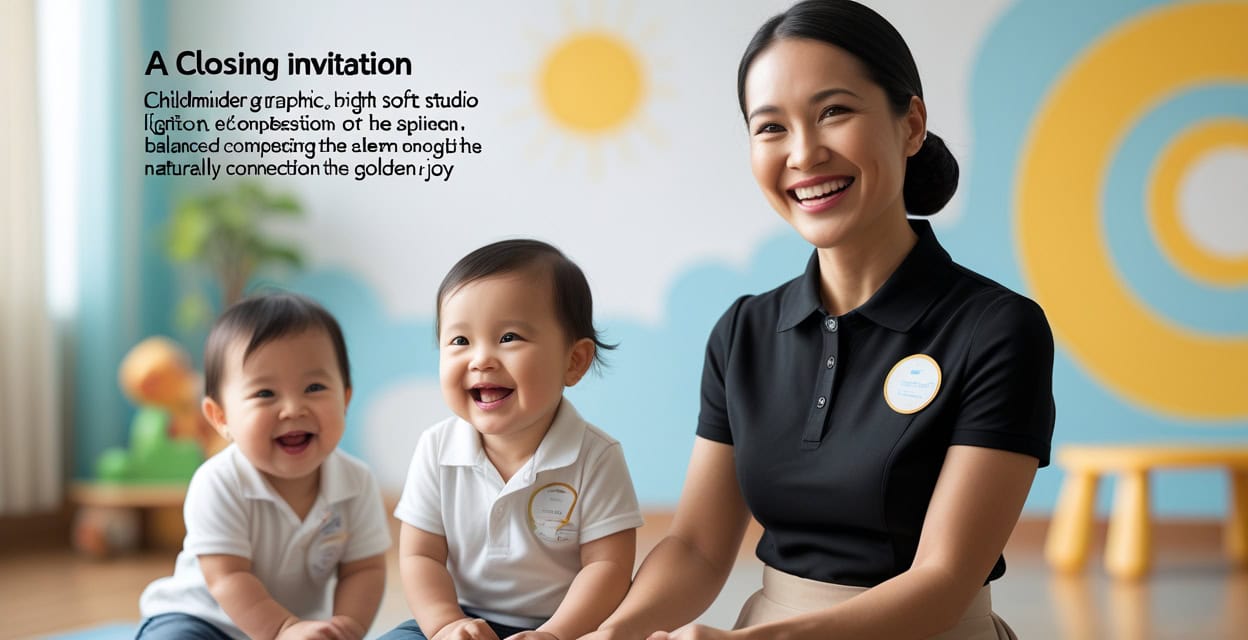
Parents, you do not need grandeur; you need goodness—daily, dependable, and near at hand. EduNanny’s infant care pods offer the steadiness of one attentive adult, the companionship of tiny peers, the safety of transparent practice, and the relief of near-home, affordable care you can trust. From 7am to 7pm, Monday through Friday, islandwide, with pricing from $16.50 for a half day or $33.00 for a full day before GST—and with CDA/Baby Bonus support during subsidised hours—your child can grow within small circles of big trust. This is not only a service; it is our civic pledge: to cradle the beginning so Singapore can flourish at every stage.

We look forward to welcoming you and your little one into an EduNanny pod near home—where safety, joy, and development meet, one gentle day at a time.


Conclusion: Cradling the Beginning for Singapore’s Future

Conclusion: Cradling the Beginning for Singapore’s Future

EduNanny reimagines infant care as a near-home, family-centered ecosystem powered by presence, safety, and developmental intention. Through ultra-low ratios, transparent practices, and a public-purpose framework, EduNanny seeks to nurture secure attachment, healthy development, and resilient communities. By enrolling, families join a national effort to elevate early childhood care, professionalize caregiving as a respected vocation, and invest in the kind of adults Singapore hopes its children will become. If you value consistency, calm, and connection during your child’s earliest days, EduNanny offers a blueprint for care that is trustworthy, scalable, and profoundly human.

Take the next step today and explore what near-home, high-quality infant care can look like for your family.

[#EduNannySingapore, #InfantCareSingapore, #ECDAPilot, #NearHomeCare, #EarlyChildhoodDevelopment]

edunanny-bfa99df8-ddce-45ae-bfb1-bedfb5893add
August 21, 2025

Small Pods Big Trust, EduNanny Near Home Infant Care Pilot for Singapore December 2024 to December 2027

Introduction

Introduction

Distinguished parents, caregivers, partners, and friends—thank you for gathering to think about the very beginning of life. The months when a heartbeat, a breath, a gaze, and a gentle response compose the entire curriculum are foundational. I speak today as an EduNanny infant care advisor, with the humility of a practitioner and the rigor of a researcher, to introduce a service designed for Singapore’s families who need reliability, safety, and warmth in equal measure. This article expands on that vision, offering practical guidance, actionable insights, and EduNanny’s lived experience in delivering developmentally tuned infant care.


What is the EduNanny Infant Childminding Service?

What is the EduNanny Infant Childminding Service?

EduNanny by BUTLER is honored to be appointed by ECDA to deliver infant childminding under Singapore’s national three‑year Childminding Pilot (1 December 2024 to 31 December 2027). Our mission is simple: keep care near home, keep ratios ultra‑low, and keep trust high—so that infants receive the attentive, developmentally tuned care that science and love both demand.

  • Eligibility: Singapore Citizen infants aged 2 to 18 months are eligible, provided they are not concurrently enrolled in ECDA‑licensed infant care centres.
  • Pod structure: Care is provided in micro‑pods of up to three infants per childminder (1:3), either in childminders’ homes or in supervised community spaces.
  • Hours: Care is available Mondays to Fridays, in half‑day (5 hours) or full‑day (10 hours) blocks between 7am and 7pm.
  • Fees: Before GST: $16.50 for half‑day, $33.00 for full‑day. Parents may use Child Development Account (CDA, under the Baby Bonus Scheme) during subsidised hours to defray costs.

How EduNanny makes infant care and childminding great—here in Singapore

How EduNanny makes infant care and childminding great—here in Singapore

We believe the smallest group enables the greatest care. By pairing a certified EduNanny childminder with no more than three infants, we create the conditions for secure attachment, responsive routines, and meaningful learning. We operate islandwide, close to where families live and work, offering both home‑based and community‑based caregiving environments with modern, infant‑centred layouts, and a transparent safety culture.

1) Attachment, then everything

The first relationship is the first syllabus. Building on the insights of Bowlby, Ainsworth, and Pikler, our 1:3 micro‑pods allow one consistent adult to read each child’s cues—hunger sighs, sleepy rubs, social bids—and respond quickly. That “serve‑and‑return” attunement is how language, regulation, and trust grow.

  • Practice tip: Implement gentle arrivals and departures with unhurried handovers so infants transition calmly. Create a predictable, warm welcome routine (smile, names, a small hello gesture, and a familiar object from home).
  • Primary‑caregiver model: One face infants learn to expect, with a trained relief backup to retain continuity. This fosters familiarity and reduces distress during transitions.
  • Respectful caregiving: Unhurried nappy changes, narrated touch, consentful routines. Care is not a pit stop; it is connection.
  • At‑home tie‑in: Share a brief daily “home cue” note prompting families to mirror a calming routine at home (e.g., a short cuddle ritual before sleep time).

2) Safety as design, ritual, and culture

Safety is not only what you install; it is what you repeat. We layer protection in seven rings to create an enduring safety culture:

  • Premises readiness: Hazard‑free zones, anchored furniture, covered outlets, secured gates, infant‑safe sleep spaces, and clean, ventilated rooms.
  • Health hygiene: Hand‑washing choreography, sanitisation schedules, safe milk handling and bottle protocols, food safety training.
  • Rest protocols: Evidence‑based sleep positioning, smoke‑free environments, cot‑checks, room temperature monitoring, and quiet‑sleep zoning.
  • Supervision rhythms: Never‑alone practices during wake windows; visible lines of sight; predictable room scanning.
  • Incident readiness: Infant first aid certification, emergency drills, and clear escalation plans; explicit incident reporting and parent notification standards.
  • Technology with dignity: CCTV installed in all community spaces under the pilot; home‑based settings may offer privacy‑respecting CCTV in caregiving areas during care hours where consent is obtained and aligned with ECDA guidance.
  • Health policy clarity: No Sick Child Policy for fevers and transmissible symptoms, plus a communicable‑illness return‑to‑care guide. We balance compassion with protection for all infants.

3) Learning in the lap of care: play as inquiry

Infants learn through movement, repetition, and joy. Drawing on Montessori, Froebel, Vygotsky, and Reggio‑inspired observation, our pedagogy emphasizes observation, responsiveness, and meaningful experiences:

  • Floor time matters: Daily supervised tummy time, reaching, rolling, and safe exploration to build core strength and neural connectivity.
  • Language bath: Songs, stories, face‑to‑face talk, and bilingual exposure aligned with family preference. Communication begins long before words.
  • Heuristic play: Natural textures, safe sensorial experiences, and found‑object baskets that invite curiosity over mere entertainment.
  • Culture close to home: Local songs, gentle rhythms, and family routines integrated into the day so infants experience continuity between home and care.

4) Rhythm, rest, and nourishment

A calm body invites a curious mind. Our childminders uphold predictable, responsive routines, rooted in evidence and sensitivity to each infant’s signals:

  • Sleep: Individualised sleep arcs, age‑appropriate wake windows, and a soothing sensory palette to support restorative rest.
  • Feeding: Safe preparation, paced bottle techniques, and respect for family choices (breastmilk, formula) with documented handling and logs. Solids are introduced under parental guidance and food safety protocols.
  • Emotional tone: Co‑regulation, gentle pacing, and a daily rhythm that prevents overstimulation while inviting curious, joyful play.

5) Families as first teachers; community as quiet strength

Parents are the centre of the circle. EduNanny creates clear, supportive partnerships that amplify a family’s strengths:

  • EduNanny Concierge Team: Guides matching, onboarding, and ongoing communication to ensure alignment and transparency.
  • Daily notes and snapshots: Regular updates about feeds, naps, diapers, and play, plus periodic developmental snapshots to track progress.
  • Check‑ins and site visits: Scheduled touchpoints and open‑door visits by appointment, fostering trust and collaboration.
  • Islandwide availability: Monday–Friday, 7am–7pm, with the flexibility to choose days per week and mix home‑based and community‑based settings.
  • Affordability and national support: CDA usage during subsidised hours supports families while maintaining high standards of care.

What parents receive with EduNanny

What parents receive with EduNanny

In adding value to families’ lives, EduNanny delivers a suite of tangible benefits drawn from real‑world practice:

  • Ultra low ratio: 1 childminder to 3 infants to maximize attention and responsiveness.
  • Certified childminders: Trained in infant first aid, basic infant care, and food safety; age‑appropriate competencies assessed for suitability.
  • Background checks: ECDA conducts thorough checks on childminders; for home‑based settings, checks extend to household members with regular access.
  • Safety infrastructure: Codified routines, clear incident protocols, and child‑safe environments that support consistent care.
  • CCTV transparency: CCTV in community spaces; home settings can offer privacy‑respecting arrangements by consent, ensuring balance between safety and dignity.
  • National initiative reliability: Alignment with ECDA’s Childminding Pilot, designed to meet industry standards and public‑private collaboration goals.
  • Near‑home convenience: Islandwide options with both community hubs and home‑based settings that feel like familiar neighbourhood spaces.
  • No Sick Child Policy: Protects all pods from transmissible illness with clear return‑to‑care guidelines.
  • Flexibility and affordability: Half‑day or full‑day blocks; CDA usage for subsidised hours helps families manage budgets.
  • Setting choice: Choose between home‑based and community‑based environments—each designed to feel like a respectful extension of family life.
  • Social purpose: Training and employing certified childminders strengthens local caregiving capacity and community cohesion.

Why the childminder matters

Why the childminder matters

The childminder stands as an anchor adult in a baby’s week. With just three infants, a childminder can observe early cues—an impending yawning sign, a subtle pace shift from hungry to distracted, or a babble ready to bloom—and respond in ways that scale development. In these micro‑moments, growth accelerates. Secure infants explore more, settle more easily, and learn with greater joy.

Near‑home micro‑pods also support parents. Commutes shrink, handovers become conversations rather than chaos, and families can focus on work and life with the reassurance that care is both kind and consistent. Our Concierge Team, safety policies, clear communication channels, CCTV transparency in community spaces, and consent‑based privacy options at home are designed to fortify trust and ease parental mind.


The practical details at a glance

The practical details at a glance

  • Eligibility: Singapore Citizen infants, 2 to 18 months, not concurrently enrolled in ECDA‑licensed infant care centres.
  • Hours: Monday to Friday, 7am–7pm, excluding public holidays; choose half‑day (5 hours) or full‑day (10 hours).
  • Fees: Before GST: $16.50 (half‑day) or $33.00 (full‑day). CDA may be used during subsidised hours.
  • Locations: Home‑based and community‑based caregiving spaces across Singapore.
  • Ratios: Strictly up to three infants per childminder at any time.

How to get started with EduNanny

How to get started with EduNanny

  1. Step 1: Visit the interest form page at the EduNanny site: https://edunanny.com/edunanny-ecda-childminding-service/ to submit your information, or enquire via WhatsApp through the site.
  2. Step 2: Our EduNanny Concierge Team will contact you to understand your needs and suggest nearby options.
  3. Step 3: Book a site visit to your preferred home‑based or community‑based pod.
  4. Step 4: Confirm your match, complete enrolment, and receive your onboarding pack and first‑day plan.

For more information, explore EduNanny.com and Childminding.EduNanny.com.


Conclusion: Who, what, when, where, how—why it matters

Conclusion: Who, what, when, where, how—why it matters

  • Who: Families who deserve peace of mind; infants whose brains triple in size in the first years; childminders whose vocation is to notice, protect, and delight.
  • What: Childminding as a public promise—care that is intimate, professional, and affordable, delivered in micro‑pods that keep attention high and risk low.
  • When: The ordinary Tuesday is when development happens—feed by feed, nap by nap, smile by smile.
  • Where: Near home, in familiar neighbourhoods, inside rooms designed for tiny hands and big futures.
  • How: With ultra‑low ratios, rigorous safety, trained and background‑checked childminders, CCTV in community spaces with consent options, clear health policies, and a pedagogy that treats caregiving moments as learning moments.
  • Why: A society is measured by how it welcomes its youngest. When infants feel secure, families flourish; when families flourish, communities cohere; and when communities cohere, a nation grows not only smarter, but kinder.

EduNanny is here to make excellent infant care practical, personal, and possible—day by day, pod by pod, neighbourhood by neighbourhood. Join us. Let’s give Singapore’s littlest citizens the attentive beginnings they deserve, and give parents the confidence that their child’s day has been safe, joyful, and deeply human.


SEO Keywords

SEO Keywords

[#early childhood development, #infant care, #Singapore childcare, #EduNanny, #childminding pilot]

edunanny-440fe059-5770-4169-965b-4e0fa73c3469
August 21, 2025

EduNanny Singapore December 2024 The Near Home 1 to 3 Infant Pods Model for Safe Joyful Development

EduNanny by BUTLER: Reimagining Infant Childminding in Singapore

EduNanny by BUTLER: Reimagining Infant Childminding in Singapore

Introduction: What Is EduNanny Infant Childminding

Good evening, parents, grandparents, childminders, and community champions who believe the first thousand days are the quiet engine of a nation’s future. EduNanny is the answer families have been seeking: a carefully designed approach to infant care that begins with the child’s needs and expands to support the whole family.

EduNanny by BUTLER is an ECDA-appointed operator for Singapore’s three-year Childminding Pilot for Infants, running from 1 December 2024 to 31 December 2027. In this national initiative, trained childminders care for one to three infants at a time, either in their homes or in thoughtfully designed community pods near yours. The promise is proximity, safety, dignity, and development—without long waitlists or long commutes.

Our model is intimate by design: one childminder, up to three infants, steady routines, everyday joy. It is also structured by public standards: background checks conducted with ECDA, mandatory training in infant first aid and basic infant care, clear incident protocols, and an environment curated for safety and learning. It is affordable through Government subsidies—half-day and full-day care Monday to Friday, 7am to 7pm—and payable with CDA/Baby Bonus. And yes, it is available islandwide. For families, this means care near home, continuity with a trusted caregiver, and the reassurance that safety and development are not optional extras but core commitments.

Practical takeaway for parents: EduNanny is designed to fit real family life. Consider how proximity, a familiar caregiver, and transparent safety protocols can reduce daily frictions and create space for meaningful parent–child interactions even on busy workdays.

How EduNanny Makes Childminding Great in Singapore

We designed EduNanny to solve the problems families tell us about every day:

  • I need care near home, not across the island. Local pods shorten travel time, reduce fatigue, and keep routines stable for babies who thrive on predictability.
  • I want the intimacy of a trusted person, not a crowd. A single, consistent caregiver fosters secure attachment and better day-to-day communication with parents.
  • I care about safety I can see and standards I can verify. Transparent safety protocols, background checks, and verifiable training ensure confidence for families and caregivers alike.
  • I want my child’s day to be more than minding—to be mindful. We prioritize secure attachment, unhurried play, good sleep, and warm language as core daily outcomes.
  • I need flexibility I can afford. Government-subsidised blocks and affordable hourly rates make high-quality care accessible within family budgets.

EduNanny answers with small pods, trained and background-checked childminders, modern community layouts, optional CCTV in home settings by agreement, required CCTV in community pods, a no-sick-child policy to keep groups healthy, and an evidence-informed daily rhythm that respects what infants actually need.

Five Topics That Define Our Pedagogy, Safety, Development, Happiness, and Purpose

Below are core pillars that guide daily practice, policy, and parent communication. Each is grounded in established child development research and designed for practical application in home-based and community pod settings.

  • 1) Attachment in Micro‑Moments Infants learn trust before words. In a 1:3 ratio, childminders notice micro‑moments that build attachment—mirroring a coo, a gentle pause before lifting, the predictability of a song before sleep. These serve‑and‑return interactions create secure bases and calmer transitions. Practical application: primary caregiver continuity, consistent routines, and careful handovers anchored in connection at every transition.
  • 2) Safety as Architecture, Not Afterthought Safety becomes a lived standard, not a checklist. Practically, this means ECDA background checks for carers and household members, early infant first aid and food safety training, community pods with CCTV, and no-sick-child policies. In home-based care, CCTV is available by agreement during care hours; in community pods, CCTV is mandatory for enhanced transparency and safety.
  • 3) The Pedagogy of the Unhurried Day Infants need attunement, not constant stimulus. Floor time takes precedence over flashcards; practical life tasks are scaled for infancy; scaffolding follows Vygotsky’s ZPD with sensitive timing; and language development is woven into routine through narration, gentle emotion labeling, and singing with eye contact.
  • 4) Measuring Happiness the Infant Way Well-being is expressed through calm separations, predictable routines, focused play, and transparent care notes. We track sleep, feeds, mood, and milestones to demonstrate alignment between home and pod, turning care into a coherent, reassuring experience for families.
  • 5) Why Childminding Matters to Singapore Near-home pods reduce commute stress, strengthen community ties, and support workforce participation. Flexible, subsidised blocks enable parents to maintain careers without compromising babies’ development or family well-being. This is social infrastructure—critical for a nation that values families as the foundation of progress.

Concrete Benefits of EduNanny

  • Ultra low ratio, ultra low density: 1 childminder to 3 infants, maximum.
  • CCTV Provided: Installed in all community pods; optional CCTV in home-based settings by parental agreement during care hours.
  • Certified EduNanny Childminders: Trained in infant first aid, food safety, and core infant care; assessed for suitability and ongoing professional development.
  • Background checks: ECDA-conducted checks for childminders and relevant household members in home-based settings.
  • No Sick Child Policy: To protect small pods; clear guidance on return-to-care following illness.
  • National initiative: Appointed by ECDA for the Childminding Pilot (Dec 2024–Dec 2027).
  • Excellence and quality: Transparent incident protocols, regular safety checks, and continuous supervision standards.
  • Centre‑like community pods and home‑based options: Modern near-home spaces or familiar home environments—your choice.
  • Islandwide convenience: Near your block and daily life.
  • Flexible, affordable blocks: Half-day (5 hours) at from $16.50; full-day (10 hours) at from $33.00 before GST, Monday–Friday, 7am–7pm, excluding public holidays. Subsidised hours payable via CDA/Baby Bonus.
  • Innovation you can see: Thoughtfully designed caregiving spaces; optional in‑home CCTV; routines anchored by evidence.
  • National social effort: Expanding safe, reliable infant care while supporting families’ work and wellbeing.
  • Accessibility: Available through EduNanny.com and Childminding.EduNanny.com for easy sign-up and updates.

How It Works: Eligibility and Access

  • Who: Singapore Citizen infants, 2 to 18 months, not concurrently enrolled in ECDA-licensed infant care centres.
  • What: Childminding in small pods—one to three infants per childminder—in home-based or community spaces.
  • When: Monday to Friday, 7am to 7pm; half-day (5 hours) or full-day (10 hours) blocks.
  • Where: Near home, islandwide.
  • How: Background-checked, trained childminders; safety protocols; CCTV in community pods; transparent communication with families.
  • Cost: From $16.50 half-day and $33.00 full-day before GST, subsidised during typical working hours; CDA/Baby Bonus accepted. Extended hours beyond subsidies discussed with EduNanny at regular rates.

A Short Explainer: What Sets EduNanny Apart

EduNanny does not scale care by adding more babies; we raise quality by holding the line at three. We don’t hide behind jargon; we show our standards—in environment, training, and daily interactions. We don’t choose between heart and science; we stitch them together in every moment of care. We don’t take trust for granted; we earn it twice a day at handover.

The Signup Pathway

Ready to start? Here are practical steps to move from interest to a smooth first day for your infant.

  • Step 1 — Explore: Visit https://edunanny.com/edunanny-ecda-childminding-service/ and submit the interest form, or reach out via WhatsApp to begin a conversation about your location and schedule.
  • Step 2 — Connect: Our EduNanny Concierge Team responds with a tailored plan: location options, pod or home-based preferences, and preferred start date.
  • Step 3 — Experience: Schedule a site visit to a nearby community pod or meet your prospective home-based childminder to assess fit, safety cues, and daily routines.
  • Step 4 — Enrol: Confirm your preferred half-day or full-day blocks; secure a start date; arrange a gentle, supported transition for your infant with the caregiver.

Closing: The Who, What, When, Where, and How of Why This Matters

Who: Infants who deserve secure bonds and unhurried days; parents who deserve dependable care that protects their livelihoods.

What: A 1:3 childminding model that is safe, affordable, and evidence-informed—run by certified, background-checked adults who love this work and are trained to do it well.

When: The first thousand days, when brains and bonds are built at a breathtaking pace—and weekdays 7am to 7pm, when families need us most.

Where: Near home, in community pods designed for safety and joy, and in the familiar warmth of home-based settings.

How: With national standards, vigilant safety, optional CCTV in homes by agreement and required CCTV in community pods, respectful pedagogy, and a daily rhythm that turns childcare into a childhood worth remembering.

EduNanny’s philosophy is simple: presence over pressure; safety without surveillance overreach; science with soul; public standards with personal attention. Our purpose is to cradle families so infants can thrive and parents can breathe—because a society that stands tall begins by holding its smallest citizens close.

Thank you for trusting EduNanny by BUTLER. Let’s begin with a conversation, a visit, and a gentle first day. Then, let the small miracles of secure care do the rest.


Conclusion

Conclusion

EduNanny offers a practical, research-informed approach to infant care that aligns with Singapore’s national priorities and families’ daily realities. By combining intimate caregiver relationships with robust safety standards, flexible access, and affordable subsidies, EduNanny turns the first thousand days into a shared, hopeful journey for children and their caregivers. If you’re seeking near-home care with a strong emphasis on attachment, development, and well-being, start with a conversation, book a site visit, and imagine a smoother transition for your family. The right start for your baby begins with a trusted partner you can meet, observe, and rely on every day.

[#EduNannySingapore, #InfantCare, #ChildmindingPilot, #SecureAttachment, #UnhurriedCare]

edunanny-0d80d159-371b-47b4-9adc-46d718a40242
August 21, 2025

EduNanny in Singapore ECDA Pilot December 2024 to December 2027 Near Home Infant Pods for Safe Joyful Development

Introduction: EduNanny and Our Pledge to Singapore's Infants

Introduction: EduNanny and Our Pledge to Singapore’s Infants

Good care for the youngest members of our community is not a mere service; it is a commitment to the future. EduNanny by BUTLER stands as an appointed operator under Singapore’s ECDA Childminding Pilot, pledging that every infant on our island can begin life held by safe hands, steady routines, and joyful discovery. This article offers practical insight, strategies, and real-world considerations for families who seek near‑home, high‑quality infant care that respects attachment, development, and daily rhythms.


What is EduNanny Infant Childminding?

What is EduNanny Infant Childminding?

EduNanny is a national, community-grounded childminding service designed for Singapore Citizen infants aged 2 to 18 months. Under ECDA’s three-year Childminding Pilot (1 December 2024 to 31 December 2027), our certified childminders care for one to three infants at any one time, near your home—in childminders’ homes or in thoughtfully prepared community spaces—Mondays to Fridays, between 7am and 7pm. Fees are made affordable through government subsidies: $16.50 for a 5‑hour half-day and $33.00 for a 10‑hour full-day (before GST), with CDA/Baby Bonus accepted for subsidised hours.

But numbers alone do not raise a child. Relationships do. As Montessori reminded us, the environment teaches; as Bowlby taught, attachment protects; as Vygotsky showed, relationships unlock learning. EduNanny brings this wisdom to life with modern safety, rigorous training, and an ultra‑low 1:3 ratio that preserves what every infant needs most: time, attention, and trust.


How EduNanny Makes Infant Care Great in Singapore

How EduNanny Makes Infant Care Great in Singapore

1) The Small Circle: One Caregiver, Deep Attachment, Real Time

When care is intimate, development accelerates. With a maximum of three infants per childminder, we protect the rhythm of the day: the unhurried feed, the unbroken nap, the playful eye‑to‑eye duet. Inspired by Pikler’s respectful caregiving and Bowlby’s secure base, our approach prioritises continuity—your infant knows who is present, who is listening, and who will respond. This is not a production line; it is a relationship.

  • Predictable routines that lower stress and improve sleep quality.
  • Individual care plans: feeding preferences, soothing styles, sensory thresholds.
  • “Talk, touch, tune” practice: narrated caregiving, gentle handling, responsive cooing to build language and security.

2) The Architecture of Safety: Six Layers You Can See and Trust

Safety is not a slogan—it’s a system. We embed six layers of protection:

  • People: Certified EduNanny childminders, background checked, with infant first aid, food safety, and basic infant care training. For home-based care, background checks extend to household members with regular access.
  • Places: Ultra low-density environments in homes or community spaces designed to reduce hazards—clear sightlines, gated zones, safe sleep surfaces, sanitised feeding areas, and modern layouts for mobility and play.
  • Practices: Clean‑as‑we‑go hygiene routines, safe sleep protocols, bottle and solids handling, sun/heat management, and a No Sick Child Policy to protect all infants.
  • Proof: CCTV provided in our community spaces; for home-based care, CCTVs are available by arrangement during care hours, balancing transparency and privacy.
  • Policies: Incident reporting, allergy action plans, medication administration protocols, and emergency drills.
  • Partnership: A two-way communication contract—daily updates and rapid escalation when needed.

3) The Joy Curriculum: Care Is the First Classroom

Development at this age is not worksheets; it’s warm hands and curious eyes. Our micro‑curriculum is woven into caregiving itself:

  • Sensory right‑sizing: natural light, soft materials, varied textures, quiet nooks, and floor‑level exploration for safe gross motor practice.
  • Language everywhere: songs, fingerplays, book sharing, and naming emotions to seed communication and self-regulation.
  • Play with purpose: treasure baskets, tummy‑time stories, mirror play, cause‑and‑effect toys—guided, not rushed. As Froebel would argue, play is the road to meaning.
  • Respectful care moments: slow diapering and feeding become co‑regulated lessons in trust, autonomy, and early executive function.

4) The Near‑Home Advantage: Convenience Without Compromise

Time is a family’s most precious capital. EduNanny shortens the distance between your home and high‑quality care by operating islandwide in community and home premises. We align to working families with Monday–Friday availability, 7am–7pm, in flexible 5‑hour or 10‑hour blocks. And we protect affordability: from $33/day for a full day (before GST) with CDA/Baby Bonus accepted for subsidised hours. Quality, access, and value—together, not traded off.

5) Public Purpose in Action: A National Effort, A Community Standard

EduNanny is part of a National Social Initiative under the ECDA Childminding Pilot. Our Maximum Employment Mandate focuses on creating dignified, well‑trained jobs while raising standards through transparent practice and continuous learning. We measure what matters—infant wellbeing, parent satisfaction, and safety fidelity—and we improve relentlessly. When society invests in caregiving excellence, families thrive and so does the future workforce.


Why Parents Choose EduNanny

Why Parents Choose EduNanny

  • Ultra Low Density environments to reduce overstimulation and illness exposure.
  • Ultra Low Ratio with a 1:3 infant ratio for real responsiveness.
  • CCTV Provided in community spaces; optional in home-based care by arrangement.
  • Certified EduNanny Childminders: trained, assessed, and supported.
  • Certified and Background Checked, including relevant household members for home-based care.
  • No Sick Child Policy to protect all infants’ health and routines.
  • National Initiative: ECDA Childminding Pilot (Dec 2024–Dec 2027).
  • Centre-Based and Home-Based experience: Pilot care is home/community-based; wider network also designs centre-based environments to the same standards.
  • Islandwide Convenience and Distance-friendly near-home options.
  • Excellence and Quality assured through training, audits, and coaching.
  • Modern Layouts designed for visibility, safe sleep, and meaningful play.
  • Innovative CCTV use for transparency in community spaces.
  • Affordable from $33/day (before GST), with CDA/Baby Bonus during subsidised hours.
  • Flexible blocks Monday–Friday, 7am–7pm, excluding public holidays.
  • EduNanny.com and Childminding.EduNanny.com for easy access.
  • Available in community and home premises across Singapore.

Four Short Stories From a Day in an EduNanny Pod

Four Short Stories From a Day in an EduNanny Pod

Experiencing a day in EduNanny is about small moments that build trust and competence:

  • At 7:45am, a childminder greets a baby at eye level: “Hello, Mei. I’m so glad you’re here.” Autonomy and welcome begin at the threshold.
  • At 10:10am, a bottle feed is unhurried—held close, face‑to‑face—building the neural pathways of regulation and trust.
  • At 2:00pm, a mirror and a soft scarf invite peekaboo—object permanence wrapped in laughter.
  • At 4:30pm, a reflective handover shares not just nappies and naps, but new skills observed and the next small step parents can enjoy at home.

What Parents Often Ask

What Parents Often Ask

  • Is it really safe? Yes—through layered safeguards: trained people, prepared places, tested practices, transparent policies, and partnership in communication. ECDA conducts background checks; we maintain strict environment standards and provide CCTV in community spaces.
  • Will my baby get enough attention? With our ultra‑low 1:3 ratio, yes. Attention is not sliced thin; it is shaped thoughtfully, one child at a time.
  • Will care feel personal? Absolutely. We teach our childminders that care moments are learning moments—and that relationships are the heart of learning.

The Who, What, When, Where, and How of Why Childminding Matters

The Who, What, When, Where, and How of Why Childminding Matters

  • Who: Infants aged 2–18 months; parents who need safe, reliable, near‑home care; childminders who are competent, caring, and community‑minded.
  • What: Ultra‑low ratio childminding that integrates safety, attachment, and development—care as curriculum.
  • When: Weekdays, aligned to working hours—7am to 7pm—so families can work with peace of mind.
  • Where: Islandwide—home‑based and community premises prepared to exacting standards.
  • How: Certification, background checks, clear protocols, parent partnership, CCTV in community spaces, and a relentless commitment to excellence.

The Philosophy and Purpose of EduNanny Childminding

The Philosophy and Purpose of EduNanny Childminding

We believe that the earliest care is both private and public in its consequence: the calm you see in a well‑rested baby becomes the confidence of a learner, the empathy of a teammate, the steadiness of a leader. Our purpose is simple and profound—to surround each infant with safety, joy, and respect so that Singapore’s future is grown from roots that are secure and strong.

In the language of our great pioneers:

  • Montessori: Prepare the environment; the child will reveal themselves.
  • Bowlby: Be the secure base; the child will explore.
  • Vygotsky: Stand beside; scaffold the next step.
  • Pikler: Slow down; respect is the first curriculum.

Practical Details You Can Act On Today

Practical Details You Can Act On Today

Eligibility

Eligible participants are Singapore Citizen infants aged 2 to 18 months who are not concurrently enrolled in ECDA‑licensed infant care centres.

Hours and Fees

Hours: Mondays to Fridays, 7am–7pm, excluding public holidays.

  • Half-day (5 hours): $16.50
  • Full-day (10 hours): $33.00
  • Subsidies: CDA/Baby Bonus payable for subsidised hours.

Sign Up in Four Simple Steps

  1. Visit https://edunanny.com/edunanny-ecda-childminding-service/ to submit the form, or enquire via WhatsApp from the same page.
  2. Receive a response from our EduNanny Concierge Team.
  3. Confirm your appointment for a site visit—home‑based or community premises.
  4. Enroll, meet your childminder, and begin a gentle settling‑in plan.

Closing

Closing

Tonight, imagine a Singapore where every infant begins life in a small, steady circle of care; where safety is visible, joy is intentional, and development is dignified. This is not a luxury. It is the foundation on which families stand, work, and dream. EduNanny by BUTLER is ready—trained, audited, near your home, and aligned with a national effort—to hold your child’s first days with care and competence. Because when we get the beginning right, everything that follows stands taller. Thank you for trusting us with what matters most. We’re ready when you are.


Conclusion

Conclusion

EduNanny offers a thoughtful model for infant care that blends attachment theory, safety systems, and development‑forward practices into a near‑home experience. By keeping the caregiver–infant group deliberately small, prioritising ongoing communication with families, and grounding daily routines in developmental science, EduNanny supports both infant wellbeing and parental peace of mind. If you are seeking reliable, near‑home care that respects your child’s pace, consider exploring EduNanny’s pilot offering as a viable, future‑focused option for your family. Take the next step: learn more, request a site visit, or begin the enrollment process to secure a trusted caregiver for your infant.

[#EduNanny, #SingaporeInfantCare, #ECDA, #NearHomeCare, #InfantSafety]

edunanny-0e4ab1d9-5368-4661-a3d6-7276b598e9bc
August 21, 2025

The Near Home Infant Pods Redefine Safety Joy and Development in Singapore 1 December 2024 to 31 December 2027

EduNanny Infant Childminding Service: A New Standard for Singapore’s Early Years

EduNanny Infant Childminding Service: A New Standard for Singapore’s Early Years

In response to Singapore’s national Childminding Pilot (1 December 2024 to 31 December 2027), EduNanny introduces a rigorous, compassionate, and science-informed approach to infant care. Grounded in evidence about attachment, development, and safe environments, our ECDA-appointed service blends professional training with the warmth of home-based care. This long-form guide expands on the core speech you heard tonight, translating policy into practical, day‑to‑day benefits for families, childminders, and communities across the island.


Why Low Ratios Elevate Quality

Why Low Ratios Elevate Quality

Research across developmental science shows that infants thrive when responsive caregivers can attend to cues within moments rather than minutes. A 1:3 ratio unlocks secure attachment, smoother self-regulation, and richer early language exposure. At EduNanny, the small group size allows caregivers to notice subtle states—hunger, discomfort, curiosity, or fatigue—and respond with warmth, timing, and respect. For families, this translates into reliable routines, predictable communication, and a secure base that supports exploration both at home and in the community.


EduNanny’s Model: Where Care Meets Science and Heart

EduNanny’s Model: Where Care Meets Science and Heart

  • Near‑home convenience, islandwide: Pods operate in carefully approved home and community premises within your neighbourhood to preserve family rhythms and reduce transit stress.
  • Ultra low ratio, ultra low density: A maximum of three infants per childminder at any time (1:3) to ensure attention, safety, and calm.
  • Monday to Friday, 7am–7pm: Flexible half‑day (5 hours) or full‑day (10 hours) blocks, aligning with typical working hours.
  • Affordability by design: From $16.50 (half‑day) and $33.00 (full‑day) before GST; CDA/Baby Bonus (CDA) eligible for subsidised hours.
  • National standards you can trust: ECDA‑appointed Pilot, with all EduNanny childminders background checked and trained before deployment.

Four Pillars of Practice: Deepening Everyday Care

Four Pillars of Practice: Deepening Everyday Care

1) Attachment in Action: The One‑to‑Three Arc of Trust

Key idea: consistent, named primary childminders cultivate a secure base for each infant. Actionable steps include:

  • Daily handover rituals: A brief, warm exchange between the parent and the caregiver at arrival and departure, noting feeding cues, sleep patterns, and notable moments.
  • Attuned feeding and soothing: Respond to hunger, fullness, and temperament with calm pacing, named cues, and gentle touch. Use a predictable order: eye contact, feeding, then close containment if needed.
  • Consistent communication with families: Short notes or photos that highlight milestones, smiles, first words, or new abilities, reinforcing continuity between home and care.
  • Practical example: If an infant settles best after gentle rocking and a favorite lullaby, the primary caregiver makes this a standard part of the settling routine, while encouraging parents to use similar cues at home for continuity.

2) The Prepared Environment: Safe Freedom for Natural Development

The environment is crafted to invite exploration while minimizing hazards. Practical enhancements include:

  • Soft, unobstructed floors: Clear spaces for crawling and cruising with safe mats and low shelving.
  • Simple, sensorial play: Age‑appropriate treasures—cloths, rattles, mirrors, and natural textures—that invite touch, sound, and curiosity without overstimulation.
  • Predictable routines, flexible pace: Daily rhythms that children can anticipate—naps, meals, and play—yet allow for individual tempo shifts as needed.
  • Montessori‑inspired layout: Accessible toys and materials arranged at infant height to nurture independence and concentration without clutter.
  • Practical home tips for parents: Create a dedicated “care corner” at home with a familiar batting or tummy time mat, accessible soft toys, and a consistent nap area to reinforce secure routines.

3) Safety as a Living System: Culture, Not a Checklist

Safety is ongoing practice, not a one‑off checklist. EduNanny’s safety culture includes:

  • Certification and readiness: Every childminder is certified in infant first aid and basic infant care before deployment.
  • Hazard checks and safe sleep readiness: Regular home and space inspections to minimize hazards and ensure safe sleep practices (firm mattress, flat position, no loose items).
  • No Sick Child Policy during subsidised hours: If an infant has fever or contagious symptoms, care is arranged at home to protect the group and families receive guidance for re‑entry.
  • Privacy‑respecting CCTV policy: CCTV in community spaces is mandatory; in home settings, care‑area CCTV is offered by arrangement with parental consent, balancing transparency with dignity.
  • Medication and health management: Non‑contagious medications are administered only with written parental instructions, ensuring precise dosage, timing, and watch‑outs.
  • Hygiene and nutrition standards: Daily hygiene rituals, food safety protocols, and safe‑sleep checks are audited and integrated into daily practice.
  • Transparent incident management: Clear, documented processes for communication with parents if anything unexpected occurs, so families know who to contact and what steps follow.

4) Happiness You Can Feel—and Measure

Joy is a developmental fuel. We track and celebrate moments of thriving, including:

  • Relaxed shoulders, steady feeding, and consistent sleep patterns
  • Engagement with familiar voices and routines
  • Evidence of social interest—eye contact, imitation, and responsive smiles
  • Narrated moments: caregivers describe infants’ actions aloud to build language foundations

Actionable strategies for families at home:

  • Engage in daily “conversations” with your baby—name what you see, narrate actions, and imitate vocal play.
  • Provide predictable routines around meals, naps, and play to support the infant’s sense of control and security.
  • Document small wins in a simple baby journal—your notes reinforce a positive feedback loop for development.

The EduNanny Advantage: A Day in the Life and How It Works

The EduNanny Advantage: A Day in the Life and How It Works

Enrollment, Eligibility, and Locations

Eligibility focuses on Singapore Citizen infants aged 2 to 18 months who are not concurrently enrolled in ECDA‑licensed infant care centres. The model operates in two formats—centre‑based community spaces and home‑based settings that meet strict safety and care requirements—across approved locations, islandwide. Each childminder cares for up to three infants at any time, ensuring focused attention and consistent care.

A Day in the EduNanny Pod

Sample day (flexible to each infant’s rhythm):

  • Gentle check‑in, health observation, and family notes for the day.
  • Calm sensory play, tummy time, caregiver‑led exploration, and unhurried feeds aligned with each infant’s hunger cues.
  • Individual sleeps following safe‑sleep guidelines; quiet, dimmed environment to support rest when needed.
  • Language‑rich activities—songs, finger plays, mirror games, and caregiver narration of the infant’s actions.
  • One‑to‑one diapering and soothing, with attentive responsiveness and joyful interaction.
  • Short, insightful update to parents with milestone notes and moments of wonder from the day.

Safety, Privacy, and Transparency

Safety, Privacy, and Transparency

  • Background checks and ongoing training: ECDA oversight ensures compliance and continuous professional development for all EduNanny staff.
  • Privacy‑respecting documentation: Care notes and photos shared with parents to celebrate progress while protecting each infant’s dignity.
  • No Sick Child Policy during subsidised hours: Protects the pod and helps families arrange safe at‑home care when illness arises.
  • Incident management: Clear protocols for communication and follow‑up so families know what happened and how it was addressed.

The Public Good of Childminding and National Impact

The Public Good of Childminding and National Impact

EduNanny’s approach supports national goals beyond individual families. By providing high‑quality, near‑home infant care, we expand access to reliable childminding, create dignified employment and professional pathways for caregivers, and strengthen communities. The Pilot encourages skilled, satisfied workers who bring empathy, experience, and ethical practice into the earliest years of Singapore’s citizens.


How to Sign Up

How to Sign Up

Getting started is simple:

  • Visit the EduNanny page for the ECDA Childminding Service: https://edunanny.com/edunanny-ecda-childminding-service/
  • Fill out the initial inquiry form or contact via WhatsApp for a concierge response
  • Schedule a site visit to meet a prospective childminder and see the environment
  • Enroll, meet your childminder, and begin participating in the program

Additional information is available at EduNanny.com and at Childminding.EduNanny.com. EduNanny operates in partnership with ECDA under the national Childminding Pilot, from 1 December 2024 to 31 December 2027.


Conclusion

Conclusion

In the earliest years, steadiness matters more than spectacle. EduNanny offers small pods with big trust: a blend of science and heart, safe near‑home care, and a national promise that every infant can begin life with secure attachment, curious minds, and joyful discovery. We invite families to imagine care that respects biology, celebrates everyday moments, and cultivates confident foundations for the years ahead. Consider EduNanny as your partner in your child’s first and most formative chapters—schedule a visit, and start this conversation about your family’s beginning.

SEO keywords: [#keyword1, #keyword2, #keyword3, #keyword4, #keyword5]