Fraud Blocker edunanny.com

Category: Childminding

edunanny-cff53177-67ba-4692-ace6-bb130584b92d
August 22, 2025

EduNanny A Covenant of Care for Singapore Infants December 2024 to December 2027

EduNanny: A Covenant of Care for Singapore’s Infants

EduNanny: A Covenant of Care for Singapore’s Infants

Good evening to all parents, grandparents, caregivers, and friends of Singapore’s youngest citizens. I stand before you not merely to introduce a service, but to extend a covenant of care. EduNanny by BUTLER—appointed under ECDA’s three‑year Childminding Pilot—exists for one clear purpose: to make daily life kinder, safer, and more developmentally rich for infants and more workable and dignified for families across our island. From 1 December 2024 to 31 December 2027, we are bringing professional, science‑rooted infant care into small, neighborhood‑based settings where every baby is seen, known, and loved.

What follows is a deeper exploration of how EduNanny works, why it matters, and how families can make the most of this new model of near‑home, professional infant care.


What is EduNanny Childminding?

What is EduNanny Childminding?

It is intimate care delivered in the smallest meaningful circle—one childminder to one, two, or at most three infants—offered in home‑based or community premises across Singapore. It is Monday to Friday, 7am to 7pm (excluding public holidays), arranged in half‑day 5‑hour or full‑day 10‑hour blocks so that working rhythms, baby rhythms, and household realities can finally align. It is affordable care—government‑subsidised within these hours, at $16.50 for half‑day and $33 for full‑day before GST—with fees payable by CDA/Baby Bonus to reduce worry and widen access. Most of all, it is an intentional blend of safety, attachment, and learning that translates decades of child development science into everyday gestures, routines, and environments.

Ultra‑low ratios and safe, low‑density spaces

We start with the infant—and refuse to scale beyond what human bond and attention can carry. Our ultra‑low ratio of 1:3 is not a marketing flourish; it is the condition for responsive care. We design clean, modern, low‑density spaces where infants move freely and safely. We equip certified EduNanny childminders—trained in infant first aid and basic infant care, assessed for caregiving skill, and background‑checked by ECDA, with checks extending to family members who have regular access in home‑based settings. We embed visibility and trust: CCTV is provided in our community premises as required; for home‑based care, we offer an opt‑in CCTV arrangement in caregiving areas and hours to balance privacy and peace of mind. And we practice health stewardship through rigorous hygiene standards and a No Sick Child Policy that protects little lungs and working rosters alike.

Subsidised, family‑friendly access

EduNanny is designed to fit working families’ realities: near home, predictable hours, and quality care within reach. Government subsidies apply for the defined blocks of care during typical working hours, with the aim of widening access while upholding high standards of safety and caregiver competence. The model explicitly includes support mechanisms such as CDA/Baby Bonus to reduce financial strain on families.

Four commitments at the heart of our pedagogy and practice

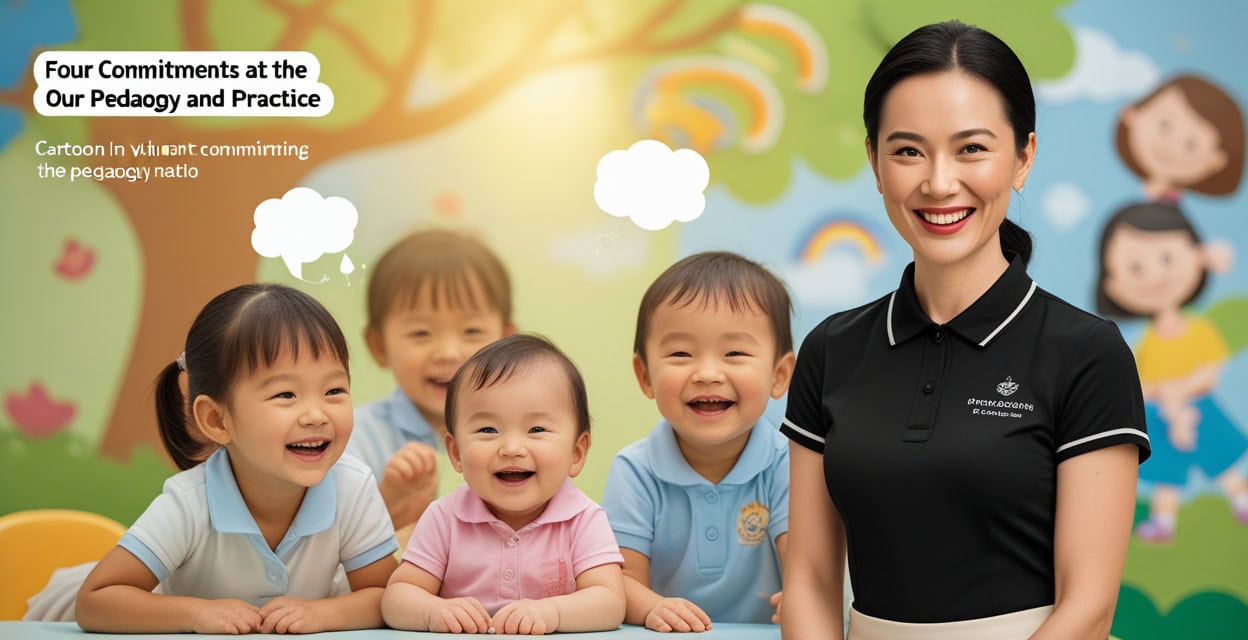
Four commitments at the heart of our pedagogy and practice

1) Attachment first: the architecture of trust

Infancy is built on dependable presence. Our childminders learn and live the discipline of responsive care: to notice cues, to answer cries promptly, to narrate what is happening, to return infants to calm before moving on. A baby who is comforted quickly learns the world is safe; a baby whose signals are answered learns their voice matters. Small ratios make this possible; daily consistency makes it lasting. Parents will meet the same caregiver, day after day, so the infant’s world remains coherent. Practical tips for families: arrange a consistent pick‑up routine; provide a brief cue sheet that helps the caregiver anticipate sleep, feeding, and comfort needs; ask to see the caregiver’s daily log and voice any concerns during the regular handover window.

2) Movement before milestones: freedom to unfold

We draw from Pikler‑inspired practice to protect a baby’s natural motor progression. Rather than propping or rushing, we create safe floor time, varied textures, low shelves, and just‑right challenges. Infants strengthen their core by rolling; integrate their senses by reaching; build balance by pulling up at their own pace. This is not a race to “sit by X months”, but a steady invitation to explore in a hazard‑free environment that has been deliberately prepared. Practical ideas for families: discuss daily floor play routines with the caregiver; share simple at‑home textures (soft mats, safe pillows, low‑height mirrors) that support exploration; ask for a short video or photo summary highlighting new movements and safe play ideas.

3) The talkative day: language as care, care as language

Every caregiving moment is a conversation. We practice “serve‑and‑return” interactions—meeting coos with words, pointing with names, curiosity with encouragement. Diaper changes are narrated; bottle feeds are a duet of eye contact and rhythm; songs, finger plays, and stories seed attention and emerging literacy. In Singapore’s multilingual tapestry, we honor the home language and gently introduce English where families desire, so identity and comprehension grow together. Practical guidance for families: establish a daily “narration routine” during care handovers, label objects in home languages, and gradually introduce bilingual songs or rhyme time during feeding and play.

4) Safety as culture: designed, rehearsed, and seen

Safety is not only equipment; it is a system of habits. We conduct daily environment scans; uphold safe‑sleep checks and bottle‑feeding protocols; sanitize high‑touch surfaces; rehearse emergency responses; and keep medication administration precise and documented when parents request it. CCTV supports accountability—mandatory in community spaces, available by arrangement in home settings during hours of care. Our No Sick Child Policy reduces transmission; our incident protocols ensure clear, timely communication if anything needs attention. Practical action steps for families: review the No Sick Child Policy, prepare a simple “food, sleep, sickness” alert system with the caregiver, and ensure you have an up‑to‑date emergency contact list on hand at every site visit.


A day in the life of an EduNanny micro‑circle

A day in the life of an EduNanny micro‑circle

You arrive to a warm greeting and a brief health check. Your infant is settled with their caregiver—one who knows yesterday’s naps, today’s appetite, and the lullaby that always works for the last five minutes before sleep. Morning floor play is unhurried and purposeful: grasping rings here, soft climbing mat there, a song that invites imitation. Feeds are held, not propped; naps follow safe‑sleep guidance; movement happens on the ground, not in gadgets. The day is punctuated by documentation—a brief log, photos where permitted, and notes on cues and milestones. At pick‑up, you receive a considered handover: what was learned, what soothed, what tomorrow might bring. Practical tips for families: request a weekly activity snapshot, ask for a milestone log, and leave a message on the caregiver’s communication notebook if you have evolving routines to share.

Why childminding matters now

Why childminding matters now

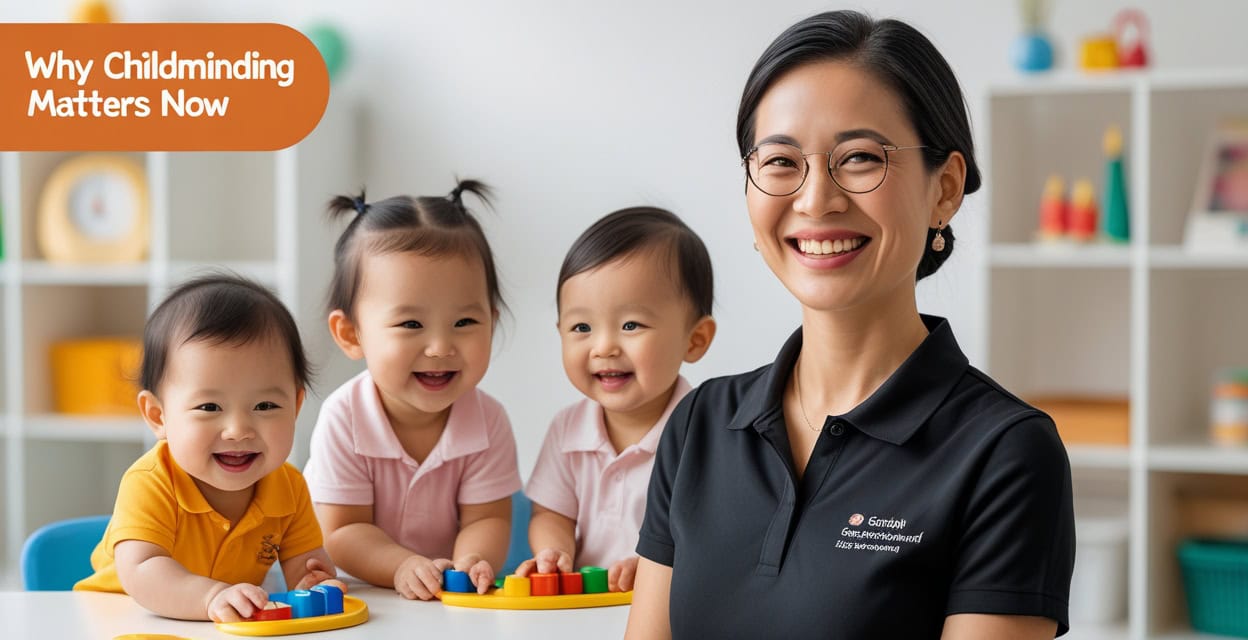
Because in the early months, scale is the enemy of attunement. Scale can erode the finely attuned sensitivity that infants need. Because many families need care that is near home, predictable, and attainable without sacrificing quality. Because infants flourish when a known adult holds the center of their day. And because Singapore’s social promise is kept one neighborhood at a time—when every baby, regardless of postal code, starts life with safety, joy, and a chance to explore. EduNanny is designed to bring high‑quality infant care into communities, with a model that respects both the science of development and the realities of modern families.


The EduNanny advantages at a glance

The EduNanny advantages at a glance

  • Ultra low density, ultra low ratio: never more than 1:3, so every cue is seen and answered
  • Certified EduNanny childminders: trained in infant first aid and basic care, assessed and supported
  • Certified and background‑checked: ECDA conducts checks, including household members with regular access in home‑based settings
  • CCTV provided: installed in community premises; opt‑in in home‑based caregiving areas and hours to balance privacy and reassurance
  • Health stewardship: No Sick Child Policy, strong hygiene routines, safe‑sleep vigilance
  • Two settings for convenience: home‑based childminding and community/centre‑style premises with modern layouts
  • Affordable access: government‑subsidised blocks during typical working hours; half‑day $16.50, full‑day $33 before GST; CDA/Baby Bonus payable
  • Working‑day coverage: Monday to Friday, 7am–7pm islandwide (excluding public holidays), with flexible half‑day or full‑day blocks
  • Designed for working families: short distances, neighborhood convenience, consistent caregivers
  • Part of a national initiative: EduNanny by BUTLER is appointed under the ECDA Childminding Pilot (Dec 2024–Dec 2027)
  • Service ethos: excellence, quality, transparent communication, and a culture of continuous improvement
  • Social mission: a national initiative that grows professional childminders and raises sector standards
  • Learn more: EduNanny.com and Childminding.EduNanny.com

Who, what, when, where, how—so every family can say “this works for us”

Who, what, when, where, how—so every family can say “this works for us”

  • Who: Singapore Citizen infants 2–18 months not concurrently enrolled in ECDA‑licensed infant care; families seeking trusted, near‑home care
  • What: professional, small‑group childminding that blends safety, attachment, and early learning in daily routines
  • When: weekdays, 7am–7pm, in 5‑ or 10‑hour subsidised blocks; discuss extended needs with us beyond these hours at regular rates
  • Where: home‑based caregiving or modern community premises across the island
  • How: certified, background‑checked childminders; low ratios; CCTV in community spaces and opt‑in at home; clear protocols; partnership with parents anchored in respect and transparency
  • Why: because infants deserve deep attention and families deserve care that is safe, joyful, nearby, and financially sensible

The philosophy and purpose that guide us

The philosophy and purpose that guide us

We believe care is curriculum. A soothing voice grows language; a steady hand grows trust; a safe floor grows courage. The point is not to accelerate childhood but to protect its integrity—so that exploration is safe, emotions are welcome, and milestones unfold naturally. Our role is to be the secure base from which your child ventures and the reliable partner to whom you return. When families are supported and infants are known, communities become kinder and the future becomes brighter. Practical implications for families: view daily care as a collaborative partnership; stay involved through regular updates and visits; participate in parent education sessions that accompany the pilot.


How to sign up

How to sign up

Visit https://edunanny.com/edunanny-ecda-childminding-service/ and fill up the form or enquire via WhatsApp. Receive a prompt response from our EduNanny Concierge Team. Confirm your appointment for a site visit (home‑based or community setting). Enrol and begin your child’s gentle start with EduNanny.


In closing

In closing

Childminding is not a stopgap; it is a craft. In these small, well‑held circles of care, we honor the science of early development and the soul of family life. Together—with parents as partners, childminders as professionals, and ECDA’s national pilot as a shared platform—we can give Singapore’s infants a daily experience of safety, joy, and discovery that will echo through a lifetime. Thank you for trusting EduNanny by BUTLER to cradle those beginnings with excellence and heart.

Practical resources and next steps for families

Practical resources and next steps for families

  • Prepare for a site visit by listing your infant’s routine, feeding preferences, and any special care needs.
  • During a visit, observe the caregiver’s interactions: responsiveness, narration, and warmth; check the cleanliness and safety of the environment.
  • Ask about daily documentation: what logs are kept, how milestones are recorded, and what the handover looks like.
  • Discuss transition plans: how to introduce your infant to the caregiver, what comfort cues are most effective, and how to maintain continuity if a caregiver is temporarily unavailable.
  • Clarify policies on sick days, emergencies, medication administration, and referrals to ECDA resources if concerns arise.

Frequently asked questions (FAQs)

Frequently asked questions (FAQs)

  • How is the 1:3 ratio maintained across different settings?
  • What training do EduNanny caregivers receive beyond initial certification?
  • How does CCTV balance safety and privacy in both community and home settings?
  • What happens if my infant becomes ill while at EduNanny, and how are communications handled?
  • What kind of parental involvement is encouraged in the EduNanny model?

*Note: All information above reflects the EduNanny model during the ECDA Childminding Pilot period (Dec 2024–Dec 2027) and is subject to ECDA regulations and government subsidies.

[#EduNannySingapore, #InfantCareSingapore, #LowRatioCare, #EarlyChildhoodDevelopment, #HomeBasedChildminding]


edunanny-955ed3f6-7ebb-4188-9065-8331707fe395
August 22, 2025

The Neighbourhood Cradle EduNanny Turns Science into Everyday Dignity for Singapore Infants

EduNanny Singapore: A Vision for Infants, Families, and a Nation

EduNanny Singapore: A Vision for Infants, Families, and a Nation

Distinguished parents, caregivers, neighbours, and partners—good evening. Before we talk about models and metrics, let us remember the small, seismic miracle at the centre of all this: an infant who reaches for a face, finds steady eyes, and settles. That moment is attachment, learning, and citizenship beginning at once. EduNanny exists to honour that moment and to make it reliably possible for every family in Singapore. This is more than childcare; it is a public‑spirited movement rooted in science, dignity, and neighbourhood life.


What EduNanny Is

What EduNanny Is

Our core mission

EduNanny is a public‑spirited, research‑grounded movement for infant care and community childminding in Singapore. We blend the heart of Bowlby’s secure base, the patience of Pikler’s respectful care, the curiosity of Montessori, the observation of Piaget, the social scaffolding of Vygotsky, the play of Froebel, and the whole‑child lens of Erikson—translated into Singaporean neighbourhoods, workdays, and rhythms. Operated as EduNanny by BUTLER and participating under the ECDA Childminding Pilot, we place infants in ultra‑low‑ratio 1:3 pods near home, Monday to Friday, 7am to 7pm, through centre‑based and home‑based options across the island. We are a National Social Initiative with a Maximum Employment Mandate: we professionalise caregiving jobs while giving families trustworthy choice.

How we structure care

What makes EduNanny different is simple: we turn the science of the first thousand days into a daily system of care that is safe, joyful, and attainable—affordable from $33/day, with fees payable by CDA/Baby Bonus—without compromise on dignity or quality.


Five guiding themes that shape every choice

Five guiding themes that shape every choice

1) Building the architecture of secure attachment at scale

Key principles for families and carers:

  • Pair each infant with a primary childminder to ensure a consistent, responsive relationship that learns and responds to that child’s signals, cycles, and needs.
  • Treat care routines as curriculum: feeding, changing, soothing become moments for language, trust, and co‑regulation.
  • Adopt an observe‑before‑intervene approach inspired by Pikler: invite participation rather than over‑managing, allowing infants to engage when ready.
  • In ultra‑low 1:3 pods, caregivers notice micro‑moments (averted gaze, hand to mouth, foot flex) to guide when to pause, smile, or intervene—creating a secure base from which exploration grows.

Practical at‑home tips for parents: set predictable daily rhythms, name feelings and needs during routines, and provide a calm, warm presence during transitions (e.g., during feedings and nap times) to reinforce secure attachment beyond the pod.

2) Safety as a living system, not a poster

Safety is a layered, active practice—repeated hourly, not a slogan. Our approach includes:

  • Environments: modern layouts with clear sightlines, safe sleep standards, zoned spaces that reduce crowding and noise. Materials are developmentally appropriate, non‑toxic, and rotated to avoid clutter hazards.
  • Processes: two‑person checks for sleep and handovers; red rules for feeding and hygiene; emergency drills and incident reviews that treat near‑misses as lessons.
  • Technology: transparent CCTV in learning spaces for coaching; digital attendance, temperature, and sleep logs; secure parent updates.
  • People: rigorous training in infant CPR, choking response, and infection control; daily safety huddles for briefings; clear escalation protocols.

Parents can participate by requesting a safety briefing, reviewing incident summaries, and asking to observe a safety huddle to understand how safety becomes a habit of mind.

3) Developmental nutrition for the mind: play with purpose

We view play and routine as the mind’s diet—nourishing language, curiosity, and problem solving. Our pedagogy centers on:

  • Serve‑and‑return interactions in a language‑rich environment; caregivers narrate, label, mirror, and sing to support vocabulary growth.
  • Floor time for self‑discovery: rolling, reaching, pivoting, and body awareness—the “laboratory of self” described by Piaget.
  • Social curiosity scaffolding through turn‑taking, peekaboo, and collaborative play that introduce early social cognition aligned with Vygotsky’s ideas of social learning.
  • Culturally rooted sounds and stories: a Singapore Soundscape that treats heritage as an active resource for learning.
  • Each pod adopts “care routines as lessons,” where nappy time becomes opportunities for language and gesture development; outdoor walks become sensory mapping of the neighbourhood.

Practical at‑home guidance: incorporate simple language routines during daily care, narrate actions during meals, and share short stories or songs in your family language to reinforce cognitive and linguistic development.

4) Happiness and dignity: the quiet metrics that matter

Joy is information. We track signs of well‑being and invest in caregiver wellbeing because calm, present adults co‑regulate with infants. Components include:

  • Caregiver professional pathways: ongoing training, mentoring, fair scheduling, and career progression to sustain calm, presence, and pride in daily practice.
  • Family co‑authorship: collaborative agreements on sleep, feeding, and soothing; sharing “moments that matter” snapshots as part of a growth narrative rather than surveillance.
  • Trust built in transparency: daily updates, open communication channels, and light, respectful use of technology to maintain peace of mind.

5) Choice, access, and affordability without compromise

EduNanny offers options designed to fit real life:

  • Centre‑based childminding for families seeking a communal environment with modern layouts and multi‑pod oversight.
  • Home‑based childminding for near‑home convenience and intimate care.
  • Distance support for families requiring coaching, scheduling help, or hybrid care.
  • Islandwide availability, Monday–Friday, 7am–7pm, designed to align with workdays and family rhythms.
  • Affordability from $33/day; fees payable by CDA/Baby Bonus.
  • Transparent entrances: EduNanny.com and Childminding.EduNanny.com.

Quality without the commute means quality near home, near work, and near community—woven into neighbourhood life to support families without compromising dignity.


A day in a pod: a window into practice

A day in a pod: a window into practice

We share a typical day to illustrate how theory meets practice. This is a real‑world flow that foregrounds infant experience, caregiver skill, and family partnership:

  • 7:05am: Handover with a warm gaze, a short briefing, and a promise to keep the home routine intact.
  • 8:20am: Floor time—slow, open‑ended play; a caregiver narrates reach, grasp, and roll.
  • 9:45am: Feed with responsive pacing; milk is food and conversation.
  • 11:10am: Sleep checks on schedule, with safe sleep quiet and room calm.
  • 1:30pm: Gentle sensory walk—shadows, leaves, breezes named and felt.
  • 3:00pm: Serve‑and‑return songs; baby coos, adult mirrors; language grows.
  • 5:40pm: Handover with evidence—what we saw, what we tried, what we’ll adjust tomorrow.

This is not a rigid timetable; it is a living rhythm designed to respect each infant’s signals while maintaining predictable routines that support secure attachment and early learning.


Why childminding matters — who, what, when, where, and how

Why childminding matters — who, what, when, where, and how

Who benefits

Infants seeking a steady face, parents seeking peace of mind, caregivers seeking dignified work, and Singapore seeking resilient, empathetic citizens all benefit from a robust, community‑embedded approach to infant care.

What it delivers

A secure base—predictable, loving, and informed by science—where safety and curiosity meet.

When it matters most

The first thousand days are when brains wire rapidly and trust forms the template for lifelong learning.

Where care happens

Near home, near work, near community—islandwide, with both centre‑based and home‑based pods shaping neighbourhood life.

How care is delivered

Ultra‑low 1:3 ratios, trained and supported childminders, modern safe environments, respectful routines, transparent technology, and family partnerships that treat culture and values as assets.


The philosophy and purpose of EduNanny childminding

The philosophy and purpose of EduNanny childminding

  • We believe care is the first curriculum.
  • We believe safety is love made practical.
  • We believe joy is a developmental need, not a luxury.
  • We believe families are experts in their children, and childminders are experts in daily practice; together we form a durable circle of care.
  • We believe quality must be reachable—Centre‑Based, Home‑Based, and Distance options, islandwide, Monday–Friday, 7am–7pm, affordable from $33/day, fees payable by CDA/Baby Bonus.
  • We believe public good and good jobs can rise together—EduNanny by BUTLER, as part of the ECDA Childminding Pilot, advancing a National Social Initiative with a Maximum Employment Mandate.
  • We believe transparency builds trust—innovation CCTV, modern layouts, and open communication link science to everyday peace of mind.

Practical guidance for parents: what you can do now

Practical guidance for parents: what you can do now

EduNanny isn’t just a model; it is a partnership with families. Here are actionable steps and questions to guide your decisions and daily routines:

  • Choosing a caregiver or pod: Ask about caregiver qualifications, the 1:3 ratio, daily routines, safety practices, and how they document “moments that matter.” Request a trial day to observe how staff respond to your child’s cues.
  • Important questions to ask at onboarding: What is your plan for safe sleep? How do you handle feeding and cues for hunger or fullness? How is language and play incorporated into daily routines? How will we share updates and photos?
  • Transition support for infants: Establish predictable transitions (home to pod, pod to outdoor walk) with a familiar comfort item, named caregivers, and a brief goodbye ritual to reduce distress.
  • Home partnership to reinforce learning: Mirror the pod’s language scaffolding at home; read daily in the family language; narrate actions during meals; reinforce co‑regulation during upset or fatigue.
  • Daily routines that support development: Prioritize regular sleep times, responsive feeding, floor play, sensory exploration, and outdoor time to strengthen neural pathways and social skills.
  • Monitoring progress ethically: Use family dashboards or “moments that matter” summaries to track growth without pressuring your child—focus on warmth, responsiveness, and curiosity.

Implementation in practice: safety, transparency, and inclusion

Implementation in practice: safety, transparency, and inclusion

Safety systems as normal practice

Safety is embedded in design, people, and culture. Expect two‑person checks, red rules for feeding and hygiene, routine drills, and ongoing coaching. Transparency features include CCTV visibility, daily logs, and open channels for questions.

Decentralised care, near home and near work

EduNanny’s neighbourhood approach places care into communities—reducing travel, supporting parental work‑life balance, and helping children form connections with their local environments.

Professionalising caregiving as a civic craft

Caregivers receive structured training, mentorship, fair scheduling, and clear career pathways. This supports consistent care quality and dignified employment under policy frameworks like the ECDA pilot and the Maximum Employment Mandate.

Transparency and accountability

From open communication with families to digital logs and updates, EduNanny links science to everyday peace of mind. Parents can easily access information about their child’s day, progress, and wellbeing.


How EduNanny engages with policy and community

How EduNanny engages with policy and community

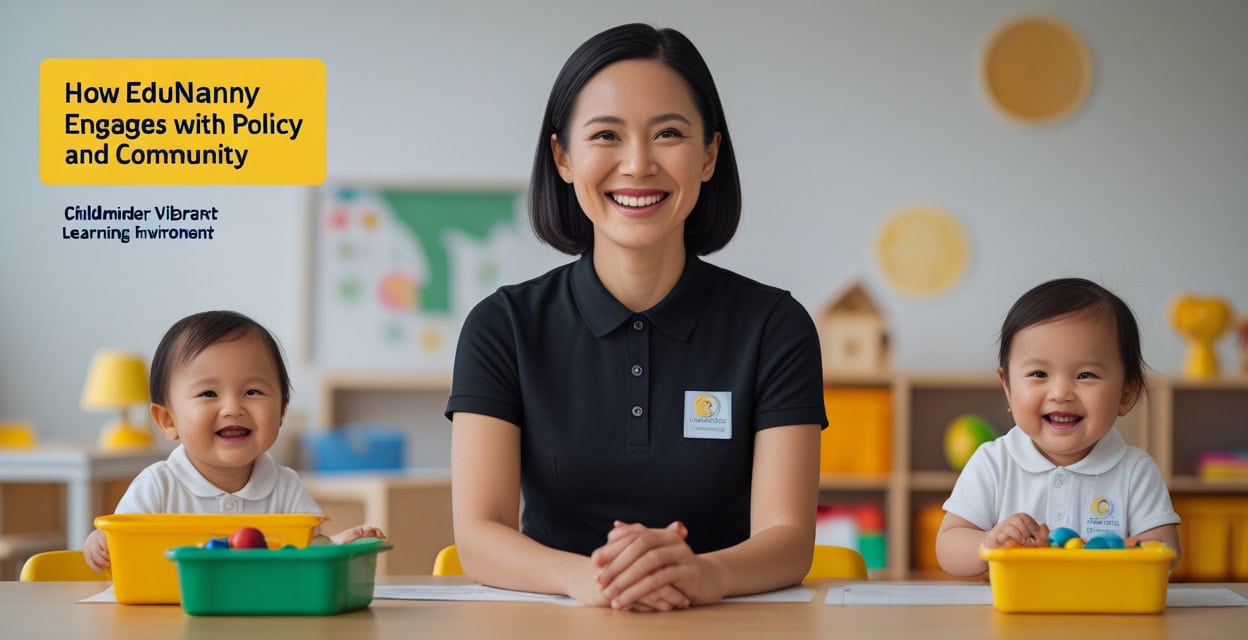
As a participant in the ECDA Childminding Pilot, EduNanny aligns with national goals for infant care that prioritise safety, caregiver professionalism, and universal access. By accepting CDA/Baby Bonus and ensuring islandwide coverage, EduNanny translates policy into daily dignity and sustainable family life.


Conclusion: stepping into a shared vision

Conclusion: stepping into a shared vision

To every parent who has ever handed over a child with a held breath; to every caregiver who has ever felt the honour of being trusted; to every policymaker seeking solutions rooted in dignity and data: EduNanny is our shared answer. It is possible to hold excellence and access together. It is possible to be safe and joyful at once. It is possible to meet families where they live and where they work, without asking them to trade love for logistics.

If this vision resonates, step into it with us. Visit EduNanny.com or Childminding.EduNanny.com. Ask your questions. Tour a pod. Try a day. Let us show, not tell, how a small, steady circle of care can change a life—and how many such circles can strengthen a nation.

From first cries to first confidence, we will be there—quiet, prepared, and present—so every Singaporean infant can begin with safety, grow with joy, and move into the world with trust.


SEO and ongoing growth

SEO and ongoing growth

EduNanny is committed to accessible care, family partnership, and continual learning. By embedding science, community, and transparent practice into everyday routines, we aim to strengthen families, care workers, and the broader Singaporean society.

Call to action: If you are a parent, caregiver, or policymaker, join us in shaping the first thousand days into daily realities of security, joy, and dignity. Reach out, tour a pod, and become part of a neighbourhood that nurtures trust.


Key resources and further reading

Key resources and further reading

  • Understanding secure base concepts in everyday care
  • Implementing Piagetian and Vygotskian principles in infant routines
  • Safe sleep guidelines and infection control for infant settings
  • Family partnerships: creating meaningful, non‑pressuring progress updates
  • Technology and transparency: balancing privacy with safety and learning

Visit: EduNanny.com, and Childminding.EduNanny.com for more details, tours, and pilot participation.

Thank you.

[#keyword1, #keyword2, #keyword3, #keyword4, #keyword5]

SEO keywords used in this article: early childhood Singapore, infant care Singapore, childminding Singapore, secure attachment, affordable childcare Singapore

[#earlychildhoodcareSingapore, #infantcareSingapore, #childmindingSingapore, #secureattachment, #affordablechildcareSingapore]


edunanny-c31bf6e3-24a9-48dd-8b33-9ba085224b02
August 22, 2025

December 2024 to December 2027 The Near Home EduNanny Ultra Low Ratio Pods Redefining Singapore First Thousand Days

Introduction: EduNanny and Singapore’s Promise for the First Thousand Days

Introduction: EduNanny and Singapore’s Promise for the First Thousand Days

Good early years care is not a luxury; it is a public good that shapes lifelong health, learning, and resilience. EduNanny Singapore, through its near-home, ultra low-ratio approach, translates that promise into daily practice: precise, safe, loving care delivered where families live and work. In the first thousand days, every small act of care becomes a blueprint for a lifetime. This article expands the core vision into practical guidance, actionable steps, and insider perspectives from EduNanny’s approach to infant and childminding.


What EduNanny Is—and Why It Matters Now

What EduNanny Is—and Why It Matters Now

EduNanny by BUTLER is an appointed operator under the ECDA Childminding Pilot (1 December 2024–31 December 2027). The service offers an affordable, reliable, ultra low-ratio option for Singapore Citizen infants aged 2 to 18 months who are not concurrently in licensed infant care centres. The model places one to three infants with one trained, background-checked childminder, operating from home settings or community premises islandwide. It is a near-home model that honours what infants need most: stable relationships, calm environments, and a rhythm that respects their bodies and budding minds.

Why this matters now: many families face long workdays, multigenerational households, and a demand for dependable care that is close, consistent, and accountable. EduNanny integrates national standards with a pedagogy of presence, a transparent safety system, and a professional identity for childminders that elevates the craft of care.


Five Pillars of Practice: Fresh Topics for a New Era of Infant Care

Five Pillars of Practice: Fresh Topics for a New Era of Infant Care

1) Attachment in Action: The Three Quiet Conversations of Care

  • Feeding, sleep, and exploration become the语言 of trust. Our childminders practice attuned care—reading cues, pacing routines, and naming emotions—to build secure attachment.
  • Designing the day with a gentle cadence: unhurried feeds, protected sleep windows, extended floor time. Pikler-informed “slow care” supports better motor organization, calmer sleep, and stronger self-regulation.
  • Every transition is a learning moment: narrating actions, making eye contact, and offering predictable touch helps infants develop safety grammar.
  • Practical tips for parents: a sample daily cadence can include a morning bonding routine, a predictable wake window, and a quiet, sheltering nap period placed after morning activities.

2) Safety by Design: The Architecture of Trust

  • Ultra low ratio (max 1:3) enables constant supervision, quick intervention, and individualized care plans.
  • ECDA background checks cover childminders and household members with regular access to care spaces.
  • Mandatory training includes infant first aid, safe sleep practices, feeding/hygiene standards, and incident response protocols before deployment.
  • Environment and monitoring:
    • Community premises: CCTV as required, with data protection protocols to safeguard privacy.
    • Home premises: CCTV offered and encouraged in caregiving zones during care hours with caregiver consent.
  • Health protection:
    • No Sick Child Policy: unwell infants recover at home; return-to-care criteria are clear and coordinated.
    • Standardized sanitization, toy rotation, safe food handling, and illness escalation plans.
  • Safe sleep: firm, flat sleep surfaces; no soft items; back-to-sleep position; vigilant supervision at all times.

3) Development, Naturally: Learning Woven Into Everyday Life

  • The environment is the third caregiver: calm sleep zones, open floor spaces, sensory play baskets, and language-rich caregiving moments.
  • Gross motor first, then fine motor: infants learn balance and coordination through ample floor time rather than rushing to sit or stand.
  • Tiny curricula, big outcomes:
    • Language and bond: songs, finger plays, book sharing, and naming of feelings/actions.
    • Sensory science: safe textures, cause-and-effect toys, treasure baskets that invite exploration.
    • Social warmth: with up to three infants, children learn to read faces, wait turns, and engage in gentle co-regulation.
  • Practical parent tips: create a small “sensory corner” at home with three textures (e.g., fabric, wood, water-safe sensory mat) and a simple turn-taking routine during play.

4) Joy as Curriculum: Happiness You Can Measure

  • Joy is the engine of learning. Look for signs of well-being—soft gaze, relaxed posture, steady breath, healthy appetite, and engaged exploration—to confirm flourishing.
  • Micro-adventures near home: morning breezes, birdsong, shade patterns—these experiences enrich daily learning without leaving the neighbourhood.
  • Cultural belonging matters: lullabies, language, and stories from the family’s heritage are integrated to build identity and comfort.
  • Parent cue: share a few family rituals or songs that your infant loves; these can be echoed by the caregiver to support continuity of identity.

5) The Public Purpose of a Childminder: A Profession of Care

  • EduNanny childminders are Certified EduNanny Childminders—trained, coached, and assessed for readiness and ongoing quality.
  • We champion dignified work with clear standards, reflective supervision, and opportunities for career progression. Professionalizing care strengthens families and communities.
  • Community resilience grows when trusted near-home care is available. The model supports parents’ employment, strengthens neighborhood ties, and creates meaningful jobs.

What You Can Expect from EduNanny

What You Can Expect from EduNanny

  • Ultra Low Ratio, Ultra Low Density: Maximum 1:3 infant-to-childminder ratio for individualized care.
  • Certified and Background Checked: ECDA-conducted checks; mandatory training completed before deployment.
  • Safety and Transparency:
    • CCTV in community premises as required; recordings protected by data protocols.
    • Home-based CCTV offered and encouraged in caregiving zones with caregiver consent.
  • Health Standards: No Sick Child Policy; safe sleep; rigorous hygiene and sanitization protocols.
  • Choice and Convenience:
    • Centre-based (community) and home-based options islandwide.
    • Mon–Fri, 7am–7pm care windows; half-day (5 hours) or full-day (10 hours) blocks; flexible days.
  • Affordability:
    • Subsidised hours: $16.50 (half-day) or $33.00 (full-day) before GST.
    • Payments via Child Development Account (CDA) or Baby Bonus where eligible.
  • Modern Layouts and Tooling: Thoughtfully zoned spaces, safe floor play, sleep sanctuaries, feeding stations, and robust monitoring (CCTV where applicable).
  • A National Social Initiative: Part of the ECDA Childminding Pilot; aligned to industry standards; upfront incident management and parent agreements.
  • Near-Home, Near-Heart: Available islandwide in community and home premises for proximity, continuity, and peace of mind.

A Day in the Life: Calm, Predictable, Personal

A Day in the Life: Calm, Predictable, Personal

A typical day blends predictable routines with responsive care. Example schedule:

  • 7:30am: Handover and well-being check; morning feeding plan aligned with infant cues.
  • 9:00am: Unhurried play on the floor; tummy time for younger infants; reaching, grabbing, and exploring safe textures.
  • 11:00am: Protected sleep window; nap on a firm surface with a comforting settling routine.
  • 1:00pm: Lunch or feeding; quiet, close interaction with stories or songs; language-rich interaction.
  • 3:00pm: Floor time, sensorimotor play, and social games with the other infants (when applicable) to practice turn-taking.
  • 4:30pm: Final check-in; caregiver notes, photos, and a simple update sent to parents via Concierge channels.

Notes for parents: prepare a simple, up-to-date care plan for your infant, share any cues or triggers that help your child feel safe, and discuss preferred communication channels for updates and photos.


Who, What, When, Where, and How—Why Childminding Matters

Who, What, When, Where, and How—Why Childminding Matters

  • Who: Singapore Citizen infants aged 2–18 months, and parents seeking dependable care near home by trained professionals.
  • What: A national pilot creating a trusted alternative to centres—one childminder, up to three infants, under strong safety and pedagogy.
  • When: Monday–Friday, 7am–7pm, in half- or full-day blocks, with weekly flexibility.
  • Where: Across Singapore, in community premises (with CCTV) and in approved childminders’ homes (with CCTV offered by consent).
  • How: Through certified EduNanny childminders, ECDA background checks and training, ultra low ratios, safe environments, and a pedagogy rooted in attachment, respectful care, and joyful discovery.

Our Philosophy for Parents and Infants

Our Philosophy for Parents and Infants

  • Practical support and deep respect: Clear policies, transparent safety, predictable fees, and responsive communication as standards.
  • Infants deserve dignity and time: We do not rush milestones; we cultivate them. We do not over-stimulate; we enrich with intention. We personalize care instead of generalizing.
  • Childminding as public good: Protecting first bonds, supporting family livelihoods, and strengthening communities through near-home care.

How to Enrol with EduNanny

How to Enrol with EduNanny

  1. Visit https://edunanny.com/edunanny-ecda-childminding-service/ or explore Childminding.EduNanny.com to learn more.
  2. Submit the interest form or inquire via WhatsApp (link available on the page).
  3. EduNanny Concierge Team responds, answers questions, and matches you to suitable community or home-based options near you.
  4. Confirm your appointment for a site visit to meet the childminder and view the environment.
  5. Enrol, complete your parent agreement, choose half- or full-day blocks, and set your start date. CDA/Baby Bonus payments are accepted for subsidised hours. Availability is islandwide, Monday–Friday, 7am–7pm.

Closing: A Quiet Confidence for Singapore’s First Years

Closing: A Quiet Confidence for Singapore’s First Years

The earliest days are the architecture of everything that follows. When an infant experiences consistent care, safe sleep, joyful routines, and an adult who delights in their signals, the brain builds trust—and trust builds a life. EduNanny’s near-home, ultra low-ratio model makes this simple truth accessible, affordable, and accountable across Singapore.

To every parent choosing care, we offer this covenant: we will guard safety, honour attachment, cultivate development, and communicate with candour. To every infant, we offer presence, not just supervision; relationship, not just routine; and joy, not just toys.

Your child’s first thousand days should feel like a promise kept. With EduNanny, that promise is near home, within reach, and built to last.

Thank you. We look forward to welcoming you and your little one soon at EduNanny.com.

[#keyword1, #keyword2, #keyword3, #keyword4, #keyword5]

edunanny-64306d6c-3134-4e80-bff6-c179de444a68
August 21, 2025

The Language of Care and the First Thousand Days EduNanny Near Home Pods in Singapore

Introduction: A Formative Language for Infant Care

Introduction: A Formative Language for Infant Care

Good evening, families, caregivers, and friends of Singapore. The earliest relationships we offer to infants become the architecture of their futures. At EduNanny, we treat care as a formative language—one that shapes the infant’s mind, secures the infant’s heart, and guides their developing compass. This article expands on what that language looks like in practice, offering practical guidance for parents and insights from EduNanny’s approach to infant care and childminding in Singapore.


EduNanny and the ECDA Childminding Pilot: A National Commitment

EduNanny and the ECDA Childminding Pilot: A National Commitment

EduNanny operates as an ECDA-appointed provider under Singapore’s three-year Childminding Pilot, running from 1 December 2024 to 31 December 2027. Our model offers ultra-low ratio pods of up to three infants per childminder, Monday to Friday, 7am to 7pm. Care happens near home—either in thoughtfully prepared community premises or in the childminder’s home—so infants travel less, parents breathe easier, and small groups can build real, secure relationships.

Key practical implications for families and caregivers include:

  • Minimised transitions and more predictable routines for infants and parents.
  • Rounded support for working families with clear, subsidised price points and access to CDA/Baby Bonus funds during subsidised hours.
  • Community transparency through CCTV in designated premises and consent-based arrangements in home-based care.

The EduNanny Difference: Wisdom Meets Public Standards

The EduNanny Difference: Wisdom Meets Public Standards

EduNanny fuses established infant-development wisdom with rigorous public standards. We blend insights from Montessori, Piaget, Vygotsky, Froebel, Malaguzzi, Bowlby, Pikler, Spock, and Erikson with Singapore’s safety, quality, and dignity commitments. The outcome is a childminding experience that is deeply human and rigorously professional.


The Five Pillars of Our Practice

The Five Pillars of Our Practice

1) Trust Architecture: Attachment You Can Feel and Measure

Practical ways to implement this pillar at home or in a pod:

  • Maintain a 1:3 caregiver-to-infant ratio to foster consistent, responsive relationships. Each infant is cared for by the same caregiver day after day to establish a secure base.
  • Incorporate Emmi Pikler-inspired routines: unhurried diapering, eye-level feeding, and narration of care to normalize predictability and warmth.
  • Provide daily updates with photos (where permissible) and clear handovers so families stay integrated into their child’s day.

2) Safety by Design: People, Place, and Process

Practical safeguards and everyday practices:

  • People: EduNanny caregivers are certified, trained (including infant first aid and food safety), and background-checked. Home-based care includes checks for regular access to the living space.
  • Place: Environments are clean, uncluttered, secure, and developmentally tuned. Community premises include CCTV; home-based care may provide CCTV in caregiving areas with consent.
  • Process: We follow ECDA standards, implement incident management protocols, and conduct routine safety checks. A No Sick Child Policy protects vulnerable immune systems; our concierge can advise on alternatives when a child is unwell.

3) The Unhurried Curriculum: Learning in the Rhythm of Care

Practical elements you can observe or implement:

  • Sensorimotor play with safe natural textures, mirrored panels for self-recognition, and graduated tummy-time challenges.
  • “Serve-and-return” exchanges to nurture neural development—watch for gestures, coos, and gaze responses that teachers can respond to with warmth and timing.
  • Respect for the Hundred Languages of infancy—sound, movement, gaze, touch, babble, and silence—without rushing milestones.
  • Routines as pedagogy: naps, feeding, and play are embedded as purposeful moments for security, self-regulation, and body awareness.

4) Joy and Belonging: Happiness as a Developmental Need

Concrete ways we nurture joy and belonging:

  • Joy is a signal of safety; we sing, sway, read, and giggle to support positive affect and brain organization.
  • Multilingual and multicultural richness—songs and stories reflect home languages and cultures to foster calm and curiosity.
  • Small pods cultivate early social understanding: turn-taking, waiting, and empathy in micro-moments that accumulate over time.

5) Purpose and Profession: Caregivers as Civic Engineers

What this means in practice for EduNanny caregivers and families:

  • Caregivers are trained early-years professionals with public purpose—investing in skill-building, reflective practice, and career pathways.
  • As an ECDA-appointed operator, we partner with government to maintain reliability, high quality, and affordability in infant care.
  • The social mandate is twofold: dignified first experiences of care for infants and meaningful, decent work for caregivers across Singapore’s communities.

The EduNanny Advantage at a Glance

The EduNanny Advantage at a Glance

  • Ultra-low ratio: 1 childminder to 3 infants for focused attention.
  • Ultra-low density: small, calm pods that reduce noise and stress.
  • CCTV provided in community premises; home-based CCTV available with consent and during care hours in caregiving areas.
  • Certified, background-checked childminders with infant-first-aid and ongoing supervision.
  • No Sick Child Policy to safeguard tiny immune systems and maintain stable routines.
  • Government-backed, national initiative: ECDA Childminding Pilot.
  • Quality and excellence through audits and continuous improvement.
  • Centre-based (community) and home-based options islandwide for proximity and flexibility.
  • Flexible hours: Monday to Friday, 7am–7pm, with 5-hour or 10-hour blocks.
  • Affordable: from $16.50 for half-day and $33.00 for full-day, before GST; CDA/Baby Bonus usable during subsidised hours.
  • Transparency and concierge support: from enquiry to enrolment with clear protocols and updates.

Why Childminding Matters: A Family, a Nation, a Future

Why Childminding Matters: A Family, a Nation, a Future

Childminding is more than care; it is a public good that supports families and builds a foundation for lifelong learning. Practical guidance for parents and caregivers includes:

  • Choose a partner who values consistent caregiving and consistent routines. Ask about caregiver rotation, daily routines, and how “serve-and-return” is enacted.
  • Observe the learning environment: quiet zones for nap, safe storage of materials, age-appropriate play spaces, and opportunities for parent communication.
  • Establish a transition plan for onboarding: a gentle, personalised schedule to help your infant adjust to the pod, the environment, and the caregiver.
  • Plan home routines that complement pod routines: consistent sleep windows, familiar comforting rituals, and language support at home.

Eligibility and Important Notes

Eligibility and Important Notes

  • Eligibility: Singapore Citizen infants, 2 to 18 months old, not concurrently enrolled in ECDA-licensed infant care centres.
  • Locations: Childminders’ homes or community premises; CCTV installed in community premises; CCTV can be arranged for caregiving areas in homes during care hours with the childminder’s consent.
  • Health: No Sick Child Policy in effect to protect vulnerable immune systems; consult our concierge for guidance when your child is unwell.
  • Fees and Subsidies: Half-day (5 hours) at $16.50; full-day (10 hours) at $33.00, before GST; CDA/Baby Bonus usable during subsidised hours.

How to Sign Up: A Simple, Careful Onboarding

How to Sign Up: A Simple, Careful Onboarding

  1. Visit https://edunanny.com/edunanny-ecda-childminding-service/ or EduNanny.com and Childminding.EduNanny.com.
  2. Fill the enquiry form or contact us via WhatsApp to start a conversation with our EduNanny Concierge Team.
  3. Receive a response to discuss your needs, location, and preferred pod type (home-based or community-based).
  4. Schedule and conduct a site visit to assess fit, safety, and routines.
  5. Enrol to secure your infant’s place and begin a gentle, personalised transition plan.

To Parents, Caregivers, Policymakers, and Partners: A Shared Vision

To Parents, Caregivers, Policymakers, and Partners: A Shared Vision

To parents: your infant’s world is small yet vast in possibility. EduNanny will meet them at eye level, honor their rhythm, and support their wonder.

To childminders: you are not merely minding children; you are shaping the emotional blueprint of Singapore’s future. Your professional growth matters to families and to the nation.

To policymakers and partners: excellence in infant care is nation-building work. By aligning care quality with public standards, we invest in a safer, calmer, happier start for every child.


Conclusion: Building a Singapore Where Every Infant Thrives

Conclusion: Building a Singapore Where Every Infant Thrives

Let us build together a Singapore where every infant experiences safety without compromise, development without rush, and joy without exception. The first thousand days go by in a blink. Let us make every blink count by embracing thoughtful, professional, and family-centred infant care—where small groups, attentive caregivers, and transparent practices become the foundation of a hopeful future.

Ready to begin? Learn more about EduNanny’s ECDA Childminding Pilot offering and how a tiny pod near your home can become a secure, loving space for your infant’s earliest growth moments.

SEO keywords: [#EduNanny, #InfantCareSingapore, #EarlyChildhoodDevelopment, #PublicChildminding, #ECDApilot]


edunanny-030581ff-c576-4367-8aca-2012c53c6e9a
August 21, 2025

Near Home Bonds EduNanny Ultra Low Ratio Infant Pods for Singaporean Infants

Introduction: A Promise for Singapore’s Infants

Introduction: A Promise for Singapore’s Infants

Good day parents, grandparents, caregivers, community partners, and friends of Singapore’s youngest citizens. As an EduNanny infant care advisor, I offer a simple promise: when the smallest circle of care is strong, the whole city stands taller. EduNanny Infant Childminding Service was created to do exactly that—build intimate, expert-led care circles near home so every infant grows with safety, joy, and deep human connection. This article expands on how EduNanny works, what sets it apart, and how families can make the most of infant care in Singapore’s unique context.


What is EduNanny Infant Childminding?

What is EduNanny Infant Childminding?

EduNanny by BUTLER is an ECDA-appointed operator participating in Singapore’s three-year Childminding Pilot for Infants (1 December 2024 to 31 December 2027). We offer small-group infant care—one childminder for up to three infants—delivered either in the childminder’s home or in community premises islandwide. Our approach combines attachment-first pedagogy with modern safety practices, transparent operations, and family-friendly affordability. In short: we infuse early care science into the rhythm of everyday Singaporean life.


How EduNanny Makes Infant Care Work for Singapore

How EduNanny Makes Infant Care Work for Singapore

EduNanny was designed around five realities of Singaporean families. The result is a service that is:

  • Ultra low density, ultra low ratio (1:3) for focused, responsive care.
  • Islandwide access Monday to Friday, 7am to 7pm (excluding public holidays).
  • Proximity-first care near home in community spaces or caregivers’ homes for convenience and安心 (peace of mind).
  • Affordability from $33/day for full-day blocks before GST (and $16.50 for half-day blocks), with CDA/Baby Bonus subsidies during supported hours.
  • Transparency and safety-forward practices with CCTV in community premises and mutual agreement on CCTV in home settings, balancing safety with privacy.

EduNanny is delivered by certified, trained, and background-checked childminders under a national initiative with clear quality standards. We bring modern safety culture and attachment-forward care into the home and community settings where families live and work.


How EduNanny Makes Infant Care and Childminding Work for Singapore

How EduNanny Makes Infant Care and Childminding Work for Singapore

We designed EduNanny around five realities that shape Singaporean family life—and we translate those realities into practical practice:

  • Long workdays require dependable, near-home care options.
  • Trust is earned through training, transparency, and consistent relationships.
  • Proximity reduces commute time and stress for families and supports regular routines for infants.
  • Science of early development informs daily activities, routines, and caregiver interactions.
  • Dignified work ensures a high-quality, career-path approach for childminders, strengthening the local economy and community.

Key design outcomes include ultra-low density, islandwide access, near-home settings, and a governance framework anchored by ECDA standards and the Baby Bonus/CDA subsidy channels.


Four Pillars of Practice: What Your Infant Experiences with EduNanny

Four Pillars of Practice: What Your Infant Experiences with EduNanny

1) The Secure Base: Building attachment with intention

  • Handover rituals and predictable routines reduce infant stress. We draw from Pikler-inspired care—slow, respectful movements, narrated caregiving, and waiting for the infant’s cues—so babies feel seen and safe.
  • Serve-and-return interactions are deliberate and frequent: eye contact, vocal mirroring, and responsive touch to support language, emotional regulation, and confidence.
  • Ultra-low ratio (1:3) fosters a stable bond with the same caregiver, promoting calmer bodies, better sleep, and joyful exploration.

Practical example: During handover, the caregiver speaks softly to the infant, states the plan for the day, and waits for a cue—smile, reach, or calmness—before proceeding. Parents can practice a simple script at home to reinforce this rhythm during daily exchanges.

2) Safety Without Compromise: From environment to ethics

  • Spaces: Clean, uncluttered, infant-friendly layouts with anchored furniture, covered outlets, gated stairs, safe sleep surfaces, and strict food hygiene protocols.
  • People: EduNanny caregivers are certified and background checked; ECDA extends checks to household members with regular access in home-based care.
  • Policies: No sick child policy to protect the pod; clear medication procedures, safe sleep guidelines, and transparent incident management.
  • Transparency: CCTV is installed in community premises; home-based CCTV is available by mutual agreement to balance safety and privacy.
  • Digital trust: Families receive timely updates, care notes, and responsive communication from the EduNanny Concierge Team.

Practical tip: Before enrolment, request a walkthrough of safety features and review the incident-management flow. Create a simple one-page contact sheet with emergency numbers and a preferred method of contact for the caregiver.

3) Joyful Learning in the Everyday: Development woven into care

  • Infants learn best through warm relationships and meaningful repetition. Our routines—feeding, diaper care, naps, and play—are structured as learning moments.
  • Materials are sensory-rich but not overstimulating: soft fabrics, safe rattles, grasping toys, tummy-time mats, natural light, gentle music, and ongoing conversation.
  • Movement as medicine: Floor time supports gross motor development; reach-and-grasp activities build fine motor skills; cause-and-effect play nurtures curiosity.
  • Tempo and responsiveness: The day follows the infant’s cues while maintaining a predictable rhythm for the pod as a whole.

Practical example: A typical learning moment might be a shared reading of a picture book with tactile pages, followed by a related sensory activity (soft cloth, mirror, or textured ball) to reinforce language and exploration.

4) The Happiness Index: How we know your baby is thriving

  • Signals of thriving: relaxed posture during handovers, bright eyes, steady appetite, deeper naps over weeks, curiosity during play, tolerance for brief separations, and a consistent daily mood.
  • Family voice matters: Sleep routines, feeding preferences, and cultural rituals from home inform the ongoing curriculum.
  • Outcomes evolve over weeks: calmer transitions, better sleep-wake patterns, fewer viral exposures through low-density care, and a child who feels known.

Actionable step: Maintain a simple daily care log for the first month, noting feeding times, sleep windows, mood shifts, and any notable cues. Use this log during caregiver handovers to align expectations and adapt routines.


Why Childminding Matters for Singapore

Why Childminding Matters for Singapore

  • Who: Parents seeking safe, attachment-forward infant care; childminders seeking dignified, well-supported work; neighbours who value local, community-based solutions.
  • What: A single experienced professional caring for up to three infants near home, within a national pilot that emphasizes safety and quality.
  • When: Weekdays, 7am–7pm, with flexible five- or ten-hour subsidised blocks for working families.
  • Where: In childminders’ homes and community premises across Singapore—ultra-low density, near residences, designed for infants.
  • How: Training, supervision, background checks, CCTV in community spaces, privacy-balanced CCTV in homes by mutual agreement, plus CDA/Baby Bonus support for subsidised hours.

What Parents Can Expect from EduNanny

What Parents Can Expect from EduNanny

  • Ultra Low Ratio/Ultra Low Density—1:3 care that preserves health, attention, and calm.
  • Certified EduNanny Childminders—Trained in infant first aid, hygiene, safe sleep, and respectful care.
  • Background Checks—ECDA-conducted checks for childminders and regular-access household members.
  • CCTV and Transparency—CCTV in community spaces; home CCTV available by mutual agreement; responsible data practices.
  • No Sick Child Policy—Clear return-to-care criteria to protect infants and staff.
  • Flexible, Affordable Blocks—Half-day (5 hours) or full-day (10 hours), weekdays 7am–7pm; islandwide.
  • Payment Support—Subsidised hours payable via CDA/Baby Bonus.
  • Choice of Setting—Home-based or community-based environments with infant-focused layouts.
  • National Social Initiative—Part of the ECDA Childminding Pilot, aligning quality, safety, and access.
  • Maximum Employment Commitment—Growing a skilled, community-rooted workforce of childminders across Singapore.

Answers to Common Questions

Answers to Common Questions

  • Eligibility: Infants aged 2 to 18 months who are Singapore Citizens and not concurrently enrolled in ECDA-licensed infant care centres.
  • Health: For safety, unwell infants rest at home. If medication is needed, parents provide written instructions, dosage, timing, and any side effects to monitor.
  • Hours and Fees: Half-day (5 hours) at $16.50; full-day (10 hours) at $33.00, before GST, Monday–Friday, 7am–7pm. CDA/Baby Bonus subsidies may apply for subsidised hours.
  • CCTV: Required in community premises; in-home CCTV usage is by mutual agreement to balance safety and privacy.
  • Disputes/Feedback: Clear incident and feedback protocols ensure timely, fair, transparent handling; parents may also contact ECDA for serious incidents.

Our Philosophy and Purpose

Our Philosophy and Purpose

EduNanny exists to dignify the earliest season of life with the right scale of care and the right spirit of practice. We believe that:

  • Safety is a discipline, not a slogan.
  • Attachment is the engine of development.
  • Joy is measurable—in curiosity, comfort, and connection.
  • Community is a protective factor for children and working families.
  • Transparency builds trust, and trust builds thriving families.

This is infant care as a public good: intimate, affordable, and excellent, supported by a national framework that maintains quality, safety, and access for all Singaporean families.


Practical Tips for Enrolling and Starting with EduNanny

Practical Tips for Enrolling and Starting with EduNanny

  • Assess Your Priorities: Proximity, safety history, caregiver consistency, and language/cultural practices from home. Decide whether you prefer home-based or community-based settings.
  • Plan the First Visit: Bring a short list of questions about routines, safety checks, and how the pod handles transitions and nap times. Request a sample day plan.
  • Prepare Your Home for a Pod: Designate a calm, safe caregiving space with a designated handover area, clear sleep surfaces, and minimal clutter. Ensure outlets are childproofed and cords are out of reach.
  • Handover Readiness: Create a simple two-way communication routine. Example: a 2-minute spoken handover with a cue-based check-in from the infant and a brief note for the parent exchange about sleep, mood, and feeding.
  • Documentation: Have medication instructions, emergency contacts, and consent forms ready. Keep a one-page health profile for each infant to share with the caregiver.
  • Prepare for the First Week: Expect a period of adjustment. Maintain consistent routines, supply the necessary comfort items, and keep lines of communication open.
  • Engage Subsidy Programs: Explore CDA/Baby Bonus subsidies for subsidised hours to make care affordable within the ECDA framework.

Enrolment Process: How to Start with EduNanny

Enrolment Process: How to Start with EduNanny

  • Visit EduNanny’s pages: edunanny.com or the ECDA Childminding Pilot pages for information and application details.
  • Fill out the enquiry form or reach out via WhatsApp to start a conversation with the EduNanny Concierge Team.
  • Schedule a site visit to the chosen setting (home or community space) to meet the candidate childminder and observe the space.
  • Complete enrolment, set up a transition plan for your infant, and begin the supported transition into EduNanny care.

EduNanny Insight: A Day in the Pod

Sample day outline for a 2–6 month window in a 1:3 pod:

  • 7:00–9:00: Arrival, settle-in, calm handover, feeding, and gentle interactive time.
  • 9:00–10:00: Tummy-time play, sensory exploration with age-appropriate materials, and a small group song or lullaby activity.
  • 10:00–11:00: Nap or quiet time with consistent sleep cues and a comfortable arousal level for each child.
  • 11:00–12:00: Snack (if applicable), caregiver-led responsive play, and language-rich interactions.
  • 12:00–14:00: Independent play, outdoor time if possible, and a predictable lunchtime routine.
  • 14:00–16:00: Afternoon activity, story time, and a brief reflective handover for parents with care notes.

Conclusion

Conclusion

EduNanny embodies a future where infant care is near, trusted, and scientifically grounded—an ecosystem that dignifies early life while supporting working families. With ultra-low density pods, attachment-forward practice, transparent safety measures, and a clear path to affordable care, EduNanny aims to be a cornerstone of Singapore’s social fabric—expanding access to high-quality infant care without sacrificing the intimate, human connections that babies need to thrive. If you’re seeking a care model that respects both the science of development and the realities of modern life, EduNanny invites you to explore the possibilities and join us in building stronger, more connected communities—one small day at a time.

SEO keywords: [#EduNanny, #SingaporeInfantCare, #ECDA, #ChildmindingPilot, #AttachmentBasedCare]


edunanny-fac43a22-da1c-4d54-9bea-26ef8b7c138e
August 21, 2025

Tiny Pods Big Promise, An Attachment First Pathway to Singapore Infant Care by EduNanny

EduNanny Infant Childminding Service in Singapore: An Editorial Overview

EduNanny Infant Childminding Service in Singapore: An Editorial Overview

Good evening, parents, caregivers, partners, and friends of Singapore’s youngest citizens. This long‑form piece expands on a simple, powerful idea: when we take exquisite care of the first thousand days, we take exquisite care of Singapore’s future. Guided by Montessori, Pikler, Bowlby, Vygotsky, Erikson and more, EduNanny presents an infant childminding service designed with equal parts science and soul—framed by rigorous editorial and professional standards.


What EduNanny Is—and Is Not

What EduNanny Is—and Is Not

Near‑home, ultra‑low‑ratio infant care

EduNanny operates a network of micro‑pods where one trained, background‑checked childminder cares for one to three infants at any time. Care can happen in a childminder’s home or in community spaces designed to centre‑grade standards. The model emphasizes intimate attention, predictable routines, and a tight, responsive feedback loop with families.

Operational hours, location, and affordability

EduNanny is Monday to Friday, 7am to 7pm, islandwide. Under the ECDA Pilot, fees are set at $16.50 for half‑day (5 hours) and $33.00 for full‑day (10 hours) before GST, with CDA/Baby Bonus accepted for subsidised hours. The service is structured to be flexible: families choose days and blocks that fit their needs while preserving consistent caregiver relationships.

What EduNanny is not

EduNanny is not a large institutional facility and not a one‑size‑fits‑all model. It is not designed to replace the fullest spectrum of early education services but to provide a developmentally rich, attachment‑first option at a human scale. It aims to balance responsiveness, safety, and family transparency in a way that large settings cannot always guarantee.


Five Quiet Promises: The Cornerstones of Great Infant Care

Five Quiet Promises: The Cornerstones of Great Infant Care

  • Attachment before activity: The curriculum is the secure base. Caregivers prioritise relationship‑building, emotional availability, and responsive soothing.
  • Small numbers for big impact: A 1:3 ratio is the precondition for sensitivity, contingency, and rapid attunement to infant cues.
  • Layered safety architecture: People, place, practice, and proof work in concert to create a consistently safe environment.
  • Rhythms that honour development: Sleep, nourishment, movement, and play are scheduled to support emerging self‑regulation and curiosity.
  • Transparent partnership with families: Open, timely, and respectful communication helps families feel involved and confident.

Five Topics at the Heart of EduNanny’s Practice

Five Topics at the Heart of EduNanny’s Practice

1) Attachment and Autonomy: the pedagogy of presence

Theory in action: Drawing on Bowlby’s secure base and Pikler’s respectful caregiving, EduNanny staff practice “slow hands, soft voice, steady eyes.” Each moment—diapering, feeding, settling to sleep—is a conversation that honours the infant’s cues.

Practical implications: With a 1:3 ratio, caregivers provide contingent responses that support brain architecture for trust, language, and self‑regulation. Maintain continuity by assigning a primary childminder who learns a child’s cues and micro‑rhythms. Track small milestones (grasp, roll, babble, eye contact) in a simple observation diary shared weekly with parents.

Actionable steps for families: Request a brief onboarding kit that explains your child’s preferences, a starter routine, and cue glossary. Expect a weekly note from the primary caregiver highlighting new cues or interests and a short narrative about the child’s social interactions with peers.

2) Safety as architecture: people, place, practice, proof

People: All EduNanny caregivers are certified, background‑checked, and trained in infant first aid, safe sleep, hygiene, and nutrition. Ongoing supervision and reflective practice sustain high standards.

Place: Environments are audited for hazards, with gate‑controlled access, cushioned layouts, and sleep areas that follow safe sleep guidelines.

Practice: Clear health and hygiene protocols, including a No Sick Child Policy during care hours. Contingency plans cover chronic conditions in alignment with ECDA guidance, documented in the service agreement.

Proof: CCTV is installed in community premises as required; home‑based pods offer consent‑based CCTV in caregiving areas during care hours. Incident logs, safety drills, and routine audits provide ongoing accountability.

3) Development and delight: building competence and joy

Sensorimotor play: Sensorimotor exploration is supported with calm, purposeful materials—rattles, cloth books, treasure baskets, supervised water play, and ample floor time for tummy time, rolling, and crawling.

Language and culture: Daily songs, rhymes, and picture books in English and Mother Tongue languages nurture early phonological awareness and belonging. Baby signing supports early communication and reduces frustration.

Schema‑friendly play: Repetition and schema‑driven activities (e.g., filling/emptying, posting, transporting) invite exploration without becoming overwhelming.

Rhythms for regulation: Predictable routines around feeding, napping, changing, and outdoor walks (where safe) support infants’ ability to settle and thrive.

4) The purpose and craft of childminding: a profession with dignity

Professional identity: EduNanny childminders are early‑years professionals, not “helpers.” A formal training stack, reflective practice circles, and pathways for progression acknowledge the expertise required to care for the youngest learners.

Community service: The pilot model enables care for up to three infants at a time, expanding access without sacrificing intimacy. A Maximum Employment Mandate reinforces dignified, skilled jobs for local caregivers.

Family partnership: Transition plans, mindful separation routines, and monthly check‑ins help families align on goals and preferences. Daily updates and accessible channels for concerns keep families confidently informed.

5) Transparency and trust: technology that serves relationships

Partnership, not surveillance: Secure messaging, daily summaries, photos, feeding/sleep logs, and prompt incident reporting keep parents in the loop without undermining trust.

Privacy by design: Data governance protects families and caregivers. CCTV in community spaces is balanced with consent for home‑based pods, supporting coaching and quality assurance while respecting privacy.


Benefits Parents Consistently Ask About

Benefits Parents Consistently Ask About

  • Ultra‑low ratio, ultra‑low density: 1:3 care to ensure intimate attention and rapid responsiveness.
  • Safety and assurance: Certified caregivers, infant first aid, safe sleep practices, food safety, incident protocols, routine audits, and CCTV where appropriate.
  • Health protection: No Sick Child Policy during care hours to protect each pod, with care plans for chronic conditions in line with ECDA guidance.
  • Quality and excellence: National industry standards, reflective coaching, and continuous improvement across both home‑based and community‑based pods.
  • Affordability and flexibility: Subsidised hours under ECDA, with transparent fee structures and adaptable scheduling.
  • Access and convenience: Islandwide near‑home pods to reduce commute, increase family time, and support consistent care routines.
  • Consistency and continuity: Primary caregiver model with tailored routines and regular progress notes.
  • National social initiative: EduNanny operates under the ECDA pilot, expanding access while maintaining high standards and dignified employment.

Who, What, When, Where, and How—Why the Childminding Model Matters Now

Who, What, When, Where, and How—Why the Childminding Model Matters Now

Who

Singaporean infants aged 2 to 18 months who are not concurrently enrolled in ECDA‑licensed infant care centres, and their families seeking proximity, safety, and attachment‑based care. The model supports working parents who need predictable hours and a trusted caregiver relationship.

What

Infant childminding under the ECDA Pilot, with care in a childminder’s home or community space, and a maximum of one to three infants per caregiver.

When

Monday to Friday, 7am to 7pm, December 2024 to December 2027, with subsidised half‑day and full‑day blocks.

Where

Across Singapore, prioritising near‑home pods in both home‑based and community‑based environments.

How

Through a professional, attachment‑first model: certified caregivers, layered safety, transparent communication, modern, centre‑grade layouts, CCTV with consent, and a clear, affordable fee structure.


For Parents: What to Expect Day One

For Parents: What to Expect Day One

  • A gentle transition plan that honours your infant’s cues and routines.
  • A primary childminder introduced well before the first drop‑off, with a phased visitation schedule.
  • A safety‑checked space, with agreed routines documented in a service agreement.
  • Daily notes that illuminate not just what happened, but who your child is becoming—milestones, mood patterns, and emerging social interactions.
  • A clear escalation path for concerns, with contact channels and timely responses from EduNanny staff and the concierge team.

For Singapore: What the Pilot Builds Over Three Years

For Singapore: What the Pilot Builds Over Three Years

  • A near‑home infrastructure that prioritises attachment, safety, and early learning.
  • Professional dignity and training for a new cadre of early‑years caregivers, with clear career progression.
  • A practical pathway for families who need flexible, reliable care without the overhead of institutional scale.
  • Evidence, data, and lived experience to guide policy and community design beyond 2027.

The EduNanny Promise

The EduNanny Promise

  • Care moments as learning moments, and learning moments as belonging moments.
  • Smallness that allows infants to be fully seen and nurtured.
  • Transparency as the oxygen of partnership—clear, respectful communication and open channels.
  • Affordability as a public good—high‑quality care accessible to more families through public‑private collaboration.

How to Sign Up

How to Sign Up

  1. Visit https://edunanny.com/edunanny-ecda-childminding-service/ or EduNanny’s main site.
  2. Fill in the enquiry form or message via WhatsApp to reach EduNanny Concierge Team.
  3. Schedule a site visit—home‑based or community‑based pod—and review the safety and logistics in person.
  4. Finalize the service agreement, align on routines, and enrol your infant into the chosen pod.
  5. Begin the transition plan with your primary caregiver, supported by ongoing daily updates and monthly reviews.

In Closing: A Gentle, Powerful Beginning

In Closing: A Gentle, Powerful Beginning

Infant care is not a race to milestones; it is the art of building trust, breath by breath. With EduNanny under the ECDA Childminding Pilot, families gain an intimate, safe, and transparent model that is within reach: ultra‑low ratio care, near‑home spaces, certified professionals, CCTV in community spaces and in consented home areas, robust health standards, and affordable, subsidised options. Small pods create a big presence—the quiet excellence that can cradle the future.

Small pods. Big presence. Quiet excellence. That is how we cradle the future, together.


Call to Action

Call to Action

Take the first step toward a developmentally enriching, attachment‑focused infant care experience. Explore EduNanny’s ECDA pilot options, contact the Concierge Team, and arrange a private tour to see how a tiny pod can make a lasting difference for your family and your child’s future.

EduNanny Singapore — where near‑home care meets rigorous standards and compassionate, science‑backed practice.

[#EduNannySingapore, #ECDApilot, #InfantCareSingapore, #1to3InfantRatio, #NearHomeChildcare]


edunanny-8ed9f115-f7ec-4db6-9881-ecb52446081d
August 21, 2025

EduNanny Near Home Infant Pods Singapore 1 to 3 Pilot December 2024 to December 2027 Safety Joy and Holistic Development

Introduction: What is EduNanny Infant Childminding?

Introduction: What is EduNanny Infant Childminding?

EduNanny by BUTLER is honoured to be appointed by the Early Childhood Development Agency (ECDA) as one of three operators in Singapore’s national Childminding Pilot for Infants (1 December 2024 to 31 December 2027). Our mission is clear: offer families a trusted, affordable, near-home option where one certified childminder cares for a maximum of three infants at any time—in a home or community setting designed for safety, attachment, and joyful learning. This is infant care that feels human, looks modern, and works for working families.


Why This Matters Now

Why This Matters Now

  • Families need proximity, consistency, and price transparency.
  • Infants need secure attachment, unhurried moments, and expert eyes on their signals.
  • Communities benefit when care is high-quality, professional, and local.

Practical implications for families: choose near-home options to reduce commute stress; look for predictable hours that align with work schedules; seek transparent pricing with clear subsidies. For caregivers, prioritize unhurried routines, sensitive observation, and stable routines that honor each infant’s unique tempo.


EduNanny’s Promise in Practice

EduNanny’s Promise in Practice

Ultra Low Ratio

1 childminder to 3 infants (maximum) means more responsive caregiving per child. In practice, this translates to timely comfort, individualized feeding cues, and deeper attunement to each infant’s signals. Expect consistent staffing so caregivers know your child’s preferences and patterns.

Ultra Low Density

Small, calm micro-pods in home and centre settings reduce overstimulation and support focused engagement. Families can observe spaces that are clean, organized, and designed to encourage safe exploration and gentle learning.

Hours that Match Working Life

Monday–Friday, 7am–7pm with subsidised half-day (5 hours) or full-day (10 hours) blocks. Practical tips: align calendars with work shifts, request flexible drop-offs within the 7am–7pm window, and plan for occasional adjustments during parent-teacher planning days.

Affordable

From $33 per full day and $16.50 per half day (before GST), with CDA/Baby Bonus accepted during subsidised hours. Action steps: check eligibility early, gather documentation for subsidies, and compare total monthly costs against private nanny or centre-based options.

Islandwide Access

Near-home placements across Singapore enable shorter commutes and easier family routines. Explore options in your neighbourhoods and consider how proximity supports daily life and emergency contingencies.

Transparent Protection

CCTV provided in community spaces and offered in caregiving zones of participating homes with informed consent. Parents receive clear information about cameras, privacy boundaries, and how footage is used to protect children and support accountability.

Certified EduNanny Childminders

Background-checked, trained in infant first aid and core care skills, supported by professional standards and coaching. Practical step: ask for credentials, observe a trial day, and request ongoing coaching plans for continuous improvement.

A Clear Health Stance

No Sick Child Policy during care hours to protect all infants, with supportive rebooking and guidance for families. Practically, families receive timely notifications about illness policies, guidance on when to rest, and clear return-to-care criteria.


Our Pedagogy: Five Daily Practices that Build Strong Beginnings

Our Pedagogy: Five Daily Practices that Build Strong Beginnings

EduNanny’s practice framework is inspired by developmental science and translated into daily routines that you can observe, participate in, and reinforce at home.

1) Attachment before agenda

Inspired by Bowlby and Pikler, we prioritise responsive care and unhurried routines. Feeding, diapering, and settling are sacred one-to-one moments in which infants learn trust, reciprocity, and their own rhythms. Actionable ideas for families:

  • Ask your childminder to narrate a feeding or diapering moment with gentle prompts and eye contact, reinforcing that you value the moment as an opportunity for connection.
  • Share your infant’s cues at drop-off: “My baby settles with a soft song and a back rub.” This helps the caregiver align with your family’s rhythm.
  • Encourage a post-nap routine where the caregiver sits with the infant, holds steady eye contact, and offers a simple, soothing sequence before returning to activities.

2) Movement as the first language

Grounded in Pikler and Montessori, spaces invite self-initiated movement—tummy time, reaching, rolling, cruising—because a confident body supports a confident mind. Practical tips:

  • Request observation notes showing milestones (e.g., “rolled from tummy to back today,” “attempted assisted sit”).
  • Ask caregivers to rotate safe exploration activities daily (soft mats, low shelves, uncluttered floor space) to support gross motor skills.
  • Share at home a short daily movement routine that mirrors what the child experiences at EduNanny, helping consistency across environments.

3) Tiny talk, big brains

Following Vygotsky and language science, narrate care, mirror sounds, sing, and sign. We build “serve-and-return” conversations to wire attention, memory, and social understanding. Practical examples:

  • Use simple, age-appropriate language during feeding and play: name objects, describe actions, imitate sounds.
  • Incorporate sign language basics for early communication (e.g., “more,” “eat,” “sleep”).
  • Record a short weekly language log for your child’s development and discuss progress with your EduNanny consultant.

4) Playful inquiry over busywork

Drawing on Piaget and Malaguzzi, we curate simple, sensorial experiences—light, texture, cause-and-effect—to help infants explore, repeat, and master. Practical approaches:

  • Offer age-appropriate sensory stations (water play with supervision, soft textiles, safe mirrors) to spark curiosity without overstimulation.
  • Document “learning moments” with a photo-note and a short caption to review progress with families during updates.
  • Rotate a small set of toys weekly to sustain interest and prevent overstimulation.

5) Consistency that respects individuality

We honour family culture, sleep cues, feeding preferences, and developmental tempo. Predictable routines with personal adaptation allow infants to feel safe enough to be curious. Practical tips:

  • Publish a family rhythm card: daily wake times, meal windows, nap windows, and soothing routines to align expectations.
  • Discuss sleep preferences and safe sleep cues; ensure care routines are adapted to your child’s needs while maintaining safety standards.
  • Schedule regular family check-ins to adjust routines as the child grows and developmental needs change.

Safety by Design: Seven Layers of Assurance

Safety by Design: Seven Layers of Assurance

EduNanny’s safety architecture blends people, place, and practice with transparent communication and responsive governance.

1) People

– Comprehensive background checks on childminders, conducted by ECDA, including checks on criminal history.
– For services in home settings, checks extend to those with regular access to the home environment.
– Mandatory training in infant first aid, hygiene, food safety, and safe sleep.

2) Place

– Home and community spaces certified for cleanliness, hazard minimisation, and infant-safe layout.
– Modern, uncluttered caregiving zones designed to reduce risk and increase supervision.

3) Practice

– Industry-standard protocols, daily checklists, and incident management procedures.
– No Sick Child Policy during hours of care; we guide families on when to rest, when to return, and how to protect the cohort.

4) Supervision

– 1:3 maximum ratio at all times.
– CCTV in community spaces; in-home CCTV offered in caregiving zones with privacy-respecting conditions and parent-childminder consent.

5) Health and hygiene

– Hand hygiene, sanitisation schedules, safe preparation of feeds, and stringent nappy-changing procedures.
– Clear medication permissions, documentation, and monitoring when agreed in advance with parents.

6) Sleep and safe positioning

– Evidence-based safe sleep practices: firm surface, no loose bedding, flat on the back unless medically indicated, and vigilant checks.

7) Transparency and responsiveness

– Parents receive clear agreements, daily communications, and channels for feedback.
– If standards are breached, operators can be removed from the pilot. We welcome accountability—it keeps infants safe.


The Work of Happiness: Why Joy is Developmental

The Work of Happiness: Why Joy is Developmental

Happiness isn’t decoration; it is a developmental nutrient. A calm pod, a familiar voice, and room to try again without pressure build dopamine-anchored learning loops. Laughter during peekaboo is not trivial—it trains attention, anticipation, and social timing. We coach our childminders to notice micro-moments of joy and turn them into scaffolds for learning and confidence. Practical applications for families:

  • Incorporate daily joyful moments, such as a special rhyme or a predictable “peekaboo” sequence, to anchor secure attachment.
  • Celebrate small milestones with both caregiver and parent, reinforcing a positive loop of learning and trust.
  • Observe and share a “joy journal” entry weekly to highlight moments of curiosity, social responsiveness, and emergent language.

The Purpose of the Childminder: Craft, Not Gig

The Purpose of the Childminder: Craft, Not Gig

A childminder in EduNanny is a trained professional, a steady attachment figure, and a cultural bridge between home and the wider world. This is not gig work. It is purpose-driven craft.

  • Dignity of work: Our Maximum Employment Mandate invests in training and neighbourhood placements that create quality jobs close to home.
  • Continuous development: Regular coaching, supervision, and peer learning lift practice from “adequate” to “excellent.”
  • Partnership with parents: We co-design routines, align expectations, and document growth to support consistency across care and home life.

What EduNanny Makes Possible for Families in Singapore

What EduNanny Makes Possible for Families in Singapore

  • Centre-based and home-based options: Aimed to match commute, comfort, and cost needs with flexible placement choices.
  • Distance and convenience solved: Near-home placements and islandwide reach reduce travel time and stress.
  • A National Social Initiative: Aligned with ECDA’s Pilot, raising standards without imposing undue burdens on families.
  • Excellence and Quality framework: Ongoing coaching, supervision, and modern layouts maintain warmth and humanity.
  • Innovation-friendly model: Transparent operations, CCTV transparency, and clear operating hours for predictable routines.

A Few Practical Notes Parents Ask Us

A Few Practical Notes Parents Ask Us

  • Eligibility: Singapore Citizen infants, 2 to 18 months, not concurrently enrolled in ECDA-licensed infant care centres.
  • Flexibility: Choose the number of days per week and select half-day (5 hours) or full-day (10 hours) blocks within 7am–7pm.
  • Fees: Half-day $16.50; full-day $33.00 before GST during subsidised hours. CDA/Baby Bonus can be used.
  • Health: No Sick Child Policy protects the pod; we help with rescheduling and return-to-care guidance.
  • CCTV: Mandatory in community spaces; offered in caregiving zones of participating home settings with agreed privacy boundaries.

Who, What, When, Where, and How—Why Childminding Matters

Who, What, When, Where, and How—Why Childminding Matters

  • Who: Infants who need continuity, parents who need reliability, and trained childminders who bring professional care into the neighbourhood.
  • What: A 1:3, near-home infant childminding service that blends safety, attachment, and playful learning—at a price point families can sustain.
  • When: Weekdays, 7am–7pm, during the ECDA Pilot from 1 December 2024 to 31 December 2027.
  • Where: In community spaces with modern, transparent layouts and in carefully prepared home environments across Singapore.
  • How: Through rigorous selection, training, checks, small pods, CCTV in appropriate settings, and daily partnership with parents.

And the why? Because the first 1,000 days are a once-only window

And the why? Because the first 1,000 days are a once-only window

Secure relationships today become resilience, language, and executive function tomorrow. The public good begins in private moments: a patient feed, a safe nap, a gentle hand guiding a first roll. EduNanny exists to make those moments consistent, expert, and close to home.


Benefits at a Glance

Benefits at a Glance

  • Ultra Low Ratio and Low Density: 1:3 care in calm micro-pods.
  • Certified and Background Checked Childminders: with infant first aid and core skills verified.
  • CCTV Provided: in community spaces; offered in caregiving zones of participating homes with consent.
  • Clear Health Protocols: No Sick Child Policy for safety and smooth rescheduling.
  • National Initiative: ECDA Childminding Pilot, with oversight and continuous improvement.
  • Excellence and Quality: Coaching, supervision, and modern layouts that balance warmth and professionalism.
  • Choice of Settings: Home-Based and Centre-Based options for flexibility.
  • Affordability: From $33/day full-day (before GST); CDA/Baby Bonus accepted during subsidised hours.
  • Convenience: Islandwide near-home placements, Monday–Friday, 7am–7pm.
  • Innovation: Transparent operations, modern environments, and an EduNanny Concierge to support families.

How to Sign Up

How to Sign Up

Take the first step toward strong beginnings for your infant:

You can also explore EduNanny.com and Childminding.EduNanny.com for more details.


Closing

Closing

Montessori taught us to prepare the environment; Piaget reminded us to respect developmental stages; Vygotsky urged us to scaffold; Pikler showed us the dignity of free movement; Bowlby proved that attachment is the engine of growth. EduNanny brings that wisdom to your neighbourhood—small, safe pods of care where infants are known by name, not number; where parents are partners; where childminders are professionals; and where Singapore’s future is cradled with precision and heart.

If you are a parent, we welcome you. If you are a caregiver, we will train and stand beside you. If you are a community partner, come walk with us.

Because infant care is not a service. It is a covenant—between families, professionals, and a nation that chooses to invest in the very beginning. EduNanny is ready. Let’s build strong beginnings, together.


SEO Keywords

SEO Keywords

[#keyword1, #keyword2, #keyword3, #keyword4, #keyword5]

edunanny-c4ce5c8d-24c0-4e55-ad9f-ad8082214cc3
August 21, 2025

Small Pods Big Impact EduNanny and the Near Home Ultra Low Ratio Model Redefining Singapore First Thousand Days December 2024 to December 2027

Introduction to EduNanny

Introduction to EduNanny

Ladies and gentlemen, parents, grandparents, caregivers, and community partners—good evening. I stand before you as an educator, a caregiver, and a believer in what Singapore can become when we cradle our youngest with wisdom, warmth, and world‑class standards. Welcome to EduNanny Infant Childminding Service: a near‑home, ultra‑low‑ratio, dignity‑first model designed for Singapore’s first thousand days—where safety is a system, learning is lived, and joy is the daily language between infant and adult.

EduNanny by BUTLER is one of ECDA’s appointed operators in the national Childminding Pilot for Infants (1 December 2024 to 31 December 2027). We care for Singapore Citizen infants aged 2 to 18 months in ultra‑low‑density micro pods of one to three infants, led by certified childminders in either community spaces or childminders’ homes islandwide. We knit together the heart of Bowlby’s secure attachment, Pikler’s respectful caregiving, Montessori’s order and independence, Vygotsky’s guided discovery, Erikson’s trust, and Froebel’s reverence for play—into a contemporary Singapore context, supported by safety innovation, rigorous training, and transparent partnerships with families.


What is EduNanny?

What is EduNanny?

EduNanny provides near‑home infant care in small, calm environments designed to protect attention, safety, and emotional attunement. Each micro pod operates at a 1:3 infant‑to‑childminder ratio, enabling caregivers to respond quickly to cues, guide early learning, and nurture secure attachments from the very first months.


How EduNanny makes infantcare and childminding great in Singapore

How EduNanny makes infantcare and childminding great in Singapore

  • Near‑home care: Reducing long commutes, Infants learn best when care happens close to family routines and neighbourhood supports.
  • Ultra‑low density: A 1:3 ratio protects attention, safety, and emotional attunement, enabling deeper caregiver–child relationships.
  • Standards and transparency: ECDA‑aligned background checks, mandatory training, and audited incident protocols ensure accountability and trust.
  • Affordability and access: Subsidised hours between 7am and 7pm on weekdays, simple half‑day and full‑day blocks, with fees payable via CDA/Baby Bonus.
  • Choice of setting: Centre‑based (community) and home‑based pod options, both designed to be predictable, safe, and deeply human.

Five Touchstones of Our Pedagogy, Safety, Development, Happiness, and Purpose

Five Touchstones of Our Pedagogy, Safety, Development, Happiness, and Purpose

1) Attachment Architecture: The Secure Base

Inspired by Bowlby and Erikson, we design each micro pod as a secure base where the childminder is the infant’s predictable, emotionally present adult. In a 1:3 setting, the caregiver can notice hunger cues before distress, mirror babble with delight, and greet small milestones with big presence.

Key practical strategies for parents and caregivers:

  • Ask for a daily “mood check” at drop‑off and pick‑up, tracking shifts in energy, appetite, and sleep.
  • Encourage naming of emotions at home and in care to help infants attach feelings to experiences (e.g., “You’re tired; let’s rest.”).
  • Request reflective journaling from caregivers—observations of cues, milestones, and social bids to strengthen continuity between home and care.

2) The Pikler Floor: Freedom within Order

Drawing from Emmi Pikler and Montessori, we prioritise respectful, unhurried caregiving and freedom of movement. Infants are not rushed through milestones; they explore when ready, guided by attentive adults.

Practical implementations include:

  • Low, uncluttered environments with accessible play materials at infant height to invite self‑initiated movement.
  • “With‑not‑to” caregiving: slow diaper changes with eye contact, narrated touch, and consent gestures that build bodily autonomy.
  • Avoiding restrictive devices like walkers or bouncers that can hinder natural motor development.

3) Safety as a System, Not a Slogan

Safety is engineered upfront and audited continuously. We implement comprehensive checks, training, and transparent protocols to protect infants and staff.

Key elements include:

  • ECDA background checks for childminders and household members with regular access for home‑based care.
  • Mandatory infant first aid and basic care training for all EduNanny staff.
  • Ultra‑low density settings and CCTV where appropriate to balance safety with privacy.
  • No Sick Child Policy for contagious illnesses to protect the entire pod.

4) A Daily Rhythm of Joy: The Science of Happiness

Joy in infancy is rhythmic and relational—predictable care windows, unhurried feeds, responsive naps, and rich sensory play. We honor the “hundred languages” of the child by listening to all forms of expression and responding with warmth.

Practical habits for families and caregivers:

  • Structured yet flexible daily routines that reduce stress and support secure attachment.
  • Floor‑based exploration with simple objects (fabric, teething toys, textured balls) to promote sensory development.
  • Responsive singing, talking, and mirroring to scaffold early language and social interaction.

5) The Professional Childminder: Purpose, Practice, and Partnership

Childminders are trained professionals who observe, document, and reflect. They share clear daily summaries with parents and use data to tailor care to each infant’s trajectory.

Partnership outcomes include:

  • Consistent communication about sleep patterns, feeding responses, motor changes, and social bids.
  • A civic and professional purpose: supporting parental employment, professionalising caregiving, and expanding dignified early experiences for families.
  • A national Social Initiative feel with fair standards, ongoing training, and equitable access.

Benefits of EduNanny at a glance

Benefits of EduNanny at a glance

  • Ultra low density and ultra low ratio micro pods (1:3).
  • CCTV provided in community spaces; opt‑in CCTV for home‑based caregiving areas during care hours.
  • Certified EduNanny childminders; ECDA‑mandated background checks and training.
  • No Sick Child Policy for contagious illness.
  • National Initiative under the ECDA Childminding Pilot (Dec 2024–Dec 2027).
  • Excellence, quality, and transparent incident protocols.
  • Centre‑based and home‑based options; modern, uncluttered layouts.
  • Islandwide availability; near‑home distance and convenience.
  • Affordable from $33/day (full‑day 10 hours; half‑day 5 hours); fees before GST.
  • Fees payable by CDA/Baby Bonus during subsidised hours.
  • Monday–Friday, 7am–7pm blocks, excluding public holidays.
  • EduNanny by BUTLER; discover more at EduNanny.com and Childminding.EduNanny.com.

How the ECDA Pilot Works (and why it matters)

How the ECDA Pilot Works (and why it matters)

Eligibility

Singapore Citizen infants aged 2–18 months, not concurrently enrolled in ECDA‑Licensed infant care centres.

Hours and Fees

Subsidised blocks—half‑day (5 hours) at $16.50; full‑day (10 hours) at $33.00—between 7am and 7pm, Monday to Friday (excluding public holidays). Parents choose the number of days per week and which block best fits their schedule.

Safety and Quality Assurance

ECDA conducts background checks. Operators must meet industry standards and maintain child‑safe environments. Childminders complete mandatory training before deployment. Clear dispute and incident management protocols are in place.

Locations

Childminding takes place in childminders’ homes or community spaces to enable the 1–3 pod structure. This model keeps services affordable and relational while increasing the number of infants served.


What a Day Feels Like in an EduNanny Pod

What a Day Feels Like in an EduNanny Pod

  • Morning: Hello, handover, and quick mood check with parents.
  • Circle time on the floor with songs and soft objects inviting grasping, mouthing, and tracking.
  • Unhurried feeds with eye contact; naps aligned to each infant’s rhythm.
  • Tummy‑time intervals evolving into rolling and creeping as infants’ bodies develop.
  • Quiet outdoor strolls when possible; safe sensory invitations (cool spoons, scarves, wooden rings).
  • Close: brief day summary and mindful suggestions to maintain continuity between care settings.

Why parents choose EduNanny

Why parents choose EduNanny

  • Trust is visible in ultra‑low ratios, transparent environments, and trained professionals who know your child—not just your child’s schedule.
  • Convenience is real: islandwide, near‑home, Monday to Friday, 7am–7pm, with simple half‑day/full‑day blocks.
  • Affordability is straightforward: subsidised fees from $33/day (before GST), payable by CDA during subsidised hours.
  • Partnership is ongoing: from the first site visit to daily feedback, families feel informed, respected, and supported.

The Signup Process

The Signup Process

Visit the EduNanny site and complete the form, or inquire via WhatsApp. You will receive a response from the EduNanny Concierge Team. Next, confirm your appointment for a site visit (home‑based or community pod). Enrol, and we will coordinate your start date, care blocks (half‑day or full‑day), and orientation.

Visit: edunanny.com/edunanny-ecda-childminding-service/

For inquiries: refer to the contact options on the page and expect a prompt response from the concierge team.


Who, What, When, Where, and How Childminding Matters

Who, What, When, Where, and How Childminding Matters

  • Who: Infants deserve steady eyes and gentle hands; parents deserve confidence at work and peace at home; childminders deserve training, respect, and fair work; the nation deserves citizens who begin life feeling safe and curious.
  • What: Childminding is the daily choreography of attachment—feeding, sleeping, soothing, playing, observing—done with intentionality and insight.
  • When: The first thousand days. Every routine is a learning moment; every response is a vote for trust.
  • Where: Near home, in micro pods sized for attention, in spaces engineered for calm, in communities strengthened by care.
  • How: Through a disciplined blend of science and soul—background checks, training, clear policies; and, equally, warmth, presence, and the courage to go slow so children can grow strong.

The EduNanny Philosophy and Purpose

The EduNanny Philosophy and Purpose

Our purpose is simple and profound: to ensure that every infant entrusted to us experiences safety as predictability, learning as joyful discovery, and care as dignified relationship. We believe, with Montessori, that the child is the maker of the adult; with Vygotsky, that development is social before it is solitary; with Bowlby, that attachment is the launchpad of exploration; with Pikler, that respect lives in the smallest gestures; and with Erikson, that trust begets autonomy.

EduNanny is a public promise kept privately well: ultra‑low ratio pods; certified childminders; CCTV in community spaces and opt‑in monitoring for home‑based care; no sick child in pod for contagious illness; clear protocols; modern layouts; affordable, subsidised blocks; and a concierge that treats your first question with the same care as your first day.


Call to Action

Call to Action

If you are a parent seeking a secure beginning for your infant; if you are a grandparent hoping for a gentler commute and a smaller, calmer setting; if you are an employer who values stable families and reliable schedules—EduNanny is ready.

  • Start at: edunanny.com/edunanny-ecda-childminding-service/
  • Message us via WhatsApp from that page (inquiries welcome).
  • Meet us for a site visit.
  • Enrol with confidence.

Conclusion

Conclusion

The measure of a city is how it greets its youngest. Let us greet them with safety that is felt, learning that is lived, and joy that is shared. This is EduNanny’s covenant with Singapore’s families: small pods, big presence, and lifelong beginnings—one gentle day at a time.

[#EduNanny, #InfantCareSingapore, #EarlyChildhoodDevelopment, #SingaporeChildminding, #FirstThousandDays]

edunanny-cb7d0de1-597a-488c-b9b5-dd9fcee53232
August 21, 2025

EduNanny Near Home Infant Pods Singapore A Quiet Revolution in Safety Joy and Attachment December 2024 to December 2027

EduNanny: Near‑Home Infant Care in Singapore

EduNanny: Near‑Home Infant Care in Singapore

Good evening, families, caregivers, and friends of Singapore’s tiniest citizens. This article expands the core vision from the introductory speech into a practical, editor‑level guide for parents and communities. EduNanny by BUTLER is designed to make infant care safe, reliable, and truly near home, delivered through the ECDA Childminding Pilot from 1 December 2024 to 31 December 2027. At its heart lies a simple conviction: an infant’s first relationships and rhythms write the opening chapters of a life. EduNanny translates the enduring wisdom of early childhood theories into daily practice—delivered in ultra‑low‑ratio pods of one to three infants in both home and community settings across Singapore.


What makes EduNanny different

What makes EduNanny different

  • Ultra low density, ultra low 1:3 ratio: One childminder for one to three infants, no more. This preserves presence, pace, and predictability that matter to tiny humans.
  • Safe, certified, background‑checked: Childminders are carefully selected, undergo thorough background checks, and receive training in infant first aid and basic infant care before serving families.
  • Spaces designed for infants: Modern, calm layouts in community venues and home settings, optimized to minimise hazards and maximise freedom of movement.
  • CCTV with intention: CCTV in community spaces; in‑home CCTV available during caregiving hours by agreement—balancing privacy with reassurance.
  • Health‑first policy: Clear no sick child policy with transparent medication and incident protocols to protect all infants and staff.
  • Affordable and flexible: Subsidised hours during the ECDA Pilot; half‑day (5 hours) at $16.50 before GST; full‑day (10 hours) at $33.00 before GST; payable with CDA/Baby Bonus; Monday to Friday, 7am–7pm islandwide.
  • Centre‑style capability, near‑home convenience: Community‑based “mini‑centre” pods and home‑based pods bring professional care closer to families—saving time, stress, and distance.
  • A national social initiative: In partnership with ECDA, powered by a Maximum Employment Mandate—every pod sustains dignified work for trained childminders within their own neighbourhoods.

Five ideas that shape the way we care

Five ideas that shape the way we care

1) The Prepared Neighbourhood

Montessori taught us that environment is a silent teacher. EduNanny extends that wisdom to place. Near‑home pods reduce transitions, support stable sleep, and cultivate dependable rhythms. Actionable steps for families:

  • Identify two near‑home pod options within a 10–15 minute radius and request a guided tour to observe layout, sleep spaces, and toy organization.
  • Create a simple transition plan with your caregiver: a predictable drop‑off routine, a comfort object, and a short goodbye ritual lasting 2–3 minutes.
  • Discuss sleep and wake windows aligned to your infant’s cues; request a 3‑week ramp‑up for any changes in routine.

2) Safety as a Culture, Not a Checkbox

Safety is layered across people, place, process, and proof. Practical actions you can take:

  • People: Confirm certifications, review background checks, and ask for caregiver‑specific first aid refreshers every 12 months.
  • Place: Request a safety walk‑through of infant spaces; verify choke‑safe storage, cord management, and soft floor zones.
  • Process: Review the no sick child policy, medication permissions, and clear hygiene checklists; agree on incident reporting and escalation steps.
  • Proof: Ensure access to routine safety audits and transparent updates; establish preferred channels for updates (photos, notes, or short videos).

3) The Attachment Curriculum at 1:3

Secure attachment is infrastructure for lifelong resilience. EduNanny builds it through stable relationships and predictable routines:

  • Primary caregiver assignment with a small peer group for each infant to foster trust and co‑regulation.
  • Pikler‑inspired respectful care: unhurried diapering, eye‑level feeding, and calm transitions to honour the child’s pace.
  • Consistent routines: feed, play, rest, repeat—responsive to cues, not rigid timetables.
  • Parent partnership: daily notes, photos, wellbeing check‑ins, and collaborative plan reviews to reflect family priorities.

4) Joyful Brainbuilding: Play with Purpose

The first 18 months are a time when the brain learns by doing. Practical activities:

  • Sensorimotor invitations (Piaget): simple cause‑and‑effect exploration with grasping rings, rattles, and safe treasure baskets.
  • Froebelian play schemas: activities like posting, transporting, and enveloping, guided but never rushed.
  • Montessori order: low shelves, real objects, and choice within safe boundaries to foster autonomy.
  • Malaguzzi’s environment as the third teacher: warm lighting, natural textures, and language that names feelings and actions.
  • Outdoor moments: age‑appropriate stroller walks or balcony time when agreed with families and weather permitting.

5) The Civic Craft of Childminding

Childminding is a public good carried by private hands. The ECDA Pilot and our Maximum Employment Mandate ensure a high‑quality, local workforce:

  • Professional development: continuous training in infant care, attachment theory, and safety practices.
  • Community integration: care delivered in neighbourhoods that parents know and trust.
  • Fair employment: dignified, well‑compensated roles that attract and retain skilled carers in Singapore.

How EduNanny fits the rhythm of Singapore life

How EduNanny fits the rhythm of Singapore life

When

Monday to Friday, 7am–7pm. Choose half‑day (5 hours) or full‑day (10 hours) blocks and specify the number of days you require each week. Consistency across weeks helps infants settle into reliable routines.

Where

Islandwide access to carefully assessed childminders’ homes and community spaces. Each location is evaluated for infant safety, quiet zones for nap times, and appropriate space for movement and exploration.

Who

Singapore Citizen infants aged 2 to 18 months who are not concurrently enrolled in ECDA‑licensed infant care centres. EduNanny teams tailor options to each family’s needs and location.

What it costs during subsidised hours

From $16.50 for half‑day or $33.00 for full‑day before GST; payable with CDA/Baby Bonus. For needs beyond subsidised hours, speak with our team about regular rates and flexible arrangements.

How we keep our promise

Ultra low ratio 1:3; CCTV in community spaces with in‑home CCTV by agreement; certified and background‑checked childminders; infant‑first layouts; no sick child policy; audited protocols; and responsive, transparent concierge support.


The benefits at a glance

The benefits at a glance

  • Ultra Low Density and Ultra Low Ratio care (1:3)
  • CCTV provided in community spaces; in‑home CCTV available by agreement
  • Certified EduNanny childminders; background checks
  • No Sick Child Policy
  • National ECDA Pilot (Dec 2024–Dec 2027)
  • Excellence in both home‑based and community‑based pods
  • Near‑home convenience; islandwide coverage
  • Affordable from $33/day (full day) during subsidised hours
  • Fees payable by CDA/Baby Bonus
  • Monday–Friday, 7am–7pm
  • Modern layouts; safety and communication innovations
  • EduNanny by BUTLER; visit EduNanny.com and Childminding.EduNanny.com
  • A Maximum Employment Mandate that grows meaningful jobs in local communities

Why childminding matters—who, what, when, where, and how

Why childminding matters—who, what, when, where, and how

Infants deserve stable bonds, parents deserve reliable support, and childminders deserve training, respect, and fair opportunities. A national perspective recognises that resilience begins in early relationships, not in lectures alone.

  • Who: Infants needing secure bonds; parents needing dependable care; childminders seeking growth and fair opportunity; a nation shaping future resilience from the earliest days.
  • What: A humane, evidence‑based service blending safety, attachment, and joyful learning in ultra‑low‑ratio pods.
  • When: In the first thousand days—when brains are plastic, habits powerful, and trust formative.
  • Where: Near home—proximity multiplies consistency, and consistency builds calm, confident babies.
  • How: Through a national pilot, rigorous selection and training, infant‑friendly spaces, responsive routines, thoughtful use of technology, and true parental partnership.

The promise of EduNanny

The promise of EduNanny

EduNanny commits to not rushing childhood. We protect it with science, steadiness, and heart. Our practice respects each child’s tempo, supports families, and builds a calm, capable community for Singapore’s youngest citizens.


How to sign up

How to sign up

  • Step 1: Visit https://edunanny.com/edunanny-ecda-childminding-service/ and submit the inquiry form, or enquire via WhatsApp using the link on the page.
  • Step 2: Our EduNanny Concierge Team will respond, answer questions, and propose suitable near‑home options.
  • Step 3: Confirm a site visit to a community pod or arrange a meet‑and‑greet at a childminder’s home.
  • Step 4: Review your plan (days per week, half‑day or full‑day blocks, 7am–7pm), confirm CDA/Baby Bonus payment arrangements, and enrol.

Conclusion: A public trust for the earliest years

Conclusion: A public trust for the earliest years

Families of Singapore, the earliest years are a public trust. With EduNanny, that trust becomes local, visible, and lovingly precise. We aim to protect childhood, dignify caregiving, and deliver care grounded in science, steadiness, and empathy. Let us stand with you—one calm handover, one secure nap, one joyful discovery at a time.

How to sign up now: See the steps above, or visit EduNanny.com for more information and current pilot details.

[#EduNannySingapore, #InfantCareNearHome, #UltraLowRatio, #ECDAChildmindingPilot, #EarlyChildhoodDevelopment]

edunanny-e06e6f73-52f0-4e56-82a9-03e1c77f6e87
August 21, 2025

EduNanny and the Civic Promise for Singapore Early Years

EduNanny: A Civic Promise for Singapore’s Early Years

EduNanny: A Civic Promise for Singapore’s Early Years

Ladies and gentlemen, parents and grandparents, caregivers and community partners—good evening. The first years of life are not a waiting room for “real learning.” They are the architecture of a lifetime. When safety, attachment, exploration, and family partnership are woven together with care, we set the compass for confidence, curiosity, and compassion. EduNanny is a Singapore‑born childminding movement that treats infant care as a civic promise—a universal service that supports families, strengthens communities, and honors the developmental science at the heart of early childhood. This article expands the vision into practical, actionable paths for parents, caregivers, and employers alike.

EduNanny, operated by BUTLER, participates in the ECDA Childminding Pilot as a national social initiative and advances a Maximum Employment Mandate—shaping meaningful jobs while strengthening family life. We are designed for excellence and access—affordable, reliable, and transparent care from Monday to Friday, 7 a.m. to 7 p.m., islandwide. With a 1:3 infant‑to‑educator ratio, modern spaces, optional innovation CCTV, and a pedagogy rooted in secure attachment, respectful care, purposeful play, and community, EduNanny is more than a service; it is a social infrastructure for the 21st century.

Below is an in‑depth, practical guide to EduNanny’s philosophy in action—complete with realistic examples, actionable steps for families, and insights drawn from our fieldwork and research in early childhood development.


The Five Pillars of EduNanny

The Five Pillars of EduNanny

First: Attachment as Architecture

Infants do not borrow trust; they build it with you brick by brick. Our 1:3 ratio is a developmental oxygen—critical for healthy growth. Continuity of care means each infant has a primary educator who knows their micro‑rhythms and cues: the exact moment they reach for the bottle, the soft pause before sleep, the tiny finger curl that signals readiness to try. Inspired by Bowlby, Pikler, and relational science, care moments become learning moments. We slow down routine tasks to create dialogue, eye contact, and co‑regulation. This is where language begins, self‑worth begins, and patience begins.

  • Attachment‑informed day: Predictable routines with flexible timing to accommodate individual needs; “Yes spaces” that invite movement and exploration; gentle separations at morning handover and warm reunions at day’s end to build resilience.
  • Practical implementation: Train educators to track each child’s micro‑rhythms in a simple, secure binder or digital log accessible to families with context for the day’s learning.
  • What parents can do: Share your child’s cues at drop‑off, maintain a consistent goodbye ritual, and reinforce the day’s language at home (e.g., “We’re going to do tummy time now.”).

Second: Safety as a System, Not a Slogan

Safety is not a single checklist; it’s a living system with four layers: environment, practice, people, and visibility. A robust safety culture thrives when all four are aligned and continually improved.

  • Environment: Modern layouts with clear sightlines, reachable storage for caregivers, anchored furniture, defined zones for feeding, sleeping, and exploration, plus hygiene protocols shaped by current evidence.
  • Practice: Staff trained in infant CPR/first aid, safe sleep, risk assessment, and step‑by‑step routines that make safe behavior the easiest choice.
  • People: Recruitment for warmth; ongoing coaching; reflective practice; regular development reviews to strengthen caregiver–child relationships.
  • Visibility: Transparent partnerships with families through safe CCTV use, daily updates, and purposeful documentation aimed at improving care rather than overwhelming parents.

Safety is the scaffolding of joy. When families trust the floor beneath them, infants dare to reach higher in their development.

Third: Developmental Choreography—Learning Woven into Life

We believe learning emerges when care, play, and rest align with developmental stages. Our approach draws on Montessori respect for autonomy, Piaget’s exploration, and Vygotsky’s zone of proximal development: the curriculum arises from the child, not from worksheets.

  • Movement: Ample floor time, tummy time, and safe climbing to build core strength and spatial awareness. Avoid premature seating or devices that restrict movement; every muscle is a pathway to the brain.
  • Senses and attention: Gentle, open‑ended materials—natural textures, soft mirrors, simple musical elements—that invite curiosity without overstimulation.
  • Language: Narration during care moments, emotion naming, and scaffolded bilingual exposure through songs, stories, and home phrases.
  • Social joy: Tiny peer pods where the first rules of community—wait, watch, share, take turns—are learned through guided, playful interactions.
  • Rest: Sleep as a learning partner; naps aligned to each infant’s cues, protected calm zones, and safe sleep practices that support memory consolidation.

Fourth: Happiness with Hinge Points—Care that Bends Toward Well‑Being

Infant happiness is not constant smiles; it is calm, curiosity, and comfort across transitions. We design hinge points to support the nervous system and foster mastery over change.

  • Handover: Gentle arrivals with a short ritual—hang the bag, cuddle, a song, a wave. Predictability reduces separation anxiety and builds trust.
  • Feeding: Responsive feeding—watching cues, avoiding force, honoring cultural preferences with safety as the guide.
  • Play to rest: Consistent cues for transitions—lower lights, soft hum, two deep breaths—so the nervous system can shift smoothly.
  • Reunion: A tidy pickup routine—diaper check, a brief recap, a familiar object—so parents receive a child and a story, not just a bag and a wave.

Happiness with dignity means the infant who feels seen becomes the child who can see others.

Fifth: The Public Purpose of Childminding

Childminding is not private luxury; it is public infrastructure. It unlocks parental employment, supports mental health, and knits neighbourhoods together. EduNanny’s model serves Singapore’s living patterns by providing flexible, near‑home options that still uphold developmental integrity.

  • Near‑home choice: Centre‑based care for families seeking structured environments; home‑based care for intimate settings; distance support for transitions and continuity when life gets complicated.
  • Islandwide access: Monday–Friday, 7 a.m.–7 p.m. availability to align with modern work schedules.
  • Affordability and inclusion: Affordable from $33/day, with CDA/Baby Bonus options to ensure access is not tied to fortune or postcode.
  • Jobs with dignity: A Maximum Employment Mandate to professionalize caregivers, offer career progression, and elevate the status of this essential work.
  • Transparent partnership: Innovation CCTV and daily documentation empower families to participate in decisions, not merely observe.

The EduNanny Day, In Practice

The EduNanny Day, In Practice

Picture a morning in a home‑based pod and a centre‑based pod alike. Both environments share a common language of care, safety, and development.

A typical home‑based pod might unfold as follows:

  • The caregiver greets each child by name, with a quick health note from the parent, signaling readiness for the day.
  • A short floor session of sensory play with scarves and soft instruments, followed by a story in two languages.
  • A baby-friendly bottle offered responsively, a period of tummy time, then a supervised neighbourhood stroll with sun hats and songs.
  • Lunch is unhurried; post‑lunch sleep comes easily as the environment remains calm and predictable.
  • In the afternoon, a photo update and a two‑line parent message: “Kai rolled tummy to back twice today. We celebrated with a song!”
  • Pickup includes a brief handover: what was observed, what will be supported tomorrow, and how home routines align.

A centre‑based pod scales this intimacy with clear sightlines, defined play zones, and dedicated quiet spaces to ensure restorative naps. The principle remains the same: a small group, a big heart.


Practical Guidance for Parents: Choosing Quality Childminding

Practical Guidance for Parents: Choosing Quality Childminding

Key questions to ask when evaluating a program

  • What is the infant‑to‑educator ratio, and how is continuity of care ensured across staff changes?
  • What is the program’s approach to attachment, and how is co‑regulation practiced in daily routines?
  • How are safety protocols monitored and updated (environment, practice, people, visibility)? Is there transparent reporting to families?
  • How does the curriculum incorporate movement, language development, social skills, and rest?
  • What is the process for handling feeding cues, sleep schedules, and family cultural preferences?
  • What are the qualifications and ongoing professional development opportunities for caregivers?
  • How is feedback from families collected and acted upon, and how are concerns escalated?
  • Is there a clear plan for emergency situations, including responses to illness, weather, or other disruptions?

Observing a care environment

  • Look for consistent routines and a calm, predictable atmosphere that respects infants’ need for both stimulation and quiet time.
  • Notice whether caregivers engage in warm, responsive interactions—eye contact, name usage, and gentle co‑regulation during transitions.
  • Assess safety features: clean, organized spaces; clear separation of zones; easy access to hygiene facilities; and safe sleep practices.
  • Ask to review the daily documentation and talk with caregivers about how they tailor activities to individual developmental stages.

Safety, Quality, and Transparency: A Practical Framework

Safety, Quality, and Transparency: A Practical Framework

Safety is the foundation; quality is the daily practice; transparency turns care into a collaborative process with families.

  • Accountability: Regular audits of safety practices; clear incident reporting and quick follow‑up on improvements.
  • Documentation: Value‑driven updates that help families participate in decisions about their child’s learning path.
  • Staff development: Ongoing coaching and reflective practice to ensure caregivers grow alongside the children.
  • Community partnerships: Collaboration with healthcare providers, early intervention specialists, and family support services to address diverse needs.

Why Singapore Needs This Now

Why Singapore Needs This Now

  • Family needs: Busy work patterns demand care that is reliable, convenient, and high quality without sacrificing developmentally appropriate practices.
  • Employer value: A stable care system supports workforce stability, productivity, and retention for a dynamic economy.
  • Community resilience: Valuing caregivers and investing in professional development strengthens social cohesion and neighbourhood vitality.
  • Infant outcomes: Consistent, attachment‑anchored early care supports language development, socio‑emotional skills, and lifelong well‑being.

EduNanny by BUTLER exists to meet these realities: to hold heart and system in balance, ensuring no family must choose between care and development.


The EduNanny Model in Action: Case Scenarios

The EduNanny Model in Action: Case Scenarios

Consider two illustrative cases that reflect EduNanny’s principles in everyday life:

  • Case A – Centre‑based pod: A group of three infants in a bright room with sightlines, a dedicated quiet corner, and a routine that weaves tummy time, language play, and a gentle singing routine into the day. The primary educator records a brief note each afternoon, highlighting a milestone (e.g., “emerging babble, two new sounds”) and a suggestion for home practice (e.g., “mirror work for facial expression awareness”).
  • Case B – Home‑based pod: A caregiver builds a micro‑ecosystem around one family’s routines, translating home language and cultural practices into the care plan while maintaining consistent safety and documentation. Parents report increased confidence in leaving their child, because the caregiver communicates proactively and reflects home life in daily activities.

Both cases demonstrate how EduNanny’s approach translates into tangible benefits: stable relationships, predictable routines, and meaningful, caregiver‑led learning moments within safe, modern spaces.


Conclusion: The Future of Early Care in Singapore

Conclusion: The Future of Early Care in Singapore

Education begins in the cradle — not in a classroom alone, but in every moment a caregiver sits with a child, narrates a moment, and knits a daily routine that respects a child’s pace. EduNanny offers a practical, scalable model that keeps heart and system in balance: secure attachments, rigorous safety, developmental choreography, hinge‑point happiness, and a public, shared purpose. We invite families, caregivers, employers, and communities to join us in building a robust, humane, forward‑looking early care ecosystem for Singapore.

If you are a parent seeking a calm, intelligent start for your child; a caregiver wishing to build a meaningful career; an employer ready to support working families; or a neighbour who believes in a city defined by how it treats its youngest, come learn more about EduNanny. Tour a centre, explore a home‑based pod, or speak with our team. See how small groups and big hearts can live together in one daily rhythm.

The future arrives quietly through secure bonds, trusted care, and everyday acts of care that shape a lifetime. This is EduNanny. This is Singapore at its most humane and forward‑looking. And this is your invitation to join us.

Thank you.

[#EduNanny, #SingaporeChildcare, #EarlyChildhoodDevelopment, #InfantCare, #AttachmentTheory]