
Near Home Pods and Ultra Low Ratios A New Era of Infant Care in Singapore

EduNanny Infant Childminding Service: A New Era for Singapore’s Infants
Good evening to all the parents, grandparents, caregivers, and partners who place Singapore’s youngest citizens at the center of our shared future. This article articulates the EduNanny vision—an infant care model designed for near-home access, ultra-low ratios, and transparent, high-trust practice. Built for the first thousand days and beyond, EduNanny is a response to the call for safe, nearby, flexible, and affordable infant care, delivered under the ECDA Childminding Pilot (2024–2027).

EduNanny Promise: Smallness Done Well
At the heart of EduNanny lies a simple, profound design principle: small, carefully managed pods with uncompromising care. This is not merely a staffing ratio; it is a commitment to responding to each infant’s rhythm, signals, and needs with steadiness and precision. Our promise is:
- Ultra-low density and ultra-low ratios: One childminder to a maximum of three infants (2–18 months).
- Quiet spaces and intentional routines: Environments that support calm, focus, and reliable daily patterns.
- Transparent practice and accountability: Clear communication with families, consistent records, and observable care standards.
- Neighbourhood proximity: Near-home pods that reduce commute time and strengthen local community ties.
- National standards and trained professionals: Rigorous training, ECDA-aligned background checks, and ongoing mentorship for caregivers.

How EduNanny Makes Infant Care Great in Singapore
Families have asked for safety, proximity, adaptability, and affordability. EduNanny answers with a model that keeps the infant at the center while supporting caregivers and parents alike. Key features include:
- Infant-first ratio: 1:3 (2–18 months) so every baby is known, held, and responded to promptly.
- Choice of setting: Home-based care in vetted residences or community-based micro-centres with calm, modern, stroller-friendly layouts.
- Transparent safety: CCTV in community spaces; where agreed, CCTV in caregiving zones at home during care hours—balanced with consent and privacy considerations.
- Flexible hours: Subsidised blocks from 7am to 7pm, Monday to Friday; options for 5-hour half-days or 10-hour full days.
- Affordability with subsidies: From $16.50 (half-day) or $33.00 (full-day) before GST; CDA/Baby Bonus monies may be used toward fees during subsidised hours.
- Islandwide convenience: A network of near-home pods across estates to shorten travel and cultivate local support.

Five Core Topics at the Heart of EduNanny
1) The Pedagogy of Presence: Attachment as the First Curriculum
Attachment is more than sentiment—it is the neurological architecture that supports lifelong learning. In a 1:3 pod, infant caregivers provide rapid, contingent responses that nurture secure attachment. Grounded in Bowlby’s theory and Pikler’s respectful practice, EduNanny trains childminders to slow down routines—feeding, diapering, settling to sleep—so every infant is an active participant. We narrate care, invite cooperation, and pause for cues to build trust, self-regulation, and early autonomy.
Practical implications for families:
- Ask about daily narratives: How is your caregiver narrating the day to the child’s cues and needs?
- Seek materials and environments that support exploration: Are simple, reachable materials present during play?
- Partner with the pod on routines: How can you align sleep and feeding times with your home routine to promote continuity?
Educational takeaway: A floor-level, unhurried pace supports both the infant’s curiosity and their sense of safety. This aligns with Montessori’s prepared environment and Erikson’s trust-building stage, while allowing Piagetian exploration to unfold at the child’s pace.
2) Safety by Design: Architecture, Accountability, and Assurance
Safety is a living system in EduNanny. Our framework rests on five pillars that operators, caregivers, and families co-create together:
- People: Certified childminders with infant-first aid, food safety, and basic infant care training; home-based caregivers receive household checks for regular access.
- Place: Home or community spaces audited for hazards, safe sleep areas defined, clean zones established, and ventilation and sanitation prioritized.
- Practice: Evidence-based sleep positioning, bottle-preparation protocols, hand hygiene, choking prevention, and emergency drills; a no-sick-child policy during care hours.
- Transparency: CCTV in community spaces; consent-based CCTV in caregiving zones at home during care hours; timely incident reporting and documentation.
- Partnership: Daily logs, developmental notes, and prompt family updates; clear escalation paths for concerns, with ECDA involvement as needed.
Actionable tips for families preparing for EduNanny care:
- Keep a simple health log: record sleep, feeding, and mood patterns to share with caregivers consistently.
- Discuss safety routines in advance: sleep positions, feeding hygiene, and peak times for caregiver check-ins.
- Clarify privacy expectations: how CCTV can be used, what information is shared, and privacy safeguards.
3) Developmental Choreography: Routines that Build Brains and Joy
Infant development is a dynamic dance of brain growth, communication, and social connection. EduNanny choreographs a day to support cognition, language, motor skills, and socioemotional growth:
- Language and belonging: Narration in home languages, singing, imitation, labeling emotions, and opportunities for turn-taking and joint attention.
- Movement with purpose: Emphasis on floor time over costly equipment; tummy time, roll-and-reach, supported sitting, and gentle cruising as milestones approach—caregivers pace activities to the infant’s readiness.
- Sensory exploration: Natural textures, soothing lighting, familiar scents, and open-ended materials that invite exploration without overstimulation.
- Predictable rhythms: Short play, feeding, and rest cycles with smooth transitions, predictable goodbyes, and soothing reunions to reduce separation stress.
Home alignment tips:
- Create a simple “today’s rhythm” at home prior to enrollment and share it with the caregiver to reinforce consistency.
- Incorporate language-rich activities: name objects, describe actions, and narrate emotions during daily tasks.
- Schedule flexible play windows that align with your child’s energy levels to maximize engagement.
4) Happiness as a Health Indicator: The Emotional Climate of Care
Happiness in infancy signals healthy development. We define it through sustained engagement, restful sleep, stable appetite, and joyful anticipation of familiar caregivers. EduNanny uses a daily log framework for caregivers to track these markers and respond promptly:
- Serve and return: Responsive exchanges that strengthen neural pathways for resilience.
- Calm, predictable separations: Gentle departure rituals and reunions to ease transitions.
- Purposeful play as joy: Meaningful interactions that blend learning with warmth and security.
What parents can do at home to support happiness:
- Maintain predictable routines that align with the pod’s rhythm, including consistent nap times and feeding windows.
- Practice quick, warm goodbyes and special goodbye rituals to reduce separation anxiety.
- Engage in daily stillness moments—eye contact, shared smiles, and responsive vocal exchanges—to reinforce attachment.
5) The Public Purpose of Childminding: A Community Compact
EduNanny is a national social initiative that extends beyond individual families. It creates a new ecosystem of care that supports access, dignified work, and community resilience:
- Access and affordability: Low ratios and near-home pods make infant care more accessible, while maintaining high quality.
- Dignified work: Professionalisation of childminding through training, mentoring, and fair compensation to attract and retain talent.
- Community resilience: Local pod networks foster neighbourly support, shared resources, and collective confidence in early childhood care.

What Sets EduNanny Apart
- Ultra-low density, ultra-low ratio: Maximum 1:3 infant-to-childminder.
- Certified EduNanny childminders: Rigorous training, ongoing mentorship, and consistent assessment.
- Certified and background checked: ECDA-aligned checks for home and community-based settings.
- CCTV provided: Visibility in community spaces; caregiver zones in homes with consent during care hours.
- No sick child policy: Protects pod health with clear return-to-care guidelines.
- Centre-like and home-based options: Flexible formats to suit family needs and living arrangements.
- Distance and convenience: Islandwide coverage with near-home pods to minimize commute times.
- Affordability: From $16.50 half-day or $33.00 full-day before GST; CDA/Baby Bonus applicable during subsidised hours.
- Structured hours: 7am–7pm, Monday to Friday, with options for half or full-day blocks.
- National initiative: Delivered under ECDA’s Childminding Pilot (Dec 2024–Dec 2027).
- Quality assurance: Industry standards, audits, and ongoing improvement processes to safeguard infant well-being.
- Islandwide reach: Community and home-based pods designed for calm, infant-friendly spaces.

An Explainer in Brief: How the Model Serves You
- Who is eligible? Singapore Citizen infants aged 2–18 months, not concurrently enrolled in ECDA-licensed infant care centres, during the pilot period.
- Where care happens? In a vetted childminder’s home or in a designated community pod converted into a calm micro-centre.
- How we keep it affordable? Government subsidies for typical working hours in 5-hour or 10-hour blocks; CDA/Baby Bonus can be used for subsidised hours.
- How we ensure quality? ECDA background checks; mandatory infant-first-aid and basic care training; regular safety audits; transparent communications.
- Why the ratio matters? A 1:3 ratio enables timely cue-reading, predictable routines, and highly individualized development experiences.

A Day in an EduNanny Pod
Imagine arriving to a quiet, uncluttered space. The caregiver greets your child, names the goodbye, and offers the comfort object you provided yesterday. Morning care unfolds with gentle narration: “I’m lifting you up now; here comes your warm cloth.” Two peers share a soft moment with a mobile made of natural shapes. Later, the pod gathers for songs in the languages of home, followed by safe sensory exploration. Between cycles of play, feed, and rest, the caregiver logs appetite, sleep, mood, and milestones. A mid-day check-in reassures you. At pick-up, you receive a concise summary, a small story about today’s wonder, and a plan for tomorrow’s rhythm.
This is the essence of small, steady excellence—home-like in feel, clinic-like in safety, and child-centred in outcome.

When, Where, Who, What, and How: Why Childminding Matters
- When: In the first thousand days when brain architecture is most malleable and relationships form the foundation for lifelong learning.
- Where: Near home, in spaces crafted for calm and safety to support continuity and community ties.
- Who: Certified childminders who are warm, skilled, and supported by a national pilot that prioritises quality.
- What: Attachment-rich care that blends predictable routines with developmentally attuned play.
- How: Through ultra-low ratios, clear standards, transparent practice, and sustained partnership with families.

The Philosophy and Purpose of EduNanny Childminding
EduNanny believes infants deserve presence over performance, trust as a daily practice, and happiness as a health indicator. We view caregivers as professionals whose work merits training, mentorship, and fair recognition. When a nation elevates infant care, it nurtures the kind of adults its children will become—secure, curious, kind, and ready to contribute. This is not merely a service; it is a civic commitment to cradle the beginnings that empower Singapore to flourish at every stage.

Your Next Step: How to Enrol
Ready to explore EduNanny for your family? Here are practical steps to begin your enrollment:
- Visit the EduNanny enrollment page: https://edunanny.com/edunanny-ecda-childminding-service/
- Fill out the inquiry form or contact via WhatsApp using the link provided on the page.
- Receive a response from the EduNanny Concierge Team with next steps and available pods.
- Schedule a site visit—choose home-based care or a community pod.
- Enroll and secure preferred days and blocks (5-hour half-days or 10-hour full-days).
A Closing Invitation
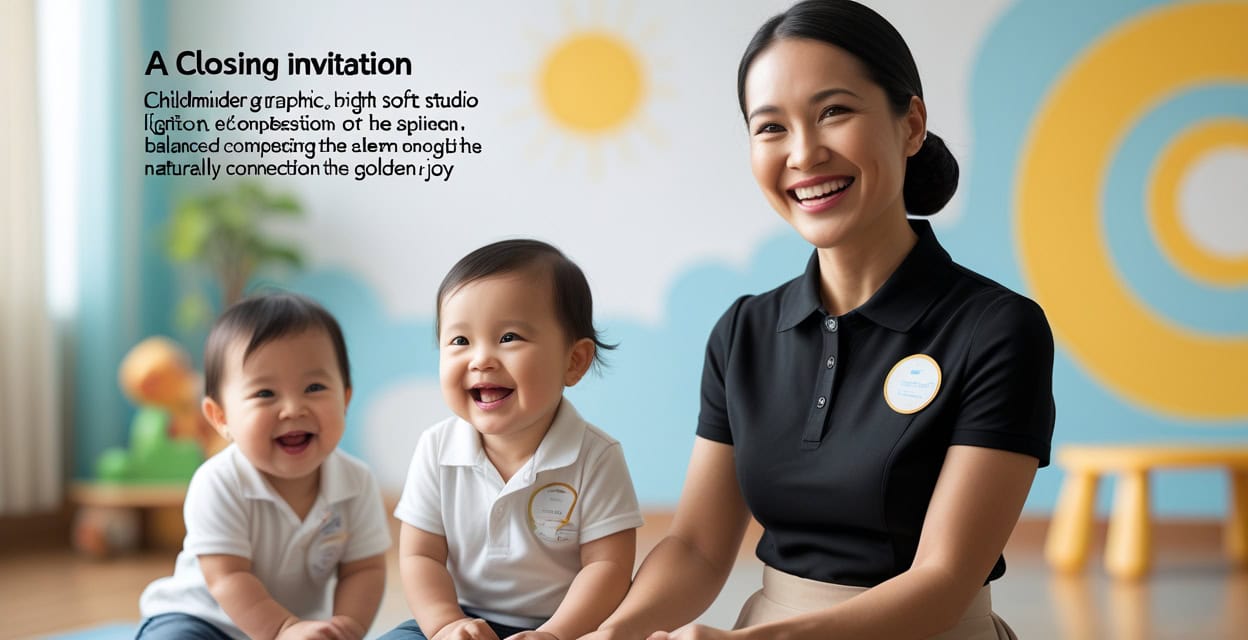
Parents, you do not need grandeur; you need goodness—daily, dependable, and near at hand. EduNanny’s infant care pods offer the steadiness of one attentive adult, the companionship of tiny peers, the safety of transparent practice, and the relief of near-home, affordable care you can trust. From 7am to 7pm, Monday through Friday, islandwide, with pricing from $16.50 for a half day or $33.00 for a full day before GST—and with CDA/Baby Bonus support during subsidised hours—your child can grow within small circles of big trust. This is not only a service; it is our civic pledge: to cradle the beginning so Singapore can flourish at every stage.
We look forward to welcoming you and your little one into an EduNanny pod near home—where safety, joy, and development meet, one gentle day at a time.

Conclusion: Cradling the Beginning for Singapore’s Future
EduNanny reimagines infant care as a near-home, family-centered ecosystem powered by presence, safety, and developmental intention. Through ultra-low ratios, transparent practices, and a public-purpose framework, EduNanny seeks to nurture secure attachment, healthy development, and resilient communities. By enrolling, families join a national effort to elevate early childhood care, professionalize caregiving as a respected vocation, and invest in the kind of adults Singapore hopes its children will become. If you value consistency, calm, and connection during your child’s earliest days, EduNanny offers a blueprint for care that is trustworthy, scalable, and profoundly human.
Take the next step today and explore what near-home, high-quality infant care can look like for your family.
[#EduNannySingapore, #InfantCareSingapore, #ECDAPilot, #NearHomeCare, #EarlyChildhoodDevelopment]