

The Neighbourhood Cradle EduNanny Turns Science into Everyday Dignity for Singapore Infants

EduNanny Singapore: A Vision for Infants, Families, and a Nation
Distinguished parents, caregivers, neighbours, and partners—good evening. Before we talk about models and metrics, let us remember the small, seismic miracle at the centre of all this: an infant who reaches for a face, finds steady eyes, and settles. That moment is attachment, learning, and citizenship beginning at once. EduNanny exists to honour that moment and to make it reliably possible for every family in Singapore. This is more than childcare; it is a public‑spirited movement rooted in science, dignity, and neighbourhood life.
What EduNanny Is
Our core mission
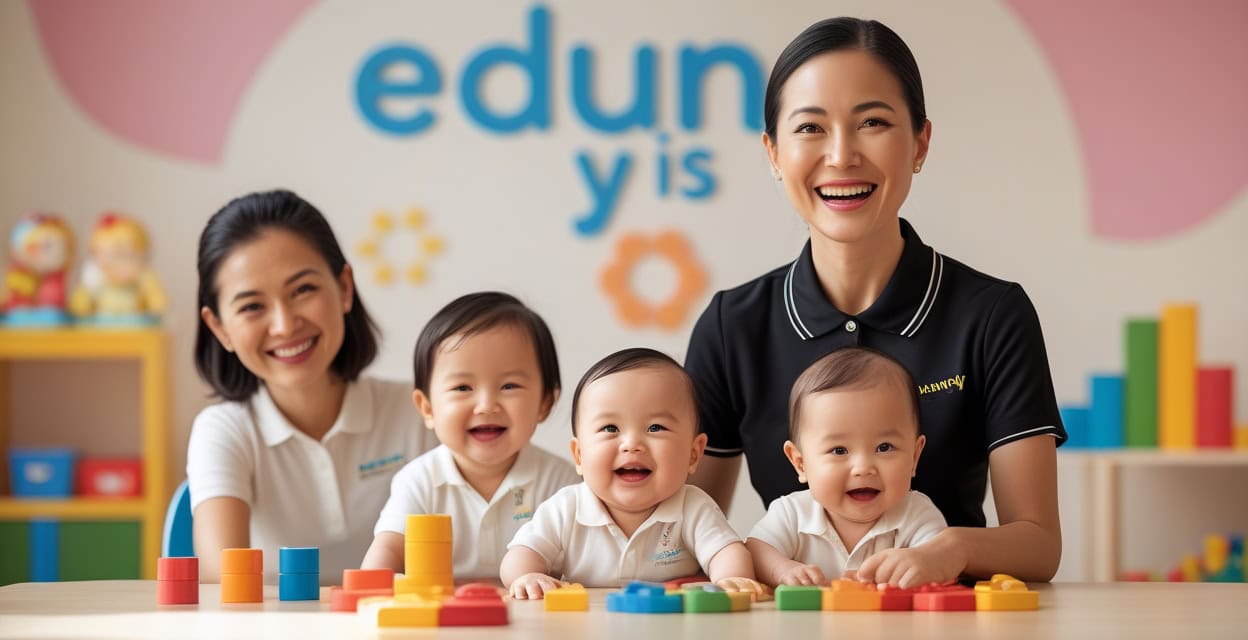
EduNanny is a public‑spirited, research‑grounded movement for infant care and community childminding in Singapore. We blend the heart of Bowlby’s secure base, the patience of Pikler’s respectful care, the curiosity of Montessori, the observation of Piaget, the social scaffolding of Vygotsky, the play of Froebel, and the whole‑child lens of Erikson—translated into Singaporean neighbourhoods, workdays, and rhythms. Operated as EduNanny by BUTLER and participating under the ECDA Childminding Pilot, we place infants in ultra‑low‑ratio 1:3 pods near home, Monday to Friday, 7am to 7pm, through centre‑based and home‑based options across the island. We are a National Social Initiative with a Maximum Employment Mandate: we professionalise caregiving jobs while giving families trustworthy choice.
How we structure care
What makes EduNanny different is simple: we turn the science of the first thousand days into a daily system of care that is safe, joyful, and attainable—affordable from $33/day, with fees payable by CDA/Baby Bonus—without compromise on dignity or quality.
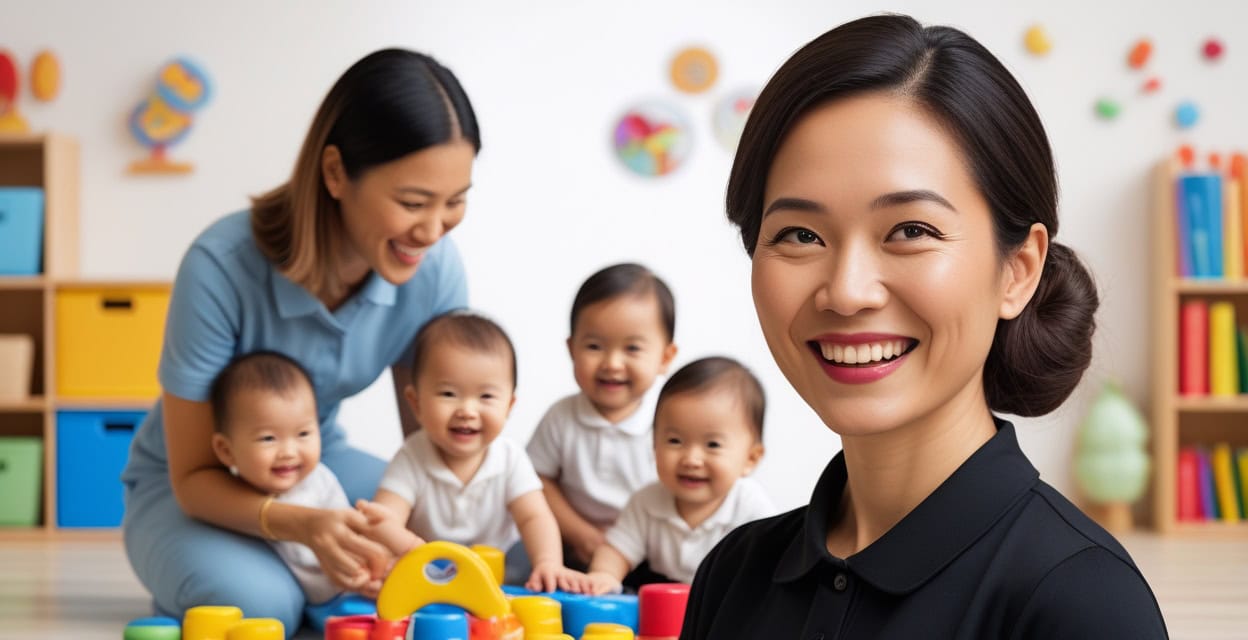
Five guiding themes that shape every choice
1) Building the architecture of secure attachment at scale
Key principles for families and carers:
- Pair each infant with a primary childminder to ensure a consistent, responsive relationship that learns and responds to that child’s signals, cycles, and needs.
- Treat care routines as curriculum: feeding, changing, soothing become moments for language, trust, and co‑regulation.
- Adopt an observe‑before‑intervene approach inspired by Pikler: invite participation rather than over‑managing, allowing infants to engage when ready.
- In ultra‑low 1:3 pods, caregivers notice micro‑moments (averted gaze, hand to mouth, foot flex) to guide when to pause, smile, or intervene—creating a secure base from which exploration grows.
Practical at‑home tips for parents: set predictable daily rhythms, name feelings and needs during routines, and provide a calm, warm presence during transitions (e.g., during feedings and nap times) to reinforce secure attachment beyond the pod.
2) Safety as a living system, not a poster
Safety is a layered, active practice—repeated hourly, not a slogan. Our approach includes:
- Environments: modern layouts with clear sightlines, safe sleep standards, zoned spaces that reduce crowding and noise. Materials are developmentally appropriate, non‑toxic, and rotated to avoid clutter hazards.
- Processes: two‑person checks for sleep and handovers; red rules for feeding and hygiene; emergency drills and incident reviews that treat near‑misses as lessons.
- Technology: transparent CCTV in learning spaces for coaching; digital attendance, temperature, and sleep logs; secure parent updates.
- People: rigorous training in infant CPR, choking response, and infection control; daily safety huddles for briefings; clear escalation protocols.
Parents can participate by requesting a safety briefing, reviewing incident summaries, and asking to observe a safety huddle to understand how safety becomes a habit of mind.
3) Developmental nutrition for the mind: play with purpose
We view play and routine as the mind’s diet—nourishing language, curiosity, and problem solving. Our pedagogy centers on:
- Serve‑and‑return interactions in a language‑rich environment; caregivers narrate, label, mirror, and sing to support vocabulary growth.
- Floor time for self‑discovery: rolling, reaching, pivoting, and body awareness—the “laboratory of self” described by Piaget.
- Social curiosity scaffolding through turn‑taking, peekaboo, and collaborative play that introduce early social cognition aligned with Vygotsky’s ideas of social learning.
- Culturally rooted sounds and stories: a Singapore Soundscape that treats heritage as an active resource for learning.
- Each pod adopts “care routines as lessons,” where nappy time becomes opportunities for language and gesture development; outdoor walks become sensory mapping of the neighbourhood.
Practical at‑home guidance: incorporate simple language routines during daily care, narrate actions during meals, and share short stories or songs in your family language to reinforce cognitive and linguistic development.
4) Happiness and dignity: the quiet metrics that matter
Joy is information. We track signs of well‑being and invest in caregiver wellbeing because calm, present adults co‑regulate with infants. Components include:
- Caregiver professional pathways: ongoing training, mentoring, fair scheduling, and career progression to sustain calm, presence, and pride in daily practice.
- Family co‑authorship: collaborative agreements on sleep, feeding, and soothing; sharing “moments that matter” snapshots as part of a growth narrative rather than surveillance.
- Trust built in transparency: daily updates, open communication channels, and light, respectful use of technology to maintain peace of mind.
5) Choice, access, and affordability without compromise
EduNanny offers options designed to fit real life:
- Centre‑based childminding for families seeking a communal environment with modern layouts and multi‑pod oversight.
- Home‑based childminding for near‑home convenience and intimate care.
- Distance support for families requiring coaching, scheduling help, or hybrid care.
- Islandwide availability, Monday–Friday, 7am–7pm, designed to align with workdays and family rhythms.
- Affordability from $33/day; fees payable by CDA/Baby Bonus.
- Transparent entrances: EduNanny.com and Childminding.EduNanny.com.
Quality without the commute means quality near home, near work, and near community—woven into neighbourhood life to support families without compromising dignity.
A day in a pod: a window into practice
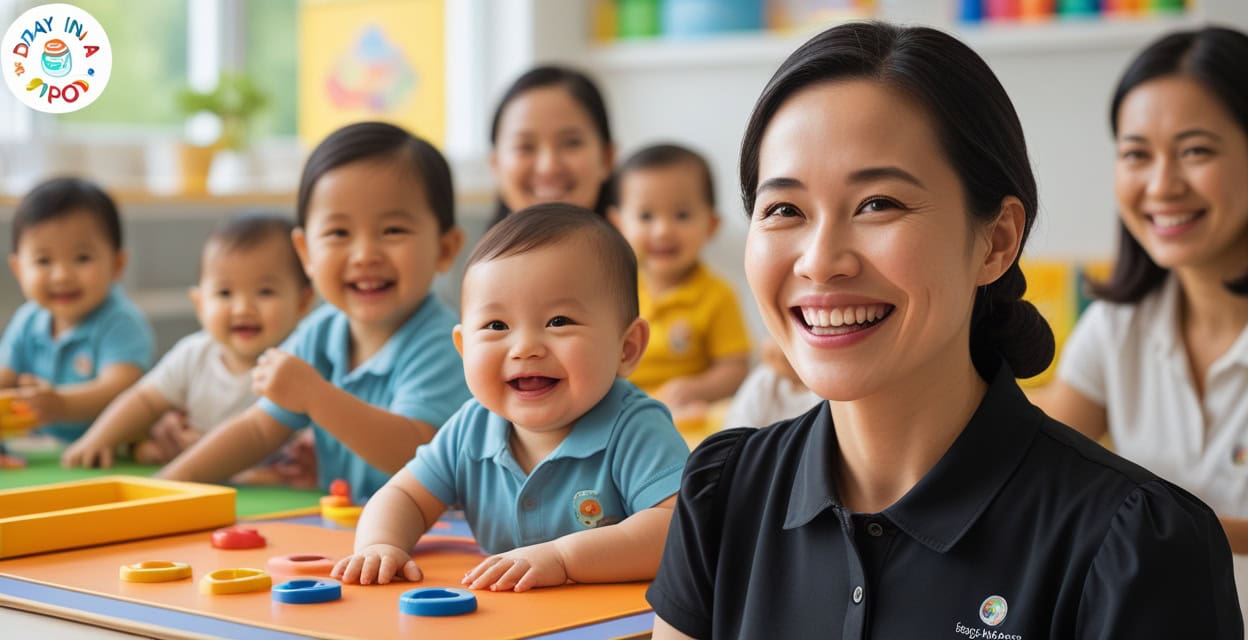
We share a typical day to illustrate how theory meets practice. This is a real‑world flow that foregrounds infant experience, caregiver skill, and family partnership:
- 7:05am: Handover with a warm gaze, a short briefing, and a promise to keep the home routine intact.
- 8:20am: Floor time—slow, open‑ended play; a caregiver narrates reach, grasp, and roll.
- 9:45am: Feed with responsive pacing; milk is food and conversation.
- 11:10am: Sleep checks on schedule, with safe sleep quiet and room calm.
- 1:30pm: Gentle sensory walk—shadows, leaves, breezes named and felt.
- 3:00pm: Serve‑and‑return songs; baby coos, adult mirrors; language grows.
- 5:40pm: Handover with evidence—what we saw, what we tried, what we’ll adjust tomorrow.
This is not a rigid timetable; it is a living rhythm designed to respect each infant’s signals while maintaining predictable routines that support secure attachment and early learning.

Why childminding matters — who, what, when, where, and how
Who benefits
Infants seeking a steady face, parents seeking peace of mind, caregivers seeking dignified work, and Singapore seeking resilient, empathetic citizens all benefit from a robust, community‑embedded approach to infant care.
What it delivers
A secure base—predictable, loving, and informed by science—where safety and curiosity meet.
When it matters most
The first thousand days are when brains wire rapidly and trust forms the template for lifelong learning.
Where care happens
Near home, near work, near community—islandwide, with both centre‑based and home‑based pods shaping neighbourhood life.
How care is delivered
Ultra‑low 1:3 ratios, trained and supported childminders, modern safe environments, respectful routines, transparent technology, and family partnerships that treat culture and values as assets.
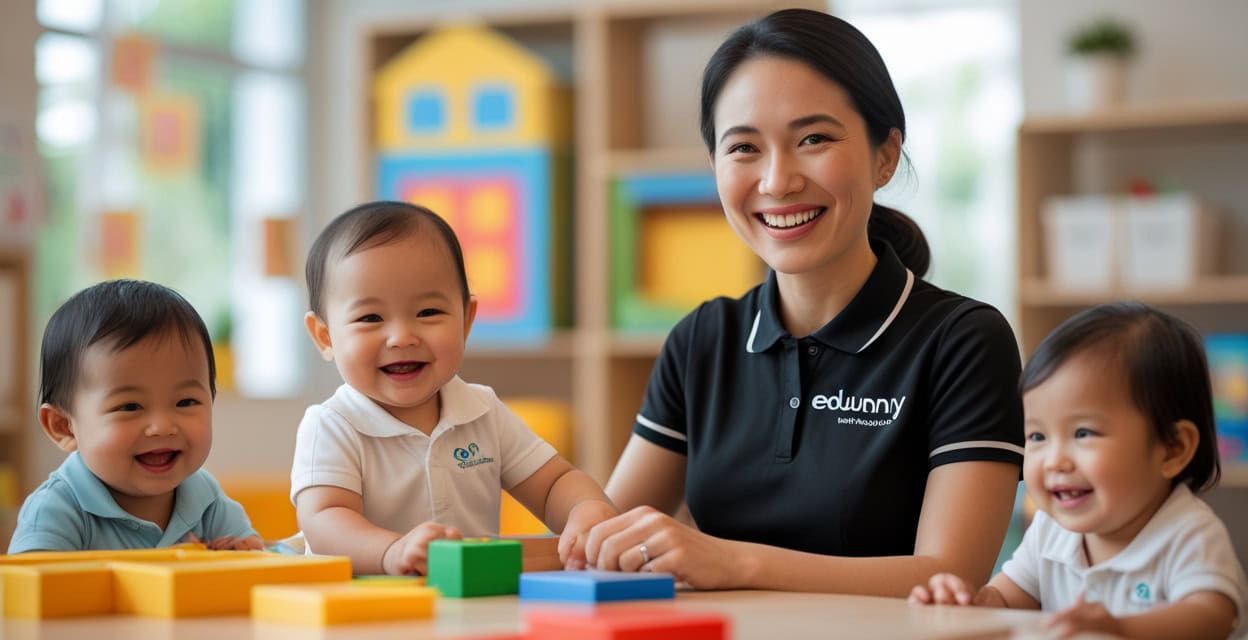
The philosophy and purpose of EduNanny childminding
- We believe care is the first curriculum.
- We believe safety is love made practical.
- We believe joy is a developmental need, not a luxury.
- We believe families are experts in their children, and childminders are experts in daily practice; together we form a durable circle of care.
- We believe quality must be reachable—Centre‑Based, Home‑Based, and Distance options, islandwide, Monday–Friday, 7am–7pm, affordable from $33/day, fees payable by CDA/Baby Bonus.
- We believe public good and good jobs can rise together—EduNanny by BUTLER, as part of the ECDA Childminding Pilot, advancing a National Social Initiative with a Maximum Employment Mandate.
- We believe transparency builds trust—innovation CCTV, modern layouts, and open communication link science to everyday peace of mind.
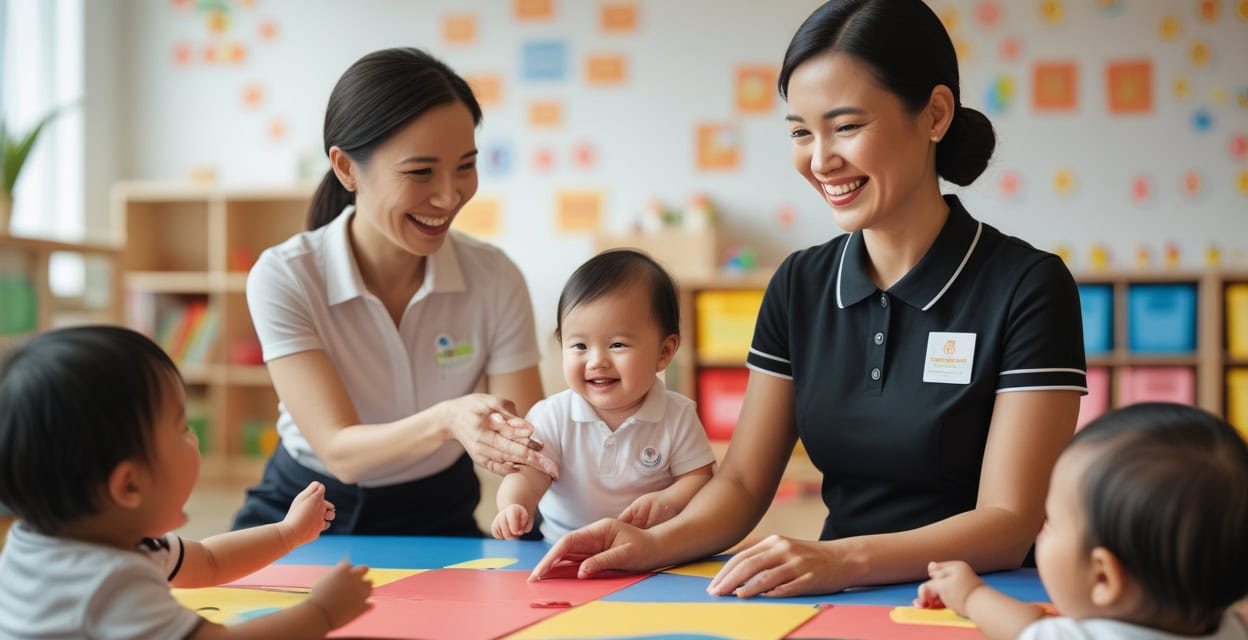
Practical guidance for parents: what you can do now
EduNanny isn’t just a model; it is a partnership with families. Here are actionable steps and questions to guide your decisions and daily routines:
- Choosing a caregiver or pod: Ask about caregiver qualifications, the 1:3 ratio, daily routines, safety practices, and how they document “moments that matter.” Request a trial day to observe how staff respond to your child’s cues.
- Important questions to ask at onboarding: What is your plan for safe sleep? How do you handle feeding and cues for hunger or fullness? How is language and play incorporated into daily routines? How will we share updates and photos?
- Transition support for infants: Establish predictable transitions (home to pod, pod to outdoor walk) with a familiar comfort item, named caregivers, and a brief goodbye ritual to reduce distress.
- Home partnership to reinforce learning: Mirror the pod’s language scaffolding at home; read daily in the family language; narrate actions during meals; reinforce co‑regulation during upset or fatigue.
- Daily routines that support development: Prioritize regular sleep times, responsive feeding, floor play, sensory exploration, and outdoor time to strengthen neural pathways and social skills.
- Monitoring progress ethically: Use family dashboards or “moments that matter” summaries to track growth without pressuring your child—focus on warmth, responsiveness, and curiosity.
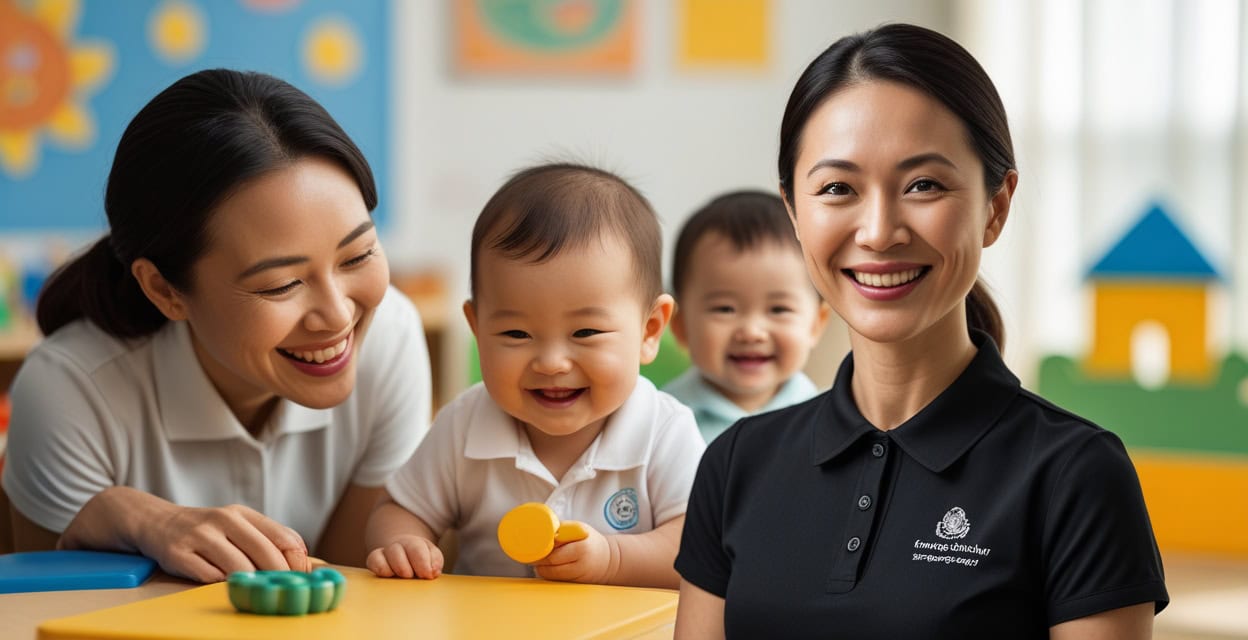
Implementation in practice: safety, transparency, and inclusion
Safety systems as normal practice
Safety is embedded in design, people, and culture. Expect two‑person checks, red rules for feeding and hygiene, routine drills, and ongoing coaching. Transparency features include CCTV visibility, daily logs, and open channels for questions.
Decentralised care, near home and near work
EduNanny’s neighbourhood approach places care into communities—reducing travel, supporting parental work‑life balance, and helping children form connections with their local environments.
Professionalising caregiving as a civic craft
Caregivers receive structured training, mentorship, fair scheduling, and clear career pathways. This supports consistent care quality and dignified employment under policy frameworks like the ECDA pilot and the Maximum Employment Mandate.
Transparency and accountability
From open communication with families to digital logs and updates, EduNanny links science to everyday peace of mind. Parents can easily access information about their child’s day, progress, and wellbeing.
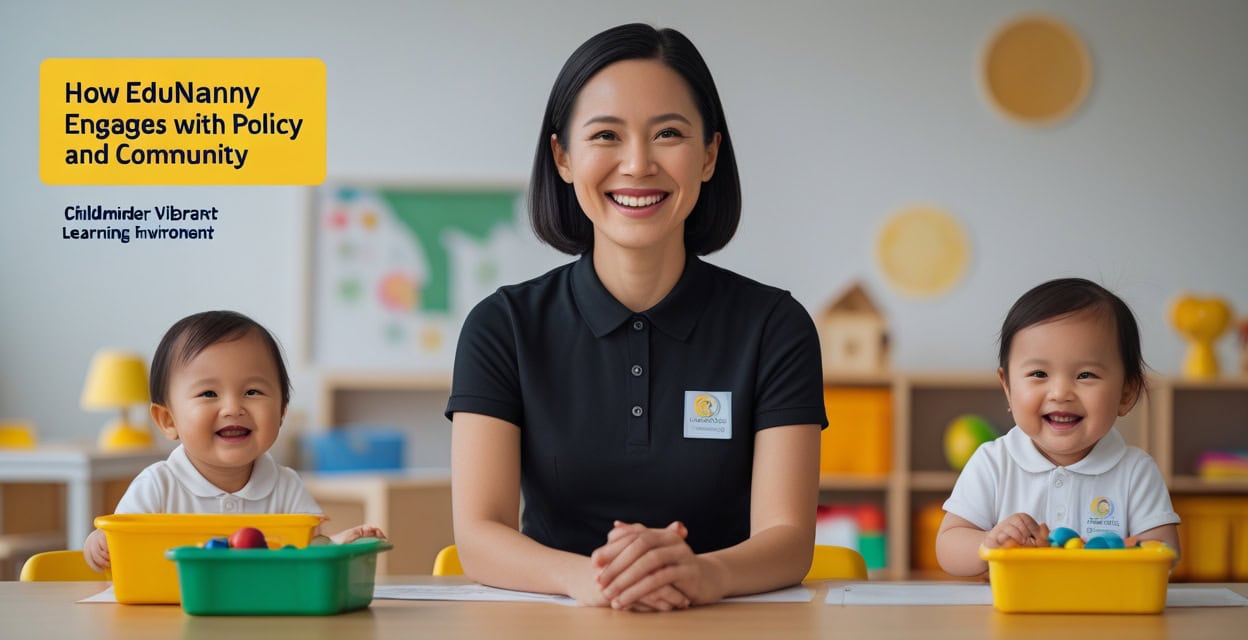
How EduNanny engages with policy and community
As a participant in the ECDA Childminding Pilot, EduNanny aligns with national goals for infant care that prioritise safety, caregiver professionalism, and universal access. By accepting CDA/Baby Bonus and ensuring islandwide coverage, EduNanny translates policy into daily dignity and sustainable family life.

Conclusion: stepping into a shared vision
To every parent who has ever handed over a child with a held breath; to every caregiver who has ever felt the honour of being trusted; to every policymaker seeking solutions rooted in dignity and data: EduNanny is our shared answer. It is possible to hold excellence and access together. It is possible to be safe and joyful at once. It is possible to meet families where they live and where they work, without asking them to trade love for logistics.
If this vision resonates, step into it with us. Visit EduNanny.com or Childminding.EduNanny.com. Ask your questions. Tour a pod. Try a day. Let us show, not tell, how a small, steady circle of care can change a life—and how many such circles can strengthen a nation.
From first cries to first confidence, we will be there—quiet, prepared, and present—so every Singaporean infant can begin with safety, grow with joy, and move into the world with trust.

SEO and ongoing growth
EduNanny is committed to accessible care, family partnership, and continual learning. By embedding science, community, and transparent practice into everyday routines, we aim to strengthen families, care workers, and the broader Singaporean society.
Call to action: If you are a parent, caregiver, or policymaker, join us in shaping the first thousand days into daily realities of security, joy, and dignity. Reach out, tour a pod, and become part of a neighbourhood that nurtures trust.

Key resources and further reading
- Understanding secure base concepts in everyday care
- Implementing Piagetian and Vygotskian principles in infant routines
- Safe sleep guidelines and infection control for infant settings
- Family partnerships: creating meaningful, non‑pressuring progress updates
- Technology and transparency: balancing privacy with safety and learning
Visit: EduNanny.com, and Childminding.EduNanny.com for more details, tours, and pilot participation.
Thank you.
[#keyword1, #keyword2, #keyword3, #keyword4, #keyword5]SEO keywords used in this article: early childhood Singapore, infant care Singapore, childminding Singapore, secure attachment, affordable childcare Singapore