

Tiny Pods Big Promise, An Attachment First Pathway to Singapore Infant Care by EduNanny

EduNanny Infant Childminding Service in Singapore: An Editorial Overview
Good evening, parents, caregivers, partners, and friends of Singapore’s youngest citizens. This long‑form piece expands on a simple, powerful idea: when we take exquisite care of the first thousand days, we take exquisite care of Singapore’s future. Guided by Montessori, Pikler, Bowlby, Vygotsky, Erikson and more, EduNanny presents an infant childminding service designed with equal parts science and soul—framed by rigorous editorial and professional standards.

What EduNanny Is—and Is Not
Near‑home, ultra‑low‑ratio infant care
EduNanny operates a network of micro‑pods where one trained, background‑checked childminder cares for one to three infants at any time. Care can happen in a childminder’s home or in community spaces designed to centre‑grade standards. The model emphasizes intimate attention, predictable routines, and a tight, responsive feedback loop with families.
Operational hours, location, and affordability
EduNanny is Monday to Friday, 7am to 7pm, islandwide. Under the ECDA Pilot, fees are set at $16.50 for half‑day (5 hours) and $33.00 for full‑day (10 hours) before GST, with CDA/Baby Bonus accepted for subsidised hours. The service is structured to be flexible: families choose days and blocks that fit their needs while preserving consistent caregiver relationships.
What EduNanny is not
EduNanny is not a large institutional facility and not a one‑size‑fits‑all model. It is not designed to replace the fullest spectrum of early education services but to provide a developmentally rich, attachment‑first option at a human scale. It aims to balance responsiveness, safety, and family transparency in a way that large settings cannot always guarantee.

Five Quiet Promises: The Cornerstones of Great Infant Care
- Attachment before activity: The curriculum is the secure base. Caregivers prioritise relationship‑building, emotional availability, and responsive soothing.
- Small numbers for big impact: A 1:3 ratio is the precondition for sensitivity, contingency, and rapid attunement to infant cues.
- Layered safety architecture: People, place, practice, and proof work in concert to create a consistently safe environment.
- Rhythms that honour development: Sleep, nourishment, movement, and play are scheduled to support emerging self‑regulation and curiosity.
- Transparent partnership with families: Open, timely, and respectful communication helps families feel involved and confident.

Five Topics at the Heart of EduNanny’s Practice
1) Attachment and Autonomy: the pedagogy of presence
Theory in action: Drawing on Bowlby’s secure base and Pikler’s respectful caregiving, EduNanny staff practice “slow hands, soft voice, steady eyes.” Each moment—diapering, feeding, settling to sleep—is a conversation that honours the infant’s cues.
Practical implications: With a 1:3 ratio, caregivers provide contingent responses that support brain architecture for trust, language, and self‑regulation. Maintain continuity by assigning a primary childminder who learns a child’s cues and micro‑rhythms. Track small milestones (grasp, roll, babble, eye contact) in a simple observation diary shared weekly with parents.
Actionable steps for families: Request a brief onboarding kit that explains your child’s preferences, a starter routine, and cue glossary. Expect a weekly note from the primary caregiver highlighting new cues or interests and a short narrative about the child’s social interactions with peers.
2) Safety as architecture: people, place, practice, proof
People: All EduNanny caregivers are certified, background‑checked, and trained in infant first aid, safe sleep, hygiene, and nutrition. Ongoing supervision and reflective practice sustain high standards.
Place: Environments are audited for hazards, with gate‑controlled access, cushioned layouts, and sleep areas that follow safe sleep guidelines.
Practice: Clear health and hygiene protocols, including a No Sick Child Policy during care hours. Contingency plans cover chronic conditions in alignment with ECDA guidance, documented in the service agreement.
Proof: CCTV is installed in community premises as required; home‑based pods offer consent‑based CCTV in caregiving areas during care hours. Incident logs, safety drills, and routine audits provide ongoing accountability.
3) Development and delight: building competence and joy
Sensorimotor play: Sensorimotor exploration is supported with calm, purposeful materials—rattles, cloth books, treasure baskets, supervised water play, and ample floor time for tummy time, rolling, and crawling.
Language and culture: Daily songs, rhymes, and picture books in English and Mother Tongue languages nurture early phonological awareness and belonging. Baby signing supports early communication and reduces frustration.
Schema‑friendly play: Repetition and schema‑driven activities (e.g., filling/emptying, posting, transporting) invite exploration without becoming overwhelming.
Rhythms for regulation: Predictable routines around feeding, napping, changing, and outdoor walks (where safe) support infants’ ability to settle and thrive.
4) The purpose and craft of childminding: a profession with dignity
Professional identity: EduNanny childminders are early‑years professionals, not “helpers.” A formal training stack, reflective practice circles, and pathways for progression acknowledge the expertise required to care for the youngest learners.
Community service: The pilot model enables care for up to three infants at a time, expanding access without sacrificing intimacy. A Maximum Employment Mandate reinforces dignified, skilled jobs for local caregivers.
Family partnership: Transition plans, mindful separation routines, and monthly check‑ins help families align on goals and preferences. Daily updates and accessible channels for concerns keep families confidently informed.
5) Transparency and trust: technology that serves relationships
Partnership, not surveillance: Secure messaging, daily summaries, photos, feeding/sleep logs, and prompt incident reporting keep parents in the loop without undermining trust.
Privacy by design: Data governance protects families and caregivers. CCTV in community spaces is balanced with consent for home‑based pods, supporting coaching and quality assurance while respecting privacy.

Benefits Parents Consistently Ask About
- Ultra‑low ratio, ultra‑low density: 1:3 care to ensure intimate attention and rapid responsiveness.
- Safety and assurance: Certified caregivers, infant first aid, safe sleep practices, food safety, incident protocols, routine audits, and CCTV where appropriate.
- Health protection: No Sick Child Policy during care hours to protect each pod, with care plans for chronic conditions in line with ECDA guidance.
- Quality and excellence: National industry standards, reflective coaching, and continuous improvement across both home‑based and community‑based pods.
- Affordability and flexibility: Subsidised hours under ECDA, with transparent fee structures and adaptable scheduling.
- Access and convenience: Islandwide near‑home pods to reduce commute, increase family time, and support consistent care routines.
- Consistency and continuity: Primary caregiver model with tailored routines and regular progress notes.
- National social initiative: EduNanny operates under the ECDA pilot, expanding access while maintaining high standards and dignified employment.

Who, What, When, Where, and How—Why the Childminding Model Matters Now
Who
Singaporean infants aged 2 to 18 months who are not concurrently enrolled in ECDA‑licensed infant care centres, and their families seeking proximity, safety, and attachment‑based care. The model supports working parents who need predictable hours and a trusted caregiver relationship.
What
Infant childminding under the ECDA Pilot, with care in a childminder’s home or community space, and a maximum of one to three infants per caregiver.
When
Monday to Friday, 7am to 7pm, December 2024 to December 2027, with subsidised half‑day and full‑day blocks.
Where
Across Singapore, prioritising near‑home pods in both home‑based and community‑based environments.
How
Through a professional, attachment‑first model: certified caregivers, layered safety, transparent communication, modern, centre‑grade layouts, CCTV with consent, and a clear, affordable fee structure.

For Parents: What to Expect Day One
- A gentle transition plan that honours your infant’s cues and routines.
- A primary childminder introduced well before the first drop‑off, with a phased visitation schedule.
- A safety‑checked space, with agreed routines documented in a service agreement.
- Daily notes that illuminate not just what happened, but who your child is becoming—milestones, mood patterns, and emerging social interactions.
- A clear escalation path for concerns, with contact channels and timely responses from EduNanny staff and the concierge team.

For Singapore: What the Pilot Builds Over Three Years
- A near‑home infrastructure that prioritises attachment, safety, and early learning.
- Professional dignity and training for a new cadre of early‑years caregivers, with clear career progression.
- A practical pathway for families who need flexible, reliable care without the overhead of institutional scale.
- Evidence, data, and lived experience to guide policy and community design beyond 2027.

The EduNanny Promise
- Care moments as learning moments, and learning moments as belonging moments.
- Smallness that allows infants to be fully seen and nurtured.
- Transparency as the oxygen of partnership—clear, respectful communication and open channels.
- Affordability as a public good—high‑quality care accessible to more families through public‑private collaboration.
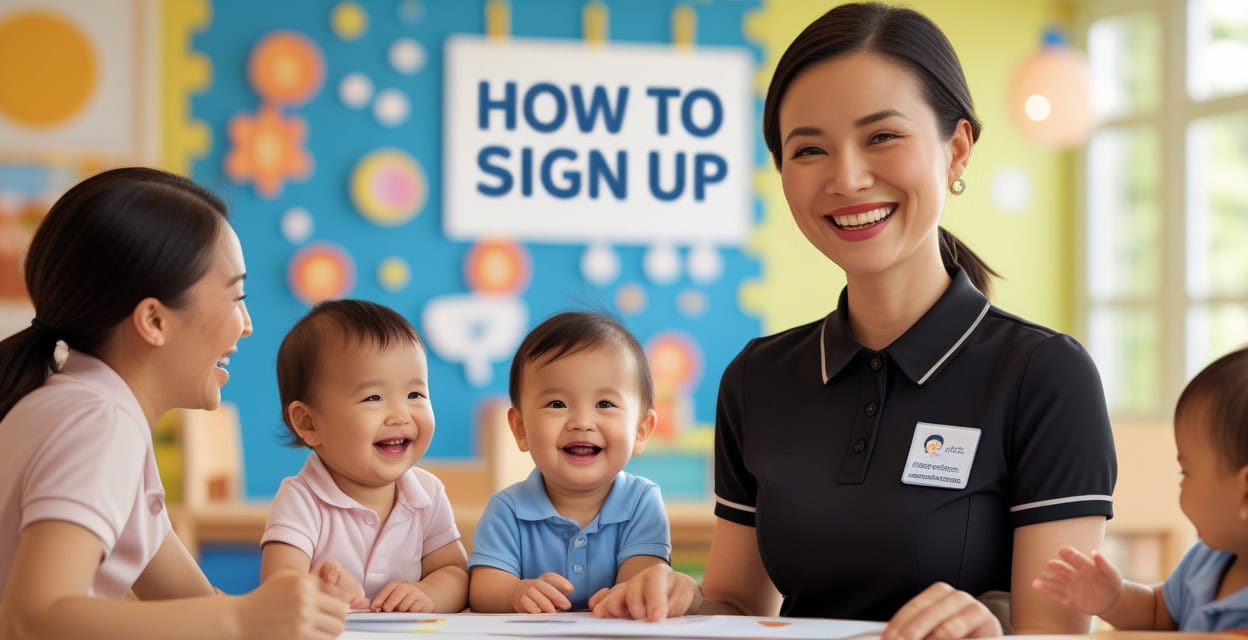
How to Sign Up
- Visit https://edunanny.com/edunanny-ecda-childminding-service/ or EduNanny’s main site.
- Fill in the enquiry form or message via WhatsApp to reach EduNanny Concierge Team.
- Schedule a site visit—home‑based or community‑based pod—and review the safety and logistics in person.
- Finalize the service agreement, align on routines, and enrol your infant into the chosen pod.
- Begin the transition plan with your primary caregiver, supported by ongoing daily updates and monthly reviews.

In Closing: A Gentle, Powerful Beginning
Infant care is not a race to milestones; it is the art of building trust, breath by breath. With EduNanny under the ECDA Childminding Pilot, families gain an intimate, safe, and transparent model that is within reach: ultra‑low ratio care, near‑home spaces, certified professionals, CCTV in community spaces and in consented home areas, robust health standards, and affordable, subsidised options. Small pods create a big presence—the quiet excellence that can cradle the future.
Small pods. Big presence. Quiet excellence. That is how we cradle the future, together.

Call to Action
Take the first step toward a developmentally enriching, attachment‑focused infant care experience. Explore EduNanny’s ECDA pilot options, contact the Concierge Team, and arrange a private tour to see how a tiny pod can make a lasting difference for your family and your child’s future.
EduNanny Singapore — where near‑home care meets rigorous standards and compassionate, science‑backed practice.
[#EduNannySingapore, #ECDApilot, #InfantCareSingapore, #1to3InfantRatio, #NearHomeChildcare]