Fraud Blocker edunanny.com

Category: Childminding

edunanny-82cafd04-b27f-4396-8de5-6f55c2f19651
August 23, 2025

Trust and Joy in the First Thousand Days EduNanny Near Home Infant Pods Singapore ECDA Pilot December 2024 to December 2027
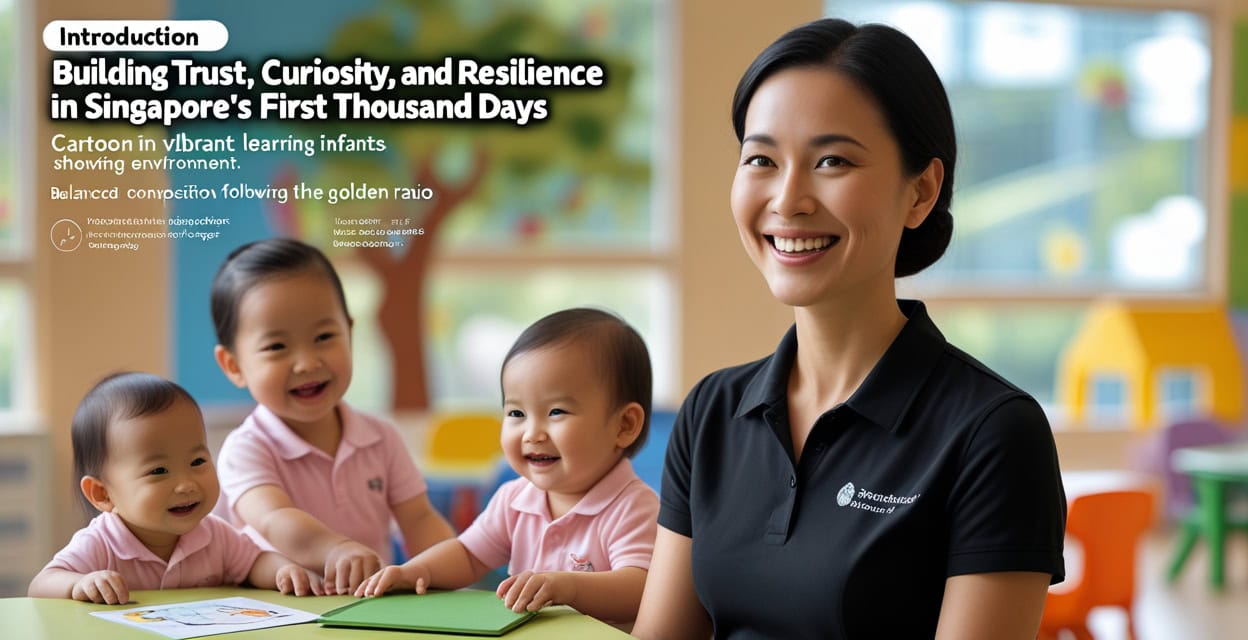
Introduction: Building Trust, Curiosity, and Resilience in Singapore’s First Thousand Days

Introduction: Building Trust, Curiosity, and Resilience in Singapore’s First Thousand Days

In the quiet hours and ordinary routines of a child’s day, the architecture of trust and curiosity is quietly formed. EduNanny’s Infant Childminding Service exists to make high‑quality infant care near home—small, safe, human—and accessible to every working family. This is a call to reimagine early care as a sustainable partnership between families, caregivers, and communities, anchored in dignity, transparency, and development.


EduNanny by BUTLER: A National Pilot for Infants

EduNanny by BUTLER: A National Pilot for Infants

EduNanny has been appointed by the Economic Development Board (EDB) and ECDA to operate under Singapore’s national Childminding Pilot for Infants, from 1 December 2024 to 31 December 2027. The pilot offers an affordable, regulated option for Singapore Citizen infants aged 2 to 18 months who are not concurrently enrolled in ECDA‑licensed infant care. We bring ultra‑low density, ultra‑low ratios, and highly trained childminders to home and community settings across the island, Monday to Friday, 7am to 7pm.

For parents today, this means a small circle of care—no more than 1 childminder to 3 infants—where safety is engineered, joy is intentional, and development is personal. Learn more at EduNanny’s network pages and explore nearby options along your commute or neighbourhood route.


Five Ideas at the Heart of EduNanny’s Approach

Five Ideas at the Heart of EduNanny’s Approach

1) Attachment-first pedagogy: attunement before achievement

  • Begin with relationships: care that reads and responds to each infant’s cues, fostering language, self‑regulation, and trust.
  • Ultra‑low ratios (1:3) grant childminders the time to read subtle signals, co‑regulate emotions, and scaffold learning in each baby’s zone of proximal development.
  • Respectful caregiving—slow touch, narrated care moments, and unhurried routines—turn diaper changes, feeds, and naps into early lessons in security and comfort.

2) Safety by design: a layered system, not a single promise

  • Environment: spaces vetted for infant readiness, cleanliness, safe sleep adherence, hazard reduction, sanitation, and safe movement with clear sightlines.
  • People: all EduNanny childminders are certified, background-checked, and trained in infant first aid and essential care before deployment; ongoing supervision and quality assurance are woven in.
  • Practice: safe sleep on back with a firm mattress, safe feeding, hygiene protocols, and a No Sick Child Policy to protect tiny immune systems; attendance pauses if symptoms arise with a safe return plan.
  • Transparency: CCTV in community spaces; opt‑in CCTV in home-based care with consent; clear incident protocols and timely accountability.

3) A developmental day: rhythm, not rush

  • A gentle daily cycle: nourish, move, connect, rest—calibrated to each infant’s cues and family routines.
  • Active play includes tummy time, supported gross motor exploration, songs, books, and bilingual language play to support early literacy.
  • Simple cause‑and‑effect exploration, sensory play that is mindful, and respect for naps and feeding plans as part of the routine.

4) Joy as a measurable practice

  • Delight is designed: warm greetings, familiar voices, and responsive smiles guide transitions and settling.
  • Clues of happiness—relaxed bodies, steady feeding, engaging gaze, purposeful movement, and shared vocal exchanges—are tracked as micro‑wins.
  • Concise updates keep parents in the loop and empower them to participate in their baby’s joyful moments.

5) The purpose and dignity of childminders

  • This is a national workforce initiative: EduNanny’s “maximum employment mandate” elevates dignified, professional roles for childminders near their neighbourhoods.
  • Communities of practice, coaching, and continuous learning lift quality and pride in the craft; investment in the caregiver yields returns for the child.
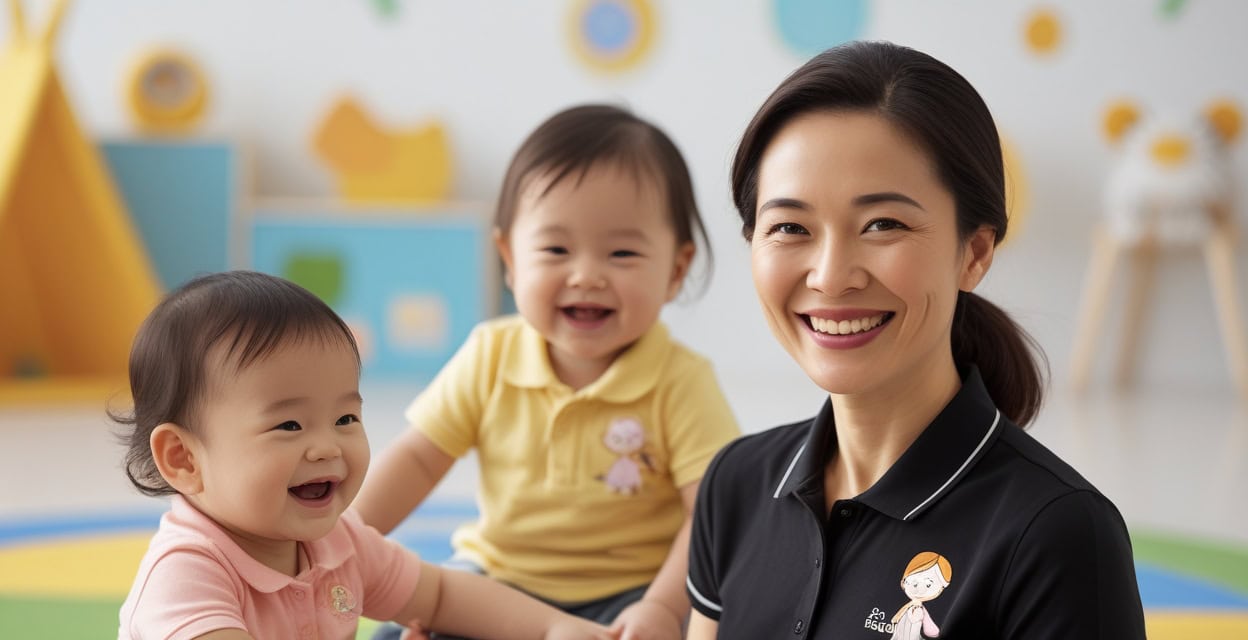
What Makes EduNanny Different, In Practice

What Makes EduNanny Different, In Practice

  • Ultra Low Density, Ultra Low Ratio: 1:3 infant pods ensure attention that is present, not stretched.
  • Certified and Background Checked: Mandatory training, infant first aid, food safety, and ECDA checks before care begins.
  • CCTV and Visibility: CCTV in community spaces; optional CCTV in home settings with consent; modern layouts for clear sightlines.
  • No Sick Child Policy: A safeguard to protect the pod and other infants.
  • Centre‑Based and Home‑Based: Flexible options to fit commute and comfort.
  • Distance and Convenience: Islandwide, Monday–Friday, 7am–7pm, with 5‑hour or 10‑hour blocks aligned to working hours.
  • Affordability with National Support: From $16.50 (half day) or $33.00 (full day) before GST during subsidised hours under the ECDA pilot; CDA/Baby Bonus can be used for payment.
  • Quality You Can Sense: Clean, calm spaces; respectful routines; concise development updates.
  • Islandwide Network: EduNanny.com and Childminding.EduNanny.com connect families to nearby options.
  • A Public Promise: EduNanny by BUTLER serves the ECDA Childminding Pilot—elevating standards, employment, and family life.
Who, What, When, Where, How, and Why Childminding Matters Now

Who, What, When, Where, How, and Why Childminding Matters Now

  • Who: Singapore Citizen infants aged 2 to 18 months—and the parents, grandparents, and caregivers who love them.
  • What: Regulated, near‑home childminding in ultra‑small pods—1 childminder to up to 3 infants—blending safety, attachment, and early development.
  • When: Weekdays, 7am–7pm, during the ECDA pilot from 1 December 2024 to 31 December 2027; 5‑hour or 10‑hour subsidised blocks (excluding public holidays).
  • Where: Home‑based and community spaces across Singapore—designed, assessed, and supported for infant care.
  • How: A layered system—training, background checks, environmental safety, CCTV visibility, clear protocols, parent communication, and continuous quality improvement.
  • Why: Tiny circles build strong beginnings. A trusted adult who knows your baby well, in a small, calm space, is the surest path to secure attachment, healthy routines, and joyful early learning—while offering families reliability and affordability.

The EduNanny Philosophy and Promise

The EduNanny Philosophy and Promise

  • Relationship-rich care: Infants deserve safety, personalization, and proximity to home.
  • Transparency and affordability: A concierge team supports families with dignity and clarity.
  • Professional respect for childminders: Training, community, and ongoing growth ensure peak care and meaningful employment.
  • Public good in the first thousand days: Quality childminding as a smart, compassionate investment in Singapore’s future.

Getting Started: A Practical Guide for Parents

Getting Started: A Practical Guide for Parents

  1. Visit https://edunanny.com/edunanny-ecda-childminding-service/ and fill out the form—or inquire via WhatsApp.
  2. EduNanny Concierge Team responds with questions answered and nearby options shared.
  3. Schedule a site visit—home-based or community premises—to see, hear, and feel the environment.
  4. Enrol and settle in with a personalised transition plan for your infant.
In Closing: A Simple Promise Kept Well

In Closing: A Simple Promise Kept Well

EduNanny’s Infant Childminding Service is a simple promise kept well: small pods, safe hands, steady routines, joyful days. Delivered neighbourhood by neighbourhood, caregiver by caregiver, child by child, the program exemplifies how the small things—warm greetings, clean spaces, attentive feeding, unhurried naps, and curious play—create something very large for Singapore. Let us cradle possibility together: for parents, for childminders, and for infants as they grow into confident, capable Singaporeans.

EduNanny—near home, with heart, powered by standards. We look forward to welcoming you and your little one soon.


Conclusion

Conclusion

The EduNanny approach to infant care centers on attachment, safety, rhythm, joy, and professional dignity. By combining ultra‑low density with rigorous training, transparent practices, and supportive family partnerships, EduNanny offers a scalable model for Singapore’s early years. If you are a parent seeking reliable care, a caregiver seeking professional growth, or a community partner aiming to strengthen neighbourhood support, EduNanny invites you to participate in this national initiative and to invest in the well‑being and potential of every child.

[#keyword1, #keyword2, #keyword3, #keyword4, #keyword5]


edunanny-f3f5798a-12b1-4243-be0d-1e6b0f894d11
August 23, 2025

Cradling a Nation EduNanny Near Home 1 to 3 Infant Pods Pilot in Singapore December 1, 2024 to December 31, 2027

Introduction to EduNanny and the Pilot

Introduction to EduNanny and the Pilot

Good evening, parents, caregivers, neighbours, partners in possibility. EduNanny by BUTLER is honoured to be appointed by ECDA to deliver infant childminding under the national Childminding Pilot for Infants, running 1 December 2024 to 31 December 2027. We serve Singapore Citizen infants aged 2 to 18 months who are not concurrently enrolled in ECDA-licensed infant care centres. Care happens in ultra-low ratio “tiny pods”—one childminder caring for one to three infants—near home, within childminders’ homes or in thoughtfully designed community premises. It is care made reliable, affordable, and human, during the hours that matter most to working families: Monday to Friday, 7am to 7pm.

In practice, EduNanny blends the intimacy of home with the standards of a national initiative. Our approach recognises that early care is foundational: attachment, language, movement, and social learning begin long before formal schooling. This article expands on what EduNanny offers, how it works, and how families can participate with confidence and clarity.


How EduNanny makes infant care great in Singapore

How EduNanny makes infant care great in Singapore

  • Attachment-first pedagogy in a 1:3 ratio. Small groups allow every infant to form consistent, meaningful relationships with a single caregiver and peers.
  • Safety architecture that is proactive, transparent, and verifiable—from room layouts to real-time updates and clear emergency protocols.
  • Development-rich daily routine that honours readiness, movement, language, and play—supported by a prepared environment that invites exploration.
  • Family partnership with real-time communication, daily logs, and collaborative planning that keeps parents informed and involved.
  • Affordability and access through the ECDA Pilot, with fees payable via CDA/Baby Bonus during subsidised hours, reducing the financial burden while maintaining high standards.

Five topics that define our practice

Five topics that define our practice

1) The Attunement Cycle: Pedagogy in a 1:3 world

Relationship is the curriculum. In a setting where one adult cares for up to three infants, every moment presents an opportunity to observe, attune, respond, and extend. This serve-and-return dynamic supports language development, trust, and early executive function. Key practices include:

  • Floor-based, movement-friendly care modeled after Emmi Pikler principles to allow natural exploration—rolling, crawling, standing—at each child’s pace.
  • Montessori-informed environments with low, open shelves, natural materials, and child-height prompts that invite self-directed discovery.
  • Vygotskian scaffolding: gentle narration, turn-taking modeling, and targeted challenges within each child’s zone of proximal development.
  • A living rhythm with predictable routines: warm welcome, floor play, reading and song, nourishing feeds, naps, sensory exploration, and careful family handover.
  • Practical tips for families: bring a small item from home to anchor your child’s routine, ask for a quick daily question during handover to reinforce consistency, and observe how caregivers respond to a child’s first attempts at movement or speech.

2) Safety by design: From room layout to real-time accountability

Safety is integrated into every space and practice. Our safety by design approach includes:

  • Safe sleep and safe space: firm, flat sleep surfaces, clearly delineated zones for feeding, play, and rest, with hazard checks room-by-room.
  • Infection-control with dignity: a No Sick Child Policy during care hours to protect all infants; clear guidance for when a child should stay home or transition back to care.
  • Trained, certified, and background-checked: infant-first-aid, basic infant care, and food safety training for all EduNanny childminders; ECDA background checks for carers and regular household members where applicable.
  • Transparent monitoring: CCTV in community premises; in-home CCTV in caregiving areas is available with consent to balance transparency and privacy.
  • Clear protocols: health checks, safe handovers, emergency drills, incident reporting, and hygiene checklists as routine practice.

3) The First Thousand Days: Development that is whole and humane

We honour the critical window when brains are most malleable. Our focus includes:

  • Sensory nutrition: balancing stimulation with rest, offering varied textures, sounds, and textures in a gentle, non-overwhelming way.
  • Language bath: rich language exposure through songs, stories, and narration in English and mother tongue, supporting bilingual development as a joyful family heritage activity.
  • Motor confidence: ample opportunities for tummy time, safe free play, cruising, and outdoor strolls to build strength and balance.
  • Social micro-moments: tiny pods cultivate early empathy—eye contact, shared gaze, turn-taking in simple games, and peer engagement.
  • Family visibility: concise daily updates, feeding and sleep logs, and developmental notes; collaboration with health professionals when needed.

4) Joy as a safety factor: Happiness, belonging, and the architecture of calm

A secure base supports safe exploration. Our practices emphasize:

  • Secure base care: consistent caregivers, predictable routines, and ample eye contact to help infants regulate their emotions.
  • Designed for delight: soft lighting, natural materials, and cozy reading nooks that invite calm exploration without overstimulation.
  • Music, rhythm, and culture: culturally rich lullabies and songs that strengthen memory, language, and identity.
  • Nature nearby: outdoor observations and fresh air as integral parts of daily life, when feasible.
  • Happiness as data: calm bodies, steady feeds, settled sleep, and engaged play as indicators of a well-supported environment.

5) The purpose and professionalism of childminders: A civic craft

Childminding is a national, dignified vocation. Our commitments include:

  • A national social initiative: the Pilot opens meaningful work paths and elevates the craft of caregiving with professional development.
  • Reflective practice: regular coaching and case reflection to refine observation, language scaffolding, and responsive care.
  • Ethics and partnership: confidentiality, boundaries, and respectful parent communication; childminders as skilled co-regulators rather than replacements for parents.
  • Community roots: care located in neighbourhood homes and community spaces to keep infants close to daily life—reducing stress and travel time.

What families can expect with EduNanny

What families can expect with EduNanny

  • Ultra-low density, ultra-low ratio: 1:3 infant pods for deep, individualized attention.
  • Certified EduNanny childminders: trained, background-checked, and ECDA-vetted.
  • CCTV provided in community premises; in-home CCTV in caregiving areas available with parental consent.
  • No Sick Child Policy to safeguard pods and protect infant wellbeing.
  • Centre-style community spaces and home-based options designed for safety and warmth.
  • Modern, calm layouts: movement-friendly, uncluttered spaces that invite exploration.
  • Hours: Monday–Friday, 7am–7pm islandwide across Singapore.
  • Affordability: ECDA-subsidised fees during typical working hours—$16.50 (5 hours) or $33.00 (10 hours) before GST; CDA/Baby Bonus may be used for subsidised hours.
  • Convenience: care near home reduces travel stress for infants and families.
  • Quality within a national framework, with consistent oversight and standards.
  • EduNanny by BUTLER: a trusted appointed operator under the ECDA Childminding Pilot.
  • Learn more at EduNanny.com and Childminding.EduNanny.com.

Eligibility and fees at a glance

Eligibility and fees at a glance

  • Who: Singapore Citizen infants aged 2–18 months, not concurrently enrolled in ECDA-licensed infant care centres.
  • When: Care blocks available Monday–Friday, 7am–7pm (excluding public holidays).
  • Where: Childminders’ homes or community premises near your neighbourhood.
  • Fees for subsidised hours: $16.50 per half-day (5 hours) or $33.00 per full-day (10 hours) before GST. CDA/Baby Bonus can be used for these subsidised blocks.
  • Flexible scheduling: Choose the number of days per week and block type you need. For care beyond subsidised hours, talk with our team about regular rates.

How to sign up

How to sign up

Take a thoughtful, practical step into EduNanny. Here’s a simple pathway to begin:

  • Visit https://edunanny.com/edunanny-ecda-childminding-service/ and complete the short form, or inquire via WhatsApp through the page.
  • Our EduNanny Concierge Team will respond promptly to understand your needs and recommend nearby options.
  • Confirm an appointment for a site visit to see the space, meet the childminder, and review routines and safety.
  • Enrol with confidence. We’ll guide you through documentation, CDA/Baby Bonus payment setup for subsidised hours, and your infant’s smooth, staggered transition.

A few practical clarifications

A few practical clarifications

  • CCTV: Provided in community premises; in-home CCTV in caregiving areas is available and encouraged with household consent for care hours.
  • Health: No Sick Child Policy is in effect for safety. Discuss medical needs, medication administration, and return-to-care criteria with EduNanny in advance.
  • Safety and checks: ECDA conducts background checks on childminders and, for home settings, on regular household members. EduNanny adds layered screening and ongoing training.
  • Beyond typical hours: If you need support outside subsidised blocks, speak with us—additional care may be arranged at regular rates where available.

Conclusion: Why childminding matters—who, what, when, where, and how

Conclusion: Why childminding matters—who, what, when, where, and how

Who: Singapore’s youngest citizens and the families who love them. What: ultra-low ratio infant childminding—one adult, up to three infants—delivering attachment, safety, and development in tiny, trusted pods. When: during the critical first thousand days and beyond, Monday to Friday, 7am–7pm, when families need dependable support. Where: near home, in calm, well-prepared community premises and home settings that feel personal, not institutional. How: with trained, background-checked childminders; evidence-based pedagogy; rigorous safety; transparent monitoring; and fees made affordable through a national pilot and CDA/Baby Bonus.

EduNanny is more than care—it is a philosophy of early childhood grounded in science and tenderness. We honour parents as primary caregivers and culture-bearers, and position childminders as skilled co-regulators who bring both heart and evidence to everyday routines.

This is what it means to cradle a future: safety as the floor, joy as the atmosphere, and dignity as the throughline. It is national in purpose and intimate in practice. It is affordable without compromise. It is near home and near the heart.


The philosophy and purpose of EduNanny Childminding

The philosophy and purpose of EduNanny Childminding

We believe care is not a placeholder for learning—it is the first and finest teacher. In our pods, the curriculum is human connection; the method is attunement; the outcome is secure, curious, joyful infants who rest well, bond deeply, and develop steadily. We honour parents as primary caregivers and culture-bearers, and we position childminders as skilled co-regulators who bring science and tenderness to everyday routines.

This is what it means to cradle a future: to set safety as the floor, joy as the atmosphere, and dignity as the throughline. It is national in purpose and intimate in practice. It is affordable without compromise. It is near home and near the heart.


Your next step

Your next step

EduNanny by BUTLER—where tiny pods make mighty beginnings. Where your infant is known, your family is respected, and Singapore’s future is quietly, steadily, beautifully prepared.

[#EduNannySingapore, #InfantCareSingapore, #ECDAPilot, #TinyPods, #AttachmentBasedCare]

edunanny-45e8bf0c-8a97-43da-93ba-e3f5c9a6f3e4
August 23, 2025

Cradling the First Thousand Days in Singapore Through Near Home One to Three Infant Pods

EduNanny by BUTLER: Cradling the First Thousand Days with Safety, Science, and Soul

EduNanny by BUTLER: Cradling the First Thousand Days with Safety, Science, and Soul

Good evening, parents, caregivers, partners, and friends of Singapore’s youngest citizens. My name is EduNanny by BUTLER, and tonight I want to speak plainly, warmly, and precisely about something that matters to every family: how we cradle the first thousand days with safety, science, and soul—near home, with people you can trust. This article unpacks our approach, how it works in practice, and what it means for families across Singapore.


Introduction to EduNanny Infant Childminding Service

Introduction to EduNanny Infant Childminding Service

EduNanny is an appointed operator under ECDA’s three-year Childminding Pilot for Infants, running 1 December 2024 to 31 December 2027. The goal is simple and urgent: make infant caregiving affordable, safe, reliable, and close to where families live and work.

  • Ultra low ratio: 1 childminder to a maximum of 3 infants (1:3). Ultra low density pods create calm, focused care.
  • Certified and background-checked childminders: mandatory infant first aid and basic infant care training before deployment.
  • Safe spaces: clean, secure, purpose-designed caregiving spaces—in home settings and community premises—tested against industry safety standards.
  • Hours of care: Monday to Friday, 7am to 7pm, with flexible half-day (5-hour) or full-day (10-hour) blocks.
  • Affordability: fees under the Pilot: $16.50 (half-day) and $33.00 (full-day) before GST. Parents can use CDA monies under the Baby Bonus scheme for subsidised hours of care.
  • Islandwide reach: both home-based childminding and centre-based community micro-hubs for convenience.
  • No Sick Child Policy: protective measure for all infants, with clear incident protocols for transparency.
  • Security and privacy: CCTV in community spaces; optional, childcare-area-only CCTV in home settings by mutual agreement and during hours of care.
  • National Social Initiative: Maximum Employment Mandate to train, certify, and meaningfully employ more local childminders without compromising quality.

The EduNanny Explainer: What Makes Infant Care Great in Singapore

The EduNanny Explainer: What Makes Infant Care Great in Singapore

We designed EduNanny to be small on numbers and big on attention—because infants are not an audience; they are a relationship. Our 1:3 pod model translates attachment science into everyday practice: serve-and-return interactions, attuned routines, secure sleep, responsive feeding, safe movement, rich language, and unhurried play. We do this near home, with certified professionals, modern layouts that reduce overstimulation, and a culture of safety that is visible, testable, and trusted.


Five Topics at the Heart of Our Approach

Five Topics at the Heart of Our Approach

1) The Architecture of Attachment: Care as Curriculum

  • What we do: Our living curriculum is built on responsive caregiving. Each infant’s day is paced by their cues—feeding, sleeping, cooing, grasping, rolling, toddling—so care itself becomes learning.
  • Why it matters: In the first thousand days, brain architecture is built through relationships. A 1:3 ratio makes space for eye contact, gentle narration, soft singing, serve-and-return conversations, and uninterrupted floor time—so infants feel safe to explore and brave to try.
  • How it shows up: Key caregiver consistency, small hello/goodbye rituals, predictable transitions, and daily reflection with parents.

2) Safety as a Culture, Not a Checklist

  • Standards of care: Infant-first aid certified childminders, safe sleep practices, food safety and hygiene, hazard mapping, daily safety sweeps, and a “never alone” supervision ethos.
  • CCTV policy: Community sites have CCTV as required; in-home CCTV is optional by mutual agreement and used only during care hours to balance privacy with accountability.
  • Health protocols: No Sick Child Policy to protect all children. If an infant becomes unwell during care, we isolate safely, notify parents immediately, and support a return-to-care plan. Medication administration follows written parental instructions.
  • Transparency: Clear incident reporting, escalation pathways, and operator-led resolution aligned with Pilot standards.

3) Development in Motion: The First Years as a Laboratory of Joy

  • Physical development: Safe floor time, tummy time, gentle gross motor exploration, and age-appropriate materials to promote grasp, reach, and balance.
  • Language and cognition: Constant narration, book sharing, simple songs, finger plays, and cause-and-effect toys to seed attention, memory, and early problem-solving.
  • Sensory stewardship: Modern, light-filled layouts with calm color palettes and low-clutter zones to prevent overstimulation while inviting curiosity.
  • Rhythm and rest: Predictable sleep windows and feeding routines that support secure attachments and healthy regulation.

4) Happiness You Can Feel: Partnership, Presence, and Peace of Mind

  • Parent partnership: Warm handovers, daily updates, and photo notes (where agreed) that communicate not just what happened, but what was learned, felt, and discovered.
  • Visibility: Community-site CCTV, optional home CCTV by consent, with scheduled observation times to foster confidence and collaboration.
  • Micro-communities: Tiny pods become villages where infants learn empathy by watching one another, and parents meet caregivers who know their child by name and story.

5) The Purpose and Profession of the Childminder

  • A civic profession: Childminders are early years professionals entrusted with a nation’s beginnings. Under the Pilot, ECDA conducts background checks on childminders and, for home-based services, on household members with regular access.
  • Training and growth: Mandatory certifications, reflective practice, and ongoing coaching ensure quality as a habit, not a one-off act.
  • Dignity in work: EduNanny’s Maximum Employment Mandate uplifts the profession—creating good jobs, steady pathways, and a culture of excellence for families and communities.

What Parents Receive with EduNanny

What Parents Receive with EduNanny

  • 1:3 infant ratio and ultra-low density pods
  • Certified, background-checked childminders
  • Clean, child-safe home or community premises
  • 7am–7pm coverage in 5- or 10-hour blocks
  • CCTV in community spaces; optional home CCTV by consent
  • No Sick Child Policy and clear safety protocols
  • Affordability: from $16.50 half-day or $33.00 full-day before GST; CDA usable for subsidised hours
  • Islandwide access: near-home options with both home-based and centre-based micro-hubs
  • Operator accountability, incident management, and consistent quality
  • Home-based and centre-based options
  • A human EduNanny Concierge for matching, visits, and enrolment
  • National social initiative impact under the ECDA Pilot

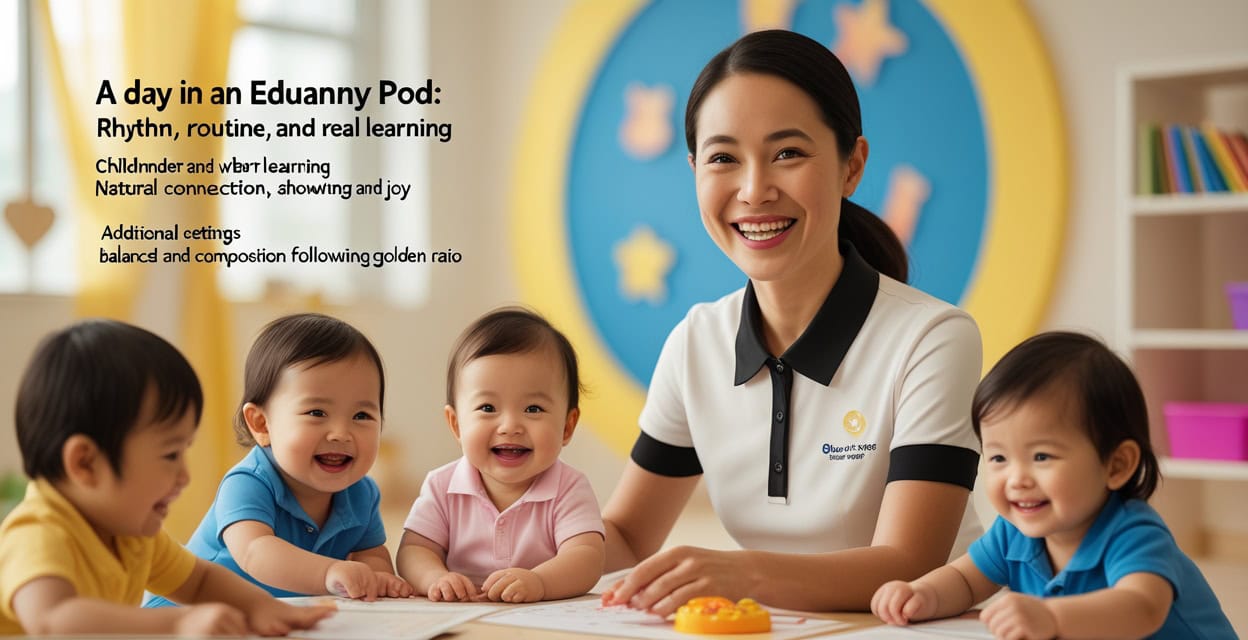
A Day in an EduNanny Pod: Rhythm, Routine, and Real Learning

A Day in an EduNanny Pod: Rhythm, Routine, and Real Learning

  • Calm greetings, health check, bags tagged, bottles labeled, sleep plans confirmed.
  • Feeding, floor time, read-alouds, soft songs, and pram strolls where feasible.
  • Aligned to each child’s cues and parent guidance; safe sleep is non-negotiable.
  • Gentle sensory play after waking; language-rich routines during diapering and feeding.
  • What the infant explored, how they felt, how they slept and fed, plus small ideas to try at home.

Centre-based and Home-based Choices You Can Trust

Centre-based and Home-based Choices You Can Trust

  • Community micro-hubs: Modern layouts, CCTV, and near-home convenience designed for shared learning with strong environmental controls.
  • Home-based childminding: Warm, familiar, lower sensory load; optional CCTV by mutual agreement; always within industry safety standards.

Who, What, When, Where, and How Childminding Matters

Who, What, When, Where, and How Childminding Matters

  • Singapore Citizen infants 2 to 18 months not concurrently enrolled in ECDA-licensed infant care centres, and the certified childminders who care for them.
  • An ECDA-appointed, operator-run service with a 1:3 ratio prioritising attachment, safety, development, and parent partnership
  • Monday to Friday, 7am to 7pm, in 5-hour or 10-hour blocks, through 31 December 2027.
  • Islandwide—at childminders’ homes and in community spaces near you.
  • With mandatory training, background checks, industry standards, CCTV in community spaces, optional in-home CCTV, No Sick Child Policy, and transparent incident protocols.

Our Philosophy and Purpose

Our Philosophy and Purpose

EduNanny exists to make care a public good and a private comfort. We hold a simple belief shaped by generations of early childhood wisdom: infants are built by relationships. We keep groups tiny, routines predictable, speech warm, spaces calm, and standards uncompromising. We place certified childminders at the center of a civic promise: that every baby is seen, soothed, and supported; that every family is respected and informed; and that community itself is renewed in the smallest circles of care.


Benefits at a Glance

Benefits at a Glance

  • Ultra Low Ratio and Density: 1:3 pods for deep attunement
  • Safety and Quality: Certified, background-checked staff; clean, child-safe environments
  • Transparency: CCTV in community spaces; optional home CCTV by consent
  • Policy Protections: No Sick Child Policy; clear incident management
  • Affordability: From $16.50 half-day or $33.00 full-day before GST; CDA usable for subsidised hours
  • Access: Home-based and centre-based childminding, Monday–Friday, 7am–7pm, islandwide
  • Modern Design: Calm, low-clutter layouts that support real learning
  • National Purpose: ECDA Childminding Pilot; a National Social Initiative with a Maximum Employment Mandate
  • Convenience: EduNanny Concierge, easy enrolment, near-home matching
  • Presence and Peace of Mind: Daily updates, warm handovers, and a partnership mindset

How to Sign Up

How to Sign Up

  • 1) Visit the EduNanny page at http://edunanny.com/edunanny-ecda-childminding-service/ and complete the short form, or enquire via WhatsApp from the same page.
  • 2) Our EduNanny Concierge Team will respond, confirm your eligibility, and propose suitable home or community pods near you.
  • 3) Schedule and attend a site visit to meet the childminder, see the environment, and discuss routines, CCTV preferences, and care plans.
  • 4) Confirm enrolment, select your half-day or full-day blocks, and complete your CDA payment setup for subsidised hours. You’re ready to begin.

You can also explore Childminding.EduNanny.com and EduNanny.com for more details.


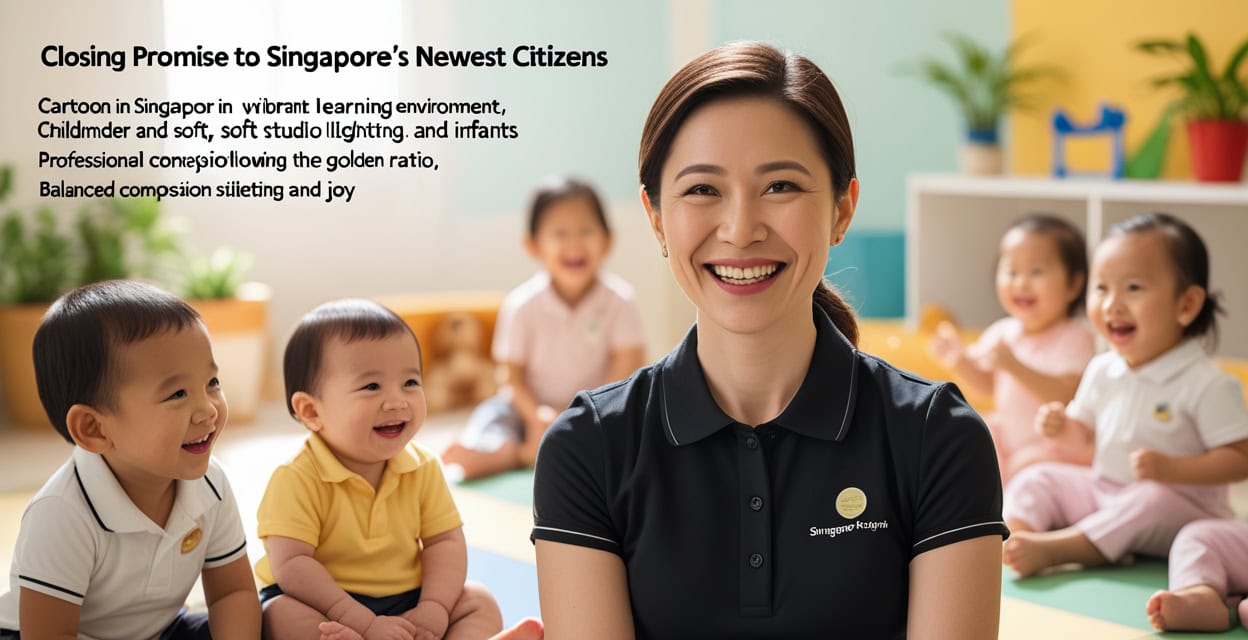
Closing: A Public Promise to Singapore’s Newest Citizens

Closing: A Public Promise to Singapore’s Newest Citizens

In every era, a nation is judged by how it welcomes its youngest members. Childminding is not merely coverage; it is culture. It is how we say to each infant: You are safe, you are seen, and you belong. With ultra low ratios, strong training, clean and calm spaces, clear safety lines, and true partnership with parents, EduNanny turns the first thousand days into steady ground.

Who will benefit? Your child, your family, your neighbourhood, and our shared future. What will you see? A quieter start, a surer step, a brighter gaze. When will it matter? Now—because the brain does not wait. Where will it happen? Near home, with people you know by name. How will we do it? With heart, with science, and with a standard we can all stand behind.

This is EduNanny by BUTLER. Small pods. Big care. A public promise kept—one gentle moment at a time.


FAQ and Practical Next Steps

FAQ and Practical Next Steps

  • How do I assess whether EduNanny’s 1:3 pods fit my infant’s temperament? Start with a trial visit, observe caregiver responsiveness, discuss nap routines, and request a sample daily plan to review with your pediatrician or early childhood professional.
  • What should I look for during a site visit? Cleanliness, safety checks (sleep environment, choking hazards, toy safety), calm adult-to-infant interactions, and a transparent incident protocol that you can share with family members.
  • How does the No Sick Child Policy work in practice? Clarify the illness criteria, required return-to-care documentation, and a plan for temporary care options if a child is temporarily unwell.
  • How can I prepare my infant for a shift to a 1:3 pod? Gradual transitions, consistent routines, and shared comfort items can help—bring a familiar blanket or toy for reassurance during the first weeks.
  • What if I need flexible hours beyond regular blocks? Discuss with the EduNanny Concierge about available extensions or adjustments, respecting the 1:3 ratio and safety standards.

Note: All information reflects the ECDA Pilot framework and EduNanny’s commitment to safety, development, and family partnership. For the most current details, refer to the official EduNanny channels noted above.]

[#EduNanny, #InfantCareSingapore, #EarlyChildhoodEducation, #ECDAPilot, #1to3InfantCare]


edunanny-bd2c100b-ba0c-4686-95d0-20ed0c9b1e37
August 23, 2025

Near Home Pods and Safe Joy EduNanny Redefines Infant Care in Singapore

Introduction: A Beginning Worthy of Potential

Introduction: A Beginning Worthy of Potential

Good evening, parents, grandparents, caregivers, neighbors, and friends of Singapore. We gather for a simple but profound purpose: to give our youngest citizens a beginning worthy of their potential. EduNanny’s infant childminding service is designed to meet this moment with science, safety, and heart. This long-form article expands on the vision, enriches it with practical guidance, and provides actionable insights for families considering infant care that is near home, ultra-low in ratios, and anchored in national standards.

What follows is a detailed guide for parents, caregivers, and communities who seek trusted, professional, developmentally informed care for infants aged two to eighteen months. It is written for families who value close relationships, transparent practices, and care that honors each child’s rhythms. It also offers educators and potential partners a window into EduNanny’s approach, philosophy, and practical steps to enroll and participate in the ECDA Childminding Pilot.


What is EduNanny childminding?

What is EduNanny childminding?

EduNanny childminding is the everyday art of care practiced by certified childminders—caregivers trained in infant first aid and basic infant care—serving one to three infants at a time in their homes or in community micro-hubs. It is close enough to your door to reduce commute stress, structured enough to meet national standards, and personal enough to honor each child’s rhythms and needs. It is a safe harbor for working families from Monday to Friday, 7am to 7pm, excluding public holidays, with subsidised, flexible blocks of care—half-day (5 hours) at $16.50 and full-day (10 hours) at $33.00 before GST, payable with your Child Development Account (CDA/Baby Bonus). It is relief, reliability, and relationship—braided together.

EduNanny operates as an appointed national operator under the ECDA Childminding Pilot, partnering with multiple operators to deliver a consistent standard of care across islandwide locations. Our model balances intimate, home-based environments with the rigor of national oversight, ensuring caregivers are prepared, monitored, and supported while families experience near-home convenience and predictable schedules.


How EduNanny makes infant care work for Singapore families

How EduNanny makes infant care work for Singapore families

1) Distance

Care near home reduces wasted hours and parental stress. Our network spans neighborhoods, with home-based childminding and community micro-hubs to keep care close. Practical examples include:

  • Location choice: Families select a preferred micro-hub within a short walk or drive, typically under 15 minutes from home.
  • Doorstep care: Childminders regularly visit participating households, reducing long commutes for working parents.
  • Community hubs: Shared spaces designed for infants with dedicated zones for feeding, play, and rest, all within a supportive neighborhood ecosystem.

2) Density

We refuse crowding. A maximum of three infants per childminder is our operating norm—that’s an ultra-low ratio that preserves attention, hygiene, and calm. Practical implications include:

  • Individual attention: Each infant receives responsive care and timely cueing, supporting attachment and regulation.
  • Hygiene and safety: Smaller groups simplify cleaning routines and reduce cross-contact risks.
  • Consistent routines: With fewer peers, meal, sleep, and play schedules remain predictable and developmentally appropriate.

3) Transparency

ECDA conducts background checks on childminders and, for home-based care, on household members who regularly access the space. CCTV is installed in community premises as required. For home settings, we facilitate optional CCTV in caregiving areas during care hours with mutual consent—to balance privacy and peace of mind. Practical steps include:

  • Clear policies: Families receive written expectations for safety, sleep, feeding, and daily routines.
  • Visible safety tools: Documentation of safety checks, daily logs, and incident reporting processes.
  • Consent-driven privacy: Optional CCTV is available with explicit parental consent and defined access controls.

4) Trust

We combine national oversight, rigorous training, visible safety, and a gentle pedagogy. Parents meet the childminder, tour the environment, review daily routines, and see a plan for sleep, feeding, play, and outdoor time. Trust is designed in, then earned day by day. Practical practices include:

  • Meet-and-greet sessions: Initial visits to assess compatibility, environment, and routines.
  • Documentation: Regular sharing of daily plans, milestone notes, and photos or brief narratives.
  • Responsive communication: Clear channels for feedback, concerns, and adjustments to schedules.

Five ideas that shape our care

Five ideas that shape our care

1) The power of small numbers

Infants build their world through attunement—the steady experience of being seen, soothed, and supported. With one adult to a maximum of three infants, your child’s cues are heard and addressed. This ratio enables:

  • Serve-and-return interactions that grow language—parents can build early vocabulary through caregiver-mediated dialogue.
  • Safe transitions—feeding to sleep, sleep to play—without rushing, reducing stress for babies and caregivers alike.
  • Individualized sensory pacing—calming rhythms and avoidance of overstimulation.
  • Developmental observation—minders notice subtle shifts in alertness, cranial symmetry, or preferred soothing strategies.

2) Safety as a daily discipline, not a poster

We practice layered safety across environment, competence, visibility, policy, and oversight:

  • Environment: Safe sleep zones, anchored furniture, separate food prep, and high-frequency cleaning routines.
  • Competence: Mandatory infant first aid, food safety, and basic infant care training with annual refreshers.
  • Visibility: CCTV in community premises; optional home CCTV with consent; clear incident reporting and parent communication protocols.
  • Policy: No Sick Child Policy during care hours; contingency planning with parents for unwell days and medicine administration only with explicit written instructions and consent.
  • Oversight: ECDA background checks and adherence to Industry Standards with sanctions for non-compliance.

3) A living pedagogy for the earliest years

Guided by respected theories and practices, we center care around four daily rituals:

  • Care moments as curriculum: Nappy changes, meals, and settling are unhurried, language-rich, and relationship-first.
  • Movement with dignity: Ample floor time, no forced positions, and exploration that respects the infant’s pace.
  • Sensory right-sized: Natural materials, gentle light and sound, predictable routines to support regulation.
  • Observation and reflection: Childminders document milestones and interests, then adjust daily invitations.

4) Happiness is developmental fuel

Joy supports brain development and learning from birth. We prioritize:

  • Predictable rhythms to support cortisol regulation and restorative sleep.
  • Warm, frequent touch and eye contact to foster secure attachment.
  • Outdoor moments and natural light to support circadian health.
  • Songs, stories, and shared laughter to anchor language in delight.

5) The childminder’s purpose

A professional childminder is a co-regulator, a storyteller, and a guardian of tiny details that matter. EduNanny elevates this role with:

  • Certification, mentoring, and reflective practice to sustain quality.
  • A career ladder within a national network to create dignified local jobs.
  • Community anchoring—neighbors caring for neighbors while meeting high standards.

What families can expect from EduNanny

What families can expect from EduNanny

  • Ultra-low ratio: Excellent 1:3 infant ratio for attentive, calm care.
  • Ultra-low density: Micro-pods in homes and community spaces to reduce exposure and noise.
  • Certified EduNanny childminders: Trained, assessed for suitability, and background-checked.
  • Safety and transparency: CCTV in community premises; optional home CCTV with consent; clear incident protocols and daily communication; No Sick Child Policy during care hours.
  • Quality environments: Modern layouts, clean zones, developmentally prepared spaces.
  • Flexibility and access: Monday to Friday, 7am–7pm; half-day or full-day blocks; islandwide availability; both home and community premises.
  • Affordability: From $33.00 per full day before GST; $16.50 per half day; CDA/Baby Bonus during subsidised hours.
  • Operator credibility: EduNanny by BUTLER, appointed alongside Kidibliss and NannyPro Care under ECDA.
  • Channels and convenience: Center-style community micro-hubs plus home-based childminding to reduce distance.
  • National purpose: A government-supported initiative to create safe, reliable care and meaningful local employment.

A day in our care, simply told

A day in our care, simply told

A typical day is designed to honor infants’ rhythms while offering predictable structure for parents. A more detailed storyline helps families visualize the routine:

  • Arrival and warm handover: Parents share important notes; the day begins with a calm transition from caregiver to childminder.
  • Morning care ritual: Feeding and settling, with gentle lullabies and responsive talking to support early language growth.
  • Floor exploration and tummy time: Age-appropriate activities that promote motor development, with close supervision.
  • Nap in a safe sleep environment: Checked at regular intervals using evidence-based safe-sleep practices.
  • Mid-day feed and sensory play: Soft books, textured fabrics, and sensory-rich but soothing experiences.
  • Outdoor stroll or window time: Fresh air and outdoor light when feasible, supporting circadian health.
  • Afternoon nap and calm handover: A brief summary of the day’s highlights to the next caregiver or parent.

Eligibility and practicalities under the ECDA Childminding Pilot

Eligibility and practicalities under the ECDA Childminding Pilot

  • For Singapore Citizen infants, 2 to 18 months of age.
  • Infants cannot be concurrently enrolled in ECDA-licensed infant care centres.
  • Care is provided Monday to Friday, 7am–7pm, excluding public holidays.
  • Parents choose half-day (5 hours) or full-day (10 hours) blocks and the days per week they require.
  • Fees before GST: $16.50 (half-day) and $33.00 (full-day); CDA/Baby Bonus can be used during subsidised hours.
  • Childminders care for a maximum of three infants at any one time.

Practical tips for families enrolling in EduNanny

Practical tips for families enrolling in EduNanny

  • Before enrollment: Prepare a one-page family brief that includes your infant’s routine, sleep cues, feeding preferences, and any medical considerations.
  • First week onboarding: Schedule a longer orientation with the childminder to walk through the home environment, safety checks, and daily handover rituals.
  • Communication plan: Agree on preferred channels for daily updates, milestone notes, and urgent concerns; establish expected response times.
  • Sleep and feeding plans: Share your infant’s sleep associations and feeding schedule to align routines and reduce stress.
  • Transition strategies: If moving between home-based and community hubs, create a smooth handoff plan with a consistent caregiver if possible.
  • Privacy considerations: Discuss CCTV preferences and consent at the outset to balance privacy with safety and peace of mind.

Safety and privacy: practical considerations

Safety and privacy: practical considerations

EduNanny places safety at the core, with layered protections and clear choices for families:

  • In community premises, CCTV is provided as required to enhance safety and accountability.
  • For home-based care, optional CCTV can be installed in caregiving areas during care hours with mutual consent.
  • No Sick Child Policy helps contain illness and protect all infants; backup arrangements are coordinated with families.
  • Regular safety audits and caregiver performance reviews ensure ongoing alignment with best practices.

The EduNanny philosophy and promise

The EduNanny philosophy and promise

  • Relationship first: Attachment fuels learning, behavior, and resilience; caregivers prioritize responsive, compassionate interactions.
  • Safety always: A layered safety system—from verification to safe sleep and incident reporting—underpins daily practice.
  • Dignity in design: Environments and routines that respect the child’s competence and pace of growth.
  • Transparency as culture: Clear communication, visible practices, and accountable processes are embedded in every relationship.
  • Community as strength: Care near home that honors culture, language, and neighborhood ties, strengthening social fabric.

Practical guidance for families: building a successful partnership

Practical guidance for families: building a successful partnership

To maximize the EduNanny experience, consider the following strategies:

  • Co-create a daily routine: Work with the caregiver to craft a flexible but predictable day that accommodates your infant’s cues.
  • Document milestones and preferences: Maintain a simple log of notable developments to inform future activities and planning.
  • Plan for contingencies: Have backup arrangements for days when your infant is unwell, including clear medical instructions for caregivers.
  • Engage in ongoing dialogue: Schedule regular check-ins to discuss progress, safety, and any adjustments needed to routines or spaces.
  • Celebrate near-home care: Emphasize the social and environmental benefits of community-based care—reducing congestion and building local capacity.

How to sign up

How to sign up

Ready to explore EduNanny for your family? Follow these steps:

  • Visit the official information page: Visit https://edunanny.com/edunanny-ecda-childminding-service/ for detailed program descriptions.
  • Explore more: Review additional information at EduNanny.com and Childminding.EduNanny.com to understand options and expectations.
  • Submit an inquiry: Use the enquiry form or message via WhatsApp from the page to begin a conversation with the EduNanny Concierge Team.
  • Schedule a site visit: Arrange a tour and meet your prospective childminder in either a home-based setting or a community micro-hub.
  • Enroll and secure your schedule: Confirm enrollment and begin coordinating your infant’s care plan and calendar.

Closing

Closing

In these early years, every small kindness becomes a cornerstone. With EduNanny, Singapore invests in smaller groups, closer care, clearer standards, and deeper trust. The result is simple and profound: calmer infants, steadier parents, stronger neighborhoods, and a nation that knows how to cradle possibility. We invite you to walk the last few steps—from your door to a prepared space where your infant is known and cherished. Let us begin, together, one gentle, attentive day at a time.

[#keyword1, #keyword2, #keyword3, #keyword4, #keyword5]

edunanny-6060226c-2941-47b7-841f-fede610fcc8e
August 23, 2025

From Cradle to Community The EduNanny Near Home 1 to 3 Infant Pods Pilot for Singapore December 2024 to December 2027

Introduction: A Safer, Kinder, Smarter Way to Cradle Singapore’s Youngest Citizens

Introduction: A Safer, Kinder, Smarter Way to Cradle Singapore’s Youngest Citizens

Thank you for gathering for something small in size and large in consequence: the beginnings of a safer, kinder, smarter way to cradle Singapore’s youngest citizens. I speak as an EduNanny advisor—and as a believer that the first thousand days must be stewarded with the same precision we reserve for national infrastructure. Because infants are infrastructure: of attachment, of language, of trust, of future leadership. This is the moment we build a dependable, nationwide care network that respects families, strengthens communities, and supports child development from the very first days of life.


What is EduNanny by BUTLER in Practice?

What is EduNanny by BUTLER in Practice?

Tonight, we introduce the EduNanny Infant Childminding Service—appointed under ECDA’s three-year Childminding Pilot (1 December 2024 to 31 December 2027). It is a near-home network of micro-pods where one certified childminder cares for up to three infants at any time. It is simple, human, and rigorously designed: relationship-first; safety-by-design; developmentally attuned; transparent and affordable.

Key Format and Access Details

  • National, islandwide delivery on weekdays from 7am to 7pm
  • Ultra‑low density with a 1:3 infant ratio per childminder
  • Two formats: home-based pods or centre/community-based premises
  • Affordable, flexible blocks: Half-day (5 hours) at $16.50 before GST; Full-day (10 hours) at $33.00 before GST
  • Subsidy mechanism: Fees payable via CDA/Baby Bonus during subsidised hours
  • Eligibility: Singapore Citizen infants aged 2–18 months, not concurrently enrolled in ECDA-licensed infant care centres

Who Cares for Your Child

EduNanny childminders are certified, background-checked professionals trained in infant first aid and basic infant care, supported by clear industry standards, incident protocols, and a professional development pathway. In community premises, CCTV is installed as required. In home settings, parents may opt into CCTV in caregiving areas during care hours, balancing privacy and peace of mind. We also operate a No Sick Child policy to protect all infants, with pathways of support for families when illness arises.


Foundations: How EduNanny Transforms Early Care

Foundations: How EduNanny Transforms Early Care

1) Attachment as Architecture: The Primary Carer Promise

Every infant is assigned a primary EduNanny childminder—their secure base. In a 1:3 pod, a child’s signals are never lost in the crowd. We practice:

  • Attunement: Reading early cues—gaze, reach, vocal tone—and responding consistently.
  • Predictable rhythms: Calm, unhurried feeding, sleep, and care sequences.
  • Gentle transitions: Handover rituals that anchor the child between home and pod.

Why it matters: Neurobiology and decades of developmental theory agree—secure attachment lowers cortisol, widens the window for learning, and protects mental health across the lifespan. Practically, a settled infant feeds well, sleeps deeply, explores bravely, and smiles often.

2) The Pedagogy of Everyday Movements: Small Acts, Big Learning

Infants learn most from what they repeat every day. Our approach centers on:

  • Free movement on firm, safe floor spaces—no unnecessary contraptions
  • Real objects and simple materials—texture, weight, cause-and-effect
  • Parallel presence: Infants learn with and near one another, not from constant adult interruption
  • Contextual language: Singing while soothing, narrating diaper changes, naming feelings and actions

This is foundational work: sensory integration, motor confidence, early executive function, empathy, and turn-taking. We slow down to let development catch fire.

3) Safety by Design, Trust by Proof

Safety is not a poster; it is a discipline. Our framework includes:

  • Ultra‑low ratio: 1 childminder to a maximum of 3 infants
  • Training and certification: infant first aid, food safety, safe sleep, hygiene practices
  • Safe sleep: firm surface, back-lying, smoke-free environment; temperature and environment checks
  • Feeding protocols: responsive feeding, bottle labelling, milk handling logs
  • Medication: only with parental consent and clear written instructions
  • Health policy: No Sick Child policy with return-to-care guidance aligned to medical advice
  • Premises safety: hazard minimisation, modern layouts, sanitary routines
  • Visibility: CCTV in community premises; opt‑in CCTV in caregiving areas of home pods during care hours

Trust grows when safeguards are visible and consistently applied. We make them explicit and accessible.

4) The Infant Happiness Index: Measuring What Matters

Happiness and well-being in the first year are measurable through quiet data:

  • Settled sleep, steady weight gain, relaxed body tone
  • Frequent social referencing and “checking back” with the carer
  • Curious scanning, reaching, babbling, and playful mood
  • Low distress that is quickly soothed

Daily journals—shared with parents—translate these signals into clear updates: sleep profiles, feeds, diapers, moods, milestones, and select photos. Over time, trends reveal whether your child feels safe enough to explore.


The Purpose of Childminders: Civic Caregivers, Not Just Babysitters

The Purpose of Childminders: Civic Caregivers, Not Just Babysitters

At EduNanny, a childminder is a professional with a public purpose:

  • Care infrastructure: turning near-home spaces into reliable care hubs
  • Neighbourhood trust: families greet, check in, and co-raise
  • Employment dignity: elevating care work through standards, training, and career pathways
  • Parental ease: enabling work, home life, and community contribution with confidence

What Parents Receive from Day One

What Parents Receive from Day One

From the first day, EduNanny offers:

  • Ultra-low ratio attention and a named primary carer
  • A clean, modern environment: home-based or centre-based options
  • Transparent safety: trained carers, documented routines, CCTV where applicable
  • Affordable flexibility: days and blocks that suit your schedule
  • No Sick Child policy to protect every infant in the pod
  • Islandwide convenience: near-home locations, 7am–7pm, Monday–Friday
  • Administrative ease: CDA/Baby Bonus during subsidised hours
  • Supportive Concierge Team: site visits, match-making, ongoing assistance

Why Ultra-Low Ratio and Density Matter

Why Ultra-Low Ratio and Density Matter

Reducing the number of infants per caregiver yields tangible benefits:

  • Rich language exposure: more opportunities for meaningful exchanges and back-and-forth dialogue
  • Better observation: real-time cues for feeding, sleep readiness, discomfort
  • Safer handling and smoother transitions: less rushing, fewer hazards
  • Co-regulation: infants learn through calmer adults, not just calmer rooms
  • Attachment and trust: genuine bonds form when care is consistent and responsive

Frequently Asked Essentials

Frequently Asked Essentials

  • Pilot window: 1 December 2024 to 31 December 2027
  • Eligibility: Singapore Citizen infants, aged 2–18 months, not concurrently enrolled in ECDA-licensed infant care centres
  • Hours: Monday to Friday (excluding public holidays), 7am–7pm
  • Flexibility: choose days per week and block length (5 or 10 hours)
  • Fees: Half-day $16.50 before GST; Full-day $33.00 before GST; CDA can be used during subsidised hours
  • Location: home-based pods or community/centre-based premises
  • Oversight: ECDA background checks for childminders and caregivers; operator standards and industry guidelines; mandatory training before deployment

What Makes EduNanny Distinct

What Makes EduNanny Distinct

  • Excellence at 1:3 across pods under the ECDA Childminding Pilot
  • Certified, background-checked EduNanny childminders
  • No Sick Child policy with clear care-return guidance
  • Modern, child-safe environments with thoughtful layouts
  • CCTV in community spaces; opt-in CCTV in home pods during care hours
  • Transparent pricing from $33/day (before GST) for full-day subsidised care
  • Two formats: centre-based and home-based pods to minimise commute and maximise continuity
  • Islandwide availability, Monday–Friday, 7am–7pm
  • A national social initiative centered on quality, dignity, and meaningful employment
  • A culture of continual improvement: training, mentoring, audits, and family feedback

How to Sign Up

How to Sign Up

Begin your EduNanny journey by taking these steps:

  • Visit EduNanny.com or edunanny.com/edunanny-ecda-childminding-service/ (note the absence of a markup in this format)
  • Submit the enquiry form or reach out via the provided channels on the site
  • Our EduNanny Concierge Team will respond to learn your needs and recommend a match
  • Confirm your appointment for a site visit—home pod or centre/community premises
  • Review the care plan, finalize your schedule, and enrol

Who, What, When, Where, and How: Why Childminding Matters

Who, What, When, Where, and How: Why Childminding Matters

Who: Singapore Citizen infants aged 2–18 months—and the families who love them.

What: A dignified, professional 1:3 childminding service grounded in attachment, safety, and everyday learning.

When: The first thousand days, when the brain is building at its fastest and trust becomes a lifelong habit.

Where: Near home—home pods and community/centre-based premises islandwide—to keep caregiving close and commute light.

How: Through certified childminders, visible safeguards, developmentally attuned practice, family partnership, and transparent, affordable access.


The Philosophy and Purpose of EduNanny

The Philosophy and Purpose of EduNanny

EduNanny believes three truths guide every practice:

  • Care is curriculum: How we feed, soothe, greet, and respond teaches trust, language, and self.
  • Safety is love measured: The right ratios, routines, and safeguards are more than compliance; they create joy.
  • Families are the constant: We stand beside you, honouring your culture, routines, and hopes in daily practice.

A Call to Experience EduNanny: Tiny Groups, Big Attention

A Call to Experience EduNanny: Tiny Groups, Big Attention

Choosing EduNanny means embracing small groups with big attention, deep bonds, and open doors to your community. It means seeing every routine as a rite of passage and every infant as a citizen in the making. It means transparency, affordability, and proximity—so your workday is steadier, your evenings unrushed, and your child well-held.


Practical Guidance for Parents: Bringing EduNanny Principles Home

Practical Guidance for Parents: Bringing EduNanny Principles Home

Parents can reinforce EduNanny principles between pod sessions with these practical actions:

  • Consistent bedtime and feeding routines: talk to your childminder about your home rhythms and try to align transition times, so the child feels secure across environments.
  • Language-rich interactions: narrate daily activities, name emotions, and use open-ended questions to encourage babbling and curiosity.
  • Responsive soothing: learn your childminder’s cues for hunger, discomfort, or tiredness and practice calming strategies at home that mirror the pod.
  • Observation notes: review the daily journals with your partner; track patterns in sleep, feeds, and mood to support timely decision-making.
  • Communication rituals: maintain clear lines with your primary carer; share new routines, allergies, or preferences promptly.
  • Health readiness: establish a simple illness policy with your carer—what symptoms require care cessation, return-to-care steps, and parental updates.

What to Expect During the Sign-Up Process

What to Expect During the Sign-Up Process

As you begin the journey, expect a thorough, respectful exploration of your family’s needs, including:

  • Matching: a careful pair‑up with a primary carer who resonates with your child’s temperament and your family culture
  • Site visits: tours of a pod or centre, with opportunities to observe routines and safety measures
  • Care plan: a personalised schedule covering days, hours, feeding preferences, nap times, and milestone discussions
  • Onboarding: training refreshers for the family on safety practices, incident reporting, and privacy considerations

Conclusion: Tiny Groups, Steady Hands, Open Doors

Conclusion: Tiny Groups, Steady Hands, Open Doors

EduNanny by BUTLER embodies a philosophy where tiny pods, steady hands, and open doors become a national standard for infant care. We honour Montessori-inspired observation, Pikler’s respect for natural movement, Bowlby’s secure attachment, Vygotsky’s social learning, Erikson’s emphasis on trust, and Froebel’s humble materials as the bedrock of a modern Singaporean early-childhood practice. Our aim is not only to care for infants but to cultivate environments where trust, curiosity, and joy flourish every weekday from 7am to 7pm.


Call to Action: Begin Your EduNanny Journey Today

Call to Action: Begin Your EduNanny Journey Today

To start, visit EduNanny.com or edunanny.com/edunanny-ecda-childminding-service/, or message us via the site to initiate an enquiry. Meet our team, tour a pod, and enrol. From the first hello to the last handover of the day, you will feel what excellence sounds like—it’s quiet, attentive, and joyfully human.

Tiny groups. Steady hands. Open doors. Welcome to EduNanny by BUTLER. Where safety is visible, learning is natural, and your baby’s happiness is the measure of our success.

SEO keywords: [#EduNannySingapore, #InfantCareSingapore, #1to3CaregiverRatio, #EarlyChildhoodDevelopment, #ECDAPilot]


edunanny-6dc49d1d-029e-43d4-b34b-bc65dd0e0d98
August 23, 2025

EduNanny Near Home Pods A Civic Covenant for Singapore First Thousand Days December 2024 to December 2027

Introduction: A Quiet Revolution for the First Thousand Days

Introduction: A Quiet Revolution for the First Thousand Days

Good evening to all who care deeply about how we grow, learn, and trust in the earliest moments of life. The first thousand days are not merely a timeline; they are a civic covenant. In these days, a child’s brain forms countless neural connections that become the architecture of future learning, health, and resilience. EduNanny emerges as a national initiative dedicated to delivering safe, joyful, and developmentally rich infant care—right where families live and work. This is care that speaks to science, dignity, and community, customised for Singapore’s unique social fabric and backed by the ECDA framework.


Introduction to EduNanny Infant Childminding Service

Introduction to EduNanny Infant Childminding Service

EduNanny is a national social initiative and a promise: safe, joyful, and developmentally rich infant care, right where families live. We provide ultra low-density, ultra low-ratio micro-pods—one childminder to three infants—operating islandwide across Singapore in both home-based and community-based premises, Mondays to Fridays, 7am to 7pm. Under the ECDA Childminding Pilot (1 December 2024 to 31 December 2027), Singapore Citizen infants aged 2 to 18 months can access high-quality care that is close, consistent, and affordable—from $33 per full day or $16.50 per half day (before GST), with CDA/Baby Bonus available during subsidised hours.

Our childminders are trained, certified, and background-checked. Our spaces are modern, clean, and purpose-built. Our approach is gentle, relationship-led, and science-informed. And yes, CCTV is provided in caregiving areas during care hours to offer parents peace of mind while upholding the dignity and privacy of our caregivers and their households.


Four Big Ideas that Power EduNanny

Four Big Ideas that Power EduNanny

1) The Attunement Pedagogy: Attachment, Autonomy, Inquiry

  • Attachment first: We build consistent, secure bonds through a 1:3 ratio, predictable routines, and “serve-and-return” interactions. Every cue—cry, coo, glance—is answered. Every goodbye is gentle; every hello is confident.
  • Autonomy next: Freedom within safety. Infants enjoy unhurried floor time, self-paced exploration, and movement-rich routines rooted in the Pikler approach—no rush to devices or rigid milestones.
  • Inquiry always: Language, music, and sensory invitations are woven into care moments. We narrate care, expand vocabulary, sing, and delight in early problem-solving. Learning is not a lesson; it is the way we care.

2) The Five Rings of Safety: People, Place, Practice, Privacy, Preparedness

  • People: Certified EduNanny childminders undergo background checks, infant first aid, safe sleep, hygiene, and food safety training. ECDA conducts checks on childminders and, for home settings, on household members with regular access.
  • Place: Our modern, low-density micro-pods are hazard-checked, babyproofed, clean, and calm. Safety gates, covered sockets, locked chemicals, secured furniture, and age-appropriate zones are non-negotiable.
  • Practice: ABCs of safe sleep (Alone, on the Back, in a Cot), meticulous hand hygiene, sterilisation protocols, and allergy-aware feeding. We keep detailed logs for feeding, sleeping, diapering, and incidents.
  • Privacy: CCTV runs in caregiving zones during care hours to protect infants and reassure parents, while balancing everyone’s dignity.
  • Preparedness: Emergency drills, clear incident protocols, temperature/symptom screening, and a No Sick Child Policy in pod hours to shield infants from unnecessary risk. If your little one is unwell, we work with you on a safe, dignified plan B.

3) The Development Compass: Movement, Language, Relationships, Regulation

  • Movement: Daily tummy time, grasp-and-reach, supported cruising; we respect the infant’s natural progression and avoid forced positions and devices that limit motion.
  • Language: We read, sing, name emotions, and use rich adult language in a warm tone. Infants deserve real words and responsive conversation.
  • Relationships: With a 1:3 ratio, each infant’s temperament and rhythm is known. Joyful routines create trust, and trust creates curiosity.
  • Regulation: Calm, predictable caregiving supports healthy sleep and feeding rhythms. Regulated adults help infants learn to self-regulate—a foundation for resilience.

4) Joy and Family Partnership: Care is a Two-Way Conversation

  • Joy as developmental nourishment: Deliberate moments of delight—sensory play, songs, peekaboo, gentle transitions—are woven into the day.
  • Family at the center: Daily notes, photos where appropriate, respectful CCTV, and open channels with our EduNanny Concierge Team. Families know their child best; we bring professional care to meet each family’s culture and goals.
  • No screens for infants: Our screen is the caregiver’s face; our app is a warm voice to support engagement without passive viewing.

How EduNanny Makes Childminding Great in Singapore

How EduNanny Makes Childminding Great in Singapore

  • Near home, near heart: Home-based and community-based pods reduce commute stress, restore family time, and strengthen neighbourhood ties.
  • Ultra low ratio, ultra low density: A 1:3 caregiver-to-infant ratio yields more responsive care, safer environments, and richer learning interactions.
  • Certified and background-checked: ECDA-appointed operators with rigorous selection, training, and ongoing supervision.
  • Safety with transparency: Clear hygiene standards, modern layouts, incident protocols, and CCTV in caregiving areas during care hours.
  • Affordable and flexible: Subsidised half-day (5 hours) or full-day (10 hours) blocks, Monday to Friday, 7am–7pm. Fees from $16.50 half-day or $33 full-day (before GST). CDA/Baby Bonus accepted for subsidised hours.
  • Purpose with employment: The initiative supports dignified, skilled local work for caregivers while expanding community care capacity.

A Day in an EduNanny Pod

A Day in an EduNanny Pod

  • Arrival and attunement: Unrushed hellos, temperature checks, health screening, and comfort rituals that acknowledge each infant’s unique needs.
  • Care cycles that breathe: Feed, rest, play—each infant’s rhythm respected, not standardized.
  • Sensory invitations: Soft textures, high-contrast visuals for younger infants, open-ended safe objects, mirrors, gentle music.
  • Movement and floor time: Free movement on safe mats; caregivers are close, observant, and encouraging rather than intrusive.
  • Language and connection: Songs, stories, naming feelings, and respectful caregiving dialogue that expands vocabulary and social understanding.
  • Outdoor moments (where possible): Pram walks and fresh air in safe, approved routes to broaden experiences.
  • Predictable goodbyes: Calm handovers with clear updates so children leave anchored and parents depart with confidence.

The Purpose of Childminders and Childminding

The Purpose of Childminders and Childminding

Childminders are anchors of early connection. They meet infants at eye level, slow the pace when needed, and weave safety into routine. In this ECDA Pilot, childminding becomes a public good—bringing professional standards into neighbourhoods, offering families real choice, and giving infants the most precious resource in early life: consistent, loving attention. When a nation protects its youngest citizens with skill and heart, downstream outcomes—school readiness, mental health, civic trust—benefit for generations.


Benefits of EduNanny at a Glance

Benefits of EduNanny at a Glance

  • Ultra Low Density, Ultra Low Ratio (1:3)
  • CCTV provided in caregiving areas, with privacy safeguards
  • Certified EduNanny Childminders; ECDA background checks
  • No Sick Child Policy during care hours
  • National initiative under ECDA Childminding Pilot (1 Dec 2024–31 Dec 2027)
  • Excellence, quality, and modern layouts
  • Centre-based and home-based options, islandwide
  • Distance and convenience near home and in community premises
  • Affordable from $33/day full-day; $16.50/half-day (before GST)
  • Monday–Friday, 7am–7pm; flexible blocks
  • CDA/Baby Bonus accepted for subsidised hours
  • Innovation in safety and caregiving practice
  • EduNanny.com and Childminding.EduNanny.com for details
  • A maximum employment mandate that grows meaningful local jobs

Who, What, When, Where, and How: Why Childminding Matters

Who, What, When, Where, and How: Why Childminding Matters

  • Who: Singapore Citizen infants aged 2–18 months, and the families who love them.
  • What: Small, relationship-rich childminding pods—1:3 caregiver-to-infant ratio—with certified care, safe environments, and developmental excellence.
  • When: Weekdays, 7am–7pm, during the ECDA Pilot from December 2024 to December 2027, with subsidised half-day or full-day options.
  • Where: In childminders’ homes and community spaces across Singapore—near home, near work, near heart.
  • How: With ECDA oversight, strict training and background checks, CCTV in caregiving zones, safe-sleep and hygiene protocols, and a living pedagogy rooted in attachment, autonomy, and inquiry.

Our Philosophy and Purpose

Our Philosophy and Purpose

EduNanny believes the first thousand days are a civic covenant. We do not simply keep babies safe; we help them feel safe. We do not merely pass time; we make time meaningful. We do not accelerate development; we protect its natural pace and joy. In tiny pods, we build big futures—through trust, attunement, and everyday dignity. This is not merely care; it is community-made care that respects each child’s tempo and each family’s values.


How to Sign Up

How to Sign Up

  1. Visit the sign-up page: https://edunanny.com/edunanny-ecda-childminding-service/ and fill in the form.
  2. Enquire via the EduNanny Concierge Team for personalised guidance.
  3. Schedule and attend a site visit to a home-based pod or community location near you.
  4. Enrol and receive support through eligibility checks, scheduling, and CDA/Baby Bonus payment options.

Conclusion

Conclusion

As we close, let us remember: the measure of a society is how it greets its youngest. EduNanny offers a science-informed, softly powerful approach to early care—close to home, close to family, and close to the heart of community life. One caregiver. Three infants. A thousand days that last a lifetime. We are ready to welcome families who seek care that honours both the science and the humanity of early childhood.

To learn more, explore EduNanny on EduNanny.com and the dedicated family resources at the Childminding.EduNanny.com, or contact our Concierge team for a personalised walkthrough. Visit https://edunanny.com/edunanny-ecda-childminding-service/ to begin your journey with the ECDA-supported pilot.

Call to action: See how small circles create strong beginnings—near home, near work, near heart. Reach out, schedule a site visit, and join a national effort that places the earliest years at the core of Singapore’s future.

[#earlychildhood, #infantcare, #childminding, #SingaporeECDA, #EduNanny]

edunanny-f9846389-f6e1-4516-a3e9-3100204c28b6
August 23, 2025

First Thousand Days Reimagined with EduNanny Near Home Pods in Singapore December 2024 to December 2027

EduNanny: Nurturing the First Thousand Days in Singapore

EduNanny: Nurturing the First Thousand Days in Singapore

Good caregiving for infants is more than daily routines; it is the quiet collaboration that shapes trust, curiosity, and resilience. EduNanny by BUTLER stands as a steward of the first thousand days, offering near‑home, high‑trust infant care that is both scientifically grounded and deeply human. This article expands on EduNanny’s approach, provides practical guidance for parents, and shares insights drawn from our lived experience within the ECDA Childminding Pilot.


Introduction to the EduNanny Infant Childminding Service

Introduction to the EduNanny Infant Childminding Service

EduNanny is an appointed operator under the ECDA Childminding Pilot—a three‑year national initiative running from 1 December 2024 to 31 December 2027. The Pilot provides Singapore Citizen infants aged 2 to 18 months with an affordable, safe, and reliable option for infant caregiving in small, near‑home pods. Care runs Monday to Friday, 7 a.m. to 7 p.m. (excluding public holidays) in home‑based or community‑based settings islandwide. Fees are subsidised during pilot hours: $16.50 for a half day (5 hours) and $33.00 for a full day (10 hours), before GST, with payments accepted through the Child Development Account (CDA) or Baby Bonus. Eligibility requires that infants are not concurrently enrolled in ECDA‑licensed infant care centres.


What makes EduNanny distinctive?

What makes EduNanny distinctive?

EduNanny brings an ultra‑low ratio model—one childminder to three infants—into your neighbourhood. We pair this with rigorous safety and training and weave in a living curriculum inspired by Montessori, Pikler, Bowlby, Piaget, Vygotsky, Froebel, Malaguzzi, Spock, Erikson, and contemporary infant research. We call it the science of warm hands: careful design, respectful care, and the steady rhythm of predictable, loving routines.


How EduNanny Makes Infant Care and Childminding Great in Singapore

How EduNanny Makes Infant Care and Childminding Great in Singapore

  • Near‑home, ultra‑low density pods: 1:3 infant ratio enables deep attunement, fewer transitions, and faster trust formation.
  • Two setting types for real convenience: home‑based childminding and community‑based micro‑centres with modern layouts and CCTV in caregiving areas (required in community spaces; encouraged and supported in home settings during care hours for added transparency).
  • Safety and quality baked in: ECDA background checks (including household members who have regular access, where applicable), mandatory training (infant first aid, basic infant care, food safety), and adherence to industry standards.
  • Affordable access: Government‑subsidised hours within 7 a.m.–7 p.m., Mon–Fri; CDA/Baby Bonus accepted; transparent fees from $33.00 per full day before GST.
  • A respectful care philosophy: No rushed handling, no over‑stimulation, no one‑size‑fits‑all. Every infant’s cues are seen, named, and answered.

Five Topics that Define the EduNanny Way

Five Topics that Define the EduNanny Way

1) Attachment Architecture: The Three Circles

Attachment is the operating system for EduNanny. We observe three circles of security each day:

  • Circle One: Infant and Childminder — With a 1:3 ratio, childminders provide prompt, predictable responses—soothing, feeding, diapering, and play—at a tempo that respects the infant’s signals. The caregiving moments are the curriculum itself, grounded in Pikler’s dignity, Bowlby’s secure base, and Ainsworth’s responsiveness.
  • Circle Two: Infant and Parent — A daily 90‑second handover ritual aligns sleep cues, feeding notes, and mood so home rhythms harmonise with the pod rhythm.
  • Circle Three: Parent and Childminder — Transparent communication, shared language, and a common plan. Timely updates, developmental observations, and consistent routines reduce infant stress.

Practical tip for parents: create a short, consistent handover script with your childminder. Include sleep cues, recent feeding patterns, and notable mood signals. Build continuity across home and pod so the infant experiences a stable world.

2) Micro‑Pedagogy for Tiny Minds: Six‑Minute Learning Loops

Development is a sequence of six‑minute wonders, guided by active discovery and scaffolding. Our loops are designed to be simple, repeatable, and deeply engaging:

  • Observe: What is the infant seeking—sound, face, texture, movement?
  • Mirror: Respond with a matching cue and name the rhythm, e.g., “I see you reaching for the red block.”
  • Name: Language nutrition—label objects and actions: “soft ball,” “blue cup,” “roll, roll.”
  • Extend: Add a gentle challenge—reach, grasp, pivot, roll.
  • Pause: Space for the infant’s own exploration and experiment.
  • Close: A calm transition and a warm smile—the feeling of mastery and security.

Practical tip for parents: weave six‑minute loops into daily routines—tummy time, object exploration, or sensorimotor play. Keep sessions short, focused, and end with a soothing transition to sleep or rotation of activities.

3) Safety and Dignity by Design: The Four Gates

Safety is both structure and culture. Our Four Gates ensure nothing is left to chance:

  • Gate 1—Environment: Hazard audits in homes/community spaces; safe‑sleep practices (firm, flat surface; back to sleep; clutter‑free cot); temperature checks; sanitisation; and sightlines that reduce overstimulation.
  • Gate 2—Practice: Mandatory training (infant first aid, basic care, food safety); safe feeding protocols; allergy management; and hygiene routines. A cautious attendance policy protects community health; unwell infants are supported per ECDA guidelines.
  • Gate 3—People: ECDA background checks on childminders (and household members with regular access); ongoing supervisory spot checks, coaching, and incident‑ready protocols. Maximum of three infants per childminder at any time.
  • Gate 4—Transparency: CCTV in community spaces; privacy‑sensitive options encouraged for home caregiving hours; clear escalation pathways, timely incident reporting, and an open‑door mindset with parents.

Practical tip for parents: request a simple safety checklist for your chosen pod, and review it quarterly with the childminder. Ensure you understand how safety incidents are reported and followed up.

4) The Craft of Calm: Building Health and Happiness

Joy in infancy is quiet, rhythmic, and safe. Our approach emphasizes calm, connected care:

  • Respectful care: Slow down during caregiving tasks, narrate actions, and invite cooperation—Pikler’s dignity in every diaper change and bath.
  • Sensory right‑sizing: Gentle light, soft voice, predictable transitions. Prefer face‑to‑face interaction, singing, and simple objects over excessive screens or noisy stimuli.
  • Language nutrition: Rich, warm talk throughout the day; song backs, peekaboo, and naming feelings to support self‑regulation and early communication.
  • Rest you can trust: Sleep cues matter; support healthy sleep routines with consistent patterns and safe sleep practices.
  • Outdoors and movement: If possible, fresh air, nature textures, and pram walks to build balance and vestibular strength.

Practical tip for parents: establish a consistent daily rhythm that values meals, play, and rest in a predictable order. Use a simple family routine chart to align home and pod expectations.

5) The Purpose and Promise of Childminders: A Civic Craft

EduNanny views childminders as guardians of early attachment and community trust. We invest in them as professionals:

  • Certified EduNanny childminders: Trained, coached, observed, and supported with reflective practice and quality circles.
  • Maximum Employment Mandate: Creating meaningful, flexible work in neighbourhoods islandwide, while upholding excellence.
  • Career pathways: Ongoing upskilling, mentoring, and progression. Care work is presented as a noble, high‑trust profession central to nation‑building.

Practical tip for parents: engage with your childminder as a learning partner. Share developmental observations, bring in age‑appropriate activities from home, and participate in reflective practice sessions when invited.


Key Benefits of EduNanny at a Glance

Key Benefits of EduNanny at a Glance

  • Ultra‑low density pods with a 1:3 infant ratio
  • CCTV provided in community caregiving areas; privacy‑sensitive options encouraged for home caregiving hours
  • Certified, background‑checked childminders under ECDA oversight
  • No‑sick‑child attendance policy to protect community health, with case discussions per ECDA guidance
  • A national ECDA Pilot (1 Dec 2024–31 Dec 2027) with structured oversight
  • Modern layouts, safety audits, and a living curriculum for attuned care
  • Centre‑based (community) and home‑based options near home for convenience
  • Affordable from $33/day (10‑hour block) and $16.50 (5‑hour block) before GST; CDA/Baby Bonus accepted
  • Islandwide availability, Mondays–Fridays, 7 a.m.–7 p.m. (excluding public holidays)
  • EduNanny by BUTLER service ecosystem; learn more at EduNanny.com and Childminding.EduNanny.com

Concluding Vision: Why Childminding Matters—Who, What, When, Where, How

Concluding Vision: Why Childminding Matters—Who, What, When, Where, How

Who

Singapore Citizen infants aged 2–18 months, and the loving parents who nurture them. Childminders who choose the dignity of care as a profession. Communities ready to raise the next generation with steadiness and heart.

What

An ECDA‑endorsed, ultra‑low ratio childminding pilot delivering safety, attachment, and joyful micro‑learning within daily, near‑home pods—both in homes and community spaces.

When

Mondays to Fridays, 7 a.m.–7 p.m., during the Pilot period (1 December 2024–31 December 2027).

Where

Across Singapore—in prepared home settings and in community‑based micro‑centres with modern layouts and CCTV in caregiving areas.

How

Through a covenant of trust—ECDA background checks and training, industry standards, transparent practices; through a living curriculum of attuned care; through affordability that respects family realities; and through a professionalised childminder workforce that elevates cradle care to a civic calling.


The EduNanny Promise in Practice: Building Trust, Learning, and Citizenship

The EduNanny Promise in Practice: Building Trust, Learning, and Citizenship

Our philosophy is simple: the safest place for an infant is in the arms of a confident, loving adult who has the time to be present. Ultra‑low ratio care returns that time to the child. The right environment reduces noise and sharpens attention. The right routines nurture sleep, feeding, exploration, and language. The right partnership with parents turns every handover into continuity, not disruption. In that steady circle, babies learn the first lesson of all: the world can be trusted. From that trust, everything else grows—curiosity, empathy, perseverance, and joy.


Call to Action: How to Sign Up

Call to Action: How to Sign Up

Step 1: Visit the EduNanny ECDA Childminding Service page and fill out the form or inquire via WhatsApp. The link is: https://edunanny.com/edunanny-ecda-childminding-service/

Step 2: Receive a response from our EduNanny Concierge Team with next steps and availability.

Step 3: Confirm your appointment for a site visit to explore near‑home pods or community micro‑centres.

Step 4: Enrol and begin your EduNanny journey—where safety, attachment, and joyful learning combine in your child’s first thousand days.


Conclusion

Conclusion

The first thousand days are a relationship, not a race. EduNanny exists to make that relationship safer, warmer, and beautifully ordinary in the best sense: meals on time, naps in peace, play with purpose, and adults who are fully present. Ultra‑low ratio care gives that time back to the child. The right environment quiets noise and sharpens attention. The right routines nurture sleep, feeding, exploration, and language. The right partnership with parents turns every handover into continuity. In that steady circle, babies learn to trust the world—and from that trust, a nation’s future grows with curiosity, empathy, perseverance, and joy.

Ready to join a movement that places babies at the center of a thriving, respectful, and scientifically informed early‑years ecosystem? Visit EduNanny’s sign‑up page, speak with our concierge, and begin your journey today.

[#keyword1, #keyword2, #keyword3, #keyword4, #keyword5]
edunanny-2dff179d-9595-4f10-ba66-26474443abc5
August 23, 2025

December 2024 to December 2027 EduNanny Near Home Ultra Low Ratio Pods Transform Singapore First Thousand Days

Intro: A World-Class Approach to the First Thousand Days

Intro: A World-Class Approach to the First Thousand Days

Good evening, parents, grandparents, caregivers, and friends of Singapore’s youngest citizens. EduNanny by BUTLER emerges from a science‑backed belief that the first environment is a silent teacher, that infants are scientists at play, that development flourishes in loving relationships, and that secure attachment powers lifelong resilience. This article expands on EduNanny’s Infant Childminding Service—an islandwide, near‑home model designed for the first thousand days and delivered in intimate pods of one childminder to up to three infants. It is a purposeful, ultra‑low‑density approach built to honour Singapore’s diversity, pace, and public ambition while keeping families close to home.


EduNanny by BUTLER: An Appointed Operator Under ECDA’s Childminding Pilot

EduNanny by BUTLER: An Appointed Operator Under ECDA’s Childminding Pilot

EduNanny operates under ECDA’s three‑year Childminding Pilot (1 December 2024 to 31 December 2027). Our mission is simple: provide safe, joyful infant care in near‑home settings at ultra‑low density. This section outlines how we translate policy into practice—so families feel confident every day.

The Five Anchors of EduNanny’s Model

Our program rests on five durable principles designed to support infants, parents, and childminders.

1) The Attachment Micro‑Pod: where relationships are the curriculum

  • 1:3 ratio means one caring adult for up to three infants at a time. This is a pedagogy, not a statistic, enabling consistent serve‑and‑return interactions that wire the brain for trust, language development, and self‑regulation.
  • Respectful routines inspired by Emmi Pikler and RIE: unhurried feeding, narrated diapering, eye‑level communication, and collaborative transitions that reinforce infant agency.
  • Prepared environment in the Montessori spirit: simple, beautiful, reachable spaces with low shelves, “yes spaces,” sensory objects, and meaningful floor time for exploration.
  • Vygotsky’s zone of proximal development in practice: the childminder serves as a warm scaffold—providing just enough help, then stepping back to invite mastery and joy.

2) Safety engineered into every minute, not just every space

  • Certified, background‑checked childminders: ECDA conducts checks, with additional ongoing coaching, infant first aid refreshers, and practice audits.
  • No Sick Child Policy: clear health thresholds, return‑to‑care criteria, and transparent communication; when an infant is unwell, we partner with families on care plans to protect the pod.
  • Safe sleep and safe‑care standards: firm sleep surfaces, back‑to‑sleep, 20‑minute sleep checks, and proper bottle‑feeding practices; strict food hygiene and allergen controls; medication administration only with written instructions.
  • Innovation CCTV: CCTV in centre‑based spaces; optional CCTV in caregiving zones of home‑based pods with household consent, balancing transparency with privacy per ECDA guidance.
  • Incident‑ready culture: calm, rehearsed responses, rapid parent notification, documented follow‑ups, and learning loops to prevent recurrence. Safety is a daily mindset, not a checklist.

3) Development that is whole, dignified, and culturally grounded

  • The Singaporean infant is honoured: songs in national languages, gentle rituals, stories reflecting multicultural heritage; identity begins in the lap and grows outward.
  • Sensory‑motor mastery: curated floor time for rolling, reaching, cruising; varied grasping objects; water play, texture trays, and tummy‑time arcs that build strength and curiosity.
  • Language growth through “thick talk”: narrating actions, naming feelings, and echoing baby sounds into words to create a language‑rich world.
  • Early social learning in tiny groups: parallel play, turn‑taking with a single drum, two babies sharing a caregiver’s lap; small numbers enable big regulation.
  • Gentle rhythms of the day: light, movement, nourishment, rest; predictable but flexible care that respects individual cues.

4) Happiness as a daily practice, not a lucky accident

  • Joy rituals: eye‑level arrival greetings, soft welcome songs, “thank‑you hands” after feeds, and simple daily reflection notes for parents highlighting a child’s wonder.
  • Nature within reach: pram‑walks to nearby gardens, sheltered rain observations, window‑led nature watching—tiny moments of awe that bolster wellbeing.
  • Care for the caregiver: robust supervision, community circles, and professional pride so educators can co‑regulate with confidence and calm.

5) Public purpose, private tenderness

  • A National Social Initiative: EduNanny is honoured to be part of ECDA’s Childminding Pilot, expanding safe, reliable, and affordable infant care within neighbourhoods.
  • Ultra‑low ratio, near‑home convenience: care at childminders’ homes or in centre‑style community premises, Monday to Friday, 7am to 7pm (excluding public holidays), islandwide.
  • Affordability by design: from $33.00 per full‑day (10 hours) or $16.50 per half‑day (5 hours), before GST; CDA/Baby Bonus subsidies available during subsidised hours.
  • Maximum Employment Mandate: commitment to meaningful, well‑supported roles for local childminders—uplifting families and neighbourhoods while caring for infants.
  • Modern layouts and consistent quality: safe, clean caregiving zones with clear sightlines and areas for rest, play, and feeding; equipment designed for safety and exploration.

What makes EduNanny different in practice

  • Ultra Low Density, Ultra Low Ratio: never more than three infants per childminder, because presence matters for infants’ sense of safety and attention.
  • Certified EduNanny Childminders: rigorous training in infant first aid, food safety, safe sleep, and respectful care, plus ECDA checks and ongoing coaching.
  • CCTV Provided: mandated in centre spaces and available in caregiving zones of home‑based pods with consent, for peace of mind.
  • No Sick Child Policy: protects pods, reduces cross‑infection, and keeps days calm and predictable.
  • Centre‑Based and Home‑Based Choices: choose community premises or home pods near your block—two settings, one standard of care.
  • Hours and Coverage: Monday–Friday, 7am–7pm, islandwide; half‑day or full‑day blocks with flexible scheduling.
  • ECDA Pilot Commitment: a national initiative focused on excellence, quality, access, and affordability through 2027.
  • Affordability Benchmark: subsidised hourly rates with CDA/Baby Bonus support for families.
  • One Promise, Two Settings: EduNanny by BUTLER maintains safety, joy, and development whether in home or centre environments.
  • Operations Grounded in Hospitality: disciplined, clean, family‑first service with hospitality‑grade standards.

Four topics parents often ask about—answered

A. Pedagogy: “What does learning look like for a 2–18‑month‑old?”

  • Learning is delight in motion. The day blends responsive feeding, purposeful floor time, independent exploration, gentle music, rich talk, and outdoor or window‑side nature observation.
  • Documentation is meaningful but unobtrusive: photos, short narrations, and concise notes shared with parents to show growth arcs without interrupting routines.
  • Actionable example: a typical morning could include a 10–15 minute supported tummy time arc, a sensory station (water, shakers, or texture boards), and a language moment where caregivers label actions and feelings during play.

B. Safety: “How do you keep my child safe, every day?”

  • Layered safety: certified staff, hazard‑reduced spaces, safe sleep protocols, and proper medication handling.
  • Transparency: CCTV with consent, and incident reporting with clear follow‑up steps provided to families.
  • Health management: strict illness thresholds, rapid return‑to‑care plans, and flexible arrangements to protect the pod and other infants.

C. Development: “How do you support milestones and individual differences?”

  • Individualized micro‑goals: we map cues and adjust goals weekly, ensuring scaffolding aligns with each infant’s pace.
  • Allied health signposts: when concerns arise, we partner early with professionals and share actionable next steps with families.
  • Celebration of competencies: every new word, new motor skill, or social gesture is acknowledged and documented to reinforce confidence without comparison.

D. Happiness and belonging: “Will my child be loved here?”

  • Quality is felt in the details: calm nap settings, warm arrivals, shared play, and thoughtful goodbyes that honour attachment and reduce distress.
  • Belonging is reinforced through daily rituals: name cues, culturally resonant songs, and inclusive play that reflects Singapore’s diversity.

Who, what, when, where, and how—why childminding matters

  • Who: Singaporean infants aged 2 to 18 months, families seeking near‑home care, and childminders ready for professional training and support.
  • What: Infant childminding in ultra‑low‑ratio micro‑pods—one caregiver for up to three infants—delivered in home pods or centre premises with consistent safety and development standards.
  • When: Monday to Friday, 7am–7pm; half‑day (5 hours) or full‑day (10 hours); days chosen by families; excluding public holidays.
  • Where: Islandwide Singapore, near family homes, to minimize travel and maximize family proximity.
  • How: Through ECDA’s Childminding Pilot (Dec 2024–Dec 2027), with government subsidies and CDA/Baby Bonus support for subsidised hours.

The philosophy and purpose of EduNanny Childminding

EduNanny’s purpose is to give every infant a secure base from which to explore the world. We blend science with heart, policy with presence, and national ambition with neighbourhood tenderness. Small circles matter because they make infants visible, soothed, and capable; caregivers present without rushing; and parents as true partners, not bystanders. This is how a society cradles its future—one tiny circle at a time.

How to sign up

  • Visit https://edunanny.com/edunanny-ecda-childminding-service/ and fill out the form, or enquire via WhatsApp on the same page.
  • EduNanny Concierge will respond promptly with next steps.
  • Site visit: schedule a home‑based pod or community premises visit to see spaces and meet caregivers.
  • Enroll and choose your preferred days and blocks (half‑day or full‑day). We’ll guide you on CDA/Baby Bonus payment for subsidised hours.

A closing invitation

Parents, the first thousand days are not a race; they are a relationship. Choose a place where your child is known by name, where safety is lived, where joy is woven into routine, and where development unfolds with daily dignity. Choose a care circle small enough for eye contact and large enough for community—choose EduNanny.


Conclusion

Conclusion

EduNanny represents a deliberate, evidence‑informed shift in infant care for Singapore—balancing ultra‑low density with high‑touch programming, near‑home accessibility with national standards, and joyful learning with robust safety. By grounding our practice in attachment theory, Piagetian inquiry, Vygotskian scaffolding, and Bowlby’s secure base, we offer families a pragmatic, humane path through the first thousand days. If you seek a care circle where your child is seen, soothed, and stretched—near home and within a supported professional network—EduNanny is ready to partner with you. Start today by reaching out through our site, and let us guide you toward a calmer, more connected early childhood journey.


SEO Keywords

SEO Keywords

[#infantcare, #childmindingSingapore, #ultralowratio, #earlychildhooddevelopment, #ECDApilot]



edunanny-1b099149-a150-40d0-9a24-ac1e5e4b9d80
August 23, 2025

December 2024 to December 2027 EduNanny Singapore Near Home Ultra Low Ratio Infant Pods Redefining the First Thousand Days

EduNanny Singapore: Reimagining Infant Care for the First Thousand Days

EduNanny Singapore: Reimagining Infant Care for the First Thousand Days

Ladies and gentlemen, parents and grandparents, employers, neighbours and friends—good day. This is a vision rooted in a lifelong study of the infant mind and the best practices of attachment science, movement philosophy, and developmental psychology. EduNanny is designed to translate that science into daily life for families across Singapore: dignified, near‑home infant care that is small in scale, strong in connection, and rigorous in safety. We are proud to introduce EduNanny Infant Childminding Service — Singapore’s near‑home, 1-to-3 micro‑pod caregiving model, appointed by ECDA under the national Childminding Pilot for Infants from 1 December 2024 to 31 December 2027. Our mission is civic and personal at once: to make high‑quality infant care affordable, safe, reliable, and nearby; to strengthen families’ daily lives; and to cradle the first thousand days with science, heart, and community.


What makes EduNanny different in Singapore

What makes EduNanny different in Singapore

EduNanny distinguishes itself through a careful blend of low‑ratio care, local presence, safety, transparency, and affordability. Below are the pillars that guide everyday practice:

  • Ultra low ratio, ultra low density: pods of one to three infants for deep, responsive care. This enables timely attunement and individual attention while preserving a sense of calm and safety.
  • Islandwide, near-home options: centre-based community spaces and home‑based pods, Monday to Friday, 7am–7pm.
  • Safety by design: ECDA‑mandated background checks, infant first aid training, hygiene protocols, and risk reduction embedded in daily routines.
  • Smart transparency: CCTV in community spaces; privacy‑respectful, care‑area CCTV options in participating home pods during subsidised hours, with consent.
  • Affordability: subsidised blocks during typical working hours—$16.50 (half day, 5 hours) or $33.00 (full day, 10 hours) before GST. CDA (Baby Bonus) monies may be used.
  • No Sick Child Policy: to safeguard infants and staff, with alternative options arranged case‑by‑case.
  • A national social initiative: an ECDA pilot delivered by EduNanny by BUTLER, Kidibliss, and NannyPro Care—bringing excellence, quality, and accountability to childminding.
  • Modern layouts and materials: purposeful spaces designed for safe exploration, floor freedom, and language-rich interaction.

Five ideas that shape our daily practice

Five ideas that shape our daily practice

The Attunement Loop: why one-to-three matters

Infants learn through “serve and return”—a glance, a coo, a reach, answered promptly and warmly. In a 1:3 pod, each childminder can notice micro‑cues—breath, gaze, posture—and respond in time, over time. This continuity builds Bowlby’s secure base, from which motor courage, curiosity, and social trust spring. Care is not “watched time”; it is co‑regulated time. That is the developmental dividend of ultra‑low ratios. Practical tip: train caregivers to notice three micro‑cues per baby per hour and log responses in a simple shared board or app to reinforce consistent attunement.

Safety as a system, not a slogan

Safety must be engineered, rehearsed, and verified. Our approach includes:

  • People: ECDA background checks on childminders—and for home care, on those with regular access to the home; mandatory training (infant first aid, basic care, food safety); ongoing coaching.
  • Places: hazard‑scanned layouts, safe sleep protocols, sanitised surfaces and toys, and clear zoning for feeding, play, and rest.
  • Processes: incident reporting, parent agreements with transparent escalation pathways, daily health screens, a No Sick Child Policy, and hygiene routines anchored to evidence.
  • Oversight: CCTV in community spaces and optional, consent‑based care‑area CCTV in home pods during subsidised hours; announced and unannounced quality visits; continuous improvement cycles.

Actionable insight for families: ask to review the safety checklist for a pod, understand the hygiene routines, and ask how incidents are tracked and resolved. Safety is the weave, not a layer.

The choreography of a day: rhythm creates readiness

Infants thrive when the day moves like a well‑timed song. Our micro‑pods follow an attuned rhythm:

  • Slow hellos and warm handovers—trust moves with the child.
  • Feeding as conversation—paced, responsive, and upright when developmentally appropriate.
  • Floor freedom—Pikler‑inspired movement time on safe surfaces; motor competence grows from self‑initiated exploration.
  • Montessori order—beautiful, reachable materials with one clear purpose at a time.
  • Froebel’s play—gentle, sensorial “gifts”: texture baskets, simple cause‑and‑effect toys, and caregiver‑led finger play.
  • Language everywhere—songs, story snippets, and naming the world aloud.
  • Sleep with respect—safe sleep protocols, consistent cues, and soft transitions.

Practical implementation: a sample day might include a consistent drop‑off routine, a 15–20 minute floor play block, a 10–15 minute book and language cue session before nap, and a predictable feeding rhythm aligned with each infant’s cues. Care and curriculum become the same gentle movement.

The architecture of happiness: joy as a protective factor

Happiness is neuroprotective and practical. We design for it by focusing on:

  • Near‑home familiarity: shorter commutes reduce stress and transition fatigue.
  • Caring continuity: the same childminder and rituals promote predictability and trust.
  • Cultural resonance: local songs, multilingual greetings, and family stories woven into the day.
  • Caregiver wellbeing: rested, respected childminders are present, patient, and playful. We invest in their growth and dignity because the infant experiences that care, moment by moment.

Practical guidance for parents: ask about daily rituals that support caregiver wellbeing—timely breaks, peer coaching, and professional development plans for the team.

The public purpose of childminding: a family‑strengthening infrastructure

Childminding is not a private patchwork; it’s a civic scaffold. In Singapore, near‑home pods:

  • Help parents return to work confidently, especially mothers.
  • Reduce commute burdens; increase time for family.
  • Create dignified local employment—the Maximum Employment Mandate we embrace—raising community capacity.
  • Complement, not replace, centre‑based care; they fill gaps with flexibility and intimacy.
  • Translate early childhood science into everyday dignity for the youngest citizens.

Practical note for families: consider how a near‑home pod complements your existing options and how it may open more time for bonding and development, especially during difficult commutes or unusual work hours.


How EduNanny operates within the ECDA Childminding Pilot

How EduNanny operates within the ECDA Childminding Pilot

  • Who may enrol: Singapore Citizen infants, 2 to 18 months, not concurrently enrolled in ECDA‑licensed infant care centres.
  • When: Mondays to Fridays, 7am–7pm, in half‑day (5 hours) or full‑day (10 hours) subsidised blocks; public holidays excluded. Parents may choose the number of days and blocks per their needs.
  • Where: Childminders’ homes or community spaces across Singapore. Each childminder cares for no more than three infants at any one time.
  • How much: $16.50 (half‑day) or $33.00 (full‑day) before GST during subsidised hours. Parents can use CDA (Baby Bonus) monies.
  • How we assure safety: ECDA conducts background checks; EduNanny assesses suitability, trains, supervises, and adheres to Industry Standards. In community spaces, CCTV is provided. In home spaces, CCTV is encouraged and may be installed in caregiving areas during subsidised hours with consent, balancing transparency and privacy.
  • Health and medicine: We operate a No Sick Child Policy. Discuss any medical needs with us in advance—clear instructions, dosage, timing, method, and any side effects to watch for.
  • If concerns arise: Parents first contact the operator (EduNanny). We resolve quickly and transparently. Serious incidents may be escalated to ECDA.

EduNanny benefits at a glance

EduNanny benefits at a glance

  • Ultra low ratio: 1 childminder to a maximum of 3 infants.
  • Ultra low density: quiet, uncluttered micro‑pods for focused care.
  • Certified EduNanny Childminders: trained, coached, and supported.
  • Certified and background‑checked: by ECDA, including household members with regular access for home‑based care.
  • CCTV provided: installed in community spaces; opt‑in care‑area CCTV in participating home pods during subsidised hours, with consent.
  • No Sick Child Policy: to protect the pod.
  • National initiative, national standards: part of the ECDA Childminding Pilot.
  • Excellence and quality: centre‑based and home‑based options across the island.
  • Distance and convenience: near‑home placements to reduce travel strain.
  • Affordable from $33/day (full day) and $16.50/half day before GST; CDA eligible.
  • Modern layouts and thoughtful materials: designed for safety and discovery.
  • Available islandwide, Monday–Friday, 7am–7pm.

The daily life of a parent with EduNanny

The daily life of a parent with EduNanny

What this means for a parent’s day is practical reassurance. It means a handover that feels like a passing of care, not a passing of worry. It means a familiar voice reading the same gentle poem your child loves. It means a clean, safe space where your infant’s needs are met before your infant must plead. It means pictures, updates, and, where installed and consented, CCTV peace of mind. It means knowing that the ratio is never stretched and the plan is always child‑first.


The “who, what, when, where, how” of why childminding matters

The “who, what, when, where, how” of why childminding matters

  • Who: Singapore Citizen infants aged 2–18 months and their families—and the childminders who become their steady second circles.
  • What: A public‑spirited, ultra‑low‑ratio caregiving model that fuses attachment science with daily practicality.
  • When: The hours that shape family life—weekday blocks between 7am and 7pm—when parents work and infants need constancy.
  • Where: Right where families live—community spaces and childminders’ homes across the island.
  • How: With ECDA oversight, rigorous training, spotless routines, and the humane attentiveness that builds secure, curious, joyful children.

Our philosophy, simply put

Our philosophy, simply put

An infant’s first relationships write the opening chapters of resilience. EduNanny exists so those chapters are safe, unhurried, and joyful; so parents can work with confidence; so neighbourhoods can be places where care is not just available, but excellent; and so Singapore’s first thousand days are held by trained hands—and warm hearts.


How to sign up

How to sign up

  1. Visit https://edunanny.com/edunanny-ecda-childminding-service/ or Childminding.EduNanny.com and submit the enquiry form.
  2. Or message us via WhatsApp through the website.
  3. Our EduNanny Concierge Team will respond, answer your questions, and shortlist suitable near‑home options.
  4. Book a site visit to a community pod or meet a home‑based childminder.
  5. Confirm your schedule and enrol.

Practical guidance for families: planning a successful enrolment

Practical guidance for families: planning a successful enrolment

  • Assess your family calendar: map work hours, school drop‑offs, and possible shift changes to determine the best mix of half‑day and full‑day blocks.
  • Prepare a “care plan” for your infant: feeding routines, sleeping cues, and preferred soothing techniques to share with the caregiver.
  • Discuss medical needs and allergies in advance: provide dosage schedules, emergency contact details, and a clear escalation path.
  • Understand privacy and safety preferences: review CCTV policies, consent requirements, and data privacy practices for home pods.
  • Schedule a trial period: a 1–2 week trial can help you observe attunement, care routines, and caregiver responsiveness.

Safety, quality, and ongoing improvement: what to expect

Safety, quality, and ongoing improvement: what to expect

EduNanny emphasizes continuous improvement. Expect regular coaching for childminders, periodic safety audits, and transparent reporting to families. You are encouraged to provide feedback after site visits and routine check‑ins, ensuring that care remains aligned with your family’s values and your child’s evolving needs.


Conclusion

Conclusion

If Montessori taught us to trust the child, Bowlby taught us to be their secure base. If Pikler showed the grace of unhurried movement, Vygotsky reminded us that learning is social. EduNanny gathers these truths into daily practice—small circles, strong bonds, steady routines. In doing so, we do more than mind children; we help a nation mind its future.

Thank you for your trust. We are ready to welcome you and your infant, near home, with care you can feel—and standards you can measure. EduNanny by BUTLER. EduNanny.com. Where the first years are held with excellence, and every tiny milestone is met with joy.

SEO Keywords: [#EduNannySingapore, #EarlyChildhoodCare, #InfantCareSingapore, #ChildmindingPilot, #SingaporeFirst1000Days]


edunanny-b75a8957-588e-4bf1-889e-3a0c18a04041
August 23, 2025

Tiny Circles Big Beginnings EduNanny Near Home Pods Redefining Singapore First Thousand Days December 2024 to December 2027

Introduction to EduNanny Infant Childminding Service

Introduction to EduNanny Infant Childminding Service

Good day, Singapore—parents, grandparents, caregivers, and partners in possibility. I stand before you as an EduNanny advisor and a lifelong student of infancy—the glorious frontier where attachment is built, trust is taught, and curiosity is given a safe place to bloom. If the first thousand days are the quiet engine of a life, then those who tend to infants are the engineers of our future. That is the work of EduNanny Infant Childminding Service, appointed by ECDA under Singapore’s three-year Childminding Pilot (1 December 2024 to 31 December 2027): to make near‑home infant care affordable, safe, reliable—and full of joy.


Introduction to EduNanny Infant Childminding Service

Introduction to EduNanny Infant Childminding Service

EduNanny by BUTLER is a national, community-first childminding service that blends rigorous safety with gentle pedagogy. Our ultra‑low‑density, ultra‑low‑ratio model—one trained childminder caring for one to three infants at any time—brings the science of early attachment into everyday practice. We serve families islandwide, Monday to Friday, 7am to 7pm, in thoughtfully prepared home settings and modern community premises designed as micro‑centres. Because the right care, offered near home, builds the consistent rhythm that infants need and working parents deserve.


How EduNanny makes infant care and childminding great in Singapore

How EduNanny makes infant care and childminding great in Singapore

  • We turn neighborhoods into circles of trust: micro‑pods of up to three infants nurture secure attachment and reduce overstimulation, while allowing close observation, responsive caregiving, and unhurried routines.
  • We professionalize the vocation: every EduNanny childminder is certified, background‑checked, trained in infant first aid and essential infant care, and supported by coaching, audits, and a national community of practice.
  • We measure what matters: safety, attunement, sleep quality, feeding, and developmental cues are documented with care, never as bureaucracy—always as a bridge to parents.
  • We make it attainable: subsidised fees during working hours, flexible half‑ or full‑day blocks, and CDA/Baby Bonus eligibility mean quality care from just $33/day (before GST), with options to discuss additional care outside subsidised hours.

Five topics that shape our practice and your child’s beginning

Five topics that shape our practice and your child’s beginning

1) Pedagogy of Attunement: Attachment, Autonomy, Discovery

  • Attachment: Drawing on Bowlby and Erikson, our first lesson is presence. Comforted infants explore; stressed infants withdraw. EduNanny trains childminders to respond promptly, consistently, and warmly.
  • Autonomy: Inspired by Montessori and Pikler, we champion free movement on the floor, not containment in devices; infants build core strength, coordination, and self‑efficacy by rolling, reaching, cruising, and choosing.
  • Discovery: With Vygotsky’s “zone of proximal development” in mind, we scaffold tiny challenges—grasping a soft ring, tracking a slow object, cooing in a turn‑taking “conversation.” We stretch, never strain. We follow the child.

2) The Five Rings of Safety: People, Place, Practice, Proof, Partnership

  • People: ECDA conducts background checks, including on household members with regular access. EduNanny goes further with interviews, reference checks, and ongoing supervision. Mandatory training includes infant first aid and safe care practices.
  • Place: We child‑proof meticulously—secure gates, covered sockets, choke‑hazard control, anchored furniture, safe sleep zones (firm, flat, separate sleep surfaces; back to sleep; no soft bedding). Hygiene is engineered into the day.
  • Practice: Our No Sick Child policy protects all infants; unwell children rest at home while our team helps families reschedule and plan care continuity. Feeding is paced and responsive; milk handling follows strict hygiene. Medicine is administered only with clear parental instructions and documentation.
  • Proof: In community premises, CCTVs are installed as required by the Pilot. For home‑based care, we encourage CCTVs in caregiving areas during hours of care, balancing privacy with assurance. Digital logs—sleep, feeds, nappies, mood—create a transparent record.
  • Partnership: Incident protocols are clear, timely, and respectful. We communicate early and often, because safety is a relationship, not a checklist.

3) Development that Honors the First Thousand Days

  • Individual pathways: We respect each child’s tempo; milestones are observed, not forced. We celebrate micro‑wins—first roll, grasp, belly laugh—and adjust the environment to invite the next step.
  • Observation as curriculum: Daily notes inform gentle nudges—slightly raised toys for reach, soft mirrors for self‑awareness, songs with names for identity and connection.
  • Inclusion and early support: Where concerns arise, we partner with parents to discuss observations and, where needed, suggest referrals. We do not diagnose; we notice, document, and support.

4) Joy and Culture as Daily Nutrients

  • Joy is a safety signal: A settled body, bright eyes, regular sleep—these signal that care is working. We use familiar songs, predictable routines, and playful rituals to help infants feel known.
  • Singapore in the cradle: We embrace our nation’s languages and traditions in age‑appropriate ways—soft greetings in mother tongue, gentle rhymes, local textures and stories—building belonging from day one.
  • The rhythm of real life: Calm transitions, unhurried feeds, sun‑lit time, and floor play make happiness sustainable, not performative.

5) The Purpose of Childminders: A Civic Craft

  • Care as nation‑building: EduNanny’s Maximum Employment Mandate grows dignified jobs and professional pathways for caregivers, mostly women, who hold the nation’s earliest trust.
  • Continuous learning: Our certified childminders receive mentorship, refreshers, and peer learning. They hold a craft, not just a job—and that craft is to dignify infancy with skill and heart.

The benefits of EduNanny at a glance

The benefits of EduNanny at a glance

  • Ultra Low Density, Ultra Low Ratio: just 1 childminder to 1–3 infants
  • Certified EduNanny Childminders: trained, supervised, background‑checked
  • Safety and Assurance:
    • CCTV in community premises (required by Pilot); encouraged in home‑based caregiving areas during hours of care
    • No Sick Child Policy to protect group health
    • Clear incident protocols and documentation
  • Affordable, Flexible, Near‑Home:
    • Subsidised hours Monday–Friday, 7am–7pm, excluding public holidays
    • Half‑day (5 hours) at $16.50; full‑day (10 hours) at $33.00 (before GST)
    • Fees payable via Child Development Account (CDA/Baby Bonus) during subsidised hours
    • Options to discuss additional care outside subsidised hours with our team
  • Models of Care:
    • Home‑Based Childminding (prepared homes)
    • Community‑Based Micro‑Centres with modern layouts and careful zoning
  • Quality Infrastructure:
    • Innovation CCTV, digital daily logs, safety audits, and parent communications
    • National initiative under ECDA’s Childminding Pilot (Dec 2024–Dec 2027)
    • Excellence, quality, and consistency overseen by EduNanny by BUTLER
  • Access and Convenience:
    • Islandwide availability
    • Monday–Friday, 7am–7pm
    • EduNanny.com and Childminding.EduNanny.com for easy discovery

Who, what, when, where, how: why childminding matters now

Who, what, when, where, how: why childminding matters now

  • Who: Singapore Citizen infants 2–18 months, cared for by certified EduNanny childminders who are trained, supervised, and supported within a national framework.
  • What: Infant childminding in intimate 1–3 pods, designed for safety, attachment, and early learning—offered at home‑based premises and community micro‑centres.
  • When: Weekdays 7am–7pm, with subsidised half‑day and full‑day blocks to match working hours and real family life.
  • Where: Near home, across Singapore’s heartlands—because proximity lowers stress, shortens transitions, and strengthens daily rhythm.
  • How: With science, heart, and structure—background checks, mandatory training, safe spaces, clear protocols, optional CCTVs in homes, required CCTVs in community premises, documentation that speaks plainly, and a pedagogy that begins with attunement and ends in confidence.

The philosophy and purpose behind EduNanny Childminding

The philosophy and purpose behind EduNanny Childminding

We believe every infant deserves three gifts: safety that is felt in the body, relationships that are steady and warm, and experiences that invite curiosity without hurry. Our promise is modest and monumental: to make those gifts available, affordably and reliably, in the neighborhoods where families live and work. In doing so, we honor the wisdom of Montessori, Pikler, Bowlby, Piaget, Vygotsky, Froebel, Malaguzzi, Spock, and Erikson—while translating it into Singapore’s lived reality.

When parents hand us their child each morning, they hand us their hope. We receive it with professionalism and tenderness. We keep our circles small so bonds can be big. We keep our standards high so confidence can grow quietly, day by day.


How to sign up

How to sign up

  • Visit https://edunanny.com/edunanny-ecda-childminding-service/ and fill up the enquiry form, or reach us via WhatsApp (link available on the page).
  • Our EduNanny Concierge Team will respond, learn about your needs, and propose suitable home‑based or community‑based options nearby.
  • Confirm your appointment for a site visit and meet the childminder.
  • Enrol, complete onboarding, and begin care.

Closing

Closing

If we want a resilient, gracious Singapore tomorrow, we must cradle it wisely today. Childminding is not simply coverage; it is culture‑making in miniature. With ultra‑low ratios, rigorous safety, and a pedagogy of kindness and competence, EduNanny invites you into a public promise: safe, joyful beginnings for every infant, close to home, at a price families can afford.


Conclusion

Conclusion

EduNanny by BUTLER offers a thoughtful, research‑driven approach to early infant care that prioritizes secure attachment, skilled caregiving, and near‑home convenience. By investing in ultra‑low‑density pods, continuous professional development, and transparent safety practices, we aim to nurture confident, curious children and relief for working families. If you are a parent, grandparent, or caregiver seeking dependable, near‑home infant care that respects your child’s tempo and your family’s rhythm, explore EduNanny’s home‑based and community micro‑centre options, and join a growing community of families choosing a grounded start for their little ones.

Learn, enroll, and begin the journey today with EduNanny—Small circles. Strong beginnings. A future held with care.

[#keyword1, #keyword2, #keyword3, #keyword4, #keyword5]