
December 2024 to December 2027 EduNanny Singapore Near Home Ultra Low Ratio Infant Pods Redefining the First Thousand Days

EduNanny Singapore: Reimagining Infant Care for the First Thousand Days
Ladies and gentlemen, parents and grandparents, employers, neighbours and friends—good day. This is a vision rooted in a lifelong study of the infant mind and the best practices of attachment science, movement philosophy, and developmental psychology. EduNanny is designed to translate that science into daily life for families across Singapore: dignified, near‑home infant care that is small in scale, strong in connection, and rigorous in safety. We are proud to introduce EduNanny Infant Childminding Service — Singapore’s near‑home, 1-to-3 micro‑pod caregiving model, appointed by ECDA under the national Childminding Pilot for Infants from 1 December 2024 to 31 December 2027. Our mission is civic and personal at once: to make high‑quality infant care affordable, safe, reliable, and nearby; to strengthen families’ daily lives; and to cradle the first thousand days with science, heart, and community.

What makes EduNanny different in Singapore
EduNanny distinguishes itself through a careful blend of low‑ratio care, local presence, safety, transparency, and affordability. Below are the pillars that guide everyday practice:
- Ultra low ratio, ultra low density: pods of one to three infants for deep, responsive care. This enables timely attunement and individual attention while preserving a sense of calm and safety.
- Islandwide, near-home options: centre-based community spaces and home‑based pods, Monday to Friday, 7am–7pm.
- Safety by design: ECDA‑mandated background checks, infant first aid training, hygiene protocols, and risk reduction embedded in daily routines.
- Smart transparency: CCTV in community spaces; privacy‑respectful, care‑area CCTV options in participating home pods during subsidised hours, with consent.
- Affordability: subsidised blocks during typical working hours—$16.50 (half day, 5 hours) or $33.00 (full day, 10 hours) before GST. CDA (Baby Bonus) monies may be used.
- No Sick Child Policy: to safeguard infants and staff, with alternative options arranged case‑by‑case.
- A national social initiative: an ECDA pilot delivered by EduNanny by BUTLER, Kidibliss, and NannyPro Care—bringing excellence, quality, and accountability to childminding.
- Modern layouts and materials: purposeful spaces designed for safe exploration, floor freedom, and language-rich interaction.
Five ideas that shape our daily practice
The Attunement Loop: why one-to-three matters
Infants learn through “serve and return”—a glance, a coo, a reach, answered promptly and warmly. In a 1:3 pod, each childminder can notice micro‑cues—breath, gaze, posture—and respond in time, over time. This continuity builds Bowlby’s secure base, from which motor courage, curiosity, and social trust spring. Care is not “watched time”; it is co‑regulated time. That is the developmental dividend of ultra‑low ratios. Practical tip: train caregivers to notice three micro‑cues per baby per hour and log responses in a simple shared board or app to reinforce consistent attunement.
Safety as a system, not a slogan
Safety must be engineered, rehearsed, and verified. Our approach includes:
- People: ECDA background checks on childminders—and for home care, on those with regular access to the home; mandatory training (infant first aid, basic care, food safety); ongoing coaching.
- Places: hazard‑scanned layouts, safe sleep protocols, sanitised surfaces and toys, and clear zoning for feeding, play, and rest.
- Processes: incident reporting, parent agreements with transparent escalation pathways, daily health screens, a No Sick Child Policy, and hygiene routines anchored to evidence.
- Oversight: CCTV in community spaces and optional, consent‑based care‑area CCTV in home pods during subsidised hours; announced and unannounced quality visits; continuous improvement cycles.
Actionable insight for families: ask to review the safety checklist for a pod, understand the hygiene routines, and ask how incidents are tracked and resolved. Safety is the weave, not a layer.
The choreography of a day: rhythm creates readiness
Infants thrive when the day moves like a well‑timed song. Our micro‑pods follow an attuned rhythm:
- Slow hellos and warm handovers—trust moves with the child.
- Feeding as conversation—paced, responsive, and upright when developmentally appropriate.
- Floor freedom—Pikler‑inspired movement time on safe surfaces; motor competence grows from self‑initiated exploration.
- Montessori order—beautiful, reachable materials with one clear purpose at a time.
- Froebel’s play—gentle, sensorial “gifts”: texture baskets, simple cause‑and‑effect toys, and caregiver‑led finger play.
- Language everywhere—songs, story snippets, and naming the world aloud.
- Sleep with respect—safe sleep protocols, consistent cues, and soft transitions.
Practical implementation: a sample day might include a consistent drop‑off routine, a 15–20 minute floor play block, a 10–15 minute book and language cue session before nap, and a predictable feeding rhythm aligned with each infant’s cues. Care and curriculum become the same gentle movement.
The architecture of happiness: joy as a protective factor
Happiness is neuroprotective and practical. We design for it by focusing on:
- Near‑home familiarity: shorter commutes reduce stress and transition fatigue.
- Caring continuity: the same childminder and rituals promote predictability and trust.
- Cultural resonance: local songs, multilingual greetings, and family stories woven into the day.
- Caregiver wellbeing: rested, respected childminders are present, patient, and playful. We invest in their growth and dignity because the infant experiences that care, moment by moment.
Practical guidance for parents: ask about daily rituals that support caregiver wellbeing—timely breaks, peer coaching, and professional development plans for the team.
The public purpose of childminding: a family‑strengthening infrastructure
Childminding is not a private patchwork; it’s a civic scaffold. In Singapore, near‑home pods:
- Help parents return to work confidently, especially mothers.
- Reduce commute burdens; increase time for family.
- Create dignified local employment—the Maximum Employment Mandate we embrace—raising community capacity.
- Complement, not replace, centre‑based care; they fill gaps with flexibility and intimacy.
- Translate early childhood science into everyday dignity for the youngest citizens.
Practical note for families: consider how a near‑home pod complements your existing options and how it may open more time for bonding and development, especially during difficult commutes or unusual work hours.
How EduNanny operates within the ECDA Childminding Pilot
- Who may enrol: Singapore Citizen infants, 2 to 18 months, not concurrently enrolled in ECDA‑licensed infant care centres.
- When: Mondays to Fridays, 7am–7pm, in half‑day (5 hours) or full‑day (10 hours) subsidised blocks; public holidays excluded. Parents may choose the number of days and blocks per their needs.
- Where: Childminders’ homes or community spaces across Singapore. Each childminder cares for no more than three infants at any one time.
- How much: $16.50 (half‑day) or $33.00 (full‑day) before GST during subsidised hours. Parents can use CDA (Baby Bonus) monies.
- How we assure safety: ECDA conducts background checks; EduNanny assesses suitability, trains, supervises, and adheres to Industry Standards. In community spaces, CCTV is provided. In home spaces, CCTV is encouraged and may be installed in caregiving areas during subsidised hours with consent, balancing transparency and privacy.
- Health and medicine: We operate a No Sick Child Policy. Discuss any medical needs with us in advance—clear instructions, dosage, timing, method, and any side effects to watch for.
- If concerns arise: Parents first contact the operator (EduNanny). We resolve quickly and transparently. Serious incidents may be escalated to ECDA.

EduNanny benefits at a glance
- Ultra low ratio: 1 childminder to a maximum of 3 infants.
- Ultra low density: quiet, uncluttered micro‑pods for focused care.
- Certified EduNanny Childminders: trained, coached, and supported.
- Certified and background‑checked: by ECDA, including household members with regular access for home‑based care.
- CCTV provided: installed in community spaces; opt‑in care‑area CCTV in participating home pods during subsidised hours, with consent.
- No Sick Child Policy: to protect the pod.
- National initiative, national standards: part of the ECDA Childminding Pilot.
- Excellence and quality: centre‑based and home‑based options across the island.
- Distance and convenience: near‑home placements to reduce travel strain.
- Affordable from $33/day (full day) and $16.50/half day before GST; CDA eligible.
- Modern layouts and thoughtful materials: designed for safety and discovery.
- Available islandwide, Monday–Friday, 7am–7pm.

The daily life of a parent with EduNanny
What this means for a parent’s day is practical reassurance. It means a handover that feels like a passing of care, not a passing of worry. It means a familiar voice reading the same gentle poem your child loves. It means a clean, safe space where your infant’s needs are met before your infant must plead. It means pictures, updates, and, where installed and consented, CCTV peace of mind. It means knowing that the ratio is never stretched and the plan is always child‑first.
The “who, what, when, where, how” of why childminding matters
- Who: Singapore Citizen infants aged 2–18 months and their families—and the childminders who become their steady second circles.
- What: A public‑spirited, ultra‑low‑ratio caregiving model that fuses attachment science with daily practicality.
- When: The hours that shape family life—weekday blocks between 7am and 7pm—when parents work and infants need constancy.
- Where: Right where families live—community spaces and childminders’ homes across the island.
- How: With ECDA oversight, rigorous training, spotless routines, and the humane attentiveness that builds secure, curious, joyful children.

Our philosophy, simply put
An infant’s first relationships write the opening chapters of resilience. EduNanny exists so those chapters are safe, unhurried, and joyful; so parents can work with confidence; so neighbourhoods can be places where care is not just available, but excellent; and so Singapore’s first thousand days are held by trained hands—and warm hearts.
How to sign up
- Visit https://edunanny.com/edunanny-ecda-childminding-service/ or Childminding.EduNanny.com and submit the enquiry form.
- Or message us via WhatsApp through the website.
- Our EduNanny Concierge Team will respond, answer your questions, and shortlist suitable near‑home options.
- Book a site visit to a community pod or meet a home‑based childminder.
- Confirm your schedule and enrol.
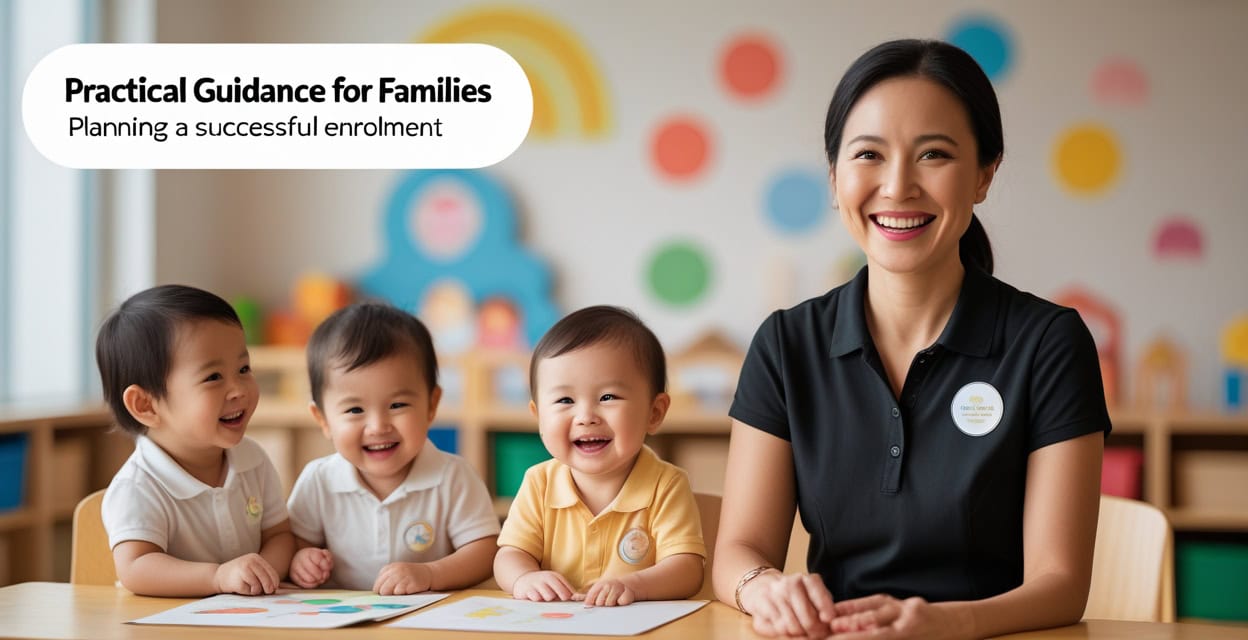
Practical guidance for families: planning a successful enrolment
- Assess your family calendar: map work hours, school drop‑offs, and possible shift changes to determine the best mix of half‑day and full‑day blocks.
- Prepare a “care plan” for your infant: feeding routines, sleeping cues, and preferred soothing techniques to share with the caregiver.
- Discuss medical needs and allergies in advance: provide dosage schedules, emergency contact details, and a clear escalation path.
- Understand privacy and safety preferences: review CCTV policies, consent requirements, and data privacy practices for home pods.
- Schedule a trial period: a 1–2 week trial can help you observe attunement, care routines, and caregiver responsiveness.
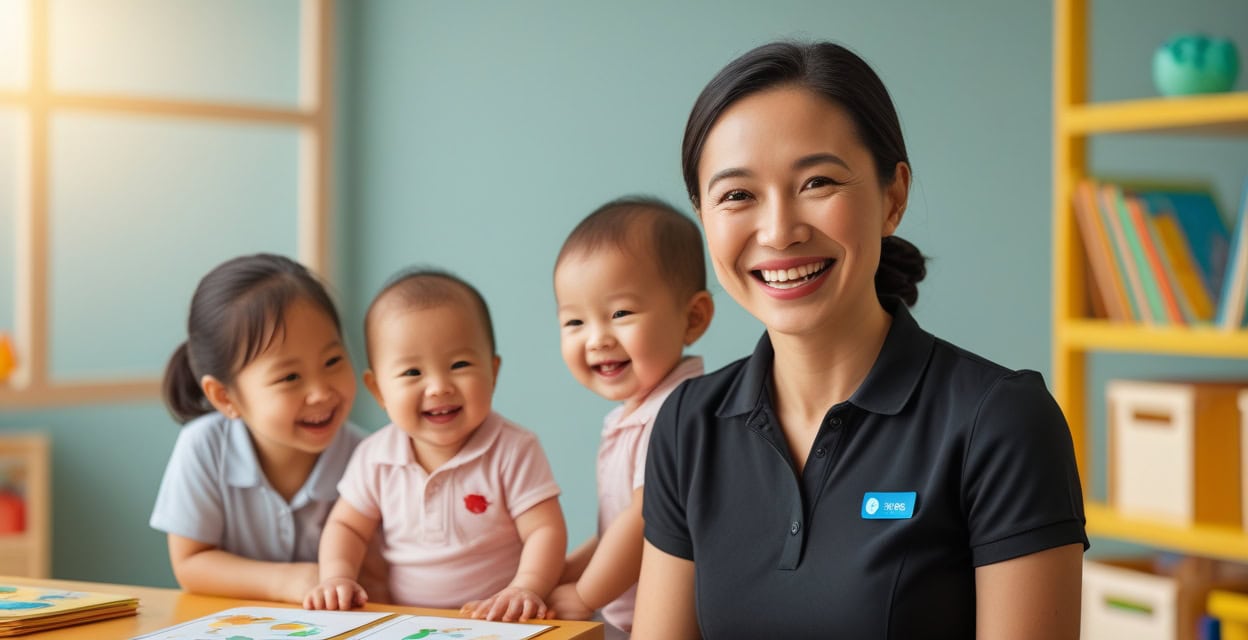
Safety, quality, and ongoing improvement: what to expect
EduNanny emphasizes continuous improvement. Expect regular coaching for childminders, periodic safety audits, and transparent reporting to families. You are encouraged to provide feedback after site visits and routine check‑ins, ensuring that care remains aligned with your family’s values and your child’s evolving needs.

Conclusion
If Montessori taught us to trust the child, Bowlby taught us to be their secure base. If Pikler showed the grace of unhurried movement, Vygotsky reminded us that learning is social. EduNanny gathers these truths into daily practice—small circles, strong bonds, steady routines. In doing so, we do more than mind children; we help a nation mind its future.
Thank you for your trust. We are ready to welcome you and your infant, near home, with care you can feel—and standards you can measure. EduNanny by BUTLER. EduNanny.com. Where the first years are held with excellence, and every tiny milestone is met with joy.
SEO Keywords: [#EduNannySingapore, #EarlyChildhoodCare, #InfantCareSingapore, #ChildmindingPilot, #SingaporeFirst1000Days]