Fraud Blocker edunanny.com

Category: Childminding

edunanny-748a67da-6e1b-4084-9f69-b001105fc1b8
August 23, 2025

Near Home Covenant EduNanny 1 to 3 Infant Pods and the First Thousand Days under the ECDA Pilot, December 2024 to December 2027

EduNanny: A Covenant for Singapore’s Infants

EduNanny: A Covenant for Singapore’s Infants

Welcome to a new chapter in Singapore’s approach to early childhood care. EduNanny Infant Childminding by BUTLER is appointed under ECDA’s Childminding Pilot (1 December 2024 to 31 December 2027). This article expands on the covenant: building an everyday infrastructure of care where safety, joy, and development are observable, measurable realities in the first thousand days of life.


What is EduNanny?

What is EduNanny?

EduNanny is Singapore’s infant childminding service designed around ultra‑low ratios, near‑home convenience, and a living pedagogy informed by the wisdom of Montessori, Piaget, Vygotsky, Froebel, Malaguzzi, Bowlby, Pikler, Spock, and Erikson. Under the ECDA Pilot, Certified EduNanny Childminders care for one to three infants (aged 2 to 18 months) at a time in their homes or community spaces, Mondays to Fridays, 7am to 7pm. It is a National Social Initiative with a practical heart: affordable from $33 per full day (10 hours) or $16.50 per half day (5 hours) before GST, with fees payable using your Child Development Account (CDA/Baby Bonus) during subsidised hours.

Ultra‑low ratios and near‑home care

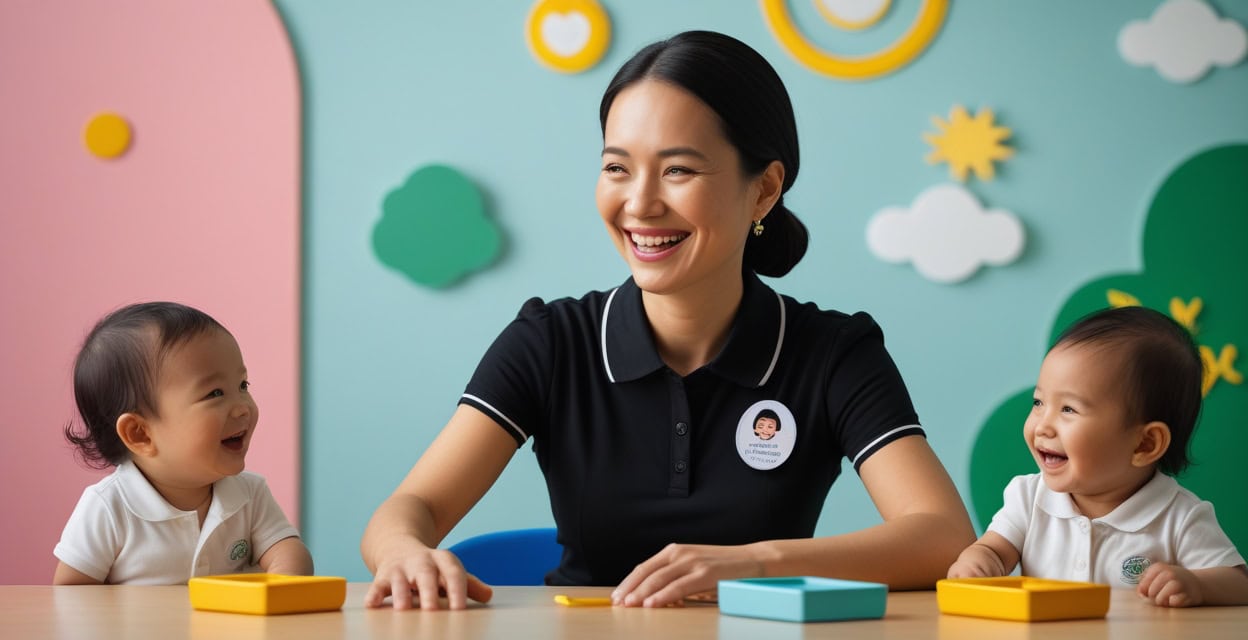
Key to EduNanny’s approach is maintaining a maximum 1:3 caregiver‑infant ratio. This enables constant line‑of‑sight, responsive interaction, and personalised attention in familiar settings—whether in a caregiver’s home or a community space close to where families live and work.

A living pedagogy

EduNanny’s practice is informed by developmental science and timeless caregiving wisdom. Caregivers create routines that support attunement, language growth, autonomy, and sensory‑motor exploration through everyday moments, not through add‑on activities.

Subsidies and access

As a national initiative, EduNanny leverages ECDA oversight to balance quality and affordability. Subsidised hours are designed to support working families, with CDA/Baby Bonus payment options used during subsidised blocks.


Why this matters in Singapore now

Why this matters in Singapore now

In a fast‑moving city with high expectations, the smallest circle of care must be the strongest. Reducing noise and increasing attuned, responsive interaction strengthen the infant’s secure base, language development, self‑regulation, and exploratory play. Micro‑scale care—done near home with a 1:3 ratio—creates macro‑scale benefits for a lifetime.


Four big ideas that make EduNanny infantcare work in Singapore

Four big ideas that make EduNanny infantcare work in Singapore

1) The Attachment Studio: attunement over entertainment

Secure base is about relationships, not rooms. In 1:3 pods, daily routines—feeding, diapering, settling to sleep—are conducted as dialogue. Caregivers narrate actions, read infant cues, and slow down to respond with respectful touch, a practice inspired by Pikler and RIE. Each pod is an “Attachment Studio,” where three infants are guided by calm presence, with language scaffolding (Vygotsky), emergent autonomy (Montessori), and sensorimotor mastery (Piaget) woven into daily practice.

2) Safety by design, not by chance

  • Ultra‑low density, ultra‑low ratio (max 1:3) for constant line‑of‑sight.
  • Certified and background‑checked childminders; ECDA conducts checks for household members with access to the care space.
  • Mandatory training: infant first aid, basic infant care, food safety, safe sleep practices.
  • Child‑safe environments: gated hazards, anchored furniture, clear floor play space, and thoughtful layouts for free movement.
  • CCTV provided: in community/centre spaces; available in home‑based areas during care hours with consent, balancing safety with privacy.
  • No Sick Child Policy during subsidised hours to protect micro‑pods; guidance for alternative arrangements or make‑ups.
  • Transparent incident and feedback protocols with ECDA oversight.

3) Development woven into ordinary moments

  • Feeding as language class: responsive feeding, face‑to‑face talk, turn‑taking sounds.
  • Diapering as relationship time: predictable sequence, caregiver narration, infant participation.
  • Sleep as brain care: safe sleep environment, individualized cues, consistent routines.
  • Play as purposeful inquiry: open‑ended materials, free movement (Pikler), gentle provocation of curiosity (Reggio‑inspired), early social referencing in a tiny peer group.

Educators document milestones, micro‑observations, and attunement notes so parents see not just what happened, but who the child is becoming.

4) Happiness as a health metric

Joy is a core health outcome. A child’s engagement, relaxed body tone, curiosity, appetite, and ease of transitions signal well‑being. Caregivers read these signals and adjust lighting, tempo, sensory load, and holding patterns to safeguard happiness as a daily metric.

The purpose of childminders: civic caregivers in a modern city

The purpose of childminders: civic caregivers in a modern city

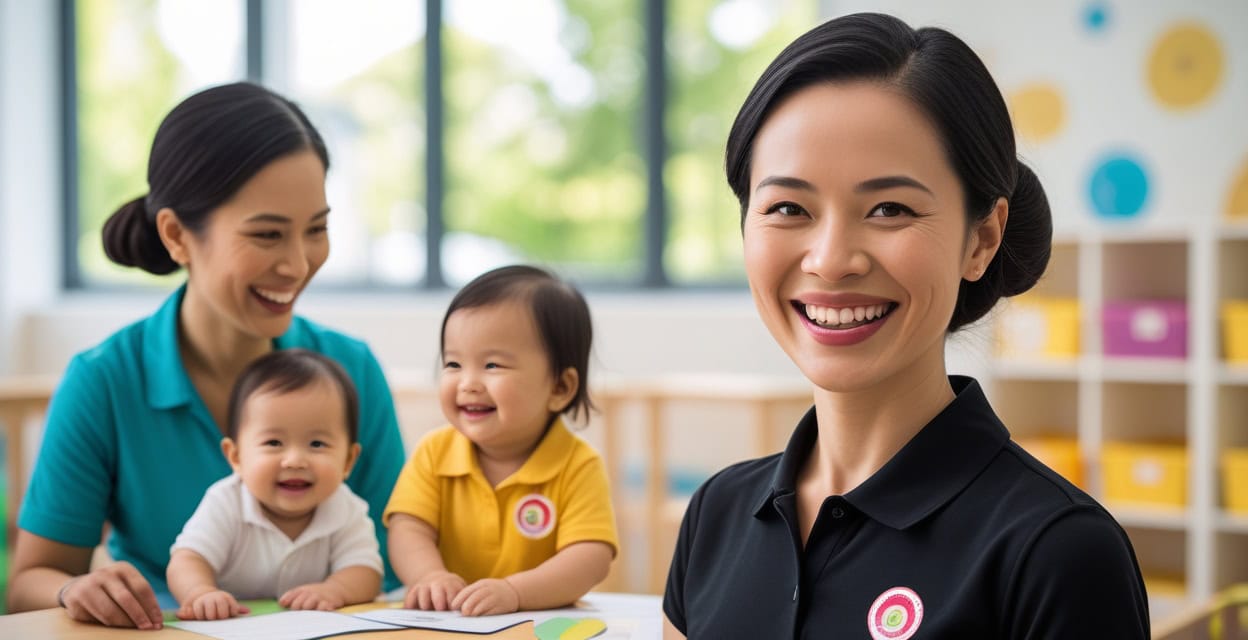
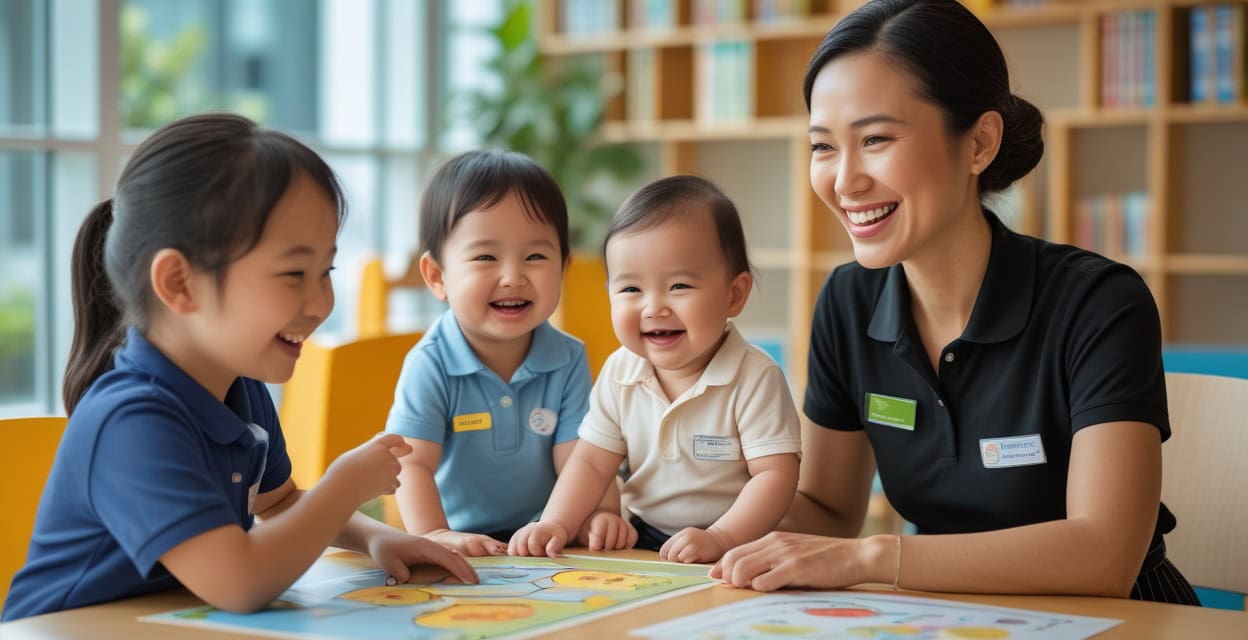
In every estate, a childminder anchors proximity into protection. Under the ECDA Pilot, EduNanny’s Maximum Employment Mandate trains and uplifts local caregivers—parents re‑entering the workforce, mid‑career switchers, early childhood professionals—so that care quality rises alongside community employment. This is public purpose you can visit: safe, dignified, near‑home care that strengthens families and neighbourhoods.

What parents can expect—today

What parents can expect—today

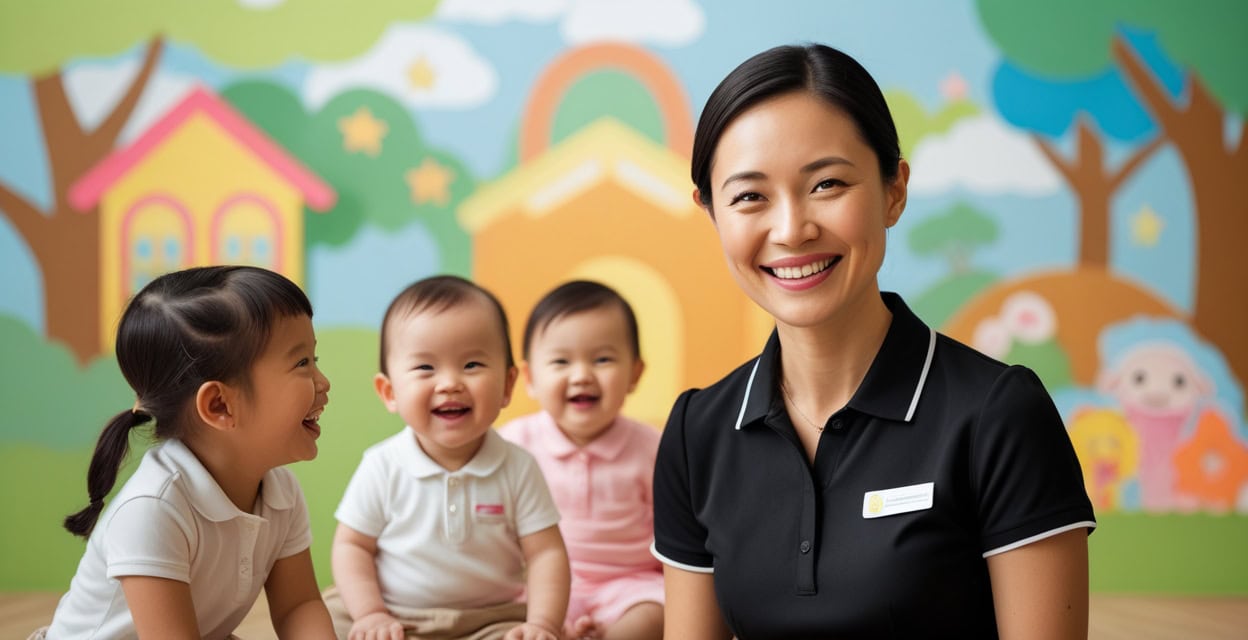
  • Ultra low ratio, ultra low density pods (1:3).
  • Certified EduNanny Childminders, trained and background‑checked.
  • CCTV provided in community/centre premises; available for home‑based areas during hours of care with consent.
  • No Sick Child Policy during subsidised hours.
  • Modern layouts designed for safe sleep, free movement, and open‑ended play.
  • Centre‑Based and Home‑Based options islandwide, near home.
  • Monday–Friday, 7am–7pm; choose half‑day (5 hours) or full‑day (10 hours) blocks.
  • Affordable from $33/day full day or $16.50/half day before GST; subsidies via CDA during subsidised hours.
  • Fees payable with CDA during subsidised hours; flexible scheduling across days per week.
  • National oversight with ECDA; excellence and quality as everyday practice.
  • Near‑home convenience: less commute, more family time, calmer mornings and evenings.
  • A trusted public–private partnership: clear policies, transparent communication, and robust incident protocols.

Eligibility under the ECDA Childminding Pilot

Eligibility under the ECDA Childminding Pilot

  • Infant is a Singapore Citizen, aged 2 to 18 months.
  • Not concurrently enrolled in an ECDA‑licensed infant care centre.
  • Services delivered at the childminder’s home or in a community premises.
  • Subsidised hours available Mondays–Fridays, 7am–7pm (excluding public holidays).

How EduNanny makes infantcare great in Singapore

How EduNanny makes infantcare great in Singapore

  • Micro‑scale access, macro‑scale equity: high‑quality care brought to neighbourhoods beyond city‑centre campuses.
  • A living curriculum of care: attachment, autonomy, and inquiry are the grammar of every interaction.
  • Technology with purpose: CCTV as a safety backstop, not a substitute for relationship.
  • Work‑family realism: flexible half‑day and full‑day blocks within subsidised hours; predictable, affordable care.
  • Public‑private partnership: ECDA oversight ensures standards; EduNanny’s craft ensures soul.

The five daily promises your infant receives

The five daily promises your infant receives

  • I will see you: consistent, attuned eye contact and gentle, predictable touch.
  • I will keep you safe: safe sleep, safe spaces, safe hands—always.
  • I will listen to your cues: hunger, rest, and play rhythms guide our day.
  • I will invite your curiosity: simple materials, real objects, rich language.
  • I will honour your family: your routines, your culture, your hopes.
Who, what, when, where, how—why childminding matters

Who, what, when, where, how—why childminding matters

  • Who: Singapore Citizen infants aged 2–18 months and the parents who balance love and logistics.
  • What: Ultra‑low‑ratio infant childminding delivered by Certified EduNanny Childminders under the ECDA Pilot.
  • When: Mondays to Fridays, 7am–7pm, half‑day or full‑day subsidised blocks from 1 December 2024 to 31 December 2027.
  • Where: In community spaces and childminders’ homes islandwide—near where families live and work.
  • How: Through strict safety standards, training, background checks, CCTV per policy, clear protocols, and a pedagogy of attachment and joyful inquiry.
  • Why: The first thousand days wire the brain for trust, language, and resilience—and the best way to protect a future is to protect a beginning.
The EduNanny philosophy and purpose

The EduNanny philosophy and purpose

EduNanny exists to turn handovers into bonds, routines into rituals, and small circles into strong beginnings. We believe safety begets curiosity, curiosity begets learning, and learning—carried by love—becomes character. The purpose is simple and profound: to give every infant a secure base near home and to give every parent peace of mind that is affordable, accountable, and human.

How to sign up

How to sign up

Follow these steps to begin your EduNanny journey:

  • Visit: https://edunanny.com/edunanny-ecda-childminding-service/ or explore Childminding.EduNanny.com and EduNanny.com
  • Enquire: Submit the form or message us via WhatsApp
  • Connect: Receive a response from our EduNanny Concierge Team
  • Visit: Confirm your site visit (home‑based or community premises)
  • Enrol: Choose half‑day or full‑day blocks; confirm start date; complete CDA payment arrangements for subsidised hours

A final word to Singapore’s parents

A final word to Singapore’s parents

You do not need a grand theory to raise a great child. You need a safe pair of hands, a watchful heart, and a circle of care that stands when you step into your day. EduNanny by BUTLER, under the ECDA Childminding Pilot, is that circle. We welcome your infant into a place where science meets tenderness, where policies meet people, and where every good morning is the first chapter of a resilient, joyful life.


Conclusion

Conclusion

EduNanny represents a practical, evidence‑informed approach to early childhood care that prioritises attachment, safety, development, and happiness. By combining ultra‑low ratios, near‑home access, and a living pedagogy, EduNanny turns everyday moments into pivotal learning experiences. If you are a parent seeking peace of mind, a caregiver seeking meaningful work, or a community member aiming to strengthen neighbourhoods, EduNanny offers a scalable, humane model for the first thousand days and beyond. Explore the sign‑up options, participate in the pilot, and join a care movement that puts children, families, and communities at the heart of Singapore’s future.

SEO keywords: #EduNannySingapore, #ECDApilot, #InfantCareSingapore, #AttachmentStudio, #NearHomeCare

[#EduNannySingapore, #ECDApilot, #InfantCareSingapore, #AttachmentStudio, #NearHomeCare]


edunanny-1cd87945-91d0-4511-adaf-9eafdaeab31d
August 23, 2025

EduNanny Near Home 1 to 3 Infant Pods Building Trust Safety and Development Across Singapore under ECDA Pilot

EduNanny: An Islandwide, Near‑Home Infant Childminding Service for Singapore’s Youngest Citizens

EduNanny: An Islandwide, Near‑Home Infant Childminding Service for Singapore’s Youngest Citizens

Good evenings to parents, grandparents, neighbours, and every heart that believes in a strong start for a child. EduNanny by BUTLER brings an islandwide, near‑home network of tiny circles of care designed for Singapore’s youngest citizens and the families who love them. Appointed under ECDA’s three‑year Childminding Pilot (1 December 2024 to 31 December 2027), EduNanny offers an affordable, safe, and reliable option for Singapore Citizen infants aged 2 to 18 months. We exist for one simple reason: when an infant’s world is calm, consistent, and close to home, their future opens.

What is EduNanny childminding?

  • Micro‑pods of 1–3 infants cared for by a certified EduNanny childminder at an approved community space or the childminder’s home—near your home.
  • Monday to Friday, 7am–7pm, in 5‑hour or 10‑hour blocks.
  • Subsidised fees under the ECDA pilot: $16.50 (half‑day, 5 hours) and $33.00 (full‑day, 10 hours) before GST. CDA/Baby Bonus (CDA) monies can be used for subsidised hours.
  • Infants must be Singapore Citizens, 2–18 months old, and not concurrently enrolled in ECDA‑licensed infant care centres.

The EduNanny vision: how we elevate infant care in Singapore

The EduNanny vision: how we elevate infant care in Singapore

Five pillars of excellence that parents can feel, not just read

1) Attachment is our architecture

A baby grows outward from a trusted adult. Our ultra‑low ratio (maximum 1:3) keeps the caregiving relationship primary. One consistent EduNanny childminder learns your infant’s micro‑cues: the pause before a cry, the stretch before a nap, the rhythm of breath during a feed. This is Bowlby’s secure base and Erikson’s first task—trust—delivered in everyday moments. We practice continuity of care, slow hands, warm voice, soft eye contact, and committed presence. Because in infancy, presence is pedagogy.

2) The 1:3 advantage—time to notice the tiny miracles

With no more than three infants at any time, our childminders can:

  • Offer unhurried, Pikler‑informed caregiving—diapering, feeding, bathing—as learning moments, not chores.
  • Prepare Montessori‑inspired safe movement spaces where babies roll, reach, grasp, and explore with dignity and independence.
  • Use Vygotsky’s scaffolding gently—singing, mirroring sounds, describing actions—so language, motor skills, and attention bloom in context.
  • Observe, document, and adapt: micro‑pods let us personalise sleep routines, sensory comfort, and feeding rhythms without rushing.

3) Safety by design, not by chance

Safety is engineered into our environments and routines.

  • Ultra low density, modern layouts: uncluttered floor space, anchored furnishings, hazard‑free zones, separate sleep areas, and safe‑sleep practice (firm surface, on the back, face clear).
  • Certified and background checked: Childminders are vetted by ECDA; those with regular access to home‑based settings are checked too. All EduNanny childminders complete infant first aid, basic infant care, and food safety training before deployment, and continue learning with us.
  • CCTV and transparency: CCTV is installed at community‑based sites as required. For home‑based pods, we offer CCTV in caregiving areas during care hours with consent, balancing privacy and parental peace of mind.
  • A clear, kind health stance: We operate a No Sick Child Policy to protect the pod. If unwell, infants rest at home; we’ll work with you on make‑up options or alternative arrangements.
  • Cleanliness and hygiene: frequent sanitisation of high‑touch surfaces, safe handling of expressed milk and solids per age, and meticulous incident protocols aligned to industry standards.
  • Incident management: swift, transparent communication and documentation; our Concierge Team supports parents and childminders to resolve issues promptly and fairly.

4) Joy you can measure; development you can see

We treat happiness as essential data.

  • Daily well‑being check‑ins (mood, appetite, sleep quality, comfort cues) shared with parents alongside simple development notes.
  • Purposeful micro‑routines: tummy time, sensory play, song and rhyme, picture‑book time, and outdoor fresh‑air strolls where feasible.
  • Respectful transitions: predictable handovers, gentle goodbyes, and soothing reunions.
  • We design for co‑regulation: fewer infants per adult means more eye‑to‑eye moments, responsive feeding, and the natural oxytocin loop that builds calm, curiosity, and resilience.

5) A practical partnership with families—two homes, one plan

We keep care near home to honour your time and your village.

  • Centre‑based and home‑based options islandwide for distance and convenience.
  • Transparent tech: optional CCTV windows (where applicable), a digital daily journal, photos with consent, and quick updates for peace of mind.
  • EduNanny Concierge: one number, one team—site visits, matching, scheduling, and support.
  • Flexible utilisation: choose half‑day or full‑day blocks, a few days or the full workweek, 7am–7pm on weekdays, excluding public holidays.

The EduNanny advantage—at a glance

The EduNanny advantage—at a glance

  • Ultra Low Density, Ultra Low Ratio pods (maximum 1:3 infants).
  • CCTV Provided: installed at all community premises; available in caregiving areas for home‑based pods with consent.
  • Certified EduNanny Childminders: trained in infant first aid, basic infant care, and food safety; supervised and supported by our team.
  • No Sick Child Policy to protect the pod’s health.
  • National Initiative under ECDA’s Childminding Pilot; industry standards and audits upheld.
  • Centre‑Based and Home‑Based options; modern layouts; islandwide coverage for distance and convenience.
  • Affordable from $33/day for full‑day (10h) and $16.50 for half‑day (5h) before GST; fees payable by CDA/Baby Bonus for subsidised hours.
  • Monday–Friday, 7am–7pm availability.
  • Innovation you can trust: CCTV, digital daily journals, and an active EduNanny Concierge.
  • EduNanny by BUTLER—Excellence, quality, and a civic heart at EduNanny.com and Childminding.EduNanny.com.

A day in an EduNanny pod—how pedagogy meets real life

A day in an EduNanny pod—how pedagogy meets real life

  • Arrival and attunement: unrushed handover; a quick health and mood check.
  • Nourish and notice: feeding as a conversation—eye contact, paced rhythm, gentle burping, clean comfort.
  • Free movement play: safe floor time, soft objects to grasp, simple cause‑and‑effect toys, songs and finger‑plays.
  • Rest that restores: safe sleep routines, white‑noise hush, and caregiver presence for re‑settling.
  • Fresh air and light when possible: pram walks, observing trees and shadows, naming the world.
  • Documentation loop: moments captured and shared so parents see progress and patterns.
  • Reunion ritual: warm summary, clear next‑day plan, and a cheerful goodbye.

How to enrol—simple and human

How to enrol—simple and human

  1. Visit https://edunanny.com/edunanny-ecda-childminding-service/ to fill up the form or enquire via WhatsApp.
  2. Receive a response from our EduNanny Concierge Team.
  3. Confirm your appointment for a site visit (home‑based or community‑based, near you).
  4. Enrol and begin—choose your days and blocks (half‑day or full‑day), Monday to Friday between 7am and 7pm.

Enrolment considerations for families

Enrolment considerations for families

As you decide, consider these practical steps to ensure a smooth transition for your infant and household:

  • Assess your child’s temperament and routines: do they respond well to short, consistent transitions or do they thrive on longer cuddle times and predictable patterns?
  • Ask about caregiver continuity: will the same EduNanny be present for most days? How are replacements handled during absences?
  • Clarify sleep and feeding plans: how are naps nudged into place without over‑stimulating schedules?
  • Inspect the environment: what safety features are in place, how is infection control managed, and where are sleeping areas located?
  • Discuss documentation preferences: what updates will you receive, and how often? Can you request additional notes or photos?

Closing

Closing

If childhood is the seed of a nation, then the caregiver’s hands are the soil—steady, warm, and ready. EduNanny’s childminding service is not simply a place to leave a baby; it is a small, expertly prepared world in which safety, relationship, and discovery are the everyday language. We bring together the wisdom of the great thinkers in early childhood, Singapore’s insistence on quality and accountability, and the everyday grace of ordinary routines done extraordinarily well.

We invite you to visit, to ask questions, to feel the calm of a pod at work. Together, let’s keep care close to home, make trust visible, and give every infant a beginning worthy of the future they will build for Singapore.

On behalf of EduNanny by BUTLER and our community of certified childminders—thank you. We are ready when you are.


Conclusion

Conclusion

EduNanny represents a pragmatic, research‑informed approach to infant care that respects families’ time, supports parental employment, and strengthens attachment in the critical first months of life. By combining ultra‑low ratios, safety by design, caregiver continuity, and transparent partnerships with families, EduNanny creates an ecosystem where infants thrive and parents feel confident. If you’re seeking a near‑home option that foregrounds development, attachment, and measurable wellbeing, explore the EduNanny model today and begin a conversation with our Concierge team. Learn more and enrol at the official site, or reach out to discuss how EduNanny can fit your family’s needs.

Enrolment information and enquiries: visit https://edunanny.com/edunanny-ecda-childminding-service/ or contact via WhatsApp.

SEO keywords: [#EduNanny, #SingaporeInfantCare, #ECDApilot, #NearHomeCare, #LowRatioChildminding]


edunanny-ccd6422f-88e7-431e-94bd-e9cd1bcd92e4
August 23, 2025

Cradling a Nation Near Home 1 to 3 Infant Pods Redefine Singapore First Thousand Days

Introduction: Cradling the First Thousand Days in Singapore

Introduction: Cradling the First Thousand Days in Singapore

Thank you for gathering—whether in person or in spirit—to consider something both intimate and nation‑shaping: how we cradle the first thousand days of life. This article presents a professional, educator’s view of EduNanny’s Infant Care and Childminding service as a trusted framework for Singaporean families. It is written from the perspective of an EduNanny Infant Care advisor, with the aim of turning caring into a scientifically grounded, deeply human practice that sits near home and inside community life.


The EduNanny Promise: Near‑Home Infant Care, Ultra‑Low‑Ratio

The EduNanny Promise: Near‑Home Infant Care, Ultra‑Low‑Ratio

EduNanny by BUTLER operates under the ECDA Childminding Pilot (1 December 2024 to 31 December 2027). We offer small, ultra‑low‑density “Near‑Home Infant Pods” of one to three infants (1:3) in trained childminders’ homes and community premises across Singapore. We blend the heart of a trusted caregiver, the discipline of safety science, and the artistry of infant pedagogy—so that parents can hand over not only a child, but their hopes, with confidence. Below are five convictions that shape every practice, every policy, and every daily moment in a pod.

1) Attachment is the first curriculum

  • Attachment is not a soft idea; it is a living, daily practice supported by science. We weave Bowlby’s attachment theory, Pikler’s respectful care, and Erikson’s trust‑versus‑mistrust stage into routine moments of care.
  • Observe–Attune–Respond–Extend is the guiding cycle.
    • Observe: sense the infant’s cues without interruption.
    • Attune: mirror emotion and pace care to the infant’s rhythms.
    • Respond: be consistent and predictable so the infant learns safety.
    • Extend: invite new textures, songs in the home language, and gentle, unhurried interactions.
  • In each micro‑pod, same‑adult continuity supports secure bonds, calm nervous systems, and learning that unfolds through everyday care moments.

2) Safety is designed, not hoped for

  • Ultra‑low density and a 1:3 ratio enable proactive safety: closer supervision, calmer routines, and safer play spaces.
  • Infant‑safe environments are prepared with careful risk assessment: clean and uncluttered zones, safe sleep setups, meticulous hygiene, and clear bottle‑handling and food safety protocols.
  • Caregivers are certified and background‑checked. ECDA conducts checks on caregivers and household members with regular access; EduNanny adds competency‑based training, infant first aid, and ongoing care coaching.
  • Monitoring with respect: CCTV is installed in community premises; for home‑based pods, CCTV is offered in caregiving areas during care hours with privacy safeguards for residents.
  • Health integrity is present: a No Sick Child policy protects infants and staff; deferrals or adjusted scheduling are supported when illness arises, with clear return‑to‑care guidance.

3) Development thrives in simple, rich routines

  • Education is quiet, not loud. We honor the child’s need to move, explore, and learn through settled routines that respect their pace.
  • Principled routines include:
    • Free movement on firm, open floor space to build strong bodies and self‑efficacy.
    • Language baths: caregiver narration in the family’s home language(s) to support identity and communication.
    • Sensory invitations: safe textures, natural light, and varied sounds introduced gradually to prevent overwhelm.
    • Gentle co‑regulation: calm settling, predictable naps, and unhurried feeds to nurture regulation learned in relationship.
  • Daily logs capture eating, sleeping, toileting, mood, and moments of discovery in concise formats parents can read in minutes yet savor for hours.

4) Joy is a serious metric

  • Happiness in infancy fuels curiosity and resilience. We observe micro‑indicators: eager reaches for familiar carers, relaxed postures during changes, satisfied vocal play after sleep, and sustained curiosity with safe materials.
  • Pods are designed to minimize visual noise and maximize human warmth. Layouts emphasize calm, purposeful spaces that invite exploration without overstimulation.
  • Joy is not about entertainment; it is about meaningful, developmentally appropriate engagement—letting babies meet the world at their own pace.

5) Childminding is public purpose in private hands

  • The pilot is a national initiative to expand high‑quality infant care near home, Monday to Friday, 7am–7pm, islandwide, so families can work, study, or rest with peace of mind.
  • EduNanny professionalizes caregiving, creates dignified local jobs, and lifts standards through training, supervision, and community partnerships.
  • Proximity matters: closer care reduces commutes and stress while weaving care into neighbourhood life—strengthening communities one pod at a time.

The EduNanny Difference: What Sets Us Apart

The EduNanny Difference: What Sets Us Apart

  • Ultra Low Density, Ultra Low Ratio pods (1:3), islandwide.
  • Certified EduNanny Childminders who are background‑checked; ECDA training plus EduNanny’s attachment‑first coaching embedded in practice.
  • CCTV provided in community premises; offered for home‑based pods in caregiving areas during care hours with privacy safeguards.
  • No Sick Child Policy to protect tiny ecosystems and their caregivers.
  • Modern, calm layouts and materials that support free movement and focused attention.
  • Centre‑based (community) and home‑based options, near home for convenience and reduced burden.
  • Weekdays, 7am–7pm; options for half‑day (5 hours) or full‑day (10 hours) blocks to fit family needs.
  • Government‑subsidised pilot rates, from $33.00 per full day (10 hours) or $16.50 per half day (5 hours) before GST; CDA/Baby Bonus may be used for subsidised hours.
  • A national social initiative under the ECDA Childminding Pilot, delivered by EduNanny by BUTLER, with ongoing quality assurance.
  • Transparent communication: daily logs, responsive incident protocols, and a concierge team that actively assists and answers inquiries.

Eligibility, Timing, and How It Works

Eligibility, Timing, and How It Works

  • Who: Singapore Citizen infants aged 2 to 18 months, not concurrently enrolled in ECDA‑licensed infant care centres.
  • When: Monday to Friday, 7am–7pm, excluding public holidays; families choose the number of days per week and whether to book half‑day or full‑day blocks.
  • Where: Childminders’ homes or community spaces, located near your neighbourhood, islandwide.
  • How much: $16.50 per 5‑hour half day or $33.00 per 10‑hour full day, before GST; subsidised under the Pilot; CDA/Baby Bonus may be used for subsidised hours.
  • How safety is upheld: ECDA background checks (including household members) and mandatory infant care training; EduNanny adds supervision, coaching, environment audits, and strong parent partnerships.

A Day in an EduNanny Micro‑Pod

A Day in an EduNanny Micro‑Pod

  • Arrival: Unhurried handover, quick health and mood check, and a familiar greeting—often a simple song that says, “You are safe here.”
  • Morning: Floor time with gentle invitations—rolling, grasping, and social peekaboo—interwoven with responsive feeds and naps in safe sleep setups.
  • Midday: Quiet narration during diapering, calm co‑regulation for fussy moments, and language play in home languages to reinforce identity.
  • Afternoon: Outdoor time when appropriate and safe—shaded strolls or indoor tactile play with natural textures—concluding with a simple parent recap: sleep, feeds, diapers, and a highlight of discovery.

Why This Matters Now

Why This Matters Now

The first thousand days shape brain architecture for attention, empathy, and resilience. Ultra‑low ratios and stable, attuned relationships are not luxuries; they are foundational prerequisites for healthy development. Singapore’s families deserve options that are close, affordable, and excellent. EduNanny’s pilot aligns with real life: shift work, long commutes, multigenerational homes, and the wish to keep babies near loved ones. Professional childminding builds community infrastructure—one pod, one infant, one neighbourhood at a time.


How to Enrol with EduNanny

How to Enrol with EduNanny

  • Visit the EduNanny pages to learn more: https://edunanny.com/edunanny-ecda-childminding-service/ or EduNanny.com and Childminding.EduNanny.com.
  • Submit the short form or enquire via WhatsApp through the page.
  • EduNanny Concierge Team responds, understands your needs, and proposes suitable home‑based or community pod options near you.
  • Confirm your appointment for a site visit or virtual walk‑through.
  • Enrol, complete onboarding, and meet your childminder before your first day.

A Word on CCTV, Privacy, and Partnership

A Word on CCTV, Privacy, and Partnership

  • In community premises, CCTV is installed and monitored per policy.
  • In home‑based care, CCTV in caregiving areas during care hours is offered, balancing parental assurance and household privacy. We encourage open dialogue so all parties are respected—and infants remain the focus.

Closing Reflection: Who, What, When, Where, and How Childminding Matters

Closing Reflection: Who, What, When, Where, and How Childminding Matters

  • Who: Singapore’s youngest citizens, aged 2–18 months, and the parents who love them.
  • What: Ultra‑low‑ratio near‑home childminding—with safety, attachment, and dignity at its core.
  • When: Weekdays, 7am–7pm, during the first thousand days when brain scaffolding is formed for life.
  • Where: In neighbourhood homes and community spaces across the island, bringing care into community life rather than separating it by distance.
  • How: Through certified, background‑checked childminders; calm, modern environments; clear health policies; CCTV where appropriate; daily communication; and a pedagogy of respect that turns everyday care into the child’s richest classroom.

A closing call to action: trust is the soil of learning, safety is love made visible, and joy is the compass that tells us we are on the right road. EduNanny stands ready to be your partner—from handover to hope, from first cries to first confidence. Visit, ask, see, and feel the difference a tiny pod can make in a very big future.

Begin today:

EduNanny™ ECDA Childminding Service


EduNanny.com
Childminding.EduNanny.com


Conclusion

Conclusion

In Singapore’s context, the EduNanny approach models a disciplined, compassionate, and scalable way to support infants and families. By centering attachment, safety, developmental richness, joy, and public purpose, we create care that is near, trusted, and transformative. This is not merely a service; it is a platform for national resilience through the earliest chapters of life.

[#SingaporeInfantCare, #EduNannySingapore, #FirstThousandDays, #UltraLowDensityCare, #NearHomeCare]


edunanny-14546a97-17c9-4291-b9ff-2fc036fc9096
August 23, 2025

From Handover to Hope EduNanny Near Home 1 to 3 Infant Pods Redefining Singapore First Thousand Days December 2024 to December 2027

Introduction to EduNanny: A National Effort for Singapore’s First Thousand Days

Introduction to EduNanny: A National Effort for Singapore’s First Thousand Days

Good evening, parents, grandparents, neighbours, and partners in care. This is a cause anchored in both precision and heart—the first thousand days of a child. In Singapore, progress is measured with both data and warmth. EduNanny Infant Childminding by BUTLER operates as part of the national ECDA Childminding Pilot, bringing ultra‑low‑density micro‑pods into community spaces or home settings, five days a week, to nurture attachment, curiosity, and resilience from day one.


The EduNanny Model: Simple, Transformative, and Trusted

The EduNanny Model: Simple, Transformative, and Trusted

EduNanny by BUTLER is an appointed operator under the ECDA Childminding Pilot (1 December 2024 to 31 December 2027). Our model is simple and transformative: ultra‑low‑ratio micro‑pods of one childminder caring for one to three infants, Monday to Friday, 7am to 7pm. It is care without crowding; it is education that begins with attachment; it is trust strengthened by design.


How EduNanny Makes Infant Care Remarkable in Singapore

How EduNanny Makes Infant Care Remarkable in Singapore

  • Near-home, near-heart: families gain reliable, local options that shorten commutes and increase quality time together.
  • Ultra‑low density: a 1:3 infant ratio ensures individual attention, calm routines, and fewer disruptions to a baby’s day.
  • National standards, local warmth: trained, assessed, and background‑checked caregivers deliver consistent, familiar care.
  • Affordable access: fees are subsidised during standard working hours and payable using CDA/Baby Bonus, making excellence accessible for ordinary families.
  • Transparency and partnership: daily updates, open communication, and CCTV viewing in community sites (where available) balance safety with privacy.

Five Pillars That Define Our Practice

Five Pillars That Define Our Practice

1) Attachment at the Center: The Attunement Loop

Brain science shows that serve‑and‑return interactions wire language, self‑regulation, and trust. Our micro‑pods are designed for attunement:

  • Predictable one‑to‑one moments across the day—feeding, diapering, floor play, and naps become relational rituals.
  • The caregiver as the curriculum—responsive timing, warm eye contact, and gentle narration shape early cognition and security.
  • Observation as pedagogy—one to three infants enables caregivers to anticipate needs and support secure base behavior and exploratory play.

2) Safety by Design, Not by Chance

Safety is a living system, not a checklist:

  • People: all EduNanny childminders are certified in infant first aid and basic infant care; ECDA conducts background checks on caregivers and household members with regular access.
  • Place: environments are assessed for cleanliness, hazard control, sleep safety, feeding hygiene, and evacuation readiness. Community sites may include CCTV; home pods offer CCTV during care hours with consent to balance safety and privacy.
  • Practice: No Sick Child Policy, clear incident and escalation protocols, medication procedures by parent instruction, and daily health screening.

3) A Day That Develops the Whole Infant: Movement, Language, Rest, and Rhythm

Infants benefit from a balanced sensory diet. In our pods:

  • Movement is medicine: tummy time, gentle vestibular play, and supported reach‑and‑grasp activities.
  • Language is constant: caregivers narrate care moments, sing, read, and model turn‑taking sounds in the child’s home languages.
  • Rest is protected: safe sleep guidance, dark‑quiet cues, and soothing routines for restorative naps.
  • Nourishment with dignity: hygienic, unhurried feeds that follow each infant’s cues reinforce self‑regulation and comfort.

4) Happiness You Can Feel: The Climate of Calm Joy

The emotional climate is the message. We cultivate:

  • Small circles, big smiles: low density reduces overstimulation and supports deeper, calm play.
  • Gentle consistency: familiar adults, predictable routines, and warm transitions at drop‑off and pick‑up.
  • Joyful inquiry: simple materials that invite curiosity without clutter or noise pollution.

5) A Modern Civic Profession: The Purpose of Childminders

We view childminders as nation builders:

  • Certified, background‑checked professionals supported by coaching, peer learning, and quality reviews.
  • Commitment to growing dignified, skilled jobs for local caregivers within the national pilot.
  • Community anchors: near‑home care stitches trust into neighbourhoods, strengthening mutual support among families.

What Parents Can Expect, Every Day

What Parents Can Expect, Every Day

  • Ultra‑low ratio: 1:3 infant care for focused attention.
  • Attuned routines: routines tailored to your child’s cues and timeline.
  • Daily communication: photos and notes on feeds, naps, diapers, and play.
  • Health‑first culture: No Sick Child Policy, rigorous cleaning protocols, and food safety.
  • Transparent operations: clear service agreements, incident management, and channels for feedback.
  • Locations across Singapore: both community and home settings for flexibility and convenience.

Benefits of EduNanny at a Glance

Benefits of EduNanny at a Glance

  • Ultra Low Density: 1:3 infant pods for individualized attention.
  • Centre-Based and Home-Based options near your neighbourhood.
  • CCTV: Installed in community spaces; offered in home pods with consent during care hours.
  • Certified EduNanny Childminders; ECDA background checks.
  • No Sick Child Policy: safeguarding health and learning time.
  • National initiative under ECDA’s three‑year Childminding Pilot.
  • Living curriculum grounded in attachment and play.
  • Near‑home access reduces travel time and supports work‑life balance.
  • Affordable fees subsidised during working hours; CDA/Baby Bonus accepted.
  • Monday–Friday, 7am–7pm, islandwide (excluding public holidays).
  • Home‑Based, Centre‑Based, and Near‑Home micro‑pods available.
  • Fees from $33/day (full day, 10 hours) and $16.50 half day (5 hours, before GST).
  • EduNanny.com and Childminding.EduNanny.com for information and placement.
  • ECDA Childminding Pilot (2024–2027) as a national social initiative that grows local employment.
  • Pilot designed for Singapore Citizen infants aged 2–18 months not concurrently enrolled in ECDA‑licensed infant care centres.

An Explainer: Why This Model Matters Now

An Explainer: Why This Model Matters Now

  • Accessibility: Near‑home micro‑pods reduce travel friction and support daily work‑life balance.
  • Quality at scale: Up to three infants per caregiver balances intimacy with reach, increasing the number of families who benefit.
  • Health protection: Low density and No Sick Child Policy reduce cross‑infection and preserve learning time.
  • Economic resilience: Regulated, affordable options enable parents to sustain careers with consistent infant care.
  • Community fabric: Local pods cultivate neighborly trust and mutual support around our youngest citizens.

Frequently Asked Essentials

Frequently Asked Essentials

  • Who is eligible? Singapore Citizen infants aged 2–18 months, not concurrently enrolled in ECDA‑licensed infant care centres.
  • When? Monday to Friday, 7am–7pm, excluding public holidays; pilot runs 1 Dec 2024 to 31 Dec 2027.
  • Where? Childminders’ homes and community spaces across Singapore.
  • How much? Half day from $16.50; full day from $33.00 (before GST). CDA/Baby Bonus funds may subsidise hours.
  • Safety and training? Mandatory infant first aid and basic infant care; ECDA background checks; safe environments audited to standards.
  • CCTV? Required in community spaces; offered in home-based care with consent to balance safety and privacy.

The EduNanny Day: The Rhythm of a Growing Day

The EduNanny Day: The Rhythm of a Growing Day

The day unfolds as a continuous arc designed for secure attachment, learning, and joy:

  • Arrival: warm, unhurried handover; brief health check; calm comfort cues.
  • Morning: floor play, tummy time, songs, language scaffolds, and individual feeds.
  • Midday: safe sleep, calm wake, and diapering with respect and narration.
  • Afternoon: outdoor strolls when feasible, sensory exploration, reading, and caregiver‑guided play.
  • Departure: reflective handover with clear notes; continuity between pod and home for consistency.

Who, What, When, Where, and How: Why Childminding Matters

Who, What, When, Where, and How: Why Childminding Matters

  • Who: infants and families deserve a secure base—one stable relationship at a time.
  • What: ultra‑low‑ratio near‑home childminding that translates science into daily dignity.
  • When: now—during the first thousand days when brain architecture is most malleable.
  • Where: carefully prepared community rooms and warm, safety‑audited homes across Singapore.
  • How: through certified caregivers, rigorous safety systems, transparent communication, and a living curriculum of attachment and joyful inquiry.

Our Philosophy and Purpose

Our Philosophy and Purpose

We believe love is measurable when it is organized. EduNanny organizes love: small groups, trained hands, watchful eyes, and a living curriculum that honors each infant’s natural timetable for discovery. We recruit and develop childminders as civic professionals, stand with working families by making excellence affordable and local, and contribute to a public infrastructure of trust around our youngest citizens.


How to Sign Up

How to Sign Up

  1. Step 1: Visit https://edunanny.com/edunanny-ecda-childminding-service/ or Childminding.EduNanny.com
  2. Step 2: Fill in the enquiry form or message via WhatsApp from the page
  3. Step 3: EduNanny Concierge Team responds, understands needs, and recommends near‑home options
  4. Step 4: Book and attend a site or home‑pod visit
  5. Step 5: Confirm schedule (half day or full day), complete enrolment, and prepare for a gentle start

Conclusion

Conclusion

When a caregiver leans in and a child’s eyes brighten, the future moves closer. EduNanny brings the future nearer—safely, joyfully, and with purpose—one tiny pod, one steady pair of hands, one growing child at a time. Join this national effort under the ECDA Childminding Pilot to build a trusted, affordable, and attachment‑first path for Singapore’s youngest citizens. Because when care is close, confidence grows. When routines are calm, curiosity rises. And when families are supported, a nation advances.

Ready to take the next step? Explore options, ask questions, and begin your EduNanny journey today.

[#EarlyChildhoodEducationSingapore, #EduNannySingapore, #AttachmentBasedCare, #ECDAPilot, #First Thousand Days]
SEO Keywords

SEO Keywords

[#early childhood care singapore, #infant care near home, #1:3 infant pods, #ECDA childminding pilot, #Singapore childminding program]

edunanny-51afd345-a617-45b5-9ec0-10578e607c09
August 23, 2025

December 2024 to December 2027 The EduNanny Near Home Infant Pods Pilot Building Safe Joyful Foundations for Singapore’s First Thousand Days

EduNanny Infant Care in Singapore: A Professional, Near-Home Approach to the First Thousand Days

EduNanny Infant Care in Singapore: A Professional, Near-Home Approach to the First Thousand Days

Good evening to families across Singapore who believe that the future begins with how we greet and care for our youngest citizens. This article expands on the EduNanny vision—a thoughtful, research-informed infant childminding service designed for safety, learning, and joy in small, close-to-home pods. Read on for practical guidance, real-world examples, and actionable steps you can take to prepare for, choose, and thrive with high-quality near-home infant care.


What is EduNanny Infant Childminding?

What is EduNanny Infant Childminding?

EduNanny by BUTLER delivers infant childminding in two carefully designed settings: care in prepared childminders’ homes and supervised community premises. Families access safe, joyful care where life happens—near home, in your neighbourhood, Monday to Friday, 7am to 7pm (excluding public holidays). We operate at an ultra-low density with an ultra-low ratio of 1:3. Government-subsidised fees during typical working hours help keep care affordable: from $16.50 per half-day (5 hours) or $33.00 per full day (10 hours), before GST. Parents may pay during subsidised hours using the Child Development Account (CDA/Baby Bonus). Central to trust is certified, background-checked EduNanny childminders who nurture small, stable relationships with your child.

EdU Nanny’s model supports two core environments:

  • Home-based care: childminders’ own homes prepared as safe, infant-friendly spaces.
  • Community-based hubs: modern, centre-inspired spaces designed for infant exploration and safety, with close supervision.

Key features you’ll notice in practice:

  • Ultra-low density: one to three infants per pod.
  • Certified, background-checked caregivers with ongoing professional development.
  • Transparent health and safety policies, including a No Sick Child policy to protect the immune systems of all infants.
  • Clear, simple documentation of routines, feeding, naps, and mood to keep families confidently in the loop.

How EduNanny Makes Infant Care Great in Singapore

How EduNanny Makes Infant Care Great in Singapore

We blend the best of human development science with practical, near-home care. The EduNanny model fuses five core strands to create an integrated, developmentally sensitive environment:

  • Attachment-first caregiving (Bowlby, Pikler): one consistent adult who really knows your baby.
  • A prepared environment (Montessori, Froebel): floor-level independence, safe exploration, and beautiful simplicity.
  • Language and social scaffolding (Vygotsky): serve-and-return talk, shared attention, songs, and stories in multiple languages.
  • Developmental observation (Piaget, Erikson): learning through movement, play schemas, and secure curiosity.
  • Civic purpose: childminders as community anchors, professionally trained and continuously supported.

Five Topics for Families, Policymakers, and Caregivers

Five Topics for Families, Policymakers, and Caregivers

These topics frame what “care that builds foundations” looks like in practice. Each topic includes practical steps you can apply at home, with EduNanny guidance, and in conversations with policymakers and providers.

1) The Attunement Pedagogy: Tiny routines that teach trust

Infants learn through relationships. Our caregivers are trained in a rhythm we call “Look—Wait—Wonder.”

  • Look: Observe the baby’s cues—breath, gaze, hand movements. For example, during feeding, a caregiver notices a turn of the head indicating readiness to pause.
  • Wait: Provide a brief space for the baby’s initiative. A wall clock or a quiet pause helps the infant lead the interaction.
  • Wonder: Respond with warmth and words that name the moment: “I see you reaching for your toy; let’s explore together.”

Practical home tips:

  • Replace rushed routines with short, predictable cues (e.g., a gentle song cue before diaper changes).
  • Narrate daily activities in your home language and in community songs to build language-rich environments.
  • Use safe, open-ended objects (rings, scarves, simple fabric toys) to support exploration and hand-mouth coordination.

2) Safety by Design: Five rings of protection around every infant

EduNanny’s safety architecture is designed to be visible, disciplined, and easy to understand for families.

  • Environment: Prepared homes and community premises with gates, socket covers, anchored furniture, safe sleep surfaces, and hygienic food prep zones.
  • People: ECDA background checks, regular access checks for household members, and mandatory caregiver training (infant first aid, basic infant care, food safety) before deployment.
  • Health: “No Sick Child” policy, sanitisation protocols, safe bottle handling, allergy-aware practices; caregiving plans for unwell infants in collaboration with families.
  • Visibility and accountability: CCTV in community premises; optional CCTV in home settings with consent; clear incident protocols.
  • Emergency readiness: Safe sleep practices, safe feeding positions, clear evacuation routes, and easy-to-understand documentation for parents.

Actionable home steps:

  • Regular checks of play areas for loose items and choking hazards; create a daily safety checklist for caregivers and parents.
  • Agree on a simple sign-in/sign-out system with photo updates for each pod and a 24-hour incident reporting process.

3) Personalised Development: Micro-observations, micro-plans, macro-love

We translate observations into action. Each infant maintains a living profile updated monthly, detailing sleep patterns, feeding preferences, emerging motor skills, early communication, and attachment notes. From this, micro-plans are co-created with families for the upcoming weeks.

  • Examples of micro-plans: more side-lying play to support head-turning symmetry; trial of simple finger foods when developmentally ready; use of black-and-white visual cards for newborns; vestibular-friendly pram walks.
  • Progress updates use plain language and photos (with parental consent). Celebrate effort, not speed; development is a conversation, not a competition.

Practical home applications:

  • Maintain a simple two-page infant progress log that includes mood, routines tried, and successful soothing strategies.
  • Share a short weekly plan with your caregiver to align home and pod routines (sleep windows, feeding cues, preferred comforting methods).

4) Joy as a Developmental Need: The daily architecture of happiness

Joyful infants learn best. Our “Joy Index” tracks daily indicators of well-being and engagement:

  • Bright eyes and relaxed shoulders during play
  • Frequent vocalisations and shared smiles
  • Steady feeding and predictable naps
  • Comfort with brief separations and quick recovery on reunion
  • Curiosity during transitions

Practical routines to boost daily joy:

  • Incorporate infant-safe music, gentle movement, and outdoors (pram time) when weather allows.
  • Use sensory baskets with safe textures and natural materials to spark exploration.
  • Offer short, predictable routines with flexibility to accommodate a baby’s mood and needs.

5) The Childminder’s Purpose: A civic profession in small circles

Our childminders are professionals, neighbours, and nation-builders. EduNanny provides training, practice mentoring, and regular quality audits. In the ECDA Pilot, each childminder cares for one to three infants at any time, prioritising stability and deep knowledge of each child.

  • Home-based care: we help households understand routines, safety requirements, and the social importance of consistent caregiving.
  • Community spaces: infant zones designed with soft flooring, natural light, and clear emergency plans—while preserving a welcoming, home-like atmosphere.

Practical benefits for families:

  • A stable, skilled caregiver who grows with your child, reducing transitions and promoting secure attachment.
  • Professional development pathways and regular quality checks to ensure ongoing excellence.

What Parents Can Expect, Every Single Day

What Parents Can Expect, Every Single Day

  • Warm handovers with eye contact and clear updates about the day’s events.
  • Personalised routines that respect your infant’s cues and family values.
  • Clean, uncluttered spaces designed to minimise risk and maximise safe exploration.
  • Consistent documentation on feeding, naps, diapers, activities, and moods.
  • Rapid, respectful communication whenever plans change or concerns arise.

The EduNanny Advantage at a Glance

The EduNanny Advantage at a Glance

  • Ultra Low Density, Ultra Low Ratio (1:3 infant pods).
  • Certified EduNanny Childminders trained in infant first aid, basic infant care, and food safety.
  • Thorough Background Checks (including regular access for home-based care).
  • Safety First: CCTV in community premises; optional CCTV in home settings with mutual consent.
  • No Sick Child Policy to protect all infants.
  • Modern, centre-inspired layouts in community spaces; warm, prepared environments in homes.
  • National Social Initiative under the ECDA Childminding Pilot (1 Dec 2024–31 Dec 2027).
  • Affordable fees during subsidised hours: from $16.50 half-day and $33.00 full-day, before GST.
  • Monday–Friday, 7am–7pm, islandwide (excluding public holidays).
  • Flexible choice of days and blocks (5-hour or 10-hour) to fit your workweek.
  • Fees payable via CDA/Baby Bonus during subsidised hours.
  • Home-based childminding and community-based hubs near you.
  • Clear incident protocols, regular quality checks, and a parent-first concierge.
  • A commitment to maximise meaningful local employment through training and professional pathways.

A Quick Guide to the Pilot: What You Need to Know

A Quick Guide to the Pilot: What You Need to Know

Understanding the Pilot helps families plan with confidence:

  • Singapore Citizen infants aged 2 to 18 months, not concurrently enrolled in ECDA-licensed infant care centres.
  • Places of care: Childminders’ homes and community spaces (small, prepared environments). Each childminder can care for one to three infants at any time.
  • Hours: Mondays to Fridays, 7am–7pm; choose half-day (5 hours) or full-day (10 hours) blocks during subsidised hours.
  • Fees: $16.50 half-day; $33.00 full-day, before GST. CDA may be used during subsidised hours.
  • Extended hours: Discuss directly with EduNanny for options outside subsidised hours, subject to regular rates.

How to Enrol with EduNanny

How to Enrol with EduNanny

Begin your journey to near-home, high-quality infant care with these steps:

  • Visit the EduNanny enrolment page (short form) or inquire via WhatsApp on the same page.
  • Our EduNanny Concierge Team responds to understand your location, schedule, and your infant’s needs.
  • Book a site visit to a nearby community pod or meet an available home-based childminder.
  • Confirm your spot and enrol. Simple, transparent, reassuring.

Why This Matters—Who, What, When, Where, How

Why This Matters—Who, What, When, Where, How

EduNanny is designed to support working, studying, and caregiving families by providing trustworthy, nearby support that fosters healthy development:

  • Who: Singapore Citizen infants aged 2 to 18 months and their working or studying families seeking trustworthy, nearby support.
  • What: An attachment-first, professionally guided childminding service with a 1:3 ratio in small, stable pods.
  • When: Weekdays, 7am–7pm, during the ECDA Pilot (1 Dec 2024 to 31 Dec 2027); flexible 5-hour or 10-hour blocks.
  • Where: In childminders’ homes and community premises islandwide—near home, near family, near daily life.
  • How: Certified childminders, rigorous safety policies, clear health practices, thoughtful pedagogy, transparent fees, and a concierge that prioritises dignity and speed.

Our Philosophy and Promise

Our Philosophy and Promise

“Three quiet gifts change a childhood: time, touch, and trust.” Time is the unhurried space for babies to discover their hands. Touch is the gentle certainty that someone will comfort, bathe, and feed with respect. Trust is the bridge that carries a child from today’s cuddle to tomorrow’s confidence.”

EduNanny organises its entire service around those gifts to ensure safety and joy are not competing values, and to make excellence affordable and accessible. This is more than childcare; it is a civic practice. Every morning you hand us your hopes with a diaper bag; every evening we return them a little more curious, a little more comfortable, and a little more ready for tomorrow.


Conclusion

Conclusion

EduNanny offers a practical, compassionate, and evidence-informed path to infant care that is close to home, affordable during subsidised hours, and grounded in attachment, safety, and joyful development. If you are ready to explore near-home, high-touch infant care that prioritises trust and stability, consider EduNanny as your partner—from enquiry to first day and beyond.

Visit EduNanny.com or Childminding.EduNanny.com for an overview, or enrol at https://edunanny.com/edunanny-ecda-childminding-service/. Our concierge will guide you from enquiry to visit to a confident first day.

Because the first thousand days are not a countdown—they are a compass. And with EduNanny, your child’s compass points to safety, to joy, and to a future held by many caring hands. Thank you.

[#EduNannySingapore, #InfantCareSG, #EarlyChildhoodDevelopment, #ECDA, #ChildmindingPilot]

edunanny-d97037b1-1ec1-4e0d-997f-70dde8c4a695
August 23, 2025

Near Home 1 to 3 Infant Pods A Living Model for Safe Joyful Attachment and Development in Singapore First Thousand Days

EduNanny Singapore: A Living Model for Infant Care in the First Thousand Days

EduNanny Singapore: A Living Model for Infant Care in the First Thousand Days

Good evening, parents, caregivers, neighbours, and friends of Singapore’s youngest citizens. I am EduNanny by BUTLER, presenting a simple promise grounded in science and everyday love: we will make the first months of life safer, calmer, and more joyful—right where families live and work. As an ECDA-appointed operator in the national Childminding Pilot for Infants, our program runs from 1 December 2024 to 31 December 2027, designed for Singapore Citizen infants aged 2 to 18 months who are not concurrently enrolled in ECDA-licensed infant care centres. This plan matters now because families need reliable support without compromising tenderness, and infants deserve intimate care with boundless opportunity. Our answer is a small-scale, high-trust model: ultra-low ratio, one childminder to three infants, delivered in home and community spaces across the island. This is modern infantcare that remembers the oldest truth: babies grow best in small, secure circles with responsive adults.


How EduNanny Makes Infantcare and Childminding Great in Singapore

How EduNanny Makes Infantcare and Childminding Great in Singapore

We pair heart and evidence, neighbourhood access and national standards to give every child a quiet, steady start. Our approach rests on four simple pillars that you can reference as you plan care for your little one:

  • Safety you can see, systems you can trust.
  • Deeply responsive pedagogy in micro-pods of one to three.
  • Transparent partnership with families.
  • Dignity for the profession of childminding.

Topic 1: The Attachment Architecture—why a 1:3 ratio changes everything

Topic 1: The Attachment Architecture—why a 1:3 ratio changes everything

Attachment is the invisible infrastructure of a healthy mind. In a pod of three infants, a trained childminder can notice, name, and meet needs within seconds—a serve-and-return cadence that wires the brain for security, language, and self-regulation. To put it into practice, consider these actionable steps you can observe or request from a pod:

  • One consistent caregiver: a trusted, familiar adult who knows your child’s routines and cues.
  • Attuned routines: predictable feeding, diapering, sleep, and soothing sequences that reduce stress hormones.
  • Unhurried moments: unbroken eye contact during feeds, narration at diaper changes, and belly-down play with reassuring presence.
  • Daily micro-skills: gentle handling, patient pacing, and opportunities for self-regulation built into every hour.
  • Practical example schedule: a calm morning greeting, 15 minutes of hand-eye play, 20 minutes of tummy time with guided interaction, a nap, and a supervised, language-rich activity before reuniting with families.

Our practice draws from attachment theory and respectful care traditions. We design every hour to maximise connection—because resilience begins as relationship.


Topic 2: The Silent Safety Net—designing for prevention, readiness, and calm

Topic 2: The Silent Safety Net—designing for prevention, readiness, and calm

Safety is a living system, not a slogan. Here is how we operationalise safety in homes and community spaces:

  • Environments: Clean, hazard-minimised caregiving zones with safe-sleep layouts, secure storage, soft floor zones, and clear walkways. Daily safety checklists prevent near misses; weekly audits maintain standards.
  • Training: All EduNanny Childminders complete mandatory infant first aid, basic infant care, and food safety training before deployment; ongoing coaching, refreshers, and scenario drills keep skills current.
  • Health shield: A No Sick Child Policy protects tiny immune systems. Mild discomforts are assessed case-by-case; fever or contagious symptoms rest at home. Medication is administered only with written parental instructions.
  • Transparency: CCTV installs in community spaces as required. For in-home pods, optional CCTV in caregiving areas during care hours balances caregiver privacy with parental peace of mind, in line with ECDA guidance.
  • Background checks: ECDA conducts checks on all childminders and, for home-based services, checks with regular access to the home. Safety is a sequence of verifications, not a slogan.

Topic 3: A Living Curriculum for the First Thousand Days—tiny play, big learning

Topic 3: A Living Curriculum for the First Thousand Days—tiny play, big learning

Our living curriculum is simple, sensory-rich, language-filled, movement-forward, and culturally warm. It translates into practical, everyday actions that parents can reinforce at home:

  • Play with purpose: Floor time, tummy time, and object exploration that build core strength, hand-eye coordination, and curiosity.
  • Language-rich routines: Narration during activities, rhymes, songs, and dialogic talk to tune the ear to speech. Even simple bath-time chatter becomes a language moment.
  • Open-ended materials: Sensory boxes, textured fabrics, safe mirrors, and culturally resonant storybooks that invite exploration without rushing growth.
  • Respect for rhythm: Following each infant’s tempo—no pushing ahead, no skipping steps; celebrate bilingualism by incorporating family languages and songs.
  • Documentation: Short notes and photos that show not just what happened, but why it matters in terms of milestones such as exploration, communication, and regulation.

Topic 4: The Joy Index—measuring happiness as seriously as milestones

Topic 4: The Joy Index—measuring happiness as seriously as milestones

Joy is a sign of well-regulated development. We treat joy as a measurable, nurtured experience. Parents can expect:

  • Co-regulation that models calm breathing, gentle tone, and patient pacing to ease transitions.
  • Predictable routines that create security and reduce cortisol surges during changes in activity.
  • Language of temperament: recognizing a watcher, a wiggler, and an eager explorer, and tailoring responses to each child’s needs.
  • Parental partnership: aligning sleep cues, feeding preferences, and soothing rituals across home and pod for consistent experiences.

Topic 5: The Civic Craft of Childminding—professional, purposeful, proud

Topic 5: The Civic Craft of Childminding—professional, purposeful, proud

Childminding is a public good and a skilled profession. Here’s how EduNanny treats it as such—and what parents can look for when choosing care:

  • Professional standard: Certifiable, background-checked childminders with ongoing mentorship and access to safe-sleep science, respectful caregiving, and inclusive practices.
  • Local focus: Jobs close to home strengthen neighbourhood bonds and offer flexible support for working parents.
  • Quality assurance: Regular coaching, peer learning, and operator oversight ensure continual improvement year by year.

What Parents Can Count On with EduNanny

What Parents Can Count On with EduNanny

Our service is designed to be practical, transparent, and reliable for families navigating Singapore’s busy landscape. You can count on:

  • Ultra-low ratio and density: One childminder to a maximum of three infants.
  • Certified, trained professionals: Childminders trained in infant first aid, basic care, and food safety; background-checked.
  • Safety and transparency: CCTV in community spaces; optional CCTV in in-home pods during care hours; clear incident protocols and reporting.
  • No Sick Child Policy: Thoughtful health safeguards; medication only with written parental instructions.
  • Islandwide pilot access: Centre-based and home-based pods in community and neighbourhood settings.
  • Convenient hours and subsidised blocks: 7am–7pm, Mondays to Fridays (public holidays excluded); choose half-day (5 hours) or full-day (10 hours) subsidised blocks.
  • Affordability and subsidies: Fees are subsidised (Half-day $16.50, Full-day $33.00 before GST); CDA/Baby Bonus (CDA) can be used for subsidised hours.
  • Infant-ready spaces: Clean, calm layouts that support safe sleep, movement, and play.
  • Convenient enrollment: Near-home availability, predictable hours, and proactive parent communication.
  • A national social effort you can trust: EduNanny is appointed under ECDA’s Childminding Pilot to deliver safe, reliable services.

The Pilot at a Glance: How It Works

The Pilot at a Glance: How It Works

Here is a concise snapshot of the Pilot’s practical framework:

  • Who is eligible: Singapore Citizen infants aged 2–18 months, not concurrently enrolled in ECDA-licensed infant care centres.
  • When and where: Monday–Friday, 7am–7pm; care occurs in childminders’ homes and community spaces, with up to three infants per pod.
  • Hours and subsidised blocks: Half-day (5 hours) or full-day (10 hours); hours are subsidised; public holidays excluded.
  • Fees (before GST): Half-day $16.50; Full-day $33.00; CDA may be used for subsidised hours.
  • Safety systems: ECDA background checks; mandatory training; standard incident protocols; operator oversight.

A Day in an EduNanny Pod (a quiet portrait)

A Day in an EduNanny Pod (a quiet portrait)

Imagine a typical day that blends warmth with structure:

  • Morning hello: A familiar caregiver greets your child, narrating the handover with warmth and clarity.
  • Gentle movement: Tummy time, soft stretches, and floor play with graspable objects, set to songs in familiar languages.
  • Nourish and rest: Unhurried feeds with eye contact, followed by safe sleep in a calm, dim space.
  • Language and songs: Rhymes, finger plays, and dialogic talk that evolve with your child’s sounds and gestures.
  • Outdoor time: If appropriate and permitted, a brief pram stroll or shaded outdoor respite to reset.
  • Closing the loop: A concise update for parents—feeds, sleeps, play highlights—so you end the day with clarity.

Why Childminding Matters—Who, What, When, Where, How

Why Childminding Matters—Who, What, When, Where, How

To frame the purpose clearly:

  • Who: Parents who deserve dependable support; infants who deserve devoted attention; childminders who deserve professional dignity.
  • What: Ultra-low ratio caregiving with a living curriculum that blends safety, attachment, and play.
  • When: In the decisive first thousand days, the period of rapid brain development and many milestones.
  • Where: In neighbourhood homes and community spaces to reduce travel stress and keep support close.
  • How: Through professional training, rigorous safety systems, transparent communication, and micro-pods that enable responsiveness.

The Philosophy and Purpose Behind EduNanny Childminding

The Philosophy and Purpose Behind EduNanny Childminding

Our philosophy is simple: Relationship is the road; safety is the guardrail; play is the fuel; dignity is the driver. Parents are partners, not bystanders. Childminders are professionals, not placeholders. Infants are protagonists in their own gentle story of growth. We believe care is not a compromise to work; it is the foundation that lets families flourish. We believe small circles shape big futures. We believe transparency builds trust, and trust builds calm, and calm builds brains.


How to Enrol with EduNanny

How to Enrol with EduNanny

Getting started is straightforward. Follow these practical steps to begin your EduNanny journey:

  • Visit the enrollment page: https://edunanny.com/edunanny-ecda-childminding-service/ and complete the short form, or inquire via WhatsApp on the same page.
  • Connect with EduNanny Concierge: Expect a prompt response to understand your needs and location.
  • Site visit: Schedule an appointment for a home-based or community setting view to meet the childminder and see the environment.
  • Enroll and tailor hours: Confirm days and hours (half-day or full-day blocks between 7am and 7pm, Monday–Friday) and navigate CDA/Baby Bonus subsidy options.

For more information, you may also explore EduNanny.com and Childminding.EduNanny.com.


Closing: A Quiet Victory for Infants, Families, and Communities

Closing: A Quiet Victory for Infants, Families, and Communities

If we do our work well, you’ll notice the small, meaningful changes: calmer drop-offs, longer naps, new sounds, steadier gaze—a baby who is held with care, not hurried; a child who is engaged rather than overwhelmed. That is the quiet victory of great infant care. And that is the public promise of EduNanny under Singapore’s Childminding Pilot: to turn science into solace, logistics into ease, and ordinary days into the architecture of secure, joyful minds.

Thank you for trusting us with what matters most. Let’s cradle the beginning—together.

Enrolment quick links: Visit https://edunanny.com/edunanny-ecda-childminding-service/ and fill the form, or inquire via WhatsApp on the same page.

[#keyword1, #keyword2, #keyword3, #keyword4, #keyword5]

edunanny-4a9482cc-90af-4836-a3ab-894d4f19443f
August 23, 2025

Singapore December 2024 to December 2027 EduNanny A Civic Promise of Safe Joyful Infant Care in the Neighborhood

Introduction: EduNanny Infant Childminding in Singapore

Introduction: EduNanny Infant Childminding in Singapore

Thank you for gathering to talk about the quiet work that changes everything—the care of our youngest citizens in the first thousand days. My name is EduNanny by BUTLER, an ECDA-appointed operator for Singapore’s Childminding Pilot for Infants (1 December 2024 to 31 December 2027). We are honored to serve families islandwide with a simple promise: small circles of care, near home, built on safety, science, and joy.


What is EduNanny Infant Childminding?

What is EduNanny Infant Childminding?

EduNanny brings infant care and childminding into the heart of neighborhoods—either in home-based pods or community-based micro spaces—with ultra low density and an excellent 1:3 childminder-to-infant ratio. This scale is not just a number; it is a philosophy that echoes Maria Montessori’s respect for the child, Emmi Pikler’s gentle care, Bowlby’s secure attachment, and Vygotsky’s social learning.


Under the ECDA Pilot: How it Works in Singapore

Under the ECDA Pilot: How it Works in Singapore

Under the ECDA Pilot, Singapore Citizen infants aged 2 to 18 months may enroll for care from Monday to Friday, 7am to 7pm, in half-day (5-hour) or full-day (10-hour) blocks, islandwide. Fees are kept affordable: $16.50 for half-day and $33.00 for full-day before GST, with CDA/Baby Bonus usable for subsidised hours of care. Families choose the number of days per week and the care blocks that fit their lives.


How EduNanny Makes Infant Care Work for Singapore

How EduNanny Makes Infant Care Work for Singapore

  • Near-home convenience: Centre-based community pods and home-based pods reduce travel time and increase family rhythm, with options across neighborhoods.
  • Ultra low ratio, ultra low density: 1:3 means attuned care, safer supervision, and deeper relational learning.
  • Safety architecture: Certified childminders, background checks, infant first aid, clear incident protocols, safe sleep practices, food safety, and an optional, privacy-respecting CCTV solution that provides visibility in caregiving zones during care hours. CCTVs are mandatory in community spaces under the Pilot; for home-based pods, they are offered and implemented with consent.
  • A living curriculum: Gentle, developmentally rich experiences that treat caregiving moments as learning moments—respectful caregiving, purposeful play, and language-rich routines.
  • Affordable and flexible: Government-subsidised hours with CDA/Baby Bonus payment options, designed for working families.
  • A no-sick-child policy during active symptoms: To protect infants and staff, with clear return-to-care guidelines in line with national health advice.

Five Deep Dives: Pedagogy, Safety, Development, Happiness, and Purpose

Five Deep Dives: Pedagogy, Safety, Development, Happiness, and Purpose

1) The Pedagogy of Attunement: From Care to Learning

Infants learn through relationships. Consistent, responsive caregiving wires the brain for security, curiosity, and later executive function. Our practice includes:

  • Primary caregiving: Each infant is paired with a primary EduNanny childminder to ensure predictable, secure attachment (Bowlby) and respectful caregiving (Pikler).
  • Prepared environments: Calm, uncluttered spaces with real materials at infant level, echoing Montessori’s order and autonomy.
  • Co-regulated play: Childminders narrate actions, mirror cues, and offer just-right challenges (Vygotsky’s zone of proximal development).
  • Care as curriculum: Feeding, diapering, and napping become unhurried, language-rich micro-lessons in trust, turn-taking, and autonomy.

2) Safety-by-Design: Because Peace of Mind Is the Foundation of Growth

Safety is foundational. Our safety-by-design approach includes:

  • Trained and vetted: Childminders are certified, background checked by ECDA, and trained in infant first aid and basic infant care before deployment. For home-based care, background checks extend to those with regular access to the home.
  • Environment checks: Daily safety sweeps; safe sleep practices; hazard scans; emergency readiness.
  • Health and hygiene: No-sick-child policy during active symptoms; careful medication administration only with written parent instructions.
  • Nutrition and feeding: Safe milk handling, paced bottle feeding, allergy-aware practices, and respectful transitions to solids as appropriate.
  • Smart visibility: CCTV in community spaces; optional CCTV for home-based pods with consent; access is secure and time-bound.

3) The Developmental Day: Rhythm, Respect, and Richness

A typical day blends calm arrival rituals, active exploration, and language-rich routines:

  • Unhurried arrivals and warm handovers that prime co-regulation and trust.
  • Floor time and gross motor exploration—tummy time, rolling, crawling, cruising.
  • Sensory invitations: natural textures, soft sounds, light and shadow play, graspable objects for hand-eye coordination.
  • Language weaving: Songs, fingerplays, and responsive conversations in infants’ home languages; labeling emotions and actions.
  • Outdoor or nature moments when available: Fresh air, shade, birdsong as the first classroom.
  • Rest: Individual sleep cues respected with safe sleep routines.

Milestones are tracked with gentle observation notes and shared updates, celebrating progress without pressure.

4) Joy as a Vital Sign: Measuring Happiness, Not Just Hours

We look for signs that infants are thriving beyond schedules:

  • Engagement: Tracking eyes, reaching hands, active exploration.
  • Secure base behaviors: Returning to their caregiver with ease after exploration.
  • Emotional tone: Frequent smiles and coos; resilience in short frustrations via co-regulation.

Our response includes interest-led micro-play, small-group attunement within 1:3 ratios, and proactive parent partnerships through daily updates and brief videos where appropriate.

5) The Purpose of Childminders: A Civic Profession with Heart

Childminders are not “extras”—they are early-years professionals and community anchors. EduNanny practitioners:

  • Uphold safety, dignity, and inclusion as public commitments.
  • Strengthen neighborhoods by offering near-home care that supports working families.
  • Grow meaningful careers with training, coaching, and reflective practice.
  • Model patience, presence, and respect—the human qualities we want in tomorrow’s citizens.

What Sets EduNanny Apart

What Sets EduNanny Apart

  • Ultra low ratio and low density for individualized attention and safety.
  • Certified EduNanny childminders with ECDA background checks and infant-first-aid training.
  • CCTV in community spaces; optional CCTV for home-based pods with consent.
  • No sick-child policy during active symptoms to protect all infants and staff.
  • Mon–Fri, 7am–7pm care blocks; affordable from $33/day full-day before GST.
  • Centre-based (community) and home-based options; near-home convenience islandwide.
  • Calm, modern layouts designed to support movement, independence, and focus.
  • Government-subsidised hours; CDA/Baby Bonus accepted for subsidised hours.
  • National Pilot with ECDA (Dec 2024–Dec 2027).
  • Concierge support and transparent communication.

Eligibility and Fees at a Glance

Eligibility and Fees at a Glance

  • Who can enroll: Singapore Citizen infants, 2–18 months, not concurrently enrolled in ECDA-licensed infant care centres.
  • When: Mondays to Fridays, 7am–7pm, excluding public holidays. Half-day (5 hours) or full-day (10 hours) blocks; number of days per week can be chosen.
  • Fees before GST: Half-day: $16.50; Full-day: $33.00.
  • Payment: CDA/Baby Bonus can be used for subsidised hours of care.
  • Locations: Across Singapore in community and home premises; near-home convenience.

What a Parent Can Expect in the First Week

What a Parent Can Expect in the First Week

  • A warm intake and settling plan tailored to your infant’s rhythms.
  • Safety orientation: sanitation, sleep, feeding, cues; CCTV positioning; documentation and communication.
  • Gentle separation: Shorter days initially if needed, led by your infant’s primary childminder.
  • Transparent updates: Daily reflections on what went well, what’s being observed, and what’s being adjusted.

Why Childminding Matters Now: A Closing Reflection

Why Childminding Matters Now: A Closing Reflection

Who: Families who deserve dependable, dignified care; childminders who deserve recognition and a professional pathway; infants who deserve intimacy, attention, and joy.

What: Ultra low ratio, near-home pods that turn caregiving into a living curriculum of attachment, language, movement, and delight.

When: In the first thousand days, when brain architecture and emotional security take root.

Where: In the very neighborhoods where families live and work—home-based and community spaces that feel familiar and safe.

How: Through rigorous safety, responsive pedagogy, and a civic partnership between parents, trained childminders, operators, and ECDA.


The Benefits of EduNanny, Summarised

The Benefits of EduNanny, Summarised

  • Ultra low density, excellent 1:3 infant ratio
  • Certified, background-checked childminders
  • CCTV in community spaces; optional CCTV for home-based pods with consent
  • No sick child policy during active symptoms
  • Mon–Fri, 7am–7pm care blocks; affordable from $33/day full-day before GST
  • Centre-based (community) and home-based options; near-home convenience, islandwide
  • Modern, calming layouts; safety-first design
  • Government-subsidised hours; CDA/Baby Bonus accepted for subsidised hours
  • National Pilot with ECDA (Dec 2024–Dec 2027)
  • Concierge support and transparent communication

How to Sign Up

How to Sign Up

1) Visit https://edunanny.com/edunanny-ecda-childminding-service/

2) Fill in the enquiry form or reach us via WhatsApp from the same page.

3) Receive a response from our EduNanny Concierge Team.

4) Confirm your appointment for a site visit (home-based or community pod).

5) Complete enrolment and settling-in planning.


Useful links

Useful links

  • EduNanny.com
  • Childminding.EduNanny.com

Conclusion

Conclusion

Parents, your infant’s world is small by design: a few faces, a familiar room, the gentle rhythm of care. Within that small circle, a big future is forming. EduNanny offers near-home, low-density care that treats each moment as a learning opportunity and every caregiver as a skilled professional. By centering safety, relationships, and development, we lay the groundwork for secure attachment, language growth, and joyful exploration in the first thousand days. If you seek a care circle that respects your family’s pace and your child’s tempo, consider EduNanny as a partner in your child’s early years journey. Begin with a visit, ask the right questions, and imagine the learning that happens in every bottle, cuddle, song, and nap.

[#EduNannySingapore, #InfantCareSingapore, #ChildmindingPilot, #UltraLowRatio, #NearHomeCare]

edunanny-746147ac-d2eb-4064-899a-15c787c71aa1
August 23, 2025

EduNanny Near Home Pods 1 to 3 Singapore National Pilot December 1 2024 to December 31 2027 A Living Attachment First Approach to Safe Joyful Development

EduNanny Infant Childminding: A National Pilot for Singapore

EduNanny Infant Childminding: A National Pilot for Singapore

Good evening to every parent, grandparent, neighbour, and friend. This is a message about care that is both ordinary and profound: the quiet art of caring well for the youngest among us. In the first months of life, love is logistics, and logistics is love. EduNanny by BUTLER stands at the intersection of scientific care and everyday dignity, near your home, inside your community, with a promise that feels personal because it is. This article expands on that promise with practical guidance, insights from our experience, and clear steps for families navigating early care decisions.


The Pilot in Focus

The Pilot in Focus

From 1 December 2024 to 31 December 2027, Singapore Citizen infants aged 2 to 18 months can be enrolled in small, ultra‑low‑ratio “pods” of one to three infants, in home‑based or community premises across the island. The pilot is designed to be safe, affordable, and reliable for working families, with care available Monday to Friday, 7am to 7pm, in subsidised half‑day (5 hours) or full‑day (10 hours) blocks. Fees during subsidised hours are from $16.50 (half day) or $33.00 (full day) before GST, and families can tap CDA/Baby Bonus funds to defray costs. This is a national initiative with one simple aim: to turn the science of secure beginnings into the everyday experience of Singaporean families.

  • Small, ultra‑low ratio: 1:3 infant care ensures each cue is seen, each cry answered, and routines become moments of learning.
  • Near‑home options: childminding can be home‑based or centre‑based, in community premises near where families live and work.
  • Operational hours: Monday to Friday, 7am–7pm, with flexible 5‑hour or 10‑hour blocks.
  • Subsidies and funding: subsidised fees, with CDA/Baby Bonus support to lighten the cost burden for families.
  • Accountability and oversight: ECDA oversight with robust safety, training, and governance standards.

Five Topics that Define Our Approach

Five Topics that Define Our Approach

1) The Attachment Studio: Pedagogy in the palm of a hand

Infants learn through relationships. We place one primary EduNanny Childminder at the centre of each pod to build predictable, responsive bonds. Every routine is curriculum in disguise, not a checklist:

  • Serve‑and‑return interactions strengthen language and trust.
  • Free movement on safe floors builds motor planning and confidence.
  • Simple, open‑ended materials invite curiosity without overstimulation.
  • Subtle scaffolding—just enough help, then space to try again.

Our approach is informed by Attachment Theory, Piklerian care, Montessori explorations, and Vygotskian social learning, woven into daily practice to support secure, exploratory beginnings.

2) Safety by Design: Architecture for peace of mind

Safety is a culture, not a checklist. Our safety architecture spans people, place, and process:

  • People: Childminders are background‑checked (with ECDA checks extending to regular household members for home‑based care), certified in infant first aid and basic infant care, and supported with ongoing coaching. We operate a No Sick Child policy and conduct daily health screens on arrival.
  • Place: Environments are clean, hazards are removed or gated, sleep spaces meet safe‑sleep standards, and hygiene protocols are enforced. Community premises include CCTV as required; for home‑based pods we offer and encourage CCTV in caregiving areas during care hours with consent, balancing transparency and privacy in line with ECDA guidance.
  • Process: Incident management, emergency drills, medication protocols (where required and agreed), and clear handover communications are standard. Risk is assessed proactively; responses are calm, practiced, and precise.

3) Joy, Play, and Development: A living, low‑noise curriculum

Infancy is a relationship with the world, not a race. Our living curriculum is rich, but designed to remain calm and focused on attunement:

  • Sensory invitations: light, shadow, natural textures, soft percussion, and gentle water play.
  • Language integration: songs in English and mother tongues, naming feelings, narrating routines.
  • Floor‑time and exploration: mirrors for self‑awareness, treasure baskets for fine‑motor discovery, small ramps for core strength and balance.
  • Observation and documentation: Childminders observe, then adapt. Parents receive simple notes, photos (with consent), and developmental highlights that turn small moments into shared milestones.

4) The Purpose and Profession of the Childminder: A civic calling

We believe childminding is nation‑building in miniature. EduNanny professionalises the role with clear pathways and supported practice:

  • Certified EduNanny Childminders: Carefully selected, trained, and mentored.
  • Paths for growth: Reflective practice, supervision, and upskilling opportunities.
  • Community impact: A “maximum employment” mandate that dignifies meaningful work for caregivers while expanding access islandwide.

The result is continuity for infants and a stable, trusted relationship for parents—because workforce quality is child quality.

5) Trust and Transparency: Technology with a human heart

Trust is built in the open. We use technology to illuminate care, not intrude on it:

  • CCTV: Mandatory in community spaces, optional with consent in home caregiving areas during care hours.
  • Daily updates: Feeds cover nappies, sleep, mood, and small wins, shared simply and promptly.
  • Open invitations: Site visits before enrolment and periodic family mornings for connection.
  • Predictable value: Transparent fees, clear schedules, and near‑home locations across Singapore.

Benefits for Families

Benefits for Families

  • Ultra‑low density, ultra‑low 1:3 infant ratio in tiny pods for responsive care.
  • CCTV provided in community spaces; optional with consent in home pods; privacy safeguards aligned with practice standards.
  • Certified EduNanny Childminders, with comprehensive background checks and infant first‑aid training.
  • No Sick Child Policy to protect pod health and the broader community.
  • A national ECDA Childminding Pilot (1 Dec 2024–31 Dec 2027) supporting families islandwide.
  • Calm, modern layouts and carefully chosen materials that support tone, rhythm, and focus.
  • Centre‑based and home‑based options to fit distance, work patterns, and family preferences.
  • Affordable pilot fees from $33/day (full day) during subsidised hours; CDA/Baby Bonus accepted.
  • Monday to Friday, 7am to 7pm availability; excludes public holidays.
  • Clear enrolment pathways and a national framework anchored by EduNanny by BUTLER.

A Brief Explainer: Who, What, When, Where, How—and Why

A Brief Explainer: Who, What, When, Where, How—and Why

Who

Singapore Citizen infants aged 2–18 months who are not concurrently enrolled in ECDA‑licensed infant care centres; families seeking near‑home, ultra‑low‑ratio care; caregivers prepared to serve as trusted childminders under a national framework.

What

A small‑pod infant childminding model that blends attachment‑first pedagogy, rigorous safety, joyful development, and radical transparency.

When

Weekdays, 7am–7pm, in 5‑hour or 10‑hour subsidised blocks; the Pilot runs from 1 December 2024 to 31 December 2027.

Where

In childminders’ homes or community premises across Singapore, close to where families live and work.

How

ECDA appoints and oversees operators; background checks and mandatory training precede deployment; industry standards and clear incident protocols guide daily practice; parents choose days and blocks that match their needs.

Why

Because the earliest attachments shape the architecture of the brain, the habits of the heart, and the confidence to meet tomorrow. Childminding is not a stopgap; it is a purposeful public good that connects the intimacy of home with the shared fabric of community.


What Sets EduNanny Apart

What Sets EduNanny Apart

  • Attunement first: Fewer infants per caregiver, more time per moment to respond to cues and nurture secure attachment.
  • Professional investment: Careful caregiver selection, thorough training, ongoing mentoring, and supervision.
  • Parent partnership: Transparent communication, practical convenience, and real affordability integrated with national standards.
  • National alignment: The EduNanny approach complements ECDA guidelines while adding our own layer of excellence, from calm environments to thoughtful use of CCTV for reassurance with privacy in mind.

The Philosophy That Guides Us

The Philosophy That Guides Us

Every routine is a lesson. Feeding teaches trust; changing teaches respect; sleep teaches safety; play teaches possibility. Every infant deserves a primary relationship, not a rotating cast. Every parent deserves clear sightlines into their child’s day. And every community is stronger when care work is dignified, resourced, and nearby.


How to Enrol

How to Enrol

  1. Visit the EduNanny enrolment page for the ECDA childminding service: edunanny.com/edunanny-ecda-childminding-service/ and fill out the form.
  2. Receive a response from our EduNanny Concierge Team to understand your needs, location, and preferred hours.
  3. Confirm your appointment for a site visit (home‑based pod or community premise) to meet the Childminder and see the environment.
  4. Enrol, confirm start date and care block, and begin a gentle, coordinated settling‑in plan with your Childminder.

A Closing Word

A Closing Word

In a city that moves quickly, the first gift we can give an infant is time—time to be seen, soothed, and steady. EduNanny’s Infant Childminding Service was built to create that time: small circles, near home, in the hands of certified, background‑checked professionals who practice safety as a daily craft and joy as a daily rhythm. This is how we turn policy into practice, and practice into the confidence of a generation.

From the first handover to the first wave goodbye at pick‑up, may your child’s day be safe, joyful, and full of becoming. And may you feel the quiet relief that comes when you know your baby is not just watched, but truly cared for.

On behalf of EduNanny by BUTLER and our Childminders across Singapore: welcome to smaller groups, stronger bonds, and a beginning worthy of your child. We are ready when you are.

[#keyword1, #keyword2, #keyword3, #keyword4, #keyword5]

edunanny-5e2a2760-80f6-4383-920a-c881fc594da9
August 23, 2025

Beginning with Trust and Care EduNanny Near Home 1 to 3 Infant Pods Pilot in Singapore December 2024 to December 2027

Introduction: Beginnings That Shape a Lifetime

Introduction: Beginnings That Shape a Lifetime

Good evening, parents, grandparents, caregivers, and neighbours. Thank you for gathering for a conversation about beginnings—the kind that shape a lifetime. In the first thousand days of life, brain connections fire at a pace we adults can hardly fathom; trust is built or broken in the quiet minutes between feeds; and a nation’s future is quietly drafted in the rhythm of sleep, song, and safe arms.

I am honoured to introduce EduNanny Infant Childminding Service—an ECDA‑appointed operator under Singapore’s three‑year Childminding Pilot (1 December 2024 to 31 December 2027)—a national, near‑home model of infant care designed for dignity, safety, joy, and real‑world convenience. EduNanny by BUTLER delivers micro‑pods of one to three infants, led by certified, background‑checked EduNanny Childminders, operating in childminders’ homes and community premises across the island, Monday to Friday, 7am to 7pm.


EduNanny: A National, Near‑Home Infant Care Model

EduNanny: A National, Near‑Home Infant Care Model

EduNanny responds to what families asked for: safe care you can trust, near home, with predictable hours, clear pricing, and a caregiver who truly knows your child. We pair those needs with the strongest early childhood science—Bowlby’s secure attachment, Pikler’s respectful care, Montessori’s prepared environment, Vygotsky’s guided participation, Froebel’s play, and the developmental insights of Piaget and Erikson. Then we translate big ideas into small, daily practices. The result is a simple promise: tiny pods, big attention.


Five Fresh Lenses: What Sets EduNanny Apart

Five Fresh Lenses: What Sets EduNanny Apart

1) The Pedagogy of Attunement: learning begins in the relationship

  • Presence, not pressure. We practice “slow care” inspired by Emmi Pikler—unhurried feeds, respectful touch, and eye‑to‑eye routines that teach infants their signals matter.
  • A prepared micro‑environment. Following Montessori principles, our spaces invite free movement and exploration: low mirrors, safe floor time, open baskets, natural textures, and real objects—no flashing plastics needed.
  • Scaffolding in the zone of proximal development. We offer just‑right support—modeling gestures, narrating action, and handing over control as babies show readiness.
  • Hundred languages of expression. We listen to infants’ signals—gaze, reach, coo, kick, drift—and shape a personalised day around their unique communicative cues.
  • Observation, not assumption. Each infant has a living care plan that evolves with daily notes on sleep windows, feeding patterns, sensory preferences, and motor interests.

2) Safety by Design: not one line of defence, but many

  • Certified EduNanny Childminders. Mandatory training (including infant first aid and basic infant care), competency assessments, and ongoing professional development.
  • Comprehensive background checks. ECDA conducts checks on childminders; for home‑based care, checks extend to individuals with regular access to the home.
  • Environments audited for infant safety. Spaces are clean, hazard‑minimised, and developmentally appropriate—covering safe sleep, choking‑aware setups, secure storage, and hygiene protocols.
  • CCTV with dignity. CCTV is provided in community sites as required. For home settings, CCTV is available by arrangement in caregiving areas during care hours, balancing privacy with transparency.
  • Wellness policy and illness management. Clear no‑sick‑child policy and a shared plan for return to care, aligned with public health guidance.
  • Incident management. Documented handovers, emergency readiness, and transparent reporting keep families informed and confident.

3) The Rhythm of Development: tiny routines that build big brains

  • Sensorimotor mastery (Piaget). Floor time, grasping, rolling, cruising, and safe outdoor moments are woven into daily rhythms to support cognition through movement.
  • Erikson’s trust in action. Predictable, warm responses cultivate secure attachment and emotional regulation.
  • Language as caregiving. We label feelings, actions, and sensations during daily care—feeding, diapering, settling—to support language growth from lived experience.
  • Nourish, rest, repeat. Sleep science and responsive feeding guide healthy rhythms, with naps protected and hunger cues read calmly.
  • Micro‑rituals of belonging. A welcome song, home‑like objects, and smooth transitions reinforce safety and belonging at every pick‑up.

4) Joy as the Curriculum: happiness is measurable, and it matters

  • Affection counts. We track “moments of joy”—shared smiles, responsive babbles, and little triumphs—as positive affect accelerates learning and resilience.
  • Play with purpose. Open‑ended materials invite curiosity and problem‑solving without overstimulation, reflecting Froebel’s serious view of play.
  • The caregiver’s calm. Reflective supervision and wellness support help maintain a calm environment that supports infant regulation and learning.

5) The Purpose and Profession of Childminding: a civic craft

  • A public promise. ECDA‑appointed operators participate in a national initiative that makes infant care affordable, reliable, and near home, strengthening families and neighbourhoods.
  • Maximum employment mandate. We foster dignified, skilled jobs for local caregivers, with training, standards, and community belonging.
  • Partnership with parents. Parents remain the primary experts on their child; EduNanny offers concierge support, daily updates, and meaningful two‑way communication to keep home and pod in sync.

What This Looks Like for Your Family

What This Looks Like for Your Family

  • Ultra‑low density pods: Just 1 to 3 infants per childminder for deep attention, reduced noise, and fewer illnesses.
  • Near home, islandwide availability: Home‑based childminding and centre/community micro‑sites across Singapore for walking‑distance convenience.
  • Hours and flexibility. Monday–Friday, 7am–7pm, with subsidised half‑day (5h) or full‑day (10h) blocks and flexible days per week.
  • Transparent pricing and subsidies. From $33 per full day (10 hours) or $16.50 per half day (5 hours), before GST, under the ECDA Pilot; CDA/Baby Bonus accepted during subsidised hours.
  • Safety and trust built in. Certified EduNanny Childminders; ECDA background checks; infant first aid; clear wellness policy; incident protocols; CCTV in community sites and optional in homes by arrangement.
  • Calm, modern environments. Spaces designed for safe exploration, rest, and movement with hazard awareness and thoughtful layouts.
  • A consistent key person. The same calm adult attunes to your child’s cues across the day, forming a secure base for learning.

A Day in an EduNanny Pod: Arrival to Good‑Night

A Day in an EduNanny Pod: Arrival to Good‑Night

What a typical day could look like, with parents and caregivers collaborating for seamless routines and meaningful learning moments:

  • Arrival. Unrushed handover, health check, comfort item placed within reach, and a brief shared update on last feed and sleep.
  • Morning. Responsive feeding, floor time, songs in two languages, restorative outdoor time or fresh air when suitable, and observations logged for progress tracking.
  • Midday. Unhurried care routine with narration, safe sleep wind‑down, and a reflective note on cues and changes in energy or mood.
  • Afternoon. Sensorial exploration with textures and household objects, caregiver‑child turn‑taking games, and calm close of day with transitional rituals.
  • Departure. Transparent update, tomorrow’s plan aligned, and a warm goodbye ritual that reinforces security and trust.

Practical tips for families: provide a comfort object from home, prepare a one‑page health and routine summary for the pod, and participate in brief weekly updates to stay aligned on your child’s evolving rhythms.

Choosing a Pod: Questions to Ask

  • What are the caregiver qualifications, training requirements, and ongoing professional development plans?
  • How is safety designed into the environment—sleep setups, choking prevention, hygiene practices, and emergency protocols?
  • What is the policy on illness, medications, and return‑to‑care timelines?
  • How is daily communication handled—updates, photos, notes, and access to observation logs?
  • What is the plan for continuity if a caregiver is absent? Are there substitute caregivers and consistent routines?

Safety and Hygiene: Practical Standards

  • Ensure spaces are hazard‑minimised with clear toy rotation and age‑appropriate materials.
  • Confirm sleep safety guidelines (supine position, appropriate bedding, room sharing when recommended) and choking‑aware setups for infants starting solids.
  • Inspect caregiver first‑aid certification and know how emergencies are communicated and addressed in real time.

Partnering with Your EduNanny: Daily Updates and Two‑Way Communication

  • Establish a weekly rhythm of updates: a morning plan, mid‑day cue observations, and end‑of‑day reflections.
  • Use shared notes to track sleep windows, feed patterns, and favourite soothers or comfort items.
  • Provide a home routine script for consistency, including bilingual cues if applicable, to reinforce attachment and language development.

The Signup Process: Simple and Personal

The Signup Process: Simple and Personal

  • Step 1: Visit https://edunanny.com/edunanny-ecda-childminding-service/ and complete the short form, or enquire via WhatsApp from the same page.
  • Step 2: EduNanny Concierge Team contacts you to understand needs, location, schedule, and any special considerations.
  • Step 3: Schedule a site visit—home‑based pod or community site.
  • Step 4: Finalise enrolment, select half‑day or full‑day blocks, number of days per week, and payment mode (including CDA/Baby Bonus for subsidised hours). Begin a gentle settling‑in period.

Why the Micro‑Pod Model Matters for Singapore

Why the Micro‑Pod Model Matters for Singapore

  • Commuting down, connection up. Near‑home care reduces infant stress from long transitions and preserves family time for bonding and routines.
  • Fewer transitions, stronger bonds. One key caregiver for up to three infants fosters secure attachment—the bedrock of resilience and later learning.
  • Public value, private dignity. A national, standards‑driven approach that respects family preferences while elevating safety and transparency.

Conclusion: Beginning with Attachment, Safety, and Wonder

Conclusion: Beginning with Attachment, Safety, and Wonder

EduNanny childminding exists to provide peace of mind for working families, to nurture infants through secure bonds, and to strengthen neighbourhoods as circles of care. In the soft choreography of a feed, a nap, a song, and a smile, we are shaping the habits of trust, agency, and curiosity that carry children into school and life. If you believe that beginnings should be small enough to feel personal and strong enough to be public, we invite you to join us. Enquire today, meet a EduNanny Childminder, and begin the journey of a thousand moments, one quiet, joyful day at a time.

SEO Keywords: [#infantcare, #Singapore, #ECDA, #childminding, #earlychildhooddevelopment]


edunanny-8d7e46ad-89e0-41aa-a643-f603116d9ac5
August 23, 2025

Near Home 1 to 3 Infant Pods A New Standard for Singapore First Thousand Days December 2024 to December 2027

Introduction: A New Standard for Infant Care in Singapore

Introduction: A New Standard for Infant Care in Singapore

Good evening, parents, grandparents, neighbours, and partners in care. Thank you for making time for the most important conversation any city can have: how we hold our youngest citizens during their first chapters of life. My name is [Your Speaker], and I have the honour of introducing the EduNanny Infant Childminding Service—an ECDA-appointed operator under Singapore’s national Childminding Pilot for Infants (1 December 2024 to 31 December 2027). We exist for a simple, serious promise: small circles, steady hands, and a daily experience of safety and joy for infants aged 2 to 18 months—near home, within community.

What follows is a deeper look at what EduNanny stands for, how we work, and how families can engage with a model designed to balance heart, standards, and real life. This article offers practical guidance, concrete examples, and EduNanny insights aimed at helping parents make informed choices about early care and development.


What makes EduNanny different in Singapore

What makes EduNanny different in Singapore

Ultra-low ratio and intimate care

We pair the heart of a trusted family caregiver with the rigor of a centre-level safety and pedagogy framework. Each Certified EduNanny Childminder cares for a maximum of three infants at any time—a true 1:3 ratio. Care may take place in thoughtfully prepared home settings or modern community pods across the island. This density supports deeper attunement, quicker cue-reading, and more individualized responses than traditional group care.

Rigorous safety and professional standards

ECDA conducts background checks on every childminder and on those with regular access to home settings. All childminders complete mandatory training in Infant First Aid and basic infant care. In community spaces, CCTV is installed for safety; in home settings, CCTV is available by arrangement for caregiving zones and hours, balancing privacy with peace of mind.

Accessibility through a national initiative

EduNanny participates in a National Social Initiative to make high-quality infant care accessible during work hours: Monday to Friday, 7am–7pm, with options for half-day (5 hours) or full-day (10 hours) blocks. Government-subsidised fees apply during these hours, making care more affordable while maintaining high standards. Subsidies and support options, including CDA/Baby Bonus usage, help families plan around everyday life—near home, near work, near the pulse of daily life.


Five pillars that shape our everyday practice

Five pillars that shape our everyday practice

1) Attachment-led micro-pedagogy: the science of calm, the art of attunement

Attachment theory guides every moment. We rely on routines that foster predictability, security, and trust. Practical approaches include:

  • Predictable greetings and consistent caregiver assignments to help infants recognise and anticipate care.
  • Attunement routines: face-to-face interactions, slow pacing during care routines (diapering, feeding, settling), and moments of shared attention that help infants feel seen.
  • Observing cues: turn-taking in vocalisations, shifts in gaze, and fluctuations in self-soothing guide timely, appropriate responses.
  • Environment as teacher: low shelves, open baskets, and simple natural materials invite exploration while supporting autonomy.
  • Documentation: Daily Stories of Care translate everyday moments into a living developmental record for parents—tangible evidence of growth and comfort.

2) Safety as architecture, not afterthought

Safety is built into every layer of care:

  • People safety: ECDA background checks, trained childminders, clear incident management, and transparent communication.
  • Place safety: ultra-low density spaces, safety-rated sleep areas, hazard-free zones, secured gates, and strong sanitisation routines.
  • Process safety: Health screening at drop-off, a No Sick Child Policy, strict medication protocols with parental instructions, and hygiene standards for feeding equipment and toys.
  • Visibility: CCTV in community spaces; for home-based pods, CCTV can be enabled in caregiving areas during care hours by arrangement—respecting privacy while ensuring safety.

3) Development as daily craft: language, movement, senses, and sleep

Infant development is daily practice, not a checklist. Our approach includes:

  • Language: Narration, naming feelings, and dialogic interactions—supporting cognitive and emotional development through responsive conversation.
  • Movement: Pikler-inspired emphasis on free movement, floor time, safe spaces for exploration, and gentle support for gross and fine motor skills.
  • Sensory play: Intentional textures, treasure baskets, light/shadow play, and water experiences that support sensory integration and focus.
  • Nutrition and feeding: Responsive feeding, paced bottle strategies, safe preparation, and consistent communication with parents about milk handling and weaning.
  • Sleep: A stable rhythm, attention to individual cues, and alignment with home sleep routines—sleep as a pillar of learning and emotional regulation.

4) Happiness and the family partnership

Happy care is built on strong relationships with families. We focus on:

  • Onboarding as co-education: Values, rhythms, sleep preferences, cultural practices, and feeding choices are discussed to create a seamless extension of home.
  • Handovers that matter: A single daily observation, a small success, and one forward-looking goal create consistent, meaningful communication.
  • Gentle celebrations: Respectful acknowledgement of first words, first steps, and other milestones—shared thoughtfully with families at appropriate times.

5) The purpose and profession of childminding

Childminding is civic craft. Our certified childminders are trained, assessed for suitability, mentored, and guided by a shared code of practice. Through continuous learning, reflective supervision, and peer collaboration, we elevate professional status while delivering high-quality care. When we respect the adults who hold infants, our infants sense that respect in daily care.


What parents can expect from EduNanny—at a glance

What parents can expect from EduNanny—at a glance

  • Ultra Low Ratio: 1 childminder to a maximum of 3 infants.
  • Ultra Low Density Micro-Pods in home and community spaces islandwide.
  • Hours: Monday–Friday, 7am–7pm; half-day (5 hours) and full-day (10 hours) blocks.
  • Affordability during subsidised hours: from $33/day for full-day and $16.50/day for half-day before GST; CDA/Baby Bonus accepted.
  • CCTV Provided: mandatory in community spaces; available by arrangement in home-based caregiving areas and hours.
  • Certified EduNanny Childminders: background-checked and trained in infant first aid, basic infant care, and food safety.
  • No Sick Child Policy to protect each pod; clear medication protocols with parental instructions.
  • Excellence and Quality Assurance: industry standards, incident management, and routine audits.
  • Near-Home Convenience: both centre-based and home-based options designed for ease and accessibility.
  • Modern Layouts: safe, inviting spaces that support movement, rest, and sensory play.
  • National Initiative: EduNanny by BUTLER, appointed by ECDA under the Childminding Pilot.

How EduNanny fits within the ECDA Childminding Pilot

How EduNanny fits within the ECDA Childminding Pilot

  • Eligible: Singapore Citizen infants aged 2–18 months not concurrently enrolled in ECDA-licensed infant care centres.
  • When: Pilot period 1 December 2024 to 31 December 2027; services offered Monday to Friday, 7am–7pm (excluding public holidays).
  • Where: Childminders’ homes and community spaces across Singapore.
  • Infants per childminder: One to three at any one time.
  • Fees: Half-day $16.50; full-day $33.00 before GST during subsidised hours; CDA can be used to pay during subsidised hours.
  • Safety and quality: ECDA oversight; background checks; mandatory training; operators adhere to industry standards and guidelines.

A brief, lived picture of a day with EduNanny

A brief, lived picture of a day with EduNanny

Morning arrivals are soft and unrushed: a familiar greeting, a gentle handover, a short note on sleep and feeding. The room is prepared—low baskets, fresh mats, clean bottles, warm water. By mid-morning, one infant explores a treasure basket while another practices pulling to stand; the childminder narrates, waits, smiles, and notices. Midday is calm: responsive feeding, songs that slow the heart, and the settled rhythm of safe sleep. Afternoon brings shared attention—“Let’s turn the page together”—and a few minutes of sunlit floor time near the window. At pick‑up, your childminder offers one observation that mattered today and one simple idea you can carry home. Care feels continuous, not transactional.


Why childminding matters now

Why childminding matters now

Infants thrive on secure relationships and unhurried care; parents deserve trust and transparency; childminders deserve professional respect; a nation benefits when early experiences shape long-term well-being. EduNanny blends the warmth of home with the assurance of standards, precisely when families need it most—during working hours, during the tender first two years, during transitions back to work. Care is near home, near work, and aligned with real life.


Our philosophy and purpose

Our philosophy and purpose

EduNanny believes the first years flourish when three forces converge: attachment, autonomy, and inquiry. Attachment provides a secure base; autonomy upholds dignity; inquiry sustains curiosity. We do not rush development—we reveal it. We do not overwhelm infants—we attune to them. We do not force a false choice between heart and standards—we unite both in daily practice.


Call to enrol: how to enrol and begin your EduNanny journey

Call to enrol: how to enrol and begin your EduNanny journey

To begin the journey, consider the following steps:

  • Visit the EduNanny enrolment page at edunanny.com/edunanny-ecda-childminding-service/ and fill out the form.
  • Enquire via the same page to connect with the EduNanny Concierge Team, who will learn your needs and recommend suitable home-based or community pods near you.
  • Schedule a site visit to meet a Certified EduNanny Childminder and see the environment firsthand.
  • Enrol, align routines with your childminder, and begin with a gentle transition plan that respects your home rhythms.

You can also explore more at EduNanny.com and Childminding.EduNanny.com.


Closing

Closing

If we get the early years right, everything else gets easier. In every 1:3 pod, in every unhurried feed, with every secure nap, we are laying the tracks of attention, trust, and curiosity. This is not merely childcare; it is nation-building in soft focus. On behalf of EduNanny by BUTLER and our community of Certified EduNanny Childminders, I invite you to step into a new standard of infant care—close to home, close to heart, and close to the science of what infants need to flourish.

Small circles. Steady hands. Strong beginnings. That is the EduNanny promise. And your child will feel it—in the safety of today’s care and the confidence of tomorrow’s steps.

SEO keywords: [#keyword1, #keyword2, #keyword3, #keyword4, #keyword5]