Fraud Blocker edunanny.com

Category: Childminding

edunanny-8ecae901-7793-4a0d-86cb-99f9a1d96fdd
August 23, 2025

Near Home Infant Pods for Singapore Youngest Citizens A Science Driven Attachment First Pilot 2024 to 2027

EduNanny Infant Childminding: Near-Home Care for Singapore’s Youngest

EduNanny Infant Childminding: Near-Home Care for Singapore’s Youngest

Good evening, parents, grandparents, caregivers, and partners in care. EduNanny Infant Childminding is an ECDA-appointed, near‑home solution designed for Singapore Citizen infants aged 2 to 18 months. Operating under a national pilot from 1 December 2024 to 31 December 2027, EduNanny serves ultra‑low‑density micro‑groups of one to three infants in trusted home or community settings. This article expands on how EduNanny works, the science behind our approach, and practical steps for families seeking developmentally rich, affordable care near home.


What is EduNanny Infant Childminding?

What is EduNanny Infant Childminding?

EduNanny by BUTLER is one of three operators appointed by the Early Childhood Development Agency (ECDA) to deliver infant childminding under Singapore’s national pilot. We serve Singapore Citizen infants from 2 to 18 months in ultra‑low‑density micro‑groups of one to three infants, hosted either in childminders’ homes or in community premises designed for care. Our purpose is to make trustworthy care affordable, accessible, and developmentally rich—near home and near heart.

  • ECDA‑appointed pilot running 2024–2027 to test scalable near‑home infant care.
  • Micro‑groups of up to three infants to preserve individualized attention.
  • Care delivered in vetted home settings or purpose‑built community premises.
  • Affordability through structured subsidies and clear parent‑friendly processes.

How EduNanny makes infant care exceptional in Singapore

How EduNanny makes infant care exceptional in Singapore

  • A 1:3 caregiver‑to‑infant ratio to ensure every infant is seen, heard, and meaningfully engaged.
  • A stable key‑person relationship that protects attachment, reduces stress, and supports consistent learning.
  • Safe, well‑designed environments that enable movement, exploration, and dignified rest.
  • A living micro‑curriculum that treats daily care as a powerful, ongoing learning laboratory.
  • Transparent safeguards, standardized processes, and trained, background‑checked childminders.

Four pillars of practice: what you can expect, every day

Four pillars of practice: what you can expect, every day

1) Attachment in action: the key‑person promise

Continuity and trust are foundational. Each infant is paired with a consistent EduNanny childminder who learns the baby’s cues, rhythms, and preferences. This secure base supports exploration, reduces cortisol, and accelerates social‑emotional growth. Core practices include the 3 A’s of attunement—Attention, Acknowledgement, and Affection—delivered through abundant serve‑and‑return interactions in an ultra‑low 1:3 setting. Gentle routines — feeding, diapering, bathing — slow down caregiving moments so infants are active participants, building cooperation, body awareness, and early self‑efficacy.

2) Safety by design: prevention as everyday practice

Safety is the baseline. We apply Stop, Scan, Secure during every transition; sleep areas follow safe‑sleep principles; play spaces are hazard‑scanned regularly; and we conduct small‑parts checks as routine. Health protection includes a no‑sick‑child policy and clear return‑to‑care guidelines for families. When medicines are necessary, we follow parental instructions on dosage and timing. Hygiene and nutrition are prioritized: equipment sterilisation, precise formula preparation, allergen‑aware solid‑food introduction, and strict hand hygiene practices. All EduNanny childminders hold infant first aid certification, pass comprehensive background checks (including regular home occupants where care occurs), and receive ongoing emergency response and safeguarding training. Monitoring includes CCTV in community premises and mutually agreed CCTV in home settings during caregiving hours to balance privacy with accountability.

3) A micro‑curriculum of everyday wonders

Learning emerges through everyday actions. We honor free movement with safe floor time and interactive gross‑motor challenges. Our rotating sensory materials support early schemas (filling/dumping, posting, trajectory), reflecting Piaget’s and Froebel’s emphasis on repeated, meaningful exploration. Language is nourishment: songs, stories, action naming, and sportscasting of infants’ intentions. We scaffold within Vygotsky’s zone of proximal development—supporting turn‑taking, joint attention, and early self‑help without rushing. Care becomes curriculum: meals teach pacing and communication; diaper changes offer secure eye contact and consent language; rest rituals foster self‑regulation. Daily observations—brief, meaningful notes on cues, interests, and emerging skills—are shared with families to guide tomorrow’s plan.

4) Family partnership and purpose

Transparent beginnings, cultural sensitivity, and responsive communication form the backbone of partnership. Before enrolment, families tour the site, meet the childminder, review safety protocols, and co‑create a transition plan that respects both infant and parent. We welcome home languages and caregiving practices that align with safety standards. You’ll know who to contact, how incidents are handled, and what comes next. EduNanny also promotes dignified employment for trained childminders, strengthening a care economy that values skill, integrity, and heart within Singapore’s neighbourhoods.

Practical guidance for families: maximizing learning in everyday care

Practical steps you can take with EduNanny to enrich your child’s development:

  • Establish a smooth transition plan: gradual arrivals, a familiar routine, and a shared cue log between you and the childminder in the first two weeks.
  • Maintain a consistent home language environment to support bilingual development and family identity.
  • Keep a short daily notes diary or a photo diary to capture cues, interests, and moments of mastery for discussion during handovers.
  • Ask about the key‑person’s daily observation notes and request a weekly summary focused on social‑emotional milestones, fine motor skills, and language growth.
  • Prepare for drop‑offs with a predictable routine and a comforting object; discuss transitions openly with your childminder to support attachment continuity.

At‑a‑glance benefits for families

At‑a‑glance benefits for families

  • Ultra‑low density, ultra‑low ratio care: maximum three infants per childminder (1:3).
  • Affordability under the ECDA Childminding Pilot:
    • Half‑day (5 hours): $16.50 before GST
    • Full‑day (10 hours): $33.00 before GST
    • Subsidised hours may be paid using CDA monies (Baby Bonus).
  • Hours that match working families: Monday to Friday, 7am–7pm (excluding public holidays), islandwide.
  • Near‑home options: home‑based childminders and community premises with infant‑led layouts.
  • Safety you can trust: certified childminders, background checks, infant first aid, incident protocols, and a no‑sick‑child policy.
  • Transparent environments: CCTV at community premises; optional in‑home CCTV during caregiving hours by mutual agreement.
  • Quality with heart: an attachment‑driven, movement‑rich, language‑nurturing pedagogy.
  • Practical convenience: short distances, easy drop‑offs, flexible half‑day or full‑day blocks.
  • Part of a national initiative: EduNanny by BUTLER, ECDA‑appointed pilot for reliable infant care.
How it works and who it serves

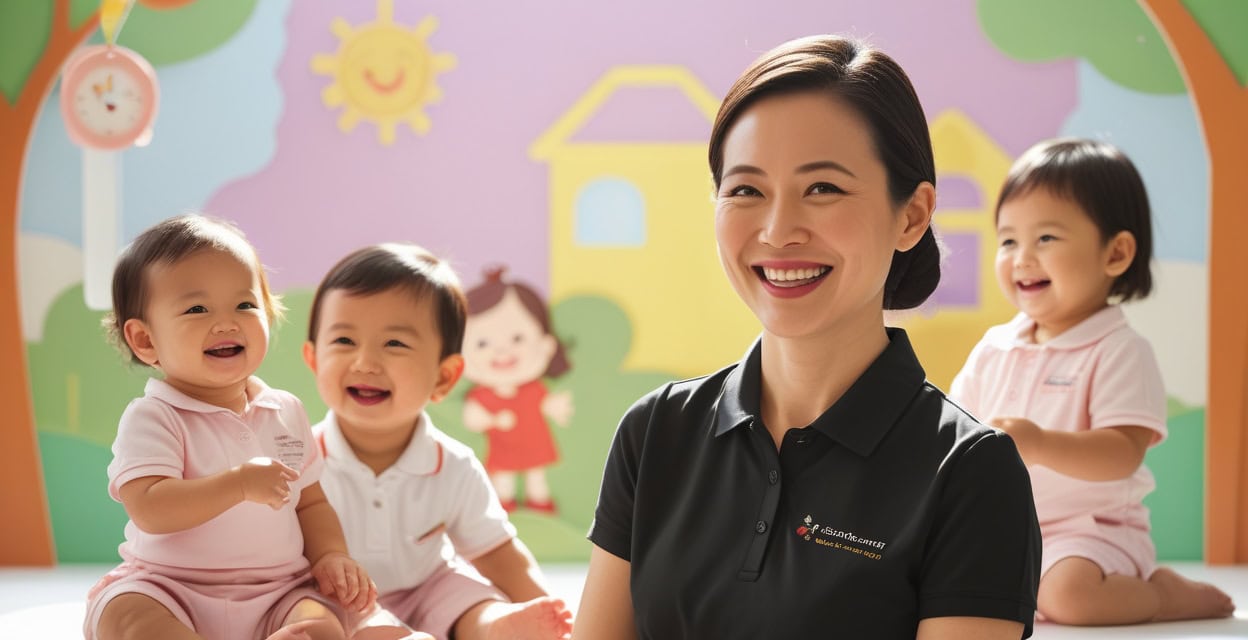
How it works and who it serves

  • Who: Singapore Citizen infants aged 2–18 months, not concurrently enrolled in ECDA‑licensed infant care centres.
  • What: Secure, near‑home childminding in micro‑groups of up to three infants, delivered by trained, background‑checked childminders.
  • When: Weekdays during typical working hours—half‑day (5 hours) or full‑day (10 hours) blocks within 7am–7pm.
  • Where: In the childminder’s home (vetted and set up for safe care) or in EduNanny‑arranged community premises.
  • How: A robust safety framework, attunement‑first pedagogy, and daily communication that respects time, dignity, and family rhythms.

Why childminding matters—now

Why childminding matters—now

Infancy is a period of rapid brain development—millions of neural connections forming every second. A steady, loving relationship with a single caregiver supports secure attachment, reduces stress, and lays the groundwork for lifelong learning. When families can access near‑home, affordable care, parents spend less time commuting and more time engaging with their child’s development. Small, trusted circles of care help a city raise its children well, enriching communities and strengthening the care economy.


Our philosophy and promise to parents and infants

Our philosophy and promise to parents and infants

  • Safety is the floor, not the ceiling. We uphold high standards so your child can pursue joy and discovery with confidence.
  • Attachment is infrastructure. A steady, loving relationship powers all future learning and resilience.
  • Movement, language, and play are the curriculum of life. They are essential, not optional, components of daily care.
  • Families are partners. We listen, adapt, and honour each child’s unique story and strengths.
  • Community is strength. Near‑home care weaves a supportive fabric across Singapore’s neighbourhoods, empowering caregivers and families alike.

How to sign up

How to sign up

  • Visit the EduNanny ECDA Childminding Service page and fill in the enquiry form, or reach out via WhatsApp to begin a conversation.
  • EduNanny Concierge Team responds to understand your needs, location, and preferred schedule.
  • Book a site visit to meet your prospective childminder, review the care environment, and review safety protocols.
  • Confirm placement, complete enrolment, and prepare a gentle transition plan with your childminder.

Conclusion

Conclusion

EduNanny is more than a service; it is a structured, compassionate approach to early care that respects science and soul. By combining ultra‑low infant ratios, secure attachments, safety by design, and a vibrant micro‑curriculum, EduNanny aims to make high‑quality, near‑home infant care affordable and accessible for Singapore families. If you seek trusted care with transparent processes, a nurturing pace, and clear pathways for your child’s development, consider EduNanny as part of your family’s care ecosystem.

Learn more: EduNanny.com and Childminding.EduNanny.com

Enquire and enrol: https://edunanny.com/edunanny-ecda-childminding-service/

[#InfantCareSingapore, #EduNanny, #ECDA, #NearHomeCare, #EarlyChildhoodDevelopment]
edunanny-0fe6a13c-557b-47c8-aa0f-cd19d4236e01
August 23, 2025

Tiny Pods Big Futures EduNanny Near Home Infant Pods Pilot Transforming Singapore First Thousand Days 1 December 2024 to 31 December 2027

Introduction

Introduction

Thank you for welcoming EduNanny into your neighborhoods and into the first thousand days of your child’s life. Those early days are not a blur to us—they are the blueprint. They are where attachment becomes confidence, where safety becomes curiosity, and where daily routines become the quiet architecture of a lifelong love of learning. EduNanny by BUTLER was appointed by ECDA to serve in Singapore’s national Childminding Pilot (1 December 2024 to 31 December 2027), and we approach that responsibility with both science and heart.

This article expands on the principles, practices, and practicalities you can use to navigate early care with confidence. It translates a bold vision into actionable steps, so families, caregivers, and communities can partner effectively for every infant’s development.


EduNanny Infant Childminding: What It Is

EduNanny Infant Childminding: What It Is

EduNanny delivers relationship-rich infant care in tiny pods of one to three infants near your home, Monday to Friday, 7am to 7pm. Care runs in two settings:

  • Home-based care: a calm, familiar environment purposely prepared for infants.
  • Community-based pods: modern, centre-style layouts inside community spaces that feel open, clean, and predictable.

All EduNanny childminders are certified, background-checked, and trained in infant first aid and basic infant care before caring for any infant. Under the ECDA Pilot, SingaporeCitizen infants aged 2 to 18 months who are not concurrently enrolled in ECDA-licensed infant care centres may participate. Parents choose half-day (5-hour) or full-day (10-hour) blocks, with fees before GST at $16.50 (half-day) and $33.00 (full-day), subsidised during typical working hours. CDA/Baby Bonus funds can be used for these subsidised hours.


How EduNanny Works: Pod-based Care Near Home

How EduNanny Works: Pod-based Care Near Home

Two Premise Types

  • Home-based care: intimate, familiar surroundings with a caregiver who builds a private attachment with your infant.
  • Community-based pods: shared spaces designed for safety, predictability, and social learning among a small group.

Key Staffing and Safety Principles

  • Ultra low ratios: 1:3 to ensure constant, responsive attention and individualized care.
  • Background checks and training: all caregivers complete infant-first-aid, hygiene, and safety training; ECDA checks apply to caregivers with access to the home for home-based care support.
  • Transparent monitoring: CCTV in community pods (as required). For home-based care, opt-in caregiving-area CCTV during care hours is available to families, with privacy and written agreements in place.

How to choose between these options: consider travel time, your infant’s temperament, and your family’s daily rhythms. Community pods can offer social exposure and structured spaces, while home-based care can provide deeper familial familiarity and quiet routines.


Safety by Design: Systems That Prevent, Detect, and Protect

Safety by Design: Systems That Prevent, Detect, and Protect

EduNanny emphasizes practical safety embedded in daily life:

  • Prepared environments: covered outlets, anchored furniture, gated play areas, safe flooring, age-appropriate toys, and safe-sleep practices with individual sleep surfaces and no loose bedding.
  • Hygiene and training: mandatory infant-first-aid certification, hygiene protocols, and food safety practices for all caregivers.
  • Transparent monitoring: community pods use CCTVs; home-based care offers privacy-respecting, opt-in monitoring in caregiving areas during care hours.
  • Health protection: a clear no-sick-child policy during care hours with guidance on return-to-care timing.
  • Incident-ready culture: documented handover protocols, medication administration only with written parent instructions, and immediate, transparent incident reporting and learning.

Development as Daily Life: A Living Micro-Curriculum

Development as Daily Life: A Living Micro-Curriculum

Learning happens through daily, meaningful interactions. EduNanny builds a micro-curriculum into ordinary routines:

  • Observation-led planning: caregiver responses are guided by the infant’s signals, interests, and thresholds, following a flexible, developmentally appropriate approach.
  • Sensorimotor learning: tummy time, rolling, supported sitting, cruising, object exploration, and safe, age-appropriate play build motor skills and early cognition.
  • Language and social connection: frequent narration, singing, and responsive pauses; bilingual songs foster vocabulary without pressure.
  • Independence with respect: small choices—such as reaching for a bottle or choosing between two toys—support confidence and agency.
  • Documentation that matters: brief, thoughtful updates on sleep, feeding, mood, and milestones give you meaningful context about your infant’s day.

Joy and the Emotional Climate: Happiness as a Safety Feature

Joy and the Emotional Climate: Happiness as a Safety Feature

Emotional climate shapes development:

  • Calm is contagious: steady transitions, predictable routines, and mindful pacing reduce stress.
  • Playful learning: gentle, purposeful play—treasure baskets, sensory scarves, soft music—fosters joy without overstimulation.
  • Boundaries with warmth: predictable routines and gentle limits support safety and fairness in tiny groups.
  • Parent peace of mind: transparent communication and respectful partnerships reinforce trust in the infant’s world.

A Civic Promise: Childminding as Public Good

A Civic Promise: Childminding as Public Good

EduNanny operates within ECDA’s national Childminding Pilot, aligning with national standards while serving neighborhood needs:

  • National initiative, neighborhood scale: up to three infants per caregiver to maintain quality and affordability islandwide.
  • Work-life support: flexible half-day and full-day blocks align with real working lives and reduce commuting burdens.
  • Economic dignity: the program elevates the professional status of trained childminders and raises industry standards.
  • Social trust: oversight, background checks, and clear standards ensure a secure, trusted care ecosystem.
  • A shared standard: practices in tiny pods strengthen the broader early-childhood system and future outcomes for families and communities.

What Parents Receive: The EduNanny Benefits at a Glance

What Parents Receive: The EduNanny Benefits at a Glance

  • Ultra low ratio: maximum 1:3 caregiver-to-infant ratio.
  • Ultra low density pods near home for quieter, healthier days.
  • Certified EduNanny childminders trained in infant care and first aid.
  • Background checks under the ECDA Pilot; for home-based care, checks extend to regular home-access caregivers.
  • CCTV: available in community pods; opt-in home-based CCTV during care hours with privacy safeguards.
  • No sick-child policy protects all infants and staff.
  • National initiative alignment: part of ECDA’s 2024–2027 Pilot with industry standards.
  • Modern, safe layouts: dedicated safe-sleep zones and clean feeding areas.
  • Home-based and community-based options islandwide: Monday to Friday, 7am–7pm.
  • Affordable subsidised hours: $33/day (full-day, 10 hours) or $16.50 (half-day, 5 hours) before GST; CDA/Baby Bonus accepted.
  • Flexible scheduling: choose days per week and blocks to fit your family’s needs.
  • EduNanny by BUTLER: supported by a concierge and operations team for smooth service and rapid responses.

The Signup Process Is Simple

The Signup Process Is Simple

Follow these steps to begin your EduNanny journey:

  • 1) Visit the EduNanny page at edunanny.com/edunanny-ecda-childminding-service/ or inquire via WhatsApp.
  • 2) Our EduNanny Concierge Team will respond, understand your needs, and share nearby options.
  • 3) Confirm an appointment for a site visit—in a community pod or a home-based setting.
  • 4) Enrol. We’ll guide you through eligibility, schedules, and CDA/Baby Bonus payment setup for subsidised hours.

A Brief Explainer on Eligibility and Fees

A Brief Explainer on Eligibility and Fees

Practical guidance to avoid guesswork:

  • Who: Singapore Citizen infants, 2 to 18 months old, not concurrently enrolled in ECDA-licensed infant care centres.
  • When: Monday to Friday, 7am–7pm (excluding public holidays).
  • Where: Your childminder’s home or a nearby community pod.
  • How much: Subsidised hours are $16.50 for half-day (5 hours) or $33.00 for full-day (10 hours), before GST. CDA/Baby Bonus can be used; other hours may be arranged at regular rates.

Why Small Pods Build Big Futures

Why Small Pods Build Big Futures

The first thousand days are not about rushing milestones; they are about layering trust. With one caring adult, three infants, and predictable days, neurodevelopment has room to breathe. When an infant knows who will comfort them, how their day will flow, and what their world smells, sounds, and feels like, the brain assigns energy to learning instead of guarding. Safety is not merely the absence of harm; it is the presence of steady, responsive care.


Our Philosophy in One Line

Our Philosophy in One Line

Attachment first, safety always, development everywhere, joy every day.


Closing: Why Childminding Matters—Who, What, When, Where, and How

Closing: Why Childminding Matters—Who, What, When, Where, and How

EduNanny envisions a safe, warm, expertly guided infant care landscape that supports families and strengthens communities. Here’s a practical takeaway for families considering enrollment:

  • Who: Families across Singapore seeking safe, nurturing care and childminders prepared to serve with heart and skill.
  • What: Tiny, ultra low-ratio pods that convert everyday care into secure attachment and gentle learning experiences.
  • When: ECDA’s Pilot from 1 December 2024 to 31 December 2027, with operations Monday to Friday, 7am–7pm.
  • Where: In your neighborhood—childminders’ homes and community-based pods islandwide.
  • How: ECDA standards, training, background checks, CCTV in community pods, optional home-based CCTV during care hours, and a transparent parent-provider partnership.

Practical Routines: A Sample Day in an EduNanny Pod

Practical Routines: A Sample Day in an EduNanny Pod

Use this sample timetable as a guide to discuss daily flow with your caregiver. Times are flexible to suit your family’s needs and infant cues.

  • 7:00–7:30: Arrival, warm greeting, diaper change, and calm settling in.
  • 7:30–9:00: Breakfast and free play; caregiver observes cues for feeding, sleep readiness, and interest in exploring.
  • 9:00–9:30: Tummy time and sensorimotor play; respond to motor readiness and comfort.
  • 9:30–11:00: Structured activity block: song, simple sign language, and language-rich interactive play.
  • 11:00–11:30: Lunch or bottle, with gentle self-feeding opportunities when appropriate.
  • 11:30–13:00: Nap/quiet time with a predictable routine and soothing environment.
  • 13:00–15:00: Outdoor time or indoor gross-motor play; exploration with safe equipment.
  • 15:00–16:00: Snack, gentle story/narration, and social interaction with peers.
  • 16:00–18:00: Free play, close observation notes, and transition to pick-up routines.
  • 18:00–19:00: End-of-day handover, feeding cues, and parental briefing for the next day.

Common Questions: Quick Guidance for Parents

Common Questions: Quick Guidance for Parents

  • What happens if my child is sick? We pause care, provide guidance on return-to-care timing, and ensure caregivers follow health protocols to protect everyone.
  • How are updates communicated? Expect brief, thoughtful updates on sleep, feeding, mood, and milestones, with context to help you understand your infant’s day.
  • Can I visit before enrolling? Yes. Site visits in either a community pod or home-based setting help you observe routines and ask questions.
  • What if I need irregular hours? EdUNanny offers flexible scheduling with options for the number of days per week and blocks to fit your family’s needs.
  • How is safety balanced with privacy? CCTV in community pods is required and opt-in for home-based care; written agreements ensure privacy and dignity are protected.

Conclusion: A Reflective Ending and Call to Action

Conclusion: A Reflective Ending and Call to Action

The first thousand days deserve a standard of care that is both human and extraordinary. EduNanny invites you to partner in building a future where infants feel seen, safe, and inspired to learn every day. If you’re ready to explore how tiny pods can fit into your neighborhood and your family’s rhythm, begin your journey with EduNanny today by visiting the EduNanny site or contacting our Concierge Team for a personalized options briefing. Together, we will raise Singapore’s future with safety, joy, and dignity—one tiny pod at a time.

Begin your journey: visit edunanny.com or the ECDA-supported page at edunanny.com/edunanny-ecda-childminding-service/ today. Our Concierge Team will walk beside you—from enquiry, to site visit, to enrolment.

[#InfantCareSingapore, #UltraLowRatio, #EarlyChildhoodDevelopment, #ParentPartnership, #ECDAPilot]
edunanny-fbc87642-7fc7-487f-a137-66568078daa7
August 23, 2025

Tiny Circles, Bold Futures EduNanny Ultra Low Ratio Near Home Infant Pods Transform Singapore First Thousand Days Dec 2024 to Dec 2027

Introduction

Introduction

Thank you for gathering your hearts and hopes in one place. This article expands on the spirit of the Distinguished parents, community partners, and guardians of Singapore’s future. It translates a mission to a practice you can live with every day: the first thousand days deserve the best we can possibly offer—safety that never blinks, care that truly listens, and learning that begins, as Maria Montessori taught us, with respect for the child’s innate curiosity. We carry the steady science of Piaget and Vygotsky, the warmth of Bowlby’s attachment, and Emmi Pikler’s trust in free movement into everyday moments—bottle by bottle, nap by nap, cuddle by cuddle.


About EduNanny Infant Childminding Service

About EduNanny Infant Childminding Service

EduNanny by BUTLER is an appointed operator under the ECDA Childminding Pilot (1 December 2024 to 31 December 2027). We serve Singapore Citizen infants aged 2 to 18 months, Mondays to Fridays, 7am to 7pm, in ultra-low-density micro-pods of one to three infants. Our service is islandwide in both home-based and centre/community-based premises, designed for convenience near where families actually live and work.

With EduNanny, infant care becomes both personal and public-spirited: the intimacy of a known childminder and the confidence of a national standard. It’s a civic promise expressed through small circles of care, grounded in rigorous safety, and delivered with a pedagogical soul.


Why EduNanny makes infantcare and childminding great in Singapore

Why EduNanny makes infantcare and childminding great in Singapore

  • Close: Near-home options reduce commute stress, protect sleep, and anchor routines for infants and parents.
  • Clear: Transparent policies, CCTV in community spaces (and offered in home pods where consent is given for caregiving zones and care hours), and daily updates create trust.
  • Consistent: An ultra-low 1:3 ratio means one childminder forms a reliable, attuned bond with up to three infants at a time—an evidence-based foundation for secure attachment, language growth, and emotional regulation.

Four pillars that set EduNanny apart

Four pillars that set EduNanny apart

1) The Attuned Care Pedagogy: Where tiny cues shape big futures

  • Attachment as curriculum: Guided by Bowlby and Erikson, we prioritise a secure base—predictable routines, warm eye contact, and “serve-and-return” interactions that wire the brain for trust and curiosity.
  • Autonomy with dignity: Inspired by Montessori and Pikler, we prepare environments that allow free movement, open-ended play, and respectful caregiving. We narrate the day—“I’m lifting you now”—building language and agency from the start.
  • Culturally fluent learning: Songs, stories, and sensorial materials echo our multilingual reality. We honour family practices while ensuring developmental opportunities are equitable and inclusive.
  • Observation-led planning: Childminders document micro-milestones—grasp, babble, roll, pull-to-stand—and adjust experiences to meet each infant’s zone of proximal development (Vygotsky) with just-right scaffolds.

2) Safety as an Everyday Architecture: Designed, trained, and verified

  • Ultra low density, ultra low ratio: One childminder to a maximum of three infants reduces risk, supports vigilant supervision, and enables unhurried, hygienic care.
  • Certified and background-checked: ECDA conducts background checks on our childminders and relevant household members for home-based care. EduNanny adds rigorous interviews, reference checks, and site suitability assessments.
  • Mandatory training and drills: Infant first aid, safe sleep, food safety, choking response, allergy protocols, and incident management—rehearsed and refreshed.
  • Environment by design: Anchored furniture; covered sockets; hazard sweeps; safe sleep (firm mattress, supine sleep, no loose items); pram and car-seat readiness; hygienic bottle protocols; toy sanitation cycles.
  • No Sick Child Policy: To protect every pod, we operate a strict no-sick-child policy for contagious symptoms, with clear return-to-care guidance.
  • CCTV and transparency: CCTV is installed in community premises and offered in caregiving zones of home-based locations with consent during care hours for accountability, training feedback, and peace of mind.
  • Clear incident pathways: Documented reporting procedures, time-stamped communication, and collaborative resolution with parents and the operator—swift, transparent, and fair.

3) Development and Joy: What infants learn when the world is well-arranged

  • Rhythm of the day: Predictability builds security. We follow an eat–play–sleep cadence synced to each infant’s cues and developmental stage. Gentle transitions reduce cortisol spikes, enhancing learning readiness.
  • Language blossoms: We tune to each infant’s babble with warm back-and-forth, label feelings and actions, and integrate nursery rhymes and bilingual routines—powerful for neural growth.
  • Motor freedom: Plenty of floor time for rolling, creeping, and cruising, with safe challenge zones that build coordination and confidence. We never rush milestones; we invite them.
  • Sensory literacy: Natural textures, music, and light exploration—calm is a learning tool. We curate stimulation to avoid overwhelm and protect quality sleep.
  • Parent partnership: Daily summaries, photos where permitted, and milestone notes turn care into a shared curriculum. When home and pod sing the same song, development accelerates.

4) The Purpose of Childminding: A civic fabric woven small and strong

  • A national initiative: Under the ECDA Childminding Pilot, we deliver a public good—affordable, reliable care during working hours, islandwide, with standards that lift safety and trust.
  • Affordability with dignity: Government-subsidised blocks—half-day (5 hours) at $16.50 before GST; full-day (10 hours) at $33.00 before GST—payable via Child Development Account (CDA/Baby Bonus) during subsidised hours, Monday to Friday, 7am–7pm (excluding public holidays).
  • Centre-based and home-based choice: Modern layouts in community settings and vetted home environments expand access, maintain ultra-low ratios, and keep care close to where families live.
  • Maximum employment mandate: By professionalising neighbourhood childminding, we create dignified jobs, uplift skills, and strengthen local support networks—care for infants and opportunity for adults, in the same policy breath.

What you can expect with EduNanny

What you can expect with EduNanny

  • Ultra Low Density, Ultra Low Ratio: 1:3 care for up to three infants per childminder.
  • CCTV Provided: In community premises; offered for home pods with consent during care hours.
  • Certified EduNanny Childminders: Fully trained, background-checked, and supported by ongoing professional development.
  • No Sick Child Policy: Protects pods and keeps care consistent for families.
  • National Social Initiative: Governed under the ECDA Childminding Pilot for reliability and trust.
  • Centre-Based and Home-Based Options: Modern, safe layouts that fit family needs.
  • Islandwide Convenience: Near-home distance advantages to support routines and sleep.
  • Hours of Operation: Monday to Friday, 7am–7pm (excluding public holidays).
  • Affordability: From $33/day for full-day subsidised hours; $16.50 half-day (fees before GST).
  • Subsidy Mechanisms: Fees payable via CDA/Baby Bonus during subsidised care hours.
  • Transparent Quality Systems: Incident protocols, hygiene audits, sleep safety checks, developmental observations.
  • Educational Innovation: Thoughtful CCTV use, proactive parent communication, and continuous training.
  • Attachment-First Micro-Curriculum: A living framework designed for the first thousand days.

An explainer, in Singapore’s context

An explainer, in Singapore’s context

Singapore’s genius lies in turning shared values into everyday infrastructure. EduNanny does this for infancy by building tiny, trusted circles close to home. Rather than one-size-fits-all rooms and long commutes, we scale what babies actually need—time, presence, and responsive hands—at a national level. By braiding safety, pedagogy, and affordability, we extend the nation’s commitment to families into the most delicate hours of a child’s life.


The promise behind the price

The promise behind the price

At $33.00 for a 10-hour day and $16.50 for a 5-hour day (before GST), subsidised during typical working hours, families receive care that is safer because it is smaller, and more developmental because it is calmer. This is how we reconcile excellence with access: a low-ratio, high-trust model that remains affordable and nearby.


Who, what, when, where, and how childminding matters

Who, what, when, where, and how childminding matters

  • Who: Singapore Citizen infants aged 2 to 18 months, parents seeking reliability and warmth, and childminders who want to do their life’s best work in their own communities.
  • What: Ultra-low-ratio childminding delivered in vetted home and community spaces, grounded in evidence-based attachment and development practices, with safety engineered into the environment.
  • When: Mondays to Fridays, 7am to 7pm, in half-day or full-day subsidised blocks, during the ECDA Pilot (1 Dec 2024 to 31 Dec 2027).
  • Where: Islandwide, near home and heart—so routines are preserved and family life breathes easier.
  • How: Through rigorous selection and training, background checks, safe design, clear protocols, appropriate CCTV, and a living micro-curriculum that meets each infant where they are.

The philosophy and purpose of EduNanny

The philosophy and purpose of EduNanny

We believe infants thrive when adults move at infant speed—present, patient, and precise. Safety is love made visible: in ratios, in routines, in the way a bottle is checked, a cot is cleared, and a cry is answered. We believe affordability should never mean compromise, that transparency is the glue of trust, and that the dignity of work for childminders and the dignity of care for infants are one and the same public mission.

Above all, we believe every tiny circle of care can change the arc of a life. In each pod, an infant meets a world that is safe and responsive; a parent finds peace of mind; and a childminder inhabits a profession with standards, pride, and purpose. This is how nations are quietly cradled—one small, excellent routine at a time.


How to sign up

How to sign up

  • Visit the EduNanny sign-up pages and fill the enquiry form.
  • Or enquire via WhatsApp; our EduNanny Concierge Team will respond promptly.
  • We will confirm an appointment for a site visit (home-based or community-based) and introduce your shortlisted, certified childminder.
  • Enrol, finalise your schedule (half-day or full-day blocks), complete CDA payment setup for subsidised hours, and begin care.

A final word

A final word

For all our talk of frameworks and pilots, the most important things remain humble. A clean cot. A steady hand. A laugh shared over a spoon of pureed pear. EduNanny was built to honour those moments—by making them safer, nearer, and more beautifully human.

To every parent: your hopes are our blueprint. To every childminder: your craft is our pride. To every infant: your first thousand days are our solemn promise.

Thank you. Let’s begin where futures truly start—together, in small circles of care that never stop believing in what a baby can become. EduNanny by BUTLER. Excellence, near home, for Singapore’s youngest citizens.


Conclusion

Conclusion

EduNanny offers a practical, evidence-informed approach to infant care that blends attachment theory with real-world safety, pedagogy, and affordability. By operating at ultra-low ratios, ensuring rigorous training, and keeping the family at the center of a transparent, community-based model, we transform the first thousand days into a shared national project—one that nurtures resilience, language development, and secure attachment. If you’re a parent, caregiver, or community partner, consider how a small, well-supported care circle could flatten stress, amplify trust, and accelerate your child’s flourishing. Ready to explore near-home care that truly respects your child’s pace? Begin your EduNanny journey today and join a national movement built on compassionate precision and everyday excellence.

Call to action: Explore the enquiry pages, schedule a site visit, and begin the conversation about an EduNanny micro-curriculum tailored to your infant’s first thousand days.

[#EduNannySingapore, #UltraLowRatioCare, #InfantDevelopment, #ECDApilot, #ChildmindingSingapore]
edunanny-1d3ec7ac-0376-4cd7-b063-a87d72f337e5
August 23, 2025

Near Home 1 to 3 Pods The Public Infrastructure of Safe Joyful Infancy in Singapore by EduNanny

EduNanny Infant Childminding Service: Elevating Infancy in Singapore

EduNanny Infant Childminding Service: Elevating Infancy in Singapore

Good evenings to parents, caregivers, and partners in the promise of tomorrow. EduNanny is built to cradle the beginning so the beginning can carry a life. This article expands on how EduNanny delivers expert, compassionate infant care in Singapore—through ultra-low-density pods, a robust safety system, and a pedagogy of warmth, presence, and purposeful learning. Our aim is practical clarity: how to choose care, what to expect, and how to participate in a public-spirited approach to early childhood that treats infants as competent partners in care.


EduNanny at a Glance: What We Do and Why It Matters

EduNanny at a Glance: What We Do and Why It Matters

  • Ultra low-density pods: one childminder to a maximum of three infants, designed to maximize attunement, responsiveness, and safety.
  • Near-home access: care near families’ homes in community spaces and childminders’ homes across Singapore, saving time, reducing stress, and boosting continuity.
  • Heritage-infused practice: a synthesis of Montessori’s prepared environment, Pikler’s respect for natural movement, Bowlby’s secure attachment, Vygotsky’s scaffolded learning, Piaget’s discovery, Erikson’s trust, and Froebel’s joyful play.
  • Safety, training, accountability: a system built for reliability—background checks, continuous training, and transparent governance to ensure every infant is known, seen, and cherished.

Four Truths that Frame Our Work

Four Truths that Frame Our Work

1) Attachment as Public Infrastructure

John Bowlby showed that secure attachment is a child’s first passport to the world. EduNanny operationalises attachment through a primary caregiver model and a continuity of routines. The caregiver’s predictable feeding, napping, and diapering create consistency. Our practice of “serve‑and‑return” interactions—warm eye contact, responsive conversational turns, and naming feelings—helps regulate stress hormones and builds a stable nervous system. We regard trust as a national-building task: when infants experience trust, they grow into confident, resilient citizens.

2) The 1:3 Pedagogy of Presence

In small groups, presence matters. Emmi Pikler reminds us that infants flourish when not rushed or overstimulated. Our approach blends:

  • Prepared environments inspired by Montessori: low shelves, simple materials, and ample floor space for safe exploration.
  • Gentle scaffolding (Vygotsky): engaging in the infant’s zone of proximal development—narrating care, singing through routines, and pausing for infant-led moments.
  • Health advantages of low density: fewer contacts, calmer soundscapes, clearer hygiene, and deeper attunement.

3) Safety as a System, Not a Slogan

Safety is designed end-to-end, not as a slogan. Components include:

  • Screening and training: ECDA conducts background checks on childminders and household members; EduNanny ensures mandatory infant first aid, basic infant care, and food safety training with ongoing supervision and refreshers.
  • Safe sleep and infant well-being: back-sleep positioning, age-appropriate sleep spaces, and documented checks.
  • Infection control and hygiene: No Sick Child Policy, daily sanitation logs, routine disinfection of toys and surfaces, hand hygiene rituals, and clear medication SOPs with parental instructions.
  • Environment and visibility: hazard assessments, safe feeding practices, secure transport, and CCTV at community sites; home-based CCTV offered during caregiving hours with consent, balancing transparency and privacy.

4) Joy as Curriculum

Piaget taught that infants learn by doing. We cultivate micro-moments where joy is the teacher:

  • Language-rich caregiving: narrating care, singing in multiple languages, and following the infant’s gaze and coos, laying the foundation for language in relationships.
  • Movement with agency: unhurried tummy time, safe floor play, and freedom to explore; we avoid unnecessary devices that constrain natural movement.
  • Sensory simplicity: carefully chosen toys—silks, rattles, mirrors, books—rotated to sustain curiosity without overwhelm.
  • Culture and belonging: local songs, gentle festival celebrations, and everyday rituals that affirm a sense of home and belonging in Singapore.

What Parents Receive with EduNanny

What Parents Receive with EduNanny

  • Ultra-low ratio and density: a maximum 1:3 caregiver-to-infant ratio.
  • Certified, background-checked childminders: ECDA-aligned screening, infant first aid, basic infant care, and food safety training.
  • CCTV for transparency: installed at community sites; home-based CCTV available during caregiving hours with consent.
  • No Sick Child Policy: a proactive approach to protecting infants and staff, with clear medication and incident protocols.
  • Public-initiative alignment: ECDA Childminding Pilot (Dec 2024–Dec 2027) to expand safe, reliable, and affordable care across Singapore.
  • Affordability before GST: half-day (5 hours) at $16.50 and full-day (10 hours) at $33.00, Monday–Friday, 7am–7pm; CDA monies accepted for subsidised hours.
  • Near-home convenience: care delivered in community spaces and home premises islandwide; modern, centre-inspired layouts for visibility, hygiene, and calm.
  • Quality oversight and family support: EduNanny by BUTLER operations with daily communication and developmental notes; a family concierge to assist with questions and transitions.
  • Career and social mission: a commitment to respectful, professional childminding as a meaningful occupation with training and fair work standards.
  • Service options within the Pilot: home-based childminding and community micro-sites; if EduNanny offers centre-based services outside the Pilot, standards remain aligned.
  • Clear access to information: find us at EduNanny.com and Childminding.EduNanny.com.

Eligibility and Hours: The Pilot Landscape

Eligibility and Hours: The Pilot Landscape

For the ECDA Childminding Pilot, eligibility and hours are designed to align with family needs and public policy:

  • Eligible infants: Singapore Citizens aged 2 to 18 months; not concurrently enrolled in ECDA-licensed infant care centres.
  • Hours and subsidies: Monday–Friday, 7am–7pm; choose half-day (5 hours) or full-day (10 hours) blocks; $16.50 or $33.00 before GST; CDA monies accepted for subsidised hours.
  • Extended needs: for arrangements beyond subsidised hours, speak with our team; operator regular rates apply.

The Signup Process: Simple and Personal

The Signup Process: Simple and Personal

Join EduNanny with a straightforward, human-centered process:

1) Visit the registration page to begin: https://edunanny.com/edunanny-ecda-childminding-service/ or inquire via the WhatsApp option on the same page.

2) Our EduNanny Concierge Team responds promptly to understand your location, needs, and schedule.

3) Schedule a site visit—meet the childminder, view the environment, and observe care routines in action (home-based or community pod).

4) Enrol and onboard: complete the onboarding pack, select days/blocks, and start with a gentle settling-in plan tailored to your infant.


Why Childminding Matters: The Who, What, When, Where, and How

Why Childminding Matters: The Who, What, When, Where, and How

  • Who: Infants are not small adults; they are relationship-shaped beings. The primary caregiver acts as the “curriculum,” and the infant becomes a capable partner in daily care.
  • What: Childminding is professionalised, respectful care that expands a family’s circle of security rather than outsourcing love.
  • When: The first thousand days are a critical window for brain architecture; time, consistency, and presence matter.
  • Where: Near home and within community spaces to keep families’ energy for meaningful connection.
  • How: Ultra-low ratios, prepared environments, rigorous safety systems, and a pedagogy of warmth and wonder.

Our Philosophy and Purpose

Our Philosophy and Purpose

  • Safety is the floor of dignity.
  • Attachment powers development and resilience.
  • Joy is evidence that learning is alive.
  • Professional childminders are civic assets deserving training, respect, and fair work.
  • Families deserve affordability without compromise.

To Parents, Childminders, and Singapore

To Parents, Childminders, and Singapore

From the first handover to the first confident smile, EduNanny is committed to being near home, near heart, and within reach. You deserve to entrust your child to someone who understands the miracle of infancy; your childminder deserves a respectful, professional vocation; and Singapore deserves a system that treats early care as vital public infrastructure.


Conclusion: Your Next Step Toward Thoughtful Infant Care

Conclusion: Your Next Step Toward Thoughtful Infant Care

EduNanny invites you to explore near-home, near-heart infant care that combines scientific insight with human dignity. Visit the EduNanny platform to learn more, arrange a site visit, or begin enrollment. Your family’s everyday moments of calm, trust, and discovery can begin today with a plan that respects infants as capable learners and partners in care.

Visit https://edunanny.com/edunanny-ecda-childminding-service/ to register, or explore the offerings and talk to our Concierge Team. For inquiries, you can also use the WhatsApp option on the same page to get prompt responses and set up a site visit.

SEO keywords: [#infantcare, #Singapore, #ECDA, #childminding, #EduNanny]


edunanny-86548eec-e5e5-4605-9412-222969ef3e24
August 23, 2025

From Handover to Hope EduNanny Near Home 1 to 3 Infant Pods December 2024 to December 2027 A Living Pedagogy for Singapore First Thousand Days

Introduction: EduNanny in Singapore’s Childminding Pilot

Introduction: EduNanny in Singapore’s Childminding Pilot

Thank you for gathering—physically and in spirit—around the most important project a society can undertake: the care of its infants. EduNanny by BUTLER is an ECDA-appointed operator participating in Singapore’s three-year Childminding Pilot (1 December 2024 to 31 December 2027). We exist to make infant care near home safe, joyful, dignified, and attainable. If the first thousand days are the quiet architecture of a life, then childminding is the scaffolding that helps that architecture rise—steady, secure, and beautiful.

This article expands on our living pedagogy and practical framework, offering parents concrete guidance, actionable routines, and EduNanny insight drawn from our near-home, ultra low-ratio model. Our approach weaves Montessori’s respect, Pikler’s gentle autonomy, Bowlby’s secure attachment, and Vygotsky’s social learning into everyday rituals families can trust.


EduNanny Philosophy: A Living Pedagogy for Infants

EduNanny Philosophy: A Living Pedagogy for Infants

The Attuned Day: Care as Curriculum

An infant’s day is not scheduled around activities; it is woven from relationships. We organize care around four gentle cycles—Soothe, Nourish, Explore, Rest—so that every essential need becomes a learning moment.

  • Soothe: Responsive, predictable comfort. We practise the 3R approach—Respectful, Responsive, Reciprocal—so infants are not “managed” but met.
  • Nourish: Unhurried feeding with attentive pacing, eye contact, and language, building trust and oral-motor development.
  • Explore: Floor-based play for gross motor progress, safe sensory setups, open-ended objects for cause-and-effect, early book-sharing, and song.
  • Rest: Protected nap windows in low-stimulation environments. Rest is the scaffold of learning.

The 1:3 ratio allows us to notice micro-signals—a turned head before a cry, a tiny fist unclenching—and to respond before distress escalates. That responsiveness is the heart of early pedagogy.

Safety as a System, Not a Slogan

  • Environment: Ultra low-density layouts, anchored furniture, safety-gated zones, daily hazard sweeps, and sanitisation routines that prioritise tiny hands and big curiosity.
  • Practice: Trained childminders in infant first aid, choking response, safe sleep, food safety, and hygiene. No Sick Child policy to protect pods from contagion.
  • Visibility: CCTV in community sites; optional caregiving-zone CCTV in home settings during hours of care, by mutual consent; timestamped incident reporting and parent updates.
  • Accountability: ECDA background checks on childminders and household members with regular access; clear incident protocols; audit trails; and removal from the pilot for any breach of standards.

Development That Is Real, Not Rushed

Infants thrive on attunement, not acceleration. We design experiences around authentic development milestones.

  • Motor: Plenty of supervised floor time and open space for rolling, reaching, crawling, and cruising—no devices that restrict movement.
  • Language: Constant warm narration, sing-alongs, nursery rhymes, finger plays, and book rituals that build phonological awareness and secure attention.
  • Social-Emotional: Primary childminder assignments for each infant, gentle transition rituals, and predictable micro-routines to build secure-base behaviour.
  • Cognition: Object permanence games, cause-and-effect play, and simple, repeated experiences that wire attention and memory.
  • Documentation: Brief daily notes, photos (with consent), and monthly developmental snapshots—so parents see what we see and we align on goals.

Joy as the Safest Place in the Room

  • The Hello: Warm, consistent greetings, familiar voices, and named handovers to reduce cortisol at drop-off.
  • The Rhythm: Pods observe infants’ natural tempos; days flow around cues, not schedules.
  • The Close: Gentle reunions and quick debriefs with moments of pride—“Today your child reached for a book and waited for the page turn.”

Joy is not an add-on; it is a measurable, protective practice that supports secure attachment and lifelong learning.

Childminding with Civic Purpose

  • Public Good: Under the ECDA pilot, childminding becomes a dignified form of neighbourhood care and a reliable public service.
  • Family Resilience: Near-home care reduces commute stress and helps infants stay connected to their communities.
  • Public Standards: The pilot harmonises affordability, safety, and quality with national oversight, elevating the standard of near-home infant care.

Practical Framework: Where, When, Who, What, and How

Practical Framework: Where, When, Who, What, and How

  • Where: Home-based pods and community-based premises designed for ultra low density and modern safety layouts, islandwide.
  • When: Monday to Friday, 7am to 7pm, excluding public holidays. Choose half-day (5 hours) or full-day (10 hours) blocks.
  • Who: Singapore Citizen infants aged 2 to 18 months not concurrently enrolled in ECDA-licensed infant care centres. Each pod cares for 1 to 3 infants at a time.
  • What: Certified EduNanny childminders delivering a living curriculum of attachment, care routines, and play-based exploration—supported by CCTV in community spaces and optional caregiving-zone CCTV in homes.
  • How: ECDA subsidies make services affordable at $16.50 for half-day and $33.00 for full-day before GST; CDA/Baby Bonus can be used for subsidised hours. Additional care beyond subsidised hours can be discussed at regular rates.

The EduNanny Advantage at a Glance

The EduNanny Advantage at a Glance

  • Ultra Low Ratio 1:3 and Ultra Low Density environments
  • CCTV provided in community spaces; optional in home caregiving zones by agreement
  • Certified and background-checked childminders; household checks for home-based care
  • No Sick Child policy during care hours to protect the pod
  • National initiative under ECDA Childminding Pilot, 2024–2027
  • Centre-based (community) and home-based options; islandwide convenience
  • Modern layouts, safe sleep practice, and calm design
  • Affordable from $33/day (10 hours) and $16.50/half-day (5 hours) before GST; CDA/Baby Bonus accepted
  • Monday–Friday, 7am–7pm flexibility
  • EduNanny Concierge support and site visits before enrolment
  • A living pedagogy that treats care as curriculum and joy as a safety practice

A Day in an EduNanny Pod: What It Feels Like

A Day in an EduNanny Pod: What It Feels Like

Imagine a quiet, sunlit room with soft mats and a few open-ended objects. Your child’s primary childminder greets you by name and reviews overnight sleep, feeds, and new cues. A familiar book waits for your child—continuity that respects attachment. After a calm feed, there is unhurried floor time with gentle narration and songs. A protected nap follows with regular checks. Before pick-up, a quick wind-down and a short, specific parent report: “Today she turned toward her name and gripped the ring with both hands.” The room is simple; the care is sophisticated; the feeling is trust.


Common Questions from Parents

Common Questions from Parents

Will my child be safe?

Yes. Safety is systemic: training, environment, hygiene, visibility, and national oversight. Community premises have CCTV; home-based caregiving zones can be camera-enabled during care hours by consent.

Will my child be known?

Yes. The 1:3 ratio and primary childminder model ensure deep familiarity with your child’s cues and rhythms, supported by regular documentation and parent updates.

Will it be affordable and flexible?

Yes. ECDA-subsidised blocks, weekday hours, and the use of CDA/Baby Bonus reduce costs while preserving quality. Our concierge team helps match you to a pod near you and guides you through subsidies and transition planning.


Sign-Up and Onboarding: How to Enrol with EduNanny

Sign-Up and Onboarding: How to Enrol with EduNanny

Begin your journey with EduNanny by BUTLER today. Visit the sign-up pages, and let our Concierge guide you through a personalised experience:

  • Visit https://edunanny.com/edunanny-ecda-childminding-service/ and submit the short form, or enquire via WhatsApp from the same page.
  • Our EduNanny Concierge will respond, understand your needs, and match you with suitable home-based or community-based pods near you.
  • Confirm your site visit to meet the childminder and see the environment.
  • Enrol, choose your blocks (half-day or full-day), and begin with a gentle transition plan.

You can also explore additional information at edunanny.com or the dedicated sign-up page at https://edunanny.com/edunanny-ecda-childminding-service/.


Closing: Why Childminding Matters—Who, What, When, Where, How

Closing: Why Childminding Matters—Who, What, When, Where, How

Childminding is not “informal care.” Under the ECDA pilot, it is a public good delivered locally. It strengthens family resilience, grows dignified neighbourhood caregiving roles, and creates a national standard that makes care near home both reliable and affordable. By integrating a living pedagogy with robust safety systems, EduNanny transforms infant care into a community-wide partnership—one child, one caregiver, one neighbourhood at a time.


Conclusion

Conclusion

EduNanny by BUTLER invites families to experience near-home infant care that respects attachment, fosters early learning, and anchors safety in everyday practice. Our 1:3 ratio, community and home-based options, transparent safety measures, and a concrete day-by-day living curriculum offer a practical path for parents seeking dependable, humane care during the first thousand days. If you are a parent seeking a trusted partner to share in the wonder of your child’s early development, we welcome you to explore EduNanny, meet the EduNanny Concierge, and begin with a transition plan that fits your family’s rhythm. Visit our sign-up pages today to start your journey—near home, near heart.

Visit edunanny.com/edunanny-ecda-childminding-service or edunanny.com, or contact the EduNanny Concierge to arrange a site visit and match you with a suitable pod.

[#earlychildhoodcare, #infantcare, #childminding, #SingaporeECDA, #EduNanny]

edunanny-78dfc763-a4c3-4fa8-8f18-713cb81590e9
August 23, 2025

Near Home 1 to 3 Infant Pods A Living Curriculum for the First Thousand Days in Singapore December 2024 to December 2027

Introduction

Introduction

Welcome to EduNanny Singapore—where the first thousand days are treated as the pivotal foundation of lifelong learning. This long-form article translates a living library of infant care theory into practical, daily acts of care that families can trust. Drawing on the insights of Maria Montessori, Piaget, Vygotsky, Bowlby, Pikler, Froebel, Malaguzzi, Spock, and Erikson, EduNanny’s Infant Childminding Service embodies a near‑home, near‑home approach that respects both science and heart. It is where Singapore’s civic promise meets a baby’s simple need for safety, warmth, and always being seen.


EduNanny Infant Childminding Service: Overview

EduNanny Infant Childminding Service: Overview

EduNanny by BUTLER is honoured to be appointed by ECDA as one of three operators for the national Childminding Pilot for Infants from 1 December 2024 to 31 December 2027. This pilot offers families an affordable, safe, and reliable near‑home infant caregiving option—delivered in small 1-to-3 “pods” at childminders’ homes or in community spaces islandwide, Mondays to Fridays, 7am to 7pm.

  • Ultra‑low ratio care: One trained childminder caring for a maximum of three infants at any time.
  • Near‑home convenience: Care in childminders’ homes and community premises that bring support closer to your doorstep.
  • Affordability with transparency: Government‑subsidised blocks—half‑day (5 hours) at $16.50 and full‑day (10 hours) at $33.00 before GST—within 7am–7pm, Monday to Friday. Parents may use CDA/Baby Bonus for these subsidised hours.
  • Verified safety: ECDA conducts background checks on childminders and, for home‑based services, on household members with regular access; mandatory training includes infant first aid and basic infant care; operators adhere to industry standards.

Three Pillars of Practice

Three Pillars of Practice

1) Small circles, strong bonds

The 1:3 ratio is a promise rather than a number. It enables consistent, serve‑and‑return interactions that support brain development, language acquisition, and emotional security. In these intimate circles, your child’s cues are noticed and answered with warmth and speed. Our attunement‑first approach draws from Bowlby and Pikler: security first, then exploration—so joy becomes both method and milestone.

2) Safety as a system, not a slogan

We build safety through layered practices:

  • People: Certified, background‑checked EduNanny childminders with ongoing coaching and clear incident protocols.
  • Place: Environments are baby‑proofed, hygienic, and designed for visibility, safe exploration, and calm movement.
  • Process and technology: A No Sick Child policy; structured handovers, feeding and sleep logs, and emergency readiness. CCTV is installed in community spaces; CCTV‑enabled options in home settings are available by consent and focused on caregiving areas during hours of care to balance safety and privacy.

3) Development with dignity

Care routines are learning moments grounded in Montessori and Pikler principles. Feeding, diapering, and sleep transitions become respectful dialogues that nurture agency, coordination, and trust. Our living curriculum weaves Vygotsky’s scaffolding and Froebel’s play into daily rhythms—floor time, tummy time, sensory exploration, early songs and stories, and cultural touchpoints reflecting Singapore’s heritage. This is developmentally appropriate care—calm, curious, and coherent.


The Five Topics at the Heart of Our Practice

The Five Topics at the Heart of Our Practice

A. Attachment as the First Curriculum

Skin‑to‑skin contact, predictable routines, and responsive touch form the earliest learning. We design micro‑moments—eye contact at feeding, soft narration during diapering, warm greetings and gentle goodbyes—to strengthen secure attachment that supports attention, emotion regulation, and language growth.

B. Safety Engineering for Everyday Life

We audit environments with a layers‑of‑protection mindset: hazard reduction, hygiene choreography, and line‑of‑sight supervision. The No Sick Child policy protects everyone; if illness arises, we follow immediate parent notification, safe isolation, continuous monitoring, and guidance for next steps—calmly and clearly.

C. The Science of Happy

Joy is a developmental nutrient. We incorporate gentle music, responsive play, and attuned routines to strengthen neural pathways for learning and resilience. Observing each infant’s unique rhythm allows us to tailor the day to their profile—celebrating tiny triumphs like rolling, reaching, babbling, or sitting up. We share growth moments with parents through thoughtful notes and photos within agreed boundaries.

D. The Childminder’s Purpose: Secure Base, Skilled Professional, Community Weaver

A great childminder is an attachment figure, a developmental coach, and a guardian of community trust. EduNanny childminders are coached in ethics, confidentiality, cultural sensitivity, and reflective practice. They partner with parents to align on routines, sleep approaches, feeding preferences, and milestones so the child experiences a coherent world.

E. The Near‑Home Promise

Proximity reduces morning stress, increases parent‑child connection time, and strengthens community trust. With islandwide micro‑pods, high‑quality care is closer to home. In community spaces, layouts support calm exploration and safe rest. In home settings, spaces feel like a warm extension of your family’s care.


Key Benefits of EduNanny

Key Benefits of EduNanny

  • Ultra Low Density, Ultra Low Ratio: A dedicated 1:3 infant ratio for focused attention and safety.
  • CCTV Provided: CCTV installed in community spaces; CCTV‑enabled options for homes by consent, focused on caregiving areas during care hours.
  • Certified EduNanny Childminders: Trained in infant first aid and basic infant care; ongoing coaching and quality oversight.
  • No Sick Child Policy: Thoughtful, consistent protocols to reduce transmission risk and protect all infants.
  • Background Checks and Standards: ECDA checks and adherence to industry standards.
  • National Initiative: Part of the ECDA Childminding Pilot (1 Dec 2024–31 Dec 2027).
  • Quality Systems: Regular audits, logs, and family feedback loops.
  • Home‑Based and Community‑Based: Islandwide distribution with modern, centre‑style community pods and home settings.
  • Affordability: From $33 per full day (10 hours) and $16.50 per half day (5 hours) before GST during subsidised hours; CDA/Baby Bonus accepted.
  • Innovation and Layouts: Calm, safe environments designed for rest, play, and simple daily documentation for families.
  • Availability: Monday to Friday, 7am–7pm, islandwide.
  • National Social Impact: Expanding training and meaningful work for childminders, uplift­ing families and communities.

Eligibility at a Glance

Eligibility at a Glance

  • Singapore Citizen infants, 2 to 18 months old.
  • Not concurrently enrolled in ECDA‑licensed infant care centres.
  • Flexible scheduling in half‑day (5 hours) or full‑day (10 hours) blocks within 7am–7pm, Monday to Friday, excluding public holidays.

How to Sign Up

How to Sign Up

  1. Visit https://edunanny.com/edunanny-ecda-childminding-service/ and fill in the interest form, or enquire via WhatsApp from the page.
  2. EduNanny Concierge Team responds, answers questions, and recommends home‑based or community‑based options near you.
  3. Confirm your appointment for a site visit and meet your prospective childminder.
  4. Enroll, align routines, and begin with a gentle, child‑centred transition plan.

A Concluding Message: Why Childminding Matters—Who, What, When, Where, and How

A Concluding Message: Why Childminding Matters—Who, What, When, Where, and How

Who

Singapore Citizen infants aged 2–18 months; families seeking near‑home care; childminders dedicated to professional, dignity‑based caregiving; and the public agencies and partners safeguarding standards.

What

An attachment‑first, ultra‑low ratio model that turns daily care into a living curriculum—safety, trust, and joyful development.

When

Monday to Friday, 7am–7pm, during the Pilot period from 1 December 2024 to 31 December 2027.

Where

In childminders’ homes and community spaces islandwide—close enough to feel like an extension of home, yet structured to uphold national standards.

How

With certified, background‑checked childminders; robust safety systems; thoughtful policies; modern environments; CCTV in community premises (and CCTV‑enabled options for homes by consent); transparent fees starting from $16.50 half‑day/$33 full‑day (before GST) during subsidised hours; and CDA/Baby Bonus support.

Why

The first thousand days are not a rehearsal; they set the tone for a lifetime. Proximity, affordability, and trust can transform the caregiving experience for families and the developmental trajectory of children. A nation’s future is influenced by how we care for its smallest citizens today.


Conclusion

Conclusion

EduNanny’s philosophy is simple and powerful: presence, pedagogy, and promise. Presence means attuned adults who respond to a baby’s voice; pedagogy means daily care that becomes learning; promise means a public commitment to safety, dignity, and joy near every home. By combining ultra‑low ratio care with near‑home access, EduNanny creates consistent, loving environments where babies thrive, parents feel supported, and communities grow stronger. Join us to cradle beginnings with science and heart—let’s build small circles that lead to big futures.

To start your journey:

EduNanny. Near home, near heart—where safety, joy, and development grow together. EduNanny.com and Childminding.EduNanny.com are your gateways to care you can feel and trust you can see.

SEO keywords: [#EduNanny, #InfantCareSingapore, #NearHomeChildminding, #UltraLowRatio1to3, #ECDAPilot]


edunanny-df1b0e0a-017b-4e06-acc8-7b32ede4783a
August 23, 2025

Cradling a Nation The Near Home 1 to 3 Infant Pods and the First Thousand Days in Singapore

Introduction

Introduction

Good evening, Singapore. This article echoes the spirit of EduNanny as a public promise: that in the first thousand days, safety and joy are not luxuries—they are infrastructure. We invite parents, grandparents, caregivers, neighbours, and the tiny citizens in our arms to imagine infant care as a national endeavour—rigorous, loving, modern, and distinctly Singaporean in its care for the kopitiam of daily life and the promise of public trust.


What is EduNanny?

What is EduNanny?

EduNanny is a childminding movement designed around small, stable circles of care—1 caregiver to 3 infants—delivered near home and across modern centres, with the same standard of excellence whether in a living room, a community space, or a purpose-built infant room. As part of the ECDA Childminding Pilot and a National Social Initiative with a Maximum Employment Mandate, EduNanny elevates caregiving to a respected, well-trained profession. Our model operates Monday to Friday, 7am to 7pm islandwide, offering Centre-Based, Home-Based, and Distance support. We incorporate innovation CCTV for transparent oversight with robust privacy safeguards, and we design spaces that prioritise infant safety, acoustics, light, and movement. Learn more at EduNanny.com and Childminding.EduNanny.com.


Five pillars of our practice

Five pillars of our practice

1) Attunement as the first pedagogy

Infants learn within our present. At EduNanny, routines become the curriculum, and caregiver presence shapes development. Practical applications include:

  • Feeding as co-regulation: paced bottle feeding, responsive cues, consistent caregivers who learn each infant’s hunger and fullness signals.
  • Diapering as conversation: eye contact, narration of actions, gentle touch—building language, trust, and body awareness.
  • Floor time as agency: safe, open spaces with stable routines; no rush to devices or containers; freedom to explore movement and object use.
  • Sleep as sanctuary: predictable rhythms, quiet, dim spaces, and caregivers who recognise each child’s settling signals.

Actionable tips for families: establish a predictable daily rhythm at home—feed, play, nap, and cuddle in a calm, consistent order. Narrate daily routines to help your infant build language and trust. Observe your child’s cues, and partner with your EduNanny provider to adapt the routine as your child grows.

2) Safety as a culture, not a checklist

Safety is woven into every moment and every decision. EduNanny builds safety in layers: environment, people, and process.

  • Environment: modern layouts with clear sightlines, low-VOC materials, soft edges, secured storage, and baby-height hazard checks; controlled acoustics reduce stress.
  • People: trained childminders with infant CPR/First Aid, safe sleep practices (A-B-C: Alone, on their Back, in a Crib), choking-prevention food handling, emergency drills, allergy protocols, and reflective supervision at a 1:3 ratio for vigilance.
  • Process: privacy-respecting CCTV with secure access; real-time digital logs; incident reporting; cleaning, sterilisation, and sun-safe outdoor routines; rigorous handover standards.

Tip for families: ask providers about their safety culture—how they conduct daily risk checks, how they handle a medical incident, and how you receive updates about safety practices.

3) The science of development and the art of happiness

A truly happy infant is regulated, curious, and supported to explore. Our practice blends evidence-based science with everyday joy.

  • Serve-and-return: caregivers respond to gestures and vocalisations to scaffold language and social-emotional skills.
  • Movement-rich spaces: opportunities for gross motor development and self-movement without over-restraining devices.
  • Gentle sensory experiences: water play, natural textures, music—supporting neural integration and curiosity.
  • Balanced stimulation: protect rest, maintain predictable rhythms, and follow the infant’s lead to avoid overwhelm.
  • Early literacy through voice and touch: lullabies, bilingual songs, finger plays, and sturdy board books as part of daily routines.
  • Outdoors matter: daily time outside for fresh air, shade, and noticing neighbourhood details.
  • Observation over acceleration: document meaningful milestones while respecting each child’s pace.

Practical guidance for parents: create a language-rich environment at home with talking, singing, and naming objects during play. Provide regular, low-stress playtimes that encourage curiosity rather than competition, and protect nap windows as sacred rest periods.

4) The purpose and profession of childminding

Childminding is nation-building work. EduNanny elevates the vocation through structured pathways and professional communities.

  • Training pathway: a blend of theory and practice in attachment science, infant development, safe sleep, nutrition, playwork, and ethics.
  • Mentored apprenticeships and reflective practice: ongoing coaching to refine caregiving competencies and reflective habits.
  • Career lattice: mastery, specialisation, and leadership opportunities within a respected profession.
  • Community of practice: cross-site collaboration to ensure consistent standards islandwide.
  • Maximum Employment Mandate: dignified jobs that strengthen families and communities.

Investor families and employers can support this by prioritising providers who invest in continuous learning, fair wages, and accessible professional development for caregivers.

5) A Singaporean family experience—care that fits life

EduNanny designs for real-life family patterns, work demands, and local realities.

  • Weekly hours: Monday to Friday, 7am–7pm coverage with reliable handovers and punctuality as a sign of respect.
  • Near-home options: community-based and home-based premises, plus campus-style hubs for families preferring a central site.
  • Distance support: tele-guidance for feeding, sleep, and settling; parent coaching; responsive WhatsApp concierge for timely advice.
  • Islandwide flexibility: transfer within the same standard and ethos when work locations shift, preserving continuity of care.
  • Transparency and value: affordable from $33/day, with CDA/Baby Bonus support to promote equitable access to high-quality care.

Practical tip: map your week around your infant’s key routines and discuss how EduNanny can align with your schedule, including backup care for occasional evenings or weekends if needed, while maintaining the 1:3 ratio and safety standards.


What sets EduNanny apart

What sets EduNanny apart

  • Excellence and a living curriculum grounded in science and love.
  • Centre-Based and Home-Based options with one consistent standard.
  • Distance support for continuity of care and parent confidence.
  • Islandwide availability with reliable 7am–7pm coverage, Monday–Friday.
  • Affordability and public purpose: ECDA Pilot status, National Social Initiative, and Maximum Employment Mandate.
  • A true 1:3 infant ratio for vigilant, attentive care.
  • Innovation CCTV with privacy safeguards and transparent digital logs.
  • Modern layouts designed to reduce stress and promote safety.
  • A culture of respect for infants, parents, and the caregiving profession.

A day in an EduNanny pod

A day in an EduNanny pod

A typical day begins with a calm, unhurried handover. Staff kneel to greet infants, listening for cues from last feeds, sleep windows, and emerging needs. Infants settle into floor-time play, exploring safe objects, while caregivers narrate feelings and actions to support language growth. Mid-morning brings fresh-air noticing: leaves, buttons on the lift, or buses outside. Feeding is paced and responsive, with caregivers attuned to hunger cues and fullness. Sleep occurs in firm mattresses, supine position, in a quiet, cool, and dim space. After rest, music and movement invite gentle cooing and social engagement. Outdoor time, sensory play, and discovery activities such as object permanence with scarves or peek-a-boo round out the day. Documentation is continuous—parents may view updates via secure CCTV access, with hygiene and safety routines running like clockwork. The day ends with a respectful handover: what went well, what was noticed, and what will be tried tomorrow to maintain continuity as a bridge, not a gap.


Equity, inclusion, and privacy

Equity, inclusion, and privacy

EduNanny welcomes every infant—premature babies, multiples, different abilities, and diverse family structures. We partner with parents on feeding choices, cultural practices, and language. Our innovation CCTV is designed with consent and privacy in mind: secure access, limited retention, and strict governance. Transparency builds trust; privacy protects dignity. We do both, because every child deserves safety, belonging, and voice.


Why childminding matters to Singapore now

Why childminding matters to Singapore now

The first thousand days shape brain architecture, stress responses, and attachment patterns that echo through schooling, productivity, mental health, and civic life. Working families require reliability, affordability, and dignity in care. Caregivers deserve training, respect, and a clear career path. A nation that cradles its youngest well grows wiser, kinder, and more resilient. EduNanny answers this call by turning infant care into a public, national endeavour—one that connects families to trusted professionals and communities that support every child’s potential.


Closing: the who, what, when, where, and how of our shared promise

Closing: the who, what, when, where, and how of our shared promise

  • Who: Parents, caregivers, employers, neighbours—and the infants whose eyes tell us everything we need to know about care.
  • What: A public trust in action—childminding as a profession, a standard, and a civic promise.
  • When: The first thousand days, when every interaction builds the architecture of a child’s future.
  • Where: Near home, across Singapore—home-based, centre-based, and distance-supported care—so families can choose with confidence.
  • How: With a 1:3 ratio; 7am–7pm reliability; innovation CCTV with privacy safeguards; modern, safe layouts; a living pedagogy of attachment and discovery; affordability from $33/day via CDA/Baby Bonus; and the ECDA Childminding Pilot anchoring national purpose to daily practice.

EduNanny is not merely a service; it is a covenant. We meet each infant with presence. We meet each parent with partnership. We meet each caregiver with respect. And we meet Singapore with a standard worthy of the future we dream of. If this is the care you want close to home and close to heart, we are ready to welcome you. Visit EduNanny.com or Childminding.EduNanny.com. Together, let’s turn everyday moments into lifelong foundations—safely, joyfully, and with the excellence every Singaporean child deserves.


Conclusion

Conclusion

In the first thousand days, tiny moments become the scaffolding of a lifetime. EduNanny offers a practical, modern, and humane approach to infant care that aligns with Singapore’s values of trust, community, and opportunity. By centering attunement, safety as culture, developmental science, professional pathways, and family-friendly logistics, we create care that is reliable, affordable, and dignified. This is a call to families, caregivers, and policymakers: invest in consistent, high-quality infant care that respects both the child’s pace and the family’s life. Join us in shaping a generation that is curious, secure, and connected to the community that surrounds them. To learn more or begin your EduNanny journey, explore EduNanny.com and Childminding.EduNanny.com today.

[#keyword1, #keyword2, #keyword3, #keyword4, #keyword5]

edunanny-c6279f63-a1be-4ffb-b778-bc9eb675b614
August 23, 2025

EduNanny Near Home 1 to 3 Infant Pods Singapore December 2024 to December 2027 A Living Curriculum of Safe Joyful Attachment

Introducing EduNanny: A World‑Class, Islandwide Approach to Infant Care

Introducing EduNanny: A World‑Class, Islandwide Approach to Infant Care

Good evening, parents, caregivers, neighbours, and friends. This is an in‑depth, editor‑level exploration of EduNanny Infant Childminding Service—an islandwide, near‑home caregiving movement built on science, heart, and trust. Grounded in the wisdom of early childhood pioneers and adapted to Singapore’s unique needs, EduNanny is designed to support families during the first thousand days with safety, intimacy, and purposeful learning.


Who we are and why we exist

Who we are and why we exist

EduNanny by BUTLER is an appointed operator in the national ECDA Childminding Pilot (1 December 2024 to 31 December 2027). We deliver infant care in ultra‑small micro‑groups—one childminder caring for one to three infants—either in community premises or in the childminder’s own home. Our purpose is simple and profound: to make safe, joyful, developmentally rich care near home affordable and reliable for every family that needs it. We combine rigorous safety with warm, responsive practice to support families where they live and work.


What makes EduNanny different in Singapore

What makes EduNanny different in Singapore

  • Near‑home availability: We bring quality care into the neighbourhood—reducing commute, increasing family time, and strengthening community ties.
  • Ultra‑low ratio (1:3): A triad of childminder, infant, and peer presence creates safety, rapid responsiveness, and rich social learning.
  • Affordability by design: During subsidised hours, fees are $16.50 for a 5‑hour half day and $33.00 for a 10‑hour full day (before GST), payable via CDA/Baby Bonus. Transparent pricing helps families plan with confidence.
  • Monday–Friday, 7am–7pm: Flexible half‑day or full‑day blocks with adaptable days per week to fit working schedules.
  • Certified and background‑checked: ECDA‑checked childminders with mandatory infant first aid and basic infant care training.
  • Transparent safety: CCTV in community spaces; CCTV available in caregiving zones of homes where both families and childminders consent.
  • A living quality system: Guidelines, incident protocols, and ongoing coaching ensure care that is consistent, kind, and compliant.

Five pillars that guide our practice

Five pillars that guide our practice

1) The 1:3 Trust Arc: From hello to deep learning

Continuity breeds security. Your infant meets the same familiar adults daily—consistent voices, predictable hands, and warm eyes. Serve‑and‑return is the heartbeat: our childminders are trained to notice cues, pause, respond, and extend an infant’s lead into new learning. In micro‑groups, development is inherently social: infants observe, imitate, and co‑regulate with peers, gently stretching attention, turn‑taking, and curiosity without overstimulation.

2) Safety as a system, not a slogan

Safety is embedded in every layer: environment, people, and processes. Hazard‑mapped spaces, safe sleep practice, sterilisation routines, and constant hygiene checks. ECDA background checks, home access considerations for home‑based care, and ongoing reflective practice create a culture of safety. Processes include arrival health screening, clear medication protocols, and timely, transparent incident reporting. A no‑sick‑child policy protects every infant during care hours, with guidance to families on next steps and rescheduling. Where space allows, CCTV provides calming visibility in community settings; caregiving‑zone CCTV in homes is offered with mutual consent to balance privacy and peace of mind.

3) A day that grows the whole child

EduNanny days are designed to nurture growth across domains. Gentle arrivals establish a predictable routine; one‑to‑one care during feeding, diapering, and dressing becomes language learning and autonomy practice. Movement for mastery encourages safe floor time, rolling, reaching, and grasping under supervision and scaffolded support. Sensory literacy uses natural materials, soft light, and open‑ended objects to support focus. Words are woven throughout the day with songs, book‑sharing, name recognition, and, where appropriate, gentle bilingual exposure. Rest periods are thoughtfully managed with safe sleep checks and individual cues honoured. Parent partnership shines through daily care logs and brief updates—videos or photos that show growth in real time.

4) Happiness as a measurable outcome

Joy is a signal of healthy development. We look for bright eyes, relaxed bodies, exploratory play, and deepening engagement as indicators of well‑being. Warmth is a teachable skill—coaching micro‑behaviours such as tone, pacing, and presence helps infants perceive safety. Transition care, including settling‑in, separations, and reunions, is designed to reduce stress hormones and support secure attachment. Dietary preferences, religious practices, and caregiving needs are respected and woven into daily routines wherever possible, strengthening family fit and cultural continuity.

5) Childminders as civic professionals

We champion a neighbourhood vocation—trained childminders as trusted professionals who anchor family life close to home. A maximum employment mandate ensures dignified, well‑supported roles for locals who love and understand infant care. Ongoing mentorship includes supervision, communities of practice, and regular skills refreshers to maintain excellence. Public trust comes from adherence to ECDA Industry Standards and transparent feedback channels for resolution and growth.


How EduNanny makes infantcare and childminding great—an explainer

How EduNanny makes infantcare and childminding great—an explainer

EduNanny combines an ultra‑low adult‑to‑infant ratio with rigorous safety systems and a research‑led daily rhythm. Small micro‑groups unlock the best in early development—attachment, language, motor skills, and social learning—while keeping care near home, affordable, and predictable. Transparency is built in: CCTV visibility in community venues, optional caregiving‑zone CCTV in home settings with consent, daily communication, and ECDA oversight. When families can rely on near‑home care that is safe, joyful, and developmentally rich, Singaporean parents gain time, energy, and peace of mind, and infants gain a strong start that echoes across a lifetime.


Benefits at a glance

Benefits at a glance

  • Ultra low density: 1:3 adult‑to‑infant ratio in micro‑groups
  • Islandwide availability with near‑home convenience
  • Weekdays 7am–7pm, with flexible half‑ or full‑day blocks
  • Affordable from $33/day full day or $16.50 half day (before GST); CDA/Baby Bonus eligible
  • ECDA‑certified childminders trained in infant first aid and basic infant care
  • CCTV provided in community venues; optional caregiving‑zone CCTV in home settings with consent
  • No‑sick‑child policy to protect all infants
  • Centre‑based (community) and home‑based options
  • Calming, safety‑focused layouts designed for infant attention
  • National Social Initiative under the ECDA Childminding Pilot (Dec 2024–Dec 2027)
  • Clear incident management and service agreements
  • EduNanny by BUTLER quality system with extended background checks
  • Commitment to maximum employment and ongoing professional development for childminders
  • Online presence: EduNanny.com and Childminding.EduNanny.com

Who, what, when, where, and how—why childminding matters now

Who, what, when, where, and how—why childminding matters now

  • Who: Singapore Citizen infants aged 2 to 18 months who need near‑home, reliable care—and parents who deserve peace of mind.
  • What: A trusted, small‑group infant caregiving option operated by appointed providers under ECDA’s three‑year pilot.
  • When: Weekdays, 7am–7pm (excluding public holidays), with flexible half‑day or full‑day blocks to match working hours.
  • Where: Childminders’ homes or community spaces islandwide—screened, set up, and supported for safety and developmental quality.
  • How: Through rigorous training, background checks, environmental design, transparent communication, and a curriculum of warm, attentive care.

The EduNanny philosophy and promise

The EduNanny philosophy and promise

We believe the first thousand days are not a race but a relationship. Safety is the floor, love is the climate, and learning is the natural outcome. We promise to keep groups tiny, to train and support our childminders relentlessly, to communicate openly with families, and to defend infants’ right to dignified care. When these conditions are present, development accelerates, happiness stabilises, and parents can work, rest, and hope with confidence.


A short story of an ordinary, extraordinary day

A short story of an ordinary, extraordinary day

8:02am: A childminder greets a parent by name, receives a brief handover, and mirrors the infant’s gaze with a soft smile. The room is calm, light, and ready.

9:15am: After a bottle and a cuddle, the infant reaches for a wooden ring; a peer watches, then rolls closer. Two tiny scientists, one safe laboratory.

12:20pm: A short story, a gentle hum, the familiar sleepphrase; a hand on the chest, breath slows. Safety becomes sleep.

3:40pm: A photo reaches the parent: “She tried tummy time for three minutes—new record!” Trust travels across the island, one update at a time.

6:05pm: Reunion. The childminder’s words are precise, kind, and brief. The infant leans into the parent’s shoulder, calm and curious. Tomorrow will feel familiar.


How to sign up

How to sign up

  1. Visit the short form at the EduNanny ECDA page and submit your details, or enquire via WhatsApp from the same page.
  2. EduNanny Concierge Team responds promptly to understand your needs and preferences.
  3. Book a site visit—home‑based or community venue—to meet the childminder and see the space.
  4. Confirm your schedule, complete enrolment, and begin with a gentle, supported settling‑in plan.
  5. Enjoy ongoing updates, settling‑in support, and clear channels for feedback and questions.

Closing

Closing

Singapore’s future is cradled in ordinary moments done extraordinarily well. A steady hand at a bottle. A clean, quiet cot. A song at just the right pace. A caregiver who notices, names, and nurtures the smallest signals. This is what EduNanny stands for—safety without compromise, joy without noise, learning without pressure, and care without exception. If you believe, as we do, that every infant deserves a calm beginning and every parent deserves a trusted partner, join us. Let us raise this generation the way strong cities are built—block by block, neighbour by neighbour, with integrity, tenderness, and purpose. Thank you. We’re ready when you are.


Concluding call to action

Concluding call to action

Ready to explore EduNanny? Start the journey today by contacting our Concierge Team, scheduling a site visit, and discovering how near‑home, tiny‑group infant care can transform your family’s daily rhythm and your child’s early development.

SEO keywords: [#keyword1, #keyword2, #keyword3, #keyword4, #keyword5]


edunanny-06fcc632-7dee-417c-a87c-67a6336c97b1
August 23, 2025

Near Home 1 to 3 Infant Care A Public Trust for Singapore Infants

EduNanny Infant Childminding Service: A Public Trust for Singapore’s Infants

EduNanny Infant Childminding Service: A Public Trust for Singapore’s Infants

Welcome to a comprehensive look at EduNanny’s approach to infant care within Singapore’s ECDA Childminding Pilot (2024–2027). This article expands on the speech delivered to parents, grandparents, childminders, neighbours, and partners in care, translating it into practical guidance for families evaluating infant care options. EduNanny is designed to be near-home, professional, and affordable—delivering care that respects the earliest weeks and months of a child’s development while aligning with national standards.


What is EduNanny in One Breath

What is EduNanny in One Breath

We are a science-led, heart-forward service offering ultra-low ratio infant care—no more than three infants to one certified childminder—delivered near home, at a childminder’s residence or in community premises, Mondays to Fridays, 7am to 7pm. Under the Pilot, fees are simple and accessible: $16.50 for a half day (5 hours), $33.00 for a full day (10 hours), before GST, with payment eligible via Child Development Account (CDA) during subsidised hours. We serve Singapore Citizen infants aged 2 to 18 months who are not concurrently enrolled in ECDA-licensed infant care centres. This is infant care made personal, professional, and practical—scaled through community, not crowded classrooms.


How EduNanny Makes Infant Care Work for Singapore Families

How EduNanny Makes Infant Care Work for Singapore Families

1) A circle small enough for real attachment

With a 1:3 ratio, EduNanny enables caregivers to notice subtle infant signals—the breath before a cry, the glance that asks “Are you there?”—and respond in real time. Actionable steps families can take include:

  • Share a brief daily “state of the infant” note at drop-off and pick-up, highlighting mood, sleep, feeding cues, and sensitivities.
  • Provide a home routine snapshot for the caregiver to mirror during care moments to reduce disruption.
  • Encourage gentle, progressive routines that honor the infant’s pace, avoiding rushed transitions between activities.

2) Safety that can be seen and felt

Safety is designed as architecture, practice, and culture. Practical elements you can rely on include:

  • Transparent safety protocols: background checks, mandatory infant care training, safe sleep practices, and rigorous food hygiene.
  • Clear physical safety: defined spaces, gate access, safe sleep areas, covered sockets, and locked chemicals in community settings.
  • Visibility and accountability: CCTV in community spaces and, where mutually agreed, in caregiving zones at home-based settings during care hours.

3) Care that is learning

Education for infants is embedded in daily interactions, not a separate timetable. Actionable practices include:

  • Attuned routines: eat, play, rest cycles tailored to each infant’s cues.
  • Respectful caregiving: narrating care moments, seeking micro-consent, and allowing time for processing.
  • Developmentally appropriate stimulation: floor time, open-ended objects, and safe exploration that respects the infant’s autonomy.

Five Topics That Matter—and How EduNanny Delivers Them

Five Topics That Matter—and How EduNanny Delivers Them

1) Pedagogy in the cradle: the “care-as-curriculum” model

Practical elements and examples:

  • Attuned routines: A predictable rhythm—eat, play, rest—reduces stress and supports calm brain function.
  • Agency from the start: Care moments are narrated; micro-consent is sought; infants learn trust in their bodies and environment.
  • Movement before milestones: Floor time, tummy time on firm mats, and open-ended objects encourage natural motor development without walkers or restrictive seats.
  • Language woven into daily life: Full sentences, culturally familiar songs, and turn-taking model conversational learning from day one.
  • Observation, not over-stimulation: A living portfolio of sleep, feeds, nappies, mood, and interests guides gentle next steps.

2) Safety as a system: environment, training, transparency

Key actions families can expect:

  • ECDA-backed background checks for childminders and household members in home-based care.
  • Home- and community-space designs that prioritise sight lines, gated zones, safe sleep setups, and hygiene protocols.
  • No Sick Child Policy: unwell children rest at home, with supportive guidance and flexible scheduling where possible.
  • CTV transparency: CCTV in community spaces and optional monitoring in home-based caregiving areas during care hours, respecting privacy.
  • Clear incident reporting: open communication, documentation, and follow-up with parents on actions taken.

3) Development with dignity: the day as a growth engine

Representative daily structure and practices include:

  • The warm handover: a two-minute morning transfer summarising sleep, feeds, mood, and sensitivities.
  • The gentle arc: mornings focus on sensory, language, and gentle play; midday emphasizes calm feeds and rest; afternoons nurture connection through stories and soft movement.
  • No screen time: presence and human interaction are the core learning tools.
  • Daily notes: real-time updates on feeds, naps, nappies, and mood to keep parents connected to their infant’s day.

4) Happiness as a measurable outcome

Practical indicators and practices include:

  • Joy markers: eye contact, spontaneous smiles, relaxed posture, focused engagement, and restful naps.
  • Stress management: avoiding overstimulation, smooth transitions, and consistent routines to support a well-regulated nervous system.
  • Inclusion and cultural respect: routines, songs, and stories reflect families’ heritage, fostering belonging from day one.

5) The calling and craft of childminding

Professional development and national impact:

  • A profession with purpose: childminders are selected for temperament, trained for skill, and mentored for reflection.
  • Continuous development: reflective practice circles, refreshers, and support from EduNanny Concierge Team and quality leads.
  • A national contribution: EduNanny advances a public promise—affordable, reliable infant care near home that uplifts families and expands dignified employment under the ECDA Pilot.

The Practical Benefits Parents Can Count On

The Practical Benefits Parents Can Count On

  • Ultra-low ratio and density: a strong 1:3 infant ratio ensures meaningful attention for each child.
  • Certified and background-checked childminders: safety starts with people you can trust.
  • CCTV-enabled transparency: visibility into care for peace of mind.
  • Clean, modern layouts: calm, uncluttered, infant-led spaces.
  • No Sick Child Policy: protection for all infants in the program.
  • Centre-based community settings and home-based care: flexible options to match location and preference.
  • Islandwide availability, Monday to Friday, 7am to 7pm: designed for working families.
  • Affordable fees under the ECDA Pilot: from $16.50 half-day to $33.00 full-day, with CDA/Baby Bonus eligibility for subsidised hours.
  • A national social initiative: part of the ECDA Childminding Pilot (2024–2027).
  • Quality assurance: guidelines aligned to industry standards, incident protocols, and ongoing audits.
  • Convenience and proximity: reduced commute stress and more family time.
  • EduNanny Concierge: personalised support from enquiry to enrolment and beyond.
  • Innovation in visibility and communication: thoughtful use of CCTV and real-time documentation.

Who, What, When, Where, How—Why Childminding Matters Now

Who, What, When, Where, How—Why Childminding Matters Now

Who

Singapore’s infants aged 2–18 months deserve dependable, relationship-rich care; parents deserve credible support; childminders are drawn to a profession that truly matters.

What

Small, stable caregiving circles that amplify attachment, safety, and joyful development at an accessible cost.

When

Monday to Friday, 7am–7pm; half-day or full-day blocks that families can tailor to their week.

Where

In community premises with CCTV by design, or in a childminder’s home near you—always with the same uncompromising standards.

How

A 1:3 ratio, certified childminders, background checks, training, hygiene and safety protocols, respectful routines, transparent communication, and national oversight under ECDA.


EduNanny’s Philosophy and Purpose

EduNanny’s Philosophy and Purpose

We believe babies are born ready for relationship; that care is education; that safety is love made visible; and that families flourish when trustworthy support is close at hand. Drawing on Montessori’s respect, Pikler’s gentle pace, Bowlby’s attachment, Vygotsky’s social learning, and Erikson’s stages of trust and autonomy, we translate theory into rhythms that fit a working city-state and honour a child’s pace.

This is not merely service provision. It is civic care—neighbors caring for neighbors, made reliable by national standards and professional stewardship. When we protect small circles of attention, we strengthen the big circle we all live in.


How to Sign Up

How to Sign Up

If you’re ready to explore EduNanny, follow these steps to begin your infant’s journey with trusted care near home:

  • Visit the EduNanny page: https://edunanny.com/edunanny-ecda-childminding-service/ and fill in the enquiry form, or send a WhatsApp message from the same page.
  • Our EduNanny Concierge Team will respond to understand your needs, location, and preferences.
  • Book a site visit to your preferred community setting or arrange meetings with shortlisted home-based childminders.
  • Confirm your placement, complete enrolment, and begin with a gentle transition plan for your infant.

Conclusion

Conclusion

If you remember only one thing tonight, let it be this: the quality of an infant’s day is the architecture of their future. With ultra-low ratios, certified and caring professionals, transparent safety, and respect for the smallest signals, EduNanny offers a daily environment where your child is not one of many—they are wholly seen. This is a national approach to early care that balances scientific insight with heartfelt practice, delivering care near home, near family, and near the future you envision for your child.

To the parents balancing so much with such grace: we see you. To the childminders who make care a craft: we stand with you. And to every infant we will hold tomorrow: may your days be tender, your world be safe, and your curiosity find room to grow.

We look forward to welcoming you.


edunanny-6781b82f-4b2a-4c66-895e-9368d90def37
August 23, 2025

Shaping the First Thousand Days in Singapore Through EduNanny Near Home 1 to 3 Infant Pods December 2024 to December 2027

EduNanny Infant Childminding: A Practical Vision for Singapore’s First Thousand Days

EduNanny Infant Childminding: A Practical Vision for Singapore’s First Thousand Days

Good evening, parents, caregivers, neighbours, and partners in Singapore’s future. This article expands on the speech that introduced EduNanny Infant Childminding Service—an entrusted operator under ECDA’s three-year Childminding Pilot (1 December 2024 to 31 December 2027). We translate that vision into a comprehensive, actionable guide for families seeking near-home care that blends heart, science, safety, and community.


Introduction to EduNanny Infant Childminding Service

Introduction to EduNanny Infant Childminding Service

EduNanny makes infant care and childminding great in Singapore by combining three essentials that matter most to families in the first thousand days:

  • Tiny groups, big attention. We uphold an ultra‑low ratio of 1 childminder to a maximum of 3 infants. Fewer transitions, calmer days, and a caregiver who notices the quiet signals that matter.
  • Near‑home access, national standards. Care occurs in warmly prepared community spaces or in childminders’ homes—always vetted, always prepared, always designed around infant safety. ECDA conducts background checks on our childminders and household members with regular access for home‑based care. Our childminders complete mandatory training, including Infant First Aid and Basic Infant Care.
  • Transparency you can feel. We pair highly trained childminders with practical tools—structured routines, health and hygiene protocols, daily updates, and CCTV in centres. CCTV is offered in designated home caregiving areas during hours of care where families and childminders consent. Safety is visible, not just promised.

This is a national, people‑first effort. Under the ECDA pilot, infant childminding is subsidised and affordable during typical working hours; parents may tap CDA/Baby Bonus funds. Parents choose half‑day (5 hours) or full‑day (10 hours) blocks between 7am and 7pm, Monday to Friday, islandwide—so that family life and work life can both breathe.


Four Ideas Shaping Our Care

Four Ideas Shaping Our Care

1) Attunement in Action: A Living Pedagogy for the First Thousand Days

We translate the wisdom of Pikler, Montessori, Vygotsky, and Bowlby into minute‑by‑minute practice.

  • Attentive handling: Every care moment—feeding, changing, settling—is slow, narrated, and responsive. Your child is not managed; your child is met. Example: During diaper changes, a caregiver narrates, “You’re being wiped clean—nice and soft,” while maintaining eye contact and a gentle touch to support regulation.
  • Prepared micro‑environments: Low, safe mirrors; open floor space; soft textures; and age‑appropriate materials that invite movement, grasp, and gaze. Actionable home tip: set up a simple “exploration mat” with a few safe textures and a mirror at infant height.
  • Gentle scaffolding: We offer just enough support and just enough challenge to invite agency—because competence begins with trust. Practical idea: gradually increase the duration of independent play with a fixed routine, then slowly extend as the infant shows readiness.

2) Safety as a System, Not a Slogan

Safety lives in our ratios, rooms, and routines.

  • Environment: Edge guards, outlet covers, secured storage, hygienic surfaces, and sleep areas aligned with safe‑sleep guidelines.
  • People: Certified EduNanny Childminders; ECDA background checks; mandatory Infant First Aid; food safety training; ongoing supervision and refresher courses.
  • Process: Daily “Safe Start” checklists, sanitation cycles, incident protocols, and real‑time escalation pathways. CCTV is available in centres; CCTV can be offered for home caregiving areas during hours of care with consent, balancing visibility with privacy.
  • Health: A No Sick Child Policy safeguards tiny groups. If medication is needed, require clear written instructions on dosage, timing, method, and signs to watch for.

3) Development Woven into Daily Life

In infancy, the curriculum is care—and care is the curriculum. Practical daily focuses:

  • Motor: Unhurried floor time, tummy time with graded challenge, soft‑structure transitions for rolling and crawling readiness.
  • Language: Constant rich talk, songs, name‑recognition games, and caregiver narration that builds receptive language long before first words.
  • Social‑emotional: Predictable routines, consistent caregivers, and tiny peer groups that nurture turn‑taking, soothing, and shared delight.
  • Rest and regulation: Sleep environments that respect circadian cues; feeding and napping as co‑regulated rhythms rather than rigid clocks.

4) The Civic Craft of Childminding

Childminders are skilled professionals stewarding early bonds, not merely assistants.

  • Certification and coaching: Structured onboarding, mentorship, and ongoing observation‑feedback cycles elevate daily practice.
  • Professional identity: A clear code of practice, reflective logs, and parent conferencing uphold trust.
  • Community contribution: Near‑home care reduces commute strain for families and creates meaningful work pathways for caregivers—supporting Singapore’s broader employment goals. EduNanny calls this our “maximum employment mandate.”

Service Snapshot and Benefits

Service Snapshot and Benefits

  • Ultra‑Low Ratio: 1:3 infant ratio (one childminder to a maximum of three infants).
  • Ultra‑Low Density: Calm, small‑group settings for safer, more attentive care.
  • Certified and Background‑Checked: All EduNanny childminders are trained; ECDA conducts background checks on childminders and relevant household members.
  • Safety and Visibility: CCTV in centres; CCTV offered for home‑based caregiving areas during hours of care with consent.
  • No Sick Child Policy: Protects the wellbeing of all infants; clear pathways for care continuity.
  • Centre‑Based and Home‑Based Options: Islandwide availability in community and home premises.
  • Modern Layouts: Clean, light, infant‑first environments prepared for safe exploration.
  • Affordable and Flexible: Government‑subsidised during typical working hours—Half‑day (5 hours) at $16.50; Full‑day (10 hours) at $33.00 (before GST); payable with CDA/Baby Bonus for subsidised hours.
  • Hours that Work: Monday to Friday, 7am–7pm, excluding public holidays; parents may choose number of days and blocks of hours.
  • Islandwide Convenience: Near‑home locations reduce travel, stress, and transition time.
  • National Initiative: Appointed under the ECDA Childminding Pilot (1 Dec 2024–31 Dec 2027).
  • Quality and Excellence: Structured oversight, continuous training, and detailed daily updates.
  • Innovation and Transparency: CCTV and digital touchpoints that strengthen trust while respecting privacy.
  • EduNanny by BUTLER: A dedicated operator offering a concierge‑level parent experience.
  • Two Delivery Models: Home base and centre based, with one standard of care.
  • Maximum Employment Mandate: Enabling more parents to work with peace of mind while building a skilled caregiving workforce.
  • Learn More: EduNanny.com and Childminding.EduNanny.com.

A Day in the Life of an EduNanny Infant

A Day in the Life of an EduNanny Infant

Understanding a typical day helps families imagine a smooth transition between home and EduNanny care.

  • Arrival and “Safe Start”: Health screening, settling ritual, and a quick handover chat.
  • Gentle Transitions: Predictable flow of play, care, and rest—calm, never rushed.
  • Developmental Moments: Tummy time, quiet exploration, songs, finger plays, and daily outdoor strolls where suitable.
  • Nourish and Nap: Feeding as connection; rest as restoration—responsive to cues.
  • Parent Updates: Photos or notes highlighting growth, mood, and milestones.
  • Thoughtful Handover: A concise debrief—sleep, feeds, nappies, notable moments—so you go home informed.

Who, What, When, Where, How—Why It All Matters

Who, What, When, Where, How—Why It All Matters

  • Who: Singapore Citizen infants aged 2 to 18 months who are not concurrently enrolled in ECDA‑licensed infant care centres.
  • What: Infant childminding in tiny groups—1:3—in home or community settings meeting national safety expectations.
  • When: Weekdays, 7am to 7pm (excluding public holidays), in half‑day or full‑day subsidised blocks—so your schedule can flex.
  • Where: Near your home, islandwide Singapore—shorter journeys mean smoother landings for infants and parents alike.
  • How: Certified EduNanny Childminders, ECDA background checks, infant‑first environments, safety systems, and parent transparency tools.
  • Why: Secure attachment, safety, and joyful curiosity in the first thousand days build the inner architecture for learning, empathy, and resilience—families thrive when they can work and care without compromise.

How to Sign Up

How to Sign Up

  1. Visit https://edunanny.com/edunanny-ecda-childminding-service/ and fill the form, or enquire via WhatsApp from the same page.
  2. Receive a response from our EduNanny Concierge Team.
  3. Confirm your appointment for a site visit (community space or home‑based setting).
  4. Enroll and choose the days and blocks of hours that suit your family.

Practical Guidance for Parents: Maximising Early Care Outcomes

Practical Guidance for Parents: Maximising Early Care Outcomes

Beyond the structure EduNanny provides, here are actionable steps families can take to support development during the first thousand days:

  • Building secure attachment: Maintain consistent caregiving; if possible, preserve the same caregiver across weeks. Even brief daily rituals—a goodbye song, a favorite blanket—support emotional regulation.
  • Language-rich routines at home: Narrate activities during care moments, describe actions, and name emotions. Short, frequent talk builds receptive language and later expressive skills.
  • Responsive feeding and sleep: Follow cues rather than rigid schedules. Observe hunger signals, fussiness patterns, and nap rhythms to align care with your infant’s internal clock.
  • Active, safe exploration: Create safe spaces for crawling, reaching, and grasping. Introduce varied textures and objects to support fine and gross motor development.
  • Home‑school partnerships: Use daily updates as a conversation starter with your caregiver. Share milestones, concerns, and routines to harmonise approaches.
  • Transition planning: Prepare infants for transitions with familiar cues (a special toy, a consistent goodbye routine) to reduce stress at drop‑off and return.
  • Health and safety at home: Maintain a clean, clutter‑free environment; designate a safe sleep space; ensure small objects are out of reach; monitor for fever or contagious symptoms and follow No Sick Child Policy guidance.

Conclusion

Conclusion

EduNanny stands at the intersection of science, safety, and human connection—delivering care that respects the infant’s pace while supporting families to work, learn, and grow. By adopting ultra‑low group sizes, near‑home access, and transparent safety practices, we turn the first thousand days into a foundation for lifelong learning, empathy, and resilience. If you are seeking care that treats your child’s early days as sacred—near your home, with professional carers, and with a clear path to peace of mind—EduNanny invites you to explore a site visit and begin a partnership that truly supports your family’s needs.

Thank you for considering EduNanny as part of Singapore’s national effort to make infant caregiving affordable, reliable, and deeply human. We look forward to welcoming you and your little one for a warm hello and a meaningful first experience together.

Learn more and sign up today at EduNanny: edunanny.com/edunanny-ecda-childminding-service.

[#infantcareSingapore, #earlychildhooddevelopment, #tinygroupcare, #EduNannySingapore, #ECDApilot]