Fraud Blocker edunanny.com

Category: Childminding

edunanny-52334e64-3c50-4d9e-8a57-ad5fd2e3e447
August 24, 2025

A Living Curriculum for the First Thousand Days in Singapore with EduNanny Attunement Safety and Joy

EduNanny Singapore: A Living Curriculum for the First Thousand Days

EduNanny Singapore: A Living Curriculum for the First Thousand Days

Good evening, friends, families, and fellow builders of tomorrow. This long-form article translates a bold public vision into practical guidance for parents, caregivers, and communities. EduNanny is a childminding movement and service designed to make safety, attunement, and joyful inquiry a reliable daily experience for Singapore’s infants. The goal: healthier communities, stronger families, and futures that open through consistent, high-quality early care.


I. The pedagogy of attunement and inquiry

I. The pedagogy of attunement and inquiry

At EduNanny, pedagogy begins not with a lesson plan but with a human plan: one steady, responsive adult for each small circle of three infants. This ratio is a precondition for brain-building, allowing caregivers to notice micro-cues that drive development. Here is how we translate science into daily practice.

  • From Montessori: Respect for the child’s agency and a prepared environment that invites self-initiation. Create calm, accessible spaces with accessible materials tailored to each infant’s stage.
  • From Pikler: Unhurried care routines—diapering, feeding, sleep—as moments of learning and relationship, not chores to rush.
  • From Vygotsky: The zone of proximal development—offer challenges just beyond mastery, with a warm hand nearby to scaffold.
  • From Bowlby and Ainsworth: The secure-base principle—reliable comfort expands curiosity and exploration.

We call this a living curriculum: tiny experiments all day long, co-authored by caregiver, child, and family culture. The outcomes are not rote skills but durable capacities—attention, self-regulation, persistence, and delight in discovery.

II. Safety by design, not by chance

II. Safety by design, not by chance

Safety is the architecture of trust. At EduNanny, safety is systematic, layered, and visible—embedded in every routine, space, and decision.

Space

Modern layouts, low visual clutter, soft corners, and predictable pathways facilitate supervised exploration. Settings may be centre-based or home-based but harmonized to one standard.

Sleep

Firm, flat surfaces; supine sleep; individual sleep logs; environmental monitoring for temperature and light; no loose items; frequent checks. Consistency supports regulation and restorative development.

Hygiene and health

Strict hand hygiene; bottle and food protocols; daily wellness screens; toy rotation and sanitation cycles; incident drills and documentation. Prevention reduces illness and supports steady learning momentum.

Supervision

A true 1:3 infant ratio—never aspirational, always scheduled. Relief coverage protects caregivers’ breaks without compromising infant safety.

Arrival and handover

Secure identity checks; digital timestamping; consent-based photo/video policies; calm transitions that prioritize infant regulation and family trust.

Nutrition

Responsive feeding; paced bottle techniques; cultural and medical needs honored; allergen protocols enacted and reviewed.

Technology and transparency

Innovation CCTV provides trustworthy visibility for parents, paired with daily digital journals and milestone notes. Transparency earns confidence and supports family involvement.

Accountability

Clear escalation pathways; monthly safety reviews; independent spot checks; open-door communication with families. Safety is a living standard, not a moment in time.

Safety is not the absence of risk; it is the presence of readiness. In practice, this means caregivers who can move at infant speed and respond at adult caliber.


III. Development as a micro-curriculum of the first thousand days

III. Development as a micro-curriculum of the first thousand days

Development follows the routes people take in daily life. Each infant’s path is unique, but four reliable avenues support growth when nurtured intentionally:

  • Sensorimotor mastery: Floor time, grasping and releasing, kinaesthetic play, and free movement that respects readiness over rushing milestones.
  • Language bloom: Conversational caregiving, singing, caregiver narration of routines, bilingual songs and stories, and infant-safe books within reach—language as relationship, not performance.
  • Social-emotional growth: Serve-and-return interactions, shared attention moments, and modeling simple feeling words; coaching the art of waiting, turn-taking, and repair.
  • Emerging executive function: Short sequences (first we wash hands, then we eat), gentle choices (this cloth or that cloth?), and predictable rhythms that cultivate impulse control and memory.

This is not “teaching” in the schoolish sense. It is the slow composting of strong neural networks through attuned repetition, joyful challenge, and ample rest.


IV. Joy as a governance metric

IV. Joy as a governance metric

We measure what matters. Happiness is not a soft add-on; it’s a core quality indicator woven into governance and daily practice:

  • Climate checks: Daily observation of affect—contented, alert, engaged—and gentle adjustments to overstimulation or fatigue.
  • Rhythm integrity: Routines that adapt to each baby’s cues, not just the clock, supporting regulation and predictability.
  • Play equity: Every infant’s interests sampled daily; no child consistently last to be picked up or first to be put down.
  • Parent partnership: Tiny stories sent home—“Today she found her toes and laughed”—so parents feel included, not excluded.

When happiness is a governance metric, care systems become resilient—able to withstand busy days, staff turnover, or weather disruptions, while staying grounded in children’s needs.


V. The purpose and dignity of childminding

V. The purpose and dignity of childminding

To mind a child is to guard a threshold: the crossing from dependence into capability. In Singapore, where community and innovation converge, childminding can do three things at once:

  • Protect the present: Provide infants with safety, attunement, and joy today.
  • Propel the future: Build attention, language, and emotional regulation that predict later learning and wellbeing.
  • Uplift livelihoods: Professionalize a care workforce with real training, career pathways, and pride in practice.

EduNanny advances this triple purpose as a National Social Initiative with a Maximum Employment Mandate—opening dignified jobs close to home, with standardized training and coaching, aligned with the ECDA Childminding Pilot’s public promise. Our approach integrates centre-based, home-based, and distance-supported care to fit Singapore’s real schedules and real homes.


A day in the life

A day in the life

Picture a Tuesday in a typical EduNanny setting. A caregiver arrives early, sets a calm, clean space, and reviews each infant’s notes. The day unfolds with intention and nuance:

  • 7:00–7:10am: Arrival, calm handover, and a quick mood check for each infant.
  • 7:10–9:00am: Teething comfort, slowed morning pace for a teething infant, and a language-rich mealtime with clear narration.
  • 9:00–11:00am: Engaging floor time for a crawling infant with a prepared space that invites safe exploration and sensory play.
  • 11:00–12:00pm: Rest and quiet time with individual sleep logs and environmental controls tuned to regulate sleepiness.
  • 12:00–2:00pm: Lunch with paced feeding, cultural food choices honored, and bilingual storytelling for language growth.
  • 2:00–4:00pm: Social play, turn-taking prompts, and a group activity that models simple problem-solving and collaboration.
  • 4:00–5:30pm: Pick-up preparation; a concise story of strength for each infant and a plan for tomorrow in the family journal.
  • 5:30–7:00pm: Quiet transition and targeted guidance for parents returning home—ensuring continuity of routines and expectations.

In EduNanny, the child’s day is described as ordinary excellence—reproducible, auditable, human.


Family partnership, made practical

Family partnership, made practical

  • Communication: Daily digital logs; weekly check-ins; monthly developmental snapshots; always-on messaging for quick clarifications.
  • Culture and language: Family rituals welcomed—songs, words, comfort practices; respect for feeding choices and cultural foods.
  • Continuity across settings: Centre-based and home-based options unified by the same standards; distance support for transitions or sick days; one philosophy, many doors.
  • Financial clarity: Affordable from $33/day; CDA/Baby Bonus accepted; transparent fee schedules; no surprises.
Benefits at a glance

Benefits at a glance

  • Excellence and quality as the baseline, not a boast.
  • Centre-based, home-based, and distance-supported options to fit every family rhythm.
  • Convenience and reliability: Monday to Friday, 7am to 7pm, islandwide Singapore.
  • Ultra-low 1:3 infant ratio for true attunement.
  • Innovation CCTV for trustworthy transparency.
  • Modern, child-centered layouts in community and home premises.
  • EduNanny by BUTLER, aligned with the ECDA Childminding Pilot as a National Social Initiative with a Maximum Employment Mandate.
  • Affordability from $33/day, with fees payable by CDA/Baby Bonus.
  • Learn more or enrol at EduNanny.com and Childminding.EduNanny.com.
Closing: Why childminding matters—who, what, when, where, how

Closing: Why childminding matters—who, what, when, where, how

Who does childminding serve? Infants first, then parents, then neighborhoods—and, ultimately, the nation shaped by these early bonds. What does great childminding do? It transforms safety into curiosity, routine into learning, and care into capability. When does it matter most? Every day, especially in the first thousand days when the brain grows fastest. Where should it happen? Close to families—in centres, in homes, and with distance support when needed—so care integrates with daily life. How does EduNanny deliver it? Through a 1:3 ratio enabling attunement; a safety system that is rigorous and kind; a living curriculum that grows with each infant; professional caregivers who are respected and supported; transparent technology that builds trust; and operations designed for Singapore’s real schedules and real homes. Our philosophy is simple and demanding: presence before program, safety before speed, relationship before routine—so that, in time, children can stand secure enough to reach for the extraordinary. Our purpose is civic as much as personal: to weave a fabric of dependable, dignified care across the island, one small circle at a time.

If this vision resonates—if you want your child’s days to be safe, joyful, and developmental; if you want clarity, convenience, and fairness; if you want care that respects culture and science in equal measure—then we invite you to walk with us.

Visit EduNanny.com or Childminding.EduNanny.com. Talk to us about centre-based or home-based care near you. Ask about the ECDA Childminding Pilot, affordability from $33/day, CDA/Baby Bonus, our Monday–Friday 7am–7pm promise, innovation CCTV, and how we train and support our caregivers. Ask us anything—trust grows in the light.


Conclusion

Conclusion

EduNanny offers a practical, scalable model for nurturing the most formative years of a child’s life. By combining a deliberate pedagogy of attunement, safety-by-design, a micro-curriculum of development, and a governance framework centered on joy, we create environments where infants thrive and families feel supported. The first thousand days become Singapore’s finest public work—safe, joyful, and human. If you are a parent, caregiver, or policymaker, consider how this living curriculum could fit your community. Join us in turning daily care into lasting capability—and in turning potential into everyday possibility.

Learn more or enroll today at EduNanny.com and Childminding.EduNanny.com. Together, let’s nurture the next generation with presence, safety, and relationship at the heart of everyday care.

SEO keywords: [#keyword1, #keyword2, #keyword3, #keyword4, #keyword5]


edunanny-b0559f61-af30-4f19-b3d7-9df3a3b7f8f6
August 24, 2025

Trust at the Cradle A Science Driven Near Home Infant Pods Revolution for Singapore December 2024 to December 2027

Introduction and Vision

Introduction and Vision

EduNanny by BUTLER presents a quiet, careful revolution in Singapore’s earliest years: an infant childminding service built on science, heart, and public purpose. This is not childcare as usual. It is a convergence of what Maria Montessori intuited about independence, what John Bowlby and Emmi Pikler proved about attachment and respectful care, what Piaget and Vygotsky mapped about early learning, and what Singapore needs today: safe, joyful, affordable infant care that is close by, community‑rooted, professionally delivered, and accountable. EduNanny Infant Childminding is designed as small circles of care near home, with an ultra‑low ratio of one childminder to three infants, tailored to the first thousand days when the brain writes its most enduring architecture.

In this article, you will find practical, actionable guidance from EduNanny’s perspective for parents and caregivers. We share the philosophy behind our approach, offer real‑world examples, and provide transparent insights into how early relationships, safety practices, and development‑forward routines translate into everyday life for families across Singapore.


What makes EduNanny different in Singapore

What makes EduNanny different in Singapore

  • Near home, ultra low density: one certified EduNanny childminder for up to three infants, cared for in either a childminder’s home or a modern community micro‑hub. Small by design to protect health, deepen bonds, and personalise care.
  • A living pedagogy: responsive, attachment‑first routines that translate neuroscience into everyday caregiving—how we feed, comfort, speak, play, and rest.
  • Safety as a system: from environment setup to daily checks, from infant first aid to sleep hygiene, from identity verification to recorded incident protocols, and CCTV in community premises for transparency.
  • National alignment: EduNanny is appointed under the ECDA Childminding Pilot (1 December 2024 to 31 December 2027), a national social initiative to expand affordable, reliable near‑home infant care.
  • Affordability with dignity: Government‑subsidised hours Monday to Friday, 7am to 7pm; half‑day (5 hours) at $16.50 and full‑day (10 hours) at $33.00 before GST. Parents may pay during subsidised hours with CDA/Baby Bonus monies.

Five pillars that guide our infant practice

Five pillars that guide our infant practice

1) Pedagogy of Attunement: the science of being seen

We notice micro‑signals—finger splay, gaze aversion, feeding satiety cues, and the flutter before sleep. Attuned care builds security, language growth, and stress resilience.

  • Primary caregiver continuity: each infant has a lead caregiver who learns their rhythms and co‑regulates emotions. This continuity undergirds trust and healthy development.
  • Gentle daily arc: predictable yet flexible routines—unhurried feeds, protected nap windows, sensory floor time, outdoor air when possible, and warm handoffs at drop‑off and pick‑up.
  • Observation‑led planning: short daily notes become insights that shape next‑day plans for motor, social, and language milestones.

2) Safety as Infrastructure: prevention built into the day

  • Environment: outlet covers, anchored furniture, finger‑safe doors, hazard‑free zones, and clean, sanitised surfaces. Safe sleep principles are observed consistently.
  • Training: all EduNanny childminders are background‑checked and certified in basic infant care and infant first aid; food safety and hygiene are mandatory.
  • Health: a strict No Sick Child Policy protects every infant and caregiver. Illness prompts isolation, parent notification, and a safe handover.
  • Monitoring and accountability: CCTV in community premises; opt‑in CCTV for home settings during care hours; transparent incident reporting and escalation pathways.
  • Identity and handover: secure pickup verification, authorised caregiver lists, and real‑time communications via our EduNanny Concierge.

3) Development you can feel and see

  • Motor and senses: daily tummy time, bilateral coordination games, texture exploration, and safe cruising spaces.
  • Language: narrated care, bilingual songs and fingerplays, book sharing, and contingent conversation to stimulate early phonology and turn‑taking.
  • Cognition: cause‑and‑effect play, object permanence activities, and gentle problem‑solving sequences.
  • Social‑emotional: named feelings, co‑regulation techniques, predictable routines that reduce cortisol, and joyful group moments that teach early empathy.
  • Culture and belonging: Singapore songs, stories, and rituals to build identity and a sense of belonging from cradle to community.

4) Happiness as a measurable outcome

  • Warm welcomes and soft landings: drop‑offs are bridges with comfort item baskets, consistent greetings, and parent updates.
  • Sensory joy without overload: curated environments with natural light, soft soundscapes, high‑contrast visuals, and open‑ended materials.
  • Meals and bottles with dignity: paced feeding, cue‑led timing, breastmilk handling standards, and responsive solids introduction aligned with parental preferences.
  • Parent partnership: daily summaries, milestone snapshots, and quick consults with the EduNanny Concierge for informed, supported families.

5) Purpose and profession: elevating childminding as a national trust

  • Civic role: the childminder safeguards a public good—secure attachment and healthy development in the first thousand days.
  • Maximum employment mandate: expanded dignified work for trained caregivers while maintaining a single standard of excellence.
  • Continuous learning: on‑the‑job coaching, reflective practice circles, and updated training in infant mental health, feeding, sleep, and play.

The EduNanny advantage at a glance

The EduNanny advantage at a glance

  • Ultra Low Ratio and Ultra Low Density: 1 childminder to 3 infants—by design.
  • Certified and Background Checked: ECDA‑vetted, trained in infant first aid and basic care.
  • CCTV Provided: installed in community premises; opt‑in CCTV for home‑based caregiving areas during care hours.
  • No Sick Child Policy: protects the cohort; clear return‑to‑care guidance.
  • Modern Layouts: calm, age‑appropriate spaces with safe sleep and play zones.
  • Centre‑Based and Home‑Based Options: across Singapore in approved settings.
  • Hours and Subsidies: Monday–Friday, 7am–7pm; half‑day or full‑day options; affordable rates before GST under the ECDA Pilot.
  • Subsidy Integration: fees payable by CDA/Baby Bonus during subsidised hours.
  • Islandwide convenience: near‑home access reduces commuting stress for families.
  • National Initiative: part of the ECDA Childminding Pilot (1 Dec 2024–31 Dec 2027).
  • Transparency and Service: clear policies, incident protocols, and parent communication led by the EduNanny Concierge Team.

How the Pilot works for your family

How the Pilot works for your family

  1. Eligibility: Singapore Citizen infants, 2 to 18 months, not concurrently enrolled in ECDA‑licensed infant care.
  2. Flexibility: select days per week and whether you prefer half‑day (5 hours) or full‑day (10 hours) blocks within 7am–7pm, Monday to Friday, excluding public holidays.
  3. Locations: care delivered in an approved home setting or at EduNanny community spaces; some childminders may care for their own young child; total number under 12 remains capped at three at any time.

Why this model works for Singapore

Why this model works for Singapore

  • Matches urban reality: near‑home care reduces distance and time, strengthening family routines.
  • Scales trust: small, stable groups make safety observable and relationships reliable.
  • Honours family culture: in the first thousand days, infants thrive on responsive, relationship‑anchored care rather than rigid activity schedules.
  • Costs remain humane: small pods in homes and micro‑hubs, supported by public subsidy during working hours, keeps quality accessible.

A day in the life with EduNanny

A day in the life with EduNanny

Sample schedule to illustrate how a typical day unfolds:

  • 7:45am: unrushed drop‑off; comfort ritual; brief health check; parent updates.
  • Morning: tummy time, songs, and a sunshine stroll when weather permits; responsive feeds on cue.
  • Midday: safe sleep with monitoring; calm wake; sensory exploration on the floor.
  • Afternoon: language play, caregiver‑infant reading, gentle peer interaction; bottle/solid meal per plan.
  • Evening handover: summary of feeds, nappies, naps, play notes, and any next‑day suggestions.

Our commitments in detail

Our commitments in detail

Infection control

We implement strict hygiene practices: hand hygiene, cleaning schedules, toy rotation, and exclusion criteria aligned with our No Sick Child Policy. Practical tips for parents include teaching infants gentle hand‑washing rituals and bringing a personal comfort item that travels between home and EduNanny spaces.

Food safety

Breastmilk and formula are handled with care: labelled and dated storage, proper thawing and warming, and vigilance for allergies. When solids are introduced, we follow parental preferences and gradual, cue‑led progression to minimize discomfort and choking risk.

Emergency readiness

All caregivers hold infant CPR/first aid certification; we have clear emergency action plans and regular drills. Families receive guidance on how to respond to common incidents at home and when to seek medical advice.

Privacy and dignity

CCTV is used to promote safety and peace of mind in communal spaces; home CCTV is opt‑in and restricted to caregiving hours. We maintain strict data protocols to protect families’ privacy while ensuring transparent care practices.


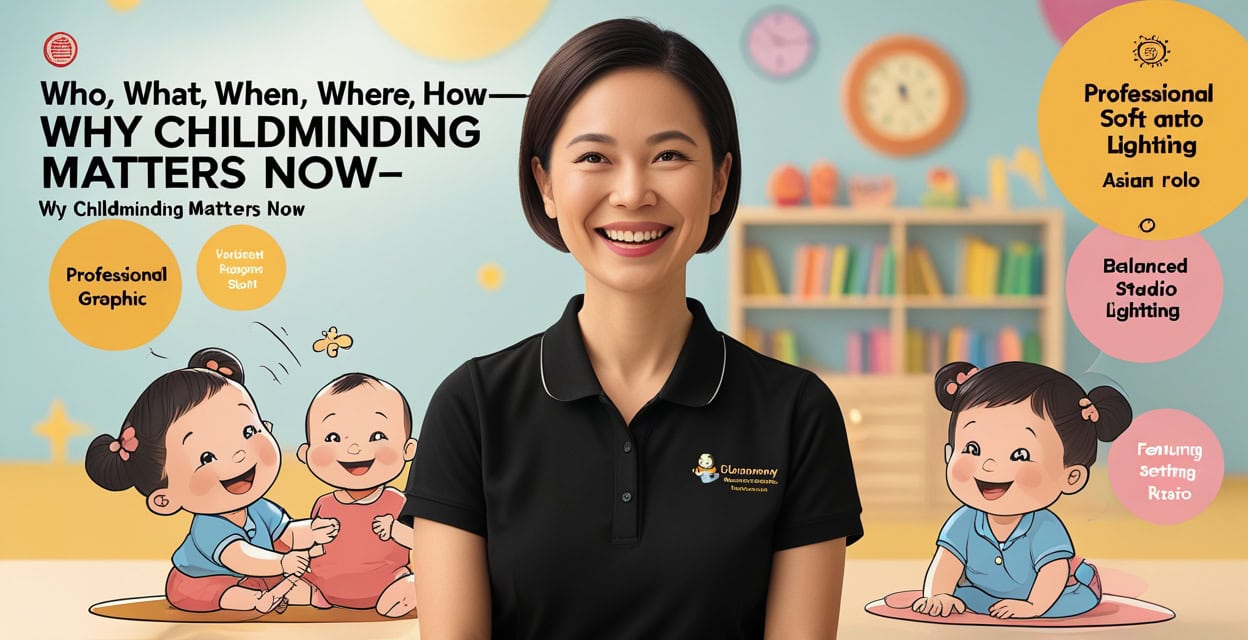
Who, what, when, where, how—why childminding matters now

Who, what, when, where, how—why childminding matters now

  • Who: Singapore’s youngest citizens, working parents, professional childminders seeking dignified work, and a nation investing in early development.
  • What: ultra‑low‑ratio infant childminding under a national pilot—attuned care, safety, and a practical curriculum of everyday love and learning.
  • When: during the most consequential window—2 to 18 months—Monday to Friday, 7am to 7pm, from 1 December 2024 to 31 December 2027.
  • Where: islandwide, in approved home settings and community micro‑hubs designed for infant wellbeing.
  • How: certified caregivers, background checks, industry standards, CCTV in community premises, opt‑in CCTV for homes, clear health policies, and a neuroscience‑informed curriculum.
  • Why: to nurture secure attachments, early learning, and a trusted infrastructure that supports families and communities alike.

How to sign up

How to sign up

  1. Step 1: Visit https://edunanny.com/edunanny-ecda-childminding-service/ and fill the enquiry form — or message us via WhatsApp from that page.
  2. Step 2: Receive a prompt response from our EduNanny Concierge Team to understand your needs, location, preferred hours, and start date.
  3. Step 3: Schedule a site visit (home‑based or community micro‑hub) to meet the childminder and view the environment.
  4. Step 4: Enrol and finalise your care plan; complete required forms; we’ll provide a gentle onboarding for you and your infant.

You may also explore: EduNanny.com and Childminding.EduNanny.com for more information.


Closing thoughts

Closing thoughts

Singapore thrives when its smallest circles are strong. The first thousand days should not be a race; they should be a protected garden — safe, warm, unhurried, and grounded in human connection. EduNanny exists to tend that garden with professional skill and neighbourly heart, one tiny pod at a time. If this sounds like the beginning you want for your child, we would be honoured to welcome your family. Thank you.

SEO keywords: [#keyword1, #keyword2, #keyword3, #keyword4, #keyword5]

edunanny-deaa1406-41f7-466c-91eb-32fb924bc68b
August 23, 2025

EduNanny Near Home Infant Pods A New Standard for Singapore First Thousand Days December 2024 to December 2027

EduNanny: Redefining Infant Childminding in Singapore

EduNanny: Redefining Infant Childminding in Singapore

Welcome to a new standard in early childhood care. EduNanny Infant Childminding Service in Singapore offers a near‑home, ultra‑low‑ratio model designed to blend science, safety, and heart into everyday care. This article expands on the vision introduced to families during the ECDA pilot and translates it into practical guidance for parents, grandparents, and caregivers who want the best start for their little ones.


Introduction: What EduNanny Is—and Why It Matters Now

Introduction: What EduNanny Is—and Why It Matters Now

Infancy is not a waiting room for childhood; it is the foundation. Every feed, nap, cuddle, song, and shared glance is architecture for the brain, body, and spirit. EduNanny was appointed by ECDA to deliver infant childminding under a national three‑year pilot (1 December 2024 to 31 December 2027) for Singapore Citizen infants aged 2–18 months. Care occurs in childminders’ homes or community premises organized into ultra‑low‑ratio “pods” of one caregiver to a maximum of three infants.

What this means for families: smaller circles, stronger beginnings. With a 1:3 infant ratio, 7am–7pm Monday to Friday, islandwide, EduNanny brings high‑quality care as close to home as possible—so families can breathe, infants can flourish, and communities can grow more connected.

Practical first steps for families:

  • Ask for a sample day schedule and care routine tailored to your infant’s cues.
  • Request a site visit to observe the pod’s setup, cleanliness, and safety features.
  • Review a caregiver’s background checks, first aid training, and temperament assessment outcomes.
  • Seek transparent communication protocols: what updates you’ll receive, and how often.
  • Prepare a short “infant care profile” with feeding cues, sleep patterns, and any sensitivities to share with the pod.

How EduNanny Makes Childminding Great in Singapore

How EduNanny Makes Childminding Great in Singapore

EduNanny is built on three convictions that guide every interaction, policy, and environment design:

  • Safety is a system, not a slogan.
  • Attachment is the engine of learning.
  • Affordability must never dilute quality.

As an appointed operator, EduNanny adheres to ECDA industry standards, mandatory training, and background checks—then elevates practice through thoughtful design, coaching, observation, and in‑the‑moment reflection. This yields childminding that feels personal and dignified, yet delivers national‑level reliability.


Four Topics Shaping Our Practice

Four Topics Shaping Our Practice

1) The Pedagogy of Attunement: Tiny Interactions, Big Intelligence

Our north star is respectful caregiving. We draw inspiration from:

  • Pikler’s unhurried care
  • Montessori’s prepared environments
  • Vygotsky’s guided participation
  • Bowlby’s secure base

Practical applications for families:

  • Routine as curriculum: diapering becomes a conversation, feeding a paced duet, and naps a predictable ritual that calms the nervous system.
  • The 90‑second miracle: aim for 60–90 seconds of eye contact, soft talk, and gentle touch to wire attention, language, and empathy.
  • Zone of proximal comfort: before introducing new skills, prioritize safety, then scaffold skills in small, manageable steps.

2) Safety by Design: From Policy to Practice to Peace of Mind

Safety is woven into every layer of EduNanny’s approach:

  • People: all childminders are certified, trained in infant first aid and basic care, temperament‑assessed, and background‑checked per ECDA rules. Home pods extend checks to regular access to the home.
  • Place: environments are designed to minimize hazards—gated zones, secured furniture, non‑slip surfaces, and easy‑to‑clean materials.
  • Observation: low ratios mean caregivers have eyes on babies, not screens or paperwork.
  • Transparency: CCTV in community premises; optional caregiving‑area CCTV for home pods with informed consent, balancing privacy with reassurance.
  • Health: No Sick Child Policy; medication instructions are captured in writing with precise dosage, timing, and side‑effects monitoring per ECDA guidance.

3) Development and Happiness: A Daily Practice, Not a Program

We view the first thousand days through a developmental lens that emphasizes bonding, sensory integration, motor milestones, sleep hygiene, nutrition, and early communication.

  • Joy as a vital sign: relaxed bodies, curious eyes, easy transitions, settled sleep, healthy appetite, and a widening circle of trust signal thriving.
  • Learning loop with families: concise, meaningful updates about nap quality, feeding patterns, mood, milestones, and daily delights keep learning visible without overwhelming families.
  • Culturally grounded: songs, languages, and rituals reflect families’ backgrounds, ensuring infants hear their home cadence while benefiting from a diverse community environment.

4) The Purpose of the Childminder: A Professional Calling

Childminders are not “just babysitting.” They are attachment builders, health guardians, environment designers, and partners to parents. EduNanny coaches caregivers in reflective practice—asking after each day: What did this infant show me? How did I respond? What will I do tomorrow?

The care triad: infant, caregiver, parent. Trust flourishes when all three are aligned. We implement site visits, gradual familiarisation, and clear communication channels to ensure relationships feel easy and respectful.

A civic role: by caring for up to three infants near home or in community spaces, childminders enable parents to work, study, or care for elders—strengthening families and society.


A Day in an EduNanny Pod: What It Feels Like

A Day in an EduNanny Pod: What It Feels Like

Envision a typical day that blends routine with responsive care:

  • Morning welcome: a familiar voice, clean hands, and a warm greeting to the parent. Short handover noting anything new—teething, sleep, appetite.
  • Settling time: calm movement, soft light, floor‑level exploratory play with safe materials—textured fabrics, sound toys, mirrors, simple ramps. Avoid overstimulation; make every moment intentional.
  • Care moments: diapering narrated for learning; feeding paced to infant cues; burping with calm rhythm; resting in a quiet, comfortable space.
  • Outdoor or daylight time: natural light and fresh air support circadian rhythms and mood when feasible.
  • Reflection and farewell: a succinct note on what was noticed, what delighted the child, and what tomorrow may bring.

Benefits of EduNanny at a Glance

Benefits of EduNanny at a Glance

  • Ultra‑low density, ultra‑low ratio: reliable 1:3 infant care.
  • Certified EduNanny caregivers: trained in infant first aid and basic care; temperament‑assessed and background‑checked.
  • Safety and transparency: CCTV in community spaces; optional care‑hour cameras for home pods with consent.
  • No Sick Child Policy: clear health protocols to protect all infants.
  • National initiative: part of ECDA’s Childminding Pilot (1 Dec 2024–31 Dec 2027).
  • Affordability: from $33 per full day (10 hours) or $16.50 per half day (5 hours), before GST; CDA subsidies apply during subsidised hours.
  • Hours and access: Monday–Friday, 7am–7pm, islandwide; near‑home community and home‑based pods.
  • Quality environments: modern, clean, safety‑designed layouts.
  • Choice and convenience: centre‑based and home‑based options.
  • Reliability and innovation: a national social initiative focused on excellence, jobs, and community capacity; dynamic parent communications and concierge support.
  • Flexibility: tailor days per week and half‑ or full‑day blocks to fit family needs.

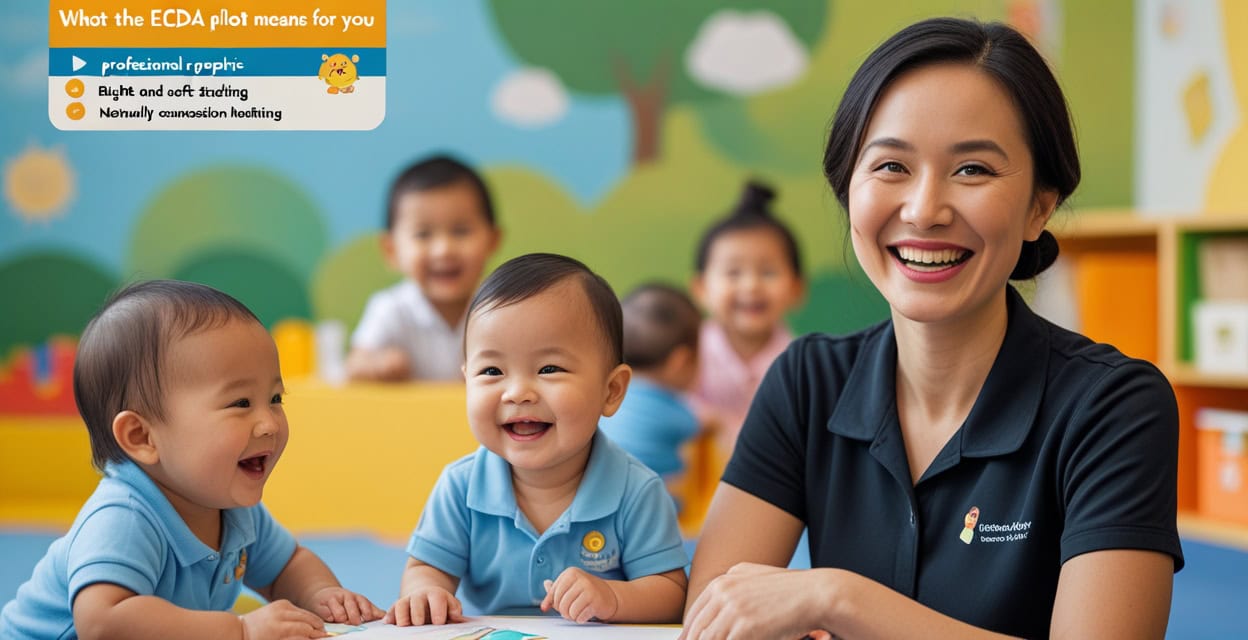
What the ECDA Pilot Means for You

What the ECDA Pilot Means for You

Key details that families should know as they consider EduNanny within the ECDA pilot framework:

  • Who: Singapore Citizen infants aged 2–18 months not concurrently enrolled in ECDA‑licensed infant care centres.
  • When: Subsidised hours 7am–7pm, Mondays to Fridays (excluding public holidays).
  • Where: Childminders’ homes or community spaces near you, islandwide.
  • How much: $16.50 (half day, 5 hours) or $33.00 (full day, 10 hours) before GST; CDA applicable for subsidised hours.
  • How we’re held to account: ECDA industry standards, mandatory training, and background checks for childminders—and for those with regular access to home‑based premises.

Why Childminding Matters—Now More Than Ever

Why Childminding Matters—Now More Than Ever

EduNanny champions a model that serves infants who need intimacy, predictability, and face‑to‑face time to build secure attachments. It offers continuity and calm in a tiny circle, where rhythms are honoured and needs are met quickly. The timing is critical: the first thousand days are when brain architecture is most malleable and relationships set the course for life.

Where it belongs: near home, where parents can arrive in minutes, where routines are familiar, and where community becomes an ally. How it works: trained caregivers, safe spaces, transparent practices, and ratios that make love and learning possible at the same time.

Our philosophy is human: presence over performance, relationships before routines, safety as the precondition for exploration, and joy as the everyday language of learning. Our purpose is public‑spirited: to make a gold‑standard, near‑home infant experience affordable, reliable, and worthy of your trust.

When you entrust your child to an EduNanny pod, you are not outsourcing love—you are expanding it. You are giving your infant a second secure base, and you are giving yourself room to work, rest, and be the parent you want to be.


How to Sign Up

How to Sign Up

Ready to explore EduNanny options near you? Follow these steps for a smooth start:

  • Visit https://edunanny.com/edunanny-ecda-childminding-service/.
  • Fill the enquiry form or message us via WhatsApp from the page.
  • EduNanny Concierge Team responds promptly to understand your family’s needs.
  • Confirm an appointment for a site visit to a nearby pod (home‑based or community premises).
  • Enrol and begin a gentle, supported familiarisation plan for your infant.

You can also learn more at EduNanny.com and Childminding.EduNanny.com.


Conclusion

Conclusion

In Singapore, EduNanny builds with care. We craft bridges, homes, parks, and possibilities—and we cradle something even more fundamental: secure bonds, steady routines, and joyful micro‑moments that cultivate resilience. In tiny pods of one to three, watched over by trained, trusted childminders, within a national pilot that prioritises safety and affordability, EduNanny is shaping a future where every infant has a strong, loving start. From first light to last lullaby, may your child be seen, safe, and serenely ready for tomorrow. If you’re ready to explore near‑home, high‑quality infant care, we invite you to join EduNanny and begin your child’s powerful first thousand days today.

To begin your journey, connect with EduNanny and schedule a pod site visit. Your family’s trusted partner in early learning starts here.

SEO keywords: [#keyword1, #keyword2, #keyword3, #keyword4, #keyword5]


edunanny-4e076059-2048-480c-aec0-1cb380627742
August 23, 2025

EduNanny Near Home Infant Pods A Grounded Vision for Safe Joyful Development in Singapore December 2024 to December 2027 ECDA Pilot

EduNanny: A Groundbreaking Vision for Singapore’s Infants

EduNanny: A Groundbreaking Vision for Singapore’s Infants

In the spirit of thoughtful leadership and child-centered care, EduNanny Infant Childminding offers a calm, expert, near‑home option for Singapore’s youngest learners. Grounded in research and shaped by real families, EduNanny is an ECDA‑appointed operator participating in Singapore’s national Childminding Pilot. This article expands the original vision into actionable guidance for parents, caregivers, and educators alike—providing practical steps, reflective practices, and concrete examples you can use to support your child’s early development.


How EduNanny makes infant care and childminding better in Singapore

How EduNanny makes infant care and childminding better in Singapore

EduNanny’s approach centers on small, consistent circles of care that honor infancy as a period of rapid growth, curiosity, and secure attachment. Key elements include:

  • 1:3 infant ratio in ultra‑low density pods to ensure focused attention and timely responsiveness.
  • Educare methods that fuse Montessori order, Pikler-inspired respectful caregiving, attachment science (Bowlby), and developmental insights (Piaget, Vygotsky).
  • Modern, child‑friendly spaces designed for floor time, safe sleep, breathable light, and cleanable surfaces.
  • A national footprint that blends near‑home care with shared community resources for transparency and continuity of care.
  • Affordability anchored by ECDA subsidies, enabling half‑day and full‑day options that align with family life and work schedules.

Five commitments that define our practice

Five commitments that define our practice

1) Relationship‑first pedagogy: tiny settings, big learning

  • Attachment is curriculum. With three infants per childminder, routines become rituals of trust—feeding, diapering, and sleep are unhurried, respectful, and language‑rich, reflecting the spirit of Emmi Pikler.
  • Guided discovery. We apply Piaget’s sensorimotor logic through tummy time, grasping, and cause‑and‑effect play, complemented by Vygotsky’s zone of proximal development via warm, contingent scaffolding.
  • The prepared environment. Inspired by Montessori principles, spaces invite exploration with low shelves, natural materials, soft movement arcs, mirrors for self‑recognition, and safe objects for mouthing and manipulation.
  • Observation as a professional habit. EduNanny childminders document micro‑milestones and share regular updates, turning daily care into a living conversation with parents about growth, readiness, and next steps.

2) Safety as design, habit, and transparency

  • Pre‑service screening and training. Under the ECDA Pilot, childminders receive background checks, infant first aid, and basic infant care training; EduNanny adds ongoing supervision, refresher drills, and practice audits.
  • Safe environments by design. Premises are clean, hazard‑aware, and organized to prevent incidents (covered outlets, anchored furniture, safe sleep surfaces, clear sightlines, and hygiene routines).
  • Visibility and privacy balance. CCTV is installed in community spaces; home‑based care offers caregiver zones with consent to strengthen trust while respecting privacy.
  • Health policy with prudence. A No Sick Child Policy for contagious illnesses protects all children; families discuss medications and health needs in advance to maintain safety and consistency.

3) Development that feels like joy, not pressure

  • Everyday experiences as engines of growth. Floor play, lullabies, finger games, reciprocal cooing, and outdoor strolls form a language bath and sensory gym for infants.
  • Secure sleep and predictable rhythms. Cues are respected; co‑regulation is prioritized to help infants learn that the world is safe and responsive.
  • Inclusive, culturally warm care. Home languages and family routines are woven into daily flow so every child feels seen and every family feels at home.

4) The purpose and profession of childminding

  • Certified EduNanny Childminders. Beyond mandatory training, childminders receive coaching in attunement, respectful caregiving, and reflective practice. They are early‑years professionals delivering high standards of care.
  • A national social initiative. The ECDA Pilot is a public commitment to upskilling local caregivers, raising standards, wages, and pride in a vital profession.

5) Design for family life: near‑home, flexible, and affordable

  • Ultra low density, near‑home access. Fewer infants per pod, quieter rooms, and calmer routines support immunity, attention, and attachment.
  • Near where you live and work. Centre‑based and home‑based options across Singapore shorten travel and increase daily family touchpoints.
  • Flexible scheduling. Half‑day (5 hours) or full‑day (10 hours) blocks from 7am to 7pm, Monday–Friday, with subsidies during subsidised hours (CDA/Baby Bonus accepted).
  • Transparency and support. EduNanny Concierge Team helps you find the right fit, arrange site visits, and start with confidence.

What you can expect from every EduNanny pod

What you can expect from every EduNanny pod

  • 1:3 infant ratio—never compromised.
  • Ultra low density groups and modern, clean layouts.
  • CCTV in community spaces; optional caregiving‑zone CCTV in homes with consent.
  • Certified, background‑checked childminders trained in infant first aid and basic infant care.
  • No Sick Child Policy for contagious illnesses.
  • Islandwide availability, near home or work.
  • Monday–Friday, 7am–7pm care, available in 5‑hour or 10‑hour subsidised blocks.
  • Affordable fees (before GST): $16.50 half‑day, $33.00 full‑day; CDA/Baby Bonus accepted during subsidised hours.
  • Calm, respectful approach to feeding, sleep, and play with daily parent updates.
  • A national ECDA initiative delivered with excellence and accountability.

Who, what, when, where, and how—why childminding matters now

Who, what, when, where, and how—why childminding matters now

  • Who. Singapore Citizen infants aged 2 to 18 months who are not concurrently enrolled in an ECDA‑licensed infant care centre.
  • What. One childminder caring for up to three infants at a time, in home‑based or community premises, under a national pilot with safety, training, and standards at its core.
  • When. The Pilot runs from 1 December 2024 to 31 December 2027. Care is available Monday to Friday, 7am to 7pm, excluding public holidays, in half‑day or full‑day blocks.
  • Where. Across Singapore, in near‑home locations that reduce travel and build community trust.
  • How. With certified, background‑checked EduNanny Childminders, infant first aid training, ECDA oversight, clear policies, CCTV transparency, and a steadfast 1:3 ratio.

A brief explainer of fees, flexibility, and fit

A brief explainer of fees, flexibility, and fit

Under the ECDA Pilot, government subsidies help keep care affordable during typical working hours. Parents can choose half‑day (5 hours) at $16.50 or full‑day (10 hours) at $33.00 before GST. Subsidised hours are payable via CDA/Baby Bonus. Families tailor the schedule to match work and life demands, with options to adjust days and hours as needs evolve. EduNanny provides a Concierge Team to help you compare pods, schedule visits, and find the best fit for your child and family rhythm.


Our promise to parents

Our promise to parents

  • We will know your child. By temperament, sleep cues, and the spark that signals “again, please.”
  • We will keep your child safe. By design, training, habitual practice, and honest visibility.
  • We will help your child grow. Through respectful care, unhurried play, and language‑rich routines.
  • We will honor your family. Your culture, hopes, and daily realities are woven into our practice.

How to sign up

How to sign up

  1. Visit https://edunanny.com/edunanny-ecda-childminding-service/.
  2. Fill in the enquiry form or reach us via WhatsApp.
  3. EduNanny Concierge Team will respond, learn your needs, and shortlist suitable pods.
  4. Confirm your appointment for a site visit—home‑based or community premises.
  5. Enrol and begin a gentle, supported transition with your chosen EduNanny pod.

Closing / Conclusion

Closing / Conclusion

EduNanny envisions a humane daily life for families where infant care is calm, expert, and seamlessly integrated into ordinary living. By prioritizing tiny groups, transparent safety, joyful development, and professional caregiving, EduNanny aims to raise the standard of early childhood care in Singapore. Parents deserve care that is safe, affordable, and near enough to be part of everyday family life—without compromising growth or dignity for the child or the caregiver. If you seek a trusted path for your child’s first years, explore EduNanny as a near‑home, evidence‑informed option that respects both science and family rhythms. Enrol with EduNanny. Let’s raise Singapore, one small, brilliant beginning at a time.

SEO keywords: [#EduNannySingapore, #ECDApilot, #InfantCareSingapore, #1to3Ratio, #NearHomeChildminding]


edunanny-f4faeee9-874e-49dc-866d-9ec458c883e3
August 23, 2025

Near Home One to Three EduNanny Pods Redefining Singapore First Thousand Days Dec 2024 to Dec 2027

EduNanny Infant Childminding: Near-Home, Ultra-Low-Ratio Care for Singapore’s First Thousand Days

EduNanny Infant Childminding: Near-Home, Ultra-Low-Ratio Care for Singapore’s First Thousand Days

Good evening, and welcome to a new chapter in Singapore’s approach to infant care. EduNanny Infant Childminding, powered by BUTLER, brings science, heart, and community together in a near‑home model designed to support families during the crucial first 1000 days. Grounded in the wisdom of Montessori, Piaget, Vygotsky, Froebel, Malaguzzi, Bowlby, Pikler, Spock, and Erikson, EduNanny translates that knowledge into everyday dignity for infants and families across Singapore.


What is EduNanny Childminding?

What is EduNanny Childminding?

Under the ECDA Childminding Pilot (1 December 2024 to 31 December 2027), EduNanny by BUTLER is one of three appointed operators licensed to provide infant childminding for Singapore Citizen babies aged 2 to 18 months, Monday to Friday, between 7am and 7pm. Each EduNanny childminder cares for no more than three infants at a time, in their home or a nearby community space. Fees are subsidised: from $16.50 for a half day (5 hours) and $33.00 for a full day (10 hours) before GST, with the flexibility to choose the number of days per week. Parents may use Child Development Account (CDA/Baby Bonus) monies for these subsidised hours.

  • Ultra-low ratio by design: 1 caregiver for up to 3 infants ensures undivided attention and attunement to each child’s cues.
  • Near-home access: pods operate in the caregiver’s home or nearby community spaces to minimise travel time and maximise family continuity.
  • Subsidised affordability: government subsidy levels make high-quality care accessible, with CDA/Baby Bonus accepted for subsidised hours.
  • ECDA oversight: background checks, mandatory training, and ongoing quality assurance to safeguard every child and family.

The EduNanny Philosophy: Five Ideas That Shape Our Practice

The EduNanny Philosophy: Five Ideas That Shape Our Practice

1) The Small‑Circle Advantage: Attunement as the engine of learning

We design for depth, not breadth. With a 1:3 ratio, caregivers can:

  • Provide responsive, individualized interaction—reading cues, soothing, and pacing activities to the child’s tempo.
  • Offer Pikler-inspired unhurried care: unrushed feeding, gentle handling, and respectful routines that honor the infant’s agency and nervous system.
  • Apply Vygotsky’s zone of proximal development through timely, scaffolded play and social interactions that stimulate early milestones.

2) Safety as a Habit, Not a Feature

Safety is woven into every choice:

  • Carefully designed, childproofed environments with clean zones and age-appropriate equipment.
  • Strict no‑sick‑child policy to protect the pod and prevent illness from spreading.
  • ECDA background checks for all caregivers; mandatory infant care and first aid training before deployment.
  • Visible safety measures: CCTV in community spaces; opt‑in CCTV for home pods to balance transparency and privacy.

3) A Living Curriculum for the First Thousand Days

We transform space into a vibrant learning environment:

  • Montessori-inspired environments: child-height materials, safe freedom of movement, and materials that invite independent exploration.
  • Reggio-inspired documentation: capturing moments of wonder and emerging competencies so families can witness development in real time.
  • Sensory-rich, screen-light days: a balance of songs, stories, tummy time, outdoor time where possible, and repetition that builds neural pathways.

4) Joy as a Measurable Outcome

We measure success by the child’s sense of safety, curiosity, and resilience:

  • Predictable routines that reduce stress hormones and foster engagement.
  • Play invitations that frame learning as exploration rather than instruction.
  • Close partnership with parents to align sleep, feeding, and soothing approaches for consistency across home and pod.

5) The Civic Calling of the Childminder

EduNanny elevates the profession by combining standards, mentorship, and community impact:

  • Certified, mentored childminders who see themselves as skilled early-years professionals.
  • Neighbourhood resilience through pods hosted in homes and community spaces, reducing travel and strengthening local networks.
  • Commitment to local employment: developing and sustaining skilled neighbourhood caregivers who support Singapore’s youngest citizens.

A Day in an EduNanny Pod: What to Expect

A Day in an EduNanny Pod: What to Expect

A typical day balances routine, nurture, and discovery:

  • A calm welcome and health check at drop-off
  • Individualised feeding and nap windows harmonised with the family’s rhythms
  • Language-rich moments: responsive talk, songs, and gentle conversation during diaper changes and routines
  • Floor-time exploration: infants lead pace—caregivers provide safety and scaffold growth
  • Outdoor time and fresh-air exposure when feasible and safe
  • Regular updates with photos and notes; concise handover at pick-up that respects family routines

What Parents Receive with EduNanny

What Parents Receive with EduNanny

  • Ultra Low Ratio and Ultra Low Density: true 1:3 infant pods
  • Certified EduNanny Childminders: trained, background checked, and supported
  • Safety and visibility: CCTV in community spaces; opt‑in CCTV for home pods
  • No Sick Child Policy to protect the pod and other families
  • Centre-based and home-based options across Singapore
  • Affordability: subsidised from $33/day full-day or $16.50/day half-day before GST; CDA/Baby Bonus accepted
  • ECDA oversight and a robust quality framework
  • Daily updates and shared care plans to honor family culture and routines

Why Childminding Matters Now: Who, What, When, Where, How

Why Childminding Matters Now: Who, What, When, Where, How

Who: Singapore Citizen infants aged 2–18 months, and their parents who deserve secure attachment, predictable routines, and peace of mind; childminders who deserve training and dignified careers.

What: Near-home, ultra-low-ratio, relationship-first childminding that is safe, transparent, and affordable.

When: Monday to Friday, 7am–7pm, with flexible half-day and full-day blocks to fit real lives.

Where: In the childminders’ homes or nearby community spaces across Singapore—local in feel, nationwide in reach.

How: With ECDA oversight, background checks, mandatory training, clear health and safety protocols, CCTV visibility, and a living curriculum that treats every care moment as a learning moment.


EduNanny’s Philosophy and Promise

EduNanny’s Philosophy and Promise

  • Safety is the floor; joy is the goal.
  • Relationship is the curriculum; the environment is the second teacher.
  • Small circles build big futures.
  • Parents are partners; culture and routines at home are honoured in care.
  • Childminders are civic caregivers; their work helps shape the social fabric of tomorrow.

Benefits at a Glance

Benefits at a Glance

  • Ultra Low Ratio: 1:3 infant pods
  • Ultra Low Density environments
  • CCTV Provided: required in community spaces; opt‑in at home pods
  • Certified EduNanny Childminders; Background Checked
  • No Sick Child Policy to protect the pod
  • National Initiative under the ECDA Childminding Pilot (Dec 2024–Dec 2027)
  • Centre-based and home-based options
  • Near-home access, islandwide
  • Affordable from $33/day full-day, $16.50 half-day before GST; CDA/Baby Bonus accepted
  • Monday–Friday, 7am–7pm
  • Modern layouts, innovative CCTV, transparent handovers
  • EduNanny by BUTLER: learn more at EduNanny.com and Childminding.EduNanny.com
  • Employment commitment: developing skilled neighbourhood caregivers

How to Sign Up

How to Sign Up

  1. Visit the EduNanny page at the sign-up URL: https://edunanny.com/edunanny-ecda-childminding-service/ and fill out the form, or inquire via WhatsApp.
  2. The EduNanny Concierge Team will respond, answer questions, and propose nearby options.
  3. Confirm an appointment for a site visit (home-based or community space).
  4. Enroll and align on your child’s care plan, routines, and start date.

Practical Guidance for Parents: Partnering for Development

Practical Guidance for Parents: Partnering for Development

The EduNanny framework supports families with concrete, actionable practices. Here are practical examples you can use at home and expect from the pod:

  • Bridge routines: Use a shared daily routine chart at home and at the pod. For instance, nap times, feeding windows, and play periods should mirror as closely as possible to reduce cortisol spikes and foster a sense of security.
  • Consistent soothing strategies: Agree on a few soothing cues (rocking, singing a particular lullaby, or a quiet hum) so caregivers and parents can switch seamlessly without disrupting the child’s sense of safety.
  • Language-rich care: Narrate daily activities, label objects, and describe actions during care moments to build vocabulary and social understanding—e.g., “You’re crawling to the red ball”; “Let’s put on your blue socks.”
  • Observation and documentation: Expect regular notes and photo updates. Families can request a simple weekly summary highlighting new motor skills, social interactions, and emerging routines.
  • Health and safety collaboration: Maintain a clean hygiene routine at home aligned with pod protocols, including frequent handwashing and sanitising shared toys between sessions.
  • Developmental milestones: Leverage small, meaningful milestones to tailor activities, such as targeting tummy time milestones with supported props or introducing new textures to promote tactile exploration.
  • Sleep alignment: Synchronise nap routines with the family’s expectations, using consistent wind-down cues to help infants transition between home and pod sleep environments smoothly.

Real EduNanny Insights: Lessons from the Field

Real EduNanny Insights: Lessons from the Field

Educators and families within the ECDA pilot report several practical outcomes worth noting:

  • Small pods enable caregivers to observe subtle cues—smiles, frowns, or directions of gaze—that signal a child’s interest or discomfort, allowing for timely, responsive interventions.
  • Documentation moments become a collaborative storytelling tool, helping families feel connected to their child’s learning journey even on busy days.
  • Near-home spaces reduce travel stress and promote continuity of care, which supports working parents and fosters stable attachments.
  • Transparency through CCTV in community spaces builds trust; opt‑in options respect family privacy while maintaining safety.

The EduNanny Promise: A Covenant with Families

The EduNanny Promise: A Covenant with Families

We offer a clear, family-centered covenant:

  • We treat every child as “one of one,” not “one of many.”
  • Care moments are opportunities for learning, joy, and secure attachment.
  • Caregivers are supported professionals, not substitutes for parents.
  • Care plans honour family culture, routines, and values within a developmentally appropriate framework.

Conclusion

Conclusion

In Singapore, the quality of a child’s first smiles, the steadiness of a caregiver’s hands, and the light in a baby’s eyes are indicators of a society that invests in its future. EduNanny’s near-home, ultra-low-ratio model translates the wisdom of early-care theories into everyday practice—safety as a foundation, relationships as the curriculum, and joy as the outcome. By partnering with families, we build communities where care is dignified, accessible, and developmentally intentional. If you seek a care model that respects your child’s pace, your family’s rhythm, and your city’s social fabric, EduNanny invites you to join us in shaping a brighter start for Singapore’s youngest citizens.

To every parent, we offer a simple covenant: your child will be treated with the care, respect, and attention they deserve—an approach that makes a genuine difference in a child’s earliest days. Let’s build them—near home, near heart, together.

SEO keywords: [#keyword1, #keyword2, #keyword3, #keyword4, #keyword5]

edunanny-ddb67365-5bcd-4c46-9dc6-8e95118f153c
August 23, 2025

A Quiet Cradle Revolution EduNanny Near Home 1 to 3 Infant Pods and the Singapore First Thousand Days December 2024 to December 2027

Introduction to EduNanny Infant Childminding in Singapore

Introduction to EduNanny Infant Childminding in Singapore

Good evening, parents, caregivers, and partners in the quiet, noble work of raising Singapore’s youngest. My name is [Name], and I stand before you as an EduNanny infant care advisor—guided by the science of attachment, the art of observation, and a simple conviction: the first thousand days should be safe, joyful, and near home. EduNanny by BUTLER is honored to be appointed by ECDA as one of three operators in the national Childminding Pilot for Infants running 1 December 2024 to 31 December 2027. Our service is simple and powerful: one trained, background-checked childminder caring for up to three infants in a home or thoughtfully designed community space—near your home, during the hours families need most, and at a price designed to include, not exclude.

What this means for you:

  • Ultra-low ratio: 1 childminder to 3 infants
  • Availability: Mondays to Fridays, 7am to 7pm, islandwide
  • Locations: home-based and centre/community-based childminding
  • Flexible blocks: half-day (5 hours) or full-day (10 hours)
  • Affordable fees (before GST): $16.50 half-day, $33 full-day; payable via CDA/Baby Bonus
  • ECDA oversight: background checks, mandatory infant first aid and basic infant care training, and adherence to industry standards
  • Purpose beyond care: a national social initiative that lifts infants, supports families returning to work, and advances meaningful employment under a maximum employment mandate

Five themes that define EduNanny practice

Five themes that define EduNanny practice

1) The Circle of Three: One-to-Three, one relationship at a time

Attachment as the core: We honor Bowlby’s secure base, Pikler’s respect for autonomy, and Montessori’s prepared environment. At a 1:3 ratio, each infant is known—not managed. Continuity of care ensures the same childminder welcomes your child daily, building consistency, predictability, and deep attunement. Near-home belonging reduces fatigue and supports stronger parent–child bonds.

  • Practical steps for families: ask about caregiver handover routines, how continuity is guaranteed (same caregiver or consistent substitutes), and how near-home pods are formed to minimize travel time.
  • What to observe: a caregiver who instinctively reads baby cues, adjusts pacing to the infant’s rhythm, and uses prepared environmental stimuli that match developmental stages.

2) Safety you can see and feel

Safety as a system: ECDA background checks (including regular-home-access family members), mandatory training (infant first aid, basic infant care, food safety), incident protocols, and operator oversight. Environments protect: low-density micro-pods; hazard-mapped spaces with baby-safe layouts; hygiene routines; a No Sick Child Policy with rescheduling support and clear return-to-care guidance. Medication administration requires written instructions on dosage and timing for specific medical needs.

  • What parents can do: request a safety walkthrough of the pod, ask to see emergency plans, and review how incidents are recorded and resolved.
  • Privacy in practice: CCTV in community spaces as required; privacy-respecting options for home-based care—consent-based CCTV in caregiving areas during care hours.

3) The everyday curriculum

The science of small moments: Diapering, feeding, and nap transitions become attuned interactions—language-rich, paced, and respectful—because care routines are the original classroom. A floor-time foundation provides safe floor play, tummy time, open-ended materials, and movement outdoors to develop core strength, coordination, and curiosity. Language in many registers nurtures communication and cultural pride, while observation and partnership with parents ensures daily notes and timely check-ins align care with home life.

  • Practical tips: integrate family languages and songs into daily routines; document and share a baby’s cues, likes, and dislikes to tailor daily activities.
  • How to partner with EduNanny: request weekly highlights, set preferred communication channels, and participate in periodic care reviews.

4) Joy as a health plan

Warmth is measurable: consistent, responsive care reduces stress, stabilizes sleep, and supports appetite and learning. Joy is not an extra; it is protective. Play is purpose: days are designed with rhythm—effort and rest, novelty and familiarity—so babies finish the day regulated, not overwhelmed. Belonging as prevention: tiny groups create a sense of safety and belonging, preparing infants for wider social worlds.

  • What parents can foster at home: maintain predictable routines, incorporate bonding moments at drop-off, and celebrate small milestones with the care team.
  • Curriculum cues: use gentle, soft transitions between activities, and provide age-appropriate materials that invite exploration and collaboration with peers.

5) A civic promise for families and work

Designed for working parents: 7am–7pm, Monday to Friday, in half- or full-day blocks. Islandwide access: home-based and centre-based options reduce commute stress and widen opportunity. Affordability with integrity: government-subsidised fees during pilot hours, payable via CDA/Baby Bonus, so high standards are reachable for more families. Quality as employment: certified EduNanny Childminders receive training, support, and professional pathways. When adults thrive in their work, children feel it.

  • Actionable path for families: map a work schedule to block availability and discuss with the EduNanny Concierge how to optimize time and cost.
  • Workforce development: explore opportunities for ongoing training, mentorship, and formal recognition of competency for childminders.

What you can expect with EduNanny

What you can expect with EduNanny

  • Ultra Low Density, Ultra Low Ratio: excellent 1:3 infant ratio in micro-pods
  • Certified and Background Checked: rigorous vetting under ECDA’s pilot; mandatory training completed before deployment
  • CCTV Provided: installed in community spaces; home-based CCTV available as a consented, caregiving-area-only option
  • No Sick Child Policy: protects small pods; rescheduling support; medication only with clear written instructions
  • Excellence and Quality: industry standards, operator audits, and a living practice of continuous improvement
  • Centre-Based and Home-Based options: modern layouts, safe materials, calm acoustics, pram-friendly access
  • Convenience and Coverage: Monday–Friday, 7am–7pm, islandwide
  • Affordable from $33/day (before GST): or $16.50/half-day; CDA/Baby Bonus accepted
  • A National Initiative: ECDA Childminding Pilot with EduNanny by BUTLER, a public promise to infants and parents
  • Easy links and information: EduNanny.com and Childminding.EduNanny.com

A day in a pod, in brief

A day in a pod, in brief

  • Warm welcome and health check-in
  • Unhurried feed with eye contact and language
  • Floor play: reach, roll, grasp; songs and stories
  • Nap in a safe sleep environment; caregiver nearby
  • Outdoor or corridor strolls as suitable
  • Gentle handover with a clear daily report

Eligibility and pilot specifics

Eligibility and pilot specifics

  • Who: Singapore Citizen infants aged 2 to 18 months
  • Where: Childminder’s home or a community space near you
  • How many: One childminder, up to three infants at any time
  • When: Weekdays, 7am–7pm, excluding public holidays
  • Fees during subsidised hours: $16.50 (5 hours), $33.00 (10 hours), before GST
  • Flexibility: Choose the days per week and the daily block that fits your rhythm
  • Note: Infants concurrently enrolled in ECDA-licensed infant care centres are not eligible for the pilot

How to sign up

How to sign up

  • Step 1: Visit https://edunanny.com/edunanny-ecda-childminding-service/ and fill in the form, or message us via WhatsApp from the same page.
  • Step 2: Receive a response from our EduNanny Concierge Team to understand your needs and preferred location.
  • Step 3: Confirm your appointment for a site visit—home-based or community space—so you can see the environment and meet the childminder.
  • Step 4: Enrol and choose your schedule: half-day or full-day blocks, number of days per week, start date.
  • Step 5: Set up your payment method, including CDA/Baby Bonus if you wish, and receive your onboarding pack.

Why childminding matters now: a concluding call

Why childminding matters now: a concluding call

Childminding matters because it provides consistent, loving attention for infants, supports families returning to work, and recognises childminders as professional, skilled contributors to society. This approach fosters a nation’s early years culture—where the first thousand days are guarded by thoughtful ratios, robust training, and trust. Learning is woven into care, joy is planned, and every caregiver is supported by a system designed to sustain both families and the workforce.


Conclusion

Conclusion

EduNanny’s philosophy is simple: Safety first, attachment always, learning in every care routine, and dignity at every turn. Our purpose is public as much as it is personal—to cradle the beginnings of life with standards worthy of the future we imagine for Singapore. To the parents weighing choices tonight: visit us, ask questions, and observe a pod in motion. You will see that in a small circle, everything essential fits—care that is warm, environments that are safe, and a rhythm that makes room for wonder. Enrol at https://edunanny.com/edunanny-ecda-childminding-service/ and let our Concierge Team guide your first step.

[#keyword1, #keyword2, #keyword3, #keyword4, #keyword5]

edunanny-bcbd99a3-5208-438a-810e-a8f8b5d01c44
August 23, 2025

EduNanny Singapore A Near Home Ultra Low Ratio Infant Pods Revolution December 2024 to December 2027

EduNanny Singapore: A new standard in infant care

EduNanny Singapore: A new standard in infant care

Welcome to a new era of infant and early childhood care in Singapore. EduNanny, an initiative by BUTLER and aligned with ECDA’s national Childminding Pilot, builds care that is affordable, near-home, deeply safe, and developmentally wise. This long-form guide offers practical, parent-friendly insights, real-world examples from EduNanny pods, and actionable steps to help families make informed choices about the first carers in their child’s life.


EduNanny in Singapore: Purpose, partnership, and pilot

EduNanny in Singapore: Purpose, partnership, and pilot

EduNanny operates as a carefully designed infant care option under the national Childminding Pilot. It sits alongside established providers such as Kidibliss and NannyPro Care, sharing a commitment to quality, safety, and accessibility for Singaporean families. The pilot runs from 1 December 2024 to 31 December 2027, targeting Singapore Citizens’ infants aged 2 to 18 months. Care occurs in tiny, secure pods of one to three infants, in home or community premises, Monday to Friday, 7am to 7pm. The guiding philosophy is simple: when care is small, attention grows; when attention grows, development flourishes.

Ultra-low ratio, ultra-high presence

EduNanny’s core promise is a 1:3 infant ratio in each pod. This is not merely a statistic—it is a daily commitment to attunement. With one caregiver for up to three infants, staff can notice subtle cues, respond quickly, and build secure attachments that support language, self-regulation, and curiosity.

Relationship is curriculum

Drawing on the wisdom of Bowlby, Pikler, Montessori, Erikson, and Vygotsky, EduNanny treats routines as learning moments. Diapering becomes language time; mealtimes become motor practice; naps become memory architecture. Care routines are deliberately narrated, creating language-rich environments from the earliest days.

Safe by design, not by chance

EduNanny spaces feature modern layouts with clear sightlines, rounded edges, non-slip zones, safe-sleep arrangements, temperature and hygiene controls. CCTV is provided in community premises for transparency. In home-based care, CCTV is offered where families and childminders mutually agree, limited to caregiving areas and care hours to protect privacy while supporting trust.

A national social initiative with real affordability

Under the ECDA Childminding Pilot, care is subsidised during working hours. Half-day (5 hours) is $16.50 before GST. Full-day (10 hours) is $33.00 before GST. Parents can pay with CDA/Baby Bonus monies. It is care you can walk to, care you can trust, and care your budget can carry.

Quality you can feel

All EduNanny childminders are certified, trained in infant first aid and basic infant care before deployment, and background-checked—with ECDA checks extending to others who have regular access to home premises. Ongoing coaching, observed practice, and reflective supervision ensure that skills deepen month after month.


Four big ideas guiding every EduNanny pod

Four big ideas guiding every EduNanny pod

1) Attunement as everyday practice

  • We slow down and make eye contact. We narrate what we do, turning moments into language opportunities.
  • With 1:3, caregivers can respond within seconds, not minutes—crucial for secure attachment, language growth, and emotional regulation.
  • We honor the infant’s competence: more floor time, open-ended exploration, fewer overstimulating toys, and gentle guidance without pressuring early milestones.

2) Safety as architecture and culture

  • Environment: clean, purpose-fitted spaces; safe sleep practices with firm mattresses and supine positioning; temperature control; clear evacuation routes.
  • Protocols: health screening, a No Sick Child Policy during care hours, incident reporting with time-stamped documentation, and rigorous feeding/allergy management.
  • Transparency: CCTV in community spaces by default; in homes, mutual consent with cameras limited to caregiving zones and hours.
  • People: certified, background-checked childminders; ongoing training; escalation pathways with EduNanny Concierge Team and ECDA for serious incidents.

3) Development as a living rhythm

  • Language: child-led talk, songs, and stories in every routine; narration of daily care; gesture and sign support for preverbal infants.
  • Movement: floor play inspired by RIE/Pikler; tummy time; crawling pathways; safe transitions that build strength and confidence.
  • Sensory: abundant natural light, low noise, simple textures; rich experiences without overwhelm.
  • Emotion: predictable micro-rituals—warm hellos, unhurried feeds, soothing nap transitions, joyful goodbyes—that foster trust.
  • Documentation: parent-facing observations, developmental check-ins, and gentle goal-setting that stays infant-led.

4) The purpose and profession of childminders

  • Childminders are Singapore’s first teachers. They deserve certification, supervision, progression, and respect.
  • EduNanny invests in their craft through coaching, peer learning, and reflective practice, creating dignified career paths across neighbourhoods.

What you can expect from EduNanny

What you can expect from EduNanny

  • Ultra low density, ultra low ratio pods for calm, focused care.
  • Centre-based and home-based options with near-home convenience and islandwide reach.
  • CCTV provided in community spaces; optional in homes by mutual agreement, limited to caregiving zones/hours.
  • Certified, background-checked childminders trained in infant first aid and basic infant care.
  • No Sick Child Policy during care hours to safeguard pod health.
  • Weekly to monthly documentation of routines and development for parent insight.
  • Regular coaching, reflective supervision, and transparent quality assurance by EduNanny.
  • Mon–Fri, 7am–7pm, with flexible half-day (5 hours) or full-day (10 hours) blocks.
  • Affordable from $33/day for full-day; half-day $16.50 (before GST).
  • Payments supported by CDA/Baby Bonus subsidies; islandwide access to community and home-based pods.
  • EduNanny by BUTLER quality assurance; a national, purpose-driven approach to infant care.
  • Thoughtful CCTV use, documented care routines, and a responsive EduNanny Concierge Team.
  • Care that is close, trustworthy, and value-driven—designed for modern Singapore families.

Key pedagogical themes: Deep dives for practical parenting

Key pedagogical themes: Deep dives for practical parenting

A. Pedagogy: Care is the first classroom

The most powerful curriculum in the first year is a caregiver who notices consistently. Practical actions to implement at home and in pods:

  • Daily “noticing routines”: a 2-minute check-in with each infant during feeding and play to name cues aloud (e.g., “I see you’re happy when you stretch your arms”).
  • Sustain just-right challenges: offer slightly challenging but achievable tasks (e.g., provide a simple puzzle while guiding hand placement) to promote problem solving without frustration.
  • Decode emotions: treat cries as messages. A quick, calm response helps regulate the child and builds trust over repeated encounters.
  • At home: mirror the home pod approach—dedicate 15-minute “attention windows” where caregiver and child explore together with open-ended toys and no rush to milestones.

B. Safety: Systems that you can see

Safety is a living system, not a policy. Actionable steps for families and caregivers:

  • Pod hazard mapping: review a simple hazards checklist for the room, including outlet covers, choking hazards in reach, and clear exit paths.
  • Sleep safety routine: emphasize firm mattresses, back-sleep position, and removal of loose items; discuss with caregivers how to position infants for comfort and safety.
  • Incident and health logs: request or review weekly logs with timestamped notes on any incidents or health concerns.
  • Transparent surveillance: understand scope and consent for CCTV, including privacy limits and oversight.

C. Development: Routines that grow the brain

Predictable arcs support regulation and learning. Practical routines include:

  • Feeding cycles that pair nourishment with conversation and co-regulation signals—pauses to name sensations, talk about textures, and model language.
  • Play sequences that combine movement, touch, and exploration—crawling paths with safe obstacles, tummy-time stations, and fine motor activities using natural materials.
  • Nap structure: gentle pre-nap rituals (soft songs, a cuddle, quiet dim lights) to ease transitions and support memory consolidation.

D. Happiness: Joy as a measurable outcome

Happiness manifests as secure curiosity and relaxed energy. Practical indicators to monitor with caregivers and in home routines:

  • Ease of drop-off: relaxed posture, minimal separation distress, and a positive greeting pattern at pickup.
  • Curiosity during exploration: sustained attention, flexible engagement with new objects, and willingness to explore with an adult present.
  • Parental feedback loops: regular, simple updates on mood, appetite, and sleep that guide adjustments.

E. Purpose: Childminding as civic contribution

EduNanny frames the role of childminders as early educators who shape future citizens. Practical takeaways for families and communities:

  • Understand the value of certified, supervised care: seek providers with clear coaching structures, ongoing training, and transparent escalation processes.
  • Engage in continuous dialogue: request monthly or quarterly development summaries and goal setting that aligns with your family values.
  • Support local employment and dignity: encourage caregivers’ professional development as a community investment in children and families.

Who, what, when, where, how—why childminding matters now

Who, what, when, where, how—why childminding matters now

Who

Targeted to Singapore Citizen infants aged 2–18 months who prefer near-home, trusted care and are not concurrently enrolled in ECDA-licensed infant care centres.

What

One to three infants cared for by a certified, trained childminder in a home or community setting—prioritizing safety, attachment, and development.

When

Monday to Friday, 7am–7pm, with flexible half-day (5 hours) or full-day (10 hours) blocks. The pilot runs from 1 December 2024 to 31 December 2027.

Where

Islandwide Singapore, in modern centre/community spaces and approved homes designed for visibility, hygiene, and ease of access.

How

Government-subsidised affordability, with payments via CDA/Baby Bonus; background checks by ECDA; training and quality assurance by EduNanny; and transparent care routines.

Why

The first relationships teach the first truths: “You are safe. You are seen. You are capable.” These truths form the quiet engines of resilience, learning, and leadership in every child’s life.


How to sign up

How to sign up

  1. Visit https://edunanny.com/edunanny-ecda-childminding-service/ and complete the form, or message us via WhatsApp from that page.
  2. Our EduNanny Concierge Team will respond promptly to understand your needs and confirm eligibility.
  3. Schedule a site visit to your preferred community pod or speak with a nearby home-based childminder.
  4. Confirm enrolment, select blocks (half-day or full-day), and start dates. We’ll handle the rest.

Two addresses to remember

Two addresses to remember

EduNanny.com

Childminding.EduNanny.com


Closing

Closing

Singapore, EduNanny is more than childcare. It is the deliberate shaping of hours that often go unseen, the quiet work of building trust, safety, and development in the first year of life. With EduNanny, you gain ultra-low ratios, safe and modern spaces, certified and background-checked childminders, fair fees, and transparent practice—delivered near home, with dignity and calm. From 7am to 7pm, from the first feed to the last cuddle before pickup, we will be there—attentive, steady, and proud to serve your family. Let us begin as we mean to go on: with safety, with joy, with excellence, and with purpose.

Thank you. We look forward to welcoming you and your little one to EduNanny.


SEO Keywords

SEO Keywords

[#EduNannySingapore, #InfantCareSingapore, #SingaporeChildminding, #ECDAPilot, #1to3Ratio]



edunanny-c0010966-d16c-4e45-b6c5-c86dcb20d456
August 23, 2025

Attunement as Infrastructure The EduNanny Micro Pods and Singapore Early Years Transformation

Introduction

Introduction

Esteemed parents, caregivers, and partners in the future of Singapore,

Thank you for gathering to consider one of the most consequential choices any family makes: who holds your child when you cannot, who understands your infant’s language before words arrive, and who keeps the small, sacred daily rituals of safety, nourishment, sleep, and play. That is the work, the craft, and the public trust of childminding. And it is the promise of EduNanny by BUTLER.

Allow me to introduce EduNanny Infant Childminding Service—Singapore’s near‑home, ultra‑low‑ratio infant care designed around the first 1,000 days of life, operating under the ECDA Childminding Pilot from 1 December 2024 to 31 December 2027. We serve Singapore Citizen infants aged 2 to 18 months, Monday to Friday, 7am to 7pm, islandwide. We are centre-based in community premises and home-based in approved residences, with a steadfast 1:3 caregiver-to-infant ratio to keep care small, steady, and deeply personal.


What makes EduNanny different in Singapore

What makes EduNanny different in Singapore

We began with a simple observation from science and from the heart: infants flourish in small circles of predictable, responsive adults. EduNanny translates that insight into everyday practice through a micro‑pod model—one childminder with up to three infants—near your home, at a sustainable fee, with national safeguards and professional standards. It is childcare you can see, relationships you can trust, and development you can feel.

A small radius of trust, multiplied across neighborhoods, becomes a national asset. This is why ECDA appointed EduNanny by BUTLER—alongside our fellow operators—to pilot a childminding model that is safe, reliable, accessible, and affordable for working families, while honouring infancy as a once‑only window for brain, body, and attachment growth.


Four pillars that define EduNanny’s approach

Four pillars that define EduNanny’s approach

1) Pedagogy: Care as Curriculum

  • The Responsive Triangle: Observe, Attune, Extend. Our childminders are trained to read infant cues, respond promptly, and extend learning through sensory-rich, play‑based moments—tummy time as confidence training, feeding as language practice, diapering as a lesson in trust and bodily autonomy.
  • A living approach: Grounded in the wisdom of Montessori, Pikler, and contemporary attachment science: freedom of movement, uninterrupted play, and respectful caregiving that invites participation—“I will lift you now,” “Let’s change your diaper together.” This is how infants learn to expect dignity—and offer it back.
  • Near-home continuity: Because the caregiving setting is close to where families live, the rhythms of home—sleep times, familiar objects, and languages—thread seamlessly into the childminding day.

2) Safety: Layers, Not Luck

  • People: Every EduNanny childminder is certified, background‑checked, trained in infant first aid and food safety, and supervised under ECDA’s industry standards. For home-based care, ECDA background checks extend to household members with regular access.
  • Place: Clean, child‑proofed spaces designed for infants—clear sleep zones; firm cot mattresses; no pillows or loose bedding; secured furniture; safe, non-toxic materials; and clear evacuation routes. Our layouts are intentionally modern, calm, and low density to reduce overstimulation and risk.
  • Practice: Strict hygiene routines, safe sleep protocols, milk handling and temperature checks, choking‑hazard controls, head‑count and hand‑off verifications, incident reporting with transparency, and daily wellness screening at drop‑off. EduNanny operates a No Sick Child Policy to protect our ultra‑low‑ratio pods; families receive guidance on return‑to‑care timelines and alternative options.
  • Oversight and visibility: In community premises, CCTV is provided and required. For home-based care, EduNanny offers an opt‑in “care‑area only” CCTV solution—installed in caregiving zones and active during care hours—to balance privacy with peace of mind.

3) Development: The First 1,000 Days Playbook

  • Serve‑and‑return exchanges to build secure attachment, language, and self‑regulation.
  • Sensorimotor exploration—grasping, rolling, crawling, cruising—supported by safe floor time and caregiver scaffolding.
  • Language bath—songs, narration, and responsive babble—so infants hear themselves into speech.
  • Micro‑routines that grow executive function: predictable transitions, gentle choices, and simple sequences that build working memory and confidence.
  • Progress notes for parents—not just “what happened,” but “what it meant”: emerging skills, new interests, and the next gentle challenge.

4) Happiness and Family Partnership: The Peace‑of‑Mind Architecture

  • Ultra‑low density, ultra‑low ratio pods mean quieter rooms, unhurried feedings, and unbroken eye contact—the preludes to joy.
  • Transparent communication: daily handovers, secure messaging, and optional CCTV in home‑based pods. We see partnership with parents as co‑regulation for the whole family.
  • Purpose‑built hours: Half-day or full-day, 7am to 7pm, Monday to Friday, to match working lives without compromising infant rhythms.
  • Civic purpose: EduNanny’s Maximum Employment Mandate invests in training and dignified work for childminders across neighborhoods, tying care quality to meaningful livelihoods.

The role and purpose of the childminder

The role and purpose of the childminder

A great childminder is a steady pair of hands and a wise heart—a professional who combines the art of presence with the science of safety. They are attachment builders, language narrators, sleep guardians, nutrition stewards, and play companions. In the EduNanny model, childminders are not “helpers around babies”; they are trained practitioners serving a public good. Their craft reduces parental stress, strengthens workforce participation, and, most importantly, shapes the foundations of empathy, focus, and curiosity in our youngest citizens.


Your benefits at a glance

Your benefits at a glance

  • Ultra Low Density, Ultra Low Ratio: An excellent 1:3 infant ratio for deep, individual care.
  • Certified EduNanny Childminders: Trained, background‑checked, and supervised under ECDA’s standards.
  • CCTV Provided: Installed in community premises; opt‑in caregiving‑area CCTV available for home‑based pods during care hours.
  • No Sick Child Policy: Protecting infant health in our micro‑pods, with clear return‑to‑care guidance.
  • National Initiative under ECDA Childminding Pilot: A three‑year, government‑supported programme to ensure safety, reliability, and affordability.
  • Centre‑Based and Home‑Based options: Modern layouts in community premises and approved home settings, near where families live.
  • Distance, Convenience, Islandwide Coverage: In the community and in homes across Singapore, Monday to Friday, 7am–7pm.
  • Affordable from $33/day (10‑hour full day) or $16.50 (5‑hour half day), before GST: Fees payable using CDA/Baby Bonus during subsidised hours.
  • Innovation CCTV and Open Communication: Visibility that builds trust, with professional incident protocols.
  • Quality and Excellence: A calm, organized environment with clear routines, safe sleep, and respectful caregiving at the core.
  • Part of a National Social Initiative with a Maximum Employment Mandate: Elevating the profession and widening reliable access to care.
  • EduNanny by BUTLER: A dedicated concierge experience with enrolment support and consistent service standards.
  • Online access: EduNanny.com and Childminding.EduNanny.com for information and updates.

Operational essentials

Operational essentials

  • Eligibility: Singapore Citizen infants, 2–18 months old, not concurrently enrolled in ECDA‑licensed infant care.
  • Hours of care: Half‑day (5 hours) or full‑day (10 hours) blocks between 7am and 7pm, Monday to Friday, excluding public holidays.
  • Flexibility: Choose the number of days per week you require care. Discuss extended hours outside the subsidised window directly with our team.
  • Fees (before GST): $16.50 (half‑day), $33.00 (full‑day); CDA/Baby Bonus accepted for subsidised hours.

Five living topics for parents to hold in hand

Five living topics for parents to hold in hand

  • The Small Circle Advantage: Why 1:3 is not a statistic but a promise—your child is seen, heard, and held without hurry.
  • Attunement as Everyday Practice: Every routine—feeding, changing, sleeping—is a lesson in trust, autonomy, and language.
  • Safety by Design: People, place, and practice align so safety is a system, not a hope.
  • Joy as a Developmental Need: Happiness is not an extra; it fuels attention, memory, and resilience.
  • Childminders as Nation‑Builders: When we dignify early care work, we dignify infancy—and the country grows stronger.

Why childminding matters—who, what, when, where, and how

Why childminding matters—who, what, when, where, and how

Who

Singapore Citizen infants aged 2–18 months, cared for by certified, background‑checked EduNanny childminders.

What

Near‑home, 1:3 infant pods offering safe, joyful, developmental care, with national oversight and affordability built in.

When

Monday to Friday, 7am–7pm, in half‑day or full‑day blocks, December 2024 through December 2027.

Where

In community premises and approved homes island‑wide—close enough to shorten commutes and lengthen family time.

How

Through small ratios, strong training, safe environments, transparent communication, and a pedagogy that treats care as curriculum.


Our philosophy and purpose

Our philosophy and purpose

EduNanny believes the first thousand days are a public trust. We place attachment before activity, safety before speed, and dignity before convenience. We measure success not by how quickly a child performs a task, but by how securely they meet the world: steady gaze, restful sleep, eager reach, calm recovery, joyful play. This is the foundation on which future learning—and a resilient, compassionate Singapore—will stand.


How to sign up

How to sign up

To begin your near‑home EduNanny journey, follow these steps:

  • Step 1: Visit the EduNanny information page at the provided resource: https://edunanny.com/edunanny-ecda-childminding-service/ and fill out the form, or enquire via WhatsApp through the site.
  • Step 2: Receive a response from our EduNanny Concierge Team to understand your needs and preferred locations.
  • Step 3: Confirm your appointment for a site visit—community premises or home‑based pod.
  • Step 4: Enrol, select your schedule (half‑day or full‑day blocks), and begin your child’s near‑home journey.

In closing

In closing

When families thrive, Singapore thrives. Childminding is not a stopgap; it is a civic craft. In the quiet choreography of feeding, soothing, and playing, we safeguard the mind, the body, and the bond. With EduNanny’s near‑home pods, ultra‑low ratio care, national governance, and a pedagogy of respect, Singapore’s infants can grow up not only safely, but serenely—and parents can work with a steadier heart.

Small circles. Steady hands. Strong beginnings. That is EduNanny’s promise to you—and to the nation we are building, one peaceful nap and joyful reach at a time.

SEO keywords: [#EduNannySingapore, #InfantChildminding, #1to3Ratio, #ECDAPilot, #NearHomeCare]


edunanny-0d911fb3-ccf2-44ad-93cd-c276a28059bf
August 23, 2025

EduNanny The Near Home 1 to 3 Infant Care Revolution Securing the Future of Singapore

EduNanny: A Bold Promise for Singapore’s Infants

EduNanny: A Bold Promise for Singapore’s Infants

Good care for the youngest citizens is not a luxury; it is infrastructure for our nation’s future. EduNanny, by BUTLER, embodies a simple belief and a bold promise: safe, joyful, and intelligently designed infant care should be within reach of every family. This initiative anchors the ECDA Childminding Pilot and aims to strengthen families, empower caregivers, and cultivate a generation ready to learn, adapt, and contribute.


EduNanny at a Glance: Structure, Access, and Purpose

EduNanny at a Glance: Structure, Access, and Purpose

EduNanny offers islandwide childminding through centre-based and home-based care, Monday to Friday, 7am to 7pm, with distance options to maintain continuity when life gets complicated. The program anchors an excellent 1:3 infant ratio, features modern, safety-focused layouts, and uses innovation-led CCTV to support trusted transparency. Fees start from $33/day and are payable via CDA/Baby Bonus.

  • Islandwide coverage in community and home premises
  • Centre-based and home-based care, with distance continuity options
  • 1:3 infant ratio for secure attachment and attentive care
  • Safety-forward design: calm spaces, hygienic environments, clear sightlines
  • Innovation-led CCTV for transparency and trust, with strong privacy controls
  • Affordability starting at $33/day, supported by CDA/Baby Bonus
  • Operated as a national social initiative with a maximum employment mandate to uplift skilled childminders
  • Part of the ECDA Childminding Pilot and guided by educational best practices

The Five Pillars for Infants—and the Adults Who Love Them

The Five Pillars for Infants—and the Adults Who Love Them

1) Pedagogy of attunement and exploration

What it is: A living approach that fuses Bowlby’s secure attachment, Pikler’s respect for autonomous movement, Montessori’s prepared environment, and Vygotsky’s guided participation.

How it looks in practice: Caregivers read infant cues, pause, respond, and gently extend interactions. Predictable rhythms—care, rest, play—help babies anticipate what comes next. Sensory-rich materials invite safe exploration; adult language frames experience, turning everyday moments into early science. Play is a laboratory for the first two years, not filler.

Why it matters: Consistent attunement lowers stress, strengthens neural connections, and fuels curiosity. Attunement is the curriculum in disguise—every smile, every pause, every responsive word builds a foundation for lifelong learning.

2) Safety as architecture and choreography

Environment: Soft corners, non-toxic materials, clear pathways, zoned lighting, and good air quality. Rooms are designed to reduce noise and cultivate calm.

Practice: Safe sleep practices (back to sleep, firm mattress, no loose bedding), rigorous sanitisation, milk-handling protocols, allergy awareness, and emergency readiness. Handoffs are calm rituals, not hurried moments.

Technology: CCTV serves as a transparency tool and training aid, never a substitute for human presence. Digital checklists track hygiene, nap checks, and transitions, with privacy protected.

People: Competency-based training, scenario role-plays, and reflective debriefs ensure safety becomes a culture, not a manual.

3) Development you can see and understand

The sensory-motor runway: Tummy time supports postural control; grasp-and-release play sharpens fine motor skills; open-ended objects spark inquiry and problem-solving.

Language blossoming: Responsive talk during routines, songs and rhymes, and bilingual exposure—when families opt in—build vocabulary and cognitive scaffolding.

Emotional literacy from day one: Naming feelings, co-regulation, and gentle transitions help babies regulate emotions and build trust with caregivers.

Documentation you can trust: Micro-notes and photos keep families connected to today’s milestones, turning development into a shared conversation rather than a mystery.

4) Happiness as a design goal, not an afterthought

Indicators of joy: Relaxed body tone, bright gaze, steady appetite, smooth naps, and easy reunions at pick-up.

Rhythms for well-being: Emphasis on sufficient sleep, outdoor exposure, daylight, and quiet time alongside play.

Parent partnership: Gentle handovers, shared routines, and aligned practices between care and home environments create one coherent daily life for the child.

Culture of delight: Songs, finger plays, textures, and warm laughter turn joyful moments into developmental fuel.

5) The purpose of childminders: a civic craft

A calling, not a stopgap: EduNanny’s childminders are trained professionals supported with mentoring, planning time, and peer learning—architects of early security.

The Maximum Employment Mandate: Creating meaningful jobs in neighbourhoods expands the circle of capable, caring adults around each child, supporting families and national productivity.

Community knitted through care: Local care builds trust among families, neighbors, and employers, reinforcing social cohesion from morning handoffs onward.


What Families Receive, at a Glance

What Families Receive, at a Glance

  • Excellence in care—centre-based and home-based with distance support when needed
  • Monday–Friday, 7am–7pm coverage, islandwide in community and home premises
  • Ultra-low 1:3 infant ratio
  • Innovation-led CCTV with modern, calm layouts
  • Affordability from $33/day; CDA/Baby Bonus pathways
  • Part of the ECDA Childminding Pilot and national social initiative
  • Operated by EduNanny by BUTLER
  • Learn more or enrol: EduNanny.com and Childminding.EduNanny.com

Why This Matters Now: Care as Infrastructure

Why This Matters Now: Care as Infrastructure

Singapore is entering an era where care must be treated as essential infrastructure—reliable, dignified, and close to home. The first 1,000 days set the tempo for cognitive growth, mental health, and resilience. By stabilising care through small ratios, strong pedagogy, safe spaces, and parent partnerships, we protect a generation’s right to flourish while empowering parents to work, study, and lead healthier lives.

Our philosophy remains simple and human-centered:

  • Attachment first: security before stimulation.
  • Autonomy next: movement, choice, and self-initiated discovery.
  • Community always: families supported by trained, trusted childminders in real neighbourhoods.

Practical Guidance for Parents: Before You Enrol, Tour, and Home Support

Practical Guidance for Parents: Before You Enrol, Tour, and Home Support

Before You Enrol: Questions to Ask a Childminding Partner

  • What is the exact caregiver-to-infant ratio, and how is it maintained during peak times?
  • How is safety embedded in everyday routines (sleep, feeding, hygiene) and how is it documented?
  • What does the daily routine look like from arrival to pick-up?
  • How is caregiver training conducted, and what ongoing professional development is provided?
  • How is privacy protected with CCTV and what are the data-handling policies?
  • What support is available if my child has special needs or allergies?

During a Centre Tour: What to Observe

  • How staff respond to infant cues: timing, tone, and warmth of responses
  • Space design: sightlines, quiet zones, clean sleep areas, and child-accessible materials
  • Hygiene and food safety practices: sanitation schedules, safe handling, and allergy management
  • Emergency readiness: drilled procedures and visible safety equipment
  • Parental communication: daily notes, photos, and milestone updates; opportunities for home-care alignment

At Home: Supporting Development Between Care Sessions

  • Develop predictable routines: consistent nap times, feeding schedules, and soothing strategies
  • Engage in attuned interactions: name emotions, narrate actions, and respond promptly to cues
  • Foster language growth: read aloud daily, sing, and use bilingual exposure where relevant
  • Provide safe exploration experiences: age-appropriate toys and sensory play that reinforce learning
  • Share development milestones with educators: a short daily recap or a note about significant new skills

A Practical Day-In-Progress: Sample Infant Care Rhythm

A Practical Day-In-Progress: Sample Infant Care Rhythm

  • 7:00–9:00 am: Arrival, cuddles, feeding, eye-tracking play
  • 9:00–9:30 am: Tummy time and sensorimotor play with safe toys
  • 9:30–11:00 am: Calm interactions, diapering, and quiet book or music time
  • 11:00–12:00 pm: Lunch and diapering, followed by supervised rest
  • 12:00–2:00 pm: Naps with monitoring; sensory-rich yet gentle stimulation on wake
  • 2:00–4:00 pm: Interactive play, language activities, and caregiver responsiveness
  • 4:00–6:00 pm: Outdoor time or safe indoor exploration; preparation for pick-up
  • 6:00–7:00 pm: Final feeding, cuddles, and handoff to family

Closing: Begin Here

Closing: Begin Here

EduNanny is more than a service; it is a promise practiced hourly — turning the science of early childhood into everyday dignity. We invite families to tour a centre, meet a home-based childminder, and experience the calm, predictable routine that supports early development. Our doors open at 7:00, and our commitment lasts a lifetime.

Begin your journey with EduNanny: EduNanny.com and Childminding.EduNanny.com

SEO keywords: [#earlychildhoodcare, #infantcareSingapore, #1to3ratio, #EduNanny, #childmindingSingapore]


edunanny-82c6bec9-1de5-4b7d-8f83-0300dab18ea2
August 23, 2025

Living Curriculum for the First Thousand Days EduNanny Near Home 1 to 3 Pods Redefining Safety and Joy in Singapore 2024 to 2027

EduNanny Infant Childminding Service: A Living Curriculum for the First Thousand Days

EduNanny Infant Childminding Service: A Living Curriculum for the First Thousand Days

Welcome to EduNanny, an ECDA‑appointed operator in Singapore’s national Childminding Pilot (2024–2027). Our mission is simple and profound: to make the first thousand days of life safe, joyful, and developmentally rich—near home, with people you trust, in spaces designed for dignity. EduNanny by BUTLER offers ultra‑low‑ratio micro‑pods of one to three infants, Monday to Friday, 7am to 7pm, islandwide across home‑based settings and centre‑style community pods. We combine world‑class infant pedagogy with uncompromising safety and transparent partnership with parents, so trust isn’t requested; it’s earned, daily.

Topic 1: Small is wise—our attachment‑first micro‑pod pedagogy

  • Ratio as a teaching tool. A maximum of three infants per childminder is not a convenience—it’s a developmental strategy. Secure attachment, as Bowlby taught, is the springboard for exploration. In a 1:3 pod, attunement happens hour by hour: the soft gaze before a feed, a calm pause after a cry, and shared delight at a new sound.
  • Autonomy with protection. Our daily rhythm blends Montessori’s respect for the child with Pikler’s movement-led approach. Infants participate in rolling, grasping, and cruising on safe, low furnishings that invite milestones without hurry.
  • Learning is social. Following Vygotsky, growth happens in relationship. Tiny circles enable responsive dialogue—mirrored expressions, turn-taking babble, shared books—where language and trust grow together.
  • A living curriculum for the first thousand days. Drawing on Froebel, Malaguzzi, and contemporary neuroscience, we cultivate sensory exploration, simple materials, song and story, and the beginnings of symbolic play. We call it the Living Curriculum for the First Thousand Days: simple, human, science‑driven, and full of heart.
  • Practical implications for families. Expect a childminder who tailors activity to your infant’s rhythms, uses age‑appropriate materials, and pauses to reflect on progress with you during daily updates.

Topic 2: Safety you can see—people, place, practice, proof

  • People. Every EduNanny childminder is carefully selected, background‑checked, and trained in infant first aid, basic infant care, and food safety before deployment. ECDA conducts background checks on household members with regular access to caregiving spaces. Competence is non‑negotiable; character is essential.
  • Place. Environments are designed for infants: gated, anchored furniture; distinct sleep, feed, and play zones; meticulous hazard sweeps; safe sleep practices; and robust hygiene systems. Layouts promote clear sightlines and predictable safety flows.
  • Practice. We enforce a clear no‑sick‑child policy during care hours to protect all infants and staff. Medication administration follows parental instructions—dosage, timing, method, and signs to watch for—so care is precise and accountable. Incident management is pre‑agreed with families and handled with transparency and speed.
  • Proof. CCTV is installed in all community pods. For home‑based care, CCTV in caregiving areas is available where agreed, balancing privacy and peace of mind. Regular safety audits and daily logs ensure accountability and continuous improvement.
  • Practical parent tips. When touring a pod, request a sample daily log, observe how caregivers document feeding cues, sleep routines, and milestones, and ask how incidents are reported and followed up.

Topic 3: The science of everyday care—nutrition, sleep, play, and language

  • Feeding with respect. We honor parents’ feeding plans—breastmilk handling protocols, paced bottle feeds, and age‑appropriate solids progression. Meals are moments of relationship, not performance; we invite infants to explore textures and tastes in a supportive atmosphere.
  • Sleep as a skill. Safe sleep is sacred: firm mattress, clear cot, back‑to‑sleep position, and responsive routines. We use cue‑based settling to help infants learn comfort, trust, and independent sleep skills over time.
  • Play with purpose. In Piaget’s sensorimotor view, discovery happens through touch, sound, and movement. Materials are simple and rich: fabric squares, nesting cups, rattles, board books, mirrors, and music. Invitations to play rotate to sustain curiosity without overwhelm.
  • Language woven in. Narrate care moments, name feelings, sing in the child’s home language when possible, and read daily. Early words live best in warm voices attached to familiar faces.
  • Parents’ action steps. Create a cozy language routine at home—narrate everyday tasks, label emotions, and read a short book at bedtime. Consistency between home and pod strengthens attachment and language growth.

Topic 4: Happiness is serious work—the dignity of daily joy

  • Joy as a learning signal. Joy is a biological cue that learning is safe. Caregivers monitor quiet indicators—soft shoulders, steady gaze, playful reach, restful sleep—and share these observations with you to celebrate progress and adjust routines if needed.
  • Partnership with parents. Care is co‑crafted. Families select days and blocks; we co‑design routines and share daily observations. A strong home–pod circle supports consistency and thriving.
  • Near home, near heart. Short travel distances and familiar neighbourhoods reduce stress for infants and caregivers, leading to calmer routines and deeper connections with the local community.
  • Practical joy strategies. Maintain a regular daily rhythm, document a small highlight each day, and discuss gentle cues with your childminder to reinforce secure attachment and emotional regulation.

Topic 5: The purpose and profession of childminders

  • A public trust. Childminding is a profession grounded in reflective practice, coaching, and communities of learning. Our caregivers carry the nation’s youngest in their arms and its future on their shoulders.
  • Work that works for Singapore. By offering reliable 7‑to‑7 coverage in ultra‑low‑ratio pods, EduNanny helps families participate in work and study while preserving the infant’s need for secure, responsive care. Care becomes infrastructure—quiet, local, and transformative.
  • Continual growth. Expect ongoing training, peer learning, and access to best‑practice resources. A culture of curiosity among childminders strengthens outcomes for infants and families alike.

How EduNanny makes infantcare and childminding great in Singapore

How EduNanny makes infantcare and childminding great in Singapore

  • Ultra‑low density, ultra‑low ratio. 1 childminder to a maximum of 3 infants—attention that changes outcomes and supports secure attachment.
  • Certified and background‑checked childminders. Training in infant first aid, core care skills, and safety compliance prior to deployment.
  • CCTV and transparency. CCTV in community pods; optional in‑home CCTV by agreement to balance privacy with safety.
  • No‑sick‑child policy. Clear health safeguards during care hours to protect all infants and staff.
  • A national social initiative. Part of ECDA’s Childminding Pilot (2024–2027) to expand safe, reliable, and affordable infant care options.
  • Affordability and accessibility. Government subsidies for half‑day and full‑day blocks; CDA (Baby Bonus) funds usable for subsidised hours.
  • Choice and convenience. Home‑based care or centre‑style community pods, near home, Monday to Friday, 7am–7pm.
  • Quality by design. Modern layouts with sleep/feed/play zones, safe sleep practices, hygiene systems, and rigorous audits.
  • Islandwide presence. A network of neighbourhood pods across Singapore, supported by the EduNanny Concierge.
  • Purpose‑built for the first thousand days. A Living Curriculum grounded in attachment, autonomy, and joyful play.

Who, what, when, where, and how—why childminding matters

Who, what, when, where, and how—why childminding matters

  • Who. Singapore Citizen infants aged 2–18 months and the families who love them; childminders with skill, heart, and integrity.
  • What. Ultra‑low‑ratio infant childminding in home and community pods designed for safety, attachment, and development.
  • When. Weekdays, 7am–7pm, in half‑day or full‑day blocks, during the ECDA Pilot (1 December 2024 to 31 December 2027).
  • Where. Near your home—heartland addresses and caregiving spaces across Singapore.
  • How. With trained, background‑checked childminders; clear safety standards; CCTV in community pods; optional in‑home CCTV by agreement; no‑sick‑child health shield; and a curriculum that treats every routine as a learning moment.
  • Why. The first thousand days architecture—brain development, trust formation, and joyful habit building—lay the groundwork for lifelong learning and resilience.

Our philosophy and promise

Our philosophy and promise

  • Presence. A known adult who responds—and continues responding—until the child knows the world is safe.
  • Pedagogy. A simple, evidence‑rich, play‑led curriculum tuned to each child’s rhythm and interests.
  • Public purpose. Serving families, strengthening communities, and supporting Singapore’s social and economic vitality.

This is care that respects science, honors the child, and serves the nation. It is also profoundly personal: a gentle morning handover, a photograph of first steps, a calm afternoon nap after a good feed. Tiny moments, strung together, become a childhood—and a future.


How to sign up

How to sign up

  • Step 1. Visit https://edunanny.com/edunanny-ecda-childminding-service/ or Childminding.EduNanny.com to submit the enquiry form, or reach us via WhatsApp from the same page.
  • Step 2. Receive a response from the EduNanny Concierge Team. We’ll discuss your location, preferred schedule, and infant’s needs.
  • Step 3. Confirm your appointment for a site visit—home‑based or community pod—to see the environment, meet the childminder, and review safety practices and routines.
  • Step 4. Enrol. We’ll finalise your care plan, align on health and communication protocols, and welcome your infant into a 1:3 pod built for safe, joyful growth.

In closing

In closing

If you remember only one thing tonight, let it be this: small circles change big futures. In Singapore’s near‑home 1:3 pods, safety becomes visible, learning becomes everyday, and happiness becomes a habit. That is the EduNanny promise—crafted with heart, grounded in science, delivered with excellence.

Thank you for trusting us with what matters most. Let’s cradle the future, together.

[#keyword1, #keyword2, #keyword3, #keyword4, #keyword5]