Fraud Blocker edunanny.com

Category: Childminding

edunanny-1392b244-1ee2-4255-94b5-b2b92bb5933c
October 1, 2025

Cradling a Nation The EduNanny Near Home Promise for Singapore First Thousand Days
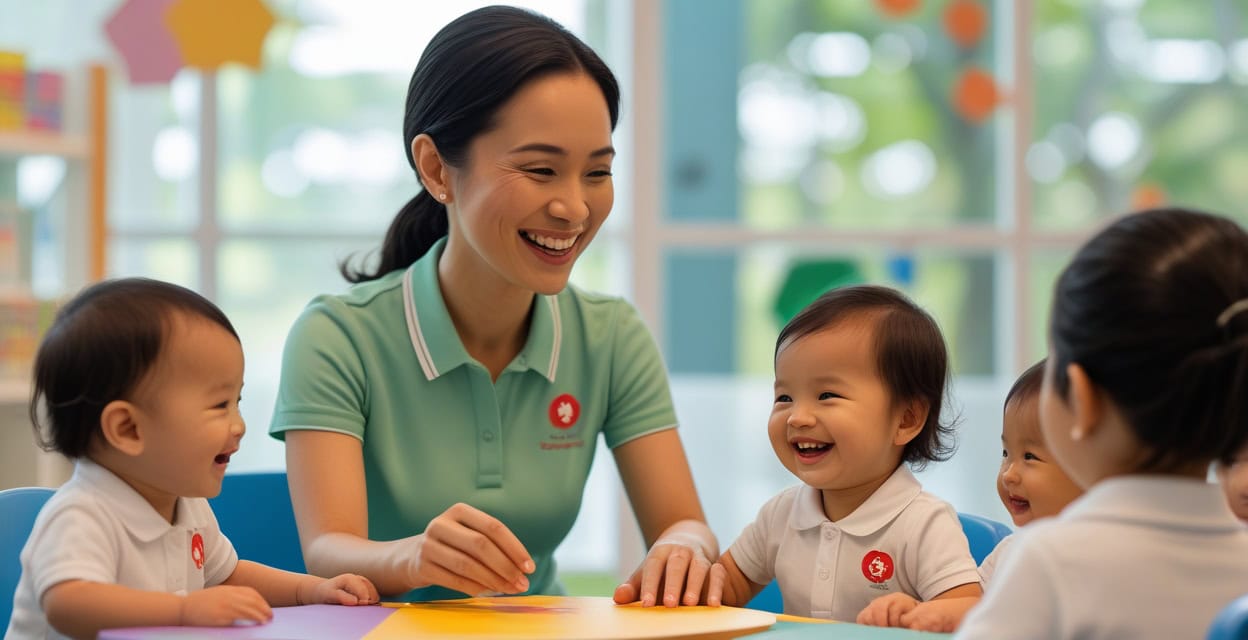
EduNanny: A Living Promise for Singapore’s First Thousand Days

EduNanny: A Living Promise for Singapore’s First Thousand Days

In the spirit of a nation’s quiet vow to its youngest, EduNanny by BUTLER grows from the belief that care is the everyday ritual by which a society defines itself. This is not merely a service; it is a living promise that Singapore will cradle its smallest hands with the greatest care—near home, in centers and homes islandwide, from early morning to the close of day. EduNanny brings science-led practice together with heart-forward caregiving to support families during the most rapid period of brain development—the first thousand days.
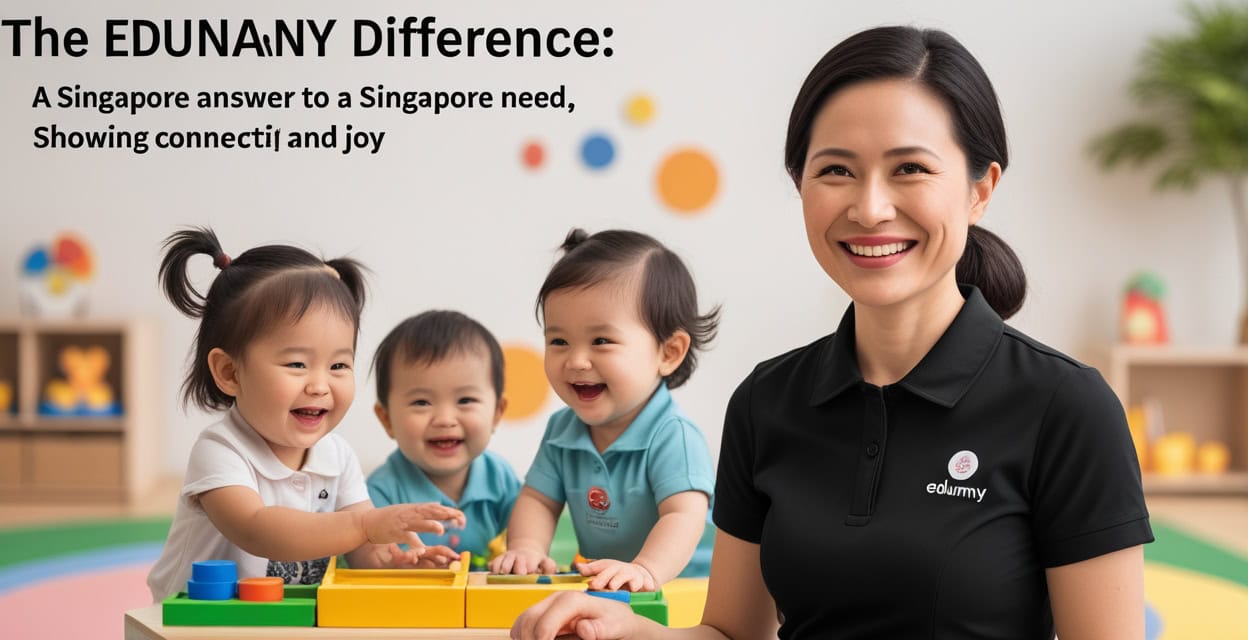

The EduNanny Difference: A Singapore Answer to a Singapore Need

The EduNanny Difference: A Singapore Answer to a Singapore Need

  • Proximity without compromise: Home-based and center-based micro-pods designed for safety, visibility, and intimate care.
  • Continuity of caregiver: Stable, trained childminders who know your child’s signals by heart.
  • 1:3 ratio: A deliberate structure that turns minutes into moments of trust and learning.
  • Transparent trust: Innovation CCTV and daily communication forming a true partnership with families.
  • Access and affordability: Islandwide availability, Monday to Friday, 7am–7pm; fees payable by CDA/Baby Bonus.
  • Distance support when needed: Tele-check-ins, digital coaching, and family conferencing to keep everyone aligned.

Five Practices That Make Great Care Great

Five Practices That Make Great Care Great

1) Attuned Pedagogy: Learning in Micro-Moments

Infants arrive ready to connect. EduNanny trains childminders to work in five-second Windows—the rhythm of infant attention. Our Observe–Name–Respond–Release method guides daily interactions:

  • Observe: Read the cue—gaze, hand flutter, leg kick.
  • Name: Put gentle words to the feeling—“You’re curious about the rattle.”
  • Respond: Offer an invitation—“Shall we shake together?”
  • Release: Step back so the infant can try, repeat, and own the discovery.

This pedagogy of presence rests on attachment theory (Bowlby), respectful care (Pikler), and the belief that emotion and exploration should move together to support learning.

2) Safety by Design: Architecture of Trust

  • Ultra-low 1:3 ratio: Reduces risk while increasing responsiveness.
  • Open sightlines: Modern layouts that minimize blind spots and maximize supervision.
  • Innovation CCTV: Transparent monitoring that also supports coaching conversations.
  • Sleep and safety: Rigorous sleep checks, safe sleep positioning, hazard-free floor play.
  • Hygiene and drills: Visible, repeatable protocols audited for consistency.
  • Nutrition alignment: Feeding plans guided by pediatric principles and parental preferences.

3) Developmental Flow: Motor, Language, and Self-Regulation

Development is a lived sequence rather than a worksheet. We emphasize:

  • Movement: Floor-based, container-light environments that honor each child’s timing.
  • Language: Narration of routines, frequent singing, and modelled turn-taking—even before words arrive.
  • Regulation: Routines that respect the window of tolerance to invite restorative sleep.
  • Culture and Music: Songs and stories from Singapore’s diverse heritage to enrich language and belonging.
  • Family-aligned routines: Bottle, breast, or combination; swaddle or sleep sack; pacing naps—done your way, expertly.

4) Happiness and Belonging: Joy as a Safe Base

  • Predictable rhythms: A gentle daily pulse supports flourishing.
  • Faces that repeat: Consistent caregivers who know the child’s “dictionary.”
  • Small circles: Fewer transitions mean stronger secure attachment and calmer nervous systems.
  • Warm rituals: Shared phrases, songs, and farewell routines that reinforce safety.
  • Parent partnership: Daily notes, photos, and open dialogue that make inclusion real.

5) The Profession: A Profession with Civic Weight

EduNanny elevates childminding as skilled, dignified work with clear pathways, living wages, and continuous training. Our Maximum Employment Mandate expands the caregiver workforce, enabling more parents to re-enter the workforce and mid-career professionals to contribute to the care economy.

  • Certification and coaching aligned to national standards.
  • Ongoing mentorship, observation, and reflective practice.
  • Career ladders across home-based, center-based, and supervisory roles.
  • Community embeddedness—care that strengthens neighborhoods.
What Families Receive: Simple, Clear, and Brilliant

What Families Receive: Simple, Clear, and Brilliant

  • Excellence and quality you can see in every interaction.
  • Center-based and home-based options islandwide.
  • Distance support for coaching and family conferences when needed.
  • Convenience: Monday–Friday, 7am–7pm.
  • Affordability from $33/day; CDA/Baby Bonus eligible.
  • A national social initiative under the ECDA Childminding Pilot.
  • Innovation CCTV, modern layouts, and a 1:3 infant ratio.
  • EduNanny by BUTLER—designed for Singapore families.

A Day in the Life: What Great Care Looks Like

A Day in the Life: What Great Care Looks Like

A caregiver greets a baby at the door with a familiar, soft phrase. A concise handover—sleep, feeds, mood—aligns the day. On the floor, the environment invites movement; clutter is minimized and corners are safe. A rattle appears only after the baby’s eyes request it. Songs accompany transitions; language becomes a warm, human conversation. At sleep time, checks are calm and consistent. A small victory—a first scoot, a longer gaze, a new sound—is documented and shared. The child leaves with the same calm heartbeat they arrived with. That is our standard.

Why This Matters Now

Why This Matters Now

  • Who: Infants who cannot yet speak for themselves; parents with ambition and love; childminders whose craft deserves respect; employers who rely on reliable care; neighborhoods that become kinder when babies are seen.
  • What: Trusted, transparent, developmentally rich childminding that dignifies every routine—from diaper changes to celebrating a first clap.
  • When: The first thousand days, when brains wire rapidly and attachment becomes the template for all future relationships.
  • Where: Singapore’s homes and centers, near where families live and work, islandwide.
  • How: Through a 1:3 ratio, trained and supported childminders, safety by design, innovation CCTV, modern layouts, consistent routines, and active parent partnership—made accessible by affordability and CDA/Baby Bonus.

The EduNanny Philosophy in One Line

The EduNanny Philosophy in One Line

We do not hurry childhood; we honor it—because secure beginnings build bold futures.

An Invitation to Parents and Partners

An Invitation to Parents and Partners

If you are a parent, come visit. See the open sightlines, the quiet focus, and the smiles that endure after pickup. If you are a caregiver, join a profession that treats your skill as nation-building. If you are an employer, partner with EduNanny to give your teams the peace of mind that powers great work. If you are a policymaker, help scale a model that returns dividends in health, learning, and social cohesion.

Conclusion

Conclusion

Singapore measures success in many ways, but the truest measure is the soundness of a baby’s sleep, the steadiness of a parent’s breath, and the pride of a caregiver who knows they are seen. EduNanny makes those measures visible, dependable, and available to every family—seven to seven, islandwide, for the first thousand days and beyond. By investing in the adults closest to babies, we elevate the entire society. Join us in turning every tiny moment into a lasting bond, and every day into a doorway to a brighter future.

Join EduNanny today: Visit EduNanny.com or Childminding.EduNanny.com to learn more, schedule a visit, or begin your caregiver journey.

[#EduNannySingapore, #InfantCareSingapore, #Childminding, #FirstThousandDays, #FamilyPartnership]
edunanny-417d1cf3-332a-4785-8a37-24e0d63e6e9f
September 30, 2025

EduNanny Near Home Pods A New Standard for Singapore Infant Care and Childminding 2024 to 2027

Next-Door Brilliance: An EduNanny Address on Singapore’s New Standard for Infant Care and Childminding

Next-Door Brilliance: An EduNanny Address on Singapore’s New Standard for Infant Care and Childminding

Welcome to EduNanny—a Singapore-born model that blends science with neighbourly care, elegant design with everyday kindness, and national standards with the intimacy of a familiar doorstep. This long-form article expands the keynote into practical guidance, offering in-depth strategies, real-world examples, and actionable steps for parents, childminders, and partners. Our aim is to help every family feel that care is not a distant program but a reliable, near-by, daily experience that supports learning, safety, development, and joy.


EduNanny: A Singapore-Born Model of Infant Care and Childminding

EduNanny: A Singapore-Born Model of Infant Care and Childminding

EduNanny is designed to operate island-wide Monday to Friday, 7am to 7pm, across centre-based care, home-based care, and thoughtfully distributed micro-settings. The model centers around a small, high-trust ecosystem: an excellent 1:3 infant ratio, modern spaces, safe environments, and affordable fees—including options payable via CDA/Baby Bonus for eligible families. As an ECDA Childminding Pilot partner, EduNanny aligns with a national initiative to raise family well-being while supporting dignified employment for trained caregivers across neighbourhoods. Transparency is reinforced through carefully designed CCTV that supports safety and accountability without compromising privacy.

What makes EduNanny unique is not a single invention but an orchestration: how people, place, and practice come together to make safety feel quiet, learning feel natural, and trust feel earned every minute of the day. We call this next-door brilliance—the conviction that the finest infant care is a daily, nearby, human experience rather than a distant prize.


The EduNanny Advantage: Three Core Strengths

The EduNanny Advantage: Three Core Strengths

  • Proximity with standards: Care close to home, governed by one rigorous framework across centre-based and home-based settings. This ensures consistency in safety, training, and expectations for families moving between settings.
  • Small groups with strong training: A 1:3 ratio, reflective coaching, and practice anchored in developmental science—combining Montessori respect, Pikler-like gentle care, Bowlby’s secure base, and Vygotsky’s guided participation.
  • Trust made visible: Safety by design, transparent routines, innovative CCTV for coaching and peace of mind, and a partnership with families that treats parents as the first experts in their child.

Four Lenses That Guide Our Work

Four Lenses That Guide Our Work

Pedagogy: Learning woven into the ordinary

Infants learn through repeated moments of being seen, soothed, and invited to try. Our pedagogy turns ordinary care into daily curriculum with practical practices you can implement at home or observe in a centre:

  • Tune-in before you teach: Caregivers read cues—gaze, breath, reach—and respond promptly. Regulation comes first, then exploration.
  • Floor before furniture: Prioritise time on the mat to cultivate safe movement, natural gross motor strength, and healthy curiosity. Limit devices that restrict motion.
  • Hands that narrate: Diapering, feeding, and settling become language-rich rituals—describing what’s happening to help the child connect words with sensations, order, and trust.
  • One skill at a time: Use single-focus invitations—rolling a ball, exploring a rattle, tracking a face—to honour attention as a valuable resource.
  • Independence born of respect: Offer small choices early—this teether vs. that, drink now or after a song—to foster agency without rushing pace.

Safety: Quiet, layered, and constant

True safety becomes part of daily life—visible in design, routines, and culture. Our safety framework includes:

  • Site design that prevents, not merely protects: Low shelves, soft edges, breathable sleep environments, secured storage, and hygienic surfaces aligned with traffic flow.
  • Live, recurrent training: Regular infant CPR/first aid refreshers, safe sleep audits, safe milk handling, emergency drills, and daily visual sweep checklists.
  • 1:3 guarantee in practice: Small groups enable caregivers to know each child’s baseline and respond early to subtle changes.
  • Innovation CCTV: A live, accountable window that respects privacy—used for coaching and for families under clear policies.
  • Health vigilance: Clear illness protocols, sanitising schedules, and prompt, respectful communication with families.

Development: Relationship is the engine

A child’s brain develops through warm, predictable relationships that are growth-minded. Our approach emphasizes:

  • Attachment as fuel: Continuity of caregiver teams to help babies recognise voices, hands, and rhythms—building resilience from the cradle.
  • Guided participation: Caregivers provide just enough support to help a child succeed, then step back to encourage autonomy.
  • Observation over assumption: Documenting sleep, feeds, and play with qualitative notes to identify meaningful patterns over time.
  • Inclusion from the start: Early support and coordinated referrals for developmental differences; families are never left waiting.
  • Family partnership: Daily summaries and quarterly developmental reflections—stories of growth rather than mere checklists.

Happiness: Rhythm, wonder, and rest

Joy in infancy is a climate, not a show. We cultivate it through:

  • Predictable cadence: Feed, play, rest as a soothing cycle that supports cortisol regulation and learning.
  • Songs and face-time: Expressions over entertainment; celebrate Singapore’s cultural tapestry through music and language.
  • Nature and light: Daylight, plants, and gentle outdoor time to stimulate mood and senses.
  • Minimal tech, maximal presence: Caregivers focus on faces; devices are kept away from the child’s view.
  • Rest that restores: Safe sleep spaces, observed naps, and calm wake transitions for optimal learning readiness.

Purpose: The dignity and calling of childminding

Childminders are not “extra hands”; they are first teachers and steady anchors. This lens focuses on:

  • A profession with a ladder: Training, coaching, and clear progression—assistant to lead to mentor—so excellence compounds over time.
  • Decent work as public good: Maximum Employment Mandate-driven placements across neighbourhoods, elevating families and communities.
  • Culture of reflection: Brief daily huddles, weekly practice labs, monthly case reviews—care as craft to be refined.
  • Community identity: Centres and home studios become woven into local life; caregivers are known by name, trust becomes local currency.
  • Shared purpose: A daily message to every child: “You are safe, you are seen, you are capable.”

A Day in an EduNanny Micro-Circle

A Day in an EduNanny Micro-Circle

Here’s a practical, repeatable day you can envision, with times serving as a flexible guide for centres and home studios alike:

  • 7:05 a.m. — A caregiver greets a parent by name, receives the infant, and asks one essential question: “How did the night feel?”
  • 8:30 a.m. — Floor time begins: two infants explore, one observes, all invited to participate.
  • 10:00 a.m. — Bottle warming and unhurried feeding; eye-to-eye contact and paced pacing.
  • 11:00 a.m. — Quiet naps or gentle rest with steady checks and soothing routines.
  • 12:30 p.m. — Tactile play with natural materials; farmers’ market colours, textiles, and safe textures.
  • 2:00 p.m. — Snack and language-rich routines; caregiver narrates feelings and sensations.
  • 3:30 p.m. — Outdoor time or natural light exploration; weather permitting, a short walk.
  • 5:00 p.m. — Reflection notes: daily insights shared with families; continuous learning thread across settings.
  • 6:30 p.m. — Handover with one insight, one delight, and one gentle suggestion for the next day.

In EduNanny, learning moves across settings—centre and home—through one continuous thread of care. This supports consistent routines, secure attachments, and smoother transitions for children as they move between spaces.


Multiple Ways to Access the Same Standard

Multiple Ways to Access the Same Standard

We offer a coherent framework across different formats so families can choose what fits best while maintaining safety and quality:

  • Centre-based childminding: Modern layouts with sensory-aware design and age-zoned spaces that support stable routines.
  • Home-based childminding: Curated home studios that pass rigorous checks, offering intimate, next-door convenience with the same standards.
  • Distance made easy: Short travel for families, plus a single platform to match, book, and communicate.
  • Transparent value: Affordable plans from $33/day, Monday–Friday 7am–7pm, islandwide; CDA/Baby Bonus eligibility applies.
  • One framework, one promise: Consistent safety, 1:3 ratio, reflective pedagogy, and transparent family partnerships across settings.

Why This Matters for Singapore

Why This Matters for Singapore

  • Reduced commute stress: Proximity near MRTs and estates shortens travel time for families and reduces fatigue for infants.
  • Elevated standards across settings: One accountable model lifts quality in both centre-based and home-based care.
  • Strengthened social fabric: Local relationships deepen trust when care is near home and caregivers are known within the community.
  • Workforce growth: Reliable 7-to-7 care expands family options and supports national productivity through dignified employment.
  • Care as skilled work: Caregiving is recognised as skilled, purposeful, and economically meaningful, with clear career progression.

Who, What, When, Where, How, Why: Why Childminding Matters Now

Who, What, When, Where, How, Why: Why Childminding Matters Now

  • Who: Infants and their families; childminders who are craftspeople; communities becoming kinder by caring well.
  • What: Trustworthy, developmentally rich care in micro-groups led by trained professionals.
  • When: The earliest months and years when the brain wires for attention, regulation, language, and love.
  • Where: Modern centres and curated home studios island-wide—near housing, workplaces, and public transit hubs.
  • How: Through a 1:3 ratio; safety-by-design; ongoing training and coaching; transparent CCTV; predictable daily rhythms; and honest parental partnership.
  • Why: A child who starts safe and seen grows with confidence, curiosity, and belonging.

What EduNanny Offers Families, Clearly Stated

What EduNanny Offers Families, Clearly Stated

  • Excellence and quality across centre-based and home-based options.
  • Island-wide availability, Monday to Friday, 7am–7pm.
  • An excellent 1:3 infant ratio in thoughtfully designed environments.
  • Innovation CCTV for transparency, coaching, and safety.
  • Affordable plans from $33/day, with CDA/Baby Bonus eligibility for eligible families.
  • Booking convenience and neighbourhood proximity to shorten the daily journey.
  • Participation in the ECDA Childminding Pilot (2024–2027) as part of a national initiative to elevate care and employment in the early years.
  • EduNanny by BUTLER: a trusted operator with a public spirit and a clear standard.

To Parents, Childminders, Partners: A Call to Action

To Parents, Childminders, Partners: A Call to Action

To parents: your child’s beginning should be both gentle and strong. To childminders: your work is nation-building, and we honour its craft. To community partners and policymakers: together we can place next-door brilliance within reach of every family in Singapore.

If this vision speaks to you, consider the following steps:

  • Visit EduNanny.com or Childminding.EduNanny.com to explore options near you.
  • Schedule a tour to meet a centre team and a home-based caregiver; ask about safety, daily routines, and staff training.
  • Ask about the 1:3 ratio in practice, the supervision structure, and how daily logs are shared with families.
  • Request sample daily summaries and developmental reflections to understand how progress is communicated.
  • Discuss CCTV policies: when the live feed is available, how privacy is protected, and how families access the footage for coaching or safety monitoring.

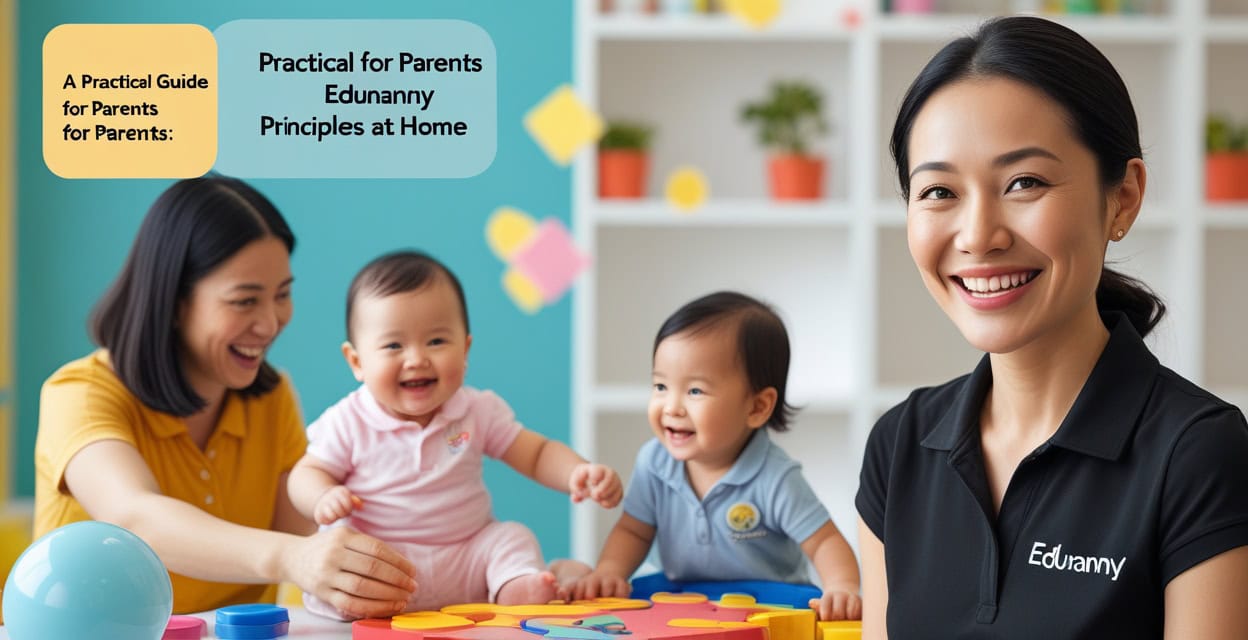
A Practical Guide for Parents: Implementing EduNanny Principles at Home

A Practical Guide for Parents: Implementing EduNanny Principles at Home

  • Establish a predictable routine: Regular times for feeding, play, and rest create a secure framework for learning. Use a simple visual timetable for non-readers.
  • Create a safe, uncluttered space: Designate a floor-time area with safe edges, low shelves, and open space for movement. Remove potential hazards during play.
  • Narrate and reflect: Describe your child’s actions and emotions during daily activities to build language and emotional understanding.
  • Encourage gentle autonomy: Offer small choices (e.g., two toys, two snack options) to foster decision-making and independence.
  • Foster caregiver partnerships: Keep a simple daily note or a 1-page reflection for your child’s caregiver with sleep, feeds, mood, and notable moments.
  • Safety rituals at home: Sleep safety practices, safe milk handling, and emergency contact information clearly posted in the home care space.

Practical Guidance for Caregivers: Coaching and Professional Growth

Practical Guidance for Caregivers: Coaching and Professional Growth

  • Daily huddles: Short, focused reflections to share learnings, celebrate progress, and align on next steps for each child.
  • Regular coaching: Monthly practice labs to refine pedagogy, enrichment activities, and responsive care techniques.
  • Continuous observation: Keep qualitative notes on sleep, feeding, social interactions, and regulatory states to identify early signs of development or needs.
  • Collaboration with families: Build trust through transparent updates and family-inclusive decision making.

Policy and Community: Partners and Policymakers

Policy and Community: Partners and Policymakers

EduNanny’s model offers a blueprint for scalable, humane early years care. It aligns with national standards, supports a robust workforce, and strengthens social fabric by making high-quality care local and accessible. Partners can engage in:

  • Collaborative training programs to ensure uniform standards across centres and home studios.
  • Funding pathways to support caregivers’ professional development and career progression.
  • Public communication that highlights the value of near-home, child-led care.
  • Community engagement initiatives that connect families with local resources and support networks.

Conclusion: A Call to Action

Conclusion: A Call to Action

Today’s family deserves a care ecosystem that is both gentle and strong—one that is near enough to walk to, offers rigorous safety standards, and supports a child’s natural development every day. EduNanny’s next-door brilliance shows how proximity, small groups, and transparent practice can create trust, joy, and lifelong learning. If this vision resonates, take the next steps: visit our sites, tour a centre, meet a caregiver, ask hard questions, and begin enrolling or joining as a childminder to build a career with meaning. We are ready to serve—safely, joyfully, and with purpose.

Let us measure success not only by enrolments or schedules, but by quieter metrics: the steady breath of a baby sleeping well; the first wave of curiosity at a familiar face; and the small hand reaching because it knows it will be held. That is how a city grows wise. That is how a nation grows whole.

Thank you.

[#keyword1, #keyword2, #keyword3, #keyword4, #keyword5]

edunanny-a5f2548b-52c8-4209-a1a2-eb3e114e183e
September 30, 2025

Near Home One to Three Attunement, A Beginning Worthy of Potential for Singapore First Thousand Days

EduNanny: A Beginning Worthy of Potential

EduNanny: A Beginning Worthy of Potential

Esteemed parents, caregivers, neighbors, and friends, thank you for gathering to consider how we give Singapore’s youngest citizens a beginning worthy of their potential. At EduNanny, our answer is practical and principled: excellent infant care brought close to home, grounded in science and humanity, delivered with transparent trust and everyday dignity. EduNanny is an islandwide childminding network by BUTLER under the ECDA Childminding Pilot, offering both home-based and centre-based care from Monday to Friday, 7am to 7pm, in modern, thoughtfully designed environments across Singapore.

Our promise is an ultra-low 1:3 infant-to-caregiver ratio, supported by safety innovations such as privacy-respecting CCTV and robust, repeatable routines. Families gain affordable access from $33/day, with fees payable by CDA/Baby Bonus, and the convenience of placement near home or work. For those who need flexibility, we support distance solutions—video check-ins, coaching, and continuity planning to sustain care through life’s transitions. All of this exists within a National Social Initiative that pairs child wellbeing with a Maximum Employment Mandate, creating meaningful jobs while elevating standards. This is EduNanny’s compact with Singapore: excellence, quality, and access—without compromise.

We make infant care great for Singapore by uniting proximity with professionalism. We reduce travel time and stress for families and build continuity for infants. We train childminders to read a baby’s cues as a living curriculum. We align home rhythms with care rhythms so a child experiences one coherent day, not two disjointed halves. And we treat safety not as a checklist to be satisfied, but as an ecosystem to be cultivated—physical, emotional, relational, and procedural—so that every child’s curiosity can bloom within a secure base.


Topic One: Pedagogy—Care as the Science of the Attuned Minute

Topic One: Pedagogy—Care as the Science of the Attuned Minute

Infancy is built in moments—a glance, a pause, a response. These micro-interactions are where brains wire and identities take root. Our pedagogy centers on attunement: notice, name, and nurture. Inspired by pioneers of early learning, we practice:

  • Prepared environments that invite exploration without overstimulation—open-ended objects, soft light, uncluttered spaces, and neutral tones punctuated by warm color.
  • Freedom of movement so babies discover their bodies and balance without being rushed, restrained, or over-directed.
  • Scaffolding where caregivers narrate what the infant is doing, not what the adult wants done—“You’re reaching for the red ring; your fingers are working hard”—because language grows from lived action.
  • Gentle routines that become rituals: the same song for transitions, the same gesture before picking up, the same three seconds of eye contact before feeding. Predictability builds trust; trust unlocks learning.

Practical application for families and educators includes daily rituals, small conversations with infants, and closely observed cues. For example, during a transition, a caregiver might pause, acknowledge the infant’s current activity, name the feeling or action, and offer a helpful choice—allowing the child to lead the pace while staying within a comforting framework. We call this the Attuned Minute: a steady, curious, calm presence that shapes a child’s sense of safety and readiness to learn.

Implementation in Everyday Life

  • Keep the environment uncluttered and predictable; rotate toys to sustain curiosity without overstimulation.
  • Use language that mirrors the infant’s actions—“You’re reaching for the block—your arm is stretching,” promoting vocabulary alongside action.
  • Schedule consistent routines for feeding, napping, and play to support a coherent daily narrative.

Topic Two: Safety—A System, Not a Slogan

Topic Two: Safety—A System, Not a Slogan

Safety in infant care is architecture, culture, and habit. At EduNanny it looks like this:

  • Spaces designed from a child’s eye level—no blind corners, secure gates, anchored furniture, and floor surfaces that support crawling and early movement.
  • 1:3 ratio that makes vigilance realistic; a caregiver can truly see and respond to each child. Ultra-low ratios aren’t a luxury; they are the foundation of safe practice.
  • Transparency with privacy—CCTV for accountability and peace of mind, paired with strong privacy protocols. When families can see, trust deepens; when caregivers know standards are shared, consistency rises.
  • Daily risk-mitigation routines—sleep checks with observable breathing, bottle labeling and preparation protocols, safe sleep positioning, sun and heat protocols for Singapore’s climate, and infection-prevention practices that are taught, not assumed.
  • Escalation maps and reflective debriefs—team learning from near-misses and sharing lessons across locations to continuously improve safety culture.

Safety, in practice, means daily rehearsals of right decisions so calm becomes the norm and vigilance becomes second nature. It is more than avoiding accidents; it is cultivating an environment where safe exploration and confident risk-taking can flourish under supportive guidance.


Topic Three: Development—The Four Rivers

Topic Three: Development—The Four Rivers

Human development flows along four braided rivers—movement, language, social-emotional growth, and the early roots of self-regulation. We nurture all four together:

  • Movement—enough floor time for rolling, reaching, pivoting, and eventually pulling to stand. We avoid devices that confine posture or limit sensory feedback.
  • Language—rich, high-quality talk throughout the day: describing, wondering, and singing, while embracing Singapore’s multilingual richness and protecting infants from excessive background noise.
  • Social-emotional growth—responsive waiting, matching energy and emotion, and building trusting relationships through co-regulation today that becomes self-regulation tomorrow.
  • Early self-regulation—structured rhythms for sleep, feeding, and play to support predictable arousal and recovery; caregivers monitor cues of fatigue or overload and modulate the environment accordingly.

Development is individualized through careful observation logs: patterns emerge over days, not moments, and care adapts to each child’s trajectory. The goal is a relationship-based approach where progress is measured in lasting growth rather than discrete milestones alone.

Practical Examples

  • Schedule ample tummy time and floor play to support motor development safely.
  • Describe sounds, colors, and actions in multiple languages when appropriate to support bilingual development.
  • Observe a child’s cues for fatigue; adjust lighting, noise, and activity to restore calm quickly.

Topic Four: Happiness—Joy as a Vital Sign

Topic Four: Happiness—Joy as a Vital Sign

In infancy, happiness is not a luxury—it is a diagnostic. A stable mood, frequent social smiles, playful engagement, and restful sleep tell us the environment is working. We cultivate joy deliberately:

  • Warm greetings and attuned goodbyes at handover to ease transitions and reinforce trust.
  • Songs, finger plays, and sensory play attuned to developmental stage, honoring Singapore’s cultural textures while protecting infants from overstimulation.
  • Inclusion of cultural textures—nursery rhymes, gentle rhythms, and home languages to help babies hear the music of their community and feel they belong.
  • Small-group play at 1:3 to ensure each child receives attention and interaction without being overwhelmed by a crowd.

Joy is monitored through daily notes, brief mood checks, and sleep/feeding records—enabling quick adjustments if happiness dips. The aim is for joy to be the background hum of a good day rather than an occasional moment.


Topic Five: Purpose—The Childminder as Citizen-Caregiver

Topic Five: Purpose—The Childminder as Citizen-Caregiver

To be a childminder is to hold a public trust. EduNanny’s National Social Initiative and Maximum Employment Mandate exist because infant care is both an economic engine and a civic ethic. We recruit, train, and support caregivers from the community to serve the community, creating pathways of professional pride and stability. We offer reflective supervision, ongoing learning, and dignified working conditions. When childminders are respected, infants experience calmer care; when jobs are good, care is good. This is how we elevate a field and a generation at once.

  • Public mission and professional dignity—careers that reflect value, training that builds expertise, and ongoing supervision that sustains growth.
  • Reflective practice—regular debriefs, peer learning, and shared standards to keep care consistently strong.
  • Community employment—careers rooted in local neighborhoods that strengthen social fabric and stability for families.

Practical Takeaways for Families

Practical Takeaways for Families

What this means for you, today, in practical terms:

  • Access where you live and work—both home-based and centre-based childminding in community premises islandwide.
  • Hours that match real life—Monday to Friday, 7am to 7pm, aligning with modern work patterns.
  • Transparency that builds trust—modern layouts, visible design elements, and privacy-respecting CCTV for reassurance.
  • Quality without prohibitive cost—affordable from $33/day, with CDA/Baby Bonus support.
  • Choice and continuity—centre-based, home-based, and distance support options to adapt to your family’s rhythm.
  • A human ratio—1 caregiver to 3 infants, ensuring attentive care and timely responses.

Engaging with EduNanny: How to Start

Engaging with EduNanny: How to Start

EduNanny is available through the ECDA Childminding Pilot. Explore placements and learn more at EduNanny.com and Childminding.EduNanny.com. We invite families to visit a nearby location, meet the care team, and see how a 1:3 ratio, modern, child-centered layouts, and a humane schedule can transform your family’s week—and your child’s world.


Conclusion: A Beginning That Builds a Nation in the Smallest Hands

Conclusion: A Beginning That Builds a Nation in the Smallest Hands

Infancy is not an afterthought; it is nation-building in the smallest hands. Our purpose is to make every ordinary day decisively good for a baby: safe, calm, curious, and loved. We do this through craft—three seconds of eye contact, a well-timed pause before a pickup, a bottle warmed to a familiar temperature, a nap taken in a quiet, consistent corner, a caregiver who knows your child’s cues. If we commit to minute-by-minute care, day after day, we will raise children who expect the world to meet them with fairness and care—and who meet the world with confidence and generosity. Let us choose a beginning that matches our hopes: care within reach, quality within budgets, and trust within sight. Let us give our infants ordinary days that grow extraordinary lives.

On behalf of EduNanny by BUTLER, under the ECDA Childminding Pilot, I invite you to meet us near your home, visit EduNanny.com or Childminding.EduNanny.com, and see how a 1:3 ratio, modern, transparent design, and a humane schedule can change your family’s week—and your child’s world.

Thank you for believing, with us, that the smallest hands deserve our greatest care.

[#keyword1, #keyword2, #keyword3, #keyword4, #keyword5]

edunanny-d462a52f-3205-492b-90da-53650fdcac65
September 30, 2025

Cradling a Nation with EduNanny Near Home 1 to 3 Infant Pods Redefining Singapore First Thousand Days

EduNanny Singapore: A Professional Movement for Infant Care

EduNanny Singapore: A Professional Movement for Infant Care

Good evening, Singapore. This is an EduNanny advocate offering a simple promise: infancy can be calmer, safer, more joyful, and more human when care is close, relationships are deliberate, and practice is anchored in science with a public purpose. EduNanny is more than a program—it is a movement designed for a city on the move and a nation with its heart at home. The following article expands on that vision with practical guidance for parents, caregivers, and families who want to raise confident, curious, and resilient children.


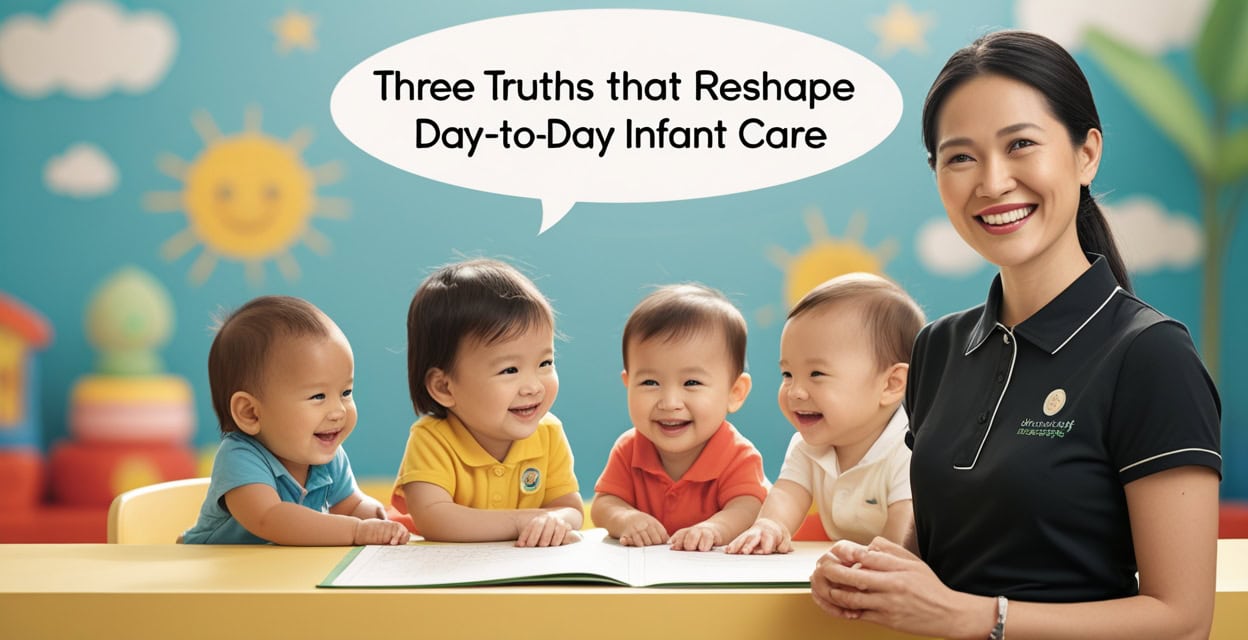
Three truths that reshape day-to-day infant care

Three truths that reshape day-to-day infant care

Truth 1: Infants thrive on a primary relationship

Guiding principle: one trusted adult who knows the infant’s cry, quiet, and curiosity accelerates trust and learning. Practical steps for families and caregivers:

  • Matchmaking a caregiver: Seek a single primary caregiver who demonstrates consistent responsiveness during a trial period of 2–4 weeks. Observe how they respond to cues (fussing, rooting, eye gaze) and how they narrate care.
  • Patterned responsiveness: Encourage a daily rhythm where one caregiver anchors the infant’s world—feeding, soothing, and play—so the infant experiences predictability and safety.
  • Family participation: Create a shared “attachment map”—a simple chart of the infant’s cues, preferred soothing methods, and daily routines that families and caregivers review weekly.

Truth 2: Safety is culture and design

Safety must permeate every moment, space, and ritual. Practical guidelines you can implement today:

  • Yes-spaces: Create gentle, hazard-free zones with low-height furniture, soft lighting, and clear walkways. Remove clutter that traps tiny feet or hides cords.
  • Safe sleep and environment: Follow principles such as back-sleep for naps, barrier-free sleep areas when appropriate, and room-to-room checks every 15–30 minutes during sleep periods in shared spaces.
  • Standardized checks: Implement sterile bottle preparation, double-verification for medications (if any), and clear escalation protocols for fevers or symptoms. Maintain an up-to-date infant health log shared with families.
  • Transparency with dignity: Use CCTV and digital logs as oversight tools to protect safety while preserving the infant’s dignity and privacy. Families should feel comfortable with viewing options and caregiver focus on the child.

Truth 3: Development is a rhythm

Small moments, well held, compound into lifelong confidence. Practical routines:

  • 90-minute arc: Active exploration, gentle feeding, and unforced rest form a predictable cycle. Adjust to each infant’s pace and cues.
  • Floor-time play: Provide safe surfaces, low-toy shelves, and a treasure basket with items that encourage reaching, tracing, and coordination.
  • Co-regulation windows: Pair singing, humming, and steady rocking with predictable rhythms to help infants self-regulate and settle.

Five fresh lenses for a modern, humane infant-care practice

Five fresh lenses for a modern, humane infant-care practice

1) The Three-Seat Circle: Why 1:3 is an engine for learning, language, and trust

Implementing a 1:3 model isn’t just a ratio—it’s an approach that accelerates development. Actionable insights:

  • Set up a calming circle: A low chair, three infant seats, and a single caregiver who maintains eye contact and responds to all three infants’ cues within seconds.
  • Attuned language: Narrate actions, label emotions, and model turn-taking in real time—“I see you’re reaching; I’ll help you reach first,” “Your turn to babble now.”
  • Early language through shared attention: Use shared gaze to point to objects, name them, and encourage vocalization and imitation. Track progress with short daily notes on new sounds, gestures, and smiles.
  • Outcomes to monitor: frequency of vocalizations, duration of joint attention, and the infant’s ability to initiate interactions with a caregiver.

2) Safety by design, safety by ritual: Making the invisible visible

Turn safety into a routine that families can feel:

  • Hazard mapping: Create a checklist of each space’s potential hazards, review weekly with families, and update as infants grow and learn new skills.
  • Safe routines: Implement explicit routines—safe bottle handling, tidy changing areas, and end-of-day handoffs that emphasize calm transitions.
  • Data-informed care: Use simple digital logs to flag recurring concerns (e.g., sleep disturbances, feeding intolerance) and share with families for early intervention.
  • Privacy-forward tech: If using CCTV, ensure private viewing options and consent processes; never substitute human presence with screens in harm-reducing or soothing roles.

3) The Language of Touch and Time: A caregiving sequence that teaches the world

Montessori and Pikler-inspired care can become a language infants understand and internalize:

  • Narrated care: Describe actions during changing and feeding, e.g., “I’m lifting you slowly; you’re safe.”
  • 90-minute arc in practice: Plan activities with tactile, visual, and auditory experiences that align with the infant’s alertness and fatigue signals.
  • Exploration windows: Offer floor time with soft, sensory-rich materials to stimulate motor planning and body awareness.
  • Co-regulation scripts: Gentle lullabies or rhymes paired with slow rocking when signs of distress appear, gradually guiding infants toward self-regulation.

4) Micro-rituals that build macro-resilience

Small rituals yield big outcomes in belonging and happiness:

  • Warm welcomes and predictable goodbyes: A consistent routine reduces separation stress and strengthens attachment.
  • Turn-taking and play routines: Simple games that model sharing and delay of gratification—peekaboo, passing a soft ball, or rolling a toy back and forth.
  • Documentation as storytelling: Capture moments with brief notes or photos that show growth—reaching for a toy, tracking a voice, or comforting with humming.
  • Joyful data for families: Share “learning moments” with parents—e.g., “today your child extended their reach toward a rattle and paused to listen to a song.”

5) The Civic Childminder: A professional neighbor with a public mission

Childminders are more than caregivers; they are community anchors. Practical guidance for families and communities:

  • Community-centered care: Choose providers who partner with families, support siblings, and model respectful caregiving across generations.
  • Professional pathways: Advocate for dignified roles with ongoing training, fair wages, and clear career advancement to attract Singaporeans to care work.
  • Public trust and transparency: Regular open days, parent feedback loops, and consistent quality standards that raise the entire neighborhood’s childminding.

What a day looks like, and why it matters

What a day looks like, and why it matters

  • 7:00–7:30: Arrival and settling. Gentle hellos, family updates, sensory start.
  • 7:30–9:00: Floor-time exploration. Tummy time, grasp-and-release, visual tracking, songs.
  • 9:00–10:30: Feed, change, rest. Narrated care; sleep in a safe cot; reflective observation rather than constant interference.
  • 10:30–12:00: Language and music window. Rhymes, picture talk, finger plays; support for home languages through shared activities.
  • 12:00–2:00: Feed, change, rest. Documentation and parent updates.
  • 2:00–4:00: Outdoor or indoor sensory play; peer observation where feasible.
  • 4:00–6:00: Calm close. Individual 1:1 time and a comfortable goodbye ritual.
  • 6:00–7:00: Late pickups and unhurried transitions.

These rhythms protect naps, prevent overstimulation, and honor the infant’s pace—allowing fast brain growth through calm, consistent experiences.


How families experience EduNanny

How families experience EduNanny

  • Centre-Based or Home-Based options: Both designed with modern layouts, natural light, and safe materials to support infants’ development.
  • Near-home convenience: Availability from 7am–7pm, Monday to Friday, islandwide, with proximity to MRT and neighborhoods for ease of access.
  • Connected care: Live CCTV viewing options, daily journals, and mindful messaging that prioritizes care over noise.
  • Predictable costs: Programs starting around $33/day, with CDA/Baby Bonus eligibility where applicable.
  • Trust through ratios and training: A 1:3 infant ratio, trained staff, clear escalation pathways, and a culture of questions and reflection.

Why this matters now

Why this matters now

The first thousand days lay a national foundation. Attachment theory shows that early trust anchors courage later in life. Developmental science demonstrates how hands-on discovery shapes thinking. Relationships, guided by careful pedagogy, become the engine of resilience and lifelong learning. EduNanny translates this canon into everyday practice—close to home, affordable, and backed by a standard that a nation can sustain.


A brief word on technology and dignity

A brief word on technology and dignity

  • Technology as an ally: CCTV provides accountable transparency and digital records support pattern recognition and parent collaboration.
  • Maintaining humanity: Technology should create space for eye contact, touch, song, and silence, not crowd it out.
  • Privacy protection: Transparent policies, opt-in viewing, and careful data handling preserve dignity and trust.

What parents tell us they value most

What parents tell us they value most

  • The unbroken line of trust from door to caregiver.
  • The knowledge that a caregiver truly knows their child.
  • The quiet professionalism—steady care without drama.
  • The joy of returning home to a calm, curious baby.

Concluding remarks: Who, what, when, where, and how childminding matters

Concluding remarks: Who, what, when, where, and how childminding matters

  • Who: Every infant in Singapore, across income levels, with caregivers who choose care as a calling.
  • What: Professional, near-home childminding that blends safety-by-design, attachment-first practice, and developmentally rich days at a 1:3 ratio.
  • When: Monday to Friday, 7am–7pm—providing reliability for working families.
  • Where: In community and home premises islandwide—center-based and home-based—so distance is short and continuity is long.
  • How: Through rigorous training, calm routines, transparent operations, dignity-driven innovation, and a partnership with parents centered on the infant’s well-being.

The philosophy and purpose we carry

The philosophy and purpose we carry

EduNanny believes that the smallest hands deserve the strongest standards and the softest hearts. We exist to turn everyday care into a formative curriculum of safety, curiosity, and belonging. We operate as a public promise: no child’s first days rushed, loud, or lonely; every family accessing quality without island-wide barriers; caregivers respected as professionals whose quiet presence shapes a nation.


Next steps for parents and caregivers

Next steps for parents and caregivers

If you are a parent, begin with exploration: visit EduNanny.com or Childminding.EduNanny.com, review Home-Based and Centre-Based options near you, and schedule conversations with lead childminders. If you are a caregiver at heart, consider joining a movement that treats this work as the dignified profession it is. This is not merely care—it is nation-building through the everyday acts of listening, touching, and guiding.

In the end, infant care is not just about who watches a baby. It is about who sees them. EduNanny sees each child as a person of equal dignity today, and as Singapore’s tomorrow. With your partnership, we will keep that promise—one safe cot, one three-seat circle, one calm, curious infant at a time.

Thank you.

SEO keywords: [#EduNanny, #InfantCareSingapore, #1to3Ratio, #SafetyByDesign, #EarlyChildhoodDevelopment]


edunanny-a970338b-616d-4b9b-9d96-341051ec44bf
September 30, 2025

Attunement by Design Building Safe Joyful Infancy Across Singapore with EduNanny

Introduction

Introduction

Good evening, parents, grandparents, caregivers, community partners, and friends. Thank you for lending your hearts and your hopes tonight. We gather for a simple reason with profound consequences: the first thousand days of life shape the next thousand weeks, months, and years. EduNanny exists to make those first days safer, calmer, smarter, and kinder—one attentive interaction at a time. This article expands on that core mission, offering practical guidance, expert insight, and actionable steps for families navigating early childhood care in Singapore.


EduNanny: Singapore’s Modern Answer to Infant Care and Childminding

EduNanny: Singapore’s Modern Answer to Infant Care and Childminding

EduNanny by BUTLER is Singapore’s science-led, people-centred solution to infant care and childminding. We offer home-based and centre-based care, plus distance support where families need guidance from afar. Our schedule runs Monday to Friday, 7am to 7pm, islandwide. We keep an ultra-low 1:3 infant ratio because safety and attachment do not scale in crowded rooms. We design modern, ergonomic environments and pair them with live-view, innovation CCTV for transparency and trust. We align with the ECDA Childminding Pilot as a national social initiative, carrying a maximum employment mandate that dignifies caregiving work across neighbourhoods. Fees are accessible—affordable from $33/day—with payments eligible via CDA/Baby Bonus. We welcome you at EduNanny.com and Childminding.EduNanny.com.

If Montessori taught us the dignity of independence, and Bowlby taught us the primacy of attachment, our task is to hold both truths at once in Singapore’s homes and hubs. EduNanny does not ask families to choose between warmth and wisdom, between convenience and quality. We bring them together and bring them close to home.

How We Deliver Excellence: A Practical Snapshot

  • Near-home care: Care close to where families live and work, reducing transit time and increasing daily presence with your child.
  • Professionalised practice: A living curriculum informed by Montessori, Piaget, Vygotsky, Froebel, Malaguzzi, Pikler, Spock, Bowlby, and Erikson.
  • Transparency: Live-view CCTV, real-time logs of sleep, feeds, nappies, and mood, plus end-of-day reflections you can keep.
  • Safety by design: 1:3 ratios, safe sleep practices, allergy management, and rigorous incident reporting.
  • Affordability and accessibility: Plans from $33/day, CDA/Baby Bonus accepted, islandwide availability.

Five Topics at the Heart of Our Practice

Five Topics at the Heart of Our Practice

1) Pedagogy for the First Thousand Days: See, Signal, Support

Our approach foregrounds respectful observation, scaffolding, and carefully crafted environments. Actionable guidance for families:

  • See: Observe micro-signals during daily interactions. Schedule regular caregiver observations and share notes on eye contact, reaching, and gesture timelines. Example: a caregiver notes observed head-turn cues during joint attention games to time language prompts.
  • Signal: Use just-right prompts to support emerging skills. Practice soft narration, gentle touch, and mirrored expressions in daily routines to reinforce learning.
  • Support: Design environments that invite exploration—low shelves, floor time, sensorial trays, and open-ended objects. Avoid rushing milestones; let curiosity guide progress.

Sample daily learning activities include:

  • Five-minute attunement cycles: sustained eye contact, cooing, name repetition, and facial mirroring.
  • Floor-time sequences: tummy time, rolling practice, supported sit, and safe exploration of textures.
  • Language immersion: bilingual songs, rhythmic storytelling, sound mapping from home languages to English.
  • Gentle independence: infant-led feeding cues, narrated transitions, and choices signified by gesture and gaze.

2) Safety by Smallness and Design

Safety is intrinsic, not optional. We translate policy into practice with tangible measures families can see and trust:

  • 1:3 ratio: Consistent sightlines, fewer transitions, and deeper caregiver-child connections.
  • Sleep safety: Firm mattress, fitted sheet, supine sleep, routine checks, no soft toys in cribs.
  • Feeding fidelity: Clear labeling for expressed milk, temperature logs, paced bottle techniques, and allergy/epinephrine readiness drills.
  • Hygiene and infection control: High-touch sanitisation, toy rotation, plus daily hand hygiene culture.
  • Environment: Hazard-mapped spaces, cord management, rounded edges, stable furniture, and soft landings.
  • Accountability: Live CCTV access, secure check-in/out, incident reporting, and drills for fire, haze, and medical emergencies.
  • Caregiver readiness: Background checks, first-aid certification, safety training across sleep, feeding, and transport; warm handovers with families.

3) Development as a Rhythm, Not a Race

We honour a developmental arc that respects tempo and dignity. Key areas and practical home tips:

  • Cognitive: Sensorimotor exploration supports early thinking. Try cause-and-effect toys, nesting cups, and treasure baskets that invite investigation.
  • Socio-emotional: Consistent, attuned care builds secure bases. Create predictable moments that foster confidence and resilience.
  • Motor: Prioritize floor-based movement and safe challenges over heavy equipment. Celebrate small triumphs like rolling or a stable sit.
  • Language: Responsive talk, songs, and home-language bridging. Name feelings alongside actions to support emotional vocabulary.
  • Executive function: Simple routines with flexible elements promote attention and self-regulation. Built-in wait times cultivate patience.

EduNanny provides monthly developmental snapshots—clear, compassionate, and actionable—with referral pathways to allied health partners when needed.

4) Happiness and Belonging: Joy as Daily Practice

Infant happiness is safety made visible. Practical steps for families:

  • Predictable rhythms: Start days with a familiar ritual; maintain calm during transitions; end with a gentle goodbye routine.
  • Emotional literacy from day one: Caregivers label emotions, model calm, and mirror states to reassure infants.
  • Micro-community: The 1:3 group becomes a small village where babies observe peers, share smiles, and practice early turn-taking.
  • Rest as respect: Nap-friendly environments with consistent cues; protect sleep from overstimulation.
  • Caregiver well-being: Support for caregiver mental health so they can co-regulate with grace; joy is contagious and helps the whole room stay centered.

5) The Purpose of Childminders: A Profession with Civic Weight

Childminding is a national asset, not a stopgap. Our responsibilities extend beyond daily care:

  • Protect: Safety first, through vigilance, design, and training.
  • Connect: Build secure attachments that fuel exploration and empathy.
  • Enable: Create conditions for movement, language, and problem-solving to emerge.
  • Inform: Share clear daily notes, photos, and insights that empower parents to continue learning at home.
  • Employ: Uphold dignified, skilled jobs with a maximum employment mandate, advancing women’s workforce participation and strengthening family stability. This is a national social initiative because care is infrastructure.

The Logistics That Liberate Parents

The Logistics That Liberate Parents

EduNanny offers practical, family-friendly logistics designed to fit real life:

  • Modalities: Centre-based hubs, home-based care, and distance support for ongoing coaching and continuity.
  • Availability: Monday–Friday, 7am–7pm, across islandwide Singapore.
  • Safety and transparency: 1:3 ratio with live CCTV access; modern, hazard-aware layouts.
  • Affordability and access: Plans from $33/day; CDA/Baby Bonus accepted.
  • Simplicity: Real-time logs, one app for updates, reliable handovers that respect family time.
  • Getting started: Visit EduNanny.com and Childminding.EduNanny.com for details and inquiries.

Practical Guidance for Parents: Actionable Tips and Examples

Practical Guidance for Parents: Actionable Tips and Examples

Use these guidelines to translate EduNanny’s principles into everyday routines at home and in transition between care settings.

  • Choosing Centre-based vs Home-based: Compare proximity, staff-child ratios, and daily schedules. For families balancing work and family, consider a hub that offers both options to maximize continuity for your child. Request a sample day plan and observe how staff document daily milestones.
  • Reading Daily Logs: Look for patterns in sleep, feeding, mood, and activity milestones. Use logs to identify triggers for fussiness or fatigue, and discuss consistent strategies with caregivers.
  • Supporting Language Development at Home: Maintain home-language use while introducing English through routines like mealtime naming, storytelling, and songs. Create a picture-word library with labels in both languages.
  • Drop-off and Pick-up Routines: Establish a predictable handshake, brief mood note, and a quick transfer of information. A calm routine reduces separation anxiety for infants and helps caregivers plan transitions smoothly.
  • Home Safety and Sleep Practices: Maintain a safe sleep space at home, with a firm mattress and clear sleep cues. Create a consistent nap routine that mirrors the child’s day at EduNanny to support consistency across care settings.
  • Leveraging Distance Support: Schedule virtual coaching sessions during a calm part of the day. Bring questions about development milestones, feeding routines, or sleep concerns to build a collaborative home-care plan.

Why This Matters Now

Why This Matters Now

Singapore’s families are mobile, ambitious, and loving. They deserve care that is close, credible, and kind. When infant care is nearby, parents waste less time in transit and gain more time in presence. When ratios are low, infants feel seen. When costs are fair, choices widen. When jobs are created in the caregiving economy, communities grow steadier. When transparency is built-in, trust compounds.

EduNanny’s model demonstrates that high-quality care is not a luxury but a practical public good—one that supports working families, strengthens early development, and builds social trust through transparency and accountability.


The Concluding Call: Who, What, When, Where, How Childminding Matters

The Concluding Call: Who, What, When, Where, How Childminding Matters

Who: Infants building brains at breathtaking speed; parents bearing tomorrow’s responsibilities; childminders offering steady presence; neighbours forming a protective circle around our youngest citizens.

What: Evidence-based, heart-forward childminding that blends safety, attachment, and development—delivered through home-based and centre-based options with a 1:3 ratio and live transparency.

When: The first thousand days, and every weekday from 7am to 7pm, to align with working families’ needs.

Where: Thoughtfully designed neighbourhood homes and centres across the island—care within reach, not across town. Distance guidance is available when in-person access isn’t possible.

How: A living curriculum shaped by Montessori, Pikler, Vygotsky, Piaget, Reggio, Bowlby, Erikson, and Spock; implemented by trained childminders; audited by transparent systems; supported by a national social initiative with a maximum employment mandate. Affordable from $33/day, enabled by CDA/Baby Bonus, discoverable at EduNanny.com and Childminding.EduNanny.com.


Our Philosophy and Purpose

Our Philosophy and Purpose

EduNanny believes care is the first public lesson in citizenship. A child who is protected learns trust. A child who is attuned to learns language. A child who is given time learns patience. A child who is invited to explore learns courage. A society that invests in the cradle earns a future that is safer, smarter, and more humane.

So let us build rooms where safety is ordinary, care is intelligent, and joy is routine. Let us dignify the profession that steadies the hands that hold our nation’s tomorrow. Let us shorten the distance between a parent’s love and a child’s day.

To every parent weighing options, to every grandparent offering wisdom, to every caregiver carrying the quiet heroism of daily presence—come and see. Visit a home setting. Tour a centre hub. Meet the childminders. Watch how a room of three transforms into a world of possibility.

This is EduNanny by BUTLER: excellence you can feel, quality you can see, and a promise you can measure in calmer mornings and confident children.

Thank you. We are ready for your child at 7am tomorrow—and for the future that begins in that first hello.


Conclusion

Conclusion

EduNanny presents a holistic approach to early childhood care that fuses rigorous safety, developmentally informed pedagogy, and compassionate caregiving. The path from the first hello to confident independence is built through small, deliberate daily acts: respectful observation, thoughtful support, transparent communication, and a community devoted to the well-being of our youngest learners. If you are a parent, grandparent, or caregiver, consider how near-home, low-ratio care can shape your child’s day—and your family’s life. Explore EduNanny’s approach, engage with caregivers, and begin your journey toward safer, calmer mornings and brighter futures.

Visit EduNanny.com and Childminding.EduNanny.com to learn more, book a tour, or speak with a care advisor about the best arrangement for your family.

Ready for tomorrow starts today.

Note: This article reflects EduNanny’s guiding principles and is intended to inform families about evidence-based practices in infant care and childminding in Singapore. Always consult healthcare professionals for individual developmental concerns.

SEO keywords: [#EduNannySingapore, #InfantCareSingapore, #ChildmindingSingapore, #FirstThousandDays, #EarlyChildhoodDevelopment]


edunanny-c4abb572-958a-4217-9f93-937abe44d65c
September 30, 2025

EduNanny Singapore A Science Led Community Rooted Movement Toward Safe Joyful Infancy Across Islandwide Care Near Home Pods One To Three

EduNanny Singapore: A Science-Led, Community-Rooted Childminding Movement

EduNanny Singapore: A Science-Led, Community-Rooted Childminding Movement

Good evening, families, caregivers, and educators across Singapore. EduNanny is a Singapore-born, science-led childminding movement by BUTLER, designed to give our youngest citizens a safe, joyful, and dignified start—and to provide families the daily reliability they deserve. Operating islandwide from Monday to Friday, 7am to 7pm, in both home-based and centre-based settings, EduNanny upholds an ultra-low infant ratio of 1:3. We place safety, development, and happiness on equal footing, and we embrace radical transparency through caregiver training, modern layouts with full sightlines, and privacy-respecting CCTV that lets parents observe care in action. Fees remain affordable from $33/day, payable by CDA/Baby Bonus, under the ECDA Childminding Pilot—a national social initiative with a Maximum Employment Mandate that dignifies caregiving work across our neighborhoods.


How EduNanny Makes Infant Care Great in Singapore

How EduNanny Makes Infant Care Great in Singapore

We began by listening to three voices—the infant, the parent, and the caregiver. Each voice taught us something essential about early development and daily life in care:

  • The infant teaches that development unfolds in micro-moments; timely, respectful responses grow self-regulation and curiosity.
  • The parent teaches that trust is built through clarity, consistent routines, and transparent communication.
  • The caregiver teaches that quality care requires time, ongoing training, and a calm, well-organized environment.

From these truths we designed a system that prioritizes low ratios, community-based settings, and safety-as-a-system. Practical features include:

  • Community and home-premises care to align with daily rhythms and ease transitions.
  • Safety as a living system—layout planning, supervision, training, real-time oversight, and daily parent-visible documentation.
  • Transparency through innovative CCTV access for parents, data trails for sleep, feeds, nappies, and mood, and straightforward communication for unusual events.

Safety, in EduNanny’s view, is not the absence of accidents; it is the presence of capacities—so we cultivate those capacities every hour.


Five Fresh Lenses for Infant Care: Practice You Can Feel, See, and Measure

Five Fresh Lenses for Infant Care: Practice You Can Feel, See, and Measure

These five lenses translate theory into everyday practice, offering tangible ways for families to understand and evaluate high-quality infant care.

1) The Micro-Interaction Curriculum: Five Seconds That Shape a Lifetime

Infants learn first through expectancy—when I signal, someone comes; when I try, someone notices; when I’m ready, someone makes space. EduNanny coaches childminders to use five-second attunement loops: pause, observe, name, respond, release. Practical steps for families and caregivers include:

  • During feeds, pause briefly to check cues (rooting, sucking, fullness) before continuing.
  • During diapering or dressing, narrate intentions and then step back to observe the infant’s response.
  • In tummy time, name what you see (e.g., “I see you lifting your head—great job!”) and gradually increase duration as the infant signals readiness.

Across a day, hundreds of micro-moments accumulate into early executive skills: attention, self-regulation, persistence, and curiosity. This is Vygotsky’s zone brought to life in the nursery; it echoes Montessori’s “help me to do it myself,” scaled to the smallest hands.

2) Safety as a Living System: Designed, Rehearsed, and Visible

Safety is a choreography, not a checklist. EduNanny’s safety system includes:

  • Environment: modern layouts with soft edges, open sightlines, and zones matched to developmental stages.
  • Practice: hygiene protocols, safe sleep routines, precise bottle labeling, medication checks, digital opening/closing checklists, and regular incident drills.
  • Supervision: ultra-low ratios, roving leads, and a culture where any caregiver can call a “pause” for a safety review.
  • Transparency: CCTV access for parents, data trails for sleep, feeds, nappies, and mood, plus clear communication for any anomaly.

Safety is about enabling capacity—not merely preventing harm. Our promise is to cultivate capacities every hour, so children can explore confidently within a secure framework.

3) Whole-Body, Whole-Word Learning: Movement, Language, and Culture Intertwined

Infants learn through their bodies as much as through language and social experience. EduNanny days are designed to weave movement, language, and culture into the fabric of routine:

  • Movement arcs: floor time, reaching, rolling, supported standing, and safe exploration—guided by Pikler’s respect for self-initiated movement.
  • Language baths: caregiver narration and songs in multiple languages layered over daily routines, embracing Singapore’s multilingual heritage.
  • Sensory literacy: textures from local life—bamboo, batik, water play; local aromas in safe sensory jars; sounds of markets and birds—calibrated to support calm, not overstimulation.
  • Gentle independence: feeding cues, grasp-and-hold, participation in caregiving moments—because confidence grows when effort has meaning.

4) The Joy Metric: Measuring Well-Being Without Reducing It

Joy is not a manufactured moment; it is a steady state of safety, being seen, and meaningful exploration. EduNanny tracks well-being with humane indicators:

  • Secure-base behavior: does the infant venture out and return with ease?
  • Recovery time: how quickly do infants settle after upset with supportive strategies?
  • Rhythms: sleep quality, feeding comfort, and bowel regularity as daily health signals.
  • Signals honored: frequency of following the child’s lead versus redirecting for convenience.
  • Caregiver well-being: rested, regulated adults are the primary safety tool for children.

Joy becomes a governance metric: if joy dips, the team revisits the day’s plan—environment, staffing, or routines—to restore it.

5) The Civic Profession: Why Childminders Matter to Singapore’s Future

Childminding is nation-building at arm’s length. It creates reliable days for working families, dignified jobs for caregivers, and community networks in our heartlands. EduNanny’s Maximum Employment Mandate commits us to hire, upskill, and mentor—a workforce fluent in science and kindness. This is not outsourced care; it is professional work that strengthens families, enables parents to work with peace of mind, and seeds social trust—one routine at a time.


What This Looks Like for Families: Clear, Practical Benefits

What This Looks Like for Families: Clear, Practical Benefits

EduNanny translates principles into daily life for families seeking dependable, developmentally rich care:

  • Excellence you can feel: trained childminders, daily observations, and responsive routines aligned to development.
  • Choice of setting: Centre-Based, Home-Based, and Distance support for continuity of care and flexible arrangements.
  • Real availability: Monday to Friday, 7am–7pm, islandwide across Singapore, with spaces in community and home premises.
  • Safety-first design: 1:3 infant ratio, CCTV-enabled transparency, strict protocols, and calm, uncluttered spaces.
  • Affordability and access: fees from $33/day, CDA/Baby Bonus support, ECDA Pilot alignment with national initiatives.
  • Reliability and support: clear handovers, punctuality standards, and a family-help line that treats your questions as urgent because your child is.

A Day in the EduNanny Way

A Day in the EduNanny Way

Visualize a typical EduNanny day, designed to blend predictability with gentle novelty that supports development:

  • Morning Welcome: unrushed greetings; a brief, parent-led transition plan so the day begins aligned.
  • Settling Circle: gentle sensory wake-ups; caregivers narrate plans to cultivate predictability.
  • Movement and Exploration: floor time, supported reach, cause-and-effect play; celebrate tiny triumphs.
  • Nourish and Rest: responsive feeding routines, safe sleep practices, and calm caregiving rituals that teach body rhythms.
  • Afternoon Curiosity: multilingual songs, object permanence play, and outdoor time where possible.
  • Evening Handover: share what the child tried, enjoyed, found challenging, and practical tips for night routines.

For families, this translates into steady routines, transparent communication, and confidence that the day’s learning is meaningful and incremental.


How, Where, When, Who, and Why Childminding Matters

How, Where, When, Who, and Why Childminding Matters

Who

  • Infants who need steady eyes and warm hands to build trust and curiosity.
  • Parents who deserve peace of mind during working hours and reliable daily routines.
  • Childminders whose craft deserves ongoing training, fair employment, and professional respect.

What

  • Reliable, developmentally-rich infant care with a 1:3 ratio, delivered with heart and grounded in science.

When

  • Weekdays, 7am–7pm, during the critical early seasons when trust, motor skills, and language foundations are laid.

Where

  • Across Singapore—in centre-based environments and home-based premises that feel like extensions of home and community.

How

  • Tuned-in practice, safety as a system, transparent technology, modern layouts, rigorous training, and a partnership ethos with families.

Why

  • Because the character of a nation is formed in its smallest rooms. When we make those rooms safe, joyful, and competent, we grow confident children, steady families, and a more cohesive Singapore.

A Closing Invitation

A Closing Invitation

If you are a parent, come see what careful looks like and how it translates into daily trust for your child. If you are a caregiver, come build a profession that honours your craft through training, support, and fair employment. If you are an employer or community leader, partner with EduNanny to create steady days for more families and stronger neighborhoods.

EduNanny by BUTLER stands ready to serve—centre-based, home-based, and distance support—affordable from $33/day, islandwide, Monday to Friday, 7am to 7pm, with fees payable by CDA/Baby Bonus, under the ECDA Childminding Pilot and the National Social Initiative. Explore more at EduNanny.com and Childminding.EduNanny.com.


Conclusion

Conclusion

In the end, childminding is not a service we buy; it is a standard we set together. Let’s set it high—so that every handover ends with hope, every routine teaches trust, and every infant in Singapore grows up knowing that this city sees them, hears them, and is ready for the future they will lead.

Thank you.

SEO keywords: [#keyword1, #keyword2, #keyword3, #keyword4, #keyword5]


edunanny-81f78456-5774-4088-aa40-e354757e64bc
September 29, 2025

Cradling a Civic Future A Promise of Safe Joyful Infancy by EduNanny and BUTLER in Singapore

EduNanny by BUTLER: A Civic Promise for Singapore’s Infants

EduNanny by BUTLER: A Civic Promise for Singapore’s Infants

Thank you for giving your attention to the smallest citizens among us. I speak for EduNanny by BUTLER, not as a company selling care, but as a civic promise made practical: a way to bring excellence, trust, and joy into the ordinary minutes of an infant’s day—near your home, on your street, within your community.

Allow me to begin with a simple proposition. Early care is not a waiting room for childhood. It is childhood. The first smiles, the first turn of the head toward a familiar voice, the first wave of the arms toward a caregiver who truly sees them—these are not small moments. They are the architecture of a life. EduNanny exists to ensure those moments are safe, attuned, and beautifully scaffolded for every infant in Singapore.


Introduction to EduNanny

Introduction to EduNanny

EduNanny is a national social initiative with a clear, measurable standard for infant care and childminding. We operate centre-based, home-based, and distance-supported childminding across neighborhoods, grounded in evidence and delivered with human warmth. We stand on the shoulders of Montessori’s respect for the child, Piaget’s stages of discovery, Vygotsky’s guided participation, Pikler’s freedom of movement, Bowlby’s secure attachment, and Erikson’s first tasks of trust and autonomy—translated into daily practice that fits Singaporean life.

Our approach is designed to be practical for families: predictable routines, accessible support, and a professional workforce that grows with the needs of communities. The aim is not abstract theory, but everyday outcomes—cries transformed into confident exploration, routines that feel like home, and learning that begins long before words are spoken.


Five Topics that Define Our Care

Five Topics that Define Our Care

1) Pedagogy of Proximity: How infants truly learn

  • Ultra-low ratios drive real learning. With an intentional 1:3 infant-to-educator ratio, caregivers can respond to cues in real time—eye contact, babble turn-taking, and gentle movement invitations that build neural connectivity and secure attachment.
  • Attuned micro-pedagogy. Name what the infant is doing, extend by one step, then pause for their response. This is Vygotsky’s usable zone in a cradle: responsive, respectful, and never rushed.
  • Freedom of movement as curriculum. Spaces are designed to encourage rolling, reaching, cruising, and climbing in safe progression, honoring Pikler’s insight that infants flourish when their bodies lead the learning.
  • Language as the bloodstream of learning. Narrate caregiving moments, sing in familiar home languages, and use picture prompts and labeled baskets so words and worlds connect naturally.
  • Practical actions for families. Try a daily “narrate-and-respond” routine at home: describe your baby’s actions, ask a gentle question, and wait for a response. Keep sessions short, frequent, and joyful to reinforce trust and curiosity.

2) Safety as a System, not a sticker

  • Design for safety from dawn to dusk. Safe sleep checks, hazard-mapped spaces, and clearly marked entry points create a day that feels secure from the first wake-up to the last cuddle.
  • Transparency without intrusion. Modern layouts emphasize sightlines, fresh air, and easy movement; CCTV is used to support coaching and reflection, not to police behavior.
  • Standardized health and emergency readiness. Daily health protocols, allergy management, and drills are embedded across sites—centre and home alike—so families know routines will be consistent wherever care happens.
  • Structured rhythms that protect physiology. A 7am–7pm rhythm reduces handover stress and stabilizes infant routines, promoting better sleep, digestion, and emotional balance.
  • What parents can look for. Ask about sleep policies, caregiver-to-infant ratios, emergency procedures, and how safety features are explained to families (without compromising privacy). Look for evidence of training, certifications, and regular safety audits.

3) Developmental Rhythm: The Singapore Infant Learning Arc

  • Nourishment, movement, meaning—organized daily. A gentle triad guides routines: responsive feeding, unhurried floor time for gross motor growth, and rich sensory-social experiences that anchor memory.
  • Five Senses Stewardship. Curated textures for touch, natural light and high-contrast corners for sight, safe scent neutrality, rhythmic music for hearing, and careful taste progression within feeding plans.
  • Culture-forward learning. Lullabies, simple bilingual picture books, and locally relevant finger plays help infants build identity through rhythm and repetition.
  • Observation as the engine of intervention. Caregivers track micro-milestones—grasp, gaze, pivot, response—and tailor next steps. No race. No rush. Just steady invitations to explore.
  • Practical home applications. Create a simple daily rhythm at home: a short morning song, a sensory moment with safe textures, and a language-rich book moment before naps.

4) Happiness that can be measured—and felt

  • Joy through calm confidence. We monitor “calm-and-curious” indicators—steady breath, engaged gaze, relaxed hands, and smooth transitions—to confirm infants feel safe enough to explore.
  • Gentle transitions that honor predictability. Caregivers announce changes, invite participation, and preserve familiar objects so the infant always knows what comes next and who will be there.
  • Family partnership as daily practice. Parents receive a clear, daily narrative of care: sleep and feed logs, learning moments, and photos where permitted. CCTV is used with privacy in mind to foster trust and collaboration.
  • Your home, your rhythm. Transpose the living curriculum into home life with simple routines—regular cuddle times, naming words during play, and reflective observation after day-end routines.

5) The Purpose and Profession of Childminding

  • Childminders as national educators. They are the first public educators of a nation’s humanity, deserving of craft, judgment, and dignity.
  • Professional growth paths. Apprenticeships, reflective supervision, on-the-job coaching, and video reflection support continuous professional development and peer learning.
  • A maximum-employment mandate that strengthens communities. Stable roles with training and advancement expand local webs of care and build trust within neighborhoods.
  • Respect equals protection. When caregivers feel respected, children feel protected. This is how trust becomes a system, not a slogan.
  • Practical advice for aspiring caregivers. Seek programs with supervised practice, mentorship, and ongoing feedback. Ask prospective centers about coaching culture, opportunities for advancement, and how they measure caregiver wellbeing and child outcomes.

What Makes EduNanny Work for Singapore Families

What Makes EduNanny Work for Singapore Families

  • Excellence and quality, without compromise. A standard that travels with you—from home to centre to community-based care.
  • Modes to fit lives. Centre-based, home-based, and distance-supported care—so families can choose the mode that fits their lives and preferences.
  • Open hours that align with working families. Monday to Friday, 7am to 7pm islandwide, providing predictability and routine for infants and parents alike.
  • Nearby, familiar premises. Care that sits in communities—near home, near family networks, near trusted neighbors.
  • Ultra-low ratios and transparency-tools. A 1:3 infant-to-educator ratio and innovative CCTV designed for transparency and educator coaching, with privacy safeguards in place.
  • Modern, thoughtful spaces. Light-filled layouts, hazard mapping, and design that supports movement, language, and rest.
  • Affordability and access. From about $33/day, with fee support through CDA/Baby Bonus to ease paths to high-quality care.
  • Policy alignment and public collaboration. Part of ECDA’s Childminding Pilot, working with national standards to uplift quality and widen access.
  • Professional care, local impact. A Maximum Employment Mandate to create dignified, skilled roles across neighborhoods.
  • Simple next step. Learn more or enroll at EduNanny.com and Childminding.EduNanny.com to explore near-you options and begin your journey.

How EduNanny Makes Infant Care and Childminding Great in Singapore

How EduNanny Makes Infant Care and Childminding Great in Singapore

  • Proximity-first care. Near-home care builds daily reliability, strengthens parent–caregiver bonds, and invites community participation.
  • Safety anchored in design. Space planning, routines, safe sleep, and oversight create a quiet backbone to every day.
  • A living curriculum. Observation drives action; each infant’s plan evolves as they grow—no one-size-fits-all scripts, only personalized paths.
  • Culture as a foundation. Familiar words, songs, and rituals help infants build identity, belonging, and trust in their own environment.
  • Scale with heart. Quality at scale means consistency of attentiveness and outcomes—care you can feel and evidence you can see everywhere.

A Concluding Call: Why Childminding Matters—and Why Now

A Concluding Call: Why Childminding Matters—and Why Now

  • Who. Infants, parents, childminders, and the neighborhoods that hold them.
  • What. Dependable, safe, attuned care—three seats in a small circle of trust, where a child is known by name and need.
  • When. In the first thousand days and in the ordinary hours of the week—Monday to Friday, 7am to 7pm—when routines shape body and brain.
  • Where. In homes and centres across Singapore—close enough to walk, near enough to belong.
  • How. With a 1:3 ratio, safety-by-design, a living curriculum, professional childminders, modern layouts, secure oversight, and a public ethic that says quality must be both excellent and affordable.

The Philosophy of EduNanny

The Philosophy of EduNanny

Infants deserve adults who notice. Parents deserve partners who listen. Childminders deserve a profession that honors their craft. Communities deserve care that strengthens social fabric, one household at a time. When we deliver that—consistently, humbly, every day—Singapore’s future grows sturdier and kinder.


Conclusion

Conclusion

EduNanny invites you to see how a small, steady circle of care can transform your child’s day. For aspiring childminders, it offers a profession that is meaningful, supported, and publicly valued. For policy partners, it provides a model of care that aligns with national goals—quality, accessibility, and social cohesion. To learn more, enroll, or join the profession, visit EduNanny.com and Childminding.EduNanny.com. Let us build a nation where the first care is the best care—routinely, reliably, and with joy.

Visit EduNanny.com and Childminding.EduNanny.com to enroll, to learn, or to join the profession.

[#SingaporeInfantCare, #EduNannySingapore, #ChildmindingSingapore, #EarlyChildhoodDevelopment, #MontessoriBasedCare]

edunanny-bf8b6292-6387-49fd-9755-1772a9e9535e
September 29, 2025

Five Seconds at a Time A Living Blueprint for Calm Curious Infants in Singapore Near Home Pods

Introduction: A National Promise for Our Smallest Citizens

Introduction: A National Promise for Our Smallest Citizens

Good evening, families, caregivers, neighbours, and friends of Singapore. The vision behind EduNanny by BUTLER is simple yet profound: make excellent infant care close to home, grounded in science and animated by heart. This long-form editorial expands on that promise, translating a speech into practical, field-tested guidance for parents and practitioners. We blend foundational theories—Montessori, Piaget, Vygotsky, Froebel, Malaguzzi, Bowlby, Pikler, Spock, and Erikson—with real-life, day-to-day decisions that shape every baby’s first year. At an ultra-low 1:3 infant ratio, islandwide and near where families live and work, EduNanny aims to turn safety into a routine, learning into a natural rhythm, and joy into a measurable outcome.

In this piece, you’ll find actionable guidance, concrete examples, and EduNanny insights designed to help parents, caregivers, and policymakers understand how to deliver near-home, high-quality care that supports healthy development from the very first months of life.


The 90-Second Welcome—Attunement You Can Feel

The 90-Second Welcome—Attunement You Can Feel

Every day starts with intentional attunement. The 90-Second Welcome is not a mere formality; it is a foundational practice that builds trust and smooth transitions between home and care. Below is a practical playbook to implement this ritual in homes, day-care rooms, and near-home pods.

Practical steps for staff and families

  • Greet at the infant’s eye level using their name, then pause to observe cues (breath rate, facial expression, rooting or turning toward a familiar voice).
  • Narrate the handover in real time to give the baby continuity of experience (example: “Mummy’s here, Aunty Mei’s arms are ready, we’re going to your cozy room now.”).
  • Perform a swift safety and wellness check: skin condition, breathing steady, mood baseline. Note any changes to a brief log for discussion at pickup.
  • Document the transition as a visible moment of attunement: caregiver presence, predictable environment, and calm pace.
  • Embed the ritual into staff training: rehearse with role-play, record practice sessions, and provide feedback through reflective coaching.

Why this matters for development

This tiny ritual embodies Bowlby’s attachment, Pikler’s respect, and Erikson’s trust. It shows the infant that they matter, that transitions are safe, and that the family’s care continues with the same tone. For parents, it signals continuity of care and peace of mind. For staff, it creates a predictable starting point that lowers stress and supports consistent routines.


The Four Rings of Safety—People, Place, Practice, Proof

The Four Rings of Safety—People, Place, Practice, Proof

Safety is not a poster; it is an integrated, explainable system. EduNanny’s Four Rings provide a comprehensive framework that families can audit and caregivers can own.

People: The right team, every shift

  • Carefully selected childminders trained in infant development, hygiene, safe sleep, and responsive care.
  • Maintain a sustained 1:3 infant ratio to preserve attention, calm, and meaningful interaction.
  • Ongoing coaching and reflective practice: weekly check-ins, peer observations, and formal reviews to deepen safety as a skill.
  • Transparent screening: background checks, health clearances, and up-to-date certifications in first aid and infant CPR.

Place: Safe, stimulating, and simple environments

  • Modern layouts with clear sightlines and low-traffic zones to reduce overstimulation and risk.
  • Sleep zones that honour safe-sleep standards: flat, firm sleep surfaces, no loose items, and appropriate positioning guidance.
  • Non-toxic surfaces and cleanable play areas; controlled entrances and visitor logs for accountability.
  • Near-home locations designed to shorten travel time and protect infant calm during commutes.

Practice: Clear routines, clean care

  • Written hygiene routines, milk handling protocols, first-aid procedures, medication administration safety, and sun/water safety practices.
  • Calm-by-design schedules that protect naps and feeding windows, with flexibility for individual cues.
  • Soft-floor play and mindful movement to prevent falls; age-appropriate materials that invite exploration and safety.
  • Structured incident response rehearsals and regular safety drills among staff.

Proof: Transparency in action

  • Secure, modern CCTV designed to protect privacy while offering peace of mind for families.
  • Incident logging, reviews, and root-cause analyses to prevent recurrence and improve practices.
  • Regular audits with family briefings at pickup—reporting on sleep, feeding, diapering, mood, and milestones.
  • Public-facing safety dashboards that communicate safety metrics without compromising confidentiality.

Learning in the Ordinary—A Curriculum Woven Into Care

Learning in the Ordinary—A Curriculum Woven Into Care

The first year is not a race to memorize; it is the slow, steady formation of a confident mind within a secure body. EduNanny’s living curriculum integrates developmentally informed practice into the rhythms of daily care—feeding, changing, bathing, and play—so that every moment becomes a learning opportunity.

An integrated approach to pedagogy

  • Montessori-inspired prepared environments: provide reachable materials within safe boundaries to foster independence and dignity.
  • Piaget’s sensorimotor foundations: floor-time activities that support grasping, rolling, cruising, and cause-and-effect exploration.
  • Vygotsky’s scaffolding: offering just-right help and stepping back when the infant signals readiness, enabling self-discovery.
  • Froebel and Malaguzzi’s languages of child expression: gaze, gesture, babble, rhythm, and play—honored in daily routines.

Turn everyday moments into learning opportunities

  • A diaper change becomes a conversation about textures, temperatures, and comfort; this builds trust and vocabulary.
  • A bottle routine becomes a lesson in pacing, anticipation, and sensory regulation.
  • A nap becomes an investment in self-regulation and neuroplasticity, supported by consistent routines and soothing.

Practical examples for families

  • Weekly activity plan: 3 simple floor-time activities, 2 outdoor explorations, and daily sensory play with age-appropriate materials.
  • Home-to-care alignment: share a 2-week cue log that helps caregivers anticipate family routines and adjust daily plans accordingly.
  • Transitions as learning: practice with a “two-minute countdown” before changes in activity to reduce stress and increase predictability.

Joy as a Vital Sign—Happiness You Can Measure and Protect

Joy as a Vital Sign—Happiness You Can Measure and Protect

A thriving infant is calm, curious, and engaged. Joy is not an add-on; it is a vital sign that educators, families, and communities monitor and nurture together.

How to cultivate and quantify joy

  • Predictable rhythms: structure the day with gentle, repeatable patterns—feeding, play, rest—that align with individual cues.
  • Sensory balance: use nature sounds, warm lighting, varied textures, and unhurried songs to enrich experiences without overstimulation.
  • Secure relationships: consistent caregiving faces help infants settle faster and explore more confidently.
  • Family partnership: short, meaningful handovers; daily notes; and a space for parents to share evolving cues and routines.

Measuring joy in practice

  • Joy diaries: caregivers record moments of delight (smiles, babbling, self-initiated play) and note any patterns.
  • Parent feedback loops: weekly check-ins to align perceptions of joy, mood, and engagement with home routines.
  • Adjustment protocols: if joy indicators dip, review routines, caregiver assignments, and environmental factors to restore balance.

The Civic Purpose of Childminders—Profession, Not Placeholder

The Civic Purpose of Childminders—Profession, Not Placeholder

Viewing childminding as essential civic work expands benefits beyond the family. It strengthens neighborhoods, supports workforce participation, and contributes to national readiness for lifelong learning.

What this means for families

  • Reliable 7am–7pm coverage near home reduces commute strain and supports breastfeeding and responsive feeding practices.
  • Consistency in caregivers strengthens attachment and reduces stress during transitions to work life.

What this means for the workforce

  • Maximum Employment Mandate creates dignified career pathways—from caregiver to lead, mentor, and centre coordinator.
  • Professional training and credentialing elevate the status of childminders and improve earning potential.

What this means for the community

  • Near-home care fosters daily neighbourly ties; grandparents, parents, and childminders form a supportive constellation around each infant.

What this means for the nation

  • Early, consistent, attachment-rich care supports healthy development, long-term health, and social cohesion—an investment in future learning and civic resilience.

What Makes EduNanny Different—At a Glance

What Makes EduNanny Different—At a Glance

EduNanny combines evidence-based practice with practical accessibility. Here is how we stand apart and why families choose near-home care powered by EduNanny.

  • Excellence and quality: Attuned, evidence-led care rooted in world-class early childhood principles.
  • Models that fit real life: Centre-based, home-based, and near-home pods islandwide, designed to fit diverse family needs.
  • Distance advantage: Short travel times preserve infant calm and parent time, reducing stress and fatigue.
  • Convenience and reliability: Monday to Friday, 7am to 7pm, with predictable routines and consistent caregivers.
  • Affordability and accessibility: Fees from $33/day; CDA/Baby Bonus eligibility where applicable.
  • Ultra-low infant ratio: 1:3 to safeguard attention, safety, and early learning.
  • Safety and transparency: Innovative CCTV paired with clear, regular updates for families.
  • EduNanny as a trusted operator: Dedicated to service excellence and continuous improvement.
  • Public alignment: ECDA Childminding Pilot participation and Maximum Employment Mandate leadership connect care to public purpose.
  • Flexible models: Support for home-based, centre-based, and near-home care—tailored to family needs.
  • Direct access to information: Enrolment and details at EduNanny.com and Childminding.EduNanny.com.

A Day in the Life—Five Seconds That Shape a Minute

A Day in the Life—Five Seconds That Shape a Minute

EduNanny practices are designed to make micro-moments count. Here are five seconds that compound into a day’s worth of security and learning.

  • Notice a yawn before a nap and respond with a gentle soothing rhythm that signals safety and self-regulation.
  • Wait for a self-initiated reach before offering the toy, reinforcing autonomy and attention.
  • Name the feeling before we fix the fuss, validating emotion and building vocabulary.
  • Maintain a calm pace during transitions, allowing the infant to lead when ready.
  • End the day with a predictable routine that mirrors home life, easing separation and preserving attachment.

How EduNanny Serves Parents

How EduNanny Serves Parents

Parents are the first teachers and permanent attachment figures. EduNanny strives to be the steady bridge between morning and evening, preserving rhythm, mirroring preferences, and sharing insights so that every child returns rested, fed, connected, and ready for family time.

Partnering for success

  • Share your child’s cues and routines; provide a simple two-week guide to your home rhythm so caregivers can align seamlessly.
  • Request a weekly “progress note” that highlights sleep, feeding, mood, and notable milestones—useful for parent conversations at day’s end.
  • Attend monthly family-caretaker consultations to review goals, address concerns, and celebrate growth.
  • Engage with safety briefings and routine audits to stay informed about how care is delivered near home.

Closing: Why Childminding Matters—The Five W’s and One How

Closing: Why Childminding Matters—The Five W’s and One How

To frame the broader value of EduNanny, consider the following anchored questions and practical implications.

Who

  • Infants, parents, childminders, and the neighbourhood—each a pillar of a child’s secure base and a stronger community.

What

  • Relationship-centered childminding with an ultra-low 1:3 ratio, safety-by-design, and a living curriculum that mirrors real life.

When

  • Monday through Friday, 7am to 7pm—reliable care during the hours families need most.

Where

  • Islandwide Singapore, in community and home premises, ensuring excellent care is always near home.

Why

  • Because the earliest care shapes character, safety becomes courage, attunement grows empathy, rhythm cultivates readiness, and joy sparks curiosity for life.

How

  • Through trained people, thoughtfully designed places, disciplined practice, and transparent proof—delivered affordably, accessibly, and with dignity for every family.

Conclusion

Conclusion

The first year of life is a quiet revolution—trust is built, self-regulation begins, and curiosity takes root through everyday moments made meaningful. EduNanny’s near-home model anchors care in science and heart, delivering safety, joy, and learning as intertwined experiences. For families in Singapore, this approach offers a dependable path to a calm, curious child who can adapt, explore, and thrive within a supportive community.

If you are ready to explore near-home excellence in childminding, join us in reimagining the earliest care as a public good. Visit EduNanny.com or Childminding.EduNanny.com to learn about centre-based, home-based, and near-home options, islandwide availability, and fees from $33/day. We invite you to experience the threshold moment—the moment you hand your child to a trusted, trained caregiver and receive back a calm, curious child at day’s end. Let’s make the first care in Singapore the gold standard for care, period. Five seconds at a time. One trusted relationship at a time. For every child, in every neighbourhood. Thank you.

SEO Keywords: [#EduNannySingapore, #NearHomeCare, #InfantCareSingapore, #EarlyChildhoodDevelopment, #SingaporeChildminding]


edunanny-4c24a1bc-a40d-4abe-82b1-61da5cc0679f
September 29, 2025

Near Home Care as Civic Infrastructure A New Standard for Safe Joyful Infancy in Singapore

Introduction: What EduNanny Is, and Why It Matters Now

Introduction: What EduNanny Is, and Why It Matters Now

EduNanny is a Singapore-born, model of care that blends the best of centre-based childminding, intimate home-based care, and distance support. Our mission is simple and serious: to turn every ordinary caregiving moment into a safe, joyful, and developmentally rich experience—near your home, inside your community, and always within reach from 7am to 7pm, Monday through Friday, islandwide. We believe the earliest care a child receives should be exquisitely personal and publicly dependable, because the foundation of a child’s lifelong growth is set in those first years.

EduNanny translates high theory into everyday practice by drawing on the wisdom of Montessori’s respect for independence, Pikler’s trust in natural movement, Bowlby’s attachment science, Vygotsky’s social learning, and Erikson’s early trust-building. Our approach makes that theory visible—through clear routines, transparent practice, and real, measurable outcomes for families.


How EduNanny makes infant care and childminding great in Singapore

How EduNanny makes infant care and childminding great in Singapore

We keep care close to home, grounded in neighbourhood life. Our micro-pod approach and home-based options reduce commute stress, preserve family rhythms, and locate support where life actually happens—HDB corridors, condo communities, and the streets you walk every day. We keep ratios ultra-low at 1:3 so every cue is noticed and every response is timely. We design spaces and routines with safety-first thinking and learning-by-doing at their core. And we build transparency—CCTV innovation, daily reports, and parent partnerships—into the fabric of practice, not as an afterthought.


Five New Ideas Shaping the EduNanny Way

Five New Ideas Shaping the EduNanny Way

1) The Triad of Care: One Educator, Three Infants, One Family Circle

Large ratios blur cues; our 1:3 ratio clarifies them. In a triad, an infant can safely explore, a caregiver can respond, and a parent can observe with confidence. The Triad of Care stabilizes four essentials:

  • Signal: We notice micro-cues—gaze shifts, hand opens, rooting reflex—and respond before distress escalates.
  • Rhythm: We synchronize feeding, rest, and play with the infant’s natural cycles, not the clock.
  • Progression: We gently stretch, never rush, developmental steps—roll, reach, crawl, babble, bond.
  • Continuity: Your home routines and our care practices speak the same language, so transition feels seamless.

2) Safety by Design, Not by Luck

We practice safety as a habit system with four concentric rings:

  • Space: Modern layouts, gated flows, floor-level hazard audits, and infant-led zones that encourage free movement while eliminating avoidable risks.
  • People: A rigorous selection and training pipeline aligned to an ECDA Childminding Pilot standard, with continuous upskilling and coaching.
  • Process: Health checks, sleep checks, bottle prep protocols, incident reporting, and hygiene routines anchored to national best practice.
  • Transparency: Consent-based CCTV innovation, parent access to daily logs, and clear communication channels so you always know how your child is doing.

3) Pedagogy in Three Beats: See, Soothe, Stretch

Every encounter is a tiny lesson. We pursue growth through mindful, child-led interactions:

  • See: We observe without interruption—how the infant initiates play, seeks comfort, or scans a new space.
  • Soothe: We co-regulate with calm voice, steady touch, and predictable routine to anchor trust.
  • Stretch: We extend curiosity with age-appropriate invitations—soft climb challenges, treasure baskets, mirrored faces, finger plays, floor-level books—and then pause again to let initiative return to the child.

4) Happiness as a Daily Practice

Infant happiness is not noise; it’s signal. We track well-being through tangible indicators:

  • Comfortable feeding and settling
  • Rest that is deep, not just long
  • Engagement marked by frequent shared smiles, responsive cooing, and relaxed posture
  • Secure-base behaviour—moving out to explore and returning for a glance or a cuddle

Joy is engineered through warm relationships, unhurried rhythms, and materials that invite discovery without overstimulation. The goal isn’t entertainment; it’s delight with purpose.

5) The Civic Role of the Childminder

Childminders are not stand-ins; they are nation-builders. EduNanny advances a Maximum Employment Mandate—professional pathways, living skills, and dignified work for caregivers—because stable, respected adults produce stable, respected care. When we professionalise the role, we professionalise outcomes: safer practice, stronger attachment, and more confident families.


What Families Receive—at a Glance

What Families Receive—at a Glance

  • Excellence and Quality: Evidence-aligned, heart-led practice; continuously trained teams; audited routines.
  • Centre-Based and Home-Based Options: Choose what best fits your family rhythm and neighbourhood.
  • Distance Support: Coaching, secure updates, and visibility for families needing flexible arrangements.
  • Convenience: Monday to Friday, 7am to 7pm, islandwide across Singapore communities and home premises.
  • Ultra-Low 1:3 Infant Ratio: More eyes, softer voices, faster attunement.
  • Innovation and Transparency: Consent-based CCTV, daily reports, and open communication.
  • Modern Layouts: Safe, sensory-rich environments designed for movement and calm.
  • Affordable from $33/day: With fees payable by CDA/Baby Bonus where eligible; we help you navigate options.
  • A Public-Spirited Pilot: EduNanny by BUTLER participates in the ECDA Childminding Pilot as a national social initiative, aligning care quality with workforce opportunity.
  • Easy next steps: EduNanny.com and Childminding.EduNanny.com

Three Everyday Moments, Reimagined

Three Everyday Moments, Reimagined

Morning handover

You arrive without the knot in your stomach. A warm greeting, a quick check-in on last night’s sleep, a glance at today’s plan. Your baby reaches for a familiar educator and settles onto a floor mat beside two friends. You see a live-view option if you wish; you choose to start the day with trust.

Midday learning

No worksheets. Instead: a soft basket of natural textures, an open space for rolling, an educator on the floor narrating actions with patient language: “I see your hand reaching… you found the ribbon.” Development is happening in the muscles and in the mind, bound together by relationship.

Evening return

You receive a concise report: feeds taken, nappies changed, naps observed, play themes noticed, emerging skills supported. Questions answered, worries addressed, tomorrow’s planned. The handover restores, not drains, your energy.


How We Translate Science Into Care

How We Translate Science Into Care

Attachment and trust (Bowlby, Erikson)

We build consistency—predictable adults, predictable rhythms—so infants wire safety into the body and expect the world to be kind and knowable.

Autonomy with guidance (Montessori, Pikler)

We place materials within reach, design low-to-the-floor layouts, and allow uninterrupted play. Independence is not pushed; it is permitted.

Learning with and from others (Vygotsky)

Educators scaffold, narrate, and share attention. A small peer group magnifies language, turn-taking, and curiosity.

Play as the work of infancy (Froebel, Malaguzzi)

We see “a hundred languages” in every infant gesture: banging, mouthing, cruising, babbling, gazing. Our job is to listen and extend.


The Singapore Fit

The Singapore Fit

Near-home options reduce travel strain and bring help to the heart of family life. Our hours match the city’s cadence. Transparent practice meets the expectations of discerning parents. Affordability, including CDA/Baby Bonus pathways, ensures access. And our employment mandate strengthens the caregiving profession, supporting a resilient social fabric.


What Makes Our Safety Culture Different

What Makes Our Safety Culture Different

  • We treat supervision as choreography, not chance. With a 1:3 ratio, educators can anticipate rather than react.
  • We practice “quiet safety”—fast checks, gentle corrections, confident hands—so infants feel held, not hurried.
  • We use modern layouts that prevent bottlenecks, slippery transitions, and unseen corners.
  • We partner with parents on sleep, feeding, and health plans so home and care environments reinforce each other.
  • We keep transparency front and centre, including CCTV innovation, because trust grows in the light.

Why Your Child’s Happiness Is a Public Good

Why Your Child’s Happiness Is a Public Good

A calm infant becomes a curious toddler, a confident student, a caring neighbour. Joy in the first years is not extra; it is infrastructure for empathy, focus, and resilience. When we protect early joy, we build social trust. When we scale that protection near home, we build a kinder city.


Closing: Who, What, When, Where, and How—Why Childminding Matters

Closing: Who, What, When, Where, and How—Why Childminding Matters

Who

  • Infants who need time, touch, and trust.
  • Parents who deserve a dependable partner.
  • Childminders who merit professional dignity and support.
  • Communities that grow stronger when the youngest thrive.

What

  • Childminding that is not babysitting, but relationship-led, developmentally tuned care with safety by design.
  • A 1:3 model that puts attunement within reach every minute of the day.
  • A transparent system that invites parents to be partners, not spectators.

When

  • From the very first weeks of care, through the early months when the brain blooms at astonishing speed.
  • Monday to Friday, 7am to 7pm, matching the rhythm of working families.

Where

  • Near your doorstep: centre-based studios with modern layouts, home-based settings that feel like your own living room, and distance support that travels with you.
  • Across Singapore, because every neighbourhood deserves excellent beginnings.

How

  • With low ratios, well-prepared environments, trained and supported professionals, and clear protocols.
  • With visibility—CCTV innovation and daily updates—because trust thrives in openness.
  • With affordability options—including CDA/Baby Bonus—so access grows with need, not just means.
  • With a public spirit—EduNanny by BUTLER in the ECDA Childminding Pilot—linking family care to national purpose and employment.

The philosophy and purpose of EduNanny Childminding

The philosophy and purpose of EduNanny Childminding

We believe care is a craft, not a shift; that safety is a practice, not a poster; that play is learning, not a pause between lessons; and that parents are partners, not passersby. Our purpose is to make the smallest moments solid—so your child can move, explore, and return to you full of stories their body cannot yet tell, but their eyes and calm will.

If you remember one thing tonight, remember this: great childminding does not add pressure to family life; it removes it. It does not replace the parent; it strengthens the parent-child bond by protecting it from exhaustion, uncertainty, and avoidable worry.

Come see, ask, and decide with us.

– Learn more or book a visit: EduNanny.com

– Explore neighbourhood options: Childminding.EduNanny.com

Let’s raise a city where every infant is held safely, seen clearly, and invited to grow with joy—near home, in trust, together.


Conclusion

Conclusion

EduNanny offers a practical, theory-grounded approach to early care that prioritises safety, attachment, autonomy, and joyful learning within the everyday rhythm of Singaporean families. By maintaining ultra-low 1:3 ratios, near-home access, transparent practice, and professional development for caregivers, we aim to redefine what high-quality childminding can be—turning ordinary moments into powerful opportunities for growth. Parents gain trust through visible routines and real-time updates; children gain stable relationships, purposeful play, and a foundation for lifelong learning. If you seek a partner in care that aligns with national standards, supports working families, and elevates the caregiving profession, EduNanny is ready to welcome you to a new standard of early childhood care. Explore, visit, and decide with confidence.

[#earlychildhoodcare, #infantdevelopment, #childmindingSingapore, # EduNanny, #familywellbeing]

edunanny-0bd1464a-eadf-438a-84ca-4058e0de0f02
September 29, 2025

EduNanny Singapore: A Public Promise to Redefine Infancy from Handover to Home

EduNanny Singapore: A Public Good for the First Beginnings

EduNanny Singapore: A Public Good for the First Beginnings

Thank you for gathering with open minds and hopeful hearts. This is a conversation about the quiet, everyday moments that form the bedrock of trust, curiosity, and lifelong confidence. It is also about a new way of delivering those beginnings: a public good that treats infant care not as a stopgap, but as a partnership between families, communities, and professionals. EduNanny by BUTLER emerges as an islandwide movement that unites the heart of a family with the science of early childhood to offer centre-based and home-based childminding that is safe, developmental, joyful, and near where parents live and work.


What EduNanny Is: A National Movement

What EduNanny Is: A National Movement

EduNanny is part of a national social mission, aligned with the ECDA Childminding Pilot, to make high-quality care accessible and dignified for infants, families, and the professionals who serve them. We combine world-class practice—rooted in Montessori, Pikler, Vygotsky, Piaget, Froebel, Malaguzzi, Bowlby, Spock, and Erikson—with the practical realities of Singaporean family life.

Services: Centre-based and Home-based

EduNanny by BUTLER offers two flexible modes of care, designed to meet diverse family routines without compromising safety or development:

  • Centre-based care: Modern, calm environments designed to support sleep, play, and learning in dedicated spaces.
  • Home-based care: Trusted childminders who bring the EduNanny approach into homes and nearby community premises.

EduNanny’s Pedagogy: Building Early Learning from Attachment to Language

EduNanny’s Pedagogy: Building Early Learning from Attachment to Language

We believe infancy is the first curriculum. Our pedagogy respects a clear set of truths and practical rhythms that translate into everyday care. This section expands on actionable strategies you can apply at home or verify with a caregiver.

Topic 1: Pedagogy in miniature—turning care moments into learning moments

Infancy is not an intermission before “real” learning. It is the first syllabus. Our guiding truths and practical steps include:

  • Attachment is the first syllabus: Begin every arrival with a warm handover ritual—eye contact, naming the infant’s feelings, and a gentle transition to signal safety to the nervous system. Practical tip: create a 60-second ritual checklist for caregivers to follow at every drop-off.
  • Movement is a right, not a reward: Design uncluttered spaces, low mirrors, and reachable materials to encourage self-initiated movement. Practical tip: rotate safe, age-appropriate objects weekly to invite new gestures and exploration.
  • Language begins with listening: Narrate care routines to turn caregiving into responsive conversation. Practical tip: narrate three simple actions per routine (e.g., “I’m warming your milk,” “Your hands are cold,” “I see your smile”).

Observe–Respond–Release is the rhythm: observe the infant’s signal, respond with care and naming of emotion, then release into independent exploration. With consistent practice, trust is built, cognition is fed, and resilience is rehearsed—often in just fifteen seconds.

Topic 2: Safety as culture, not just compliance

Safety should become a climate, not a checklist. Our safety culture rests on design, training, and daily attention:

  • Designed for vigilance: Layouts maximise sightlines and separate sleep, play, and prep zones; consistent safe sleep protocols are followed.
  • Ratios that respect physiology: A 1:3 ratio enables active supervision—reducing risk during transitions, feeding, and exploratory play.
  • Transparent and accountable: CCTV supports reflective supervision and parent trust while respecting privacy standards. Incidents are documented and analyzed to strengthen practice.
  • Hygiene as habit: Routine hand hygiene, bottle prep protocols, toy rotation, and sanitisation practices are treated with the discipline of a cockpit checklist.
  • Training for real life: Choking response, safe babywearing, medication protocols, and de-escalation strategies are practised calmly and regularly.

When safety is a culture, children sense it. They settle faster, sleep better, and learn more confidently.

Topic 3: Development that is whole, visible, and shared

Development is an unfolding conversation with families. Our approach emphasizes practical, observable progress:

  • Whole-child focus: Track social-emotional cues, language growth, cognitive play, and motor milestones within daily routines.
  • Micro-assessments, not pressure: Short observations and photos capture progress without causing stress. Look for patterns, not perfection.
  • Talk-rich environments: High conversational turns through song, rhyme, and narration support brain development.
  • Inclusive by design: Materials reflect Singapore’s multilingual and multicultural context; different developmental paces are embraced.
  • Family partnership: A simple “day book” records feeds, sleeps, moods, and joyful moments, so parents see data and delight alike.

Development is a relationship, not a race. Our job is to set conditions and let children surprise us.

Topic 4: Joy as a biological nutrient

Joy in infancy is information: a content infant signals a good fit between need and environment. We cultivate joy with intent:

  • Predictable rhythms: Clear daily patterns help infants feel safe and relaxed.
  • Play that invites wonder: Treasures baskets, natural textures, open-ended objects, and musical experiences invite safe exploration.
  • Co-regulation as the norm: When emotions rise, adults stay regulated first to help infants borrow calm.
  • Outdoors when possible: Natural light and fresh air broaden sensory experiences and support sleep.
  • Documenting delight: “Happiness notes” capture what sparked smiles, helping families carry joy into evening routines.

Joy and learning walk hand in hand. Where you find one, the other follows.

Topic 5: The purpose and profession of childminding

Childminders are civic professionals carrying the nation’s first trust. Our focus on profession and practice includes:

  • Calling and craft: Training blends infant physiology, pedagogy, safety, and reflective practice, with mentorship and learning communities.
  • Maximum Employment Mandate: Creating good jobs across neighbourhoods, elevating status and wages of early years professionals while expanding access for families.
  • Reflective supervision: Video reflections and coaching refine practice in daily routines.
  • Caregiver wellbeing: Schedules, ratios, and breaks sustain calm—recognising the caregiver’s nervous system as the infant’s weather.

Elevating the profession strengthens the child; securing the child strengthens the future.


A Day in the EduNanny Way

A Day in the EduNanny Way

A mother arrives just after 8. The child’s eyes are heavy but curious. The childminder meets her at eye level. “Good morning, Kai. Your mum is here; I’m here too.” The handover takes one unhurried minute—bag checked, cues shared, a kiss, a wave. Kai’s day unfolds with gentle arcs: a bottle with eye contact and pauses for burps; time on a mat to roll toward a rattle; a song in Malay, then English; a nap in a dim, quiet space; a stroller walk beneath trees; finger play with a soft scarf; a day-book note recording a moment of joy.

At 6 p.m., Mum returns, not just with a summary of feeds and sleeps, but with a story of who Kai was today—the moment he reached for the rattle, the sound that made him giggle, and the way he settled when hummed to softly. Care becomes continuity. Home and care speak the same language.


Practical Benefits at a Glance

Practical Benefits at a Glance

  • Excellence and quality at the core: 1:3 infant-to-adult ratio, trained childminders, reflective supervision.
  • Centre-based and home-based options: Both designed for safety and calm.
  • Monday–Friday, 7 a.m.–7 p.m.: Reliable coverage that respects working families.
  • Islandwide convenience: Near where families live and work; reduced commute times.
  • Transparent and modern: Innovation-grade CCTV for accountability, thoughtfully designed spaces for sleep, play, and prep.
  • Affordable from $33 per day: Fees payable via CDA/Baby Bonus; clear pricing and inclusions.
  • National purpose: EduNanny by BUTLER, aligned with ECDA Pilot and a broader social initiative.
  • Maximum Employment Mandate: Building a dignified workforce of childminders across neighbourhoods.
  • Easy next steps: Learn more at EduNanny.com and Childminding.EduNanny.com.

How Parents Can Implement These Principles at Home

How Parents Can Implement These Principles at Home

The EduNanny framework is designed to be accessible to families beyond enrolment. Here are practical actions you can adopt today:

  • Establish a predictable routine: Create consistent arrival rituals, feeding, play, and rest intervals to help your child feel secure.
  • Practice co-regulation: When your child is distressed, model calm breathing, a steady voice, and slow pacing before offering comfort.
  • Narrate daily care: Turn ordinary routines into rich language experiences by describing actions and emotions in simple terms.
  • Document everyday moments: Keep a simple day book or digital log of notable cues, moods, and joys to share with caregivers and family members.
  • Focus on safety at home: Create safe sleep spaces, manage choking risks, and maintain clean, age-appropriate toys and surfaces.
  • Encourage autonomous exploration: Provide reachable toys, open-ended materials, and time for self-initiated movement and play.
  • Engage families in routines: Share routines and preferences with caregivers to ensure continuity when transitions occur.

Conclusion: A Nation Listening to Its Future

Conclusion: A Nation Listening to Its Future

The EduNanny vision invites a collective effort to meet every infant with presence, every family with partnership, and every caregiver with the respect due to builders of futures. If this vision resonates, consider taking a tour, asking hard questions, and experiencing how small, careful moments become a lifetime of strength. In the quiet of the cradle, a nation can listen for its future—and with EduNanny, that future is held safely, taught gently, and released confidently—one attentive moment at a time.

Call to action: Visit EduNanny.com or Childminding.EduNanny.com to learn more, book a tour, and discover how EduNanny can partner with your family to turn everyday moments into lasting growth.

Educational Excellence. Attachment-focused Care. Community-powered Future.

[#EduNannySingapore, #InfantCareSingapore, #EarlyChildhoodDevelopment, #AttachmentBasedLearning, #CentreAndHomeBasedCare]