Fraud Blocker edunanny.com

Category: Childminding

edunanny-ee70a903-5238-4b57-a85d-e1a56691776e
September 29, 2025

First Moments, Lasting Nation, EduNanny Singapore, A Public Spirit for Our First Days

EduNanny Singapore: A Public Spirit for Our First Days

EduNanny Singapore: A Public Spirit for Our First Days

Thank you for gathering to discuss a future-facing commitment: how Singapore welcomes its youngest citizens. EduNanny is more than a programme or a service; it is a public spirit and a professional standard. It unites science and heart—center-based care, home-based care, and distance support—across the island, Monday to Friday, 7am to 7pm. With a best-in-class 1:3 infant ratio, safe, modern layouts, secure parent-view CCTV, and affordability starting from $33 per day (with CDA/Baby Bonus where eligible), EduNanny brings high standards within reach. This is anchored in the ECDA Childminding Pilot—a national effort to professionalise childminding and create dignified local jobs—grounded in attuned care that helps every infant feel safe, seen, and ready to grow.

1. The Listening Curriculum: A Pedagogy of Presence

1. The Listening Curriculum: A Pedagogy of Presence

EduNanny binds classic developmental insights to daily practice: environments prepared with intention (Montessori), respect for developmental stages (Piaget), and scaffolding just beyond what a child can do alone (Vygotsky). The core is listening—so growth emerges from relationship, not spectacle.

Observe

Caregivers are trained to notice small signals—gazes that linger, grizzles that signal discomfort, or a hand that reaches for a toy. Practical steps you can adopt at home:

  • Keep a simple observation notebook for a week: note who initiates contact, what activities hold attention, and when fatigue cues appear.
  • Pause before switching activities; give a 30-second quiet moment to see if a child seeks interaction or needs space.
  • Share observations with your caregiver in a brief daily note or app message—this builds a living record of patterns.

Name

Language grows when the world becomes predictable. Narrate everyday moments to build early literacy and emotional mapping:

  • “I see your hands reach for the rattle; the rattle is near; now you’ve got it.”
  • Describe feelings as they arise: “You look surprised; let’s explore together.”
  • Use questions that invite reflection: “What happens when you shake the rattle slowly?”

Invite

Set up short, achievable invitations to mastery, then step back to let the baby experiment:

  • One block to push on a stack; one mat path to crawl; one scarf to track in a safe play area.
  • Follow the child’s pace, with gentle prompts rather than any forced progression.
  • Gradually increase complexity only after success, not before.
2. Safety as Choreography, Not Only Compliance

2. Safety as Choreography, Not Only Compliance

Safety is not a checklist but a visible, trusted rhythm. EduNanny integrates design, ritual, and truth-telling to foster confidence.

  • Design: Modern layouts with clear sightlines, calm sleep spaces, defined play zones, and non-toxic, hand-sized materials that invite exploration.
  • Ritual: Predictable hygiene and health practices—quiet, routine cleaning; unobtrusive sanitising; smooth transitions signalled by cues rather than urgency.
  • Truth-telling: Secure, privacy-respecting CCTV provides parents with live visibility into the day. It’s not performance; it’s partnership. When care is exemplary, it can be seen and addressed together.

Proximity matters: care near home reduces commute stress, lowers illness risk from travel, and preserves a child’s daily rhythm—care, rest, and play—in their community.

3. Development as Relational Nutrition: Touch, Talk, Time

3. Development as Relational Nutrition: Touch, Talk, Time

Infant development is more than milestones; it is relational nutrition—built from touch, talk, and time.

Touch

Care with intention builds bodily trust and readiness for exploration:

  • Gentle, announced pickups; dialog during diapering; unhurried physical care.
  • Consistent, soothing contact that signals safety and belonging.

Talk

Warm, precise language anchors cognitive growth long before words crystallize:

  • Sing, hum, describe, and pause to listen—back-and-forth dialogue as the engine of early thinking.
  • Label emotions and reactions to help children regulate feelings and expectations.

Time

Deep, unhurried play fosters focus and persistence. The 1:3 ratio allows sustained attention and meaningful exploration:

  • Longer turn-taking moments with a single toy; extended natural play outside; opportunities for problem-solving.
  • Date-stamped notes of progress that celebrate small gains rather than rushing milestones.

In practice, this means tummy time as a sense of achievement, naps aligned with cues, and outdoor moments that stimulate rather than overwhelm. Development is a relationship carried minute by minute.

4. Joy You Can Measure: The Science of Contentment

4. Joy You Can Measure: The Science of Contentment

Joy is a safety signal. A content infant signals a regulated nervous system and ready-to-learn brain.

  • Predictable tempos: Gentle arrivals, unrushed goodbyes, and celebratory reunions reduce cortisol and stabilise mood.
  • Micro-celebrations: Claps for a reach, a hum for a discovery—validate effort and curiosity.
  • Sensory right-sizing: Balanced lighting, natural textures, and calm environments keep delight within a child’s window of tolerance.

Borrowing from Malaguzzi’s idea of many languages, EduNanny grounds joy in safety, engagement, and trust—so growth feels like a secure, ongoing conversation with the world.

5. The Profession of Childminding: A New Civic Craft

5. The Profession of Childminding: A New Civic Craft

Childminding, when done well, is a craft requiring training, reflection, and community support. EduNanny reframes it as a dignified profession with measurable standards:

  • The Maximum Employment Mandate: Creates pathways for locals to train, certify, and grow, strengthening national care capacity.
  • Supportive Supervision: Coaches model best practice, observe, and debrief to drive continuous improvement.
  • Explicit Ethics: Respect, confidentiality, cultural attunement, and unwavering safety are codified expectations.
  • Family Partnership: Daily notes, developmental snapshots, and practical home cues connect the centre, home, and community.

Froebel imagined gardens tended by skilled, loving hands. EduNanny envisions today’s pods, centres, and homes as shared gardens—gardens tended by professionals whose craft blends art and science.

6. Access Without Compromise: The EduNanny Grid

6. Access Without Compromise: The EduNanny Grid

A standard must reach families where they live and work. EduNanny’s grid ensures consistent quality across formats:

  • Centre-based care: Modern spaces with reliable teams and routines.
  • Home-based care: The same standard within neighbourhoods, preserving ultra-low ratios and familiar settings.
  • Distance support: Tele-consults, live coaching, and continuity when a child is ill or a caregiver is temporarily away.

Across formats, EduNanny operates Monday to Friday, 7am to 7pm, balancing work and care while keeping standards high. Pricing starts from $33/day, with CDA/Baby Bonus options where eligible. Learn more at EduNanny.com and Childminding.EduNanny.com.


Why This Works in Singapore Now

Why This Works in Singapore Now

Singapore thrives when evidence meets everyday excellence. The ECDA Childminding Pilot is the right instrument at the right time: it pairs rigorous training with community placement, transparent systems with human warmth, and affordability with exceptional quality. Islandwide coverage, a 1:3 ratio, and proximity to home combine to build trust where families live and work. This is how a nation invests in its first citizens: with care that is continuous, local, and exemplary.
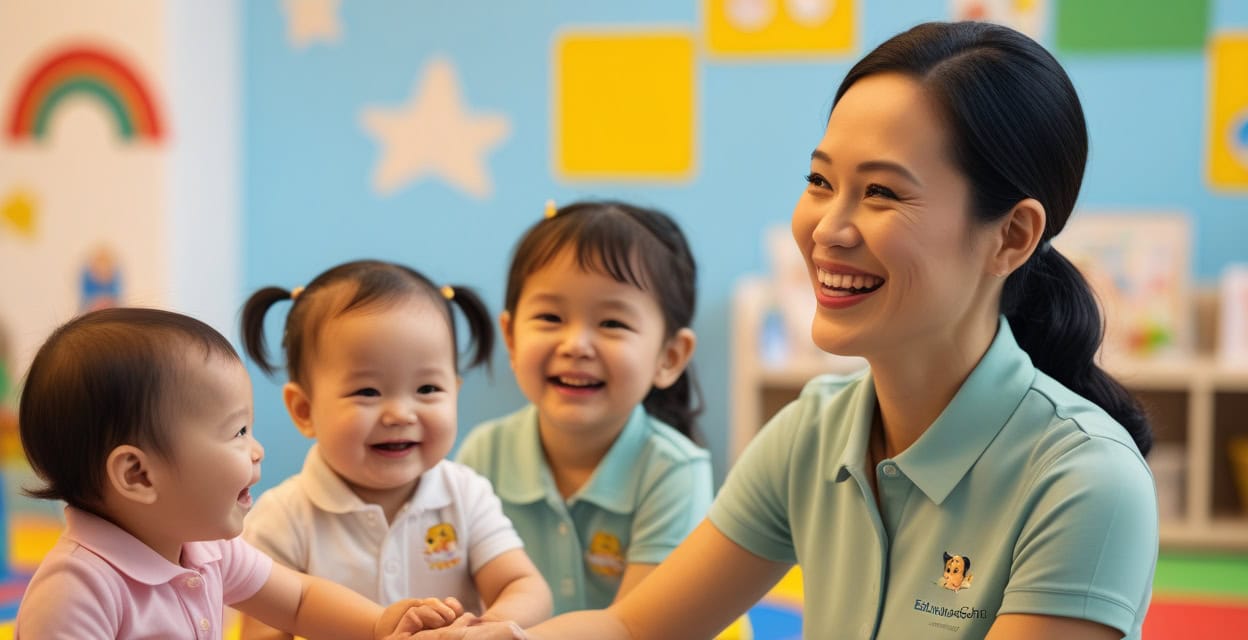

A Day Feel Inside an EduNanny Space

A Day Feel Inside an EduNanny Space

Imagine a morning where a caregiver kneels to greet a baby by name. A hand reaches, a caregiver answers with a smile. The room is calm; light bathes a soft mat. A parent watches a live CCTV window and sees a familiar ritual: narration as a tiny shirt slips over tiny arms. The afternoon unfolds with singing and finger play, a brief milk break, and a nap chosen by the child’s cues. A short afternoon walk, a leaf to crinkle, and a gentle return for pick-up. Debriefing with a caregiver—one new sound, two long reaches, a note about sleep—happens without drama; it is decisive in its quiet dignity, rhythm, and potential for growth.
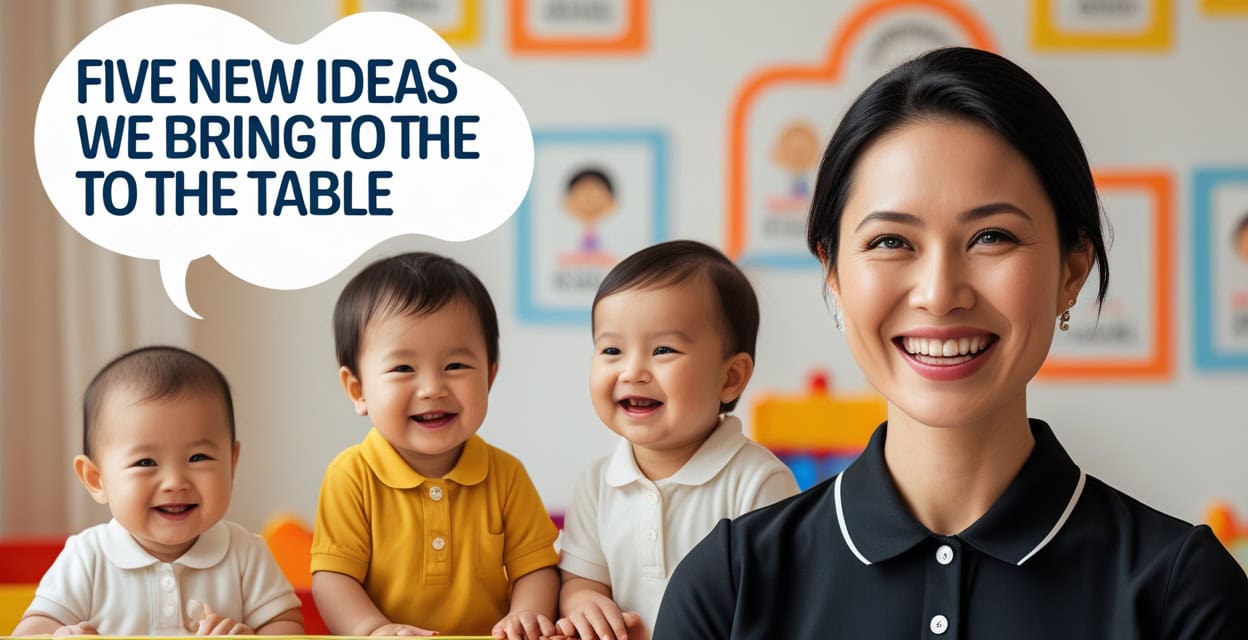

Five New Ideas We Bring to the Table

Five New Ideas We Bring to the Table

  • The Attuned Minute: Train caregivers to make the next minute better than the last—observe, name, invite, release. Progress is an accumulation of good minutes.
  • Safety You Can See: Secure parent-view CCTV, modern layouts, and transparent protocols. If it matters, it is measurable.
  • Relational Ratios: The 1:3 ratio is the minimum for steady attachments and sustained attention.
  • Local Careers in Care: A Maximum Employment Mandate that grows talent where families live, strengthening community bonds.
  • Affordability Without Downgrading: From $33/day with CDA/Baby Bonus options, proving access and excellence can coexist.
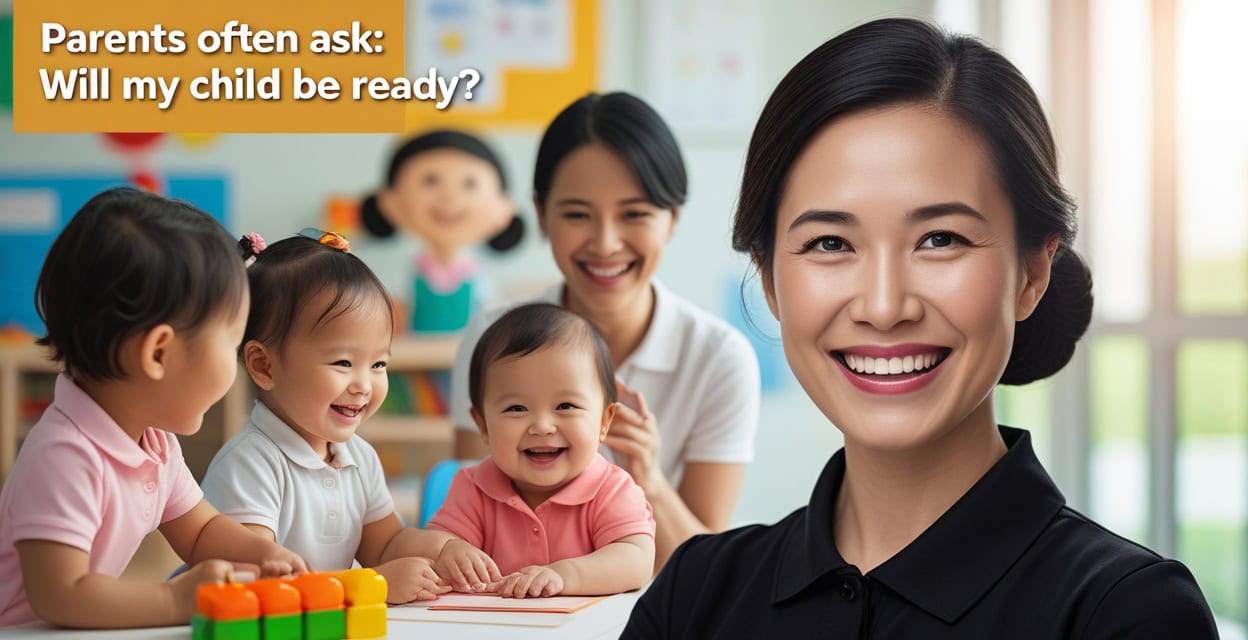
Parents Often Ask: Will My Child Be Ready?

Parents Often Ask: Will My Child Be Ready?

Informed by Erikson’s first tasks and grounded in early-care practice, the answer is nuanced. “Ready” in the first years means secure, curious, and able to regulate. It means a child who trusts that adults will respond, an environment that feels safe, and exploration that feels worthwhile. From that secure base, language, logical thinking, and leadership emerge. EduNanny’s role is to build that base, day after dependable day.


The Five Ws and One H: Why Childminding Matters and How EduNanny Answers

The Five Ws and One H: Why Childminding Matters and How EduNanny Answers

  • Who: Every infant in Singapore—and every parent who deserves a trustworthy partner in care.
  • What: Professional childminding that blends pedagogy, protection, and partnership.
  • When: The first thousand days, when brain architecture is most malleable—and every weekday, 7am to 7pm, when families most need us.
  • Where: Near home—centres, homes, and community settings—so care is part of a child’s lived world.
  • Why: Because attachment shapes destiny; secure children become resilient learners and compassionate citizens.
  • How: With a 1:3 ratio, attuned caregivers, modern layouts, secure CCTV, affordability from $33/day, CDA/Baby Bonus options, and a national pilot that embeds excellence at scale.
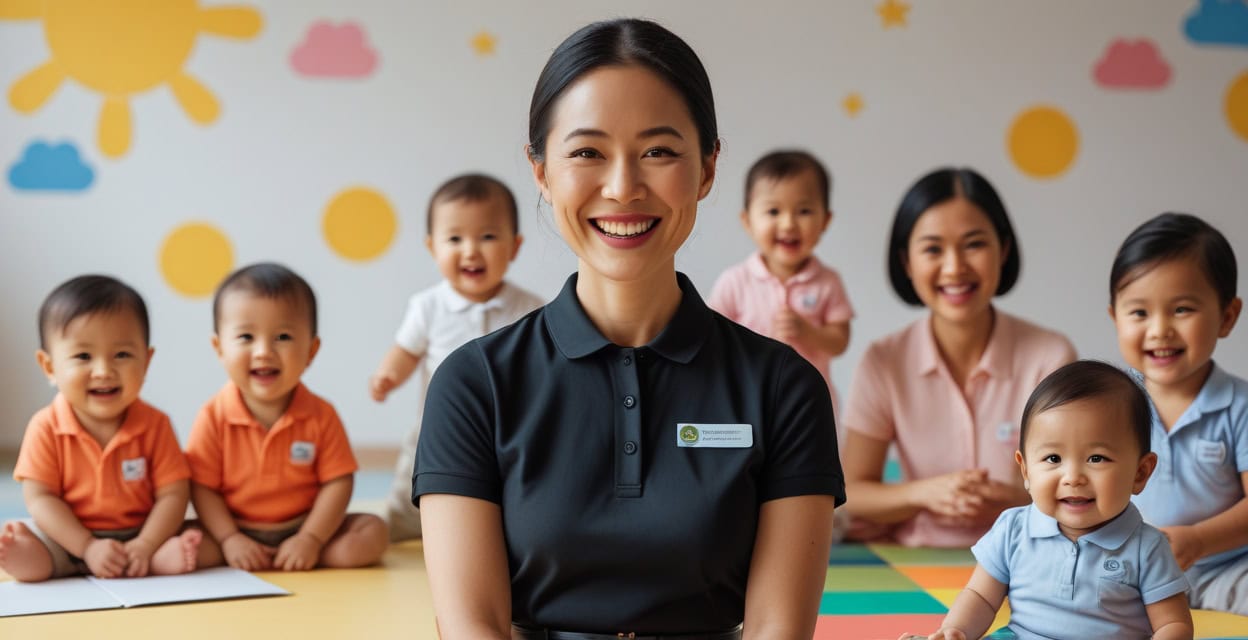
A Closing Invitation and Public Pledge

A Closing Invitation and Public Pledge

EduNanny is not here to replace parents; we are here to extend you. We pledge a practice you can see, a pedagogy you can trust, and a partnership that respects your child’s pace and your family’s hopes. We will hold fast to the evidence, champion the dignity of caregivers, keep standards high and prices fair, and welcome every culture and every child with calm, confident care.

If you are a parent, come visit. If you are a caregiver, come train with us and build a career that builds the nation. If you are an employer, a neighbour, or a grandparent—be part of the fabric that lifts families. This is how a city grows kinder and smarter at the same time.

Maria Montessori asked us to follow the child. John Bowlby asked us to secure the bond. Lev Vygotsky asked us to stand in the space where potential becomes performance. EduNanny invites us to do all three—in a place near home, within hours that work, at a price that welcomes, with a standard that holds.

Visit EduNanny.com and Childminding.EduNanny.com. Join us in crafting the minutes that become a lifetime. For in those minutes—in the way a baby is greeted, comforted, and invited to discover—Singapore’s future quietly learns to stand.

Thank you.

Practical Guide for Parents: Bringing EduNanny Home

Practical Guide for Parents: Bringing EduNanny Home

To translate EduNanny principles into everyday life, use these actionable steps:

  • Create a near-home care map: List three potential EduNanny spaces near your home or workplace. Note travel times, commute stress, and the environment you prefer for your child.
  • Establish a consistent goodbye ritual (a kiss, a hug, a wave) and a brief verbal cue that signals “I’ll be back soon.”
  • Share a simple daily routine with your caregiver and your child’s cues (when they’re hungry, tired, or seeking play).
  • Inquire about staff training, caregiver-child ratios, methods of narration, and how progress is shared daily.
  • Keep a weekly “home snapshot” journal that you review with the caregiver to align on goals and celebrate progress.
  • Confirm clear procedures for illness, emergencies, and temporary remote care, ensuring continuity of care.
Conclusion: A Shared Journey Toward Kinder, Smarter Care

Conclusion: A Shared Journey Toward Kinder, Smarter Care

EduNanny offers a unified framework that blends evidence-based practice with everyday warmth. By prioritising listening, safety as a visible practice, relational development, joy, and professional care, families gain a trusted partner in nurturing the first thousand days. This is not just about care; it is about building a nation’s social fabric—from the earliest moments of life to lifelong learning and citizenship. Join us in shaping minutes that become a lifetime, for Singapore’s children—and for the communities that sustain them.

[#keyword1, #keyword2, #keyword3, #keyword4, #keyword5]


edunanny-96419c78-655a-4dfd-8798-89443f739d85
September 28, 2025

Attuned Care in Singapore The EduNanny Six Capacities for Safe Joyful Infancy

EduNanny Singapore: Attuned Care for a Strong Start

EduNanny Singapore: Attuned Care for a Strong Start

Good evening, and welcome to a thoughtful exploration of infant care that blends tradition with modern practicality. This article expands the EduNanny vision into a practical, actionable guide for parents, caregivers, and communities across Singapore. Here you’ll find concrete strategies, daily routines, and real-world insights from EduNanny’s practice—designed to help you understand how presence, safety, and joyful development come together to support our youngest citizens.


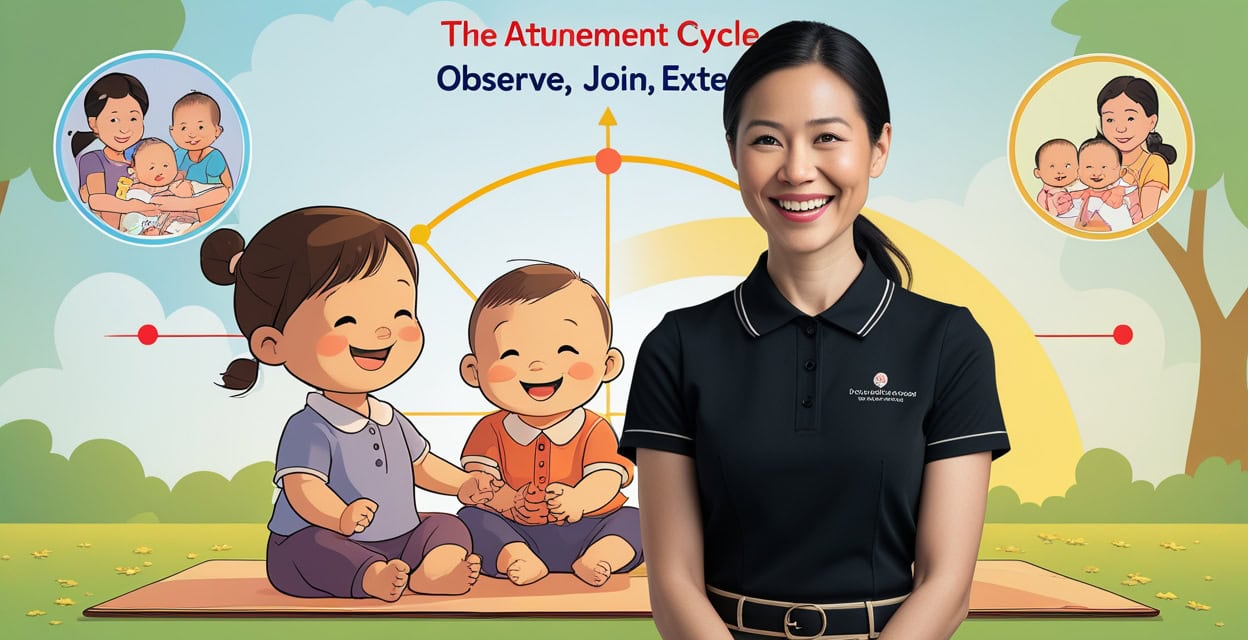
The Attunement Cycle: Observe, Join, Extend

The Attunement Cycle: Observe, Join, Extend

EduNanny’s Attunement Cycle weaves timeless developmental ideas into a simple, repeatable practice. It is not a rigid protocol; it is a responsive rhythm that honours each infant’s pace and curiosity. Below are actionable examples and ways to observe this cycle in daily life—whether you’re a parent, a childminder, or a centre leader.

Observe: Read the Cue Without Rushing

  • What to watch: eye gaze, rooting, hand-to-mouth actions, changes in breath, and posture shifts that signal hunger, tiredness, or a desire for interaction.
  • During a diaper change, notice if the infant’s eyes follow a rattle. If they pause and calm, you’ve identified a moment to extend rather than rush, using a gentle voice to name the moment.
  • EduNanny insight: Observations become data for care planning. A simple daily note tracks cues and outcomes, informing future routines and activities.

Join: Respond with Calmness and Connection

  • respond with a calm voice, warm hands, and eye contact that says “I’m here with you.”
  • When a baby coos after a pause, mirror the sound with a low, soft rhythm and maintain face-to-face contact for a few inviting seconds before introducing a new activity.
  • EduNanny insight: The 1:3 ratio enables the caregiver to be truly present with each infant, making joining efforts meaningful rather than hurried.

Extend: Offer the Gentle Next Step

  • add a tiny extension that matches the infant’s current interest—perhaps a textured object, a song in the same key, or a new texture to explore.
  • If an infant reaches for a soft block, introduce a new texture (e.g., a fabric square) and narrate the action: “Soft, touch.”
  • EduNanny insight: Extensions are designed to be unhurried and purposeful, encouraging exploration while maintaining security and routine.

Engineering the Attunement Cycle in daily life:
EduNanny’s approach uses an ultra-low 1:3 infant ratio to ensure each child receives uninterrupted attention. This ratio is not merely a number—it is the engine that allows staff to observe, join, and extend with deliberate pace, preserving secure attachment as the Bowlby foundation for healthy exploration.


Safety by Design: From Floor Plan to Final Goodbye

Safety by Design: From Floor Plan to Final Goodbye

Safety is woven into spaces, practices, partnerships, and mindsets. It is not a checklist to complete; it is an ongoing culture that parents and childminders live every day.

Spaces: Visibility, Flow, and Comfort

  • Open layouts with clear sightlines so adults can monitor multiple infants without shouting or rushing.
  • Gated transitions and safe sleep areas aligned with current guidelines, designed to reduce cross-traffic and crowding.
  • Age-appropriate, clean materials that invite safe exploration and easy cleaning between activities.

Practice: Health, Hygiene, and Emergency Readiness

  • Handover health screenings conducted with a respectful, non-intrusive routine that protects privacy while ensuring safety.
  • Sterile bottle prep zones and allergen/medication protocols that minimize contamination risks.
  • Drill-ready emergency responses and practiced routines so care teams respond calmly and efficiently.

Partnership: Transparency and Daily Dialogue

  • Innovative CCTV for accountable transparency and family peace of mind, paired with daily micro-briefs that cover feeds, sleep, nappies, and mood.
  • Two-way communication channels that empower families to participate in daily routines, routines that reflect home languages and culture.

Mindset: A Culture of Calm and Boundaries

  • Childminders trained to anticipate risk, narrate steps, and model consistent boundaries—helping infants learn self-regulation.
  • A philosophy where safety feels like a familiar sense of security rather than a policy to recite.

Practical tips for parents visiting EduNanny spaces:

  • Ask to see the safety layout and sleep areas. Look for calm, uncluttered spaces and clearly defined rest zones.
  • Request a demonstration of the daily health screening and how you receive updates during the day.
  • Observe how caregivers narrate their actions while attending to infants—transparency builds trust.

A Day That Grows the Whole Child: Six Capacities, Gently Built

A Day That Grows the Whole Child: Six Capacities, Gently Built

Development is not a race; it is rhythm. EduNanny structures daily activities to weave six capacities that support the whole child from birth onward.

1) Secure Base

  • Consistent caregivers and predictable routines foster a sense of safety that underpins exploration.
  • Practical activity: a morning ritual of greeting each child with a unique welcome gesture, followed by a predictable nap sequence.

2) Movement and Touch

  • Floor time, gentle vestibular play, and grasp-and-release tasks build physical foundations and body maps.
  • Practical activity: set up a short, rotation-based movement circuit with soft mats, a low mirror, and safe textures to explore.

3) Language and Music

  • Responsive talk, lullabies, and rhythmic play help babies attune to speech rhythms and later language development.
  • Practical activity: chair-time storytelling with expressive tone changes and echo-back turns to invite vocal participation.

4) Curiosity and Problem-Solving

  • Open-ended objects, treasure baskets, and purposeful peekaboo invite big thinking from small beings.
  • Practical activity: rotate a small mystery box with different textures and objects to spark investigation and naming of sensations.

5) Self-Regulation

  • Co-regulated emotions, unhurried feeds, and gentle transitions teach infants how to settle and regulate.
  • Practical activity: practice short, predictable transitions with a calm cue song to prepare for nap or switch activities.

6) Belonging

  • Family photos at child level, greetings in home languages, and shared rituals create a sense of inclusion and identity.
  • Practical activity: display a rotating “family moment” board that invites families to contribute photos and stories.

In EduNanny spaces, these capacities are cultivated through presence, pacing, and play—not taught as a separate curriculum but woven into daily life and routines.


Joy as a Vital Sign: How We Know a Baby Is Thriving

Joy as a Vital Sign: How We Know a Baby Is Thriving

Joy is not mere entertainment; it is a meaningful indicator of thriving development. EduNanny treats joy as a vital sign—observable, measurable, and nurtured through daily practice.

Key Indicators of Joy

  • Warm-up speed: how quickly the infant settles after handover, reflecting trust in the caregiver.
  • Engagement curve: how long the infant sustains attention in play and exploration.
  • Social light: the ease with which the infant seeks and returns smiles and social cues.
  • Recovery arc: the smoothness of returning to calm after a moment of upset.
  • Home bridge: consistency of sleep, feeds, and mood across home and care settings.

Real-world practices include daily brief notes that track these indicators along with routines and mood, enabling families to understand and celebrate progress in tangible ways.


The Singapore Childminder: A Civic Professional

The Singapore Childminder: A Civic Professional

Froebel’s garden-vision for education inspires EduNanny to view childminders as civic professionals—gardeners who cultivate growth, belonging, and national strength through careful care.

Training and Mentorship

  • Structured training in child development science and local Singaporean context, with ongoing mentorship and peer support.
  • Certification pathways that recognize specialized skills in infant care, safety, and family partnership.

Ethical Transparency and Daily Dialogue

  • Secure CCTV and transparent daily updates build trust with families while protecting privacy and dignity.
  • Regular family meetings and open channels for feedback reinforce shared responsibility for each child’s development.

Career Ladders and Meaningful Work

  • Public mission under the ECDA Pilot aims to dignify caregiving as skilled work and create stable jobs in every neighbourhood.
  • Professional pathways with clear growth opportunities empower caregivers to excel and stay engaged.

A National Social Initiative

  • The ECDA Childminding Pilot supports near-home access, extended hours, and affordability through family-friendly subsidies and allowances.
  • EduNanny’s model demonstrates how high-quality care can be scaled as a public good—without compromising the warmth of family-like environments.

Educational takeaway for families: Look for programs that articulate a clear professional identity for childminders, a transparent safety culture, and a public-minded mission that aligns with your family’s values and needs.


How EduNanny Makes Childminding Work—For Every Family

How EduNanny Makes Childminding Work—For Every Family

EduNanny integrates centre-based and home-based approaches with flexible, islandwide access and a focus on affordable excellence. Here’s how it translates into everyday experiences for families.

Centre-Based Childminding

  • Modern, light-filled spaces designed for visibility, quiet sleep, and safe exploration.
  • Flexible hours from Monday to Friday, 7am–7pm, with reliable routines that fit busy work lives.

Home-Based Childminding

  • Warm, community pods near home for easier mornings and faster reunions, preserving family rhythms and comfort.
  • Smaller groups that feel like “home away from home” while maintaining professional standards.

Distance Support and Partnership

  • On-demand parent coaching, secure updates, and guidance for home routines—ensuring continuity between care settings.
  • Clear communication channels that help families integrate home language, culture, and daily rituals with care routines.

Islandwide Convenience and Accessibility

  • Care spaces located in neighbourhoods across Singapore, reducing commute stress and increasing family connection points.
  • Affordability from $33/day with CDA/Baby Bonus support, paired with consistent quality controls and safe ratios.

Practical Guidance for Parents: Partnering with EduNanny

Practical Guidance for Parents: Partnering with EduNanny

Choosing a childminding partner is a critical decision. The following practical guidelines help families evaluate options, establish strong partnerships, and maximize developmental outcomes for infants.

  • Prepare a short checklist: safety practices, caregiver qualifications, daily schedules, and how updates are delivered.
  • See how caregivers interpret cues, join with babies, and extend meaningful exploration.
  • Understand how nutrition, sleep, mood, and development are tracked and communicated.
  • Family photos, cultural materials, and language opportunities that reflect your child’s background.
  • Clarify how CDA/Baby Bonus supports your family and how fees map to services, hours, and outcomes.

EduNanny’s practice is designed to empower families to feel confident handing over a child with peace and receiving them with pride. The goal is partnership: a shared commitment to the child’s secure base, joyful engagement, and steady growth.


Conclusion: The Future of Singapore’s First Thousand Days

Conclusion: The Future of Singapore’s First Thousand Days

In every space—centres, home-based pods, or the daily rhythm of a caregiver’s voice—EduNanny embodies presence as pedagogy, safety as love made visible, and joy as evidence of healthy development. This is more than a service; it is a civic infrastructure designed to lift families, strengthen communities, and nurture a generation equipped to imagine and build a brighter Singapore. If this vision resonates, engage with EduNanny: walk the spaces, meet the childminders, and observe a small hand reach for a rattle, a caregiver wait with patience, and a pause where confidence is born.

The future of Singapore is not abstract. It is a toddler’s giggle after a gentle feed, a parent’s relieved smile, and a nation’s shared pride in caregiving as a professional, dignified pursuit. EduNanny by BUTLER is ready. Near your home, within your hours, at a price that honours work—and a standard that honours your child.

Thank you.

SEO keywords: [#keyword1, #keyword2, #keyword3, #keyword4, #keyword5]


edunanny-0b68ce3b-3b60-4ae9-b7e0-0ccb0e720c35
September 28, 2025

EduNanny Near Home Pods A Covenant of Care for Singapore First Thousand Days

Introduction: EduNanny’s Vision for Singapore’s Infants

Introduction: EduNanny’s Vision for Singapore’s Infants

Good evening to families, caregivers, and partners in Singapore’s journey toward a safer, smarter, more compassionate approach to infant care. EduNanny is a movement born of Singapore’s discipline and heart — a companion to every parent navigating the first thousand days. By design, we imagine infant care not as a day-off drop-off, but as a daily Covenant of trust, science, and love. This is care near home, with an ultra-low 1:3 ratio, and a commitment that every moment can shape a lifetime.


What Sets EduNanny Apart

What Sets EduNanny Apart

Pedagogy of Attuned Presence

Infants thrive on presence before instruction. We train childminders to cultivate a responsive stance: observe first, interpret cues second, and act with deliberate, developmentally appropriate timing. This means:

  • Notice micro-cues: gaze shifts, subtle vocal tone shifts, changes in breathing, and tiny shifts in body tension.
  • Respond with consistent routines: predictable feeding, sleep, and play rhythms that align with each child’s tempo.
  • Release into exploration: encourage floor time, safe risk-taking within boundaries, and gradual independence as confidence grows.

Grounded in Montessori’s emphasis on independence, Pikler’s respect for free movement, and Vygotsky’s scaffolded guidance, EduNanny translates these ideas into practical home- and centre-based daily rituals in Singapore’s real-world pace.

Safety as a Culture, Not a Checklist

Safety is who we are, not what we do. We embed safety into every minute, from space design to daily habits:

  • Architecture of safety: rounded furniture, non-slip floors, secured play equipment, and clearly delineated safe movement zones.
  • Transparent accountability: CCTV-enabled spaces for oversight and family confidence, coupled with clear incident-prevention protocols and real-time escalation pathways.
  • Ratio-led vigilance: 1:3 ensures eyes on every child and a capability to respond before issues escalate.
  • Health and hygiene: rapid hand hygiene routines, rigorous sterilisation practices, and clear illness policies to protect all children and staff.

Safety becomes a lived culture — a daily expression of care that families can observe, trust, and participate in.

Development as Daily Craft

Learning emerges from rhythm, relationship, and repeated micro-moments. EduNanny’s daily craft emphasizes:

  • Language bath: slow, face-to-face talking, gentle narration of actions, and songs that encourage turn-taking.
  • Movement and focus: ample floor time, small guided invitations to reach, grasp, roll, and explore textures and sounds.
  • Emotional literacy: naming feelings, mirroring calm, and co-regulating during transitions and perturbations.
  • Cultural belonging: gentle exposure to Singapore’s languages, stories, and traditions to foster identity and belonging.

Development isn’t a syllabus. It’s the choreography of care that invites infants to make sense of the world — safely, joyfully, and with purpose.

Happiness with a Purpose

Joy is not optional; it signals that safety and development are in harmony. Our approach treats happiness as a functional outcome:

  • Predictable routines reduce stress hormones, while warm attunement builds secure confidence.
  • Play with purpose turns curiosity into capable exploration and problem-solving.
  • Secure relationships empower infants to explore, return, and try again, strengthening resilience over time.

In EduNanny, happiness is the primary evidence of healthy growth — not an afterthought.


The Purpose and Dignity of the Childminder

The Purpose and Dignity of the Childminder

A great childminder is not a substitute parent or a passive sitter. They are a professional of attachment — guardians of safety and rhythm, translators of cues into care, partners to parents, and builders of early autonomy. EduNanny equips childminders with training, mentoring, and a community of practice so that the caregiver’s craft is dignified, respected, and continuously improved. When we value the professional who holds the cradle, we elevate the whole ecosystem of care for every child.


A Day in an EduNanny Pod

A Day in an EduNanny Pod

Visualize a day where arrivals are unhurried, names are known, and routines are deliberate but flexible to each child’s tempo. A typical EduNanny pod day weaves together:

  • Attuned welcomes and gentle check-ins
  • Attuned feeds and naps aligned to each child’s cues
  • Floor-based exploration with scaffolded challenges
  • Soft social play and guided peer interactions
  • Outdoor light exposure and movement when appropriate
  • Story, song, and sensory invitations that connect language and meaning
  • Calm transitions to departure with transparent updates for parents

Behind the scenes, safety checks, cleaning cycles, and documentation hum quietly. Parents feel informed, infants feel known, and childminders feel supported. Here’s a practical, sample timeline you can use to discuss with future EduNanny partners:

  • 7:00–7:30 am: Families arrive, name-based greetings, and brief daily plan sharing
  • 7:30–9:00 am: Attuned meals, diapering with cue-based timing, floor play
  • 9:00–10:30 am: Structured learning through play; sensory investigations
  • 10:30–11:00 am: Outdoor movement or garden time (for those with access)
  • 11:00 am–12:00 pm: Rest, quiet activities, and language-rich storytelling
  • 12:00–2:00 pm: Lunch, individual nap times, and safe self-soothing practice
  • 2:00–4:00 pm: Social play, music, dance, and motor skill challenges
  • 4:00–5:30 pm: Reflection, free choice play, and transition planning with families
  • 5:30–7:00 pm: Final routines, light housekeeping, and handover notes

Each pod tailors the day to its children while maintaining consistent safety and attuned presence as the core rhythm.


What Parents Receive with EduNanny

What Parents Receive with EduNanny

  • Peace of mind through transparency: CCTV-enabled spaces, clear protocols, and open lines of communication.
  • Human-scale care: 1 childminder for every 3 infants—detectable presence and immediate response when needed.
  • Convenience without compromise: centre-based or home-based options, near home, Monday to Friday, 7 am to 7 pm.
  • Affordability and access: from $33/day, with CDA/Baby Bonus eligibility where applicable.
  • Purpose-driven partnership: EduNanny by BUTLER operating within the ECDA Childminding Pilot, aligned with a maximum employment mandate.
  • Flex pathways: centre-based, home-based, and distance coaching for at-home families.

Five Fresh Themes for Singapore’s Next Chapter in Infant Care

Five Fresh Themes for Singapore’s Next Chapter in Infant Care

  1. Proximity as development: Near-home care reduces transit time, stabilizes routines, and preserves family time.
  2. Ratio as destiny: A 1:3 ratio is a floor of dignity and a proactive safety cushion that supports early learning.
  3. Transparency builds trust: CCTV-enabled environments, clear accountability, and open communication channels.
  4. Culture in the cradle: Multilingual songs, local stories, and shared celebrations foster belonging and language development.
  5. Employment with meaning: Professionalising childminding lifts families and communities, elevating care as a respected vocation.

Why Childminding Matters: Who, What, When, Where, How

Why Childminding Matters: Who, What, When, Where, How

Who

Infants, parents, childminders, neighbours, employers, and the nation — the first thousand days is everyone’s business, because early experiences shape lifelong outcomes.

What

Consistent, attuned care that integrates safety, secure relationships, and early learning across both home-based and centre-based settings.

When

Every weekday from 7 am to 7 pm, with emphasis on the first thousand days when the brain’s plasticity is highest and trust-building is most formative.

Where

Near your home across Singapore — community sites and home premises designed for visibility, safe movement, and comfort.

How

Through a 1:3 infant ratio, trained childminders, safety-first environments, innovative CCTV for accountability, modern layouts, and strong family partnerships that honour each child’s tempo.


The Benefits at a Glance

The Benefits at a Glance

  • Excellence at an accessible price point — from $33/day.
  • Centre-based, home-based, and distance support options.
  • Islandwide availability, Monday to Friday, 7 am to 7 pm.
  • 1:3 infant ratio for enhanced safety and learning potential.
  • Innovation and transparency with CCTV-enabled spaces.
  • Modern layouts that support movement and exploration.
  • Fees payable by CDA/Baby Bonus where eligible.
  • Operated by EduNanny by BUTLER within the ECDA Childminding Pilot.
  • A national social initiative aligned with a maximum employment mandate.
  • Simple next steps: visit EduNanny.com and Childminding.EduNanny.com to learn more.

Closing: A Promise Spoken Softly and Kept Loudly

Closing: A Promise Spoken Softly and Kept Loudly

Singapore’s future arrives in the tiny hands of its children, tested by curiosity and guided by care. EduNanny’s promise is simple yet bold: to make the first thousand days less about logistics and more about a living fabric of care — near home, with ultra-low ratios, safe modern spaces, and childminders who practice the art of attuned presence.

To parents: you should not have to choose between proximity and quality, affordability and safety, transparency and warmth. With EduNanny, you don’t have to.

To childminders: your work is nation-building in real time. We see you, support you, and set a standard that honors your craft.

To Singapore: childminding translates love into policy, policy into practice, and practice into futures. When we invest near the cradle, we invest far into tomorrow.

If this vision aligns with your hopes for your child, your profession, or your community, join us. Visit EduNanny.com or Childminding.EduNanny.com. Schedule a walk-through. Speak to a coordinator. Enrol. Refer a neighbour. Help us make proximity, safety, and joy the ordinary experience of every infant in our city.

Because the measure of a nation is how it holds its youngest — calmly, expertly, and near home. Thank you.

[#SingaporeChildcare, #InfantCareSingapore, #EarlyChildhoodDevelopment, #AttunedPresence, #EduNanny]

edunanny-70ba6acf-3c22-48fa-ab86-f81293dc6177
September 28, 2025

EduNanny Singapore Turning Tiny Moments into Lifelong Confidence with Near Home Ultra Low Ratio Infant Pods and Attuned Care

EduNanny Singapore: Turning Early Moments into Lifelong Confidence

EduNanny Singapore: Turning Early Moments into Lifelong Confidence

Good evenings, and welcome to a vision of infant care that blends science, heart, and everyday practicality. EduNanny is a national social initiative and an ECDA Childminding Pilot partner, created to make safe, joyful, intelligent care accessible close to home. This article expands that mission into concrete, actionable guidance for parents, caregivers, and communities across Singapore. Here you will find practical steps, real-world insights, and ready-to-implement ideas that translate our guiding principles into daily life.


What is EduNanny?

What is EduNanny?

EduNanny is a network of center-based and home-based childminding pods designed specifically for infants, operating with an ultra-low 1:3 infant ratio to enable genuine attunement and serve-and-return interactions that support brain development, immunity, and resilience. Our spaces follow safety science in layout and materials, feature family-ready CCTV for transparency, and coordinate daily routines by developmental purpose rather than convenience. We offer care in both community centers and home premises, with distance options to suit families who need flexibility. All of this is built on the premise that care should be excellent, high-quality, convenient, and affordable—from $33 per day, with CDA/Baby Bonus payment options where eligible. For more information, visit EduNanny.com and Childminding.EduNanny.com.

EduNanny is built on a Maximum Employment Mandate that dignifies professional childminders with training, career pathways, and stable work, while dignifying families with care they can trust. Our approach integrates the best of early-years pedagogy—Montessori’s prepared environment, Pikler’s respectful caregiving, Bowlby’s secure attachment, Vygotsky’s social scaffolding, Froebel’s purposeful materials, Malaguzzi’s hundred languages of expression, Piaget’s schema-driven exploration, and Erikson’s early tasks of trust—translated into daily practice that feels effortless and looks like love.


Five Living Topics That Shape Our Work

Five Living Topics That Shape Our Work

Below are the five guiding topics that anchor EduNanny’s daily practice. Each topic includes practical examples, actionable steps for families, and insights drawn from our on-the-ground experience with infant care and development.

1) A Prepared, Respectful Environment: The Floor is the First Teacher

The environment is designed to place infants’ bodies at the center and to invite exploration with minimal barriers to movement. Key elements include:

  • Low, stable platforms and furniture scaled to crawling and cruising to support autonomous movement.
  • uncluttered sight lines, natural light without glare, and varied textures for safe, hands-on exploration.
  • Rooms mapped for hazards and opportunities: reachable, safe, and interesting spaces encourage babies to reach, roll, track, grasp, mouth, and giggle.
  • Purposeful, open-ended materials that encourage concentration over entertainment. Even a simple ring can teach precision, persistence, and calm.

What parents can do at home to reinforce this:

  • Create a dedicated, uncluttered floor-time zone with a soft mat, a few safe toys, and accessibility to reach objects from a tummy-friendly position.
  • Rotate a small set of age-appropriate materials every 2–3 weeks to sustain interest and challenge.
  • Limit devices or screens in the infant zone; prioritize hands-on exploration and caregiver presence.
  • Observe how your child engages with a toy (pushing, pulling, mouthing) and introduce new objects that extend that action safely.

2) Safety by Design and Daily Rhythm: Predictable Protection

Safety is both architecture and habit. Our approach includes:

  • Distinct zones for sleep, feeding, play, and movement to minimize cross-traffic and contamination risk.
  • Safeguards for safe sleep (firm surfaces, supine position, no loose bedding) and clear routines around rest and routines around meals.
  • Technology used to support, not replace, human judgment: family-ready CCTV with transparent privacy rules, along with smart checklists and incident logs for continuous improvement.
  • Prepared staff with infant-first-aid training, choking response, evacuation drills, and illness protocols aligned with public health guidance.

What you can do at home to reinforce safety and rhythm:

  • Establish a consistent daily rhythm: wake-up moments, feeding cues, play, sun exposure, and regular nap windows.
  • Practice safe sleep routines and place babies on their backs on a firm, flat surface with appropriate sleep environment.
  • Develop simple, clear communication with caregivers about signs of illness, feeding cues, and sleep needs.

3) Development as a Continuum: Tiny Interactions that Build a Lifetime

Ultra-low ratios enable micro-timing that sparks growth. Education is embedded in daily moments through:

  • 1:3 caregiver-to-infant ratio enabling rapid, responsive serving-and-return interactions that support language and self-regulation.
  • Vygotsky’s Zone of Proximal Development: balancing prompts with opportunities to try independently.
  • Piaget’s schemas—transporting, enclosing, connecting—fed by safe, well-designed environments and guided exploration.
  • Attachment cues and responsive care that adapt to each child’s emotional needs (approach, avoidance, protest, reunion).

Practical home guidance:

  • Label daily moments as “learning moments” with a simple narrative: “You stacked the blocks—great problem-solving!”
  • Offer safe challenges that require a small step beyond current ability, then celebrate effort and effort-rest cycles.
  • Keep a simple observation log of notable cues (smiles, gaze, reaching) and share weekly with your caregiver to align goals.

4) Joy as a Learning State: Happiness with Structure

Joy is calm, focused engagement that supports development. We cultivate it through:

  • Calm, music-infused routines and multilingual language exposure to build early literacy and empathy.
  • Daily narration and shared picture moments that scaffold early language learning and emotional connection.
  • Family partnership with real-time updates and video windows that show progress and context, while respecting privacy and trust.

What families can implement for daily joy and growth:

  • Incorporate a short, daily bilingual read-aloud session with a simple, expressive narration of actions.
  • Integrate gentle movement breaks and outdoor time to support regulation and curiosity.
  • Use a predictable sequence for meals and naps, reinforcing a sense of safety and anticipation.

5) The Professional Childminder: A Civic Craft, Not a Fallback Job

Childminders are trained professionals supported by a structured career path and continuous coaching. Our core elements include:

  • Rigorous recruitment for warmth and judgment, followed by training in observation, health and safety, infant nutrition, developmental science, and reflective practice.
  • Mentored on-site coaching with strong supervision and paths from assistant to lead to coach roles.
  • Public quality through standardized safety audits, family feedback loops, and transparent pricing.
  • The Maximum Employment Mandate: stable hours (Mon–Fri, 7 am–7 pm), predictable career progression, and scholarships for ongoing certification.

Guidance for families on choosing and partnering with caregivers:

  • Ask about the caregiver’s training credentials, ongoing professional development, and supervision structure.
  • Request a tour that highlights safety design, sleep routines, meal planning, and infection-control practices.
  • Review documentation practices: daily notes, progress updates, and how goals are tracked over time.
  • Discuss communication preferences, including the frequency of updates, video window access, and privacy guidelines.

Why This Matters for Singapore Now

Why This Matters for Singapore Now

Infant care is nation-building disguised as daily routine. When the first years are well-supported—nutrition, sleep, movement, language, and secure attachment—we reduce later remediation costs, improve workforce participation, and strengthen neighborhood trust. Our model offers center-based and home-based options, broadening access to families near transit or near grandparents, while maintaining the same standard of safety and attunement. Convenience is equity: islandwide availability, predictable hours, and clear pricing reduce friction for families already balancing many responsibilities.

Key policy and program anchors include:

  • Ultra-low ratios and trained professionals as a standard for infant care.
  • Transparency through family-ready CCTV and robust documentation practices.
  • Affordability with options for CDA/Baby Bonus where eligible.
  • Nationwide reach through both center-based and home-based pods, supported by distance tools for consistency.

What Parents Can Expect, Every Single Day

What Parents Can Expect, Every Single Day

  • Attentive ratios: 1 caregiver to 3 infants with no compromises on safety or engagement.
  • Transparent environments: modern layouts, good lighting, clean air, safe sleep practices, and accessible CCTV windows for trust and reassurance.
  • Thoughtful routines: individualized feeding plans, unhurried caregiving, movement-rich play, and genuinely restful naps.
  • Professional partnership: daily notes decoding development, and monthly check-ins that set shared goals.
  • Accessibility and affordability: both center-based and home-based options, distance support when needed, Monday–Friday, 7 am–7 pm, islandwide; pricing from $33/day with CDA/Baby Bonus options where applicable.

A Brief Explainer: How EduNanny Upgrades the Everyday

A Brief Explainer: How EduNanny Upgrades the Everyday

  • Arrival: One caregiver greets one infant—eye-level hello, name, consent-based touch. The first minute sets the nervous system’s tone.
  • Care moments: Diapering, feeding, and settling are curricular—narrated, patient, and participatory. This is where trust grows.
  • Exploration: Safe floor time with simple objects and appropriate challenges. We step back to allow baby steps forward.
  • Documentation: Two minutes after a moment, a note or video highlights what happened, why it matters, and what the next step will be.
  • Review: Supervisors review safety logs and footage samples, coaching for stronger practice. Quality rises through continuous feedback.

Closing: Who, What, When, Where, and How Childminding Matters

Closing: Who, What, When, Where, and How Childminding Matters

Who does childminding serve? Infants first, then families, then the wider community. A steady infant becomes a confident child, a focused learner, and a generous neighbor.

What is great childminding? The daily craft of turning care into development—safe bodies, calm hearts, and curious minds—delivered by prepared professionals in prepared environments.

When does it matter most? Especially in the earliest seasons—those first months when trust, regulation, and attachment wire the brain for a lifetime.

Where should it happen? Near you. In modern centers and regulated home premises across Singapore, supported by distance tools that keep families and caregivers aligned.

How does it work? Through a simple equation: ultra-low ratios plus attuned caregivers, safety by design plus transparent technology, science-led pedagogy plus cultural warmth, delivered Monday to Friday, 7 am to 7 pm, at a price families can manage.

And the why? Because every infant is a citizen-in-the-making, and the way we hold our youngest is the way we hold our future.


Conclusion

Conclusion

EduNanny’s philosophy is straightforward: turn ordinary minutes into protective factors, make safety visible, cultivate joy as a habit, and guide development toward inevitable success. We are a public-spirited partner—a movement as much as a service—aligning excellence, affordability, and employment at scale so that care is not just available but exemplary. If this vision resonates with your hopes for your child and your city, step closer: tour a pod, meet a childminder, and observe how a quiet greeting becomes a day of discovery. Learn more at EduNanny.com and Childminding.EduNanny.com.

Together, let us make Singapore a place where every handover begins with confidence and every pick-up ends with peace. In our arms, the future rests. In our care, it rises. Thank you.

SEO Keywords: [#infantcare Singapore, #educare, #childminding, #MontessoriPiklerVygotsky, #EduNannySingapore]


edunanny-0624c240-3ce3-4e4e-b126-5430df58ecc1
September 28, 2025

Near Home Big Hearts EduNanny Public Covenant for Singapore First Thousand Days

EduNanny Singapore: Redefining Infant Care Near Home

EduNanny Singapore: Redefining Infant Care Near Home

In a country where every moment in a child’s early days shapes lifelong paths, EduNanny introduces a national, close‑to‑home childminding movement. This is a response to the truth that infants read faces, tones, and routines long before they grasp slogans. EduNanny turns ordinary moments into extraordinary beginnings—close to home, with care you can see, trust you can feel, and learning you can hear in a baby’s laughter.


Infant Care as a Public Covenant: The EduNanny Promise

Infant Care as a Public Covenant: The EduNanny Promise

Presence you can count on: Monday to Friday, 7am–7pm, island‑wide. EduNanny offers home‑based, centre‑based, and distance‑supported options to keep care convenient, consistent, and within reach for families across Singapore.

Protection by design: An ultra‑low 1:3 educator‑to‑infant ratio, modern layouts that invite safe exploration, and family‑view CCTV that makes safety transparent and partnership real. Safety is practiced as choreography, not merely checked off on a list.

Partnership with purpose: Excellence and quality delivered affordably—from as low as $33 per day—and fees payable by CDA/Baby Bonus where eligible. This is part of a national social initiative under the ECDA Childminding Pilot that also advances a Maximum Employment Mandate to create dignified, meaningful jobs in care.

EduNanny casts infant care as a public good—a community covenant that blends care, learning, and love into daily practice.


Five Fresh Lenses for Infant Care Today

Five Fresh Lenses for Infant Care Today

1) Micro‑Attunement Pedagogy: the science of tiny moments

Inspired by Montessori’s respect for the child, Pikler’s unhurried caregiving, Bowlby’s secure attachment, Vygotsky’s co‑constructed learning, and Malaguzzi’s “environment as the third teacher,” EduNanny trains childminders to notice and respond to the smallest cues. Practical guidance includes:

  • Look closely: observe before you act; learn the child’s unique rhythms. Spend a minute of quiet observation when a new mood appears, rather than rushing to fix it.
  • Answer warmly: engage in serve‑and‑return exchanges—nodding, mirroring vocalizations, and naming feelings to wire the brain for trust and language.
  • Release gently: support autonomy without rushing; let effort become confidence. Encourage self‑help skills with patient guidance.

In practice, expect an educator who waits three heartbeats before offering help, mirrors babbling into first words, and frames every touch as consent‑based care. Sixty small chances each hour to get connection right—that is our pedagogy in action.

2) Safety as choreography, not just checklists

Safety lives in the choreography of a day. EduNanny maps routes between spaces: floor time, diaper care, feeds, naps, and transitions—so every moment has a predictable rhythm. Key practices include:

  • Stage‑like planning: routes are clear, hazards mapped, sightlines deliberate.
  • Healthy routines: safe‑sleep, stable feeding postures, allergy‑aware routines, and rigorous hygiene embedded in design.
  • Transparency via partnership: CCTV is a tool for trust, not surveillance; it complements in‑person communication and gives families calm visibility into daily routines.

Modern layouts with bright light and accessible sightlines help caregivers monitor and respond, while families see the calm predictability infants crave.

3) Development as a spiral: from holding on to letting go

Growth unfolds in spirals of practice, comfort, and brave new tries. EduNanny’s approach follows this loop:

  • Sensorimotor mastery: tummy time as joyful agency, grasping as inquiry, schema play as logic in motion.
  • Early communication: songs, story rhythm, baby signs, and responsive talk that scaffolds vocabulary before sentences arrive.
  • Emotion regulation: co‑regulation first—breathing together, matching tone, narrating feelings—to lay the groundwork for self‑regulation.

Near‑home hubs and home‑based settings are designed to follow this spiral with small groups, familiar spaces, and predictable routines that make challenge feel safe.

4) Happiness as a daily discipline

Joy is a developmental nutrient—built, not left to chance. EduNanny embeds happiness into daily practice:

  • Rituals that anchor the day: a warm hello, calm handovers, and goodbye songs that reassure a baby, “You are held by a circle.”
  • Play as discovery: treasure baskets, soft light, and open‑ended objects that invite questions rather than definitive answers.
  • Outdoors as a teacher: safe neighbourhood strolls and nature touchpoints that build curiosity and calm.
  • Gentle well‑being metrics: track engagement, recovery after upset, and eagerness to explore to observe happiness as a measurable indicator.

5) The civic purpose of childminding

Mindful care is a city‑building act. EduNanny frames childminding as:

  • For families: reliable, close‑to‑home continuity so working parents can contribute with peace of mind.
  • For communities: dignified employment through the Maximum Employment Mandate, elevating the stature and standards of care work.
  • For the nation: the first thousand days become a shared project—across homes and centres, Monday through Friday, 7am–7pm, island‑wide and supported by ECDA’s pilot programs.

What makes EduNanny different in practice

What makes EduNanny different in practice

Three service formats, one standard of excellence

  • Home‑Based Childminding: intimate care in licensed community or home premises, anchored by a 1:3 ratio and family‑view CCTV.
  • Centre‑Based Childminding: modern neighbourhood hubs with purposeful layouts, fresh‑air considerations, and sensorial design.
  • Distance Support: when families travel or need flexible days, educators provide routines, coaching, and developmental play plans that keep a child’s rhythm intact.

Transparent value and access

  • Affordable plans from $33/day, Monday–Friday, 7am–7pm, island‑wide.
  • Fees payable by CDA/Baby Bonus where eligible.
  • Enrollment and details at EduNanny.com and Childminding.EduNanny.com.

A living curriculum you can feel

  • Slow care: unhurried caregiving that turns routines into relationship.
  • Predictable rhythms: structure with flexible response—predictable timing, flexible adaptation.
  • Play invitations: environments that invite infants to lead the learning journey.
  • Language weaving: talk, song, and story embedded in every moment of care.
  • Attuned transitions: arrivals and goodbyes designed for emotional safety and continuity.

How EduNanny Makes Infant Care Great in Singapore—Near Home and in Community

How EduNanny Makes Infant Care Great in Singapore—Near Home and in Community

  • Proximity reduces strain: when a carer is nearby, commutes shorten, drop‑offs are calmer, and parents can be present for beginnings and endings.
  • Small groups amplify voice: 1:3 ratio allows educators to read subtle cues, reducing missed signals and boosting babies’ confidence.
  • Consistency builds character: the same caregivers, rituals, and hours create a secure base for infants to explore.
  • Technology supports trust: family‑view CCTV, real‑time updates, and clear documentation convert anxiety into informed partnership.
  • Design invites discovery: spaces with light, texture, safe movement, and open‑ended materials transform the environment into a co‑teacher.
  • Access with dignity: affordability, CDA/Baby Bonus payments, and island‑wide availability ensure excellent care is standard, not a privilege.

A Brief Word on Pedagogy and Practice

A Brief Word on Pedagogy and Practice

  • Montessori: prepare the environment with intention and beauty, inviting self‑directed exploration.
  • Piaget: action as thought; support concrete experiences that build abstract concepts over time.
  • Vygotsky: learning thrives in social interaction; educators scaffold with warmth and responsive dialogue.
  • Froebel: play is the work of childhood; make play meaningful and joyful.
  • Malaguzzi: the environment is the third teacher; spaces whisper, “Try.”
  • Bowlby: attachment as the anchor; routines become a secure base for exploration.
  • Pikler: respectful, unhurried care; slow down to speed up development on a child’s terms.
  • Spock and Erikson: trust development and protect the stages; nurture growth with sensitivity and protection.

The Benefits, Clearly Stated

The Benefits, Clearly Stated

  • Excellence and quality without compromise
  • Three formats (Centre‑Based, Home‑Based, Distance‑Supported) with a consistent standard
  • Near‑home convenience, Monday–Friday, 7am–7pm, island‑wide
  • Ultra‑low 1:3 infant ratio
  • Innovation CCTV for family partnership
  • Modern layouts and purpose‑built environments
  • Affordable pricing from $33/day
  • Fees payable by CDA/Baby Bonus (where eligible)
  • Part of the ECDA Childminding Pilot and a broader National Social Initiative
  • Maximum Employment Mandate: elevating the profession, creating meaningful care jobs
  • Learn more at EduNanny.com and Childminding.EduNanny.com

Conclusion

Conclusion

EduNanny envisions infant care as a community responsibility and a public good—where presence, protection, and partnership are built into every moment. By embracing micro‑attunement, choreographed safety, developmental spirals, daily happiness, and civic purpose, EduNanny turns Singapore’s earliest days into a shared project of trust and growth. Families gain near‑home consistency; educators gain dignified roles; communities gain reliable care ecosystems; and babies gain secure bases for lifelong learning. If you are a parent seeking dependable, warm, evidence‑driven care or a caregiver eager to contribute to a noble mission, consider EduNanny as a partner in your child’s earliest chapters. Learn more, explore enrolment options, and join a movement that treats infant care not as a service, but as a daily promise kept with love.

Take action today: visit EduNanny.com to explore Home‑Based, Centre‑Based, and Distance Support options; review the 1:3 ratio commitments; and see how family‑view CCTV and transparent reporting can fit your family’s rhythm. Reach out to a local EduNanny representative to schedule a visit or a trial week, and begin shaping a secure, joyful routine for your child.

SEO keywords: [#keyword1, #keyword2, #keyword3, #keyword4, #keyword5]

edunanny-4576839b-c550-4351-af8a-7506a16ad08a
September 28, 2025

Cradles to Catalysts EduNanny and the Near Home 1 to 3 Infant Care Revolution Across Singapore

Introduction

Introduction

Good evening, parents, caregivers, neighbours, and friends of Singapore. Thank you for gathering around the idea that how we care for our youngest citizens determines the character of our future. This article expands on EduNanny—Singapore-born, public-spirited childminding designed to bring world-class infant care within arm’s reach of every family, every weekday, 7am to 7pm, islandwide.

EduNanny is a public-spirited initiative by BUTLER, created within the ECDA Childminding Pilot and aligned with a National Social Initiative to expand access, quality, and meaningful jobs—our Maximum Employment Mandate—while safeguarding the wonder and dignity of infancy. We operate Centre-Based and Home-Based childminding with modern layouts, purposeful environments, and an ultra-low 1:3 infant ratio for deep, responsive care. Families can choose what suits them best: a nearby centre, a trusted home setting, or a connected “distance” experience that keeps you present through live updates and innovative CCTV visibility. Excellence should never be a privilege; it should be the expectation for every family.


EduNanny: The Singapore‑Born Childminding Ecosystem

EduNanny: The Singapore‑Born Childminding Ecosystem

At its core, EduNanny is a network of caregivers, spaces, and processes designed to honor infancy as a foundational stage of human development. Our practice blends timeless pedagogies with modern safety, transparency, and accessibility. The result is a scalable system that respects families’ time, supports working lives, and builds a robust ecosystem for early childhood development.

Key pillars include:

  • Centre-Based and Home-Based settings held to one high standard of safety, warmth, and developmental depth
  • Ultra-low 1:3 infant ratios to ensure attentiveness to cues and individualized care
  • Transparent technology that supports families without compromising privacy
  • Affordability from $33/day, payable by CDA/Baby Bonus, making high-quality care accessible
  • A public-spirited mission to expand meaningful employment in caregiving and to uplift communities

Five New Lenses—Five Practical Topics that Elevate Infant Care

Five New Lenses—Five Practical Topics that Elevate Infant Care

Topic 1: The Micro‑Rhythm Method—Care in Breath-Length Moments

A child’s day is a sequence of small, sacred intervals: feeding, quiet alertness, exploration, naps, and warm returns to the caregiver’s gaze. EduNanny’s micro-rhythm approach makes these moments deliberately intentional.

  • Observation before action: Pause to read posture, facial cues, and reach (Pikler-inspired). For example, before picking up a fussy infant, observe whether they seek eye contact, a hand on the chest, or a different soothing cue.
  • Moment-responsive scaffolds: Following Vygotsky, provide just enough support to extend discovery—then step back to encourage independence.
  • Trust as the first curriculum: Consistent caregiver presence and predictable routines build secure attachments (Erikson/Bowlby).
  • Safe zones for inquiry: Floor-level, Montessori-inspired setups invite manipulation and self-directed exploration within protected spaces.

Practical outcomes include steadier sleep, calmer feeds, smoother transitions, and a confident infant who expects a kind, coherent world.

Topic 2: Safety as a System—Design, Practice, and Transparent Technology

Safety is a living system, not a set of checklists. EduNanny integrates design, practice, and visibility to create trust.

  • Environments engineered for safety: Rounded edges, secured storage, slip-resistant surfaces, thoughtful lighting, and layout choices that minimize hazards.
  • Preventive practices: Rigorous hygiene, safe sleep protocols, and meticulous handover, allergy, and medication checks.
  • Prepared caregivers: First-aid trained staff, reflective supervision, and micro-trainings on incident prevention.
  • Transparent visibility: Real-time CCTV with privacy safeguards and professional standards that allow retrospective review while protecting families’ concerns.
  • Continuous learning loops: Near-miss reporting and root-cause analysis to drive rapid improvements across the network.

Think of safety like aviation—procedures, redundancies, and a culture of preparedness that lets families worry less and participate more.

Topic 3: Movement Ecology and Nourish-to-Flourish Care

Brains thrive when bodies move and nourishment is respectful of cues. EduNanny’s Movement Ecology fuses Pikler-informed free movement with sensory-safe spaces.

  • Grounded growth: Ample floor time, clear pathways, and stable furniture to support rolling, crawling, cruising, and early balance without over-guidance.
  • Developmentally tuned challenges: Piaget-informed materials that match cognitive readiness—cause-and-effect play, object permanence, and open-ended textures.
  • Nourish-to-flourish feeding: Responsive feeding guided by cues, culturally respectful menus, texture progression aligned with pediatric guidance, and calm feeding rituals.
  • Sensory balance: Gentle soundscapes, natural light, neutral scents—calibrated stimulation to support nervous system organization.
  • Parity across settings: Centre-Based and Home-Based experiences meet the same safety and developmental standards, ensuring continuity of care.

When movement is free, feeding is responsive, and senses feel safe, infants become confident builders of their own competencies.

Topic 4: Happiness Architecture—Designing for Joy, Regulation, and Belonging

Infancy’s happiness is the result of regulation and relationship, not passive entertainment. EduNanny’s architecture carefully orchestrates daily joy and regulation.

  • Tonality and tempo: Caregivers modulate voice, pace, and touch to match the infant’s state; slow, present, and gentle interactions matter.
  • The hundred languages of early expression: In line with Malaguzzi, varied media—music, language, gesture, light, texture—to allow authentic self-expression.
  • Rituals of return: Predictable greetings, nap transitions, and farewells that reinforce safety and continuity.
  • Micro-joy logs: Regular sharing of small victories—the first grasp, a shared smile, a settled nap—to strengthen family confidence.
  • Community bridges: Short, purposeful parent touchpoints, digital updates, and distance-friendly check-ins to maintain connection throughout a busy day.

Joy is the careful orchestration of environment, relationships, and rhythm—the quiet architecture of well-being.

Topic 5: Childminding with Public Purpose—Care that Lifts Families and the Nation

EduNanny frames childminding as civic infrastructure—worthwhile, accessible, and aligned with national goals.

  • Near to home, near to work: Widespread access to high-quality care reduces commute stress and increases parental presence in daily life.
  • Maximum Employment Mandate: Professionalizing caregiving roles, upskilling, and embracing multigenerational talent to build a durable, skilled workforce.
  • Productivity with heart: Reliable 7am–7pm care supports workforce participation, especially for mothers, without compromising infant well-being.
  • Inclusive affordability: Services from $33/day, payable by CDA/Baby Bonus, with transparent billing and clear inclusions.
  • Evidence and accountability: Tracking developmental milestones, safety outcomes, parental satisfaction, and employment impact to drive continuous improvement.

In essence, strong childminding strengthens families, communities, and the nation’s future.


What Makes EduNanny Practically Different for Singaporean Families?

What Makes EduNanny Practically Different for Singaporean Families?

  • Choice of setting: Centre-Based or Home-Based, all held to one standard of safety, warmth, and developmental depth.
  • Ultra-low ratios: A consistent 1:3 infant ratio to ensure every cue is noticed and every routine is meaningful.
  • Consistent hours: Monday to Friday, 7am–7pm, islandwide, with both community and home premises.
  • Transparency and trust: Innovative CCTV, daily narratives, and clear communication policies that respect privacy.
  • Modern family life design: Distance connectivity—real-time updates, secured media sharing, tele-consults, and virtual check-ins to keep families engaged.
  • Affordability and clarity: From $33/day, payable by CDA/Baby Bonus, with straightforward billing and clear inclusions.
  • Accessible pathways: Easy exploration via EduNanny.com and Childminding.EduNanny.com to tour spaces, meet caregivers, and enrol.

A Pedagogy in Practice

A Pedagogy in Practice

Our pedagogical stance prioritizes the needs of infants over novelty for novelty’s sake and emphasizes human connection as the primary learning medium.

  • Floor time over devices: Infants learn best through face-to-face interaction and sustained attention from caring adults.
  • Play invitations, not instructions: Children lead the play; adults attune to the child’s interests and cues to extend learning.
  • Language in context: Songs during diaper changes, emotion naming in transitions, and narration during play to build rich language experiences.
  • Balance stimulation with sanctuary: Each day includes high-energy moments and quiet periods to support nervous system regulation.

A Parent’s Day with EduNanny: Three Snapshots

A Parent’s Day with EduNanny: Three Snapshots

Morning Snapshot

A warm welcome, a brief night review, and a joint plan for feeds, naps, and any new developments. Parents feel seen, respected, and invited into the day’s rhythm.

Midday Snapshot

A concise update—photos or notes about discoveries (e.g., mirror exploration, new textures), feeding and nap logs, and any adaptive plans based on the child’s cues.

Evening Snapshot

A face-to-face handover with highlights, suggested tweaks, and a calm, unhurried goodbye that reinforces trust and continuity between home and care settings.


Why This Matters Now

Why This Matters Now

Singapore’s pace is swift, but infancy is not a race. The first years are a conversation—between biology and relationship, curiosity and safety, family hopes and daily routines. EduNanny exists to hold that conversation with respect, consistency, and skill, close to where families live and work. By investing in high-quality, accessible infant care, we strengthen families, empower workplaces, and nurture a resilient society.


Closing: Who, What, When, Where, and How Childminding Matters

Closing: Who, What, When, Where, and How Childminding Matters

  • Who: Infants who deserve calm, responsive care; parents who deserve trust and time; childminders whose vocation shapes our society; employers and communities who benefit from stable, dignified care systems.
  • What: Safe, joyful, developmental routines delivered through a 1:3 ratio, reflective pedagogy, and transparent operations—Centre-Based, Home-Based, and distance-connected.
  • When: Every weekday, 7am–7pm, aligned with the most sensitive seasons of growth—when brains are wiring and bonds form.
  • Where: Across Singapore, in modern centres and carefully curated home premises, near to families and woven into neighbourhood life.
  • How: With excellence and quality as non-negotiables; with innovative CCTV and modern layouts; with rigorous safety systems, respectful caregiving, and continuous training; with affordability from $33/day, payable by CDA/Baby Bonus; with the civic spirit of EduNanny by BUTLER under the ECDA Childminding Pilot and a Maximum Employment Mandate that dignifies care work.

Conclusion

Conclusion

Our philosophy is straightforward: attuned adults, predictable care, rich play, and transparent partnership create secure infants—and secure infants become secure people. That is the arc from cradle to character. To every parent seeking peace of mind; to every grandparent eager to lend a hand; to every caregiver ready to grow a profession; to every company that values families; to every neighbourhood that wants to be more than a postcode—EduNanny is your ally. Visit EduNanny.com and Childminding.EduNanny.com to explore options, tour spaces, meet caregivers, and enrol. We’ll meet you there—on time, near home, with open eyes, gentle hands, and a promise kept. Because in the smallest circles of care, we are quietly building Singapore’s brightest tomorrows. Thank you.

SEO keywords: [#earlychildhood, #infantcare, #Singaporeeducation, #childminding, #EduNanny]


Illustrative scene of an EduNanny childminder sharing a book with infants in a bright community care room
September 28, 2025

EduNanny® Childminding in Singapore: Care Close to Home

Explore EduNanny’s small-group infant childminding in Singapore, including eligibility, care settings, everyday learning, service policies and enrolment.

edunanny-64bb16a3-0624-4959-9b09-e586cd251bbd
September 27, 2025

Five Seconds Into Every Minute of a Childs Day EduNanny Singapore Near Home 1 to 3 Infant Care Revolution

EduNanny Singapore: Turning Five Seconds into Every Minute of a Child’s Day

EduNanny Singapore: Turning Five Seconds into Every Minute of a Child’s Day

Ladies and gentlemen, partners, and every parent who has listened to the steady breath of an infant at the doorway—this is for you. EduNanny exists to elevate the everyday moment into a profound start for a child’s life. Our guiding standard is simple: treat infants with respect, safety, curiosity, and trust—five seconds at a time, repeated into a living curriculum.


What is EduNanny?

What is EduNanny?

We are EduNanny by BUTLER—Singapore’s childminding and infant‑care partner in the ECDA Childminding Pilot, a national social initiative committed to excellence, safety, and work‑family balance. Our services span centre‑based, home‑based, and distance‑support options, designed to be accessible islandwide from Monday through Friday, 7 a.m. to 7 p.m. Our ultra‑low 1:3 infant ratio turns routine into relationship, and care into learning. We provide transparent environments, affordable pricing from $33 per day, and payments supported by CDA/Baby Bonus. Safety and accountability are built into the design with secure CCTV and modern, child‑scaled spaces. Our purpose is to raise the standard of infant care, dignify childminding as a profession, and create good jobs through a Maximum Employment Mandate that protects children while elevating caregivers.

EduNanny translates enduring ideas about early development into precise daily practice: proximity to the child, guided by Montessori’s respect, Pikler’s pace, Bowlby’s attachment, Vygotsky’s social learning, Piaget’s discovery, Malaguzzi’s environment as “third teacher,” Erikson’s trust and autonomy, and Spock’s unfussy humanity. Our model brings these ideas near your home or community centre with reliability you can count on.


Five Living Practices That Animate EduNanny

Five Living Practices That Animate EduNanny

1) Pedagogy of Attuned Routines: the quiet science of beginnings

Infancy is not about “keeping busy”; it is about being seen, feeling safe, and being invited to explore. We train childminders to slow down the everyday—diapering, feeding, settling to sleep—because these rituals are the child’s first curriculum. In a 1:3 setting, a caregiver can truly observe, narrate actions with clear language, and adapt tempo to the child’s cues. This is Pikler’s respectful care in action. We create micro‑explorations: a mirror at tummy time to invite agency, treasure baskets to extend Piaget’s sensorimotor schema, and gentle turn‑taking games that seed Vygotsky’s social learning. An intentional environment—tidy, beautiful, purposeful—does pedagogical work too, in the spirit of Malaguzzi and Froebel. Every object has a reason; every routine has a rhythm.

Practical examples for parents and caregivers:

  • Mirror time during tummy play to encourage self‑recognition and agency.
  • Treasure baskets with safe, textured objects to spark sensorimotor exploration.
  • Structured but flexible turn‑taking during play to introduce early social learning.
  • Daily language routines—narrating actions, labeling emotions, and inviting infant participation.

2) Safety by Design, Safety in Practice: trust you can see and feel

Safety is both architecture and behavior. Our spaces are designed with sightlines that keep caregivers and infants in view, complemented by secure, role‑based CCTV access for quality assurance and parental peace of mind. We follow sleep safety protocols, rigorous hand hygiene, meticulous sanitisation, and near‑miss reporting that values learning over blame. The environment features soft edges, durable materials, and developmentally appropriate layouts. Safety in practice means deliberate transitions, name‑to‑face checks, and a culture where caregivers are encouraged to speak up early and often.

3) Development as Daily Capacity‑Building: from first grasp to first confidence

We plan for progress without rushing the child. Each day centers on four developmental rhythms:

  • Attachment and regulation: predictable greetings, consistent key person, and comforting rituals anchor a secure base.
  • Movement and exploration: Montessori‑inspired freedom within clear boundaries; floor time that respects natural motor development.
  • Language and expression: rich talk, songs, infant‑directed speech, gestures that value a child’s earliest communications.
  • Joyful cognition: simple repetition, cause‑and‑effect play, object permanence games that prepare for later symbolic thought.

Our assessments are narrative and humane. We capture tiny wins and share them with families, so parents see the science inside the smile.

4) Happiness as a Competency: joy you can plan for

Joy is not an afterthought; it is the climate in which learning happens. We plan for delight—outdoor air when possible, safe water play, textures that invite exploration, and responsive music that follows the child’s gaze. We also protect caregiver joy, because caregiver mood shapes the child’s day. EduNanny’s professional development, peer mentoring, and fair rostering reinforce the dignity of the craft. A cared‑for caregiver creates a cared‑for child.

5) The Civic Craft of Childminding: a profession with purpose

Childminding is a public good. EduNanny invests in structured training, observation coaching, and continuous improvement cycles. We create career ladders—from trainee to lead childminder to centre mentor—so skill accumulates in the community, not just in a single site. Our Maximum Employment Mandate expands quality jobs while meeting demand near where families live and work. Centre‑based, home‑based, and distance‑support options enable families to participate in Singapore’s economy while preserving the daily need for secure connection.


What Families Receive: The EduNanny Promise

What Families Receive: The EduNanny Promise

  • Quality, by design: 1:3 infant ratio; secure innovation CCTV; modern, child‑scaled environments; evidence‑aligned pedagogy.
  • Choice that fits life: centre‑based care in thoughtfully designed spaces; home‑based care in approved community premises; distance support for routines and continuity.
  • Reliability you can plan around: Monday–Friday, 7 a.m.–7 p.m.; consistent key person; transparent daily reports.
  • Accessibility and value: affordable from $33 per day; CDA/Baby Bonus payments; part of the ECDA Childminding Pilot with public alignment.
  • A partner, not just a provider: onboarding sessions, sleep and feeding guidance grounded in current research, and planned transitions with sensitivity; referral pathways for specialized support.
  • A movement with heart and accountability: national commitment to safety, dignity, and employment; continuous audits and training for quality as reach grows.

Three Design Convictions: How EduNanny Scales with Intimacy

Three Design Convictions: How EduNanny Scales with Intimacy

Presence over Hurry

Infants benefit from availability, not speed. The 1:3 configuration, steady staffing, and deliberate routines ensure each child has an answering adult—someone who notices the small change, the invitation to play, and signs of fatigue. From this presence, trust grows, and learning follows.

Proximity with Standards

The close‑to‑home model matters not only geographically but culturally. Our neighbourhood approach brings familiar languages and customs into daily care while maintaining national safeguards: consistent caregiver training, audited spaces, and rigorous protocols that ensure high quality in every site.

Transparency as Peace of Mind

Transparency completes the triangle of trust: parent, childminder, and child. Modern CCTV is used responsibly, communications are clear and regular, and an open‑door culture invites questions, feedback, and collaborative problem‑solving.


Today’s Parents: What You Need in Early Childhood Care

Today’s Parents: What You Need in Early Childhood Care

Let’s be honest about what families seek today. You want excellence that does not feel exclusive, logistics that do not demand heroic acts, and certainty that your child is in a nurturing, professional environment. EduNanny brings human‑scaled care to communities, keeps fees accessible, and accepts public supports while upholding a public promise of safety, dignity, and development.

Practical guidance for parents deciding on infant care:

  • Ask about ratios and staffing stability. A true 1:3 ratio means more individualized attention and safer transitions.
  • Inquire about the caregiving approach: how are routines narrated, how are cues interpreted, and how is each child’s pace respected?
  • Review safety measures: sleep protocols, hygiene practices, sanitisation schedules, and how near‑miss events are handled.
  • Explore the daily report system: what information is shared, and how are tiny wins documented?
  • Consider the caregiver’s professional development: what training is required, and how are staff supported and mentored?
  • Assess how well the site balances location, hours, and affordability with quality care.

Enrolment, Pathways, and How to Begin

Enrolment, Pathways, and How to Begin

EduNanny offers centre‑based, home‑based, and distance‑enabled options to fit diverse family rhythms. Begin by touring a site, meeting a childminder, and sitting on the floor at a baby’s level to feel the world from their vantage point. For enrolment or to join the caregiver pathway, visit EduNanny.com and Childminding.EduNanny.com. As a participant in the ECDA Childminding Pilot, EduNanny aligns with public standards and is committed to continual improvement for families and caregivers alike.


A Call to Action: Join the EduNanny Movement

A Call to Action: Join the EduNanny Movement

If EduNanny resonates with your family, we invite you to explore our sites, schedule a tour, and engage with a caregiver pathway that honors the first thousand days. Together, we can ensure that a nation’s future is shaped gently—one mindful moment, one trusted relationship, and one well‑designed space at a time.


Conclusion

Conclusion

The heart of EduNanny rests on a simple conviction: the first caregiver outside the family translates the world from overwhelming to interesting. Our five‑second standard becomes a minute of trust, a week of growth, and a lifetime of curiosity. By centering presence, proximity, and transparency, we hold infants, families, and caregivers in a shared daily covenant—where safety and joy are prerequisites, not trade‑offs, and where proximity and standards coexist through careful design and accountable people.

For enrolment, information, or to join our caregiver pathway, visit EduNanny.com and Childminding.EduNanny.com. We are EduNanny by BUTLER, part of the ECDA Childminding Pilot—here to turn five excellent seconds of care into every minute of a child’s day.

Thank you.

SEO Keywords: #earlychildhoodcare, #infantcareSingapore, #1to3ratio, #MontessoriPiklerBowlby, #EduNannySingapore


edunanny-b82c716b-9cce-4546-849f-34c8a3ea4b74
September 27, 2025

Near Home Safe Hands, EduNanny Practical Promise for Singapore Families

Introduction: A practical promise for Singapore families

Introduction: A practical promise for Singapore families

Ladies and gentlemen, parents and grandparents, caregivers and community partners—good evening. EduNanny was created to make the smallest hands in Singapore secure and supported. This long-form article lays out a practical, editor-grade perspective on how EduNanny translates a bold vision into everyday excellence: safe, warm, science-based infant care that is near home, affordable, and built to last across estates and communities. Below you will find actionable guidance, real-world examples from our approach, and clear steps for families and caregivers to participate in this nation-building effort.


EduNanny: The model and the promise

EduNanny: The model and the promise

EduNanny is a Singapore-born, values-led childminding movement delivering center-based and home-based infant care, with distance support when families need flexible help. We operate Monday to Friday, 7am to 7pm, islandwide. Our 1:3 infant-to-carer ratio, transparent innovation with secure CCTV for parent peace of mind, and modern layouts place safety, sensory richness, and calm at the heart of every space. As part of the ECDA Childminding Pilot, EduNanny aims to open dignified caregiving careers while lifting family life. EduNanny by BUTLER makes this accessible, with affordable plans from $33/day and fees payable by CDA/Baby Bonus. This section translates the language of policy into practical implications for families and caregivers alike.

Topic 1: A pedagogy of attuned presence—notice, nurture, nudge

Infant learning is not delivered; it is discovered in relationship. We train our carers to practice three simple disciplines that turn daily routines into rich developmental moments.

  • Notice: We tune into the child’s cues—gaze, breath, muscle tone, vocal rhythm—so we can read readiness and need. Practical example: during a wake window, a carer watches for signs of readiness to explore rather than forcing activity on a timetable.
  • Nurture: We respond warmly and consistently—feeding, holding, diapering, and soothing are the curriculum of trust. Practical example: soothing a fussy moment with gentle pacing and eye contact, then offering a calm, predictable transition to the next activity.
  • Nudge: We offer just-right invitations to move, mouth, grasp, listen, and coo—small steps that build big capacities. Practical example: presenting a rattle within reach to encourage focused reaching, followed by reflective praise to reinforce autonomy.

This approach draws on Pikler’s respect for autonomous movement, Bowlby’s secure base, and Vygotsky’s zones of proximal development—shaping every moment into a learning opportunity without losing warmth or trust.

Topic 2: Safety by design—people, place, process, proof

Safety is a system, not a poster. We build it in four layers that families can see, audit, and trust.

  • People: Carefully selected carers who are reference-checked and background-screened, trained in infant CPR/first aid, and supported by ongoing coaching and reflective supervision. Practical tip: ask about ongoing professional development plans and access to mentorship when interviewing a care provider.
  • Place: Modern, thoughtfully arranged environments with clear sightlines, soft corners, anchored furniture, fresh-air ventilation, and precise hygiene protocols. Sleep spaces follow best-practice guidelines—firm mattress, supine sleep, no soft toys, and temperature awareness. Practical tip: visit during peak activity to observe how staff balance safety with freedom of exploration.
  • Process: Daily opening and closing checklists, bottle preparation logs, diapering and sanitation routines, incident drills, and standardized handovers for every child. We audit near misses—not just incidents—to learn before harm arises. Practical tip: review a sample handover sheet to understand what information is communicated at shift changes.
  • Proof: Secure CCTV for transparency and training, digital records of care, and quality audits. Families can opt for live-view features that preserve dignity and privacy while upholding trust. Practical tip: confirm data access controls and preferred privacy settings with your chosen provider.

In Singapore, excellence means predictability. Parents should never wonder whether a standard has been applied today. With EduNanny, it is applied every day.

Topic 3: Development that grows from care—four foundations

In infancy, curriculum is not content; it is capacity. We build four foundational capacities that predict later wellbeing.

  • Attachment security: A consistent primary carer for each infant during the day’s rhythm of feed, wake, play, and sleep. A secure base transforms novelty into curiosity rather than stress.
  • Self-regulation: Gentle sensory pacing, predictable routines, and co-regulation through voice, touch, and movement help babies learn to settle and stretch at their own pace. Practical tip: use a predictable soothing routine before naps to support readiness and reduce fussiness.
  • Sensory-motor fluency: Floor time, free movement, tummy time that respects readiness, grasping and releasing activities, and safe exploration zones (not walkers or containers) to cultivate strength, balance, and coordination. Practical tip: rotate safe sensory stations daily to build curiosity without overstimulation.
  • Early communication: Face-to-face turn-taking, rich but unhurried language, song and rhyme, book sharing, and caregiver narration link sound, meaning, and connection. Practical tip: narrate a parent–child activity with simple phrases to model language and joint attention.

These foundations are not “extras.” They are the essence of quality infant care; they quietly build resilience and intelligence into a nation’s future.

Topic 4: Joy as a vital sign—what happiness looks like in infancy

We treat joy as a safety indicator. A joyful nursery is calm, not chaotic; rhythmic, not rushed; alive with soft conversations, gentle music, and attentive silence when a baby needs it. Signals of happiness include:

  • Bright eyes and engaged gaze during wake windows
  • Unhurried feeding attuned to cues of fullness
  • Free, purposeful movement and exploration
  • Restful naps and secure sleep environments
  • Responsive smiles and social reciprocity
  • Prompt soothing when crying signals distress

We design days around circadian rhythms—light, sound, and activity that support sleep-wake cycles—because a rested infant learns best. Daily sensory variety—textures, temperatures, sounds, and natural light—supports development without overstimulation. We partner with families so home and care settings align; when environments agree, babies relax and thrive.

Topic 5: The purpose and dignity of the childminder

A great childminder is not a substitute parent; a great childminder is a partner in a child’s first community. In our model:

  • The craft is human: presence, patience, precision, and play.
  • The standards are clear: training, mentorship, progression, and recognition.
  • The purpose is civic: to give every child a sturdy start and every parent a reliable pathway back to work if they choose it.

Through a maximum employment mandate, we open professional roles for neighbors, parents returning to work, and experienced carers who deserve stable, respected work. The result is intimate but scalable: small, trusted circles of care that fit into the fabric of Singapore’s estates, with consistent standards across home-based and center-based sites.


What EduNanny offers families

What EduNanny offers families

  • Options that fit your life: center-based childminding, home-based childminding, and distance support for families who need coaching and daily check-ins while caring for baby at home.
  • Availability that respects working hours: Monday to Friday, 7am–7pm, islandwide.
  • A ratio that protects attention: 1 carer to 3 infants.
  • Transparent technology: secure CCTV for quality and trust, with opt-in live view for parents.
  • Purpose-built spaces: modern layouts, safe sleep zones, calm sensory design.
  • Accessible fees: affordable from $33/day, eligible for CDA/Baby Bonus payments.
  • Straightforward access: EduNanny.com and Childminding.EduNanny.com for enrolment, information, and careers.
  • A public-spirited foundation: part of the ECDA Childminding Pilot, aligned with national goals to strengthen families and expand dignified caregiving work.

A day with EduNanny: what it feels like

A day with EduNanny: what it feels like

Imagine arriving to a quiet, welcoming environment. Your infant’s primary carer greets your child by name, completes a brief handover, and confirms sleep, feed, and medications for the day. In the morning, your baby experiences unhurried floor play, gentle conversation, and a book shared at eye level. Bottles are prepared precisely, logged, and fed in a cradled position that supports digestion and connection. When sleep comes, it is safe and protected—no distractions, no clutter. Wake windows respond to cues; schedules never trump the child’s needs.

Throughout the day, caregivers record feeds, diapers, naps, and notable moments. You can check in via secure CCTV or a family app. At pickup, a concise handover outlines what your baby practiced, enjoyed, signaled, and may need at home. In short, you are never out of the loop; you are part of it.


Why childminding matters now

Why childminding matters now

Singapore’s future is written in the quiet rooms and careful routines of early care. Workforce participation, gender equity, and family wellbeing depend on trustworthy care that is near, predictable, and excellent. Every child, regardless of postal code, deserves a first community that is skilled, safe, and kind.

Who benefits

  • Infants: stable relationships and developmentally appropriate experiences during the most plastic period of life.
  • Parents: reliable, transparent care close to home and the confidence to work, study, or rest.
  • Caregivers: dignified, well-supported employment with clear pathways to mastery.
  • Employers and communities: steadier attendance, stronger retention, and healthier families.

What changes with EduNanny

What changes with EduNanny

  • Ratios fall to a child-first level—1:3—so attention rises and stress falls.
  • Standards become visible—training, CCTV, and audited routines—so trust can be measured, not guessed.
  • Care moves near home—home-based and center-based options across estates—so commutes shrink and connection grows.

Where it comes to life

Where it comes to life

We bring this to life in three dimensions:

  • Modern centers designed for infants, with secure entrances and purpose-built sleep and play zones.
  • Vetted community homes that meet stringent safety criteria and operate with consistent protocols and oversight.
  • Digital tools in your pocket for updates, transparency, and two-way communication—designed to preserve dignity and privacy.

How we make it real

How we make it real

  • The 1:3 standard that protects presence.
  • A pedagogy that turns care into learning.
  • Safety systems that are layered and proven.
  • Technology that builds trust without intruding on the child’s or family’s privacy.
  • Fees that are truly accessible, with CDA/Baby Bonus support.
  • A national pilot framework that holds us to account for quality and scale.

The why beneath it all

The why beneath it all

Because the measure of a society is how it meets a child’s gaze. Because the strongest cities are built from the quiet confidence of their youngest citizens and the peace of mind of their parents. Because careful beginnings echo across decades, EduNanny exists to translate values into real, measurable outcomes for families and communities.

A final word to parents

You do not have to choose between proximity and quality, between affordability and excellence, between transparency and warmth. EduNanny has been designed so that you can have all three, every day. We are here to be your partner—center-based, home-based, or with distance support—so your baby’s days are safe, joyful, and developmentally rich, and your family’s rhythm is calmer, steadier, and more hopeful.

A final word to caregivers

Your work is a public good. We will train you, mentor you, and honor your craft. We will give you the tools and the time—a 1:3 ratio—to practice care as it ought to be practiced: attentively, confidently, and with pride.


To our community and partners

To our community and partners

Help us build circles of care across the island. Refer a family. Nominate a home. Join the team. Hold us to the highest standard—and watch us meet it. Singapore, this is a practical promise: safe, attentive infant care, near where families live, at a price that welcomes, with transparency that reassures, and with a pedagogy that grows wise, happy children. Visit EduNanny.com or Childminding.EduNanny.com, tour a site, speak with a care lead, or apply to become a childminder. Enrollment is open islandwide, Monday to Friday, 7am–7pm, with plans from $33/day and CDA/Baby Bonus eligibility.


The future is arriving in tiny breaths and careful steps. Let us meet it together—with excellence, with tenderness, and with purpose.

The future is arriving in tiny breaths and careful steps. Let us meet it together—with excellence, with tenderness, and with purpose.

Thank you.


How to enroll: Steps to get started

How to enroll: Steps to get started

Practical steps families can take today to engage with EduNanny and begin a safe, joyful care journey:

  • Visit the official sites: EduNanny.com and Childminding.EduNanny.com to explore options and view sample spaces.
  • Schedule a site tour or a live virtual tour to assess safety features, caregiver interaction, and environment design.
  • Identify your preferred arrangement: center-based, home-based, or distance-supported coaching for at-home care.
  • Review the 1:3 ratio in action and ask to observe a typical handover and routine.
  • Confirm eligibility for CDA/Baby Bonus and understand payment options and any subsidies offered.
  • Prepare a short list of questions for caregivers: training, supervision, incident reporting, sleep practices, and transition plans as your child grows.
  • Submit enrollment documents and request a trial period, if available, to align expectations with real practice.

Conclusion: The future begins with careful beginnings

Conclusion: The future begins with careful beginnings

EduNanny presents a practical, scalable promise: safe, attentive infant care near home, grounded in proven developmental science, with transparency that parents can trust. By embracing a 1:3 ratio, a four-layer safety framework, and a robust pedagogy, EduNanny seeks to support families, empower caregivers, and strengthen communities. The call to action is straightforward: tour a site, speak with a care lead, and consider joining as a family or as a caregiver. Let us meet the future with care that is as precise as it is compassionate, as rigorous as it is warm, and as local as it is global in its standards. The smallest hands deserve the surest hold—and together, we can deliver it.

[#keyword1, #keyword2, #keyword3, #keyword4, #keyword5]
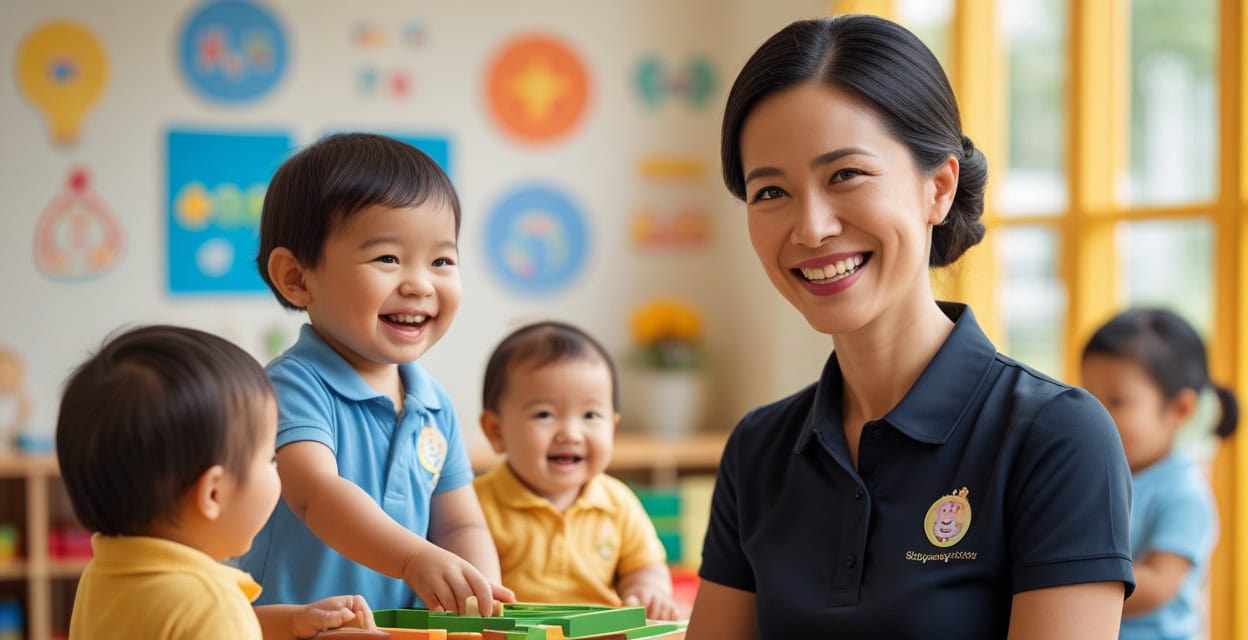
edunanny-79a6f6a0-2b5b-4041-85b8-1478aae6d4d0
September 27, 2025

EduNanny Singapore The Living Blueprint for Safe Joyful Infant Care and Near Home Childminding Across Island Communities

EduNanny Singapore: A New Standard in Infant Care and Childminding

EduNanny Singapore: A New Standard in Infant Care and Childminding

Good morning, parents, caregivers, partners in policy, and friends. This article expands on the mission and practice of EduNanny by BUTLER, translating a national vision into everyday excellence for Singapore’s youngest citizens. Built for islandwide access and rooted in rigorous safety, pedagogy, and human connection, EduNanny brings together centre-based and home-based care to shorten the distance between home and high-quality early childhood experiences. Here you will find actionable guidance, real EduNanny insight, and practical examples to help families, caregivers, and communities make informed decisions about infant care and childminding.


Five Pillars of EduNanny Practice

Five Pillars of EduNanny Practice

First: The Pedagogy of Attuned Micro-Moments

Infants learn through millions of small exchanges. At EduNanny, we translate attachment theory, prepared environments, and social development into daily choreography that parents and educators can observe and participate in.

  • Serve‑and‑return dialogue: Treat coos, gazes, and gestures as the child’s first curriculum. A baby reaches; we respond. A pause invites waiting with presence. Build trust by recognizing and language‑marking these moments.
  • Respectful caregiving (Pikler-inspired): Unhurried diaper changes, narrated movements, eye‑level touch, and mindful transitions—caregiving that becomes learning rather than interrupting learning.
  • Sensorimotor invitations: Floor time with short, safe challenges, treasure baskets with varied textures, and simple blocks to explore grasp, balance, and coordination—paced to the child’s state.
  • Hundred languages of learning: Music, light, texture, rhythm, and movement to spark curiosity—delivered in short, meaningful moments that suit early development.
  • Bilingual rhythms: Gentle Mandarin rhymes, Malay lullabies, Tamil fingerplays, and English storytelling woven into the week—balanced to avoid overstimulation while supporting language development.

Actionable tip for parents: keep a tiny “moment log” for a week. Note one micro-moment each day—like a successful eye contact during bottle feeding or a new gesture. Share it with EduNanny staff during updates to support the child’s evolving narrative.

Second: Safety as a Daily Ritual, Not a Poster

Safety is the backbone of trust. Our 1:3 ratio, CCTV transparency, and routines form a living system of protection and reassurance.

  • Sleep safety by design: Firm sleeping surfaces, supine positioning, individual sleep logs, airflow checks, and real-time interval checks to ensure safe rest.
  • Feeding integrity: Labeled bottles, allergen protocols, sterilization cycles, and paced feeds that respect satiety cues.
  • Environment scanning: Hazard mapping by zone (floor, reach, line of sight) with daily checklists and monthly drills to prevent accidents before they happen.
  • Hygiene and health: Rigorous hand hygiene, high-touch surface sanitization, and clear policies for exclusion and return‑to‑care communicated to families.
  • Emergency readiness and transparency: Rehearsed routes, contacts, and roles; ready communication templates; CCTV used as a learning and accountability tool—shared with families to build trust without interrupting infant experience.

Practical note for families: request a safety briefing with your EduNanny educator team, including a tour of sleep areas, feeding spaces, and how CCTV data is used to improve safety while preserving child comfort.

Third: Development as a Rhythm You Can Feel

The earliest task is trust, and development unfolds as a daily rhythm. Our educators craft individual care plans that listen to the child, not a generic timetable.

  • Motor development: Short, frequent floor time windows, age-appropriate challenges, and avoidance of confined spaces that restrict movement.
  • Language development: Close-talk narration during routines (diaper changes, feeding, play), responsive singing, and reading even to the youngest ears to build receptive and expressive language.
  • Social‑emotional development: Consistent primary caregiver assignments, predictable transitions, and co-regulation strategies to support big feelings.
  • Sensory development: Balanced sensory diets with soft light, gentle sounds, and varied textures offered with choice, not imposed, to prevent overstimulation.
  • Observation and partnership: Brief, intentional notes—two clear sentences—captured moments (new reach, longer gaze, first clap) and shared with families to make development a collaborative journey, not a report card.

Actionable plan: at home, schedule a 10–15 minute daily “play and talk” window with your child, focusing on a single new skill (e.g., stacking cups, imitating sounds). Share observations with EduNanny staff to align home and centre learning experiences.

Fourth: Happiness and Belonging as Measurable Realities

Joy is a signal of regulated nervous systems and well‑held routines. EduNanny builds micro-rituals of happiness that travel with families through the workday.

  • Warm greetings: Consistent words and gestures at arrival to anchor the day and provide a sense of safety.
  • Mini ceremonies: “Good Morning Sun” greetings, handwashing finger plays, and a farewell song at pick‑up to close the day with care.
  • Comfort objects and routines: Identities and security objects are respected and integrated into daily activities, never hidden away.
  • Joy markers for educators: Indicators such as relaxed shoulders, open hands, shared smiles, and cue‑based babble bursts that reflect a calm, engaged child.
  • Community and belonging: Festival moments, family drop-ins, and caregiver‑parent micro-conferences designed to fit a busy workday and reduce isolation.

Parental tip: create a simple daily “joy log” at home—note one moment of joy each day (e.g., a smile after a cuddle). Share it with EduNanny to reinforce positive patterns across settings.

Fifth: The Vocation of Childminding as a Civic Profession

Childminders are partners in a national promise. Within the ECDA Childminding Pilot, EduNanny invests in people as much as premises, merging research with community practice.

  • Training that blends science with culture: Ongoing professional development that merges attachment science with Singapore’s cultural heartbeat, tailored to infant care realities.
  • Clear career pathways: Home-based care, centre roles, mentorship tracks, and specialisations (sleep, feeding, inclusive practices) to sustain meaningful careers.
  • Fair work and stable schedules: Monday–Friday, 7 a.m.–7 p.m. to align with real workdays, ensuring consistent staffing and predictable routines for children.
  • Professional dignity through shared accountability: CCTV as a learning mirror, not just surveillance, to elevate practice and demonstrate transparency.
  • Community roots and locality: Prioritising staff from neighbourhoods to build familiarity, trust, and care that reflects local needs and languages.

Practical takeaway: if you are considering a care role, inquire about training modules, mentorship opportunities, and the pathway to a stable, respected career within EduNanny or your local ECDA‑aligned providers.


Practical Implications for Families: What It Means in Everyday Life

Practical Implications for Families: What It Means in Everyday Life

  • Care options: Centre‑based and home‑based childminding to suit your preference, proximity, and work style.
  • Islandwide availability: Access to care across communities, reducing travel time and improving consistency in routines.
  • Affordability: Access from $33/day, with fees payable by CDA/Baby Bonus, designed to widen participation without compromising quality.
  • Hours that reflect real workdays: Monday–Friday, 7 a.m.–7 p.m. operations for predictable schedules and caregiver stability.
  • Environment and safety: Modern layouts, sightlines for staff, proper ventilation, and safety‑first design in both centre and home premises.
  • Transparency and communication: Secure CCTV, daily updates, and digital notes that keep families informed without interrupting infant experiences.
  • Family integration: Daily notes, family events, and micro‑conferences to keep families in the loop and part of the child’s learning journey.

How to Engage with EduNanny: Questions to Ask and How to Decide

How to Engage with EduNanny: Questions to Ask and How to Decide

  • Safety and ratios: How is the 1:3 ratio maintained across shifts? What are the sleep, feeding, and hygiene protocols?
  • Staff training and continuity: What training pipelines exist for caregivers? How is staff retention supported?
  • Observation and updates: How often are development notes shared? What do two-sentence progress notes look like?
  • Home-based vs centre-based differences: How does each setting support language development and attachment bonds?
  • Cost and eligibility: What are the exact fees, what subsidies apply, and how are CDA/Baby Bonus claims processed?
  • Parent participation: What opportunities exist for family involvement, conferences, and cultural celebrations?

Practical next steps: schedule a tour of both centre-based and home-based EduNanny options, request a safety walkthrough, and ask for a sample daily schedule to compare with your family routine. Bring your child’s current routine, feeding cues, and sleep patterns to the meeting to co-create a plan that honors your family’s priorities.


Conclusion

Conclusion

EduNanny by BUTLER embodies a dynamic approach to infant care and childminding in Singapore: a humane, scientifically informed, and civically minded practice designed to bring high-quality care within reach for every family. By centering attuned micro-moments, daily safety rituals, developmental rhythms, happiness as a measurable reality, and the vocational dignity of caregivers, EduNanny turns everyday routines into a reliable, nurturing curriculum for the first thousand days and beyond. If you seek excellence, proximity, and partnership in your child’s early years, EduNanny invites you to explore centre-based and home-based options, ask hard questions, and become part of a community that believes care is a public good and a personal art.

Visit EduNanny.com or Childminding.EduNanny.com to learn more, compare options, and begin a conversation about your family’s needs. Because when families trust the day, evenings become lighter, and the future becomes clearer.


Call to Action: Join the EduNanny Community

Call to Action: Join the EduNanny Community

Whether you are a parent seeking the best start for your infant, a caregiver ready to turn your gift into a profession, or a neighbour who believes in humane, high-quality care near home, EduNanny welcomes you. Reach out, schedule a visit, and start a dialogue about safety, pedagogy, and price—so that the promise of every Singapore morning can be kept, one infant, one family, one neighbourhood at a time.

In closing, imagine that morning lift again: a parent’s arms open; an educator’s arms ready to receive. Between those hands lies the future we hope Singapore will become—curious, kind, resilient, and ready. EduNanny exists to keep that promise through everyday excellence in infant care and childminding.

SEO keywords: [#keyword1, #keyword2, #keyword3, #keyword4, #keyword5]