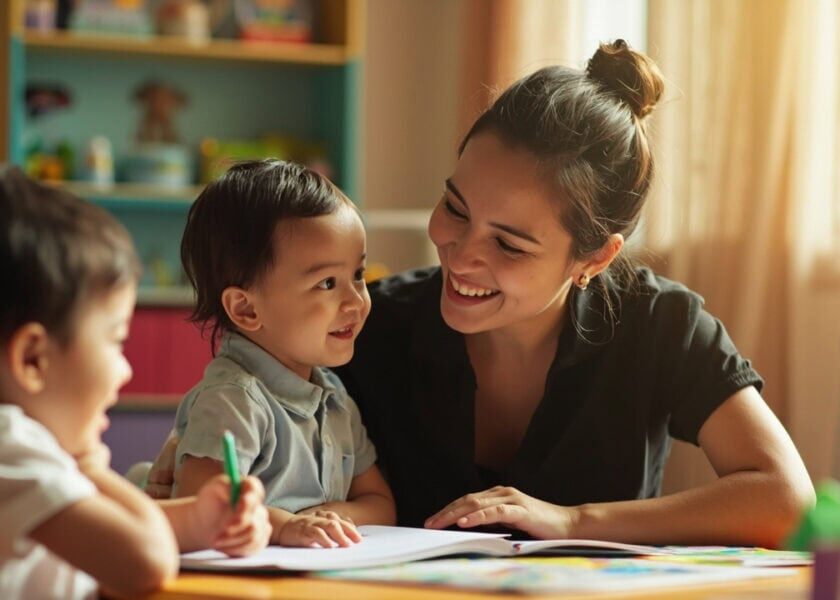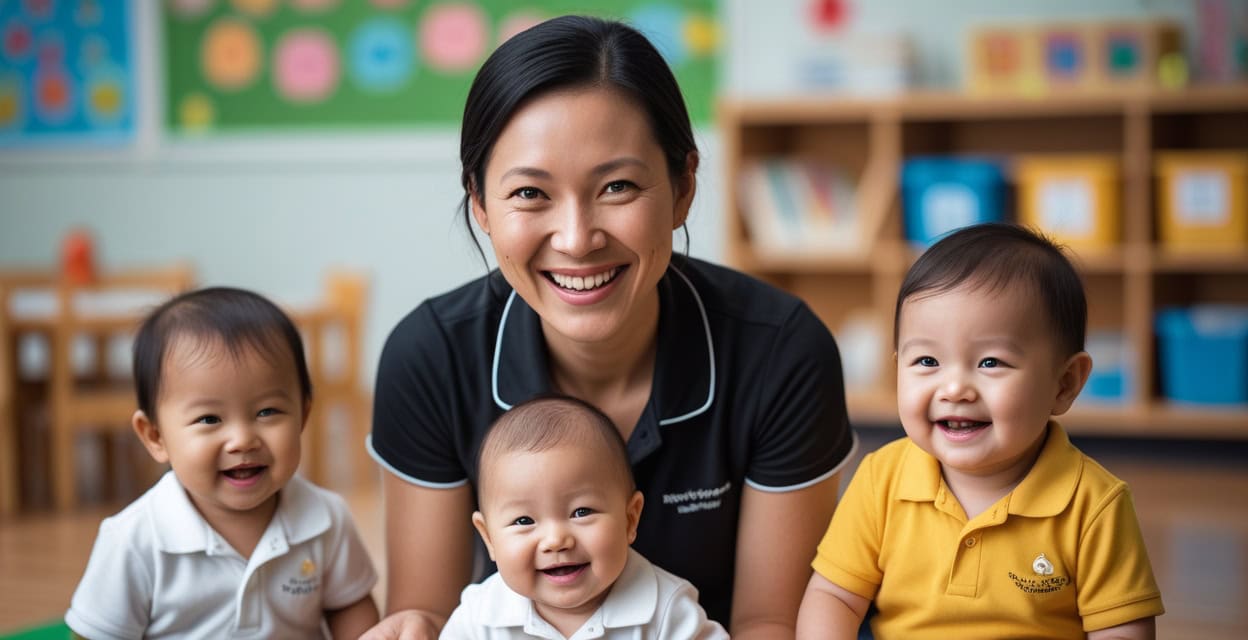
Near Home One to Three Attunement, A Beginning Worthy of Potential for Singapore First Thousand Days

EduNanny: A Beginning Worthy of Potential
Esteemed parents, caregivers, neighbors, and friends, thank you for gathering to consider how we give Singapore’s youngest citizens a beginning worthy of their potential. At EduNanny, our answer is practical and principled: excellent infant care brought close to home, grounded in science and humanity, delivered with transparent trust and everyday dignity. EduNanny is an islandwide childminding network by BUTLER under the ECDA Childminding Pilot, offering both home-based and centre-based care from Monday to Friday, 7am to 7pm, in modern, thoughtfully designed environments across Singapore.
Our promise is an ultra-low 1:3 infant-to-caregiver ratio, supported by safety innovations such as privacy-respecting CCTV and robust, repeatable routines. Families gain affordable access from $33/day, with fees payable by CDA/Baby Bonus, and the convenience of placement near home or work. For those who need flexibility, we support distance solutions—video check-ins, coaching, and continuity planning to sustain care through life’s transitions. All of this exists within a National Social Initiative that pairs child wellbeing with a Maximum Employment Mandate, creating meaningful jobs while elevating standards. This is EduNanny’s compact with Singapore: excellence, quality, and access—without compromise.
We make infant care great for Singapore by uniting proximity with professionalism. We reduce travel time and stress for families and build continuity for infants. We train childminders to read a baby’s cues as a living curriculum. We align home rhythms with care rhythms so a child experiences one coherent day, not two disjointed halves. And we treat safety not as a checklist to be satisfied, but as an ecosystem to be cultivated—physical, emotional, relational, and procedural—so that every child’s curiosity can bloom within a secure base.
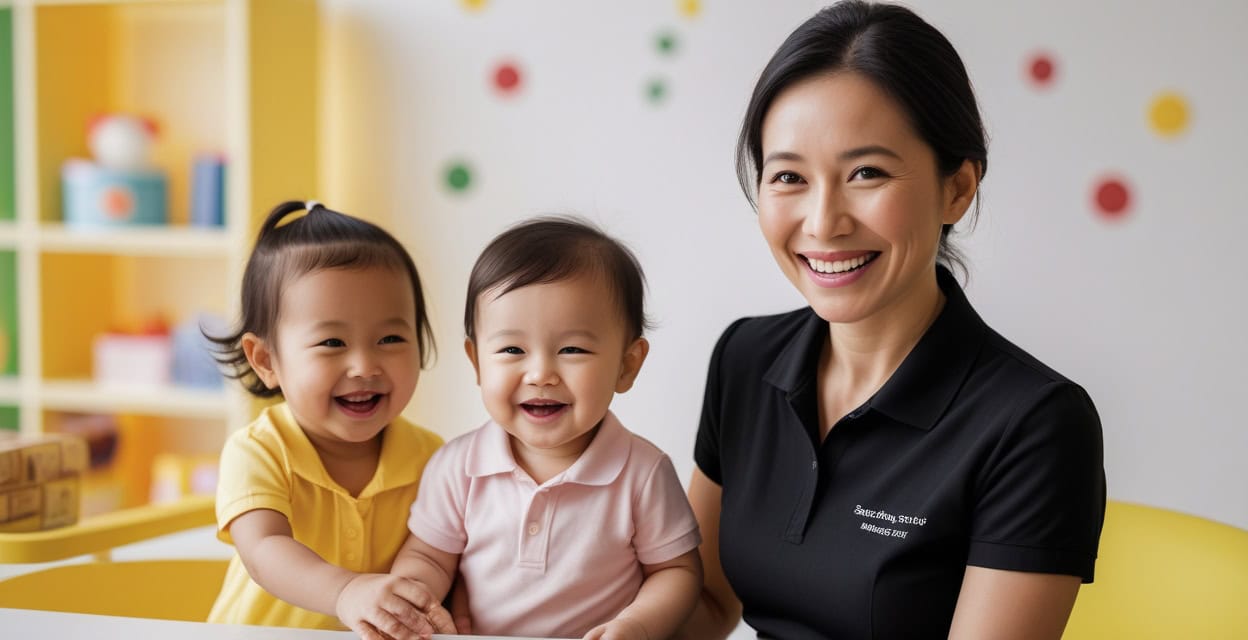
Topic One: Pedagogy—Care as the Science of the Attuned Minute
Infancy is built in moments—a glance, a pause, a response. These micro-interactions are where brains wire and identities take root. Our pedagogy centers on attunement: notice, name, and nurture. Inspired by pioneers of early learning, we practice:
- Prepared environments that invite exploration without overstimulation—open-ended objects, soft light, uncluttered spaces, and neutral tones punctuated by warm color.
- Freedom of movement so babies discover their bodies and balance without being rushed, restrained, or over-directed.
- Scaffolding where caregivers narrate what the infant is doing, not what the adult wants done—“You’re reaching for the red ring; your fingers are working hard”—because language grows from lived action.
- Gentle routines that become rituals: the same song for transitions, the same gesture before picking up, the same three seconds of eye contact before feeding. Predictability builds trust; trust unlocks learning.
Practical application for families and educators includes daily rituals, small conversations with infants, and closely observed cues. For example, during a transition, a caregiver might pause, acknowledge the infant’s current activity, name the feeling or action, and offer a helpful choice—allowing the child to lead the pace while staying within a comforting framework. We call this the Attuned Minute: a steady, curious, calm presence that shapes a child’s sense of safety and readiness to learn.
Implementation in Everyday Life
- Keep the environment uncluttered and predictable; rotate toys to sustain curiosity without overstimulation.
- Use language that mirrors the infant’s actions—“You’re reaching for the block—your arm is stretching,” promoting vocabulary alongside action.
- Schedule consistent routines for feeding, napping, and play to support a coherent daily narrative.
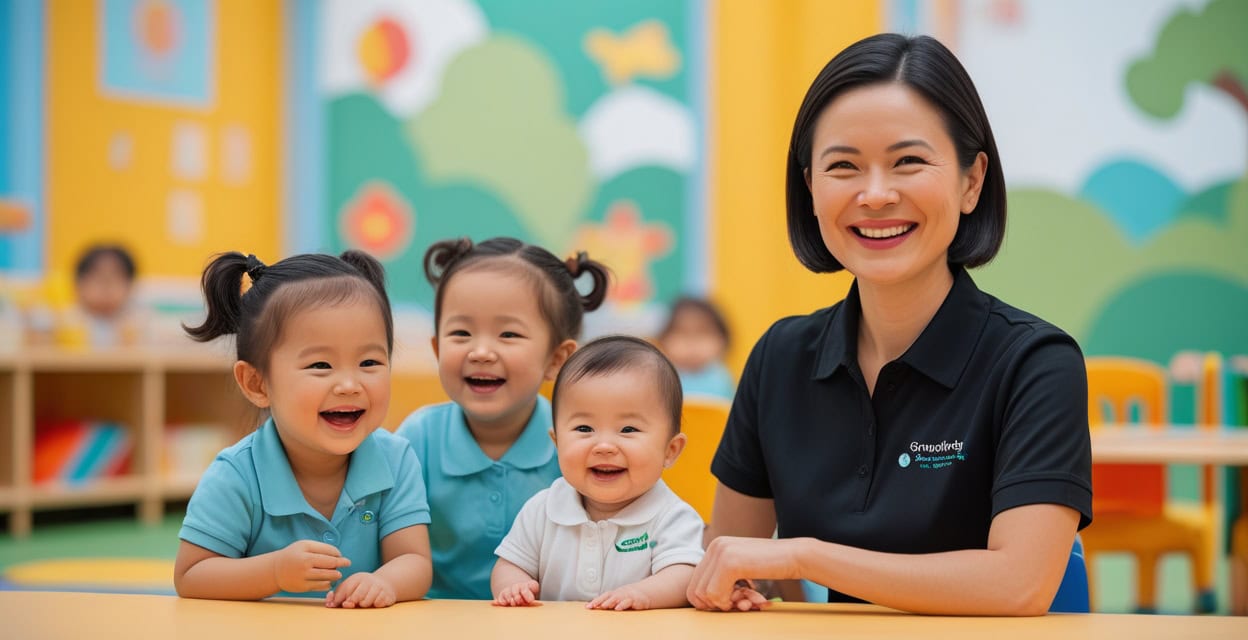
Topic Two: Safety—A System, Not a Slogan
Safety in infant care is architecture, culture, and habit. At EduNanny it looks like this:
- Spaces designed from a child’s eye level—no blind corners, secure gates, anchored furniture, and floor surfaces that support crawling and early movement.
- 1:3 ratio that makes vigilance realistic; a caregiver can truly see and respond to each child. Ultra-low ratios aren’t a luxury; they are the foundation of safe practice.
- Transparency with privacy—CCTV for accountability and peace of mind, paired with strong privacy protocols. When families can see, trust deepens; when caregivers know standards are shared, consistency rises.
- Daily risk-mitigation routines—sleep checks with observable breathing, bottle labeling and preparation protocols, safe sleep positioning, sun and heat protocols for Singapore’s climate, and infection-prevention practices that are taught, not assumed.
- Escalation maps and reflective debriefs—team learning from near-misses and sharing lessons across locations to continuously improve safety culture.
Safety, in practice, means daily rehearsals of right decisions so calm becomes the norm and vigilance becomes second nature. It is more than avoiding accidents; it is cultivating an environment where safe exploration and confident risk-taking can flourish under supportive guidance.
Topic Three: Development—The Four Rivers
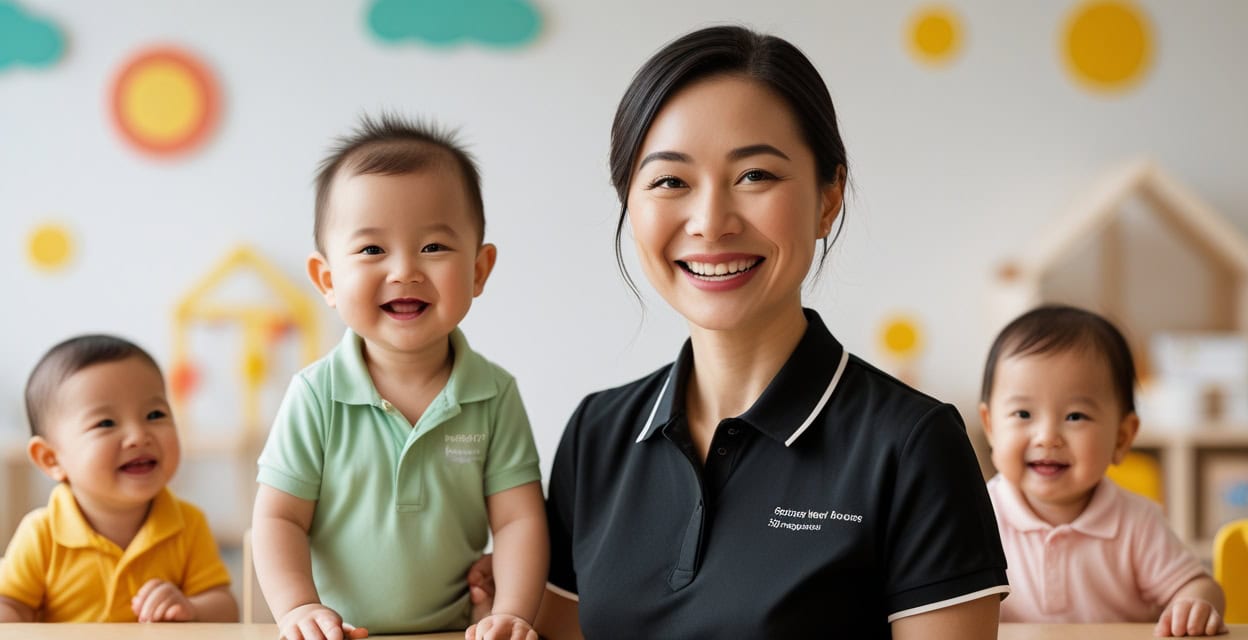
Human development flows along four braided rivers—movement, language, social-emotional growth, and the early roots of self-regulation. We nurture all four together:
- Movement—enough floor time for rolling, reaching, pivoting, and eventually pulling to stand. We avoid devices that confine posture or limit sensory feedback.
- Language—rich, high-quality talk throughout the day: describing, wondering, and singing, while embracing Singapore’s multilingual richness and protecting infants from excessive background noise.
- Social-emotional growth—responsive waiting, matching energy and emotion, and building trusting relationships through co-regulation today that becomes self-regulation tomorrow.
- Early self-regulation—structured rhythms for sleep, feeding, and play to support predictable arousal and recovery; caregivers monitor cues of fatigue or overload and modulate the environment accordingly.
Development is individualized through careful observation logs: patterns emerge over days, not moments, and care adapts to each child’s trajectory. The goal is a relationship-based approach where progress is measured in lasting growth rather than discrete milestones alone.
Practical Examples
- Schedule ample tummy time and floor play to support motor development safely.
- Describe sounds, colors, and actions in multiple languages when appropriate to support bilingual development.
- Observe a child’s cues for fatigue; adjust lighting, noise, and activity to restore calm quickly.

Topic Four: Happiness—Joy as a Vital Sign
In infancy, happiness is not a luxury—it is a diagnostic. A stable mood, frequent social smiles, playful engagement, and restful sleep tell us the environment is working. We cultivate joy deliberately:
- Warm greetings and attuned goodbyes at handover to ease transitions and reinforce trust.
- Songs, finger plays, and sensory play attuned to developmental stage, honoring Singapore’s cultural textures while protecting infants from overstimulation.
- Inclusion of cultural textures—nursery rhymes, gentle rhythms, and home languages to help babies hear the music of their community and feel they belong.
- Small-group play at 1:3 to ensure each child receives attention and interaction without being overwhelmed by a crowd.
Joy is monitored through daily notes, brief mood checks, and sleep/feeding records—enabling quick adjustments if happiness dips. The aim is for joy to be the background hum of a good day rather than an occasional moment.
Topic Five: Purpose—The Childminder as Citizen-Caregiver
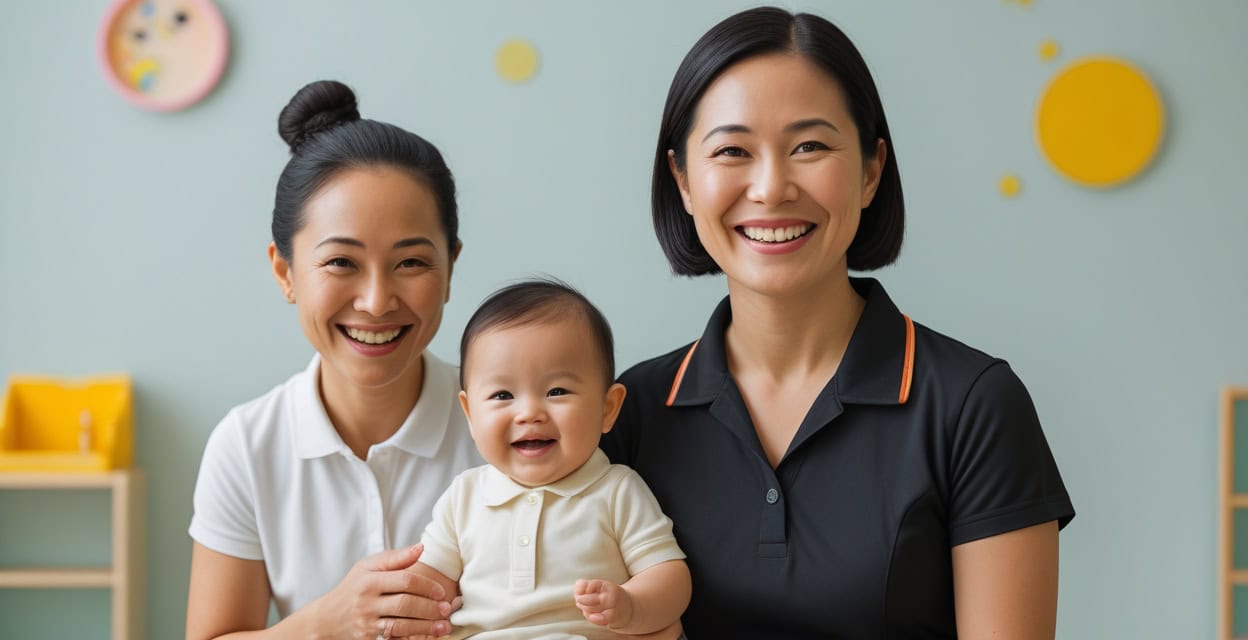
To be a childminder is to hold a public trust. EduNanny’s National Social Initiative and Maximum Employment Mandate exist because infant care is both an economic engine and a civic ethic. We recruit, train, and support caregivers from the community to serve the community, creating pathways of professional pride and stability. We offer reflective supervision, ongoing learning, and dignified working conditions. When childminders are respected, infants experience calmer care; when jobs are good, care is good. This is how we elevate a field and a generation at once.
- Public mission and professional dignity—careers that reflect value, training that builds expertise, and ongoing supervision that sustains growth.
- Reflective practice—regular debriefs, peer learning, and shared standards to keep care consistently strong.
- Community employment—careers rooted in local neighborhoods that strengthen social fabric and stability for families.
Practical Takeaways for Families
What this means for you, today, in practical terms:
- Access where you live and work—both home-based and centre-based childminding in community premises islandwide.
- Hours that match real life—Monday to Friday, 7am to 7pm, aligning with modern work patterns.
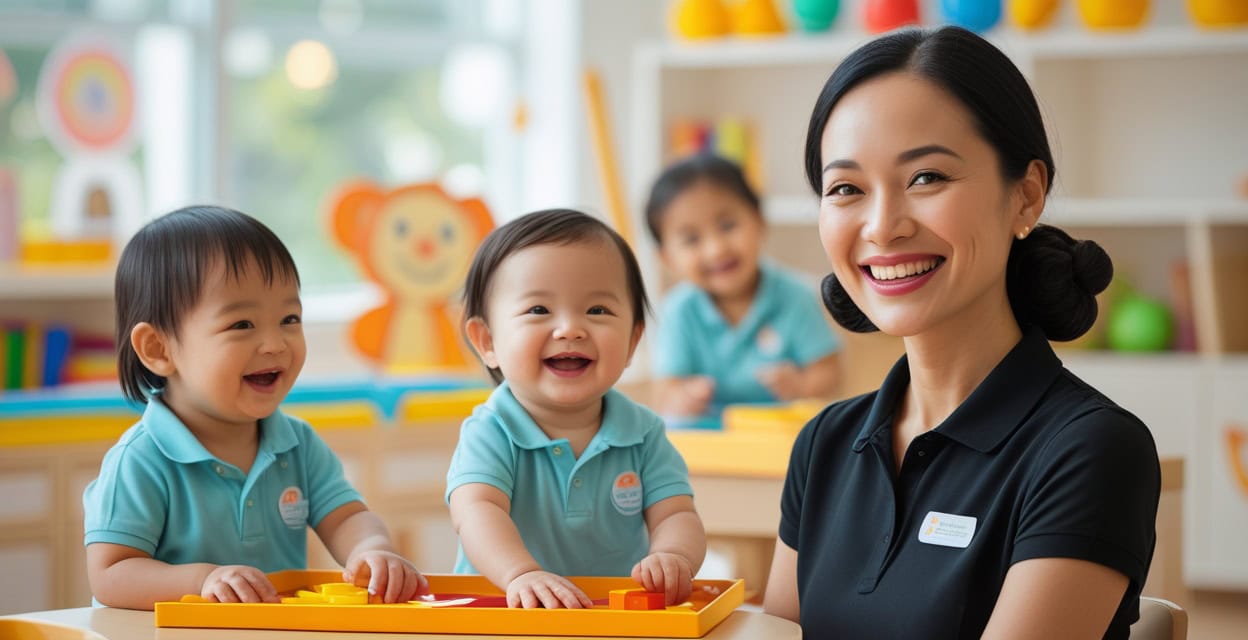
- Transparency that builds trust—modern layouts, visible design elements, and privacy-respecting CCTV for reassurance.
- Quality without prohibitive cost—affordable from $33/day, with CDA/Baby Bonus support.
- Choice and continuity—centre-based, home-based, and distance support options to adapt to your family’s rhythm.
- A human ratio—1 caregiver to 3 infants, ensuring attentive care and timely responses.

Engaging with EduNanny: How to Start
EduNanny is available through the ECDA Childminding Pilot. Explore placements and learn more at EduNanny.com and Childminding.EduNanny.com. We invite families to visit a nearby location, meet the care team, and see how a 1:3 ratio, modern, child-centered layouts, and a humane schedule can transform your family’s week—and your child’s world.
Conclusion: A Beginning That Builds a Nation in the Smallest Hands
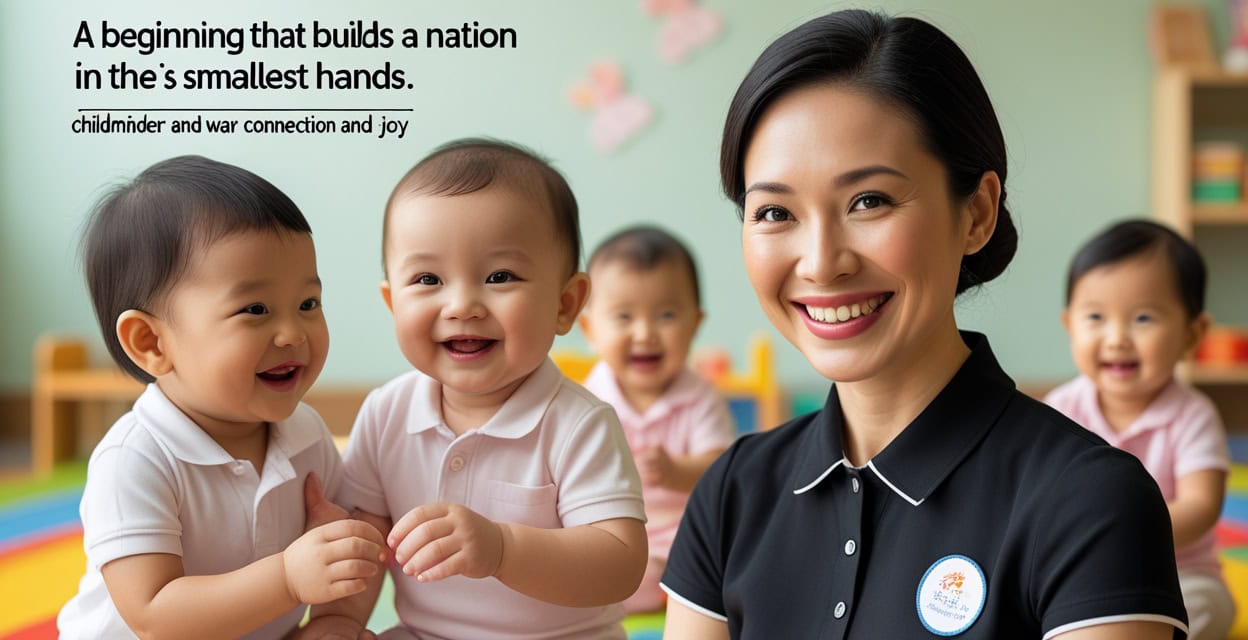
Infancy is not an afterthought; it is nation-building in the smallest hands. Our purpose is to make every ordinary day decisively good for a baby: safe, calm, curious, and loved. We do this through craft—three seconds of eye contact, a well-timed pause before a pickup, a bottle warmed to a familiar temperature, a nap taken in a quiet, consistent corner, a caregiver who knows your child’s cues. If we commit to minute-by-minute care, day after day, we will raise children who expect the world to meet them with fairness and care—and who meet the world with confidence and generosity. Let us choose a beginning that matches our hopes: care within reach, quality within budgets, and trust within sight. Let us give our infants ordinary days that grow extraordinary lives.
On behalf of EduNanny by BUTLER, under the ECDA Childminding Pilot, I invite you to meet us near your home, visit EduNanny.com or Childminding.EduNanny.com, and see how a 1:3 ratio, modern, transparent design, and a humane schedule can change your family’s week—and your child’s world.
Thank you for believing, with us, that the smallest hands deserve our greatest care.
[#keyword1, #keyword2, #keyword3, #keyword4, #keyword5]