Trust the Science of Secure Attachment for Your Child’s Best Start
The Question That Sits Beneath Every Decision
There is a question that keeps Singapore parents up at night, even as they intellectually understand that they need to work, that they need support, that they need something sustainable. It sounds like this: Am I still the most important person in my child’s life if someone else is caring for them during the day?
The parental instinct does not care about logistics. It whispers: what if this changes everything?
Here is the answer that decades of developmental research have arrived at, stated plainly: you are not diminished by the presence of a quality caregiver. You are amplified by it.
Your child — who has learned to feel safe in the world, who has practiced trust and emotional regulation with a responsive adult, who has explored and returned and explored again — comes home to you with more to give. More curiosity. More emotional resilience. More capacity for the kind of deep, attuned connection that you always wanted.
This is not a reassurance. It is a scientific fact, and it is the foundation of understanding what quality infant care actually does.
Secure Base Theory and the Science of Attachment
The insight that transforms this conversation comes from decades of developmental research under a framework called secure base theory, pioneered by psychologist John Bowlby and expanded by Mary Ainsworth, whose careful observations of how infants form attachments became some of the most important research in the history of child development.
Bowlby’s insight was deceptively simple. He proposed that children are not born to attach to one specific person. They are born with a biological drive to form emotional bonds with adults who are consistently present, consistently warm, and consistently responsive to their signals.
What Bowlby and Ainsworth discovered — and what subsequent neuroscience has confirmed — is that attachment is not a zero-sum resource. It is not a pie that gets smaller the more people you share it with. It is, in the truest sense, a skill: a learnable capacity for trust and connection that children practice, rehearse, and eventually master.
Attachment Expansion: What Actually Happens
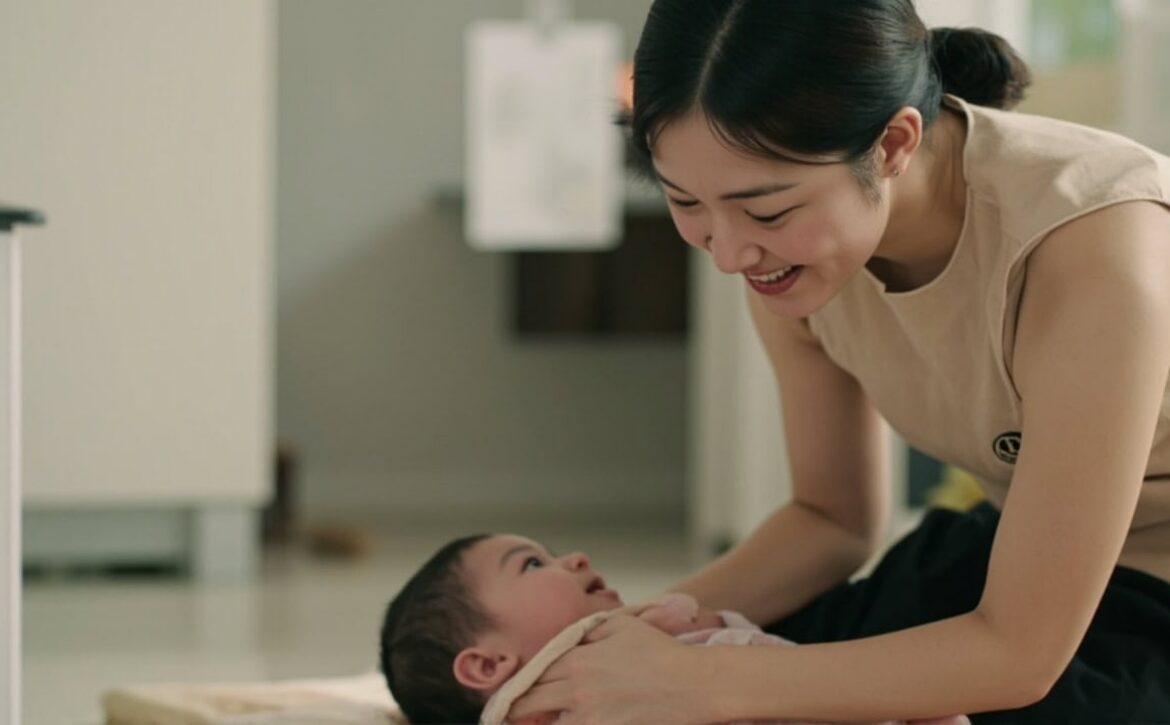
When a child forms a secure attachment with a responsive caregiver — whether that caregiver is a grandparent, a family friend, or a trained infant educator — something extraordinary happens in that child’s brain. Neural pathways that govern emotional regulation, stress response, and social engagement are being laid down with extraordinary speed.
Developmental psychologists call this attachment expansion: the multiplication of safe relationships in a child’s life, each one reinforcing the same fundamental message. You are loved. You are safe. The world is worth exploring.
In the first thousand days of life, a child’s brain forms more than one million new neural connections every second. The quality of the emotional environment during this period does not merely influence development. It literally sculpts the architecture of the brain.
Here is what happens when a child experiences consistent, quality care:
- Cortisol regulation: The stress hormone remains regulated. The child’s nervous system learns that the world is not a place of constant threat.
- Limbic system development: The part of the brain that processes emotion and social cues develops with greater coherence, creating a more stable foundation for emotional life.
- Prefrontal cortex growth: The area that governs impulse control and future planning has room to develop because it is not perpetually hijacked by fear or distress.
The Scene That Shows This in Action
Imagine a child — eighteen months old, newly walking, discovering that the world has surfaces to climb onto and things to open. She is at home with her mother, and she is bold. She pulls herself onto the sofa, reaches for a book on the shelf, brings it back to show her mother. She looks up, makes eye contact, and waits for the smile. That smile is her fuel.
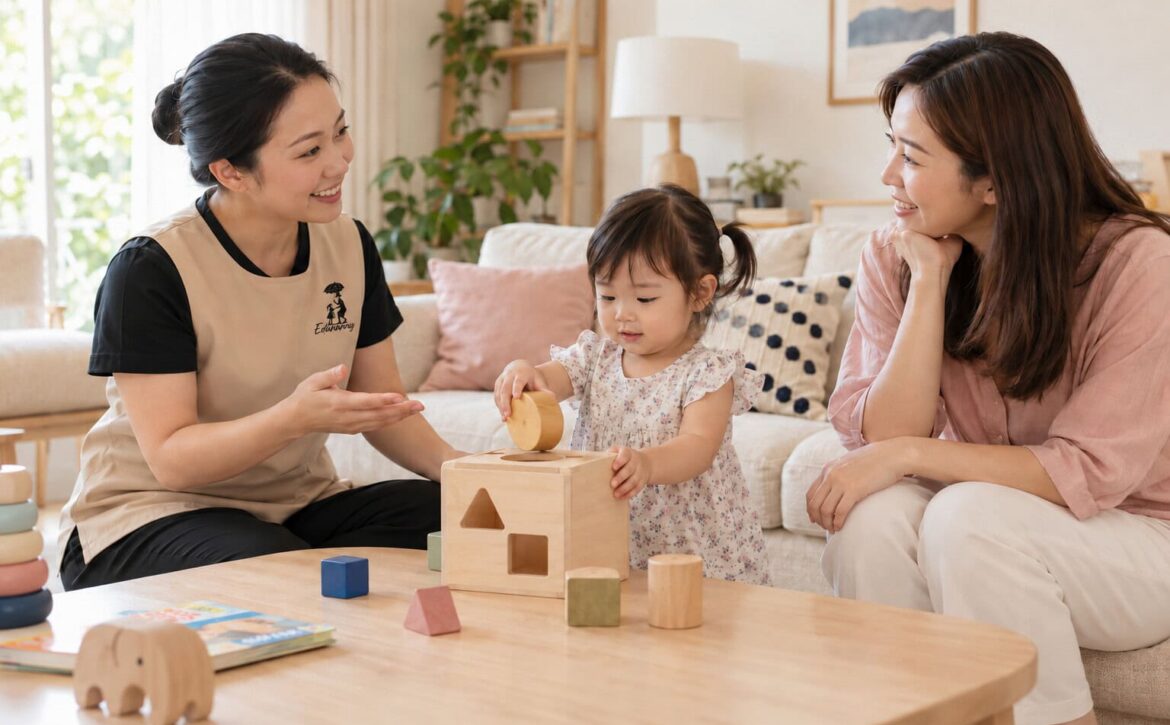
Now imagine the same child, hours later, in a different room with a different adult. The room is warm. The caregiver sits on the floor and speaks to her in a calm, unhurried voice. The child explores, and the caregiver does not hover. She watches, she mirrors, she responds. And the child does the same thing. She climbs. She reaches. She turns back to check in.
What you are witnessing is not a child who has forgotten her mother. You are witnessing a child who has generalized something profound: a felt sense of safety that is not location-dependent. She has learned, through consistent, responsive care, that the world can be trusted. That someone will catch her.
What Quality Care Looks Like in Practice
A child in a secure attachment relationship with a caregiver will do several things that you can watch for:
- She checks in periodically — not with anxiety, but with the calm confidence of someone who has learned that the connection is reliable.
- She shows the caregiver her discoveries — the way she shows you. The joy of sharing is not reserved for family.
- She cries when the caregiver leaves and then — crucially — she settles. The ability to be comforted by a second adult is itself a hallmark of secure attachment.
- She explores with return. She goes, she checks, she goes further. This rhythm is the signature of a child who feels secure enough to venture out.
You may notice that a child who is in quality care seems more settled, not less. She may sleep better because her nervous system has learned to regulate. She may be more curious and less clingy because she has developed the emotional foundation to tolerate the normal anxiety of separation. She may be more affectionate — not because she is replacing you, but because she has more emotional resources available for connection.
Signs Worth Noticing — Without Diagnosing
Watch for patterns that may indicate the care environment is not meeting your child’s emotional needs. These are signals to investigate, not to diagnose:
- A child who cannot be comforted by any caregiver, who remains in distress long after separation
- A child who is either unusually compliant or unusually withdrawn
If you observe these patterns, have a direct conversation with your care provider. The best infant care providers do not hide behind closed doors.
Why This Matters More in Singapore
Singapore is a city of dual-income households, of long commutes and demanding professional cultures, of families who live far from the grandparents who might once have been the village. The infrastructure of family support that sustained previous generations — the aunties, the neighbors, the multigenerational households where a child had multiple consistent, loving adults — is not what it was.
And yet the parental instinct, the desire to be present, to be enough, to not let your child feel the gap of your absence — that instinct has not changed. If anything, in a more competitive, more connected, more information-rich environment, it has intensified.
Singapore parents are some of the most research-aware parents in the world. You read the studies. You know about the first thousand days. You are not looking for someone to tell you that everything will be fine.
You are looking for someone who understands the why — who can show you that the decision you are making is not a compromise but an investment in your child’s developmental architecture.
Questions That Actually Matter When Choosing Care
If you are evaluating childcare options in Singapore, these are the questions that distinguish quality care from adequate supervision:
- What is the caregiver-to-child ratio? Attunement requires presence. Low ratios are not a luxury — they are a developmental necessity.
- How is caregiver training structured? Look for training in attunement and responsive interaction — not just safety certification.
- Can you observe during care hours? Transparency is not a policy. It is evidence that the provider has confidence in what they are doing.
- How does the environment handle separation? A quality provider will have a thoughtful, gradual approach — not just a sign-in-and-leave process.
- What does communication look like? You should receive honest, regular updates — not curated highlights.
- How does the caregiver describe their role? If they talk about supervision and safety only, ask about emotional attunement. If they cannot answer, keep looking.
EduNanny Singapore: Built on This Understanding
EduNanny operates within the ECDA Childminding Pilot, and what that means in practical terms is a philosophy made operational.
The pilot reflects a growing recognition in Singapore that childcare is not a monolith. Families need different pathways, and the ECDA framework creates space for home-based care — small, consistent, relational environments where the ratio of caregivers to children is low enough that attunement is possible.
Up to one-to-three infant ratios in certain pathways mean that a caregiver is not managing eight infants simultaneously. She is with your child. Fully present. Learning his rhythms. Responding to her cues. Building, over days and weeks and months, the kind of consistent relational experience that secure attachment requires.
Home-based care through EduNanny means your child is not in a large centre where they are one of twenty. They are in an environment designed to feel like an extension of home — warm, predictable, responsive.
The Practical Details
- Care operates Monday through Friday, in structured care blocks that give you the consistency you need for your own work and planning
- Fees are structured to be accessible through the ECDA pilot framework — because emotional security should not be a privilege available only to families with significant resources
- EduNanny works with CDA and Baby Bonus arrangements, so the practical logistics of funding your child’s care do not add another layer of anxiety
- The Thomas AI Chatbot offers responsive guidance for midnight questions, developmental milestone concerns, and support that does not require you to wait for business hours
The Moment That Does Not Have to Feel Like Loss
There is a moment — and if you are a parent in Singapore, you may have lived it — when you hand your child to someone else and feel something shift in your chest. Not a dramatic moment. Not a crisis. Just a quiet, private knowing that you have placed the most precious thing in your life into the keeping of another person, and that you cannot be there to witness what happens next.
This moment does not have to feel like a loss. It can feel like what it truly is: an act of trust, in your child, in the caregiver, and in the process by which human beings learn to love and be loved.
Here is the reframe that so many parents in Singapore are quietly desperate for: you are not choosing between your career and your child. You are not choosing between financial necessity and emotional security.
You are, if you choose well, doing something that is deeply aligned with your parental instinct. You are building your child’s capacity to be secure — and a secure child is a child who can be fully present with you when you are together.
When you pick your child up at the end of the day and she runs to you with the particular joy of reunion — that joy is not a sign that she was waiting to escape. It is a sign that she trusted the world enough to have enjoyed her time away, and to trust you completely with her return.
The most profound investment you will ever make in your child’s future is not a programme or a curriculum. It is the emotional environment in which your child spends their early years. It is the quality of responsiveness they receive. It is the consistency of the message that they are safe, they are seen, and they matter.
EduNanny was founded on this understanding — not as a marketing message, but as a working principle that shapes how they recruit, how they train, how they observe, and how they communicate with every family in their care. Their purpose is not to supervise your child. It is to help build the emotional infrastructure that will serve your child for a lifetime — and that will serve your relationship with your child in ways that grow more meaningful with every passing year.
Explore What This Looks Like in Practice
If you are researching infant care and childminding options in Singapore — if you want to understand how the science of secure attachment applies in daily care — reach out for a conversation.
Ask the hard questions. Observe the environment. Ask about training, ratios, communication, and how they handle the moments that matter most. A provider who understands secure base theory will welcome every one of those questions.
Because your child deserves a secure base. And so do you.
EduNanny Singapore. Building secure bases. Strengthening the bonds that matter most.