Talking to Your Baby During Nappy Changes
EduNanny® by BUTLER · Parent guide
A nappy change can include a little conversation: name the next step, notice a sound or movement and respond warmly while you complete the care. Your baby does not need to look at you or babble back for the change to go well.
Keep safety, hygiene and comfort first. The aim is an ordinary exchange within the routine, not extra minutes of stimulation or a test of what your baby can do.
Prepare the change before starting the conversation
The NHS nappy-changing guide recommends washing your hands and gathering what you need before you start. It describes a changing mat or towel on the floor as the best place to change a nappy. If you use a changing table, keep watching your baby; do not rely on its straps, walk away or turn your back.
KKH’s childhood injury guidance also emphasises close, undistracted adult supervision. Put the phone aside and keep your attention on your baby and the care task. Taking a photograph or writing a note can wait until the change is finished and your baby is safely settled.
Change a wet or soiled nappy promptly and complete the cleaning properly. Wash your hands afterwards. A conversational pause means leaving space in your words when it fits safely into the routine; it does not mean delaying hygiene or leaving a baby unattended.
Try one small back-and-forth exchange
The NHS guide suggests chatting to your baby during a change. Harvard’s guide to responsive interaction also describes everyday opportunities to notice a child’s interest, respond and allow another turn, including while getting them dressed. You can use the same simple idea during care without making the routine a lesson.
The examples below are optional phrases and choices, not a script every family must follow. They are illustrations, not reporting from a real childminding setting.
| Choice | What you might do | Keep in mind |
|---|---|---|
| Name a step | Use a short phrase such as, “I’m getting your clean nappy.” | Describe the care you are doing rather than adding a stream of questions. |
| Notice the response | Watch for a sound, a movement, a look towards you or a turn away. | Describe what you can see without deciding that one gesture proves a feeling or skill. |
| Answer and leave room | Reply to a sound or smile, then leave a little space in the conversation. | There is no fixed number of seconds to wait and no need to obtain another response. |
| Put care first | If your baby is unsettled, offer reassurance and focus on completing the change. | Comfort and hygiene take priority over continuing the exchange. |
For example, a parent says, “Here is your clean nappy,” while continuing the change. The baby makes a soft sound. The parent answers with a gentle sound and leaves room for a reply. If the baby turns away, the parent can reduce the talking and finish the care quietly.
That is a possible exchange, not a developmental result. You do not need to start again because the baby did not answer, or keep repeating a word until they look at you.
Follow your baby’s response instead of filling every pause
Harvard’s resource explains that, after an adult responds, a child needs an opportunity to reply. It also describes noticing when a child wants to move on. These ideas support taking turns; they do not establish a three-second pause, a minimum number of exchanges or a quality score for a care session.
Use a calm voice and a few words that fit what is happening. A baby may look, move, vocalise or remain quiet. If they are unsettled, respond to their immediate care needs rather than treating a cry or wriggle as something to interpret through this conversation guide.
Looking away does not require you to bring your face closer or ask for eye contact. Our baby communication guide offers more ideas for responding without making a particular gaze the goal.
You can finish a change with warmth even when there has been very little talking. The useful habit is paying attention and responding when an opportunity fits, while doing the care your baby needs.
Share what helped, without turning it into an assessment
If another adult will do the next change, a short note can describe a useful preference: “We used a quiet voice and one short phrase. They turned away, so we finished with less talking.” Keep it factual and write it after the care task.
A note can help a parent and caregiver discuss what was comfortable in one routine. It cannot show that a change improved attention, language or later school readiness. Avoid comparing how much two babies babble or how quickly they respond.
HealthHub explains that babies develop at different rates and advises discussing developmental concerns with their doctor. If you have a concern, bring your observations to that conversation rather than using one nappy-change exchange to judge it.
For care provided by someone else, ask how they handle routine communication and any preference changes. Discuss what the adult actually does; a particular ratio, service label or photo does not tell you how every change will unfold.
The next step can be small: prepare the supplies, keep your attention on your baby, name one part of the routine and notice whether a reply fits naturally. Finish the care with comfort and hygiene intact.
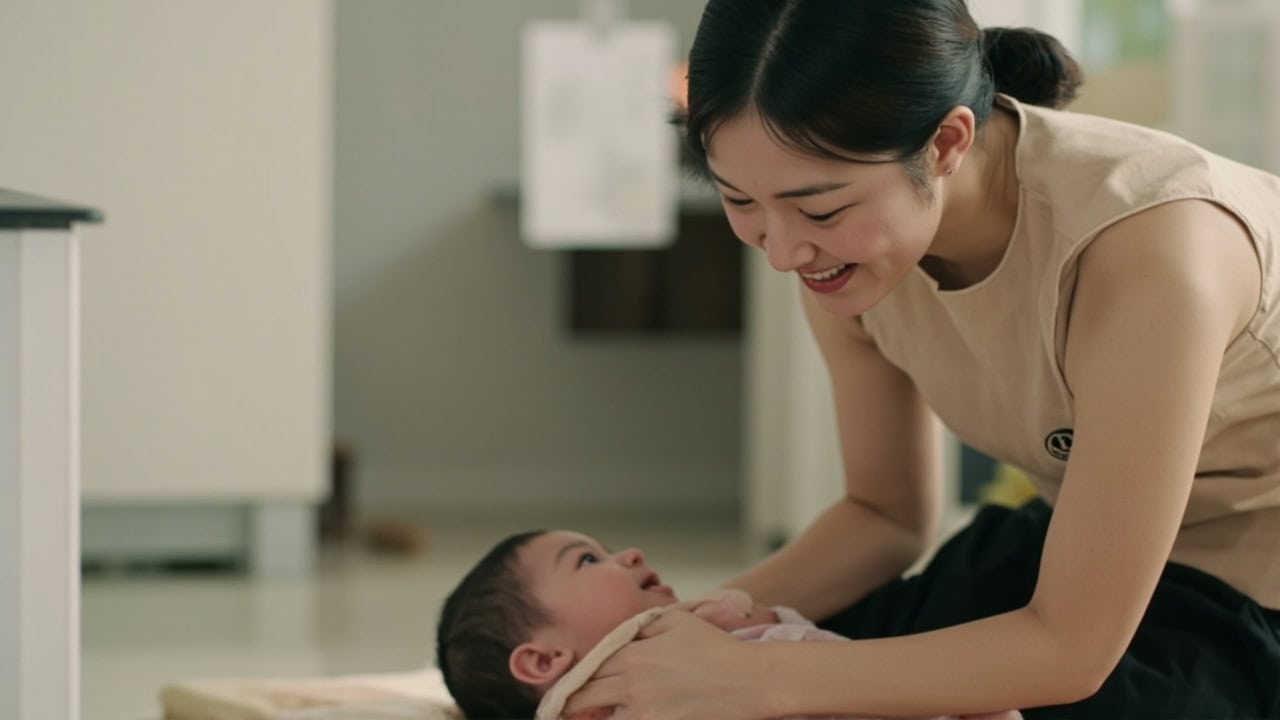
Sources checked 13 October 2026. Featured image: an existing AI-generated illustration of an adult leaning towards an awake baby during care. It does not show actual EduNanny staff, clients or facilities, and it is not a demonstration of a nappy-changing technique. Care for every little chapter.
Sources and further reading
- How to change your baby’s nappy · NHS
- 5 Steps for Brain-Building Serve and Return · Harvard Center on the Developing Child
- Childhood Injuries · KK Women’s and Children’s Hospital
- Your Growing Baby · HealthHub / Health Promotion Board