Baby Movement Play in the First Six Months
EduNanny® by BUTLER · Infant guide
Floor play in the first six months can begin with a small movement: a head turn, a kick or a hand opening towards a toy. Start with what your awake baby is doing, offer one manageable invitation, then give them time and adjust.
This is a way to organise a short play exchange, not a test of rolling or reaching. Stay beside your baby throughout. If they are tired, distressed or uncomfortable, stop and attend to their needs.
Prepare a clear space for awake play
Use a firm, clean mat on the floor with room for your baby to move their arms and legs. Clear the surrounding area of small objects, cords and other hazards. KKH’s childhood injury guidance calls for close, undistracted adult supervision. Keep your attention on your baby rather than fitting another task around the activity.
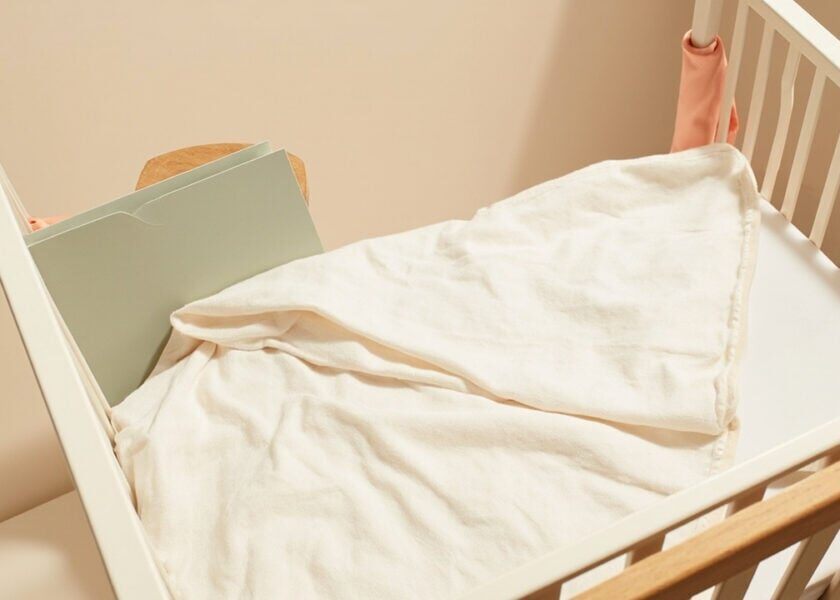
For tummy time, your baby should be awake, relaxed and rested. The Singapore Integrated 24-Hour Activity Guidelines describe a firm surface and short sessions that build gradually. If your baby becomes tired or distressed, turn them onto their back for a rest and try again later. For sleep, place your baby on their back in their own cot; a play mat is not the place to continue a nap.
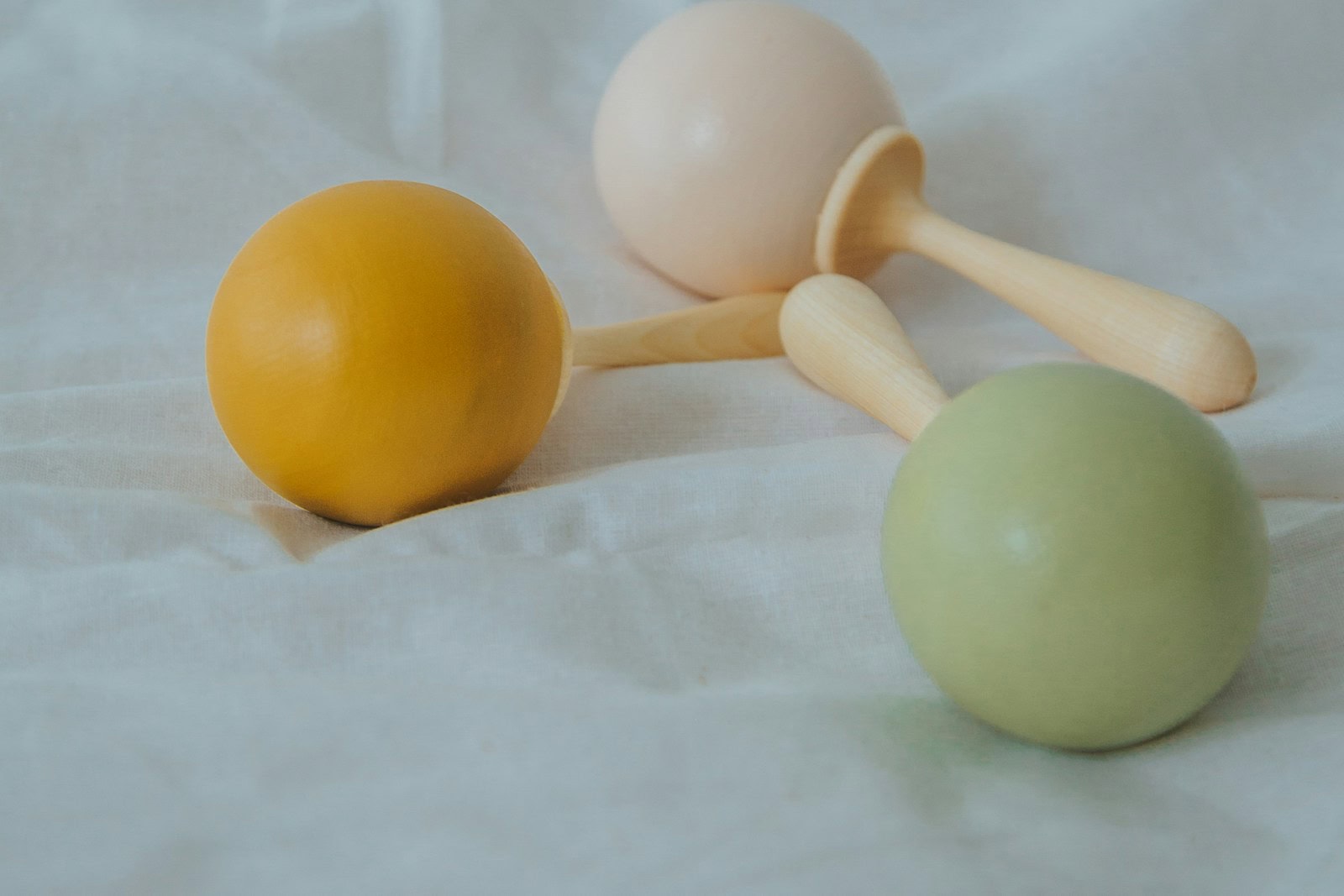
Have one suitable toy ready. Follow its age label and instructions, and check it for damage, sharp edges or loose parts. The Consumer Product Safety Office’s toy guidance also warns about long cords, small magnets and unsecured button batteries. A photograph of a toy does not establish its suitability for your baby; check the actual product.
You can use your face or voice for an invitation too. You do not need a collection of equipment or a more difficult activity simply because another baby is doing something different.
Use four prompts for one play exchange
UNICEF’s tips for babies aged one to six months include opportunities to move freely and reach for safe objects. The four prompts below are a practical memory aid for responding to your baby during one of those opportunities.
| Prompt | What to notice or do | A possible next choice |
|---|---|---|
| Observe | Watch the movement and attention your baby is already showing. | They look towards you, move a leg or open a hand. Begin from that response. |
| Offer | Show one suitable toy where your baby can comfortably notice it. | Keep it accessible. Avoid moving it away repeatedly to demand more effort. |
| Wait | Leave a pause rather than adding another toy or instruction immediately. | Notice a look, reach, movement or turn away. No particular result is required. |
| Adjust | Use your baby’s interest and comfort to decide what happens next. | Bring the invitation closer, put it aside or finish. Stop if they become unsettled. |
For an illustrative example, an awake baby lying comfortably on their back looks towards an age-appropriate rattle. The adult shows it near the baby’s hand, then pauses. The baby moves an arm and opens a hand. The adult leaves time for that movement rather than repositioning the toy again immediately.
If the baby turns away, the adult can put the rattle aside and respond with a quiet voice, or finish. This example describes choices an adult might make; it is not a report of a real child’s session or a sequence every baby should complete.
Change the invitation when comfort or interest changes
A small movement is enough to notice. You do not need to hold out for grasping, rolling or pushing up before the exchange counts as play. HealthHub’s growing-baby guide describes opportunities for movement and space to explore, while recognising that babies develop at different rates.
If your baby is comfortable and interested, keep the invitation simple and leave time to respond. If they look away, ease the activity rather than presenting the toy faster or farther away. If they seem tired, distressed or uncomfortable, stop. Attend to their care needs before considering another play opportunity.
The four prompts do not set a session length or a daily activity quota. Use the linked Singapore guidance for the wider activity routine and ask your baby’s healthcare professional how to adapt it when their individual needs require that.
Follow any advice already given by your baby’s doctor or physiotherapist about positioning and activity. This guide does not add stretches, assisted exercises or a programme for a developmental concern.
Keep a care note that describes the moment
If you want to record the exchange, write what you saw, what you offered and what changed. An illustrative note might read: “Looked towards the rattle, opened a hand and moved the arm. We paused, then put it aside when attention turned away.”
A note like this gives a parent or caregiver something concrete to discuss. Avoid turning it into a score, an age comparison or a claim that a skill has been mastered. One reach or pause cannot assess development.
HealthHub advises discussing developmental concerns with your baby’s doctor. Bring your observations to that conversation rather than using this play routine to decide whether a concern is important.
At a care handover, share the setup your baby seemed comfortable with and any advice their healthcare professional has given. If a provider keeps its own records, ask about its process rather than assuming this simple note is a formal assessment.
For a quieter activity focused on looking, our baby visual tracking play guide explains how to show a moving toy slowly and respond to your baby’s cues. For floor play, the useful next step is equally small: clear the space, stay close, make one suitable invitation and let the response guide your next choice.
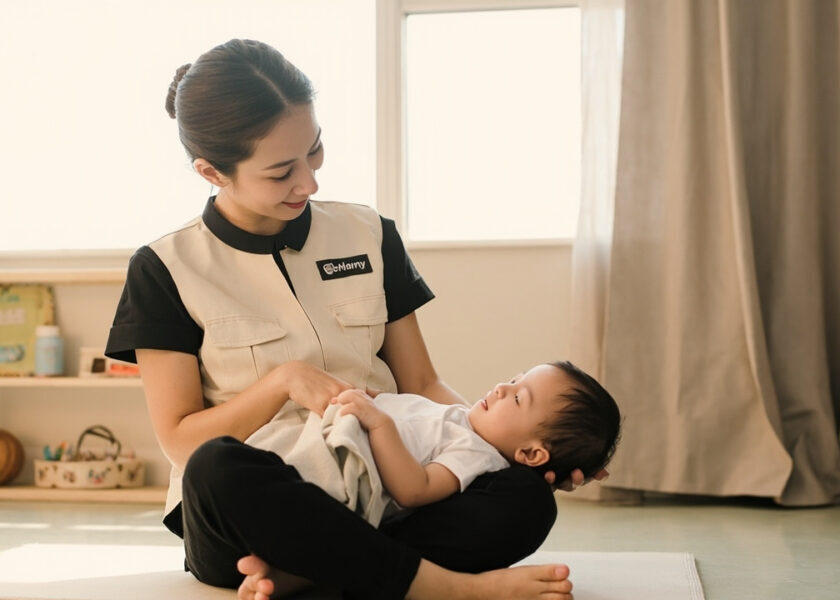
Sources checked 13 October 2026. Featured photograph: Marina Abrosimova on Unsplash, used under the Unsplash licence. Illustrative toy photograph; no particular toy or age suitability is endorsed. Care for every little chapter.
Sources and further reading
- Singapore Integrated 24-Hour Activity Guidelines for Early Childhood · infant activity, tummy time and sleep sections
- Parenting tips: babies aged one to six months · UNICEF Parenting
- Your Growing Baby · HealthHub / Health Promotion Board
- Childhood Injuries · KK Women’s and Children’s Hospital
- Safety Tips on Children Toys · Consumer Product Safety Office