Drop It, Shake It, Splash It: Why Your Baby Repeats Everything and How a Childminder Helps the Learning Go Deeper
The Repetition That Stops You in Your Tracks
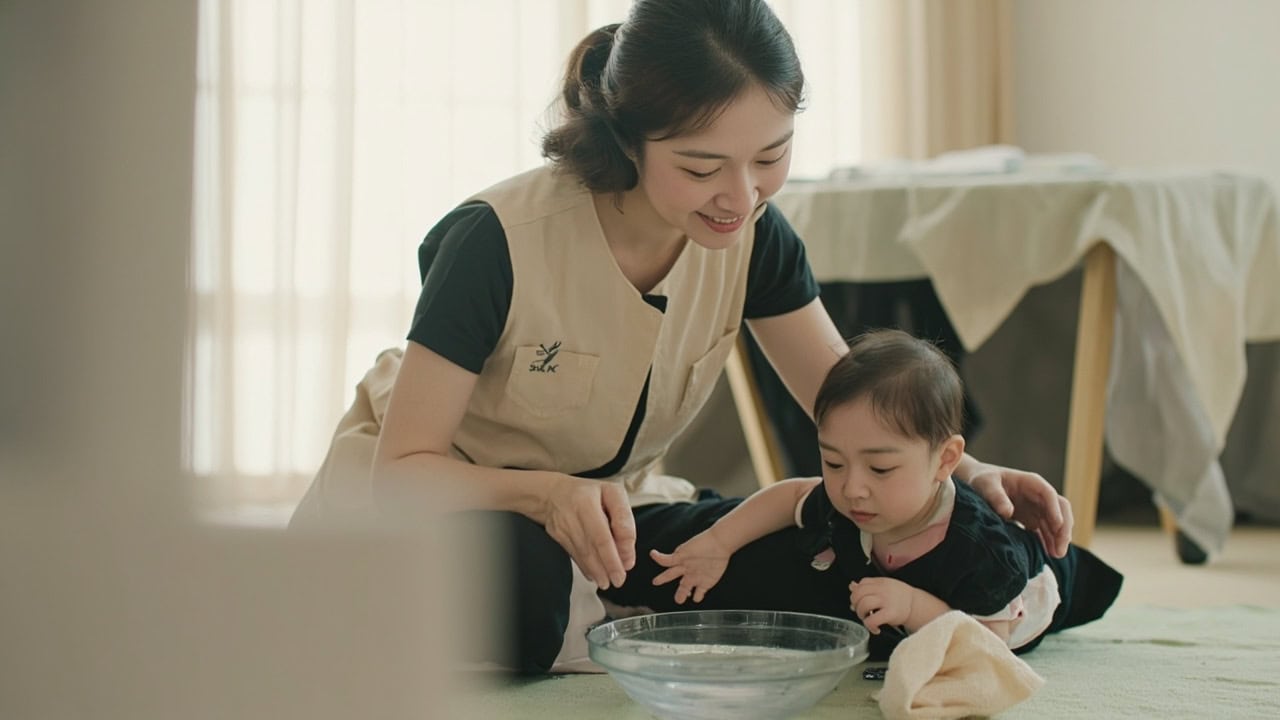
You hand your baby a small container. They shake it, listen, look at you, and shake it again. You hand them a plastic cup of water. They splash it deliberately, watch the ripples, and splash again. In a single morning, the same action can repeat a dozen times. It is easy to feel caught in a loop. But pause for a moment and watch what is actually happening.
Your baby is not simply amusing themselves. They are testing a fundamental idea: my body makes things happen. This is cause-and-effect reasoning in its earliest, most concrete form. Research on infant play has found that object exploration during free play unfolds in sustained, complex sequences, and that caregivers who engage with what a baby is focused on can meaningfully shape those learning moments.
UNICEF describes how babies learn through hands-on exploration, grasping and tracking objects as part of everyday development. When your baby repeats a splash or a drop, they are not just having fun. They are building one of the first mental frameworks they will ever use: if I do this, that happens.
Why Repetition Is Your Baby’s Work
Infants are drawn to repetition because it is the most reliable way to confirm an idea. One splash does not prove anything. Two splashes might be coincidence. By the fifth or sixth splash, your baby has strong evidence that their hand made the water move. By the twelfth, they might try a different angle, a softer touch, or a different container to see what changes.
This is not random play. It is early experimentation. Your baby is testing variables, observing outcomes, and updating their mental model of how the world works. The repetition is the method, not a sign of boredom or stubbornness.
As caregivers, recognising this changes how we respond. Instead of quietly retrieving the fallen spoon for the fifth time, we can slow down, narrate what we see, and add a small variation that might extend the thinking.
What a Childminder Can Notice That a Crowded Room Cannot
In a setting where a childminder has fewer infants competing for their attention, there is more opportunity to observe the texture of a baby’s exploration. Research on responsive caregiving and early learning confirms that noticing what a baby is focused on, and responding in a way that matches that focus, creates richer learning opportunities than passive supervision.
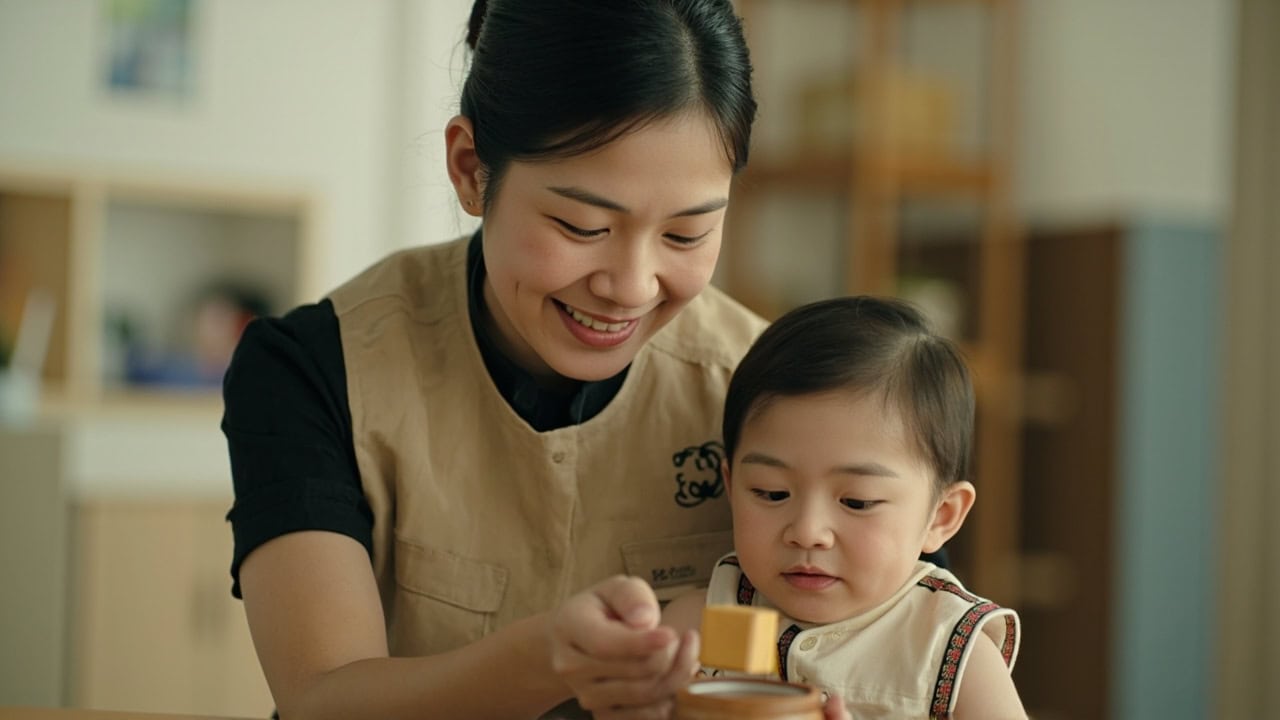
When one infant is shaking a rattle, the childminder can watch how they hold it, where they look after each shake, and whether they are more interested in the sound or the motion. In a setting where attention is divided across many children, these small moments are easy to miss. When there are fewer infants, the childminder can pause with the baby, narrate what is happening, and quietly introduce a small variation that extends the baby’s curiosity.
For example, if a baby has been repeatedly dropping a wooden block from a low surface, a responsive caregiver might hand them a softer block next, or a lighter one, and quietly observe whether the baby notices the difference in the sound or the bounce. This is not instruction. It is offering a new piece of data for the baby to incorporate into their growing understanding.
Extending the Moment Without Taking Over
One of the most useful skills in early learning is knowing when to step in and when to let the baby lead. Cause-and-effect play is most powerful when it is baby-driven. If you take over the toy, you break the experiment. If you narrate constantly, you may distract from the baby’s own observation.
A helpful approach is the pause-and-notice rhythm. Watch your baby’s focus. When they do something that produces a result, whether dropping, shaking or splashing, pause briefly. Let them notice the result. Then offer a quiet comment: “The block fell on the floor.” Or: “The water went everywhere.” This narrates without directing. It acknowledges their discovery without claiming it.
UNICEF’s learning activities guide for babies and toddlers recommends that caregivers respond to a baby’s focus by naming objects and talking about what they are doing. This is precisely the technique that extends a cause-and-effect moment from simple repetition into a richer learning exchange.
You can also vary the object without interrupting. If your baby has been shaking a rattle, you might quietly hand them a small container filled with dried rice. Same shaking action, different sound. This introduces a new variable for the baby to investigate, and it does so at their pace rather than yours.
Small Shifts That Deepen the Learning
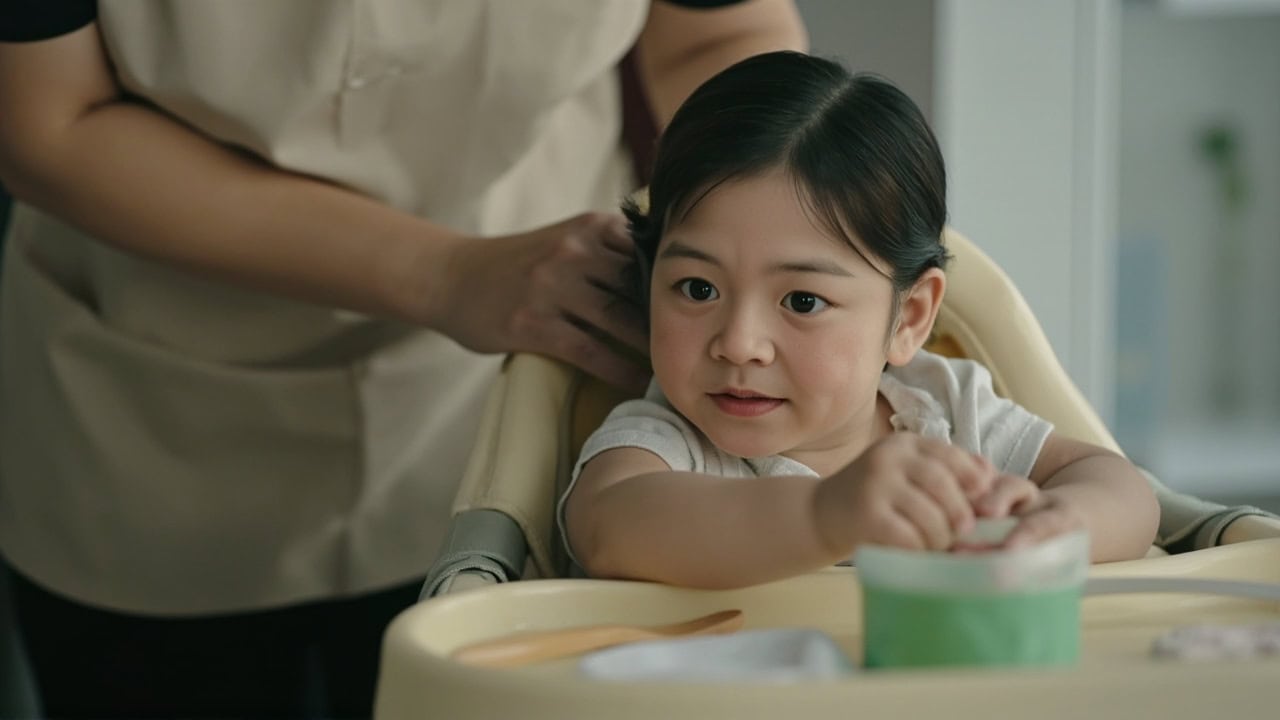
Cause-and-effect play does not require special equipment. Everyday household objects offer rich material for your baby to explore what their body can make happen. A plastic bottle with a few stones inside teaches shake-and-sound. A shallow dish of water with a soft cloth teaches splash-and-absorb. A wooden spoon against a metal pot teaches loud-and-quiet.
As your baby grows more confident with these explorations, you can introduce gentle problems to solve. A toy inside a clear container that your baby can see but not easily reach invites new strategies. A ball that rolls behind a low barrier and reappears teaches object permanence alongside cause and effect. These are not puzzles you need to buy. They are moments you create by noticing what your baby is already curious about.
The key is following the baby’s interest rather than imposing your own agenda. If your baby wants to keep dropping the same block from the same height, let them. The depth of learning in that repetition is real, even if it does not look like progress to an adult eye. Babies develop at their own pace, and individual variation in when they begin to explore cause-and-effect in these deliberate, repetitive ways is entirely normal.
What EduNanny Brings to These Moments
In an EduNanny childminding setting, the small group size means a childminder can give fuller attention to each baby’s play. When one infant is deeply engaged with dropping blocks into a container, the childminder can be present for that sequence, narrating quietly, varying the objects, and watching for the moment when the baby’s interest shifts to something new.
Every EduNanny childminder follows the programme’s quality standards, trained in infant care and certified in first aid. The approach blends attentive caregiving with an understanding that everyday moments, such as pouring water, shaking a container and watching a ball roll, are genuine learning opportunities worth noticing.
Parents receive regular updates on their child’s day, including the small discoveries and play moments that may not seem significant in isolation but together form the texture of early learning.
Simple Ideas to Try at Home
You do not need a special programme to bring more cause-and-effect awareness into your baby’s day. A few simple habits can help:
- Notice before you act. When your baby drops something for the fifth time, pause. Watch their face. Let the moment linger before you retrieve it.
- Narrate the result simply. “The cup fell over.” “The water splashed out.” Short, factual, focused on what happened.
- Vary the object quietly. Offer a different texture, weight, or sound. Let your baby make the comparison.
- Follow the baby’s lead. If they return to the same action repeatedly, that repetition is the work. Stay with it.
- Create safe space for exploration. A low table or a clean floor with a few simple objects invites independent discovery.
Ordinary Moments, Genuine Thinking
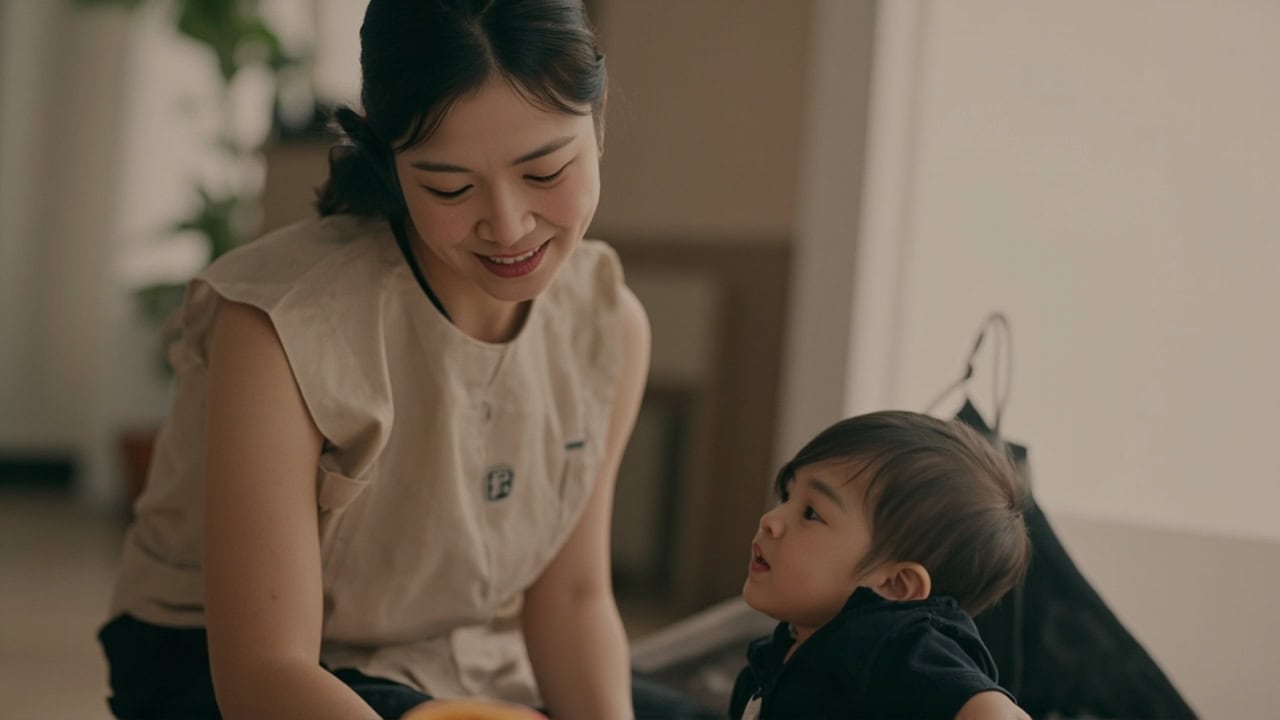
Cause-and-effect play is one of the earliest forms of scientific thinking your baby will ever do. It does not require flashcards, apps, or structured lessons. It requires attention, yours, or that of a caregiver who has the time and space to give it.
The next time your baby drops the spoon for the tenth time, you might see it differently. Not as a loop to escape, but as a small, purposeful experiment in how the world responds to their actions. And the person quietly noticing alongside them is helping that experiment reach a little further.
Sources and further reading
- 21 learning activities for babies and toddlers · UNICEF Parenting
- Learning through play · UNICEF / LEGO Foundation
- Child Development Stages · UNICEF
- Infants' Object Interactions are Long and Complex During Free Play · PMC (NIH)
- Responsive Caregiving and Opportunities for Early Learning · PMC (NIH)
- Your baby's developmental milestones at 9 months · UNICEF Parenting
The images in this article were generated with AI for illustration. They do not show actual EduNanny staff, children or facilities.
Every family has different care needs. Speak with EduNanny to discuss care that is right for your child.