A Familiar Shared Cue for Moving from Play to Rest
A familiar object, one short phrase and a calm pause can give caregivers one shared way to begin winding down from play while keeping your baby's response at the centre.
Moving from play to rest across shared care can feel unpredictable, especially when one caregiver ends play with a book while another changes the room or begins a new routine. A simple transition cue gives everyone one familiar starting point: show one suitable object, say one short phrase and pause. It does not guarantee that your baby will settle. It gives caregivers something to use while noticing your baby’s immediate response.
This guide is for an awake infant in shared care. The routine is an illustrative family example, not a test or a guaranteed method for settling every baby. Keep the cue flexible enough to change with your baby’s interest, comfort and stage.
One shared moment can begin the transition
Shared care benefits from a common starting point, not from expecting every baby to respond in the same way. The Care for Child Development | UNICEF approach guides caregivers to observe a child’s signals, interpret what they mean in the moment and respond appropriately during play and communication. A transition cue works best when it gives caregivers a clear beginning while leaving the next step flexible.
In EduNanny’s EduNanny ECDA Childminding Pilot, familiar objects, shared books, movement and simple interactions are chosen around what an infant shows interest in and what they are ready to do. These activities sit alongside feeding, rest and comfort.
For families sharing infant care, a useful cue is easy to describe, suitable for the baby’s age and able to change when your baby’s response changes. A transition does not need to follow a fixed timetable to be consistent. It gives caregivers one place to begin, while the baby’s response guides what happens next.
Try a familiar object, a phrase and a pause
Here is an illustrative three-part interaction for the end of a play moment:
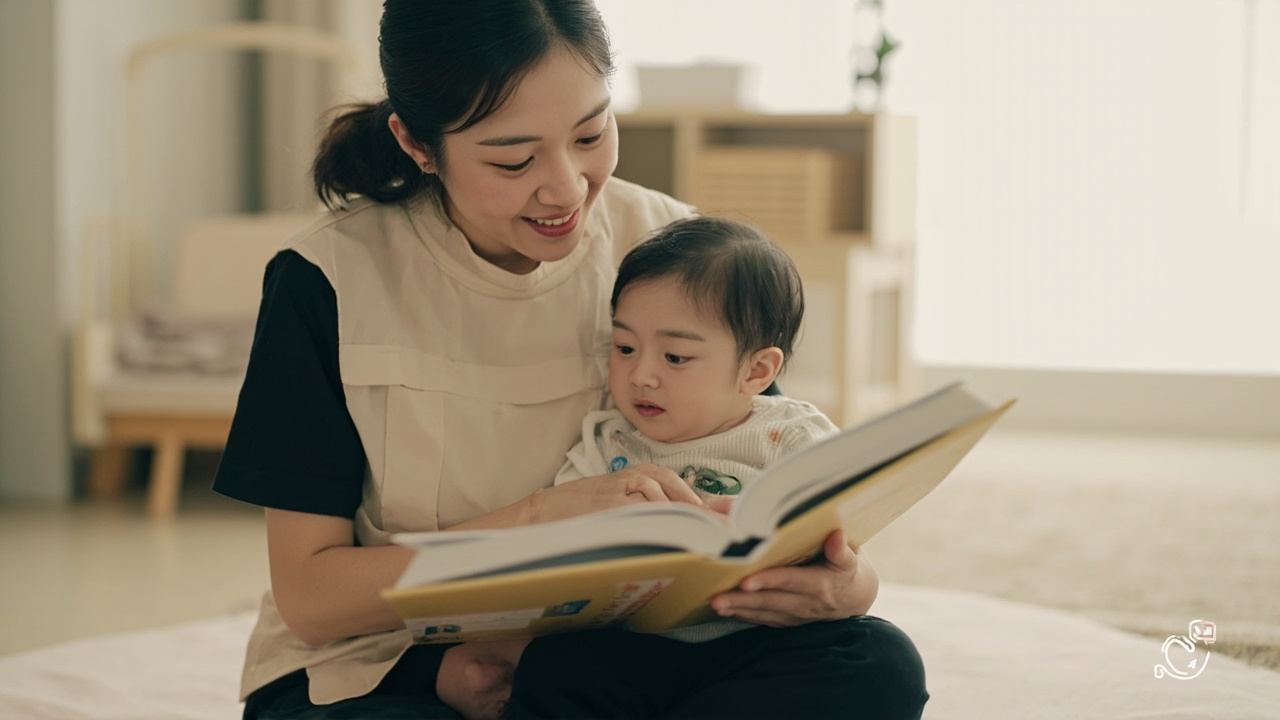
- Bring in one familiar object. Choose a large soft cloth book that your baby already knows and that is suitable for your baby’s age. Hold it within your baby’s view while the baby is awake. Choose an object with no small or loose parts.
- Say one short phrase and pause. For example, say, Time for a quiet cuddle. Keep your voice calm, then wait briefly instead of immediately taking the book away. The pause gives your baby a chance to show what happens next.
- Respond, then adjust. If the baby looks, reaches or vocalises, offer a simple response and keep the interaction gentle. If the baby turns away, becomes distressed or actively disengages, reduce the activity and move to the settling step your family has agreed. The next caregiver can record one sentence, such as: After the cloth book cue, the baby looked and reached. I offered the book again, then moved towards a quiet cuddle.
Looking, reaching or vocalising is not a milestone result, and turning away is not a failure. These are immediate signals about what a caregiver may do next. If the cue creates more distress rather than less, change the pace or choose a different familiar object. The aim is a calm, recognisable beginning, not a performance.
Keep the object suitable for the baby’s current stage and avoid leaving small parts, loose pieces or unsuitable materials within reach. The phrase can stay the same even if the object changes. What matters is that everyone remembers the cue, watches the baby’s immediate response and does not continue an activity after the baby has clearly signalled that it should be reduced.
Keep the shared cue beside safe sleep
A play-to-rest cue happens while the baby is awake. It does not replace the sleep environment or safe sleep checks. For families beginning a bedtime routine early, HealthHub notes that a routine can start at about 6 to 8 weeks. This is general guidance about when to begin, not a universal starting age or a required schedule for every infant. Time to unwind
When it is time for sleep, HealthHub advises placing the baby on their back and keeping the cot free of fluffy toys, pillows, cot bumpers and quilts. It also advises avoiding cloth cradles. Keep the familiar cloth book out of the cot when the baby is asleep, even if it was the transition object a moment earlier. Every caregiver should follow the same clear sleep conditions.
Consistency does not mean that every adult must react in exactly the same way to every sound or movement. It means that each caregiver can follow the agreed safety arrangements and notice the baby before changing the pace. If the baby remains awake, continue the family’s calm settling response. If the baby is ready for sleep, place the baby on their back in a clear cot.
Within EduNanny’s ECDA Childminding Pilot, families can share familiar comforts, the voices and books their baby enjoys, and the routines that bring reassurance. Useful daily care updates can include what happened during the cue and how the baby responded. Recording one clear sentence gives the next caregiver useful information to work from, while keeping the cue responsive rather than fixed.
Sources and further reading
- EduNanny ECDA Childminding Pilot · EduNanny
- Time to unwind · www.healthhub.sg
- Care for Child Development | UNICEF · www.unicef.org
The image in this article was generated with AI for illustration. It does not show an actual EduNanny staff member, child or facility.
Choose one familiar object, one short phrase and one pause for your baby's next shared-care transition, then notice what your baby contributes before deciding whether to repeat or change it.