
EduNanny Redefining Infant Care in Singapore December 2024 to December 2027 A Near Home Micro Pods Ultra Low Ratio Pilot for the First Thousand Days

EduNanny: Redefining Infant Care in Singapore
Good evening, parents, grandparents, neighbours, and partners in care. My name is [Name], and I speak for EduNanny by BUTLER—one of ECDA’s appointed operators in Singapore’s national Childminding Pilot for Infants. Tonight, we offer more than information. We offer a promise: that the first thousand days of your child’s life can be safe, joyful, unhurried, and deeply human—because the scale of care is small, the science is sound, and the love is large.

Introduction: What is EduNanny Infant Childminding?
EduNanny is the near-home, ultra-low-ratio childminding service designed for Singaporean infants aged 2 to 18 months, operating under the ECDA Childminding Pilot from 1 December 2024 to 31 December 2027. We care for one to three infants at a time, either in a childminder’s home or in community micro-pods. We open the door at 7am and close at 7pm, Monday to Friday, to match the rhythm of working families across the island. And we keep it affordable—$16.50 for a half day (5 hours) or $33.00 for a full day (10 hours), before GST—with fees payable via the Child Development Account (CDA/Baby Bonus) during subsidised hours.
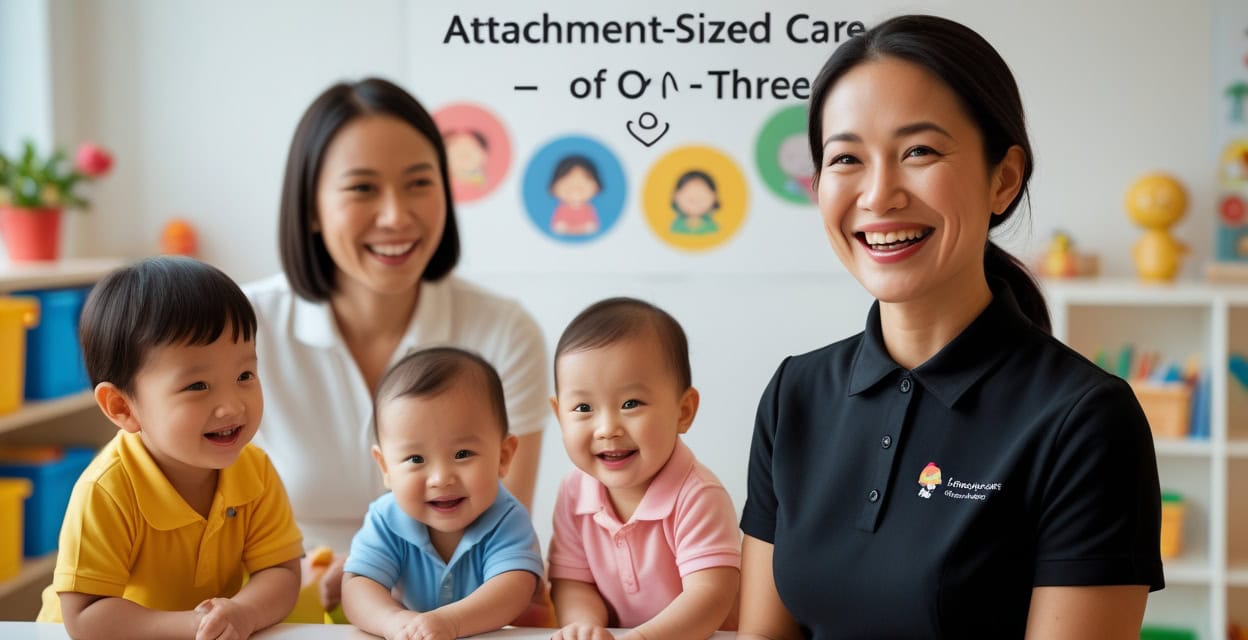
Topic 1: Attachment-Sized Care—The Power of One to Three
Infants grow best when they trust. Trust comes from consistency, sensitivity, and time. EduNanny caps each pod at a maximum of three infants per childminder—an ultra-low density that allows warm, predictable relationships to form. In tiny groups, carers can truly “read” the baby: hunger cues, sleep signals, overstimulation, emerging skills. Daily rhythms—feeding, sleeping, cuddling, floor-time exploration—become opportunities for attunement, not just tasks to be completed. This is the cradle of resilience. Attachment first is not indulgence; it is the foundation of all later independence.
Practical guidance for families
- Ask to observe a typical day in a 1:3 pod to see how carers read cues and respond with calm, predictable routines.
- Prepare a simple daily cue sheet for your childminder: favourite soothing sounds, preferred feeding positions, and any special comfort items.
- During transitions, request a brief narration from the caregiver: “I’m picking you up now; you’re safe; we’ll wash hands together.”
- Keep a consistent home schedule for naps and feeds to support attachment across environments.

Topic 2: Safety by Design—From Space to Systems to Skill
Safety isn’t an accident; it’s architecture. EduNanny builds safety in five layers:
- Environment: Clean, hazard-minimised caregiving areas; modern layouts in community pods; purposeful zoning for sleep, feeding, and play; regular safety checks.
- People: All EduNanny childminders are certified and background-checked, with mandatory training that includes infant first aid, food safety, and core infant care competencies before deployment. ECDA also conducts background checks on childminders—and, for home-based care, on family members with regular access to the home.
- Practice: Clear care plans; safe sleep protocols; hygiene and sanitisation routines; incident management and escalation pathways; parent agreements that set expectations and response times.
- Visibility: CCTV is provided in community spaces as required. For home-based care, CCTV in caregiving areas is optional and offered by EduNanny subject to the childminder’s and family’s consent—balancing privacy with peace of mind. Footage is managed with strict data protection protocols.
- Health: We operate a No Sick Child Policy during care hours to protect infants in our pods. If a child becomes unwell, our team supports families with clear next steps and return-to-care guidance. For any needed medicine administration, we follow explicit parent-provided instructions on dosage, timing, method, and monitoring.

Topic 3: A Pedagogy of Everyday Moments—Learning Without Rush
At EduNanny, learning is not a timetable; it is a conversation. Our approach blends:
- Pikler-inspired respectful care: Slow, narrated caregiving so babies can predict and participate—turning diaper changes and baths into secure, relational rituals.
- Montessori sensibilities: Orderly, simple environments; real-life objects; child-led exploration at floor level; freedom of movement for developing gross motor control.
- Piaget and Vygotsky in practice: Sensorimotor play with cause-and-effect materials; rich adult language to scaffold early cognition and communication; turn-taking and joint attention as early “lessons” in thinking.
- Malaguzzi’s documentation spirit: Observations shared with families through daily notes; simple photos or updates that make each baby’s learning visible.
- Erikson’s trust and autonomy stages: Encouraging choice within safe bounds; celebrating competence as it emerges—rolling, grasping, babbling, cruising—without pushing milestones before readiness.
Practical tips for busy parents
- Capture little moments at home: a 30-second narration of a peek-a-boo game can reinforce language development when shared with the caregiver.
- Create simple, safe exploration zones: a low shelf with age-appropriate objects encourages independent exploration without overstimulation.
- Use predictable routines to support cognitive growth: same order of activities daily helps infants anticipate and participate.
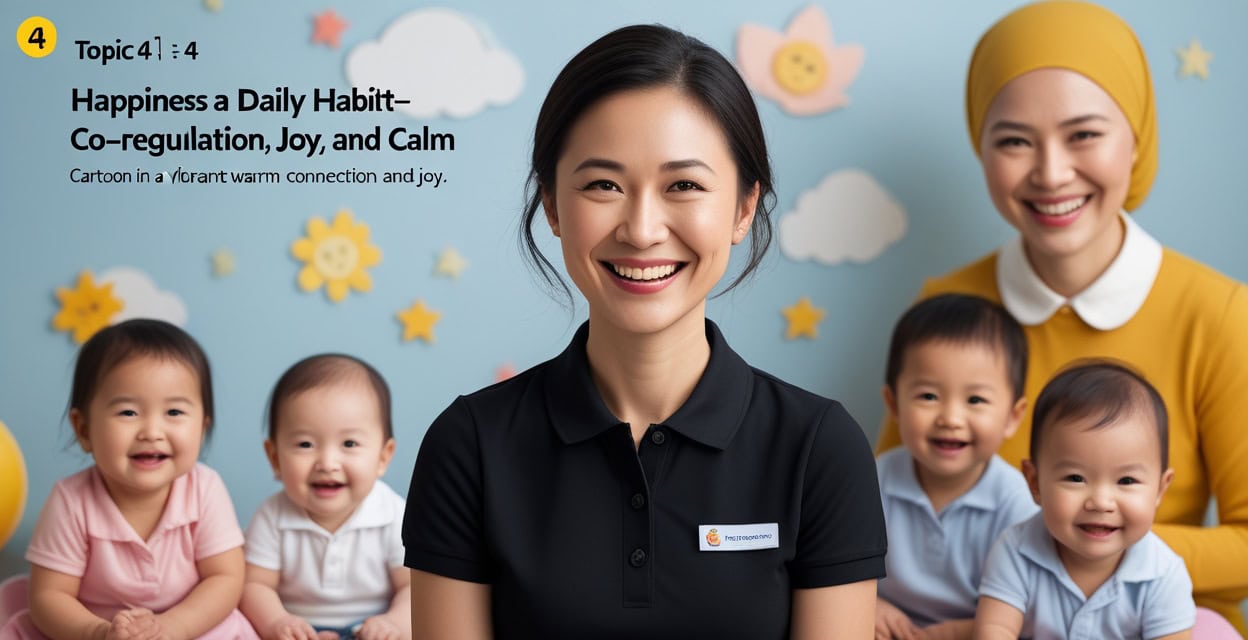
Topic 4: Happiness as a Daily Habit—Co-Regulation, Joy, and Calm
Happiness for infants is safety felt in the body. We focus on:
- Co-regulation: Calm adults, predictable routines, and soft transitions that help babies regulate their emotions.
- Sensory sanity: Gentle soundscapes, natural light, and textures that soothe rather than overwhelm.
- Relationship rituals: Greeting songs, consistent goodbyes, and small celebrations of progress.
- Partnering parents: Transparent communication with the EduNanny Concierge and your childminder; photos, notes, and optional check-ins to keep you connected without creating surveillance anxiety.
Topic 5: Purpose and Public Good—Childminding as Civic Infrastructure
This pilot is a national initiative. By bringing care closer to home, we:
- Support employment and participation, including a Maximum Employment Mandate that uplifts dignified caregiving roles.
- Build community trust as families meet in safe, shared spaces.
- Offer islandwide convenience through centre-based and home-based options near where families live and work.
- Keep services affordable so more infants can benefit from quality care during the hours families need most.

What an EduNanny Day Feels Like
7:30am: A familiar hello, hands washed, bag stowed, a short handover with you. Baby settles with a caregiver who knows their morning cues.
8:00–9:30am: Unhurried bottle or breakfast, then floor time—reaching, rolling, social smiles, peekaboo, early language play.
10:00am: Nap in a quiet sleep zone, safe sleep protocols observed. After waking, diapering with a narrated “I’m going to lift you now…”
11:00am–12:00pm: Sensory exploration—soft cloths, rattles, cause-and-effect toys, a song or two. Older infants enjoy supported cruising.
12:00–1:00pm: Feeding, cuddles, and if full-day, a second nap later in the afternoon; if half-day, a warm handover to you with notes on sleep, feed, and mood.
3:00–4:30pm: Outdoor strolls where possible, or window-time to observe the world; social play in micro-pods; language-rich chatter from caregivers.
5:00–6:30pm: Wind-down, tidy-up, and end-of-day reports. Your child goes home content—not over-stimulated, not over-scheduled, just seen.

Key Benefits of EduNanny
- Ultra Low Density, Ultra Low Ratio: 1 childminder to a maximum of 3 infants.
- Certified EduNanny Childminders: Trained and ECDA-screened; background checks extend to household members for home-based care.
- Safety and Visibility: CCTV provided in community spaces; optional in-home caregiving-zone CCTV with consent; rigorous hygiene and safe sleep.
- No Sick Child Policy: Protects vulnerable infants; clear return-to-care guidance.
- National Initiative: Part of ECDA’s Childminding Pilot (Dec 2024–Dec 2027).
- Monday–Friday, 7am–7pm: Full-day (10 hours) at $33; half-day (5 hours) at $16.50, before GST; subsidised hours exclude public holidays.
- Affordable and Flexible: Fees payable via CDA/Baby Bonus for subsidised hours; choose days per week to fit your needs.
- Centre-Based and Home-Based: Islandwide convenience; modern layouts in community micro-pods; near-home options for quick drop-offs.
- Quality and Excellence: Standardised care plans, incident protocols, and continuous support from the EduNanny Concierge.
- Purposeful Jobs: A maximum employment mandate that grows skilled caregiving roles and strengthens community fabric.

Eligibility and Scope at a Glance
- For Singapore Citizen infants aged 2 to 18 months.
- Infants must not be concurrently enrolled in ECDA-licensed infant care centres.
- Care delivered in childminders’ homes or community spaces.
- Parents needing support beyond subsidised hours can discuss additional care options at regular rates.

How to Sign Up
- Step 1: Visit https://edunanny.com/edunanny-ecda-childminding-service/ to submit the form, or message us via WhatsApp from that page.
- Step 2: Our EduNanny Concierge Team will respond, learn about your preferences, and propose nearby home-based or community pod options.
- Step 3: Confirm an appointment for a site visit to the caregiving space.
- Step 4: Finalise your schedule (half-day or full-day blocks, selected weekdays), review the care plan and parent agreement, and enrol.

Who, What, When, Where, and How—Why Childminding Matters
- Who: Singapore’s youngest citizens—infants aged 2 to 18 months—deserving of secure, responsive, joyful care; and families deserving of affordability, trust, and transparency.
- What: Ultra-low-ratio childminding that treats everyday care as the engine of development—attachment, movement, language, and calm.
- When: Monday to Friday, 7am–7pm, through the national Pilot from December 2024 to December 2027—aligned with family life and work realities.
- Where: In your neighbourhood—home-based and community micro-pods across Singapore—because proximity nourishes consistency.
- How: With certified childminders, ECDA-backed safety and standards, modern environments, optional family-consented CCTV in homes, required CCTV in community spaces, clear health policies, and a partnership with parents that is as respectful as it is reliable.

Our Philosophy and Purpose
EduNanny believes that the first thousand days are a public trust. We slow down to speed up development; we protect to empower; we make care small so children can grow big. In the cradle of near-home pods, with one attentive adult and just a few infants, we honour the science of early life and the soul of family.
This is our covenant: Presence before program. Attachment before achievement. Safety before everything. If we do those three things well—and we will—your infant leaves each day not simply cared for, but known.

Conclusion
To begin, visit edunanny.com or childminding.edunanny.com, or go directly to https://edunanny.com/edunanny-ecda-childminding-service/ to enquire. Our team is ready to welcome you, arrange a nearby visit, and help you enrol. In tiny pods, we build giant futures—one calm breath, one warm hand, one joyful day at a time.
Thank you for trusting us with what matters most.
SEO keywords: [#EduNannySingapore, #InfantCareSingapore, #UltraLowRatio, #ECDAChildminding, #FirstThousandDays]