

Near Home Infant Care Pilot for Singapore December 2024 to December 2027 A Human Centered Approach by EduNanny
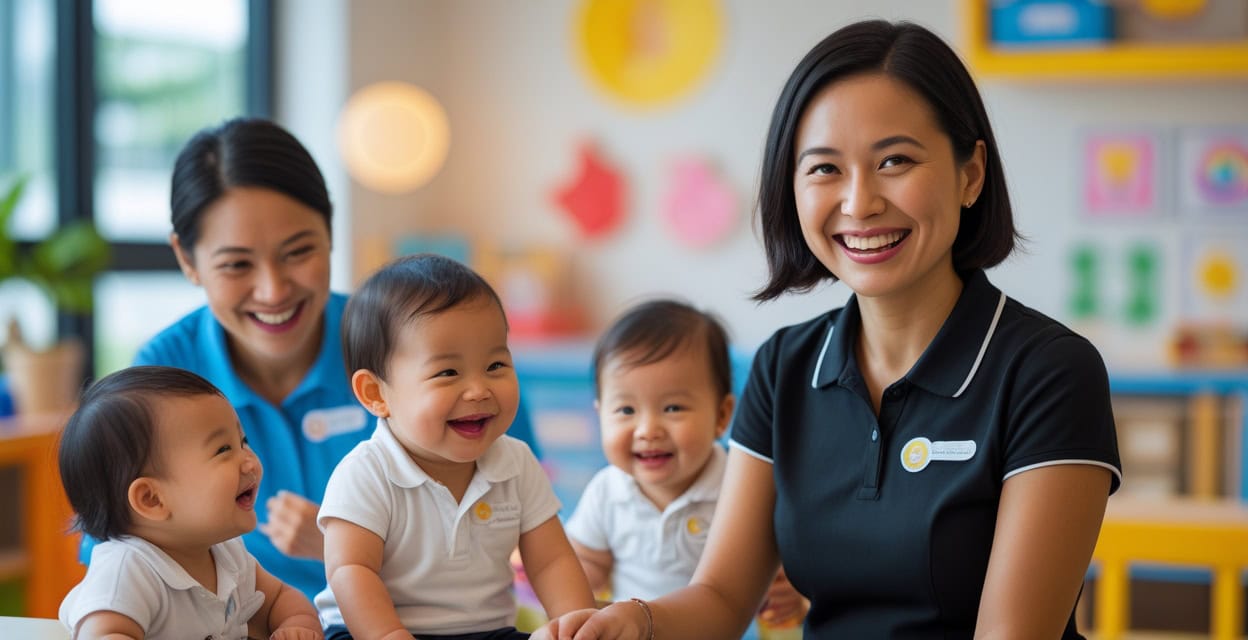
EduNanny Infant Childminding in Singapore: A Human-Centered National Pilot
Good morning, Singapore — parents, grandparents, neighbours, and all who believe that the beginning of life deserves our very best. EduNanny by BUTLER presents a purposeful response to that belief. Appointed by ECDA to provide infant childminding under Singapore’s three-year national pilot (1 December 2024 to 31 December 2027), we offer a near-home, ultra-low-ratio caregiving option that is affordable, safe, reliable, and deeply human. This article expands on the speech’s core ideas and translates them into practical guidance for parents seeking the very best start for their infants.

What is EduNanny Infant Childminding?
EduNanny Infant Childminding is a Promise we live every day — a commitment that one adult can truly see three infants across the first thousand days, nurturing the brain’s architecture for trust, language, movement, and empathy. It brings care close to families’ lives, whether in a childminder’s home or in thoughtfully designed community spaces, so daily life is lighter, safer, and more connected. It is a national initiative that feels intimate, like family.
- Ultra-low ratio: 1:3 infant-to-childminder to ensure deep presence and individualized attention.
- Near-home locations: Childminding at home-based settings or community spaces near families’ daily lives.
- Human-centered care: Trained caregivers who build relationships, not just schedules.
- Transparency and accessibility: Clear practices, regular communication, and affordable options supported by government subsidies.

How EduNanny Makes Infant Care Great in Singapore
- Science-informed design: Tiny groups yield big outcomes. Our 1:3 micro-pod model concentrates attention, responsiveness, and safety for infants’ rapid development.
- Safety embedded in practice: Safety is not a checklist but a lived rhythm—environmental design, trained staff, and daily routines built around infant needs.
- Respect for families as primary caregivers: We partner with parents, honouring routines, culture, and language while extending the circle with certified caregivers and transparent practices.
- Affordability with quality: Government-subsidised hours, flexible locations, and predictable fees designed to reduce stress for working families.

Four Topics at the Heart of Our Work
1) Attachment-in-Action: A micro-pod pedagogy
Our pedagogy weaves attachment science with practical, day-to-day care. A typical day is paced by the infant, guided by the childminder, and anchored by the family. Practical implications for parents and caregivers include:
- One steady adult presence: The childminder becomes a secure base – a predictable voice, hands, and eyes. Examples: greeting rituals, consistent transitions, and a calm, steady tone throughout the day.
- Freedom to move: Floor-based exploration is encouraged; avoid over-reliance on devices or restrictive equipment. Examples: open play mats, fetch-and-release toys, and childminder-supported cruising or crawling.
- Language all day long: Narrate care moments to build language and social understanding. Examples: “I’m lifting you now,” “Your bottle is warm,” “Let’s wash hands together.”
- Prepared micro-environment: Infant-height spaces with real, natural materials; rotation of objects with intention. Examples: rotated baskets of safe textures, low shelves for independent reach, and clearly labeled zones like “Sleeping,” “Crawling Area,” “Quiet Reading.”
Practical tips for parents: Observe whether the caregiver maintains a calm, continuous presence; ask for a sample daily routine; request examples of language cues used during care moments; discuss how transitions are managed between activities and feeding times; ensure the environment is sensory-friendly and responsive to your infant’s cues.
2) Safety by Design, Not by Chance: A Four-Layer Shield
Safety is integrated into every layer of EduNanny care. We use a four-layer shield to safeguard infants’ wellbeing:
- People: Caregivers undergo interviews, suitability assessments for home or community spaces, infant-first-aid training, basic infant care skills, and background checks. Home settings extend checks to household members with regular access. Ongoing coaching and unannounced spot checks reinforce standards.
- Place: Spaces are clean, hazard-scanned, and designed for infant safety—gated zones, covered outlets, anchored furniture, and separate sleep areas. Community spaces follow modern layouts tailored to infant safety needs.
- Practice: Hygiene protocols, bottle preparation safety, safe sleep practices, handwashing routines, and a clear no-sick-child policy. Incident response is codified and rehearsed to ensure quick, calm handling of issues.
- Proof: Documentation and daily logs with incident reporting. CCTV is provided in community premises; for home-based care, families may opt for cameras during care hours to balance transparency with privacy.
Practical tips for parents: Review the caregiver’s safety policies, ask about sleep arrangements (cribs, no soft bedding), request examples of incident reporting, and verify how privacy is protected when cameras are used. Confirm how unwell infants are managed and how return-to-care is determined.
3) The Daily Science of Thriving: Sleep, Feeding, Movement, and Regulation
EduNanny integrates current science with compassionate practice to support thriving in infancy:
- Sleep: Protect naps as a pillar of neurodevelopment. Environments are calm, dim, and well-ventilated with cues aligned to infant sleep cues. No “training” by withdrawal of comfort; comforting routines are predictable and soothing.
- Feeding: Responsive feeding respects hunger and satiety. For bottle-fed infants, we pace-feed to reduce overfeeding; for expressed breastmilk, we follow safe handling standards; for weaning, we introduce textures and allergen practices per current guidance.
- Movement: Movement-rich days encourage gross and fine motor development. Every hour includes floor-based exploration, tummy time, and supported movement experiences that build body confidence.
- Regulation: Gentle routines and smooth transitions reduce stress. Consistent soothing rituals help infants regulate emotions, attention, and social engagement.
Practical tips for parents: Share your infant’s sleep cues and preferred soothing strategies. Discuss feeding routines, including pacifier use, bottle pacing, and breastmilk storage. Prepare a simple daily rhythm that aligns with your family’s language and cultural practices, so the caregiver can mirror it for consistency.
4) The Quiet Curriculum of Joy: Culture, Play, and Community
Joy is measurable and observable in early childhood development. Our culture-aware approach honours multilingual Singapore and engages families in rich, playful learning experiences:
- Culture and language: Songs, stories, and household language cues enrich early vocabulary and social understanding. Example: bilingual or multilingual routines where caregivers respond in the family’s languages during routines like mealtimes and storytelling.
- Play as work: Cause-and-effect, object manipulation, simple problem-solving, and exploring textures support cognitive and motor development. Example activities: stacking blocks, object permanence games, and seasonal explorations tied to family routines.
- Community and belonging: Near-home pods shorten commutes, invite neighbourly trust, and encourage family involvement. Grandparents can visit, participate in family mornings, and engage in shared literacy or music sessions.
Practical tips for parents: Share your family’s play traditions and languages; request a weekly play plan that includes songs and finger-plays in your languages; consider inviting a grandparent or relative to participate in care moments to strengthen attachment and social ties.
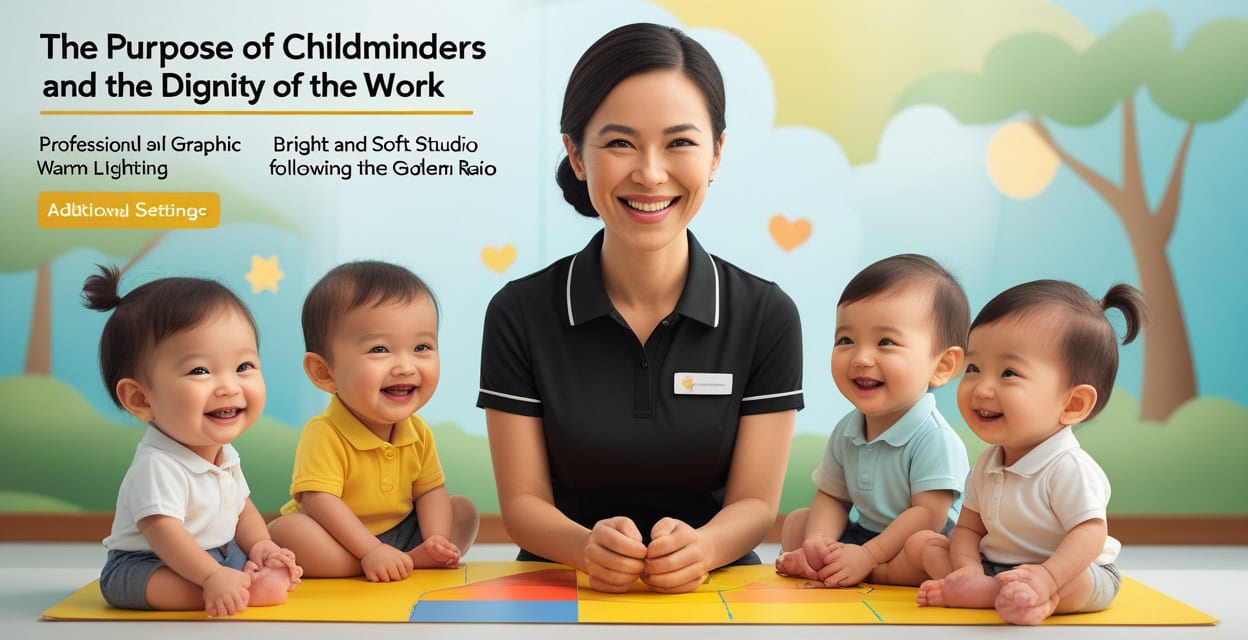
The Purpose of Childminders and the Dignity of the Work
A professional childminder is not a stand-in for parents; they are kin-by-competence. They enable parents’ working lives, widen infants’ attachment circles safely, and knit local economies together. As a national social initiative, EduNanny is committed to training and employing local caregivers at scale — with a maximum employment mandate — to raise the standard, reduce stress, and elevate the dignity of care work.

What Parents Can Expect with EduNanny
- Ultra-low density, ultra-low ratio: 1:3 infant-to-childminder ratio for deep presence and individualized care.
- Certified EduNanny childminders: Trained in infant first aid and basic infant care; home or community space suitability assessed; background checks completed.
- Safety and visibility: CCTV in community premises; optional caregiver-area cameras at home-based care with family agreement; clear incident protocols.
- No-sick-child policy: Infants stay home when unwell; clear return-to-care guidelines provided upfront.
- Modern, infant-friendly environments: Calm, uncluttered spaces at infant height with safe materials and rotation strategies.
- Affordable access: Government-subsidised hours, Monday to Friday, 7am–7pm, in half-day (5 hours) or full-day (10 hours) blocks; fees from $16.50 half-day or $33.00 full-day before GST; CDA funds may be used for subsidised hours.
- Flexible locations: Home-based care and centre-style community spaces islandwide for distance convenience.
- Consistent availability: Monday–Friday, 7am–7pm; closed on public holidays.
- Centre-based and home-based options: Community hubs designed for visibility and group care, or intimate, approved home-based care.
- Transparent operations: National initiative standards, operator guidelines, and enforceable parent agreements.

Eligibility and Pilot Essentials
- Singapore Citizens infants aged 2 to 18 months
- Not concurrently enrolled in an ECDA-licensed infant care centre
- Care delivered at a childminder’s home or in a community space
- One childminder cares for a maximum of three infants at any one time
- Services provided by ECDA-appointed operators: EduNanny by BUTLER, Kidibliss, NannyPro Care

An Explainer on Affordability and Scheduling
We recognise that parents work on the clock; our service respects that reality. Plan a schedule that matches your family’s needs while keeping care close to home and within a predictable budget.
- Choose days per week: Decide the days you need care, with options for half-day or full-day blocks.
- Block durations: Half-day (5 hours) or full-day (10 hours) within 7am–7pm, Monday to Friday.
- Fees before GST: $16.50 for half-day; $33.00 for full-day. CDA funds may be used for subsidised hours.
- Extended needs: For services beyond subsidised hours or on weekends, speak with the EduNanny team—extension may be arranged at regular rates where available.

A Day in an EduNanny Micro Pod
Each day is designed to feel orderly, warm, and developmentally purposeful. A typical micro pod day might look like this:
- Morning welcome: Warm greeting, hand hygiene, concise parent handover of overnight or overnight-to-morning notes.
- Settling and play: Floor time with infant-led exploration; simple songs in home language; safe toy rotations.
- Feeding and rest: Responsive feeding with clear cues; safe sleep practices in an individual sleep space; gentle transitions between activities.
- Outdoor or corridor strolls: Fresh air, soft light, naming the world to support language development and cognitive curiosity.
- Afternoon closing: Cleanup songs, a calm finish, and a brief, meaningful update to parents about the infant’s day.

Why This Matters Now
The first thousand days are unique and non-repeatable. In small groups, infants are known, not merely tended. The science of attachment and the value of community converge on a single truth: presence is the curriculum, and safety is the precondition of joy. EduNanny is designed to translate that truth into everyday practice for Singapore families.

Who, What, When, Where, How, Why: Childminding Matters
- Who: Families seeking intimate, professional care; infants needing time, touch, and trust; childminders pursuing caregiving as a dignified vocation.
- What: Ultra-low-ratio care delivered in homes and community spaces, designed for attachment, safety, and joyful development.
- When: Monday to Friday, 7am–7pm—coherent with typical working hours and infant routines.
- Where: Islandwide in Singapore, near where families actually live and work.
- How: ECDA’s national pilot, certified childminders, audited environments, clear protocols, and a pedagogy that respects the infant.
- Why: A nation’s future is rehearsed in its cradles. When the beginning is right, every later step is sturdier.

The EduNanny Philosophy and Purpose
Care is both public infrastructure and private love at once. We exist to make daily life kinder for parents, safer for infants, and more dignified for caregivers. We bridge science and softness, national policy and a baby’s morning nap. Our purpose is simple: raise the standard, lower the stress, and keep the joy.
How to Sign Up
- Visit the EduNanny sign-up page: https://edunanny.com/edunanny-ecda-childminding-service/ and fill out the form, or inquire via WhatsApp from that page.
- Receive a response from the EduNanny Concierge Team.
- Confirm your appointment for a site visit—home-based or community space—so you can see, hear, and feel the environment.
- Enrol and begin care with a gentle transition plan tailored to your infant.
You can also learn more at EduNanny.com and Childminding.EduNanny.com.
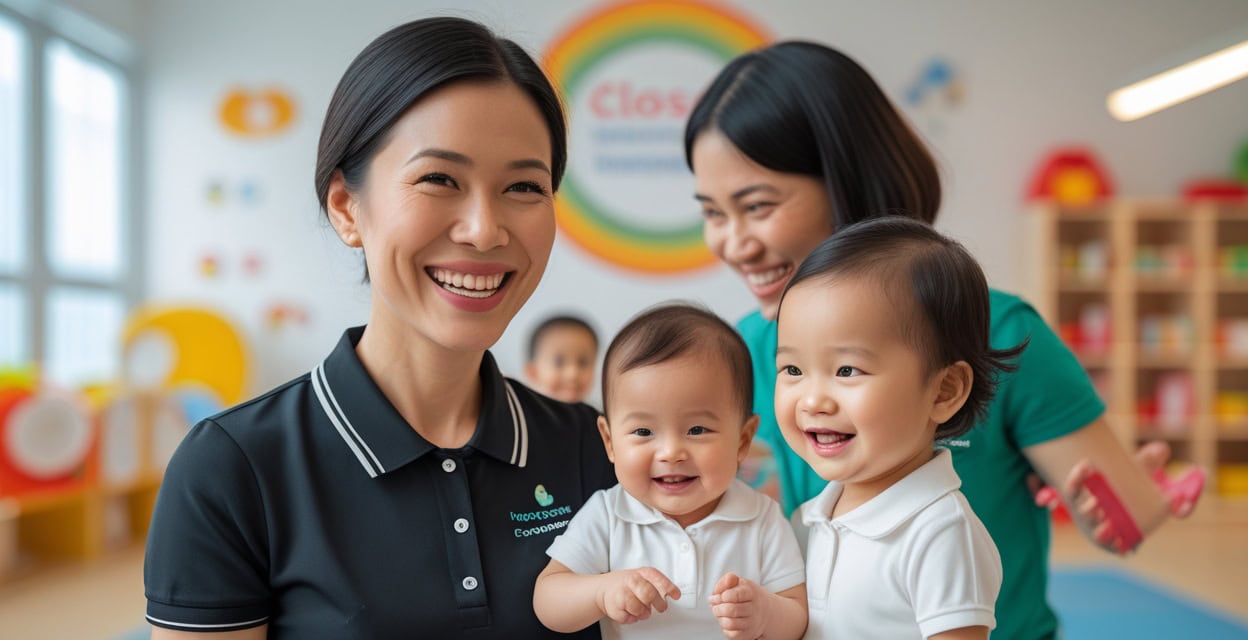
A Closing Invitation
Parents, you do not need to choose between affordability and excellence, or between proximity and professionalism. With EduNanny, the circle is complete: science, safety, joy, and community — held together by one caring adult for every three precious beginnings.
Let’s give Singapore’s infants what they deserve: care as careful as love itself. Thank you.
Note: This article reflects EduNanny’s approach to infant childminding as part of Singapore’s ECDA pilot and is intended for educational and informational purposes for interested families and educators.

Conclusion
EduNanny’s micro-pod model demonstrates how intimate care, grounded in attachment theory and ongoing safety practice, can transform infant experiences while supporting working families. By prioritising a steady caregiver, safe physical environments, developmentally informed routines, and culturally respectful play, EduNanny offers a practical pathway for Singapore to raise healthier, more confident children. If you are a parent seeking a nurturing start for your baby or a caregiver considering a dignified profession, explore EduNanny’s options, ask questions, and engage with the pilot to help build a stronger early years landscape for all.
[#infantcare, #earlychildhooddevelopment, #SingaporeECDA, #micropodcare, #EduNanny]