
EduNanny Singapore 1 to 3 Infant Care Pilot December 2024 to December 2027 A Near Home Attachment First Model for Safe Joyful Development

EduNanny Infant Care in Singapore: An Editor’s Deep Dive into Quality, Community, and Development
In a city that moves at the speed of ambition, EduNanny Singapore places the child’s heartbeat at the center of care. This long-form article uncovers how EduNanny’s infant childminding service blends attachment theory, prepared environments, safety systems, and daily developmental rhythm into a scalable national model. Built on research from Bowlby to Pikler, Montessori to Vygotsky, this approach translates into practical, near-home care that respects families, communities, and the developing mind.
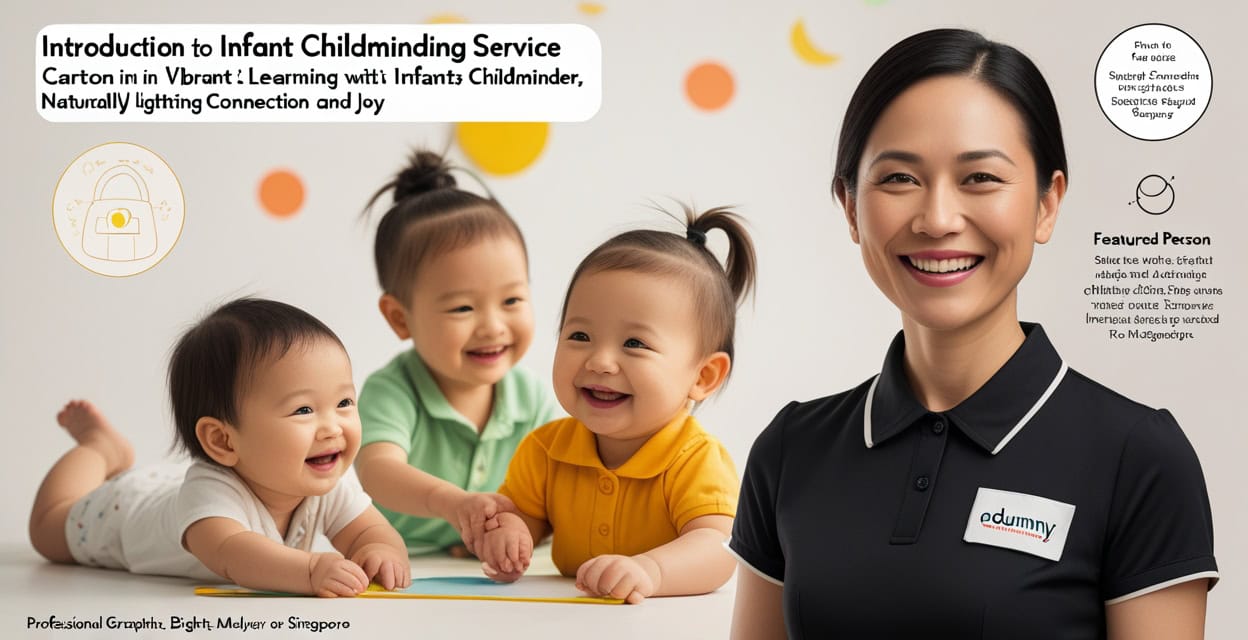
Introduction to EduNanny Infant Childminding Service
EduNanny by BUTLER has been appointed by ECDA to operate under Singapore’s three-year Childminding Pilot for Infants from 1 December 2024 to 31 December 2027. The model centers on ultra-low-density micro-pods: one certified childminder for a maximum of three infants, operating across home-based and community-based premises islandwide, Monday to Friday, 7am to 7pm. The pilot’s affordability is historic, with fees beginning from $16.50 for a half day (5 hours) and $33.00 for a full day (10 hours) before GST, payable via CDA/Baby Bonus for subsidized hours. Parents gain flexibility—days and blocks that align with real life—while the nation gains a safer, closer, more humane standard of care.
EduNanny’s mission is to fuse heart, science, and community in a model that Singaporeans can trust. The approach is “Attachment-first, Neighborhood-fast”—protecting tiny ratios and familiar faces while acknowledging Singapore’s work rhythms, commutes, and multi-generational living patterns. The result is care that feels intimate and professional at once, designed to be visible, verifiable, and scalable.
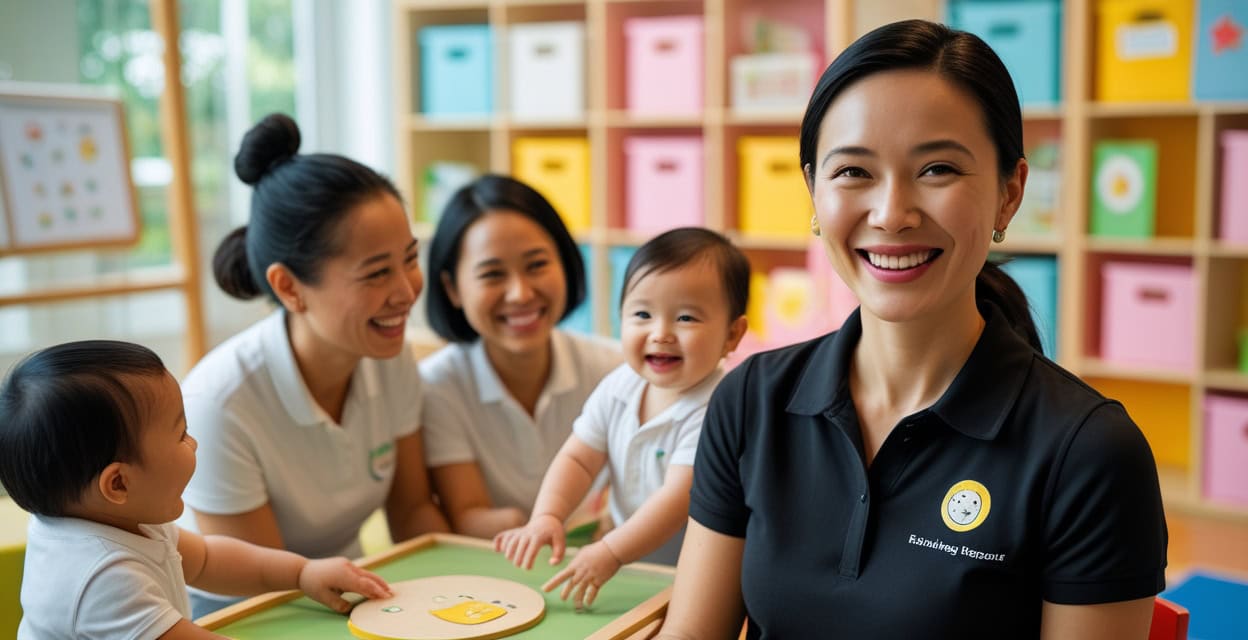
Our Core Principles: Attachment-first, Neighborhood-fast
Attachment-first: The Primary Caregiver as Anchor
- Continuity builds trust. A primary childminder anchors feeding, soothing, and transitions, creating predictability that supports secure attachment.
- Micro-conversations matter. Diapering, bottle-feeding, burping, and settling are framed as respectful, responsive exchanges—nurturing language, eye contact, and gentle touch as the norm.
- Consistency reduces stress. Parents can expect a familiar caregiver who understands their child’s cues and preferences, resulting in smoother transitions and less tiredness for both child and family.
Neighborhood-fast: Near-Home Care and Community Ties
- Proximity matters. Near-home pods reduce travel strain, preserve routines, and anchor care within the child’s daily community fabric.
- Community trust. Local alignment with residents, estates, and transit nodes fosters a sense of shared responsibility for children’s safety and well-being.
- Transparent, accessible updates. Daily logs, live communication, and optional monitoring provide reassurance without sacrificing privacy.

Five Ideas Shaping Our Care
1) Attachment Architecture: The Secure Base in a 1:3 World
The foundational belief is that secure attachment is the launchpad for exploration. Our 1:3 ratio is not a statistic; it is a caregiving philosophy that enables trust to flourish, turn-taking to emerge, and tenderness to become a daily practice.
Practical implementations:
- Primary caregiver continuity: Each infant has a named anchor who handles feeding, soothing, and transitions, ensuring predictability every day.
- Narrated care moments: Staff script diapering, bottle-feeding, burping, and settling as brief, respectful conversations—supporting language development even during routine care.
- Daily observation notes for families: A concise record highlights firsts, repeated actions, preferences, and moments of joy to reinforce partnership.
2) The Prepared Environment: Freedom to Move, Freedom to Learn
Montessori-inspired prepared environments meet Pikler-inspired free movement. Our spaces prioritize safety, simplicity, and invitation—furnishings are low and accessible; open floor time is encouraged; toys invite hands, eyes, and minds to collaborate.
What families can expect in practice:
- Layout and clutter: Modern, calm spaces with clearly defined zones for exploration, rest, and caregiver interactions. Visual noise is minimized to support focused play.
- Open-ended materials: Rotating sets such as fabric balls, fabric tunnels, scooping and transporting trays, stackable blocks, mirrors, and sensory bottles accelerate schema development.
- Developmentally aligned routines: Rolling, pivoting, crawling, and cruising are supported through materials and space that follow the infant’s natural sequence rather than forced sitting or passive screen time.
3) Safety as a System, Not a Slogan
Safety is woven into every process, with transparency and accountability at its core. The ECDA framework provides robust checks, while EduNanny adds practical safeguards.
- Background checks: ECDA requires checks on childminders and, for home settings, others with regular access to the home. EduNanny adds operator checks and references, plus behavior-based interviews.
- Training and drills: Infant first aid, basic infant care, safe sleep, food safety, and incident management are mandatory. Drills reinforce readiness, not just policy language.
- Monitoring with privacy in mind: CCTV is provided in community spaces; home settings offer opt-in monitoring zones during care hours to balance transparency and privacy.
- No Sick Child Policy: A strict policy in shared pods protects all children—clear symptom thresholds and return-to-care criteria minimize cross-infection.
- Incidents handled with clarity: An escalated, transparent process ensures timely communication from the caregiver to EduNanny Concierge and ECDA when required.
4) The Rhythm of Development: Learning in Daily Life
Piaget and Vygotsky meet in daily practice: sensorimotor exploration, social scaffolding, and language-rich interactions that support cognitive and social-emotional growth.
- Serve and return: Caregivers respond to a child’s cue with language, facial interaction, and gentle prompts that extend learning.
- Language as daily material: Songs, stories, and caregiver narration build vocabulary and comprehension in real-time play.
- Observation and partnership: Short, actionable notes help parents notice their child’s interests and evolving skills, fostering a collaborative learning relationship.
- Healthy markers of happiness: Bright eyes, relaxed shoulders, curiosity, regular naps, and joyful greetings are tracked as indicators of a thriving day.
5) The Purpose of Childminding: A Public Covenant
Childminding is not babysitting; it is an essential public infrastructure that supports attachment, dignity, and opportunity for all families. EduNanny’s approach aligns with a national vision where care quality, parental workforce participation, and children’s development advance in tandem.
- Maximum Employment Mandate: Dignified, trained jobs for childminders in every estate, elevating the caregiving profession and ensuring professional growth opportunities.
- Near-home care with social capital: Proximity reduces logistical burden and strengthens multi-generational caregiving patterns, making care a shared community achievement.
- Public accountability: Transparent systems, routine safety audits, and parent-facing communication reinforce trust and continuous improvement.
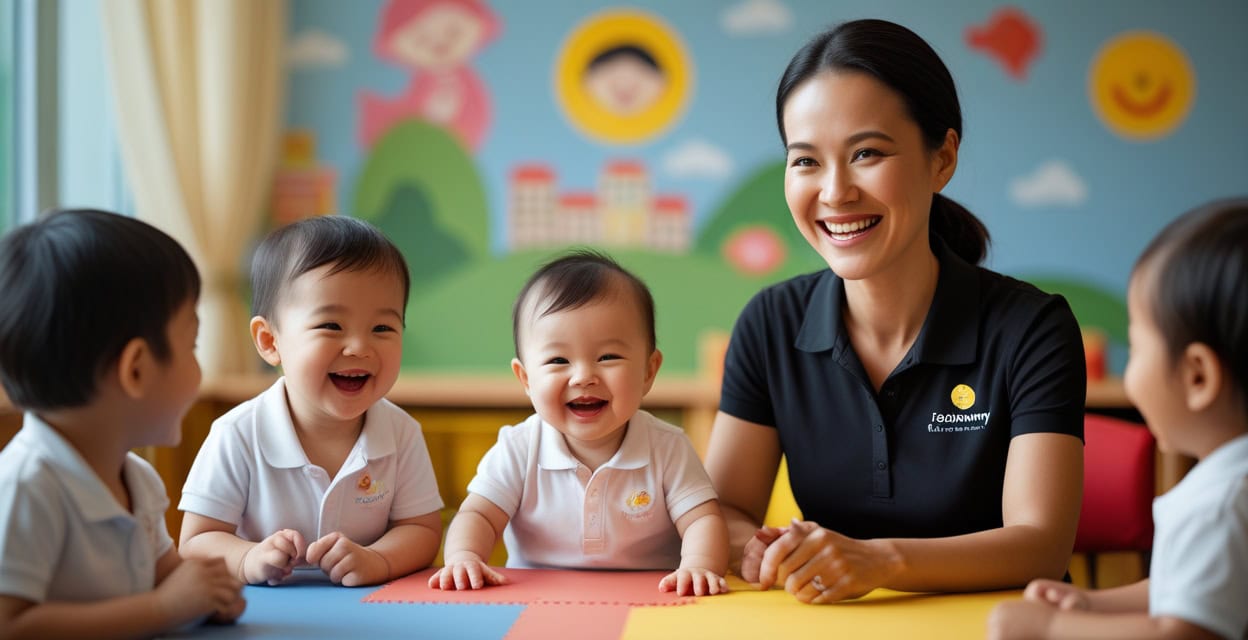
What Parents Can Expect with EduNanny
- Ultra-low ratio: 1 childminder to a maximum of 3 infants, with continuity across daily care.
- Ultra-low density spaces: Calm, safe micro-centers designed for focused play and minimal distraction.
- Near-home scheduling: Monday to Friday, 7am–7pm, with flexible half-day (5 hours) and full-day (10 hours) subsidized blocks.
- Affordability and subsidies: From $16.50 for a 5-hour block and $33.00 for a 10-hour block before GST, with CDA/Baby Bonus accepted.
- Certified, trained staff: All childminders undergo ECDA-compliant training and background checks; ongoing professional development is encouraged.
- Safety and privacy: CCTV in community spaces; opt-in monitoring zones in home settings to protect privacy while maintaining transparency.
- No Sick Child Policy: A robust health policy to minimize illness spread and support safe reintegration to care.
- Delivery across Singapore: A combination of center-based and home-based micro-pods to meet distance and convenience needs.
- Developmentally aligned materials: Age-appropriate toys and resources rotated to maintain wonder and challenge without overstimulation.
- National social initiative: Part of ECDA’s pilot with a focus on safeguarding development and improving caregiver livelihoods.

How to Sign Up
- Visit https://edunanny.com/edunanny-ecda-childminding-service/
- Fill the short form or inquire via WhatsApp
- Receive a response from the EduNanny Concierge Team
- Schedule a site visit for a home pod or community micro-center
- Enroll and begin care
You can also explore more at EduNanny.com and Childminding.EduNanny.com.

Significant Details: What Happens Next
After enrollment, EduNanny emphasizes ongoing parent–caregiver communication. Expect concise daily logs that include milestones, preferences, and cues. Regular family conferences may be scheduled to review development trajectories, adjust routines, and celebrate progress. The goal is to make quality care transparent, measurable, and aligned with each child’s unique journey.

The EduNanny Difference at a Glance
- ECDA-appointed operator under the Childminding Pilot.
- Ultra-low ratio 1:3 and ultra-low-density environments.
- Islandwide reach with near-home micro-pods—home-based and community-based.
- Safety with privacy CCTV in community spaces; privacy-respecting options for home settings.
- Background-checked, trained staff with ECDA standards and industry guidelines followed.
- No Sick Child Policy to reduce cross-infection.
- Affordable care from $16.50 (half day) and $33.00 (full day) before GST during subsidized hours.
- Flexible payment through CDA/Baby Bonus.
- Transparent, development-focused pedagogy with daily communication and observed growth.
- National initiative supporting a maximum employment mandate to uplift communities.

Conclusion
EduNanny’s approach to infant care is a thoughtful synthesis of developmental science, ethical practice, and practical logistics. By combining attachment-focused caregiving with a prepared environment, robust safety systems, and transparent communication, EduNanny aims to redefine what quality near-home infant care can be in Singapore. This model respects the child’s pace, honors parents’ needs for peace of mind, and invests in a national standard that elevates caregivers and families alike. If you seek care that feels intimate, professional, and currently practical, EduNanny offers a path forward that is as humane as it is rigorous.
Consider exploring a nearby EduNanny pod, asking questions about the caregiver’s daily routines, and requesting sample observation notes. The right environment can support a child’s curiosity, resilience, and social-emotional growth while easing a family’s daily journey.
Join us in shaping a future where early relationships write the brain’s blueprint for trust—and where safe, joyful care is a public, shared achievement. Visit the signup page, book a tour, and begin the conversation about your child’s first neighborhood, first friend, and first steps toward confident learning.
SEO keywords: [#keyword1, #keyword2, #keyword3, #keyword4, #keyword5]