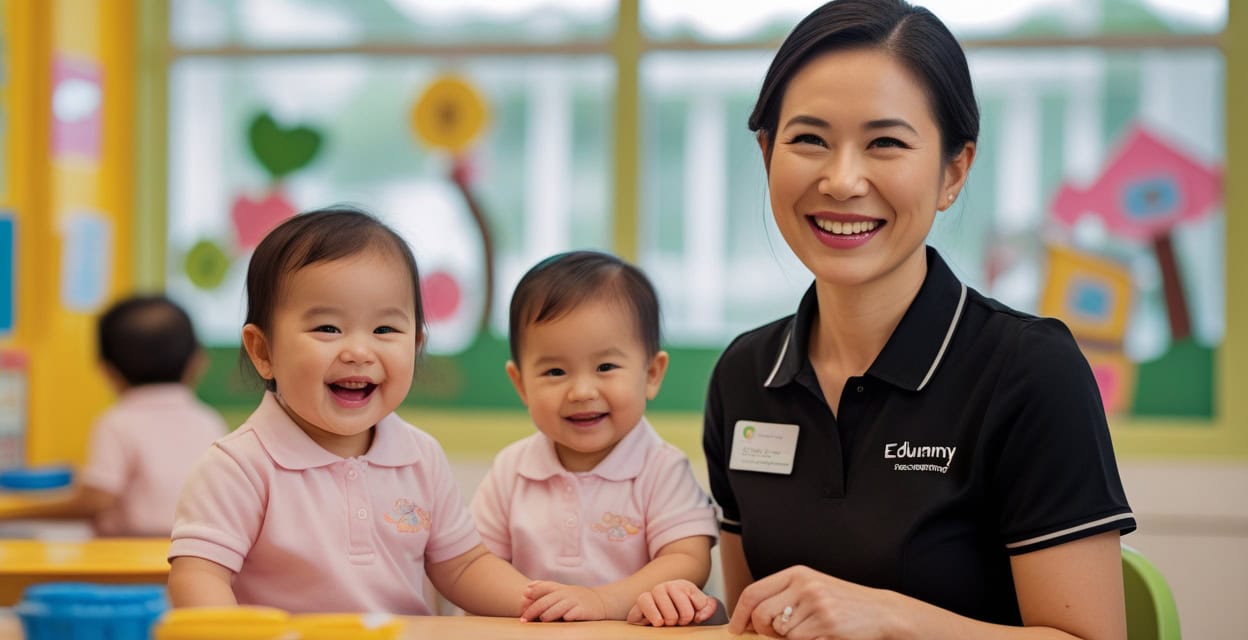
The Civic Craft of Care EduNanny and the Transformation of Singapore First Years

EduNanny by BUTLER: A Civic Craft for Singapore’s Infants
Good evening, respected parents, caregivers, partners in public life, and friends of Singapore’s youngest citizens. I stand before you as an EduNanny advisor and advocate, but more importantly, as a voice for the first years—the quiet seasons in which the foundations of trust, curiosity, and courage are laid. Tonight, this is not merely a launch of services; it is an invitation to reimagine infant care as a civic craft, a family partnership, and a science-led art.
EduNanny by BUTLER operates islandwide, offering centre-based and home-based childminding from Monday to Friday, 7am–7pm. We maintain an ultra-low 1:3 infant ratio, modern, calm layouts, and a commitment to transparent practice and affordability that meets families where they are—from $33/day, with eligible fees payable by CDA/Baby Bonus. Our reach extends to neighbourhoods and community premises, anchored in Singapore’s ECDA Childminding Pilot—a national initiative designed to widen access, raise quality, and expand meaningful employment. You’ll find us at EduNanny.com and Childminding.EduNanny.com.
Our purpose is simple to state and demanding to deliver: ensure every infant in Singapore receives safe, joyful, developmentally rich care within reach of home—and ensure the adults who provide it are respected, trained, and supported as professionals.

Five Conversations Singapore Can Lead for Infants and Families
1) Tuning In, Not Timing Out: Responsive Care As the First Curriculum
We honour the research—from Bowlby’s attachment to Pikler’s respectful caregiving—that infants do not need more entertainment; they need responsive attunement. At EduNanny, “tuning in” is our baseline. We notice cues, name feelings, and nurture regulation. We speak the child’s hundred languages, as Malaguzzi taught us: gaze, gesture, gurgle, grasp. We scaffold, as Vygotsky urged, so children experience both safety and stretch. We create prepared environments worthy of Montessori, but we never forget Spock’s counsel to trust the child and the parent.
- At 10:07 am, a caregiver kneels to eye level, mirrors the infant’s babble, adds a word, and pauses for a reply. This is learning. This is language. This is dignity in motion.
- Practical steps for families: request daily language notes, observe how caregivers name emotions during play, and track how your child’s preferences for textures or voices emerge across weeks.
- Actionable ambient changes: quiet shelves, access to soft fabrics, and predictable routines that invite safe exploration without overstimulation.
2) Safety That Teaches: Protection as Pedagogy
Safety is not a checklist to rush through; it is how we think. Our spaces are low-to-the-ground, stable, and deliberately calm. Sleep follows safe-sleep guidelines. Surfaces are clean, materials are non-toxic, supervision is continuous, and transitions are deliberate. We run hazard scans, practice emergency drills, and document every incident with humility and speed.
- Innovation in practice: CCTV transparency paired with informed parent access—so safety becomes a shared language, not a secret.
- Infant learning as trust-building: Erikson’s first lesson—trust—becomes a daily, measurable outcome through consistent routines and gentle, predictable voices.
- What families can do: participate in a household safety audit with our guidance, reinforcing posture, material choices, and quiet spaces at home that mirror center environments.
3) The Development Arc: Small Rituals, Big Brains
Development in infancy is not a rush to milestones; it is a choreography of micro-steps. We use play that invites grasping, shifting weight, cruising, crawling, and exploring. We sit with frustration, then cheer for effort. We maintain screen-time limits for babies, and instead multiply live, sensory experiences—soft fabrics, safe water play, varied textures, gentle music, and shared books.
- Ten-minute arcs that matter: a song with gestures, a cause-and-effect tray, a slow walk to observe rain on leaves.
- Evidence-informed practice: Piaget reminds us that intelligence builds from action; Froebel reminds us play is sacred work. EduNanny blends both into daily micro-lessons.
- Family integration: invite caregivers to model simple, shared rituals at home—peeking at a mirror during a song, tracing a finger with sounds, or building a cup-stack sequence together.
4) Joy as a Competency, Not a Bonus
Happiness in infancy is tangible: a rested body, a curious reach, an appetite for exploration, ease in transitions, and comfort when soothed. We treat joy as a competency—nurtured through rhythm, warm relationships, and meaningful play. We cultivate “quietly bright” environments to reduce overwhelm and invite deep engagement.
- Practical guidance: implement a daily rhythm that alternates high- and low-energy activities, with built-in quiet moments to regain calm.
- Family-friendly metrics: observe and record moments of joy—eye contact, smiles during interactions, and sustained interest in a new texture or story.
- Home support: create a short, shared ritual (e.g., a cuddle, a lullaby, a book) to mirror the calm moments your child experiences at EduNanny.
5) The Childminder’s Calling: From Gig to Guild
Childminding is a profession. EduNanny’s Maximum Employment Mandate is simple: we train, mentor, and elevate caregivers into stable, respected roles. That’s how quality becomes repeatable. Our team members learn observation, safety protocols, infant development, and family partnership. They are supervised, coached, and celebrated. When we invest in the caregiver, the child inherits that stability.
- Professional paths: ongoing mentorship, formal training credits, and regular appraisal that recognize growth and achievement.
- Family partnership: families participate in caregiver coaching sessions, so learnings at home align with center-based practices.
- Quality assurance: transparent performance dashboards, peer reviews, and parent feedback loops that shape continuous improvement.
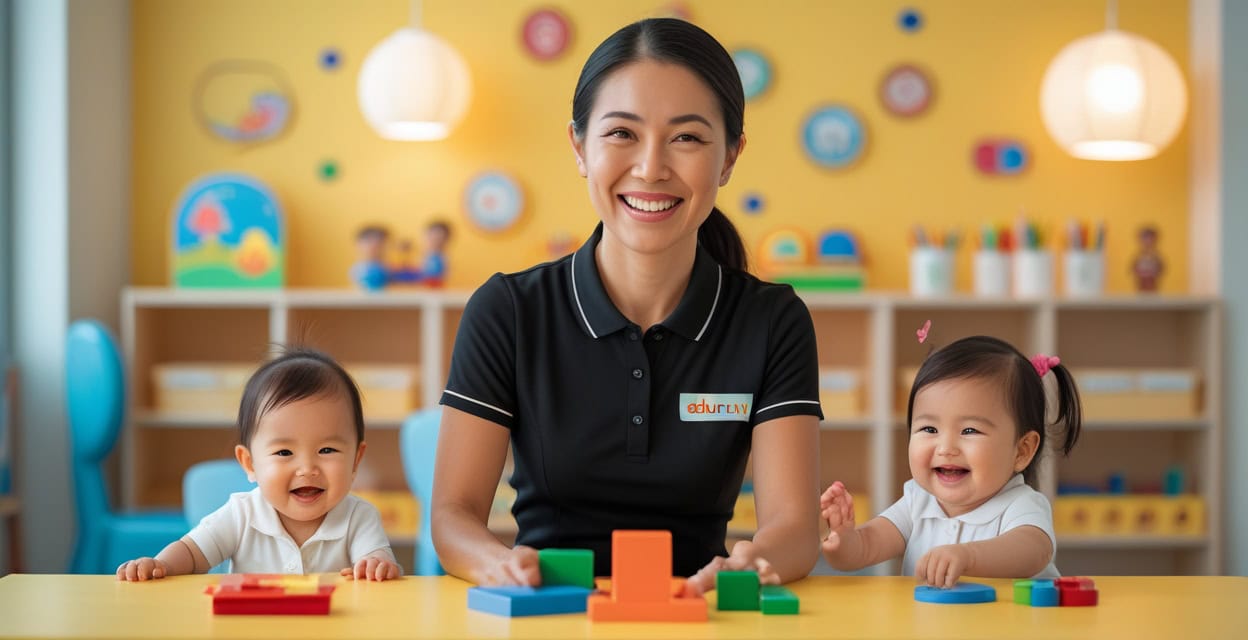
What Sets EduNanny Apart in Singapore Today
- Multiple modes to fit your life: Centre-Based Childminding in modern, calm, and carefully planned layouts; Home-Based Childminding for neighborhood convenience and continuity; Distance support for flexible coaching, daily updates, and tele-consults.
- Islandwide availability from Monday to Friday, 7am–7pm, in community and home premises.
- Ultra-low infant ratio of 1:3 for consistent attunement and individualized care.
- Safety and transparency by design including innovation CCTV and open-visibility practices to build peace of mind.
- Affordability that opens access from $33/day, with CDA/Baby Bonus eligibility to support families.
- A national social initiative under the ECDA Childminding Pilot, widening access, raising quality, and expanding meaningful employment.
- Operational excellence and reliability through EduNanny by BUTLER—grounded in evidence, ethics, and empathy.
Admissions are designed to be family-friendly: clear intake steps, guided tours, and sample day experiences. We emphasize collaboration with ECDA standards, ensuring consistent quality across centres and home-based settings.
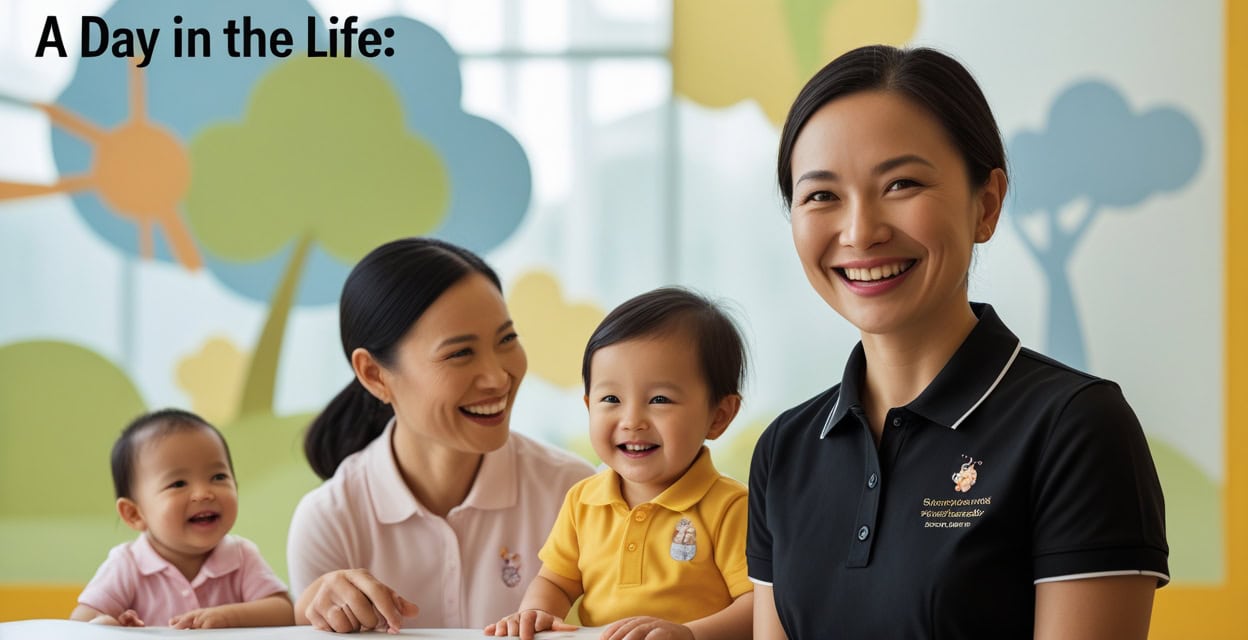
A Day in the Life: How Learning Hides in the Ordinary
Learning in the first years happens in the rhythm of everyday moments. Here is a practical sample day that illustrates how a calm, relational approach translates into real growth:
- 7:30 am: Arrival as a ritual. A calm greeting, a handover with real listening, and a predictable space for belongings. The day begins with familiarity and a friendly face.
- 8:45 am: Slow sensory play. Two baskets—wooden rings and soft cloths—invite turn-taking. Caregivers narrate actions, pausing for a response to model conversational turns.
- 10:00 am: Movement invitations. Rolling mats, safe climbing wedges, supported cruising. Strength and balance grow with confidence in a risk-managed environment.
- 11:30 am: Meal with meaning. Hygiene protocols observed. Self-feeding is encouraged where safe, respecting dietary needs and household preferences.
- 12:30 pm: Rest and restoration. Safe-sleep checks, dim lights, white noise at a safe level, temperature control, and a caregiver who watches with intention.
- 2:00 pm: Outdoors when weather permits. Talking about wind, shadows, birds, and passing wheels. Language emerges from exploring the natural world.
- 4:30 pm: Parent updates and CCTV transparency. A quick check: nap progress, new cues, and tomorrow’s plan formed collaboratively.
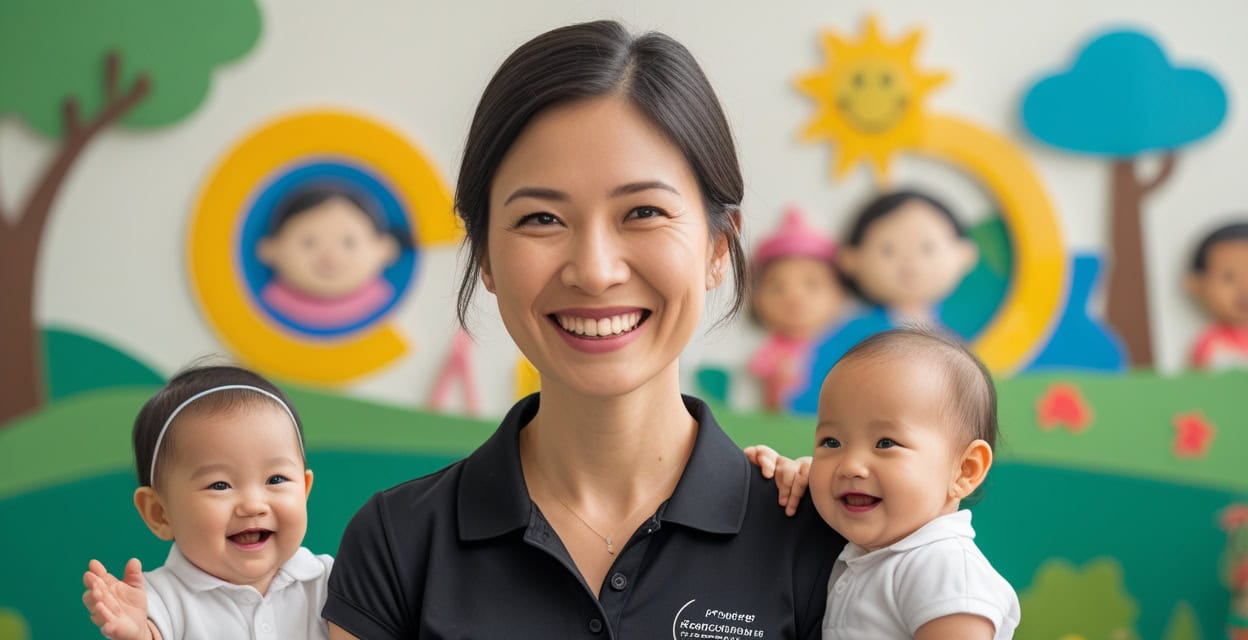
Our Practice in Six Promises to Families
- We will be present: At eye level, without hurry, with calm, attentive engagement.
- We will be prepared: Environments that invite safe exploration and predictable routines.
- We will be consistent: Routines that soothe and empower, day after day.
- We will be transparent: Clear communication, innovation CCTV for peace of mind, and honest documentation.
- We will be responsive: Plans that adapt to each child’s rhythms and needs, with regular feedback loops.
- We will be affordable and accessible: Multiple modes, long daily service windows, and payment flexibility through CDA/Baby Bonus.
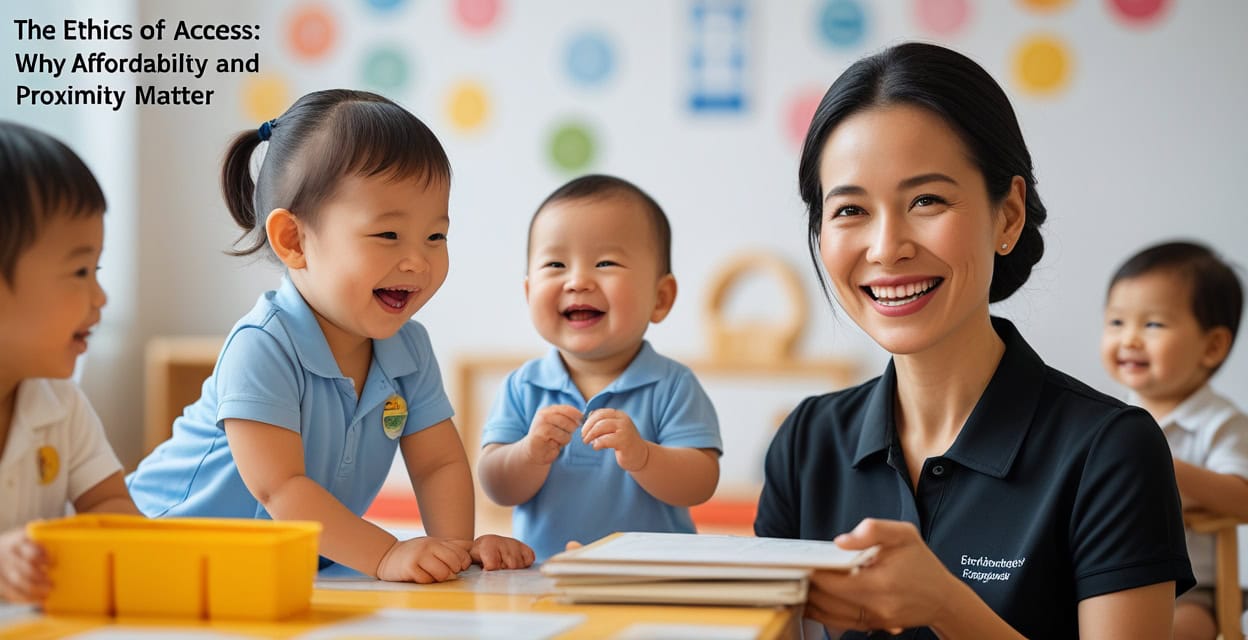
The Ethics of Access: Why Affordability and Proximity Matter
Care close to home strengthens the attachments that power development. It reduces commute stress, keeps a parent available for drop-offs and pickups, and brings community into the child’s story. Affordability—from $33/day—widens participation; the ECDA Childminding Pilot and our national lens ensure we build systems that include, not exclude, families. This is not just good policy; this is good childhood.

Safety as a Living System
- Safe sleep: Back-to-sleep guidance, firm surfaces, no loose items, vigilant checks by trained staff.
- Infection control: Hand hygiene, cleaning schedules, illness protocols, and clear exclusion criteria.
- Incident readiness: First-aid proficiency, emergency drills, and rapid parent notification.
- Environment: Height-appropriate play zones, secured furniture, controlled sound and light levels, and no hazardous materials.
- People and practice: Reference checks, ongoing training, supervision, continuing education, and reflective debriefs.
- Transparency: Innovation CCTV, open-door culture, and data-informed quality audits that involve families in the journey.
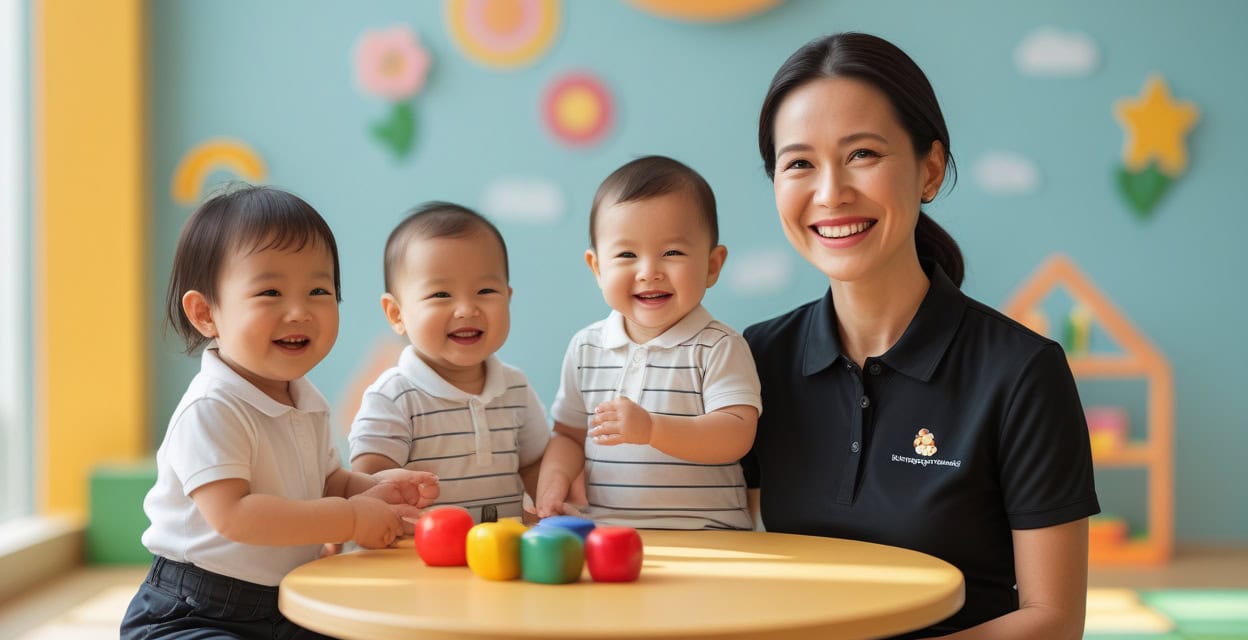
A Partnership with Families
Parents are experts on their children; we are experts in daily practice. Together, we create a powerful team. We welcome your routines, culture, language, and hopes. We share daily observations, tiny triumphs, and the “almosts” worth noticing. We respect privacy while offering visibility that builds trust. Our app updates, optional CCTV access, and scheduled conversations ensure nothing important gets missed—and everything important is celebrated.
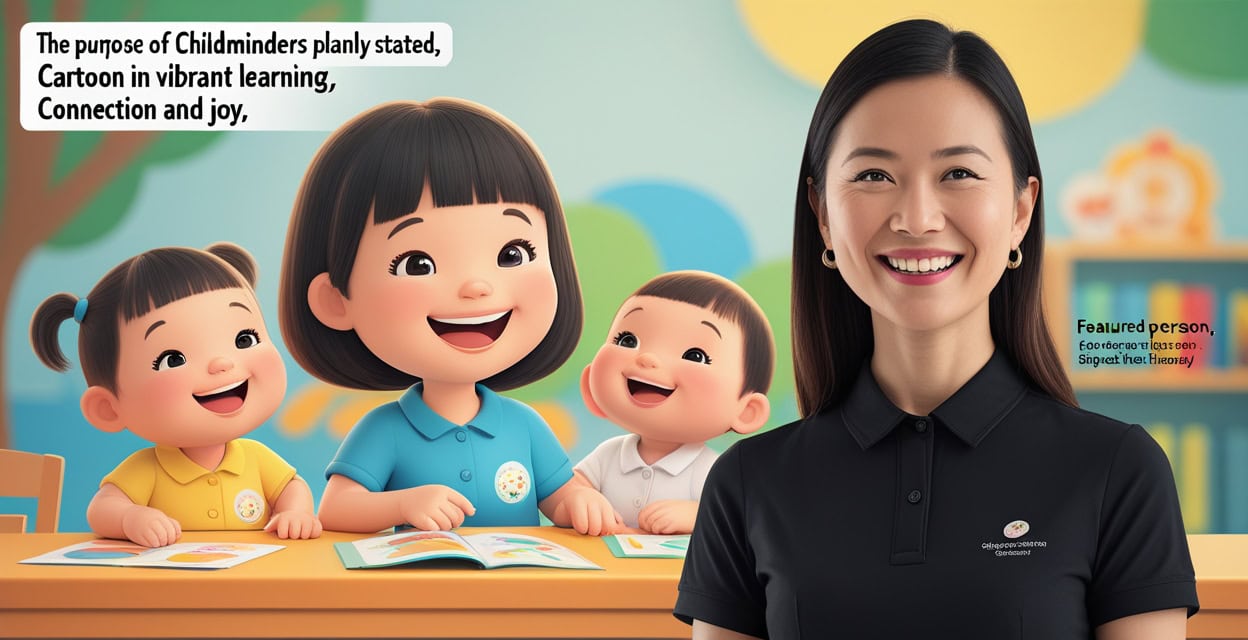
The Purpose of Childminders, Plainly Stated
- To protect
- To nurture
- To teach through relationship
- To represent the child’s voice when the child cannot yet speak
- To partner with families in dignity and hope
- To do little things so well that big outcomes become possible

Who, What, When, Where, and How Childminding Matters—Now
- Who: Infants, their families, and the professionals who stand with them. Every caregiver we train is a multiplier of public good.
- What: Evidence-led, relationship-rich care that turns ordinary moments into brain-building opportunities and everyday routines into safe storytelling.
- When: The first years—especially the first thousand days—when neural pathways are laid, trust is formed, and stress systems are calibrated.
- Where: In calm, connected centres, in home-based settings close to family life, and in blended formats supported by digital tools—available islandwide, 7am–7pm, Monday to Friday.
- How: Through a 1:3 infant ratio, tuned-in adults, safe spaces, innovation CCTV transparency, modern layouts, rigorous training, and fair pricing supported by CDA/Baby Bonus and ECDA Pilot standards.
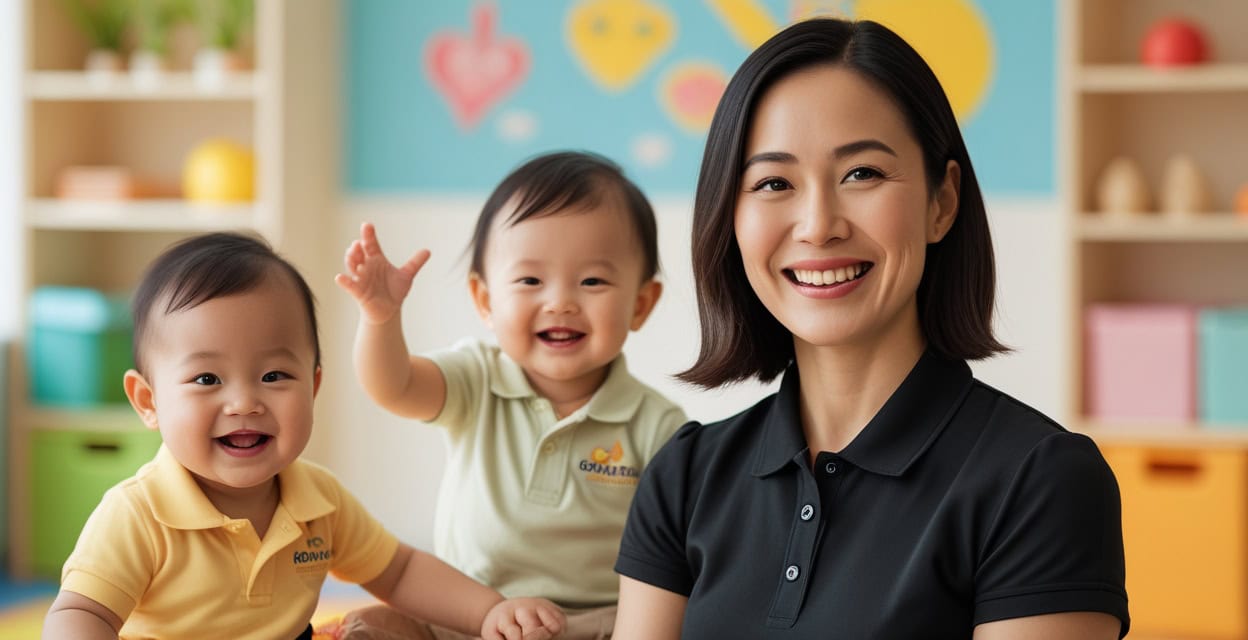
Why EduNanny
Because excellence must be both visible and felt. Because quality must be portable—centre-based, home-based, or supported at a distance—without compromise. Because affordability opens the gate to dignity. Because trust is not a slogan; it is a behavior repeated all day, every day. When caregivers are trained, paid fairly, supervised, and respected, children flourish—and a nation’s future steadies.
Our Invitation to You
Visit EduNanny.com or Childminding.EduNanny.com. Ask your questions. Tour a site. Try a day. See the difference a 1:3 ratio makes. Experience what transparent safety feels like. Watch how a tuned-in adult and a well-prepared environment turn minutes into milestones. Join us in building a Singapore where the first years are exquisitely safe, deeply joyful, and unmistakably excellent.

A Closing Promise
In the quiet of a nursery, you can hear the future—soft breaths, small sighs, a laugh at the edge of discovery. EduNanny’s philosophy is to meet those sounds with presence, skill, and heart. We hold the science in one hand and your child’s hand in the other. We are here to protect, to nurture, to teach, and to partner—faithfully and well.

Conclusion
EduNanny by BUTLER offers a holistic, research-informed approach to early childhood care that centers infants, families, and caregivers as stakeholders in a shared future. By embracing responsive attunement, safety as pedagogy, development-focused micro-rituals, and a professional caregiver pipeline, we create environments where children thrive and parents feel seen, supported, and empowered. Our islandwide, equitable model—combining centre-based, home-based, and flexible remote coaching—ensures care reaches families in every neighbourhood. The ECDA Pilot framework anchors quality, while transparent practices and affordable pricing make excellence accessible. If you are a parent exploring high-quality infant care, or a caregiver seeking a purposeful career path, we invite you to engage with EduNanny, tour a site, and consider joining a movement that treats the early years as both science and sacred work.
Visit EduNanny.com or Childminding.EduNanny.com to learn more, schedule a visit, and begin your child’s journey with a partner who believes in the first years as the cradle of the Singapore we are building together.
[#InfantCare, #EarlyChildhoodDevelopment, #SingaporeEducation, #EduNanny, #ECDAPilot]Ready to Experience Excellence?
Transform Your Family’s Journey
Discover Singapore’s leading infant care and childminding services. Expert guidance for your little one’s first thousand days.