How to Make a Simple Infant Comfort Cue Plan for Shared Care
A small comfort cue plan can help another caregiver notice an infant’s signals and respond with continuity. Start with one familiar cue, describe what you observe, agree on a gentle response and revise the wording after use.
When your baby is cared for by someone else, a long list of preferences can quickly become hard to use. A caregiver may already be managing feeding, rest, settling and opportunities to play. A more useful starting point is one familiar comfort cue that another person can recognise and try while still responding to your baby in the moment.
If you are considering our ECDA Childminding Pilot, it is described for eligible Singapore Citizen infants aged 2 to 18 months. The comfort cue plan below is for infants in everyday shared care more broadly. It does not create a general age limit or replace attention to an infant’s immediate needs. Pilot information
One familiar cue is enough to begin
A familiar voice, book, song or gentle gesture gives a caregiver one clear thing to notice and one simple action to try. It may be more useful than several instructions at once because it keeps the handover focused while leaving room for the infant’s response.
Choose something already connected with your baby’s daily life. A song your family sings during a calm moment may be easier for another caregiver to use than a new object that has never been part of your routine. If you share a book, describe how you usually present it rather than asking someone to perform a perfect reading. If you choose a gesture, explain what you do and what your baby tends to do next.
When we shape a care brief, we ask families about familiar comforts, settling preferences, favourite voices and books, and the routines that bring reassurance. A short cue plan puts one of those details into a form another person can use at handover. Care connected with home
Offer the cue gently, then pause and notice what happens. If your baby turns towards the voice, reaches or shows another familiar response, the caregiver can continue gently. If your baby looks away, becomes more unsettled or shows discomfort, the cue can be softened or stopped. The comfort cue is a starting point, not a rule that every infant must follow.
Write the signal before the response
Write what you can observe before writing what you think it means. “Pauses, turns away and holds still” describes something the caregiver may see. “Needs the song” interprets that observation as a fixed conclusion. The first gives another person something visible to notice without deciding in advance what your baby must be feeling.
This distinction supports responsive caregiving because it keeps observation, interpretation and response connected. UNICEF’s Care for Child Development approach guides caregivers to observe, interpret and respond appropriately to a child’s signals. It is a general framework for responsive caregiving, not a test of this particular cue plan or a way to diagnose what an infant needs. Care for Child Development
Use plain words that another caregiver can picture. Instead of writing, “She needs reassurance when she is overstimulated,” try, “When she pauses and turns away during a busy moment, offer the familiar song quietly and wait.” The second version gives the caregiver an observable starting point, an action and a way to notice the infant’s response. It also leaves room for the caregiver to use judgement.
Make the card portable across hands
Keep the card short enough to read during a handover. You can put it in your baby’s care notes, send it to the caregiver before care begins or write it on one side of a small card. The format can change; the useful information should remain easy to find.
- Cue: Name one familiar voice, book, song or gentle gesture.
- Early signal: Describe what you notice before using the cue, without assigning a fixed meaning.
- Try: State how the caregiver will offer it and how they will pause to notice the infant’s reply.
Here is a complete illustrative example:
Cue: Our familiar evening song, sung softly once.
Early signal: During a busy transition, the baby pauses, turns away or becomes still.
Try: Bring the baby to a comfortable position, sing softly once, then pause and watch. If the baby turns back, continues the interaction or shows a familiar response, the caregiver can stay nearby. If the baby becomes more unsettled, stop and attend to what is happening now.
Review note: After the care moment, write what the caregiver offered and what the baby did next.
This is an illustration, not an official EduNanny form or a promise that the song will settle your baby. The review note turns the plan into a useful conversation between home and care. It can show whether the cue seemed welcome, irrelevant or worth trying in a different way.
Keep other essential care details separately, especially when they affect safety or the arrangement. Feeding, rest, allergies, settling routines, comfort preferences and communication may all matter. Our approach begins with a child’s routines, interests and readiness, then creates opportunities for comfort, connection and discovery through the day. Our approach
Use the card to learn, not to test
After a few ordinary care moments, review the card with the caregiver. Keep the wording if it helped the caregiver notice and respond. Soften it if the response was mixed. Change it if your baby consistently turns away or shows discomfort. Retire a cue when it no longer belongs in your baby’s current routine.
You are looking for a pattern in your baby’s response, not a pass or fail result. A revised card can be more respectful than one that insists on the same sequence every time. It also gives the next caregiver useful context without turning one family’s signal into a rule for every infant.
Daily updates can support this same exchange. In our infant care, updates keep parents connected with care, while families share what they notice at home as an infant’s interests and abilities emerge. A short note about the cue fits naturally into that exchange because it records an observation, not a verdict. Daily updates and family observations
When the caregiver and parent compare notes, the cue plan becomes a small record of what feels familiar to this infant. That record can grow more precise as your baby changes, without turning one shared care moment into a fixed rule.
Sources and further reading
- EduNanny ECDA Childminding Pilot · EduNanny
- About Us · EduNanny
- Care for Child Development | UNICEF · www.unicef.org
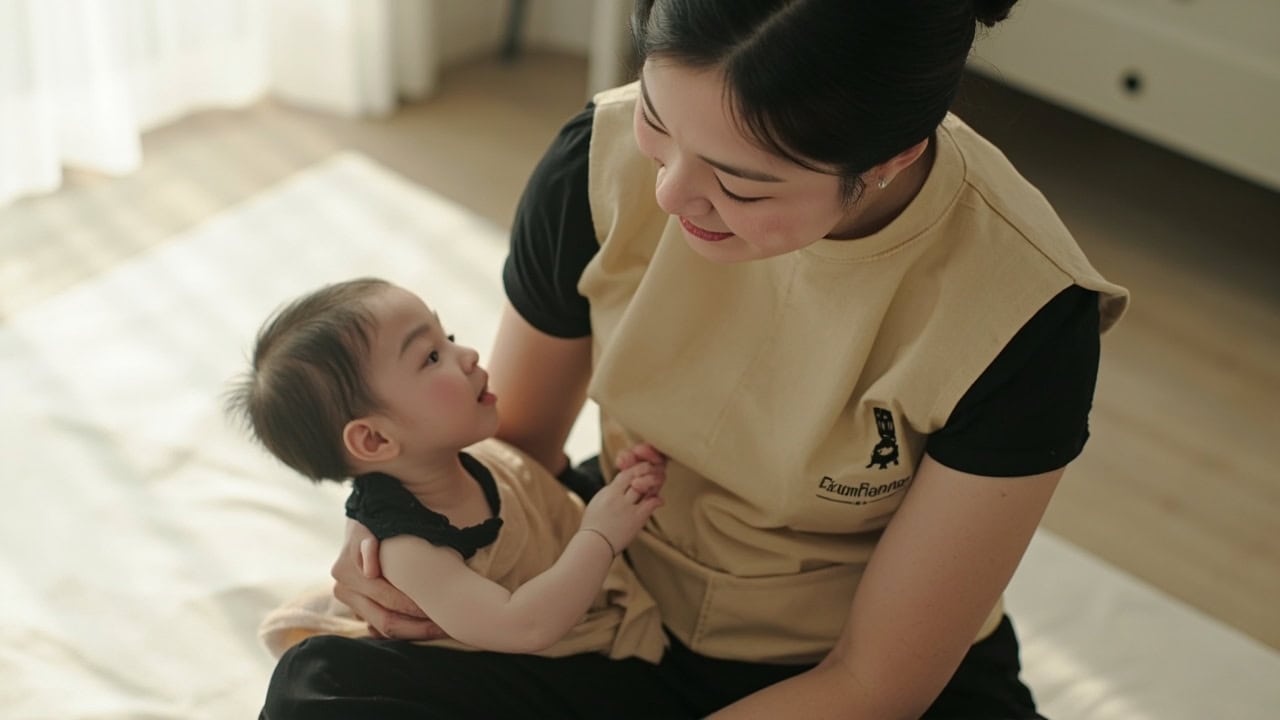
The images in this article were generated with AI for illustration. They do not show actual EduNanny staff, children or facilities.
Write one three-line comfort cue card, try it during a natural care moment and revise the wording with the caregiver if your baby responds differently.