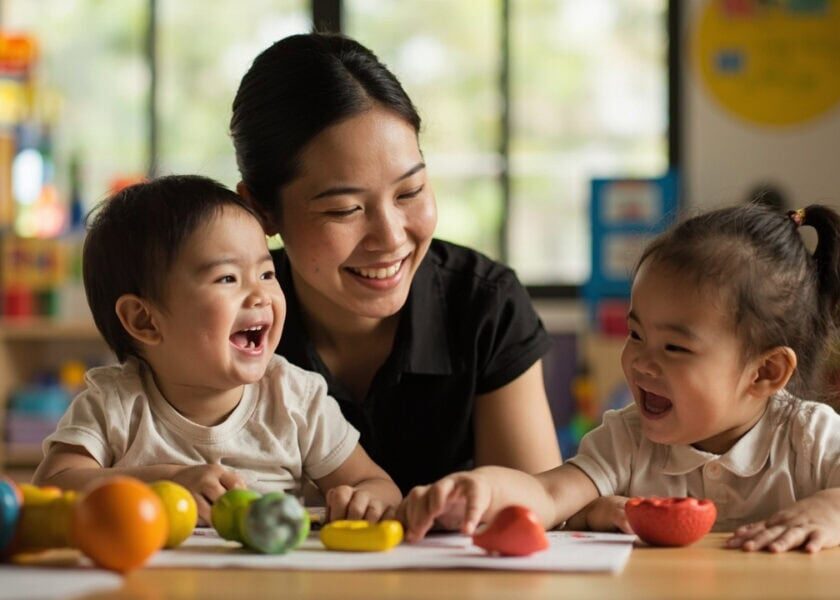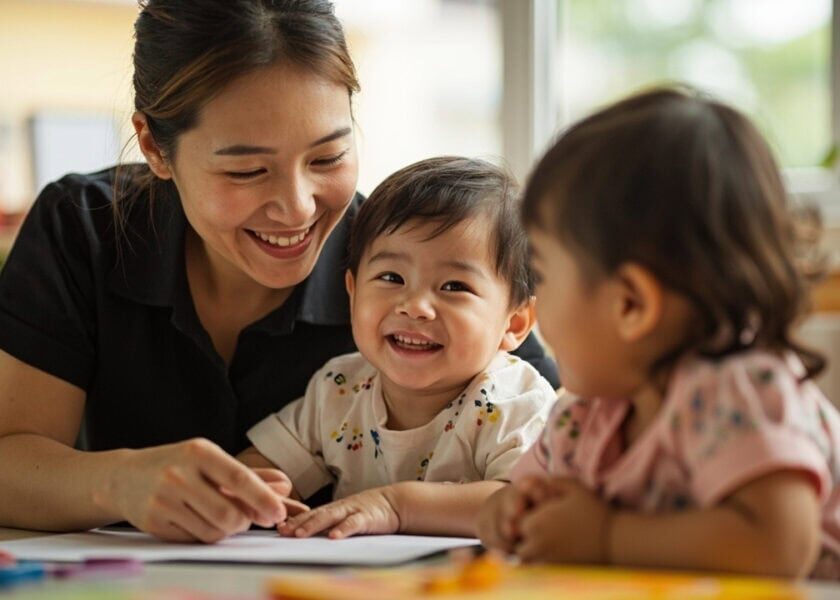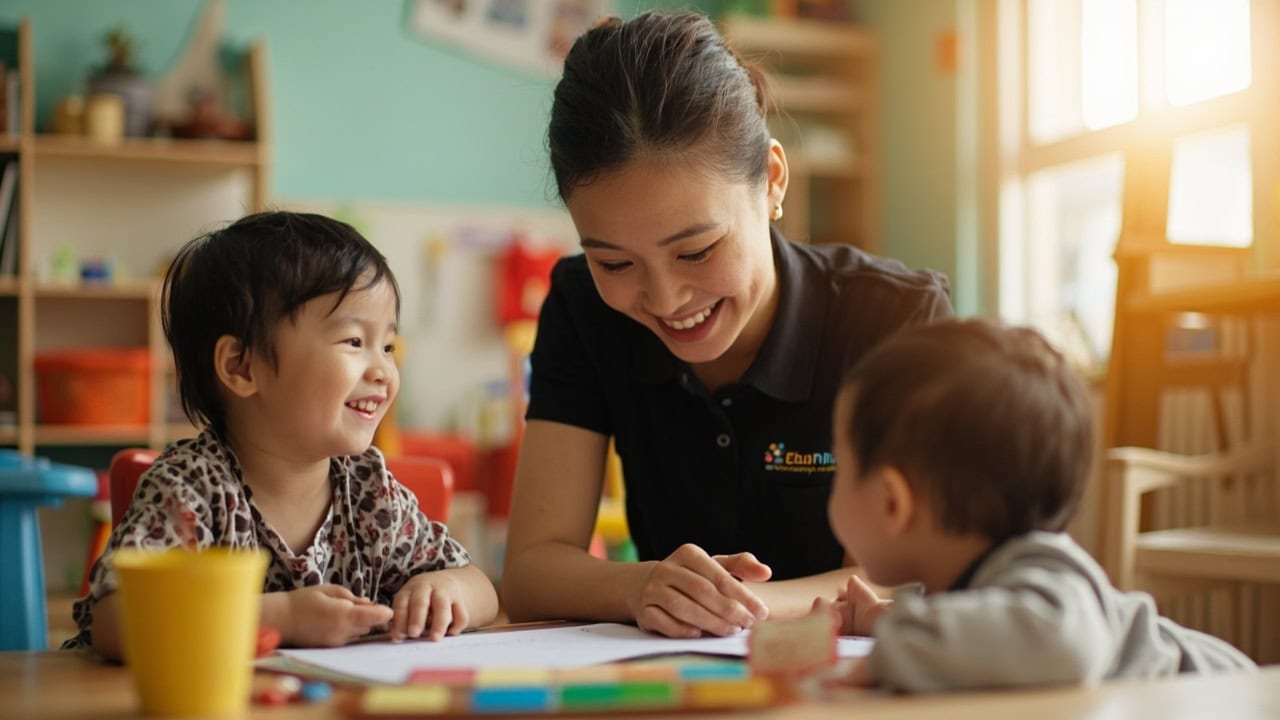
What Singapore Parents Discover When They Learn to See Their Child
Understanding Your Child’s Development: A Framework for Parents
For parents in Singapore, the question of whether your child is developing well is not a casual curiosity. It carries weight. You are navigating one of the world’s most demanding educational landscapes, and you know that the early years are not simply a warm-up for later. They are the foundation.
The brain is building itself at a pace it will never match again. The circuits that govern language, emotional regulation, social trust, and cognitive flexibility are all being laid down in the first years of life with extraordinary speed and extraordinary sensitivity.
And yet, here is the quiet tension that most parenting conversations never name directly: you are not a developmental psychologist. You did not train in early childhood education. You learned to be a parent by becoming a parent—in real time, without a manual that accounts for your specific child.
Here is what we want to offer you: observation is a skill. It is not a gift you have or do not have. It is not something that only professionals can do accurately. It is a learnable way of seeing, and when you learn to see more clearly, you become not just a better parent but a more confident one.
You stop relying on the anxiety that whispers that you might be missing something important. You start relying on something more reliable: your own informed attention, combined with a caregiver who sees the same child you see and speaks the same language of observation you are learning to speak.
What this guide will offer you:
- A clear framework for reading your child’s developmental signals—without needing a psychology degree
- Five specific domains where you can observe real, observable changes in your child’s behavior
- What quality childminding actually looks like, in concrete terms
- How to partner with your caregiver as fellow observers of the same child
- What school readiness truly means before Primary One—and why it starts now
This is not about diagnosing or measuring your child against rigid standards. It is about learning to see what is already there, so you can feel genuinely confident in what you are observing.
The Five Domains of Your Child’s Development
Developmental signals are not abstract. They are not hidden in reports you have to interpret or measurements that require clinical tools. They are visible, almost always, in what your child does, says, and shows you across ordinary moments.
The challenge is that most of us were never taught to notice them systematically. We notice the big milestones—the ones everyone tells you to watch for: first steps, first words, the moment they wave bye-bye. But the smaller signals—the ones that tell you how language is organizing itself in their mind, how social awareness is growing, how emotional regulation is becoming possible—these often pass through our awareness without landing.
And yet, if you begin to look for them, they are there. They are, in fact, everywhere.
1. Language and Cognitive Development
You might notice that your child is no longer just repeating words but beginning to combine them. Not yet full sentences, but something more intentional than echo. They might point to a picture in a book and say the word before you do. They might bring you an object and wait for you to name it, watching your face.
What to look for:
- Pointing to named objects before you name them
- Bringing objects to show you and looking at your reaction
- Attempting new sounds and words at pickup
- Responding to simple questions (“Where is Mama?” “What does the dog say?”)
- Interest in labeling things around the house or on walks
In quality care, this language explosion is supported by rich conversation—by caregivers who narrate the child’s experience, who respond to their sounds and gestures as if they are real communication, because they are. If you hear your child coming home with new sounds, new attempts at words, new interests in labeling things, this is not a coincidence. It is evidence that someone is having conversations with your child all day long.
2. Social Confidence and Peer Engagement
This one is often harder for parents to read because young children do not behave consistently across settings. A child who clings to you at a birthday party may be perfectly at ease in a familiar group. But over time, patterns emerge.
What to look for:
- Initiating play with another child instead of watching from the periphery
- Beginning to understand the concept of taking turns—not perfectly, not without frustration, but beginning
- Showing concern when another child is upset (a small gesture of empathy)
- Looking to caregivers or familiar adults for reassurance in new situations
- Increasing comfort with being near other children, even if not directly interacting
These are not just charming behaviors. They are developmental signals that your child is building the social cognition that will underlie everything from classroom collaboration to adult relationships. In a setting with a low infant-to-caregiver ratio, where your child receives consistent attention and where social interactions are gently facilitated rather than simply supervised, these skills have room to grow.
3. Emotional Regulation and Resilience
Emotional regulation is perhaps the most important and the most underappreciated domain. Parents often worry about tantrums, and they should—because tantrums are a normal part of development. But the question is not whether your child has big emotions.
The question is what happens around those big emotions.
- Do they have big emotions and recover?
- Do they have them with increasing frequency and intensity, or do they seem to be gradually widening their window of tolerance?
- Can they be soothed?
- Can they self-soothe?
- Do they show signs of distress and then return to baseline?
In quality care, emotional regulation is not ignored or suppressed. It is supported. Caregivers help children name their feelings, model calm responses, and provide the steady presence that allows a child’s nervous system to learn what safety feels like.
When you pick up your child and they seem generally settled, generally curious about the world, generally open to connection—these are signs that their emotional world is being attended to with care and skill.
4. Physical and Sensory Development
Physical and sensory development is easier to observe because it is so visible. You see it when your child climbs a structure they could not climb last month. You see it when they stack blocks higher, when they kick a ball with more coordination, when they hold a crayon with purpose.
What to look for:
- Increasing coordination in gross motor skills (climbing, running, jumping)
- Progress in fine motor skills (stacking, scribbling, picking up small objects)
- Growing body awareness (moving through space with confidence)
- Interest in textures, movement, and physical exploration
Fine motor skills and gross motor skills develop alongside each other, and both are supported by an environment that offers movement, exploration, and age-appropriate challenge. In a quality care setting, children are not sitting still for long periods. They are moving, exploring textures, building with their hands, developing the body awareness that underlies not just physical competence but cognitive development as well.
The child who can manipulate small objects with increasing precision is building the fine motor control that will later support handwriting, tool use, and many of the physical skills school will require.
5. Curiosity and Initiative
This is the domain that tells you something about how your child is experiencing the world. A child who is curious will investigate. They will reach for things, explore spaces, ask questions even before they have words for questions.
What to look for:
- Bringing you objects to show you—not because they want the object but because they want to share the experience of discovery
- Pointing at things out of interest, seeking your gaze to share attention
- Exploring new spaces with cautious excitement
- Returning to activities they enjoy, showing persistence
- Showing interest in how things work or fit together
These are not just sweet behaviors. They are signals that your child is motivated to learn, that they understand themselves as agents in the world who can make things happen. In a quality care environment, this curiosity is not just tolerated but cultivated. Children are given time to explore, materials to investigate, and adults who respond to their interests with enthusiasm.
The child who comes home buzzing with curiosity is a child whose love of learning is being protected and nourished.
What Quality Childminding Looks Like in Practice
Now that you have a framework for observation, let us talk about what you should be looking for in the care setting itself. Because the signals your child shows you at pickup are, in part, a reflection of what is happening during the hours you are apart.
The Ratio Matters
One of the clearest indicators of quality is the number of children per caregiver. In high-quality infant care, ratios are kept low for a reason: young children need individualized attention to develop securely. For infants, a ratio of up to 1:3 is not a luxury—it is a developmental necessity. Your child is not one of many. They are one of very few, receiving the kind of focused care that early development requires.
Observation Becomes Communication
In quality childminding, observation is not passive. It becomes the foundation of communication. When you pick up your child, you should be able to ask—and receive—genuine answers. Not just “they had a good day” but:
- What did they discover today?
- What made them laugh?
- What challenged them?
- What did they reach for, literally and figuratively?
We believe that when parents are informed, they are empowered. When they are empowered, the partnership between parent and caregiver becomes something extraordinary—not just supervision, but a shared language built on watching the same child grow.
An Environment That Grows With Your Child
Quality care is not static. It adapts to your child’s developing needs, offering challenge at the edge of their capability, support when they need it, and freedom to explore when they are ready. You should see evidence of intentional design: materials that invite investigation, spaces that allow for movement, routines that provide security while allowing for flexibility.
Questions to Ask When Evaluating Care
Here is what we recommend when you are evaluating childcare options:
- Visit more than once. First impressions can be misleading. Return at different times of day if possible.
- Ask to see ratios in practice. Do not just hear that ratios are low—ask to observe how caregivers interact with children during your visit.
- Ask questions that invite observation. “What has my child been interested in this week?” “Can you tell me about a moment when they showed frustration and how we responded?” These questions reveal how deeply caregivers are watching.
- Notice how children look at caregivers. Secure attachment is visible. Children who feel safe look to their caregivers with confidence, not anxiety.
- Trust your child’s reactions. Very young children cannot tell you in words how they feel. But they often show you. Notice how your child responds when you arrive and when you leave.
- Look for communication systems. How does the caregiver share what happened during the day? Is it a checklist, or is it stories?
EduNanny Singapore: A Partnership in Your Child’s Development
We want to share how EduNanny fits within this picture—not as a sales pitch, but as a concrete answer to the question: what does partnership in observation actually look like in practice?
EduNanny Singapore is part of the ECDA Childminding Pilot, a government-supported initiative designed to offer Singapore families flexible, high-quality childminding options. We believe that every family deserves access to care that is not just safe but genuinely developmental—care that sees the child as a whole person who is growing in multiple domains at once, who deserves attention that matches the importance of these years.
Options That Fit Your Family
We offer multiple pathways because families are not all the same:
- Home-based childminding: A trained caregiver comes to you, providing individualized care in the familiar environment of your own home. This option is particularly valuable for infants and for children with special needs, where consistency and low ratios matter deeply.
- Centre-based pathways: Community and centre settings for families who prefer a different environment.
In all settings, we maintain ratios that allow for genuine attention. For infants, we offer ratios of up to 1:3.
Affordability and Accessibility
We know that cost is a real consideration for Singapore families. Our pilot fee structures are designed to be accessible, and we support the use of the Child Development Account (CDA) and Baby Bonus schemes. Quality care should not be a luxury reserved for those who can pay premium rates.
Transparency as Partnership
Because we know that trust requires transparency, where deployed, we have CCTV measures in place so that you can feel connected to what is happening in your child’s day. This is not about surveillance. It is about partnership. When you know what is happening, you can participate in it. You can ask better questions. You can continue the conversations at home that your child’s caregiver begins during the day.
You can become the reader of your own child’s story, and we can be the partners who help you learn how.
Reliable Support for Working Families
Our care operates Monday to Friday, in care blocks that align with the rhythms of working families. We know that Singapore parents are managing demanding careers, that the logistics of childcare are not simple, and that what you need is reliable, high-quality support that lets you work with confidence.
Your Questions Answered: Building Confidence as a Parent
“How will I know if my child is really learning?”
You will know because you will learn to see. You will see it in the way your child greets you at pickup—not with anxiety but with the secure confidence of a child who has been well cared for. You will see it in the new words they bring home, the new gestures, the new ways of engaging with you and with others.
You will see it in their growing ability to manage frustration, to recover from disappointment, to return to curiosity after a hard moment. You will see it in their bodies, in the way they move through space with increasing ease and awareness. You will see it in their eyes, in the brightness of a child who is interested in the world and feels interested in themselves.
These are not guesses. These are not hopes. These are observable signals, and when you learn to read them, they become your evidence, your confidence, your proof.
“Without professional training, how can I judge quality?”
The parent is the expert on their child. Not the only expert, and not an expert in the clinical sense—but the expert on this particular child, in this particular family, in this particular life. You know your child’s temperament, your child’s sensitivities, your child’s joys and fears in a way no caregiver, no matter how skilled, can know.
And when you learn to observe your child’s development with informed attention, you gain something that no report card and no standardized assessment can provide. You gain the ability to read your own child. To notice when something is changing. To notice when something feels off. To notice when something is flourishing.
This is not a soft skill. This is one of the most important capacities a parent can develop.
“What if I choose wrong?”
You are already paying attention. The very fact that you are reading this—seeking clarity, wanting to understand your child’s development more deeply—tells us something important about the kind of parent you are. You are not passive. You are not hoping blindly. You are asking questions, and you are willing to learn.
That is exactly the posture that leads to good decisions. And if you stay engaged—staying observant, staying in conversation with caregivers, staying curious about what you see—then even if a particular arrangement does not work perfectly, you will notice. And noticing is the first step to adjusting.
School Readiness Begins Long Before Primary One
There is one more thing we want to share with you, and it is about what comes next. Not immediately next, but further down the road.
Primary One is not a mystery that arrives unannounced. It is the result of years of development, and the signals that your child is ready—truly ready—for the demands of school are visible long before the first day.
School readiness is not about academic knowledge, not at this age. It is about the whole child:
- Can your child sustain attention?
- Can they follow multi-step instructions?
- Can they manage the social dynamics of a group?
- Can they regulate their emotions when things do not go their way?
- Can they express their needs and listen to the needs of others?
- Can they be curious and persist in the face of difficulty?
These capacities are built in the early years, in settings where development is taken seriously, where caregivers understand that every moment is an opportunity for growth. When you choose childcare that is truly developmental, you are not just filling your child’s day. You are building the foundation for everything that comes next.
And you are building it alongside people who care as much as you do.
You Are Already Noticing. Now You Will Learn to See.
We want to close by returning to where we began.
You already notice things about your child. You already see moments that make you pause, that make you wonder, that make you hope. You do not need to become a different person to become a better reader of your child’s development. You need a framework, some guidance, and partners who will grow with you and your child.
This is what EduNanny Singapore offers. Not just childcare. Not just supervision. A developmental partnership built on shared observation, mutual trust, and a deep respect for the extraordinary work of early childhood.
The first thousand days are not just a phrase. They are a reality, and they are happening now—in these years, in these months, in the everyday moments that make up your child’s life. You are not outside of this. You are at the center of it.
And when you choose care that sees your child clearly, that supports every domain of their growth, that communicates with you honestly and often, you are giving them something that no amount of money or status can buy.
You are giving them the best possible beginning.
For the seriousness with which you are approaching this decision, for the care you are taking, for the love that underlies all of your questions—we are honored to walk this path alongside you.
Welcome to EduNanny Singapore.
Welcome to a partnership in development.
Welcome to watching your child grow, in plain sight, in the way you were always meant to see.
Curious about what thoughtful, development-focused childminding looks like in Singapore? Learn more about EduNanny and how we support families through the ECDA Childminding Pilot. You can also reach out to speak with our team.