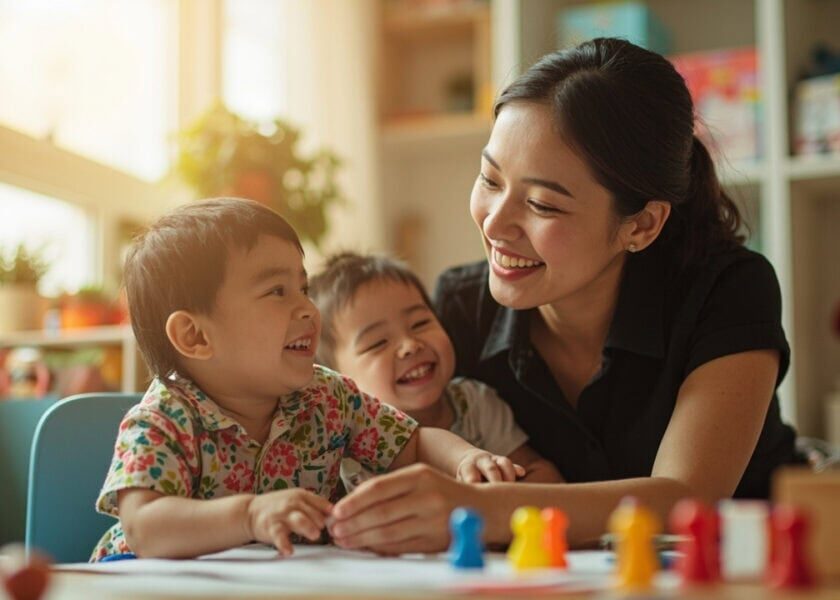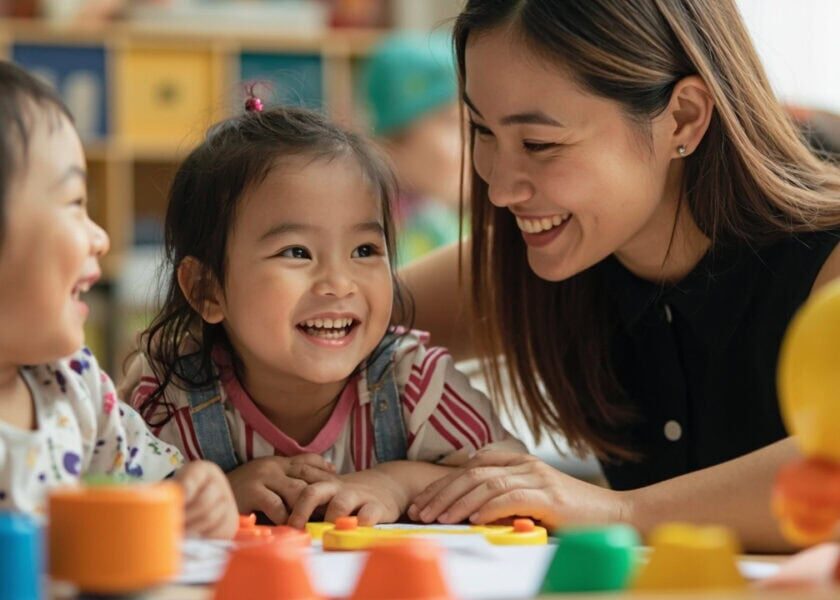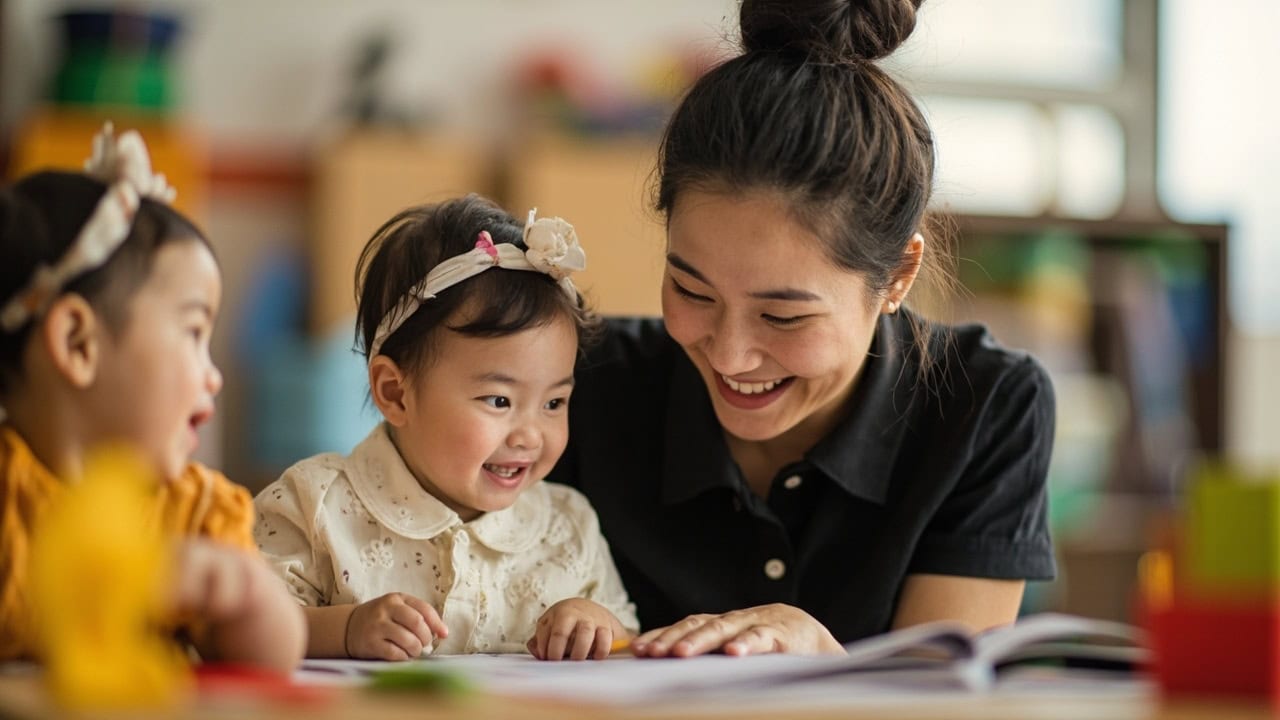
Seeing What Matters: Recognizing Your Child’s True Growth
The Eyes to See: Recognizing What Your Child Is Becoming
There is a moment familiar to every parent who has handed their child over in the morning—a moment that arrives again in the quiet hours after pickup. The car seat is secured. The familiar route home stretches ahead. And somewhere between the childcare gate and the dinner table, a question surfaces: What happened today?
Not the logistics. Not the activities logged in the daily report. But what actually happened. What did my child encounter? What did they learn? Who are they becoming in all those hours when I am not there to witness it?
This question is not doubt. It is love. It is the particular form of parental attention that wants not just to provide, but to understand—to know that the hours apart are hours well spent, that the environment you have chosen is not merely keeping your child safe, but actively shaping the person they will become.
And yet, this question can feel impossible to answer. The daily updates arrive with photographs and brief notes. Your child emerges happy, often tired, sometimes hungry. They may offer a fragment—a song, a word, a name you don’t recognize—and you wonder: Is that from today? Is that a new thing? Or was it always there, waiting for me to notice?
Here is what this article offers you: the eyes to see. Not because you have been failing to observe, but because the language of early childhood development is a vocabulary most of us were never taught. We know we want our children to thrive. We know we want quality. But what does quality actually look like when a child comes home changed—not by a single dramatic lesson, but by the accumulated weight of hundreds of small hours spent in an environment designed to help them grow?
This is not an article about reassurance alone. It is about recognition.
Quick Indicators of Genuine Developmental Progress
- Cognitive growth appears as sustained engagement—your child focusing on a task, persisting when something is difficult, trying different approaches
- Language growth goes beyond new words—using language to connect, ask questions, narrate experience, and express curiosity
- Social-emotional growth shows as emerging self-regulation, social curiosity, and secure base behavior—your child exploring confidently because they feel safe
- Motor growth demonstrates increasing precision and confidence, with appropriate challenges that stretch current abilities
- Adaptive growth is the growing independence—wanting to do things themselves, expressing preferences, helping with simple tasks
Beyond the Happy Photo: Understanding What Quality Really Means
Let us begin by naming something that many parents sense but rarely articulate: the difference between a child being entertained and a child being genuinely engaged.
Entertainment is passive. It asks very little of a child. A screen can entertain. A toy that lights up and plays music can entertain. Even a well-meaning caregiver who fills the day with activities can entertain without ever truly engaging the developing mind.
Engagement is different. It asks something of a child. It invites them to participate, to try, to persist, to wonder. An engaged child is not merely amused—they are alive in the way that produces growth. And growth, genuine developmental growth, has a texture you can learn to recognize.
Developmental psychologists describe growth across several interconnected domains. These domains do not operate in isolation—they braid together, each one supporting and being supported by the others.
The Five Domains of Early Childhood Development
| Domain | What It Encompasses | Observable Signs of Growth |
|---|---|---|
| Cognitive | Problem-solving, concentration, imagination, abstract thinking | Sustained engagement with tasks, trying multiple approaches, symbolic play |
| Language & Communication | Vocabulary, sentence formation, conversational skills, curiosity | Combining words, asking questions, narrating experiences, connecting with others |
| Social-Emotional | Self-regulation, relationship-building, emotional security, empathy | Managing frustration, social curiosity, secure base behavior, expressing concern for others |
| Motor | Gross motor (running, climbing) and fine motor (grasping, manipulating) | Increasing precision, coordination, confidence in physical abilities |
| Adaptive | Daily living skills, independence, self-help capabilities | Using utensils, dressing attempts, expressing preferences, helping with tasks |
When you observe your child after pickup, you are looking for evidence of growth across these domains—growth that is visible not in test scores, because there are no test scores at this age, but in behavior. In how your child approaches problems, relates to others, expresses themselves, and navigates the physical and social world.
What Growth Looks Like in Each Domain
Cognitive: The Working Mind
Genuine cognitive growth often shows up as what researchers call sustained engagement—the ability to focus on a task, to persist when something is difficult, to try different approaches when the first one fails.
You might notice this when your child spends a long time manipulating a shape-sorter, not because the toy is flashy, but because they are working something out. They are thinking. They are problem-solving. They are exercising the muscles of concentration and determination that will serve them throughout their lives.
Quality cognitive engagement also shows up in symbolic thinking—the ability to use one thing to represent another. When your child takes a block and pretends it is a phone, or gives their stuffed animal a voice, they are developing the capacity for abstraction, for imagination, for the kind of flexible thinking that underlies all later learning.
Language: More Than Words
The signs of language growth are often the most immediately recognizable. A child who is developing well in a quality environment will not only accumulate new words—they will begin to use language in new ways.
They will start to combine words into simple sentences. They will ask questions—why becomes a very common sound around eighteen months to two years. They will engage in back-and-forth exchanges that go beyond naming and requesting. You might notice your child beginning to narrate their own experience, to tell you about something that happened earlier, to use language to connect with you rather than simply to get what they want.
Language development is closely tied to the quality of interaction a child receives. Children who are spoken to frequently, who are listened to attentively, who are responded to in warm and language-rich ways, develop stronger language skills than children in environments where language input is limited. This is why caregiver-child interaction ratios matter so much in infant care.
Social-Emotional: The Emergence of Self
In the social-emotional domain, growth is visible in behaviors that might initially seem small but are actually significant developmental achievements.
A child who is learning to manage frustration—who, when a toy is taken away or a puzzle piece will not fit, shows effort at self-calming rather than immediate collapse—is developing the capacity for emotional regulation. This does not happen automatically. It happens in relationships, in environments where the child feels secure enough to experience big feelings while also receiving gentle guidance in managing them.
You might also notice growth in social curiosity—the desire to observe and eventually engage with other children. In the earliest months of infant care, parallel play is normal: children play near one another but not truly together. Over time, with quality social scaffolding, true social engagement becomes possible. Children begin to notice each other, to imitate each other, to collaborate in simple ways, to express concern when another child is upset.
One of the most powerful signs of healthy social-emotional development is called secure base behavior. This is a child who can explore confidently when a caregiver is present, knowing that the caregiver is available if needed. You might see this when your child runs to greet you at pickup—happy to see you, but also, after a moment, willing to return to play. They are not anxious about your absence, because they have developed a sense of security. And because they feel secure, they can engage, explore, and grow.
Motor and Adaptive: Growing Independence
In the motor domain—whether gross motor skills like running and climbing or fine motor skills like manipulating small objects and eventually using crayons—growth shows up in increasing precision, coordination, and confidence.
Quality motor development is not just about providing opportunities for movement. It is about providing challenges that are appropriately calibrated—not too easy, not too hard—that invite the child to stretch their current abilities in safe and supported ways. A quality infant care environment will offer what educators call freedom of movement—opportunities for babies who are not yet mobile to move toward mobility, and for toddlers who are mobile to move in increasingly complex ways.
Adaptive development encompasses the practical competencies of daily life. Learning to use a spoon, to drink from a cup, to take off and put on a jacket, to help with simple tasks like putting toys away. These are not merely practical skills. They are the building blocks of independence, of agency, of a child’s growing sense that they are a competent person who can affect their own world.
How Quality Environments Are Deliberately Designed for Growth
Here is what you need to understand: this kind of growth does not happen by accident. It happens in environments that are deliberately designed to support it.
A quality infant care setting is not simply a clean, safe space with caring adults. It is a carefully arranged environment where cognitive, social-emotional, language, motor, and adaptive development are all intentionally supported—where the ratio of caregivers to children allows for genuine engagement, where the curriculum, even for infants, is thoughtfully planned and responsive to each child’s developing needs.
This is what separates quality from adequacy. Adequacy keeps children safe, fed, and entertained. Quality actively promotes growth.
What This Looks Like in Practice
- Small ratios matter: Fewer children per caregiver means more responsive interaction, more language exposure, more individual attention to each child’s emerging needs and interests
- Trained caregivers understand development: They know the difference between a child who is merely occupied and a child who is actively growing. They observe, interpret, and respond intentionally
- The environment is a teacher: Materials are selected for developmental purpose. Spaces are arranged to invite exploration and challenge. Every element is considered
- Relationships are intentional: Quality care prioritizes consistent caregiver-child relationships, because development happens in the context of trust and security
- Communication is transparent: Parents receive meaningful updates—not just logs of meals and naps, but insights into their child’s engagement, discoveries, and social moments
Your Role as an Informed Parent: From Observation to Confidence
So many parents carry a quiet anxiety about whether they are making the right choices. They worry that they cannot know what is happening in the hours apart. They hope, they trust, they try to believe—but they are not sure they have the tools to truly evaluate.
That uncertainty can sit in the chest like a stone.
But here is the truth: you can see what is happening. Not everything, because children are not transparent, and development is complex. But enough. Enough to recognize genuine growth. Enough to trust your own observation. Enough to move from anxious hope to informed confidence.
When your child comes home from a day in quality care, you may notice the curiosity in their questions, the persistence in their play, the new words they use, the way they relate to you and to others, the growing confidence in their body, and the small signs of a self that is becoming more organized, more capable, more fully alive.
These are not mysterious. They are developmental progress. And they are happening because your child has spent their day in an environment designed to help them grow.
Questions to Ask and Things to Observe
- Caregiver engagement: Do the caregivers seem genuinely engaged with the children, or simply managing them? Watch for warm, responsive interaction—not just instructions but connection
- Environment design: Does the space offer meaningful opportunities for exploration, interaction, and challenge? Or is it merely clean and safe with minimal stimulation?
- Ratio awareness: How many children are there per caregiver? Lower ratios enable deeper engagement
- Staff training: Do caregivers demonstrate understanding of child development, or are they simply following routines?
- Communication quality: What kind of updates will you receive? Meaningful insights into engagement and growth, or just basic logs?
- Child behavior: If you can observe, watch how the children move, interact, and engage. Do they seem curious and involved, or passive and listless?
You become an informed consumer—not a suspicious one, not someone who trusts nothing. But someone who has the knowledge to recognize quality when they see it.
The Conditions for Observable Growth
Growth does not happen in isolation. It happens in relationships. It happens when a caregiver truly knows your child, observes their individual patterns, celebrates their particular strengths, and supports their particular challenges. It happens when you, as a parent, are welcomed into that process—kept informed, included as a partner, respected as the expert on your own child.
At EduNanny, this understanding shapes everything we do. Our approach to infant care and childminding is built around creating the conditions in which young children can grow—really grow, in the observable ways we have explored—in the first thousand days of life, when the architecture of the developing brain is being laid down at a pace that will never be matched again.
In our home-based pathway, we maintain infant-to-caregiver ratios of up to one to three, so that each child receives the attentive engagement that developmental science tells us is essential. In our centre-based pathways, ratios remain deliberately low. Children in small-group, high-attention settings show stronger outcomes across every developmental domain.
Our caregivers are trained and supported to understand child development—not as an abstract concept, but as something they observe and respond to every day. They know what sustained engagement looks like. They know the signs of emerging language. They know the difference between a child who is merely occupied and a child who is actively growing. This is the kind of professional, development-focused care that infants and their families deserve.
We participate in the ECDA Childminding Pilot, which means our approach is grounded in standards recognized by the authority that governs early childhood development in Singapore.
Transparency is built into our model. Parents receive regular communication about their child’s day, with updates that go beyond the superficial. Where CCTV measures are deployed, families have the assurance of visibility into the care environment—not surveillance, but partnership. This gives parents the information they need to see what their child is experiencing and to recognize the growth that is happening.
We believe affordability matters. Our pilot fee structures have been designed to make quality care accessible, with CDA and Baby Bonus funds usable. Care is available in Monday-to-Friday blocks, supporting the rhythms of working families across Singapore.
The Foundation of Confident Parenting
EduNanny exists to provide this: not just a service, but a relationship. Not just care, but developmental partnership. Not just supervision, but the kind of attentive, intentional environment in which a child can flourish.
Your child is changing every day. The person they are becoming is being shaped by thousands of small experiences, by the quality of the relationships they encounter, by the responsiveness of the environment around them. You cannot control every one of those experiences. But you can choose the environment in which they occur.
When you choose an environment that is designed for growth—when you learn to recognize that growth when you see it—you give your child something invaluable. You give them the chance to become who they are.
That is what EduNanny has been built to offer. And that is what we hope you will see, every day, when your child comes home changed—not by accident, but by design.
Growing. Thriving. Becoming.
The eyes to see are yours. Trust them.
EduNanny by BUTLER offers infant care and childminding pathways designed around the developmental needs of young children in Singapore’s first thousand days. Learn more about our approach, our ratios, our training, and how we support both children and parents.
Ready to explore quality infant care? Connect with EduNanny to learn how we support your child’s observable growth—every day.