What Your Child Is Really Learning That You Cannot See
The Pick-Up Moment: Why You Deserve to Understand What Your Child Is Experiencing
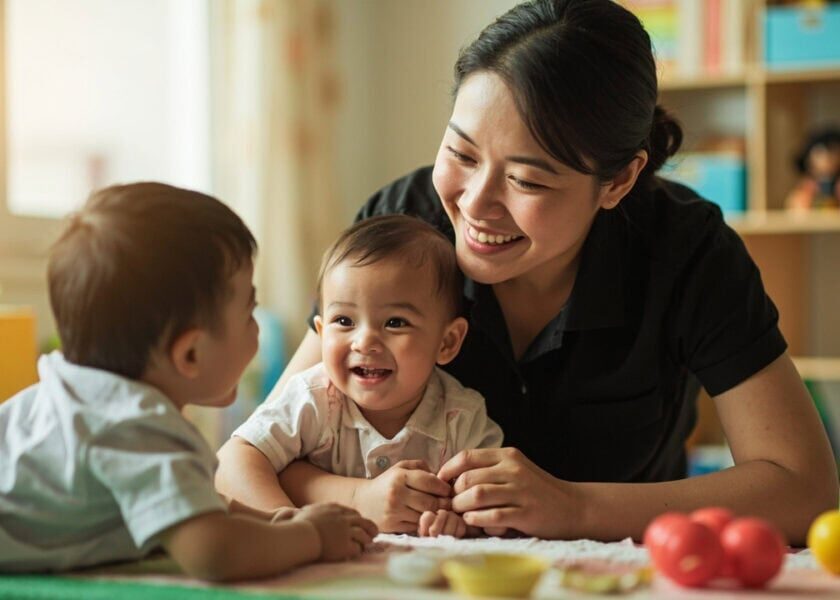
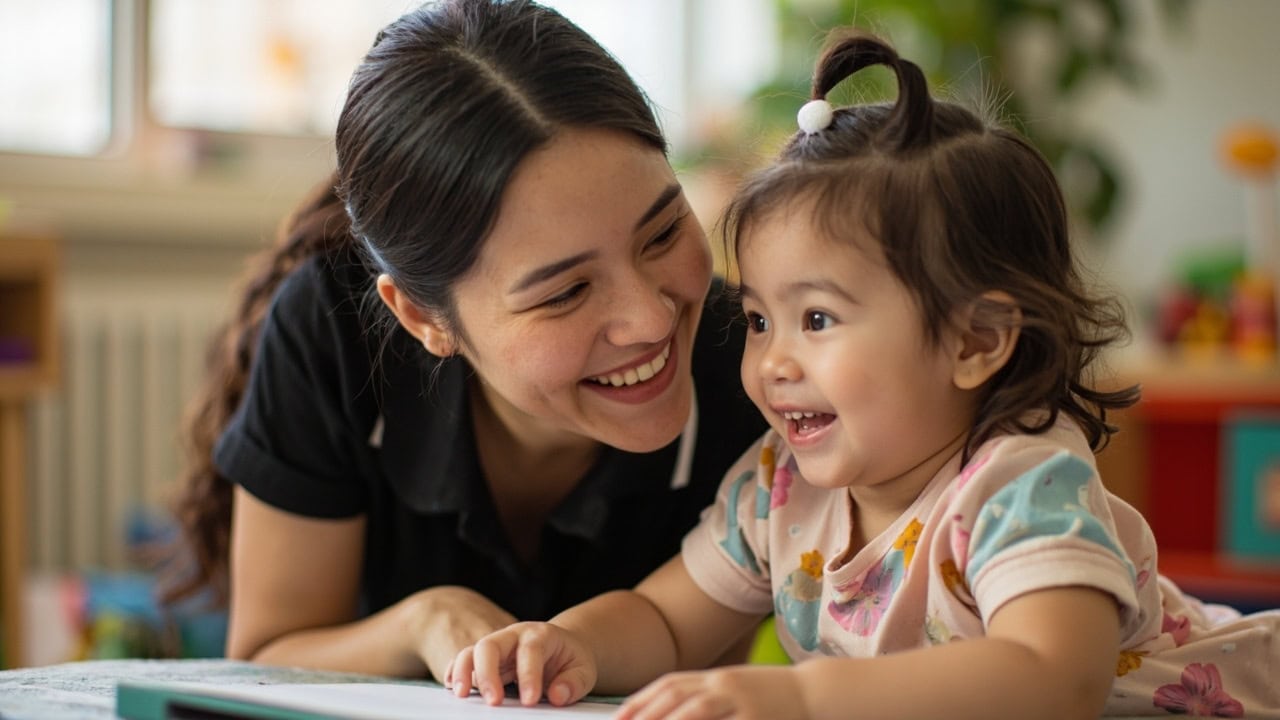
There is a particular kind of conversation that happens at the end of a long day. You have just picked up your child from care. The caregiver hands you over with warmth and tells you something like this: “Today she was really into the nested cubes—she spent twenty minutes working out how they fit together. You could see her frustration when they wouldn’t stack just right, and then that breakthrough moment when she got it.”
You nod. You smile. This is wonderful information. Your child is problem-solving. Your child is persisting. Your child had a breakthrough.
But somewhere in that same moment, a quieter question surfaces—a question you may not even voice aloud because it feels ungrateful to ask.
Why am I only learning this now? Why didn’t I know that was happening? Why couldn’t I have seen that?
Here is what I want you to understand: this is not a failing. This is not parental inadequacy. This is a gap in a skill that you were never taught—and that you can absolutely learn.
This is what we call developmental observation literacy at EduNanny Singapore. And it is one of the most genuinely transformative capacities a parent can develop.
The Gap Between Love and Understanding
Most of us enter parenthood with a kind of faith. We believe that love will be enough. That instinct will guide us. That the bond we share with our child will translate naturally into understanding.
And love is the foundation—it is everything. But understanding is something else. Understanding is a discipline. It is a practice. It is a set of frameworks that can be learned, refined, and deepened over time.
What I have observed, working alongside families in Singapore for years, is this: parents desperately want to be competent interpreters of their children’s signals. They want to walk into a room and know what their child’s play means. They want to understand why their toddler sometimes regresses after a developmental leap. They want to recognize the subtle cues that indicate their child is securely attached, or that their child is processing something challenging, or that a new developmental window has opened.
But they have been given no map.
They receive caregiver reports—which are valuable, but which create a strange dynamic. You become dependent on someone else’s eyes to tell you who your child is being in your absence. And there is a vulnerability in that. A quiet anxiety that asks: What am I missing? What is happening when I’m not there? Is my child truly okay, or does that okay-ness exist only in the version of them that caregivers see?
Observation Is a Learnable Skill
Let me be direct about something important: observation is not a mysterious gift that some people have and others do not. It is a learnable skill.
The frameworks that trained caregivers use—frameworks developed through study, through careful attention, through years of watching children across developmental stages—are not secrets. They are structures. And structures can be shared.
When we teach parents to observe developmentally, we are not replacing your love with analysis. We are not turning parenthood into a clinical exercise. We are doing something far more profound.
We are returning to you a capacity that was always yours, but that got buried under the noise of daily life, under the guilt that tells you you’re not doing enough, under the expectation that you should just know.
You can learn to see what caregivers see. Not identically—the intimate knowledge that comes from hours of daily care is irreplaceable. But meaningfully. In ways that give you confidence. In ways that let you walk into pick-up and understand what has been happening, not because someone told you, but because you can read the signs yourself.
What to Look For: Reading Your Child’s Development
Observation becomes real only when we make it concrete. Here is what this looks like in practice—across play, communication, and sensory experience.
The Language of Play
Consider what is actually happening when your child plays.
When your eighteen-month-old pours water from one cup to another, over and over, with increasing precision—they are not just entertaining themselves. They are developing fundamental concepts of volume, cause and effect, and hand-eye coordination.
When your three-year-old creates elaborate scenarios with stuffed animals—a bear who needs to go to the doctor, a parent who has gone away and must return—they are processing attachment, working through separation anxiety, building narrative thinking, and rehearsing emotional regulation.
When your four-year-old builds a tower that keeps falling and keeps rebuilding it, choosing again and again to rebuild after failure—you are watching persistence take root. You are watching resilience take shape in real time.
These are not guesswork. These are documented developmental trajectories. When you learn to read them, play stops being a break from learning and becomes learning itself. You stop thinking, “My child just plays all day.” You start thinking, My child is working.
The Communication Architecture Beneath Words
Communication milestones are one of the areas parents most often miss—and they are not the obvious ones. The obvious ones are words. First words, growing vocabularies, sentences. These we celebrate. But beneath words, there is a vast architecture of communication that develops in the first three years.
- At three months: When your baby watches your face while you speak, then looks away, then looks back—this is turn-taking. This is the beginning of conversational reciprocity.
- At seven months: When your baby points at something and looks back at you to share the experience—this is joint attention, one of the foundational skills for social learning and language development.
- At around eighteen months: When your toddler uses a word and adjusts their tone when you don’t respond the way they expected—this is repair. This is communication as a dynamic process, not a simple output.
When you learn to notice these signals, you realize that communication development is happening in every single interaction. With time, you can learn to hear it yourself.
Sensory Processing: A Window You May Not Have Known to Look Through
Sensory processing is one of the most underappreciated windows into child development. Children experience the world through their senses in ways that are far more active and meaningful than we typically understand.
Deep pressure seeking: When a toddler repeatedly wants to be held tightly, enjoys being wrapped in blankets, or presses against furniture—this is often a child whose sensory system is seeking registration. They need more sensory input to feel grounded.
Texture sensitivity: When a child consistently avoids certain textures in play—pulling away from sand, slime, or finger painting—this is information. It tells you something about their sensory thresholds and preferences.
Movement craving: When a child constantly seeks spinning, swinging, or rocking—this tells you something about their vestibular processing and their need for proprioceptive input.
None of these are problems to be fixed. But all of them are information to be understood. When you learn to read sensory signals, you begin to understand why your child behaves the way they do in certain environments. You understand why they meltdown in a noisy mall but thrive in a calm, predictable setting. Observation becomes the language through which you decode your child’s experience.
What Developmental Signals Tell You About Your Child’s Care Environment
Here is the connection that most parents never make: the developmental signals your child shows you are produced by the environment they spend their time in.
When a child shows secure attachment behaviors—seeking comfort appropriately, separating without catastrophic anxiety, returning to play after reassurance—this is not random. This is the result of consistent, responsive, attuned caregiving.
When a child shows rich symbolic play, complex social negotiation, sustained attention and curiosity—this is not coincidence. This is the product of an environment that values and supports developmental engagement.
This means that your observational skills are not just a parenting tool. They are a childcare evaluation tool. When you know what developmental health looks like, you can walk into a care environment and begin to read it:
- You can see whether children are engaged or merely occupied
- You can see whether caregivers are responding to children’s signals or simply managing behavior
- You can see whether the environment is producing the kinds of play, communication, and development that you want for your child
Parents who observe developmentally do not become anxious or critical. They become discerning. They can tell the difference between a care setting that merely keeps their child safe and one that actively nurtures development. They can ask better questions. They can recognize quality when they see it.
Signs of Quality Childminding and How to Evaluate Your Options
If observation skills help you evaluate care quality, it helps to know what you are looking for.
What a Developmentally Attuned Care Environment Looks Like
- Responsive interaction: Caregivers who narrate what they are doing, wait for children’s responses, and adjust their approach based on the child’s signals—not just on a schedule
- Unhurried engagement: Children who are not rushed from one activity to the next; time allowed for deep play and sustained attention
- Sensory richness: Environments that offer varied textures, movement opportunities, and sensory experiences—not just screens or passive entertainment
- Attachment-aware transitions: Consistent routines for arrivals and departures; caregivers who help children regulate during separation
- Play as the curriculum: Adults who understand what play is teaching and who extend learning through thoughtful questions and materials
Why Caregiver-to-Child Ratios Matter
In infant care, the number of children per caregiver is not an incidental detail. It is a structural guarantee of the kind of responsive, attuned attention that produces the developmental signals we have been discussing. An environment with too many children per caregiver cannot produce the same quality of observation, the same depth of attunement, or the same developmental richness. This is why ratios matter—not as a box-ticking exercise, but as a foundation for everything else.
Questions to Ask During Care Visits
- How do caregivers respond when a child is frustrated or upset?
- What does a typical day look like—and does it include unstructured play time?
- How do you communicate with parents about what the child is learning, not just what they ate or slept?
- What is your approach when a child shows signs of developmental challenge?
- What training have caregivers received in child development?
Red Flags Worth Noticing
- Children who are consistently passive—watching screens or being managed rather than engaged
- Caregivers who cannot describe what individual children are working on developmentally
- Ratios that make responsive, attuned attention structurally impossible
- Environments where sensory input is limited or chaotic without intentional modulation
EduNanny Singapore’s Approach: Building Your Capacity, Not Dependency
EduNanny Singapore participates in the ECDA Childminding Pilot, operating within a structured framework designed to make quality childminding accessible to Singapore families. We offer both home-based pathways and community or centre-based pathways, recognizing that families have different needs, schedules, and preferences for how care fits into their lives.
But here is what sets us apart philosophically: we are not trying to keep you needing us. We are trying to equip you to see clearly.
Most childcare services position parents as recipients of reports. We believe parents should be partners in observation—people who can verify, question, and ultimately trust because they understand what they are seeing.
Our caregiver-to-child ratios for infant care are structured to allow the depth of attention that developmental observation requires. Our fee structures are designed to make this level of quality care achievable, and we accept CDA and Baby Bonus contributions because we believe financial considerations should not be a barrier to the kind of care that shapes the first thousand days.
We have also implemented transparency measures including CCTV access in deployed locations, because we believe trust is earned through openness, not assumed. When you can see what is happening in real time, observation becomes a shared practice. Your caregiver’s eyes and your eyes work together.
Addressing Common Concerns
“I don’t have time to learn all this—I’m already overwhelmed.”
This is understandable, and we do not expect you to become a developmental specialist. Our goal is not to add to your mental load but to replace uncertain wondering with confident knowing. The shift happens gradually. You begin by noticing more, and understanding follows.
“What if I still feel like I’m missing things?”
Perfection is not the goal. Fluency is. Every parent who has developed observation skills describes the same shift: the moment when observation stops feeling like guesswork and starts feeling like fluency. You will still value caregiver input—but as confirmation of what you already understand, not as revelations of what you missed.
“Is this just making parents more anxious?”
We are not trying to create a world where parents are endless analyzers of their children. We are trying to create informed, confident, connected parents. The difference is that informed observation reduces anxiety. When you know what you are looking at, you worry less about what you might be missing.
Thomas: Extending Human Guidance
We have developed Thomas, our AI chatbot companion, as part of the EduNanny ecosystem. Thomas is not here to replace human guidance. It is here to extend it—to give parents instant access to developmental frameworks, to help interpret the signals you are seeing, to answer questions about what certain behaviors might mean. Because observation without interpretation can be as disorienting as no observation at all. Thomas helps you move from noticing to understanding.
You Are Becoming the Person Who Understands
Let me return to where we began, because the circle needs to close.
The next time a caregiver tells you something your child did that you didn’t see, I want you to feel something different.
I want you to feel curiosity, not inadequacy.
I want you to think: I am learning to see this. I am building the eyes to read what is happening. And one day, I will walk into pick-up and I will know what I am seeing before anyone tells me—and I will have the frameworks to understand what it means.
You are not just the person who loves your child. You are becoming the person who understands them. These are not separate roles. They are the same role, deepened.
The love is the foundation, but the understanding is what lets that love express itself with wisdom. When you know what your child’s play means, you respond to their play differently. When you know what your child’s frustration signals, you hold their frustration differently. When you know what your child’s body is telling you through movement and sensory response, you create environments that support them differently.
The first thousand days matter more than we sometimes allow ourselves to admit. Not because later development doesn’t matter—it absolutely does. But because the first thousand days set trajectories. The attachment patterns formed, the neural pathways reinforced through play and sensory experience, the language foundations built through responsive interaction, the social-emotional skills emerging through safe exploration—they are the architecture of a person.
Parents who understand this—who observe developmentally, who know what they are looking at, who are not dependent on others to tell them if their child is okay—these parents are the ones who shape that architecture most effectively. Not perfectly. No parent does anything perfectly. But with intention. With understanding. With the kind of clarity that comes from really seeing.
EduNanny Singapore exists at the intersection of care and education. We are not choosing one or the other. We believe that the best infant care is developmentally attuned. We believe that the best parent partnership is one that builds parental capacity, not parental dependency.
We believe that every family in Singapore deserves access to childminding that treats their child’s first thousand days as the extraordinary, unrepeatable developmental window that it is.
The gap you feel at pick-up time—the quiet question of “why didn’t I know?”—is not a failure. It is a door. Behind it is a set of skills, frameworks, and understandings that are waiting for you to claim them.
We are here to teach you how to see. And we believe that once you do, you will never look at your child the same way again—because you will see the full depth of who they already are.
If this approach to childminding resonates with you, we invite you to connect with EduNanny Singapore to learn more about our ECDA Childminding Pilot programs, our observation-based approach, and how we partner with parents to build developmental understanding alongside quality care.