Beyond Supervision: How Quality Childcare Builds Your Child’s Identity
The Hours That Shape a Child
This is not a question about safety. You already know your child is safe. You have chosen well, and the people caring for her are worthy of that trust.
What sits in your chest, beneath the logic, is something deeper. It is the question of every working parent who has driven home wondering whether the hours apart are a gap to be endured or a garden to be tended.
Here is what we want you to know: those hours are not lost time. They are, in fact, some of the most formative hours of your child’s life—not because they replace what you give her, but because they add something the home alone cannot.
In a quality childcare environment, a child does not simply pass time. She builds herself.
The Architecture of Identity: What Developmental Science Tells Us
The brain forms connections at a pace it will never reach again. The body learns to move, to balance, to speak, to gesture meaning. Beneath all of this measurable development, something quieter is happening: the child is discovering that she exists. That she has preferences, reactions, ways of engaging with the world that are hers and no one else’s.
She is constructing a self—and this construction does not happen in isolation. It happens in relationship.
Developmental psychologists across decades have shown us that a child’s sense of self emerges through the responses she receives. When a caregiver notices that she is fascinated by the way sand flows, and offers her more sand, more time, more moments of shared attention around that fascination, something consolidates. She begins to understand: I am the kind of person who notices things like this.
When a caregiver sees that she needs quiet before she can join a group, and gives her that quiet without rush, without judgment, something else forms. She learns: my inner world is real. It matters. Someone is paying attention to it.
This is not sentiment. This is the architecture of identity, built synapse by synapse, moment by moment, in the early years when the foundation is being poured.
What Quality Childminding Looks Like in Practice
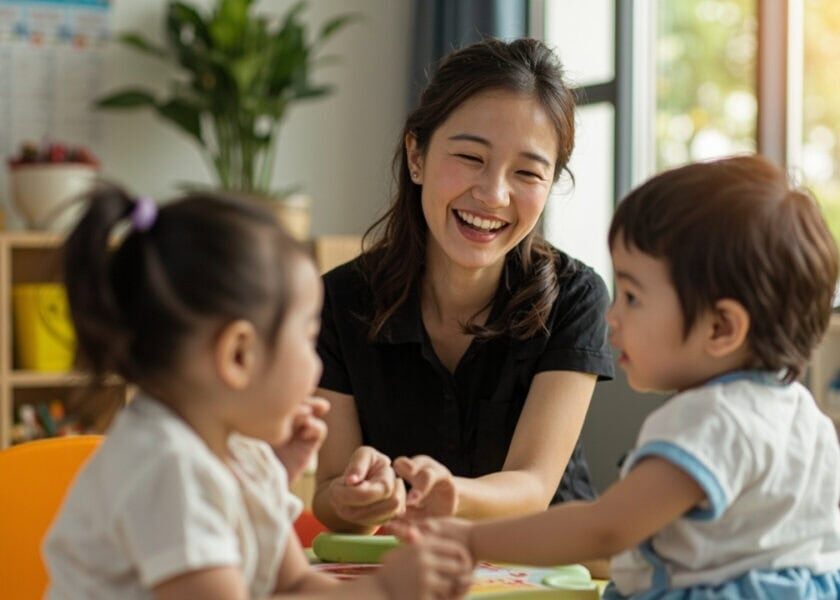
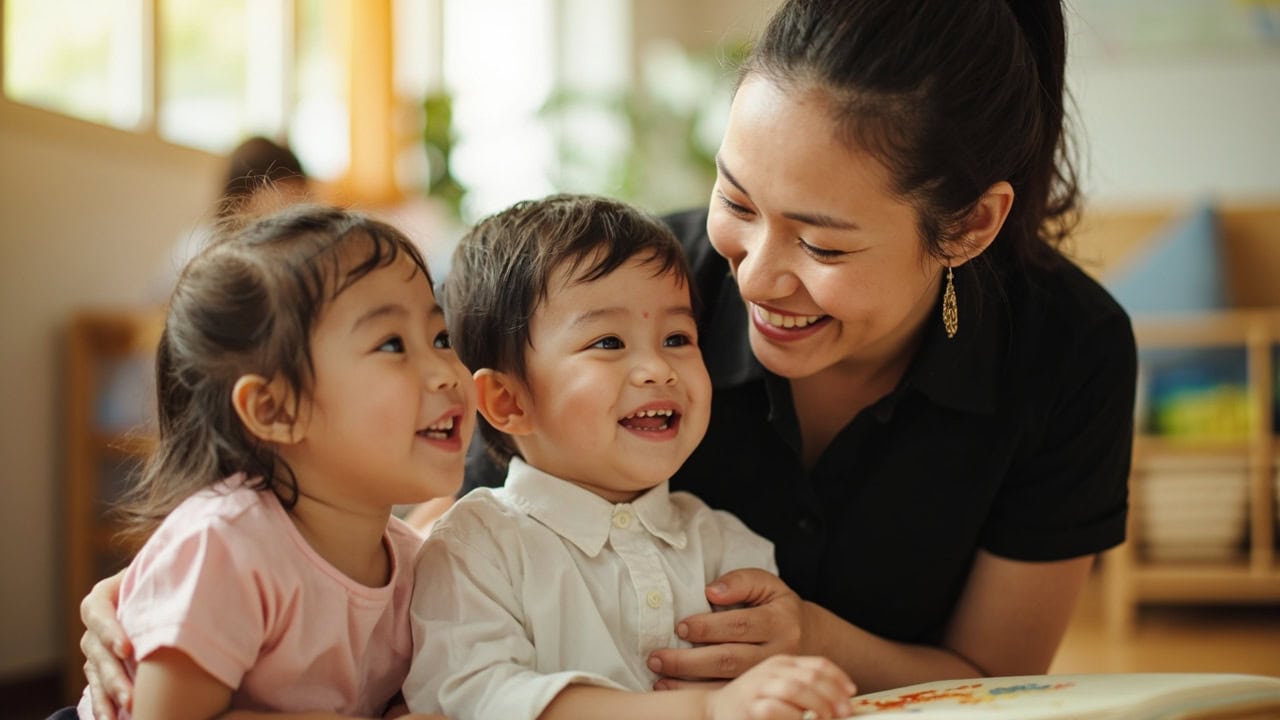
We believe that quality childcare is not a matter of finding someone to watch your child while you work. It is a matter of finding people who will watch your child with you—who will notice what makes her light up, what makes her pause, what she returns to when given free choice, how she solves problems, how she connects with others.
The trained caregiver does not simply respond to a child’s immediate needs. She observes, reflects, and responds to the emerging person beneath the immediate need.
She notices that this child, every time she is frustrated, goes still rather than loud. That tells us something about her temperament. We do not try to change it. We honor it. We work with it. We give her space to process in her own way, and we help her find words and strategies that match her inner temperament.
This is how a child learns that her way of being in the world is valid—not that it must be corrected, but that it can be understood and supported.
Why Small Ratios Matter
In our model, this kind of observation is not left to chance. It is embedded in how we select and train our caregivers, in the ratios we maintain, and in the systems we have built for communication between caregiver and parent.
Under the ECDA Childminding Pilot, which EduNanny participates in, we maintain up to one caregiver for every three infants. This is not a regulatory floor. This is a philosophy made tangible.
Three infants, three distinct personalities, three emerging selves—and one caregiver whose full attention can be divided meaningfully between them. Not scattered, not overwhelmed. Present.
A ratio of one to three means that when your daughter reaches for the wooden spoon during a cooking activity, the caregiver can see that this is not random. She reaches for the same spoon every time. She holds it a certain way. She is drawn to tools, to precision, to the act of making something happen in the world.
The caregiver notices this. She offers her the next step—stirring, pouring, measuring. She watches how your daughter approaches the task. Later, she shares this with you: I think your daughter might be an engineer. She approaches everything with this kind of methodical curiosity. I wanted you to know, because I think it is part of who she is.
This is the difference between being cared for and being truly known.
The Partnership Between Caregivers and Parents
The cared-for child has her physical needs met. The truly known child has her inner world reflected back to her, through attentive observation, responsive caregiving, and a genuine partnership between the professional who spends the waking hours with her and the parent who knows her in an entirely different way—at home, in the evenings, on weekends.
Both knowledge bases matter. Both are partial. Together, they form a more complete picture of the person your child is becoming.
We think of our relationship with parents not as a service transaction but as a shared practice of discovery. The caregiver observes during the day. She documents. She communicates. She uses whatever tools are in place—digital updates, written notes, face-to-face conversations at pickup—to give you a window into what she has seen.
The child’s way of playing with blocks at childcare may be different from her way of playing with blocks in your living room. The child who is bold at school may be timid at the playground. These are not contradictions. They are facets. And it takes both caregivers and parents, working together, to see the whole jewel.
Making the Choice: Questions Worth Asking
Thousands of parents in Singapore make this choice each year—with care, often with anxiety, always with love. They want their child to be known. Not just supervised. Not just entertained or fed or kept occupied. Known.
Here are questions that may help you think through what quality care actually looks like:
- Who is caring for my child, and what training have they received? Beyond certifications, what is their understanding of child development and identity formation?
- What is the caregiver-to-child ratio? Is it designed for safety alone, or for the kind of attentive observation that reveals a child’s emerging self?
- How does the caregiver communicate what they observe? Is it data and reports, or stories and insights that help you understand who your child is becoming?
- What happens at pickup? Do you receive a summary of meals and naps, or windows into your child’s inner world?
- How does the arrangement invite you into partnership? Is childcare something that happens to your child, or a shared practice of discovery that includes you?
The answers to these questions may matter more than the answers to questions about curriculum or facilities. Because the person your child is becoming is being shaped in the small moments, in the quality of attention she receives, in the way her emerging self is reflected back to her.
Where This Path Leads
The path leads somewhere important. It leads to a child who, by the time she is ready for school, does not just have a list of skills. She has a sense of self.
She knows, in her body and her bones, that she is someone who notices things, who persists, who feels things deeply, who has preferences and opinions and a way of moving through the world that is hers.
This is not vanity. This is the foundation of everything that comes later.
Confidence is not performance. It is the quiet knowledge that your inner experience is real and valid. Resilience is not toughness. It is the flexibility that comes from knowing you can adapt because you know who you are.
School readiness is not just academic preparation. It is the willingness to engage, to try, to fail and try again, rooted in the belief that you have something to offer.
A child who has been truly seen by attentive caregivers in the early years carries that seeing with her. She walks into a classroom not as a blank slate but as a person with preferences, with curiosities, with a track record of being understood. She is ready to learn not because she has been drilled, but because she knows herself as someone who can learn.
A Quiet, Profound Commitment
When you choose quality childcare, you are choosing caregivers who understand that they are not raising a child in your place. They are joining you. They are extending the work you have begun at home. They are adding their observations to yours, their understanding to yours, their love to yours.
Together, you are mapping the landscape of your child’s becoming.
This map, built over months and years of attentive observation and honest communication, will serve your child long after the childcare years are over. She will carry it with her into school, into relationships, into the long unfolding of her life. She will be someone who knows herself, because someone was paying attention.
This is what the best childcare can be: not just supervision, not just safety, not just a convenience for working parents. But a quiet, profound act of seeing. A recognition of the person already present in your child, waiting to be discovered. A daily practice of honoring the self your child is quietly, persistently, and beautifully building.
You are already asking the question. You ask it every time you stand at pickup, searching your child’s face for something new. You ask it every time you wonder who she is becoming in the hours you cannot see.
We have an answer for you, though it is not really an answer. It is a commitment:
We will pay attention. We will notice. We will share what we see. And together, with patience and care and the kind of love that asks questions rather than assuming answers, we will help you know your child as she truly is.
That is what EduNanny Singapore is for. That is what the best childcare can be. And that is the gift we want to offer every family who walks through our doors, or invites us into their homes, or trusts us with the most important work there is: helping a small person discover that she is, and who she might become.
If you are ready to learn more about how EduNanny Singapore’s approach to infant care and childminding can support your child’s becoming, we would be glad to start a conversation with you.
EduNanny Singapore provides development-focused infant care and childminding services for families who believe the early years matter. Learn more about our approach or read about our team.