What Your Child Brings Home Is the Evidence That Matters
“`html
The Question That Keeps Singapore Parents Awake at Night
There is a question that keeps you up at night. Not as a dramatic crisis, but as a quiet hum. It lives in the moment you drop your child at childcare and again in the moment you pick them up. It is not panic. It is something softer and more persistent: the wondering.
Did I choose well? Is this right for my child? Is my child thriving here, or merely tolerating?
Most parents in Singapore have felt this. You have done the research. You have toured the centres. You have asked the questions on forums, checked the accreditations, weighed the options with the seriousness that only parenthood demands.
And yet, there remains that small, persistent doubt. Not because you are uncertain about your child. But because you have not yet trusted yourself to believe what your child is already showing you.
That changes today.
Because your child is not just the recipient of childcare. Your child is the evidence.
In This Article
- Why your child’s daily behaviour is the most reliable indicator of care quality
- Practical signs that show whether your child is thriving or merely surviving
- How to trust your own observations instead of seeking endless external validation
- What quality infant care in Singapore actually looks like — and how to recognise it
Your Child Is Not Just Experiencing Care. Your Child Is Evaluating It.
This is not a poetic statement. It is a practical truth that experienced caregivers, early childhood educators, and developmental specialists have understood for decades.
The most sophisticated assessment of any childcare arrangement does not happen in the tour, in the credentials folder, or in the peer review. It happens in the small, daily, observable moments that your child brings home — in their language, their mood, their play, and their behaviour.
These are not subtle signals that only experts can read. They are real, readable, and reliable indicators of whether your child is genuinely thriving or merely surviving.
The problem is that most parents have been taught to look outward for validation. You have been trained to seek permission from external authorities — the centre director, the accreditation body, the glowing testimonials — before trusting what you observe in your own child.
But your child has been telling you something all along. The question is whether you have been listening with the confidence it deserves.
Observation is not anxiety. Observation is empowerment. When you learn to read your child’s daily evidence — their language, their play, their emotional regulation, their appetite, their sleep — you gain something no tour can give you. You gain the ability to assess quality in real time, continuously, without needing anyone’s permission to trust your own eyes.
You become the expert on your child. And that expertise is not a burden. It is a gift you give yourself and your child.
What Thriving Actually Looks Like
Let us begin with what thriving looks like — not the curated, camera-ready version, but the real version. The one that shows up in a two-year-old’s messy hands after a morning of play, in the half-sentence they bring home, in the way they move through your door.
Language That Travels Home
When a child is in a quality care environment, something shifts in how they show up at home. They are not depleted. They are curious. They bring back stories — sometimes fragmented, sometimes tangled, but present.
They have language for what happened. Listen for these kinds of statements:
- “Teacher said we planted seeds.”
- “We sang the blue song today.”
- “Mia fell down and cried.”
- “The caterpillar went on the leaf.”
The specific details vary by age, but the pattern is consistent: they have absorbed something of their day, and it lives inside them enough to share. This is not random chatter. This is your child telling you that something meaningful happened — that they were present, engaged, and processing their world.
Play That Re-enacts the Day
A settled child will re-enact pieces of their day. Caregiving rituals with dolls. Conflicts from the playground resolved in miniature. Songs hummed during a walk. Scenes from books revisited with action.
This is not random behaviour. This is your child processing, integrating, and telling you through play exactly what kind of environment they have been in.
When a toddler sets up a mini classroom with their stuffed animals and narrates “Miss Sarah said good morning,” they are not just playing. They are showing you that they felt safe enough to absorb the routine, to internalise the relationships, to make meaning of their day.
Watch what they choose to replay. The stories they tell through play are often the stories that mattered most.
Emotional Tone Upon Return
A child who is genuinely thriving in their care environment tends to return home in a particular state. They are tired but not depleted. They may be hungry — a good sign that they were too engaged to stop for a snack. They may be clingy in a transitional way, or they may be energised and eager to share.
What you are looking for is not perfection. Children have hard days. They get tired. They get hungry. They get overstimulated. What you are looking for is a pattern — a consistent emotional signature that tells you your child was engaged in something worthwhile, not just occupying time.
The Child Who Wants to Go Back
Perhaps most importantly: the child who wants to go back is telling you something specific.
Not every child will say it with words. Toddlers and infants communicate in other ways. But when a child moves toward their childcare environment with curiosity rather than dread, when they settle within minutes of arrival, when the morning goodbye becomes a quick, confident wave rather than a tearful negotiation — this is data.
This is your child telling you, in the clearest language they have, that they feel safe there, that they are known there, that the environment meets something in them.
Consider what this means in practical terms. Your child has been in that environment all day. They have experienced the rhythm of care, the quality of attention, the emotional tenor of the space. And their response — that willingness to return, that ease at goodbye — is their evaluation of all of that. It is honest, unfiltered, and continuous.
A word on resistance: separation anxiety is normal at certain developmental stages. But there is a difference between the expected difficulty of transition and persistent, unresolved resistance. A child who screams every morning, who cannot be calmed within a reasonable settling period, who comes home consistently dysregulated, flat, or withdrawn — this is also data. This is your child telling you that something is not quite aligned.
The performance may be beautiful. The environment may look impeccable on paper. But your child is not performing. Your child is showing you what is real.
For Parents Still Choosing — And Those Who Have Chosen
If you are still in the research phase, this question becomes even more important. Because you are not yet reading daily evidence. You are making a decision based on limited information.
Here is what we suggest: shift your evaluation criteria. Instead of asking “Which centre has the best credentials?” ask “What would I be looking for in my child’s behaviour that would tell me this is working?”
Then, after you make your choice, pay attention. Trust what you see in the weeks and months that follow. Because the tour tells you what a centre wants you to see. Your child’s behaviour tells you what is actually happening.
When visiting centres, trust your instincts. If something feels off, pay attention — you do not need to articulate why yet. Your discomfort is data. Ask about caregiver ratios; smaller numbers mean more individual attention. Ask what a typical day looks like; you want specificity, not vague promises of “learning” or “development.” Watch how caregivers interact with children during your visit — are they genuinely engaged or going through motions?
Inquire about communication. How will the caregiver share what your child experienced during the day? Will updates be genuine and specific? And consider the settling process: what support do they offer during transition? How do they communicate with you during adjustment?
How Quality Care Shows Up in Daily Life
For parents in Singapore navigating infant care and childminding options, here are the concrete indicators that your child is in an environment where they are genuinely known and supported.
Signs of a Thriving Child
| Area | What Thriving Looks Like |
|---|---|
| Language | Brings home fragments of the day, names caregivers, shares specific moments |
| Play | Re-enacts pieces of their day, processes experiences through imagination |
| Emotional Tone | Returns home engaged but not depleted, curious rather than flat |
| Separation | Settles within reasonable time, shows willingness to return |
| Sleep and Appetite | Sleep patterns relatively consistent; eats well when hungry |
| Development | Continues to meet milestones; caregiver notices and communicates progress |
Signs That Warrant Attention
- Persistent resistance to going to care that does not resolve over time
- No stories, no language about the day, no engagement with caregivers
- Withdrawal, flatness, or significant behavioural changes at home
- Regression in developmental milestones without clear explanation
- Caregiver cannot tell you anything specific about your child’s day
These signs do not always mean the care is poor. Sometimes children need time to adjust. But when patterns persist, they are worth investigating — not with anxiety, but with the confidence that you are your child’s primary reader.
EduNanny Singapore: Built to Be Worthy of Your Child’s Evidence
Not every parent has access to the kind of environment that makes this kind of observation reassuring. This is where EduNanny Singapore enters the picture — not to replace your role as your child’s primary reader, but to earn their trust and yours so thoroughly that your child becomes, as you already know, your most reliable guide.
The Philosophy Behind the Approach
EduNanny, a service under the BUTLER banner, is part of Singapore’s ECDA Childminding Pilot. It was built on a simple, evidence-based premise: that infants and young children develop best in environments with high adult attunement — environments where the ratio of caregivers to children allows for genuine responsiveness, not just supervision.
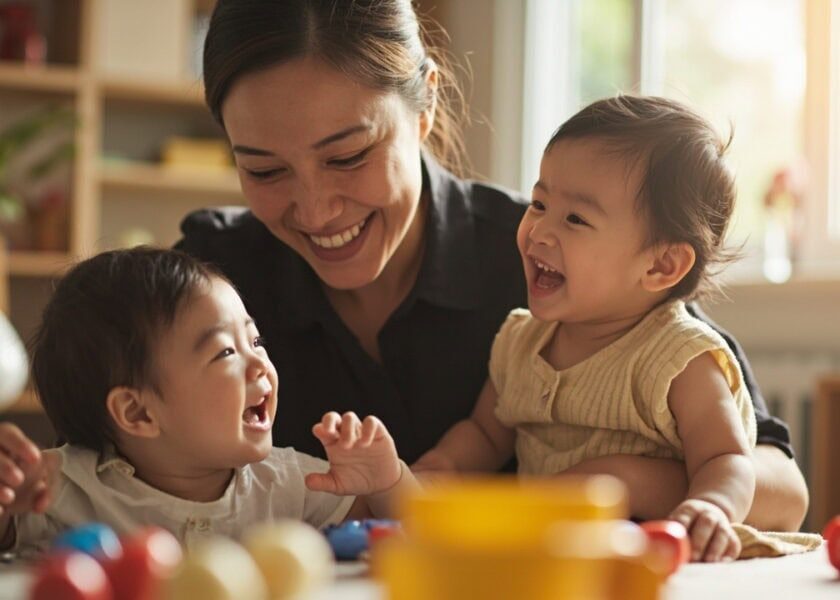
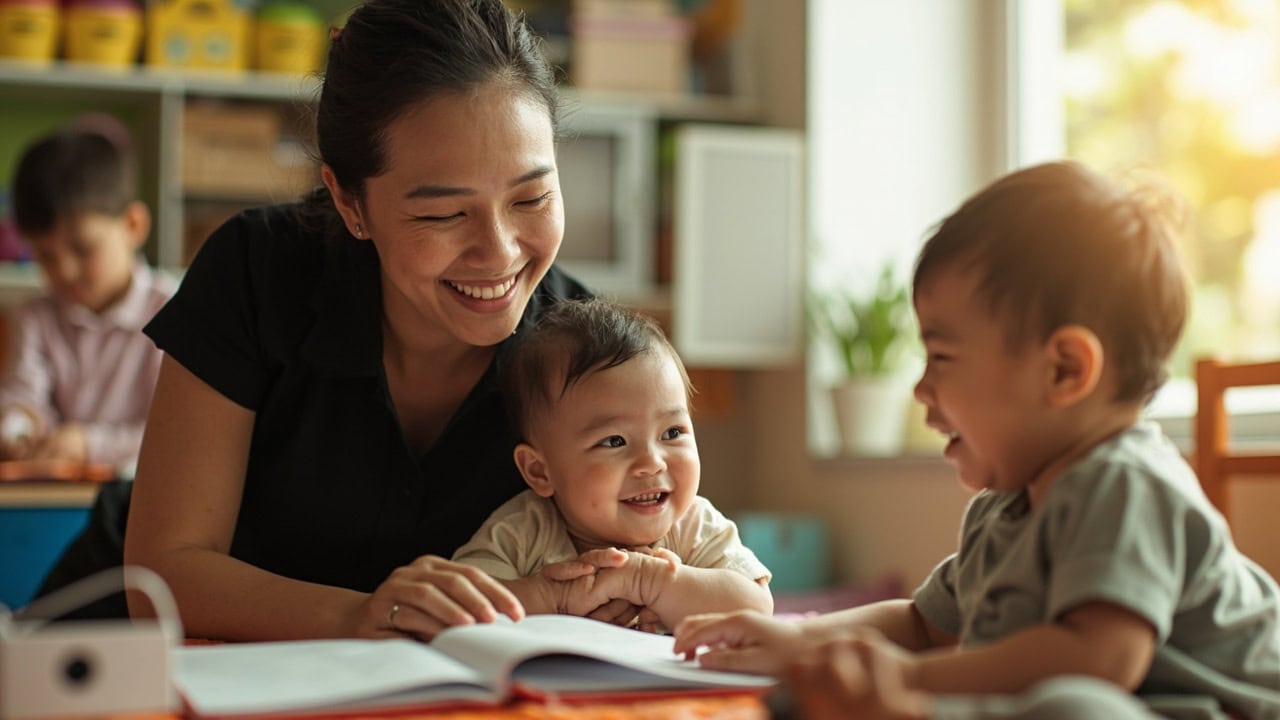
EduNanny operates with ratios that allow your child to be truly known. In the infant care setting, ratios go up to one caregiver to three infants. This is not a marketing claim. This is a structural commitment to the kind of attention that allows a caregiver to notice when your child is slightly off-colour before it becomes a fever, to respond to a developmental milestone as it emerges, to know your child’s rhythms, preferences, and temperament the way you do.
Why Ratios Matter
Because the evidence is clear: the quality of the relationship between caregiver and child is the single most important predictor of positive developmental outcomes. Not the curriculum. Not the facility. Not the price point. The relationship.
And relationships at this scale require time, attention, and the kind of ratios that make individual attunement possible.
When a caregiver can focus on three infants rather than six or eight, something shifts. They notice the half-smile when a new skill emerges. They catch the moment a child is about to tumble before it happens. They remember that your child prefers the blue cup on Tuesday mornings. These small attunements accumulate into something larger: a sense of being known, which is the foundation of trust and security.
Flexible Pathways for Singapore Families
- Monday to Friday care blocks structured around working parents’ realities
- Fees within the pilot structure designed to be accessible
- CDA and Baby Bonus schemes integrated into the payment process where available
Transparency as Partnership
Parents deserve to know what happens in the hours they are not present.
EduNanny provides regular communication updates — the kind that go beyond “had a good day” to share genuine observations about your child’s development, mood, and participation. Where deployed, CCTV measures offer an additional layer of openness, not as surveillance, but as partnership.
You are not handing off your child to a black box. You are entering into a relationship with people who believe you deserve to see what they see.
Trust What Your Child Shows You
Your child shows up at your door every day carrying evidence. In their language. In their play. In the way they sleep. In the way they ask, or do not ask, to go back. In the way their developmental milestones unfold. In the way they look at their caregiver and then look at you.
Your child is not just experiencing care. Your child is evaluating it, continuously, in the honest, unfiltered way that only children can.
Your job is not to second-guess what you see. Your job is to trust it.
And if what your child shows you is curiosity, language, play, and the quiet willingness to return — then you have your answer. That is not coincidence. That is not luck. That is evidence. And it belongs to you.
Parental intuition is often dismissed as anxiety. This is a mistake. Your intimate knowledge of your child is data. Your observation of patterns over time is expertise. The question is not whether to trust yourself — it is whether you have been taught to trust yourself.
The best childcare does not make parents dependent on external validation. It makes parents so confident in their own observations, so attuned to their own child, that they become the most qualified person in the room to assess quality.
So when you pick up your child tonight, watch them. Listen to what they say. Notice how they move through the door. Ask yourself what they are showing you.
You already know.
If you are ready to find care that earns your child’s evidence — and yours — EduNanny Singapore welcomes the conversation.
Explore more about EduNanny’s approach to childminding in Singapore, or learn more about the EduNanny team.
“`