Baby Turn Taking at 7 to 12 Months: Echo, Name or Add One Detail
Match your reply to your baby’s sound, gaze or reach. A simple three-part pattern and worked ball-play example make early turn taking easier to enjoy.
When your baby makes a short sound or looks towards an object, should you copy the sound, name the object or add more words? For babies aged 7 to 12 months, all three can fit a responsive exchange. We can keep it simple: match one response to what your baby is offering, then pause so your baby can answer in their own way.
This guide is for babies aged 7 to 12 months. HealthHub notes that babies at 7 to 9 months may babble certain syllables, while those at 11 to 12 months may copy lip movements when an adult talks or sings. These are possibilities, not deadlines, and babies communicate in different ways. HealthHub’s infant development guide
This responsive back and forth is often called serve and return. Your baby contributes through a sound, gaze, movement or exploration. You notice it and return something connected. The exchange can last a few seconds, so it needs no special time or performance. Harvard’s explanation of serve and return
Start with your baby’s cue
A sound does not always mean that your baby wants you to talk. Your baby may also be looking towards a toy, reaching, moving attention between two objects or pausing after you name something. These are all opportunities to begin with what your baby is doing rather than deciding in advance what you want to teach.
Notice the cue and make one connected response. If your baby makes a short sound, you might return a similar sound. If your baby looks towards a cup, you might say its name. If your baby reaches towards a large toy, you might name the toy and keep it available. Harvard’s discussion explains that responsive interaction works best when the adult follows the child’s exploration or vocalisation and notices what the child serves. Harvard’s guide to following the child’s lead
Then give your baby time to process what happened. Children need moments without constant interaction, and a quiet pause is still part of a good exchange. You do not need to fill every silence or keep the back and forth going.
Choose echo, name or one detail
When you are unsure what to say, choose the smallest reply that fits your baby’s current cue. These are practical options rather than a fixed protocol or a way to assess development.
- Echo a sound. If your baby says something like “ba”, you can return a similar “ba”. Your baby does not need to repeat it exactly. The connected sound shows that you noticed what your baby offered.
- Name the shared focus. If your baby looks towards a toy, say its name, such as “Ball”. This brings your baby’s object into the exchange without requiring a full explanation.
- Add one detail. If your baby keeps looking, vocalising or reaching, add one piece of information, such as “Big ball” or “Red ball”. Do not continue adding words automatically.
Keep this prompt in mind: Sound? Echo it. Shared focus? Name it. Still engaged? Add one detail. Then stop and notice. A nod or a simple acknowledgement can accompany any choice. You do not need to explain everything that you or your baby are doing. Harvard’s examples of responsive responses
Try a worked ball exchange
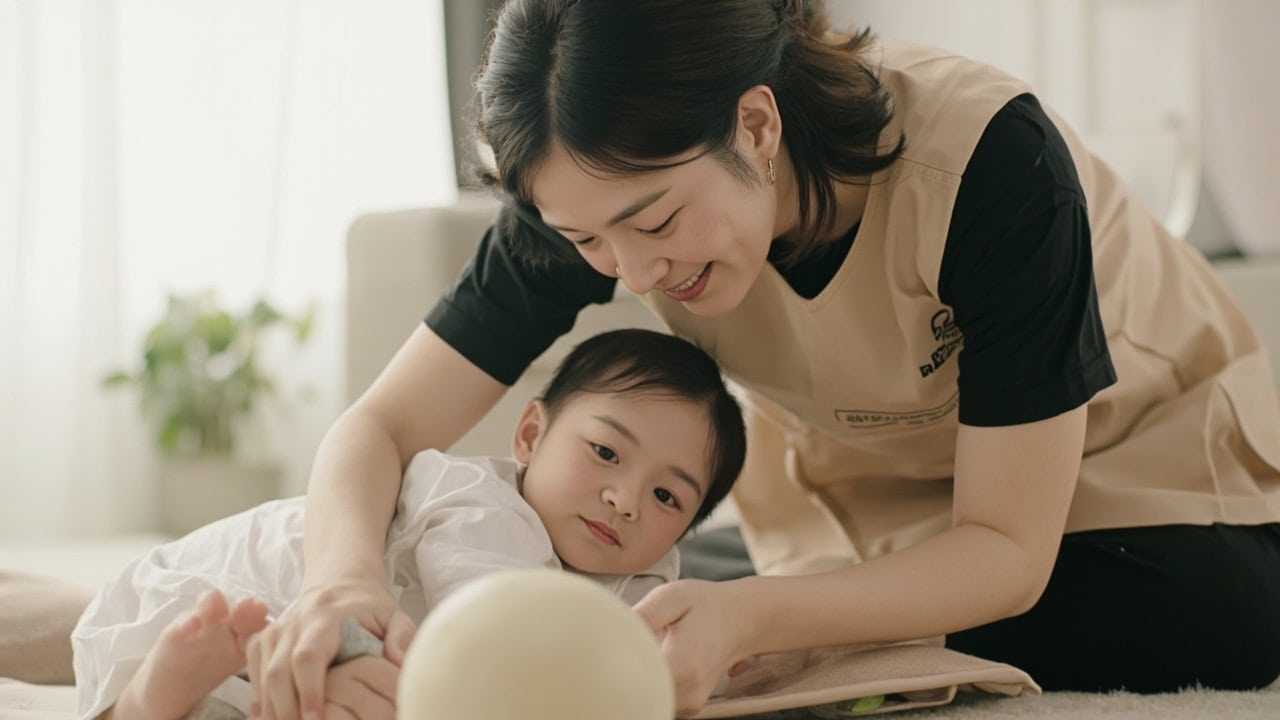
Here is an illustrative exchange with one large, soft and intact ball. Place the awake, comfortable baby on a firm mat with an adult nearby and the ball within view and reach. These are possible moves, not turns your baby must complete.
- Offer a simple focus. The adult places the ball where the baby can see it and says, “Ball?” The ball remains available without being pushed into the baby’s hands.
- Echo and wait. The baby makes a short sound. The adult returns a similar sound, such as “ba”, then waits without adding a question. If the baby looks elsewhere, the adult follows the new cue.
- Name and add only if interest continues. The baby looks towards or reaches for the ball. The adult says, “Ball” and pauses. If the baby continues vocalising or reaching, the adult adds one detail: “Big ball”. The adult then waits again for a sound, movement or gaze.
If your baby looks away, loses interest or becomes uncomfortable, stop the sequence calmly. HealthHub recommends larger toys that remain intact without small pieces that could break off, which makes this a simple toy example for supervised floor play. HealthHub’s toy safety guidance
Pause, follow and know when to seek advice
Following your baby’s attention means noticing when a shared focus changes, not allowing your baby to make every decision. You still lead safety, feeding and practical care choices. In an open play moment, you can follow a new gaze when it is safe, then pause when your baby is ready to move on. Harvard’s discussion of attention and adult responsibility
Keep the developmental boundary clear as well. HealthHub advises consulting a doctor if an infant is not making baby talk or babbling by 12 months and notes that a hearing test may be needed. A quiet moment during a short play exchange cannot tell you whether your baby’s development is on track or cause concern. HealthHub’s advice on babbling by 12 months
Sources and further reading
- The Beginner’s Guide To Taking Care of Your Infant: 7 to 12 Months · www.healthhub.sg
- Podcast: Serve and Return – Center on the Developing Child at Harvard University · developingchild.harvard.edu
The images in this article were generated with AI for illustration. They do not show actual EduNanny staff, children or facilities.
Try one calm turn taking moment with a large toy, then notice what your baby offers next.