The Transformation That Happens When Singapore Parents Choose to Build Their Village
The Quiet Moment Every Singapore Parent Eventually Recognizes
There is a moment — quiet, unannounced, rarely discussed — that many parents in Singapore come to recognize only in hindsight. It does not arrive with fanfare. It arrives in the stillness of an evening when the house has finally settled, or in the pause between the end of the workday and the beginning of the commute home, when you catch yourself thinking: I am not the same person I was before I made this choice.
That choice is the decision to build something outside of yourself. To step away from the idea — deep, tenacious, inherited from generations before — that a good parent manages alone. And instead, to choose with intention, with clarity, with something that feels, in its truest sense, like love.
This article is for that moment. Because it represents one of the most profound transformations a parent can experience, and almost no one talks about it honestly.
The Self-Reliance That Built Singapore — and the Quiet Burden It Places on Parents
Singapore has built its identity on self-reliance. The belief that if something matters, you figure it out, you work at it, you make it happen with your own hands and your own will. This ethic has created something extraordinary — one of the most dynamic, capable societies on earth.
But when self-reliance becomes the lens through which we view parenthood, something quietly damaging happens. It tells the loving, attentive, exhausted parent that they are falling short simply because they need support.
If you have ever felt this — the sense that asking for help with your child somehow means you are not doing enough — know that this message is wrong. And the sooner we say it plainly, the better.
In Singapore, our cultural landscape is shaped by expectations passed down through generations: the belief that family cares for family, that asking outside help is an admission, that a parent’s place is with their child.
These values come from a place of deep love and genuine care. But love, if it is wise, must also be honest. And the honest truth is this: the village that raised us was not one person alone. It was a network of extended family, community, neighbours, and trusted figures.
We have simply, in modern Singapore, had to become more intentional about reconstructing what the village looks like — because the shape of family life has changed, the demands on parents have changed, and the world our children will grow into has changed.
Children Thrive in Villages: What the Research Actually Shows
This is not a sentimental observation. It is one of the most consistently supported truths in human development.
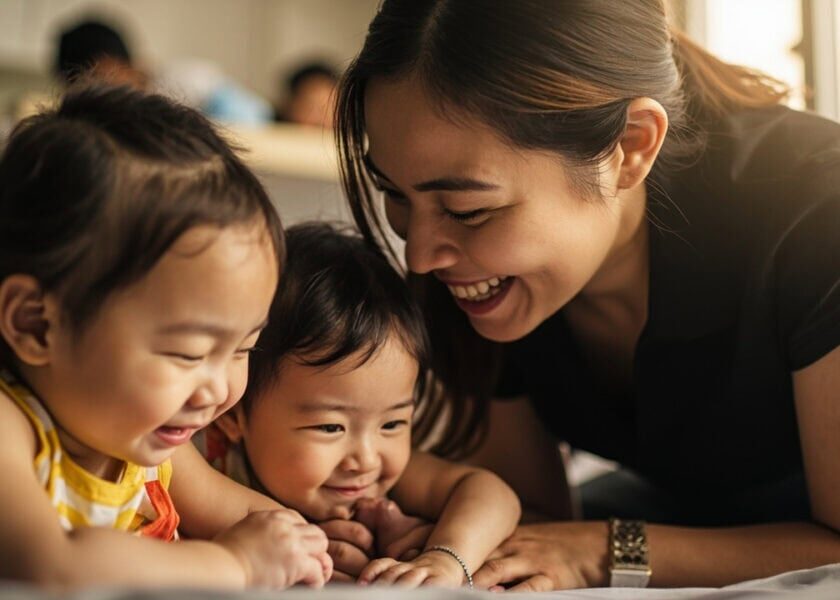
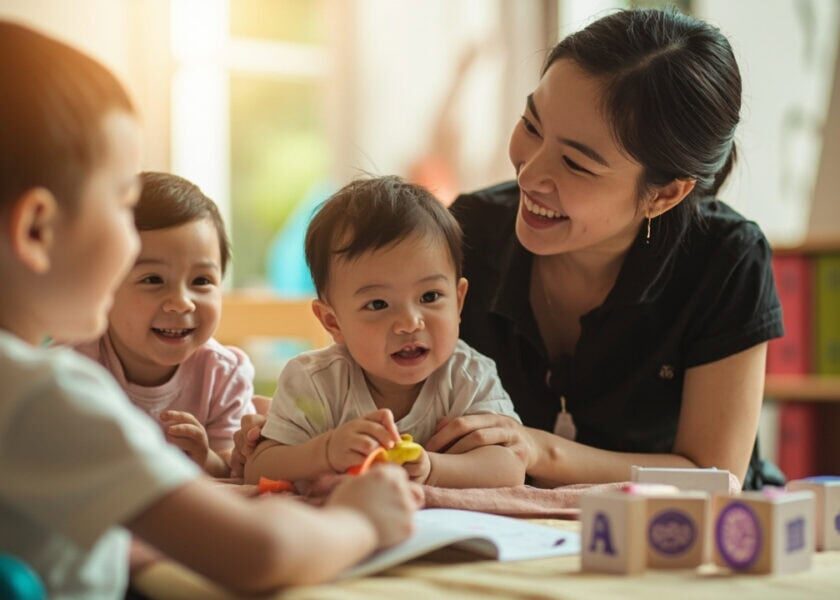
A child’s neural architecture, emotional regulation, social curiosity, and sense of security are shaped not by the absence of others but by the richness of the environments and relationships around them. When a child has access to consistent, warm, responsive care — whether that care comes from a parent, a grandparent, a trained childminder, or a thoughtfully designed infant programme — the child’s world expands. And so does their capacity to grow.
In our context, this translates to something practical: children benefit when they have caregivers who are present, attentive, and trained to respond to their developmental needs. They benefit from environments with appropriate ratios — where every child can receive the responsiveness that early brain development demands. They benefit from routines that feel secure and relationships that feel consistent.
This is why the choice to bring quality support into your family’s life is not a compromise. It is an investment in your child’s developmental foundation.
What Quality Infant Care Actually Looks Like
Here is where philosophy meets practice — because choosing to build a village is only the beginning. The next question is: what does worthy support actually look like?
Quality infant care is not simply supervision. It is:
- Trained caregivers who understand infant development, not just task management
- Appropriate ratios that allow for real attention — the kind of responsiveness that shapes a child’s sense of security in those early, critical years
- Transparent communication — windows into your child’s day, not because you doubt but because you care, and caring parents deserve to know
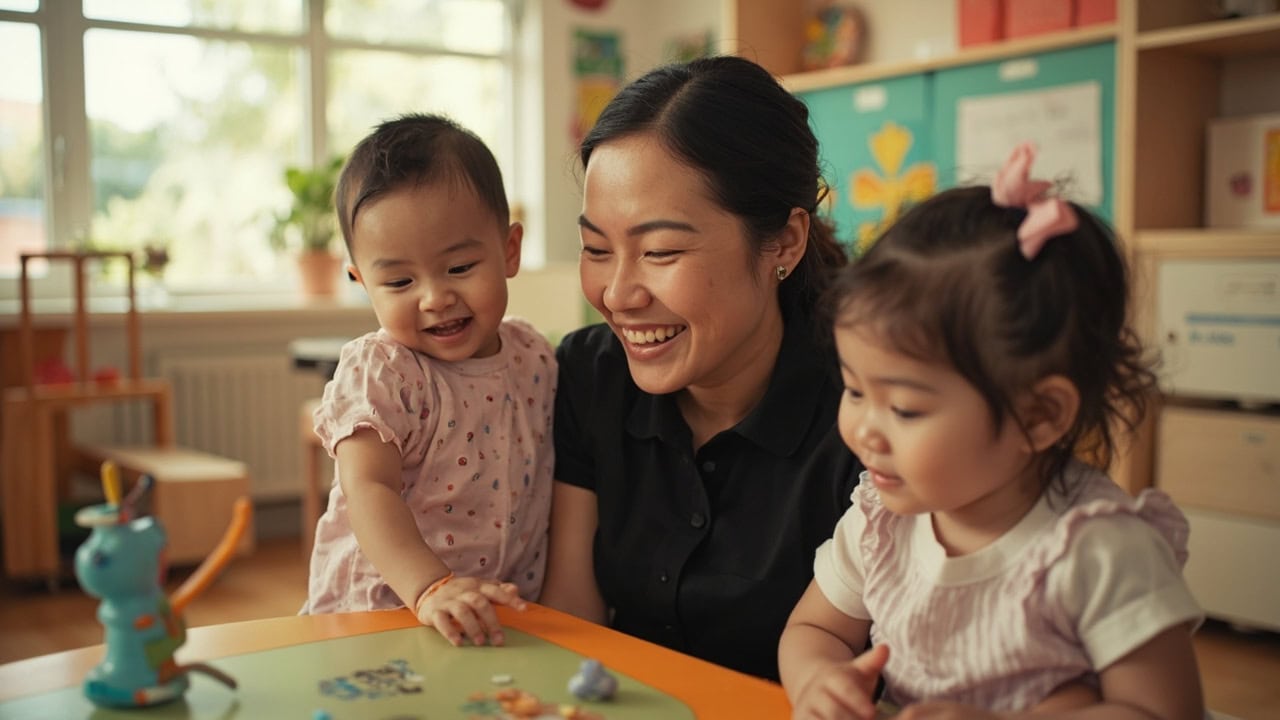
- Environments designed for infants — safe, stimulating, and scaled for small bodies and developing minds
- Consistent routines that help infants build the sense of predictability that supports emotional regulation
- Partnership with families — not a replacement of your role but an extension of it
When you are evaluating options, these are the questions that matter most — not just whether care is available, but whether it is worthy of the trust you are placing in it.
The Transformation That Happens to You — and Your Questions Answered
Here is what gets lost in that conversation, almost every time: the village does not only shape the child. It shapes the parent.
Think about what happens when a parent makes the choice — the deliberate, considered, sometimes difficult choice — to bring quality support into their family’s life.
They begin, often without realizing it, a process of transformation. The parent who once doubted whether they were doing enough begins to notice something shifting:
- They are more present in the hours they do have
- They are less reactive, less depleted, less likely to parent from a place of scarcity
- They listen differently. They engage differently. They show up as the parent their child needs
- They stop fighting to remain the exhausted version of themselves and start being the parent they actually want to be
This is not about childcare as a convenience. It is about childcare as a philosophy — the understanding that choosing the right support system is not a concession. It is a commitment. It is the parent saying, with their actions, that they refuse to build their family on the premise of depletion.
They choose instead to build on the premise of intention.
Common Concerns, Honestly Addressed
Before you make any decision, it is fair — and important — to ask the hard questions.
“Does this mean I’m not doing my job as a parent?”
No. The parent who understands that they need to build the right support for their family is not opting out of parenting. They are opting in — more deeply, more thoughtfully, more courageously — to the kind of parenting that actually works.
“Will my child be confused by another caregiver?”
Children are remarkably perceptive. What they learn from a loving caregiver in their life is not confusion but enrichment. They are learning, in real time, that families are built on connection, not isolation. That love multiplies rather than divides.
“How do I know I can trust someone with my child?”
Trust is not given. It is built — slowly, through consistency and honesty. This is why transparency matters. This is why training matters. This is why appropriate ratios matter. When you visit a potential care arrangement, ask questions. Observe how caregivers interact with children. Look for communication practices that keep you informed. These are not signs of distrust — they are signs of care.
“What about the cultural expectations in my family?”
This is real. Many Singapore families navigate expectations from grandparents, extended family, or in-laws who may not understand the choice to seek outside support. These expectations come from love. But wise love adapts to changing circumstances. The parent who explains their choice clearly — who communicates the reasoning and the research — often finds that understanding grows over time.
EduNanny by BUTLER: Building Within Singapore’s Ecosystem
At EduNanny by BUTLER, we understand that we are part of a larger story. We participate in the ECDA Childminding Pilot — which means we are building something that sits within Singapore’s broader commitment to the wellbeing of children and families.
Our approach is rooted in home-based care, because we believe the most secure foundations for an infant are built in environments that feel like home, with rhythms that feel like family, and with attention that feels personal.
| Aspect | Our Approach |
|---|---|
| Care Model | Home-based infant and childminding care |
| Caregiver Ratios | Up to 1:3 — ensuring responsive, attentive care |
| Schedule | Monday to Friday, in structured blocks for family planning |
| Communication | Transparent, consistent updates on your child’s day |
| Training | Caregivers are trained professionals, valued and supported |
We know that families navigating the financial reality of quality care need workable options. Your Child Development Account funds can be used. Your Baby Bonus is accessible. We believe that good care should not require families to choose between excellence and accessibility.
Your Next Step: Building Something That Lasts
There is a confidence that does not come from having everything under control. It comes from knowing, with quiet certainty, that you have made the right decisions for your family — not the perfect decisions, not the fear-driven decisions, not the decisions shaped by guilt or external expectation, but the right decisions.
The ones made with your eyes open. The ones made in service of what your child actually needs, and what you actually need to be the parent your child deserves.
That confidence is earned when you stop performing self-sufficiency and start practising wisdom. It is earned when you look at your child and realize that they are not diminished by the presence of loving support in their life — they are expanded by it.
If this article has resonated with you, we invite you to take the next step. Speak with our team. Visit our home-based care environment. Ask every question you have — because thoughtful parents deserve thoughtful answers.
We are located within the ECDA Childminding Pilot, offering structured, transparent, developmentally-informed infant and childminding care for Singapore families who are ready to build something sustainable.
Because your child deserves a village. And you deserve to thrive within it.
Connect with EduNanny by BUTLER today.