Seven Signs Your Child Is Growing While You’re Away
What Your Child Is Becoming While You Are Not There
There is a particular silence that lives in the chest of every working parent in Singapore. It arrives not with drama, but in quiet moments—in the middle of a conference call when your phone screen stays dark, in the evening when you reach for your child and wonder what happened during all those hours you were not there. It is the silence of absence, and it asks a question that no amount of reassurance can fully answer.
What is my child becoming while I am not there?
This question does not mean you doubt your choice. It does not mean you love your child any less or that you are failing as a parent. It means you are paying attention. It means that somewhere beneath the logistics and the schedules, you understand something profound: the early years are not a pause between moments. They are the moments.
In Singapore, where dual-income households are the norm and the demands on working parents are significant, this fear carries particular weight. Long commutes, high expectations, and a culture that sometimes conflates parental presence with good parenting can amplify the quiet anxiety of absence.
Here is the reframe that changes everything: development is not a performance that requires your witness. It is a process that continues whether or not you are in the room. Your child is not merely being watched while you are away. Your child is becoming someone. And that becoming is visible to those who know how to look.
The Seven Signs That Reveal Genuine Development
These indicators cannot be faked or manufactured. They emerge only when care is truly building a child’s inner life. Watch for them—not as performance metrics to track obsessively, but as natural signs that a mind is growing.
1. Social Engagement With Intention
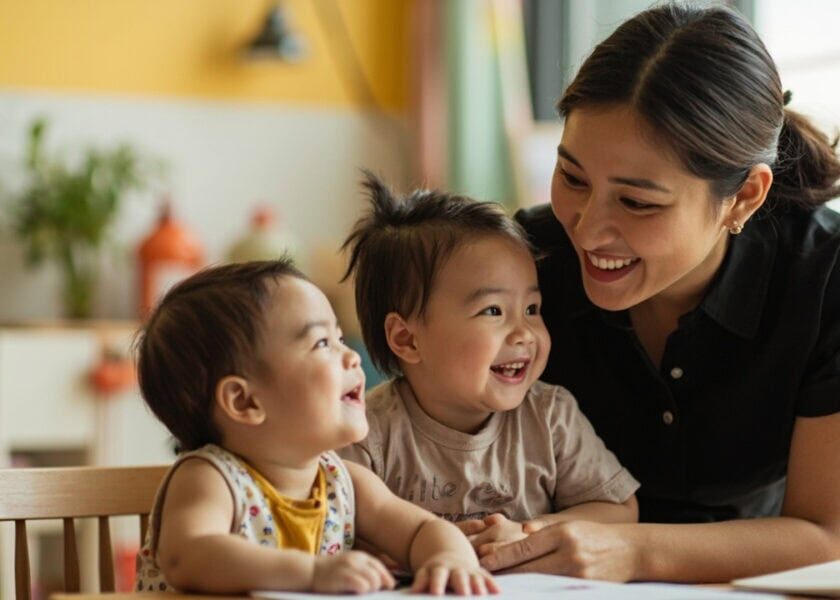
Notice how your child engages with other children. Not just proximity, but purpose. A child who is developing social capacity does not simply play alongside others. They approach with intention. They notice when another child is distressed. They offer comfort, or a toy, or simply their presence.
They are beginning to read social situations, to understand that other people have feelings, that relationships are bidirectional, that they are part of something larger than themselves. In Singapore’s childcare settings, where interaction ratios vary significantly, this quality of social engagement often distinguishes genuinely developmental environments from those that merely supervise.
2. Language That Is Expanding and Complicating
Notice not just vocabulary, though that matters, but how your child is beginning to string words together, to ask questions, to narrate their experience. Notice the new tones of voice, the attempts at persuasion, the emerging capacity to express not just needs but preferences, opinions, and the beginning of a point of view.
Language is not merely communication. It is the architecture of thought. When your child’s verbal world expands, their inner world is expanding too.
3. Motor Confidence and Physical Agency
The way your child reaches for objects with increasing precision. The way they climb, descend, and navigate space with growing assurance. Notice the fine motor decisions, the deliberate choices, the careful efforts.
These are not just physical achievements. They are evidence of a brain that is mapping its body, that is learning to intend and execute, that is building the capacity for agency in the physical world.
4. Curiosity That Is Alive and Active
The child who lingers at the window. The child who turns to examine a sound. The child who reaches for something new with interest rather than fear.
Curiosity is not merely a personality trait. It is a developmental achievement, one that emerges when the world has been consistently safe enough to explore. When you see curiosity alive in your child, you are seeing evidence of a secure foundation—one that quality care has helped to build.
5. Problem-Solving Behavior and Early Resilience
The child who tries, fails, and tries again. The child who looks for solutions rather than immediately giving up or seeking help. The child who experiments, who tests boundaries, who is beginning to understand that effort has consequences and that persistence is rewarded.
This is not stubbornness. It is the earliest form of resilience, and it is being built right now—in the daily textures of your child’s childcare experience.
6. Peer Engagement That Is Negotiated
Not just that your child plays with others, but how. Whether they are beginning to negotiate, to take turns with some awareness of fairness, to notice the social dynamics around them.
These are not skills that appear suddenly. They emerge gradually, in the texture of daily peer interaction. The child who comes home with stories of sharing disputes, of friendship negotiations, of social complexity is showing you that their social world is expanding.
7. Emotional Vocabulary and Articulation
The child who begins to name what they feel. The child who can say “I am angry” instead of simply becoming angry. The child who can talk about feelings rather than only expressing them through behavior.
This is one of the most profound developmental achievements of the early years—the beginning of emotional literacy. Its presence means that the inner life of your child is becoming visible even to themselves.
Why These Signs Matter More Than Milestones
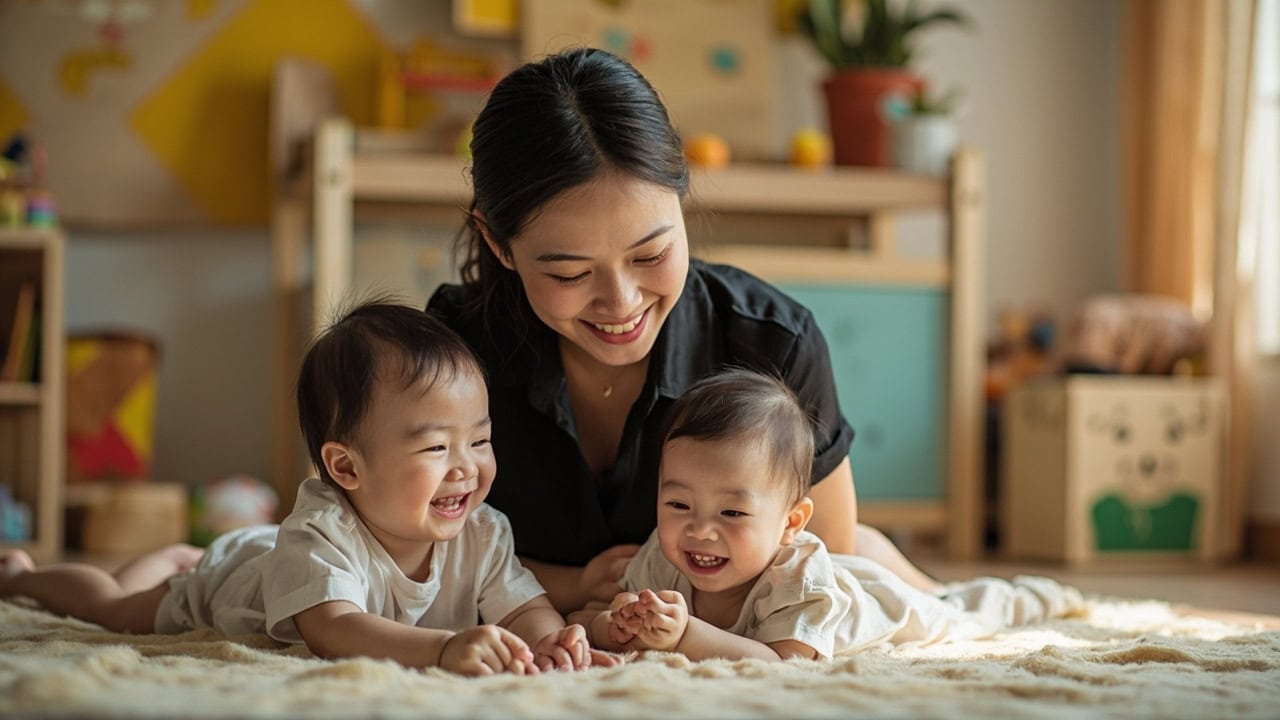
When you pick up your child at the end of the day, you are not merely collecting a child who has been stored. You are meeting someone who has been living, learning, and growing in your absence.
These seven signs do not appear only in the presence of parents. They appear in any environment where development is genuinely occurring. Which means that when you see them, even in glimpses, even in fragments, you are seeing evidence of what your child is becoming even when you are not there.
In Singapore’s educational landscape, where academic expectations begin early and parental investment in children’s growth is significant, the temptation to measure development purely by achievement markers can be strong. But the signs described above are not achievement markers. They are capacities—internal developments that will eventually express themselves in achievements, but that matter in themselves.
A child who is developing emotional vocabulary is not on a trajectory to better test scores. They are on a trajectory to greater emotional intelligence, which is foundational to everything that follows.
The most important question a parent can ask is not “Is my child safe?” Safety is the floor, not the ceiling.
The most important question is: “What is my child learning to become?”
The answer to that question does not come from the childcare centre’s philosophy statement or their curriculum overview. It comes from your child. From what you observe. From what you notice. From the signs that reveal the quality of your child’s inner development.
This is why the relationship between parent and caregiver cannot be merely transactional. It must be developmental. The caregiver is not just delivering a service. They are the person who is present when you cannot be, the person who is observing your child in the moments that matter most.
And you, as the parent, are not just receiving updates. You are the person who knows your child most deeply, who can contextualize what the caregiver observes, who can recognize which changes are significant and which are simply the normal rhythms of daily life.
What Quality Childminding Actually Looks Like
The core distinction is simple, but its implications are profound:
- Watching keeps a child safe. Basic needs are met. No harm comes. The hours pass.
- Building treats every interaction, every transition, every moment of frustration or discovery as an opportunity for growth. It is care that is intentionally developmental.
The question worth asking is not whether your child is in good hands. It is whether those hands are constructing something.
| Watchful Care | Developmental Care |
|---|---|
| Ensures safety and basic needs are met | Safety as foundation, plus intentional growth opportunities |
| Hours pass in reasonable comfort | Every interaction is understood as developmental |
| Caregiver is present | Caregiver is intentionally observant |
| Updates focus on meals and sleep | Updates include developmental observations |
| Incidents are managed | Incidents are understood as learning moments |
| Child is supervised | Child’s growth is tracked and documented |
When evaluating childcare options, ask not just about facilities and credentials, but about philosophy and practice:
- How does the caregiver observe and track developmental progress?
- What does a typical day look like in terms of intentional learning activities?
- How is the parent-caregiver communication structured?
- How are moments of frustration or challenge handled?
- What do you share with parents about their child’s day beyond logistics?
The answers you receive will reveal whether you are looking at care that watches or care that builds.
EduNanny by BUTLER: Built on This Understanding
EduNanny by BUTLER was designed for parents who want more than supervision—parents who understand that the hours their child spends in care are not a gap to be endured but a time of genuine growth to be understood.
As part of the ECDA Childminding Pilot, their approach begins with small ratios, which allow for the kind of intentional observation that developmental care requires. Their caregivers are trained not just to watch but to observe, not just to manage but to notice.
In their environment, development is not left to chance. It is tracked. It is documented. It is shared with parents through consistent communication—updates that go beyond what was served for lunch, through conversations that help parents understand what their child is experiencing, how they are growing, what is emerging in them.
This is what transparency means in practice. It is not just open-door policies or CCTVs (though these have their place). It is a systematic commitment to making your child’s development visible to you, so that the fear of missing something can be replaced by the confidence of understanding what is happening.
Addressing Common Concerns
“Am I failing my child by working?”
You are not. The developmental gap you fear is not inevitable. It is not the necessary cost of working parents’ lives. It is a gap that can be bridged—not by your presence alone, but by the quality of the observation and communication around your child. It is bridged when caregivers are trained to notice, to document, to share.
“How do I know if my child’s care is actually developmental?”
You look in your child. Watch for the seven signs described above. Notice whether, over weeks and months, you see evidence of growth in social attunement, in language, in motor confidence, in curiosity, in problem-solving, in peer engagement, in emotional articulation. These are not guarantees, but they are evidence. They are the fingerprints of genuine development.
“What if I choose the wrong childcare?”
You are not a passive participant in your child’s development. You are its primary reader. You are the person most qualified to notice the significance of what you see. And when you choose care that is genuinely developmental—care that treats every hour as an opportunity, care that communicates what it observes—you are not outsourcing your child’s growth. You are building the conditions for that growth to be visible, even when you cannot be there to see it directly.
Making Quality Care Accessible
The ECDA Childminding Pilot offers fee structures designed to make quality care accessible. The use of CDA and Baby Bonus means that financial logistics do not have to be a barrier to developmental quality. Monday to Friday care blocks allow parents to arrange their work lives with confidence, knowing that their child’s care is consistent, intentional, and built around developmental principles.
The Village That Raises a Child
The saying is not merely a metaphor. In the context of developmental childcare, it is a reality. And in that village, you are not the least important member. You are the most important. You are the one who knows your child. You are the one who can read what others observe. You are the one who can carry forward what begins in childcare into the life of your home.
What is your child becoming while you are not there?
The answer is not found in your absence. It is found in your child’s daily life, in the signs of growth that are visible to those who know how to look, in the communication between parent and caregiver, in the quality of care that is built to notice and to share.
You are not missing your child’s development. You are learning to read it. And in that reading, you will find not just reassurance but something richer: the understanding that your child is growing in every hour, in every place, in every experience, and that the most important thing you can do is to be present to what that growth looks like—even when you cannot be present to where it happens.
EduNanny by BUTLER exists to help parents see that growth clearly. To offer the communication, the developmental partnership, and the consistent observation that transforms the fear of missing something into the confidence of understanding what is happening.
The early years are not a rehearsal. They are the foundation. Choose care that builds it.
For families in Singapore seeking childcare and childminding grounded in developmental principles, learn more about EduNanny or connect with the team to discuss your family’s needs.