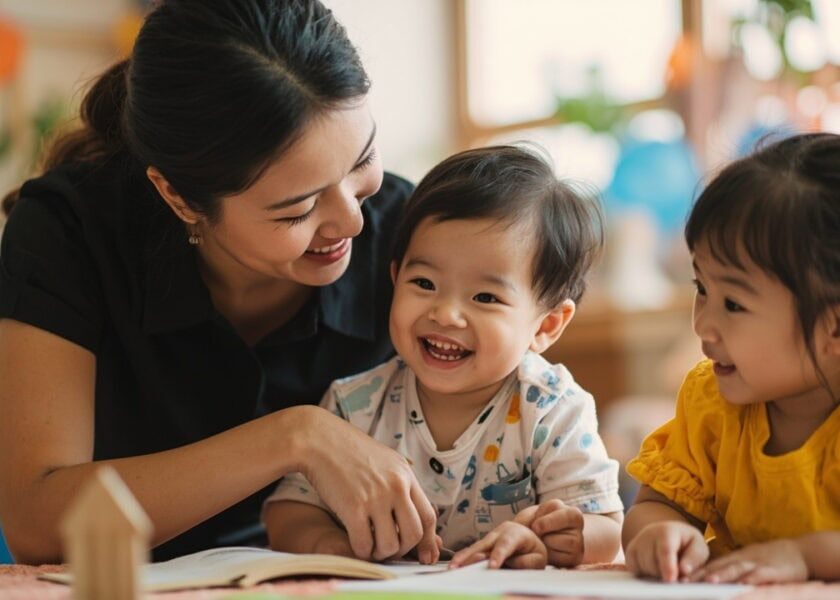
Singapore Parents Are Building Intentional Villages for Their Children
The Village That Looks Familiar—But Isn’t
Singapore has always spoken proudly of its village. The proximity of grandparents. The presence of domestic helpers. The assumption that family will help, that multigenerational support is simply part of the landscape.
And indeed, this landscape is real. It exists. But what we have been slower to acknowledge is how much it has shifted—how the assumptions that once made this village feel automatic now require something new from parents. Something deliberate. Something that looks less like relying on infrastructure and more like building it.
When a young mother tells you her mother lives five minutes away, what she often means is that her mother has her own life, her own expectations about how children should be raised, her own energy limits after a full career.
When she says her helper is wonderful with the baby, what she may be navigating is a relationship built on a contract, with boundaries that are necessary but that can also leave certain needs unmet—the need for someone who sees her child’s development not as a task but as a purpose.
What Singapore parents are doing, whether they articulate it or not, is building a village from scratch. Piece by piece. Decision by decision. They are assembling caregivers, routines, philosophies, and trust networks with almost no roadmap for what intentional village-building actually requires.
The parents who are thriving are not the ones who found the perfect setup handed to them. They are the ones who understood, perhaps earlier than others, that modern parenting in Singapore requires the same intentionality they bring to their careers, their marriages, their homes. It requires them to choose, actively and thoughtfully, who will be part of their child’s world.
What Intentional Village-Building Actually Requires
The village your child needs is not simply a collection of people who happen to be present. It is an ecosystem with specific properties—properties that sound simple when named but that are remarkably difficult to achieve in practice.
Reliability means not just showing up, but showing up in the way your child expects. The consistency that says, “When I wake up from my nap, the person who greets me will be the same person who was here yesterday, and the day before, and the day before that.” Reliability is the bedrock of security, and security is the foundation upon which everything else is built.
Developmental Warmth is the ability to engage with your child not just as a task to be managed but as a person whose brain is forming, whose language is emerging, whose sense of the world is being constructed one interaction at a time. The warmest helper or grandparent can unintentionally hinder development if they are not tuned to the specific ways a child learns and grows. But warmth combined with developmental intentionality creates something powerful: a care environment that is not just safe but genuinely enriching.
Professional Alignment means the person caring for your child understands and supports how you are raising them. When you say you are practicing responsive parenting, your village should reflect that. When you say you want your child exposed to language and interaction throughout the day, your village should make that happen—not as an afterthought, but as a principle.
Cultural Attunement reflects that Singapore is not like other places. The rhythms of life here—the density, the pace, the specific pressures of raising children in a society that values education and achievement intensely but that also increasingly recognizes the importance of early childhood wellbeing—require a care approach that understands this context. A village built for Singapore cannot simply be imported from elsewhere.
Genuine Communication is the kind that makes parents feel not like customers receiving reports but like partners in their child’s day. The kind that says, “Your daughter took her first unassisted steps this morning. She was so proud.” This is not transparency as policy. This is transparency as care—a recognition that parents are not present for huge portions of their child’s day and that trust is built when they feel genuinely included in what happened in their absence.
What Your Child Actually Experiences
Children do not experience a village the way adults do. They do not appreciate, in any conscious way, the complexity of arrangements or the negotiations required to keep everything running.
What they experience is simpler and more profound: they either feel held, or they do not. They either have a sense of the world as consistent and predictable, or they do not.
When care is fragmented—when the child wakes up on Monday to one caregiver, Tuesday to another with a completely different style, Wednesday to a grandparent whose rules are different from both—something subtle but significant shifts. Not catastrophically. Not in ways that will show up on any assessment. But in the texture of their security, in the baseline anxiety they carry, in the energy they must expend simply to adapt rather than to grow.
When care is intentional—when the people in a child’s life are chosen for alignment, trained for consistency, connected by shared values—the child is free. Free to explore. Free to attach. Free to spend their considerable early-childhood energy on the work of becoming themselves rather than on the work of managing uncertainty.
This is why the choice of childcare is not merely a logistical decision. It is an architectural decision. You are not just choosing who will watch your child. You are choosing what kind of emotional and developmental foundation your child will stand on for the rest of their life.
Why Intentional Childcare Matters for Parents Too
Quality childcare gives parents something they often feel they do not have permission to claim. It gives them permission to build their careers and their identities without anxiety. Without the nagging sense that they are failing their children by being present in the world in ways that also fulfill them.
This permission is not granted lightly. It is earned through trust.
When parents know—truly know, in their bones—that their child is in a village that shares their values, that prioritizes their child’s development, that communicates with warmth and honesty, that shows up with consistency and intention—they can be present at work without distraction. They can pursue their ambitions without the low-grade terror that they are abandoning their child. They can be the parents they want to be when they are with their children, because they are not arriving depleted from a day of worrying.
When a parent can fully trust their village, they are not just releasing their child into care—they are claiming their full selves as parents and as people. And that is a gift not just to themselves but to their children, who need parents who are whole, not parents who are martyrs.
EduNanny Singapore: A Professional Anchor in Your Village
EduNanny operates within the ECDA Childminding Pilot—a government-recognized pathway designed to address a genuine gap in Singapore’s childcare ecosystem: professional, home-based and community-based childcare that meets standards of quality and safety.
We are not an informal arrangement. We are not a casual marketplace. We are a structured, accountable, supported model of care that has been reviewed and recognized because it works.
- Ratios that reflect our commitment to quality: We maintain up to one caregiver to three infants, which means every child receives the attention and intentional interaction that development requires.
- Caregivers who are supported, not left alone: They are trained within a framework and connected to a broader infrastructure that ensures consistency and professional alignment with how families are raising their children.
- Communication that reflects what trust requires: Transparency, consistency, and daily connection that makes parents feel genuinely partnered in their child’s day. Where deployed, transparency measures—including communication protocols and where applicable, CCTV arrangements—exist not as surveillance but as infrastructure for trust.
- Hours that support working families: Care operates Monday to Friday, designed around the rhythms of Singapore’s working parents.
- Fees designed for accessibility: Parents can utilize available support including the Child Development Account and Baby Bonus where applicable. Intentional childcare should not be a privilege available only to those with significant resources.
We are not here to replace your mother, your helper, or your family. The Singapore village has always been multigenerational, and that is a gift. What we offer is the professional anchor that allows the rest of the village to function at its best—the piece that brings standards, training, developmental intentionality, and the kind of consistent, aligned care that makes everything else work better.
Questions Singapore Parents Ask Before They Decide
Will my child feel secure with someone new?
Security is built through consistency over time, and through the quality of interactions your child has each day. A professionally aligned caregiver who is present, attentive, and consistent will build security with your child—not instantly, but genuinely. The key is choosing a care arrangement where reliability is built into the system, not dependent on the luck of a particular individual’s disposition on a particular day.
How is this different from helper or grandparent care?
Helpers and grandparents bring love and commitment to your child. What professional care adds is structured intentionality—a framework of training, developmental awareness, and alignment with how you have chosen to raise your child. The goal is not to replace the care your child already receives, but to add a layer of consistency and professionalism that supports the whole ecosystem.
Can we really afford quality childcare?
This is a real concern, and we take it seriously. EduNanny’s fee structures within the ECDA Childminding Pilot are designed to be accessible, and we encourage families to explore the Child Development Account and Baby Bonus schemes for which they may be eligible. Every Singapore child deserves a village built on these principles, and structural affordability is part of making that possible.
How do I know I can trust the caregiver with my child?
Trust is built on systems, not just individuals. Within the ECDA Childminding Pilot, EduNanny maintains accountability structures that go beyond what informal arrangements can offer. Our caregivers are trained, supported, and connected to a broader framework. Trust is not assumed—it is built through consistent, accountable practice over time.
How to Choose Infant Care in Singapore
Choosing childcare is one of the most consequential decisions a parent makes. Before you begin comparing options, ask yourself these questions—they will help you recognize what kind of village your family actually needs.
Does this care arrangement align with how I am raising my child?
Alignment is not about finding a caregiver who will replicate exactly what you do. It is about finding a care environment that shares your core values and approach to your child’s development. If you believe in responsive parenting, your village should reflect that. If you want your child exposed to language and interaction throughout the day, your village should make that happen.
Will my child feel held here?
Your child cannot tell you in words whether they feel secure. But you can observe: Does the caregiver engage warmly and consistently? Does the environment feel predictable? Does your child seem to spend energy on exploration rather than adaptation? The child experience is simple: they either feel held or they do not.
Can I build my career without anxiety about my child?
Quality childcare is not just about your child—it is also about you. When parents can trust their village, they are free to be fully present at work and fully present at home. If you find yourself distracted by worry throughout the workday, if you arrive home depleted from a day of anxiety rather than fulfilled from a day of purpose, your village may not yet be what it needs to be.
Does this feel like a partnership, or a transaction?
You should feel like a partner in your child’s day, not a customer receiving updates. Communication matters—the kind that says “here is what happened, here is what mattered, here is how your child is growing.” If your current arrangement feels like reports rather than partnership, it may be worth exploring other options.
Your Village Starts Here
The village Singapore parents are constructing today is unlike anything that has come before. It is assembled with care, with sacrifice, with late-night research and early-morning decisions and the quiet, often invisible work of choosing, again and again, what kind of environment your child will grow up in.
This work is not easy. It is also not lonely, if you know where to look for support.
EduNanny Singapore is here to be that support. Not the only piece of your village, but the steady piece. The professional anchor. The foundation you can trust while you build everything else.
Your child deserves a village built with intention. You deserve to build it without anxiety. And we are here—present, consistent, committed—to be the pillar that holds it together.
If you are ready to explore what an intentional village could look like for your family, we invite you to start a conversation with us. Not a sales call. A conversation. Because you already know more than you think you do about what your child needs. We are here to help you build it.
EduNanny Singapore is a registered participant in the ECDA Childminding Pilot, offering professional, development-focused childcare support for families across Singapore. Learn more about our approach or connect with our team to explore whether EduNanny is the right fit for your family.