How to Read an Infant’s Cues in Responsive Care
Responsive infant care is a repeated pattern: notice an infant’s cue, respond to what it means, leave room for an answer and adapt when the infant’s response changes.
For a parent, infancy can feel like a succession of small signals: a glance, a sound, a reach, a change of posture. Each gives a caregiver something to notice. The practical challenge is not to decode every signal perfectly, but to respond in a way that fits what the infant is doing now.
The phrase responsive infant care can be reduced to a slogan about individual attention or early learning. Its more useful meaning is a repeated process: notice a cue, act on it, leave room for the infant to answer and adjust when the infant’s response changes. That process appears in ordinary book time, movement, songs and pauses; it should not be mistaken for a promise that a polished activity will produce a faster milestone.
Growth Is a Foundation, Not a Headline
The World Health Organization places nurturing care in a broad frame that includes adequate nutrition, good health, safety, security and responsive support. A warm exchange can be part of that care, but it does not by itself describe everything involved in healthy growth.
The Center on the Developing Child at Harvard University says responsive, serve-and-return interactions with caregivers play an essential role in supporting healthy brain development. That supports attention to repeated back-and-forth exchanges, not a guarantee that any one exchange will produce a particular later outcome.
Healthy growth and early learning therefore belong in the same conversation without being treated as synonyms. Nurturing conditions provide the wider setting for development; responsive exchanges give infants opportunities to notice, communicate, explore and connect actions with people or objects. These processes can support each other without becoming promises of acceleration.
Responsiveness Is Contingent, Not Automatic
A review of parent-child interaction describes a responsive style as noticing a child’s interests, body language and speech, then contingently acting on those cues. For infants, movements and vocalisations can form part of that communication even before speech is present. The important word is contingently: the response is connected to the cue rather than delivered because it is next in a lesson.
A useful, non-prescriptive way to think about the process is to notice what the infant is doing, respond in a related way, then pause and reconsider what happens next. This is a way to read an interaction, not a fixed script or performance drill. The same response may be helpful in one moment and unsuitable in the next.
Consider a hypothetical infant who looks toward a cloth book, vocalises and then shifts attention to the adult. The adult might answer the sound, glance towards the book or simply wait. If the infant turns away, continuing automatically would ignore new information. A caring intention matters, but a response becomes responsive when it remains connected to the infant’s present behaviour.
Small Cues Need Careful Reading
The Center’s guide to serve and return says that responding to a young child’s signals and needs creates an environment rich in these back-and-forth experiences. A cue should therefore be treated as information that can change the next moment, not as a button an adult must press.
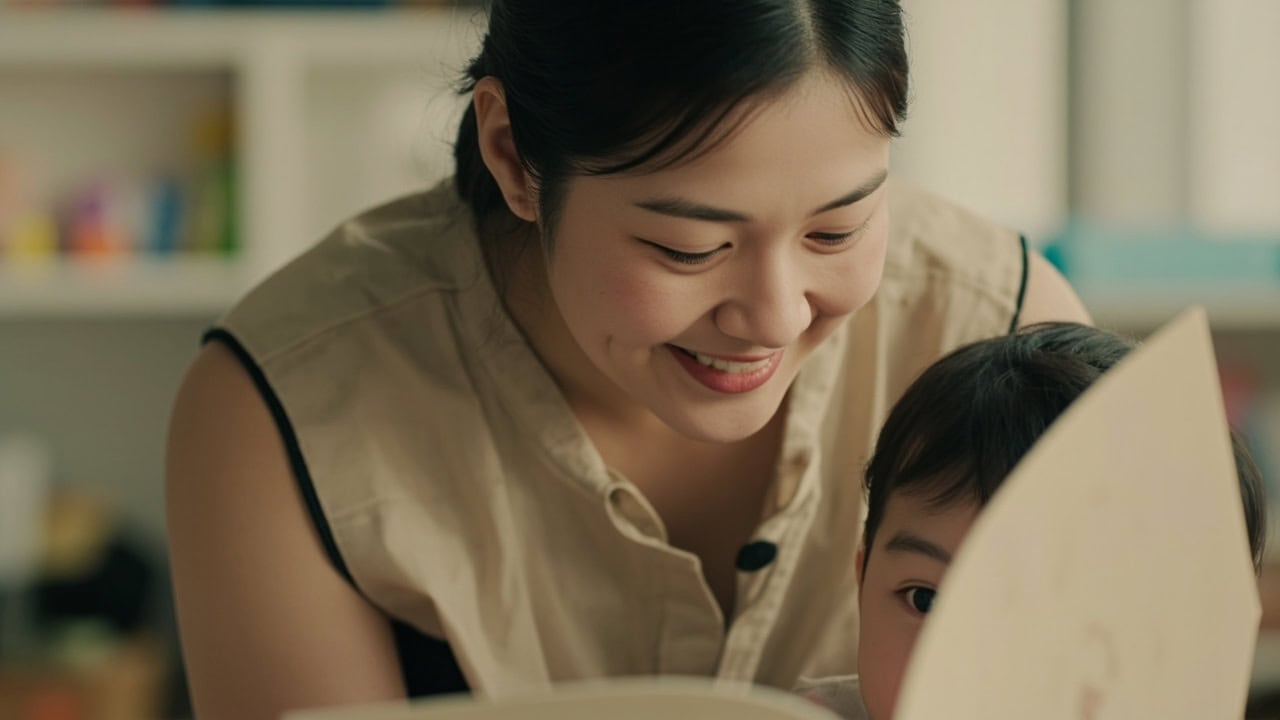
In a hypothetical book moment, an infant looks at a large sewn shape, touches the page and then turns away. An adult might describe the shape and follow the infant’s gaze before closing the book. Looking at a picture is not independent reading, and looking at a bright colour is not the same as naming it. Precise language keeps the adult’s response proportionate to what has actually been observed.
A gaze, reach, sound or change in posture can have more than one meaning. One movement should not be assigned a diagnosis or a fixed intention. The caregiver can consider what happens immediately before and after the cue without turning the interaction into a test or prediction.
Responsiveness also does not mean filling every silence. A pause should not become a stopwatch test, and this article sets no fixed number of seconds as a caregiving rule. Sometimes the fitting response is less stimulation, a change of activity or a stop. Attentiveness includes recognising when an invitation should be softened or withdrawn.
Make Familiar Play a Two-Way Exchange
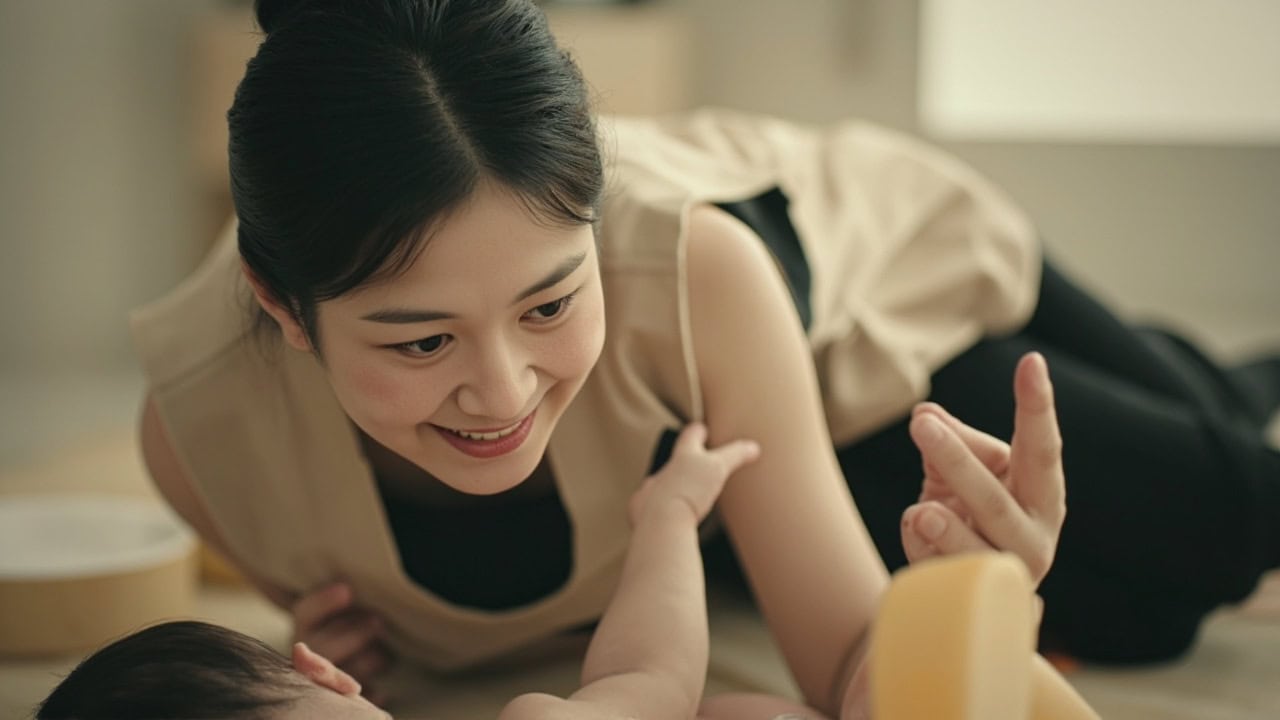
In a hypothetical song moment, an infant looks towards the adult, moves or makes a sound while the adult sings. The adult can repeat a phrase, add a gesture and then make space for another response. Responding to a song is not the same as singing its words, and there is no need to turn the exchange into a test of performance.
Shared books work similarly. An adult can describe what the infant appears to notice, follow a gaze or invite a touch to a large, safe page. If interest fades, closing the book can be a responsive decision rather than a failure to finish. With a large graspable object, the important distinction is between making it available and assuming what the infant intends to do with it.
On a suitable clear floor, an adult can also make space for reaching, turning, shifting weight and investigating nearby objects. The purpose is to support exploration at the infant’s own pace, not to create pressure to walk or move sooner.
EduNanny’s childminding pilot page describes naming familiar objects, stories, singing and responding to sounds under language and connection, alongside floor-based movement, sensory play and familiar objects. These are first-party descriptions of the programme’s activities, not independent evidence that participation causes a developmental outcome. The practical question is whether each activity remains connected to the infant’s cues.
Changing the Response Is Part of Responsive Care
A well-meant response can still fail to fit the moment. In a hypothetical example, an adult begins a song, but the infant turns away and vocalises differently. The adult can stop, reduce the input or offer it again later. In another moment, an infant reaches towards a large soft object; making it available and observing what follows may be more fitting than continuing a planned naming activity.
This is not a reason to abandon routines, supervision or safety. It is a reason to keep a clear purpose while allowing an infant’s present signals to influence how an activity is delivered. Responsiveness is not improvising without limits; it is choosing a response that remains connected to the child.
It also helps to keep three layers separate. An observation might be that an infant looked towards a fabric ball and reached for it. An interpretation might be that the infant wanted to keep playing. The response was for the adult to move the ball closer. The first describes behaviour, the second assigns meaning, and the third describes the caregiver’s action. Good communication can make those distinctions visible.
A caregiver will not read every cue correctly. The responsive move is to notice the mismatch and adjust, rather than expect the infant to fit the adult’s plan. A changed response is not an admission of failure; it is recognition that the infant remains an active participant in the exchange.
What Parents Can Hear in an Update
A short written or spoken update cannot show every exchange, but it can make the care process easier to assess. Useful questions include:
- What did the infant look at, reach for, vocalise or repeat?
- What did the childminder do in response?
- Did the infant have an opportunity to respond again?
- What changed when the infant’s interest shifted?
A hypothetical update might record that, during shared book time, an infant looked at a sewn circle, reached towards it and vocalised after the adult named the shape. When the infant turned away, the adult closed the book. The book was offered again later, and the infant returned to the page. This account gives parents something concrete to discuss without assigning a score or declaring a developmental gain.
A less useful update simply calls an infant advanced, especially curious or ready for the next stage. Such descriptions may be sincere impressions, but they do not reveal the cue, the response or the fit between them. A single early behaviour also cannot establish intelligence, a typical timetable or an effect caused by the care programme.
Responsive care becomes credible when the adult can keep noticing, answering in proportion and changing course when the infant’s next signal calls for it. The meaningful unit is not a promised endpoint but a repeated pattern of attention: a cue noticed, a response offered and the willingness to answer differently next time.
Sources and further reading
- Nurturing care for early childhood development · World Health Organization
- Brain Architecture · Center on the Developing Child at Harvard University
- Increasing Responsive Parent–Child Interactions · PubMed Central
- A Guide to Serve & Return · Center on the Developing Child at Harvard University
- EduNanny ECDA Childminding Pilot · EduNanny
The images in this article were generated with AI for illustration. They do not show actual EduNanny staff, children or facilities.
Every family has different care needs. Speak with EduNanny to discuss care that is right for your child.