Responsive Care Is Not the Same as Early Teaching
A word, song or picture can support early learning, but concept presentation alone is not evidence of responsive care. A practical test is whether an infant’s cue shapes what happens next.
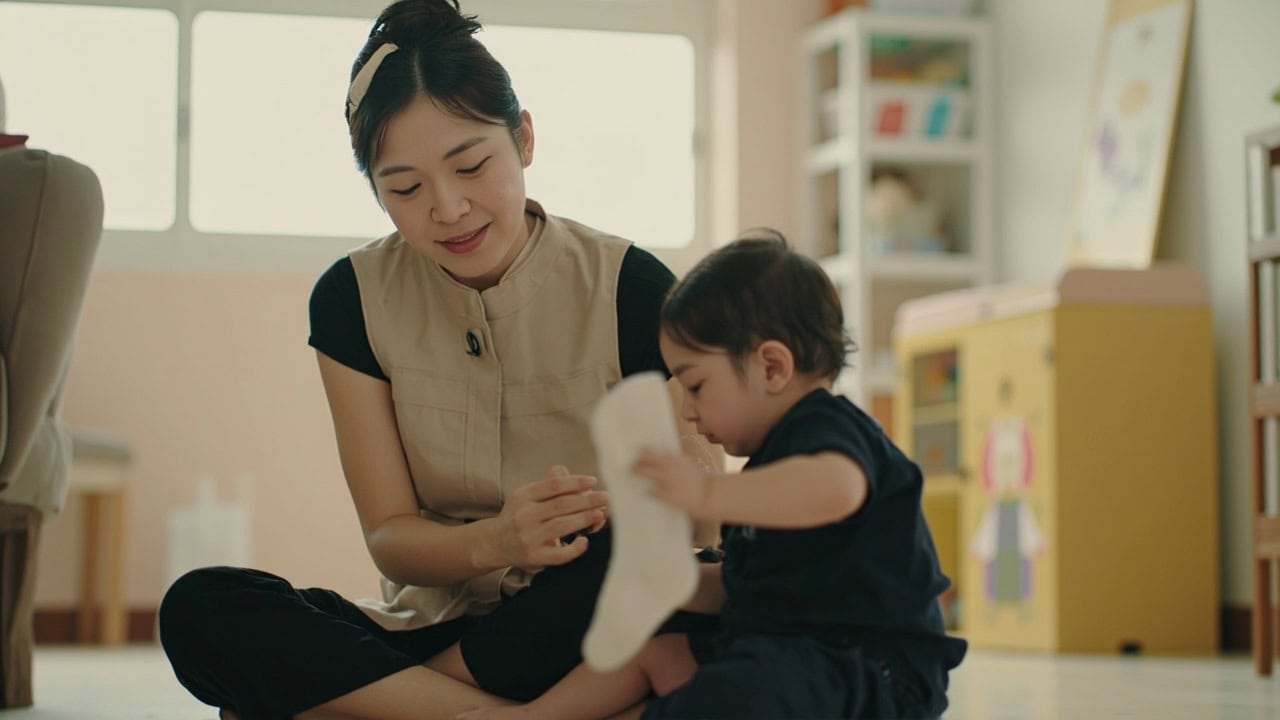
In a hypothetical dressing routine, an infant reaches for a plain sock. One caregiver lifts it and says, “Look, a sock!” Another holds it within reach, follows the infant’s gaze or reach, and leaves space for the infant to act. The first exchange foregrounds the adult’s label; the second more clearly lets the infant’s signal set the pace.
That distinction is the practical core of responsive caregiving: observing verbal and non-verbal cues and responding in a timely, sensitive and appropriate way. A paper on responsive caregiving gives that definition, while the Center on the Developing Child’s guide to serve and return describes the larger pattern: an adult responds to a young child’s signals and needs, and the child contributes another turn. The issue is not whether an adult teaches. It is whether the infant’s contribution changes the next move.
A Concept Can Sit Inside Responsiveness
In a hypothetical floor-time exchange, an adult can name a block while remaining responsive. If an infant looks towards it, the adult may say “block”, steady it within reach and notice whether the child touches it, pushes it or moves away. Here, the word is connected to an action or focus already underway rather than presented as a separate lesson.
In another hypothetical exchange, an adult presents a succession of objects while the infant looks elsewhere or moves away. Naming may continue, but the infant is not shaping the activity. An adult can also respond without adding a concept: pausing a song when the infant turns away, returning an object to a safer place or adjusting how a movement is supported. The distinguishing question is whether the infant’s contribution changes what happens next.
A research framework on responsive caregiving and early learning connects the two areas. It does not show that direct instruction is ineffective. Responsive care need not reject words, objects, songs or pictures; it asks the adult to notice whether a teaching moment fits the child’s current attention and contribution.
Everyday Routines Can Carry the Exchange
In a hypothetical floor-time moment, a toy just beyond reach can become an invitation. The adult may bring it closer and name it if the infant attends. If the infant takes it, the adult can describe the action while exploration continues. If attention shifts, the adult can follow the new focus or offer the toy again later.
The aim is not to make the child reproduce an adult plan; it is to let a shared activity include the child’s plan. A useful word can be part of an invitation: it connects language to an object or action that already has the infant’s interest, while the infant can still affect what follows.
The same principle can shape a simple care routine. In a hypothetical tidying moment, an adult offers a basket and gestures towards a toy, then pauses before taking over. The infant may push the toy, watch the adult or try the action again. None of those responses needs to be interpreted as a fixed milestone. The adult can treat the movement or attention as a cue and decide what support fits next.
Shared Music and Books Without Performance Pressure
Music makes the distinction easy to examine. In a hypothetical song, an adult sings, pauses and looks towards the infant. A smile, vocalisation, reach or turn of the head may offer a cue for what happens next: another line, a repeated rhythm or a quieter ending. Looking towards a melody does not establish that a baby is singing words, and a vocalisation should not automatically be labelled speech. The exchange can remain responsive without a recognisable performance.
Repetition gives the adult another opportunity to tune in. The same object, song or page can return when it fits the infant’s attention, without assuming that yesterday’s response will appear today. The interaction can remain a shared experience rather than being treated as evidence of a fixed ability.
Shared picture play works in much the same way. In a hypothetical book moment, an adult may point to a familiar object, name it and allow the infant to inspect the page, reach towards the image or look elsewhere. Looking at a picture, or visually matching an object to one, is not by itself proof of reading. When attention moves away, the adult can follow that shift and return to the page later.
What Small-Group Care Can—and Cannot—Show
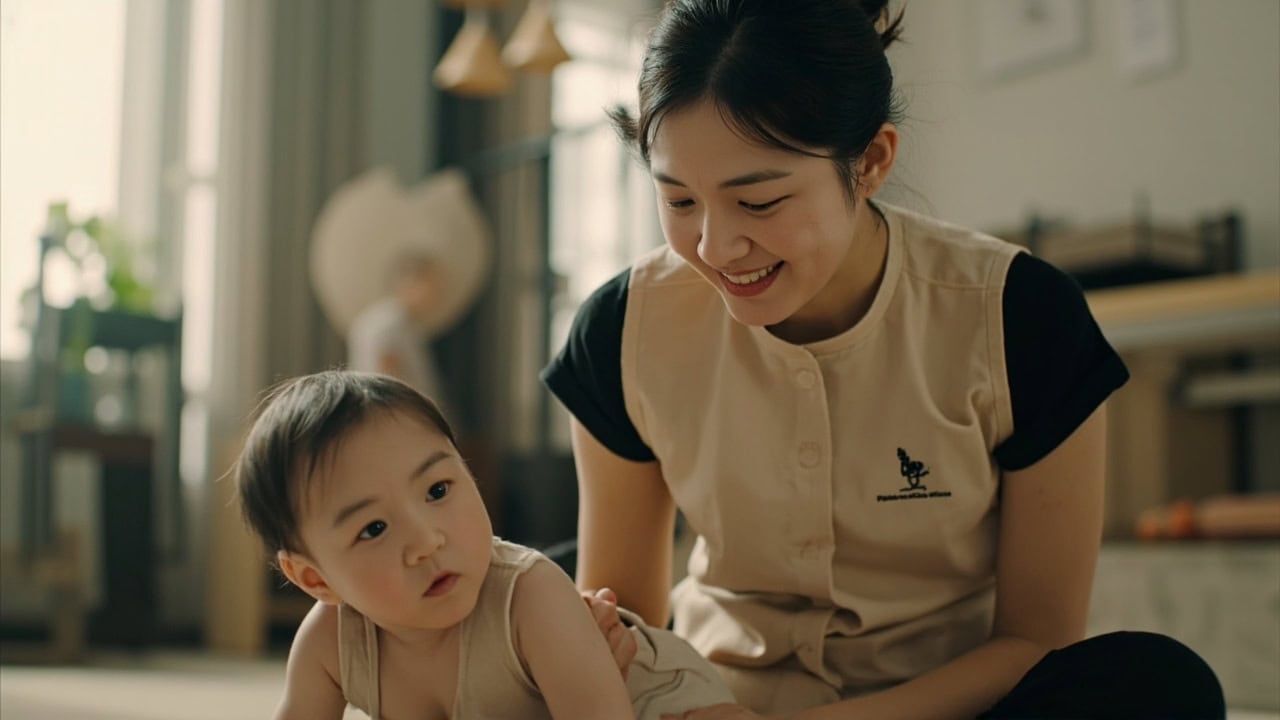
In group care, several infants’ glances, sounds and movements draw on the same adult attention. A smaller group may make it easier to notice an individual cue and tailor a reply, but staffing does not guarantee that every exchange will be responsive. The staffing arrangement provides capacity; individual interactions show how that capacity is used.
EduNanny’s ECDA Childminding Pilot page describes its approach as small-group infant care combining responsive care with time and attention. It names familiar objects, stories, singing and responses to sounds as early-communication opportunities, and says activities are guided by each infant’s readiness. These are first-party descriptions of EduNanny’s intended approach, not independent evidence that the arrangement produces a developmental outcome.
For families comparing infant childminding options, the distinction matters. A staffing model can form part of the care calculation, but it cannot substitute for observing how an adult notices, waits, responds and adapts during ordinary moments.
What Families Can Observe During a Visit
A visit can add useful context that a count of books, toys or songs cannot. Within an ordinary, safe routine, families can follow one exchange: did the adult notice a cue, respond, make room for the infant and adapt when the answer changed? Those questions describe the process without turning a single action into a developmental verdict.
One missed pause should not settle the matter. Adults have multiple demands, and children’s responses vary. A more useful pattern may emerge across several ordinary moments: cue noticed, reply made, child given a turn, next action adjusted. Even then, this offers a description of care, not proof of a later outcome.
Concrete questions can keep the conversation specific: “What did you notice when the infant reached for the sock, and how did that change what you did next?” The answer should concern observable action, not a claim about a developmental timetable or a mastered milestone.
The Value of an Unfinished Exchange
By the end of a day, there may be no visible tally of words introduced or pictures explored. A responsive episode can be small: a glance, a reach, a pause and an adjustment. It can include language, movement or shared play, but it does not need to produce a performance.
Responsive caregiving does not make early teaching unnecessary. It gives teaching a different shape—one that begins with what an infant signals and leaves the adult ready to change course. For families considering infant care, staffing context matters, but the standard is not a faster timeline or a longer list of concepts. It is an attentive exchange that notices, responds and adapts without rushing the child.
Sources and further reading
- Practices and outcomes of responsive caregiving on child development · PubMed Central
- A Guide to Serve & Return · Center on the Developing Child at Harvard University
- Responsive Caregiving and Opportunities for Early Learning · PubMed Central
- EduNanny ECDA Childminding Pilot · EduNanny
The images in this article were generated with AI for illustration. They do not show actual EduNanny staff, children or facilities.
Every family has different care needs. Speak with EduNanny to discuss care that is right for your child.