When a Small Change Persists: Turning Observation Into Conversation
A recurring infant change deserves context, not a label. Parents and childminders can record what happened, share it clearly and keep everyday notes separate from formal screening.
Consider a hypothetical parent who notices an infant turning away during a familiar song, reaching differently during floor play or pausing before looking back. A change seen more than once can invite attention without explaining itself. The useful first step is to describe what happened accurately, rather than attach a diagnosis or a milestone label.
This is the practical challenge of infant developmental changes: adults need to notice without pretending they already know the explanation. In a low-ratio infant setting, a childminder may have more room to pause, follow a cue and share a precise account with a parent. That is a possibility created by the care arrangement, not proof that a staffing number causes a developmental outcome. A useful conversation begins with context, uncertainty and a clear record.
Record what happened before deciding what it means
A broad statement can lose the details that matter. If someone says an infant has become “quieter” during shared reading, the word “quieter” is an interpretation. The account becomes more useful when it identifies the routine, the infant’s visible response and what the adult did.
A hypothetical observation note might read:
During shared book time on Monday and Wednesday, the infant turned toward the picture of a ball after I said “ball”, vocalised once and tapped the page. On Friday, the infant looked away and reached for a nearby cloth toy.
This note records looking, vocalising, touching and shifting attention. It does not establish that the infant connected the word with the object, understood the story or had a developmental concern. Keeping the observed action separate from the proposed explanation protects the account from acquiring more certainty than the event provides.
A shared record can remain brief:
- Setting and activity: Where were the infant and caregiver, and what were they doing?
- Observable response: What did the infant look at, reach for, vocalise or do physically?
- Immediate context: What happened shortly before the response?
- Adult response: What did the caregiver say, offer or change?
- What followed: What happened next, and was there a similar response on another occasion?
A repeated event can add context, but repetition by itself does not identify a cause, establish a clinical threshold or determine a level of need. Keeping “what happened” separate from “why it happened” preserves accuracy without deciding in advance that the behaviour is either unimportant or concerning.
What low-ratio care can make easier
Low-ratio care is a practice setting, not a developmental test. EduNanny states on its ECDA Childminding Pilot page that one childminder may care for a maximum of three infants and that this arrangement gives more room to notice individual cues and respond. This is the company’s first-party description of its service arrangement, not independent evidence that a numerical ratio changes a child’s development.
A maximum of three infants is also not a promise of continuous one-to-one care. More than one infant may need attention at the same time. A lower maximum may create another opportunity for a childminder to notice a cue, but the staffing number alone does not describe the quality of the response or guarantee an outcome for an individual child.
The wider evidence cited here concerns responsiveness rather than headcount alone. A systematic review of responsive caregiving describes it as a caregiver observing and noticing verbal or non-verbal cues and responding. The Center on the Developing Child at Harvard University’s Serve and Return guide similarly explains that responding to a young child’s signals and needs provides rich back-and-forth interaction.
These sources support noticing and responding as general caregiving principles. They do not establish that a particular child-to-childminder ratio by itself causes earlier milestones, faster development or any other developmental outcome.
Build a shared description across different routines
A parent and childminder may encounter the same infant developmental changes in different settings. In a hypothetical shared-reading exchange, a parent might say, “They seem less interested in books now.” The childminder could reply, “When I slow down and keep the book within reach, they vocalise and reach. When I turn the page quickly, they move on.”
The exchange does not reveal why the responses differed, but it gives both adults something specific to discuss. A parent’s account of a morning routine and a childminder’s account of a later play session may describe different conditions rather than conflicting realities.
Rather than arranging a test, they can choose one ordinary routine and record the date, activity, pace, infant response and adult action. If the infant looks away, the adult may pause or change the activity and then note what followed. That is a responsive approach: the response follows the child’s cue while the account remains open to later interpretation.
A useful handoff format is: “During [routine] on 2026, the infant [observable action] when [context]. I [adult response], and then [result].” The format leaves out presumed motives, diagnoses and expected results. A dated timeline can make a later conversation more precise without turning everyday care into a pass-or-fail exercise.
An observation note is not developmental screening
CDC’s developmental milestones page states that the American Academy of Pediatrics recommends general developmental screening using standardised, validated tools. That is a formal screening process, distinct from a caregiver’s account of selected events and separate from Singapore’s EIPIC assessment process.
An observation note can organise dates, settings, responses and adult actions. It cannot by itself produce a standardised screening result, identify a cause or diagnosis, or determine a child’s level of need. Nothing in the cited material establishes a rule that repetition alone automatically triggers referral.
If parents want help interpreting a recurring pattern, they can bring a dated timeline to a GP or an appropriately qualified child-health professional. The professional can consider that account alongside the infant’s wider health, development and family circumstances. The note then provides context for a broader conversation rather than a conclusion of its own.
Use official programme information carefully
For families considering early intervention in Singapore, the Early Childhood Development Agency describes EIPIC as supporting children who require medium to high levels of Early Intervention support.
That wording describes the programme’s intended level of support. It is not a formula for assessing an infant from a care note, and the supplied evidence does not provide a method for applying it to one event or a simple timeline. An everyday observation does not establish programme eligibility, a level of need or a diagnosis.
An official programme page is an appropriate starting point for current information. Families should confirm the details directly and seek individual guidance from a GP or an appropriately qualified early-childhood professional rather than inferring an outcome from a caregiver’s note. This keeps practical information in its proper place: as context for a conversation, not an individual verdict.
A calmer next step
A recurring change does not require a rushed conclusion. A proportionate response is a sequence: notice precisely, record the context, compare accounts, continue responding and seek professional input when uncertainty remains. The aim is neither to turn every variation into a concern nor to dismiss a repeated observation without context.
Low-ratio care may make more individual attention possible, but it does not guarantee a developmental result. Its practical value lies in creating room to notice, respond and communicate accurately. A child does not need a label for a change to deserve a careful response; the adult’s responsibility is to describe the child in front of them with accuracy, care and humility.
Sources and further reading
- EduNanny ECDA Childminding Pilot · EduNanny by BUTLER
- Practices and outcomes of responsive caregiving on child development: A systematic review · PubMed Central
- A Guide to Serve & Return · Center on the Developing Child at Harvard University
- CDC's Developmental Milestones | Learn the Signs. Act Early · CDC
- Early Intervention Programme for Infants and Children (EIPIC) · Early Childhood Development Agency, Singapore
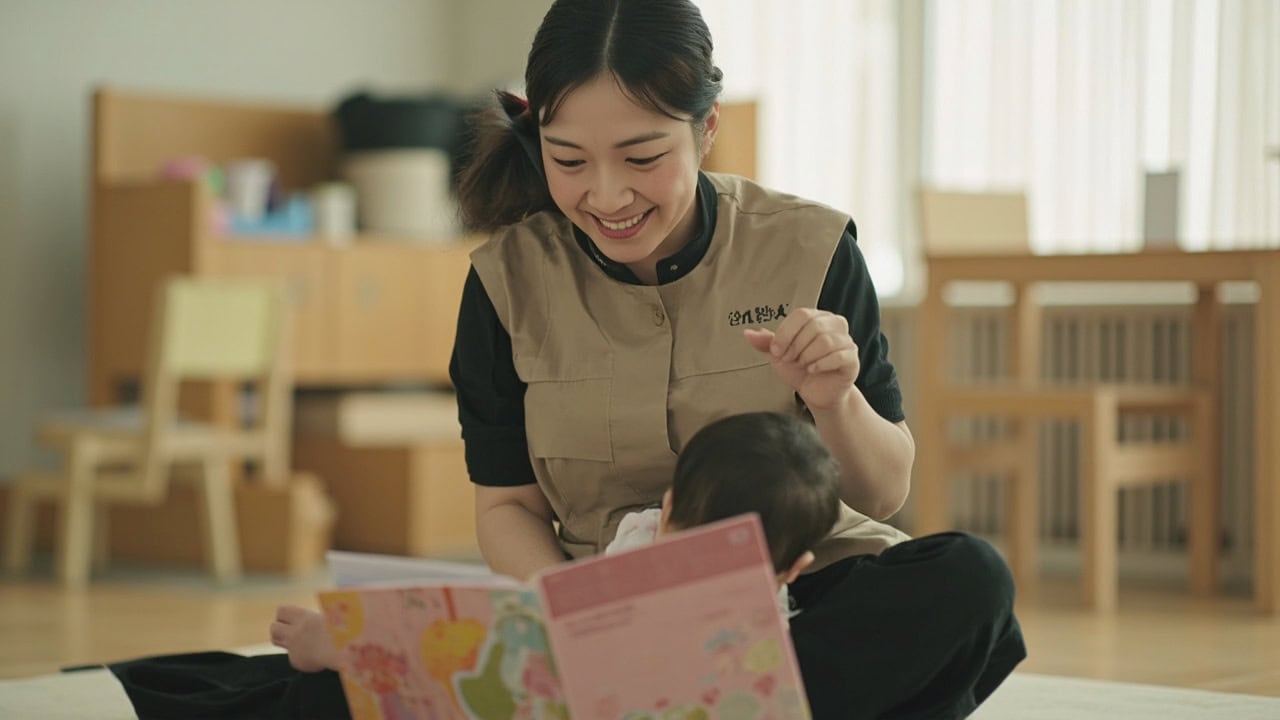
The images in this article were generated with AI for illustration. They do not show actual EduNanny staff, children or facilities.
Every family has different care needs. Speak with EduNanny to discuss care that is right for your child.