After the Song: How Infant Care Becomes Individualised
Individualised infant care is less about choosing a special activity than building a repeatable rhythm: notice, respond, check and adjust. That approach makes ordinary care personal without turning one cue into a fixed label.
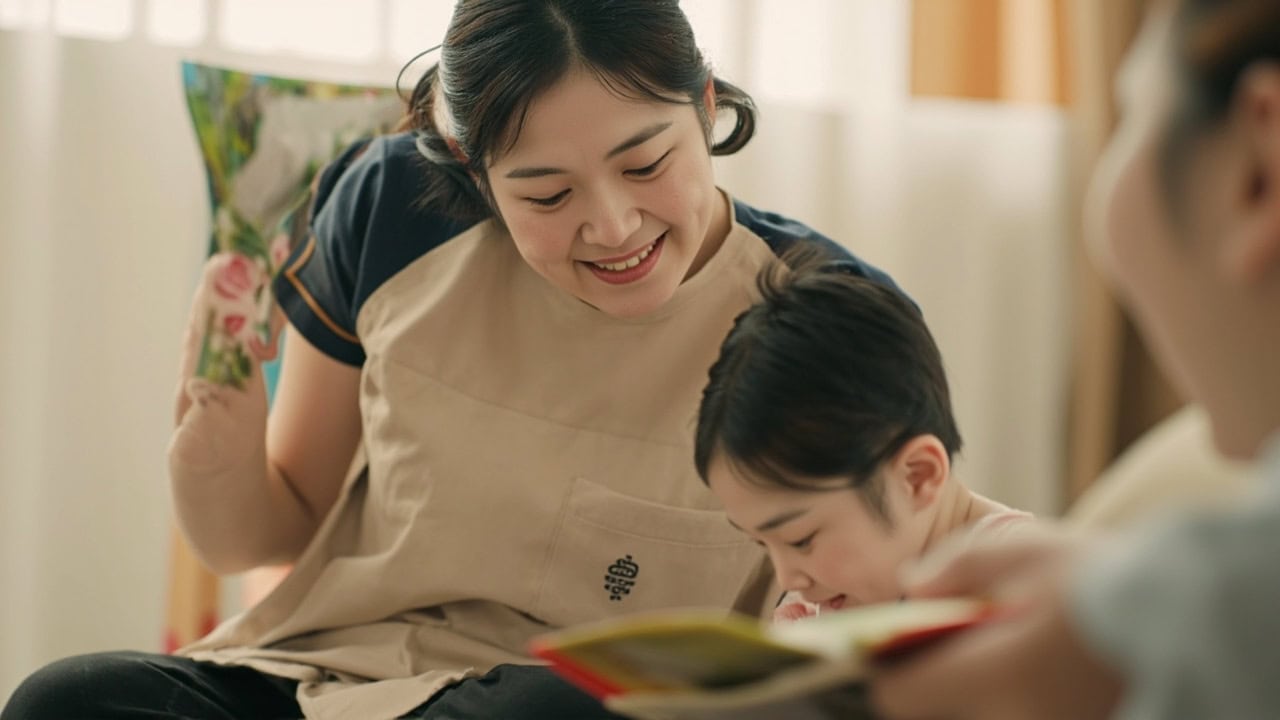
A familiar song can make an infant-care interaction look personalised. In a hypothetical moment, an adult begins singing, the baby looks towards the sound and reaches; the adult pauses, answers, then softens the song when the infant turns away. The important detail is not the song. It is the change made after the baby answered.
That sequence offers a useful way to understand individualised infant care. It is less a matter of adding special activities to a timetable than building care around a repeatable rhythm: notice, respond, check and adjust. The rhythm can fit ordinary care; it is not a test, a fixed preference profile or a promise that a child will reach a milestone sooner.
Personalisation begins after the activity
The Harvard Center on the Developing Child’s guide to serve and return says that when caregivers respond to a young child’s signals and needs, they create an environment rich in reciprocal experiences. The important unit is not the material used. It is the back-and-forth: an infant communicates in some way, a caring adult answers, and the exchange can continue or change.
The Center’s five-step guide tells adults to return a child’s serve, support and encourage the child, and give the child a chance to respond. In infant care, that can mean continuing a familiar phrase, bringing an object closer, reducing movement or stopping an activity. These are possible next moves, not a prescribed script or a timed rule.
This is why an activity list cannot show individualisation on its own. Two infants may receive the same song and cloth book but take different paths. One looks and vocalises; another turns away. The adult’s responsiveness lies in using what follows to decide whether to continue, modify or return to another care task. The process matters more than the polish of the presentation.
A pattern is useful only while it stays open
A 2024 systematic review of responsive caregiving describes meeting children’s needs with empathy and timeliness while recognising each child’s unique needs and preferences. That supports a response-to-the-child approach. It does not justify turning one observed cue into a permanent preference or treating it as a prediction of what the child will enjoy next week.
Hypothetical sequence, not an observed case: During floor play, an infant reaches towards a cloth book after an adult names it. The adult holds it within safe reach and waits. The infant touches a page, reaches again, and then looks away. The adult does not repeat the book immediately; the adult completes a nearby care routine and keeps the book in view. On another day, the infant may reach for it again, or may choose something else.
The careful record is the infant reached, returned the reach, then shifted away in this context. It is not book lover or ready for advanced reading. A repeated response can give a caregiver something useful to try again; a single response remains provisional. Personalisation works best when the adult keeps conditions in view, including the activity, timing and any need that may have been present.
Small groups can make room for the next move
Small-group care adds another layer. One adult may be attending to an infant at the same time that another child needs settling, a shared object needs attention or the room is moving into a transition. Those demands do not make responsiveness impossible. They do mean that prioritisation, pauses and sequencing are part of the care design, not decorative extras.
A smaller setting can create more opportunities to notice and answer, but group size alone does not establish the quality of each exchange or cause a developmental outcome. The practical question is not whether an activity looks elaborate. It is whether the adult can make a thoughtful next move while keeping safety, rest and ordinary care in view.
The Singapore pilot gives context, not a conclusion
EduNanny’s description of its ECDA pilot presents a small-group approach that combines responsive infant care with opportunities for language, movement and sensory exploration guided by each infant’s readiness. Those are the operator’s descriptions of its service, not independent findings about what every child will experience or achieve.
The official ECDA pilot page states that the programme runs from 1 December 2024 to 31 December 2027 and is for Singapore Citizen infants aged 2 to 18 months. Those verified details establish the programme’s scope. They do not verify the quality of an individual childminder, a particular response pattern or a developmental result. Programme context and observed care should remain separate claims.
Responsiveness belongs in everyday transitions
Responsive care is not confined to a special play session. It may appear when an adult notices that a baby has shifted away, pauses a song, offers a familiar object or returns attention to a practical routine. Which response is appropriate depends on the infant and the situation. The point is not to turn every cue into an activity; it is to avoid continuing an interaction mechanically when the answer has changed.
This also keeps language and exploration in proportion. Looking at an object is an observation, while naming it is something the adult may do. Looking towards a picture is not the same as reading it. A familiar tune may hold attention for one moment and not another. These distinctions are small, but they help adults describe what happened without awarding a label for every response.
The Harvard guidance supports reciprocal opportunity, while the systematic review adds recognition of individual needs and preferences. Neither source turns a song, a recorded preference or a group arrangement into a developmental score. Keep description at the level observed: the infant looked, reached or vocalised; the adult answered and revised.
A useful record shows revision
A compact care note can separate event from inference by answering four connected questions in prose: what context was present, what signal appeared, what did the adult do, and what should be tried next? This is a practical way to review continuity, not a validated assessment tool. It can cover play, movement, settling or communication without turning the whole day into a scorecard.
Hypothetical note: During floor play, the infant reached towards a cloth book after it was brought within reach. The infant returned to it once, then turned away when the adult offered it again. At the next opportunity, the adult will offer the book without comment and watch for another reach.
This note does not establish a fixed preference or a developmental gain. It does something more practical: it gives the next adult a starting point. If the reach appears again, the response can be repeated under similar conditions. If it does not, the adult can change the approach without treating one quiet moment as a verdict.
EduNanny says families can discuss routines, feeding, sleep and developmental goals in a Know Your Child conversation and can receive daily updates and routine communication. Those are provider-described communication practices, not proof of outcomes. In any setting, the more important question is how an observation travels: does the handover preserve the event and the response, or compress them into a personality label?
What quality looks like after the answer
This approach changes the unit of quality. A polished song, attractive book shelf or long list of activities may welcome a family, but it cannot show how an adult handles uncertainty. A response loop does: it notices, answers, checks the infant’s next signal and revises. Repetition is not the goal. Better fit is.
For parents, the distinction can matter without turning every interaction into an assessment. A handover that says an infant looked, reached or vocalised gives more usable information than a broad claim about what the baby likes. It also leaves room for the next adult to be wrong and adjust. That is a more disciplined form of personalisation than a fixed label because it is built to change.
A song may open the interaction, but the infant’s answer gives it direction. The strongest conclusion supported by the cited guidance is not that a particular routine, group size or provider produces faster milestones. It is that responsive care depends on reciprocal attention: adults notice what the infant communicates, answer in a relevant way and keep the exchange open to revision. That is how ordinary infant care can become personal without turning one moment into a destiny.
Sources and further reading
- A Guide to Serve & Return · Harvard Center on the Developing Child
- 5 Steps for Brain-Building Serve and Return · Harvard Center on the Developing Child
- Practices and outcomes of responsive caregiving on child development: A systematic review · PubMed Central
- EduNanny ECDA Childminding Pilot · EduNanny
- Childminding Pilot for Infants · Early Childhood Development Agency, Singapore
The images in this article were generated with AI for illustration. They do not show actual EduNanny staff, children or facilities.
Every family has different care needs. Speak with EduNanny to discuss care that is right for your child.