How Quality Childcare Helps Your Child Love You More
The Evening Reunion: What Your Child’s Homecoming Really Tells You
There is a moment that most parents do not talk about. It happens in the late afternoon, or the early evening, when the rhythm of the day begins to slow and the distance between you and your child collapses into the span of a doorway.
You have been away. You have been working, or in meetings, or simply apart from them in the way that modern life so often demands. And now you are here. You are home. You are about to see your child.
Your child looks up. And in that moment — before words, before the day is narrated, before anything is explained — you are looking for a signal. You are looking for proof that the hours apart have not changed anything. Proof that you are still the person your child runs to. Proof that your absence did not open a door that someone else walked through.
This is the question that sits beneath the surface of every childcare decision. It is not really about safety, though safety matters. It is not really about curriculum, though learning matters too. It is older and deeper than any checklist or tour could ever capture.
Will my child still love me the same way if someone else has been loving them all day?
You are not wrong to ask. You are not selfish for asking. You are asking the most fundamental question of parenthood — the one that connects you to every parent who has ever loved a child and wondered whether they were enough.
Here is what we want you to understand: quality childcare does not replace your bond with your child. It deepens it.
Singapore Parents Carry More Than They Should Have To
Singapore is a city that asks a great deal of parents. The cost of living, the pace of careers, the structure of family life — it is a city where both parents often work not out of preference but out of necessity. It is a city where grandparents may live across the causeway or across the world. It is a city where the village that once raised a child has dispersed, and parents are left holding the weight of it alone.
And so we make arrangements. We find caregivers. We enroll our children in programmes. We arrange our lives around logistics and we tell ourselves it is for the best. And mostly, it is.
But beneath the logistics, there is something else. There is the quiet worry that our children are becoming strangers to us. That the people who care for them during the day are becoming the people who know them best. That somewhere between the morning goodbye and the evening hello, we are losing our place in their hearts.
This fear is not irrational. It is the most natural fear in the world, because the bond between a parent and a child is not a simple thing. It is the most important thing. It is the foundation upon which everything else is built.
But here is what we have learned, and what we want every parent in Singapore to understand: the fear is based on a misunderstanding. And once you understand what actually builds the parent-child bond, everything changes.
What Attachment Science Tells Us
The research on attachment is clear and consistent. When a child feels securely attached — when they have experienced consistent, responsive, emotionally attuned caregiving — they develop what psychologists call a secure base.
This is not a physical place. It is a feeling. It is the knowledge that there is someone who knows them, who will respond when they call, who will be there when they need them.
Here is the insight that changes everything: this feeling of security does not come from one person alone. It comes from reliability. From consistency. From the experience of being truly known and cared for by someone who pays attention.
A child can develop this sense of security with multiple caregivers, as long as those caregivers are consistent, attentive, and emotionally present. Attachment is not a finite resource that gets divided. It is a capacity that grows.
When your child spends their day in quality care — when their cup is filled by a caregiver who is attuned to their needs, who celebrates their small victories, who holds them when they are tired and guides them when they are frustrated — they are not being taken from you. They are being given the experience of security.
A child who feels secure does not come home to you depleted. They come home to you full.
The Paradox of Presence: Separation Deepens Connection
Think about it this way. Imagine two children at the end of a long day.
The first child has spent the day in front of a screen, or in a crowded room where no one has time to notice when they are upset, or in the care of someone who is rushing from task to task and cannot give them the attention they crave. That child comes home running on empty. They are clingy. They are demanding. They need to have their needs met and they need it now. By the time you have filled their cup, the evening is almost over. You have been together all afternoon, but you have not truly been together.
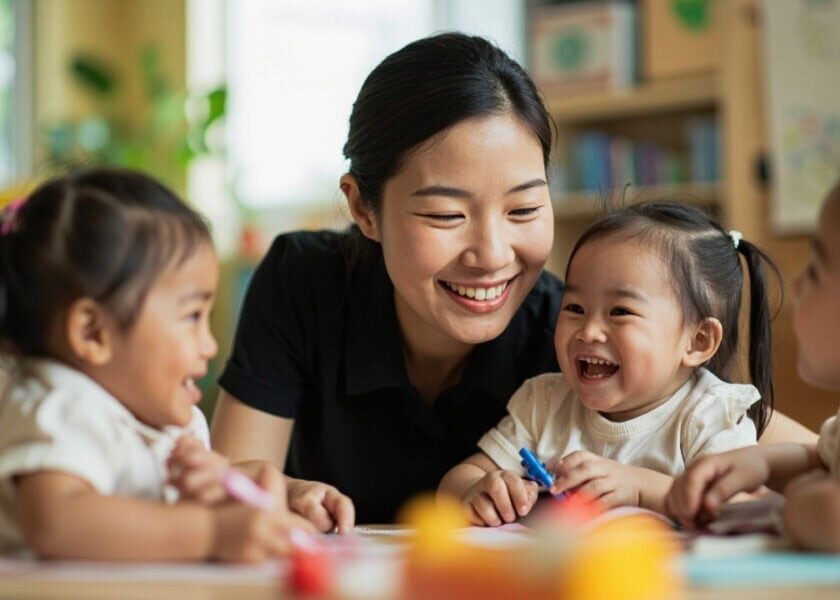
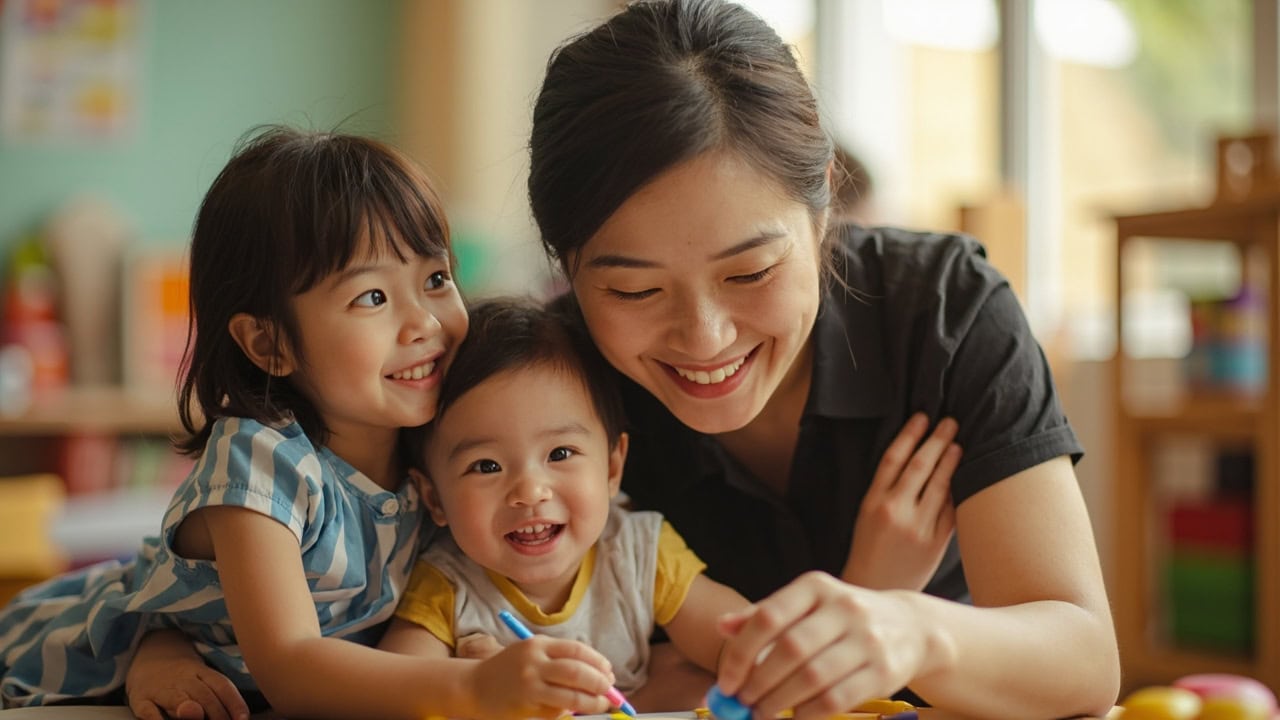
The second child has spent the day in quality care — in a setting with attentive caregivers, in an environment designed for their development, with the time and space to be truly seen. That child comes home with their cup full. They are curious. They are open. They run to you not because they need you to fill their emptiness but because they want to share their fullness with you. They have things to show you. They have stories to tell. They have energy for play and exploration and the quiet closeness that makes an evening feel like home.
Both children love their parents. But one parent gets to experience their child differently. And that difference is the gift of quality care.
This is what we call the paradox of presence. Not because your child forgets you. But because they learn, in your absence, that absence does not mean abandonment. That the people who love them come back. That the world is a place where they can be safe, even when you are not right there.
A child who trusts their caregiver trusts the world a little more. And a child who trusts the world is brave enough to go out into it, knowing they can always come home.
What Quality Childminding Actually Looks Like
Not all childcare is the same. The difference is not always visible on a tour or listed on a brochure. Here is what actually matters when you are looking for care that will strengthen, not compete with, your bond with your child:
- Emotional attunement. The caregiver notices what your child needs before they cry. They respond with sensitivity, not just efficiency.
- Consistency. Your child sees the same faces day after day. They learn that reliable people stay, and that the people who leave always come back.
- Individual attention. Infant ratios matter. When there are fewer children per caregiver, every child can be truly seen — not just supervised, but known.
- Communication. You know what happened during the day. You receive updates, photos, stories. Trust requires transparency.
- Partnership with parents. Quality care does not operate as a separate world. It extends your family’s values and your parental love into the hours you are apart.
There is also a term in child development called attunement — the ability to be present with another person, to notice what they need, to respond with sensitivity, to create a sense of being truly known. Attunement is the foundation of the parent-child bond.
But here is what we do not always acknowledge: attunement is exhausting. It requires energy, patience, and emotional reserves that no parent has an unlimited supply of. When you are depleted, you cannot be attuned in the way your child needs. And children know the difference.
Quality childcare does not replace your attunement. It restores it. It gives you the time and space to refill your own cup — so that when you come home to your child, you have something to give. The evenings are richer because you are not running on empty. The weekends are fuller because you have had a chance to miss each other.
EduNanny Singapore: Built on This Understanding
EduNanny Singapore was built on this conviction: that every child deserves to be known well, and that this knowledge should make their parents more present, not less.
We are part of the ECDA Childminding Pilot, and we offer pathways that serve the real lives of Singapore families:
- Home-based care for families who want the warmth of a familiar environment, where a trained caregiver comes to your home.
- Centre-based care for families who value the structure and community a dedicated space provides.
We work within pilot fee structures that aim to make quality care accessible. We accept CDA and Baby Bonus payments, because we know that affordability matters and that families should not have to choose between quality and cost.
Beyond the structures and the systems, our approach is built around a single principle: our caregivers are trained to provide the kind of attentive, emotionally attuned care that builds security. Our infant ratios are designed to ensure that every child is seen. We use communication tools, transparency measures, and where deployed, CCTV access — because we know that trust requires openness. We want parents to know what is happening during the day. Not because we have anything to hide, but because we want you to feel secure too.
We have watched a child arrive for the first time — clingy, uncertain, learning to trust — and we have watched them grow, over weeks and months, into a child who runs to the door each morning with excitement, who explores with confidence, who comes home at the end of the day and cannot wait to tell you about it.
We have watched parents arrive at pickup uncertain and leave gradually more assured. We have watched them share stories about the evenings — how their child is different now, more open, more playful, more themselves. We have watched families discover that quality care did not take something away from them. It gave something back.
Over time, you begin to notice patterns in children who have been in quality care for several months:
- They separate from parents more easily — not because they do not care, but because they trust the reunion will come.
- They explore their world more boldly — because they have a secure base to return to.
- They come home eager to share — full of stories, discoveries, and the kind of joy that comes from having been well cared for.
- They are more emotionally available — not clingy and depleted, but open and engaged.
- They sleep better, eat better, and seem more settled — because their days have had rhythm, attention, and warmth.
When You Walk Through That Doorway Tonight
So let us return to that moment. The evening reunion. The doorway. The look on your child’s face when they see you.
Here is what we want you to know: if your child runs to you with joy, if they have something to show you, if they are full of the day they have had and eager to share it with you — that is not a sign that you have been replaced. That is a sign that you have been freed.
Freed to be the parent you have always wanted to be. Freed to be present, patient, and full of love.
The measure of quality childcare is not what happens while your child is with us. It is what your child brings home to you. It is the way they reach for you with confidence. It is the bond between you that grows stronger because you are both thriving.
And here is the deepest truth we can offer you: your child does not love you less because someone else loves them well. Your child loves you more — more openly, more confidently, more freely — because they have learned that the world is a place where they can be loved and still come home to you.
That is the gift of quality care. That is what EduNanny Singapore is here to give.
If this resonates with you, we invite you to speak with our team, learn more about our approach, and see for yourself what quality care looks like when it is designed to work with your family — not instead of it.